Bavaria’s renewable capacity growing as nuclear plant shutdown boosts power imports
|
Bavaria’s renewable capacity growing as nuclear plant shutdown boosts power imports, 21 Feb 2020, Benjamin Wehrmann, Clean Energy Wire
Power generation with solar panels and bioenergy plants has reached a new record level in Bavaria, the German state’s economy ministry has said. Final data for 2018 showed that solar power production grew by 4.5 percent that year to reach nearly 12 terawatt hours (TWh), while production with bioenergy reached 9.2 TWh, 0.2 percent more than in 2017. “The energy transition is right on our doorstep,” said Bavaria’s economy minister Hubert Aiwanger, adding that the looming solar power support cap had to be removed and new land designated for solar panel installation to ensure that renewables could continue to grow in the state. However, the shutdown of nuclear power plant Gundremmingen B and a particularly dry year in 2018, which substantially reduced hydropower production, meant that Bavaria had to import large volumes of electricity for the first time ever in that year. Gross power production dropped from nearly 85 TWh to just under 74 TWh between 2017 and 2018, meaning that the economic powerhouse state had to import 10 TWh to cover its demand, a situation “that has never existed before,” the ministry says. Aiwanger said the “power generation gap” would grow further once Bavaria’s two remaining nuclear plants go offline at the end of 2021 and 2022, respectively. “The figures show that we all need to pull together to ensure a sustainable energy supply,” Aiwanger said…….. https://www.cleanenergywire.org/news/bavarias-renewable-capacity-growing-nuclear-plant-shutdown-boosts-power-imports |
|
Correcting Anti-Renewable Energy Propaganda
Correcting Anti-Renewable Energy Propaganda, Clean Technica B1 By Georg Nitsche, 12 Feb 20, In 1989, pro-nuclear lobbyists claimed that wind power couldn’t even provide 1% of Germany’s electricity. A few years later, pro-nuclear lobbyists ran ads in German newspapers, claiming that renewables wouldn’t be able to meet 4% of German electricity demand.
After the renewable energy revolution took off, in 2015, the pro-nuclear power “Breakthrough Institute” published an article claiming solar would be limited to 10–20% and wind to 25–35% of a power system’s electricity.
In 2017, German (pro-nuclear power) economist Hans-Werner Sinn tweeted that more than 50% wind and solar would hardly be possible. And in 2018, Carnegie Science reported a study claiming that “wind and solar could meet most but not all U.S. electricity needs.” According to one of the authors, their research indicates that “huge amounts of storage” or natural gas would need to supplement solar and wind power.
From a pro-renewable perspective, this is encouraging. The claims about the limits of renewable energy have moved from “not even 1% of electricity” to “most but not all of the electricity.” And yet, the anti-renewables message has always been the same: renewables will lead to a dead end.
In order to underscore their point, anti-renewable energy propagandists now publish incorrect cost figures that claim a fully renewable electric grid would be unaffordable or way more expensive than other options, such as, you guessed it, nuclear power. Continue reading
Australia May Add Record Amount of Renewable Power in 2020,
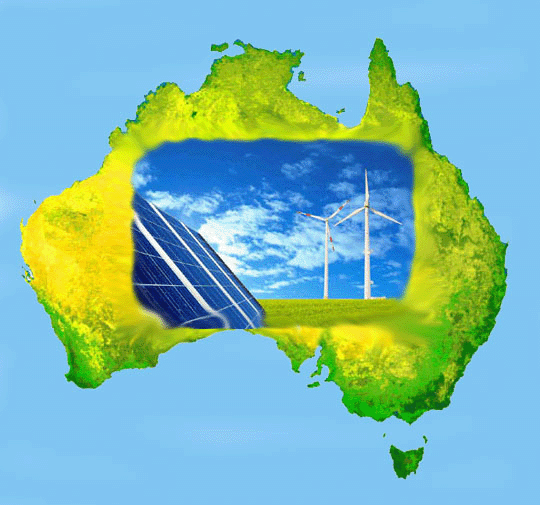 Australia May Add Record Amount of Renewable Power in 2020, Bloomberg, By James Thornhill, January 21, 2020
-
Corporate demand for clean electricity driving growth: Rystad
- Policy uncertainty seen undermining longer term expansion
Australia is set to add a record amount of renewable power in 2020, driven by growing corporate demand for clean electricity and to fill generation gaps created by the retirement of aging coal-fired plants.
New markets are expected to unlock growth as pilot hydrogen projects start and oil, gas and mining projects invest in off-grid renewables generation, according to Rystad Energy. The positive outlook would be a rebound for Australia’s clean energy developers after a sharp drop in investment in 2019.
“We expect the industry to bounce back in the second half of 2020,” Rystad said in a media release, citing projects with corporate power purchase agreements and the winners of government auction schemes that are scheduled to start construction this year.
Nearly 2 gigawatts of large-scale solar projects and 1.6 gigawatts of wind power are due to complete commissioning in the year ahead, up nearly 40% on 2019 levels. Wind and solar developers are also lining up to replace the Liddell coal plant in New South Wales, which is due to close by April 2023.
Still, developers may face headwinds over the longer term. The industry has already met the government’s 2020 target for renewable generation and there is no new target to replace it. Meanwhile, the profitability of projects located a long way from major demand centers has been hit by marginal loss factors — the amount of power lost along transmission lines.
Losing Momentum
Australia renewables investment fell 38% last year “While the outlook for the commissioning of new projects still looks solid in 2020, there is a risk that activity tails off in the years ahead as the impact of falling investment starts to feed through,” said BloombergNEF analyst Leonard Quong. AT TOP https://www.bloomberg.com/news/articles/2020-01-21/australia-may-add-record-amount-of-renewable-power-in-2020

In Turkey, renewable energy rising, as nuclear partnership with Japan is scrapped
|
Turkey, Japan scrap partnership in Sinop nuclear plant in Turkey’s north, Hurriyet Daily News, 20 Jan 2020, Turkey is reassessing its major partner for the country’s second nuclear plant in the Black Sea province of Sinop, Energy Minister Fatih Dönmez said on Jan. 19.In an interview with state-run Anadolu Agency, Dönmez said that the time schedule and pricing of the nuclear power plant in Sinop fell short of the ministry’s expectations after the results of feasibility studies, carried out by Japanese Mitsubishi Heavy Industries, Ltd., came out.
“We agreed with the Japanese side to not continue our cooperation regarding this matter,” Dönmez said…….. An intergovernmental agreement was signed between Turkey and Russia in May 2010 for Akkuyu NPP, the first nuclear plant of Turkey that will have four VVER-1200 power reactors with a total installed capacity of 4,800 megawatts. …… Share of local and renewable energy increases to 62 pct Dönmez also said Turkey saw an increase in the share of local and renewable resources for the country’s electricity production. Electricity production from local and renewables sources in 2019 amounted to 62 percent compared to 49 percent in 2018, a 13 percent increase, he further elaborated……… http://www.hurriyetdailynews.com/turkey-japan-scrap-partnership-in-sinop-nuclear-plant-in-turkeys-north-151212 |
|
New report: China soon to join countries where renewables are cheaper than coal
Oil Price 19th Jan 2020, In September of last year Oilprice reported an incredible milestone for renewable energy when solar and wind power became cheaper than coal in most of the world. Now, a new report released this week by Wood Mackenzie Power and Renewables has heralded another milestone: China will soon be added to that list of countries in which coal is no longer more economical than renewable energy.
Fukushima Japan Vows to Achieve 100% Renewable Energy Use in 20 Years
|
Impelled by Reactor Meltdown, Fukushima Japan Vows to Achieve 100% Renewable Energy Use in 20 Years, https://www.goodnewsnetwork.org/fukushima-moves-towards-100-percent-renewable-energy-production/ By Andy Corbley -Jan 11, 2020
Nine years ago, an earthquake and tsunami off the coast of Japan caused one of the most significant nuclear disasters in human history in the area around the Fukushima Daiichi nuclear power plant, where the resulting reactor meltdown led to the evacuation of 150,000 individuals.Now, the local government has vowed to restructure the grid of the north western prefecture to use entirely renewable energy sources by 2040. Fukushima is the third largest administrative district in the country, and uniquely includes a variety of energy resources like prime spots for solar and wind farms, and also opportunities for geothermal power as well. Working to achieve these ambitious goals, Fukushima Prefecture signed a memorandum of understanding in the field of renewables with the Ministry of Environment for the German state of North-Rhine Westphalia, the largest energy-producing state in Germany—and Europe as well—in August of 2017. North-Rhine Westphalia has doubled their renewable energy infrastructure over the last 15 years—growing it to deliver 9% of total energy production. Since 2012, however, Fukushima has tripled its renewable energy production, with solar, wind, water, thermal, and biofuel resources totaling 1,500 megawatts of electricity, delivering a contribution of nearly 18% of Japan’s total yearly energy consumption. Additionally, 300 billion yen ($2.75 billion) for the project has already been fronted by sponsors such as the state-owned Japan Development Bank and Mizuho Bank. The funding will be used to construct 11 solar farms and 10 wind farms over the next 4 years. The new projects also include biomass plants, geothermal stations, even fleets of sea-going windmills. The proposed new grid, spanning 80 kilometers, would reach the Tokyo metropolitan area and contribute 600 megawatts of electricity, replacing much of the power which, up until recently, the city had received from the pair of Fukushima atomic energy plants. Beyond moving away from its robust infrastructure and dependence on atomic energy, Japan is also the third largest importer of coal and natural gas, and a massive change in energy independence would help Japan reach its ambitious goals set forth in the recent UN climate change panel in Madrid last month. The country’s Prime Minister, Shinzo Abe, irrespective of the Fukushima Prefecture’s own energy objectives, is targeting 24% total energy from renewables nationally by 2030. |
|
|
Japan plans 100% renewable energy for Fukushima prefecture by 2040
 Fukushima unveils plans to become renewable energy hub, https://www.theguardian.com/environment/2020/jan/05/fukushima-unveils-plans-to-become-renewable-energy-hub-japan
Japan aims to power region, scene of 2011 meltdown, with 100% renewable energy by 2040, Justin McCurry in Tokyo , 6 Jan 2020
Fukushima is planning to transform itself into a renewable energy hub, almost nine years after it became the scene of the world’s worst nuclear accident for a quarter of a century.
The prefecture in north-east Japan will forever be associated with the triple meltdown at the Fukushima Daiichi nuclear power plant on 11 March 2011, but in an ambitious project the local government has vowed to power the region with 100% renewable energy by 2040, compared with 40% today.
The 2011 accident, triggered by a powerful earthquake and tsunami, sent large quantities of radiation into the atmosphere and forced the evacuation of more than 150,000 residents.
The 300bn yen ($2.75bn) project, whose sponsors include the government-owned Development Bank of Japan and Mizuho Bank, will involve the construction of 11 solar and 10 wind farms on abandoned farmland and in mountainous areas by the end of March 2024, according to the Nikkei Asian Review.
A 80km grid will connect Fukushima’s power generation with the Tokyo metropolitan area, once heavily dependent on nuclear energy produced at the prefecture’s two atomic plants. When completed, the project will generate up to 600 megawatts of electricity, roughly two-thirds the output of an average nuclear power plant.
Despite the Fukushima disaster, the world’s worst nuclear accident since Chernobyl in 1986, Japan’s conservative government is pushing to restart idle reactors.
It wants nuclear power, which generated almost a third of the country’s power before Fukushima, to make up between 20% and 22% of its overall energy mix by 2030, drawing criticism from campaigners who say nuclear plants pose a danger given the country’s vulnerability to earthquakes and tsunami.
All of Japan’s 54 reactors were shut down after the Fukushima meltdown. Nine reactors are in operation today, having passed stringent safety checks introduced after the disaster.
Renewables accounted for 17.4% of Japan’s energy mix in 2018, according to the Institute for Sustainable Energy Policies, well below countries in Europe. The government iaims to increase this to between 22% and 24% by 2030 a target the prime minister, Shinzo Abe, has described as ambitious but which climate campaigners criticise as insufficient.
Abe insists nuclear energy will help Japan achieve its carbon dioxide emissions targets and reduce its dependence on imported gas and oil, but his recently appointed environment minister, Shinjiro Koizumi, has called for the country’s nuclear reactors to be scrapped to prevent a repeat of the Fukushima disaster.
“We will be doomed if we allow another nuclear accident to occur. We never know when we’ll have an earthquake,” Koizumi said when he joined Abe’s cabinet in September.
The government is unlikely to meet its target of 30 reactor restarts by 2030 given strong local opposition and legal challenges.
Japan faces mounting international criticism over its dependence on imported coal and natural gas. It received the “fossil of the day” award from the Climate Action Network at last month’s UN climate change conference in Madrid after its industry minister announced plans to continue using coal-fired power.
Japan is the third-biggest importer of coal after India and China, according to the US Energy Information Administration. Its megabanks have been urged to end their financing of coal-fired plants in Vietnam and other developing countries in Asia.
How Ontario can get out of nuclear power, and reduce carbon emissions
 Ontario can phase out nuclear and avoid increased carbon emissions, The Conversation, January 6, 2020 MV Ramana, Simons Chair in Disarmament, Global and Human Security at the Liu Institute for Global Issues, University of British Columbia, Xiao Wei, MITACS Globalink Research Intern, University of British Columbia As wind and solar energy have become cheaper, they’ve become a more prominent and important way to generate clean electricity in most parts of the world.The Ontario government, on the other hand, is cancelling renewable energy projects at a reported cost of at least $230 million while reinforcing the province’s reliance on nuclear power via expensive reactor refurbishment plans.
As researchers who have examined the economics of electricity generation in Ontario and elsewhere, we argue that this decision is wasteful and ill-advised, and the unnecessary cost differential will rise further in the future.
One concern about renewables has been the intermittency of these energy sources. But studies have shown it’s feasible to have an all-renewable electric grid.
These feasibility studies, however, are always location specific. In that spirit, we have carried out detailed modelling and found that it’s possible to meet Ontario’s electricity demands throughout the year with just a combination of renewables, including hydropower, and storing electricity in batteries.
We also found that dealing with the intermittency of wind and solar energy by adding batteries would be more economical than refurbishing nuclear plants in the foreseeable future, well before the current refurbishment projects are completed.
That’s because of the expected decline in the cost of batteries used to store the electricity during the hours when the wind is blowing or the sun is shining in order to supply electricity during the periods when they aren’t. The cost of different kinds of battery technologies, such as lithium-ion or flow batteries, have come down rapidly in recent years.
Essential results
In all scenarios, the bulk of the demand was met by solar and wind power, with a lower fraction met by hydropower. Even in the scenarios with no batteries, less than 20 per cent of the electricity demand was met by nuclear power…….
In summary, our results show that for reasonable assumptions about future battery costs and the current price tag for solar and wind power, scenarios involving nuclear power are more than 20 per cent higher than the cheapest scenario involving only batteries, solar, wind and the current hydropower capacity. …
nuclear power isn’t needed to meet Ontario’s electricity needs. And the absence of nuclear power won’t have any impact on emissions in Ontario’s energy sector.https://theconversation.com/ontario-can-phase-out-nuclear-and-avoid-increased-carbon-emissions-128854?fbclid=IwAR20ANW_yAmpR7zZVw113hUp9bl7Xt2h0v1XiB1K815lFIKctZiaR8xB5Ew
The rise and rise of global offshore wind capacity
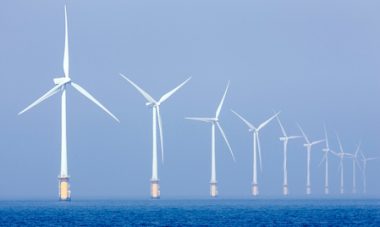
Renew Extra 4th Jan 2020, Dave Elliott: The International Energy Agency says global offshore wind capacity may increase 15-fold and attract around $1 trillion of cumulative investment by 2040, driven by falling costs, supportive government policies and some remarkable technological progress, such as larger turbines and floating foundations.
https://renewextraweekly.blogspot.com/2020/01/offshore-wind-and-pv-will-be-big-says.html
Egypt’s solar energy success
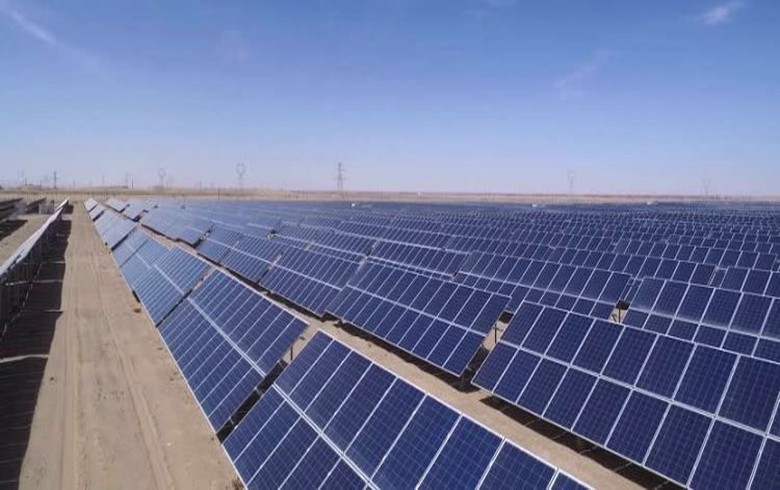
Reuters 17th Dec 2019, Near the southern Egyptian city of Aswan, a swathe of photovoltaic solarpanels spreads over an area of desert so large it is clearly visible from space. Designed to anchor a renewable energy sector by attracting foreign and domestic private-sector developers and financial backers, the plant now provides nearly 1.5 GW to Egypt’s national grid and has brought down the price of solar energy at a time when the government is phasing out electricity subsidies.
Renewables – Top 10 Utility Regulation Trends of 2019
Aligning utility performance with policy goals; Utilities planning for
electric transportation; DER integration and investments in a modern grid;
Energy efficiency, load-shifting and building decarbonization; Valuing DERs
for their contributions to the grid; Wildfire prevention and protection;
Customers making their own energy choices; Non-wires alternative
mechanisms.
https://www.greentechmedia.com/articles/read/top-10-utility-regulation-trends-of-2019
In France, over the next decade renewable energy is ‘on track to overtake nuclear’
 Renewables ‘on track to overtake nuclear’ in France https://www.powerengineeringint.com/2019/12/16/renewables-on-track-to-overtake-nuclear-in-france/ Kelvin Ross A new study claims that renewables are on track to overtake nuclear power as the dominant energy source in France in the next decade.The share of renewables in France will hit 42.9 per cent of the country’s power mix by 2023, up from 19.9 per cent in 2018, according to analytics company GlobalData. Renewables ‘on track to overtake nuclear’ in France https://www.powerengineeringint.com/2019/12/16/renewables-on-track-to-overtake-nuclear-in-france/ Kelvin Ross A new study claims that renewables are on track to overtake nuclear power as the dominant energy source in France in the next decade.The share of renewables in France will hit 42.9 per cent of the country’s power mix by 2023, up from 19.9 per cent in 2018, according to analytics company GlobalData.
And the research suggests that renewables will continue to rise as nuclear reactors come offline. The report examining France’s power outlook to 2030 reveals that in 2018 nuclear power dominated the capacity mix by 47.2 per cent, followed by renewables, hydropower and thermal power. In the non-hydro renewable energy mix, wind contributed 56.7 per cent followed by solar PV with 35.6. GlobalData analyst Piyali Das said that France “is aiming to boost the renewable energy sources through tender mechanism. Renewable power sources are expected to increase at a compound annual growth rate of 8.9 per cent between 2019 and 2030 with a net capacity addition of around 50 GW. “Installed capacity for onshore wind will double from its current levels of 15.1 GW by 2026, and to support the expansion the government has announced doubling of the renewable energy budget. Solar PV is not behind by much in terms of growth and will witness an addition of more than 24 GW during the same period.” Das said that in the long-term, the French government has decided to cut down its fossil fuel dependency and is replacing coal and oil power stations with gas-fired plants. The government also has wants to reduce nuclear generation to 50 per cent of net generation by 2035, with a plan to decommission around 14 reactors by 2035 and fill the gap with renewable sources. “To date the development of renewable energy is largely supported by public support mechanisms,” explained Das. “These mechanisms finance the difference between the remuneration of their production on the wholesale market and the purchasing price guaranteed by the state to the renewable producer. |
|
China’s $2.5bn renewables investment in Inner Mongolia
|
China’s nuclear power company plans $2.5bn renewables investment in Inner Mongolia http://www.globalconstructionreview.com/news/chinas-nuclear-power-company-plans-25bn-renewables/, 22 November 2019 | By GCR Staff
China General Nuclear Power Group (CGN) is preparing to invest $2.5bn in renewables generation capacity in its northern province of Inner Mongolia, including a 1GW solar facility and a 2GW wind farm, according to a report in PV Magazine. The investment aims to capitalise on the climate of the region, which combines strong and steady winds with up to 3,400 hours of sunshine a year. CGN was founded in 1994 to operate nuclear power plants, but has since built up a domestic portfolio of renewable assets, including 9.1GW of wind capacity and 1.7GW of solar. The wind turbines are to be installed near the city of Ulanchabu, which will also make the turbines. Administrative work will be carried out in the first half of next year with construction scheduled to begin in August and complete in 2021. The Inner Mongolia Solar Energy Industry Association says the transmission lines required to bring the electricity from the sparsely populated north have already been built. At the beginning of this year, the State Power Investment Corporation (Spic), one of China’s top five energy generators, announced plans to build a 6GW windfarm close to China’s border with Mongolia. Spic announced that is has received planning approval for its project from the Ulanqab Municipal Development of Inner Mongolia. If it goes ahead, it would install turbines across an area of 3,800 square kilometres, roughly the same size as the UK county of Suffolk, at a construction cost of about $6.8bn. |
|
|
In Germany , renewables replace nuclear and lower emissions simultaneously
 Renewables replace nuclear and lower emissions simultaneously Energy Transmission, by Craig Morris, 20 Nov 2019
A myth is haunting the English-speaking world: Germany allegedly shows that emissions rise because renewables can’t replace nuclear – and that France is right to stick with nuclear. What do the data show? Craig Morris reports
It’s not just trolls: Cambridge professors are saying it, and top US journalists are saying it, and a US presidential candidate told it to the New York Times:
“Germany initially set out to close all of its nuclear reactors by 2022, but as a result, they are now likely to miss their emissions reduction targets. And France is now considering options to extend the life of many of its older nuclear power plants.”
— US presidential candidate Marianne Williamson in the New York Times
What’s worse, US policymakers are saying it. Five US states now subsidize nuclear to keep reactors from closing, and it’s possible that all of them have done so based on this incorrect assumption. It happened years ago in New York State with explicit reference to German emissions allegedly rising because of the phase-out, it then happened in Illinois, and as one press report from Ohio put it this year when the new nuclear subsidy was announced:
The experience of Germany was repeatedly used as an example of what might happen in Ohio. Germany decommissioned its nuclear plants in favor of an all-renewable strategy. Electricity prices spiked and carbon pollution spiked, in part because of the ramping up of fossil-fuel plants to compensate for when wind and solar faltered.
“If the studies are correct, the Germans must not know how to do this,” Mr. Randazzo [chairman of the Public Utilities Commission of Ohio] said.
“If the studies are correct” indeed: So do Germany and France show that climate change requires nuclear, as Williamson says? Let’s start with France………..
France’s concern is theoretical: they didn’t actually close any reactors and try to replace the power with renewables. Rather, the French left nuclear on, and renewables hardly grew; solar (1.9%) and wind (5.1%) made up a mere 7.5% of French power supply in 2018. (In Germany, solar alone covered 7.7% of demand in 2018, with wind adding another 18.7% for a total of 26.4%). But in Germany, replacing nuclear with renewables isn’t just a postponed political ambition; it’s happening. So what do we know?
Germany emissions during the nuclear phaseout
In 2011, eight of Germany’s 17 reactors were closed. From 2010-2017, emissions in the power sector fell by more than 15%. For 2018, the power sector numbers are not yet in, but emissions from the energy sector fell by nearly two percentage points. And to date in 2019, renewables have nearly reached 50% of power supply. Germany now has some 210 TWh of non-hydro renewable power, far more than the record level of 171 TWh in 2001 for nuclear. Since 2010, renewable power has grown nearly twice as fast as nuclear shrank. Some nine tenths of it is wind and solar alone. Clearly, Germany shows that renewables can reduce emissions during a nuclear phaseout.
At this point, I hear objections. The first: “but Germany is going to miss its 2020 climate target!” Yes, it is expected to reach a 32% emissions reduction, not 40% relative to 1990 (French emissions fell by 15% from 1990-2017 in comparison, albeit from a much lower level thanks to nuclear). But the Germans don’t see the power sector as the main problem. As Deutsche Bank recently put it, “So far, Germany’s efforts… have focused on the electricity sector. However, attention is increasingly shifting towards the transport sector and its steadily rising carbon emissions.” Former Environmental Minister and Christian Democrat Klaus Töpfer recently worded the German consensus well: “We have the highest taxes on electricity although we have reduced emissions there the most.” That’s right: Germany has performed best in the sector where it has removed nuclear and worse in sectors where nuclear plays little or no role: mobility, agriculture, and heat.
The second objection is generally: “Germany would have lowered emissions even more if it had phased out coal, not nuclear.” That’s a fine thing to discuss, but it only moves us from a falsehood (“German phaseout raised emissions”) to revisionist history – not to facts. The revisionist historians act as though renewables would have been built anyway if nuclear remained online. As I wrote in my 50-page paper entitled Can reactors react (2018), the Germans argued a decade ago that renewables were unlikely to be built if nuclear stayed online.
What do the French and German cases show about how much renewable energy gets added when nuclear stays online? The French are also failing to add new nuclear as quickly as its own power company closes old reactors it wishes to keep on. From 2010-2018, wind and solar grew by 27.4 TWh in France, while nuclear shrank by 14.7 TWh (and demand stayed flat). During the same timeframe in Germany, nuclear shrank by 64.6 TWh – but solar and wind alone grew by 91.8 TWh.
The current French situation suggests that, if you remain committed to nuclear, nuclear power nonetheless shrinks; to make matters worse, the growth of renewables struggles to close the gap. Germany suggests that, if you stick with renewables and phase out nuclear, renewables growth outstrips the drop in nuclear nearly twofold, and you reduce emissions by 2 percentage points annually in the power sector. https://energytransition.org/2019/11/renewables-replace-nuclear-and-lower-emissions-simultaneously/
If You Can’t Do Nuclear, Try (Concentrating) Solar Power Instead
|
If You Can’t Do Nuclear, Try (Concentrating) Solar Power Instead, https://cleantechnica.com/2019/11/19/concentrating-solar-power-breakthrough/ Some great news for concentrating solar power fans sailed in over the transom this morning. Mega wealthy person and famed US investor Bill Gates may be chasing the nuclear unicorn with his startup Terrapower, but meanwhile his other startup Heliogen — his secret one! — has just burst out of stealth mode with a new concentrating solar power breakthrough in its pocket.
A Concentrating Solar Power Breakthrough Grows In Lancaster, CAWhile TerraPower has been pitching nukes, the Heliogen research team has been hammering away in deepest secrecy at its research facility in Lancaster, California, with the aim of developing a concentrating solar power system that can deliver temperatures of more than 1,000 degrees Celsius.
Reading between the lines of Heliogen’s first ever press release, that puts the new solar system in direct competition with fossil fuels for high-heat industrial processes including cement and steel production. If all goes according to plan, the new system will also breathe new, lower-carbon life into the petrochemical industry. That’s great news for ExxonMobil and other petroleum (and natural gas) stakeholders, though it’s not so great news for the “keep it in the ground” approach to averting climate global disaster. The Concentrating Solar Power SolutionA typical concentrating solar power system works by collecting sunlight from arrays of specialized mirrors called heliostats (so Heliogen, get it?), and focusing the energy on a central point, where it heats molten salt or another medium, which then gets put to use. Boiling water for steam to run a generator is one such example. If that sounds complicated, it is. Concentrating solar power has had its critics in past years, mainly due to its relatively high cost and complexity. Nevertheless, the Department of Energy has been a big supporter of the technology here in the US, and it has been catching on elsewhere around the globe as the technology improves and costs come down. The Energy Department has also been zeroing in on research that leads to new record-setting heat levels, just as Heliogen is claiming. Here’s Heliogen on that topic: “Previous commercial concentrating solar thermal systems have been designed to reach temperatures of up to only 565 degrees Celsius – useful for power generation, but insufficient for many industrial processes. Many of these processes require much higher temperatures, which have traditionally been reached through the burning of fossil fuels.” That’s nothing. Heliogen is looking at temperatures up to 1,500 degrees. If you’re thinking what Heliogen is thinking, run right out and buy yourself a cigar. Among other uses, the technology could be deployed to “split” hydrogen from water. Hydrogen is a zero emission fuel but the primary source of hydrogen today is fossil natural gas, so the prospect of switching to water as a feedstock is a big deal. In terms of staving off catastrophic climate change, devoting energy to water-splitting systems makes sense only if the energy comes from renewable resources like solar, so if you hear the sound of popping in the distance, that would be renewable hydrogen fans breaking out the bubbly in celebration. How Does It Work?So far so good, but the devil is in the details. Other teams are pursuing high heat solar power systems. What puts Heliogen ahead of the rest of the concentrating solar power pack? The company isn’t saying much, except that it has something to do with an “advanced computer vision software to hyper-accurately align a large array of mirrors to reflect sunlight to a single target.” So far that sounds like a typical concentrating solar power system, with an extra punch provided by maneuvering the array of heliostats with extreme accuracy, enabling them to reflect more sunlight than other systems. There is probably a lot more to the picture, but that’s all Heliogen is giving out for now. Come to think of it, though, Heliogen has something in common with another company that has a concentrating solar power research site in Lancaster, California, called Edisun Microgrids. The thing in common is visionary innovator Bill Gross, who is listed as the CEO of Edisun, and who is also the CEO and co-founder of Heliogen. Gross has several other solar startups under his belt, but let’s zero in on Edisun. Last spring the Energy Department included Edisun in a group of research teams aiming to bring down the cost of concentrating solar power. Here’s the rundown from the Energy Department: “Traditional cost reduction strategies have focused on developing larger heliostats with more mirror surface area on each unit, making the mirrors even more susceptible to wind. This project will pair smaller mirrors that can more precisely track the sun with an inexpensive novel gear train as the foundation of the heliostat.” Stay tuned as CleanTechnica checks in with Heliogen for more details on its technology. Whatever Happened To TerraPower?Meanwhile, speaking of arrays, Heliogen has an impressive array of researchers, partners, and investors behind it, but Bill Gates sticks out in terms of name recognition so let’s hear what he has to say (via Heliogen’s press release): “…If we’re going to get to zero-carbon emissions overall, we have a lot of inventing to do. I’m pleased to have been an early backer of Bill Gross’s novel solar concentration technology. Its capacity to achieve the high temperatures required for these processes is a promising development in the quest to one day replace fossil fuel.” So, where does that leave TerraPower? The nuclear industry still has potential for growth in some parts of the world. TerraPower initially had China in its sights, although that avenue has reportedly been closed, at least temporarily, due to the President* Trump’s trade policies. Here in the US the prospects for finding news sites for nuclear power plants are zero to none within the foreseeable future, despite an assist from President* Trump’s so-named Affordable Clean Energy plan. Nevertheless, there are still 98 nuclear power plants in the US. Some of them could potentially house new technology as their licenses come up for renewal. As of last year the Energy Department was still cheerleading for TerraPower’s molten salt nuclear technology, and TerraPower continues to soldier on with R&D. The company has been working on a lab expansion and last September it also passed an important milestone in its work with the Energy Department’s Idaho National Laboratory. Since some concentrating solar systems also use molten salt as a medium, it’s also possible that some of TerraPower’s R&D could transfer to the concentrating solar power field, even if the nuclear thing doesn’t work out so well. |
|
|
1 This Month



Shut down the radiation-damaged Heysham nuclear reactors now
To see nuclear-related stories in greater depth and intensity – go to https://nuclearinformation.wordpress.com

Say No to NASA’s Reckless Nuclear Reactor on the Moon
Say No to NASA’s Reckless Nuclear Reactor on the Moon
-
Archives
- October 2026 (256)
- September 2026 (339)
- August 2026 (330)
- July 2026 (355)
- June 2026 (287)
- May 2026 (306)
- April 2026 (356)
- March 2026 (251)
- February 2026 (267)
- January 2026 (308)
- December 2025 (358)
- November 2025 (359)
-
Categories
- 1
- 1 NUCLEAR ISSUES
- business and costs
- climate change
- culture and arts
- ENERGY
- environment
- health
- history
- indigenous issues
- Legal
- marketing of nuclear
- media
- opposition to nuclear
- PERSONAL STORIES
- politics
- politics international
- Religion and ethics
- safety
- secrets,lies and civil liberties
- spinbuster
- technology
- Uranium
- wastes
- weapons and war
- Women
- 2 WORLD
- ACTION
- AFRICA
- Atrocities
- AUSTRALIA
- Christina's notes
- Christina's themes
- culture and arts
- Events
- Fuk 2022
- Fuk 2023
- Fukushima 2017
- Fukushima 2018
- fukushima 2019
- Fukushima 2020
- Fukushima 2021
- general
- global warming
- Humour (God we need it)
- Nuclear
- RARE EARTHS
- Reference
- resources – print
- Resources -audiovicual
- Weekly Newsletter
- World
- World Nuclear
- YouTube
-
RSS
Entries RSS
Comments RSS

