100% renewables possible for USA – study demonstrates
A study led by Stanford University professor Mark Jacobson has
demonstrated that the US energy system running on wind, water and solar,
coupled with storage, not only avoids blackouts but lowers energy
requirements and consumer costs while creating millions of jobs, improving
health, and freeing up land. The Jacobson-led study conducted with
colleagues from Stanford University analysed grid stability under multiple
scenarios in which wind, water, and solar energy resources powered 100% of
all energy needs in the United States. The study, published in the journal
Renewable Energy, demonstrates a blackout-free energy system under ideal
circumstances, and a much reduced risk of blackouts in extreme weather
events compared to the current fossil fuel-led energy systems.
Renew Economy 10th Dec 2021
Nuclear exit to unleash wind power in Northern Germany

Nuclear exit to unleash wind power in Northern Germany
By Charlotte Nijhuis and Nikolaus J. Kurmayer | EURACTIV.com with CLEW 10 Dec 2021
The shutdown of the last nuclear power plant in Schleswig-Holstein will unclog the electricity grid and unleash wind power in the northern German state, according to its environment minister Jan Philipp Albrecht, reports Clean Energy Wire.
“Nuclear power is clogging our grids, especially in the direction of the south,” Albrecht told press agency dpa.
Due to grid bottlenecks, offshore wind turbines indeed have to be switched off in some cases.
The importance of nuclear power as a whole is therefore overestimated,” Albrecht added.
After the shutdown of the nuclear plant at the end of this year, the north of Germany could cover 160% of its electricity needs with renewable energy and there will be more wind power exports to the south, Albrecht said.
Fears of power blackouts due to the nuclear phaseout are unfounded, he said. “After all, we will continue to massively expand renewable energies in Germany now. In the future, we will not be dependent on nuclear power being generated in France.”
His anti-nuclear party, the Greens, have recently entered federal government in Germany, with Super-Minister Robert Habeck in charge of boosting the expansion of renewable energies up to 80% of the country’s power supply.
Germany is set to turn off the nuclear reactors Grohnde, Gundremmingen C and Brokdorf by the end of December.
Shutting down the remaining three nuclear reactors in 2022 will then conclude a decades-long struggle by the anti-nuclear movement that gave rise to the Green Party and other environmental groups in the 1980s.
…….researchers are confident that the shutdown of Germany’s last nuclear power plants will not cause supply shortages, according to calculations by the German Institute for Economic Research (DIW Berlin).
In order to keep grid operation stable, congestion management will need to be adjusted. But “the lights will not go out in Germany,” study author Claudia Kemfert said in statement.
“On the contrary: the [nuclear] shutdown paves the way for the overdue expansion of renewable energies. Nuclear energy was uneconomical from the start and characterised by incalculable risks,” she added………https://www.euractiv.com/section/electricity/news/nuclear-exit-to-unleash-wind-power-in-northern-germany/
The shutdown of Germany’s last nuclear power plant could enable Germany’s North to cover 160% of its electricity needs with renewables.
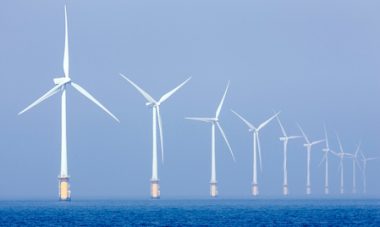
The shutdown of the last nuclear power plant in Schleswig-Holstein will boost wind power in the northern German state, its environment minister Jan Philipp Albrecht (Greens) expects. “Nuclear power is clogging our grids, especially in the direction of the south,” Albrecht told press agency dpa in an article carried by Focus Online.
Due to grid bottlenecks, offshore wind turbines would have to be switched off in some cases. “The importance of nuclear power as a whole is therefore overestimated,” he added.
After the shutdown of the nuclear plant at the end of this year, the north of Germany could cover 160 percent of its electricity needs with renewable energy and there will be more wind power exports to the south, Albrecht said.
Fears of power blackouts due to the nuclear phaseout are unfounded, he said. “After all, we will continue to massively expand renewable energies in Germany now. In the future, we will not be dependent on nuclear power being generated in France.”
Clean Energy Wire 9th Dec 2021
Renewable energy growing at a fast pace, China and India leading the way.

Growth in renewable energy is set to hit an all-time record this year, but is still falling “well short” of what is necessary to slash planet-warming emissions, according to the International Energy Agency. The energy watchdog estimates that around 290 gigawatts (GW) of renewable energy capacity came online around the world in 2021 — enough electricity for approximately 200 million average US homes — according to a report published Wednesday.
By 2026, the agency predicts global renewable capacity will rise more than 60% from 2020 levels, an amount equivalent to the current total global power capacity of fossil fuels and nuclear combined, it said.
But to reach net-zero emissions by 2050, a goal many nations have set, renewables need a far bigger push. The current pace is being driven by China, which the agency says remains the global leader in renewable energy growth. The country is expected to reach 1200 GW of total wind and solar
capacity in 2026, four years sooner than its target date. Renewables are also being rapidly embraced in India, where they are projected to double new installations this year, in comparison to 2015-2020.
FT 1st Dec 2021
https://www.ft.com/content/317424af-a559-4598-a4df-5fe7c9fff947
New German government aims for coal exit, and 80 pct renewables, by 2030

New deal between SDP, Greens and pro-business party calls for coal exit by 2030, and an 80 per cent share for renewables. The post New German government aims for coal exit, and 80 pct renewables, by 2030 appeared first on RenewEconomy.
Soren Amelung and Benjamin Wehrmann 25 November 2021 https://reneweconomy.com.au/new-german-government-aims-for-coal-exit-and-80-pct-renewables-by-2030/ Germany’s prospective new government has agreed to speed up the country’s coal exit and accelerate the rollout of renewable power to get the country on track for climate neutrality.
“We will align our climate, energy and economic policies nationally, in Europe and internationally with the 1.5 degree path and activate the potential at all levels of government,” states the coalition agreement between Social Democrats (SPD), Greens, and pro-business Free Democrats.
“With ambition and perseverance, we are making the country a pioneer in climate protection,” likely future chancellor Olaf Scholz, a Social Democrat, said during the presentation of the coalition treaty. He added that “modernisation won’t be for free – we will invest massively so Germany can stay a world leader.”
Germany plans to become climate-neutral by 2045, but the measures implemented by the outgoing government, a coalition between chancellor Angela Merkel’s Conservatives and the SPD, are insufficient to reach that target.
The September vote had been called a “climate election” due to the high importance many voters had given the topic.
Scholz aims to be elected chancellor in the week of December 6. Prior to that, the Greens will invite all 120,000 party members to vote on the coalition agreement online. The SPD and the FDP will organise party conferences on December 4 and 5, respectively, to secure their members’ backing for the agreement.
Faster rollout of renewables
“Reaching climate targets will require an accelerated exit from coal power generation,” the coalition treaty reads. “Ideally, this will be achieved by 2030 already.”
Green Party co-leader Robert Habeck said the measures agreed by the three parties would put Germany on an emissions reduction path compatible with the Paris Climate Agreement‘s target of limiting global warming to 1.5 degrees Celsius.
The coalition treaty’s “core” principle would be to reconcile prosperity with climate action, he argued.
“We have decided against setting higher climate targets in the coalition agreement, but rather formulated concrete measures,” Habeck said, adding that these measures would put the country on a 1.5 degree path.
The three parties aiming to form the next German government, said they aim to cover 80 percent of the country’s power demand with renewables by 2030, a significant increase from the current target of 65 percent. “Renewables are no longer an addition but will have to carry our supply security,” Habeck said.
FDP leader Christian Lindner, who is likely to become new finance minister, said “no other industrialised country will make efforts in climate action as great as ours, this is the most ambitious programme to date” and the government would make sure that it is sufficiently funded. At the same time, Germany would remain “an advocate of prudent financial policy,” Lindner added.
The parties also rejected calls for postponing the end of nuclear power plants. “We will stick to the nuclear exit,” their coalition agreement says.
To help the country’s famed industry to lower emissions, the future government plans to use new instruments, such as carbon contracts for difference, and support an EU-wide carbon border adjustment mechanism.
The coalition partners also said they will consider a national carbon floor price of 60 euros if the price in the EU emissions trading system falls below that limit. In the transport sector, they want to achieve a fast transition to low-emission mobility. “Our target is at least 15 million fully electric cars by 2030,” the treaty says.
The future government also agreed on considerable changes to the government architecture to implement its climate agenda. The parties plan to create a novel climate ministry that merges the energy and industry departments of the economy ministry with the environment ministry’s climate department.
First published on Clean Energy Wire
Germany’s Chancellor Merkel maintains stand against nuclear power being classified as sustainable

Merkel defends nuclear power exit despite climate challenges, Euro News, By Andreas Rinke, 17 Nov 21,
BERLIN -Chancellor Angela Merkel has defended her decision to phase out nuclear energy, even though it has made it harder for Germany to wean its economy off fossil fuels.
In an interview with Reuters, the outgoing chancellor also said she was opposed to any plans by the European Union to label nuclear power as “sustainable”.
“It’s true, of course, that we now face the very ambitious and challenging task of completing the energy transition while phasing out coal and nuclear power,” said Merkel, who will step down once a new government is sworn in following an election in September.
“But it’s also true that this will be worth it for our country if we do it right.”
Merkel, who has led her country for 16 years, pushed for Germany to abandon nuclear power after the Fukushima disaster in Japan a decade ago, a decision that most Germans agree with……..
RENEWABLES
The share of renewables in the energy mix of Europe’s largest economy has been growing steadily since the Fukushima disaster, though energy economists say it has not risen fast enough to help Germany meet its ambitious emissions targets.
Renewables accounted for 45% of Germany’s energy last year, up from 17% in 2010, data compiled by the Agora Energiewende think-tank showed. The share of electricity generated from coal fell to 23% from 42% a decade ago. Nuclear power was halved to 11%.
The EU executive, the European Commission, is drawing up a sustainable finance “taxonomy” setting out which activities meet the environmental criteria to qualify for funding under an EU sustainable investment programme.
A document viewed by Reuters in March indicated experts were preparing to label nuclear power as sustainable because it has none of the carbon dioxide emissions produced by fossil fuels.
Merkel said Germany would continue to oppose the plan but acknowledged that it would be hard to rally 19 other members behind its position to block it.
“It’s difficult to stall the procedure as such once the European Commission has presented an act,” said Merkel.
“We in Germany believe – across party lines – that nuclear energy should not be classified as being as clean as wind and solar energy.”……… https://www.euronews.com/next/2021/11/17/germany-merkel-nuclear-exclusive
Plan for solar power to UK via cable from Morocco, as nuclear power closes
As the UK’s ageing fleet of nuclear power stations begins to close –
until recently a steady source of low-carbon baseload generation –
Utility Week speaks to Simon Morrish, chief executive at XLinks, about its
plans to transmit cheap solar power thousands of kilometres across the
Atlantic seabed from the sun-drenched deserts of Morocco to help fill the
looming gap.
Utility Week 15th Nov 2021
As the UK’s ageing fleet of nuclear power stations begins to close –
until recently a steady source of low-carbon baseload generation –
Utility Week speaks to Simon Morrish, chief executive at XLinks, about its
plans to transmit cheap solar power thousands of kilometres across the
Atlantic seabed from the sun-drenched deserts of Morocco to help fill the
looming gap.
Utility Week 15th Nov 2021
A cross-continental electricity interconnector grid system may be a practical option for renewable energy .
One of the key discussions at the COP26 summit in Glasgow has been the practicalities of building a cross-continental electricity interconnector system, and this may be rather more practical than some of the commentators have implied. It could, indeed, eventually turn into a global energy system where solar pv as well as wind power and other renewables, could supply power 24/7 with a much-reduced need for storage for systems dominated by renewable energy. Talking about supplying Europe with solar pv from North Africa, eg via the putative Desertec scheme, has often been a source of debate amongst renewables afficianados.
Some greens have decried the notionas a centralised vision of renewable energy that is little more desirable than centralised nuclear power plant. The traditional preference among greens has been on locally owned plant either on rooftops or at least, in
the case of ground-mounted solar pv, owned by community renewable energy organizations. But in a world where the overall prize is the achievement of net zero carbon energy systems, then two key factors come into play: cost and resource availability (which of course are related to each other).
If solar and wind resources in some countries, especially some of the most landlocked states, are difficult to access at reasonable cost, then international, even intercontinental, supplies could come into play. If it is cost-effective to build plant and build the interconnectors to trade in electricity, then it is quite likely to happen.
100% Renewables 13th Nov 2021
Rapid growth in solar and wind power in UK
| MORE than 10,000 megawatts per hour of renewable energy were produced in Southampton last year. Figures from the Department for Business, Energy and Industrial Strategy show 16,730 megawatts per hour (around 17 gigawatts) of renewable electricity were generated in Southampton in 2020. This was 10% more energy than the 15 GWh produced the year before, and 23% more than the amount produced in 2014 – the earliest year of data available. Across the UK, 134,600 GWh of renewable energy was generated in 2020, a 13% rise on the year before, and above the 9% increase from 2018 to 2019. Climate think tank Ember said huge falls in costs means the growth in offshore wind power is set to go “parabolic” in the coming months. Phil MacDonald, chief operating officer at the organisation, added: “But the Government is still missing the opportunity of cheap onshore wind, and not doing enough to explore earlier-stage technologies like geothermal and tidal. The biggest producer of energy in Southampton last year was solar power, which generated 10 GWh – 62% of the total. Daily Echo 8th Nov 2021 https://www.dailyecho.co.uk/news/19700736.figures-renewable-energy-produced-southampton-yearly/ |
Solar and wind keep getting cheaper, and crush coal, gas and nuclear on costs: Lazard

Latest LCOE report from Lazard confirms that wind and solar by far the cheapest of all energy sources, and cost of storage is falling too. The post Solar and wind keep getting cheaper, and crush coal, gas and nuclear on costs: Lazard appeared first on RenewEconomy.
Solar and wind keep getting cheaper, and crush coal, gas and nuclear on costs: Lazard — RenewEconomy Giles Parkinson & Sophie Vorrath 1 November 2021 [GOOD GRAPHS]
As world leaders meet in Glasgow for critical climate talks, they have been given a stark reminder of the lowest cost alternatives to achieve the full decarbonised grid that science says is required of major economies by the middle of next decade, at the latest.
Investment bank Lazard has released the 15th edition of its highly regarded Levelised Cost of Energy Analysis and it reinforces what is pretty much already known: Wind and solar are by far the cheapest forms of electricity generation, storage costs are falling, and now hydrogen is part of the equation.
The best illustration of the cost difference between the various technologies is this following table, which shows the various energy supply sources and their sensitivity to the cost of capital.
All technologies are affected in some way, but wind and solar, which are easily the cheapest form of generation, actually increase their advantage as the cost of capital increases. In all cases, they are five times cheaper than nuclear. Even storage and network costs don’t come close to making up the difference…………………………….. https://reneweconomy.com.au/solar-and-wind-keep-getting-cheaper-and-crush-coal-gas-and-nuclear-on-costs-lazard/—
Positive developments: rise in electric cars, ever cheaper renewables, moves towards energy efficiency

| The climate emergency is the biggest threat to civilisation we have ever faced. But there is good news: we already have every tool we need to beat it. The challenge is not identifying the solutions, but rolling them out with great speed. Some key sectors are already racing ahead, such as electric cars. They are already cheaper to own and run in many places – and when the purchase prices equal those of fossil-fueled vehicles in the next few years, a runaway tipping point will be reached. Electricity from renewables is now the cheapest form of power in most places, sometimes even cheaper than continuing to run existing coal plants. There’s a long way to go to meet the world’s huge energy demand, but the plummeting costs of batteries and other storage technologies bodes well. And many big companiesmare realising that a failure to invest will be far more expensive as the impacts of global heating destroy economies. Even some of the biggest polluters, such as cement and steel, have seen the green writing on the wall. Buildings are big emitters but the solution – improved energy efficiency – is simple to achieve and saves the occupants money, particularly with the cost of installing technology such as heat pumps expected to fall. Guardian 31st Oct 2021 https://www.theguardian.com/environment/2021/oct/31/reasons-to-be-hopeful-the-climate-solutions-available-no |
New Study: Electricity would already be Cheaper today with a Full Supplyof 100% Renewables.
New Study: Electricity would already be Cheaper today with a Full Supply
of 100% Renewables. New short study by the Energy Watch Group (EWG) finds:
Electricity would already be cheaper today with a full supply of 100%
renewables.
In the coalition negotiations for the new German government,
both ambitious climate protection and the reduction of electricity prices
play a central role. The previous government still expects only 45%
renewables in the electricity mix by 2025.
A new short study by the Energy
Watch Group offers an answer to the rising energy costs: The study
calculates that a full supply with 100% renewables would already be
economically competitive today compared to the current energy system based
on coal, natural gas and nuclear. By 2025 at the latest, an energy system
based on 100% renewables would then be significantly cheaper than power
generation with fossil fuels.
Sonnenseite 28th Oct 2021
US military blazes trail for 100 per cent renewable energy economy
| US military blazes trail for 100 per cent renewable energy economy with carbon neutral synthetic fuel. Carbon neutral synthetic fuel whose production is powered by renewable energy is a practical way of long-term storage of renewable energy. But it is no surprise that the big energy corporations with their fossil fuel and nuclear power interests don’t advise Governments to support this – but when it can help the US military, well, it’s just chocks away chaps! The irony is that this system was researched in the UK only a few years ago at a pilot stage, and then – you’ve guessed it – completely ignored by the UK Government in favour of kooky ideas like small nuclear reactors and blue hydrogen – not to mention large nuclear power plant that take forever to be built incredible cost! 100% Renewables 31st Oct 2021 https://100percentrenewableuk.org/us-military-blazes-trail-for-100-per-cent-renewable-energy-economy-with-carbon-neutral-synthetic-fuel |
Portugal’s success in cutting greenhouse emissions through its offshore floating wind and solar plants

Portugal is the EU country that has been most successful at cutting
greenhouse gas emissions since 2005, partly through the use of floating
wind and solar plants located off its coast. Today, 65 percent of all the
electricity consumed in Portugal comes from renewable sources.
France24 30th Oct 2021
The French Négawatt program presents its 2022 scenario for getting France to fully renewable nuclear-free energy system

A nuclear-free future is possible, according to Négawatt. The Négawatt association presented its 2022 scenario for a France with fully renewable and nuclear-free electricity production by 2050. It hopes that its proposals, which are urgently to be implemented, will be taken up by the presidential candidates.
Energy consumption halved, electricity production 100% from renewable sources, 500,000 jobs created… This is what France could look like in 2050, if we are to believe the latest edition of the Négawatt scenario published on Tuesday 26 October .
The trajectory described by the eponymous association is not science fiction, assures its director, Stéphane Chatelin. Developed from detailed modeling of our energy system, this scenario shows that it is possible to achieve carbon
neutrality in 2050 without resorting to nuclear power. And proposes a concrete strategy to achieve it.
Reporterre 26th Oct 2021
1 This Month

of the week – Shut Down Drone Warfare!


Tell the Ukrainian Government to Drop Prosecution of Peace Activist Yurii Sheliazhenko

Petition to revoke the licensing of the Near Surface Nuclear Disposal Facility (NSDF) at Chalk River. https://www.ourcommons.ca/petitions/en/Petition/Details?Petition=e-7247
To see nuclear-related stories in greater depth and intensity – go to https://nuclearinformation.wordpress.com
-
Archives
- April 2026 (19)
- March 2026 (251)
- February 2026 (268)
- January 2026 (308)
- December 2025 (358)
- November 2025 (359)
- October 2025 (376)
- September 2025 (257)
- August 2025 (319)
- July 2025 (230)
- June 2025 (348)
- May 2025 (261)
-
Categories
- 1
- 1 NUCLEAR ISSUES
- business and costs
- climate change
- culture and arts
- ENERGY
- environment
- health
- history
- indigenous issues
- Legal
- marketing of nuclear
- media
- opposition to nuclear
- PERSONAL STORIES
- politics
- politics international
- Religion and ethics
- safety
- secrets,lies and civil liberties
- spinbuster
- technology
- Uranium
- wastes
- weapons and war
- Women
- 2 WORLD
- ACTION
- AFRICA
- Atrocities
- AUSTRALIA
- Christina's notes
- Christina's themes
- culture and arts
- Events
- Fuk 2022
- Fuk 2023
- Fukushima 2017
- Fukushima 2018
- fukushima 2019
- Fukushima 2020
- Fukushima 2021
- general
- global warming
- Humour (God we need it)
- Nuclear
- RARE EARTHS
- Reference
- resources – print
- Resources -audiovicual
- Weekly Newsletter
- World
- World Nuclear
- YouTube
-
RSS
Entries RSS
Comments RSS
 nuclear-news