No to Small Modular Nuclear Reactors (SMRs). Yes to wind energy, for Warren Buffett
 The best-known investor in the utility arena is raising its stake in wind in Iowa $1.9
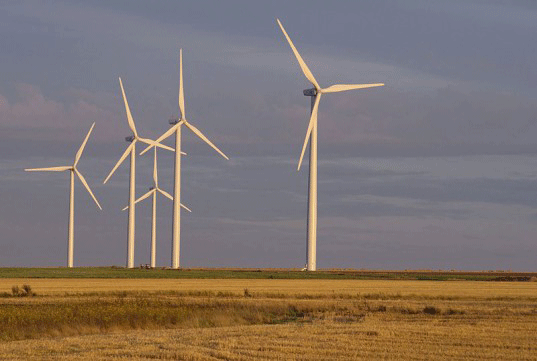 billion….
MidAmerican is cancelling its pursuit of new small modular nuclear power options…..
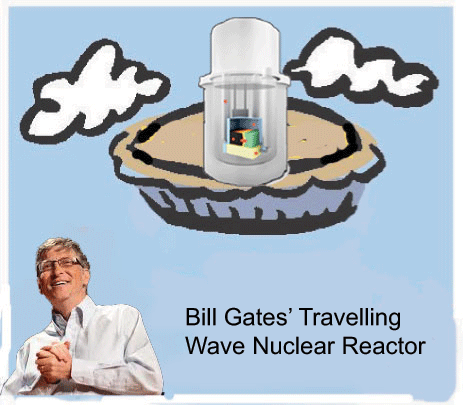
Buffett & co choose wind energy investment over nuclear REeweconomy, By Mike Jacobs 14 June 2013 The Equation Investors working with utilities are making clear and clean choices for meeting our energy needs. Two big announcements show wind and energy efficiency are financeable and attractive, and new small nuclear reactors are not. Recently MidAmerican Energy chose to add more wind energy to its supply, dump a “modular” nuclear plant proposal, and decline to follow the trend toward burning natural gas.
Meanwhile, today Seattle City Light announced a purchase of energy from a commercial energy efficiency developer, demonstrating a power-purchase approach to fund investments in energy conservation that won’t disrupt a utility company’s financial health.
With Warren Buffet behind the wind decision, (MidAmerican is a subsidiary of Buffet’s Berkshire Hathaway), and a new financial model possibly cracking the nut on building owner and utility ambivalence about deep energy retrofits for commercial buildings, these are important developments.
To summarise what just happened: Continue reading
Norway, Iceland -100% renewable energy, and other countries following
 EU: 100 Percent Renewable Energy Is Here, The Energy Collective, David Thorpe, 13 June 13 June 13, 2013 Two questions for you: how many countries in the world source their electricity 100% from renewable sources? And which major European nation that is well-endowed with renewable energy resources, is the worst at exploiting them?
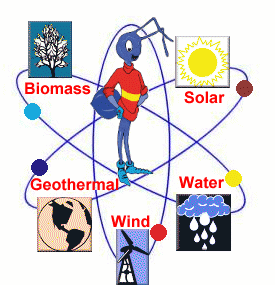 The answers can be gleaned from the recently updated International Energy Statistics of Electricity Generation from the Energy Information Administration (EIA) of the US Department of Energy…….
New York giant bank to invest $3b in Japan renewable investments
 Goldman eyes $3b in Japan renewable investments SMH, 14 June 13, Goldman Sachs, the New York-based bank planning as much as 300 billion yen ($3 billion) in renewable energy investments in Japan, is eyeing offshore wind power after building up holdings in more established clean energy sources such as solar.
Japan Renewable Energy Co. was set up by Goldman in August after Japan began offering above-market rates to producers of clean energy. The incentives, or feed-in tariffs, have spurred investments in renewables, setting Japan on course this year to become one of the world’s largest solar markets by annual installations.
The company sees offshore wind as promising, Shigeru Yasu, a representative director at Japan Renewable Energy, said in an interview in Tokyo yesterday. Geothermal and biomass power also hold potential, he said……..
Five-year investment
Japan Renewable Energy plans in the next five years to invest as much as 50 billion yen directly into clean energy projects with capital provided by GS Infrastructure Partners. It will take as much as 250 billion yen of loans for project financing, Takahisa Nakagawa, also a representative director at Japan Renewable Energy, said in the interview. The investments and loans will amount to about 1,000 megawatts of clean energy, he said……..
Japan is set to overtake Germany as the world’s largest solar market, Bloomberg New Energy Finance said last month……. http://www.smh.com.au/business/carbon-economy/goldman-eyes-3b-in-japan-renewable-investments-20130614-2o7uo.html#ixzz2WFD29I8D
Could Britain achieve 100% renewable energy?
Denmark, Norway, Portugal, Italy, Spain and all these other European countries show that it is possible to do so. They are all out-classing Britain. A bright future, full of jobs and export potential, with far less global upheaval caused by climate chaos awaits us, if only the political will was there
EU: 100 Percent Renewable Energy Is Here, The Energy Collective, David Thorpe, 13 June 13 Britain can, clearly, do far better, never mind all the party political wrangling over support for green technologies. If other countries can do it, so can we.
UK wind power succeeding without need for fossil fuel backup
Fossil fuel plants not needed to back up UK wind http://reneweconomy.com.au/2013/fossil-fuel-based-power-stations-unnecessary-to-back-up-wind-23670 By Joshua Hill 14 June 2013 An incidental note at the bottom of a wildlife article covering the culling of badgers in the UK newspaper the Daily Telegraph could have explosive results for the energy industry.
According to the addendum, a measly four paragraphs in length, the National Grid — the country’s electric grid operator — has reported that wind energy produced 23,700 gigawatt-hours (GWh) of power, requiring only 22 GWh of power from fossil fueled stations to fill the gaps: that is less than a thousandth of wind’s output, and ironically, less than a tenth of what was needed to back up conventional fossil fueled power stations.
The figures were similarly impressive when looking at emissions. According to the National Grid, wind saved nearly 11 million tonnes of carbon dioxide over the period accounted for (April 2011 through to September 2012) and required only 8,800 tonnes of carbon dioxide emissions to be released as backup, measuring in at only 0.081%.
There is no easy information available on the National Grid website to confirm these figures referenced in the Daily Telegraph article, and furthermore the paper’s final sentence — “Not surprisingly, given these figures, no new fossil‑fuel power station has been built to provide back‑up for wind farms, and none is in prospect” — seems to be in direct contradiction to a BBC News story published this week, reporting that two diesel power stations are planned to compensate for fluctuations in green energy.
According to the article, Green Frog Power received planning permission last year to build its diesel power station in Plymouth, while Fulcrum Power has made an application for a similar power station in Plymouth, as well. Unsurprisingly, given the current climate surrounding the energy industry, both companies said that they support renewable energy. This article was originally posted on Cleantechnica. Re-produced with permission.
Renewable energy investment going strong in emerging nations
Renewable Energy Investments Shift to Developing Nations http://www.bloomberg.com/news/2013-06-12/renewable-energy-investments-shift-to-developing-nations.html By Alex Morales – Jun 12, 2013 Renewable energy investments are shifting to developing nations as countries from Morocco to Chile pursue power sources that wean them off fossil fuel imports, two studies promoted by the United Nations said.
China’s $67 billion of investment in wind, solar and other renewable projects led developing nations to $112 billion of spending in 2012, according to an e-mailed statement today from the UN and other groups involved in the studies. That compares with $132 billion of expenditure in the industrialized world.
The gap on renewables spending between richer and developing countries shrank to 18 percent last year from 250 percent in 2007, marking a “dramatic change” in investment patterns, the statement said. Two-thirds of the 138 nations that now have clean-energy targets are in the developing world.
“The uptake of renewable energies continues worldwide as countries, companies and communities seize the linkages between low-carbon green economies and a future of energy access and security,” UN Environment Program Executive Director Achim Steiner said in the statement. “More and more countries are set to take the renewable energy stage,” he said, citing “the logic and the rationale of embracing a green development path.” Continue reading
Shared Renewable Energy Bill in California an exciting development
California Shared Renewable Energy Bills Gain Momentum, http://theenergycollective.com/rosana-francescato/236241/california-shared-renewables-bills-gain-momentum by Rosana Francescato June 11, 2013 Momentum is building for shared renewable energy in California. Late last week the two bills we’ve been following there, SB 43 and AB 1014, passed with strong margins in their chambers of origin — marking the first time this legislation has moved beyond committee to pass in either chamber.
The author of SB 43, Senator Lois Wolk, worked late into the night to draft last-minute amendments that would address concerns expressed by both Senator Alex Padilla and several utilities. The concerns were about an issue that’s been hounding the bill since its previous incarnation last year as SB 843: that there be no cost-shifting to utility customers not participating in the bill’s program.
The program allows for 500 MW of renewable energy projects that are ideal for utility customers who can’t put solar on their own roof. When they subscribe to energy produced by these shared renewable projects, customers get a credit on their power bill for that energy.
While this may sound great to customers, especially renters, utilities are sceptical. They want to ensure that the method used to calculate the bill credit be fair to all customers, including those who don’t sign up for shared renewables projects. Whether or not the utilities’ concern is disingenuous (remember the debate about net metering?), the bill’s sponsors have focused on addressing this point to ensure both fairness to all customers and passage of the bill.
And pass it did last week, with a vote in the California Senate of 27 – 9. The bill’s current version includes carve-outs that have been key requests of environmental justice and community power organizations: at least 20% of the program is set aside to be built in environmental justice areas, and at least 20% is set aside to be available to residential customers.
Less dramatic was the passage of AB 1014, which sailed through the Assembly with no debate and a vote of 55 – 17. Authored by Assemblyman Das Williams, this bill creates a voluntary program that allows utility customers to opt for 100% renewable energy, through their utility. As with SB 43, an important component of this bill was avoiding any cost-shifting to non-participants.
The bills have distinct approaches, but according to Tom Price, California Shared Renewables Policy and Market Strategies Director, “both solve the same problem — letting people who can’t buy renewable energy because they don’t have a place to physically install it to instead virtually install it on their power bill.”
As currently written, each bill would generate about 500 MW of new clean energy, 6,500 jobs, $60M in new taxes, and $2B in economic activity — all without a penny of state incentives.
At some point, SB 43 and AB 1014 are expected to be reconciled into one. No one knows yet how or when that will happen. Given that some still view SB 43 as pricing mechanism with cost shifts, there may be a convergence toward AB 1014’s PG&E-approved pricing structure. Wolk and Williams are working together to ensure the bills are supportive of each other.
The bills are now set to go through the policy committee of the opposite chamber, and then that chamber’s appropriations committee, before moving on to the whole floor. They’re likely to reach the policy committees by early July.
For the moment, the bills are on pause. But it won’t be long before it’s once again time for action. Keeping both bills moving forward requires showing as much support as possible. To receive updates and find out how you can get involved, sign up at the California Shared Renewables site.
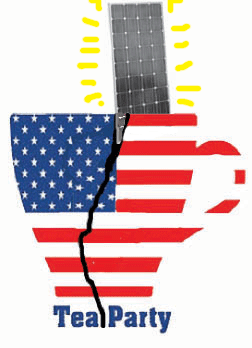
A crack appears in Tea Party’s opposition to solar emergy
 Even if the Public Service Commission forces Georgia Power to expand its use of solar power in their energy plan, Dooley said the fight is far from over. She plans to continue her efforts by pushing for upcoming legislation that would allow private companies to set up solar farms and feed their energy into Georgia Power’s grid, continuing to put pressure on Georgia Power for cost overruns at its Vogtle nuclear power plant, and possibly even challenging the law that grants monopoly rights to utilities. http://theenergycollective.com/josephromm/234916/tea-party-takes-georgia-power-over-lack-solar-energy
Tea Party Takes on Utility Over Lack of Solar Energy, Energy Collective, Joseph Romm , 9 June 13 The fight to bring cheaper, clean energy to Georgia is uniting some unlikely allies. Renewable energy advocates and leaders of the Atlanta Tea Party are taking on utility giant Southern Co., and its subsidiary Georgia Power, over resisting the call to expand its development of solar energy.
As Debbie Dooley, co-founder of the Atlanta Tea Party explained in an interview with Climate Progress, the group’s interest in the debate is quite simple: “The free market has been one of the founding principles of the Tea Party since it began and a monopoly is not a free market.” Continue reading
Global Impact Award goes to Solar Aid
 SolarAid Recipient Of £500,000 Google Award. http://www.energymatters.com.au/index.php?main_page=news_article&article_id=3783, 9 June 13, by Energy Matters Last week, SolarAid became the winner of a £500,000 Google Global Impact Award.We first covered SolarAid back in 2009. The group’s mission is make solar energy as widely available as possible to the poorest people in developing countries by providing affordable (and in some instances free) solar lighting.
Its core focus is the social enterprise, SunnyMoney. Lights are sold to local entrepreneurs; who then resell the equipment in their communities at a reasonable price. The approximate payback time of a basic light through savings on kerosene fuel is around 12 weeks. The group also offers a donate-a-light initiative; where donors can sponsor a light for a family.
SunnyMoney has sold over 338,000 lights in the last 12 months, growing over 550% year on year to become the largest seller of solar lights in Africa. In total, the organisation has distributed over a half a million solar lights. With the average household size in East Africa being five, SolarAid’s work has helped to transform the lives of over two and a half million people.
SolarAid says it will use the half a million pound prize to distribute 144,000 solar lights in rural Tanzania and recruit 400 school leavers to create a new generation of solar entrepreneurs.
“The support pledged by Google to the four Award winners will help SolarAid raise its profile, gain more supporters and ensure the injustice of living without clean light gets onto the world radar,” says SolarAid.
With 85% of Africans not having access to electricity, the entrepreneurial approach has massive potential – not just in lighting up lives, but improving health and creating employment. SolarAid has set a lofty goal of eradicating the kerosene lamp from Africa by 2020.
Google’s Global Impact Awards support nonprofits using technology and innovation to tackle tough human challenges.
New Mexico’s huge solar energy farm goes ahead
New Mexico’s Largest Solar Farm To Proceed, http://www.energymatters.com.au/index.php?main_page=news_article&article_id=3781 7 June 13, New Mexico’s largest solar energy plant, the 50-megawatt Macho Springs Solar Project, will go ahead after a 25-year power purchase agreement (PPA) was signed by the New Mexico Public Regulator and El Paso Electric Power.
Under the arrangement, El Paso Electric – which services almost 390,000 customers in West Texas and the Rio Grande valley – will purchase the entire output from the solar farm for the duration of the PPA.
Construction of the plant is set to begin in July and will be completed in 2014. Sited on about 500 acres of state land in Luna County, New Mexico, Macho Springs is expected to generate enough power to provide electricity for around 18,000 homes.
The project will avoid 40,000 metric tons of carbon dioxide emissions, the equivalent of taking 7,500 cars off the road, and save up to 340,000 tons of water each year.
The Macho Springs project will create 300 new jobs during its year-long construction phase and three full-time maintenance and operation positions. State Land Commissioner Ray Powell said in a statement that the lease payments from the solar plant could generate as much as $40 million for state land trust beneficiaries over the 40-year term of the lease.
The Macho Springs Solar plant is another addition to First Solar Inc’s stable of utility-scale solar power plants, including California’s massive 550-megawattTopaz and Desert Sunlight solar farms.
“We are very pleased to support El Paso Electric’s efforts to provide clean, reliable, renewable power to its customers, and contribute economic benefits and green jobs created by utility-scale solar development to Luna County,” said Michael Hatfield, First Solar Director of Project Development.
Mongolia plans to become a renewable energy hub
Mongolia eyes renewable energy as climate warms SMH June 5, 2013 Mongolia, which is banking on a mining-led investment boom to develop its economy, is aiming to turn itself into a regional renewable energy hub as it tries to fight off the pressures of global warming, the country’s president said.
“We have some ideas of how Mongolia can be Asia’s super grid for wind power and solar power, and other renewable energies. If we use all the wind power (potential) in the country, we can enhance the energy supply of China and all over Asia.”
Mongolia was chosen to host the U.N.’s World Environment Day on June 5, and at a news conference to mark the occasion, officials said the country also planned to better regulate a mining sector that is polluting an already fragile environment……..
Achim Steiner, head of the U.N. Environment Programme told Reuters during a visit this week that Mongolia had seen average temperatures rise 2.1 degrees Celsius (3.8 F) in the past 60 to 70 years – about three times faster than the global average.
Its high altitude and sparse vegetation in many regions made the nation vulnerable…..
Spain’s increasing solar radiation
Solar Radiation Increasing In Spain Red Orbit, June 6, 2013 FECYT – Spanish Foundation for Science and TechnologySolar radiation in Spain has increased by 2.3% every decade since the 1980s, according to a study by researchers from the University of Girona and the Federal Institute of Technology (ETH) in Zurich. This increase is linked to the decreased presence of clouds, which has increased the amount of direct radiation reaching us from the Sun.
“The mean annual G series over Spain shows a tendency to increase during the 1985-2010 period, with a significant linear trend of + 3.9 W m-2 [2.3% more] per decade.” This is the main conclusion of a study published in the magazine ‘Global and Planetary Change‘ by researchers from the University of Girona and the Federal Institute of Technology in Zurich (ETH, Switzerland).
The season-by-season data show the same “significant” increase in solar radiation impacting the nation: + 6.5 W/m2 per decade during the summer, + 4.1 W/m2 in autumn, + 3.2 W/m2 in spring and + 1.7 W/m2 in winter.
“These data relate to global solar radiation, in other words the increase in direct radiation reaching us from the Sun plus diffuse radiation which is scattered previously by clouds, atmospheric gases and aerosols,” explains one of the authors, Arturo Sánchez-Lorenzo, currently a postdoctoral researcher at the University of Girona…… According to the scientists, this increase may also go hand in hand with more ultraviolet rays, an excess of which presents a health risk, potentially leading to skin cancer.
More global brightening
The increase in global solar radiation is a phenomenon that has been observed in other parts of the world for almost 30 years, especially in developed countries, and it has been named “global brightening”. The fall in the diffuse component has also been observed in Central European and Eastern countries.
The team behind the study has not yet analyzed the solar radiation data for 2011-2013 provided by the Spanish State Meteorological Agency, but the data from other European weather stations suggests that this brightening is still on the rise.
“Studies such as these may be of interest to the solar energy industry, especially in countries like Spain, where not only do we already have a lot of direct solar radiation but now we are getting even more,” affirms one of the other authors, Josep Calbó, who is a professor at the University of Girona. http://www.redorbit.com/news/science/1112866837/solar-radiation-increasing-spain-060613/
Rapidly increasing popularity of solar panels, in Japan

 Japan’s post-Fukushima solar boom SMH, June 2, 2013 Domestic shipments of solar cells and modules in Japan leapt by their most in at least 30 years last fiscal year as government efforts to spur clean energy after the 2011 Fukushima disaster began to pay off.
Local shipments rose to 3,809 megawatts in the 12 months ended March 31 from 1,404 megawatts the previous year, the Japan Photovoltaic Energy Association said today on its website. The increase was the largest since 1981 when the figures were compiled for the first time.
The data underscore the popularity of solar in Japan as pressures mount to boost energy supplies after the Fukushima Dai-Ichi accident led to the shutdown of almost all the nation’s nuclear reactors. Japan started offering above-market rates in July for renewable sources such as solar and wind. Continue reading
South African renewable energy investment by Google
Google Is Investing in the Next Hotspot for Renewable Energy: South Africa By Todd Woody, Quartz | National Journal 30 May 13, There’s a place where a developer can propose, finance and build a big solar power project in a matter of months. That place is notCalifornia, Germany or China. It’s South Africa. And the country’s embrace of renewable energy has attracted investors like Google, which today said it is helping finance a 96 megawatt (MW)photovoltaic power plant in the Northern Cape province.
South Africa had “the highest growth in clean energy investment in the world last year,” Rick Needham, Google’s director of energy and sustainability, noted in a blog post about the Jasper Power Project. Google has put more than $1 billion into renewable energy, but this is only its second overseas venture. (The company put $5 million into a German photovoltaic power plant in 2011.) The search giant’s stake in Jasper is relatively small—103 million rand, or $12 million of the $260 million total cost—but the solar power station will be one of Africa’s largest, supplying enough electricity to power 30,000 homes.
Latest from Quartz: South Africa aims to install 20,000 MW of renewable energy over the next 15 years. That’s attracted SolarReserve, a California-based startup, which is developing the Jasper project as well as two other 75 MW photovoltaic power plants. …… http://news.yahoo.com/google-investing-next-hotspot-renewable-energy-south-africa-132603943.html
Good evidence for a high renewable energy future
power industry structure includes hefty and durable fossil fuel subsidies, which amount to $1.9 trillion per year or more, according to a report from the International Monetary Fund earlier this year. Those fossil fuel subsidies far outweighed the smaller and more transient subsidies offered to renewables, according to the International Energy Agency’s World Energy Outlook 2012.
Is a high renewables future really possible? REneweconomy, By Peter Bronski 27 May 2013“……..Renewables’ track record shows that they continue to outpace skeptics’ expectations. “People thought that maybe renewables would get to two percent. When they did that, people said maybe five percent. Then 10 percent,” says Hutch Hutchinson, managing director at RMI. “Renewables have been fighting and scratching the entire way. Now, there’s good analytical evidence that with some creativity and customary levels of reinvestment in our energy system, we can get to a high renewables future.” Continue reading
1 This Month
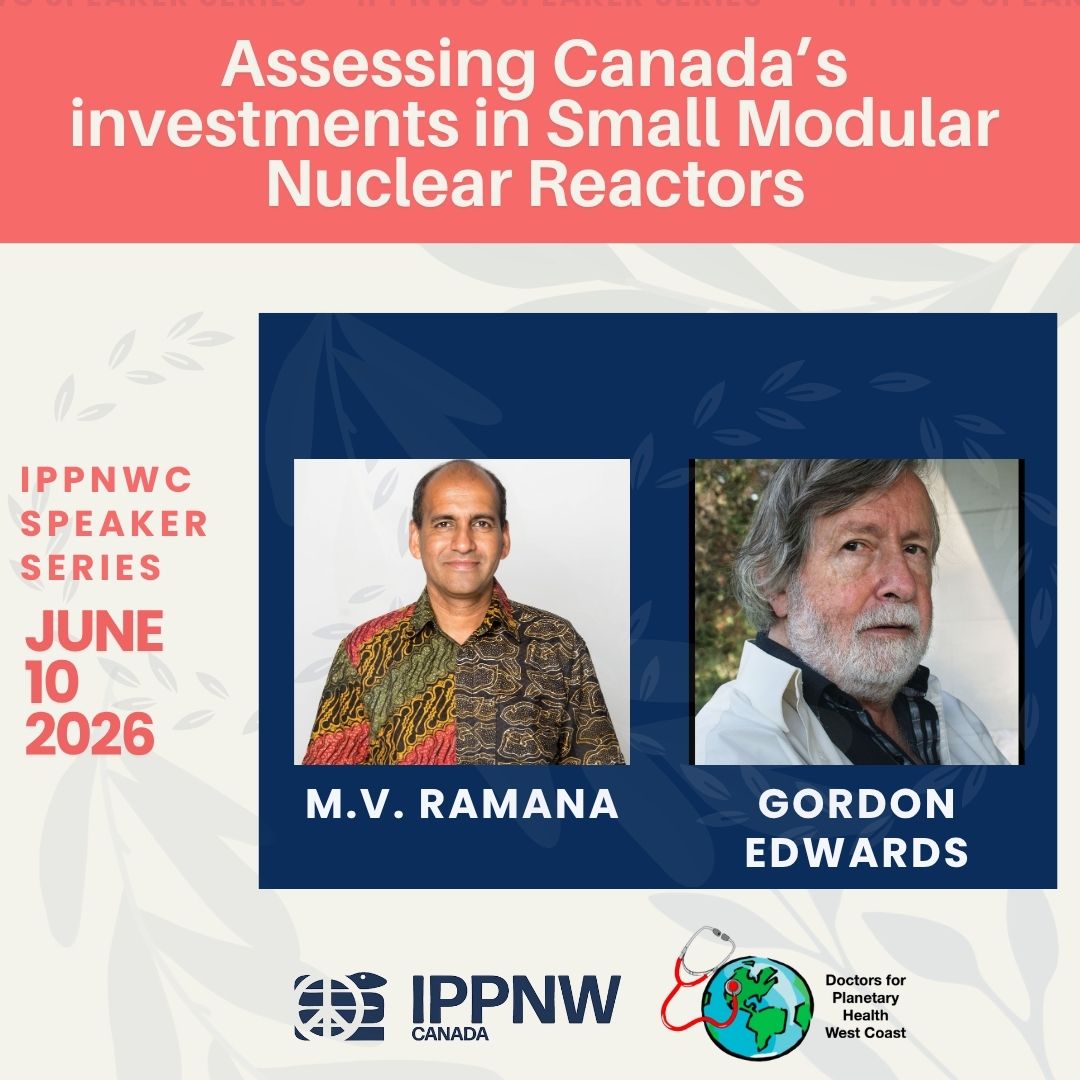
10 June – Assessing Canada’s Investments in Small Modular Nuclear Reactors – https://zoom.us/meeting/register/IiqHA5feRhaEBycOLNTJlA#/registration


Cuba Is Not a Failed State – It Is a Besieged State
PETITION: “Global Appeal to Endorse Palestinian Right of Return of Refugees”
To see nuclear-related stories in greater depth and intensity – go to https://nuclearinformation.wordpress.com
-
Archives
- June 2026 (89)
- May 2026 (306)
- April 2026 (356)
- March 2026 (251)
- February 2026 (268)
- January 2026 (308)
- December 2025 (358)
- November 2025 (359)
- October 2025 (376)
- September 2025 (257)
- August 2025 (319)
- July 2025 (230)
-
Categories
- 1
- 1 NUCLEAR ISSUES
- business and costs
- climate change
- culture and arts
- ENERGY
- environment
- health
- history
- indigenous issues
- Legal
- marketing of nuclear
- media
- opposition to nuclear
- PERSONAL STORIES
- politics
- politics international
- Religion and ethics
- safety
- secrets,lies and civil liberties
- spinbuster
- technology
- Uranium
- wastes
- weapons and war
- Women
- 2 WORLD
- ACTION
- AFRICA
- Atrocities
- AUSTRALIA
- Christina's notes
- Christina's themes
- culture and arts
- Events
- Fuk 2022
- Fuk 2023
- Fukushima 2017
- Fukushima 2018
- fukushima 2019
- Fukushima 2020
- Fukushima 2021
- general
- global warming
- Humour (God we need it)
- Nuclear
- RARE EARTHS
- Reference
- resources – print
- Resources -audiovicual
- Weekly Newsletter
- World
- World Nuclear
- YouTube
-
RSS
Entries RSS
Comments RSS
 nuclear-news