France greenlights a raft of new tenders for solar energy

 France rolls out solar tenders for 20 GW by 2023 http://www.pv-magazine.com/news/details/beitrag/france-rolls-out-solar-tenders-for-20-gw-by-2023_100025234/#ixzz4DUCfz1pn01. JULY 2016 BY: IAN CLOVER French environment and energy minister Segolene Royal greenlights raft of new tenders for solar energy, including a three-fold increase in installed PV capacity, eyeing 20 GW by 2023. The French environment and energy minister Segolene Royal announced this week the introduction of a number of new solar tenders in France for the development of various PV applications.
Chiefly, France is aiming to triple its solar PV capacity to 20 GW by 2023, with the tenders expected to hit incremental goals of 10.2 GW by 2018, and between 18.2 to 20.2 GW by 2023.
Other tenders announced aim to support France’s stuttering building integrated photovoltaics (BIPV) sector, with the French government earmarking 450 MW of BIPV tenders over the coming three years. Another tender will be aimed solely at the country’s self-consumption sector, particularly in C&I and agriculture, while 1 GW of tenders for ground mounted PV will be issued annually for the next six years.
An additional 50 MW tender for solar+storage has also been introduced for France’s overseas territories.
This latest suite of support for solar development follows the previous round of tenders – first introduced in 2014 – that have collectively attracted more than $1 billion in investment into France’s solar PV industry. Experts in the country believe that the certainty offered by this approach will curry further favor with investors, and should particularly help boost France’s ground-mount and BIPV sectors.
The plans were first announced by the Conseil Superieur de L’Energie (CSE) in April, which outlined how France will embrace further its use of solar and wind energy. However, the CSE confirmed that there will be no nuclear plant closures before 2019, but affirmed that nuclear’s share of the energy mix will fall from 75% currently to 50% by 2025.
For solar, the cumulative target for 2023 is relatively ambitious and certainly achievable. France currently has just over 6.2 GW of cumulative PV capacity installed – according to official figures from grid operator RTE – and added just under 1 GW of capacity in 2015. Bloomberg New Energy Finance (BNEF) expects France to add around, or just above, 1 GW of new capacity this year, but the hope is that these new tenders will accelerate that pace of installation.
World Bank backs solar power in 1 trillion dollars loan, tripling India’s renewable energy

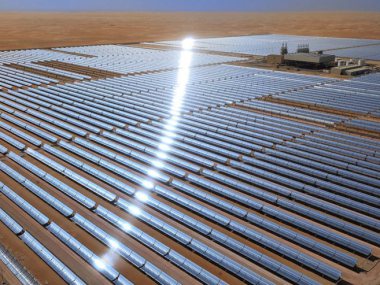 PM Modi lands World Bank’s record 1 trillion dollars loan for mega solar power project The World Bank has signed an agreement with India-led International Solar Alliance (ISA) to mobilise investments worth $1 trillion by 2030. IANS India Today, by Arpan RaiNew Delhi, June 30, 2016 The World Bank on Thursday signed an agreement with India-led International Solar Alliance (ISA) to mobilise investments worth $1 trillion by 2030 to help fund projects to increase solar energy use around the world.
The agreement, establishing the World Bank Group as a financial partner for 121-nation ISA, was signed here in the presence of visiting World Bank President Jim Yong Kim, Finance Minister Arun Jaitley and New and Renewable Energy Minister Piyush Goyal.
The ISA was launched at the Paris United Nations Climate Change Conference in November by Prime Minister Narendra Modi and French President Francois Hollande.
WHAT ALL DOES THE AGREEMENT INCLUDE?
As part of the agreement, the Bank will develop a roadmap to mobilise financing for development and deployment of affordable solar energy, and work with other multilateral development banks and financial institutions to develop financing instruments to support solar development.
On the occasion, the multilateral lender also announced that it planned to provide more than $1 billion to support India’s initiative to expand solar energy generation.
WHY IS THE MOVE A GRAND INVESTMENT FOR WORLD BANK?
The solar investments for India combined would be the Bank’s largest financing of solar energy projects for any country in the world to date, it said.
India’s plans to virtually triple the share of renewable energy by 2030 will both transform the country’s energy supply and have far-reaching global implications in the fight against climate change………http://indiatoday.intoday.in/story/pm-modi-lands-world-banks-record-1-trillion-dollars-loan-for-mega-solar-power-project/1/704572.html
US solar power market hits all-time high
 Here comes the sun: US solar power market hits all-time high, Guardian, Matt Weiser, 29 June 16
After a rocky start, the American solar market is taking off and growing faster than coal and natural gas power. What will it take to make it go truly mainstream?
Solar energy in the US has had a rocky existence. Ever since Ronald Reagan symbolically removed Jimmy Carter’s solar panels from the White House roof in 1986, federal policy has been unpredictable, such that manufacturers and consumers could never depend on reliable incentives to produce and install solar energy systems.
Remarkably, the US solar energy industry is now entering what may be its most prosperous decade ever, thanks to a new wave of federal and state policies and positive economics in the industry, both at home and abroad.
“I think it will actually be bigger than people are projecting,” says Jigar Shah, president and co-founder of Generate Capital, a clean energy investment firm based in San Francisco. “The solar industry is booming right now.”
The US solar industry expects to install 14.5 gigawatts of solar power in 2016, a 94% increase over the record 7.5 gigawatts last year, according to a new market report by GTM Research and the Solar Energy Industries Association. Revenues from solar installations also increased 21% from 2014 to more than $22bn in 2015.
For the first time, more solar systems came online than natural gas power plants – the top source of electricity in the US – in 2015, as measured in megawatts, said Justin Baca, vice president of markets and research at the Solar Energy Industries Association. This year, new solar is expected to surpass installations of all other sources, said the US Energy Information Administration.
The rise of solar energy use, especially by homes and businesses with panels on their roofs, is gradually transforming the electricity industry. For more than a century, power plant owners and utilities have controlled the energy delivery service, and some of them enjoy a monopoly.
“We were just a tiny little speck 10 years ago, and now we are really up there with the major established generating technologies,” said Baca. “It’s amazing.”
Sunny path
What’s behind all this? A federal tax credit has played a key role: it enables home and business owners to take off 30% of the price of their solar energy systems from their income taxes. Congress renewed the tax credit last December.
Another factor is cost. It is simply a lot cheaper to install solar these days, largely because cost of components have declined considerably. The wholesale price of a solar panel today is about $0.65 per watt, compared with $0.74 per watt a year ago and $4 per watt in 2008…….
The tariffs and increasing domestic demand have boosted manufacturing jobs in the US, which is now one of the top five nations for solar panel producers behind China, Singapore, Taiwan and Malaysia.
“Now the market’s so large you can actually sustain the large manufacturing plants and support the product locally,” said Shah.
One example is SolarCity, which is building a giant new solar panel factory in Buffalo, New York. The facility, expected to be in operation later this year, plans to employ 3,500 people. It will produce panels primarily for SolarCity’s own projects around the world……..https://www.theguardian.com/sustainable-business/2016/jun/28/solar-power-energy-us-utilities-environment-climate-change
Fiji making its mark in renewable energy
Solar energy: Innovative start-up puts Fiji ahead on renewable energy, ABC News, 1 July 16 By Pacific economic and business reporter Jemima Garrett Fiji is making its mark as a leader in renewable energy thanks to an innovative start-up company focusing on supplying energy to the corporate sector.
Sunergise is the brain-child of entrepreneurs from Africa and the Pacific and has attracted investment interest from the World Bank as well as from Australia, New Zealand, North America and China……..
The installation of the first 700 photovoltaic cells at the marina was completed in 2012, just two days before Cyclone Evan hit, with winds gusting up to 270 kph.
Only one panel was damaged.
Sunergise has since completed two more installations at the Port of Denarau, creating the biggest marina-based solar plant in the world.
Australia ‘well behind’
In Australia, corporate solar is lagging behind residential investment and Sunergise is something advocacy group Solar Citizens would like to see more of.
“Australia leads the world in terms of residential roof-top solar,” Solar Citizen consumer campaigner Reece Turner said.
“Mums and dads have invested $8 billion of their own money in solar panels in just the last six or seven years. But we are well behind in the commercial space; comparatively we are probably 20th or 30th in the world in terms of commercial solar.
“That is where we are seeing some of the growth now but we really need to incentivise that uptake of commercial solar.”
We sell energy’
Sunergise’s business model is to focus on blue chip corporate clients and to own and operate the infrastructure they put on their roof.
“We don’t sell solar panels, we sell energy,” Sunergise chairman Bob Lyon said.
“We install the panels, the clients get an instant discount on their power, they don’t pay anything [for the infrastructure].”
Sunergise sells contracts that run for 10 or more years, with the client enjoying an initial saving of about 10 per cent and certainty on their power costs for the full term of the contract.
One of Fiji’s top hotels, the Tokoriki Island resort, uses Sunergise’s solar power technology and has cut its power bill by 50 per cent and silenced its expensive diesel generators.
The World Bank’s International Finance Corporation, its private sector arm, made its decision to take a 20 per cent stake in Sunergise based on the skills of its people………http://www.abc.net.au/news/2016-06-30/innovative-start-up-puts-fiji-ahead-on-renewable-energy/7557594
Nuclear power generation no longer makes sense: renewables set to boom in California
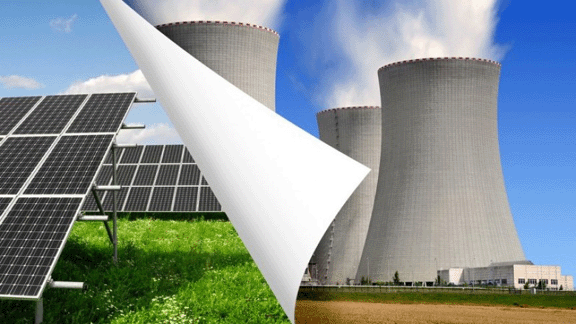 As Nuclear Plants Shut Down, Renewable Energy Could Boom A California utility wants to close the state’s last nuclear power plant and replace it with solar and wind farms. Take Part JUN 29, 2016 Taylor Hill is an associate editor at TakePart covering environment and wildlife. “…….The shutdown has implications nationwide, as it shows how dozens of other aging nuclear plants could also be closed in favor of cheap natural gas or renewable energy…….
“Given these and other uncertainties, the parties cannot, and it would be a mistake to try to, specify all the necessary replacement procurement now,” PG&E stated in the proposal to shutter Diablo Canyon.
The boom in rooftop solar systems will also help meet electricity demand, said Geisha Williams, president of PG&E. Photovoltaic panels installed on the roofs of homes and businesses account for an estimated 5 percent of California’s electricity generation.
“You don’t need [Diablo Canyon],” Williams told KQED. “There’s been so much energy efficiency. There’s been so much power that’s been generated by customers on their own private solar rooftop.”
The nuclear power decline could be a turning point for solar.
“To the extent that any capacity is retired—nuclear or otherwise—it’s an opportunity for new solar development,” said Shayle Kann, senior vice president of research for Greentech Media.
Hillary Clinton, the presumptive Democratic presidential nominee, is calling for solar capacity to grow from 26 gigawatts to 140 gigawatts by the end of 2020 and for half a billion solar panels to be installed by the end of her first term if she is elected…….
The cost of producing electricity from photovoltaic panels is expected to drop by 59 percent worldwide by 2025, according to a new report from the International Renewable Energy Agency, making solar cheaper than fossil fuels.
“The fact is that we live in a world where technologically, financially, environmentally, and ethically, nuclear power generation no longer makes sense,” Dorsey said……http://www.takepart.com/article/2016/06/29/solar-nuclear-california-future
Four new solar power plants in Fukushima
Mitsubishi Materials builds solar plants in Fukushima, Japan Today , By Shinichi Kato, Nikkei BP CleanTech Institute, 29 June 16, TOKYO —Mitsubishi Materials Corp has started operation of solar power plants with a total output of about 8.3MW in Fukushima Prefecture.

The power producer for the mega (large-scale) solar power plants, Yabuki Solar Power Plant, is MM Sun Power, a 50-50 joint venture between Mitsubishi Materials and Mitsubishi UFJ Lease & Finance Co Ltd.
The plants were built by using four unoccupied areas of Yabuki Techno Park, which Mitsubishi Materials Real Estate Corp, a subsidiary of Mitsubishi Materials, runs in Yabuki-machi, Nishishirakawa-gun, Fukushima Prefecture, Japan.
The Yabuki Solar Power Plant consists of four solar power plants built on the four areas. The total site area is 103,624m2, and the total output of solar panels installed at the plants is 8.284MW. The plants transmit a total of 6.544MW of electricity to the power grid…….http://www.japantoday.com/category/business/view/mitsubishi-materials-builds-solar-plants-in-fukushima
International Energy Agency favours clean energy to cut air-pollution mortality
 Shift to Clean Energy Could Save Millions Who Die From Pollution
Reducing deadly pollution has the double benefit of quickly trimming carbon dioxide emissions, the International Energy Agency says. Inside Climate News, BY PHIL MCKENNA 27 JUNE 16
In its first report ever to examine the links between these twin goals, the authoritative International Energy Agency said the solutions go “hand-in-hand.”
With a 7 percent increase in energy-related investment, it said, the world could cut air-pollution mortality from about 6.5 million today to 3.3 million in 2040. And the changes would bring about a peak in CO2 emissions by 2020, it said.
Along with spending on pollution control equipment, the keys, it said, are energy efficiency and the use of renewables like wind and solar.
The report marks a new movement among those who favor the long-term goal of fighting global warming toward an equal and more immediate concern—protecting the health of the world…….
The IEA assessment outlines a Clean Air Scenario where an additional $4.8 trillion in pollution control technologies, renewable energy and energy efficiency measures is invested worldwide between now and 2040. The investment would include making clean cooking facilities available to an additional 1.8 billion people worldwide.
The $4.8 trillion cost represents an additional 7 percent on top of energy spending plans already announced by the world’s nations, including the pledges to reduce carbon dioxide emissions that they made under the new Paris climate treaty. (The IEA calls this baseline its “New Policies Scenario” to distinguish it from business as usual.)
The alternative Clean Air Scenario detailed in the report would result in a drop of more than 50 percent in global emissions of sulfur dioxide and nitrogen oxides and a nearly 75 percent reduction in harmful particulate matter emissions by 2040.
Air pollution reductions would be greatest in developing countries. The 60 percent of India’s population currently exposed to air with a high concentration of fine particles would, for example, fall to less than 20 percent, according to the report.
“Implementing the IEA strategy in the Clean Air Scenario can push energy-related pollution levels into a steep decline in all countries,” Birol said.
“It can also deliver universal access to modern energy, a rapid peak and decline in global greenhouse-gas emissions and lower fossil-fuel import bills in many countries.”…….http://insideclimatenews.org/news/27062016/shift-clean-energy-could-save-climate-and-millions-who-die-air-pollution
Floating solar panels – the go for drought-stricken US lakes
 Floating solar is a win-win energy solution for drought-stricken US lakes
Sunbaked southwest US is a prime spot for floatovoltaic projects, where they could produce clean energy and prevent evaporation in major man-made reservoirs, reports Environment 360, Guardian, Philip Warburg , 1 July 16 The Colorado River’s two great reservoirs, Lake Mead and Lake Powell, are in retreat. Multi-year droughts and chronic overuse have taken their toll, to be sure, but vast quantities of water are also lost to evaporation. What if the same scorching sun that causes so much of this water loss were harnessed for electric power?

Installing floating solar photovoltaic arrays, sometimes called “floatovoltaics,” on a portion of these two reservoirs in the southwestern United States could produce clean, renewable energy while shielding significant expanses of water from the hot desert sun.
The dual energy and environmental benefits of floating solar arrays are already beginning to earn the technology a place in the global clean energy marketplace, with floatovoltaic projects now being built in places as diverse as Australia, Brazil, China, England, India, Japan, South Korea, and California. And nowhere could they prove as effective as on lakes Mead and Powell, the two largest man-made reservoirs in the US.
The US Bureau of Reclamation estimates that800,000 acre-feet of water – nearly six percent of the Colorado River’s annual flow – is baked off Lake Mead’s surface by the searing desert sun during an average year. Lake Powell loses about860,000 acre-feet annually to evaporation and bank seepage. Since floatovoltaics can reduce evaporation in dry climates by as much as 90%, covering portions of these two water bodies with solar panels could result in significant water savings.
Extrapolating from the spatial needs of floating solar farms already built or designed, the electricity gains from installing floatovoltaics on just a fraction of these man-made desert lakes could be momentous. If six percent of Lake Mead’s surface were devoted to solar power, the yield would be at least 3,400 megawatts of electric-generating capacity – substantially more than the Hoover Dam’s generating capacity of 2,074 megawatts.
This solar infusion could give the power-hungry Southwest a major boost in renewable electricity, and at least some of that power could piggyback on underused transmission lines built for the Hoover Dam…….https://www.theguardian.com/environment/2016/jun/30/floating-solar-is-a-win-win-energy-solution-for-drought-stricken-us-lakes
Route 66 – America’s first public solar road
The street pavers were developed by Solar Roadways, a company created by inventors Scott and Julie Brusaw which raised more than $2.2 million in crowdfunding in 2014 to bring their technology to market. The Brusaws claim that replacing all of America’s roads and parking lots with their solar pavers would generate more than three times the country’s electricity consumption in 2009.
Missouri’s transportation department is set to launch their own crowdfunding campaign to support their energy experiment, and expects the hexagonal solar panels to be fully installed and operational by the end of the year.
A model for nuclear plant closure: Diablo Canyon co-operative plan
Diablo Canyon Nuclear Closure Plan: An Important Model, Natural Resources Defense Council, June 22, 2016 Matthew McKinzie Fourteen U.S. nuclear reactors have now been shut down or their owners have announced their closures since 2010, either because they were uneconomic in today’s electricity markets or had operational or environmental problems. The Joint Proposal announced yesterday for the two reactors at California’s Diablo Canyon Power Plant is historic, because it is the first time any utility owner has committed to a plan to replace retiring nuclear generation with 100 percent, zero-emissions, clean electricity-generating resources that are also lower cost. This shows that with careful planning, there is no need to substitute polluting fossil fuels for retiring nuclear generation –-an important model for the rest of the world.
The Diablo Joint Proposal signed by Pacific Gas & Electric (PG&E), Friends of the Earth, NRDC, labor and other environmental groups is further proof that our energy system is changing, and renewable energy and other resources can fill the gaps left from shuttering nuclear plants.
Energy efficiency, wind, and solar address climate change without nuclear energy’s burdens of highly radioactive waste, the need for physical and cyber security to guard against terrorist nuclear threats, the risk of radiation release in a major accident, and the nuclear weapons proliferation problem.
To see just how monumental the Joint Proposal for Diablo is, it’s important to take a look at what’s happening today in the nuclear industry. Since 2010, across Vermont, Massachusetts, New York, New Jersey, Florida, Illinois, Wisconsin, Nebraska and California, 14 nuclear reactors at 11 power plants totaling 11.9 gigawatts of electric capacity have either closed, or their owners have announced they will close.
Information on these closed or closing nuclear reactors is summarized in this table, and patterns are evident. Three of the reactors closed for primarily mechanical/safety reasons, whereas 11 reactors closed or will close primarily for market reasons. In other words, in today’s wholesale electricity markets (which largely do not reflect external costs imposed by carbon pollution), these reactors were unable to compete with other forms of electricity generation, including natural gas and wind, when utilities are procuring energy sources to help meet their customers’ needs……….
A carbon-free, renewable futureFortunately, both the United States and the world are making great strides forward on carbon-free energy efficiency and renewable energy, as well as technologies like demand response and battery storage. An October 2015 NRDC report “Tectonic Shift” describes how economic growth is now decoupled from energy usage, and that in fact energy usage is flat. California has adopted a requirement that half of its electricity come from renewable energy resources by 2030, and New York is about to adopt the same requirement. In 2015,in data compiled by AWEA, more than 30 percent of Iowa’s electricity came from wind power alone and three other states generated more than 20 percent of their electricity from wind power alone.
And the National Renewable Energy Laboratory has concluded that “renewable electricity generation from technologies that are commercially available today, in combination with a more flexible electric system, is more than adequate to supply 80 percent of total U.S. electricity generation in 2050 while meeting electricity demand on an hourly basis in every region of the country.”……
the Diablo Canyon proposal shows that given sufficient time to prepare, retiring nuclear capacity can transition smoothly to a mix of energy efficiency measures; clean, renewable resources; and energy storage without any role for fossil fuels – an outcome that can be optimal for the environment, the market, and the reliability of the electric grid.The Joint Proposal governing the shutdown of Diablo Canyon within nine years is exactly that – full replacement of retiring nuclear generating capacity with lower cost, zero-carbon resources. The proposal is a robust model of planned, orderly transition that takes into account sound energy policy, the values of jobs and community, the threat of climate change, and nuclear safety concerns. https://www.nrdc.org/experts/matthew-mckinzie/diablo-canyon-nuclear-closure-plan-important-model
Nestle’s new deal for powering its UK and Ireland operations with wind energy
 NEW RENEWABLE POWER SOURCE FOR NESTLE UK AND IRELAND OPERATIONS LONDON, The Climate Group, 22 June 16 Nestlé has signed a new deal to power around half of its UK and Ireland operations with wind from the Scottish Highlands.
An initial 15 year Power Partnership Agreement with Community Wind Power will see a brand new nine turbine wind farm open up in Dumfries and Galloway in the first half of 2017. It will produce approximately 125GWh of power per annum, meeting around 50% of Nestlés electricity demand in the UK and Ireland – equivalent to 30,000 homes.
Earlier this year, Nestlé UK & Ireland announced that all its grid supplied-electricity would come from renewable sources, in a deal with EDF Energy. This currently accounts for all of Nestlés electricity use in the UK and Ireland.
As a member of RE100, Nestlé is committed to transitioning its electricity use to 100% renewable electricity not just in the UK, but across its global operations. The latest available data shows that in 2015, 8.4% of Nestlés total electricity consumption was being sourced from renewable power. Today’s development is another positive step towards its global goal.
Dame Fiona Kendrick, Chairman & CEO of Nestlé UK & Ireland, said: “This is a newly commissioned wind farm, generating new energy, creating capacity that didn’t previously exist and capable of providing half of our electricity needs. It’s a proud moment for us and means we have reached another key milestone in our efforts to become a sustainable business.”…….http://www.theclimategroup.org/what-we-do/news-and-blogs/new-renewable-power-source-for-nestl-uk-and-ireland-operations/?platform=hootsuite
Potsdam Institute for Climate Impact Research says that renewables can deliver the Paris climate target
Explosive renewables development can deliver on Paris http://www.eurekalert.org/pub_releases/2016-06/pifc-erd062116.php POTSDAM INSTITUTE FOR CLIMATE IMPACT RESEARCH (PIK) While some criticize the Paris climate target as impracticable, a team of scholars argues that it is – on the contrary – a triumph of realism. First, and most importantly, adhering to the Paris target of keeping global warming well below 2 degrees Celsius is necessary in view of the massive risks that unchecked climate change would pose to society. A crucial type of threats, associated with the crossing of tipping points in the Earth system, is summarized in a landmark map for the first time. Second, implementing the Paris target is feasible through the controlled implosion of the fossil industry, instigated by a technological explosion related to renewable energy systems and other innovations. Third, the target is simple enough to create worldwide political momentum, the scientists say in their comment published in Nature Climate Change.
Necessity: tipping elements and global temperature
Based on the advances made by climate research as a whole over the past two decades, the scientists provide a defining diagram of tipping elements in the context of the global temperature evolution. “We illustrate that for the Earth system, half a degree really matters,” Winkelmann says. Warming of only 1.5 degrees above preindustrial levels will have major consequences, such as threatening the survival of coral reefs worldwide. But the difference to 2 degrees is substantial. In a 1.5-degree warmer world, for example, global sea-level rise could be limited to 1.5 meters by the year 2300, whereas at 2 degrees, 2-3 meters rise by 2300 have been projected, and the Greenland ice sheet may well pass its tipping point.
“Beyond 2 degrees, the course might be set for a long-term complete deglaciation of the Northern Hemisphere,” says Winkelmann. “This would result in sea-level rise that threatens the survival of many major coastal cities including New York, Mumbai and Tokyo. Hence the necessity of the Paris target.”
Feasibility: carbon pricing, divestment movement, wind and solar power
“While the latest IPCC assessment has shattered the infeasibility myth, showing that the 2 degrees guardrail can be respected at relatively low cost with the proper political resolve,” says co-author Stefan Rahmstorf, head of Earth System Analysis at PIK, “almost all IPCC scenarios assume so-called negative emissions – taking CO2 out of the atmosphere and storing it. That is a very long shot. However, the price decrease and the efficiency increase of wind and solar power have been beyond the most optimistic predictions.” A technical explosion of renewables would, once the new technologies reach a market penetration of 15-20 percent, lead to an implosion of the fossil industry, the scientists argue. Currently, India appears to be very serious about implementing its colossal renewables target – an example of self-amplifying developments that have the potential to tip the global market scales.
In addition, a strong climate agreement paves the way towards carbon pricing instruments that will be adopted in more and more countries, the authors say. Last but not least, issues of morality are going to interfere with economics – one case in point is the divestment campaign which aims at pulling assets out of fossil businesses. Already today, key financial market players like the German Allianz insurance, the French company AXA or the legendary US oil dynasty Rockefeller are moving in that direction.
Simplicity: negotiators can turn objectives into action
“Beyond necessity and feasibility, the 2 degrees C guardrail has a comparative advantage over competing targets that cannot be overrated in the world of ‘realpolitik’: it is easy to grasp and communicate,” says lead author Hans Joachim Schellnhuber, director of PIK. “In fact, the target strikes the optimal balance between concreteness and intelligibility. Now the world of climate action turns around one single number!” In the days and nights of the Paris negotiations, the 2 degrees concept – originating from a 1995 report by the German government advisory council for environmental issues (WBGU) – proved its worth since every national delegation could take a stance for the temperature limit of its choice. This would have been hard to imagine with the more complicated target suggestions made recently – ocean heat content, CO2 equivalent greenhouse gas atmospheric concentrations, or temperature change rate.
“The Paris agreement is a historic achievement and a genuine triumph of reason,” Schellnhuber concludes. “Now the pressure is on to implement that consensus in time, in order to avoid the looming humanitarian tragedy for good.”
###
Article: Schellnhuber, H.J., Rahmstorf, S., Winkelmann, R. (2016): Why the right climate target was agreed in Paris. Nature Climate Change
Weblink to the article once it is published: http://www.nature.com/nclimate/index.html
For further information please contact:
PIK press office
Phone: +49 331 288 25 07
E-Mail: press@pik-potsdam.de
Twitter: @PIK_Climate
Solar power brings free irrigation to a Gujarat Village
 With Solar Power, A Gujarat Village Is Irrigating Its Fields For Free NDTV, All India |Written by Rohit Bhan | Updated: May 22, 2016 DHUNDI:
HIGHLIGHTS
- Farmers formed cooperative to install solar panels in their fields
- Solar panels power irrigation, surplus power sold to electricity board
- Project funded by farmers and non-profit group IWMI
Around seven months ago, about a dozen farmers in Ramabhai’s village about 90 km from Ahmedabad came together to form a solar cooperative and set up solar panels in the fields to generate electricity.
“We used to spend 500 rupees on diesel for pumping sets for drawing water for irrigation. But now we do it with solar energy,” Rambhai said.
“We also make money by selling solar power when we not irrigating our fields. We can sell excess electricity to the power board for Rs. 4.63 per unit,” he added…….http://www.ndtv.com/india-news/with-solar-power-a-gujarat-village-is-irrigating-its-fields-for-free-1408800
Energy storage favours the renewable revolution, not outdated nuclear power
“…….Berkeley Energy Professor Daniel Kammen ably defended energy storage, ……. Energy storage is cost competitive already in some markets—unlike new nuclear, Kammen said, and its price is dropping on a steeper curve than the dramatic reductions seen in solar costs. Storage will be more effective in the decentralized energy grid that’s emerging, he continued, than nuclear could be.
“The dramatic ramp up in solar resulted in the dramatic realization that a diverse, decentralized system can provide the same critical features that we think about with a baseload highly centralized system,” said Kammen. “Not tomorrow, but in the time frame that we need it, it’s absolutely there.”….
Ball summarized: ”So the argument is that rather than having yesterday’s no-carbon technology, which is a very centralized big generation technology, you think the world now has tomorrow’s no-carbon technology, which looks like a ballet of lots of different sources ready to go.”
In addition to batteries, compressed air storage is cost competitive, Kammen said, and flywheel storage can deliver power in sub-milliseconds. And in time, electric cars, buses and other vehicles will be used as a storage resource, he said. That’s a strategy China is pursuing and that Kammen has suggested the rest of the world consider, not in the next five years, but a bit later as these technologies develop and proliferate.
Meanwhile, small modular nuclear reactors won’t be ready in time to meet the grid’s needs, he said, and conventional reactors are too expensive.
“If you want to bet on a robust-basic-research to an applied-research-deployment category,” Kammen said, “that far favors the storage revolution than it does the nuclear revolution.”…… Silicon Valley Energy Summit , Forbes 5 June 16
Even nuclear enthusiast Ernest Moniz admits that Renewable Energy Is Now Inevitable
Renewable Energy Is Now Inevitable, Energy Secretary Says, Citing Price, Forbes, Jeff McMahon , 2 June 16,
“The discussion about climate and climate science and mitigation and adaptation is very important, but the fact is that clean energy, the clean energy scaling, has an inevitability about it following Paris,” Moniz said at the close of the 7th Clean Energy Ministerial, a San Francisco gathering of 24 energy ministers.
“This is becoming inevitable. This is the direction we’re going.”
Michael Liebreich, the founder of Bloomberg New Energy Finance, has been calling the clean-energy transition inevitable for years, saying in 2013, for example, that “the inevitable conclusion is that at some point there will be a phase change, and clean energy will be the norm, not the exception.”
Liebreich said it again Thursday in San Francisco, and Moniz adopted it. But a few things had to happen before Moniz would acknowledge the “phase change.” The first was the Paris Agreement and climate conference last December that brought together an unprecedented international coalition of nations, innovators, and financiers. Secondly, the cost of clean energy and certain energy efficient products has fallen so fast that even the plummeting oil price has been unable to halt its growth.
Moniz reviewed a few indicators he had noticed at the Ministerial:
• Power Purchase Agreements (PPAs) in the range of 3¢ to 4¢ per kilowatt hour for wind and solar energy, which have made renewables competitive. PPAs are the long-term sales contracts that set the price at which utilities buy power from energy producers. In its most recent analysis of thelevelized cost of energy, last September, Lazard had wind starting at 3.2¢, solar at 4.3¢, natural gas at 5.2¢ and coal at 6.5¢. “I think we may become almost expectant about this,” Moniz said, “but if you think back a short time, this kind of development would have been viewed as completely remarkable—because it is.”
Plunging prices for energy efficient products like LED lights. Moniz praised India’s success in reducing the price and increasing the efficiency of LEDs. The Indian government has distributed more than 50 million LEDs, using its purchasing power to drive down the price as it seeks to replace the country’s 770 million incandescent bulbs. Led lights cost about $35 just four years ago. In India, the price has fallen to about 80¢ for a 9-watt LED, Moniz said, “and the implications of that are pretty incredible.” Among those implications, low-energy LED bulbs demand less power from solar panels, extending the panels’ usefulness.
• Commitments by companies to power their operations using renewable energy, spurred in some cases by a campaign of the Clean Energy Ministerial led by Germany and Denmark.
“All 3 of those elements, I think, point to the way we are seeing a scaling in this clean energy realm,” Moniz said. http://www.forbes.com/sites/jeffmcmahon/2016/06/03/renewable-energy-inevitable-energy-secretary-says-because-of-plunging-prices/#7cd098801ec9
Just 15 minutes after the Clean Energy Ministerial adjourned, a meeting came to order of Mission Innovation, a coalition of 21 countries (and Bill Gates) that have pledged to double financing for energy research and development. The first panel at that meeting included an inventor, a venture capitalist, a utility-workers union representative and a utility executive—Southern Company CEO Tom Fanning.
Fanning extolled an all-of-the-above energy portfolio but acknowledged the “explosive growth” of renewables.
As that meeting too adjourned, Moniz said he was moving beyond Liebreich’s “inevitability” to a new phase uttered by Fanning:
“His words were ‘Can’t keep the waves off the beach,’” Moniz said. “I think that’s much better stated.” http://www.forbes.com/sites/jeffmcmahon/2016/06/03/renewable-energy-inevitable-energy-secretary-says-because-of-plunging-prices/#7cd098801ec9
1 This Month




Shut down the radiation-damaged Heysham nuclear reactors now
To see nuclear-related stories in greater depth and intensity – go to https://nuclearinformation.wordpress.com

Say No to NASA’s Reckless Nuclear Reactor on the Moon
Say No to NASA’s Reckless Nuclear Reactor on the Moon
-
Archives
- November 2026 (12)
- October 2026 (302)
- September 2026 (339)
- August 2026 (330)
- July 2026 (355)
- June 2026 (287)
- May 2026 (306)
- April 2026 (356)
- March 2026 (251)
- February 2026 (267)
- January 2026 (308)
- December 2025 (358)
-
Categories
- 1
- 1 NUCLEAR ISSUES
- business and costs
- climate change
- culture and arts
- ENERGY
- environment
- health
- history
- indigenous issues
- Legal
- marketing of nuclear
- media
- opposition to nuclear
- PERSONAL STORIES
- politics
- politics international
- Religion and ethics
- safety
- secrets,lies and civil liberties
- spinbuster
- technology
- Uranium
- wastes
- weapons and war
- Women
- 2 WORLD
- ACTION
- AFRICA
- Atrocities
- AUSTRALIA
- Christina's notes
- Christina's themes
- culture and arts
- Events
- Fuk 2022
- Fuk 2023
- Fukushima 2017
- Fukushima 2018
- fukushima 2019
- Fukushima 2020
- Fukushima 2021
- general
- global warming
- Humour (God we need it)
- Nuclear
- RARE EARTHS
- Reference
- resources – print
- Resources -audiovicual
- Weekly Newsletter
- World
- World Nuclear
- YouTube
-
RSS
Entries RSS
Comments RSS

