Renewables blow past nuclear when it comes to cheap datacenter juice.
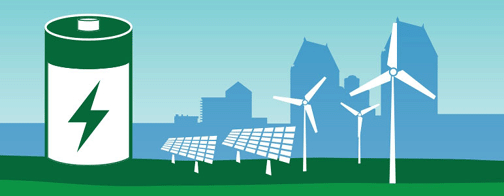
Study finds microgrids with wind, solar, and batteries can be built years sooner and at lower cost than SMRs
CNZ describes itself as an open research institute, founded by Octopus Energy Group in the UK, and claims to advise the State of California and Europe’s International Energy Agency as well as the British government.
While CNZ’s study applies to the UK sector, where energy costs are among the highest in the industrialized world, it is likely that the overall conclusion would still be valid in other countries as well.
Its analysis shows that renewables can meet 80 percent of the constant demand from a large datacenter over the course of a year. Offshore wind can provide the majority of load requirements, with gas generation backed by battery storage as a stopgap source of power representing the most cost-optimal mix.
Greater capacity in the on-site battery storage system would reduce the reliance on gas power, and this would likely happen over time as the cost of such systems is expected to come down, the report claims.
Fri 26 Sep 2025, Dan Robinson,
https://www.theregister.com/2025/09/26/renewables_vs_smr_datacenter/
Sorry, Donald Trump and Keir Starmer – Scotland doesn’t need nuclear
Craig Dalzell: I’M going to preface this article by saying that unlike
many of my comrades across the green and environmental movement, I’m not
ideologically against nuclear power per se.
In this decade of the 21st
century, we’re seeing the true energy transition start to change the
world around us faster than we realise. When I was in school, renewables
were taught as a thing that existed but were likely to only supply a small
fraction of the energy future. Today, wind and increasingly solar power are
dominating the globe in terms of new installed capacity.
Just after I left
high school in 2002, the total combined new energy generation installed
between both renewables and nuclear was about 20% of the global total that
year. Now, it’s more like 80%. And that’s massively overemphasising the
impact of nuclear.
The International Energy Agency’s 2025 Global Energy
Review found that more than 7GW of new nuclear power capacity was brought
online in the previous year compared to 700GW of new wind turbines and
solar photovoltaic panels (with solar providing around three-quarters of
that capacity). The age not just of renewables but of solar power
specifically, appears to be crashing over us.
It makes sense. The panels
are now cheap and easy to produce as once you have a production line going
it can just keep fabricating them. They’re easy to install just about
anywhere (to the point where in places like Germany it’s increasingly
common to see folk hanging them from their balconies). And every single new
panel installed anywhere starts producing power immediately with no fuel,
almost no maintenance and will keep producing power for decades.
The efficiencies of production have been stark. A solar PV panel in my school
days cost about £4.87 per watt in today’s prices. That panel now costs
about 20p per watt. A 96% price reduction in real terms.
Conventional nuclear power, on the other hand, requires years to decades of planning and
construction, truly massive upfront capital costs and the plants don’t
produce any power until they are switched on.
One way that the nuclear
sector is adapting is through the development of “small modular
reactors” (SMRs). Last week, Keir Starmer used Donald Trump’s state
visit to sign a deal for the US to produce such reactors for the UK. Costs
are expected to remain high though. Right now, a watt of conventional
nuclear energy costs about three to five times as much as solar and even
the best estimates for SMR cost reductions aren’t expected to make up
that gap.
The UK Government accepts that SMRs will only reduce the cost of
electricity by about 20% compared to conventional nuclear, which will mean
they will remain the most expensive way to generate electricity for the
foreseeable future. The future of energy, especially in Scotland, isn’t
going to be expensive conventional nuclear or expensive and untested SMRs.
It’s going to be by capturing the wind, waves and sun all around us and
bottling it for later use.
The National 25th Sept 2025, https://www.thenational.scot/politics/25496145.sorry-donald-trump-keir-starmer—scotland-doesnt-need-nuclear/
Australia rooftop solar hits 26.8 GW as home battery uptake surges

Australia is on track to exceed its 2030 rooftop solar targets with a combined 1.1 GW of new capacity installed across 115,584 households and businesses in the first half of 2025.
September 15, 2025 David Carroll, https://www.pv-magazine.com/2025/09/15/australia-rooftop-solar-hits-26-8-gw-as-home-battery-uptake-surges/
A new report from the Clean Energy Council (CEC) shows that at the end of June there was a combined 26.8 GW of rooftop solar capacity deployed across 4.2 million homes and small businesses in Australia.
The CEC’s Rooftop Solar and Storage Report reveals that 115,584 rooftop solar units were installed nationwide in the first six months of the year, down 18% on the same period 12 months prior, while the total installed capacity of 1.1 GW was 15% lower than the 1.3 GW installed over the same period in 2024.
Despite the slowdown, the CEC said Australia is likely to exceed the Australian Energy Market Operator’s (AEMO) 2030 target for rooftop solar.
AEMO’s Integrated System Plan, which underpins the federal government’s 82% by 2030 renewable energy target, expects rooftop solar to contribute 36 GW to the National Electricity Market by the end of the decade.
The CEC said based on current trends, it expects the rollout of rooftop solar in Australia will reach 37.2 GW by June 2030, beating projections by 3.3%.
CEC Distributed Energy General Manager Con Hristodoulidis said the figures highlight the pivotal role of rooftop solar in keeping Australia’s energy transition on track.
“Australian consumers and small businesses are delivering the transition at breathtaking speed, turning suburban roofs into one of the biggest power stations in the country,” he said.
Rooftop solar contributed 12.8%, or 15,463 GWh, of Australia’s total energy generation in the first six months of the year, up from 11.5% in the same period 12 months prior.
The report also shows that Australians are embracing home batteries at record pace, with 85,000 battery units sold in the first half of 2025, representing a 191% increase from the same period last year.
The uptake has surged again since the introduction of the federal government’s Cheaper Home Batteries program with government data revealing more than 43,500 installations installed in July and August alone.
“Just as Australians have long understood the value of solar in lowering household energy bills, we are now seeing a surge in battery adoption, which allows households to store their own clean energy and maximise savings,” Hristodoulidis said.
Queensland added the most rooftop solar in the first half of 2025, with 326 MW of installed capacity, followed by New South Wales (NSW) and Victoria with 321 MW and 230 MW, respectively.
NSW has the highest level of total installed rooftop solar capacity in the nation at 7.5 GW, with Queensland second at 7.2 GW, ahead of Victoria with 5.4 GW. Queensland remains the state with the most installations, with 1.1 million.
Japan shocks the world — Solar panels as strong as 20 nuclear reactors unveiled.
by Beatriz T., September 6, 2025.EcoNews,
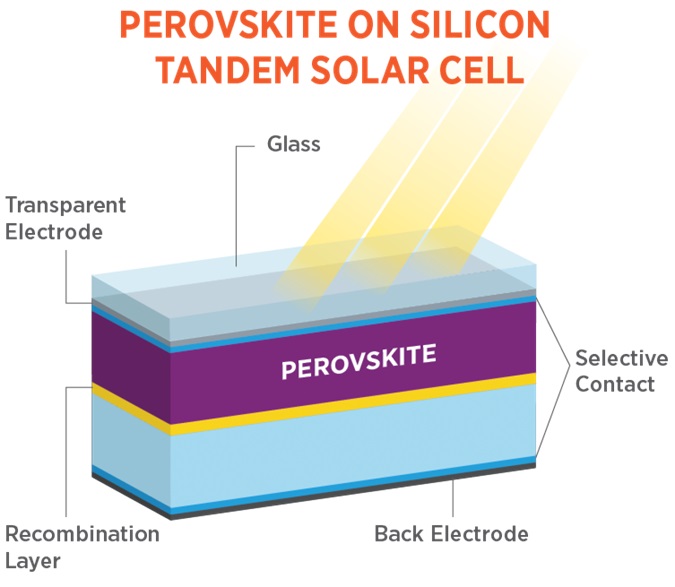
Imagine a country with limited space, a large population, and an urgent need for clean energy. That’s Japan, a nation that, since the Fukushima disaster in 2011, has been burdened with rethinking its entire energy system. This is because the catastrophe not only shook confidence in nuclear energy but also accelerated the race for sustainable and safe alternatives. More than a decade later, Japan surprises the world again with revolutionary perovskite solar cells, a light, thin, and flexible material that can be installed in places unimaginable until recently, like windows, walls, and even car roofs.
There are several important advantages
of these cells, and some of these are: Superior efficiency; application
flexibility; strategic security; export potential. Japanese companies like
Sekisui Chemical are already investing heavily in research (and other
companies are investing in the first typhoon turbine).
Internationally, Swedish company Exeger has successfully applied flexible panels to consumer products like headphones and keyboards, demonstrating that the future may be closer than we imagine. The dilemma lies in Japan seeking not only clean energy but also economic security. Essentially, the question remains: invest billions in a still-immature technology or risk losing its global leadership once again?
For a country dependent on energy imports and
vulnerable to international crises, investing in perovskites is both a
necessity and a strategic move. The country’s plan is clear: by 2040,
Japan aims to generate 20 gigawatts of power with perovskites, the
equivalent of 20 nuclear power plants.
Achieving this goal will not only be
a technological victory but a historic milestone in the global energy
transition. Essentially, this advancement could transform Japan into an
exporter of energy technology, offering the world a more efficient
alternative that’s less dependent on large areas. For densely populated
countries like South Korea, Singapore, or even parts of Europe, the
Japanese experience could serve as a model.
Eco News 6th Sept 2025,
https://www.ecoticias.com/en/japan-shocks-the-world-solar-panels/19817/
German experience shows transition to renewables possible for Taiwan and the world.
https://tcan2050.org.tw/en/nonuke-2/ 2025-08-19, Dr. Ortwin Renn |Professor emeritus of Environmental Sociology and Technology Assessment, Stuttgart University; Scientific Director emeritus, Research Institute for Sustainability at GFZ, Potsdam , Germany (RIFS)
I am writing to express my full support for your initiative to keep Taiwan’s nuclear power reactors permanently shut down and to accelerate the transition toward renewable energy. This position is not only grounded in scientific evidence but also in practical experience from countries such as my home country Germany that have successfully advanced toward a sustainable energy future.
In 2011, I served as a member of the German Federal Government’s Ethics Committee on a Safe Energy Supply, established after the Fukushima disaster. Our task was to assess the future role of nuclear energy in Germany. After extensive consultations with leading scientists, economic stakeholders, and civil society organizations, the Committee reached a consensual recommendation: to phase out nuclear energy within ten years while investing heavily in renewable energy sources. This decision was not only an ethical imperative but also based on sound economic and technological reasoning.
The results speak for themselves. Between 2011 and 2025, Germany’s share of renewable energy in electricity generation rose from 23% to over 54%—an increase of 230%. Nuclear power, which contributed less than 18% in 2011, was more than compensated for by renewables. In addition, the expansion of renewables significantly reduced reliance on fossil fuels, thereby contributing to climate protection and energy sovereignty.
Today, renewable energy is not only clean but also cost-competitive. The production of electricity from wind and solar power is now cheaper than generating electricity from coal or gas and even cheaper than nuclear power when comparing the costs of building new facilities. It is true that the transition requires substantial upfront investment in grid upgrades, storage systems, and backup solutions. However, once this infrastructure is in place, the long-term costs of renewable energy generation are lower than those of fossil or nuclear alternatives.
Germany’s relatively high electricity prices are not a consequence of renewables, but largely due to global gas price spikes and the cost of imported electricity. The long-term trend is clear: renewable energy is becoming the most economical, environmentally sound, and politically stable source of power.
The lessons for Taiwan are evident. A transition to renewable energy is possible, economically viable, and ultimately beneficial for society. It contributes to climate protection, environmental quality, and public health. It reduces dependence on imported fuels and avoids the long-term risks and costs associated with nuclear energy, including waste management and potential catastrophic accidents. Most importantly, it enables a decentralized and resilient energy system that benefits local communities.
Achieving this transformation requires significant investment and strong political will, but the German experience demonstrates that it is both feasible and advantageous. I strongly encourage Taiwan to seize this opportunity and prioritize a renewable-based energy future over a return to nuclear power.
https://tcan2050.org.tw/en/nonuke-2/
Equinix enters into multiple advanced nuclear deals to power data centers
By Laila Kearney, August 14, 2025
Major data center developer and operator Equinix (EQIX.O), opens new tab
has entered into several advanced nuclear electricity deals, including
power purchase agreements for fission energy and pre-ordering microreactors
for its operations, the company said on Thursday.
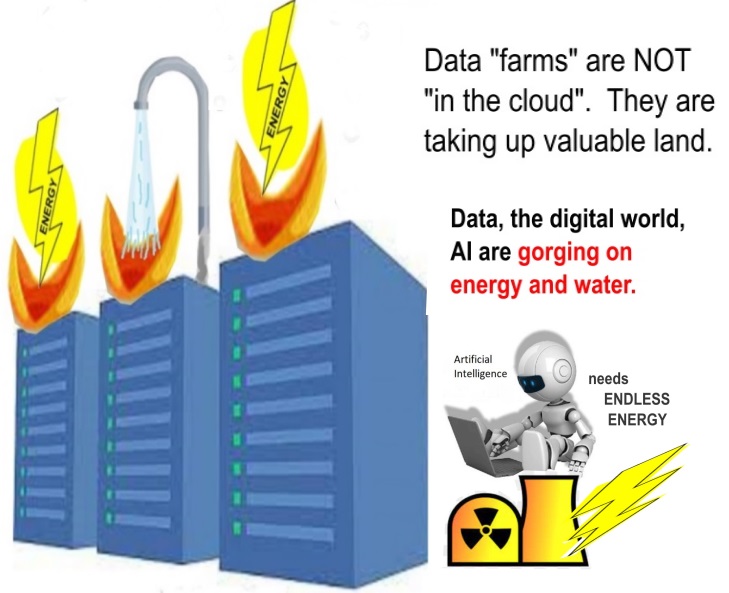
Big Tech’s race to expand technologies like generative artificial
intelligence, which requires warehouse-like data centers that can require
city-sized amounts of electricity at a single site, is driving up global
energy consumption and raising fears about depleted power supplies.
Reuters 14th Aug 2025, https://www.reuters.com/business/energy/equinix-enters-into-multiple-advanced-nuclear-deals-power-data-centers-2025-08-14/
Albanese government substantially expands renewable energy scheme amid 2030 target concerns

Albanese government substantially expands renewable energy scheme amid
2030 target concerns. Chris Bowen says Labor will increase size of its main
climate and energy program by 25% to capitalise on falling cost of solar
panels and batteries. The Australian government will substantially expand a
renewable energy underwriting scheme as it aims to capitalise on the
falling cost of solar panels and batteries and combat concerns it may
struggle to meet its 2030 climate target.
Guardian 29th July 2025,
https://www.theguardian.com/australia-news/2025/jul/29/australia-expands-renewable-energy-scheme-2030-target
“We can do that:” Australian Energy Market Operator says the country’s power system can be run on 100 pct renewable energy.
The head of the Australian Energy Market Operator says he confident that
the country’s main grid – and its smaller ones for that matter – can
be run on 100 per cent renewable energy. “At AEMO, I set an ambition in
2021 for us to understand what it takes to run a power system on 100%
renewable energy,” Westerman said in an address to the Clean Energy
Summit in Sydney on Tuesday. “And today, we’re confident that with
targeted investments in system security assets, we can do just that. I’m
incredibly proud of this, but the future is coming at us fast and those
system security investments are needed urgently run a power system on 100%
renewable energy.”
Renew Economy 29th July 2025,
https://reneweconomy.com.au/we-can-do-that-aemo-says-power-system-can-be-run-on-100-pct-renewable-energy/
Nuclear power is a parasite on AI’s credibility
The IEA expects renewables to add 10–20-fold more electricity supply than data centers raise demand. Renewables and storage are already 93% of US and 95% of world electric capacity expected to be added this year. These cheapest and fastest options can come online sooner than a data center, and they already reliably power critical loads like data centers.
Global nuclear power in a good year adds only as much net capacity as renewables add every two days
by beyondnuclearinternational, https://beyondnuclearinternational.org/2025/07/20/nuclear-power-is-a-parasite-on-ais-credibility/
The following is the press release announcing a new essay by Stanford University’s Amory Lovins, Artificial Intelligence Meets Natural Stupidity: Managing the Risks.
Claims of soaring electricity needs to power ravenous new AI data centers underpin the energy emergency declared for national security. Yet new research synthesized by a prominent energy expert, Amory Lovins, explains how hidden order-of-magnitude uncertainties in AI’s energy needs are risking major speculative losses and energy-market distortions—and he highlights timely remedies.
In fact, US electricity use fell in 2023, and in 2024, it rose only 2%—less than in three other years of the past ten. Forecasts of future electricity use have lately risen, especially in a few hotspots that promote and subsidize new data centers.
Yet that’s far from a broad trend, and most of the forecast growth is for other or reshored industries, electric vehicles, and electrifying buildings and factories. Data centers used only about 4.5% of US electricity in 2024. Of global electricity growth, the International Energy Agency (IEA) says only 5% in 2024 was for new data centers, rising to 5–10% of growth in 2025–30. Both nationally and globally, most data centers aren’t even made or run for AI; they’re for traditional functions like search engines, e-mail, and e-commerce.
Big Tech firms are indeed investing at least a trillion dollars in new AI data centers. Hundreds are planned, some as power-hungry as a small city. However, only a small fraction of those proposed are likely to be built, and not all those built are certain to thrive. Overforecasting seems endemic, severe, and underrecognized. It’s caused by peculiarities of the current data-center marketplace. But underlying those are many fundamental unknowables—even about the dominant model’s basic validity.
These make future demand for AI services extremely uncertain. Industry leaders and analysts warn of a potential financial bubble. Moreover, the electricity needed to produce a given amount of AI service is durably falling by about fourfold every year. That’s faster than purchases of AI services (costly to produce, but now often given free as bait) seem set to keep growing, yielding the revenue to buy the electricity.
Assuming explosive growth in power for AI thus looks like a double bubble that can cause toil and trouble for utility investors and for other electricity customers, as Utility Dive reported yesterday. Two precedents counsel caution: widely believed 1999 coal-industry claims that information technology would use half of US electricity by 2020 proved about 2400% too high, and in 2010–18, the world’s data centers did 550% more computing with 6% more electricity. Lovins offers important new precautions and solutions.
Even ambitious forecasts of AI’s electricity needs could be met by any of three proven methods: running data centers more flexibly on rare occasions without materially compromising service; freeing up supplies that are now largely wasted by other customers; and siting new data centers and clean energy (solar, wind, storage) together near little-used existing gas plants.
“Both time- and location-based adaptability offer promising pathways to transform data centers from electricity liabilities into grid and regional assets,” according to Stanford’s Amory Lovins. “By aligning compute demand with cleaner energy availability—whether by time-shifting workloads or siting them in regions with surplus renewables—data centers can support grid resilience, reduce carbon intensity and other impacts, save infrastructure, and cut cost, if not distorted by short-term economic incentives such as local tax breaks.
The IEA expects renewables to add 10–20-fold more electricity supply than data centers raise demand. Renewables and storage are already 93% of US and 95% of world electric capacity expected to be added this year. These cheapest and fastest options can come online sooner than a data center, and they already reliably power critical loads like data centers.
Fossil and nuclear plants, both favored by federal policy, would be far slower and costlier: turbines for new gas plants are sold out to at least 2031, and global nuclear power in a good year adds only as much net capacity as renewables add every two days.
“Renewables’ high speed and low cost have run off with the world power market. For anyone who reads the data and respects the market, it’s game over. Nuclear energy is a parasite on AI’s credibility. Pairing them makes them both less investable,” added Lovins.
Buying slower, costlier power by misunderstanding AI and grids risks higher retail rates and painful investor losses—as occurred when hundreds of unneeded power plants were built in a similar panic a quarter-century ago (part of the dot-com bubble’s $5-trillion losses).
Utility regulators should protect the public from these speculative risks by requiring data-center developers to post a bond or insurance policy guaranteeing full payment for their future power needs. Then the parties seeking profits will bear the independently priced risks that their projects create. Responsible AI use may also reduce the risk that AI-enabling more and cheaper oil and gas production may emit more carbon than AI saves.
Physicist Amory Lovins is a globally recognized expert on energy productivity, renewable energy, and sustainable design based at Stanford University. The full article is available for download.
Nuclear waste to nuclear reactor: The case of Russia in Kazakhstan
Ayushi Saini, 11 Jul 2025 https://www.lowyinstitute.org/the-interpreter/nuclear-waste-nuclear-reactor-case-russia-kazakhstan
Facing energy deficits, Kazakhstan turns to Russia’s Rosatom for nuclear
power despite a history of environmental and dependency concerns.
After shutting down its last Soviet-era reactor in 1999, Kazakhstan is now on the cusp of returning to nuclear energy. Long reliant on non-renewables and electricity imports, the country faces rising energy demands and an urgent need to diversify its energy sources.
In October 2024, a national referendum strongly backed the construction of a nuclear power plant, with Russia’s Rosatom ultimately selected to lead the project. The decision marks a major shift in the country’s energy strategy and reaffirms Russia’s enduring influence in Central Asia’s high-stakes infrastructure sector.
However, the decision raises several concerns, including environmental risks, increased energy dependence on Russia, and the revival of unsettling memories of Soviet-era nuclear contamination in Kazakhstan. Understanding why Kazakhstan is turning back to nuclear power and why it chose Russia for its first Nuclear Power Plant (NPP)merits a closer look at the strategic and geopolitical factors behind this move.
Nuclear past, nuclear future
Kazakhstan’s journey with nuclear technology is fraught and painful. As a Soviet republic, it served as a major testing ground, most notably at the Semipalatinsk Test Site, where more than 450 atmospheric and underground nuclear detonations took place. This placed a heavy toll on the environment of Kazakhstan, without the nuclear waste having been taken care of by the Soviet Union.
From 1979 to 1999, Kazakhstan hosted a high-neutron Soviet nuclear power plant. After independence in 1991, Kazakhstan dismantled its arsenal and embraced nuclear non-proliferation with the Semipalatinsk test site closing in the same year.
Now, facing power deficits, it is returning to nuclear power for civilian use. The new plant will be built near the village of Ulken by Lake Balkhash – a site chosen for its geographical viability, including proximity to water access. However, environmental concerns persist. Kazakhstan lacks the domestic capacity to manage nuclear waste and must rely on external actors. Despite its past role in Kazakhstan’s nuclear contamination, Russia has reemerged as a key partner in the country’s nuclear revival.
Illusion of a consortium
Astana designated Rosatom to lead the construction of its first NPPafter a competitive bidding process involving China’s China National Nuclear Commission (CNNC), France’s Electricité de France (EDF), and Korea Hydro & Nuclear Power. While authorities claim the formation of an international consortium, Rosatom remains the undisputed leader, reflecting both its technological edge and Moscow’s strategic weight in Astana. Kazakhstan claims that it is the exclusive owner, operator, and supplier of uranium fuel, with complete control over the technological processes of its upcoming nuclear power plant.
Meanwhile, China has been selected to lead the second nuclear power plant, with feasibility studies underway. Kazakhstani officials argue that China is best suited to cooperate with Russia, given their regional rapport. Though framed as multinational, the consortium appears largely symbolic, aimed at balancing ties with major powers. Rosatom’s financing offer further tightens Russia’s grip on Kazakhstan’s energy future.
Why Russia?
Kazakhstan’s decision to shift to nuclear power comes amid a growing electricity production deficit. The country faces a projected shortfall of over 6 GW by 2030, making energy security urgent. The selection of Rosatom to carry out the construction is officially justified by Kazakhstani authorities, given Russia’s global leadership in nuclear technology and its advanced VVER 3+ generation reactors, which are already in operation across several domestic and international sites. Rosatom was deemed to have submitted “the most optimal and advantageous proposal.”
This outcome is not surprising. Talks between Kazakhstan and Russia on nuclear cooperation began in 2011, leading to a feasibility study and a series of agreements. In 2014, an MoU was signed for constructing a VVER-based plant with a capacity of up to 1200 MWe. Kazakhstan also holds a 25% stake in parts of Russia’s nuclear energy sector, and Rosatom’s subsidiary, Uranium One, is already active in Kazakhstan’s uranium mining. Additionally, Russia was Kazakhstan’s top electricity supplier in 2024, exporting 4.6 billion kWh.
Kazakhstan’s alignment with Russia reflects shared Soviet-era technical standards, institutional continuity, and a workforce fluent in the Russian system. Rosatom’s reactors are cost-effective, geographically proximate, and supported by uranium supply and tech transfer offers. Russian remains a common language among elites, and Rosatom’s regional presence, including in Uzbekistan, adds further appeal.
As Kazakhstan’s oil and gas sector is dominated by Western companies (such as ENI, Shell and Chevron, and Russian Lukoil only having 13% stakes in Kashagan Oil Field), choosing Russia for nuclear energy helps Astana maintain a strategic balance and avoid overdependence on any one bloc, without triggering Western sanctions, as Rosatom remains unsanctioned.
Balancing act
Kazakhstan’s decision to pursue nuclear power under Rosatom’s leadership marks a turning point in both its energy strategy and ties with Russia. While the project aims to ease electricity shortages and boost Kazakhstan’s global energy profile, it also deepens reliance on Russia, whose regional influence had waned after the Ukraine crisis.
Although Kazakhstan seeks diverse partnerships – “middle power” diplomacy being a recent fous – geographic and historical ties continue to draw it toward Moscow. The inclusion of other countries in the proposed consortium reflects Astana’s multi-vector foreign policy, an attempt to maintain geopolitical flexibility while meeting infrastructure needs. As the consortium’s lead, Rosatom reinforces its influence over the region’s energy and political landscape. Yet, Kazakhstan’s visible effort to balance Russia and China suggests it won’t sideline either in its strategically vital energy sector.
Why new nuclear power is a bad way to balance solar and wind
As we continue to respond to the coordinated propaganda campaign for new nuclear power in Scotland we hear from David Toke, the author of the book ‘Energy Revolutions – profiteering versus democracy’ (Pluto Press).
In the UK it has almost become an accepted truth in the media that new nuclear power is needed because there is no other practical or cheaper way to balance fluctuating wind and solar power. Yet not only is this demonstrably false, but it actually runs counter to the way that the UK electricity grid is going to be balanced anyway. Essentially the UK’s increasingly wind and solar dominated grid is going to be balanced by gas engines and turbines that are hardly ever used. But you would never guess this from the coverage.
Bella Caledonia 9th July 2025,
https://bellacaledonia.org.uk/2025/07/09/why-new-nuclear-power-is-a-bad-way-to-balance-solar-and-wind/
Nuclear Reliability- an uncertain route
July 05, 2025, https://renewextraweekly.blogspot.com/2025/07/nuclear-reliability-uncertain-route.html
uclear energy provides reliable, baseload, low-carbon electricity that complements the variability of wind and solar’. That, boiled down, is the UK governments view, as relayed in a response by the Department of Energy Security and New Zero to a critique by Prof Steve Thomas and Paul Dorfman. Well, none if it holds up to examination.
Low carbon? Not if you include uranium mining, waste handling and plant decommissioning. Baseload? A dodgy idea! A Department of Energy minister had previously admitted that ‘although some power plants are referred to as baseload generators, there is no formal definition of this term’ and the Department ‘does not place requirements on generation from particular technologies’.
A key point is that nuclear plants are not that reliable- if nothing else, they have to be shut down occasionally for maintenance and refuelling. Add to that unplanned outages, and nuclear plants are not very sensible as backup – especially given their high capital cost and lack of flexible operation. There are easier ways to provide the necessary grid balancing e.g. via flexible demand and supply management, smart grid transfer/green power trading, and via short and long duration energy storage, including green hydrogen storage.
All in all, as I’ve noted in earlier posts, it’s hard to see why the UK is pushing ahead with nuclear. As a recent US study found, the investment risk is high for nuclear compared to renewables. And as one of the authors put it ‘low-carbon sources of energy such as wind and solar not only have huge climatic and energy security benefits, but also financial advantages related to less construction risk and less chance of delays’
In which case it seems very strange that the UK Treasury seems happy to devote most of its new energy funding in the next few years to nuclear, with over £16bn evidently being earmarked for planned nuclear spending in 2025-2030, compared to under £6bn for renewables- see David Toke’s summary chart. It’s actually all a bit up the air at present since no one knows when Hinkley will be running- Toke even said it might not be until 2035! And no one knows for sure if Sizewell C will really go ahead and if so when – it’s still awaiting a final go-ahead decision. But some of the presumed nuclear spend is for Sizewell and some also possibly for SMRs, the latter getting £2.5bn diverted from renewables. And that’s not the end of it- consumers will also be shelling out to support Sizewell, if it goes ahead, paying an advanced surcharge on their bills to reduce construction risks under the RAB subsidy system.
To be fair, consumers do have to meet a range of green levies, including the Renewables Obligation, although that one may be phased out soon – with renewable technology support costs falling very well under its replacement, the Contract for Difference system. CfD strike prices were agreed in 2024 for wind at £54-59/MWh and solar PV at £50MWh, whereas Hinkley Point C got a £92.5 strike price in 2016, inflation index linked, so it would be over £128/MWh now and likely more by the time its running- in maybe 2030.
The next round of the CfD auctions for new renewable projects should be opening up soon, with the Clean Industry Bonus providing extra support for some key projects, including not just offshore wind as at present, but also possibly onshore wind and hydrogen systems. The next CfD round should also in indicate how tidal stream technology is getting on. However, it will be while before all the final strike prices are agreed for the various options – possibly not until early next year. But, by then, maybe the details of the Sizewell funding and SMR costs will have been revealed. So, we might then be able to see what makes economic sense for the future. It will be interesting to see what the Energy Security and Net Zero Select Committee has to say on all this in its updated nuclear roadmap review, which ought be out around then- if not before.
It certainly has felt like an uphill struggle over the years. But now at least there seems to be some progress, with, for example, the new Solar Roadmap setting out the steps needed for the government and industry to deliver 45-47 GW of solar by 2030, which it is claimed will support up to 35,000 jobs and use less than half a percent of total UK land area. It will be aided by governments aim to increase solar deployment on new build homes through the new Future Homes Standard requirements. In addition, the government says it has ‘taken action to deploy the technology at scale, approving nearly 3 GW of nationally significant solar – more than in the last 14 years combined’. It does seem more serious on solar now….certainly than the preceding Tories. And on wind too, including onshore wind, with, in all, the current wind industry workforce put at 55,000 and likely to double by 2030.
Of course this sort of expansion will face problems, for example leading to more wasteful curtailment of excess wind generation, unless transmission capacity is significantly expanded. Adding more inflexible nuclear to the system would of course not help – it would make it all harder to balance. But, oddly, that seems to be the plan with Sizewell C. And the proposed development of SMRs also has issues. For example, a recent review of nuclear options noted that ‘about 65% of Britain’s data centre capacity is concentrated in the London region’, and it suggested suggest that co-locating SMRs with data centre clusters could ‘assist in alleviating capacity constraints in areas of high data centre concentration like London.’ But would people in London, or indeed, other big cities, welcome SMRs, given the safety and security issues? And is this really the way to go?
Nuclear- a viable UK option? There are alternatives..

June 28, 2025, https://renewextraweekly.blogspot.com/2025/06/nuclear-viable-uk-option-there-are.html
ll of the expert advice says nuclear has a really important role to play in the energy system. So said UK Energy Secretary Ed Milliband, announcing an extra £14.2bn allocation for the proposed new Sizewell C reactor. Putting it charitably, he seems to have been poorly informed.
As I noted in an earlier post, there are many expert studies suggesting that there is no need for nuclear and that, in fact, it is a poor choice compared with renewables – which are cheaper as a way to respond to climate change. At least one of the submissions that I have seen to the ongoing Nuclear Roadmap Inquiry, run by the energy security and net zero Select Committee, takes a similar line- nuclear is too costly, slow and unreliable, with offshore wind being a better option.
However, it seems that the Select Committee will not start work on its report until later in the year, so it may be a while before we can see the results of its deliberations and all the submissions. And, meanwhile, the ground has certainly shifted. For good or ill, the UK is now heading for nuclear expansion, with Carbon Brief laying out a timeline chart showing what is expected. Of course, renewables are also expanding, and more rapidly. And the nuclear plans may come unstuck. For example the Times noted that ‘the government has commissioned just three SMR reactors, none expected before 2035. Rolls Royce said in 2015 that to make building a modular factory worthwhile, you would need an order book of 50 to 70’. So the £2.5bn diverted from Great British Energy’s renewable funding to SMRs, may not be enough, although it may still damage confidence in the progress of green power.
It also didn’t help that there was very little said about renewables in the spending review. That may have been understandable in terms of investment, since it was about major new capital/infrastructure projects like Sizewell, although the tidal energy lobby have complained about the Spending Review’s omission of tidal range energy commitments, warning that the government’s energy strategy dangerously over-relies on high-risk technologies. In a new report, the Tidal Range Alliance points to the quite large (~500MW) successful tidal barrages in France and S Korea, and says ‘Tidal Range is a proven, low-risk, high-reward technology’ adding that ‘it is time to mobilise it proactively as a resilient cornerstone of the clean energy system – not as a fall-back when other technologies falter.’ It claims that the UK’s tidal range potential, including tidal lagoons, could yield up to 30TW/h annually, and also offered additional benefits like coastal protection and local regeneration, with a levelised costs of energy put at £90–123/MWh. Hinkley Point C may end up with an inflation index linked CfD strike price well over that, maybe £130/MWh or more, by the time it finally gets to work, and who knows what Sizewell will really cost.
There are some CfD backed tidal stream projects already running in Scotland and more planned elsewhere, but the most advanced UK tidal range proposal is the 700MW Mersey barrage, although there is also a proposal for a huge 2.5GW tidal lagoon off Somerset, not far from Hinkley… There can be environmental problems with large tidal range systems, which is one reason why the 7GW Severn Barrage met with opposition, but smaller barrages and lagoons may have fewer impact issues. That’s also true tidal stream turbines, which can also be deployed in a modular way in large numbers, distributed around the coast, so that their peak outputs occur at different times of day, rather than just in two large bursts each day, as with individual tidal range systems.
While the Tidal Range Alliance is trying to move barrages and lagoons on, a Marine Energy Taskforce, has been launched aimed at developing a roadmap to realise the UK’s wave and tidal stream energy potential, which has been put at 25 GW for wave and 11 GW for tidal stream. Energy Minister, Michael Shanks said ‘With a coastline that stretches among the longest in Europe, it’s time we finally deliver on our marine energy potential and put our waves and tides to work. We will work closely with industry in breaking down barriers, unlocking investment, and kickstarting growth in our coastal communities, as we deliver clean homegrown power that we control.’
For the moment though, new areas like this await serious attention, and as far as renewables go, the focus is on PV solar and wind, on and offshore. They have been very successfully developed, in fact massively so since the early days. In 1986, with an election pending in 1987, Labours than leader Neil Kinnock gave an ‘unequivocal guarantee that the next Labour government will not sanction the ordering of another nuclear power station’, and added that ‘I am sure the advocates of alternative energy will not shirk the test the next Labour government will offer them’. But Labour lost…
Things have certainly changed since then, with the Tories, under Margaret Thatcher, backing nuclear. David Cameron too, later on. But renewables have nevertheless continued to live up to their promise – and are now supplying over 50% of UK power. Though we seem to keep going round the same cycle. Last time Labour was in power, in the 2000’s, it initially came up with a ‘no nuclear’ policy, but then changed its mind, with Tony Blair famously saying ‘nuclear is back with a vengeance.’ There was even talk of a 35-40% nuclear contribution ‘after 2030’. That came to nothing. But, now we are facing a big new Labour nuclear programme again….
However, at least this time around, although, if it goes ahead as planned, some resources will be diverted to nuclear, there is still over £6bn allocated to Great British Energy’s green power programme and renewable expansion, based on wind and solar, seems pretty unstoppable, with hydrogen also being part of that – now given £500m more. In addition, the Spending Review confirmed that the Warm Homes Plan would go ahead, with £13.2 billion helping to accelerate the uptake insulation and other domestic energy efficiency measures, as well as heat pumps and other low-carbon technologies, such as solar panels and batteries. So, one or two nuclear steps backwards maybe, but a lot of green steps forward, with a very welcome £1.2bn per year also earmarked for training and apprenticeships.
British billpayers saved £300m through energy flexibility in 2024, figures show
Savings were driven by lower contributions to infrastructure costs, reduced connection charges and the increased use of low-carbon energy sources.

Rebecca Speare-Cole, Independent 26th June 2025
.Many customers reduced their bills by changing the time or
day that they used electricity. British billpayers saved more than £300
million by switching the time at which they turned on their washing
machines or ovens, according to figures released by the industry body for
network operators.
The data shows households and businesses reduced their
bills by changing the time or day they used electricity – such as by
cooking or washing earlier or later in the day, or setting electric cars to
charge at specific times. In the past when most of the UK’s electricity
generators were fossil-fuel power plants, supply of electricity adapted to
demand.
Today as the wind and the sun influence when renewables are being
produced, incentivising users to adapt their demand to when there is a lot
of supply can help take pressure off the grid. Flexibility can also be a
valuable tool to optimise capacity while longer-term infrastructure
upgrades are planned and delivered.
https://www.independent.co.uk/news/business/british-ofgem-mps-b2777498.html
Independent 26th June 2025
EPR nuclear reactors are just not performing well at all

The French EPR reactor was supposed to be built in 4 or 4,5 years, and to
produce 13 TWh of electricity per year. (As for EDF:s promise, see for
example https://lnkd.in/dFXe5geb point 19.)
At 13 TWh/year and operating when planned to do so, the first 4 reactors, in Finland, France and China should have produced about 648 TWh by the end of 2024. According to new
data from the IAEA PRIS they have produced 123,4 TWh, a mere 19 % of what
was promised.
Much of this underachievement is explained by construction
delays, on average 8,5 years for the first 4 reactors. But even after they
have started to produce electricity, it is far less than the 13 TWh/year.
In fact, it is 8,4 TWh. Put it in another way, the ”load factor” is
low. Lifetime load factors through 2024 are Taishan 1: 55%, Taishan 2: 76
%, Olkiluoto 3: 77,6%. Flamanville 3 in France was connected to the grid
only in December 2024 so it is too early to tell.
But as for the other three, the weighted average so far is about 67 percent. 100 per cent is
impossible. The world average load factor is about 82 per cent, as real
world reactors have both planned and unplanned stops.
The EPR has consistently been marketed as being able to produce 13 TWh per year, for 60
years. The theoretical maximum for a 1600 megawatt reactor, 24/365, is just
above 14 TWh, so 13 TWh corresponds to a load factor of 92.8%.It is
conceivable that the load factors will increase but it is not sure. Taishan
is the oldest EPR in operation, and it is also the worst performer.
Frederik Lundberg 24th June 2025,
https://www.linkedin.com/feed/update/urn:li:activity:7343320565471924224/
1 This Month

of the week – Shut Down Drone Warfare!


Tell the Ukrainian Government to Drop Prosecution of Peace Activist Yurii Sheliazhenko

Petition to revoke the licensing of the Near Surface Nuclear Disposal Facility (NSDF) at Chalk River. https://www.ourcommons.ca/petitions/en/Petition/Details?Petition=e-7247
To see nuclear-related stories in greater depth and intensity – go to https://nuclearinformation.wordpress.com
-
Archives
- March 2026 (237)
- February 2026 (268)
- January 2026 (308)
- December 2025 (358)
- November 2025 (359)
- October 2025 (376)
- September 2025 (257)
- August 2025 (319)
- July 2025 (230)
- June 2025 (348)
- May 2025 (261)
- April 2025 (305)
-
Categories
- 1
- 1 NUCLEAR ISSUES
- business and costs
- climate change
- culture and arts
- ENERGY
- environment
- health
- history
- indigenous issues
- Legal
- marketing of nuclear
- media
- opposition to nuclear
- PERSONAL STORIES
- politics
- politics international
- Religion and ethics
- safety
- secrets,lies and civil liberties
- spinbuster
- technology
- Uranium
- wastes
- weapons and war
- Women
- 2 WORLD
- ACTION
- AFRICA
- Atrocities
- AUSTRALIA
- Christina's notes
- Christina's themes
- culture and arts
- Events
- Fuk 2022
- Fuk 2023
- Fukushima 2017
- Fukushima 2018
- fukushima 2019
- Fukushima 2020
- Fukushima 2021
- general
- global warming
- Humour (God we need it)
- Nuclear
- RARE EARTHS
- Reference
- resources – print
- Resources -audiovicual
- Weekly Newsletter
- World
- World Nuclear
- YouTube
-
RSS
Entries RSS
Comments RSS
 nuclear-news