11 solar power plants and 10 wind power plants for Fukushima prefecture
Twenty-one plants and new power grid to supply Tokyo metropolitan area SHIKO UEDA and SUGURU KURIMOTO, Nikkei staff writersNOVEMBER 10, 2019 TOKYO –– Japan’s northeastern prefecture of Fukushima, devastated during the 2011 earthquake and nuclear disaster, is looking to transform itself into a renewable energy hub, Nikkei has learned.
A plan is under way to develop 11 solar power plants and 10 wind power plants in the prefecture, on farmlands that cannot be cultivated anymore and mountainous areas from where population outflows continue.
The total cost is expected to be in the ballpark of 300 billion yen, or $2.75 billion, until the fiscal year ending in March 2024.
The government-owned Development Bank of Japan and private lender Mizuho Bank are among a group of financiers that have prepared a line of credit to support part of the construction cost.
The power generation available is estimated to be about 600 megawatts, or equivalent to two-thirds of a nuclear power plant. The produced electricity will be sent to the Tokyo metropolitan area.
The plan also envisions the construction of an 80-km wide grid within Fukushima to connect the generated power with the power transmission network of Tokyo Electric Power Co. That part of the project is expected to cost 29 billion yen.
In Tamil Nadu, Rooftop Solar Has the Potential to Outdo Nuclear Power
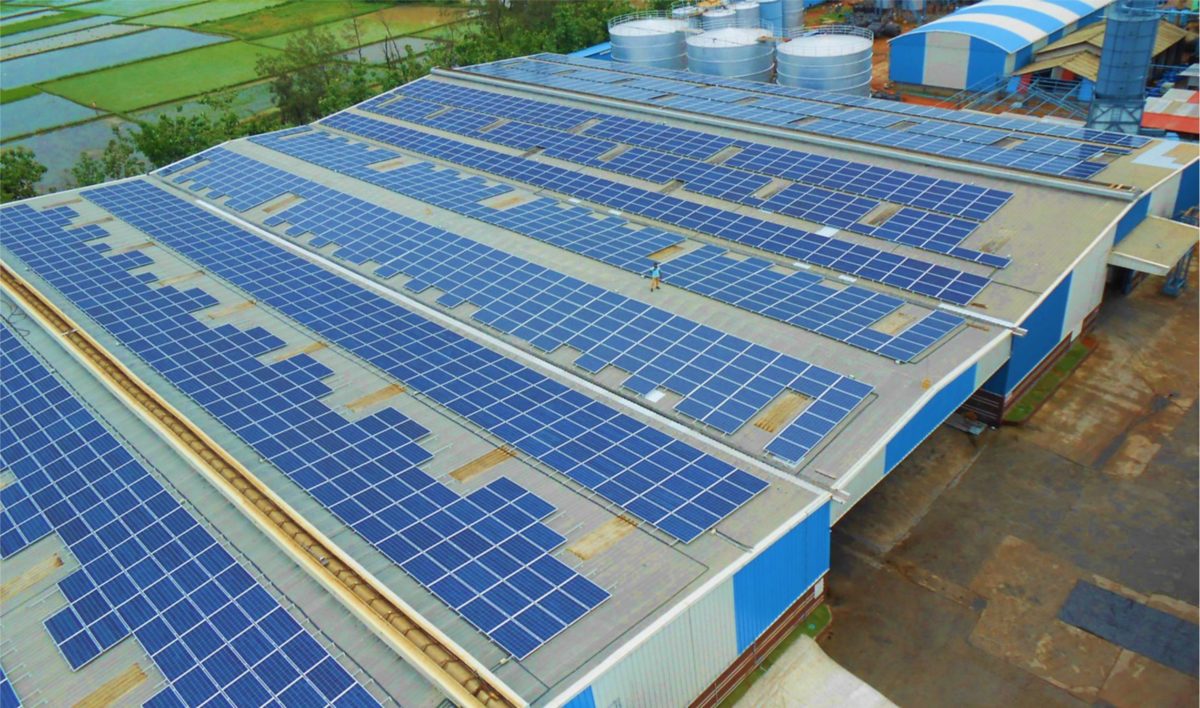
In Tamil Nadu, Rooftop Solar Has the Potential to Outdo Nuclear Power https://thewire.in/energy/tamil-nadu-rooftop-solar-nuclear-power Poonkuzhali 8 Nov 19,
Tamil Nadu has said its vision is to have an installed solar powergeneration capacity of 9,000 MW by 2023.
In September, India and Russia announced joint plans to set up 20 nuclear power units in the former over the next two decades.
India’s nuclear establishment believes that the use of nuclear energy can only be good for the country’s industrial development and prosperity. However, nuclear isn’t the only mode of power generation that can make such a claim.
Tamil Nadu is the only state in the country with two nuclear power plants: at Kalpakkam and Kudankulam.
The Kalpakkam complex, commissioned by 1986, has four operating units. Two of them are of 235 MW capacity and two of 600 MW capacity. The complex’s gross generation in 2017-2018 was 1,194 MU (at 64% availability; in 2015-2016, with an availability of 97%, it generated 1,861 MU).
The Kudankulam power plant is the single largest nuclear power station in India. It has two operational units of 932 MW (net) each. In 2018-2019, with an availability of 33%, it generated 2,797 MU.
Tamil Nadu isn’t the sole beneficiary of the power generated by these plants. In 2016, it required 100,319 MU. It received 99,691 MU from various sources, including state, central and private, and renewable and non-renewable. Of this, nuclear power plants supplied 4,999 MU.
As it turns out, it’s possible to generate this 4,999 MU from rooftop solar panels alone.
On March 31, 2017, Tamil Nadu had the highest installed capacity of grid-connected renewable power (10,562.39 MW), followed by a distant Maharashtra (7,647.60 MW), thanks to wind energy.
According to a 2014 book by S. Gandhi, former president of the Electrical Engineers’ Association of the Tamil Nadu Electricity Board, a 1-MW panel in Tamil Nadu produces 1.5 MU per year on average. This conversion accounts for various factors, including that power production happens only during the day and that production efficiency varies according to the season. Extrapolating from the book, to produce 4,999 MU, Tamil Nadu needs an installed capacity of 3,333 MW.
A 1-kW solar panel over 1,000 roofs can produce 1 MW, so to produce 3,333 MW, we need to install 1-kW solar panels over 3,333,000 roofs. A 1-kW rooftop panel requires about 100 sq. ft. According to state data, there are 2,392,457 buildings in town panchayats alone. Including the total area of all rooftops in Tamil Nadu’s urban centres, and assuming all roofs will generate 10 W/sq. ft., solar power should be easily able to provide the requisite 3,333 MW.
The Government of India and various state governments have consistently presented nuclear power as a safe, sustainable and preferable alternative to coal power. However, while nuclear power plants have very low carbon emissions and have historically caused the fewest fatalities, these advantages are substantially offset by the cost of disposing radioactive waste and an opaque administrative setup in India that has often disprivileged marginalised communities living around power generation complexes.
On the other hand, the biggest downsides of solar power generation are that solar panels lower the productivity of the land they’re setup on, and the batteries used to store power contain toxic materials whose extraction and processing has harmed people in other, often poorer, countries.
But both issues are quickly resolved in the current example. The question of land productivity doesn’t apply since the panels are to be installed on rooftops. Second, in its solar energy policy published in February 2019, the Tamil Nadu government declared it now has the technology to support grid-connected solar panels on a large scale. This means even domestic solar panels can be connected to the grid, obviating the need for power storage batteries.
According to its policy, the state government says its vision is to have an installed solar power generation capacity of 9,000 MW by 2023.
As of today, the Tamil Nadu government requires every new building erected in the state to be equipped with a rainwater harvesting system. If lawmakers issue a similar mandate vis-à-vis solar panels, at least for apartment complexes and non-residential buildings, Tamil Nadu could soon be self-sufficient about its energy needs, if not produce a surplus it can sell to its neighbours.
Poonkuzhali is a writer and activist based in Chennai.
Nuclear costs escalate as wind prices keeps falling,
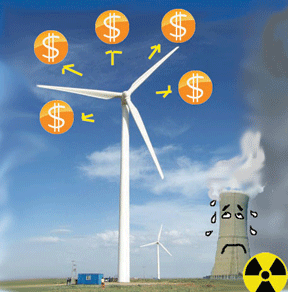 WindEconomics: Nuclear escalates as wind prices keeps falling, WindPower monthly, 31 October 2019 by David Milborrow
Nuclear power is too expensive. That is the implicit conclusion of the UK government, which has issued a consultation document on possible ways of reducing the electricity price.
This would be possible if the government — which can borrow money cheaply –shouldered some of the risks and/or provided some finance.
The consultation focuses on “regulated asset base” models. The document describes these models as “typically used for funding UK monopoly infrastructure” and involving “an economic regulator who grants a licence to a company to charge a regulated price to users of the infrastructure”.
One of the advantages for developers is that charges can be levied before the project is completed.
The range of possible prices quoted in the consultation document, shown in the top below, bears out the maxim that “prices are what you want them to be”.
They range from a minimum of -£6/MWh, when the state shoulders all the risks and the rate of return for the government is 2%, to £137/MWh, when the investors demand a 12% rate of return and bear all the risks. In the first case, the cost to the taxpayer would be £18 billion.
The present contract for the under-construction Hinkley Point C power station, which has been widely criticised, is based on a 9% rate of return and an electricity price of £92.5/MWh (2012 prices). That is about £106/MWh (€119/MWh on 1 October) in 2019 prices.
It was announced on 25 September that the estimated cost of the project had risen by nearly 10% — to £21.5-22.5 billion.
The price of electricity to the consumer will not increase, but the profitability for developer EDF will be reduced. This gives a new benchmark price for nuclear of £6,750/kW, as the facility’s output will be 3.26GW.
The effects of moving away from state funding can be illustrated by looking back to the first public inquiry for Hinkley Point….. https://www.windpowermonthly.com/article/1663433/windeconomics-nuclear-escalates-wind-prices-keeps-falling
Sweden’s wind power to surpass nuclear this year
Sweden’s wind power to surpass nuclear this year: lobby, Lefteris  Karagiannopoulos, STOCKHOLM (Reuters) 35 Oct 19, – Sweden is set to have more wind power capability
The association makes quarterly forecasts based on data it collects from turbine manufacturers and project developers.
Its latest forecast for 2 GW growth was down from 2.2 GW previously.
Investment decisions corresponding to 686 MW of new wind power were made in the third quarter, it said, up from 114 MW in the second quarter. https://www.reuters.com/article/us-sweden-wind/swedens-wind-power-to-surpass-nuclear-this-year-lobby-idUSKBN1X3145Reporting by Lefteris Karagiannopoulos; editing by Jason Neely
Energy Efficiency – effective, but forgotten since UK privatisation of Energy Saving Trust and the Carbon Trust.

Business Green 10th Oct 2019, Energy Efficiency. The public needs reminding that saving energy is good for the planet, argues Andrew Warren.
British people are very confused about what they should most usefully be doing, in order to assuage any guilt they might feel about damaging the climate. A Smart Energy GB study released this week found just three in 10 people think being energy efficient would have the biggest impact on protecting the environment.
This startling finding was backed up another a survey of 2,000 people undertaken by Opinium Research. That found saving energy tends to come way down the list of possible practical response under consideration. The most popular response to the Opinium survey was to “avoid throwing away food”. This was followed by various moves to reduce plastic wastage – buying plastic-packed groceries, single-use plastic bottles, using plastic shopping bags – or simply not recycling enough.
Steven Day, co-founder of Pure Planet, which sponsored the opinion survey, commented: “It is great that the majority of people are thinking more about their impact on our environment. But it looks like they
are feeling guilty about the smaller things – not the biggest-impact
activities causing the greatest harm.”
This lack of awareness of the potential for saving energy contrasts enormously with similar surveys undertaken twenty years ago, admittedly when overall awareness of the threat of climate change was far lower. Then, the vast majority of people would always respond to questions to the threat of climate change by emphasising the need to save energy, both at home and at work.
Since 2010 there have been no publicly funded awareness campaigns supporting energy efficiency funded by central government. Their abandonment directly followed the privatisation of the two main public advice agencies, the Energy Saving Trust and the Carbon Trust.
Nuclear power’s future is threatened by a mix of solar, wind and batteries
A mix of solar, wind and batteries threatens the future of nuclear power, Stars and Stripes By WILL WADE | Bloomberg September 28, 2019
The natural gas boom is killing America’s nuclear industry. Wind and solar may finish the job…….
Battery prices have plunged 85% from 2010 through 2018, and huge storage plants are planned in California and Arizona. Meanwhile, science is advancing on new technology — including chemical alternatives to lithium-ion systems — with the potential to supply power for 100 hours straight, sun or no sun.
“All signs point to the acceleration of renewable energy that can out-compete nuclear and fossil fuels,” said Jodie Van Horn, director of the Sierra Club’s Ready for 100 campaign, a group seeking a grid powered solely by renewables.
The drive for grids that are 100% emissions-free is being pushed by a growing number of U.S. states citing increasingly aggressive time frames. In July, New York mandated that 70% of the state’s power come from renewables by 2030, and 100% by 2040. Seven other states, including California, have similar mandates, and Virginia’s governor this month announced an executive order calling for 100% clean energy there by 2050. ….
By 2050, BNEF expects renewables to account for 48% of the U.S. power system, paired with multiple types of supplemental, peaking plants that can supply electricity when needed…… Meanwhile, over the same period, nuclear will wane, as high costs force most reactors to just shut down.
The U.S. isn’t the only place where the nuclear industry is struggling. Some nations that rely heavily on the technology, including France and Sweden, are reducing nuclear’s load as old reactors retire, and diversifying into cheaper solar and wind power. ……
The first modular nuclear reactors in the U.S. aren’t set to go into service until 2026, and the salt technologies are still largely in the research stage. At the same time, installed capacity of nuclear in the U.S. is forecast to fall to 6 gigawatts by 2050, down from 101 gigawatts now, according to BloombergNEF. ……. https://www.stripes.com/news/us/a-mix-of-solar-wind-and-batteries-threatens-the-future-of-nuclear-power-1.600949
Ever cheaper wind energy a big threat to UK’s nuclear white elephants
Times 21st Sept 2019, Alistair Osborne: Who wouldn’t prefer clean energy from Dogger than, say, Hinkley Point C: the £20 billion nuclear disaster in leafy Somerset?
The latest round of offshore wind contracts is quite a moment. For the first time, it looks like being subsidy-free. Companies have agreed to build 5.5 gigawatts of new capacity, enough to power almost seven million homes, for a guaranteed price of as little as £39.65 per megawatt hour – in 2012 prices. Compare that to the price for when the turbines start whirring in 2023-24, also in 2012 money: £48.13/MWh. In short, clean energy without any extra cost to the consumer.
In just five years, wind has blown the competition away. It was only in 2014 that Dong Energy, now Orsted, signed up to build the 1,200MW Hornsea 1 project at a strike price of £140/MWh.
By September 2017, the guaranteed price for the 1,386MW Hornsea 2 was down to £57.50. And now it’s 30 per cent cheaper again: a dizzying drop that drives home two things.
First, that Britain, blessed with a nice bit of breeze, leads the world in offshore wind: by next year it’ll have 10GW of installed capacity. Second, that the more you build, the cheaper it gets.
If only the same thing could be said for nuclear power. The strike price for Hinkley Point, in the same 2012 money, is a rapacious £92.50/MWh: a socking bribe to get France’s EDF and its Chinese partner to build the thing. It’s set to rip off consumers for 35 years. Naturally, it’s at least eight years late: now shooting for operations in 2025, not 2017. Its French prototype in Flamanville, where building costs have more than trebled to €10.9 billion, is at least ten years late. Oh, and its welding’s dodgy, too.
And nuclear’s not even green: it comes with a vast clean-up bill. True, it brings baseload energy that wind can’t yet match. But storage technology is advancing all the time.
So why’s the government persisting with last century tech that comes at a radioactive price? Yes, offshorewind might endanger a seabird that’s forgotten its specs. But, luckily, it’s a bigger threat to another species: nuclear white elephants.
https://www.thetimes.co.uk/article/597b8770-dbdf-11e9-9cfd-b79996a387b0
Wind farm to take over former nuclear site in New Jersey
Former nuclear site in N.J. set to become key part of new offshore wind farm, NJ.com, By Michael Sol Warren | NJ Advance Media for NJ.com
When the Danish wind developer Orsted won its bid to build a massive wind farm in the ocean off of Atlantic City earlier this year, it immediately faced a new challenge: how to bring that future electricity to land.
Orsted found its solution in a shuttered nuclear power plant.
Last week, the New Jersey Board of Public Utilities approved Orsted’s purchase of interconnection rights at the former Oyster Creek nuclear power plant in Lacey Township from the plant’s owner, Exelon Generation. The purchase means that Oyster Creek could be used as a landing point for the electricity generated by the company’s Ocean Wind project. ……
The Oyster Creek site is appealing because it already has the infrastructure needed to feed power into the regional electric grid.
According to NJBPU documents, Orsted estimated that it would save $25 million by using an existing interconnection point with the grid, like Oyster Creek, instead of building a totally new one…….
Ocean Wind will be capable of producing 1,100 megawatts of electricity once it goes online; that’s enough to power about 500,000 homes. Orsted expects the project to be completed in 2024. The NJBPU gave its blessing to the Ocean Wind project in June. …..https://www.nj.com/news/2019/09/former-nuclear-site-in-nj-set-to-become-key-part-of-new-offshore-wind-farm.html
Study: Germany needs clean energy surge to replace coal, nuclear
|
Study: Germany needs clean energy surge to replace coal, nuclear https://www.pv-tech.org/news/study-germany-needs-clean-energy-surge-to-replace-coal-nuclear, By José Rojo Martín, Sep 16, 2019
Germany must embrace renewables and energy storage at an unprecedented scale if it hopes to offset the void left behind by coal and nuclear phase-outs, a new study has said. A review sponsored by German solar association BSW found Germany will have to drive a structural shift in its energy system to satisfy future demand, set to rise even as the country’s existing generation fleet takes a “massive” hit from decommissioning. The analysis by energy consultancy EuPD says Berlin will require a surge of installed PV capacity between today (48GW), 2030 (162GW) and 2040 (252GW) to plug the energy shortfall, which could soar to 70TWh by 2030. The boom, the document claims, should not only cover the large-ground mounted PV segment (from 15.7GW capacity today to 126.7GW by 2040) but also extend to C&I (from 24GW to 91GW) and domestic (from 6.6GW to 35GW) PV installations. The transformation, the study notes, will fail to take hold unless Germany pairs renewable growth with that of energy storage. According to EuPD, a mix of cheaper technology and rising demand could see the nation-wide market boom from 1.9GWh today to 59GWh by 2040. Europe’s PV giant eyes subsidy-free transitionEuDP’s findings were used by German PV body BSW to renew its long-running campaign against the discontinuation of solar subsidies. Under current legislation, the 48GW industry will see state incentives frozen for new projects once capacity hits 52GW. n a statement released alongside the study, BSW’s managing director Carsten Körnig urged cabinet ministers to make the “appropriate decision” when they meet to discuss the issue on 20 September. The 52GW PV subsidy threshold will be breached next year unless it is scrapped now, Körnig warned. The industry efforts to retain government support come as more and more developers attempt subsidy-free ventures, a market Germany has been slower to embrace than Spain and other Southern counterparts. Initially smaller zero-subsidy deals – such as BayWa r.e.’s 8.8MW and Axpo’s 1.5MW – are slowly giving way to far larger moves, including a 500MW pipeline proposed by THEE and CEE. However, the country risks stifling further PPA activity if it does not de-risk these deals, experts have warned. The spotlight on storage as enabler of Germany’s energy shift comes as the sector teeters at the “edge of profitability”, as argued by analysts for a recent PV Tech Power article. Separate research has identified particularly strong economics for the country’s solar-plus-storage hybrids. Volume 20 of PV Tech Power, Solar Media’s downstream solar industry journal, includes a Special Report on energy storage and is out now, available for free download here. The prospects and challenges of European solar’s new era will take centre stage at Solar Media’s Large Scale Solar Europe 2020, to be held in Lisbon on 31 March and 1 April 2020 |
|
China dominates worldwide solar and wind energy generation
Nikkei Asian Review 17th Aug 2019 China has come to dominate worldwide solar and wind energy generation, in
terms of both its own capacity and its companies’ share of global markets,
leaving previous powerhouses — particularly the U.S. and Japan — to play
catch-up.
Renewables – onshore wind from Europe- enough to power the world
|
Herald 19th Aug 2019, EUROPE can produce enough energy from onshore wind farms to power the whole
world for the next 30 years, according to a study. British and Danish researchers found the Continent could produce more than 100 times the energy it currently does from the farms. Analysis by scientists at Sussex
University and Aarhus University in Denmark identified three times as many areas suitable for turbines than previous studies. They said more than 11 million additional wind turbines could be installed over 1.2 million acres (4.9 square kilometres) of suitable terrain. This would generate 497 exajoule (EJ) of power – 67EJ more than the expected energy demand expected
by 2050. Study co-author Professor Benjamin Sovacool, of Sussex University,
said: “Obviously, we are not saying we should install turbines in all the identified sites. “But the study does show the huge wind power potential right across Europe that needs to be harnessed if we are to avert a climate catastrophe.” The paper, which has been published in Energy Policy, comes
after parts of southern Britain suffered a major blackout that caused travel chaos and affected nearly one million homes last week. Peter Enevoldsen, assistant professor in the Centre For Energy Technologies at Aarhus University, said: “Critics will no doubt argue the naturally intermittent supply of wind makes onshore wind energy unsuitable to meet the global demand. “But even without accounting for developments in wind
turbine technology in the upcoming decades, onshore wind power is the cheapest mature source of renewable energy, and utilising the different wind regions in Europe is the key to meet the demand for a 100 percent renewable and fully decarbonised energy system.” Mark Jacobson, Professor
of Civil and Environmental Engineering at Stanford University, America, said the study would allow better planning across Europe. “One of the most important findings of this study – aside from the fact it concludes the European onshore wind potential is larger than previously estimated – is that it facilitates the ability of countries to plan their onshore wind resource development more efficiently, so easing the way for commitments by these countries to move entirely to clean, renewable energy for all purposes.” https://www.heraldscotland.com/news/17845095.europe-onshore-windfarms-can-power-rest-world-30-years/ |
|
Solar power is now cheaper than grid electricity in cities across China
which could drive a surge in uptake, according to new research. Some
experts thought China would have to wait decades until solar generation
cost the same as electricity from the grid.
combination of technological advances and support from the government,
“grid parity” has already been reached. Scientists found that all of the
344 cities they looked at could have cheaper electricity powered by solar
energy, according to the study published in the journal Nature Energy.
Twenty-two per cent of cities could also have solar systems that would
generate lower cost electricity than coal, according to the researchers,
led by Jinyue Yan from the Royal Institute of Technology in Stockholm.
No it wasn’t the wind turbines that caused a UK blackout
likely to benefit from reaction In the aftermath of last Friday’s blackout
the usual suspects are blaming wind turbines’, but that’s not what the
electricity market nerds are saying.
power outages have happened before the age of large-scale renewable energy
penetration and that stories of crisis at the National Grid are well
overblown. I certainly remember the blackout of 2008 which was caused by
the near simultaneous disconnection of Sizewell B (nuclear) and Longannet
(coal), but then of course we did not see anything in the media about how
it was all the fault of nuclear or coal-fired power plant.
offshore windfarm. Now there is talk of how the grid has become more
unstable because of increasing renewable energy penetration (now around 35%
of electricity on an annual basis) and how, depending on people’s interest
a) we ought to stop this nonsense and get back to having real large power
plant or b) we need more batteries and/or other stuff.
Nigel Cornwall. He tweeted in response to stories that the National Grid
was beset with a splurge of ‘near misses’ and last-gasp efforts: “Near
misses” and “last minute contracts” is the way the system – and all
electricity systems – is designed to operate. (National Grid) has done a
huge amount to modernise its balancing services, and I am struggling to
understand whose agenda this is. Two large power stations failed at the
evening peak, when the system was already calling for more output/demand
turndown. This was almost an occurrence of Titanic probabilities. You can
of course contract for a huge amount of extra reserve but at immense cost
to consumers’
https://realfeed-intariffs.blogspot.com/2019/08/no-it-wasnt-wind-turbines-that-caused.html
Renewable energy providing more electricity than coal and nuclear power combined in Germany
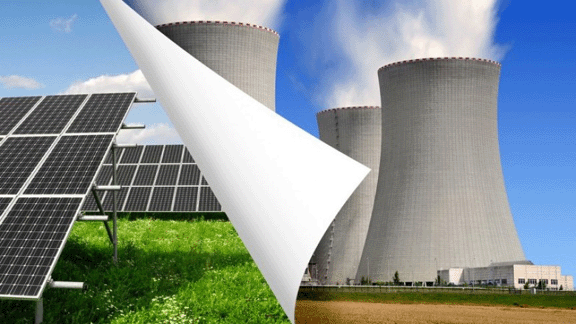 Renewable energy providing more electricity than coal and nuclear power combined in Germany Independent Solar, wind, biomass and hydroelectric power generates nearly half of country’s output. Emma Snaith, 25 Jul 19,
Renewable sources of energy produced more electricity than coal and nuclear power combined for the first time in Germany, according to new figures.
Solar, wind, biomass and hydroelectric power generation accounted for 47.3 per cent of the country’s electricity production in the first six months of 2019, while 43.4 per cent came from coal-fired and nuclearpower plants.
Around 15 per cent less carbon dioxide was produced than in the same period last year, according to figures published by the Fraunhofer Institute for Solar Energy Systems (ISE) in July.
However, some scientists have attributed the high renewable power output to favourable weather patterns and “market-driven events”.
Fabian Hein, from the think tank Agora Energiewende, told Deutsche Welle the 20 per cent increase in wind production was the result of particularly windy conditions in 2019……..
Renewables accounted for 40 per cent of Germany’s electricity consumption in 2018, according to government figures.
While in the UK, 29 per cent of electricity was sourced from renewables last year.
Germany is aiming to phase out its nuclear power plants by 2022. Its renewable energy has been rising steadily over the last two decades thanks in part to the Renewable Energy Act (EEG), which was reformed last year to cut costs for consumers.
But Germany still relies heavily on coal, gas and lignite for its energy needs.
Germany’s reluctance to end its dependence on coal saw hundreds of climate activists storm one of the country’s biggest open-pit coal mines in June to protest against fossil fuel use.
..electricity production from solar panels rose by six per cent, natural gas by 10 per cent, while the share of nuclear power in the country’s electricity production has remained virtually unchanged.
Great Britain GB electricity system operator – demand-side response (DSR) is more reliable than nuclear power
The Energyst 18th July 2019 The GB electricity system operator has suggested demand-side response (DSR) is more reliable than nuclear power in its latest Capacity Market auction
guidelines. National Grid ESO has given DSR a de-rating factor of 86 per
cent, while nuclear is de-rated to 81 per cent.
DSR is also deemed to be
marginally more reliable than biomass, coal and most interconnectors, per
the guidelines. Industry participants suggested the move reflected the
expertise of DSR providers in managing their portfolios. “Presumably [the
de-rating factors] reflects recent reliability of the UK nuclear fleet, and
superior performance of aggregators in delivering contracted response,”
wrote Jon Ferris, strategy director at energy blockchain firm Electron.
His comments were welcomed by the Association for Decentralised Energy.https://theenergyst.com/national-grid-dsr-more-reliable-than-nuclear/
1 This Month



26 September – International Day for the Total Elimination of Nuclear Weapons


PLEASE OPPOSE HR 8255 AND S.3639 – bills would accelerate satellite deployment, with no environmental review or safeguards – https://ncstd5li.quorum.us/campaign/169331/
To see nuclear-related stories in greater depth and intensity – go to https://nuclearinformation.wordpress.com
-
Archives
- September 2026 (206)
- August 2026 (330)
- July 2026 (355)
- June 2026 (287)
- May 2026 (306)
- April 2026 (356)
- March 2026 (251)
- February 2026 (267)
- January 2026 (308)
- December 2025 (358)
- November 2025 (359)
- October 2025 (375)
-
Categories
- 1
- 1 NUCLEAR ISSUES
- business and costs
- climate change
- culture and arts
- ENERGY
- environment
- health
- history
- indigenous issues
- Legal
- marketing of nuclear
- media
- opposition to nuclear
- PERSONAL STORIES
- politics
- politics international
- Religion and ethics
- safety
- secrets,lies and civil liberties
- spinbuster
- technology
- Uranium
- wastes
- weapons and war
- Women
- 2 WORLD
- ACTION
- AFRICA
- Atrocities
- AUSTRALIA
- Christina's notes
- Christina's themes
- culture and arts
- Events
- Fuk 2022
- Fuk 2023
- Fukushima 2017
- Fukushima 2018
- fukushima 2019
- Fukushima 2020
- Fukushima 2021
- general
- global warming
- Humour (God we need it)
- Nuclear
- RARE EARTHS
- Reference
- resources – print
- Resources -audiovicual
- Weekly Newsletter
- World
- World Nuclear
- YouTube
-
RSS
Entries RSS
Comments RSS
 nuclear-news