World’s biggest isolated grid hits new peak of 89 per cent renewables, led by rooftop solar
Western Australia’s South West Interconnected System – the world’s
biggest isolated grid – has reached a remarkable new record high of 89
per cent renewables, led by rooftop solar.
The new peak – 88.97 per cent
to be precise – was reached at 11am on Monday, beating the previous
record of 87.29 per cent set just a day earlier, and the previous peak of
85.36 per cent set on October 23. “Another milestone for WA’s clean
energy future,” Sanderson wrote. “It’s another strong sign of the
transformation underway in our energy system as we become a renewable
energy powerhouse.”
The Australian Energy Market Operator says the record
share was led by rooftop solar, which accounted for 64 per cent of
generation at the time. Large scale wind accounted for just over 16 per
cent, with the rest from large scale solar, solar battery hybrids, biomass
and battery storage.
Renew Economy 5th Nov 2025,
https://reneweconomy.com.au/worlds-biggest-isolated-grid-hits-new-peak-of-89-per-cent-renewables-led-by-rooftop-solar/
Cheaper, greener power is on the way

Cheaper, greener power is on the way. As long as anti-net zero populists
don’t throttle it in the cradle. Not that long ago, Mark Purcell, a retired
rear admiral in the Australian navy, was paying about A$250 a month for
electricity in his roomy family home on the Queensland coast.
Today, he says he makes as much as A$300 a month, or nearly $200, from the
electricity he makes, stores and sells with his solar panels and batteries.
“This is the future,” he told me. “This is what the energy transition
could look like for a lot of folks.” Purcell is one of the 58,000-plus
customers of Amber Electric, an eight-year-old Melbourne business that
gives householders access to real-time wholesale power prices so they can
use power when it’s cheap and sell what is stored in their batteries when
it’s expensive.
The company is adding 5,000 customers a month, putting it
among a new generation of fast-growing energy tech start-ups aiming to make
electricity cheaper and greener, and not just in Australia. Amber’s dynamic
pricing technology is due to launch soon in the UK, where the company has
done licensing deals with the energy suppliers Ecotricity and E.On.
Norway’s Tibber offers similar services to the 1mn customers it has gained
since launching in 2016 and expanding to Germany, Sweden and the
Netherlands. In Germany, the market share of companies including Tibber,
Octopus Energy and Rabot Charge has grown from 0.1 per cent in 2023 to 2.4
per cent in 2025, says the Kreutzer Consulting group. Between them they
have more than 1mn customers, 77 per cent of whom are particularly or very
happy with their provider, far more than the industry-wide figure of 57 per
cent.
Remember those figures the next time you hear a rightwing populist
condemn allegedly unaffordable net zero policies. In fact, this new class
of energy tech entrepreneurs is showing how electricity can become more
affordable precisely because of the renewables, batteries and electric cars
that net zero efforts drive.
It is no accident Amber Electric began in
Australia, long a world leader in rooftop solar systems that sit atop more
than 4mn of its homes and small businesses. Its population of 28mn is now
undergoing a home battery boom, following the July launch of a A$2.3bn
government subsidy scheme. Industry estimates show rooftop solar can save
households up to A$1,500 a year on energy bills, a figure that nearly
doubles if you add a battery, and rises further with dynamic pricing. Is
there a catch?
Right now, the upfront costs of green tech can be
considerable. Queensland’s Purcell is a superuser who has spent tens of
thousands of dollars on solar panels, batteries and a home energy
management system that makes everything from his pool heater to his air
conditioners price-responsive. His family also has two Teslas with even
bigger batteries.
This is clearly unaffordable for many, but maybe not for
long. Big home hardware retailers have begun to launch financing plans that
let people pay monthly fees of less than A$150 for solar and battery
packages rather than a big initial outlay.
FT 29th Oct 2025, https://www.ft.com/content/8bf14af2-8c22-4731-ad06-4a36277dff74
Bristol Airport generates record amount of renewable energy.
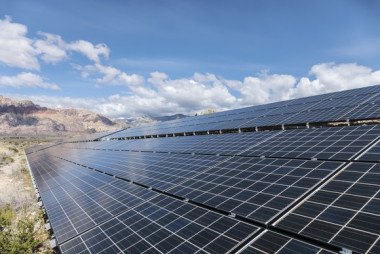
Bristol Airport has generated a record amount of renewable energy from its solar arrays, totalling more than 1,425,000 Kwh so far this year. The
energy output is equivalent to the annual electricity use of almost 400
homes and already surpasses last year’s total.
South Wales Argus 17th Oct 2025, https://www.southwalesargus.co.uk/news/25552365.bristol-airport-generates-record-amount-renewable-energy/
Reward scheme for using less power at peak times could help lower US bills.

A cheap, bipartisan tool could help the US meet increasing energy demand
from AI datacenters while also easing soaring power bills for households,
preventing deadly blackouts and helping the climate.
The policy solution, called “demand flexibility”, can be quickly deployed across the US.
Demand flexibility essentially means rewarding customers for using less
power during times of high demand, reducing strain on the grid or in some
cases, selling energy they have captured by solar panels on their homes.
Peak power demand is expected to grow by 20% over the next decade –
driven by the dramatic rise of AI datacenters, onshoring of manufacturing,
increasing use of EVs and growing need for air conditioning amid hotter
summers. Increasing energy demand is putting states such as California and Texas at higher risk of life-threatening blackouts in extreme weather.
Meanwhile, the average household price of power increased by 9.5% this
year. The largest increase was in Missouri, which jumped by 38%.
Guardian 17th Oct 2025, https://www.theguardian.com/us-news/2025/oct/17/tool-lower-home-energy-bills
After Spain’s blackout, critics blamed renewable energy. It’s part of a bigger attack.
Julia Simon, October 8, 2025
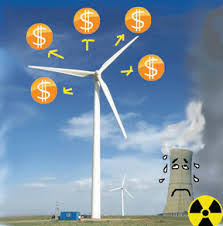
After Spain’s blackout, critics blamed renewable energy. It’s part of a
bigger attack. a new report from an expert panel of European grid operators details what happened. The report finds that for the first time in Europe, a voltage surge caused the massive outage. Voltage needs to remain within limits for an electrical grid to work.
While many things went wrong, the
problem was not a power grid with too much wind or solar, says Chris
Rosslowe, a senior energy analyst at Ember who was not involved in drafting the report. “It contradicts the numerous claims that we’ve seen that an overreliance on renewables was the cause,” Rosslowe says. “That is clearly not true.” But the misinformation about solar and wind energy causing the outage has had an impact.
A new survey found that a majority of Spanish respondents believe at least one false narrative about the blackout, and the most common was that too much reliance on renewable energy was to blame.
Countries around the world are using renewable energy to move away
from polluting fossil fuels. That’s why it’s so important to counter false
narratives about solar and wind, says Philip Newell, communications
co-chair of the Climate Action Against Disinformation, a coalition of
nonprofits.
NPR 8th Oct 2025,
https://www.npr.org/2025/10/08/nx-s1-5534949/spain-blackout-misinformation-renewable-energy
‘Solar for All’ should mean just that.

by beyondnuclearinternational, https://beyondnuclearinternational.org/2025/10/12/solar-for-all-should-mean-just-that/
An EPA decision to cancel a solar grant to tribal nations is a hard hit, writes Cody Two Bears
The EPA’s decision to cancel its Solar for All grant to our coalition of tribal nations is more than a policy reversal—it’s a gut punch to communities that believed they were finally being seen.
Our coalition of 14 tribal governments spanning North Dakota, South Dakota, Montana, Wisconsin, and Wyoming came together around a once-in-a-generation opportunity: to deploy $100 million in solar infrastructure to more than 3,500 tribal homes, while training Native youth and veterans in a clean energy workforce that could serve their own communities.
That promise is now gone. And we are not alone.
This past month, dozens of other states, cities, and communities—red and blue alike learned that their own Solar for All awards contracts will be terminated. Across the country, tens of thousands of low-income households are being told that the solar systems they were promised won’t be installed. That the jobs and training they applied for may not materialize. That another chance to turn energy burden into energy security has slipped away.
In Indian Country, the pain is particularly deep. We’ve been here before. Our communities are used to being promised opportunities that never arrive. But that doesn’t make this one hurt any less.
Solar for All wasn’t just about installing solar. It was about building a future that Native communities have been fighting for—one where we control our own energy, reduce crushing utility bills, and create jobs that allow our youth to stay and serve their people.
It was about growing Native-owned solar businesses, launching the first tribally led operations and maintenance teams in the Northern Plains, and helping each other stand up community-driven energy programs built to last.
Our coalition’s plan would have installed thousands of solar and battery systems and saved Native households over $300 million over the next 25 years. Those savings matter.
Many tribal households already pay double or even triple what the average U.S. household pays for energy. And just like the rest of the country, we’re bracing for steep increases in electricity rates in the years ahead. In communities where winter electric heating bills can exceed $600, solar isn’t just smart policy—it’s a matter of survival. We knew this wouldn’t be easy. But we showed up anyway. Tribal councils passed resolutions. Apprenticeship programs were designed. Community outreach had already begun. In some communities, program managers had been hired and work was underway.
Now, much of that momentum has been lost.
To say we’re disappointed is an understatement. But we’re not giving up. As tribal nations, we have always walked a harder path—but never without purpose. We remain grounded in our values: self-determination, stewardship, and the belief that our communities deserve to lead in this transition—not be left behind by it.
And we will lead. Solar for All gave us a platform to organize, build relationships, and design solutions tailored to our communities. We are keeping that vision alive—with or without this federal funding. But we won’t pretend this isn’t a major setback.
And we want to be clear: we are doing this anyway.
Because no matter what anyone says about solar, we have the laws of physics and economics on our side. The sun will keep shining. Panels will keep getting cheaper. And every kilowatt we produce locally is one less dollar sent off the reservation. The long-term math is in our favor—and we’re building for that future, even when the politics fall short.
Now is the time for philanthropic partners, private investors, and aligned institutions to step forward and help us carry this work forward. We have the plans, the partnerships, and the people. What we need is support—and the courage from others to believe in this vision, even when Washington doesn’t follow through.
Tribes don’t need handouts. We need the means to build what we’ve already envisioned.
Solar for All was supposed to be just that—for all. For red states and blue, for tribal communities and rural towns, for people who’ve too often been left behind in the energy transition. With its cancellation, a lot of doors just slammed shut.
But we’ll keep knocking. Because this is what leadership looks like in Indian Country: standing up, standing together, and staying the course—especially when the promises are broken.
Cody Two Bears is the Founder and CEO of Indigenized Energy and a member of the Standing Rock Sioux Tribe. He is a nationally recognized leader in the movement for tribal energy sovereignty, combining Indigenous knowledge with Western science to bring renewable energy solutions to Native communities. In response to the 2016 #NoDAPL movement, Cody launched Indigenized Energy and led the development of North Dakota’s largest solar project on Standing Rock. A shorter version of this article was published as a letter to the editor in The Washington Post.
Australian Capital Territory went first and fastest to 100 per cent renewables: It now looks like the smartest policy of all

The ACT government continues to reap the rewards for its early and bold
push to 100 per cent renewables, which is now looking like the smartest
policy of all – shielding its residents from the ravages of largely
fossil-fuelled electricity price hikes.
The latest quarterly data assessing
the cost of the ACT government’s commitment to sourcing the equivalent of
its annual demand from wind and solar – which it met on schedule in 2020
– shows the additional cost of the policy in the latest quarter was just
$3 a megawatt hour. Indeed, three of the wind farms contracted by the ACT
government returned significant sums of money (a total of $4.4 million) to
the ACT because the contract prices they agreed to are significantly lower
than current wholesale electricity prices.
Renew Economy 8th Oct 2025, https://reneweconomy.com.au/act-went-first-and-fastest-to-100-per-cent-renewables-it-now-looks-like-the-smartest-policy-of-all/
Flamanville EPR: EDF anticipates limited power until 2031.

Flamanville EPR: EDF anticipates limited power until 2031. EDF has
informed the energy regulator that it has selected a final electrical power
output lower than that officially communicated. The reason: the hypothesis
of a deteriorated performance of the Normandy reactor, leading to a
restriction of its electricity production.
These are just five short lines
in a document of over 200 pages. But they are very important. In its report
on the cost of nuclear power, published Tuesday, September 30, the Energy
Regulatory Commission (CRE) addresses the issue of the electrical power of
the Flamanville 3 EPR, the restart of which was recently postponed until
mid-October, after numerous delays since its shutdown last June following a
leak in a primary circuit protection valve.
The energy regulator explains
that the production of Flamanville 3 is difficult to predict due to the
level of uncertainty over the timetable for the continuation of reactor
tests. Above all, it specifies that in terms of “the final nominal
electrical power of the EPR, EDF declared to the CRE a power 35 megawatts
(MW) lower than the power declared in the public data framework . “
La Tribune 7th Oct 2025, https://www.latribune.fr/article/entreprises-finance/energie-environnement/10816924410568/epr-de-flamanville-edf-anticipe-une-puissance-bridee-jusquen-2031
Poll suggests most Reform UK voters back investment in renewable energy
More than half of Reform UK voters approve of their pensions being
invested in green energy despite the party recently launching a
“renewables war”, a poll suggests.
A survey by YouGov found 79% of
voters overall are in favour of their pensions being invested in renewable
energy, including 53% of Reform UK supporters. The findings have led to
claims that politicians who oppose investment in the sector “have grossly
misjudged” voters’ views. Reform UK deputy leader Richard Tice launched
a campaign group called UK Opposes Renewable Eyesores in July, decrying the
“the madness of net stupid zero” and pledging to “go into battle”
against Energy Secretary Ed Miliband.
Nation Cymru 8th Oct 2025, https://nation.cymru/news/poll-suggests-most-reform-uk-voters-back-investment-in-renewable-energy/
South Australia unveils first auction as world’s most advanced renewables grid seeks long duration storage

The South Australia state government has appointed ASL to run its first
auction for long duration storage, as the world’s most advanced wind and
solar grid seeks around 700 MW of new firm capacity over the next six
years.
South Australia leads the world in the uptake of wind and solar –
which together accounted for 75 per cent of its local electricity demand
over the last 12 months – and has set a world-leading target of reaching
100 per cent “net” renewables by the end of 2027. It already has seven
big battery projects operating in the state, and another dozen under
construction or contracted, but it is now seeking longer duration storage
through the Firm Energy Reliability Mechanism (FERM) that it announced
earlier this year.
Renew Economy 8th Oct 2025,
https://reneweconomy.com.au/south-australia-unveils-first-auction-as-worlds-most-advanced-renewables-grid-seeks-long-duration-storage/
World Nuclear Industry Status Report Energy overview- a nuclear dead end?
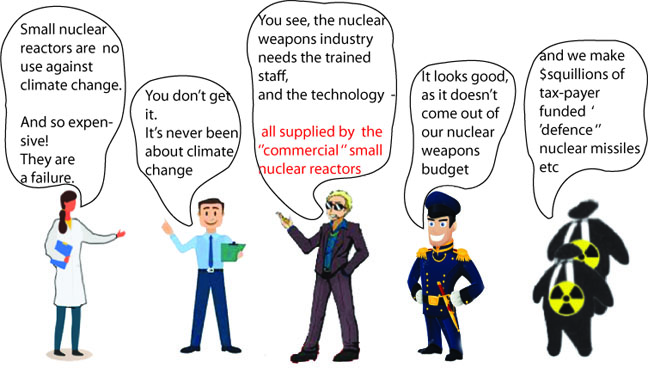
a possible driver for more high cost nuclear is that it can support the production of nuclear weapons……… evidently ‘military considerations can override economic ones’,
October 04, 2025, https://renewextraweekly.blogspot.com/2025/10/wnisr-energy-overview-nuclear-dead-end.html
The annual World Nuclear Industry Status Report as usual looks in great detail at the state of play for nuclear, mostly still not doing too well, compared with renewables, mostly doing better, with the report looking extensively at that as well as the ups and downs of nuclear. The renewable challenge is after all very striking: for example, global solar electricity generation has increased by about 28%, with costs continuing to fall. And crucially, in April 2025, renewables exceeded nuclear power generation globally for the first time.
However, although construction costs and delays remain a big problem, the nuclear story is not entirely negative. Given reactor start-ups and closures in 2024, nuclear added 5.3 GW net, while operating capacity increased by 2% and electricity output by 2.9%. But given the overall growth of electricity use, the nuclear share of global power has fallen to 9%. Whereas renewables are expanding overall. And that is despite some recent financial problems. For example, in 2024 wind energy deployment was hindered by the general economic & political environment. But even so wind electricity TWh generation still increased by close to 8%.
Nevertheless, despite renewable growth, WNISR concludes that, while ‘including hydro, gross electricity generation of all renewables grew by 862 TWh or 9.6 % in 2024’ that was ‘not enough to keep pace with the rising global electricity demand (up by 1,293 TWh), driven by higher temperatures, industrial expansion, electrification, and unambitious demand-side management & efficiency policies’. Although it says that renewables could in theory catch up with overall demand, that would require some major changes. The whole basis of the system logic must it says undergo a deep transformation, with a new framework for energy policy. Just comparing nuclear and renewables as if they were simply substitutable supply alternatives will not suffice: they are fundamentally different.
WNISR says ‘The underlying physics of the two technologies shows that significant disparities between them render nuclear inherently more costly, both in its present state and in the future’. For example, it says that ‘atomic energy is the only technology exploiting nuclear forces. It therefore has safety & security problems, as well as long-term liabilities, that competing technologies do not have. Technologies that exploit nano-level mechanisms in the electron shell of atoms, aided by quantum-mechanical insights, exhibit the most rapid innovation & cost decline’. And it concludes ‘an analysis of the system characteristics of the emerging overall energy system indicates that photovoltaics, batteries, and power electronics are already modifying the logic of the overall system in a manner that renders it increasingly challenging for nuclear power to be integrated into’.
That sounds quite optimistic for renewables if it is taken on board fully, but grim for nuclear, which it says ‘has essentially gotten stuck with the concepts of 75 years ago. While the quantum physics revolution has allowed progress in other fields, such as innovative materials, semiconductors, information technology, or artificial intelligence, it has only been marginally useful in advancing nuclear technologies.’
However, the new green techs have their own problems- notably the variability of some sources. WNISR says there are ‘widespread expectations that the expansion of renewables & especially solar will slow down,’ due to the need ‘to provide sufficient flexibility for high shares of renewables’. But solving this problem means that the whole system has to change, with flexible supply and demand and short and long term storage becoming very important, if we are get to net zero. Fortunately, WNISR says, ‘there is a wide array of opportunities for flexibility in the electricity system’ ranging from ‘reserve generation capacity provided by gas peaker plants to excess solar generation capacities curtailed during maximum sunshine, from batteries in homes to intermediate heat storage in industrial plants, and from changes in consumer habits or cost-neutral power use patterns to changes in industrial production rhythm enabled by additional intermediate product storage’.
Though it says that ‘those reluctant to embrace change call for a slowdown in the growth of renewables & are slow to pave the way for additional flexibility’, and also, ‘with some success, advocates of nuclear energy have spread the impression that decarbonization is expensive anyway and that alternatives to nuclear are no better.’ However, WNISR say that is wrong: ‘A series of simulations has consistently shown that 100-percent renewable energy systems are not more expensive than the conventional fossil- fuel-based approach. More importantly, 100-percent renewables-based systems are less costly than those that include nuclear power’.
Moreover, it claims that ‘nuclear plants do not provide the type of flexible, dispatchable power that can fill the gaps between solar power peaks. They need flexibility from other sources for bridging considerable planned and unplanned outages and for buffering between changing demand and their inflexible full-load operation. The cost of their baseload electricity is more expensive than the ultra-flexible combination of renewables-plus-storage-plus-flexible demand’. About all that WNISR seem able to offer as a possible driver for more high cost nuclear is that it can support the production of nuclear weapons. It quotes French President Macon’s claim that ‘without civil nuclear, no military nuclear; without military nuclear, no civil nuclear.’ That’s a pretty grim statement, and I will be exploring some of the implications for renewables of that sort of view in my next post.
In terms of the drive to nuclear, while WNISR notes that evidently ‘military considerations can override economic ones’, so can other factors and commitments. It says that there are ‘those who are still attached to the old (energy) paradigm, whether due to vested interests, ideological reasons, or deep identification with past activities and declining structures’. The dead hand of the past stop progress and the acceptance of new green energy paradigms. The report rounds off by saying that ‘changing paradigms is a tedious and slow process’ and notes that Max Planck, who was at the centre of a key paradigm shift in physics a century ago, said a bit bleakly ‘Science advances one funeral at a time.’ Let’s hope that’s not the only way it can happen. As WNISR warns ‘the time left for complete decarbonization of the energy system is short – not even a generation.’ Quite so. With a key attraction of renewables being that they are cheaper and faster to deploy than nuclear, with it being unclear if SMRs will offer any improvement, certainly not soon.
Here comes the sun! The solar energy revolution – podcast

Why might authoritarians fear the rise of green energy? With Bill McKibben
Last week Donald Trump let the UN general assembly know exactly what he thought about renewable energy sources. “I’ve been right about everything and I’m telling you that if you don’t get away from this green scam, your country is going to fail,” he said.
Despite this political opposition, in the last 36 months there has been a global revolution in clean energy. The acclaimed environmentalist and writer Bill McKibben explains to Lucy Hough that we have now passed a tipping point when it comes to solar energy, driven by falling prices, widespread innovation and countries’ desire for energy independence.
McKibben outlines how China is becoming the world’s first “electrostate” and argues that while this global shift is too big for the US president to prevent, activism and engagement is still required to reign in the worst excesses of the climate crisis. Finally, McKibben discusses the important role that clean energy may play in loosening the grip of authoritarianism around the world.
Bill McKibben’s new book, Here Comes the Sun, is out now.
Solar becomes main source of electricity in the EU for first time.
More than half of the EU’s electricity in the second quarter of 2025 came from
renewable energy. Solar energy was the main source of electricity in the
European Union for the first time in history in June, according to new
figures. The renewable energy source accounted for 22 per cent of the
electricity generated in the EU, overtaking nuclear energy, which produced
21.6 per cent of the electricity.
The data from Eurostat, the statistical
office of the EU, showed that more than half of the EU’s electricity in the
second quarter of 2025 came from renewables. Three countries in Europe
managed to generate more than 90 per cent of their electricity from
renewable energy sources, while 15 countries were able to increase the
renewables share in their energy mix compared to the same period last year.
“Denmark, with 94.7 per cent, had the highest share of renewables in net
electricity generated, followed by Latvia (93.4 per cent) [and] Austria
(91.8 per cent),” a Eurostat report noted.
Independent 2nd Oct 2025, https://www.independent.co.uk/tech/solar-power-eu-renewable-energy-b2837926.html
We don’t need gas or nuclear to power data centres, says Octopus Energy boss.
Greg Jackson, CEO of Britain’s biggest energy supplier, hit back at claims from
union leaders and AI bosses that only fossil fuels and nuclear could meet
demand. Jackson, who has been a vocal proponent of renewable energy,
electric cars and heat pumps, said: “Today I think we are in a world
where what do you hear? ‘We’ve got this incredible demand for energy for
data centres: it can only be met by gas and maybe new nuclear.’ Forgive me:
this is horseshit, right?”
Times 1st Oct 2025, https://www.thetimes.com/uk/environment/article/octopus-energy-ceo-greg-jackson-jv92kbp2l
1 This Month

of the week – Shut Down Drone Warfare!


Tell the Ukrainian Government to Drop Prosecution of Peace Activist Yurii Sheliazhenko

Petition to revoke the licensing of the Near Surface Nuclear Disposal Facility (NSDF) at Chalk River. https://www.ourcommons.ca/petitions/en/Petition/Details?Petition=e-7247
To see nuclear-related stories in greater depth and intensity – go to https://nuclearinformation.wordpress.com
-
Archives
- March 2026 (237)
- February 2026 (268)
- January 2026 (308)
- December 2025 (358)
- November 2025 (359)
- October 2025 (376)
- September 2025 (257)
- August 2025 (319)
- July 2025 (230)
- June 2025 (348)
- May 2025 (261)
- April 2025 (305)
-
Categories
- 1
- 1 NUCLEAR ISSUES
- business and costs
- climate change
- culture and arts
- ENERGY
- environment
- health
- history
- indigenous issues
- Legal
- marketing of nuclear
- media
- opposition to nuclear
- PERSONAL STORIES
- politics
- politics international
- Religion and ethics
- safety
- secrets,lies and civil liberties
- spinbuster
- technology
- Uranium
- wastes
- weapons and war
- Women
- 2 WORLD
- ACTION
- AFRICA
- Atrocities
- AUSTRALIA
- Christina's notes
- Christina's themes
- culture and arts
- Events
- Fuk 2022
- Fuk 2023
- Fukushima 2017
- Fukushima 2018
- fukushima 2019
- Fukushima 2020
- Fukushima 2021
- general
- global warming
- Humour (God we need it)
- Nuclear
- RARE EARTHS
- Reference
- resources – print
- Resources -audiovicual
- Weekly Newsletter
- World
- World Nuclear
- YouTube
-
RSS
Entries RSS
Comments RSS
 nuclear-news