Nuclear power – a ‘religion’ in France. now turning out to be a curse.
Paris dims the lights as blackouts threaten disaster for Macron. Years of
underinvestment in its aging nuclear fleet risk causing chaos in France
this winter. Xavier Barbaro, chief executive of France’s leading
independent renewables producer Neoen, is concerned about the growing risk
of shortages.
“It’s a possibility and no one would have thought that a
few years or even a few months ago,” he says. “Blackouts were something in
the past. and it can happen again. “We have heard literally for decades
that having nuclear was a chance for the country and in the end, it might
actually be a curse.”
France put all of its eggs in the nuclear basket,
but technical problems are now frequently cutting capacity at its aging
plants. While President Emmanuel Macron has ordered new reactors as part of
a nuclear “renaissance”, decades of inaction are coming back to haunt
the country. Like Liz Truss, Macron’s government has staked its
reputation on his country avoiding blackouts that would undoubtedly have
severe political consequences this winter.
However, industry bosses are
less certain than the President. “We’ve been told for ages that nuclear
power is safe, secure and so constant,” says Adrien Jeantet, director of
energy services at Enercoop, a French utility company using only renewable
energy.
“Now we see that it’s not dependable. We really need it now that
we have gas shortages and all of a sudden it’s not there. Half of the
reactors are shut down.” Barbara Pompili, Macron’s minister in charge
of the energy transition for two years, says nuclear power is almost like a
religion in France.
However, she adds that a widespread belief in its
“magic” has caused underinvestment in renewables that will be needed
for the future. “What I’m worried about is the strategic thinking in the
long run,” she says. “Maybe we were too confident on nuclear power and
we underestimated the importance of renewables. The reason is that too many
people considered that investing in renewables was bad for nuclear power.
“It’s totally crazy. We lost so much time thinking in this way… it’s
very difficult to have a serious rational debate in France on the energy
issue.”
Telegraph 24th Oct 2022
France’s Nuclear Reactors Malfunction as Energy Crisis Bites
B1 The linchpin of France’s energy security faces maintenance and pipe-corrosion problems plus labor unrest
WSJ, By Matthew Dalton Oct. 23, 2022
PARIS—France is falling behind in its plans to return the country’s fleet of nuclear reactors to full power this winter after a rash of outages, raising fears that one of Europe’s key sources of electricity won’t be ramped up to counter Russia’s squeeze on the continent’s energy supplies.
The nuclear fleet was designed to act as the front line of France’s energy security. Since Moscow cut the flow of natural gas to Europe—plunging the continent into its biggest energy crisis since the 1970s oil shock—France’s vaunted nuclear fleet has been about as effective as the Maginot Line, the French fortifications that did little to stop the German invasion during World War II…………….. (subscribers only) more https://www.wsj.com/articles/frances-nuclear-reactors-malfunction-as-energy-crisis-bites-11666517581
Renewable energy brings record savings to Europe
Renewable energies have allowed the European Union to avoid €99bn in
fossil gas imports since the beginning of the war in Ukraine, with an
increase of €11bn compared to last year thanks to record growth in wind
and solar capacity, according to a new report.
Edie 20th Oct 2022
How European countries are cutting power consumption.
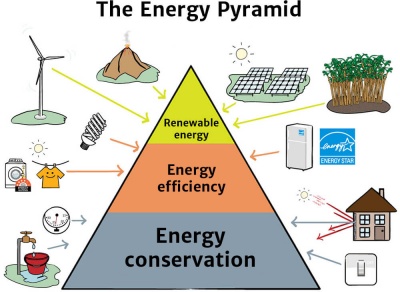
What are European countries doing to cut power consumption? Paris is
switching off the Eiffel Tower lights an hour early, Milan has turned off
public fountains, and Hanover is offering gym users cold rather than hot
showers in an effort to combat potential energy shortages this winter.
At the same time, the public are being encouraged to do their bit by avoiding
using household appliances between 4pm and 7pm, stock up on blankets and
slow down their driving. One global retail chain is encouraging staff to
change their behaviours: to use stairs instead of lifts, to use
energy-saving apps at home, and unplug devices rather than leaving them on
standby.
The UK, by contrast, has blocked a £15m campaign encouraging the
public to conserve energy, with the government arguing that the country is
“not a nanny state”. But across Europe, governments and municipal
authorities have responded to calls to reduce power consumption and reach
an EU target of shaving 15% off energy consumption by next March. All
member states are reducing heating in public buildings by one degree to
19C, but some have gone further.
Guardian 18th Oct 2022
Low operating costs make the case for investing in utility-scale renewable projects
Renewables met 100% of global electricity demand growth during the first
half of 2022. So says the ‘Global Electricity Mid-Year Insights 2022’
from Ember, a global energy think tank. In fact, it says there was a 389
TWh increase in the demand for electricity in the first half of 2022
compared to the first half of 2021, whereas the rise in renewables supply
was actually a bit more – 416TWh.
That’s not surprising given that
renewables are getting so cheap- including in the UK, with wind and solar
the most prolificate new sources across world. However, that in turn may
create a bit of a problem for older renewables, set up under quite
lucrative subsidy schemes, based on now high gas prices, like the
Renewables Obligation in the UK. As I have noted in earlier posts, there is
pressure on them to switch to the more competitive CfD system. Certainly
the RO system is based on adding a subsidy to wholesale gas prices, so
something has to change, since gas prices are now so high. But there are
issues- will every supplier be happy to accept less earnings? They may drag
their feet.
The record-breaking run in power prices, particularly in
Europe, is creating a favorable investment case for solar and wind
projects, making it increasingly compelling to develop renewable assets
purely based on project economics. According to Norwegian consultancy
Rystad Energy, current spot prices in Germany, France, Italy, and the
United Kingdom would all result in payback of 12 months or less.
Considering the average monthly spot prices for August in these countries
were all well over €400/MWh and the relatively low operating costs of
renewables, investing in utility-scale projects appear to be a no-brainer.
Renew Extra 15th Oct 2022
https://renewextraweekly.blogspot.com/2022/10/renewable-booming-but-windfall-tax.html
Nuclear Power Is a Dead End. We Must Abandon It Completely.
In fact, the knock-out arguments against the nuclear industry today are reactors’ cost and deployment time. The greatest barriers to this claimed renaissance—and it is primarily talk, not investment—is its inability to deliver affordable power on time and on budget.
Small nuclear reactors (SMRs) -both slower to deploy than conventional reactors and more expensive per kilowatt capacity. “overall, SMRs are inferior to conventional reactors with respect to radioactive waste generation, management requirements, and disposal options.”
Even given Europe’s energy crisis, the case against nuclear power has never been so conclusive—and so important.
The Nation, By Paul Hockenos 13 Oct 22,
BERLIN—Amid a confluence of crises—the Ukraine war, an energy crisis, and climate breakdown—nuclear energy is experiencing a renaissance, at least in the rhetoric of politicians and pundits across Europe, North America, and beyond. After all, it’s tempting to propose these generators of low-carbon energy as a panacea to this daunting phalanx of calamities.
But in fact, the case against nuclear power and for genuinely renewable energies has never been so conclusive—and so important. In early March, Russia captured the Zaporizhzhia nuclear power plant in Ukraine—the largest in Europe with six reactors, each the size of the one that melted down in the 1986 Chernobyl disaster—and transformed it into an army base from which it fires artillery at Ukrainian positions.
Although this weaponizing of nuclear reactors had long been recognized as a threat, the vulnerability of nuclear power plants in conflict zones is now center stage in Europe. The battlefield in this case is controlled by an unpredictable autocrat who has threatened that he’ll use every means at his disposal to destroy Ukraine. At the Zaporizhzhia station, the Russian military has taken the Ukrainian nuclear engineers hostage, and is working them at gunpoint. The International Atomic Energy Agency (IAEA) warned in August that there’s a “real risk of nuclear disaster” unless the fighting stops. Russia could sabotage a power plant like Zaporizhzhia and attempt to shift the blame onto Ukraine. A nuclear weapon strike would be a crime against humanity, but a disaster at nuclear plant could blur responsibility and complicate the international response. Nuclear plants, where military-scale security is nonexistent, are sitting ducks for acts of terrorism and wartime targeting.

At the same time, the world’s nuclear power champion, France, has punctured the myth that nuclear power is a round-the-clock energy source that can operate without back-up reserves—a favorite trope of wind and solar power skeptics. Nowhere in Europe today is the energy crisis more acute than in France, where for much of this year, between a third and over half of France’s 56 nuclear reactors have been shut down either because weather-warmed rivers cannot cool their systems or on account of corrosion damage, hairline cracks, staff shortages, and pending maintenance work on their geriatric hardware. The outages have forced France to rely on Germany for electricity imports—culled in large part from the wind and solar farms that supply almost half of Germany’s electricity. In August, France’s power prices hit €1,100 per megawatt-hour, more than 10 times the 2021 price, smashing records across the continent………………………………………
Critics’ original concern with nuclear power, namely its safety, remains paramount. The two most catastrophic meltdowns, in 1986 at the Chernobyl nuclear power plant in the Soviet Union and the Fukushima site in Japan, in 2011, had horrific repercussions that still haunt those regions. But these mega disasters are only the most well known. According to IAEA, there have been 33 serious incidents at nuclear power stations worldwide since 1952—two in France and six in the United States.
These accident numbers don’t include the toxic fallout from lax disposal and storage of nuclear waste.

Between 1945 and 1993, 13 countries, including the UK, the US, and the Soviet Union, heaved barrels of nuclear waste into their seas—a total of 200,000 tons—presuming the vast ocean waters would dissolve and dilute it. Those casks still lie there today.
This sad chapter belongs to the 80-year-old saga of nuclear waste. Currently, there’s over a quarter-million metric tons of spent fuel rods sitting above ground, usually in cooling pools at both closed-down and operative nuclear plants, waiting like Samuel Beckett’s protagonists Vladimir and Estragon for a definitive solution that will never come.
In northern Europe, the Finns claim that they’ve solved it by digging 100 tunnels 1,400 feet into the bedrock of an uninhabited island in the Gulf of Bothnia. Underway now for decades, this $3.4 billion undertaking, the first permanent repository in the world, will eventually hold all of Finland’s spent nuclear refuse—less than 1 percent of the world’s accumulated radioactive remnants—until about 2100. This highly radioactive mass will, its operators promise, remain catacombed for 100,000 years. (Since nuclear waste is lethal for up to 300,000 years, these sites are a time-bomb for whoever or whatever is inhabiting the planet then, assuming geological conditions allow it to lie peacefully for that long.) In light of Finland’s small volume of radioactive waste, the full lifetime price tag of nearly $8 billion dollars is significantly more per ton than the estimated $34.9 billion, $19.8 billion, and $96 billion that the France, Germany, and the United States respectively will shell out for nuclear waste management, according to the World Nuclear Waste Report 2019.
Most countries don’t have barren islands far from groundwater sources, so they have to make do, like Switzerland did in September when it announced that it intends to excavate a geological storage repository near the German border, closer to German towns in Baden Württemberg than Swiss ones. Germany’s borderland communities are vigorously contesting the choice, which will probably be abandoned by the Swiss. Nearly all proposed sites end up scratched for the obvious reason that nobody wants to live next to a nuclear waste dump.
“Nowhere in the world has anyone managed to create a place where we can bury extremely nasty nuclear waste forever,” Denis Florin of Lavoisier Conseil, an energy-focused management consultancy in Paris, told the Financial Times earlier this year. “We cannot go on using nuclear without being adult about the waste, without accepting we need to find a permanent solution.”
The inherent danger of nuclear power is often relativized by advocates as the bitter pill we must choke down in light of its other advantages. In fact, the knock-out arguments against the nuclear industry today are reactors’ cost and deployment time. The greatest barriers to this claimed renaissance—and it is primarily talk, not investment—is its inability to deliver affordable power on time and on budget.
Nuclear energy is such a colossal expense—into the tens of billions of dollars, like the $30 billion Vogtle units in Waynesboro, Ga.—that few private investors will touch them, even with prodigious government bankrolling.
The UK government finally found a taker for its Hinkley Point C station in 2016 when it offered lavish subsidies to the French energy firm EDF. But even that deal becomes less sweet the higher construction costs spiral and the longer EDF postpones its opening beyond 2025. So catastrophic are the cost overruns of EDF’s projects worldwide that the company could no longer service its €43 billion debt and this year agreed to full nationalization. But experts say this alone won’t solve any of the fundamental problems at Hinkley C or the Flamanville plant in Normandy, which is 10 years behind schedule, with costs fives times in excess of the original budget. Cost overruns are one reason that one in eight new reactor projects that start construction are abandoned.
While safety concerns drive up the cost of nuclear plant insurance, the price of renewables is predicted to sink by 50 percent or more by 2030. Study after study attests that wind and solar cost a fraction of the price of nuclear power: at least three to eight times the bang for the buck in terms of energy generation and climate protection, at a time when the exorbitant cost of energy is causing recessions and street protests across Europe. It is because solar photovoltaic and wind power are the cheapest bulk power source in most of the world that renewables, grids, and storage now account for more than 80 percent of power sector investment. In 2021, companies, governments, and households invested 15 times as much in renewable energy than in nuclear. They’re simply the better buy.
NUCLEAR IS MUCH TOO SLOW
Indeed, in the face of an ever more cataclysmic climate crisis that demands solutions now—like hitting the EU’s 2030 targets of reducing carbon dioxide emissions by 55 percent of 1990 levels by 2030—the build-out of nuclear is painfully, prohibitively slow. In Europe, just one nuclear reactor has been planned, commissioned, financed, constructed, and put online since 2000—that’s Finland’s Olkiluoto-3 reactors (March 2022). Europe’s flagship nuclear projects—called European Pressurized Reactors—have been dogged by delays from the start. The Olkiluoto-3 reactors in Finland, which had been scheduled to go online in 2009, still isn’t heating homes. Globally, the average construction time—which count the planning, licensing, site preparation, and arranging of finances—is about a decade.
Small-scale modular reactors (SMR), advanced with funding during the Obama administration, are supposedly the industry’s savior—the so-called next generation—although they’ve been around for decades. Purportedly quicker to build, with factory-made parts, they generate at most a 10th of the energy as a conventional reactor. Yet they are not significantly different in terms of their problems. The World Nuclear Industry Status Report 2022 claims that, so far, they have been both slower to deploy than conventional reactors and more expensive per kilowatt capacity. A recent study conducted by Stanford University and University of British Columbia came to the conclusion that “overall, SMRs are inferior to conventional reactors with respect to radioactive waste generation, management requirements, and disposal options.”
NUCLEAR AND RENEWABLES DON’T MIX
Finally, the last claim of nuclear supporters is that the massive baseload supply that reactors provide when they’re up and running is just what systems reliant on weather-based renewables need at down times. In fact, nuclear is the opposite of what decentralized clean energy systems require.
Renewables and nuclear energy don’t mix well in one system, explains Toby Couture of the Berlin-based think tank E3 Analytics. “What renewables need is not so-called baseload power,” he told me, “which is inflexible and unable to ramp up and down, but flexible, nimble supply provided by the likes of storage capacity, smart grids, demand management, and a growing toolbox of other mechanisms, not the large and inflexible supply of nuclear reactors.”
Couture added, “The inability of nuclear power to ramp down effectively to ‘make room’ for cheap wind and solar is one of the main reasons why France’s own domestic renewable energy development has lagged behind its peers.” According to Couture, France’s inability to flexibly accommodate wind and solar has exacerbated the continent-wide power supply crunch.
In light of the energy crisis, Germany may extend the lifetime of two of its three remaining nuclear plants for three months, in a reserve capacity beyond their scheduled end-of-year closure date. This emergency measure, a direct consequence of the previous governments’ failures, does not alter the logic against nuclear power, which even Germany’s own nuclear industry now accepts. Renewables, clean tech, and energy efficiency are easy to rollout, cost-effective, safe, and proven. Let’s concentrate on deploying these technologies at full speed to decarbonize our world before the impacts of climate change overwhelm us. https://www.thenation.com/article/world/nuclear-power-europe-energy/
Germany, France, Italy, conserve energy, but the UK government rejects energy conservation
In Germany, shops must keep their doors closed to avoid heat escaping on
cold days, illuminated advertising boards have to be switched off by 10pm,
and in some public swimming pools only cold showers are available.
In France, there will be no “temeparture police”, energy transition
minister Agnès Pannier-Runacher has promised, but the country’s
“sobriety” energy-savings push asks that homes and offices are not
heated above 19 degrees centigrade. Commuters are also being asked to
car-share, and mountain resorts have pledged to reduce the speed of ski
lifts at off-peak times.
Italy has launched what has been dubbed
“Operation Thermostat” – limits to the temperature that public
buildings can set the air conditioning at in the summer and the heating
during winter. People have also been encouraged to limit the duration of
showers, the time ovens are switched on, and to use the dishwasher and
washing machine only when fully loaded.
In Britain, it is sometimes easy to
forget that there is an energy crisis. As the nation grapples with yet
another implausible leap in household bills, the festive lights started
going up on London’s Oxford Street at the end of September – almost three
months before Christmas Day. That the lights have been replaced by LED
versions this year is perhaps somewhat overshadowed by the fact that there
will still be 300,000 individual bulbs on display.
As one shopper reportedly remarked: “Lights already? We don’t even know if we’ll be able
to turn ours on this Christmas.” At the heart of this strange disconnect
is the Government’s ongoing refusal to even talk about the concept of
conserving energy, never mind encourage people to turn down the thermostat.
Not even a warning of winter power cuts from the National Grid is enough to
convince the Cabinet of the merits of promoting energy conservation.
Telegraph 14th Oct 2022
France’s national embarrassment: half of its nuclear reactors to remain out of action for months
France’s nuclear reactors will not work as normal any time soon. The
trouble will persist well into next year. when edf, the French energy giant,
warned in May that nuclear-electricity production this year would be lower
than previously forecast because half its reactors were out of action, the
timing could not have been worse.
Thanks to its nuclear industry, France is
usually Europe’s biggest net exporter of electricity. The closures turned
the country into a net power importer for the first time, just as the
continent faced an energy crunch. When in September edf then announced that
even by 2024 output would still be well below normal levels, the problem
became a national embarrassment.
France’s current nuclear troubles are
partly due to routine maintenance of the country’s 56 reactors, half of
which are about 40 years old. Each ageing reactor needs periodically to be
shut down, on a rotating basis, for inspection. During the pandemic,
scheduled maintenance was interrupted by lockdowns. The real crunch,
though, came after corrosion issues were detected in late 2021 at one
pressurised-water reactor. By this September no fewer than 25 reactors were
out of action: ten for routine maintenance, the rest for corrosion analysis
or repairs.
Economist 13th Oct 2022
Renewables need minerals. Can their pollution and public health challenges be overcome?
https://beyondnuclearinternational.org/2022/10/09/renewables-need-minerals/ By Linda Pentz Gunter, by beyondnuclearinternational,
We are now both on the path to — and amidst the crisis of — resolving our past greed and irresponsibility in the energy and transport sector. But few, if any, human industries are without a carbon footprint. This has made the climb out of our carbon-intensive paradigm all the harder.
Consequently, our first imperative — in order to do as little current or future environmental harm as possible — is to focus on solutions that have the lowest carbon footprint and environmental and human impact. This puts conservation at the pinnacle of our priorities, followed by energy efficiency.
Particularly in developed countries — where we bear almost the entire responsibility for the mess we have made of our planet — we can, and must, consume less, become more energy efficient, live in smaller homes, use public transport routinely, walk and bicycle more and drive and fly less.
Using fossil fuels has to stop. Completely. And ideally now, but, realistically, as soon as possible. Replacement power will still be needed. But nuclear power, which creates long-lived lethal radioactive waste from the beginning to the end of its fuel cycle, and, as a large thermo-electric generator, relies on huge quantities of what will become increasingly scarce water supplies, is not the substitute for fossil fuels. Nuclear power cannot be an environmentally clean and just energy solution. And it has no answers for the transport sector, either.
Yet, as we decry the extraction of uranium — and all its attendant poisoning of the environment and ourselves along with human rights violations — we are met with the legitimate argument that increasing the use of renewables (and electric cars) in order to decarbonize, brings with it the same extractive environmental impacts.
But are they really the same? If we dig deeper, to use an unwelcome metaphor, we find parallels but not necessarily equity between the impacts of renewables and nuclear. This does not excuse or justify worker abuse, human rights violations or extractive contamination in any sector. But it’s an important distinction.
First and foremost, we must look to carbon emissions. It makes sense, even if all the other downsides were equal — which they clearly are not — to at least focus on the lowest carbon emitters. And those are unquestionably renewables. Therefore, our responsibility now is to put things right in the renewable energy industry, even as we must point out, criticize and urge change in those areas that need improvement, including recycling, sustainable sourcing and human rights.
A second priority, is the ability and willingness of industries to make those improvements.
We have seen how the wind industry has worked to minimize its impacts on migratory birds. It’s no coincidence that some of the biggest bird conservation groups, including BirdLife International, the American Bird Conservancy and the Audubon Society, cautiously support the development of wind power while scrupulously watchdogging its progress.
The renewable energy and electric vehicle industries recognize the fact that they rely on mineral extraction and, as such, must try to mitigate or avoid negative environmental, social and human rights impacts. Unlike the nuclear industry — which has been guilty of environmental and human rights abuses since it began — the renewable energy industry is working to resolve these significant drawbacks.
As Justine Calma wrote in The Verge at the end of last year: “There are ways to get the minerals the clean energy revolution needs while minimizing the impact on people and the planet. Startups are figuring out how to get better at recycling lithium batteries.” Mining companies are also looking to power their extraction using renewables rather than fossil fuels.
The World Bank program — The Climate-Smart Mining Initiative — aims to help “resource-rich developing countries benefit from the increasing demand for minerals and metals, while ensuring the mining sector is managed in a way that minimizes the environmental and climate footprint as it works to decarbonize”.
The nuclear industry, by contrast, has made no such effort to mitigate its environmental impact, and cannot do so, because splitting the atom to boil water is inherently dangerous and polluting. Worse, the industry actively pushes back against — or outright rejects — mitigation efforts because it would cost the already financially struggling nuclear sector money it can’t afford to expend if it is to stay in business.
The end product of nuclear power is long-lived highly radioactive waste with no long-term, safe, permanent management solution. While the renewable energy sector is looking into the recycling of batteries, there is no recycling of nuclear waste. Reprocessing — often misleadingly called “recycling” — does no such thing.
In separating out the uranium and plutonium from irradiated reactor fuel, reprocessing produces even higher volumes of largely “low” and “intermediate”-level radioactive wastes, discharged into the air and sea or stored indefinitely.
The mining of uranium for use in nuclear power leaves behind radioactive waste and heavy metals that persistently contaminate the local environments, harming the health and safety of those communities and that of their land and water resources.
Nevertheless, there is no getting around the reality that the renewable industry, too, requires mining of minerals and rare earth metals, and that recycling, while beneficial, is not always done sustainably.
These hurdles are laid out in detail in a useful report prepared for Earthworks by the Institute for Sustainable Futures — Responsible minerals sourcing for renewable energy (Dominish, E., Florin, N. and Teske, S., 2019, Responsible Minerals Sourcing for Renewable Energy. Report prepared for Earthworks by the Institute for Sustainable Futures, University of Technology Sydney.)
The report emphasizes that “recycling and responsible sourcing are fundamental to improving the sustainability of the renewable energy transition”.
However, it points out that while “the renewable energy and battery industries have made significant improvements to the efficiency of technologies, to improve performance, minimize demand for materials and reduce production costs,” attention to stewardship and human rights abuses has been less promising. “The industry experts interviewed noted that reducing the environmental and social impacts of supply is not a major focus of the renewable energy industry.”
Inevitably, many of the resources for the renewable energy industry (along with electric vehicles, not discussed here as these are outside our energy focus), are to be found in troubled parts of the world — most notably DR Congo. In turn, the manufacturing of those minerals into metals is largely carried out in China, where human rights are suppressed.
The impacts of mining to supply the renewable energy industry invariably result in “pollution and heavy metal contamination of water and agricultural soils, and health impacts on workers and surrounding communities”.
The wind energy industry emerges as the least offender, according to the report. “Material use for wind turbines is already very efficient. Recycling of bulk materials (steel, aluminium, copper) used in wind turbines is well established with high recycling rates.”
The report offers some glimmers of hope, noting that increased use of renewables means a reduction in coal mining, “which is responsible for the greatest number of fatalities, health and environmental issues.”
But we are undoubtedly now in the land of Faustian bargains. We have left it too late to make choices that are problem-free. Renewables, therefore, must be measured up against the alternatives and nuclear power isn’t one of them. Aside from the carbon footprint and human rights violations of nuclear power, and its high costs and long construction times, we must also factor in the lethal waste; the daily radioactive releases harming primarily children; the outcome of a catastrophic accident; and the inextricable link to nuclear weapons development, to name a few.
We must learn to live more simply; smaller. More quietly. Tread lightly. And yes, we must transition to renewables, energy efficiency and conservation, not tomorrow, not gradually, but immediately. Can we do it without leaving yet another mess? Without further abuses?
As the ISF study concludes, not yet, but we are getting there. “There are a large number of responsible sourcing initiatives that promote environmental stewardship and the respect of human rights in the supply chain, most of which are voluntary and industry-led,” the authors wrote. “If these initiatives are harmonized and widely adopted, it may lead to more responsible supply chains.”
Until then, renewables are our least worst power option, and, out of time as we are, it’s a choice we have brought upon ourselves.
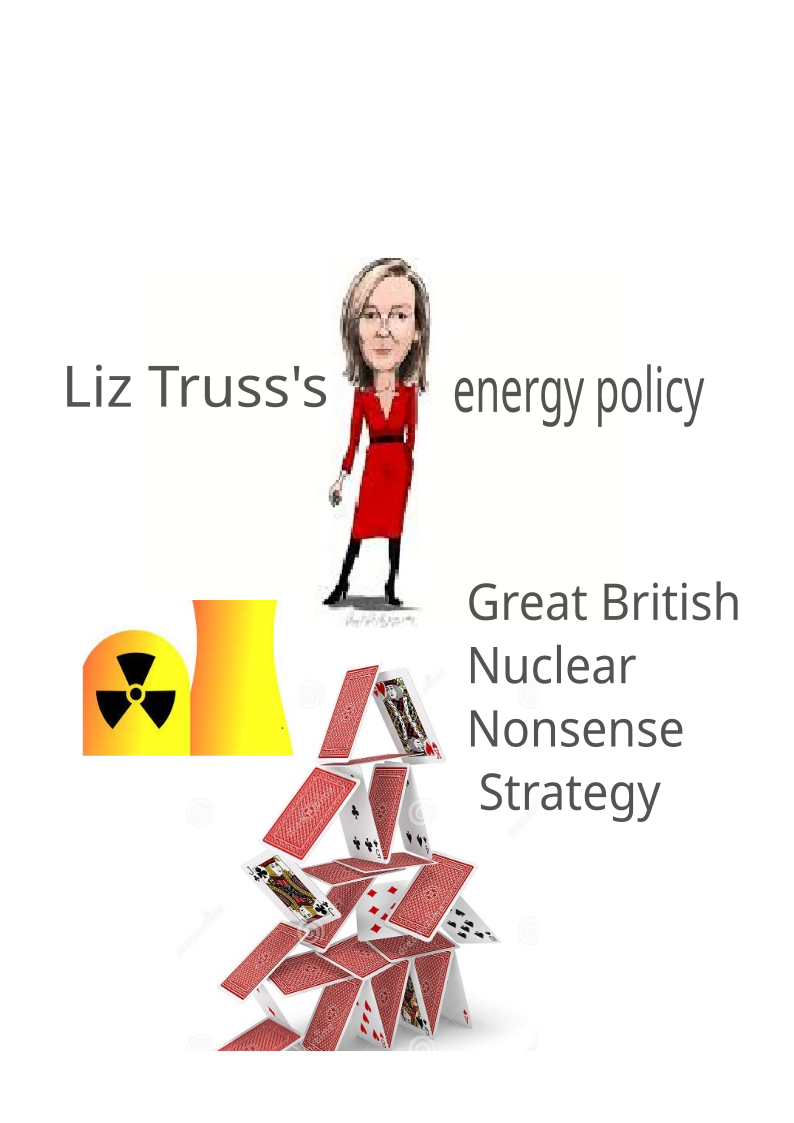
Liz Truss blocks a plan for UK citizens to reduce their energy use

How Liz Truss blocked Jacob Rees-Mogg’s energy-saving public information campaign.
Liz Truss is reported to have blocked the launch of a publicminformation campaign aimed at conserving energy, despite warnings that blackouts could be imposed in the UK if gas imports fall short this winter.
Business Secretary Jacob Rees-Mogg is understood to have backed a £15m “light touch” initiative, according to The Times, encouraging households to reduce their use of gas and electricity by taking a series of simple measures. However, Ms Truss is said to be “ideologically opposed” to such an approach as it could be too interventionist.
iNews 7th Oct 2022
https://inews.co.uk/news/liz-truss-jacob-rees-mogg-energy-saving-campaign-1899019
As France’s nuclear power production is failing, the government aims to cut the nation’s electricity consumption
France launched a national energy savings plan on Thursday, banking on a
push to turn off lights and lower thermostats to avoid power and gas cuts
over the winter. Although the country is less dependent on Russian gas than
eastern neighbours like Germany, French nuclear power production has
slumped as the sector struggles to bring more of its aging reactors online
out of forced maintenance. The government has set a target of cutting
France’s energy consumption 10% by 2024 from 2019 levels, a first step in a
longer-term plan to become carbon neutral by reducing energy use 40% by
2050.
Reuters 6th Oct 2022
UK government sees energy conservation measures as making Britain a ‘nanny state’
Liz Truss blocks energy saving campaign ‘on ideological grounds’.
Minister says government views public information campaign as ‘nanny
state’. Liz Truss has blocked plans for a public information campaign
asking people to save energy over the winter, reportedly because she is
“ideologically opposed” to the idea.
Ministers on Friday morning claimed
the idea was “nanny state” and confirmed that they would not be urging
people to keep an eye on their usage despite warnings from National Grid of
possibly rolling blackouts. Business secretary Jacob Rees-Mogg is said to
have been keen on a £15 million campaign as a relatively cost-effective
way of reducing the UK’s energy usage at a time of surging prices and
scarcity.
Independent 7th Oct 2022
A Nebraska county of only 625 people contained nearly 100 deep underground nuclear missiles, so the US Air Force halted a green-power project that would have revitalized its economy

MSN lvaranasi@insider.com (Lakshmi Varanasi) 22 Sept 22,
- There are hundreds of underground nuclear missiles across Colorado, Nebraska, Wyoming, North Dakota, and Montana.
- The US Air Force says wind turbines can’t be constructed within a 2-mile radius of these missiles.
- Due to underground missiles, a wind turbine project in Banner County, Nebraska, was limited in scope.
The Democrats’ new climate and tax bill will invest billions in clean energy. Here are 21 high-paying green careers for people who want to save the planet. (Business Insider)
- There are many occupations out there that help the environment, such as wind turbine service technician.
- The Inflation Reduction Act could mean more clean energy jobs created.
- Here are the 21 fastest-growing green jobs that also have an annual pay greater than the overall median pay.
Saving the earth and having a lucrative career aren’t always mutually exclusive, and the Democrats’ big climate and tax bill that just passed could mean even more investment in green jobs.
The Inflation Reduction Act could mean many more workers will be needed to fill various clean energy and other jobs in the coming years. The bill also says it will cut carbon emissions by about 40% by 2030……………………………… (Read the original article on Business Insider)
In Nebraska’s Banner County, the remains of Cold War America are buried right below the surface.
During the 1960s, when the US was locked in a nuclear stalemate with the then-Soviet Union, it began planting hundreds of nuclear missiles across rural swaths of the country like Colorado, Nebraska, Wyoming, North Dakota and Montana in case it needed to shoot them into the enemy camp at a given moment.
Now, those missiles are preventing the region from harnessing its most valuable resource: strong, gusty winds.
The Flat Water Free Press, an independent news outlet in Nebraska, reported last week that in 2019, the US Air Force began to thwart a wind turbine project in the state’s southwest Banner County.
Two renewable energy companies, Invenergy and Orion Renewable Energy Group, had singled out Banner for its “world class winds,” the Flat Water Free Press reported. They were ready to construct a combined 300 turbines across the region.
Each turbine would have brought in an additional $15,000 in annual income to the landowner whose property it would be built on. The capital from the turbines would have flushed into Banner’s school system and revitalized the 625-person county.
But the Air Force contended that the turbines would pose a “significant safety hazard” to pilots — especially during storms or blizzards. The Air Force decided that the turbines needed to be constructed 2.3 miles away from each other to ensure that pilots had enough space to land without potentially digging their wheels into a missile. Until then, a quarter mile between each turbine was had been sufficient.
“The new guidelines, explained to residents earlier this spring, significantly cut the number of possible turbines that could be constructed.”
Banner’s residents have been left frustrated and disillusioned by the Air Force’s new guidelines. “This resource is just there, ready to be used,” one Banner landowner said. “”How do we walk away from that?” Read the full story by The Flat Water Free Press here. https://www.msn.com/en-us/news/us/a-nebraska-county-of-only-625-people-contained-nearly-100-deep-underground-nuclear-missiles-so-the-us-air-force-halted-a-green-power-project-that-would-have-revitalized-its-economy/ar-AA126fRl?li=BBnbcA1
It was set to be Nebraska’s largest wind project. Then the military stepped in.
Flatwater Free Press. By Natalia Alamdari, 16 Sept 22,
“…………………….. With about 150,000 acres leased by energy companies, this county of just 625 people stood poised to become home to as many as 300 wind turbines.
It would have been the largest wind project in the state, bringing in loads of money for the landowners, the developers, the county and local schools.
But then, an unexpected roadblock: The U.S. Air Force.
Under the dusty fields of Banner County are dozens of nuclear missiles. Housed in military silos dug more than 100 feet into the ground, the Cold War relics lie in wait across rural America, part of the country’s nuclear defenses.
For decades, tall structures like wind turbines needed to be at least a quarter mile away from the missile silos.
But earlier this year, the military changed its policy.
Now, they said, turbines now can’t be within two nautical miles of the silos. The switch ruled out acres of land that energy companies had leased from locals — and wrested a potential windfall from dozens of farmers who’d waited 16 years for the turbines to become reality.
The stalled Banner County project is unique, but it’s one more way that Nebraska struggles to harness its main renewable energy resource.
Oft-windy Nebraska ranks eighth in the country in potential wind energy, according to the federal government. The state’s wind energy output has improved markedly in recent years. But Nebraska continues to lag far behind neighbors Colorado, Kansas and Iowa, all of whom have become national leaders in wind.
The Banner County projects would have grown Nebraska’s wind capacity by 25%. It’s now unclear how many turbines will be possible because of the Air Force’s rule change.
“This would have been a big deal for a lot of farmers. And it would have been an even bigger deal for every property owner in Banner County,” Young said. “It’s just a killer. Don’t know how else to say it.”
LIVING WITH NUKES………………………..
Today, there are decommissioned silos scattered throughout Nebraska. But 82 silos in the Panhandle are still active and controlled 24/7 by Air Force crews.
Four hundred intercontinental ballistic missiles — ICBMs — are burrowed in the ground across northern Colorado, western Nebraska, Wyoming, North Dakota and Montana. The 80,000-pound missiles can fly 6,000 miles in less than a half-hour and inflict damage 20 times greater than the bombs dropped on Hiroshima in World War II.
“If we ever get bombed, they say this is the first place they’re going to bomb, because of the silos that we’ve got here,” said farmer Tom May.
Every acre of May’s property sits within the two miles of a missile silo. Under the new Air Force rule, he can’t put a single wind turbine on his ground……….
Banner County had what developers called “world-class wind.” Many landowners were eager – signing away their acres came with the promise of roughly $15,000 per turbine per year. The turbines were also going to pump money into the county and school system, said county officials and company executives.
“In Banner County, it would have reduced property taxes to damn near nothing,” Young said they were told.
Eventually, two companies – Invenergy and Orion Renewable Energy Group – finalized plans to put up wind turbines in Banner County.
Environmental impact studies were completed. Permits, leases and contracts were signed.
Orion had 75 to 100 turbines planned, and hoped to have a project operating by this year.
Invenergy was going to build as many as 200 turbines. The company had qualified for federal tax credits to start the project and had even poured the concrete pads that the turbines would sit upon, covering them back up with earth so farmers could use the land until construction began.
But discussions with the military starting in 2019 brought the projects to a screeching halt. Wind turbines pose a “significant flight safety hazard,” an Air Force spokesman said in an email. Those turbines didn’t exist when the silos were built. Now that they dot the rural landscape, the Air Force said it needed to reevaluate its setback rules. The final number it settled on was two nautical miles — 2.3 miles on land …….
…………………………………… For most landowners, the news came as a gutpunch. They said they support national security and keeping service members safe. But they wonder: Is eight times as much distance necessary?
“They don’t own that land. But all of a sudden, they have the power to strike the whole thing down, telling us what we can and can’t do,” Jones said. “All we’d like to do is negotiate. 4.6 miles [diameter] is way too far, as far as I’m concerned.”
………………………………………. By 2010, Nebraska was 25th in the country at producing wind-generated power — the bottom of the pack among windy Great Plains states.
The reasons fueling the lag were uniquely Nebraskan. Nebraska is the only state served entirely by publicly owned utilities, mandated to deliver the cheapest electricity possible.
Federal tax credits for wind farms only applied to the private sector. With a smaller population, already cheap electricity and limited access to transmission lines, Nebraska lacked the market to make wind energy worthwhile.
A decade of legislation helped change that calculus. Public utilities were allowed to buy power from private wind developers. A state law diverted taxes collected from wind developers back to the county and school district — the reason the Banner wind farms may have shrunk taxes for county residents………………………………..
John Hansen, president of the Nebraska Farmers Union, said pushback over wind farms has ramped up in recent years. But it’s a loud minority, he said. Eighty percent of rural Nebraskans thought more should be done to develop wind and solar energy, according to a 2015 University of Nebraska-Lincoln poll……………
“This resource is just there, ready to be used,” Brady Jones, John Jones’ son, said. “How do we walk away from that? At a time when we’re passing legislation that would vastly increase investment in wind energy in this country? That energy’s got to come from somewhere.” https://flatwaterfreepress.org/it-was-set-to-be-nebraskas-largest-wind-project-then-the-military-stepped-in/
World’s richest countries fall short on renewable energy targets
Eleven of the 20 largest economies got a C or worse on a renewable energy report
card, which assessed their plans to reach net zero and their targets for
producing and using renewable energy. Most of the world’s 20 largest
economies, known as the G20, lack ambitious renewable energy targets or are
falling short of their climate commitments, according to a report by
climate and renewable energy advocacy groups.
The G20, which includes 19 countries and the European Union (EU) and Spain as a permanent guest, is
responsible for around 80 per cent of global energy-related emissions. This
gives the group significant responsibility to reduce emissions as well as
influence over the world’s pace to decarbonise, says Mike Peirce at the
Climate Group, a UK nonprofit that advocates for climate action.
Peirce, along with others from the Climate Group and a renewable energy research
group called REN21, analysed data on renewable energy development within
G20 countries to rank their progress towards renewable energy goals. A
“sustainable energy transition” is a top priority to be discussed
during the G20’s annual conference in Bali in November.
New Scientist 20th Sept 2022
1 This Month

of the week – Shut Down Drone Warfare!


Tell the Ukrainian Government to Drop Prosecution of Peace Activist Yurii Sheliazhenko

Petition to revoke the licensing of the Near Surface Nuclear Disposal Facility (NSDF) at Chalk River. https://www.ourcommons.ca/petitions/en/Petition/Details?Petition=e-7247
To see nuclear-related stories in greater depth and intensity – go to https://nuclearinformation.wordpress.com
-
Archives
- April 2026 (44)
- March 2026 (251)
- February 2026 (268)
- January 2026 (308)
- December 2025 (358)
- November 2025 (359)
- October 2025 (376)
- September 2025 (257)
- August 2025 (319)
- July 2025 (230)
- June 2025 (348)
- May 2025 (261)
-
Categories
- 1
- 1 NUCLEAR ISSUES
- business and costs
- climate change
- culture and arts
- ENERGY
- environment
- health
- history
- indigenous issues
- Legal
- marketing of nuclear
- media
- opposition to nuclear
- PERSONAL STORIES
- politics
- politics international
- Religion and ethics
- safety
- secrets,lies and civil liberties
- spinbuster
- technology
- Uranium
- wastes
- weapons and war
- Women
- 2 WORLD
- ACTION
- AFRICA
- Atrocities
- AUSTRALIA
- Christina's notes
- Christina's themes
- culture and arts
- Events
- Fuk 2022
- Fuk 2023
- Fukushima 2017
- Fukushima 2018
- fukushima 2019
- Fukushima 2020
- Fukushima 2021
- general
- global warming
- Humour (God we need it)
- Nuclear
- RARE EARTHS
- Reference
- resources – print
- Resources -audiovicual
- Weekly Newsletter
- World
- World Nuclear
- YouTube
-
RSS
Entries RSS
Comments RSS
 nuclear-news