Windfarm bid withdrawn after Ministry of Defence raises nuclear testing station concerns
Midlothian View, by Local Democracy Reporter, Paul Kelly, Wednesday September 13th 2023
A bid for a domestic windfarm in Hawick has been withdrawn after the Ministry of Defence (MoD) raised concerns over its potential impact on a nearby nuclear testing station.
Scottish Borders Council received a planning application for the erection of a 10.4m high turbine on land south east Of Wynburgh Cottage at Langburnshiels.
But the MoD objected to the application due to its potential impact on the Eskdalemuir Seismological Recording Station.
The normally unmanned station was established by the UK Atomic Energy Authority in 1962 as the British contribution to an international network intended to identify and locate underground nuclear tests and, later, monitor compliance with the Comprehensive Nuclear Test Ban Treaty…………………………more https://www.midlothianview.com/news/windfarm-bid-withdrawn-after-mod-raises-nuclear-testing-station-concerns
Could new nuclear kill one of the world’s most promising offshore windmarkets?
Sweden is slated to host some of the biggest projects at sea
globally but its government is talking up the virtues of atomic power,
writes Bernd Radowitz.
Recharge 5th Sept 2023
How a nuclear disaster spurred Fukushima to become a renewables leader

Japan Times, BY FRANCESCO BASSETTI, MINAMISOMA, FUKUSHIMA PREF. – 5 Sept 23
As you reach the coast on Fukushima Prefectural Route 74, which runs between the towns of Minamisoma and Soma, scenes typical of the Japanese countryside — rice paddies and hills blanketed by lush green forests — undergo a swift transformation.
Now, expanses of metal, glass and silicon shimmer in the midday sun, stretching out to a horizon dotted with four white wind turbines, blades humming as they turn in the summer breeze.
Following the 2011 triple disaster — and the subsequent cratering of support for nuclear energy — Fukushima Prefecture has positioned itself at the forefront of Japan’s low-carbon transition.
Few projects better exemplify that than the Minamisoma Mano-Migita-Ebi solar power plant, which was the largest in Fukushima Prefecture until 2019 and is made up of 220,000 solar panels that, if laid end to end, would cover 350 kilometers — roughly the distance between Nagoya and Tokyo. The panels can generate up to 60 megawatts of electricity, enough to power 20,000 households.
Because of projects like the Minamisoma facility, Fukushima Prefecture has claimed the crown as the Tohoku region’s leader in cumulative solar power generation since 2013, and this is a direct consequence of the reconstruction policies that were put in place after the March 2011 earthquake, tsunami and nuclear disaster.
But today, grid connection issues, opposition by incumbent energy companies and a return to nuclear energy in some parts of the country are slowing progress in Fukushima and beyond. In 2022 almost 80% of the increase in total electricity generation in Japan came via fossil fuels — a worrying signal that, although renewable energy generation continues to increase, it is not keeping up with the pace of electrification.
Renewable recovery
Particularly in the coastal areas of Fukushima Prefecture, solar panels have a strong presence: They cover fields, occupy clearings that have been carved out of forests and hillsides, and rest on the rooftops of houses. Cars and trucks brandishing the names of the companies that operate them are a regular feature as they carry equipment and workers along well-kept roads…………………………………………………………………………………………………………………….
“Recovery plans have always been tied to developing a society that is no longer dependent on nuclear power,” says Masaki Moroi, deputy director of Fukushima Prefecture’s Energy Division.
By the end of 2021, Fukushima Prefecture had covered 47% of its energy demand with renewables, compared with just 23.7% in 2011. That’s a particularly impressive feat when compared with Japan’s national average of just 22.7% in 2022.
“Fukushima took the lead after 2011 because of its direct experience with disaster and clear commitment by policymakers to quit nuclear energy and back renewables,” says Hikaru Hiranuma of the Tokyo Foundation for Policy Research.
According to Hiranuma, the single most influential policy in the initial boom in renewable energy was the introduction of a feed-in-tariff program by the Ministry of Economy, Trade and Industry in July 2012………………………………………………………………………………………..
Beyond Minamisoma, Fukushima Prefecture implemented policies promoting renewable energy projects in areas affected by the tsunami and nuclear fallout where there were high rates of abandoned land………………………………………………………………………………………………………………………. more https://www.japantimes.co.jp/environment/2023/09/05/fukushima-renewable-energy-leader/
Focus on renewables, not nuclear, to fuel Canada’s electric needs
Relying on nuclear power goes against the evidence. The smart money is on renewables. Solar and wind energy make much more sense.
Policy Options, by Martin Bush, September 1, 2023
The demand for electricity continues to rise as countries transition to an electrified economy. To ensure an adequate and reliable supply during peak hours, governments must decide which energy technologies should be prioritized and developed to help with this transition.
Nuclear power is certainly in the running for providing this essential service, but it’s not the best option. Refurbishing aging CANDU reactors and investing in unproven nuclear technology, such as small nuclear reactors (SMRs), will waste money that could otherwise be invested in renewable energy solutions.
That’s where the smart money is – renewables – and all the evidence points to why. Electricity from nuclear energy is too expensive.
According to the World Nuclear Industry 2022 Status Report, nuclear energy’s share of global electricity generation in 2021 was 9.8 per cent – its lowest level in four decades – and substantially below its peak of 17.5 per cent in 1996.
Nuclear energy is being outpaced by non-hydro renewables, which in 2021 increased their share of global power generation to 12.8 per cent.
Between 2009 and 2021, utility-scale solar energy costs plummeted by 90 per cent, while similar wind energy costs dropped by 72 per cent. In contrast, nuclear costs increased by 36 per cent.
The cost of electricity generated by solar and onshore wind is in the range of 2.4 to 9.6 U.S. cents per kilowatt hour, (¢/kWh) while the cost of electricity from nuclear is estimated as anywhere between 14 and 22 ¢/kWh. It’s not even close.
In 2021, total investment in non-hydro renewable electricity capacity reached a record US$366 billion, 15 times the reported global investment in nuclear power plants of US$24 billion. Investments in solar energy were 8.5 times and wind six times the investments in nuclear energy.
Globally, the cost of renewable-produced electricity is now significantly below not only nuclear power but also gas. According to an analysis by Bloomberg New Energy Finance, wind and solar power are now the cheapest form of new electricity in most countries, including Canada. Bloomberg anticipates it will be more expensive to operate existing coal or fossil gas power plants within five years than to build new solar or wind farms.
Unsurprisingly, it is wind farms and large solar installations that are being built in record numbers……………………………………………………………………………………… more https://policyoptions.irpp.org/magazines/september-2023/renewables-not-nuclear-electric-canada/
French energy regulator: Nuclear alone not enough for carbon neutrality
“renewable energies to be brought on stream as quickly as possible, as there will be no new reactors in operation by 2035” to meet the need to decarbonise the energy mix.
By Clara Bauer-Babef and Paul Messad | EURACTIV.fr 27 Aug 23 https://www.euractiv.com/section/politics/news/french-energy-regulator-nuclear-alone-not-enough-for-carbon-neutrality/
If France is to achieve carbon neutrality by 2050, it must integrate renewables into its energy mix, according to the head of the country’s energy regulator, RTE, who believes nuclear power alone will not be enough.
As part of its EU targets, France has pledged to become carbon neutral by 2050 and contribute to the bloc’s efforts to cut greenhouse gases by 55% by 2030.
“To achieve carbon neutrality by 2050, nuclear power alone will not be enough,” said Xavier Piechaczyk, Chairman of RTE, on France Inter radio on Saturday.
Instead, France needs to diversify further its energy mix, which is currently 40% nuclear, 28% oil, 16% natural gas, 14% renewables and 2% coal, according to the French Ministry for Ecological Transition.
All the more so as “energy consumption will fall, but electricity consumption will rise to replace fossil fuels”, with a 25% increase in decarbonised electricity, writes RTE in its reference report on the French energy mix in 2050.
As such, Piechaczyk calls for “renewable energies to be brought on stream as quickly as possible, as there will be no new reactors in operation by 2035” to meet the need to decarbonise the energy mix.
France plans to build six new small nuclear reactors (EPR), although these will not be operational until 2035. Construction for the first reactor is only set to start in 2027.
“France is struck by a pathology, which is to spend its time arguing between nuclear versus renewable: it’s not the first question to be asked”, Piechaczyk said.
Piechaczyk referred in particular to the conflict between the radical left and ecologists, who are opposed to nuclear power, and the presidential majority and the right, supported by the Communists, who favour the development of nuclear power.
(Paul Messad & Clara Bauer-Babef | EURACTIV.fr)
Power-starved North Korea turns to solar energy to keep the lights on
1North Korea is increasingly turning to solar power to help meet its energy
needs, as the isolated regime seeks to reduce its dependence on imported
fossil fuels amid chronic power shortages. Prices of solar panels have
dropped in recent years thanks to an influx of cheap Chinese imports and a
rise in domestic assembly of panels within North Korea, according to the
Stimson Center think-tank in Washington.
This has allowed many North
Koreans to install small solar panels costing as little as $15-$50,
bypassing the state electricity grid that routinely leaves them without
reliable power for months. Larger solar installations have also sprung up
at factories and government buildings over the past decade.
FT 27th Aug 2023
https://www.ft.com/content/cff0639f-e095-465c-a6e9-3e418a7e30cf
Degrowthers Gain Support as Planet Cooks. Can They Ally With Green New Dealers?

Degrowth and its opponents recognize the necessity of mass movements and system change to address the climate emergency. By Gareth Dale , TRUTHOUT 27Aug 23
egrowth, a movement advocating reductions in energy and resource use across the Global North, is finding new audiences. In Japan, Kohei Saito’s degrowth manifesto Capital in the Anthropocene became a bestseller. In Europe, members of the European Parliament sponsored a three-day “Beyond Growth” conference. In the U.S., the socialist journal Monthly Review has come around to degrowth. In recent weeks, the topic has been covered by New Statesman, The New Yorker, Jacobin, the British Medical Journal and The New York Times, among others.
Writing in New Statesman, economist Hans Stegeman proposes that the debates between degrowth and green growth are already outdated. In the present era of low GDP growth, there is no meaningful choice between the two. Instead, at least in the absence of any radical reordering of society, economies are by default transitioning toward a post-growth model.
In The New Yorker, environmental activist Bill McKibben presents degrowth as a call to reduce consumption, in contrast to the Green New Deal (GND), which emphasizes production. Evenhandedly, he opposes “endless” growth but parts company with degrowthers when they, citing the ecological costs of all the mining required, refuse to support “an all-out push for electric vehicles (EVs), heat pumps, solar panels and wind turbines.” Why not do both, he asks: Invest in renewables and EVs while also restricting “wasteful consumerism”?………………………………………………………………………………………………………………………more https://truthout.org/articles/degrowthers-gain-support-as-planet-cooks-can-they-ally-with-green-new-dealers/?utm_source=Truthout&utm_campaign=c6c53059c2-EMAIL_CAMPAIGN_3_20_2023_13_41_COPY_05&utm_medium=email&utm_term=0_bbb541a1db-c6c53059c2-650192793&mc_cid=c6c53059c2&mc_eid=73e1cd43d0
The digital data industry is an energy and water guzzling climate disaster.

Energy-hungry AI could pose a challenge for data centre ESG
The Age By Tim Biggs, August 5, 2023
Sustainability experts have warned of a crunch ahead for the booming data centre industry, as increasing energy usage amid demand for new artificial intelligence-powered technologies crosses paths with a hotter, drier climate.
Data centres are becoming an asset-class part of infrastructure, as AI powers a boom in growth and demand for data while investment managers and superannuation funds increase their stakes. Late last year, US asset manager DigitalBridge and Melbourne-based IFM investors acquired data centre leader Switch for $US11 billion ($16.83 billion).
Meanwhile the International Energy Agency estimates that software-related activities currently account for about 5 per cent of global greenhouse gas emissions, which may rise to 14 per cent by 2040. Data centres and transmission networks specifically account for around 1 per cent, but some estimates predict that to rise rapidly to more than 3 per cent in a matter of years.
……….. a recent report from the University of Technology Sydney’s Institute for Sustainable Futures suggested the data centre industry was “exposed to significant ESG (environmental, social, and corporate governance) risks that have largely escaped our collective attention”, including the increasing need for cooling combined with huge demands for data.
“This all comes at the same time as we’re seeing a shift in our weather patterns. We’re heading for days of peak heat events,” said researcher Gordon Noble, who led the UTS study.
“So the challenge is, we have 45-degree days in the western suburbs of Sydney and Melbourne, where data centres will need to increase the demand for energy to ensure that they’re delivering their services. At a time when households will also be wanting to make sure that they’ve got cool homes.”
The study, which was commissioned by data centre technology provider Pure Storage, also surveyed experts in charge of sustainability at their organisations, of whom only five per cent said they were getting detailed sustainability information from their data centre provider.
As record heat waves affect parts of Europe, recent figures have shown data centres in Ireland consume 18 per cent of the country’s electricity, around the same as homes. Ireland is the European home of several tech giants, but some of the nation’s politicians have said the power-hungry data centres put pressure on the national grid, increase electricity prices for everyone and will make it impossible to hit emissions targets.
“From an Australian perspective, data centres need to be on the sustainability agenda,” Noble said.
“It’s probably fair to say other issues have been in the limelight. But we’ve got increasing demand for data, which is only going to exacerbate because of the investments that we’re seeing in new technology like AI. We need to understand where we’re located, particularly in the context of El Nino.”
RMIT University school of computing dean Professor Karin Verspoor said AI – like blockchain technology and cryptocurrency mining before it – was getting a lot of attention from developers and investors, but there was not enough discussion of the exponentially increasing amounts of energy it used.
Some researchers have calculated that training a single medium-sized generative AI model could consume electricity and energy equivalent to 626,000 tons of CO2 emissions, around what five American cars would use throughout their lifetimes, including manufacturing.
“These are huge models, and they’re only getting bigger, and there’s more of them. Massive quantities of data are involved in training,” Verspoor said, adding this was on top of the ongoing energy costs once users are hitting data centres constantly to use the generative AI product.
“And it’s not just energy actually, it’s also water because water is used often to cool the data centres. So, there are these sorts of secondary climate impacts.”
While Verspoor agreed data centre providers could help mitigate the impacts with more energy-efficient technologies and offsets, she said the developers and consumers of AI products also had to take some responsibility…………………………………….
AI company Hugging Face has run experiments in low-power AI development using nuclear energy, but still found its development of a large language model produced around 50 metric tons of carbon dioxide emissions, or the equivalent of an individual taking 60 flights between London and New York. It estimated that OpenAI, when developing its last-generation ChatGPT model, may have produced 500 metric tonnes…………………….. more https://www.theage.com.au/technology/energy-hungry-ai-could-pose-a-challenge-for-data-centre-esg-20230802-p5dtad.html
For Scotland, energy is our best argument for independence
,,,,,,,,,,, the Government’s obsession with nuclear power – the most expensive method ever devised for generating electricity. The Government claims nuclear is renewable. It isn’t. At current rates, there is maybe 90 years’ supply of uranium left – less if we use more. The Government claims it is clean. It isn’t. The toxic radioactive waste needs to be isolated from living things, including us, for centuries. The Government claims it provides energy security. It doesn’t. The UK has no uranium. Yet the UK Government, supported by its Labour opposition, is preparing to rapidly expand nuclear power at vast expense to the taxpayer.
The National, By Tommy Sheppard, 6th August 23
SOMETIMES I wonder what it’s going to take to make the UK Government take climate change seriously. We’ve spent this miserable, sodden Scottish summer watching holiday destinations in the Mediterranean combust. The news is full of floods and typhoons. Records are broken every day. Across the world people are drowning and burning.
All of this is going to get worse. Beyond the headlines, a catastrophe unfolds as the ice melts and sea levels rise. Famine and more mass migration result. The climate emergency is here now.
……………………………….We have created the climate crisis. And we can fix it, but only if our political leaders are prepared to take hard decisions and apply a degree of honesty and common sense which has so far escaped them.
……………….. We need to stop burning oil and gas……………..
Let’s start with new oil and gas exploitation. Of all the utter bollocks talked by Sunak’s government, this takes the biscuit. Despite committing to a policy of reducing oil and gas, we’re told it’s okay to massively increase drilling and extraction in the North Sea. This is an affront to common sense. The dogs in the street know you cannot reduce something by having more of it.
To be clear, what is now being considered is massive. Bigger than before…………………………
And then we’re told that if the UK does not allow this, some other country will, so it’s futile not doing it. This counsel of despair has been rejected by – among others – the Tory chair of the Climate Change Committee, Lord Deben,……………………….
Let’s be clear, the best way to capture carbon is to plant trees. Photosynthesis is how CO2 is taken out of the atmosphere. And one of the factors in rising CO2 levels is that these islands, like most of the world, have lost half the tree cover they used to have.
CARBON capture can never replace nature in sequestering carbon from the atmosphere. …………………………………………………………………………………
We can’t have a conversation about the deceitfulness of UK energy policy without discussing the Government’s obsession with nuclear power – the most expensive method ever devised for generating electricity. The Government claims nuclear is renewable. It isn’t. At current rates, there is maybe 90 years’ supply of uranium left – less if we use more. The Government claims it is clean. It isn’t. The toxic radioactive waste needs to be isolated from living things, including us, for centuries. The Government claims it provides energy security. It doesn’t. The UK has no uranium. Yet the UK Government, supported by its Labour opposition, is preparing to rapidly expand nuclear power at vast expense to the taxpayer.
……………………………………………. More than most countries, Scotland is blessed with renewable energy sources in abundance. We just need the political and financial commitment to develop them at a scale never before seen. That commitment won’t come from this UK Government, nor it seems the next one.
So, perhaps more than any other area of policy, the need for Scotland to have control over its energy production makes a compelling case for our political independence. https://www.thenational.scot/politics/23703825.tommy-sheppard-energy-best-argument-independence/
Military interest in nuclear-powered space travel, but solar-powered is just as good, -and safer.
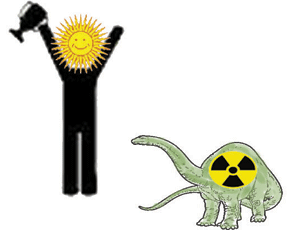
2 Government, Industry Explore Nuclear, Solar Space Engines
COLORADO SPRINGS, Colorado — More commercial and military activity is taking place in space, and the Defense Department and industry are investing in emerging propulsion technologies to move systems in orbit faster, farther and more efficiently.
……………………………………..In 2021, the Defense Advanced Research Projects Agency selected Lockheed Martin as one of three prime contractors — along with General Atomics and Blue Origin — for Phase 1 of its Demonstration Rocket for Agile Cislunar Operations, or DRACO, program to showcase the potential of a nuclear thermal propulsion system in space, a DARPA release said.
This January, NASA announced it had partnered with DARPA on the DRACO program, describing a nuclear thermal rocket engine as “an enabling capability for NASA crewed missions to Mars.” The goal is to demonstrate the system in orbit in fiscal year 2027, with the Space Force providing the launch vehicle for the DRACO mission, a DARPA statement said.
The program is about to enter Phase 2, which “will primarily involve building and testing on the non-nuclear components of the engine” such as valves, pumps, the nozzle and “a representative core without the nuclear materials in it,” DARPA’s program manager for DRACO Tabitha Dodson said during a panel discussion at the Space Foundation’s Space Symposium in April. Dodson said then a Phase 2 decision is “quite close.” However, at press time in mid-July, no contracts have been awarded.
…………………………………“There are no facilities on Earth that we could use for our DRACO reactor’s power test … so we’ve always baselined doing our power test for the reactor in space,” Dodson said. Once in space, DARPA will “very gradually” ramp up the system to “full power thrust,” she said…………………………………………………………………………………………………………………………………………
Despite DARPA’s commitment to safety, nuclear propulsion systems face an uphill battle getting deployed on spacecraft at scale, said Joel Sercel, founder and CEO of TransAstra, a space technology company.
………………………………………………………………………………..In May, the Space Force awarded TransAstra a Phase One Small Business Innovation Research contract to explore new applications for the company’s propellant-agnostic Omnivore thruster.
The Omnivore thruster uses solar reflectors to focus sunlight onto a solar absorber, which then superheats the system’s propellant to generate thrust “typically six times faster and eight times cheaper than electric systems,” a company release said.
Additionally, TransAstra calculated an Omnivore thruster “using liquid hydrogen propellant … will perform similarly to nuclear rockets, but without nuclear materials, costs or risk.”
Sercel said Omnivore has “80 percent of the performance of nuclear at 1 percent of the cost.” The system is essentially nuclear powered, “but the nuclear reactor in question is the fusion reactor at the center of the solar system called the Sun,” he added.
“The nice thing about nuclear reactors is that you have a small, compact reactor versus large deployable solar reflectors, but the basic performance of solar thermal rockets and nuclear rockets is about the same,” he said. And with Omnivore “you don’t have all these safety concerns and radioactive material and reactor control issues and so on. So, we think it’s a much more practical approach.”
Omnivore could have multiple mission applications for the Defense Department, Sercel said. Using liquid hydrogen propellant, the thruster “can deliver hundreds of kilograms” of spacecraft to geosynchronous orbit “on small launch vehicles, and the Space Force seems to be very excited about this,” he said. The system could also deliver spacecraft weighing more than 100 kilograms to cislunar space, he said.
Additionally, TransAstra has an Omnivore variant that uses water as the propellant, the solar absorber superheating the water vapor and releasing the gas through a nozzle to generate thrust.
The water-based variant can be placed on the company’s Worker Bee small orbital transfer vehicles, about 25 of which can fit on a single Falcon 9 rocket, Sercel said.
“Each [Worker Bee] could deliver up to six small [satellites] to their orbital destinations. So, we can deliver a full constellation of 100 small or micro [satellites] to all different inclinations, and you would get global coverage in one launch.”…………………………………………………………more https://www.nationaldefensemagazine.org/articles/2023/7/31/government-industry-explore-nuclear-solar-space-engines
Saving the world is cheaper than ruining it
https://futurecrunch.com/good-news-clean-energy-aids-big-cats-africa/?ref=future-crunch-newsletter 27 July 23
Let’s do a quick global whiparound. A former coal plant in the UK is being transformed into the world’s largest battery storage project; European renewables giant Octopus is planning to invest $20 billion in offshore wind by 2030; Thyssenkrupp, Europe’s second-largest steelmaker, has secured €2 billion from the German government for green steel investment; US regulators just opened the Gulf of Mexico to offshore wind leases; Egypt has brought its clean energy targets forward by five years and allocated land for a 10 GW wind project to provide electricity to 11 million households; Israel now requires all new non-residential buildings to be covered in solar; India is about to launch a staggering 20 GW tender for new battery manufacturing; 4.4 GW of rooftop solar has been installed in South Africa in the last year; the Philippines just awarded a whole lot of new solar projects; Brazil says its solar industry has created around 960,000 jobs since 2012; and Barbados is now targeting a 100% carbon neutral economy by 2030.
In the last six months nearly every mainstream media outlet has pointed out that China is still building a lot of coal, implying the country is hedging its bets on renewables. It’s not. In the first half of 2023, around $5 billion has been invested in coal and fossil gas and a similar amount in both hydro and nuclear; $10 billion has been invested in wind, $18 billion in solar, and an astonishing $28 billion in transmission.
The IEA has a new report showing that renewables are on track to meet all the growth in global electricity demand over the next two years. This would represent a key milestone in the fight against climate change–once all new demand is met, renewables will start eating into fossil fuels’ share of the power mix.
The global price of polysilicon (the stuff they make solar panels from) has dropped by 78% over the past year.
Since August 2022, $278 billion in clean energy project investments and 170,600 clean energy jobs have been created in the United States. ‘We’ve been talking about bringing manufacturing jobs back to America for my entire life. We’re finally doing it, right? That’s pretty exciting.’ WaPo
The US offshore wind sector is booming. There has been a 272% increase in the number of offshore wind supplier contracts since 2021, and 47% of that growth has occurred since the passage of the IRA. Nine in every ten contracts are going to companies that are either headquartered or have a presence in the US. Industrial policy FTW. Renew.biz
The 12.5% royalty rate that oil companies in the United States have to pay for the use of federal lands has remained unchanged for over one hundred years. The government is now reforming that system, raising the minimum rate to 16.7% and prioritising renewables development on federal lands over fossil fuel development. Grist.
In the first half of this year, wind and solar generated more power than coal in the United States. Wind and solar produced 343 terawatt-hours (TWh) from January through June 2023, while coal produced 296 TWh. Five years ago, coal’s share was quadruple that of wind and solar combined. Next step: fossil gas. Canary
California, the seventh-biggest US crude oil producer, has put a near-halt on issuing permits for new drilling this year. The state’s Geologic Energy Management Division has approved seven new active well permits in 2023. Compare that with the more than 200 it had issued by this time last year. Reuters
Australia’s big banks have turned their backs on the country’s largest coal miner, refusing to refinance a billion-dollar debt in a major rebuff that will force Whitehaven Coal to source loans offshore, potentially speeding up the demise of the sector. Couldn’t have happened to nicer people. SMH
The European Union has adopted new rules intended to make it easier for electric vehicle owners to travel across the continent. From 2025 onward, the new regulation requires fast-charging stations offering at least 150kW of power to be installed every 60km along the EU’s TEN-T system of highways, the bloc’s main transport corridors. Verge
A reminder from Hannah Ritchie. ‘The internal combustion engine is shockingly inefficient. For every dollar of petrol you put in, you get just 20 cents’ worth of driving motion. The other 80 cents is wasted along the way, most of it as heat from the engine. Electric cars are much better at converting energy into motion. For every dollar of electricity you put in, you get 89 cents out.’………………………………………………………………
Old Nuclear Weapons Sites Targeted for Clean Energy Projects.

Daniel Moore, 28 Jul 23 https://news.bloomberglaw.com/environment-and-energy/former-nuclear-weapons-sites-targeted-for-clean-energy-projects
- Agency identifies 70,000 acres at five weapons sites
- DOE land could host largest US solar farm at Hanford Site
The Energy Department plans to turn some of its Cold War nuclear weapons development sites into grounds for clean energy generation, including what could be the largest US solar project, agency leaders announced Friday.
The department has identified about 70,000 acres at five sites that hosted nuclear weapons development and testing and have since been cleaned up, according to details of the announcement shared in advance with Bloomberg Law. The announcement is part of the agency’s new Cleanup to Clean Energy initiative, an effort to repurpose parts of DOE-owned lands into clean energy generation sites.
“It’s a good deal and a huge opportunity,” Energy Secretary Jennifer Granholm said at the outset of a daylong event with clean energy industry representatives held in an auditorium space at the agency’s headquarters in Washington.
Developers would have a unique opportunity to lease land from the Energy Department, Granholm said. The sites have massive tracts of land whose characteristics are already mapped out. The decades of site analysis and remediation would speed up environmental and permitting reviews, too.
“Therefore, it will take less time to get shovels in the dirt,” Granholm said.
One former nuclear testing facility, the Hanford site in Richland, Wash., has the potential to host the largest solar farm in the country, Granholm said.
Another site, the Idaho National Laboratory in Idaho Falls, Idaho, sprawls 890 square miles and purchased about 50 megawatts of power in fiscal year 2020 to support 5,400 employees, 600 vehicles, and 300 buildings and trailers, according to the agency. The other sites under consideration include: Nevada National Security Site, in Nye County, Nev.; the Savannah River Site, in Aiken, S.C.; and the Waste Isolation Pilot Plant, near Carlsbad, N.M.
The agency’s Office of Environmental Management, Office of Legacy Management, Office of Nuclear Energy, and National Nuclear Security Administration all worked to locate the best sites.
The industry officials included those “with proven experience in implementing successful clean electricity projects generating 200 MW or larger,” according to the department.
After the panel, DOE officials told reporters they’re looking forward to project proposals that could power not just DOE facilities but the surrounding region.
Power generators could even propose an arrangement with a customer—a hydrogen producer, semiconductor manufacturer, or other type of facility, said Katy Huff, assistant secretary for the Office of Nuclear Energy.
At the Hanford site, the biggest nuclear cleanup site in the country, “there are certainly plenty of developers who have expressed interest” but the department hasn’t made any decisions, said Ike White, who leads the Office of Environmental Management.
“The department is just opening up this for ideas,” White said, adding the agency is open to a range of clean energy technologies.
Does Nuclear slow down the scale-up of Wind and Solar? France and Germany can’t agree
July 21, 2023 by Camille Lafrance and Benjamin Wehrmann
France and Germany lead the camps in disagreeing on the future of nuclear in Europe. Camille Lafrance and Benjamin Wehrmann at CLEW take a deep dive into the reasons why, quoting experts and politicians. Germany’s vision of a fully renewables-based EU is at odds with France’s unwavering support for low-carbon nuclear energy. European-wide agreement on targets matter because they drive future investment in the targeted technologies and the design of Europe’s grid, markets, policies, budgets and all the rest. A nuclear-light renewables-heavy Europe will look very different from one where nuclear baseload sits robustly within the cross-border market. And a major concern is that more nuclear means less renewables, at a time when wind and solar need all the scale they can get. Yet nuclear is fossil-free too, and France has the lowest emissions per head of any rich country. If agreement cannot be met, can Europe meet its decarbonisation goals? Time is running out.
The role of nuclear power in Europe’s transition away from fossil fuels has been a point of contention between French and German governments for a long time. In the year 2000, Germany decided to phase out nuclear energy and, despite temporarily backtracking on its decision before the Fukushima nuclear disaster in 2011, ultimately completed its nuclear exit in April 2023.
France, on the other hand, has the highest share of nuclear in the energy mix of any country in the world and, despite temporarily considering to radically cut its reliance on nuclear power after Fukushima, has committed to building many new reactors as part of its bid to meet European climate targets and net-zero emissions by 2050.
…………………. disputes about nuclear energy between France and Germany come with major implications for the strategic positioning on energy and climate policy of the whole EU.
…………………………………… …Nuclear safety
And also nuclear safety concerns continue to occupy experts in France as much as anywhere. In mid-2023, 800 French scientists warned against the risks of the country’s new nuclear programme, pointing to unresolved questions of radioactive waste management, which remain largely unresolved in most of the EU, including in France. The scientists also warned against risks of accidental contamination or meltdown.
…Prices, costs
Securing funding from Brussels for the major buildout is regarded as a substantial challenge to France’s plans.
In France, investments in renewable energy have been on the rise since 2016, as costs have gone down. According to data by U.S. investment bank Lazar, prices per megawatt hour (MWh) produced with renewables have dropped dramatically between 2009 and 2019 alone, while that of nuclear power went up. Solar power generation costs dropped nearly 90 percent to 40 dollars per MWh and onshore wind 70 percent to 41 dollars per MWh. Nuclear power costs per unit in the same decade increased 26 percent to 155 dollars per MWh. Meanwhile, nuclear power construction costs have risen, while future EPR costs are still uncertain. The sharp rise in interest rates has made building new nuclear plants even more expensive, compounded by reactor construction delays. Nuclear plant operator Electricite de France estimated the cost to be at least 51 billion euros. A convincing policy framework allowing Paris to classify the nuclear bill as an investment in the EU Green Deal could thus send and important signal to potential nuclear power investors.
France also pushed to include nuclear energy in the EU’s Renewable Energy Directive (RED), a target it achieved after protracted negotiations that saw the country form a ‘nuclear alliance’ with sympathetic governments and in opposition to Germany’s insistence on limiting funding to renewable power installations. The French energy minister, Agnes Pannier-Runacher, in mid-2023 said it was “regrettable that Germany is applying the brake” on reforms that enhance nuclear power’s role, arguing this would fail to take the position of a majority of EU countries into account.
Germany’s priorities largely in line with international trends
But the lack of a shared vision extends beyond the bilateral relationship of France and Germany. European Commission President Ursula von der Leyen declared in spring 2023 that nuclear power was not a ‘strategic’ technology in reaching the EU’s climate goals. Nevertheless, the technology remains at the heart of many debates at the European level. ……………………………………………………………………………………………………….. https://energypost.eu/does-nuclear-slow-down-the-scale-up-of-wind-and-solar-france-and-germany-cant-agree/
Luck Is Not a Strategy for the Ukraine, The Germans Take the “Evidence-based” Path.
We Chat with Nuclear Expert Dr. Paul Dorfman
Hot Globe, STEVE CHAPPLE, JUL 20, 2023
“………………………………………………………………………………. HOT GLOBE: It’s always bothered me that Saudi Arabia because of the Trump administration has now got access to the beginnings of nuclear power, and to a future nuclear bomb. The idea of selling small nuclear reactors around the world raises a pretty problematic point.
DORFMAN: That’s absolutely true. Saudi has made no bones about its nuclear ambitions and I mean its military nuclear ambitions. Saudi diplomats have said quite clearly that they’re looking towards Iran and that they’re seriously thinking about both civil and military nuclear. So there’s a potential for an arms race, a military nuclear arms race in the Middle East region. It’s actually even more bad news for the Middle East because in a proxy war if say, for example, Russian and America wanted to have a bit of a go and they didn’t want to absolutely destroy each other’s country where would they be fighting their proxy nuclear war? The first region that comes to mind is the Middle East and Saudi and Iran.
The economies of small nuclear reactors depend absolutely on production to scale. It’s been proven time and time again that in order to make any money at all, to break even on small nuclear production, you need to sell them abroad. Now, selling them abroad to whom, for what reasons? You’d be selling them to developing nations who may or may not have the capacity to regulate, to protect, to defend in depth, and so therefore you would be significantly expanding the potential for military nuclear risk whether that means a dirty bomb or further nuclear development.
HOT GLOBE: A slightly different question here, but Germany had ongoing nuclear plants and even though they were still producing electricity, they’ve shut those down. That may be a little puzzling to some Americans. Can you explain that?
DORFMAN: First of all, what Germany does is evidence-based policy. Germany puts out its scientific, technological questions, its energy questions, to well-funded high level research units. They go away and do their research. They come back with their research. They give it to the government departments and then the government makes a decision. So it’s evidence-based policy making. Over the years Germany has said well, we want to get to net-zero and we’re kind of worried about nuclear. Now around 2011 when Fukushima happened–remember Chancellor Merkel is a PhD chemist. She realized like many of us that even in an advanced society things could go badly wrong since accidents are by definition accidental.
HOT GLOBE: Good line
DORFMAN: Yeah, who knew? [laughs] So when Fukushima happened, Merkel and many others in Germany said well, look, we can’t stand the pain of this. I was having supper with Naoto Kan, the premier of Japan at the time of Fukushima after we both spoke in Westminster. Even then I was shocked when he turned to me and said that if the wind had been in the wrong direction, they would have lost Tokyo. The majority of the pollution went out into the Pacific Ocean. Now to the point about Germany. It’s landlocked so the Germans looked at the possibility of an accident and they came up with the numbers. It would cost trillions and trillions and trillions of Euros if they had a nuclear accident and they said look, we really can’t be doing this. This is just crazy, basically, and so we’re going to do “the German energy transition.” We’re going to try to lead the world on this and we’re going to move stepwise into renewables-plus, that’s renewables solar wind energy storage, interconnection, demand site management, energy management, distributed grids and a significant centralized upgrade of grids, too.
Now clearly Germany has a core problem, a fossil fuel problem, but they didn’t want to go down the fissile fuel route so Germany has said well OK for the time being we’re going to rely on gas but then we’re going to move to a full renewable economy. Well, the war has speeded that up. Since the war Germany has burnt less coal and Germany has shuttered all its nuclear power plants. It’s done this because what Germany says it will do, it does, unlike many other states. It set upon a route to go renewables. Now there is no such thing as a free lunch. Everything costs and there’s no perfect solution to the energy crisis, but what Germany is trying to do is to lead the world in this so-called energy transition, and I won’t spout numbers but basically what has happened is you’ve just seen significant renewable deployment, significant storage and a water storage as it were deployment which is sort of integrated into the power system and also integrated into the democratic system whereby by local communities also own the local renewable aspects of the local renewable power generation. It’s basically saying well look yes we can do this rather like Americans, you know, we have a dream, we will try to do this, it will be difficult but we will do our best to get there since the costs and the risks of nuclear are far too great. Let’s find a realistic, sustainable, positive, constructive way through……..
more https://hotglobe.substack.com/p/nuclear-power-is-already-a-climate
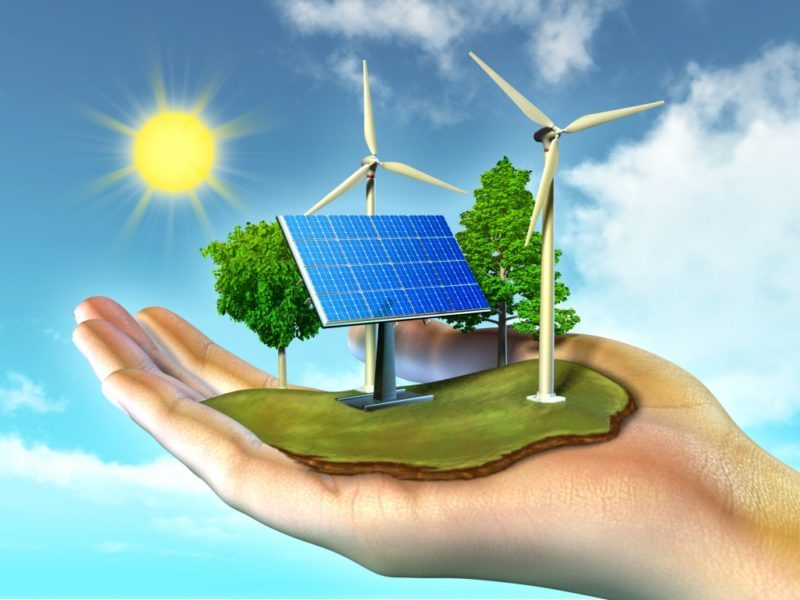
Not nuclear, but wind and solar still cheapest – CSIRO
By Peter Roberts https://www.aumanufacturing.com.au/not-nuclear-but-wind-and-solar-still-cheapest-csiro 18 July 23
There is a huge amount of hype around new energy sources to replace fossil fuels and none more so than the phenomenon of small modular nuclear reactors (SMR).
But the hype remains just that according to the latest GenCost 2022–23 study released today by CSIRO and Australian Energy Market Operator.
While SMRs are likely cheaper to build that traditional large nuclear power stations, renewable power from onshore wind turbines and solar PV are increasingly important as the cheapest sources of new energy generation capacity according to the report.
This holds true whether the costs of integration into the grid are taken into account, or not.
Each year the two bodies work with industry to give an updated cost estimate for large-scale electricity generation in Australia, and each year wind and solar come out on top
The 2022-23 report found that onshore wind and solar PV are ‘the lowest cost generation technology by a significant margin’, despite cost increases averaging 20 per cent for new-build electricity generation in Australia.
Offshore wind is higher cost but competitive with other alternative low emission generation technologies.
CSIRO Chief Energy Economist Paul Graham said: “Innovation in electricity generation technology is a global effort that’s strongly linked to climate change policy ambitions.
“Technology costs are one piece of the puzzle, providing critical input to electricity sector analysis.
“To limit emissions, our energy system must evolve and become more diverse.”
GenCost said the next lowest cost flexible technology in 2023 is gas generation with carbon capture and storage, but only if it could be financed at a rate that does not include climate policy risk.
Fossil fuels were more expensive and faced hurdles such as government legislation and net zero targets, and historically high energy costs.
GenCost said that with SMRs, ‘achieving the lower end of the nuclear SMR range (of cost estimates) requires that SMR is deployed globally in large enough capacity to bring down costs available to Australia’.
As for SMRs, none of this should not be surprising as even the International Atomic Energy Agency does not claim nuclear power is cheaper.
The agency claims only that SMRs, advanced nuclear reactors that have a power capacity of up to 300 MW(e) per unit or about one-third of typical sizes, provide cheaper power than traditional large nuclear stations.
Their advantage over traditional nuclear is linked to the nature of their design – small and modular.
According to the IAEA more than 70 commercial SMR designs are being developed around the world.
The IAEA says on its website: “Though SMRs have lower upfront capital cost per unit, their economic competitiveness is still to be proven in practice once they are deployed.”
.
1 This Month

of the week – Shut Down Drone Warfare!


Tell the Ukrainian Government to Drop Prosecution of Peace Activist Yurii Sheliazhenko

Petition to revoke the licensing of the Near Surface Nuclear Disposal Facility (NSDF) at Chalk River. https://www.ourcommons.ca/petitions/en/Petition/Details?Petition=e-7247
To see nuclear-related stories in greater depth and intensity – go to https://nuclearinformation.wordpress.com
-
Archives
- March 2026 (244)
- February 2026 (268)
- January 2026 (308)
- December 2025 (358)
- November 2025 (359)
- October 2025 (376)
- September 2025 (257)
- August 2025 (319)
- July 2025 (230)
- June 2025 (348)
- May 2025 (261)
- April 2025 (305)
-
Categories
- 1
- 1 NUCLEAR ISSUES
- business and costs
- climate change
- culture and arts
- ENERGY
- environment
- health
- history
- indigenous issues
- Legal
- marketing of nuclear
- media
- opposition to nuclear
- PERSONAL STORIES
- politics
- politics international
- Religion and ethics
- safety
- secrets,lies and civil liberties
- spinbuster
- technology
- Uranium
- wastes
- weapons and war
- Women
- 2 WORLD
- ACTION
- AFRICA
- Atrocities
- AUSTRALIA
- Christina's notes
- Christina's themes
- culture and arts
- Events
- Fuk 2022
- Fuk 2023
- Fukushima 2017
- Fukushima 2018
- fukushima 2019
- Fukushima 2020
- Fukushima 2021
- general
- global warming
- Humour (God we need it)
- Nuclear
- RARE EARTHS
- Reference
- resources – print
- Resources -audiovicual
- Weekly Newsletter
- World
- World Nuclear
- YouTube
-
RSS
Entries RSS
Comments RSS
 nuclear-news