Fukushima City: 100 MW solar farm
4 Apr 24, https://www.pveurope.eu/solar-parks/japan-fukushima-city-100-mw-solar-farm—
Juwi Shizen Energy, the joint venture founded in 2013 between the German project developer Juwi and the Japanese developer of wind and solar parks Shizen Energy, has successfully connected the largest single project in its history to the grid in Fukushima City and has already handed it over to the operator.
Construction of the Azuma Kofuji solar park began in August 2020, and the first kilowatt hour of clean electricity was fed into the grid at the end of September 2022. Annually, the solar park, which is spread over several sub-areas, will produce around 107 million kilowatt hours of electricity. This corresponds to the average consumption of around 31,000 Japanese households.
Juwi Shizen implemented the project as EPC service provider. With the largest project in the joint venture’s history, the project volume implemented since its foundation in 2013 now increases to a total of 602 megawatts. Another 140 megawatts of solar capacity is currently under construction.
Renewable energy plants on abondoned former agricultural land encouraged by law
The completed facility covers an area of approximately 186 acres, most of which is unused farmland. The construction of renewable energy plants on such abandoned former agricultural land is encouraged by law in Japan.
The solar park is located in Fukushima Prefecture, about 80 kilometers from the Fukushima Daiichi nuclear reactor. There, core meltdowns occurred in several reactor units in March 2011 as a result of an earthquake and a tsunami triggered by it, making it one of the largest nuclear disasters in history. (hcn)
Is Nuclear Fusion Really The Ultimate Solution to AI’s Crazy Power Use?

By Alex Kimani – Mar 29, 2024, https://oilprice.com/Energy/Energy-General/Is-Nuclear-Fusion-Really-The-Ultimate-Solution-to-AIs-Crazy-Power-Use.html
- A Boston Consulting Group analysis has predicted that data center electricity consumption will triple by 2030.
- Past trends in technology advances suggest that AI cons are very likely to outweigh the pros as far as power demand is concerned.
- OpenAI’s Altman: nuclear fusion is the ultimate solution to the AI energy puzzle
Two weeks ago, we reported how Artificial Intelligence (AI), cryptocurrency mining and clean energy manufacturing are powering the Fourth Industrial Revolution, or simply 4R, and driving disruptive trends including the rise of data and connectivity, analytics, human-machine interaction, and improvements in robotics. Unfortunately, these secular megatrends are pushing the U.S. power grid to its limits.

According to Sreedhar Sistu, vice president of artificial intelligence at Schneider Electric (OTCPK:SBGSF), excluding China, AI represents 4.3 GW of global power demand, and could grow almost five-fold by 2028. Another analysis has predicted that demand from AI will grow exponentially, increasing at least 10x between 2023 and 2026.

AI tasks typically demand more powerful hardware than traditional computing tasks. Meanwhile, bitcoin mining shows no signs of slowing down, with mining rates hitting 565 exahashes per second (EH/s) currently, a five-fold increase from three years ago.
Bitcoin mining consumes 148.63 TWh of electricity per year and emits 82.90 Mt CO2 per year, comparable to the power consumption of Malaysia. And, data center demand is not helping matters at all. Data center storage capacity is expected to grow from 10.1 zettabytes (ZB) in 2023 to 21.0 ZB in 2027, good for a 18.5% CAGR.

A Boston Consulting Group analysis has predicted that data center electricity consumption will triple by 2030, enough electricity to power 40 million U.S. homes.
The situation is already getting out of hand: U.S. power demand has started rising for the first time ever in 15 years. “We as a country are running out of energy,” Michael Khoo, climate disinformation program director at Friends of the Earth and co-author of a report on AI and climate, has told CNN.
To be fair, AI has been touted as one of the key technologies that will help tackle climate change. The revolutionary technology is already being used to track pollution, predict weather, monitor melting ice and map deforestation. A recent report commissioned by Google and published by the Boston Consulting Group claimed AI could help mitigate up to 10% of planet-heating pollution.
Unfortunately, past trends in technology advances suggest that AI cons are very likely to outweigh the pros as far as power demand is concerned.
“Efficiency gains have never reduced the energy consumption of cryptocurrency mining. When we make certain goods and services more efficient, we see increases in demand,” Alex de Vries, a data scientist and researcher at Vrije Universiteit Amsterdam, has pointed out.
At this point, nearly everybody agrees that we are incapable of developing renewable energy plants fast enough to meet this skyrocketing power demand. So, what other recourse do we have, short of saying let’s just build more natural gas and fossil fuel power plants?
Enter nuclear fusion, long regarded by scientists as the Holy Grail of clean and almost limitless energy. Sam Altman, head of ChatGPT creator OpenAI, says nuclear fusion is the ultimate solution to the AI energy puzzle, “There’s no way to get there without a breakthrough, we need fusion,” Altman said in a January interview. Altman reiterated this view a few weeks ago when podcaster and computer scientist Lex Fridman asked him about the AI energy conundrum.
Blue Sky Thinking
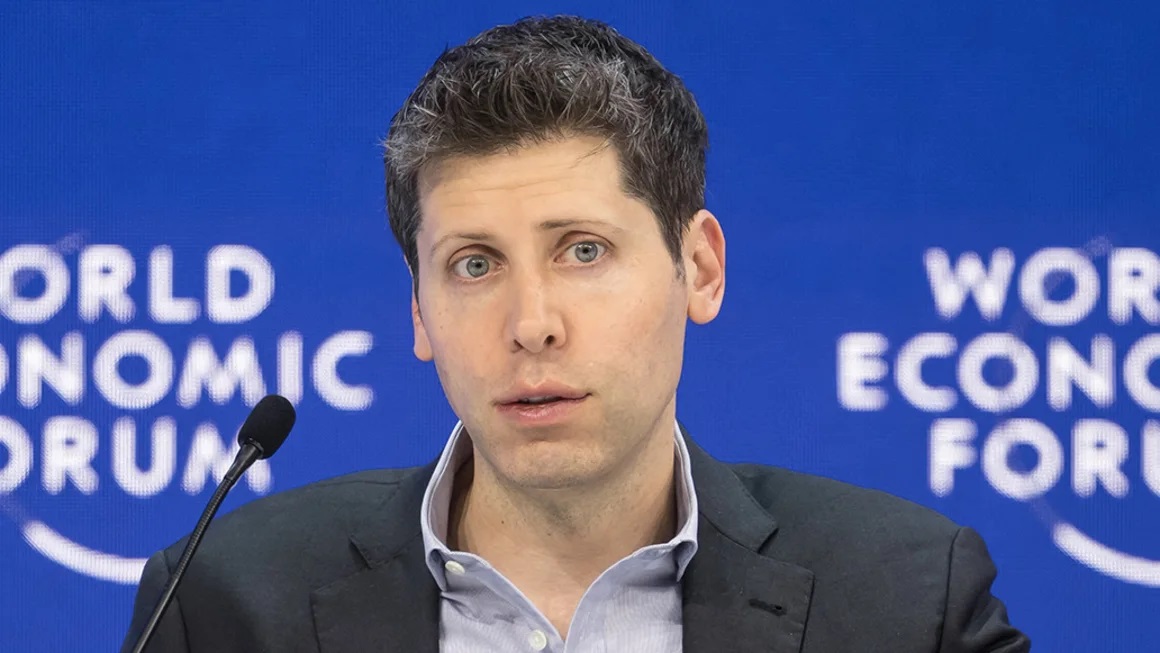
Unfortunately, Altman’s proposal is likely another case of overly optimistic blue-sky thinking, and we might not be any closer to building a commercial nuclear fusion reactor than we are to harvesting energy from blackholes.
For decades, nuclear fusion has been considered the “Holy Grail” of clean energy. If we were able to harness its power it would mean endless clean and sustainable energy. It’s what powers stars, and the theory is that it could be successfully applied to nuclear reactors–without the risk of a catastrophic meltdown disaster.
Scientists have been working on a viable nuclear fusion reactor since the 1950s–ever hopeful that a breakthrough is just around the corner. Unfortunately, the running joke has become that a practical nuclear fusion power plant could be decades or even centuries away, with milestone after milestone having fallen time and again
To be fair again, there’s been some promising glimpses into the possibilities here. Last year, a nuclear fusion reactor in California produced 3.15 megajoules of energy using only 2.05 megajoules of energy input, a rare instance where a fusion experiment produced more energy than it consumed. The vast majority of fusion experiments are energy negative, taking in more energy than they generate thus making them useless as a form of electricity generation. Despite growing hopes that fusion could soon play a part in climate change mitigation by providing vast amounts of clean power for energy-hungry technologies like AI, the world is “still a way off commercial fusion and it cannot help us with the climate crisis now”, Aneeqa Khan, research fellow in nuclear fusion at Manchester University, told the Guardian just after the initial December breakthrough.
You don’t have to look very far to get a healthy dose of reality check.
For decades, 35 countries have collaborated on the largest and most ambitious scientific experiments ever conceived: the International Thermonuclear Experimental Reactor (ITER), the biggest-ever fusion power machine. ITER plans to generate plasma at temperatures 10x higher than that of the sun’s core, and generate net energy for seconds at a time. As is usually the case with many nuclear power projects, ITER is already facing massive cost overruns that puts its future viability in question. W
When the ITER project formally commenced operations in 2006, its international partners agreed to fund an estimated €5 billion (then $6.3 billion) for a 10-year plan that would have seen the reactor come online in 2016. Charles Seife, director of the Arthur L. Carter Institute of Journalism at New York University, has sued ITER for lack of transparency on cost and incessant delays. According to him, the project’s latest official cost estimate now stands at more than €20 billion ($22 billion), with the project nowhere near achieving its key objectives. To make matters worse, none of ITER’s key players, including the U.S. Department of Energy, has been able to provide concrete answers of whether the team can overcome the technical challenges or estimates of the additional delays, much less the extra expenses.
Seife notes that whereas the Notre Dame took a century to complete, it eventually was used for its intended purpose less than a generation after construction began. However, he concludes by saying that the same can hardly be said about ITER, which looks less and less like a cathedral–and more like a mausoleum.
UK’s Energy Regulator ,Ofgem, flags concerns over Sizewell C costs

https://www.energylivenews.com/2024/03/21/ofgem-flags-concerns-over-sizewell-c-costs/
The energy regulator has highlighted concerns in a letter to the Energy Secretary regarding potential modifications to the Sizewell C project, emphasising the need for certainty in project costs
Ofgem has conveyed its concerns to the Energy Secretary regarding proposed modifications to the Sizewell C project’s Regulated Asset Base licence.
In a letter, Ofgem underscores the importance of certainty in underlying project costs and contracts for the economic regulatory regime’s fairness to consumers, taxpayers and potential investors.
The letter emphasises the need for thorough progress on all aspects of the project before implementing any licence modifications, especially in light of “challenges” faced by EDF with the construction of Hinkley Point C.
The energy regulator said: “It is important to ensure all aspects of the project are appropriately progressed before making licence modifications.
“This is especially pertinent given the ongoing challenges being experienced by EDF with the construction of Hinkley Point C, which shares many design elements with the proposed Sizewell C plant.
“When considering responses to this consultation, our expectation is that the Department for Energy Security and Net Zero (DESNZ) will continue to ensure that value for money for consumers is a priority consideration in any analysis and decision making around potential changes to the licence, and that any changes made are well justified and evidenced.
“In addition, it is vital that DESNZ also takes into account the effect of any potential changes on the overall operability of the licence and Ofgem’s ability to effectively discharge our obligations over time.”
Nuclear power and Artificial Intelligence – a dystopian vision of the future.

Susan O’Donnell Fredericton, 15 Mar 24
Re “Nuclear power and artificial intelligence: the perfect marriage” (Report on Business, March 12): I read with genuine horror the detailing of artificial intelligence’s voracious appetite for energy.
This is presented as a positive development, and it is suggested that more Canadian uranium could be mined to fuel small nuclear reactors and provide power for gluttonous AIs. This dystopian vision of the future looks devoid of humanity.
Environmentalists and everyone concerned with a sustainable future are thinking about how we will power a livable world, so that more than eight billion people will have a decent standard of living as the fossil fuel era comes to an end. I am sickened to contemplate that AI might gobble up much of the available energy that will be desperately needed for basic humanitarian needs.
Susan O’Donnell Fredericton
AI’s craving for data is matched only by a runaway thirst for water and energy
John Naughton, https://www.theguardian.com/commentisfree/2024/mar/02/ais-craving-for-data-is-matched-only-by-a-runaway-thirst-for-water-and-energy
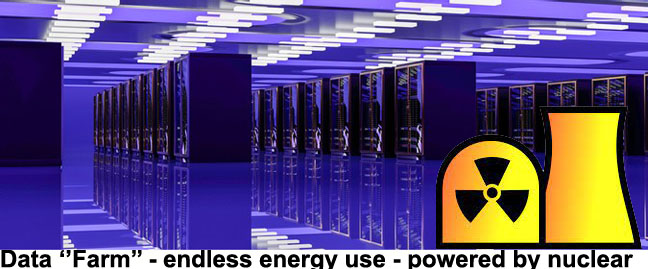
The computing power for AI models requires immense – and increasing – amounts of natural resources. Legislation is required to prevent environmental crisis.
One of the most pernicious myths about digital technology is that it is somehow weightless or immaterial. Remember all that early talk about the “paperless” office and “frictionless” transactions? And of course, while our personal electronic devices do use some electricity, compared with the washing machine or the dishwasher, it’s trivial.
Belief in this comforting story, however, might not survive an encounter with Kate Crawford’s seminal book, Atlas of AI, or the striking Anatomy of an AI System graphic she composed with Vladan Joler. And it certainly wouldn’t survive a visit to a datacentre – one of those enormous metallic sheds housing tens or even hundreds of thousands of servers humming away, consuming massive amounts of electricity and needing lots of water for their cooling systems.

On the energy front, consider Ireland, a small country with an awful lot of datacentres. Its Central Statistics Office reports that in 2022 those sheds consumed more electricity (18%) than all the rural dwellings in the country, and as much as all Ireland’s urban dwellings. And as far as water consumption is concerned, a study by Imperial College London in 2021 estimated that one medium-sized datacentre used as much water as three average-sized hospitals. Which is a useful reminder that while these industrial sheds are the material embodiment of the metaphor of “cloud computing”, there is nothing misty or fleecy about them. And if you were ever tempted to see for yourself, forget it: it’d be easier to get into Fort Knox.
There are now between 9,000 and 11,000 of these datacentres in the world. Many of them are beginning to look a bit dated, because they’re old style server-farms with thousands or millions of cheap PCs storing all the data – photographs, documents, videos, audio recordings, etc – that a smartphone-enabled world generates in such casual abundance.
But that’s about to change, because the industrial feeding frenzy around AI (AKA machine learning) means that the materiality of the computing “cloud” is going to become harder to ignore. How come? Well, machine learning requires a different kind of computer processor – graphics processing units (GPUs) – which are considerably more complex (and expensive) than conventional processors. More importantly, they also run hotter, and need significantly more energy.
On the cooling front, Kate Crawford notes in an article published in Nature last week that a giant datacentre cluster serving OpenAI’s most advanced model, GPT-4, is based in the state of Iowa. “A lawsuit by local residents,” writes Crawford, “revealed that in July 2022, the month before OpenAI finished training the model, the cluster used about 6% of the district’s water. As Google and Microsoft prepared their Bard and Bing large language models, both had major spikes in water use – increases of 20% and 34%, respectively, in one year, according to the companies’ environmental reports.”
Within the tech industry, it has been widely known that AI faces an energy crisis, but it was only at the World Economic Forum in Davos in January that one of its leaders finally came clean about it. OpenAI’s boss Sam Altman warned that the next wave of generative AI systems will consume vastly more power than expected, and that energy systems will struggle to cope. “There’s no way to get there without a breakthrough,” he said.
What kind of “breakthrough”? Why, nuclear fusion, of course. In which, coincidentally, Mr Altman has a stake, having invested in Helion Energy way back in 2021. Smart lad, that Altman; never misses a trick.
As far as cooling is concerned, it looks as though runaway AI also faces a challenge. At any rate, a paper recently published on the arXiv preprint server by scientists at the University of California, Riverside, estimates that “operational water withdrawal” – water taken from surface or groundwater sources – of global AI “may reach [between] 4.2 [and] 6.6bn cubic meters in 2027, which is more than the total annual water withdrawal of … half of the United Kingdom”.
Given all that, you can see why the AI industry is, er, reluctant about coming clean on its probable energy and cooling requirements. After all, there’s a bubble on, and awkward facts can cause punctures. So it’s nice to be able to report that soon they may be obliged to open up. Over in the US, a group of senators and representatives have introduced a bill to require the federal government to assess AI’s current environmental footprint and develop a standardised system for reporting future impacts. And over in Europe, the EU’s AI Act is about to become law. Among other things, it requires “high-risk AI systems” (which include the powerful “foundation models” that power ChatGPT and similar AIs) to report their energy consumption, use of resources and other impacts throughout their lifespan.
It’d be nice if this induces some investors to think about doing proper due diligence before jumping on the AI bandwagon.
Blackout risks due to Hinkley nuclear delays – a reminder of the value of energy efficiency

Hinkley Point C delays raise UK blackout risk, https://www.energylivenews.com/2024/02/28/hinkley-point-c-delays-raise-uk-blackout-risk/
Delays in Hinkley Point C construction and other nuclear station closures heighten blackout risk for the UK by 2028 due to increased demand and insufficient capacity, a study warns
New research warns of potential blackouts in the UK by 2028 due to delays in French-built nuclear reactors, alongside closures of existing stations like Ratcliffe-on-Soar.
Analysis by Public First indicates a looming “crunch point” as demand exceeds baseload capacity by 7.5GW at peak times, equivalent to the power needs of over seven million homes.
Government data reveals consumers facing a £2.8 billion addition to bills in 2028 to ensure sufficient generating capacity.
Paul Szyszczak, Country Manager, Danfoss Climate Solutions, UK and Ireland, said: “This new blackout warning for the UK’s grid is concerning but shouldn’t be a reason for panic. Instead, it should be seen as an opportunity and useful reminder of why we need to boost energy efficiency
Regardless of the Hinkley Point delays, blackouts can be kept out of the conversation entirely if we were to bring in relatively simple changes. Changes such as rolling out demand-side flexibility technology across the country; this would level out energy consumption to prevent periods of simultaneous high demand and low supply, which is especially important for an energy system based on a growing mix renewables, such as the UK’s energy system.
“The deployment of demand-side flexibility technologies can lower demand during expensive peak hours and reduce the amount of fossil fuels in the energy mix. In fact, these changes would mean at least a 7% savings on electricity bills for households and a highly significant reduction in carbon emissions.
“Through demand-side flexibility, the EU and UK can annually save 40 million tonnes of carbon dioxide emissions and achieve annual societal cost savings of €10.5 billion (£8.9bn) by 2030, partly due to lower need for investments in energy infrastructure.”
Tripling nuclear energy by 2050 will take a miracle, and miracles don’t happen.

“To protect the climate, we must abate the most carbon at the least cost—and in the least time—so we must pay attention to carbon, cost, and time, not to carbon alone.”
—Nuclear power fails both the tests of cost and time.
It is time to abandon the idea that further expanding nuclear technology can help with mitigating climate change
Farrukh A Chishtie, M V Ramana, Saturday 03 February 2024, https://www.downtoearth.org.in/blog/climate-change/tripling-nuclear-energy-by-2050-will-take-a-miracle-and-miracles-don-t-happen-94249
The recent COP28 climate conference held in Dubai saw a concerted effort by a few governments to promote expanding nuclear energy as a solution to the climate crisis. Led by the US Department of Energy, a pledge to triple nuclear energy capacity by 2050 attracted a mere 22 countries. The contrast in ambition and global support with an agreement on tripling renewable energy and doubling energy efficiency by 2030—signed by 123 countries, and enshrined in the final outcome document—couldn’t be greater. But even this level of ambition, i.e., tripling capacity by 2050, is inappropriate when it comes to nuclear energy.
Between 1996 and 2022, the proportion of global electricity generated by nuclear reactors has dropped . This decline stands in sharp contrast to the remarkable upward trajectory observed in renewable energy sources, particularly solar and wind power. Over the same period, the share of global electricity produced by modern forms of renewable energy has gone from a mere 1.2 per cent to 14.4 per cent.
The difference is only set to grow. Investment in renewable energy sources is growing rapidly, reaching a record of , constituting 74 per cent of all power generation investments in 2022, while nuclear and coal accounted for only 8 per cent each. Solar photovoltaics, especially when built at large (utility) scale, has become the least costly option for new electricity capacity in recent years; in 2020, the International Energy Agency pronounced that solar is “the new king of the world’s electricity markets”.
As of mid-2023, there were just 407 operable nuclear reactors worldwide, which is 31 below the peak of 438 reactors in 2002, with a combined capacity of 365 gigawatts. These reactors are mostly old ones, built decades ago; the average age of the fleet has grown from 11.3 years in 1990 to 31.4 years in 2023. For nuclear energy to even maintain its current level of electricity production, most of these reactors will have to replaced. As detailed below, any attempt to replace nuclear capacity will be exorbitant. Because of these high costs, and rapid pace of building renewables, nuclear energy can simply not maintain its share of electricity production.
The decline in nuclear capacity is not due to lack of interest from governments. Between 2002 and 2023, there was a so-called nuclear renaissance. In the United States, the Bush administration’s 2005 Energy Policy Act offered numerous incentives, such as loan guarantees, to promote nuclear power. Spurred by these incentives, US electricity companies proposed building more than 30 reactors, many of them expected to start operating by 2021.
Only four of these reactors proceeded to actual construction but two of these reactors in the state of South Carolina were abandoned after $9 billion was spent because of massive cost increases and time delays. That led the Westinghouse Electric Company, a subsidiary of Japanese company Toshiba and the largest historic builder of nuclear power plants in the world, to file for Chapter 11 bankruptcy protection.
The remaining two reactors were built at the Vogtle site in Georgia. The first of these units began operating in 2023, taking over 10 years from when construction started—well above the “36 months” that the reactor’s designer, the Westinghouse company, had promised. Costs rose from an estimate of $14 billion when construction started to over $35 billion. This is in the United States, the country with historically the largest nuclear fleet.
In France, the country with the most reliance on nuclear energy, the Flamanville-3 nuclear reactor is now estimated to cost around $15 billion—four times what was forecasted when Électricité de France began building it. Historically, both in the United States and France, costs have risen as more reactors were built, and so we might expect future nuclear plants to be more expensive.
The other reason to expect future costs to go up is because of the push for small modular reactors (SMRs) to revive the nuclear industry. Small reactors lose out on economies of scale, and therefore start off with an economic disadvantage. Even if their absolute cost is lower than that of a large nuclear reactor, they are more expensive when compared on the basis of how much electricity they can provide (i.e., on a per megawatt basis).
A project involving six NuScale small modular reactors that was proposed to be built in Idaho was estimated to cost $9.3 billion for just 462 megawatts of power capacity. In comparison to the Vogtle project in Georgia, when that project was at a comparable stage—that is, when it was still on paper—the estimate for the UAMPS project is around 250 per cent more than the initial per megawatt cost of the Vogtle project.
SMRs have also suffered construction delays. In Russia, the first SMR that has been deployed is the KLT-40S, based on the design of reactors used in the small fleet of nuclear-powered icebreakers that Russia has operated for decades. Yet, the KLT-40S, which was expected to take three years to build actually took 13 years. That is even more than the large reactors mentioned above.
These delays also underscore what energy analyst Amory Lovins pointed out: “To protect the climate, we must abate the most carbon at the least cost—and in the least time—so we must pay attention to carbon, cost, and time, not to carbon alone.” Nuclear power fails both the tests of cost and time. Investing further into nuclear technology with its concomitant loss of time will accentuate the unjust and unequal impacts on countries in the Global South, who are already dealing with severe climate impacts because developed countries like the United States have not reduced their carbon emissions in accord with their financial capacities.
Given these hard economic realities, what explains the pledge put out by the US government? Looking at who signed it and who didn’t suggests that the pledge is out there for geopolitical reasons. Note, for example, that Russia and China are missing from the list of signatories to the declaration: China is the country building the most nuclear reactors domestically and Russia is the country exporting the most reactors. No country from South Asia joined this pledge either.
In his essay about miracles, the 18th century British philosopher David Hume wrote “A wise man…proportions his belief to the evidence”. (Today, we might say, a wise person proportions their belief to the evidence.) The evidence that nuclear energy cannot be scaled up quickly is overwhelming. It is time to abandon the idea that further expanding nuclear technology can help with mitigating climate change. Rather, we need to focus on expanding renewables and associated technologies while implementing stringent efficiency measures to rapidly effect an energy transition.
Farrukh A Chishtie is an atmospheric and earth observation scientist with extensive experience in various experimental and modelling disciplines. He has more than 18 years of research experience, and is presently leading the Peaceful Society, Science and Innovation Foundation, a non-profit organisation dedicated to serving communities afflicted by climate change, wars and pandemics.
MV Ramana is the Simons Chair in Disarmament, Global and Human Security and Professor at the School of Public Policy and Global Affairs, at the University of British Columbia in Vancouver, Canada. He is the author of The Power of Promise: Examining Nuclear Energy in India (Penguin Books, 2012) and Nuclear is not the Solution: The Folly of Atomic Power in the Age of Climate Change (forthcoming from Verso books)
Blade hub idea for old n-plant site
A NEW wind turbine recycling site at Chapelcross could bring up to 80 jobs to the area
A cross party group of local MSPs recently wrote to the Scottish
Government to make the case for land at the former nuclear site becoming
the site of a planned specialist blade facility for the decommissioning,
and recycling, of old wind turbine blades.
Colin Smyth, Oliver Mundell,
Emma Harper and Finlay Carson all signed the letter which was sent to
Cabinet Secretary Neil Gray MSP. And Mr Smyth also raised the issue in a
Scottish Parliament debate last week on the green economy, when he
criticised the fact that although Dumfries and Galloway had more windfarms
per head of population than anywhere else in Scotland, few of the jobs from
the renewable industry were based in the region.
In September, Scotland’s
wind energy industry signed the Onshore Wind Sector Agreement with the
Scottish Government. It commits the industry, the Scottish Government and
its agencies to delivering a recycling hub in Scotland to support supply
chains to reuse and refurbish parts from windfarms. Speaking in the
debating chamber, Mr Smyth said: “Using the former nuclear power station
would be a visible example of a just transition in action, and it would fit
in with the Government’s commitment to the Borderlands inclusive growth
deal, with its pledge to make Chapelcross a focal point for clean energy.
DNG24 3rd Feb 2024
Microsoft Looks to Nuclear to Fuel AI Plans, (with help from nuclear front group Terra Praxis)
Microsoft goes nuclear to deal with energy influx due to the meteoritic rise of its AI platforms.
tech.co by Abby Ward, January 25, 2024,
Microsoft is looking to fuel its future AI plans with nuclear, according to a recent moves by the company.
AI notoriously requires huge amounts of energy on a daily basis, and with more and more of us using it, and companies investing heavily in the technology, the scramble for power is ramping up.
With Microsoft throwing its weight (and money) behind AI, including huge investments in OpenAI, it seems nuclear power could be the key to its success………………………………
Due to the explosive arrival of AI, consuming a whopping four times more power than cloud servers, Microsoft appears to be preparing for this increased demand to power their data centers as they continue to accelerate their growth plans in the AI arena.
Among other signs that Microsoft will be looking to nuclear power to plan for the shortfall in energy is the appointment of a Director of Nuclear Development Acceleration last week.
Data Center Energy Shortfall
Data centers, the things that physically store and share applications and data, require an enormous amount of energy to run……………………
To put the size of the problem into perspective, McKinsey wrote that a hyperscaler’s data center can use as much power as 80,000 households do.
In the same article, McKinsey forecasted that the power needed to facilitate US data centers are set to jump from 17 gigawatts (GW) in 2022 to 35 GW by 2030………………………………………

A recent collaboration between Microsoft and Terra Praxis, a non-profit advocating for repurposing old coal plants into SMR facilities, further underlines the company’s nuclear ambitions. According to reports from Data Center Dynamics, together, they developed a generative AI model to streamline the lengthy and costly nuclear regulatory process, showcasing Microsoft’s commitment to making nuclear power a viable option for its data centers…………………………………..
Microsoft’s foray into nuclear power is bound to raise eyebrows and concerns about safety and waste disposal will need to be addressed in due course………………………………
https://tech.co/news/microsoft-nuclear-fuel-a
Nuclear goes backwards, again, as wind and solar enjoy another year of record growth.

Jim Green 21 January 2024, https://reneweconomy.com.au/nuclear-goes-backwards-again-as-wind-and-solar-enjoy-another-year-of-record-growth/
The nuclear renaissance of the late-2000s was a bust due to the Fukushima disaster and catastrophic cost overruns with reactor projects. The latest renaissance is heading the same way, i.e. nowhere. Nuclear power went backwards last year.
There were five reactor start-ups and five permanent closures in 2023 with a net loss of 1.7 gigawatts (GW) of capacity. There were just six reactor construction starts in 2023, five of them in China.
Due to the ageing of the reactor fleet, the International Atomic Energy Agency (IAEA) anticipates the closure of 10 reactors (10 GW) per year from 2018 to 2050.
Thus the industry needs an annual average of 10 reactor construction starts, and 10 reactor startups (grid connections), just to maintain its current output. Over the past decade (2014-23), construction starts have averaged 6.1 and reactor startups have averaged 6.7.
The number of operable power reactors is 407 to 413 depending on the definition of operability, well down from the 2002 peak of 438.
Nuclear power’s share of global electricity generation has fallen to 9.2 percent, its lowest share in four decades and little more than half of its peak of 17.5 percent in 1996.
Over the two decades 2004-2023, there were 102 power reactor startups and 104 closures worldwide: 49 startups in China with no closures; and a net decline of 51 reactors in the rest of the world.
In China, there were five reactor construction starts in 2023 and just one reactor startup. Put another way, there was just one reactor construction start outside China in 2023. So much for the hype about a new nuclear renaissance.
Small modular reactors and ‘advanced’ nuclear power
Small modular reactors (SMRs) are the subject of endless hype but there were no SMR construction starts or startups last year. The biggest SMR news in 2023 was NuScale Power’s decision to abandon its flagship project in Idaho despite securing astronomical subsidies amounting to around US$4 billion (A$6.1 billion) from the US government.
The pro-nuclear Breakthrough Institute noted in a November 2023 article that efforts to commercialise a new generation of ‘advanced’ nuclear reactors “are simply not on track” and it warned nuclear advocates not to “whistle past this graveyard”:
It wrote:
“The NuScale announcement follows several other setbacks for advanced reactors. Last month, X-Energy, another promising SMR company, announced that it was canceling plans to go public. This week, it was forced to lay off about 100 staff.
“In early 2022, Oklo’s first license application was summarily rejected by the Nuclear Regulatory Commission before the agency had even commenced a technical review of Oklo’s Aurora reactor.
The nuclear renaissance of the late-2000s was a bust due to the Fukushima disaster and catastrophic cost overruns with reactor projects. The latest renaissance is heading the same way, i.e. nowhere. Nuclear power went backwards last year.
There were five reactor start-ups and five permanent closures in 2023 with a net loss of 1.7 gigawatts (GW) of capacity. There were just six reactor construction starts in 2023, five of them in China.
Due to the ageing of the reactor fleet, the International Atomic Energy Agency (IAEA) anticipates the closure of 10 reactors (10 GW) per year from 2018 to 2050.
Thus the industry needs an annual average of 10 reactor construction starts, and 10 reactor startups (grid connections), just to maintain its current output. Over the past decade (2014-23), construction starts have averaged 6.1 and reactor startups have averaged 6.7.
The number of operable power reactors is 407 to 413 depending on the definition of operability, well down from the 2002 peak of 438.
Nuclear power’s share of global electricity generation has fallen to 9.2 percent, its lowest share in four decades and little more than half of its peak of 17.5 percent in 1996.
Over the two decades 2004-2023, there were 102 power reactor startups and 104 closures worldwide: 49 startups in China with no closures; and a net decline of 51 reactors in the rest of the world.
In China, there were five reactor construction starts in 2023 and just one reactor startup. Put another way, there was just one reactor construction start outside China in 2023. So much for the hype about a new nuclear renaissance.
Nuclear decline vs. record renewables growth
The International Energy Agency (IEA) has just released its ‘Renewables 2023’ report and it makes for a striking contrast with the nuclear industry’s malaise.
Nuclear power suffered a net loss of 1.7 GW capacity in 2023, whereas renewable capacity additions amounted to a record 507 GW, almost 50 percent higher than 2022. This is the 22nd year in a row that renewable capacity additions set a new record, the IEA states. Solar PV alone accounted for three-quarters of renewable capacity additions worldwide in 2023.
Nuclear power accounts for a declining share of share of global electricity generation (currently 9.2 percent) whereas renewables have grown to 30.2 percent. The IEA expects renewables to reach 42 percent by 2028 thanks to a projected 3,700 GW of new capacity over the next five years in the IEA’s ‘main case’.
The IEA states that the world is on course to add more renewable capacity in the next five years than has been installed since the first commercial renewable energy power plant was built more than 100 years ago.
Solar and wind combined have already surpassed nuclear power generation and the IEA notes that over the next five years, several other milestones will likely be achieved:
— In 2025, renewables surpass coal-fired electricity generation to become the largest source of electricity generation
— In 2025, wind surpasses nuclear electricity generation
— In 2026, solar PV surpasses nuclear electricity generation
— In 2028, renewable energy sources account for over 42 percent of global electricity generation, with the share of wind and solar PV doubling to 25 percent
Tripling renewables
The IEA states in its ‘Renewables 2023’ report that:
“Prior to the COP28 climate change conference in Dubai, the International Energy Agency (IEA) urged governments to support five pillars for action by 2030, among them the goal of tripling global renewable power capacity. Several of the IEA priorities were reflected in the Global Stocktake text agreed by the 198 governments at COP28, including the goals of tripling renewables and doubling the annual rate of energy efficiency improvements every year to 2030. Tripling global renewable capacity in the power sector from 2022 levels by 2030 would take it above 11 000 GW, in line with IEA’s Net Zero Emissions by 2050 (NZE) Scenario.
“Under existing policies and market conditions, global renewable capacity is forecast to reach 7300 GW by 2028. This growth trajectory would see global capacity increase to 2.5 times its current level by 2030, falling short of the tripling goal.”
In the IEA’s ‘accelerated case’, 4,500 GW of new renewable capacity will be added over the next five years (compared to 3,700 GW in the ‘main case’), nearing the tripling goal.
Tripling nuclear?
The goal of tripling renewables by 2030 is a stretch but it is not impossible. Conversely, the ‘pledge’ signed by just 22 nations at COP28 to triple nuclear power by 2050 appears absurd.
The Labor federal government signed Australia up to the renewables pledge but not the nuclear pledge. The Coalition wants to do the opposite, and also opposes the Labor government’s target of 82 per cent renewable power supply by 2030.
One of the lies being peddled by the Coalition is that nuclear power capacity could increase by 80 percent over the next 30 years. That is based on a ‘high case’ scenario from the IAEA. However the IAEA’s ‘low case’ scenario — ignored by the Coalition — is for another 30 years of stagnation.
So should we go with the IAEA’s high or low scenarios, or split the difference perhaps?
According to a report by the IAEA itself, the Agency’s ‘high’ forecasts have consistently proven to be ridiculous and even its ‘low’ forecasts are too high — by 13 percent on average.
Nuclear power won’t increase by 80 percent by 2050 and it certainly won’t triple; indeed it will struggle to maintain current output given the ageing of the reactor fleet and recent experience with construction projects.
Comparing nuclear and renewables in China
China’s nuclear program added only 1.2 GW capacity in 2023 while wind and solar combined added 278 GW. Michael Barnard noted in CleanTechnica that allowing for capacity factors, the nuclear additions amount to about 7 terrawatt-hours (TWh) of new low carbon generation per year, while wind and solar between them will contribute about 427 TWh annually, over 60 times more than nuclear.
Barnard commented:
“One of the things that western nuclear proponents claim is that governments have over-regulated nuclear compared to wind and solar, and China’s regulatory regime for nuclear is clearly not the USA’s or the UK’s. They claim that fears of radiation have created massive and unfair headwinds, and China has a very different balancing act on public health and public health perceptions than the west. They claim that environmentalists have stopped nuclear development in the west, and while there are vastly more protests in China than most westerners realize, governmental strategic programs are much less susceptible to public hostility.
“And finally, western nuclear proponents complain that NIMBYs block nuclear expansion, and public sentiment and NIMBYism is much less powerful in China with its Confucian, much more top down governance system.
“China’s central government has a 30 year track record of building massive infrastructure programs, so it’s not like it is missing any skills there. China has a nuclear weapons program, so the alignment of commercial nuclear generation with military strategic aims is in hand too. China has a strong willingness to finance strategic infrastructure with long-running state debt, so there are no headwinds there either.
“Yet China can’t scale its nuclear program at all. It peaked in 2018 with 7 reactors with a capacity of 8.2 GW. For the five years since then then it’s been averaging 2.3 GW of new nuclear capacity, and last year only added 1.2 GW …”
Dr. Jim Green is the national nuclear campaigner with Friends of the Earth Australia and a member of the Nuclear Consulting Group.
Fuel problems for nuclear power, as the industry continues to languish in the doldrums

Slow and expensive. Yet despite the drive to reduce carbon emissions, nuclear has been languishing in the doldrums. The adoption of small HALEU reactors has, if anything, slowed. The first company with approval, NuScale, cancelled a power plant for Utah in November after costs surged. ‘Costs have kept growing for small modular reactors,’ says Bunn. Solar, wind and natural gas are really, really cheap right now. That’s nuclear’s biggest problem – it’s expensive.’
renewables are outmuscling nuclear. ‘Renewables provided something like 90% of all new electricity capacity [in 2023]
the risk sea level rises and storm surges pose to nuclear power plants at coastal sites. ‘The most recent Intergovernmental Panel on Climate Change report [2023] stated that renewables were ten times better than nuclear at CO2 mitigation,’
Nuclear power expansion plans highlight fuel bottlenecks, BY ANTHONY KING 17 JANUARY 2024, https://www.chemistryworld.com/news/nuclear-power-expansion-plans-highlight-fuel-bottlenecks/4018795.article
Nuclear energy shuffled into the spotlight in December with a declaration at the COP28 climate meeting to triple its capacity by 2050. The declaration lauded the role of nuclear energy in achieving global net-zero greenhouse gas emissions by 2050.
Yet many industry watchers doubt this ambition can be achieved. ‘If I was a betting man, I would give ten-to-one odds against this happening,’ says Matthew Bunn, a professor of energy and foreign policy at Harvard University, US. Not enough new reactors are being built.
Meanwhile, the supply of fuel for nuclear reactors is complicated by a reliance on Russia at various points in the supply chain and often a lack of profit for commercial companies involved, which compete against state-backed enterprises in Russia and China.
Read more: Fuel problems for nuclear power, as the industry continues to languish in the doldrumsUranium is not the main constraint on the supply of nuclear fuel. ‘There’s plenty of uranium in the world,’ says Bunn. Everyone knows how many nuclear reactors are operating, and how much uranium they need. ‘So you would expect prices to be pretty darn stable,’ he explains. ‘That expectation would be wrong.’
Price surge
The price of uranium rose sharply towards $90 (£70) per pound in the second half of 2023, having hovered around $20/lb in 2017, and risen to over $40/lb after the Russian invasion of Ukraine in 2022. The main drivers ‘are rising demand coupled with a lack of sufficient supply response,’ says Jonathan Hinze, president of UxC, a market research firm for the nuclear industry.
Kazakhstan is the world’s largest miner of uranium, with around 40% of total production. While some additional mines are expected there, ‘we really need to see more new mines in places like Canada, Australia and Africa,’ says Hinze.
Mining is only the start. The supply chain runs from a mine through three more steps; each is a market onto itself. Uranium is mined and milled into uranium oxide (U3O8), then shipped to facilities for conversion into uranium hexafluoride gas (UF6), in preparation for enrichment.
Mined uranium is 99.2% U-238 and just 0.7% U-235. Enrichment plants use thousands of centrifuges to enrich U-235 to about 5%, as needed in a typical power plant. But enrichment brings in geopolitics. ‘Unfortunately, concentrating it to 3-5% for a commercial reactor uses exactly the same technology as concentrating it to 90% for a nuclear bomb, and it is an exponentially accelerating process,’ says Bunn.
After enrichment, UF6 is converted to uranium dioxide (UO2) and fabricated into fuel pellets and rods, designed for specific reactor types. The format required depends on who built the reactor, whether it’s a French, US, Chinese or Russia design. A pressurized water reactor generating 1GW of electricity, for example, might contain over 50,000 fuel rods with over 18 million pellets.
Conversion constraints
Kazakhstan is a behemoth in mining, with 13 active mines producing almost 19,500 metric tonnes in 2020. Australia produced 6200 tonnes, Namibia 5400 tonnes and Canada 3800 tonnes. But the Kazakhs rely on Russia for processing uranium into UF6, with Russia holding almost 40% of global conversion market, ahead of China and Canada, with France some way behind.
‘Conversion is extremely constrained at the moment given recent plant outages and other operational challenges,’ according to Hinze. ‘The move by the West and other markets to reduce or eliminate reliance on Russia means that other producers must ramp up capacities to make up for the loss of Russian supplies.’
Unsurprisingly, Russia also holds a significant share of the enrichment stage, with 46% market share in 2018. The state company Tenex supplied 30% of enrichment services to EU utilities in 2019, according to a recent report from the Center on Global Energy Policy at Columbia University in New York, US.
‘Russia is fairly important in the conversion market, but doesn’t have to be,’ says Bunn. There is under-used conversion capacity in several other countries. ‘[But] Russia is hugely important in the enrichment market.’ Enrichment is tougher to change, and is partly a legacy of the Cold War, when Russia ran huge facilities for its civil and military nuclear industry.
Even the US imports enriched uranium from Russia, which started with a programme dubbed ‘megatons to megawatts’ that saw large amounts of highly enriched weapons-grade uranium converted into fuel for US power plants. This ran from 1993 to 2013 and is viewed as one of the world’s most successful non-proliferation endeavours.
The US government privatised its enrichment facilities, creating the United States Enrichment Enterprise in 1992, reborn as Centrus in 2014 following bankruptcy. Meanwhile, Soviet uranium processing facilities continued operating. ‘They had these huge enrichment plants with not much to do, so they offered low prices and got a lot of business,’ says Bunn. ‘Because Russian enrichment was cheap, we all got dependent on Russia.’
Rosatom (Russia) is the biggest enrichment services provider, followed by Urenco (UK, Netherlands, Germany and US) and Orano (France). ‘Urenco, for example, did not expand its capacity, because there was no profit incentive,’ says Bunn. ‘The market was oversupplied with enriched uranium.’
Changes are afoot. In October 2023, Orano said it plans to increase its enrichment capacity in the south of France by nearly 30%, to reduce the dependence of its customers on Russian supplies.
Chinese demand
China, however, has built up substantial conversion and enrichment capacity, exceeding its civilian needs. ‘The Chinese have been expanding their capacity like gangbusters because these are state-owned companies. They don’t have to worry about the profit situation,’ says Bunn. ‘They worry about cut-offs of foreign supply and being self-reliant.’
Some of this enriched uranium will be used to produce weapons, some may be exported. For uranium, China has adopted a three-market strategy: investing in domestic uranium mines, buying mines overseas to send uranium back to China, and buying supplies on international markets.
Between 2010 and 2020, China built 36 new nuclear reactors, according to the International Atomic Energy Agency. The building of nuclear power plants in China has slowed more recently, says Bunn: ‘They’ve built a heck load of electricity plants and have more electricity than they need.’ Another drag is that new plants can attract public opposition and the Chinese authorities take protests into account when evaluating the performance of local government officials, Bunn adds.
While Western powers discuss moving away from an overreliance on Russia for conversion and enrichment, they are loath to swap for dependence on China. ‘The world outside of Russia and China is quickly moving away from supplies from these nations,’ says Hinze. ‘However, these moves mean that costs of nuclear fuel are rising and supply chains are becoming tighter.’
Russian reactor reliance
Russia has also been also a major exporter of reactors in recent decades. There are Russian reactors operating in Russia, Ukraine, Hungary, Czechia and Slovakia and elsewhere. More are being built, for example in Turkey, Hungary, Bangladesh and Slovakia. ‘Russia even offers build and operate contracts, where they will come and build you a reactor without you paying a penny,’ says Bunn. ‘They’ll operate the reactor and make the money back on electricity sales over the decades.’ Russia will also take back spent fuel. It’s state company, Rosatom, has large projects with Iran, South Africa and Egypt, among others.
This can render countries reliant on Russia for the operation and/or maintenance of their reactors. And, since each type of plant requires specific fuel assemblies, Russian-designed reactors traditionally use Russian-made fuel. ‘Russia is going to be a big player in nuclear markets for a long time in the future,’ Bunn predicts.
A recent analysis examined Russia’s nuclear energy diplomacy in the context of the war in Ukraine. Since Rosatom is fully owned by the Russian state, it can be used to exert political pressure and project power globally. ‘For most Western-aligned states, it will be inconceivable to enter into any type of new dependence or even non-dependent cooperation with Russia in the nuclear energy sector,’ the authors note.
Nonetheless, alternatives are emerging. In September 2023, US nuclear services provider Westinghouse delivered the first fuel assemblies for Russian-designed reactors in Ukraine from a fabrication facility in Sweden. Ukraine praised the move as the end of the Russian monopoly in this section of the nuclear fuel market.
‘The key question now is how fast Westinghouse can scale up, given that there’s a bunch of countries with Russian-designed plants,’ says Bunn. Others, too, are moving to support domestic fuel supply. Saparro 5 is a group of five nations (Canada, Japan, France, the UK, and the US) that aims to establish a resilient uranium supply market free from Russian influence ‘and the potential to be subject to political leverage by other countries’. It announced plans at COP28 to jointly invest at least $4.2 billion to boost enrichment and conversion capacity over the next three years.
Meanwhile, there are efforts in the US Congress to formally ban all Russian uranium imports by 2028. One sticking point of such efforts has been HALEU (high-assay low-enriched uranium), which is enriched with uranium-235 to between 5% and 20%. ‘Until the Russian invasion of Ukraine, Russia was the only place with a plant licensed to produce material above 5% enrichment,’ says Bunn. The UK’s Civil Nuclear Roadmap, announced on 11 January, promises up to £300 million of investment specifically to develop HALEU fuel production, ‘with the first plant aiming to be operational early in the next decade’.
Advanced reactors, including in the US, are being developed to run on such fuel. These reactors would be ‘smaller, more flexible and less expensive to build and operate,’ according to the US Department of Energy. In the US, Centrus Energy says it is pioneering HALEU to power existing and future reactors. Bunn says the company is well positioned now to seek additional subsidies from the US government to expand its enrichment capacity.
Slow and expensive
Yet despite the drive to reduce carbon emissions, nuclear has been languishing in the doldrums. The adoption of small HALEU reactors has, if anything, slowed. The first company with approval, NuScale, cancelled a power plant for Utah in November after costs surged. ‘Costs have kept growing for small modular reactors,’ says Bunn. Solar, wind and natural gas are really, really cheap right now. That’s nuclear’s biggest problem – it’s expensive.’
Others too say that renewables are outmuscling nuclear. ‘Renewables provided something like 90% of all new electricity capacity [in 2023], and that’s because of the very great difference in cost,’ says Paul Dorfman, chair of the nonprofit Nuclear Consulting Group and visiting fellow at the University of Sussex, UK. ‘And in the context of climate change, nuclear plants take too long.’ He cites UK government findings that it takes up to 17 years for a nuclear reactor to be readied for operation.
A 2021 report authored by Dorfman also warns of the risk sea level rises and storm surges pose to nuclear power plants at coastal sites. ‘The most recent Intergovernmental Panel on Climate Change report [2023] stated that renewables were ten times better than nuclear at CO2 mitigation,’ Dorfman adds. ‘It is clear renewables will do the heavy lifting and nuclear is marginal, if not problematic.’
In the decade before the Fukushima nuclear incident in Japan in March 2011, on average about 3GW of nuclear power generation was being added each year. To meet the COP28 target, factoring in how long it will take to build the plants, ‘we’d have to build on the order of 30-50GW every year from now to 2050,’ says Bunn. ‘That means convincing people that nuclear energy is ten times more attractive than it was before Fukushima. That’s a heavy lift.’
An Unprecedented Momentum for Renewables
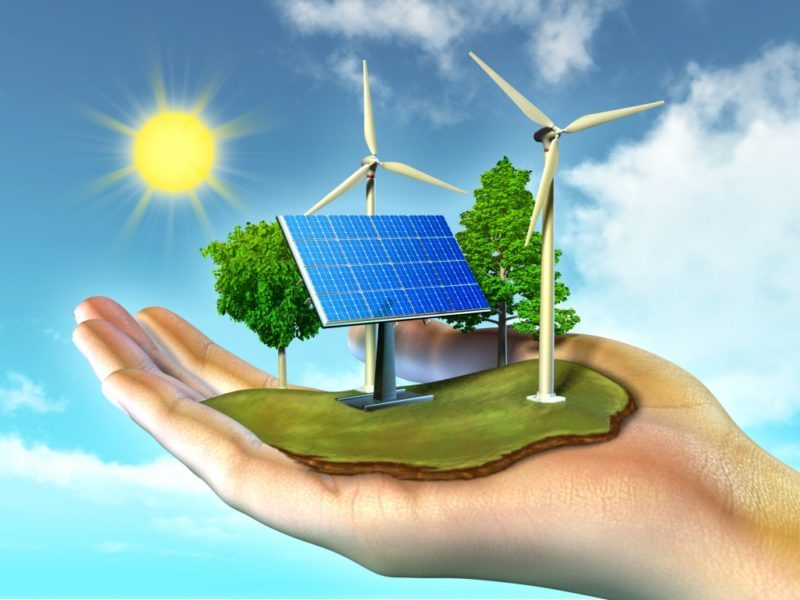
The success of renewables is not only a story of records and data on energy progress.
It is a story of a pivotal shift in the global energy priorities, culminating in the monumental acknowledgement by the governments around the world at COP28 that tripling renewables and doubling energy efficiency by 2030 is the most effective way to stay on the 1.5°C pathway.
This review of the latest achievements in renewable energy expansion shows that renewables remain resilient through multiple crises. The renewable-based energy transition offers a solution to the climate crisis and energy security concerns whilst delivering positive socio-economic impacts for communities and societies.
Still, are the current records enough to achieve the climate goals and a sustainable future for all?
IEA: Global renewable capacity grows over 50% YoY in 2023
George Heynes, Current News, 12 Jan 24
The International Energy Agency (IEA) has released a new report revealing that 50% more renewable capacity was added globally in 2023 than in 2022, but financing remains an issue.
As the globe hurtles towards impending net zero targets – and with the recently signed pledge by 118 countries to triple renewables by 2030 at the recent COP28 summit in Dubai – the recent release of the IEA’s Renewables 2023 report will be welcome. But the publication does include some key challenges that must be addressed to bolster net zero efforts.
Crucially, the standout figure from this year’s document is that global annual renewable capacity additions increased to 510GW in 2023. This represents the fastest growth rate that has been witnessed in the past two decades.
Now this should serve as huge praise to all throughout the global renewable value chain who have worked tirelessly to bolster the energy transition and maintain the Paris Agreement’s legislation to keep global warming increase well below 2°C with a target to limit it to 1.5°C.
Turning our attention to GB, the nation has seen its renewable capacity bolstered significantly over the past year and saw various wind generation records broken. The result saw low-carbon energy sources contribute 51% of the electricity used by Britain with fossil fuels having made up 33% of GBs electricity mix across 2023. Carbon Brief attributed the decline of fossil fuels to two factors: renewables increasing sixfold (by 113TWh) from 2008, and reduced electricity demand, which decreased by 21% (83TWh) since 2008.
Of the renewable energy sources added, solar PV accounted for three-quarters of additions worldwide with China being where the largest growth occurred. For readers wanting to learn more about solar across 2023, our sister site PV-Tech provided its own analysis to the IEA report.
China also saw huge growth in its wind sector with additions having risen by 66% year-on-year. This staggering total has seen the nation become the largest developer of wind in the world, something that could come as a blow to the UK with its offshore wind pipeline having dropped below China over the course of 2023……………………………………..
The need to support emerging and developing economies
Another crucial aspect of the IEA report is its view into the global race to net zero. As referenced by the organisation, G20 countries account for almost 90% of global renewable power capacity today meaning that much must be done to support emerging and developing economies and countries as they transition away fossil fuels……………………..
An eye to the future
The IEA referenced various major milestones that could be achieved by 2028. Firstly, should the current trajectory continue at its rate, the globe could well bring online more renewable capacity between 2023 and 2028 than has been installed since the first commercial renewable power plant was built more than 100 years ago.
Indeed, this showcases the opportunity and collective movement to ensure net zero targets are met. However, this may not be enough. As mentioned previously, more time and resources must be allocated to support developing countries in their own net zero journeys to ensure that the Paris Agreement targets are met and maintained.
Other key milestones include:
- In 2024, wind and solar PV together generate more electricity than hydropower.
- In 2025, renewables surpass coal to become the largest source of electricity generation.
- Wind and solar PV each surpass nuclear electricity generation in 2025 and 2026 respectively.
- In 2028, renewable energy sources account for over 42% of global electricity generation, with the share of wind and solar PV doubling to 25%.
With the push to bolster renewable generation capacity expected to ramp up further into the decade, it will be interesting to see how the UK government manages its expectations and is able to take a global leadership role in the fight for net zero. https://www.current-news.co.uk/iea-global-renewable-capacity-grows-over-50-yoy-in-2023/
Nuclear Continues To Lag Far Behind Renewables In China Deployments
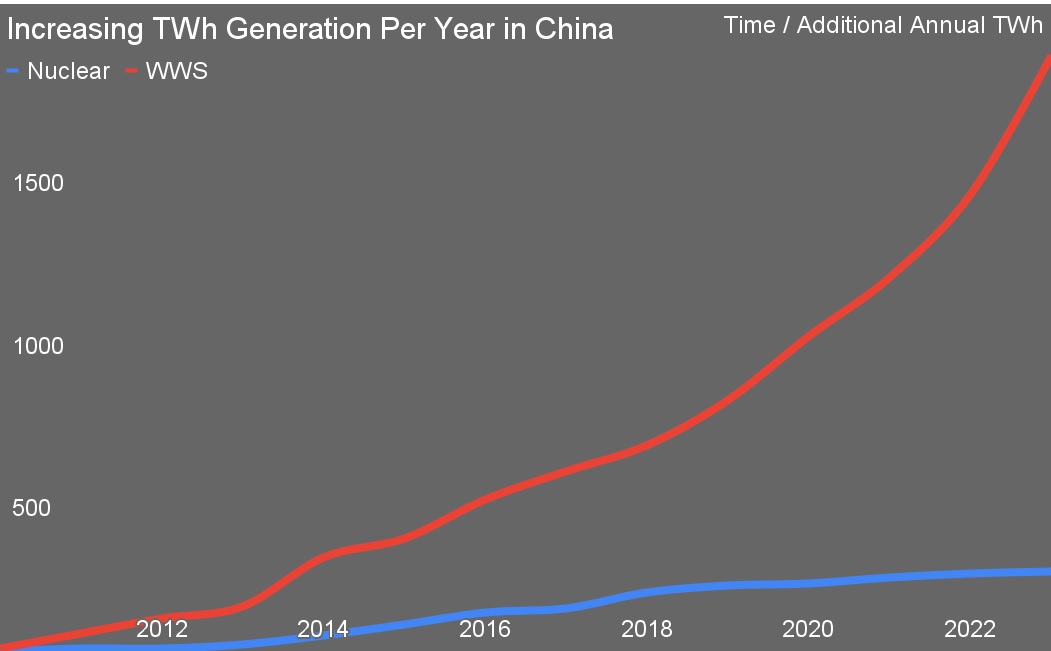
China can’t scale its nuclear program at all. It peaked in 2018 with 7 reactors with a capacity of 8.2 GW. For the five years since then then it’s been averaging 2.3 GW of new nuclear capacity, and last year only added 1.2 GW between a new GW scale reactor and a 200 MW small modular nuclear reactor.
Michael Barnard 13 Jan 24, https://cleantechnica.com/2024/01/12/nuclear-continues-to-lag-far-behind-renewables-in-china-deployments/
Since 2014 I’ve been tracking the natural experiment in China regarding the ability to scale nuclear generation vs renewables. My hypothesis was that the modularity and manufacturability of wind and solar especially meant that it would be much easier for them to scale up to massive sizes.
That hypothesis was strongly confirmed when I first published the results in 2019, and again in 2021 and 2022 when I updated them. In what is becoming a dog bites man annual article, here are the 2023 results. Once again, China’s nuclear program barely added any capacity, only 1.2 GW, while wind and solar between them added about 278 GW. Even with the capacity factor difference, the nuclear additions only mean about 7 TWh of new low carbon generation per year, while wind and solar between them will contributed about 427 TWh annually, over 60 times as much low carbon electricity.
As a note, there were no new hydroelectric dams commissioned in China, so that continued acceleration of deployment is solely due to wind and solar. That’s going to change when the absurdly massive Tibetan Yarlung Tsangpo river dam is commissioned, likely in the mid 2030s. That dam will generate three times the energy annually as the Three Gorges Dam, making it by far the biggest dam in the world by every measure.
A few points. First, what’s a natural experiment? It’s something which is occurring outside of a laboratory or research setting in the real world that coincidentally controls for a bunch of variables so that you can make a useful comparison. An often referenced example was of a specific region where half was without electricity for a few months. Researchers posited that the blackout region would have seen more pregnancies starting in that period, and sure enough, that’s what they found.
So why is China a natural experiment for scalability of wind and solar? Well, it controls for a bunch of variables. Both programs were national strategic energy programs run top down. I started the comparison in 2010 because the nuclear program had been running for about 15 years by then and the renewables program for five years, so both were mature enough to have worked out the growing pains.
One of the things that western nuclear proponents claim is that governments have over-regulated nuclear compared to wind and solar, and China’s regulatory regime for nuclear is clearly not the USA’s or the UK’s. They claim that fears of radiation have created massive and unfair headwinds, and China has a very different balancing act on public health and public health perceptions than the west. They claim that environmentalists have stopped nuclear development in the west, and while there are vastly more protests in China than most westerners realize, governmental strategic programs are much less susceptible to public hostility. And finally, western nuclear proponents complain that NIMBYs block nuclear expansion, and public sentiment and NIMBYism is much less powerful in China with its Confucian, much more top down governance system.
China’s central government has a 30 year track record of building massive infrastructure programs, so it’s not like it is missing any skills there. China has a nuclear weapons program, so the alignment of commercial nuclear generation with military strategic aims is in hand too. China has a strong willingness to finance strategic infrastructure with long-running state debt, so there are no headwinds there either.
Yet China can’t scale its nuclear program at all. It peaked in 2018 with 7 reactors with a capacity of 8.2 GW. For the five years since then then it’s been averaging 2.3 GW of new nuclear capacity, and last year only added 1.2 GW between a new GW scale reactor and a 200 MW small modular nuclear reactor.
So what’s going on? As I noted late in 2023, nuclear energy and free market capitalism aren’t compatible, but China isn’t capitalist, according to a lot of westerners. But it very definitely is a market and export capitalist economy, albeit with more state intervention and ownership, and the nuclear program is suffering as a result. That lone small modular reactor is a clear signal of that.
Unplanned nuclear power outages are reducing UK’s electricity output
Unplanned outages at Hartlepool nuclear power plant’s two 620-MW reactors
are set to last until Feb. 4 and Feb. 6, UK operator EDF Energy said in
transparency notes Jan. 8. Production at the County Durham site in
northeast England had ceased Jan. 6 “for maintenance activities”, EDF
Energy said. No further details were available.
The outage at Hartlepool
compounds UK nuclear problems in the new year after an unplanned outage at
Heysham nuclear plant Dec. 29 took another 585-MW reactor out of service.
Failure of a steam valve at reactor 1 at Heysham 1 saw reactor 2 taken
offline for inspections. Reactor 1 is due back Jan. 24, EDF data showed.
An inspection of similar valves at reactor 2 at Heysham 1, meanwhile, is
expected to keep the unit offline until Jan. 16. Meanwhile, reactor 7 at
Heysham 2 has been offline since early December for planned refueling, due
back Jan. 27, with only reactor 8 (624 MW) currently online at the
Lancashire site on the northwest coast of England.
S&P Global 8th Jan 2024
1 This Month
23-25 October – on Zoom – World BEYOND War’s annual global conferenc


Shut down the radiation-damaged Heysham nuclear reactors now
To see nuclear-related stories in greater depth and intensity – go to https://nuclearinformation.wordpress.com

Say No to NASA’s Reckless Nuclear Reactor on the Moon
Say No to NASA’s Reckless Nuclear Reactor on the Moon

-
Archives
- October 2026 (243)
- September 2026 (339)
- August 2026 (330)
- July 2026 (355)
- June 2026 (287)
- May 2026 (306)
- April 2026 (356)
- March 2026 (251)
- February 2026 (267)
- January 2026 (308)
- December 2025 (358)
- November 2025 (359)
-
Categories
- 1
- 1 NUCLEAR ISSUES
- business and costs
- climate change
- culture and arts
- ENERGY
- environment
- health
- history
- indigenous issues
- Legal
- marketing of nuclear
- media
- opposition to nuclear
- PERSONAL STORIES
- politics
- politics international
- Religion and ethics
- safety
- secrets,lies and civil liberties
- spinbuster
- technology
- Uranium
- wastes
- weapons and war
- Women
- 2 WORLD
- ACTION
- AFRICA
- Atrocities
- AUSTRALIA
- Christina's notes
- Christina's themes
- culture and arts
- Events
- Fuk 2022
- Fuk 2023
- Fukushima 2017
- Fukushima 2018
- fukushima 2019
- Fukushima 2020
- Fukushima 2021
- general
- global warming
- Humour (God we need it)
- Nuclear
- RARE EARTHS
- Reference
- resources – print
- Resources -audiovicual
- Weekly Newsletter
- World
- World Nuclear
- YouTube
-
RSS
Entries RSS
Comments RSS


