Renewables are taking the wind out of new nuclear’s sails.
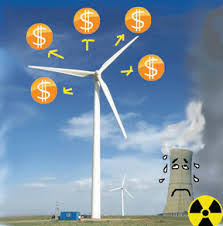
THERE’S been a lot of talk about and PR for new
nuclear in Scotland – but awkward facts intrude. Greenland, the
planet’s thermostat, lost 105 billion tonnes of ice last year, with sea
ice the lowest in the 47-year satellite record. The climate crisis is here
and the choices we make now will determine the success or failure of our
climate actions.
Cost is important, but time is the critical variable –
and time is running out. Global data reveals construction of a new nuclear
station takes 17 or more years. Nuclear power construction has an average
time over-run of 64%.
In comparison, utility-scale wind and solar take on
average only two to five years from planning phase to operation, and
rooftop solar PV projects are down to six months.
At a time when so much
looks grim, the renewable revolution holds out real hope. In 2025, more
power was generated worldwide from renewable energy than from coal and 91%
of new renewables are now cheaper than fossil fuels. The UN confirms that
renewables have increased their lead over fossil and nuclear in terms of
cost.
The result is, wind and solar worldwide now generate 70% more
electricity than nuclear. With each year nuclear adding only as much net
global power capacity as renewables add every two days, nuclear is facing
the same challenges as fossil fuel: uncompetitive costs, stranded assets, a
polluting legacy and severe competition from renewables.
Can new nuclear
generate power in time? In 2025, world net nuclear capacity increased by
4.4 GW, not much more than the UK’s Hinkley Point C project, and 180
times less than new solar and wind capacity. The International Energy
Agency (IEA) predicts 4600 GW new renewable capacity by 2030, meeting 90%
of global electricity demand growth.
Over the past decade we’ve seen
renewable electricity generation increase to triple that of nuclear. By the
end of this decade renewables will out-generate nuclear by up to seven
times. It is entirely possible to mitigate climate impact and sustain a
reliable power system by expanding renewable energy in all sectors, rapid
growth and modernisation of the electricity grid, storage technology
roll-out, increased international interconnections, and using power far
more effectively and efficiently via energy efficiency and management.
The compelling economics of renewables unmask those of fossil and nuclear. With
all key international and national energy organisations and institutes
agreeing that renewables will be doing the heavy lifting for the energy
transition, the future backbone of the global power supply system will be
renewable, sustainable and cost-effective. Scotland has very great
renewables potential and should play to its strengths. New nuclear is
already too late and too costly for the climate and energy crises.
The National 23rd March 2026,
https://www.thenational.scot/comment/25958295.renewables-taking-wind-new-nuclears-sails/
Inside the Dirty, Dystopian World of AI Data Centers
The race to power AI is already remaking the physical world
The Atlanic By Matteo Wong, Photographs by Landon Speers, April 2026
s we drove through southwest Memphis, KeShaun Pearson told me to keep my window down—our destination was best tasted, not viewed. Along the way, we passed an abandoned coal plant to our right, then an active power plant to our left, equipped with enormous natural-gas turbines. Pearson, who directs the nonprofit Memphis Community Against Pollution, was bringing me to his hometown’s latest industrial megaproject.
Already, the air smelled of soot, gasoline, and asphalt. Then I felt a tickle sliding up my nostrils and down into my throat, like I was getting a cold.
This is Colossus: a data center that Musk’s artificial-intelligence company, xAI, is using as a training ground for Grok, one of the world’s most advanced generative-AI models. Training these models takes a staggering amount of energy; if run at full strength for a year, Colossus would use as much electricity as 200,000 American homes. When fully operational, Musk has written on X, this facility and two other xAI data centers nearby will require nearly two gigawatts of power. Annually, those facilities could consume roughly twice as much electricity as the city of Seattle.
To get Colossus up and running fast, xAI built its own power plant, setting up as many as 35 natural-gas turbines—railcar-size engines that can be major sources of smog—according to imagery obtained by the Southern Environmental Law Center. Pearson coughed as we drove by the facility. The scratch in my throat worsened, and I rolled up my window. As we approached, I heard the rumble of cranes and trucks, and then from behind a patch of trees emerged a forest of electrical towers. Finally, I saw it—a white-walled hangar, bigger than a dozen football fields, where Elon Musk intends to build a god.
To get Colossus up and running fast, xAI built its own power plant, setting up as many as 35 natural-gas turbines—railcar-size engines that can be major sources of smog—according to imagery obtained by the Southern Environmental Law Center. Pearson coughed as we drove by the facility. The scratch in my throat worsened, and I rolled up my window.
xAI’s rivals are all building similarly large data centers to develop their most powerful generative-AI models; a metropolis’s worth of electricity will surge through facilities that occupy a few city blocks. These companies have primarily made their chatbots “smarter” not by writing niftier code but by making them bigger: ramming more data through more powerful computer chips that use more electricity. OpenAI has announced plans for facilities requiring more than 30 gigawatts of power in total—more than the largest recorded demand for all of New England. Since ChatGPT’s launch, in November 2022, the capital expenditures of Amazon, Microsoft, Meta, and Google have exceeded $600 billion, and much of that spending has gone toward data centers—more, even after adjusting for inflation, than the government spent to build the entire interstate-highway system. “These are the largest single points of consumption of electricity in history,” Jesse Jenkins, a climate modeler at Princeton, told me……………………………………………………………………….(Subscribers only) https://www.theatlantic.com/magazine/2026/04/ai-data-centers-energy-demands/686064/
Energy fallout from Iran war signals a global wake-up call for renewable energy
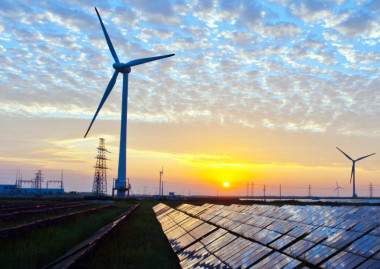
Daily Mail, By ASSOCIATED PRESS, 20 March 2026
HANOI, Vietnam (AP) – The war in Iran is exposing the world´s reliance on fragile fossil fuel routes, lending urgency to calls for hastening the shift to renewable energy.
Fighting has all but halted oil exports through the Strait of Hormuz, the narrow waterway that carries about a fifth of the world´s oil and liquefied natural gas, or LNG. The disruption has jolted energy markets, pushing up prices and straining import-dependent economies.
Asia, where most of the oil was headed, has been hit hardest, but the disruptions also are a strain for Europe, where policymakers are looking for ways to cut energy demand, and for Africa, which is bracing for rising fuel costs and inflation.
Unlike during previous oil shocks, renewable power is now competitive with fossil fuels in many places. More than 90% of new renewable power projects worldwide in 2024 were cheaper than fossil-fuel alternatives, according to the International Renewable Energy Agency.
Oil is used in many industries beyond generating electricity, such as fertilizer and plastics production. So most countries are feeling the impact, while those with more renewable power are more insulated since renewables rely on domestic resources like sun and wind, not imported fuels.
China and India, the world´s two most populous countries, face the same challenge of generating enough electricity to power growth for over a billion people. Both have expanded renewable energy, but China did so on a far larger scale despite its continued reliance on coal-fired power.
Today China leads the world in renewables. About one in 10 cars in China are electric, found the International Energy Agency. It’s still the world´s largest importer of crude oil and the biggest buyer of Iranian oil. But electrifying parts of its economy with renewables has reduced its reliance on imports.
Without that shift, China would be “far more vulnerable to supply and price shocks,” said Lauri Myllyvirta of the Centre for Research on Energy and Clean Air. China also can rely on reserves built when prices were low and shift between using coal and oil as fuel in factories, he said.
India also has expanded its use of clean energy, especially solar power, but more slowly and with less government support for manufacturing renewable energy equipment and connecting solar to its power grid……………………………………………………………………………….. https://www.dailymail.co.uk/wires/ap/article-15663585/Energy-fallout-Iran-war-signals-global-wake-call-renewable-energy.html
As the oil and gas crisis drives the world economy towards another financial crash, green energy is the only viable future
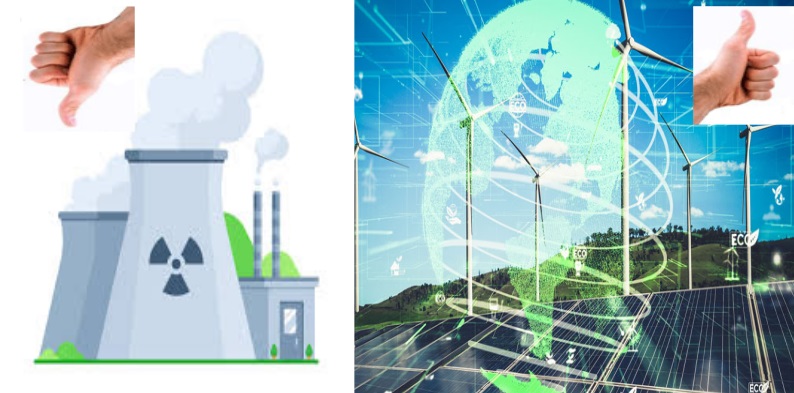
Could this be a watershed moment heralding US geopolitical and technological decline?
David Toke, Mar 19, 2026
Let’s not make a secret of this. The world is hurtling at breakneck speed towards the worst-ever energy crisis. This will be worse than the oil crises of the 1970s. It could be worse even than the oil crisis of 2007-2012, the latter which triggered the global financial meltdown of 2008. Maybe it is small comfort to those billions of people around the world facing hardship in this developing crisis. However, out of the ruins we shall see a market and state-driven renewed drive towards installation of wind, solar, batteries and Electric Vehicles.
Of course, if the US/Israel war with Iran ceased at once and The Straits of Hormuz were reopened by the end of March this apocalyptic scenario could be greatly reduced. Even then, the damage to oil and gas fields would take time to be repaired, and prices would remain high. Yet, time drags on. Reports circulate that the US is planning a military assault to secure the Straits (which would take a long time to assemble and execute), so the likelihood of deep damage to the world economy seems all but certain.
As can be seen in Figure 1 [on original] today’s oil crisis looks much worse than those of the 1970s with Saudi, Kuwaiti and Iraqi oil shut off from transport through the Straits of Hormuz. I take into account in Figure 1 that some oil from these countries, mainly from Iran, but also a minority of the oil from Saudi Arabia, and a trickle from Iraq, will keep on flowing. The release of oil from the IEA’s strategic reserve has some short-term public relations calming effect, but has modest physical effect. But on top of all of this gas production from Qatar and the UAE is shut down. This accounts for 6 per cent of the world’s gas production, although only around half of this is exported in the form of Liquified Natural Gas (LNG)……………………………………….
Regrettably, the energy crisis to which we are already entering may well be even worse than the 2007-2014 high price period. This is because our current crisis is not just an oil crisis, but also a crisis of shortage of natural gas. Added to that, as if more was needed, the closure of the Straits of Hormuz means that other important goods such as large amounts of nickel and material for fertilisers is also blocked off. A vicious round of inflation is striking the world, and what we are seeing now in terms of increases in oil and gas price increases are only the low foothills of the process.
Energy insiders recognise that current oil prices, increasing now above $100 per barrel (up from around $65 per barrel in February), are not yet reflecting the market shortages. Oil traders may be hedging on the conservative side, expecting a political deal, or at least an understanding, to end the War and open the Straits of Hormuz soon. But, if, as seems increasingly likely, the war drags on for months, then physical market realities will send the oil price into a very steep climb.
………………………………………. Indeed market price equilibrium will only come when the amount of oil and gas demanded shrinks to the amount of available supply. Logically, such dramatic contractions in capacity as currently exist can only ultimately happen with massive price increases. This will produce massive economic recession around of the world.
……………………………………..Trump’s USA and Israel can blow up Iranian gas fields and increase the profits of interests of US oil and gas companies without immediately affecting US consumers. This is because the US natural gas market is largely insulated from world gas prices. But Europe will pay heavily for this since natural gas prices in Europe are governed by prices of world LNG supplies. Further destruction of natural gas supplies will see European gas prices go even faster upwards and for much longer than they are anyway. Ultimately, the US economy will get blowback as the rest of the world’s economy collapses through the oil and gas crises – and of course also as US consumers see their gasoline bills spiral upwards beacuse of increases in oil prices.
Each oil crisis has created a new green energy revolution……………………………………..
This oil crisis will boost renewables, EVs and heat pumps
So what technological leaps will this latest oil crisis generate? Certainly, the crisis will make wind power, solar PV, batteries, heat pumps and Electric Vehicles essential means to help mitigate the effects of the coming economic cataclysm. Without solar and wind power the European gas crisis of 2022-3 would have been all the worse. This oil and gas crisis would be all the worse without the amount of solar PV, wind power, batteries and also heat pumps that are in operation.
According to the European Heat Pump Association, there were 25.5 million heat pumps operating in its 19 member states in 2025. This saves around 5 per cent of European gas supply. In the UK renewable energy generates getting on for half of UK electricity. If this were all produced from natural gas, then UK natural gas consumption would be around a third higher than it is………………………………………………………
……………………………. when the world rebuilds its energy systems there will be increased emphasis on green energy technologies. China, which is deeply involved in green energy technology, will see its economic and geopolitical position strengthened. Although US oil and gas companies will make enormous profits from the War, US citizens will be impoverished by rising fuel and food prices, and world respect for the US as a geopolitical actor will be much reduced into the bargain. The longer this current crisis continues, the greater the risk will be of another global financial crash.
Trump-USA’s attempt to prevent green technological progress will make the USA a loser compared to the rise of China. Finally, and crucially, the battle to combat the climate crisis through market/technological changes and changes in people’s behaviour will be boosted. It would, of course, be much better to do this through peace, not war. https://davidtoke.substack.com/p/as-the-oil-and-gas-crisis-drives
“Grow your own and buy local”: Networks seek change and flexibility to manage a 100 pct renewable grid.
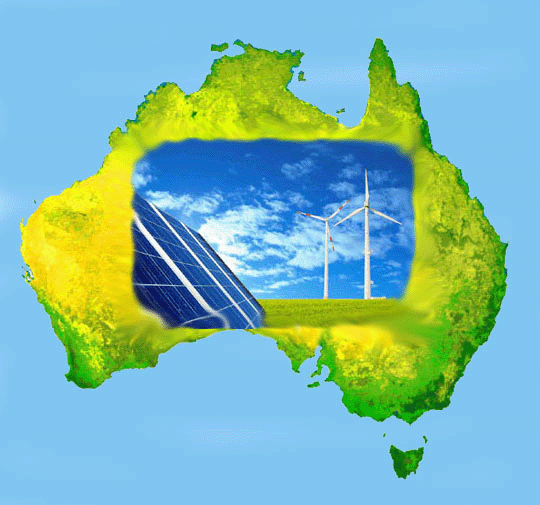
RENEW ECONOMY. Giles Parkinson, Mar 19, 2026
The head of Australia’s peak network group has called for regulatory change and more flexibility for homes and their power assets, to help local networks manage the consumer-driven push towards 100 per cent renewables across the country.
Andrew Bills is the chair of Energy Networks Australia, and finds himself at the cutting edge of this transition as CEO of SA Power Networks, where the output of rooftop solar alone exceeds grid demand about every second day of the year.
South Australia is expected – within 18 months – to become the first gigawatt-scale grid in the world to reach 100 per cent “net” renewables (the net refers to the fact that it imports and exports at times and is not an isolated grid), and is already running at a 75 per cent share of wind and solar.
Much of that solar comes from households, with nearly half (48 pct) of all homes supporting a total of 3.2 gigawatts of rooftop solar capacity, which is significant in a grid with average demand less than half of that.
That solar penetration is also world leading, and at a level that stuns network peers in other countries. It is rapidly being followed by a faster uptake of home batteries (double that of the country average), and a growing interest in electric vehicles.
This has required South Australia to be at the forefront of key technologies designed manage this home energy revolution, initially with the blunt and rarely used “solar switch-off”, required by the market operator as a last resort to help maintain grid security.
That has been followed, more successfully, by the rollout of innovative technologies that allow for flexible exports for solar households, and no longer limits the amount of rooftop solar that can be installed.
iis now being augmented with the trial installation of home energy management systems and tariffs that reward homes for cutting imports, as well as exports, at key times………………………………………………………………………………………………………………………………………………………………………………………………. https://reneweconomy.com.au/grow-your-own-and-buy-local-networks-seek-change-and-flexibility-to-manage-a-100-pct-renewable-grid/
Bill Gates’ TerraPower Finally Has a Permit for a Nuclear Reactor, but No Reliable Way to Fuel It.

“HALEU is not currently available from domestic suppliers, and gaps in supply could delay the deployment of advanced reactors,” the HALEU Availability Program website says. Filling the gap will involve “downblending”—or converting highly concentrated weapons-grade uranium into relatively low-concentration HALEU. This literally means dismantling warheads, melting the uranium, and rejiggering the concentration of the crucial fissile isotope.
Gizmodo, By Mike Pearl, 5th March 2026
By unanimous vote, TerraPower, a Nuclear Power company founded and chaired by Bill Gates, just reached a major milestone by receiving the most important federal permit: clearance to build a commercial nuclear reactor in Kemmerer, Wyoming, scheduled to start operating in 2031. This places TerraPower at the front of the pack when it comes to small, cutting-edge nuclear reactors for generating power in the U.S.
Unfortunately, there’s currently no way to fuel this reactor.
The plant has already been under-construction since 2024, and a spokesman for TerraPower named Andy Hallmark confirmed to me that only the “nonnuclear sections of the plant” were being built at the time.
But while TerraPower’s Natrium sodium-cooled fast reactor can now at least be constructed, it won’t put power into the Wyoming energy grid without high-assay, low-enriched uranium (HALEU), which is only made in commercial quantities by a company called Techsnabexport, which is a subsidiary of another company called Rosatom, which is owned by the Russian state.
This has been presenting a problem ever since 2022 when Russia invaded mainland Ukraine. At that point, “it became very clear, for a whole set of reasons — moral reasons as well as commercial reasons — that using Russian fuel is no longer an option for us,” TerraPower spokesman Jeff Navin told WyoFile.
But Hallmark told me in 2024 that alternative suppliers “are expected to develop similar capacity as demand grows,” and that Terrapower believes a solution will materialize in time for the project to stay on track.
The US government has been prioritizing and cheerleading this project (along with similar projects), and has an alternative plan, which the Department of Energy calls the HALEU Availability Program.
“HALEU is not currently available from domestic suppliers, and gaps in supply could delay the deployment of advanced reactors,” the HALEU Availability Program website says. Filling the gap will involve “downblending”—or converting highly concentrated weapons-grade uranium into relatively low-concentration HALEU. This literally means dismantling warheads, melting the uranium, and rejiggering the concentration of the crucial fissile isotope.
It is, of course, unsustainable for commercial power plants to be fueled by the guts of the aging U.S. nuclear stockpile, and a real supply chain for HALEU has to exist if TerraPower’s plant is actually going to operate.
In the short term, TerraPower needs enough fuel from early sources like downblending to load its reactor for the first time, and then it can focus on staying online. One report says it needs about 150 metric tons of the fuel to run from 2028 through 2037—roughly 15 metric tons per year on average.
But according to Reuters, there’s only one U.S. company actually attempting to make HALEU by enriching uranium rather than downblending: Ohio’s Centrus Energy. But Centrus was projecting 900 kilograms per year in 2024—by my rough math that’s about 6% of what Terrapower’s Kemmerer plant will need per year. To stay Centrus needs to ramp-up quickly is an understatement.
Needless to say, Terrapower is racing to find alternatives, which include companies like South Africa’s ASP Isotopes, Inc. with whom it launched a “strategic agreement” in 2024. As of last month, ASP was hoping to build a HALEU plant soon.
At any rate, TerraPower’s Kemmerer plant can be built now, and that construction can now include its reactor. There’s not enough fuel for that reactor—unless of course the war in Ukraine ends, and Russia-U.S. relations get patched up in a hurry—but there are still five years between now and then, and a whole lot is riding on this. Generating nuclear fuel has always forced people to move mountains. Why should this plant be any different?
Gizmodo reached out to TerraPower for a statement, or additional information about any as-yet unreported sources of HALEU. We will update if we hear back.
00
.00
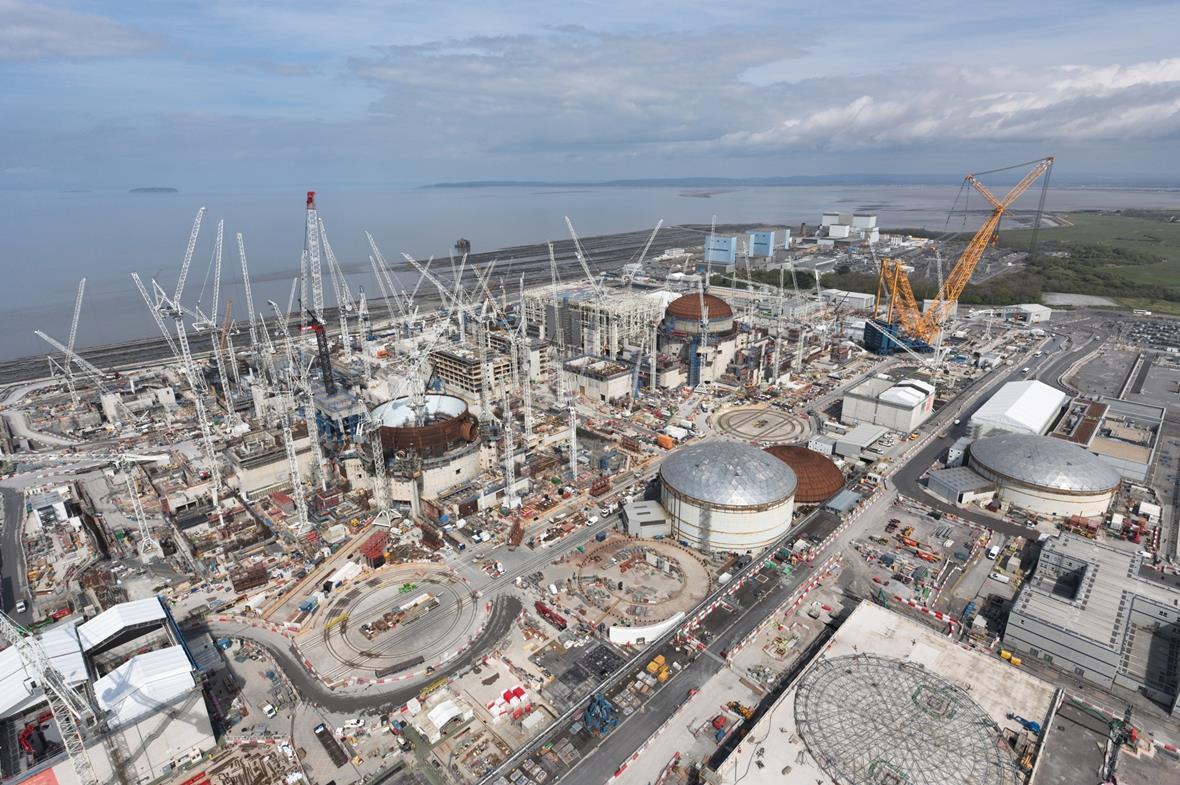
While Hinkley Nuclear Was Being Built, The UK Grid Decarbonized
Clean Technica, Michael Barnard, 6th March 2026
The latest announcement about Hinkley Point C was predictable. The first reactor at the plant in Somerset is now expected to begin generating electricity in 2030. The cost estimate has climbed again, now reaching roughly £35B in 2015 pounds or about £49B in current money according to Electricité de France. When the project received final approval in 2016, the expected construction cost was £18B and the first reactor was expected to begin operating in 2025. In the span of a decade, the expected capital cost nearly doubled while the schedule slipped by five years. The project illustrates the pattern described by Oxford megaproject scholar Bent Flyvbjerg. Large infrastructure projects tend to run over budget, over schedule, and deliver fewer benefits than originally promised. Hinkley Point C appears to be achieving the full trifecta.
To understand how the project arrived at this point it is necessary to revisit the electricity system that existed when Hinkley was first proposed……………………………Policymakers faced a looming capacity gap as aging coal plants approached retirement under European pollution rules and older nuclear reactors approached the end of their operating lives. Large baseload nuclear plants seemed like a logical replacement for retiring coal and nuclear capacity while maintaining system reliability and reducing emissions.
EDF entered the picture in 2008 when it acquired British Energy for about £12.4B. This acquisition gave the French utility access to several UK nuclear sites including Hinkley Point in Somerset……………………… T.he UK government supported the project through a Contract for Difference that guaranteed a strike price of £92.50 per MWh in 2012 pounds for 35 years. Adjusted for inflation that price is now roughly £120 to £130 per MWh in current money.
The timeline of the project reflects the slow progress typical of large nuclear builds……………………………………………………….. The most recent revision places the cost at about £35B in 2015 pounds with startup expected in 2030. If the schedule slips to 2031, EDF estimates another £1B in additional cost..
Hinkley is not an isolated example. The reactor design used at the site is the European Pressurized Reactor. Other projects using this design have experienced similar difficulties. Olkiluoto 3 in Finland began construction in 2005 and entered commercial operation in 2023. The project took roughly 18 years from start to finish and cost about €11B compared with an original estimate of about €3B. Flamanville 3 in France began construction in 2007 and only began producing electricity in 2024 after more than a decade of delays and cost escalation. These projects demonstrate that modern nuclear construction faces structural challenges including complex regulatory oversight, large supply chains, and one-off engineering work.
While Hinkley Point C progressed slowly, the electricity system around it began to change rapidly. UK grid carbon intensity fell from about 520 gCO2 per kWh in 2006 to roughly 120 gCO2 per kWh in 2025 according to National Grid data. That represents a reduction of about 77%. Coal generation collapsed during the same period. In 2012 coal still produced about 40% of UK electricity. By 2024 the last coal plant closed and coal generation fell to zero. Gas generation initially increased as coal declined, providing a bridge fuel that cut emissions roughly in half per kWh compared with coal. At the same time renewable energy expanded quickly.
Wind power became the largest contributor to this change. ……………………………………………………………………………..
The grid also evolved to accommodate the growing share of renewable energy. Market reforms played a significant role. The Contract for Difference program created long term price stability for renewable developers………………High voltage direct current interconnectors connected the UK to electricity markets in France, Norway, Belgium, and Denmark. These interconnectors allow power to flow between regions and help balance variable generation.
Grid operations also changed to manage a system with lower inertia and higher renewable penetration. Batteries began appearing in grid services markets around 2017. These batteries provide fast frequency response and reserve capacity.
The economic dynamics of electricity generation shifted during the same period. Nuclear plants represent a form of megaproject economics. Each plant is a large custom built facility that takes many years to construct. Learning effects are limited because each plant is unique. Wind turbines and solar panels follow a different model. These technologies are manufactured in large volumes. Production learning and scale economies reduce costs over time. ………………………………………………………………..
The rising cost of Hinkley also raises questions about opportunity cost. The current estimated cost of about £49B in today’s money represents a very large capital investment. Offshore wind projects in Europe commonly cost between £2M and £3M per MW of installed capacity depending on location and turbine size. At £2.5M per MW, £49B could finance roughly 20 GW of offshore wind capacity. With a typical offshore wind capacity factor of about 45%, that capacity would produce around 79 TWh of electricity annually. Hinkley Point C is expected to produce about 25 TWh annually. The comparison is not exact because nuclear provides firm generation while wind is variable. The scale difference is significant.
……………………………………………………………………………………………………………. The next UK nuclear project, Sizewell C in Suffolk, raises obvious questions about what lessons policymakers are drawing from the experience at Hinkley Point C. Sizewell C is planned as a near replica of Hinkley using the same European Pressurized Reactor design and similar capacity of about 3.2 GW. The estimated construction cost is currently around £20B to £30B depending on assumptions about financing and schedule. Unlike Hinkley, the project will be financed through a regulated asset base model that allows developers to collect revenue from electricity consumers during construction. This structure reduces financing risk for investors but shifts more cost exposure onto the public.
The core question is whether the UK energy system in the 2030s and 2040s still requires additional nuclear megaprojects built on decade long timelines when wind, solar, and storage technologies continue expanding on much shorter deployment cycles. A second question concerns opportunity cost. If Sizewell C ultimately approaches the capital intensity seen at Hinkley, the same level of investment could finance tens of gigawatts of renewable capacity or large expansions of grid infrastructure. Policymakers therefore face a strategic choice between continuing the megaproject model for firm low carbon generation or allocating capital toward technologies that can scale incrementally and rapidly across the electricity system.
The broader lesson from the Hinkley experience concerns the pace of technological change in energy systems. Large infrastructure projects require long planning and construction timelines. Energy technologies such as wind turbines, solar panels, and batteries follow faster innovation cycles driven by manufacturing scale and global deployment. Between the time Hinkley Point C was conceived and the time it will enter operation, the UK electricity system transformed itself. Coal disappeared. Wind capacity expanded more than tenfold. Carbon intensity fell by more than three quarters. The project will arrive into a grid that has already undergone much of the transition it was designed to support.
https://cleantechnica.com/2026/03/06/while-hinkley-nuclear-was-being-built-the-uk-grid-decarbonized/
The Strait Is Closed: How Trump’s Strike on Iran Triggered a Global Energy Crisis.
At the heart of this crisis lies a profound failure of strategic judgment—one that belongs squarely to the Trump administration. The decision to assassinate Khamenei was not merely aggressive; it was tactically naive and strategically blind. Unlike targeted strikes on nuclear facilities or proxy militias, killing a sitting Supreme Leader is an act of regime decapitation—an existential provocation that guarantees total retaliation.
Phil Butler, March 09, 2026, https://journal-neo.su/2026/03/09/the-strait-is-closed-how-trumps-strike-on-iran-triggered-a-global-energy-crisis/
The world entered a new era of energy insecurity not with a treaty or a market crash but with a single ill-conceived military decision.
On the weekend of February 28, 2026, the United States, in coordination with Israel, launched airstrikes deep inside Iran, killing Supreme Leader Ayatollah Ali Khamenei and striking key command centers across Tehran, Qom, and Isfahan. President Donald Trump, in a recent address, declared that “combat operations will continue for several more weeks” to “degrade Iran’s capacity to threaten global stability.”
Monumental Blunder
Instead of restoring order, the strike achieved the opposite: it triggered a cascading collapse of the world’s most critical energy artery—the Strait of Hormuz—and exposed the fragility of Western assumptions about oil, power, and deterrence.
Within 48 hours, Iran’s Islamic Revolutionary Guard Corps (IRGC) retaliated not just with missile barrages on U.S. bases in Iraq and Israel, but with a far more consequential move: it sealed the Strait of Hormuz. Using drones, fast-attack boats, and coastal missile batteries, Iranian forces disabled or turned back nearly all commercial traffic attempting to transit the narrow waterway. Satellite data confirmed only two tankers passed through on Monday—a fraction of the usual 20 million barrels per day that normally flow through this 21-mile-wide chokepoint.
The immediate effect was not panic, but paralysis. Over 3,000 vessels—tankers, container ships, and LNG carriers — now idle in Gulf ports from Basra to Doha, unable to move without risking destruction. Global oil benchmarks surged past $85 per barrel, with senior IRGC officials openly predicting prices could reach $200 if the blockade holds. As financial markets tumbled, London’s FTSE was down nearly 3%, Tokyo’s Nikkei shed over a month’s gains in three days, but the real crisis unfolded not on trading screens but in the physical reality of supply chains, refineries, and gas stations.
Europe’s Energy Illusion Shatters
For years, European leaders spoke of “diversification” and “energy security” while quietly relying on Middle Eastern oil and Qatari LNG to keep lights on and factories running. That illusion has now evaporated. With the strait closed, Europe faces a dual shock: soaring crude costs and disrupted natural gas flows from Qatar, whose LNG terminals feed German and Italian grids.
In Germany, diesel prices breached psychological thresholds, nearing levels last seen during the immediate aftermath of Russia’s 2022 invasion of Ukraine. Motorists formed long lines at filling stations, anticipating further spikes. The ADAC motoring association warned of “sustained pressure on household budgets,” while industry groups cautioned that prolonged high fuel costs could force manufacturing slowdowns.
France, meanwhile, signaled emergency measures, with Economy Minister Roland Lescure stating the government would intervene to cap pump prices if increases “deviate unreasonably” from underlying oil benchmarks. But such controls are stopgaps, not solutions. The deeper truth is this: Europe has no strategic alternative to Gulf energy. Its renewable transition remains incomplete, its Russian pipeline options politically toxic, and its domestic production negligible. In this moment, Europe is not a geopolitical actor—it is a hostage to geography.
The Strategic Blunder: Trump’s Fatal Miscalculation
At the heart of this crisis lies a profound failure of strategic judgment—one that belongs squarely to the Trump administration. The decision to assassinate Khamenei was not merely aggressive; it was tactically naive and strategically blind. Unlike targeted strikes on nuclear facilities or proxy militias, killing a sitting Supreme Leader is an act of regime decapitation—an existential provocation that guarantees total retaliation.
Worse, it ignored Iran’s asymmetric advantage: control of the Strait. For decades, U.S. naval doctrine assumed American carrier groups could keep the waterway open. But modern warfare has shifted. Iran doesn’t need to win a fleet battle; it only needs to make passage too costly. With cheap drones, anti-ship missiles, and layered coastal defenses, Tehran can impose a de facto blockade without firing a single shot at a U.S. warship.
Trump’s team appears to have believed that overwhelming air power would cow Iran into submission. Instead, it handed Tehran the perfect justification to execute its long-held threat: close the Strait and watch the global economy convulse. There is no indication that the White House modeled the second- and third-order effects on inflation, on allied economies, on global food and transport systems. This wasn’t strategy. It was performance dressed as policy.
And now, the U.S. finds itself trapped. Military escorts for tankers? Logistically daunting and politically untenable. Diplomatic off-ramps? None remain with Khamenei dead and the IRGC in full war mode. Sanctions? Meaningless when the adversary is already under maximum pressure.
The Quiet Realignment: Moscow and Delhi Step In
While Washington scrambles, a new axis is consolidating. Russia and India—long-time cautious partners—are accelerating energy cooperation at a striking pace. Indian refiners, facing potential shortages, have signaled intent to increase purchases of Russian Urals crude dramatically. Russian Deputy Prime Minister Alexander Novak confirmed “strong demand” from Asian buyers, while RDIF head Kirill Dmitriev framed Moscow as a “reliable partner in times of crisis.”
This isn’t opportunism. It’s systemic repositioning. As Western supply chains fracture, non-aligned powers are building parallel circuits of resilience. For India, Russian oil offers a lifeline. For Russia, it’s a chance to bypass sanctions and cement its role as the “energy balancer” of the Global South.
Meanwhile, defense and energy stocks surge—not because investors believe in peace, but because they’ve accepted a new reality: geopolitical risk is now permanent infrastructure. As one strategist put it, “Gold, defense, and critical infrastructure are no longer hedges—they’re core holdings.”
The Deeper Architecture of Collapse
Beneath the headlines lies a starker truth: the post-1991 energy order is finished. For three decades, the U.S. Navy guaranteed the free flow of oil, and the world priced accordingly. That era assumed unipolarity, predictable adversaries, and manageable risk.
Today, we live in a multipolar world where physical control trumps financial abstraction. Algorithms can’t reroute tankers around drone swarms. AI can’t refine crude. And no amount of market liquidity can replace a barrel that never leaves port. The closure of the Strait of Hormuz is more than a crisis—it’s a revelation. It shows that sovereignty is not declared; it is enforced through pipelines, ports, and the willingness to burn the system down rather than surrender control.
Trump’s and Netanyahu’s strike didn’t secure peace. It exposed fragility. And in doing so, it handed the future to those who understand that the next world order won’t be coded in Silicon Valley—but carved in oil, steel, and silence.
Study: Energy Efficiency Can Address Surging Electricity Needs at Half the Cost of Gas Plants

Amid soaring U.S. electricity use, new analysis from the American Council
for an Energy-Efficient Economy (ACEEE) finds that the fastest and cheapest
way to alleviate rapid electric load growth is through expanding investment
in energy efficiency and demand flexibility. Even as families are already
struggling with energy affordability, utility regulators are being asked to
approve new gas power plants, putting utility customers on the hook for
expensive projects that may not be needed.
ACEEE 4th Feb 2026, https://www.aceee.org/press-release/2026/02/study-energy-efficiency-can-address-surging-electricity-needs-half-cost-gas
Nuclear power falls below half its historic peak share of global electricity generation.
Jim Green, 3 Mar 26
The International Atomic Energy Agency reports that nuclear power’s share of global electricity generation has fallen to 8.7%. [1]
That is less than half its historic peak of 17.5% in 1996. [2]
The International Energy Agency projects the share of renewables to rise from 32 percent in 2024 to 43 percent by 2030. [3]
Renewables have doubled then tripled nuclear generation over the past decade and by the end of this decade renewables will out-generate nuclear by at least a factor of 5.
[1] p.23, https://www-pub.iaea.org/MTCD/Publications/PDF/p15942-25-02880E_RDS-1-45_web.pdf
[2] https://www.worldnuclearreport.org/World-Nuclear-Industry-Status-Report-2025-HTML-version
[3] https://www.iea.org/reports/renewables-2025/renewable-electricity
Renewables projected to overtake gas on cost within five years, report finds
20 February 2026, https://eibi.co.uk/news/renewables-projected-to-overtake-gas-on-cost-within-five-years-report-finds/
Renewable electricity is set to become the most economically favourable source of power in the UK by 2028 to 2029, according to new analysis by the Renewable Energy Association (REA), even after accounting for the full costs of expanding grids, storage and transmission.
The findings are set out in the Renewable Energy Association’s Renewable Cost Analysis Report 2025, which models two scenarios for the electricity system. Under a ‘Clean Power 2030’ pathway, annual investment of about £40bn would expand renewable capacity and cut the share of unabated gas to below 5%.
An alternative ‘No New Renewables’ scenario assumes no additional wind or solar capacity until 2040, with natural gas meeting future demand, which would mean lower upfront spending but higher ongoing fuel costs.
The REA concludes that although electricity generation will remain expensive across all technologies, renewables represent the most cost-effective long-term option. Including employment impacts, the analysis suggests renewable generation becomes the net economic winner by the end of the decade.
The modelling assumes flat gas prices over the next five years. If gas prices fall by 25% between 2025 and 2030, the point at which renewables become cheaper is delayed by only one year when excluding job benefits.
The report says its analysis includes all additional grid, transmission, storage and system costs associated with higher renewable deployment, in contrast to traditional levelised cost estimates that focus on generation costs alone.
It also highlights wider benefits from renewables, including reduced exposure to volatile international gas markets, improved energy security and environmental gains such as lower carbon emissions and cleaner air.
The REA recommends continued government support to manage short-term electricity costs, including possible reductions to green levies and value added tax, alongside stable policy to encourage investment. It says early investment in renewables would deliver long-term economic benefits, domestic employment and greater energy security for the UK.
Read REA’s Renewable Cost Analysis Report 2025.
Fuel Supply Gap Could Hold Back U.S. Nuclear Energy Renaissance
- The U.S. push to quadruple nuclear capacity by 2050 faces a near-term fuel bottleneck.
- Centrus, Orano, and Urenco are expanding U.S. enrichment facilities, backed by billions in DOE funding.
- Surging electricity needs driven by AI and data centers are accelerating urgency, with enrichment capacity needing to scale dramatically if nuclear power is to play a central role in meeting long-term U.S. energy demand.
By Tsvetana Paraskova Oil Price 25th Feb 2026- https://oilprice.com/Alternative-Energy/Nuclear-Power/Fuel-Supply-Gap-Could-Hold-Back-US-Nuclear-Energy-Renaissance.html
Nuclear energy is a distant prospect – wind and solar are here now
Sceptics don’t outright deny climate change but dismiss solutions as unrealistic
Sadhbh O’Neill, Irish Times 26th Feb 2026
Recent commentary on Ireland’s energy system is a reminder that not everyone is comfortable with change.
For people unconvinced by the potential of renewable energy to provide all our energy needs, the focus of energy policy should still be on large-scale sources of generation, as it was in the glory days of the ESB when it ran everything (and it took up to 18 months to get a grid connection).
Amid nostalgia for a simpler past, there are still voices making the case that fossil fuels and nuclear energy should form the backbone of the grid. This case is made on the basis that renewables can only match demand up to a certain point due to their intermittency, low energy densities and the challenges of integrating them into the grid.
And it is always hard to make the case for energy efficiency and demand management when fossil fuels, on paper at least, are plentiful, and there is no sign yet of the big energy producers slowing down extraction or divesting from fossil energy………………………………………………..
With regard to nuclear energy, there is a lot of interest in small modular reactors (SMRs), which, at approximately 400MW generating capacity, would be much more appropriate in scale for Irish electricity needs. The problem with nuclear energy is that traditional power plants, at about 1.3GW, are too individually large for Ireland, not to mention the likelihood of a nuclear plant taking decades to secure the required approvals and get built.
The ESB in its 2025 Emerging Technology Insights report notes that SMRs remain unproven due to a lack of demonstration projects. None of the SMR projects to date will have a demonstration plant completed before 2030.
Given that we are just four years away from key climate deadlines, nuclear power is so unrealistic in the context of what we need to do right now that it might as well be irrelevant.
The SEAI Energy in Ireland 2025 report highlights that Ireland needs proven, immediate solutions to avoid missing its second carbon budget (2026–2030). Luckily for Ireland, we have abundant renewable resources, which have never been so cheap to develop.
Renewable energy costs have come down so fast and by so much that even when you factor in the grid upgrades required, in 90 per cent of the world they outcompete new fossil fuel infrastructure easily, including the US. This is because wind and solar technologies are proven, scalable and cost-competitive over the long run, making them more attractive to investors…………………………………………. https://www.irishtimes.com/environment/climate-crisis/2026/02/26/nuclear-energy-is-a-distant-prospect-wind-and-solar-are-here-now/
The End of Baseload Power as We Know It
By Leonard Hyman & William Tilles – Oil Price, Feb 23, 2026,
- China and France are retrofitting coal and nuclear plants to operate more intermittently, reflecting how growing renewable penetration is reshaping traditional base-load generation economics.
- Gas remains the dominant new-build fuel in the U.S. for now, but examples like California show renewables plus storage steadily displacing fossil generation.
- Coal plants may see short-term life extensions, while new nuclear looks economically uncompetitive.
……………………………………………………………………………………………………………………………………………………… https://oilprice.com/Energy/Energy-General/The-End-of-Baseload-Power-as-We-Know-It.amp.html
Fuel shortage threatens US nuclear resurgence, warns top supplier.
Centrus Energy says rising demand and ban on Russian imports risks uranium
enrichment ‘supply gap’.
One of the largest suppliers of enriched
uranium fuel to US nuclear power plants has warned of a looming supply
crunch because of fast-rising demand and a ban on Russian imports. Centrus
Energy chief executive Amir Vexler told the FT the company is racing to
build enrichment capacity at its Ohio plant to meet a $2.3bn backlog in
sales of enriched uranium to customers.
But the restart of several US
nuclear plants and upgrading of the reactor fleet to boost electricity
output would put pressure on the handful of western suppliers of enriched
uranium — a critical component in nuclear fuel, he said.
FT 23rd Feb 2026,
https://www.ft.com/content/717ed9ab-d6c0-4d4f-b2c6-386edfa5e71c
1 This Month

of the week – Shut Down Drone Warfare!


Tell the Ukrainian Government to Drop Prosecution of Peace Activist Yurii Sheliazhenko

Petition to revoke the licensing of the Near Surface Nuclear Disposal Facility (NSDF) at Chalk River. https://www.ourcommons.ca/petitions/en/Petition/Details?Petition=e-7247
To see nuclear-related stories in greater depth and intensity – go to https://nuclearinformation.wordpress.com
-
Archives
- March 2026 (237)
- February 2026 (268)
- January 2026 (308)
- December 2025 (358)
- November 2025 (359)
- October 2025 (376)
- September 2025 (257)
- August 2025 (319)
- July 2025 (230)
- June 2025 (348)
- May 2025 (261)
- April 2025 (305)
-
Categories
- 1
- 1 NUCLEAR ISSUES
- business and costs
- climate change
- culture and arts
- ENERGY
- environment
- health
- history
- indigenous issues
- Legal
- marketing of nuclear
- media
- opposition to nuclear
- PERSONAL STORIES
- politics
- politics international
- Religion and ethics
- safety
- secrets,lies and civil liberties
- spinbuster
- technology
- Uranium
- wastes
- weapons and war
- Women
- 2 WORLD
- ACTION
- AFRICA
- Atrocities
- AUSTRALIA
- Christina's notes
- Christina's themes
- culture and arts
- Events
- Fuk 2022
- Fuk 2023
- Fukushima 2017
- Fukushima 2018
- fukushima 2019
- Fukushima 2020
- Fukushima 2021
- general
- global warming
- Humour (God we need it)
- Nuclear
- RARE EARTHS
- Reference
- resources – print
- Resources -audiovicual
- Weekly Newsletter
- World
- World Nuclear
- YouTube
-
RSS
Entries RSS
Comments RSS
 nuclear-news