£8.2bn Scottish datacentre development running out of steam?

by Chris Newbould, July 6, 2026,
https://www.prolificnorth.co.uk/news/8-2bn-scottish-datacentre-development-running-out-of-steam/
A huge Scottish datacentre development has misrepresented its plans to channel a nuclear reactor’s worth of power to a site in rural Scotland, according to a new Guardian investigation.
When the £8.2bn AI datacentre complex in Lanarkshire was announced in January, built by the US firm CoreWeave and the Scottish company DataVita, the government promised that it would be powered entirely from on-site renewables and built by 2030 – indeed, a central plank of the viability of the project, designed to help with Britain’s ambitions to keep up in the global AI race, was its ability to power itself.
CoreWeave, meanwhile, claimed that CoreWeave Lanarkshire would become “one of the most advanced AI sites anywhere in the world” following the completion of their plans.
Documents obtained by The Guardian under an FoI request, however, suggest the datacentre has virtually no chance of meeting that goal.
Internal correspondence obtained by the paper, however, suggest that the government and the site’s developers were privately acknowledging that the site had an “issue” with “power provision” and that this would not happen, even as they publicly promised that the Lanarkshire site would have up to 1GW of “new energy infrastructure”.
The government told The Guardian that the Lanarkshire complex would connect to the national, meaning it would join a years-long queue alongside housing and hospitals, although a government spokesman insisted the site’s needs would still be met “overwhelmingly” with renewables.
Energy is a particular issue for power-hungry data centres in the UK, where it is more expensive than anywhere else in Europe and there is an eight to 10-year queue for new developments to connect to the grid.
DataVita said it will power the site in Airdrie with more than 1GW of renewable energy, including 400MW of solar power and 800MW of wind. That is more than one and half times the wind energy produced by Whitelee, the UK’s largest onshore windfarm, also in Scotland, which occupies an area half the size of Bristol. It is roughly the power needed to supply 800,000 Scottish homes, although where this power is coming from for the Lanarkshire development remains unclear at this point.
The World Is Racing to Develop New Nuclear Fuels
Oil Price, By Felicity Bradstock – Jun 28, 2026,
- Advanced reactors and SMRs increasingly require fuels such as HALEU, but commercial supplies remain limited outside Russia and China.
- The U.S. and U.K. are investing heavily in domestic uranium enrichment to strengthen nuclear fuel security.
- Several reactor developers are adopting LEU+ as a more readily available alternative while domestic HALEU production expands.
…………………………………………………………….. Accessing HALEU and TRISO at scale remains a challenge, as the China National Nuclear Corporation is the only commercial-scale producer of TRISO fuels, and Russia’s TENEX is the only commercial-scale supplier of HALEU. This has driven several companies in the United States and across Europe to explore alternative fuels to power SMRs, to shift reliance away from Russia and China.
While several companies continue to rely on Russia for their uranium supplies, some countries are looking to develop a domestic HALEU production capacity, while many companies are exploring the potential of using alternative, more easily accessible uranium fuels to power operations. https://oilprice.com/Alternative-Energy/Nuclear-Power/The-World-Is-Racing-to-Develop-New-Nuclear-Fuels.html
Even If the Strait of Hormuz is Open, it Ain’t Open
22 June 2026 by Larry C. Johnson , https://sonar21.com/even-if-the-strait-of-hormuz-is-open-it-aint-open/
It is open. Nope, it is closed. Wait… It is open. What? Closed again? If you are following the media reports on the Strait of Hormuz you are probably dizzy from hearing about the changing status of the Strait of Hormuz. If you think that getting a firm agreement between Iran and the US to open the Strait of Hormuz will result in an instant solution to restoring global oil reserves, think again.
Even if Iran agrees to a 60-day moratorium on charging ships entering and leaving the Persian Gulf a “usage fee” (Trump calls it a “toll”), and the moratorium starts this week, the world still faces some serious economic shocks from the disruption of Crude Oil and LNG. Crude Oil and LNG production will take time to ramp back up to the pre-Ramadan War levels. We still do not have a full assessment of the damage to the Oil and LNG infrastructure in the Gulf nations. Even if all those systems are intact and functioning — they are not — there is still the problem of having the tankers that carry the Black Gold ready to take the shipments.
The tankers, aka ships, that have been sitting idle in the warm, salty waters of the Persian Gulf for four months face months of the maintenance recovery cycle before they will be ready to get back to the task of hauling oil and LNG. An expert in this field explained it to me this way:
Oil tankers are likely to lose weeks to months depending on fouling, coating condition, and drydock access. LNG carriers are likely to lose longer because the hull problem is coupled to cargo-system and gas-management reliability.
For planning, assume crude/product tankers lose 1-3 months in the median case and 3-6 months in the heavy case. Assume newer LNG carriers lose 2-4 months and older/system-stressed LNG carriers lose 4-9+ months. Some vessels will be faster, but the market should plan for a long tail of slow, disputed, or yard-bound tonnage.
The global perspective is clear: physical movement will recover first; commercial availability will recover second; fleet efficiency will recover third. The market will separate clean, documented, charter-ready tonnage from vessels that are merely moving. The maintenance backlog will be the next bottleneck after Hormuz.
Besides the delay in getting tankers back on the high seas, there is the problem of the Middle-Distillate Inflection Point. What the hell is that? As you can see in the image at the top of this article, a barrel of oil is not like a can of Coca Cola, i.e., a consistent liquid from the top to the bottom of the can. A barrel of Oil consists of segments, with the middle-distillate portion of the barrel providing the raw material from which both diesel and jet fuel are derived. That segment is the critical fuel for the real economy because diesel runs freight, rail, agriculture, construction, and distribution, while jet fuel supports both civil aviation and military air operations.
The structural constraint at the heart of the current energy crunch is the refinery barrel itself. Military jet fuel (JP-8) and civilian diesel are not refined from separate barrels — they compete for the same distillate cut from every barrel processed. So if Trump orders the Pentagon to start bombing Iran again, that will trigger draw downs on stocks — assuming the ops tempo in the Gulf is sustained — and refiners will face pressure to tilt output toward JP-8, which directly squeezes the supply of diesel and civil aviation fuel. In other words, there is no free barrel; every gallon of military fuel is a gallon not available to a trucking company, a farmer, or an airline.
Of all the downstream effects, diesel tightness is the most economically dangerous and the fastest-moving. Unlike gasoline, which is a consumer cost, diesel is an input cost — embedded in every freight shipment, every food delivery, every industrial process. When diesel tightens, the price increase doesn’t stop at the pump; it cascades through supply chains and lands simultaneously on freight rates, grocery prices, manufacturing margins, and retail costs. That kind of broad-based input inflation is one of the more reliable causes of recession, because it compresses margins economy-wide while simultaneously suppressing consumer purchasing power.
This helps explain why Donald Trump pivoted so quick to support the MoU with Iran. The real allocation question is not whether to release the SPR or whether to jawbone OPEC into producing more — it is how hard to run the war. Every incremental increase in operational intensity consumes distillate that the domestic economy cannot easily replace, tightening a transmission belt that runs directly from the Strait of Hormuz into Main Street prices. The tradeoff between war intensity and economic stability is not an abstract strategic concern; it is a daily refinery scheduling decision with macroeconomic consequences
Here is the problem: currently, the US has approximately a 30-day supply of diesel. It is estimated that somewhere between 8% (VLCC class alone) and a figure approaching 15–20% of the broader crude and product tanker fleet is either stranded or effectively withdrawn from global circulation — a supply shock to shipping capacity that compounds the underlying oil supply disruption. This means there is no ready, quick solution to fill that gap in 30 days. In fact, the delay to restore the US supply of diesel could last as long as 60 days. In short, oil is not going to flow fast enough globally to meet existing demand, which probably accounts for Trump sudden decision last week to sign the MoU with Iran. A knowledgeable expert who provided me with this information believes that we will hit the wall of diesel shortage in July.
How’s that for cheery news?
SMRs axed from New Brunswick Power’s energy plan

it has become increasingly clear that faith in small modular technology is fleeting.
Looming integrated resource plan likely to leave out new nuclear, a dramatic change from the last plan the utility released
Adam Huras, Telegraph Journal, Jun 09, 2026
NB Power’s new plan to meet New Brunswick’s electricity needs likely won’t include any new nuclear power, according to the utility.
It’s a dramatic change from the last plan the utility released just three years ago that relied heavily on adding small modular nuclear reactors over the next decade as a linchpin to meeting demand.
And it’s a move that raised eyebrows when first delivered by NB Power CEO Lori Clark at a major industry forum last week in Saint John set up to push forward new nuclear power in the province.
“In the short term, our integrated resource plan would say it’s gas plants, batteries are part of the solution going forward,” Clark said at the Pioneering New Nuclear in Atlantic Canada forum at the Saint John Trade & Convention Centre. That’s despite her openly backing new nuclear as the solution.
Clark also stated that legislation calls on the utility to pick the lowest-cost option to meet demand.
It means new nuclear power will largely be ruled out in a plan that’s soon to be released.
In a statement to Brunswick News, NB Power spokesperson Tracey Stephenson confirmed a new integrated resource plan, to be released in early fall, “focuses on least cost options” and, as a result, “it is likely that new nuclear will not be a part of the base case.”
Stephenson added that “existing nuclear” will be included in the plan.
“Sensitivities will be provided for new nuclear.”
Clark made clear her interest in pursuing additional nuclear capabilities in New Brunswick………………………………………………………………………..
Regardless, the new plan looks to say something different.
NB Power must release a new integrated resource plan every three years to reflect the changing energy landscape and customer expectations.
It ultimately lays out several likely scenarios NB Power can take in the decades ahead to balance demand for more power, calls from customers to keep rates stable, federal mandates, and provincial government direction.
The plan just three years ago was based heavily on small modular nuclear reactor development.
“SMRs are a critical part of the future of electricity in New Brunswick,” reads the 2023 plan. “They provide a unique opportunity for New Brunswick to offer stable and predictable carbon-free generation.”
Four scenarios developed by NB Power in 2023 banked on at least 450 megawatts of power from SMRs by 2034-35.
That ranged upward to 750 megawatts.
The only analysis that removed SMRs from future projections suggested the need for “extreme volumes of wind and solar builds,” over 4,000 megawatts, would be needed in its place.
Under the province’s Electricity Act, NB Power is legally required to seek out the lowest-cost options for energy generation.
That said, amendments to the act passed into law by the former Higgs government in December 2023 mandated the utility to purchase electricity generated by small modular nuclear reactors, even if it wasn’t the lowest-cost option.
Then-Energy Minister Mike Holland said that may have prevented power purchase agreements with SMR operators.
NB Power said in an email that “the mandate regarding the purchase of electricity from small nuclear reactor technology remains,” while pointing to the provincial government for further clarity.
With the Holt government in power, it has become increasingly clear that faith in small modular technology is fleeting.
Two SMR companies that have set up in New Brunswick have both pushed back timelines.
Amid delays, NB Power has said it’s completing pre-development work at Lepreau to accommodate a wide variety of SMRs working towards commercialization, giving the utility the flexibility to eventually choose a viable winner that might not be a made-in-New Brunswick design.
Energy Minister René Legacy said last October that the Holt government wasn’t interested in building a “first-of-a-kind” SMR at Lepreau, adding they’re “always the most expensive.”
Those words came after the federal government pledged $2 billion toward the building of four small modular nuclear reactors at Ontario’s Darlington nuclear plant, with that model now becoming an eventual option for New Brunswick.
More recently, Premier Susan Holt unveiled what she called an “action plan” in response to an independent review of the troubled utility’s finances and its recent pattern of large rate increases for customers.
That said, it delays decisions on things like splitting the Point Lepreau nuclear generating station into its own separate company, as well as a recommendation to build a second larger nuclear reactor at Point Lepreau.
Clark also stated that legislation calls on the utility to pick the lowest-cost option to meet demand.
It means new nuclear power will largely be ruled out in a plan that’s soon to be released. https://tj.news/new-brunswick/smrs-axed-from-nb-powers-energy-plan
Nuclear Power Returns to the Forefront of Quebec’s Energy Debate

“It’s an industry that’s generally heavily subsidized by the government, because the private sector is less willing to take on these risks,” adds Jean-Pierre Finet. He points out that the majority of nuclear power plant construction projects, which typically span about a decade, exceed their scheduled timelines and budgets. “Public funds are used to mitigate the risks of these projects,” he notes, adding that customers are then called upon to absorb the excess costs.
Nuclear power continues to polarize the debate. Here’s why.
French-language article, by Juliane C Lelarge, Le Devoir, June 3 2026
As Ottawa accelerates its nuclear development, Quebec evaluates various energy scenarios, and new Liberal leader Charles Milliard says he is open to the sector. Nuclear power is resurfacing in the public debate. Presented by its supporters as a carbon-free solution to meet growing electricity demand, nuclear power continues to polarize the debate. Here’s why.
Why is there a resurgence of interest in nuclear power?
The electrification of society and the gradual phase-out of fossil fuels, particularly in transportation and buildings, are expected to lead to a marked increase in electricity demand over the coming years, explains Karim Zaghib, a professor of chemical engineering at Concordia University and former director of research at Hydro-Québec. He also highlights the rapid growth of artificial intelligence and data centers, which is likely to exacerbate this pressure.
Current geopolitical instability and aspirations for energy independence are also fueling a global resurgence in the nuclear industry. And the development of new technologies, such as small modular reactors, is reinforcing this trend, although some experts are calling for caution.
This interest was particularly evident in the preliminary drafts of the Integrated Energy Resources Management Plan (PGIRE), published in March, which explores a scenario involving a return to nuclear power, even though many industry stakeholders question the influences behind this inclusion.
“We know, for example, that in Quebec, the firm AtkinsRéalis [formerly known as SNC-Lavalun] is lobbying in this direction. There are also American corporations exerting pressure,” explains Jean-Pierre Finet, an analyst with the Regroupement des organismes environnementaux en énergie.
Does nuclear energy have advantages?
Nuclear power is among the energy sources with the lowest CO2 emissions over its entire life cycle, on a par with wind and hydroelectric power. “Compared to wind power, it also has the advantage of being quieter and having no significant impact on the landscape or land use,” explains Karim Zaghib, who notes that Quebec’s geography—and its multitude of waterways—is well-suited to the installation of power plants.
According to Guy Marleau, a professor in the Department of Engineering Physics at Polytechnique Montréal, nuclear infrastructure also has a much longer lifespan: 60 years for a power plant, compared to an average of 12 years for a wind turbine. The electricity production of a nuclear power plant is also incomparable to that of renewable energy sources, he notes.
Karim Zaghib views nuclear power as a complement to wind and solar energy, and stresses the importance of diversifying energy sources to ensure the grid’s resilience. This is because nuclear power provides a more stable baseload energy supply, he explains.
In Jean-Pierre Finet’s view, however, nuclear power’s inflexibility is a disadvantage. “With hydroelectric power, we can adapt to demand. With nuclear, it’s like having the pedal to the metal all the time,” he explains, noting that energy produced during periods of low demand is sold at a low price, or even at a loss. “That’s why we buy a lot of low-cost energy from Ontario, which sometimes has no choice but to offload it.” Advances in energy storage also put the issue of renewable energy’s intermittency into perspective, he says.
“Nuclear power is sometimes seen as an alternative for more climate-skeptical stakeholders who reject renewables on principle,” notes Philippe Gauthier, an energy analyst at the Rivières Foundation, citing the energy strategy implemented by the Trump administration in the United States as an example.
What would reinvesting in the sector in Quebec entail?
“It would be extremely expensive,” Philippe Gauthier states right off the bat, noting that nuclear development is one of the most costly forms of energy production.
“It’s an industry that’s generally heavily subsidized by the government, because the private sector is less willing to take on these risks,” adds Jean-Pierre Finet. He points out that the majority of nuclear power plant construction projects, which typically span about a decade, exceed their scheduled timelines and budgets. “Public funds are used to mitigate the risks of these projects,” he notes, adding that customers are then called upon to absorb the excess costs.
Another challenge: Quebec’s nuclear expertise is disappearing. “To shut down the Gentilly plants, Hydro-Québec had to reach out to its retirees, who were the only ones left with that expertise,” recalls Philippe Gauthier. This lack of expertise makes the industry still very much an American one, asserts Jean-Pierre Finet, who rejects the argument for energy sovereignty. He points out that Canada’s largest federally-owned nuclear facilities, the Chalk River Laboratories, have been managed since 2025 by a private American consortium, some of whose largest companies are linked to the U.S. defense sector.
Is the issue of safety still relevant today?
“Today, safety is a given,” argues Karim Zaghib, noting that accidents are now very rare. The issue that remains a subject of debate is radioactive waste. “With our current drilling capabilities, we’re able to bury it tens of kilometers underground,” says the researcher.
“The waste issue is far from resolved,” counters Jean-Pierre Finet. He cites as an example the discharge of toxic wastewater from the Chalk River facilities into the Ottawa River in 2024. The nuclear project, which in recent weeks received a federal grant of $2.2 billion, calls for the burial of large quantities of radioactive waste near the surface. This part of the project is the subject of litigation, including with the Anishinaabe community of Kebaowek, which won a victory on this matter on May 28 in the Federal Court of Appeal.
More broadly, experts criticize the nuclear industry for a real lack of transparency. “The current oversight process is practically nonexistent,” laments Philippe Gauthier, who believes the ties between the industry and regulatory bodies are too close. He cites as an example the case of the 62.8 tons of irradiated uranium fuel that was transported in secret on Quebec’s roads in the summer of 2025.
Several experts interviewed believe that the global trend toward a return to nuclear energy must also be analyzed in light of the phenomenon of nuclear rearmament. “The military industry needs the civilian industry to develop its expertise,” explains Philippe Gauthier. “We cannot ignore the fact that military applications are still part of the nuclear equation.”
Is the development of nuclear power part of a transition strategy?
“We must not confuse adding carbon-free generation with decarbonization,” explains Jean-Pierre Finet. “All we’ve done so far is add carbon-free generation without reducing the rest of our [fossil fuel] consumption, which doesn’t reduce GHG emissions. It’s mainly a pretext for further industrialization.”
According to him, the issue isn’t about increasing energy production, but about better managing its distribution and consumption, particularly through more efficient use and storage.
More broadly, experts are calling on governments to dare to talk about energy conservation. “It seems like we’re doing all this to avoid having to change our behaviors, and then our lifestyles. The extractivist approach is not sustainable,” argues Mr. Finet.
Nuclear energy is too slow and too expensive for the energy transition
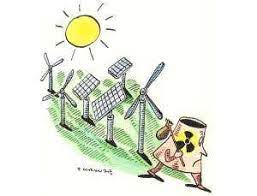
In terms of CO2 emissions, a nuclear power plant can compete with wind turbines and solar panels. Otherwise, however, the disadvantages and inertia outweigh the advantages.
May 27, 2026, Mario Petzold, https://www.golem.de/news/studie-kernenergie-zu-langsam-und-zu-teuer-fuer-die-energiewende-2605-209099.html
A study by the Öko-Institut commissioned by the Federal Environment AgencyThe report certifies that nuclear energy has an excellent climate record. According to the report, CO2 emissions per kilowatt-hour (kWh) fed into the grid are at the same level as those of photovoltaics and wind power.
In all other crucial aspects, however, nuclear energy exhibits numerous practical disadvantages. The study therefore considers a scenario in which nuclear power plays a decisive role globally to be unrealistic.

The cost of electricity generation is a major obstacle to the rapid spread of this technology. The authors estimate costs of 15 to 19 cents per kWh in Europe and 15 to 16 cents per kWh in North America. In contrast, wind power and photovoltaic electricity cost significantly less than 10 cents. Onshore wind power is estimated at an average of 3.6 cents per kWh.
Practical reasons speak against nuclear energy
But it’s not just the pure costs that argue against the rapid expansion of nuclear power plants. The annual addition of capacity would have to be at least 30 gigawatts (GW) per year, which corresponds to 25 to 30 large nuclear reactors.
In recent decades, the rate has been around 10 GW, which was just enough to compensate for the output of decommissioned nuclear power plants. According to the study, such a significant acceleration in construction seems unlikely.
And even if the number of planned projects were to increase, the long construction time of up to 20 years alone argues against nuclear energy playing a relevant role in global energy production by 2050.
Furthermore, the interaction with renewable energy sources is extremely poor. The controllability of nuclear power plants is minimal and requires a certain lead time. In contrast, a high share of wind and solar power in the energy system necessitates rapid load changes, which nuclear power cannot provide.
Climate change is an obstacle to nuclear power

Besides the risks posed by a serious reactor accident, which cannot be reliably quantified, climate change itself also hinders the expansion of nuclear energy. A location by the sea would be ideal, because sufficient cooling water with virtually constant temperatures is available.
However, rising sea levels and increasing extreme weather events are increasing the risk of unforeseen incidents precisely in these areas. Along rivers, heat waves, droughts, or heavy rainfall could jeopardize the reliable operation of a nuclear power plant.
Overall, the study authors assume that, in the best-case scenario, nuclear power plants will be able to supply nine percent of global energy production in the future. This corresponds to the current share and requires an increase in the current rate of expansion of nuclear reactors. In 1996, the share was still at 17 percent; according to the study’s calculations, it is most likely to be between three and four percent by 2050.
Nuclear needs to build up to 8,000 SMRs just to catch up with wind and solar. By 2035, they might have 5

Giles Parkinson, May 27, 2026, https://reneweconomy.com.au/nuclear-needs-to-build-up-to-8000-smrs-just-to-catch-up-with-wind-and-solar-now-by-2035-they-might-have-5/
Australia’s almost indistinguishable far right political parties – the Liberals, Nationals and One Nation – are pushing the nuclear barrow once again, not for climate reasons but because of the “anything but wind and solar” ideology demanded by their fossil-fuelled benefactors.
So it came as a timely reminder on Wednesday, when one of the world’s leading green energy analysts, Michael Liebreich, underlined just how useless nuclear energy is for dealing with climate change, and how far the small nuclear reactors championed by many are from competing with surging wind and solar.
Liebreich is the founder of Bloomberg New Energy Finance and his address to the Energy Efficiency Council’s National Conference also touched on the perils of net zero targets (because it puts the focus on what’s really hard rather than what’s readily achievable), and the overwhelming push for electrification for “just about everything.”
But it was the nuclear hype that he was also keen to puncture, if only to underline the sheer scale and dominance of wind and solar, and its rapidly growing share of “useable” energy, as opposed to “primary energy” that ignores the massive inefficiencies of fossil fuels.
SMR are still not being built but they are championed by some of the world’s richest people, the AI and social media “tech bros” who are looking for ample energy sources to power their massive data centre needs (while contracting tens of gigawatts of wind and solar in the meantime).
“They (the tech bros) love nuclear, and they’re going to be very angry when they discover what everybody discovers, which is nuclear is kind of expensive and long and complicated,” Liebreich said.
“But even if they succeed, it’s not going to be a climate solution,” he said. And the reason is that simply to match the output of wind and solar in the 2024 calendar year, the industry would need 1,250 of the 470 MW SMRs that are being developed by Rolls Royce, or up to 8,000 of the much smaller SMRs pushed by the likes of Oklo.
“If they build five by 2035 that will be a big win,” Liebreich said. “And so, as a climate solution, by the time you did build 2000 Westinghouse SMRs, where do you think wind and solar is going to be?
“It’s obviously going to have grown. That green curve is not stopping, it is taking off, and you can see it’s taking off even in the countries that are really trying to build nuclear.”
The nuclear push is usually associated in Australia by calls to abandon net zero targets, with the main argument being – without evidence – that it is trashing the economy.
Net zero has been criticised by others supportive of strong action. Andrew Forrest, aiming for real zero at Fortescue’s giant iron ore mines by 2030, says net zero is an excuse to do not much and use offsets instead of cutting emissions, others say a 2050 target is used by an excuse to do not much anytime soon.
Liebreich’s criticism is that it makes everything sound too hard. “By focusing on zero, immediately your eye is drawn to doing the difficult bits, and the difficult bits are expensive, and we just don’t have to have those discussions right now.
“If we can’t do aviation, there’s … a smorgasbord of opportunities right in front of us that we should be doing first and quickly, because time matters. Carbon has a time value, once it’s up there, it stays up there.”
As an example of that smorgasbord, Liebreich pointed to EVs, and specifically the Nissan Leaf, which from its 2011 version to its 2026 version had trebled the size of its battery, quadrupled its range, doubled the power, and cut the cost by one third.
Simply looking at efficient technologies can also achieve so much.
“If you go from coal-fired incandescent light bulb to an LED, same energy service, you cut primary energy by 95 per cent.
“Electric cars are the same, you go from a fossil car to electric car, (you get a) 75 per cent cut in primary energy. Same for heating, you go from a boiler to a heat pump, (you get) a 75 per cent reduction in primary energy.”
Liebreich says the greater efficiency of wind ands solar – useable energy as opposed to the primary energy championed by the fossil fuel industry trying to pretend that non-hydro renewables have no impact – will accelerate that change.
“What it does is it pushes fossil off the system, it’s a transition, and if you think about it, when we went from analog to mobile and digital telephony, we didn’t measure it by how many landlines were disconnected in 1995.
“We just asked how many people have got mobile phones. Peak landline happened over 30 years after the invention of the mobile phone, in 2006. So if you had said in 2000 there’s no transition, it’s failed, it’s troubled, it’ll never happen, you look pretty stupid now.
“Peak horse in the US was 1920. The car was invented in 1886. So you measure a transition by the growth of the new, not the crushing of the old.
“And I also think … the politics of talking about how we’ve got to stop this and block this and destroy that, and so it’s very, very difficult.
“We’re telling people you’re going to stop them from using things, whether it’s coal or petrol or diesel or their boiler, or whatever, it is politically difficult. Well, it’s unacceptable. So I think we’ve got to talk about growing anew. That brings me to electrification, and electrification, I think, is the solution to all of the above.”
And for more on that, please see our recent story on Liebreich’s recently released Elecrification Staircase – From cars to coastal shipping, we can electrify almost everything, according to Electrification Staircase.
Energy Department takes steps toward allowing plutonium, historically used in weapons, in nuclear fuel

by Rachel Frazin – 05/26/26, https://thehill.com/policy/energy-environment/5896154-energy-department-plutonium-nuclear-power/
The Energy Department may allow up to five companies to use its surplus plutonium — which it has historically been used in nuclear warheads — as fuel.
The department has selected the firms for “advanced negotiations regarding the potential allocation of surplus plutonium materials,” a spokesperson for its nuclear energy office said Tuesday.
The five companies entering advanced negotiations are: Oklo, Exodys Energy, Shine Technologies, Standard Nuclear and Flibe Energy, Inc.
The Energy Department has historically used plutonium in nuclear warheads. It produced a significant amount of it during the Cold War.
In March, the White House issued an executive order directing the department to halt a prior program that sought to dilute and dispose of the plutonium. The order also directed the department to instead set up a program making surplus plutonium available to the nuclear energy industry.
In October, the Energy Department said that the available surplus for the program includes weapons-grade, fuel-grade, reactor-grade or mixed plutonium.
According to the department, the plan to give plutonium to energy companies “is anticipated to help companies unlock the next level of private funding to broaden domestic nuclear fuel supplies, spur innovation on American recycling technologies, and unlock private sector funding to fuel the nation’s nuclear renaissance.”
However, critics argue that repurposing plutonium for civilian energy could have security and other risks.
“Plutonium-based fuels and reprocessing have a poor track record when introduced in civilian nuclear energy programs,” Ernest Moniz, who was energy secretary under former President Obama, wrote last year, adding that it could lead to “the creation of additional stocks of weapons-usable materials.”
Meanwhile, Oklo cofounder and CEO Jacob DeWitte said in a written statement on Tuesday that the Energy Department program could help speed up the development of nuclear energy.
“Fuel supply constraints are a key throttle to advanced reactor development,” DeWitte said. “This program creates a pathway to use existing surplus material as bridge fuel for advanced reactors to bring more reactors online sooner.”
Am I the only one who doubts the need for more electricity?

Ken Collier, Fri, May 8, 26
Am I the only one who doubts the need for more electricity? There might be an argument for a better grid as a security and safety measure. Do we really need more electricity to manufacture cars that clog the roads and pollute the environment? More plastic? More disposable consumer goods? More entertainment of dubious quality? Manipulate huge amounts of data anf faster?
Most of the debate seems to be about whether solar, wind, hydro, etc. are better able to meet the increasing demand than nuclear or fossil fuels. Some of it is about how best to provide employment, especially for the union organized sector.
I think cutting back, or at least making better judgements about goals for energy use, would be a more productive way to exercise our actions in a way that recognizes how damaging it is to just seek more and better energy while providing our insights free to the energy industry. (even if they don’t heed it).
Scots are right to back renewables over nuclear energy.
By Dr Paul Dorfman, Bennett Institute, University of Sussex; Dr Keith
Baker FRSA, Glasgow Caledonian University; Professor Peter Strachan, Robert
Gordon University; Professor Steve Thomas, University of Greenwich; Dr
David Toke, University of Aberdeen.
POLLING released a couple of weeks ago
found that nuclear power has a “miserable” level of support in
Scotland, with more than half of those surveyed saying that the main focus
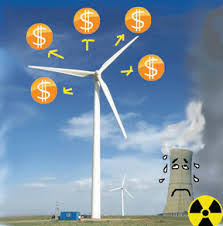
should be on renewables. According to the facts, this makes sense. Solar
and wind now dominate global electricity generation. Worldwide, solar and
wind power will both surpass nuclear in 2026.
This surge has halted the
fossil fuel power generation rise, with renewables overtaking coal,
supported by battery storage providing system flexibility at scale. All
this points to a shift in the dynamics of the power system. When renewable
energy generation exceeded the rise in global electricity demand last year,
an important threshold was crossed. In 2025, solar became the EU’s top
power source, with wind and solar now the bedrock of European energy
self-reliance. Power generation from renewables in Europe has reached a new
record of 384.9 Terrawatt-hours (TWh).
Meanwhile, Scottish wind power has
also set new records. More renewable energy is produced in the Scottish
Highlands per household than any other area of the UK. Annual renewable
generation across the Highlands is staggering. Renewable energy development
will be further supported by SSEN’s investment of £7 billion in Scotland
in 2026-31, creating 17,500 jobs. More than 100% of Scotland’s
electricity demand has been produced by renewables for the first time,
supporting more than 42,000 jobs and an economic output of more than
£10.1bn.
New UK nuclear plans would be yet another blow to electricity
bill-payers, when Scottish families are already paying what amounts to a
“nuclear tax” to fund the two most expensive nuclear power plants in
the world, England’s Hinkley Point C and Sizewell C.
Meanwhile, the
Norwegian Nuclear Committee has just said no to nuclear power in Norway.
Due to new nuclear construction timescales – up to 17 years according the
UK Government – and the vast cost over-runs, fissile fuel is a policy
dead end, diverting scarce resources away from realistic climate and energy
solutions.
Small modular reactors (SMRs) are another a costly distraction.
They are still in development and decades away from deployment at scale.
All this means that new nuclear is too late for the climate and energy
crises. What’s worse, every pound invested in nuclear is a pound not
invested in renewables, energy efficiency, storage and grid resilience –
investments that would provide a much bigger pay-off.
The National 6th May 2026,
https://www.thenational.scot/business/26081051.scots-right-back-renewables-nuclear-energy/
Unfounded Health Concerns Are Powering a Solar Backlash
SCHEERPOST, April 26, 2026
Kevin Heath had hoped there would be solar panels by now on his family farm in southeastern Michigan, roughly 50 miles outside Detroit.
About six years ago, he agreed to lease part of his land for a solar project. It would help him pay off debt and keep the farm in the family, he said. But the opportunity was thwarted when, in 2023, following pushback from some local residents, his township passed an ordinance that banned large solar projects from land zoned for agriculture.
In the fight over solar development, Heath said he was bombarded by just about every argument from critics — including claims that solar fields are a health hazard. “I’ve heard them say that, but I’ve never heard anybody prove that,” Heath said.
“The health and safety issue,” he added, “that is just a joke.”
Michigan has big prospects in solar farming — measured by the expected growth in the capacity of its farms to add electricity directly to the grid. According to the U.S. Energy Information Administration, most of the nation’s new capacity from this type of solar farm is planned this year for four states, including Michigan. The others, with their hot deserts and big-sky plains, seem more obvious: Texas, Arizona and California.
To some, in Michigan and beyond, this growth feels dangerous. They pressure public officials to stop, stall or otherwise complicate new solar projects with an array of arguments that now go beyond just land use to include public health.
There is little reputable evidence to back their claims. But health concerns have helped power a solar backlash that undercuts efforts to broaden energy sources even as customer costs are rising.
Restrictions on solar development are proliferating nationwide, “often rooted in misinformation or unfounded fears,” including ones that involve “potential environmental and human safety risks,” according to an article published late last year in the Brigham Young University Law Review.
To generate electricity, solar projects harvest energy from the sun. “And that’s really not that different from what a field of corn or alfalfa does,” said Troy Rule, the Arizona State University law professor who authored the article. “In fact, arguably, it’s even more environmentally friendly.”
Still, a state board in Ohio rejected an application for a solar project last month, citing local opposition, even though its staff initially said it met all requirements. Along with other concerns, according to the board, opponents “testified about the potential impacts on the health of residents.”
A bill in Missouri would halt commercial solar projects in the state, including those under construction, through at least 2027, as a state agency develops new regulations. The bill’s emergency clause says this is “deemed necessary for the immediate preservation of the public health, welfare, peace, and safety.”
And, on the eastern edge of Michigan, St. Clair County adopted a novel public health regulation last year that set limits on solar development and battery storage. The move was encouraged by the county’s medical director who, in a memo, warned of the threat of noise, visual pollution and potential sources of contamination. Some local residents have long pressed leaders to act, saying that intrusive noise could worsen post-traumatic stress disorder and other ailments.
Public officials don’t always examine the validity of health claims, according to Rule. And local deliberations rarely compare the impact of solar farms to common agricultural practices, which can lead to runoff from fertilizers and herbicides, for example, or waste lagoons from concentrated animal feeding operations.
People have many reasons for taking issue with large-scale solar development, said Michael Gerrard, an environmental lawyer and founder of Columbia University’s Sabin Center for Climate Change Law. But as for the feared health impact, he said, “there’s no basis for that.”
“People try to come up with a rationale to justify their dislike of things they dislike for other reasons,” Gerrard added.
President Donald Trump’s administration, meanwhile, is adding to the skepticism that renewable energy is worthwhile. Among other moves, it’s phasing out federal tax credits for the solar and wind industries.
It all takes a toll on the effort to build out solar infrastructure. Last year, new solar installations in the U.S. dropped by 14%.
Fear vs. Science
Large solar developments can transform hundreds, or even thousands, of acres of rural land, paneling them with crystalline silicon and tempered glass.
It’s a big change, and people have questions.
Locals worry that electromagnetism and even glare can pose a health risk. They wonder if toxic materials could leach into the soil and contaminate groundwater, if not while the solar site is operational, then some decades in the future, when it reaches the end of its life. That certainly has been the case with orphaned oil wells, which also were built with promises of safety.
But researchers point out that the most common types of panels have only small amounts of such materials, if any. They are encased and unlikely to leach into the soil. Rather than sitting in landfills when a site is decommissioned, most of the materials used in solar panels can be recycled (though the process can be costly).
Craig Adair, vice president of development at Open Road Renewables, which has pursued renewable energy projects in several states, has fielded a range of concerns over the years — from how soil could be contaminated to the possibility of electromagnetic fields causing cancer.
“Those questions, in just about every case, have an answer,” Adair said. “There is rigorous academic study, and there are examples of projects that have been operating.”
While the future farmability of the land is often a concern, many researchers — and farmers — say that a solar lease will help preserve it.
With proper planning on the front end, equipment can be removed from a decommissioned solar site and green space restored, said Steve Kalland, executive director of the NC Clean Energy Technology Center, which, along with its partners, provides technical assistance to local governments in the Carolinas.
And a person’s exposure to the electromagnetic field, or EMF, from a solar farm is roughly the same as what they would encounter from ordinary household appliances, according to researchers. EMF levels also decrease rapidly with distance.
Chronic exposure to noise is also a recurring complaint from critics. In challenging a proposed project from Adair’s company in Morrow County, Ohio, one woman said in a brief to the state siting board that she was troubled about how noise from the facility might affect people with neurological noise sensitivities, including her daughter………………………………………………………………………………………………………………….
Intense Battles in Michigan
In Michigan’s St. Clair County, it isn’t just a number of residents who are worried about large solar facilities. The Health Department’s medical director echoed their concerns.
In two memos to other county officials, Dr. Remington Nevin said that large solar sites are a public health risk for the area’s predominantly rural residents. The state’s solar standards, he wrote, weren’t enough to protect them from “environmental health hazards, the spread of sources of contamination, nuisance potentially injurious to the public health, health problems, and other conditions or practices which could reasonably be expected to cause disease.”
Any detectable tonal noise, he added, must be considered an unreasonable threat to public health. He recommended new regulations.
The county administrator at the time, Karry Hepting, noted that Nevin’s initial memo “does not address the question or provide support for what are the potential health/environmental risks,” according to internal emails provided to ProPublica. “It appears we will need to hire an outside expert to get the level of detail and supporting data necessary to consider potential next steps,” she added. Hepting said that she’d begun researching prospects.
But County Commissioner Steven Simasko — now the county board’s chair — wrote in an internal email that he accepted Nevin’s medical opinion “as a good standard for the protection of the public health of our citizens” and disagreed with the need for outside input.
Simasko told ProPublica in an email that he believed it wasn’t the role of the administrator to get involved in a public health matter, and that he objected “to essentially paying for a second public health medical opinion” more to Hepting’s liking.
Hepting, who has since retired from her post at the county, disputed Simasko’s depiction of her motivations in a message to ProPublica. “Nothing could be farther from the truth,” she wrote. “It had nothing to do with shopping for a different opinion. Mr. Nevin’s initial memo did not address the initial question posed by the Board. It did not state what the health risks were and what negative health impacts exist. It basically said it’s a risk because he said so.”
To legally justify the adoption of health regulations, Nevin said in his second memo, it wasn’t necessary for his department “to prove, with a precise scientific or medical rationale, that eligible facilities pose an unreasonable threat to the public’s health.” Instead, expert opinion, public comment and the consent of the local government were reason enough, he wrote.
In the end, county officials were persuaded to act. The commissioners approved the Health Department’s new policy for solar energy and battery facilities, including a nonrefundable $25,000 fee to cover the cost of reviewing a proposed project. It also said that policy violations were punishable by up to six months in prison.
An electric utility promptly sued, and a solar company joined the case. The Health Department, they argued, has no authority to issue what are, in effect, zoning regulations. What’s more, they said in legal filings, the county can’t override the solar standards established by the state………………………………………………..
Solar capacity in Michigan continues to grow, despite local pushback, but so far, only 2.55% of the state’s electricity comes from solar. In Ohio, it’s nearly 6%, according to the Solar Energy Industries Association, a trade group. In Texas, it’s nearly 11%. Michigan is requiring electricity providers to reach an 80% clean energy portfolio by 2035, and 100% by 2040.
Michigan has more local restrictions on renewable energy than any other state, according to the Sabin Center. “Practically nowhere in the country has seen more conflict” about where to allow large solar farms that add electricity directly to the grid than rural Michigan, according to a 2024 article in the Case Western Reserve Law Review authored by a Sabin Center senior fellow………………………………………………………………………………………………………………………………………………………………………………………………………………………………………………………………………………….. https://scheerpost.com/2026/04/26/unfounded-health-concerns-are-powering-a-solar-backlash/
Renewables Mix Beats Nuclear on Price in Future Energy Systems

A new way of assessing costs of different energy sources shows that an
optimal mix of renewables will be cheaper than nuclear power in future
energy systems, where linking different sectors together drives down costs.
David Pickup, manager of the electricity program for the Pembina Institute,
told The Energy Mix the new study, published in the journal Energy, echoes
what’s been shown in other analyses, that “a range of different
electricity supply types is needed to deliver the lowest-cost system.”
“It also highlights that growing low-cost wind and solar energy goes hand
in hand with smart and flexible electrification, including energy storage,
electric vehicle charging, and heat pumps,” he added.
Cost comparisons of
different energy sources are often presented through the levelized cost of
electricity (LCOE) metric, which identifies the cost of the production of
one unit of electricity, factoring in investment costs, a power plant’s
operation and maintenance costs, fuel costs, and other elements. But LCOE
only tells part of the story because it excludes the costs or savings of
operating that source within a larger energy system. Any given energy
source may be more or less expensive depending on the wider system into
which it is integrated.
The Energy Mix 30th April 2026, https://www.theenergymix.com/renewables-mix-beats-nuclear-on-price-in-future-energy-systems/
Perspectives on nuclear power
Jens Weibezahn ab, Björn Steigerwald b, Arman Aghahosseini c, Christian von Hirschhausen bd, Mark Z. Jacobson e, Christian Breyer c Energy Policy (accessed), Scidence Direct, 26th April 2026
Highlights
- •Nuclear competitiveness hinges on optimistic cost and financing assumptions.
- •Renewables plus flexibility dominate least-cost decarbonisation pathways.
- •New nuclear plays only marginal role under realistic system conditions.
- •Empirical data contradicts optimistic nuclear deployment scenarios.
- •Nordic case shows nuclear role shaped by policy and financing limits.
Abstract
This study reassesses the role of nuclear power in low-carbon electricity transitions under prevailing cost, finance, and system conditions. Using harmonised international data and observed 2024 operational metrics, we conduct a modelling-based stress test that evaluates how nuclear power performs when realistic construction, financial, and flexibility assumptions are applied.
The results show that large nuclear power shares in prior modelling studies emerge primarily under optimistic conditions: Low overnight capital cost, reduced financing risk, or constrained renewable energy portfolios. When empirically validated inputs and full flexibility options are included, least-cost system pathways are consistently dominated by renewable energy-based portfolios complemented by storage, demand response, and existing dispatchable assets, while new nuclear power contributes only marginally.
Empirical project evidence from recent builds corroborates the modelling results: prolonged construction duration and extended financing exposure significantly elevate effective project cost, irrespective of nominal levelised cost estimates.
The Nordic region provides a natural comparative lens, revealing divergent governance models and public acceptance trajectories across Denmark, Sweden, Finland, and Norway, yet a shared economic constraint shaped by financing structure, risk allocation, and system alternatives.
Overall, the findings indicate that under current techno-economic parameters and financing environments, renewable-centred energy portfolios form the cost-optimal foundation for power sector decarbonisation. Nuclear power remains a system- and policy-specific option that can contribute where governments assume substantial construction and financing risk and offer long-term capital recovery mechanisms. Transparent modelling assumptions and explicit financing terms are therefore essential for credible assessments of future nuclear deployment. https://www.sciencedirect.com/science/article/pii/S0301421526002752
Amid an energy crisis, the renewables juggernaut gathers pace
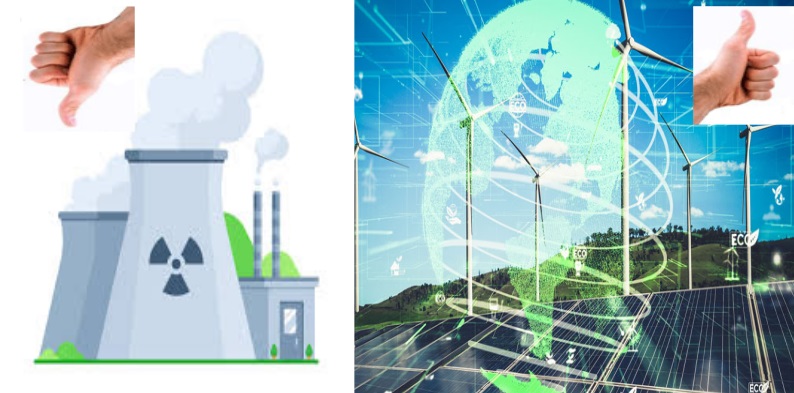
The continuing collapse in the cost of renewables offers a stark contrast to
skyrocketing fossil fuel prices – and a cause for optimism. As emissions
continue to rise and governments fail to respond with anything like the
urgency required, it’s tempting to conclude that the prospects for a
liveable planet are growing dim.
But as spring arrives, there is one
striking spark of light. Sunlight, to be precise – captured on solar
panels and pumping out electrons down the wires, on a scale unimaginable
even a decade ago.The amount of solar installed worldwide doubled between
2022 and 2024 alone. In the first three quarters of 2025, it accounted for
83% of all new electricity-generating capacity. Key to this is the
continuing collapse in costs, which have fallen by close to 90% per kWh in
just the last decade.
Crucially, the cost of batteries – essential for
storing the power generated – has plunged by a similar amount in that
time. In his new book, Here Comes the Sun, veteran environmentalist Bill
McKibben highlights some of the consequences of this double whammy in price
and pace. In Pakistan alone, to give one example, enough solar has been
installed in the last 18 months to account for one-third of the country’s
current grid capacity.
Positive News 25th March 2026, https://www.positive.news/environment/energy/amid-an-energy-crisis-the-renewables-juggernaut-gathers-pace/
“The scores are going off the charts”: Iran conflict boosts support for renewables and energy independence
Anti renewable energy messages are no longer winning the battle of ideas,
for now, as sovereignty and independence become the new buzzwords, says
marketing expert Ed Coper.
The nays were gaining ground, albeit from a
small base, before the start of the Iran war, he says. But rapidly rising
fuel prices and shortages, as the Strait of Hormuz remains blocked to most
of the world’s oil and gas tankers, have supercharged the
already-powerful idea that renewable energy equals independence.
“Already, before Iran, energy independence was the most resonant
[message]. Now that the conflict has happened, it’s even more resonant.
The scores are going off the charts,”
Coper, the CEO of communications
agency Populares, tells Renew Economy. “Our assumption is that those
messages are only going to increase in strength over time. We’re
certainly seeing that with our testing at the moment.” Coper is basing
his view on the company’s in-house algorithm, which he says captures
millions of social media impressions on ideas and images being tested in
the market.
Renew Economy 20th April 2026
https://reneweconomy.com.au/the-scores-are-going-off-the-charts-iran-conflict-boosts-support-for-
1 This Month
23-25 October – on Zoom – World BEYOND War’s annual global conferenc


Shut down the radiation-damaged Heysham nuclear reactors now
To see nuclear-related stories in greater depth and intensity – go to https://nuclearinformation.wordpress.com

Say No to NASA’s Reckless Nuclear Reactor on the Moon
Say No to NASA’s Reckless Nuclear Reactor on the Moon

-
Archives
- October 2026 (231)
- September 2026 (339)
- August 2026 (330)
- July 2026 (355)
- June 2026 (287)
- May 2026 (306)
- April 2026 (356)
- March 2026 (251)
- February 2026 (267)
- January 2026 (308)
- December 2025 (358)
- November 2025 (359)
-
Categories
- 1
- 1 NUCLEAR ISSUES
- business and costs
- climate change
- culture and arts
- ENERGY
- environment
- health
- history
- indigenous issues
- Legal
- marketing of nuclear
- media
- opposition to nuclear
- PERSONAL STORIES
- politics
- politics international
- Religion and ethics
- safety
- secrets,lies and civil liberties
- spinbuster
- technology
- Uranium
- wastes
- weapons and war
- Women
- 2 WORLD
- ACTION
- AFRICA
- Atrocities
- AUSTRALIA
- Christina's notes
- Christina's themes
- culture and arts
- Events
- Fuk 2022
- Fuk 2023
- Fukushima 2017
- Fukushima 2018
- fukushima 2019
- Fukushima 2020
- Fukushima 2021
- general
- global warming
- Humour (God we need it)
- Nuclear
- RARE EARTHS
- Reference
- resources – print
- Resources -audiovicual
- Weekly Newsletter
- World
- World Nuclear
- YouTube
-
RSS
Entries RSS
Comments RSS

