World’s sea-ice falls to record low
The world’s frozen oceans, which help to keep the planet cool, currently
have less ice than ever previously recorded, satellite data shows. Sea-ice
around the north and south poles acts like a giant mirror by reflecting
much of the Sun’s energy back into space. But as rising temperatures cause
this bright layer to shrink, the dark ocean below can absorb more heat,
warming the planet further. This latest sea-ice low appears to have been
driven by a combination of warm air, warm seas and winds breaking apart the
ice. Over the 5 days to 13 February, the combined extent of Arctic and
Antarctic sea-ice was 15.76 million sq km (6.08 million sq miles),
according to BBC analysis of data from the US National Snow and Ice Data
Center (NSIDC). This breaks the previous 5-day record low of 15.93 million
sq km (6.15 million sq miles) from January-February 2023.
BBC 15th Feb 2025,
https://www.bbc.co.uk/news/articles/cvgeydkz08go
Two-thirds of Americans still believe climate change is impacting the Earth, despite what Trump contends

As the Trump administration works to dismantle and erase any mention of
climate change on a federal level, a new report has found that the majority
of Americans believe the Earth’s warming is affecting weather across the
country. Two-thirds of those recently surveyed by the Yale Program on
Climate Change Communication and the George Mason University Center for
Climate Change Communication said they think global warming is impacting
U.S. weather. Those who believe global warming is happening outnumber those
who believe it is not by a ratio of more than five to one, the survey also
found.
Independent 14th Feb 2025 https://www.independent.co.uk/climate-change/trump-climate-change-americans-poll-b2698628.html
Hottest January on record shocks scientists
Last month was the hottest January on record, surprising scientists who
expected the cooling La Niña weather cycle in the tropical Pacific to slow
almost two years of record-high temperatures. The warming, despite the
emergence of La Niña in December, is set to fuel concerns that climate
change is accelerating at a time when countries such as the US, the
world’s largest historical polluter, pull back on commitments to reduce
emissions. Bill McGuire, emeritus professor of geophysical and climate
hazards at UCL, said the January data was “both astonishing and, frankly
terrifying”, adding: “On the basis of the Valencia floods and
apocalyptic Los Angeles wildfires, I don’t think there can be any doubt
that dangerous, all-pervasive, climate breakdown has arrived. Yet emissions
continue to rise.”
FT 6th Feb 2025,
https://www.ft.com/content/b5d18aa4-92b0-45a5-8c31-4ec2646ff700
UAE Turns to Satellites to Shield Region’s Only Nuclear Plant From Climate Risks
The United Arab Emirates, which operates the Gulf’s only commercial
nuclear power station, is for the first time taking special measures to
protect the project from the devastating impact of climate change. Since
September, the Federal Authority for Nuclear Regulation and the Mohammed
Bin Rashid Space Centre have been monitoring climate and the environment
around the Barakah plant from space, officials from the regulatory body
said in Abu Dhabi. They have been collecting information on sea levels,
land and water temperatures, earthquakes and other threats, and assessing
their severity and potential impact.
Bloomberg 4th Feb 2025, https://www.bloomberg.com/news/articles/2025-02-04/uae-turns-to-satellites-to-shield-region-s-only-nuclear-plant-from-climate-risks
Leaders in the Pacific raise alarm over ‘direct impact’ of Trump’s climate retreat and aid freeze
Leaders and environmental advocates in the Pacific have expressed alarm
over Donald Trump’s decision to withdraw from the Paris climate agreement
and freeze foreign aid, warning the moves will accelerate the existential
threats they face as nations on the frontlines of the climate crisis.
Guardian 1st Feb 2025, https://www.theguardian.com/world/2025/feb/01/leaders-in-the-pacific-raise-alarm-over-direct-impact-of-trumps-climate-retreat-and-aid-freeze
The surface of our oceans is now warming four times faster than it was in the late 1980s
The surface of our oceans is now warming four times faster than it was in
the late 1980s. The rate of the ocean’s warming has more than quadrupled
over the past four decades, according to researchers. While ocean
temperatures were rising at about 0.06 degrees Celsius per decade in the
late 1980s, they are now increasing at 0.27 degrees Celsius per decade,
scientists said Tuesday.
Independent 28th Jan 2025, https://www.independent.co.uk/climate-change/oceans-heat-temperature-climate-warming-b2687248.html
Climate change made LA fires worse, scientists say
Climate change was a major factor behind the hot, dry weather that gave
rise to the devastating LA fires, a scientific study has confirmed. It made
those weather conditions about 35% more likely, according to World Weather
Attribution – globally recognised for their studies linking extreme weather
to climate change. The authors noted that the LA wildfire season is getting
longer while the rains that normally put out the blazes have reduced. The
scientists highlight that these wildfires are highly complex with multiple
factors playing a role, but they are confident that a warming climate is
making LA more prone to intense fire events.
BBC 28th Jan 2025,
https://www.bbc.co.uk/news/articles/cd9qy4knd8wo
Wildfire risks high at nuclear plants

by beyondnuclearinternational, https://beyondnuclearinternational.org/2025/01/19/wildfire-risks-high-at-nuclear-plants/
So why won’t the industry and NRC plan for them when extending reactor licenses, asks Paul Gunter
For nuclear power plants, fire is considered a very significant contributor to the overall reactor core damage frequency (CDF), or the risk of a meltdown. Fire at a nuclear power station can be initiated by both external and/or internal events. It can start with the most vulnerable external link to the safe operation of nuclear power plants; the Loss Of Offsite Power (LOOP) from the electric grid. LOOP is considered a serious initiating event to nuclear accident frequency. Because of that risk, US reactors won’t operate without external offsite power from the electric grid.
The still largely uncontained wildfires burning in and around Los Angeles and Ventura Counties in southern California “are sure to rank among America’s most expensive.” The ongoing firestorms have now extended into a fourth period of “extremely critical fire weather” conditions and have burned nearly 63 square miles, an area the size of Washington, D.C. The estimated number is still being tallied for the thousands of homes and structures destroyed, the loss of life, the evacuation of communities indefinitely dislocated and the threats to and impacts on critical infrastructure including electrical power .
There is no scientific doubt that global warming is primarily caused by the unquenchable burning of fossil fuels, yet politically motivated denial is entrenched in the US Congress. The increased frequency and severity of these wildfires—leading to suburban and even urban firestorms— are but one consequence of a climate crisis along with a range of other global natural disasters including sea level rise, hurricanes, more severe storms generally, extreme precipitation events, floods and droughts. This more broadly adversely impacts natural resources and critical infrastructures to include inherently dangerous nuclear power stations.
At this particular time, it is important to reflect upon the April 2, 2024, report to Congress issued by its investigative arm, the United States Government Accountability Office (GAO), “Nuclear Power Plants: NRC Should Take Actions to Fully Consider the Potential Effects of Climate Change,” (GAO 24-106326).
The GAO warns that the US Nuclear Regulatory Commission (NRC) needs to start taking actions to address the increased risk of severe nuclear power plant accidents attributable to human caused climate change.
The NRC’s actions to address the risks from natural hazards do not fully consider potential climate change effects on severe nuclear accident risks. “For example, NRC primarily uses historical data in its licensing and oversight processes rather than climate projections data,” the GAO report said.
Beyond Nuclear has uncovered similar findings during our challenges to the NRC’s extreme relicensing process for extending reactor operating licenses, now out to the extreme of 60 to 80 years and talk of 100 years. We found that the agency’s staff believes and stubbornly insists that an environmental review for climate change impacts (sea level rise, increasingly severe hurricanes, extreme flooding, etc.) on reactor safety and reliability is “out of scope” for the license extensions hearing process.
The GAO report points out to the NRC that wildfires, specifically, can dangerously impact US nuclear power station operations and public safety with potential consequences that extend far beyond the initiating natural disaster. These consequences can include loss of life, large scale and indefinite population dislocation and uninsurable economic damage from the radiological consequences:
“Wildfire. According to the NCA (National Climate Assessment), increased heat and drought contribute to increases in wildfire frequency, and climate change has contributed to unprecedented wildfire events in the Southwest. The NCA projects increased heatwaves, drought risk, and more frequent and larger wildfires. Wildfires pose several risks to nuclear power plants, including increasing the potential for onsite fires that could damage plant infrastructure, damaging transmission lines that deliver electricity to plants, and causing a loss of power that could require plants to shut down. Wildfires and the smoke they produce could also hinder or prevent nuclear power plant personnel and supplies from getting to a plant.”
LOOP to nuclear power stations is a leading contributor to increasing the risk of a severe nuclear power accident. The availability of alternating current (AC) power is essential for safe operation and accident recovery at commercial nuclear power plants. Offsite fires destroying electrical power transmission lines to commercial reactors therefore increase the probability and severity of nuclear accidents.
For US nuclear power plants, 100% of the electrical power supply to all reactor safety systems is initially provided through the offsite power grid. If the offsite electrical grid is disturbed or destroyed, the reactors are designed to automatically shut down or “SCRAM”. Onsite emergency backup power generators are then expected to automatically or manually start up to provide power to designated high priority reactor safety systems needed to safely shut the reactors down and provide continuous reactor cooling and pressure monitoring. Reliable offsite power is therefore a key factor to minimizing the probability of severe nuclear accidents.
The GAO identifies a number of US nuclear power plant sites that are vulnerable to the possible outbreak of wildfires where they are located. “According to our analysis of U.S. Forest Service and NRC data, about 20 percent of nuclear power plants (16 of 75) are located in areas with a high or very high potential for wildfire,” the GAO report states. “More specifically, more than one-third of nuclear power plants in the South (nine of 25) and West (three of eight) are located in areas with a high or very high potential for wildfire.” The GAO goes on to identify “Of the 16 plants with high or very high potential for wildfire, 12 are operating and four are shut down.”
To analyze exposure to the wildfire hazard potential, the GAO used 2023 data from the U.S. Forest Service’s Wildfire Hazard Potential Map. “High/very high” refers to plants in areas with high or very high wildfire hazard potential. Those nuclear power stations described by GAO as “high / very high” exposure to wildfires and their locations are excerpted from GAO Appendix III: Nuclear Power Plant Exposure to Selected Natural Hazards.
able 1: Potential High Exposure to “Wildfires” at Operating Nuclear Power Plants
–AZ / SAFER, one of two mobile nuclear emergency equipment supply units in the nation, “HIGH / VERY HIGH”
–CA / Diablo Canyon Units 1 & 2 nuclear power station, “HIGH / VERY HIGH”
–FL / Turkey Point Units 3 & 4 nuclear power station, “HIGH / VERY HIGH”
–GA / Edwin I. Hatch Units 1 & 2 nuclear power station, “HIGH / VERY HIGH”
–GA / Vogtle Units Units 1, 2, 3 & 4, nuclear power station, “HIGH / VERY HIGH”
–NC / Brunswick Units 1 & 2 nuclear power station, “HIGH / VERY HIGH”
–NC / McGuire Units 1 & 2 nuclear power station, “HIGH / VERY HIGH”
–NC / Shearon Harris Units 1 & 2 nuclear power station, “HIGH /VERY HIGH”
–NB / Cooper nuclear power station, “HIGH / VERY HIGH”
–SC / Catawba Units 1 & 2 nuclear power station, “HIGH / VERY HIGH”
–SC / H. B. Robinson Units 1 & 2 nuclear power station, “HIGH / VERY HIGH”
–WA / Columbia nuclear power station, “HIGH / VERY HIGH”
Table 2: Potential High Exposure to “Wildfires” at Shutdown Nuclear Power Plants
–CA / San Onofre Units 1 & 2, “HIGH / VERY HIGH”
–FL / Crystal River, “HIGH / VERY HIGH”
–NJ / Oyster Creek, “HIGH / VERY HIGH”
–NY / Indian Point Units 1, 2 & 3, “HIGH / VERY HIGH”
Wildfires can transport radioactive contamination from nuclear facilities
A historical review of wildfires that occur around nuclear facilities (research, military and commercial power) identifies that these events are also a very effective transport mechanism of radioactivity previously generated at these sites and subsequently released into the environment by accident, spills and leaks, and careless dumping. The radioactivity is resuspended by wildfires that occur years, even decades later.
The fires carry the radioactivity on smoke particles downwind, thus expanding the zone of contamination further and further with each succeeding fire. The dispersed radionuclides can have very long half-lives meaning they remain biologically hazardous in the environment for decades, centuries and longer.
Here are a few examples of how wildfires increasing in frequency and intensity are also threatening to spread radioactive contamination farther away the original source of generation.
The Chornobyl nuclear catastrophe and recurring wildfires
The Chornobyl nuclear disaster that originally occurred on April 26,1986, initially spread harmful levels of radioactive fallout concentrated around the destroyed Chornobyl Unit 4 in northern Ukraine. The radioactive fallout was transported high into the atmosphere by the accidental reactor explosion. The days long fire and smoke transported extreme radioactivity from the expelled burning nuclear fuel and its graphite moderator. Radioactive fallout then spread far afield in shifting winds, precipitated with rainfall and was terrestrially deposited in its highest concentrations largely in northern Ukraine, Belarus and Southern Russia.
Additional atmospheric distributions of radioactive contamination fell across much of Europe, persisting in numerous hot spots, including in Poland, Germany, France, Scandinavia and the United Kingdom.
The Chornobyl ‘Exclusion Zone’ to restrict long term human habitation was established in the immediate aftermath in 1986 as an arbitrary 1,000 square miles within an 18 mile radius around the exploded reactor in Ukraine and remains in place today nearly 39 years later. The Bulletin of Atomic Scientists reports that seasonal wildfires continue to occur within the Chornobyl Exclusion Zone, routinely burning across already contaminated land and resuspending radioactivity via the smoke into the atmosphere. The radioactive smoke is borne on the wind, carrying the radioactive fallout farther out and increasing the size of what can be measured as potentially an expanding Exclusion Zone.
Contrary to claims, wildfires can threaten US nuclear facilities
The Los Angeles Times headlined in May 2024 “Sites with radioactive material more vulnerable as climate change increases wildfire, flood risks.”
The LA Times did a look back at several wildfires surrounding the government radiological laboratories and government nuclear weapons manufacturing sites including the 2018 Woolsey wildfire at the old Santa Susana Field Laboratory (SSFL). This facility specifically housed 10 nuclear reactors and plutonium and uranium fuel fabrication facilities. SSFL was used for early testing of rockets and nuclear reactors for energy. But decades of carelessness during experiments resulted in one of the first nuclear reactor meltdowns in 1959, leaving acres of soil, burn pits and water radioactively and chemically contaminated. Boeing, the current operator of SSFL, is now obligated to conduct the cleanup of the SSFL site.
“A 2018 fire in California started at the Santa Susana Field Laboratory, a former nuclear research and rocket-engine testing site, and burned within several hundred feet of contaminated buildings and soil, and near where a nuclear reactor core partially melted down 65 years ago,” reported the LA Times.
Over the years, NBC news has broadcast continuing coverage of the massive 2018 Woolsey fire at SSFL and the radioactive contamination from this event, found in several Los Angeles suburbs miles away.
Despite these events, federal authorities continue to issue vapid safety assurances that climate changes, including more frequent wildfires, will not increase the risks to public health and safety from contaminated commercial, military and national laboratory facilities and that there is no need to include environmental reviews that account for the impacts of climate change in the regulatory environmental review process.
A recent example of the NRC resistance to factor in reasonable assurance for protecting the public’s health and safety from climate change risk — and its potential impacts that increase the risk of a severe nuclear accident, including wildfire — into its oversight and environmental reviews for licensing and relicensing, came from Commission Chairman Christopher Hanson’s September 27, 2024 response to the GAO report:
“…the NRC does not agree with the [GAO] conclusion that the agency does not address the impacts of climate change. In effect, the layers of conservatism, safety margins, and defense in depth incorporated into the NRC’s regulations and processes provide reasonable assurance of adequate protection of public health and safety, to promote the common defense and security, and to protect the environment.”
Hanson’s outright dismissal of the GAO report and its finding that the agency needs to take action, runs contrary to the view of one of the agency’s own Atomic Safety Licensing Board judges, Michael Gibson. Gibson issued a dissenting opinion to the similar blanket dismissal by the NRC to take a “hard look” at climate change impacts under the National Environmental Policy Act (NEPA) on extreme reactor relicensing. His opinion came in support of Beyond Nuclear’s legal challenge to the Commission’s second 20-year license extensions to its commercially operating reactors. Gibson dissented from the licensing board’s majority denial of our hearing request on climate change’s contribution to the risk and consequences of severe nuclear accidents.
In Judge Gibson’s 23 page dissent of his colleagues’ decision to extend the nuclear plant’s operating license out to 2060 without a pubic hearing on climate change impacts on nuclear power plants, he wrote on the record:
“That is hardly the reception climate change should be given. As CEQ (the President’s Council on Environmental Quality), the federal government’s chief source for assessing the importance of climate change in environmental analyses under NEPA, has made clear, ‘The United States faces a profound climate crisis and there is little time left to avoid a dangerous—potentially catastrophic—climate trajectory. Climate change is a fundamental environmental issue, and its effects on the human environment fall squarely within NEPA’s purview.’ Sadly, the majority and the NRC Staff have failed to heed this warning.”
Paul Gunter is Director of the Reactor Oversight Project at Beyond Nuclear. This article first appeared on the Beyond Nuclear website.
Trump’s got a radioactive time bomb under Greenland’s ice
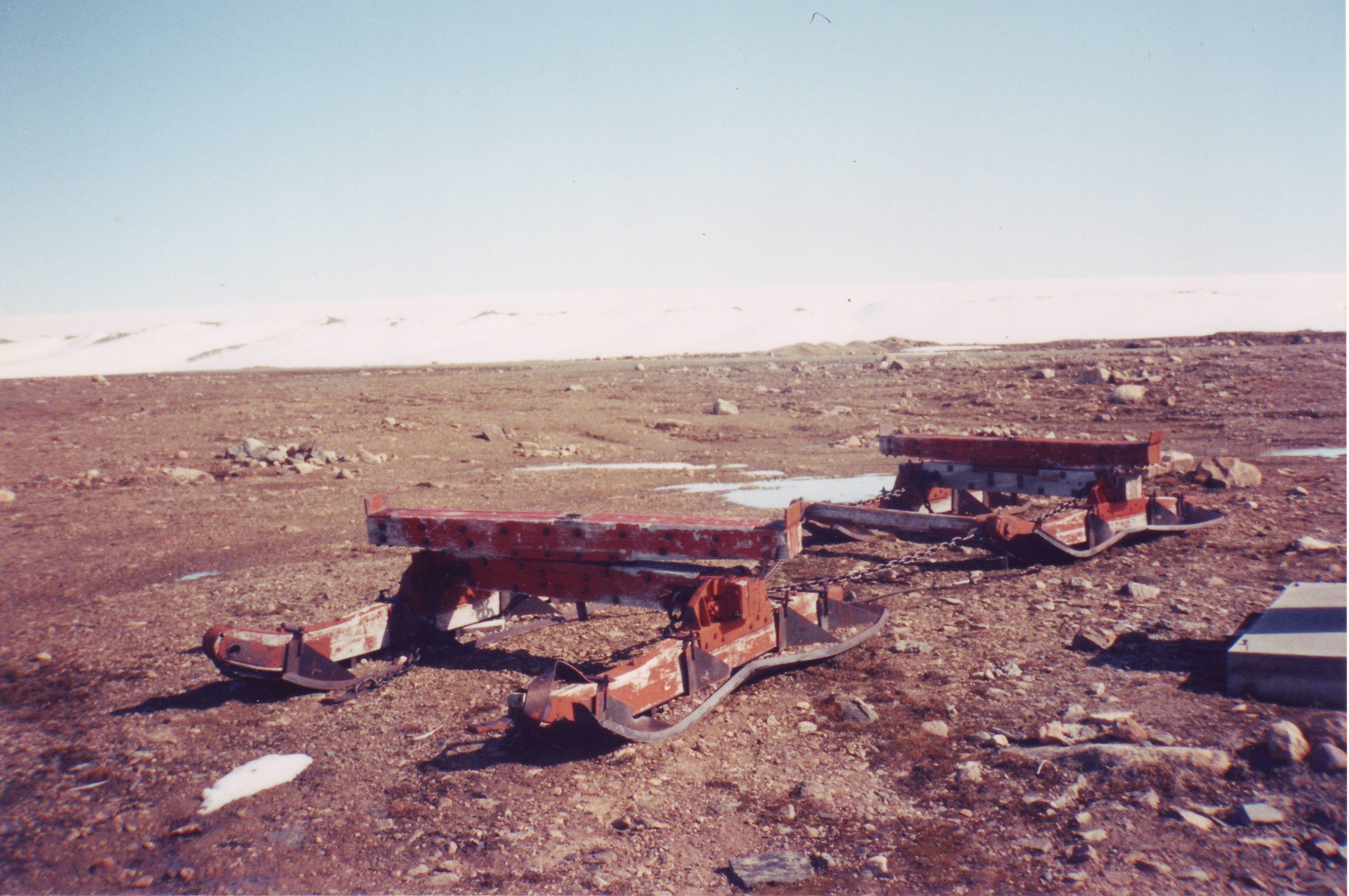
The U.S. would inherit an environmental dilemma of its own making if it lays claim to the massive Arctic island.
January 17, 2025 , By Seb Starcevic, https://www.politico.eu/article/trumps-got-a-radioactive-time-bomb-under-greenlands-ice/
Deep in Greenland’s frozen wilderness, a radioactive secret sleeps beneath the ice — and it could be a headache for Donald Trump if the U.S. president-elect follows through on his threat to take control of the vast Arctic island.
Its name is Camp Century, an American military base built in 1959 during the Cold War in an attempt to develop nuclear launch sites that could survive a Russian strike.
The project, which involved carving a network of tunnels through Greenland’s ice sheet and was powered by a small nuclear reactor, was deemed unfeasible due to the constantly shifting ice and abandoned in 1967.
Although the Americans dismantled the reactor and took its nuclear reaction chamber with them when they departed in ’67, they left behind thousands of tonnes of waste and debris — including radioactive residue — to be buried under the icecap forever.
But thanks to climate change, forever might come sooner than planned.
As the world warms, Camp Century — which is located in one of the most remote spots on Earth, about 1,500 kilometers north of Nuuk, Greenland’s capital city — has been the focus of renewed interest and anxiety about just how long it will remain entombed. A landmark study published in 2016 found the remains of the abandoned base could be exposed by melting ice and snow toward the end of the 21st century.
“Our study highlights that Camp Century now possesses unanticipated political significance in light of anthropogenic climate change,” the researchers wrote (though they later revised their findings in 2021 to rule out the base reemerging from the ice until at least 2100).
The revelation caused a political storm in Greenland, a Danish territory which has been self-ruling since 1979.
Greenlandic Foreign Minister Vittus Qujaukitsoq demanded Denmark take responsibility for cleaning up the debris from abandoned U.S. military installations in Greenland, of which there are 20 to 30 mainly disused sites. Greenland, formerly a colony of Denmark, never consented to hosting them.
Nuuk and Copenhagen signed a deal in 2017 earmarking about $30 million to clean up the debris and waste — but Camp Century was not included in the agreement.
Greenlanders are “concerned that [Camp Century] will pollute as the ice melts down,” said Pipaluk Lynge, an MP from Greenland’s largest party and chair of the parliamentary foreign policy committee.
But it’s not just Camp Century, she added, referring to the other abandoned bases. “There are many places where [they] have left tons of dump,” she told POLITICO. “The U.S. has military waste all over the Arctic.”
‘Don’t poke it’
There have so far been “no attempts” to clean up Camp Century’s radioactive and toxic waste, said William Colgan, professor of glaciology and climate at the Geological Survey of Denmark who led the 2016 study into the ice surrounding Camp Century.
While Colgan did once drill deep into the site to test its radioactivity at the Danish health ministry’s request, “There is actually a conscious effort not to drill into the debris field,” he told POLITICO. “We don’t actually know the full nature of what’s down there.”
Camp Century has been described as a subterranean city, complete with a chapel, a barbershop and dormitories that once housed hundreds of people. To construct it, equipment and supplies were transported across the ice on sleds and tractor-trailers from nearby Pituffik Space Base, the northernmost U.S. military installation in the world, which is still active today.
In a 1961 report on American broadcaster CBS, TV legend Walter Cronkite visited the military base. His program filmed Camp Century’s massive ice tunnels being dug and showed U.S. army engineers relaxing in their underground, nuclear-powered barracks, reading and listening to records.
All that is now buried under thick layers of ice. Colgan said he and his team of researchers had been unable to find parts of Camp Century, such as its fuel depot, and feared disturbing it too much. “It’s cold, it’s deep, don’t poke it,” he said.
There are different ways Camp Century could contaminate the environment. One is if melting ice and snow carry toxic waste — such as the 200,000 liters of diesel fuel beneath the ice, according to Colgan — out into the ocean. Another is if the ice containing the base breaks off and forms an iceberg. Neither are likely anytime this century; while the latter would likely take thousands of years.
But the timeline shifts a little depending on how much the world warms in the coming decades. While there are different projections, a United Nations report published last October found the planet will heat up by 2.6 to 3.1 degrees Celsius this century, with no chance of limiting the temperature increase to the totemic 1.5 C target agreed in Paris in 2015.
“It’s a game of just a couple of degrees,” Colgan said. “2 or 3 C is the difference between Camp Century staying under ice or melting out.”
Climate change in microcosm
Camp Century itself was pivotal to scientists’ understanding of climate change. In the 1960s, scientists extracted an ice core there, a frozen soil sample that is still studied to this day for insights into climate patterns hundreds of thousands of years ago. The base remains a scientific “supersite,” said Colgan, who visits it annually along with many other climate researchers.
If the U.S. were to lay claim to the island — as Trump has repeatedly said it should do, calling American control of Greenland an “absolute necessity” and even threatening to use military force — it would also inherit the legacy of its own Cold War-era polluting activities at Camp Century.
“Camp Century is a microcosm of climate change,” Colgan argued. “People today are left picking up and trying to understand the climate impacts of decisions made 50 years ago, 60 years ago.”
And with the U.S. currently the second-biggest emitter of planet-warming emissions in the world, Camp Century and its “shifting fate” aren’t just a fascinating slice of Cold War trivia, but a story of climate action and responsibility today, he added.
“It is the decisions being made in the next decade or two that will put us on these trajectories that have multi-century implications,” Colgan warned.
California wildfires: a warning to Nuclear Regulatory Commission on climate change

January 16, 2025, https://beyondnuclear.org/ca-wildfires-are-a-warning-to-nrc-on-climate-change/
US Government Accountability Office warnings to Nuclear Regulatory Commission go unheeded
For nuclear power plants, fire is considered a very significant contributor to the overall reactor core damage frequency (CDF), or the risk of a meltdown. Fire at a nuclear power station can be initiated by both external and/or internal events. It can start with the most vulnerable external link to the safe operation of nuclear power plants; the Loss Of Offsite Power (LOOP) from the electric grid. It is considered a serious initiating event to nuclear accident frequency. Because of that risk, US reactors won’t operate without external offsite power from the electric grid.
The still largely uncontained wildfires burning in and around Los Angeles and Ventura Counties in southern California “are sure to rank among America’s most expensive.” The ongoing firestorms have now extended into a fourth period of “extremely critical fire weather” conditions and burned for more than a week an area the size of Washington, D.C., nearly 63 square miles. The estimated number is still being tallied for the thousands of homes and structures destroyed, the loss of life, the evacuation of communities indefinitely dislocated and the threats to and impacts on critical infrastructure including electrical power .
There is no scientific doubt that global warming is primarily caused by the unquenchable burning of fossil fuels though politically motivated denial is entrenched in the US Congress. The increased frequency and severity of these wildfires—leading to suburban and even urban firestorms— are but one consequence of a climate crisis along with a range of other global natural disasters including sea level rise, hurricanes, more severe storms generally, extreme precipitation events, floods and droughts. This more broadly adversely impacts natural resources and critical infrastructures to include inherently dangerous nuclear power stations.
At this particular time, it is important to reflect upon the April 2, 2024, report to Congress issued by its investigative arm, the United States Government Accountability Office (GAO), “Nuclear Power Plants: NRC Should Take Actions to Fully Consider the Potential Effects of Climate Change,” (GAO 24-106326).
The GAO warns that the US Nuclear Regulatory Commission (NRC) needs to start taking actions to address the increased risk of severe nuclear power plant accidents attributable to human caused climate change.
The NRC’s actions to address the risks from natural hazards do not fully consider potential climate change effects on severe nuclear accident risks. “For example, NRC primarily uses historical data in its licensing and oversight processes rather than climate projections data,” the GAO report said.
Beyond Nuclear has uncovered similar findings during our challenges to the NRC’s extreme relicensing process for extending reactor operating licenses, now out to the extreme of 60 to 80 years and talk of 100 years. We found that the agency’s staff believes and stubbornly insists that an environmental review for climate change impacts (sea level rise, increasingly severe hurricanes, extreme flooding, etc.) on reactor safety and reliability is “out of scope” for the license extensions hearing process.
The GAO report points out to the NRC that wildfires, specifically, can dangerously impact US nuclear power stations operations and public safety with potential consequences that extend far beyond the initiating natural disaster. These consequences can include loss of life, large scale and indefinite population dislocation and uninsurable economic damage from the radiological
consequences:
“Wildfire. According to the NCA (National Climate Assessment), increased heat and drought contribute to increases in wildfire frequency, and climate change has contributed to unprecedented wildfire events in the Southwest. The NCA projects increased heatwaves, drought risk, and more frequent and larger wildfires. Wildfires pose several risks to nuclear power plants, including increasing the potential for onsite fires that could damage plant infrastructure, damaging transmission lines that deliver electricity to plants, and causing a loss of power that could require plants to shut down. Wildfires and the smoke they produce could also hinder or prevent nuclear power plant personnel and supplies from getting to a plant.”
Loss of offsite electrical power (LOOP) to nuclear power stations is a leading contributor to increasing the risk of a severe nuclear power accident. The availability of alternating current (AC) power is essential for safe operation and accident recovery at commercial nuclear power plants. Offsite fires destroying electrical power transmission lines to commercial reactors therefore increase the probability and severity of nuclear accidents.
For US nuclear power plants, 100% of the electrical power supply to all reactor safety systems is initially provided through the offsite power grid. If the offsite electrical grid is disturbed or destroyed, the reactors are designed to automatically shut down or “SCRAM”. Onsite emergency backup power generators are then expected to automatically or manually start up to provide
power to designated high priority reactor safety systems needed to safely shut the reactors down and provide continuous reactor cooling, pressure monitoring, but to a diminished number of the reactors’ credited safety systems. Reliable offsite power is therefore a key factor to minimizing the probability of severe nuclear accidents.
The GAO identifies a number of US nuclear power plant sites that are vulnerable to the possible outbreak of wildfires where they are located. “According to our analysis of U.S. Forest Service and NRC data, about 20 percent of nuclear power plants (16 of 75) are located in areas with a high or very high potential for wildfire,” the GAO report states. “More specifically, more than
one-third of nuclear power plants in the South (nine of 25) and West (three of eight) are located in areas with a high or very high potential for wildfire.” The GAO goes on to identify “Of the 16 plants with high or very high potential for wildfire, 12 are operating and four are shutdown.”
To analyze exposure to the wildfire hazard potential, the GAO used 2023 data from the U.S. Forest Service’s Wildfire Hazard Potential Map. “High/very high” refers to plants in areas with high or very high wildfire hazard potential. Those nuclear power stations described by GAO as “high / very high” exposure to wildfires and their locations are excerpted from GAO Appendix III: Nuclear Power Plant Exposure to Selected Natural Hazards.
Table 1: Potential High Exposure to “Wildfires” at Operating Nuclear Power Plants
–AZ / SAFER, one of two mobile nuclear emergency equipment supply units in the nation, “HIGH / VERY HIGH”
–CA / Diablo Canyon Units 1 & 2 nuclear power station, “HIGH / VERY HIGH”
–FL / Turkey Point Units 3 & 4 nuclear power station, “HIGH / VERY HIGH”
–GA / Edwin I. Hatch Units 1 & 2 nuclear power station, “HIGH / VERY HIGH”
–GA / Vogtle Units Units 1, 2, 3 & 4, nuclear power station, “HIGH / VERY HIGH”
–NC / Brunswick Units 1 & 2 nuclear power station, “HIGH / VERY HIGH”
–NC / McGuire Units 1 & 2 nuclear power station, “HIGH / VERY HIGH”
–NC / Shearon Harris Units 1 & 2 nuclear power station, “HIGH /VERY HIGH”
–NB / Cooper nuclear power station, “HIGH / VERY HIGH”
–SC / Catawba Units 1 & 2 nuclear power station, “HIGH / VERY HIGH”
–SC / H. B. Robinson Units 1 & 2 nuclear power station, “HIGH / VERY HIGH”
–WA / Columbia nuclear power station, “HIGH / VERY HIGH”
Table 2: Potential High Exposure to “Wildfires” at Shutdown Nuclear Power Plants
–CA / San Onofre Units 1 & 2, “HIGH / VERY HIGH”
–FL / Crystal River, “HIGH / VERY HIGH”
–NJ / Oyster Creek, “HIGH / VERY HIGH”
–NY / Indian Point Units 1, 2 & 3, “HIGH / VERY HIGH”
Wildfires can transport radioactive contamination from nuclear facilities
A historical review of wildfires that occur around nuclear facilities (research, military and commercial power) identifies that these events are also a very effective transport mechanism of radioactivity previously generated at these sites and subsequently released into the environment by accident, spills and leaks, and careless dumping. The radioactivity is resuspended by wildfires that occur years, even decades later. The fires carry the radioactivity on smoke particles downwind, thus expanding the zone of contamination further and further with each succeeding fire. The dispersed radionuclides can have very long half-lives meaning they remain biologically hazardous in the environment for decades, centuries and longer.
Here are a few examples of how wildfires increasing in frequency and intensity are also threatening to spread radioactive contamination farther away the original source of generation.
The Chornobyl nuclear catastrophe and recurring wildfires
The Chornobyl nuclear disaster that originally occurred on April 26,1986, initially spread harmful levels of radioactive fallout concentrated around the destroyed Chornobyl Unit 4 in northern Ukraine. The radioactive fallout was transported high into the atmosphere by the accidental reactor explosion. The days long fire and smoke transported extreme radioactivity from the expelled
burning nuclear fuel and its graphite moderator. Radioactive fallout then spread far afield in shifting winds, precipitated with rainfall and was terrestrially deposited in its highest concentrations largely in northern Ukraine, Belarus and Southern Russia.
Additional atmospheric distributions of radioactive contamination fell across much of Europe, persisting in numerous hot spots, including in Scandinavia, and the United Kingdom, where it remains as a persistent toxin.
The Chornobyl ‘Exclusion Zone’ to restrict long term human habitation was established in the immediate aftermath in 1986 as an arbitrary 1,ooo square miles within an 18 mile radius around the exploded reactor in Ukraine and remains in place today nearly 39 years later. The Bulletin of Atomic Scientists reports that seasonal wildfires continue to occur within the Chornobyl Exclusion Zone, routinely burning across already contaminated land and resuspending radioactivity via the smoke into the atmosphere. The radioactive smoke is borne on the wind, carrying the radioactive fallout farther out and increasing the size of what can be measured as potentially an expanding Exclusion Zone.
Contrary to claims, wildfires can threaten US nuclear facilities
The Los Angeles Times headlined in May 2024 “Sites with radioactive material more vulnerable as climate change increases wildfire, flood risks.”
The LA Times did a look back at several wildfires surrounding the government radiological laboratories and government nuclear weapons manufacturing sites including the 2018 Woolsey wildfire at the old Santa Susana Field Laboratory (SSFL). This facility specifically housed 10 nuclear reactors and plutonium and uranium fuel fabrication facilities located in the Los Angeles suburbs. SSFL was used for early testing of rockets and nuclear reactors for energy. But decades of carelessness during experiments resulted in one of the first nuclear reactor meltdowns in 1959, leaving acres of soil, burn pits and water radioactively and chemically contaminated. Boeing is the current operator of SSFL now obligated to conduct the cleanup of the SSFL site.
“A 2018 fire in California started at the Santa Susana Field Laboratory, a former nuclear research and rocket-engine testing site, and burned within several hundred feet of contaminated buildings and soil, and near where a nuclear reactor core partially melted down 65 years ago,” reported the LA Times.
Over the years, NBC news has broadcast continuing coverage of the massive 2018 Woolsey fire at SSFL and the radioactive contamination from this event, found in several Los Angeles suburbs miles away.
Despite these events, federal authorities continue to issue vapid safety assurances that climate changes, including more frequent wildfires, will not increase the risks to public health and safety from contaminated commercial, military and national laboratory facilities and that there is no need to include environmental reviews that account for the impacts of climate change in the
regulatory environmental review process.
A recent example of the NRC resistance to factor in reasonable assurance for protecting the public’s health and safety from climate change risk and its potential impacts that increase the risk of a severe nuclear accident, including wildfire, into its oversight and environmental reviews for licensing and relicensing is Chairman Christopher Hanson’s September 27, 2024 response to the GAO report:
“…the NRC does not agree with the [GAO] conclusion that the agency does not address the impacts of climate change. In effect, the layers of conservatism, safety margins, and defense in depth incorporated into the NRC’s regulations and processes provide reasonable assurance of adequate protection of public health and safety, to promote the common defense and security, and to protect the environment.”
Commission Chairman Hanson’s outright dismissal of the GAO report and its finding that the agency needs to take action runs contrary to one of agency’s own, Atomic Safety Licensing Board Judge Michael Gibson’s dissenting opinion to the similar blanket dismissal by the NRC to take a “hard look” climate change impacts under the National Environmental Policy Act (NEPA) on extreme reactor relicensing. In this case, the Judge Gibson supported Beyond Nuclear’s legal challenge to the Commission’s second 20 year license extension of its operating license of its commercially reactors and dissented from the licensing board’s majority denial of our hearing request on climate change’s contribution to the risk and consequences of severe nuclear accidents.
In Judge Gibson’s 23 page dissent of his colleagues’ decision to extend the nuclear plant’s operating license out to 2060 without a pubic hearing on climate change impacts on nuclear power plants, he went on the record,
“That is hardly the reception climate change should be given. As CEQ (the President’s Council on Environmental Quality), the federal government’s chief source for assessing the importance of climate change in environmental analyses under NEPA, has made clear, ‘The United States faces a profound climate crisis and there is little time left to avoid a dangerous—potentially catastrophic—climate trajectory. Climate change is a fundamental environmental issue, and its effects on the human environment fall squarely within NEPA’s purview.’ Sadly, the majority and the NRC Staff have failed to heed this warning.”
Weatherwatch: Could small nuclear reactors help curb extreme weather? There’s a credibility gap.

As natural disasters make need to cut CO2 emissions clearer than ever, energy demand of AI systems is about to soar.
Paul Brown 27 Jan 25 – https://www.theguardian.com/world/2025/jan/17/weatherwatch-could-small-nuclear-reactors-help-curb-extreme-weather
Violent weather events have been top of the news agenda for weeks, with scientists and fact-based news organisations attributing their increased severity to climate breakdown. The scientists consulted have all emphasised the need to cut greenhouse gas emissions.
At the same time there are predictions about artificial intelligence and datacentres urgently needing vast amounts of new electricity sources to keep them running. Small modular nuclear reactors (SMRs) have been touted as the green solution. The reports suggest that SMRs are just around the corner and will be up and running in the 2030s. Google first ordered seven, followed by Amazon, Microsoft and Meta each ordering more.
With billions of dollars on offer, many startup and established nuclear companies are getting in on the act. More than 90 separate designs for SMRs are being marketed across the world. Many governments, including the UK, are pouring money into design competitions and other ways to incentivise development.
In all this there is a credibility gap. None of the reactor designs have left the drawing board, prototypes have not been built or safety checks begun, and costs are at best optimistic guesses. SMRs may succeed, but let big tech gamble their spare billions on them while the rest of us are building cheap renewables we know work.
While Los Angeles burns, AI fans the flames

Artificial intelligence is a water-guzzling industry hastening future climate crises from California’s own backyard.
By Schuyler Mitchell , Truthout, January 11, 2025
“………………………………………………. Trump’s latest smear campaign is little more than political football. But the renewed attention on California’s water does highlight ongoing tensions over the conservation and management of this finite resource. As the climate crisis worsens, it’s expected to exacerbate heat waves and droughts, bringing water shortages and increasingly devastating fires like those currently scorching southern California. The situation in Los Angeles is already a catastrophe. Climate change-induced water shortages will make imminent disasters even worse.
In the face of this grim reality, it’s worth revisiting one of the major water-guzzling industries that’s hastening future crises from California’s own backyard: artificial intelligence (AI).
Silicon Valley is the epicenter of the global AI boom, and hundreds of Bay Area tech companies are investing in AI development. Meanwhile, in the southern region of the state, real estate developers are rushing to build new data centers to accommodate expanded cloud computing and AI technologies. The Los Angeles Times reported in September that data center construction in Los Angeles County had reached “extraordinary levels,” increasing more than sevenfold in two years.
This technology’s environmental footprint is tremendous. AI requires massive amounts of electrical power to support its activities and millions of gallons of water to cool its data centers. One study predicts that, within the next five years, AI-driven data centers could produce enough air pollution to surpass the emissions of all cars in California.
Data centers on their own are water-intensive; California is home to at least 239. One study shows that a large data center can consume up to 5 million gallons of water per day, or as much as a town of 50,000 people. In The Dalles, Oregon, a local paper found that a Google data center used over a quarter of the city’s water. Artificial intelligence is even more thirsty: Reporting by The Washington Post found that Meta used 22 million liters of water simply training its open source AI model, and UC Riverside researchers have calculated that, in just two years, global AI use could require four to six times as much water as the entire nation of Denmark.
Many U.S. data centers are based in the western portion of the country, including California, where wind and solar power is more plentiful — and where water is already scarce. In 2022, a researcher at Virginia Tech estimated that about one-fifth of data centers in the U.S. draw water from “moderately to highly stressed watersheds.”
According to the Fifth National Climate Assessment, the U.S. government’s leading report on climate change, California is among the top five states suffering economic impacts from climate crisis-induced natural disaster. California already is dealing with the effects of one water-heavy industry; the Central Valley, which feeds the whole country, is one of the world’s most productive agricultural regions, and the Central Valley aquifer ranks as one of the most stressed aquifers in the world. ClimateCheck, a website that uses climate models to predict properties’ natural disaster threat levels, says that California ranks number two in the country for drought risk.
In August 2021, the U.S. Bureau of Reclamation declared the first-ever water shortage on the Colorado River, which supplies water to California — including roughly a third of southern California’s urban water supply — as well as six other states, 30 tribal nations and Mexico. The Colorado River water allotments have been highly contested for more than a century, but the worsening climate crisis has thrown the fraught agreements into sharp relief. Last year, California, Nevada and Arizona agreed to long-term cuts to their shares of the river’s water supply.
Despite the precarity of the water supply, southern California’s Imperial Valley, which holds the rights to 3.1 million acres of Colorado River water, is actively seeking to recruit data centers to the region.
“Imperial Valley is a relatively untapped opportunity for the data center industry,” states a page on the Imperial Valley Economic Development Corporation’s website. “With the lowest energy rates in the state, abundant and inexpensive Colorado River water resources, low-cost land, fiber connectivity and low risk for natural disasters, the Imperial Valley is assuredly an ideal location.” A company called CalEthos is currently building a 315 acre data center in the Imperial Valley, which it says will be powered by clean energy and an “efficient” cooling system that will use partially recirculated water. In the bordering state of Arizona, Meta’s Mesa data center also draws from the dwindling Colorado River.
The climate crisis is here, but organizers are not succumbing to nihilism. Across the country, community groups have fought back against big tech companies and their data centers, citing the devastating environmental impacts. And there’s evidence that local pushback can work. In the small towns of Peculiar, Missouri, and Chesterton, Indiana, community campaigns have halted companies’ data center plans.
“The data center industry is in growth mode,” Jon Reigel, who was involved in the Chesterton fight, told The Washington Post in October. “And every place they try to put one, there’s probably going to be resistance. The more places they put them the more resistance will spread.” https://truthout.org/articles/while-los-angeles-burns-ai-fans-the-flames/?utm_source=Truthout&utm_campaign=3634e1951f-EMAIL_CAMPAIGN_2025_01_11_08_34&utm_medium=email&utm_term=0_bbb541a1db-3634e1951f-650192793
2024 confirmed as first year to pass 1.5C threshold
Scientists warn efforts to limit the long-term temperature rise to 1.5°C will fail as data confirms 2024 was the hottest year in human history
New Scientist, By James Dinneen and Madeleine Cuff, 10 January 2025
Hopes of keeping global warming below 1.5°C above pre-industrial levels have been all but extinguished after new data confirmed 2024 was the first calendar year to see average temperatures breach that critical threshold.
Last year was the hottest ever recorded in human history, the World Meteorological Organization (WMO) declared on 10 January, in the latest stark warning that humanity is pushing Earth’s climate into uncharted territory.
The average global temperature for the year exceeded 1.5°C above the pre-industrial baseline for the first time, the agency also confirmed, temporarily breaching the threshold set by the Paris Agreement.
The WMO’s assessment is calculated using the average global temperature across six datasets, with the period of 1850 to 1900 used to provide a pre-industrial baseline. Temperature datasets collected by various agencies and institutions around the world vary slightly, mainly due to differences in how ocean temperatures have been measured and analysed over the decades. Some of those datasets come in just below the 1.5°C mark, but others are well above.
The UK’s Met Office weather service puts 2024’s average temperature at 1.53°C above pre-industrial levels, with a margin of error of 0.08°C. That is 0.07°C above 2023, the previous warmest year on record. Meanwhile, the European Union’s climate change service Copernicus has 2024 temperatures at 1.6°C above pre-industrial levels, 0.12°C above 2023’s record.
Berkeley Earth, a climate research group in California, finds a rise of 1.62°C, the second time in its dataset the rise in global average temperatures has breached 1.5°C, after 2023. Temperature data from NASA puts the rise in temperature a bit lower at 1.47°C above pre-industrial levels, and the US National Oceanic and Atmospheric Administration finds a 1.46°C rise above pre-industrial levels. The WMO finds an average rise of 1.55°C across the six datasets, with a margin of error of 0.13°C.
Scientists agree that the surge in temperature was caused mostly by the continuation of human-caused climate change and an El Niño weather pattern, which tends to push up global temperatures. But the scale and persistence of the heat has shocked many experts, who expected temperatures to subside once El Niño ended in May 2024. Instead, they remained at record levels throughout the rest of the year.
The world’s oceans have been most affected, with sea surface temperatures staying at record levels for most of 2024, playing havoc with marine ecosystems. The year also brought no shortage of extreme weather on land, with fierce heatwaves, sharp declines in polar ice, deadly flooding and uncontrollable wildfires. “This was a year when the impacts of climate change are right across the planet,” says David King, former chief scientific adviser to the UK government and founder of the Climate Crisis Advisory Group.
Technically, the Paris Agreement target of limiting warming to below 1.5°C is calculated using a 20-year average, so a single year above the threshold doesn’t signal a formal breach of the target. But given the pace of warming in recent years, many scientists say the long-term Paris goal is now out of reach………………………………………..
https://www.newscientist.com/article/2463480-2024-confirmed-as-first-year-to-breach-1-5c-warming-limit/
TODAY. The California wildfires and the unmentioned threat of nuclear radiation
Australian Independent Media, https://theaimn.net/the-california-wildfires-and-the-unmentioned-threat-of-nuclear-radiation/ 12 January 2025
So far, the corporate media is not mentioning the potential threat of the Los Angeles horror fires to the Santa Susana Field Nuclear Laboratory.
The Santa Susana Field Laboratory (SSFL) is located approximately 18 miles (29 km) northwest of Hollywood and approximately 30 miles (48 km) northwest of Downtown Los Angeles. The Field Lab was the site of a nuclear meltdown in 1959, and its area is radioactively contaminated. Many locals and doctors condemn inadequate cleanup efforts, and link them to high cancer rates which are 60% higher for those people living within a 2 mile radius of the SSFL.
In 2018 the Woolsey Fire, devastating swathes of Ventura and northwestern Los Angeles Counties, started at the SSFL. The fire burned 96,949 acres (39,234 hectares) of land, destroyed 1,643 structures, and caused the evacuation of over 295,000 people.
California’s Department of Toxic Substances Control said sampling by multiple agencies found no off-site radiation or other hazardous material attributable to the fire. But another study, using hundreds of samples collected by volunteers, found radioactive microparticles in ash just outside of the lab boundary and at three sites farther away that researchers say were from the fire. Here was a case of a wildfire that started at a nuclear facility, with the danger of ionising radiation affecting surrounding areas.
The Woolsey fire started in a nuclear laboratory, but what about wildfires that start elsewhere and spread to nuclear facilities?
In Texas in February 2024, the largest wildfire in Texas history came within 3 miles (5 kilometers) of the Pantex Plant, the nation’s primary nuclear weapons facility. A 2000 wildfire burned to within a half mile (0.8 kilometers) of a radioactive waste site. the 40-square-mile Los Alamos National Laboratory in New Mexico. Also in 2000, a wildfire burned one-third of the 580-square-mile (1,502-square-kilometer) of the plutonium-contaminated Hanford nuclear site in Washington
Across the United States there are 94 operating nuclear power reactors, 54 nuclear power plants operating, 42 permanently shut-down ones, and 31 operating research reactors. Also there are nuclear military facilities, including government-owned sites, military bases, and laboratories.
So far, the corporate media is not mentioning the potential threat to the Santa Susana Field Laboratory, so here’s hoping that SSFL is not going to be impacted by the current wildfires raging in the Los Angeles area, – with the danger of widespread radioactive fallout.
But how long can the authorities and the media pretend that wildfires, that climate change, are not a huge danger to nuclear sites? For how long is the public supposed to believe the fairy tale that nuclear power is the solution to climate change?

The Los Angeles wildfire is a frightening and dramatic example of the new type of fire – an idea that people have not come to grips with. Our former view of wildfires, bushfires, was that they happen in forests. We’re not used to big grassfires. We’re not used to huge fires that travel at a much greater speed than before, that fling embers for great distances, that themselves create greater wind strength.
California has, over the past few years, experiencing drought, and big wildfires, In 2024 a total of 8,024 wildfires burned a cumulative 1,050,012 acres (424,925 ha). While many structures were destroyed, the current fire is a new development- with the shocking revelation that now, not only grassy areas, but cities can be wiped out.
For Australia -what a warning! It could all happen here. Much of Australia’s southeast coast has similarities with coastal California.
Meanwhile, Australia’s Opposition leader, Peter Dutton, is opening his electoral campaign, with the Liberal Coalition’s plan for a nuclear Australia. And the Labor government in concert with the Opposition, is all for the AUKUS nuclear submarine project, with its nuclear problems of terrorism risks, and waste disposal. Neither political party seems aware of Australia’s great opportunity to be the almost completely nuclear-free continent, avoiding the dangers that global heating brings to nuclear sites.
U.S. politicians want transparency about the radiation risks of the fire afflicted Santa Susana nuclear site.

 Public Risks from the Woolsey Fire and the Santa Susana Field Laboratory: A Letter to DTSC https://www.indybay.org/newsitems/2018/11/20/18819268.php, by Bradley Allen Nov 20th, 2018
1 This Month


Website of the Week

New book – https://www.amazon.com/dp/1923372157?utm_source=substack&utm_medium=email
Now until to February 10, 2026 Radioactive waste storage in France: the debate is finally open! How to participate?
-
Archives
- January 2026 (118)
- December 2025 (358)
- November 2025 (359)
- October 2025 (377)
- September 2025 (258)
- August 2025 (319)
- July 2025 (230)
- June 2025 (348)
- May 2025 (261)
- April 2025 (305)
- March 2025 (319)
- February 2025 (234)
-
Categories
- 1
- 1 NUCLEAR ISSUES
- business and costs
- climate change
- culture and arts
- ENERGY
- environment
- health
- history
- indigenous issues
- Legal
- marketing of nuclear
- media
- opposition to nuclear
- PERSONAL STORIES
- politics
- politics international
- Religion and ethics
- safety
- secrets,lies and civil liberties
- spinbuster
- technology
- Uranium
- wastes
- weapons and war
- Women
- 2 WORLD
- ACTION
- AFRICA
- Atrocities
- AUSTRALIA
- Christina's notes
- Christina's themes
- culture and arts
- Events
- Fuk 2022
- Fuk 2023
- Fukushima 2017
- Fukushima 2018
- fukushima 2019
- Fukushima 2020
- Fukushima 2021
- general
- global warming
- Humour (God we need it)
- Nuclear
- RARE EARTHS
- Reference
- resources – print
- Resources -audiovicual
- Weekly Newsletter
- World
- World Nuclear
- YouTube
-
RSS
Entries RSS
Comments RSS
 nuclear-news