In extreme heat wave, forest fire threatens Sakatchewan uranium mine – another example of global heating hitting nuclear activities.

Forest fire burns uncontained near Cigar Lake uranium mine in northern Sask., CBC, 2 July 21, All non-essential personnel have been evacuated due to the fire, Cameco said in a statement.
The Cameco Corporation has reported a forest fire in the vicinity of its Cigar Lake uranium mine in northern Saskatchewan.
In a statement Thursday morning, the company said it has evacuated about 230 workers from the mine and roughly 80 people remain on site to keep the facility in a safe state.
Cameco said, should the wildfire threat continue to grow, there is a plan to keep the workers there safe and a number of precautions have been implemented. It said it’s working closely with the Saskatchewan Public Safety Agency on site.
Cameco said the fire is complicated by extremely warm, dry weather resulting from the heat dome currently over Western Canada.
Production at the Cigar Lake mine has been temporarily suspended. …….
…… As of early Thursday afternoon, the provincial government’s website listed 19 active fires across Saskatchewan. Five are not contained, including the Briggs fire near the Cigar Lake mine. https://www.cbc.ca/news/canada/saskatchewan/forest-fire-cigar-lake-mine-1.6087459
5 European nations warn the European Commission that nuclear energy must be excluded from the EU’s green finance taxonomy.
A group of five EU member states led by Germany have sent a letter to the European Commission asking for nuclear energy to be kept out of the EU’s green finance taxonomy. The letter – signed by the environment or energy ministers of Austria, Denmark, Germany, Luxembourg, and Spain – points to “shortcomings” in a report by the European Commission’s Joint Research Centre published on 2 April, which concluded that nuclear energy is safe.
“Nuclear power is incompatible with the Taxonomy Regulation’s ‘do no significant harm’ principle,” the ministers wrote, urging the Commission to keep nuclear out of the EU’s green finance rules. “We are concerned that including nuclear power in the Taxonomy would permanently damage its integrity, credibility and therefore its usefulness,” they warned.
Euractiv 2nd July 2021
Canada is a warning: more and more of the world will soon be too hot for humans
 | |||

Canada is a warning: more and more of the world will soon be too hot for humans https://www.theguardian.com/commentisfree/2021/jun/30/canada-temperatures-limits-human-climate-emergency-earth# Simon Lewis How did a small town in Canada become one of the hottest places on Earth?
Without an immediate global effort to combat the climate emergency, the Earth’s uninhabitable areas will keep growing
The climate crisis means that summer is a time of increasingly dangerous heat. This week in the Pacific north-west, temperature records are not just being broken, they are being obliterated. Temperatures reached a shocking 47.9C in British Columbia, Canada. Amid temperatures more typically found in the Sahara desert, dozens have died of heat stress, with “roads buckling and power cables melting”.
Another heatwave earlier in June saw five Middle East countries top 50°C. The extreme heat reached Pakistan, where 20 children in one class were reported to have fallen unconscious and needed hospital treatment for heat stress. Thankfully, they all survived.
Additional warming from greenhouse gas emissions means that such extreme heatwaves are more likely and scientists can now calculate the increase in their probability. For example, the 2019 European heatwave that killed 2,500 people was five times more likely than it would have been without global warming.
In most places, extreme heatwaves outside the usual range for a region will cause problems, from disrupting the economy to widespread mortality, particularly among the young and old. Yet in places in the Middle East and Asia something truly terrifying is emerging: the creation of unliveable heat.
While humans can survive temperatures of well over 50C when humidity is low, when both temperatures and humidity are high, neither sweating nor soaking ourselves can cool us. What matters is the “wet-bulb” temperature – given by a thermometer covered in a wet cloth – which shows the temperature at which evaporative cooling from sweat or water occurs. Humans cannot survive prolonged exposure to a wet-bulb temperature beyond 35C because there is no way to cool our bodies. Not even in the shade, and not even with unlimited water.
In most places, extreme heatwaves outside the usual range for a region will cause problems, from disrupting the economy to widespread mortality, particularly among the young and old. Yet in places in the Middle East and Asia something truly terrifying is emerging: the creation of unliveable heat.
While humans can survive temperatures of well over 50C when humidity is low, when both temperatures and humidity are high, neither sweating nor soaking ourselves can cool us. What matters is the “wet-bulb” temperature – given by a thermometer covered in a wet cloth – which shows the temperature at which evaporative cooling from sweat or water occurs. Humans cannot survive prolonged exposure to a wet-bulb temperature beyond 35C because there is no way to cool our bodies. Not even in the shade, and not even with unlimited water.
Second, prepare for the inevitable heatwaves of the future. Emergency public health planning is the initial priority: getting essential information to people and moving vulnerable people into air-conditioned locations. Heatwave forecasts should include wet-bulb temperatures so that people can learn to understand the dangers.
Plans should account for the fact that heatwaves intensify structural inequalities. Poorer neighbourhoods typically have fewer green spaces and so heat up more, while outdoor workers, often poorly paid, are especially vulnerable. The rich also buy up cooling equipment at high prices once a heatwave is underway and have many more options to flee, underscoring the importance of public health planning.
Beyond crisis management, governments need to invest in making countries function in the new climate we are creating, including the extremes. In climate policy terms this is known as “adaptation”.
Of paramount importance is energy supplies being resilient to heatwaves, as people will be relying on electricity for cooling from air-conditioning units, fans and freezers, which are all life-savers in a heatwave. Similarly, internet communications and data centres need to be future-proofed, as these are essential services that can struggle in the heat.
Beyond this, new regulations are needed to allow buildings to keep cool and for transport systems, from roads to trains, to be able to operate under much higher temperature extremes.
Many of these changes can meet other challenges. Retro-fitting homes to be energy-efficient is also the perfect opportunity to modify them to also keep us cool. For example, installing electric heat pumps to warm houses in the winter means that in the summer they can also be switched to run in reverse to work as a cooling system. Cities can be kept cooler with green roofs and more green spaces, which also make them better places to live.
The final task is future-proofing agriculture and the wider ecosystems we all ultimately rely on. Heat can cause havoc with crop production. In Bangladesh, just two days of hot air in April this year destroyed 68,000 hectares of rice, affecting over 300,000 farmers with losses of US$39m (£28m). New heat-tolerant varieties of crops need developing and deploying. The alternative is higher food costs and food price spikes with the increased poverty and civil unrest that typically accompanies them.
Given these immense challenges how are governments doing on climate adaptation? Very poorly. The Paris agreement on climate change obliged countries to submit their adaptation plans, but only 13 countries have done so. One of those is the UK, but government plans were judged by its own independent advisors to have “failed to keep pace with the worsening reality of climate risk”.
The Glasgow Cop26 climate talks will need to put the spotlight on adaptation planning and funding for vulnerable countries. To curtail the impacts of ever more ferocious heatwaves, reducing emissions will need to go hand in hand with adapting to the swelteringly hot world we are creating. Stabilising the climate by 2050 is well within the timeframe of one working lifetime, as is adapting to allow us all to prosper in this new world. There is no time to lose.
- Simon Lewis is professor of global change science at University College London and University of Leeds
Hundreds dead as record-breaking heat wave hits Canada and United States

Key Points
Record highs of 4.5 degrees Centrigrade are attributed to climate change.
233 deaths have been reported beteen Friday and Monday in British Columbia
Schools and Covid-19 vaccination centres have been forced to close
Hundreds dead as record-breaking heat wave hits Canada and United States, ABC, Scores of deaths in Canada’s Vancouver area and large wildfires are likely linked to a gruelling heat wave, authorities said Tuesday, as the country recorded its highest-ever temperature amid scorching conditions that extended to the Pacific Northwest region of the United States.
At least 134 people have died suddenly since Friday in the Vancouver area, according to figures released by the region’s city police department and the Royal Canadian Mounted police.
The Vancouver Police Department alone said it had responded to more than 65 sudden deaths since Friday, with the vast majority “related to the heat.”
The chief coroner for the province of British Columbia, which includes Vancouver, said that it had “experienced a significant increase in deaths reported where it is suspected that extreme heat has been contributory.”
The service said in a statement it recorded 233 deaths in the wider British Columbia area between Friday and Monday, compared with 130 on average.
The deaths came as Canada set a new all-time high temperature record for a third day in a row Tuesday, reaching 49.5 degrees Celsius in Lytton, British Columbia, about 250 kilometres east of Vancouver, the country’s weather service, Environment Canada, reported.
Vancouver has never experienced heat like this, and sadly dozens of people are dying because of it,” police sergeant Steve Addison said.
Climate change is causing record-setting temperatures to become more frequent.
Globally, the decade to 2019 was the hottest recorded, and the five hottest years have all occurred within the last five years.
The scorching heat stretching from the US state of Oregon to Canada’s Arctic territories has been blamed on a high-pressure ridge trapping warm air in the region.
Temperatures in the US Pacific Northwest cities of Portland, Oregon and Seattle, Washington reached levels not seen since record-keeping began in the 1940s.
Homes are being evacuated due to wildfires…………… https://www.abc.net.au/news/2021-06-30/heatwave-kills-dozens-in-canada-us/100255480
Rising sea levels might mean the end for many nuclear power stations.
Perspective: Will Rising Seas Be Nuclear’s Achilles’ Heel? https://www.energyintel.com/pages/eig_article.aspx?DocId=1109371&NLID=104 27 June21,
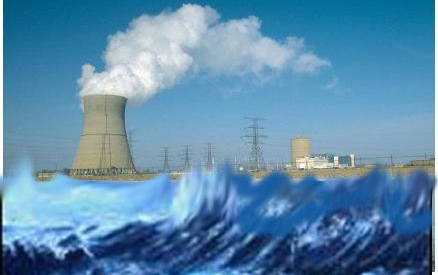
Nuclear energy’s unique selling proposition (USP) of lower-carbon electricity production sits in the context of a much larger picture — that coastal nuclear will be one of the first, and most significant, casualties to ramping climate impact, argues Paul Dorfman, of the UCL Energy Institute, University College London. Because of this, Dorfman, who authored a report on the issue released this week, posits that nuclear, far from helping with our shared climate problem, may well add to it.
As the world heats, sea levels are rising at an accelerated rate — now estimated at 3 to 4 millimeters a year — as ice stored at the poles and in glaciers melts. A recent NASA study based on 25 years of satellite data found that the Arctic is melting so rapidly that it’s now 20% thinner than a decade ago, weakening a major source of the planet’s cooling.
The polar ice caps are melting six times faster than they were in the 1990s, with the high melt rate corresponding to the worst-case scenario for global heating set out by the Intergovernmental Panel on Climate Change. This means that the planet will see a very significant rise in sea level, resulting in ramping annual coastal and inland flooding.
The melting Arctic ice cap is currently the biggest single contributor to sea-level rise, and already imperils coasts and coastal populations. In other words, a significant part of the Greenland Ice Sheet — which lost a record amount of ice in 2019 — is on the brink of a tipping point, after which accelerated melting would become inevitable.
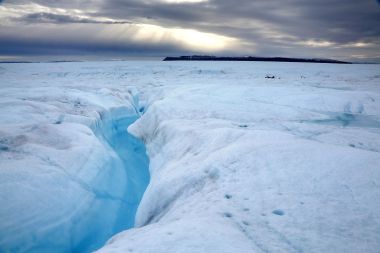
And the Antarctic (where more than half of Earth’s freshwater resources are held, representing by far the largest potential source for global sea-level rise under future warming conditions) is also threatened — with the likelihood that its long-term sea-level contribution will dramatically exceed that of other sources. Put simply, current fundamental scientific knowledge of climate sensitivity and polar ice melt concludes that sea-level rise is significantly faster than previously believed and likely to exceed up to 2.5 meters well within the 21st century.
And the Antarctic (where more than half of Earth’s freshwater resources are held, representing by far the largest potential source for global sea-level rise under future warming conditions) is also threatened — with the likelihood that its long-term sea-level contribution will dramatically exceed that of other sources. Put simply, current fundamental scientific knowledge of climate sensitivity and polar ice melt concludes that sea-level rise is significantly faster than previously believed and likely to exceed up to 2.5 meters well within the 21st century.
Unfortunately for coastal infrastructure, the effect of rising mean sea levels will be felt most profoundly during extreme storm conditions as strong winds and low atmospheric pressure bring about a temporary and localized increase in sea level known as a “storm surge.”
Recent published peer-reviewed scientific data point to much quicker and greater sea-level rise, faster, harder, more destructive storms, storm surges, and inland flooding. Yet the overwhelming majority of installed nuclear capacity began operation well before global heating was considered in design or construction.
Given ramping predictions for sea-level rise and climatic disturbance, nuclear will prove an important risk. This is because 41% of all nuclear power plants worldwide operate on the sea coast, making them vulnerable to increasing sea-level rise, storm intensity and storm surge-induced flooding. Inland nuclear installations may fare no better, as they face increasingly severe wildfire, with episodic flooding alternating with low river flow and raised water temperatures — the latter significantly impacting reactor cooling capacity and, hence, viability.
Since climate change will impact nuclear plant earlier and harder than industry, government or regulatory bodies may expect, necessary mitigation efforts imply significantly increased expense for nuclear construction, operation and decommissioning. Spent fuel management facilities will also be increasingly vulnerable to unanticipated climate-driven environmental events, involving significant risk to onsite high-, medium- and low-level nuclear waste stockpiles.

A key associated problem is that 516 million people worldwide live within a 50 mile (80 kilometer) radius of at least one operating nuclear power plant, and 20 million live within a 10 mile (16 km) radius — and so face health and safety risks from climate change-induced radiation contamination release events. Since at least 100 nuclear power stations are just a few meters above sea level and will be increasingly threatened by serious flooding caused by accelerating sea-level rise and more frequent storm surge, there’s no question that nuclear stations are, quite literally, on the front line of climate change risk — and not in a good way.
A key associated problem is that 516 million people worldwide live within a 50 mile (80 kilometer) radius of at least one operating nuclear power plant, and 20 million live within a 10 mile (16 km) radius — and so face health and safety risks from climate change-induced radiation contamination release events. Since at least 100 nuclear power stations are just a few meters above sea level and will be increasingly threatened by serious flooding caused by accelerating sea-level rise and more frequent storm surge, there’s no question that nuclear stations are, quite literally, on the front line of climate change risk — and not in a good way.
For example, the US Nuclear Regulatory Commission concludes that the vast majority of US nuclear sites have already experienced flooding hazard beyond their design basis, and a recent US Army War College report states that nuclear power facilities are at “high risk” of temporary or permanent closure due to climate threats — with 60% of US nuclear capacity vulnerable to major risks including sea-level rise, severe storms, and cooling water shortages.
Recent climate impact data suggests the need for a substantive reassessment of nuclear’s role in net zero. In other words, nuclear’s lower-carbon electricity USP sits alongside the probability that coastal nuclear plants will be one of the first, and most significant, casualties of rising seas; with inland nuclear plants increasingly subject to intermittent flooding, loss of reactor cooling, and wildfire risk.
This unfortunate reality means that evolutionary modeled predictions of climate change impact on nuclear infrastructure must be accounted for, including the potential for rapidly changing extreme events, abrupt interactions and problematic feedbacks. Further comprehensive nuclear industry and regulatory risk assessments based on “all case” scenarios must be published and regularly updated as fundamental scientific climate impact evidence evolves. Such an approach must include costings for any necessary mitigation measures and a range of contingency plans for the swift onset of climate-driven severe weather.
Increasing carbon emissions from uranium mining

Jan Willem Storm van Leeuwen 27th June 2021, The energy source of nuclear power is a mineral from the earth’s crust: uranium. An intricate system of industrial processes is required to convert the potential energy in this mineral into useful energy, and to manage the inevitable radioactive material wastes. During operation each nuclear power plant generates each year an amount of human-made radioactivty equivalent to about 1200 exploded Hiroshima atomic bombs. Without the process chain nuclear power would be impossible, and without nuclear power these processes would not exist.
The CO2 emission of these processes together form the specific CO2 emission inextricably coupled to nuclear power. The thermodynamic quality of the available uranium resources declines with time, because the highest quality resources are always mined first, for these offer the highest return on investments for the mining companies…
Declining thermodynamic quality of the resources results in an exponential rise of the specific energy and the coupled CO2 emission required to extract 1 kg of uranium from rock. At a given point the required extraction energy will equal the amount of useful energy that can be produced from 1 kg of uranium. Within the lifetime of new nuclear build uranium resources cannot be considered energy resources anymore, if the world uranium consumption remains at the present level. Meanwhile the coupled specific CO2 emission will grow as large as fossil-fuelled power.
Nuclear power is in the front line of climate change – and NOT in a good way

In the last year, climate models have run hot. As knowledge of enhanced climate sensitivity and polar ice melt-rate evolves, it has become clear that sea-level rise is significantly faster than previously thought, resulting in more frequent and destructive storm, storm surge, severe precipitation, and flooding.
With rare extreme events today becoming the norm in the future, existing risk mitigation measures become increasingly obsolete. The corollary to this analysis is that present and planned UK coastal nuclear installations will be at significant risk.
In other words, nuclear’s lower-carbon electricity USP sits in the context of the much larger picture – that UK coastal nuclear will be one of the first, and most significant, casualties to ramping climate impact. Put simply, UK nuclear is quite literally on the front-line of climate change – and not in a good way.
Nuclear Consultation Group 24th June 2021
Earth is now trapping an ‘unprecedented’ amount of heat, NASA says
Climate and Environment New research shows that the amount of heat the planet traps has roughly doubled since 2005, contributing to more rapidly warming oceans, air and land The International Space Station orbits over the Atlantic Ocean southwest of South Africa. (NASA) By Tik Root June 16, 2021 at 3:00 p.m. CDT 893 The amount […]
Earth is now trapping an ‘unprecedented’ amount of heat, NASA says — limitless life
Climate and weather hazards to France’s nuclear reactors in summer 2021
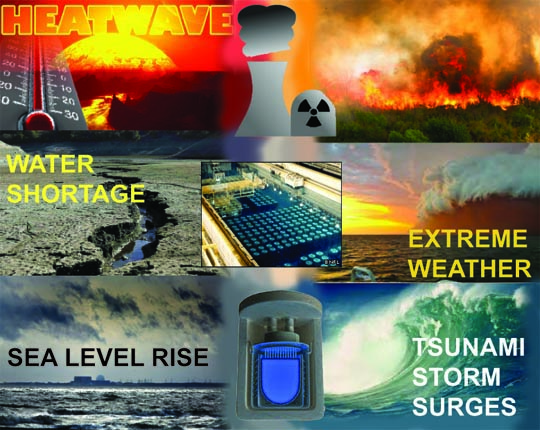
Weather conditions can have a significant impact on the production of
French nuclear power plants: over the past six years, heat waves and
droughts have caused nearly 360 shutdowns or reductions in production on
the French nuclear fleet, causing up to 6.2GW unavailability.
Since itscreation in 2019, Callendar has acquired expertise in the short-term
forecasting of these downtimes and the modeling of the long-term effects of
climate change on nuclear production. For the first time, we are proposing
an assessment of the risk of unavailability due to medium-term
meteorological causes for the summer of 2021.
Callendar (accessed) 15th June 2021
http://callendar.climint.com/fr/disponibilite-nucleaire-canicule-secheresse-ete-2021/
We don’t need nuclear power to tackle climate change .

(I had great difficulty trying to get this excellent article. Below are just a few extracts from it – C.M. )
I’ve always kept an open mind about nuclear power, but after four decades working on this issue, I’m still waiting for someone to prove me wrong. Jonathon Porritt, Greenpeace, 1 June 2021
I’ve been ‘anti-nuclear’ since 1974, and my basic position hasn’t changed much during that time. Not because I decided back then that nuclear power was an inherently ‘wicked’ technology that must be avoided at all costs. I’ve simply concluded that it’s the wrong technology at the wrong time for sorting out all the challenges that we face. I can genuinely claim that I’ve been waiting more than 45 years for someone to prove me wrong.
…….. the alternatives to nuclear power have performed better than almost anyone expected.
……. there is no longer any doubt about the viability of the renewables alternative. In 2020, Stanford University issued a collection of 56 peer-reviewed journal articles, from 18 independent research groups, supporting the idea that all the energy required for electricity, transport, heating and cooling, and all industrial purposes, can be supplied reliably with 100% (or near 100%) renewable energy. The solutions involve transitioning ASAP to 100% renewable wind – water – solar (WWS), energy efficiency and energy storage
The transition is already happening. To date, 11 countries have reached or exceeded 100% renewable electricity. And a further 12 countries are intent on reaching that threshold by 2030. In the UK, the Association for Renewable Energy and Clean Technology says we can reach 100% renewable electricity by 2032. Last year, we crossed the 40% threshold.“The only impediment to change is political. At the current 15% to 20% growth rates for solar and wind, fossil fuels will be pushed out of the electricity sector by the mid-2030s, and out of total energy supply by 2050. Poor countries will be greatest beneficiaries. They have the largest ratio of solar and wind potential to energy demand, and stand to unlock huge domestic benefits.”
Nuclear plays no part in any of these projections, whether we’re talking big reactors or small reactors, fission or fusion. The simple truth is this: we should see nuclear as another 20th century technology, with an ever-diminishing role through into the 21st century.
The work of Andy Stirling and Phil Johnston at Sussex University has shown the strength of these connections, demonstrating how the UK’s military industrial base would become unaffordable in the absence of a nuclear energy programme.
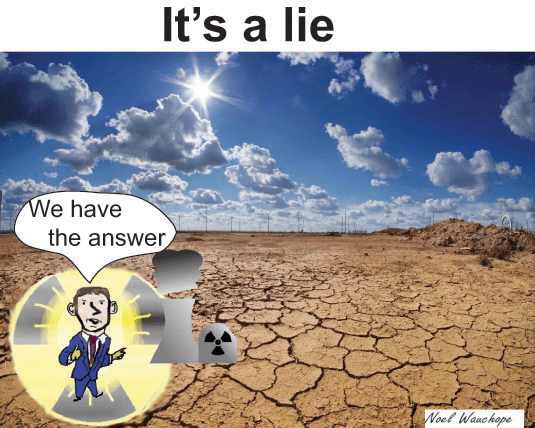
Nuclear energy – The solution to climate change?
Nuclear energy – The solution to climate change?
Science Direct, NikolausMuellnerNikolausArnoldKlausGuflerWolfgangKrompWolfgangRennebergWolfgangLiebertI Institute of Safety- and Risk Sciences, University of Natural Resources and Life Sciences, Vienna, Austria
Received 24 August 2020, Revised 7 April 2021, Accepted 4 May 2021, Available online 16 May 2021.
Abstract
With increased awareness of climate change in recent years nuclear energy has received renewed attention. Positions that attribute nuclear energy an important role in climate change mitigation emerge.
We estimate an upper bound of the CO2 saving potential of various nuclear energy growth scenarios, starting from our projection of nuclear generating capacity based on current national energy plans to scenarios that introduce nuclear energy as substantial instrument for climate protection. We then look at needed uranium resources.
The most important result of the present work is that the contribution of nuclear power to mitigate climate change is, and will be, very limited. At present nuclear power avoids annually 2–3% of total global GHG emissions. Looking at announced plans for new nuclear builds and lifetime extensions this value would decrease even further until 2040. Furthermore, a substantial expansion of nuclear power will not be possible because of technical obstacles and limited resources. Limited uranium-235 supply inhibits substantial expansion scenarios with the current nuclear technology. New nuclear technologies, making use of uranium-238, will not be available in time. Even if such expansion scenarios were possible, their climate change mitigation potential would not be sufficient as single action.
1. Introduction……………
1.2. CO2 emissions from nuclear power plants
The direct CO2 emissions from nuclear power plants during operation are low. However, looking at indirect emissions as well and considering the whole life cycle of nuclear power (uranium mining, milling, conversion, enrichment, fuel fabrication, construction and dismantling of the nuclear power plant, spent fuel processing and storage), nuclear power is certainly not emission-free…………..
6. Conclusions and policy implications
Anthropogenic climate change requires a rapid shift towards a CO2 neutral economy, if the global average temperature increase is to be kept below 2∘C, or, preferably, below 1.5∘C compared to pre-industrial levels. By 2050 the economy should be CO2 neutral, therefore climate change mitigation measures are needed in the near term to medium term future. Such a shift would strongly influence the energy (and electricity) supply system, which is currently based to a larger part on fossil fuels.
The most important result of the present work is that the contribution of nuclear power to mitigate climate change is, and will be, very limited. According to current planning nuclear power would avoid at most4 annually 2–3% of total global GHG emissions in the years 2020–2040. Moreover, nuclear power cannot be expanded to be the main source of future electricity generation. Expansion scenarios require an increase in uranium mining, which is met by two limitations: uranium production could hardly keep up during the expansion phase, and the overall amount of available uranium is limited. Such scenarios would leave new nuclear power plants without fuel during their planned life time. Fast breeder reactors promise a solution to the problem of limited uranium-235 resources, but will not be available for commercial deployment before 2040–2050. And given the considerable research effort and research times up to now, it is even doubtful if a commercially deployable fast breeder reactor will be available then. But even assuming such a scenario were feasile, even % of projected global GHG emissions from other sectors in 2040 and would still require drastic actions to reduce all emissions to zero. However, current nuclear reactors, no matter how safe they may be, always carry a residual risk for severe, catastrophic accidents (Sehgal, 2012) and large releases of radioactive materials (Seibert et al., 2012). New reactors attempt to reduce the residual risk, but even with the future technologies currently envisaged a nuclear catastrophe cannot be fully excluded. The main contribution to current nuclear electricity generation stems from reactors built 1970–1990, which were designed 1960–1980. New reactor technologies promise that the risk for severe accidents is reduced by a factor of ten. However, according to current plans, the major part of future nuclear generating capacity stems from lifetime extensions of existing plants and only a limited part will come from new builds (in 2040 ~30% new builds, ~70% current operating reactors life time extended and/or in long term operation according to ISR-projection).
Given the modest contribution of nuclear power to climate change mitigation another option is feasible, which is the phase-out of nuclear power. This finding is in agreement with substantial evidence of a comprehensive global energy study of the International Institute of Applied System Analysis (IIASA, 2012). In this study a normative approach was adopted, a scenario that by 2050 society is on a climate pathway to fulfilling the 2∘C target while still providing access to modern energy services to all humans. Starting from the goal of a sustainable, CO2 neutral economy, IIASA (2012) calculates back and investigates which energy pathways lead to such a future. One of the important results of the analysis shows that none of the evaluated boundary conditions make it necessary to use nuclear power. Even high energy demand assumptions without substantial change in the transport system allow other energy sources to substitute nuclear energy.
The current contribution of nuclear energy to climate change mitigation is small and, according to current planning, will stay at this level in the near-to mid term future. Nuclear expansion strategies are not feasible due to resource limitations. New nuclear technologies without those limitations will not be ready in the critical time frame 2020 to 2050 due to the long research, licensing, planning and construction times of the nuclear industry. Current plans would keep the nuclear capacity roughly at its current level mainly by life time extensions of existing reactors. But given the limited contribution to climate mitigation, complete phase out is a feasible option as well. Society must decide, given the drawbacks of the use of nuclear energy (risk of catastrophic accidents, proliferation, radioactive waste), whether the nuclear option should be pursued, or whether other climate change mitigation technologies should substitute the nuclear contribution……..https://www.sciencedirect.com/science/article/pii/S0301421521002330?via%3Dihub
Ice sheets melting, ocean currents, and the risk of climate tipping points
Ice sheets and ocean currents at risk of climate tipping points can
destabilise each other as the world heats up, leading to a domino effect
with severe consequences for humanity, according to a risk analysis.
Tipping points occur when global heating pushes temperatures beyond a
critical threshold, leading to accelerated and irreversible impacts. Some
large ice sheets in Antarctica are thought to already have passed their
tipping points, meaning large sea-level rises in coming centuries.
The new research examined the interactions between ice sheets in West Antarctica,
Greenland, the warm Atlantic Gulf Stream and the Amazon rainforest. The
scientists carried out 3m computer simulations and found domino effects in
a third of them, even when temperature rises were below 2C, the upper limit
of the Paris agreement.
Yhe study showed that the interactions between
these climate systems can lower the critical temperature thresholds at
which each tipping point is passed. It found that ice sheets are potential
starting points for tipping cascades, with the Atlantic currents acting as
a transmitter and eventually affecting the Amazon.
Guardian 3rd June 2021
Nuclear industry survives on its false claim that it helps the fight against climate change

April 28th, 2021, by Paul Brown, The nuclear industry’s unfounded claims let it rely on “dark arts”, ignoring much better ways to cut carbon emissions.
Nuclear industry’s unfounded claims let it survive, https://climatenewsnetwork.net/nuclear-industrys-unfounded-claims-let-it-survive/
– It is the global nuclear industry’s unfounded claims – not least that it is part of the solution to climate change because it is a low-carbon source of electricity – that allow it to survive, says a devastating demolition job by one of the world’s leading environmental experts, Jonathan Porritt.
In a report, Net Zero Without Nuclear, he says the industry is in fact hindering the fight against climate change. Its claim that new types of reactor are part of the solution is, he says, like its previous promises, over-hyped and illusionary.
Porritt, a former director of Friends of the Earth UK, who was appointed chairman of the UK government’s Sustainable Development Commission after years of campaigning on green issues, has written the report in a personal capacity, but it is endorsed by an impressive group of academics and environmental campaigners.
His analysis is timely, because the nuclear industry is currently sinking billions of dollars into supporting environmental think tanks and energy “experts” who bombard politicians and news outlets with pro-nuclear propaganda.
Porritt provides a figure of 46 front groups in 18 countries practising these “dark arts”, and says it is only this “army of lobbyists and PR specialists” that is keeping the industry alive.
First he discusses the so-called levelized cost of energy (LCOE), a measure of the average net present cost of electricity generation for a generating plant over its lifetime.
“The case against nuclear power is stronger than it has ever been before”
n 2020, the LCOE of producing one megawatt of electricity in the UK showed huge variations:
- large scale solar came out cheapest at £27 (US$38)
- onshore wind was £30
- the cheapest gas: £44
- offshore wind: £63
- coal was £83
- nuclear – a massive £121 ($168).
Porritt argues that even if you dispute some of the methods of reaching these figures, it is important to look at trends. Over time wind and solar are constantly getting cheaper, while nuclear costs on the other hand are rising – by 26% in ten years.
His second issue is the time it takes to build a nuclear station. He concludes that the pace of building them is so slow that if western countries started building new ones now, the amount of carbon dioxide produced in manufacturing the concrete and steel needed to complete them would far outweigh any contribution the stations might make by 2050 to low carbon electricity production. New build nuclear power stations would in fact make existing net zero targets harder to reach.
“It is very misleading to make out that renewables and nuclear are equivalently low-carbon – and even more misleading to describe nuclear as zero-carbon, as a regrettably significant number of politicians and industry representatives continue to do – many of them in the full knowledge that they are lying”, he writes.
He says that the British government and all the main opposition political parties in England and Wales are pro-nuclear, effectively stifling public debate, and that the government neglects the most important way of reducing carbon emissions: energy efficiency.
Also, with the UK particularly well-endowed with wind, solar and tidal resources, it would be far quicker and cheaper to reach 100% renewable energy without harbouring any new nuclear ambitions.
The report discusses as well issues the industry would rather not examine – the unresolved problem of nuclear waste, and the immense time it takes to decommission nuclear stations. This leads on to the issue of safety, not just the difficult question of potential terrorist and cyber attacks, but also the dangers of sea level rise and other effects of climate change.
Failed expectations
These include the possibility of sea water, particularly in the Middle East, becoming too warm to cool the reactors and so rendering them difficult to operate, and rivers running low during droughts, for example in France and the US, forcing the stations to close when power is most needed.
Porritt insists he has kept an open mind on nuclear power since the 1970s and still does so, but that they have never lived up to their promises. He makes the point that he does not want existing nuclear stations to close early if they are safe, since they are producing low carbon electricity. However, he is baffled by the continuing enthusiasm among politicians for nuclear power: “The case against nuclear power is stronger than it has ever been before.”
But it is not just the politicians and industry chiefs that come in for criticism. Trade unions which advocate new nuclear power because it is a heavily unionised industry when there are far more jobs in the renewable sector are “especially repugnant.”
He also rehearses the fact that without a healthy civil nuclear industry countries would struggle to afford nuclear weapons, as it is electricity consumers that provide support for the weapons programme.
The newest argument employed by nuclear enthusiasts, the idea that green hydrogen could be produced in large quantities, is one he also debunks. It would simply be too expensive and inefficient, he says, except perhaps for the steel and concrete industries.
Porritt’s report is principally directed at the UK’s nuclear programme, where he says the government very much stands alone in Europe in its “unbridled enthusiasm for new nuclear power stations.”
This is despite the fact that the nuclear case has continued to fade for 15 years. Instead, he argues, British governments should go for what the report concentrates on: Net Zero Without Nuclear. – Climate News Network
Bitcoin’s dirty little secret – its danger to the environment and the climate

Bitcoin’s dirty little secret: It’s not easy being green, The Age,
By Nick O’Malley and Chris Zappone, May 8, 2021 Depending on who you ask bitcoin, the digital currency at the heart of the crypto craze is either a currency or a commodity, a speculative bubble or a safe tool for storing and building wealth.
One thing everyone agrees on is that it has become a staggering consumer of energy and producer of climate wrecking carbon dioxide. Debate between its champions and detractors grows with its price and value, intensified by accelerating global efforts to tackle climate change.
Bitcoin supporters must now grapple with the reality that built into the cryptocurrency’s design is a seemingly endless demand for energy in the form of computing power.
……. “One of the biggest risks to the climate today is that people keep demanding more bitcoin,” says Macquarie University associate professor Sean Foley.
To understand why bitcoin requires so much energy, you have to understand how it is verified – in ever-growing banks of computer “mines”.
……… As each computer is in effect competing with the entire pool of computers engaged in proof of work, there is an incentive for miners to keep growing their banks of computers, especially when the value surges.
……. As the money has flowed, the enterprises engaged in mining are growing larger and moving into energy-rich but regulation-light environments like China, Russia and Iran in a race to confirm more calculations and “mine” more bitcoin.
In April 2020, about 65 per cent of all bitcoin mining in the world happened in China, according to figures from the Cambridge Centre for Alternative Finance, with a third of it in Xinjiang.
…………..The network of computers mining bitcoin across the world currently emits about 60mn tons of CO2, the same as the nation of Greece
………..Bank of America analysts say the rising complexity of transactions that underpin bitcoin is “the biggest flaw of the entire system” because this demands ever more power to function………. https://www.theage.com.au/environment/climate-change/bitcoin-s-dirty-little-secret-it-s-not-easy-being-green-20210506-p57pki.html
Hypocrisy, climate bullshit, and the push for hydrogen+fossil fuels.
| Guardian 6th May 2021, So it’s goodbye climate deniers, hello – and you’ll pardon me for being blunt here – climate bullshitters. The impacts of the climate emergency are now so obvious, only the truly deluded still deny them. Instead, we are at the point where everyone agrees something must be done, but many are making only vague, distant promises of ineffective action. As a result, we are currently on track for a 0.5% cut in global emissions from 2010 levels by 2030, when a 45% drop is needed to avoid climate catastrophe. So how to spot this greenwash. A good rule of thumb is whether the proposal actually cuts emissions, by a significant amount, and soon, and whether the proposer is in fact making the climate emergency worse elsewhere. Let’s start at the top, with the world’s governments, which have been setting out more targets than an archery competition. The global leader is the UK, which recently pledged a world-beating emissions cut of 78% by 2035. Targets are a necessary first step, but need action to be me and the instant, universal response: “Show me the policies!” The problem is some actual UK policies are pushing emissions up, not down: massive road building, a scrapped home energy efficiency programme and slashed electric car incentives, new oil and gas exploration, a failure to halt airport expansions and block a new coalmine (instead, the government belatedly ordered a public inquiry). But it is not just Boris Johnson’s government that says one thing while doing another. All are talking tough on climate, but China is building one large coal-fired power station a week, Japan remains one of the biggest Companies are, if anything, even better bullshitters than governments, and the fossil fuel giants are masters. Many are still exploring for new reserves, when we already have more than can ever be safely burned. Chevron touts capturing CO2 emissions and storing them underground as a solution – one that of course enables the continued burning of its products. But its plans for carbon capture and storage cover less than 1% of its 2019 carbon emissions. ExxonMobil wants public money to help with its carbon capture project to store 50m tonnes of CO2 by 2030. That’s just 8% of the 2020 emissions its products resulted in. Another technological fix promoted is hydrogen, , in theory a clean fuel when generated using renewable energy. But its most enthusiastic backers are incumbent fossil fuel companies. Members of the global Hydrogen Council include Saudi Aramco, BP and Total, while the UK parliament’s hydrogen group is funded by Shell and gas network and boiler-making firms. Why? Because hydrogen is a way for oil companies to move towards green energy without giving up fossil fuels. Pierre-Etienne Franc, co-secretary of the Hydrogen Council until 2020, explained: “It’s a way to avoid having stranded assets from the current fossil fuel-based system.” financiers of overseas coal plants and Norway is developing giant new oil and gas fields. https://www.theguardian.com/commentisfree/2021/may/06/difference-real-climate-policy-greenwashing-emissions |
1 This Month



26 September – International Day for the Total Elimination of Nuclear Weapons


PLEASE OPPOSE HR 8255 AND S.3639 – bills would accelerate satellite deployment, with no environmental review or safeguards – https://ncstd5li.quorum.us/campaign/169331/
To see nuclear-related stories in greater depth and intensity – go to https://nuclearinformation.wordpress.com
-
Archives
- September 2026 (245)
- August 2026 (330)
- July 2026 (355)
- June 2026 (287)
- May 2026 (306)
- April 2026 (356)
- March 2026 (251)
- February 2026 (267)
- January 2026 (308)
- December 2025 (358)
- November 2025 (359)
- October 2025 (375)
-
Categories
- 1
- 1 NUCLEAR ISSUES
- business and costs
- climate change
- culture and arts
- ENERGY
- environment
- health
- history
- indigenous issues
- Legal
- marketing of nuclear
- media
- opposition to nuclear
- PERSONAL STORIES
- politics
- politics international
- Religion and ethics
- safety
- secrets,lies and civil liberties
- spinbuster
- technology
- Uranium
- wastes
- weapons and war
- Women
- 2 WORLD
- ACTION
- AFRICA
- Atrocities
- AUSTRALIA
- Christina's notes
- Christina's themes
- culture and arts
- Events
- Fuk 2022
- Fuk 2023
- Fukushima 2017
- Fukushima 2018
- fukushima 2019
- Fukushima 2020
- Fukushima 2021
- general
- global warming
- Humour (God we need it)
- Nuclear
- RARE EARTHS
- Reference
- resources – print
- Resources -audiovicual
- Weekly Newsletter
- World
- World Nuclear
- YouTube
-
RSS
Entries RSS
Comments RSS
 nuclear-news