Climate change, extreme weather, is taking its toll on the nuclear industry

Nuclear power’s reliability is dropping as extreme weather increases
A comprehensive analysis shows that warmer temperatures aren’t the only threat. Ars Technica, K. E. D. COAN – 7/24/2021,With extreme weather causing power failures in California and Texas, it’s increasingly clear that the existing power infrastructure isn’t designed for these new conditions. Past research has shown that nuclear power plants are no exception, with rising temperatures creating cooling problems for them. Now, a comprehensive analysis looking at a broader range of climate events shows that it’s not just hot weather that puts these plants at risk—it’s the full range of climate disturbances.
Heat has been one of the most direct threats, as higher temperatures mean that the natural cooling sources (rivers, oceans, lakes) are becoming less efficient heat sinks. However, this new analysis shows that hurricanes and typhoons have become the leading causes of nuclear outages, at least in North America and South and East Asia. Precautionary shutdowns for storms are routine, and so this finding is perhaps not so surprising. But other factors—like the clogging of cooling intake pipes by unusually abundant jellyfish populations—are a bit less obvious.
Overall, this latest analysis calculates that the frequency of climate-related nuclear plant outages is almost eight times higher than it was in the 1990s. The analysis also estimates that the global nuclear fleet will lose up to 1.4 percent—about 36 TWh—of its energy production in the next 40 years and up to 2.4 percent, or 61 TWh, by 2081-2100.
Heat, storms, drought
The author analyzed publicly available databases from the International Atomic Energy Agency to identify all climate-linked shutdowns (partial and complete) of the world’s 408 operational reactors. Unplanned outages are generally very well documented, and available data made it possible to calculate trends in the frequency of outages that were linked to environmental causes over the past 30 years. The author also used more detailed data from the last decade (2010–2019) to provide one of the first analyses of which types of climate events have had the most impact on nuclear power.While the paper doesn’t directly link the reported events to climate change, the findings do show an overall increase in the number of outages due to a range of climate events.
The two main categories of climate disruptions broke down into thermal disruptions (heat, drought, and wildfire) and storms (including hurricanes,
typhoons, lightning, and flooding). In the case of heat and drought, the main problem is the lack of cool-enough water—or in the case of drought, enough water at all—to cool the reactor. However, there were also a number of outages due to ecological responses to warmer weather; for example, larger than usual jellyfish populations have blocked the intake pipes on some reactors.
Storms and wildfires, on the other hand, caused a range of problems, including structural damage, precautionary preemptive shutdowns, reduced operations, and employee evacuations. In the timeframe of 2010 to 2019, the leading causes of outages were hurricanes and typhoons in most parts of the world, although heat was still the leading factor in Western Europe (France in particular). While these represented the most frequent causes, the analysis also showed that droughts were the source of the longest disruptions and thus the largest power losses.
The author calculated that the average frequency of climate-linked outages went from 0.2 outages per year in the 1990s to 1.5 outages in the timeframe of 2010 to 2019. A retrospective analysis further showed that, for every 1° C rise in temperature (above the average temperature between 1951 and 1980), the energy output of the global fleet fell about 0.5 percent.
Retrofitting for extreme weather
This analysis also shows that climate-associated outages have become the leading cause of disruptions to nuclear power production—other causes of outages have only increased 50 percent in the same timeframe. Projecting into the future, the author calculates that, if no mitigation measures are put into place, the disruptions will continue to increase through the rest of this century.
“All energy technologies, including renewables, will be significantly affected by climate change,” writes Professor Jacapo Buongiorno, who was not involved in the study, in an email to Ars. Buongiorno is the Tepco Professor of Nuclear Science and Engineering at the Massachusetts Institute for Technology (MIT), and he co-chaired the MIT study on The Future of Nuclear Energy in a Carbon Constrained World. “The results are not surprising—nuclear plants can experience unplanned outages due to severe events (e.g., hurricanes, tornadoes) or heat waves, the frequency of which is increasing.”………….. https://arstechnica.com/science/2021/07/climate-events-are-the-leading-cause-of-nuclear-power-outages/
The world’s climate catastrophe – there is little time left to act

Reminders that our planet is wilting under the impact of human-driven climate change have been hard to avoid this month. Catastrophic floods have killed 160 in Germany while more than 50 died after massive inundations swept through the central Chinese province of Henan when a year’s worth of rain fell in three days last week.
At the same time, forest fires have ripped through one of the world’s coldest places, Siberia, after unusually hot, dry weather gripped the region. Canada and the US have also been afflicted by conflagrations that have destroyed communities and vast areas of woodland. One blaze in the US state of Oregon has spread over an
area 25 times the size of Manhattan and has raged out of control for weeks.
Global warming, triggered by rising levels of greenhouse gases, has beenimplicated in every case. The problem, say scientists, is that to halt worsening weather patterns by 2050, rises in global temperatures will have to be limited to around 1.5C from pre-industrial days.
However, the world has already heated up by 1.2C since then, thanks to the greenhouse gases we
have put into the atmosphere, and the prospects of limiting further rises to a fraction of a degree over the next 30 years look remote. In fact, estimates based on current pledges by nations to cut emissions suggest
temperatures are likely to rise by more than 2C above preindustrial levels by the middle of the century.
In such a future, more than a quarter of the world’s population would be likely to experience extreme drought for at least one month a year; rainforests would face eradication; melting ice sheets would result in dangerous sea level rises and trigger major changes in the behaviour of ocean currents such as the Gulf Stream.
In addition, loss of reflective ice from the poles would cause oceans to absorb more solar radiation, while melting permafrost in Siberia and other regions would release plumes of methane, another greenhouse gas. Inevitably, temperatures would soar even further.
This terrifying prospect has come about because politicians and business leaders have failed, for several
decades, to appreciate the risks involved in massively interfering with the make-up of our atmosphere and to instigate measures to limit the damage. As a result, the world faces a climate catastrophe with little time left to act to counter the threat.
Observer 25th July 2021
https://www.theguardian.com/commentisfree/2021/jul/25/observer-view-on-climate-change
Climate change report: Jeff Bezos & the new wild west show

Bezos does not care that each and every one of his joy-ride space launches punches a larger hole in the Earth’s ozone layer exacerbating our climate crisis. This is all about him, his money, his fame, and his super-sized ego.
Climate change report: Jeff Bezos & the new wild west show, https://www.peoplesworld.org/article/climate-change-report-jeff-bezos-the-new-wild-west-show/ July 23, 2021 BY BRUCE GAGNON
Jeff Bezos (the richest man in the world) successfully took his new wild west rodeo show to the edge of space and once returning to Mother Earth had the audacity to lecture us earthlings on a few things. Yahoo News reported Bezos saying:
“We need to take all heavy industry, all polluting industry, and move it into space. And keep Earth as this beautiful gem of a planet that it is.”
In this same interview, Bezos discussed his plans to expand Blue Origin’s space tourism business over the coming decades, a venture that has the potential to pump massive amounts of carbon and other chemicals into the atmosphere. Unlike ground-based emitters like cars or coal-powered plants, rocket emissions are expelled directly into the upper atmosphere, where they linger for years.
Dr. Stuart Parkinson, Executive Director of Scientists for Global Responsibility, writes:….the fuel combination used by [Bezos is] a higher carbon fuel. Research by the University of Colorado indicates that this can damage the stratospheric ozone layer – not only leading to higher levels of damaging ultra-violet radiation reaching the Earth’s surface, but also causing a global heating effect likely to be considerably greater than that from the carbon emissions alone. And the aim of these journeys? A few minutes of ‘zero-gravity’ experience and a nice view. It is hard to see this as anything more than environmental vandalism for the super-rich. As the CEO of Amazon, for years Bezos fought against company efforts to unionize, even amid credible reports of inhumane, exploitative conditions for Amazon delivery drivers and warehouse workers. He said, “I also want to thank every Amazon employee and every Amazon customer because you guys paid for all of this.”
The truth is that virtually all space technology ‘research and development’ since the dawn of the space age was done by NASA and the military industrial complex. That means the taxpayers paid for it. And now when it is possible to make gobs of money from space tourism, colonization and mining, the capitalist dominated US government is eager to privatize space operations. They don’t care what the rest of the world thinks. America, after all, is the ‘exceptional’ nation.
It was during the Obama administration that a new law called Commercial Space Launch Competitiveness Act, sometimes referred to as the Spurring Private Aerospace Competitiveness and Entrepreneurship (SPACE) Act of 2015, was signed by the president.
The UK Independent reported in 2015:Much of the ownership of space is regulated by the “Outer Space Treaty”, a document that was signed by the US and Russia among other countries in the 1960s. As well as saying that the moon and other celestial objects are part of the “common heritage of mankind”, it says that exploration must be peaceful and bans countries from putting weapons on the moon and other celestial bodies. The US government has now thrown out that understanding so that it can get rid of “unnecessary regulations” and make it easier for private American companies to explore space resources commercially. While people won’t actually be able to claim the rock or “celestial body” itself, they will be able to keep everything that they mine out of it.
Planetary Resources, an American company that intends to make money by mining asteroids, said that the new law was the “single greatest recognition of property rights in history”, and that it “establishes the same supportive framework that created the great economies of history, and will encourage the sustained development of space”. So Bezos was wearing the cowboy hat as a message to the world that a new ‘gold rush’ has begun in space and that it will be controlled by rich fat-cat psychopaths like him. They intend to circumvent United Nations space law like the Outer Space and Moon Treaties that state the ‘heavens are the province of all humankind’
Bezos does not care that each and every one of his joy-ride space launches punches a larger hole in the Earth’s ozone layer exacerbating our climate crisis. This is all about him, his money, his fame, and his super-sized ego. If we hope to survive on planet Earth, and give life to the future generations, then the global public must demand that space stooges like Jeff Bezos, Elon Musk, Richard Branson, and the rest of their ilk, are restrained and prevented from playing god.~ Bruce Gagnon Coordinates the Global Network Against Weapons & Nuclear Power in Space. Check out our short space issues videos on our web site.
Despite the rain, France’s nuclear reactors are still threatened by global heating.

Rhône production still threatened despite the rains. A heatwave and drought could still cause shutdowns of nuclear reactors along the Rhone by the fall, despite unprecedented rainfall in Western Europe in recent weeks which has replenished the flow of the river, said analysts Wednesday.
Montel 21st July 2021
https://www.montelnews.com/fr/news/1240314/-la-production-du-rhne-toujours-menace-malgr-les-pluies
Penis envy taken to extremes? Space billionaires and carbon emissions

Space tourism: environmental vandalism for the super
-rich https://www.sgr.org.uk/resources/space-tourism-environmental-vandalism-super-rich
As billionaires Jeff Bezos and Richard Branson launch the first flights of their space tourism corporations, Dr Stuart Parkinson, SGR, takes a look at the climate impacts.
Responsible Science blog, 20 July 2021 The past few weeks have seen some frightening impacts of climate change – from record-breaking temperatures and major wildfires in western Canada and the USA to unprecedented floods in Germany and Belgium. The hottest temperature reliably recorded on the Earth’s surface – 54.4C – was logged in Death Valley in California on 9 July. [1] Scientists said the heatwave in Canada and the USA at the end of June was “virtually impossible” without human-induced climate change. [2] One thing that is especially striking is that these events are now happening in some of the wealthiest and weather-resilient nations of the world – but even that didn’t stop major death tolls.
The huge threat of global climate disruption is leading to ever more urgent calls for society to rapidly reduce its carbon emissions. It is also clear that technological change alone will not be enough to tackle the problem. A recent report by the Climate Change Committee – the UK government’s main advisory body on the issue – found that 62% of the necessary measures involve societal and behaviour change. [3] Avoiding air travel is one of the most effective changes individuals can make to cut this pollution. For example, the carbon footprint of a return flight from London to Hong Kong – seated in economy-class – is about 3.5 tonnes of carbon dioxide equivalent (tCO2e) [4] – similar to a UK citizen’s average car use for over 10 months. [5] Research by the Institute for Global Environmental Strategies indicates that a globally-sustainable lifestyle carbon footprint in 2020 was 3.9 tCO2e [6] – which gives a clear indication of just how much our society needs to reduce its impacts now (and this figure falls rapidly to 2.5t CO2e by 2030 and then much lower still for 2040 and 2050).
Against this backdrop, we have billionaires travelling in the inaugural flights of their space tourism corporations. On 11 July, Richard Branson flew in Virgin Galactic’s SpaceShipTwo craft, while on 20 July, Jeff Bezos travelled in Blue Origin’s New Shepard. These activities take the climate impacts of flying to considerably more damaging level.
Let’s look at the New Shepard space-craft. Prof Mike Berners-Lee of Lancaster University – a leading expert in carbon footprint analysis – has estimated that a single flight results in emissions of at least 330 tCO2e. [7] With four passengers, this means each one is responsible for over 82 tCO2e – over 20 times the sustainable level for a whole year! And note, this is a conservative estimate. It does not include the additional heating effects of emissions at high altitude, the carbon footprint of developing and manufacturing the space-craft, or the emissions of running the Blue Origin corporation. Furthermore, the fuel combination used by the latest generation of New Shepard craft now includes liquid hydrogen [8] – a higher carbon fuel than those used in Prof Berners-Lee’s calculations.
What about SpaceShipTwo? Although this craft emits markedly less direct carbon emissions per flight than New Shepard, as SGR discussed back in 2016, [9] it uses a fuel combination which emits significant levels of black carbon into the upper atmosphere. Research by the University of Colorado indicates that this can damage the stratospheric ozone layer – not only leading to higher levels of damaging ultra-violet radiation reaching the Earth’s surface, but also causing a global heating effect likely to be considerably greater than that from the carbon emissions alone.
And the aim of these journeys? A few minutes of ‘zero-gravity’ experience and a nice view. It is hard to see this as anything more than environmental vandalism for the super-rich.
Virgin Galactic claims to want to launch a “new age of clean and sustainable access to space” [10]– but they and the others in the space tourism industry clearly fail to understand the level of their own climate impacts, the rapidly increasing severity of the climate emergency, or the scale of action needed to cut carbon emissions to a sustainable level. If governments are serious about trying to prevent ‘dangerous’ climate change, then there is an important step to take immediately: ban space tourism.
Dr Stuart Parkinson is Executive Director of Scientists for Global Responsibility. He has written on climate science and policy for 30 years, and holds a PhD in climate science.
References………
Huge carbon emissions of space tourism
Space tourism: rockets emit 100 times more CO₂ per passenger than flights – imagine a whole industry https://theconversation.com/space-tourism-rockets-emit-100-times-more-co-per-passenger-than-flights-imagine-a-whole-industry-164601
Eloise Marais Associate Professor in Physical Geography, UCLJuly 19, 2021
The commercial race to get tourists to space is heating up between Virgin Group founder Sir Richard Branson and former Amazon CEO Jeff Bezos. On Sunday 11 July, Branson ascended 80 km to reach the edge of space in his piloted Virgin Galactic VSS Unity spaceplane. Bezos’ autonomous Blue Origin rocket is due to launch on July 20, coinciding with the anniversary of the Apollo 11 Moon landing.
Though Bezos loses to Branson in time, he is set to reach higher altitudes (about 120 km). The launch will demonstrate his offering to very wealthy tourists: the opportunity to truly reach outer space. Both tour packages will provide passengers with a brief ten-minute frolic in zero gravity and glimpses of Earth from space. Not to be outdone, Elon Musk’s SpaceX will provide four to five days of orbital travel with its Crew Dragon capsule later in 2021.
What are the environmental consequences of a space tourism industry likely to be? Bezos boasts his Blue Origin rockets are greener than Branson’s VSS Unity. The Blue Engine 3 (BE-3) will launch Bezos, his brother and two guests into space using liquid hydrogen and liquid oxygen propellants. VSS Unity used a hybrid propellant comprised of a solid carbon-based fuel, hydroxyl-terminated polybutadiene (HTPB), and a liquid oxidant, nitrous oxide (laughing gas). The SpaceX Falcon series of reusable rockets will propel the Crew Dragon into orbit using liquid kerosene and liquid oxygen.
Burning these propellants provides the energy needed to launch rockets into space while also generating greenhouse gases and air pollutants. Large quantities of water vapour are produced by burning the BE-3 propellant, while combustion of both the VSS Unity and Falcon fuels produces CO₂, soot and some water vapour. The nitrogen-based oxidant used by VSS Unity also generates nitrogen oxides, compounds that contribute to air pollution closer to Earth.
Roughly two-thirds of the propellant exhaust is released into the stratosphere (12 km-50 km) and mesosphere (50 km-85 km), where it can persist for at least two to three years. The very high temperatures during launch and re-entry (when the protective heat shields of the returning crafts burn up) also convert stable nitrogen in the air into reactive nitrogen oxides.
These gases and particles have many negative effects on the atmosphere. In the stratosphere, nitrogen oxides and chemicals formed from the breakdown of water vapour convert ozone into oxygen, depleting the ozone layer which guards life on Earth against harmful UV radiation. Water vapour also produces stratospheric clouds that provide a surface for this reaction to occur at a faster pace than it otherwise would.
Space tourism and climate change
Exhaust emissions of CO₂ and soot trap heat in the atmosphere, contributing to global warming. Cooling of the atmosphere can also occur, as clouds formed from the emitted water vapour reflect incoming sunlight back to space. A depleted ozone layer would also absorb less incoming sunlight, and so heat the stratosphere less.
Figuring out the overall effect of rocket launches on the atmosphere will require detailed modelling, in order to account for these complex processes and the persistence of these pollutants in the upper atmosphere. Equally important is a clear understanding of how the space tourism industry will develop.
Virgin Galactic anticipates it will offer 400 spaceflights each year to the privileged few who can afford them. Blue Origin and SpaceX have yet to announce their plans. But globally, rocket launches wouldn’t need to increase by much from the current 100 or so performed each year to induce harmful effects that are competitive with other sources, like ozone-depleting chlorofluorocarbons (CFCs), and CO₂ from aircraft.
During launch, rockets can emit between four and ten times more nitrogen oxides than Drax, the largest thermal power plant in the UK, over the same period. CO₂ emissions for the four or so tourists on a space flight will be between 50 and 100 times more than the one to three tonnes per passenger on a long-haul flight.
In order for international regulators to keep up with this nascent industry and control its pollution properly, scientists need a better understanding of the effect these billionaire astronauts will have on our planet’s atmosphere.
US and Allies’ military machine – out of Afghanistan (where it’s needed) and into the Pacific – against its new enemy – The Great Barrier Reef

War games on despite pandemic, threat to Great Barrier Reef https://www.greenleft.org.au/content/war-games-despite-pandemic-threat-great-barrier-reef, Kerry SmithJuly 16, 2021 Lurking off the coast of China’s eastern seaboard now are three United States aircraft carrier battle groups (each with about 30 support vessels).
They will be joined by a British aircraft carrier group and Australian and Canadian warships as part of biennial military exercises, which start on July 18 and last until the end of the month.
Talisman Sabre 2021 (TS21) will involve a US expeditionary strike group from the USS America, the amphibious assault ship based at Sasebo Naval Base in Japan, and 17,000 Australian, US and foreign troops in combined land, sea and air war exercises.
According to Stars and Stripes, for the first time, there will be live-fire training: the US Army will fire a Patriot missile defense system from Shoalwater Bay in Queensland at a pair of drone targets on July 16.
This is within the Great Barrier Reef Marine Park and other environmentally and culturally significant areas.
The war games will also take place in Darwin in the Northern Territory and Evans Head, New South Wales.
All are thousands of kilometres away from their home base, and provocatively close to the new declared enemy — China.
Forces from Canada, Japan, New Zealand and the Republic of Korea will take part and Australia-based personnel from India, Indonesia, France and Germany will observe.
Meanwhile, the ABC’s “defence correspondent” hyperventilated on July 14 that a solitary Chinese military ship, outside Australian territorial waters, poses a threat to national security.
The Independent and Peaceful Australia Network (IPAN) is concerned about both the war games and its impact on environmentally and culturally significant sites.
“TS21 will involve amphibious assaults, movement of heavy vehicles, use of live ammunition as well as the use of U.S. nuclear-powered and nuclear-weapon capable vessels,” IPAN spokesperson Annette Brownlie said.
“These activities are incompatible with the protection of the environment and, in particular, the Great Barrier Reef.
“During Talisman Sabre 2013, the US jettisoned four unarmed bombs on the Great Barrier Reef when they had difficulty dropping them on their intended target, Townshend Island,” Brownlie said.
The objective of Talisman Sabre is to further integrate the Australian military with the US — now ranked among the world’s worst polluters.
IPAN said the ADF did not engage in a Public Environment Report process for TS21 and has yet to release an environmental assessment for the areas in which TS21 will take place.
However, the Department of Defence did produce an environmental awareness video for visiting troops that promotes the military use of the Great Barrier Reef. The video reminds troops to consider the reef and not to litter.
“Talisman Sabre is a threat to the reef and to the environment. Putting out a video is a completely inadequate response,” Brownlie said.
This comes as federal environment minister Sussan Ley is lobbying to keep the Great Barrier Reef off the United Nations Educational, Scientific and Cultural Organization World Heritage Committee’s “in danger” list.
Despite a global pandemic, about 1800 foreign military personnel have arrived in Darwin to participate.
Expert opinion: why nuclear energy should not be included as sustainable in Europe’s green taxonomy financing

BASE comments on the JRC report https://www.base.bund.de/SharedDocs/Stellungnahmen/BASE/DE/2021/0714_base-fachstellungnahme-jrc-bericht.html Federal Office for the Safety of Nuclear Waste Management (Bundesamt für die Sicherheit der nuklearen Entsorgung) 14 july 21
Expert opinion on the report of the Joint Research Center “Technical assessment of nuclear energy with respect to the‛ do no significant harm ‛criteria of Regulation (EU) 2020/852‛ Taxonomy Regulation ‛”
There are numerous reasons why the use of nuclear power is not ecologically sustainable and why this form of energy generation is therefore not part of the taxonomy regulation of the European Union ( EU ) – this is the conclusion of the Federal Office for the Safety of Nuclear Waste Management ( BASE ).
The basis for this is a specialist opinion for the Federal Environment Ministry, in which the Federal Office for Radiation Protection was also involved.
BASE statement is a reaction to the report of the Joint Research Center.
The reason for this statement is the report of the so-called Joint Research Center, an EU directorate-general whose origin was nuclear research. This came to a positive assessment of nuclear power in March 2021:
According to this, the catalog of criteria of the so-called “do no significant harm” principle is met – an assessment that evaluates forms of energy production according to their environmental balance.
If the EU Commission followed this evaluation by the JRC and rated nuclear energy as an ecologically sustainable form of economic activity, it would also appear attractive as a corresponding form of financial investment and would be equated, for example, with renewable energies.
BASE statement is a reaction to the report of the Joint Research Center
The reason for this statement is the report of the so-called Joint Research Center, an EU directorate-general whose origin was nuclear research. This came to a positive assessment of nuclear power in March 2021:
According to this, the catalog of criteria of the so-called “do no significant harm” principle is met – an assessment that evaluates forms of energy production according to their environmental balance.
If the EU Commission followed this evaluation by the JRC and rated nuclear energy as an ecologically sustainable form of economic activity, it would also appear attractive as a corresponding form of financial investment and would be equated, for example, with renewable energies.
Serious nuclear accidents were not adequately assessed in the JRC report
Background: The evaluation of nuclear power is controversial at the European level. A group of technical experts came to the conclusion in 2020 that a decision in favor of the use of nuclear power as part of the taxonomy should not be made. Thereupon the Joint Research Center of the EU was commissioned to evaluate the atomic energy.
In its report, BASE now points out the following points that should be assessed negatively with regard to nuclear power:
- failure to take into account the risk of major accidents,
- unresolved repository – or disposal problems and
- an insufficient consideration of subsequent loads for future generations.
As a result, the report comes to the following assessment:
“The JRC report only incompletely considers the consequences and risks of the use of nuclear energy for people and the environment as well as for subsequent generations or omits them in its assessment. Insofar as it deals with them, the principles of scientific work are sometimes not correctly taken into account. The JRC report thus provides an incomplete contribution with which the sustainability of the use of nuclear energy cannot be comprehensively assessed. “
Expert opinion (German)
Expert Response (English)
UK government plan – residents on the hook in advance for costly Sizewell nuclear plan that will be useless to combat climate change
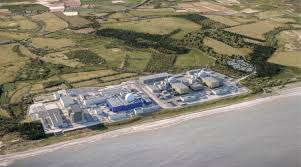
A remote area on England’s east coast, halfway between the seaside towns of Felixstowe and Lowestoft, is set to become the centre of debate about Britain’s future energy security. UK ministers are aiming to bring
forward legislation in the autumn to support the financing of a 3.2 gigawatt nuclear power station in Sizewell, East Suffolk….
Ministers have been in formal negotiations with EDF about how to fund the proposed £20bn Sizewell C
plant since December, and the government and the French state-backed utility have had discussions about replacing Britain’s ageing nuclear reactors for years.
However, the question of whether Britain should build more large plants took on added urgency last month, when EDF closed the 1.1GW Dungeness B station in Kent seven years early. It also raised the prospect that other reactors may also be decommissioned ahead of schedule, owing to problems with their graphite cores……….

“If there was [a capacity issue], what good is Sizewell going to do given it won’t come on line until 2034
according to EDF?” asks Stephen Thomas, emeritus professor of energy policy at the University of Greenwich. Nuclear sceptics have long argued that money would be better spent on clean energy technologies, such as
offshore wind, and reducing electricity demand through measures including insulation.
Under a RAB model, consumers would pay towards a new plant through their energy bills long before any electricity is generated. Opponents of the model warn that consumers would also be on the hook for
cost overruns.
FT 14th July 2021
https://www.ft.com/content/3f2bfc76-5b74-437c-8b18-67f9cde991af
Reaching net zero without nuclear

Our latest Talking Points makes the case
Not only is it possible, it’s essential https://beyondnuclearinternational.org/2021/07/11/reaching-net-zero-without-nuclear/

The fourth in our series of Talking Points draws on the new report by Jonathon Porritt, New Zero Without Nuclear: The Case Against Nuclear Power. Given the far-off illusory promise of new reactor designs; the enormous costs; the limited capacity for carbon reductions compared to renewables; the unsolved waste problem; and the inflexibility and outdatedness of the “always on” baseload model, nuclear power is in the way of — rather than a contributor to — climate mitigation. You can download the Net Zero Without Nuclear Talking Points here. This is the fourth in our series. You can find all four here.
By Jonathon Porritt 10 July 21
I first took an interest in Greenpeace back in 1973, before I joined Friends of the Earth, CND and the Green Party (then the Ecology Party) a year later. I’d followed the campaigns against the testing of nuclear weapons in Amchitka (one of the Aleutian islands in Alaska), and then in the French nuclear testing area of Moruroa in the Pacific. I was 23 at the time, with zero in-depth knowledge, but it just seemed wrong, on so many different fronts.
That early history of Greenpeace seems much less relevant now, given all its achievements over the last 50 years in so many other areas of critical environmental concern. But it still matters. Greenpeace has been an ‘anti-nuclear organisation’ through all that time, sometimes fiercely engaged in front-line battles, sometimes maintaining more of a watching brief, and nuclear power plays no part in Greenpeace’s modelling of a rapid transition to a Net Zero carbon world. It’s been very supportive of my new report, ‘Net Zero Without Nuclear’.
I wrote this report partly because the nuclear industry itself is in full-on propaganda mode, and partly because that small caucus of pro-nuclear greens (that’s existed for as long as I can remember) seems to be winning new supporters.
And I can see why. The Net Zero journey we’re now starting out on for real (at long last!) is by far the most daunting challenge that humankind has ever faced. Writing in the Los Angeles Review of Books in June 2019, author and Army veteran Roy Scranton put it like this:
‘Climate change is bigger than the New Deal, bigger than the Marshall Plan, bigger than World War II, bigger than racism, sexism, inequality, slavery, the Holocaust, the end of nature, the Sixth Extinction, famine, war, and plague all put together, because the chaos it’s bringing is going to supercharge every other problem. Successfully meeting this crisis would require an abrupt, traumatic revolution in global human society; failing to meet it will be even worse.’
Not many people see it like that – as yet. But more and more will, as signals of that kind of chaos start to multiply. And we already know that the kind of radical decarbonisation on which our future depends is going to be incredibly hard. So why should we reject a potentially powerful contribution to that decarbonisation challenge?
I became Director of Friends of the Earth in 1984. The same year that my first book, ‘Seeing Green’, was published. Looking back on what I said then, I was indeed fiercely critical of nuclear power, but have to admit that my advocacy of renewables (as the principal alternative) was somewhat muted. Apart from a few visionaries in the early 1980s (including Friends of the Earth’s Amory Lovins and Walt Patterson), no-one really thought that renewables would be capable of substituting for the use of all fossil fuels and all nuclear at any point in the near future. And anyone expressing such a view in official circles was rapidly put back in their box.
Given the scale of the challenge we face, we need to have very strong grounds for keeping nuclear out of today’s low/zero-carbon portfolio. Not least as nuclear power, historically, has already made a huge contribution to low-carbon generation. Since the early 1960s, nuclear power has provided the equivalent of 18,000 reactor years of electricity generation. We’d be in a much worse place today if all that electricity had been generated from burning coal or gas.
Happily, there is no longer any doubt about the viability of that alternative. In 2020, Stanford University issued a collection of 56 peer-reviewed journal articles, from 18 independent research groups, supporting the idea that all the energy required for electricity, transport, heating and cooling, and all industrial purposes, can be supplied reliably with 100% (or near 100%) renewable energy. The solutions involve transitioning ASAP to 100% renewable wind – water – solar (WWS), efficiency and storage.
The transition is already happening. To date, 11 countries have reached or exceeded 100% renewable electricity. And a further 12 countries are intent on reaching that threshold by 2030. In the UK, the Association for Renewable Energy and Clean Technology says we can reach 100% renewable electricity by 2032. Last year, we crossed the 40% threshold.
There is of course a world of difference between electricity and total energy consumption. But at the end of April, Carbon Tracker brought out its latest analysis of the potential for renewables, convincingly explaining why solar and wind alone could meet total world energy demand 100 times over by 2050, and that fears about the huge amount of land this would require are unfounded. The land required for solar panels to provide all global energy would be 450,000 km2, just 0.3% of global land area – significantly less than the current land footprint of fossil fuel infrastructures. As the Report says:
The technical and economic barriers have been crossed and the only impediment to change is political. Sector by sector and country by country the fossil fuel incumbency is being swamped by the rapidly rising tide of new energy technologies. Even countries where the technical potential is below 10 times energy demand. . . have devised innovative approaches to energy generation.
The fossil fuel industry cannot compete with the technology learning curves of renewables, so demand will inevitably fall as wind and solar continue to grow. At the current 15-20% growth rates of solar and wind, fossil fuels will be pushed out of the electricity sector by the mid-2030s and out of total energy supply by 2050.‘
The unlocking of energy reserves 100 times our current demand creates new possibilities for cheaper energy and more local jobs in a more equitable world with far less environmental stress.‘
Poor countries are the greatest beneficiaries. They have the largest ratio of solar and wind potential to energy demand and stand to unlock huge domestic benefits.’
Nuclear plays no part in any of these projections, whether we’re talking big reactors or small reactors, fission or fusion. The simple truth is this: we should see nuclear as another 20th century technology, with an ever-diminishing role through into the 21st century, incapable of overcoming its inherent problems of cost, construction delay, nuclear waste, decommissioning, security (both physical and cyber), let alone the small but still highly material risk of catastrophic accidents like Chernobyl and Fukushima. My ‘Net Zero Without Nuclear’ report goes into all these inherent problems in some detail.
So why are the UK’s politicians (in all three major parties) still in thrall to this superannuated technology? It’s here we have to go back to Amchitka! Some environmentalists may still be taken aback to discover that the Government’s principal case for nuclear power in the UK today is driven by the need to maintain the UK’s nuclear weapons capability – to ensure a ‘talent pool’ of nuclear engineers and to support a supply chain of engineering companies capable of providing component parts for the nuclear industry, both civilian and military. The indefatigable work of Andy Stirling and Phil Johnston at Sussex University’s Science Policy Research Unit has established the depth and intensity of these interdependencies, demonstrating how the UK’s military industrial base would become unaffordable in the absence of a nuclear energy programme.
What that means is that today’s pro-nuclear greens are throwing in their lot not just with a bottomless pit of hype and fantasy, but with a world still dangerously at risk from that continuing dependence on nuclear weapons. That’s a weird place to be, 50 years on from the emergence of Greenpeace as a force for good in that world.
Nuclear Energy Will Not Be the Solution to Climate Change – not enough time, even if it were effective.
Nuclear Energy Will Not Be the Solution to Climate Change
There Is Not Enough Time for Nuclear Innovation to Save the Planet https://www.foreignaffairs.com/articles/2021-07-08/nuclear-energy-will-not-be-solution-climate-change?fbclid=IwAR1LI64yKHqz72O4z7eQXrSiZF64Bsmkm3tZhkiJHZQkB5M_J3H5Mhx9CqA By Allison Macfarlane, July 8, 2021
For all these reasons, nuclear energy cannot be a near- or perhaps even medium-term silver bullet for climate change. Given how many economic, technical, and logistical hurdles stand in the way of building safer, more efficient, and cost-competitive reactors, nuclear energy will not be able to replace other forms of power generation quickly enough to achieve the levels of emission reduction necessary to prevent the worst effects of climate change.
The world is almost out of time with respect to decarbonizing the energy sector. Doing so, experts agree, is essential to forestalling some of the most alarming consequences of climate change, including rising sea levels, droughts, fires, extreme weather events, ocean acidification, and the like. These threats have helped generate fresh interest in the potential for nuclear power—and, more specifically, innovative nuclear reactor designs—to allow people to rely less on carbon-spewing electricity sources such as coal, natural gas, and oil. In recent years, advanced nuclear designs have been the focus of intensive interest and support from both private investors such as Bill Gates—who founded TerraPower, a nuclear reactor design company, in 2006—and national governments, including that of the United States.Advocates hope that this renewed focus on nuclear energy will yield technological progress and lower costs.
But when it comes to averting the imminent effects of climate change, even the cutting edge of nuclear technology will prove to be too little, too late. Put simply, given the economic trends in existing plants and those under construction, nuclear power cannot positively impact climate change in the next ten years or more. Given the long lead times to develop engineered, full-scale prototypes of new advanced designs and the time required to build a manufacturing base and a customer base to make nuclear power more economically competitive, it is unlikely that nuclear power will begin to significantly reduce our carbon energy footprint even in 20 years—in the United States and globally. No country has developed this technology to a point where it can and will be widely and successfully deployed.

STRUGGLING FOR VIABILITY
Nuclear power currently provides the United States with about 20 percent of its electricity, but the industry has struggled for decades to remain economically viable. When New York’s Indian Point power plant shut down its last nuclear reactor on April 30 this year, it was the 12th such closure since 2013. At least seven more U.S. reactors are slated to close by 2025.

An October 2020 analysis by Lazard showed that in the United States, capital costs for nuclear power are higher than for almost any other energy-generating technology.
There are multiple efforts underway to make nuclear reactors more efficient and, ultimately, more competitive with other forms of energy production that can cut down on carbon emissions. Each of these designs faces its own set of logistical and regulatory hurdles, however.
The power reactors currently in operation or under construction in the United States, France, Japan, and a number of other countries are all variations on the light-water reactor, a plant that is powered by low-enriched uranium fuel and cooled and “moderated” by water. (“Moderation” reduces the energy of neutrons released in a fission reaction to improve the likelihood of causing further fission in uranium fuel.) Canada operates reactors that use slightly enriched uranium fuel and are cooled and moderated by heavy water, which contains deuterium, a type of hydrogen isotope. The United Kingdom operates a single light-water reactor, as well as some gas-cooled reactors. These types of reactors are all large, capable of generating between 600 and 1,200 megawatts of electricity.
New reactor makers propose to make reactors smaller and to use different types of fuels, coolants, and moderators. One of these new designs, the NuScale reactor—a small, light-water reactor that is capable of generating 77 megawatts of electricity and emphasizes passive safety features—is in the midst of the U.S. Nuclear Regulatory Commission’s licensing process. The first customer for the NuScale design is Utah Associated Municipal Power Systems, which has plans to begin operating a plant in Idaho by 2027. The U.S. Department of Energy has backed this project with a $1.355 billion award.
NuScale has shown that it is possible for vendors of innovative new reactor designs to engage in the licensing process. The Nuclear Regulatory Commission, whose approval of new designs carries considerable weight in other countries, is working on a new regulation to license some of the more exotic designs.

NuScale is further along in the approval process than other, more unconventional reactor designs, such as the sodium-cooled fast reactor. This is the holy grail of nuclear power—a design that creates more fuel than it uses. Eight countries have built multiple versions of this type of reactor over the last six decades at a cost of over $100 billion, but none have proven reliable enough to produce electricity competitively.
Nonetheless, the Department of Energy has decided on this design for its Versatile Test Reactor, to be constructed at the Idaho National Laboratory in conjunction with GE Hitachi and TerraPower. The Versatile Test Reactor, estimated to cost between $3 billion and $6 billion, is slated to start testing fuels by 2026.
Other startup vendors are also considering two other designs. The first is for molten salt reactors, only a few of which have ever operated. These use either fluoride or chloride salts, often mixed with lithium or beryllium. More promising are high-temperature gas reactors that use helium as a coolant and graphite, rather than water, as a moderator. The United States built and operated two of these power reactors between the 1960s and the 1980s. China, Germany, and Japan have all built and operated test versions of high-temperature gas reactors.
Another major challenge is that these new reactors must also use new fuels, which must be licensed as well as produced, managed during use, and stored and disposed of when spent. Some new reactor designs depend on the use of fuels that require higher enrichments of uranium—material that the United States currently has little capability to produce. The higher enriched fuels have set off concerns about nuclear weapons proliferation and would require international safeguards.
Even if these tricky fueling problems could be solved, unconventional reactor designs also face formidable construction challenges. Many of the new advanced designs rely on the availability of adequate sites and efficient construction to achieve profitability. But the nuclear industry has been plagued by long construction times and cost overruns. Since the 1979 Three Mile Island accident, the construction time to build most reactors in the United States has surpassed 10 years. Meanwhile, costs have skyrocketed. The Vogtle plant in Georgia is the only new build of reactors in the United States. The plant’s two reactors were initially priced at $14 billion and expected to start in 2016 and 2017 after five years of construction. Instead, construction is still ongoing and the plants may not start until 2022 at a final cost of $25 billion.
And the recent new build experience in Europe is similar: the French EPR reactor design has experienced multiple delays and large cost overruns in both France and Finland. These megaprojects face challenges in program management and quality control and regulatory issues that result in lengthy delays.
The United States is hardly an outlier in this regard. Nuclear reactors worldwide are aging and, for the most part, are not being replaced as they are shut down. In 2019, for instance, six reactors started operations and 13 units were shut down. The average age of the world’s 408 operating reactors in 2020 was 31 years, with 81 of them over the age of 41 years.
NO SILVER BULLET
For all these reasons, nuclear energy cannot be a near- or perhaps even medium-term silver bullet for climate change. Given how many economic, technical, and logistical hurdles stand in the way of building safer, more efficient, and cost-competitive reactors, nuclear energy will not be able to replace other forms of power generation quickly enough to achieve the levels of emission reduction necessary to prevent the worst effects of climate change.
Innovations in reactor designs and nuclear fuels are still worthy of significant research and government support. Despite its limitations, nuclear power still has some potential to reduce carbon emissions—and that is a good thing. But rather than placing unfounded faith in the ability of nuclear power to save the planet, we need to focus on the real threat: the changing climate. And we need strong government support of noncarbon-emitting energy technologies that are ready to be deployed today, not ten or 20 years from now, because we have run out of time. We cannot wait a minute longer.
Both UK and European Commission want nuclear energy excluded from clean energy investments -”otherwise clean energy finances would not be credible”.

Nuclear energy has been excluded from the UK government’s Green Financing Framework, while several EU Member States have written to the European Commission to oppose nuclear’s inclusion in the bloc’s green taxonomy.
Nuclear energy faces hurdles to be included in clean energy investments, Word Nuclear News, 02 July 2021,
The UK’s Green Financing Framework describes how the government plans to finance expenditures through the issuance of green gilts and the retail Green Savings Bonds that it says will be critical in tackling climate change and other environmental challenges. The framework, which was produced and published yesterday by the Treasury, sets out the basis for identification, selection, verification and reporting of the green projects that are eligible for such financing.
Under ‘exclusions’, the document says: “Recognising that many sustainable investors have exclusionary criteria in place around nuclear energy, the UK government will not finance any nuclear energy-related expenditures under the Framework.”…………
The letter – signed by the environment or energy ministers of Austria, Denmark, Germany, Luxembourg and Spain – points to “shortcomings” in the JRC report, which was published in April.
The ministers said the JRC’s conclusion was “a misconception” and based on “two grave methodological shortcomings”.
The JRC “neglects to address the residual nuclear risk, assessing only the normal operation of nuclear power plants” and “disregards the life-cycle approach”, according to the ministers.
“We recognise the sovereign right of Member States to decide for or against nuclear power as part of their national energy systems. However, we are concerned that including nuclear power in the Taxonomy would permanently damage its integrity, credibility and therefore its usefulness,” they wrote………….. https://world-nuclear-news.org/Articles/UK-excludes-nuclear-from-green-taxonomy
The all-American story of the twin horrors climate change and nuclear weapons
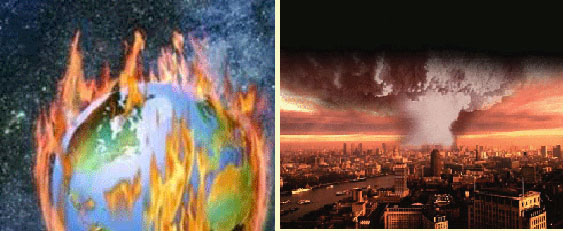
An All-American Horror Story
SCHEERPOST, BY MODERATOR July 5, 2021, An All-American Horror StoryThree-quarters of a century of nuclear follies — and that’s just for starters. By Tom Engelhardt / TomDispatch. Yes, once upon a time I regularly absorbed science fiction and imagined futures of wonder, but mainly of horror. What else could you think, if you read H.G. Wells’s War of the Worlds under the covers by flashlight while your parents thought you were asleep? Of course, that novel was a futuristic fantasy, involving as it did Martians arriving in London to take out humanity. Sixty-odd years after secretly reading that book and wondering about the future that would someday be mine, I’m living, it seems, in that very future, however Martian-less it might be. Still, just in case you hadn’t noticed, our present moment could easily be imagined as straight out of a science-fiction novel that, even at my age, I’d prefer not to read by flashlight in the dark of night.
I mean, I was barely one when Hiroshima was obliterated by a single atomic bomb. In the splintering of a moment and the mushroom cloud that followed, a genuinely apocalyptic power that had once rested only in the hands of the gods (and perhaps science-fiction authors) became an everyday part of our all-too-human world. From that day on, it was possible to imagine that we — not the Martians or the gods — could end it all. It became possible to imagine that we ourselves were the apocalypse. And give us credit. If we haven’t actually done so yet, neither have we done a bad job when it comes to preparing the way for just such a conclusion to human history.
Let’s put this in perspective. In the pandemic year 2020, 76 years after two American atomic bombs left the cities of Hiroshima and Nagasaki in ashes, the world’s nuclear powers actually increased spending on nuclear weapons by $1.4 billion more than they had put out the previous year. And that increase was only a small percentage of the ongoing investment of those nine — yes, nine — countries in their growing nuclear arsenals. Worse yet, if you happen to be an American, more than half of the total 2020 “investment” in weaponry appropriate for world-ending scenarios, $37.4 billion to be exact, was plunked down by our own country. (A staggering $13.3 billion was given to weapons maker Northrop Grumman alone to begin the development of a new intercontinental ballistic missile, or ICBM, the one thing our thoroughly troubled world obviously needs.) In all, those nine nuclear powers spent an estimated $137,000 a minute in 2020 to “improve” their arsenals — the ones that, if ever used, could end history as we know it.
In the Dust of the History of Death
Imagine for a second if all that money had instead been devoted to creating and disseminating vaccines for most of the world’s population, which has yet to receive such shots and so be rescued from the ravages of Covid-19, itself a death-dealing, sci-fi-style nightmare of the first order. But how could I even think such a thing when, in the decades since this country dropped that first atomic bomb on Hiroshima, it’s learned its atomic lessons all too well? Otherwise, why would its leaders now be planning to devote at least $1.7 trillion over the next three decades to “modernizing” what’s already the most modern nuclear arsenal on the planet?…………
Consider it an irony of the first order, then, that U.S. leaders have spent years focused on trying to keep the Iranians from making a single nuclear weapon, but not for a day, not for an hour, not for a second on keeping this country from producing ever more of them and the delivery systems that would distribute them anywhere on this planet. In that light, just consider, for instance, that, in 2021, the U.S. is preparing to invest more than $100 billion in producing a totally new ICBM, whose total cost over its “lifespan” (though perhaps the correct word would be “deathspan”) is already projected at $264 billion — and that’s before the cost overruns even begin. All of this for a future that… well, your guess is as good as mine.
Or consider that, only recently, the American and Russian heads of state, the two countries with by far the biggest nuclear arsenals, met in Geneva, Switzerland, and talked for hours, especially about cyberwar, while spending little appreciable time considering how to rein in their most devastating weaponry and head the planet toward a denuclearized future.
And keep in mind that all of this is happening on a planet where it’s now commonplace scientific knowledge that even a nuclear war between two regional powers, India and Pakistan, could throw so many particulates into the atmosphere as to create a nuclear winter on this planet, one likely to starve to death billions of us. In other words, just one regional nuclear conflict could leave the chaos and horror of the Covid-19 pandemic in the unimpressive dust of the history of death………….
While it’s seldom thought of that way, climate change should really be reimagined as the equivalent of a slow-motion nuclear holocaust……….
there was no mushroom cloud, but rather a “cloud” of greenhouse gases forming over endless years beyond human vision. Still, let’s face it, on this planet of ours, not in 2031 or 2051 or 2101 but right at this very moment, we’re beginning to experience the equivalent of a slow-motion nuclear war.
In a sense, we’re already living through a modern slo-mo version of Hiroshima, no matter where we are or where we’ve traveled. At this moment, with an increasingly fierce megadrought gripping the West and Southwest, the likes of which hasn’t been experienced in at least 1,200 years, among the top candidates for an American Hiroshima would be Phoenix (118 degrees), Las Vegas (114 degrees), the aptly named Death Valley (128 degrees), Palm Springs (123 degrees), and Salt Lake City (107), all record temperatures for this season. A recent report suggests that temperatures in famed Yellowstone National Park are now as high or higher than at any time in the past 20,000 years (and possibly in the last 800,000 years). And temperatures in Oregon and Washington are already soaring in record fashion with more to come, even as the fire season across the West arrives earlier and more fiercely each year. As I write this, for instance, California’s Big Sur region is ablaze in a striking fashion, among growing numbers of western fires. Under the circumstances, ironically enough, one of the only reasons some temperature records might not be set is that sun-blocking smoke from those fires might suppress the heat somewhat. ………
In this desperately elongated version of nuclear war, everything being experienced in this country (and in a similar fashion around the world, from Australia’s brutally historic wildfires to a recent heat wave in the Persian Gulf, where temperatures topped 125 degrees) will only grow ever more extreme, even if, by some miracle, those nuclear weapons are kept under wraps. After all, according to a new NASA study, the planet has been trapping far more heat than imagined in this century so far. In addition, a recently revealed draft of an Intergovernmental Panel on Climate Change report suggests that our over-heating future will only grow worse in ways that hadn’t previously been imagined. Tipping points may be reached — from the melting of polar ice sheets and Arctic permafrost (releasing vast amounts of methane into the atmosphere) to the possible transformation of much of the Amazon rain forest into savannah — that could affect the lives of our children and grandchildren disastrously for decades to come. And that would be the case even if greenhouse-gas releases are brought under control relatively quickly.
Once upon a time, who could have imagined that humanity would inherit the kinds of apocalyptic powers previously left to the gods or that, when we finally noticed them, we would prove eerily unable to respond? Even if another nuclear weapon is never used, we stand capable, in slow-motion fashion, of making significant parts of our world uninhabitable — or, for that matter, if we were to act soon, keeping it at least reasonably habitable into the distant future.
Imagine, just as a modest start, a planet on which every dollar earmarked for nuclear weapons would be invested in a green set of solutions to a world growing by the year ever warmer, ever redder, ever less inhabitable. https://scheerpost.com/2021/07/05/an-all-american-horror-story/
Several European States urge that nuclear energy be excluded from the EU’s green finance taxonomy.
EU anti-nuclear states urge excluding nuclear from green taxonomy, Nuclear Engineering, 5 July 2021 A group of five EU member states led by Germany have sent a letter to the European Commission (EC) asking for nuclear energy to be kept out of the EU’s green finance taxonomy.

“Many savers and investors would lose faith in financial products marketed as ‘sustainable’ if they had to fear that by buying these products they would be financing activities in the area of nuclear power.”
the JRC report also “disregards the life-cycle approach” to environmental risk assessment when it comes to geological storage of nuclear waste. ”
The letter, which was signed by the environment or energy ministers from Austria, Denmark, Germany, Luxembourg, and Spain, notes “shortcomings” in a report by the European Commission’s Joint Research Centre (JRC).
Although the letter is undated, Euractiv said it understands it was sent to the EC on 30 June. Signatories include: Svenja Schulze (Germany), Leonore Gewessler (Austria), Dan Jørgensen and Simon Kollerup (Denmark), Carole Dieschbourg (Luxembourg), Teresa Ribera Rodríguez and Nadia Calviño Santamaría (Spain).
“Nuclear power is incompatible with the Taxonomy Regulation’s ‘do no significant harm’ principle,” the ministers wrote, urging the Commission to keep nuclear out of the EU’s green finance rules. “We are concerned that including nuclear power in the Taxonomy would permanently damage its integrity, credibility and therefore its usefulness,” they warned.
The letter says the EC’s assessment of the safety of nuclear power installations is flawed. “We were disconcerted to learn that in the opinion of the Joint Research Centre (JRC), there were no indications that the high-risk technology that is nuclear power is more damaging to human health and to the environment than other forms of energy generation, such as wind and solar energy.” The ministers add: “Nuclear power, however, is a high-risk technology – wind energy is not. This essential difference must be taken into account.” They say the JRC report deliberately ignored the possibility of a serious incident.
The Ministers argue: “Many savers and investors would lose faith in financial products marketed as ‘sustainable’ if they had to fear that by buying these products they would be financing activities in the area of nuclear power.” They allege that the JRC report also “disregards the life-cycle approach” to environmental risk assessment when it comes to geological storage of nuclear waste.,,,,,,,,,,,
The letter says the EC’s assessment of the safety of nuclear power installations is flawed. “We were disconcerted to learn that in the opinion of the Joint Research Centre (JRC), there were no indications that the high-risk technology that is nuclear power is more damaging to human health and to the environment than other forms of energy generation, such as wind and solar energy.” The ministers add: “Nuclear power, however, is a high-risk technology – wind energy is not. This essential difference must be taken into account.” They say the JRC report deliberately ignored the possibility of a serious incident.
The Ministers argue: “Many savers and investors would lose faith in financial products marketed as ‘sustainable’ if they had to fear that by buying these products they would be financing activities in the area of nuclear power.” They allege that the JRC report also “disregards the life-cycle approach” to environmental risk assessment when it comes to geological storage of nuclear waste.https://www.neimagazine.com/news/newseu-anti-nuclear-states-urge-excluding-nuclear-from-green-taxonomy-8869307
Global heating: “unprecedented” heatwave temperatures will become routine.

With the global climate warming, such “unprecedented” heatwave temperatures will start to become routine. Some parts of the world may simply become too hot for human habitation. Not only will heatwaves become more common, but hotter, drier conditions will lead to more wildfires.
Times 4th July 2021, Canada experienced its highest recorded temperature last week as the mercury surged to 49.6C in British Columbia on Tuesday. This is not onlythe highest temperature for Canada, but the hottest ever recorded above the 45th parallel north, roughly the latitude of Bordeaux and Bologna. In the US, the states of Washington, Oregon and Idaho also broke records.
The Pacific northwest is roasting. Hundreds have died. In Pakistan, the city of Jacobabad can reach 52C. As temperatures hit nearly 50C there last week, ts scorching streets were deserted as people tried to shelter at home, most without air-conditioning. The hospitals were flooded with heatstroke victims.
With the global climate warming, such “unprecedented” heatwave temperatures will start to become routine. Some parts of the world may simply become too hot for human habitation. Not only will heatwaves become more common, but hotter, drier conditions will lead to more wildfires.
In January last year, before Covid-19 dominated the news, Australia was aflame with massive areas of bushfire. Hurricanes and typhoons will also become more intense. Tropical diseases will spread. We’ll find it harder to feed
ourselves. And the problems won’t be shared evenly. Some regions will receive less rainfall and lose crops to drought, others will receive more and lose crops to flooding. There will be a global reconfiguration of where food can reliably be grown, and where people can safely live.
The climate refugees of today are only the first trickle of what could become a mass migration of people into parts of the world still offering habitable conditions – a movement of humanity unlike anything seen before in history. It is unlikely that this large-scale population disruption, combined with dwindling resources such as fresh water, will come without conflict.
The next wars could well be climate wars. It was human ingenuity and resourcefulness that got us into this mess, and I am hopeful that our same capabilities will find the way out again too.
https://www.thetimes.co.uk/article/how-to-live-in-a-climate-emergency-t6rfz7ckv
1 This Month



26 September – International Day for the Total Elimination of Nuclear Weapons


PLEASE OPPOSE HR 8255 AND S.3639 – bills would accelerate satellite deployment, with no environmental review or safeguards – https://ncstd5li.quorum.us/campaign/169331/
To see nuclear-related stories in greater depth and intensity – go to https://nuclearinformation.wordpress.com
-
Archives
- September 2026 (245)
- August 2026 (330)
- July 2026 (355)
- June 2026 (287)
- May 2026 (306)
- April 2026 (356)
- March 2026 (251)
- February 2026 (267)
- January 2026 (308)
- December 2025 (358)
- November 2025 (359)
- October 2025 (375)
-
Categories
- 1
- 1 NUCLEAR ISSUES
- business and costs
- climate change
- culture and arts
- ENERGY
- environment
- health
- history
- indigenous issues
- Legal
- marketing of nuclear
- media
- opposition to nuclear
- PERSONAL STORIES
- politics
- politics international
- Religion and ethics
- safety
- secrets,lies and civil liberties
- spinbuster
- technology
- Uranium
- wastes
- weapons and war
- Women
- 2 WORLD
- ACTION
- AFRICA
- Atrocities
- AUSTRALIA
- Christina's notes
- Christina's themes
- culture and arts
- Events
- Fuk 2022
- Fuk 2023
- Fukushima 2017
- Fukushima 2018
- fukushima 2019
- Fukushima 2020
- Fukushima 2021
- general
- global warming
- Humour (God we need it)
- Nuclear
- RARE EARTHS
- Reference
- resources – print
- Resources -audiovicual
- Weekly Newsletter
- World
- World Nuclear
- YouTube
-
RSS
Entries RSS
Comments RSS
 nuclear-news