The US election is a vote on climate change for the whole world
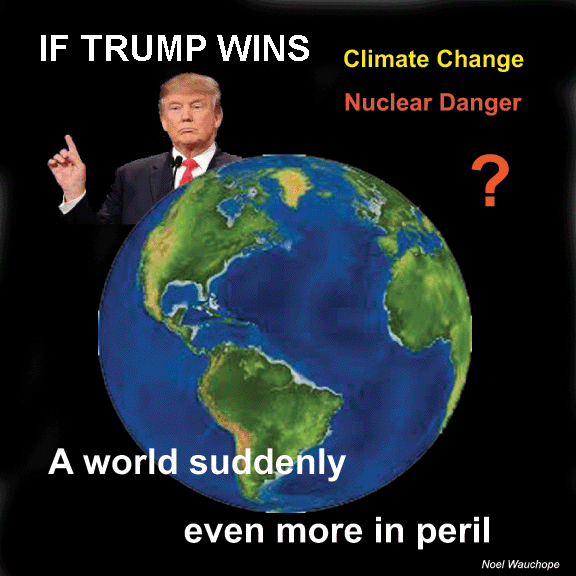 “Covid will be overcome, the climate crisis cannot be overcome unless we have American leadership.”
The US election is a vote on climate change for the whole world, By Helen Regan, Ivana Kottasová and Drew Kann, CNN, November 2, 2020 The climate crisis has become a key issue not just for American voters in this US election — but people across the world.
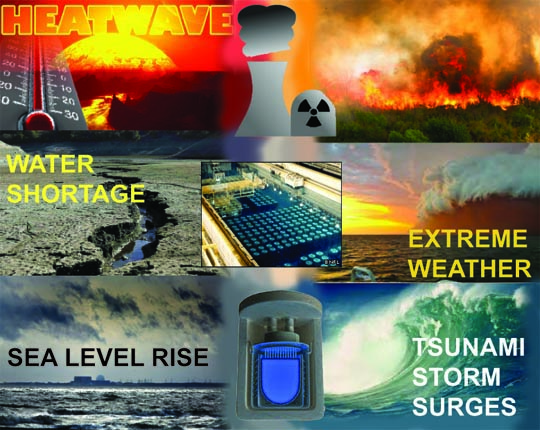 It’s too late to stop all the impacts of climate change. They are already happening. Wildfires have torched homes across the Western US this year, unprecedented floods have inundated large swathes of Asia, and the past decade — — featuring deadly heatwaves and droughts — was the hottest ever recorded. The ice caps that bookend our planet are also seeing rapid loss and glacial melt.
 Why Paris matters

Global momentum
Climate Policy – Scotland
The National 2 Nov 2020 , EXTINCTION Rebellion have walked away from the Scottish Government’s
Climate Assembly, accusing ministers of allowing “vested interests” to
take over. They claim the civil service has tried to water down the urgency
of the summit due to start this weekend.
https://www.thenational.scot/news/18838753.extinction-rebellion-quit-scottish-governments-citizens-assembly-climate/
Now climate change, rising seas, swamping Kiribati and the Marshall Islands, victims of nuclear racism
Losing paradise, Atomic racism decimated Kiribati and the Marshall Islands; now climate change is sinking them, Beyond Nuclear https://wordpress.com/read/feeds/72759838/posts/2998141589–1 Nov 20, This is an extract from the Don’t Bank on the Bomb Scotland report “Nuclear Weapons, the Climate and Our Environment”.
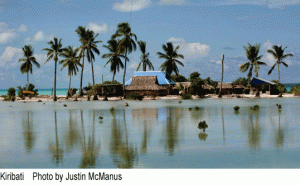 Kiribati. In 1954, the government of Winston Churchill decided that the UK needed to develop a hydrogen bomb (a more sophisticated and destructive type of nuclear weapon). The US and Russia had already developed an H-bomb and Churchill argued that the UK “could not expect to maintain our influence as a world power unless we possessed the most up-to-date nuclear weapons”.
The governments of Australia and New Zealand refused to allow a hydrogen bomb test to be conducted on their territories so the British government searched for an alternative site. Kiritimati Island and Malden Island in the British Gilbert and Ellice Islands Colony in the central Pacific Ocean (now the Republic of Kiribati) were chosen. Nine nuclear weapons tests – including the first hydrogen bomb tests – were carried out there as part of “Operation Grapple” between 1957 and 1958.
Military personnel from the UK, New Zealand and Fiji (then a British colony) and Gilbertese labourers were brought in to work on the operation. Many of the service personnel were ordered to witness the tests in the open, on beaches or on the decks of ships, and were simply told to turn their backs and shut their eyes when the bombs were detonated. There is evidence that Fijian forces were given more dangerous tasks than their British counterparts, putting them at greater risk from radiation exposure. The local Gilbertese were relocated and evacuated to British naval vessels during some of the tests but many were exposed to fallout, along with naval personnel and soldiers.
After Grapple X, the UK’s first megaton hydrogen bomb test in November 1957, dead fish washed ashore and “birds were observed to have their feathers burnt off, to the extent that they could not fly”. The larger Grapple Y test in 1958 spread fallout over Kiritimati Island and destroyed large areas of vegetation.
Despite evidence that military personnel and local people suffered serious health problems as a result of the tests, including blindness, cancers, leukaemia and reproductive difficulties, the British government has consistently denied that they were exposed to dangerous levels of radiation and has resisted claims for compensation.
Like the Marshall Islands, the low-lying Republic of Kiribati is now bearing the brunt of the effects of climate change. Salt water washed in on king tides has contaminated the islands’ scarce freshwater resources. Pits that are used to grow taro plants have been ruined and the healthy subsistence lifestyle of local people is under threat.
It is predicted that rising sea levels will further impact freshwater resources and reduce the amount of agricultural land, while storm damage and erosion will increase. Much of the land will ultimately be submerged. In anticipation of the need to relocate its entire population, the government of Kiribati bought 20km2 of land on Fiji in 2014.
The UK is set to spend £3.4 billion a year on Trident nuclear weapons system between 2019 and 2070. If Trident were scrapped, a portion of the savings could be provide to the Republic of Kiribati in the form of climate finance (see section 1.2.1). Scrapping Trident would also allow money and skills to be redirected towards measures aimed at drastically cutting the UK’s carbon emissions (see section 1.2.2) – action that Pacific island nations are urgently demanding.
The Marshall Islands. The most devasting incident of radioactive contamination took place 8,000 km from the US mainland during the Castle Bravo test in 1954. The US detonated the largest nuclear weapon in its history at Bikini Atoll in the Marshall Islands, causing fallout to spread over an area of more than 11,000km. Residents of nearby atolls, Rongelap and Utirik, were exposed to high levels of radiation, suffering burns, radiation sickness, skin lesions and hair loss as a result.

Castle Bravo was just one of 67 nuclear weapons tests conducted by the US in the Marshall Islands between 1946 and 1958. Forty years after the tests, the cervical cancer mortality rate for women of the Marshall Islands was found to be 60 times greater than the rate for women in the US mainland, while breast and lung cancer rates were five and three times greater respectively. High rates of infant mortality have also been found in the Marshall Islands and a legacy of birth defects and infertility has been documented. Many Marshallese were relocated by the US to make way for the testing.
Some were moved to Rongelap Atoll and relocated yet again after the fallout from Castle Bravo left the area uninhabitable.
Rongelap Atoll was resettled in 1957 after the US government declared that the area was safe. However, many of those who returned developed serious health conditions and the entire population was evacuated by Greenpeace in 1984. An attempt to resettle Bikini Atoll was similarly abandoned in 1978 after it became clear that the area was still unsafe for human habitation.
A 2019 peer-reviewed study found levels of the radioactive isotope caesium-137 in fruits taken from some parts of Bikini and Rongelap to be significantly higher than levels recorded at the sites of the world’s worst nuclear accidents, Chernobyl and Fukushima.
Compounding the injustice of nuclear weapons testing, the Republic of the Marshall Islands is now on the frontline of the climate emergency. The government declared a national climate crisis in 2019, citing the nation’s extreme vulnerability to rising sea levels and the “implications for the security, human rights and wellbeing of the Marshallese people”.
At Runit Island, one of 40 islands in the Enewetak Atoll, rising sea levels are threatening to release radioactive materials into an already contaminated lagoon. In the late 1970s, the US army dumped 90,000 cubic metres of radioactive waste, including plutonium, into a nuclear blast crater and covered it with a concrete cap. Radioactive materials are leaking out of the crater and cracks have appeared on the concrete cap. Encroaching salt water caused by rising sea levels could collapse the structure altogether. The Marshallese government has asked the US for help to prevent an environmental catastrophe but the US maintains that the dome is the Marshall Islands’ responsibility. Hilda Heine, then President of the Republic of the Marshall Islands, said of the dome in 2019: “We don’t want it. We didn’t build it. The garbage inside is not ours. It’s theirs.”
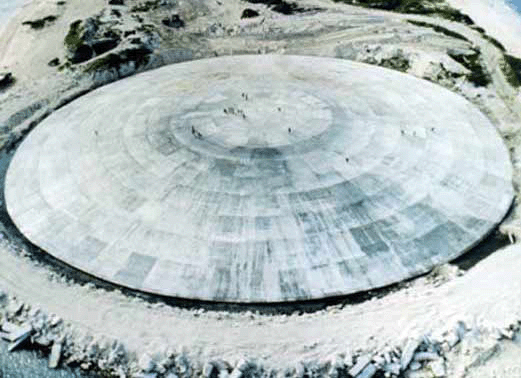
The Runit Island dome offers a stark illustration of the ways in which the injustices of nuclear weapons testing and climate change overlap. Marshall Islanders were left with the toxic legacy of nuclear weapons testing conducted on their territory by another state. The country is now being forced to deal with the effects of a climate crisis that they did not create, including the erosion of the Runit dome.
The nations that contributed most to the crisis are failing to cut their emissions quickly enough to limit further global heating, leaving the Marshallese at the mercy of droughts, cyclones and rising seas. A recent study found that if current rates of greenhouse gas emissions are maintained, the Marshall Islands will be flooded with sea water annually from 2050. The resulting damage to infrastructure and contamination of freshwater supplies will render the islands uninhabitable.
If the US scrapped its nuclear weapons programme, it could give a portion of the billions of dollars that would be saved to the Republic of the Marshall Islands to help the country mitigate and adapt to climate disruption (see section 1.2.1 on international climate finance). The US could also use the freed-up funds to invest in its own Just Transition away from a fossil-fuel powered economy. Read the full report.
Surge in fires in Brazil’s Amazon

|
Fires in Brazil’s Amazon rainforest jump in October, By Jake Spring, BRASILIA (Reuters) 1 Nov 20, – Fires in Brazil’s Amazon rainforest surged in October and the number of blazes is up 25% in the first 10 months of 2020, compared to a year ago, data from government space research agency Inpe showed on Sunday.
October recorded 17,326 hot spots in the world’s largest rainforest, more than double the number of fires detected in the same month last year. Destruction of the forest has soared since right-wing President Jair Bolsonaro took office in 2019. The president says he wishes to develop the region to lift it out of poverty, while environmental advocates say his policies embolden illegal loggers, miners and ranchers. The number of fires so far this year remains at a decade high. In only the first 10 months of the year, 2020 has surpassed the total number of fires for full-year 2019, when the destruction spurred international criticism that Brazil was not doing enough to protect the forest……. Fires in Brazil’s Pantanal, the world’s largest wetlands, also increased in October compared to a year ago, according to Inpe. The Pantanal, home to many rare species including the world’s densest population of jaguars, has recorded the most fires this year since records began in 1998. For the year through Oct. 25, 28% of the wetland has burned, according to the Federal University of Rio de Janeiro, an area nearly the size of Denmark…… https://www.reuters.com/article/us-brazil-environment/fires-in-brazils-amazon-rainforest-jump-in-october-idUSKBN27H1J1 |
|
Strong feeling in UK public that the Covid recovery must be a green recovery, too
 Centre for Science & Policy 12th Oct 2020, According to Professor Rebecca Willis, the findings from the UK Climate Assembly suggest that the general public feels strongly that covid recovery must be aligned with net zero goals, both in terms of a green economic stimulus and in terms of not giving government money to big polluters. She also noted that the pandemic has create an opportunity space, in which people are more open to lifestyle changes – including those that might be more environmentally friendly.
http://www.csap.cam.ac.uk/news/article-understanding-challenges-green-recovery/
UK government’s economic recovery plan funds fossil fuels £3.8bn, but renewables only £121m
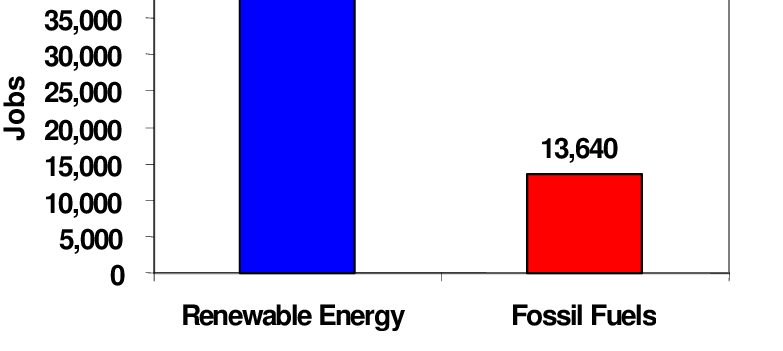
Edie 29th Oct 2020, The UK Government has earmarked £3.8bn of stimulus funding for legacy fossil fuel and nuclear generation, compared to just £121m for renewables, a damning new report has claimed. Published by global technology company Wärtsilä’s energy arm, the analysis concludes that the UK Government’s short-term plans for helping the energy sector recover from the financial impacts of Covid-19 are not aligned with the 2050 net-zero target or the interim carbon budgets.
storage capacity would be scaled up dramatically.
Putin’s Russia keen to exploit the Arctic for fossil fuels: more nuclear-powered icebreakers on the way
|
Putin decrees development of Arctic with more nuclear icebreakers – This will help Russia cash flow from fossil fuels. Russian President Vladimir Putin has signed an executive order, On the Strategy for Developing the Russian Arctic Zone and Ensuring National Security until 2035, which foresees the construction of at least five new nuclear-powered icebreakers of the Project 22220 series, and three of the Project 10510 series. The vessels are needed to ensure year-round navigation along the Northern Sea Route. Project 10510, also known through the Russian type size series designations LK-110Ya and LK-120Ya or the project name Leader, will supersede Project 22220 icebreakers as the largest and most powerful in the world…….. https://www.oilandgas360.com/putin-decrees-development-of-arctic-with-more-nuclear-icebreakers-this-will-help-russia-cash-flow-from-fossil-fuels/ |
|
|
Release of methane off East Siberian coast has been triggered,
Exclusive: expedition discovers new source of greenhouse gas off East Siberian coast has been triggered, Guardian, Jonathan Watts Global environment editor 28 Oct 20 Scientists have found evidence that frozen methane deposits in the Arctic Ocean – known as the “sleeping giants of the carbon cycle” – have started to be released over a large area of the continental slope off the East Siberian coast, the Guardian can reveal.High levels of the potent greenhouse gas have been detected down to a depth of 350 metres in the Laptev Sea near Russia, prompting concern among researchers that a new climate feedback loop may have been triggered that could accelerate the pace of global heating.
The slope sediments in the Arctic contain a huge quantity of frozen methane and other gases – known as hydrates. Methane has a warming effect 80 times stronger than carbon dioxide over 20 years. The United States Geological Survey has previously listed Arctic hydrate destabilisation as one of four most serious scenarios for abrupt climate change.
The international team onboard the Russian research ship R/V Akademik Keldysh said most of the bubbles were currently dissolving in the water but methane levels at the surface were four to eight times what would normally be expected and this was venting into the atmosphere.
“At this moment, there is unlikely to be any major impact on global warming, but the point is that this process has now been triggered. This East Siberian slope methane hydrate system has been perturbed and the process will be ongoing,” said the Swedish scientist Örjan Gustafsson, of Stockholm University, in a satellite call from the vessel.
The scientists – who are part of a multi-year International Shelf Study Expedition – stressed their findings were preliminary. The scale of methane releases will not be confirmed until they return, analyse the data and have their studies published in a peer-reviewed journal.
But the discovery of potentially destabilised slope frozen methane raises concerns that a new tipping point has been reached that could increase the speed of global heating.
The Arctic is considered ground zero in the debate about the vulnerability of frozen methane deposits in the ocean.
With the Arctic temperature now rising more than twice as fast as the global average, the question of when – or even whether – they will be released into the atmosphere has been a matter of considerable uncertainty in climate computer models.
The 60-member team on the Akademik Keldysh believe they are the first to observationally confirm the methane release is already under way across a wide area of the slope about 600km offshore………………
Temperatures in Siberia were 5C higher than average from January to June this year, an anomaly that was made at least 600 times more likely by human-caused emissions of carbon dioxide and methane. Last winter’s sea ice melted unusually early. This winter’s freeze has yet to begin, already a later start than at any time on record. https://www.theguardian.com/science/2020/oct/27/sleeping-giant-arctic-methane-deposits-starting-to-release-scientists-find
Pressure on UK Prime Minister to show strong climate leadership
Business Green 28th Oct 2020, Pressure is mounting on Boris Johnson to come up with an ambitious
decarbonisation plan ahead of COP26 next year, with a major coalition of
health professionals, academics, faith and youth leaders today joining
calls from Conservative MPs and former world leaders for UK to demonstrate
strong climate leadership in the run up to the critical UN summit.
In a
series of letters to the Prime Minister today, various groups representing
millions of people in the UK and overseas urge the government to deliver a
“world-leading” climate plan to the UN in support of the Paris Agreement
“as early as possible this year” or well ahead of COP26 in November 2021.
Such a plan – or Nationally-Determined Contribution (NDC) in UN jargon –
should “at the very least” aligned with limiting global warming to 1.5C by
the end of the century and the UK’s 2050 net zero target, and should be
achieved entirely through domestic action without the use of international
carbon credits, according to the letter from faith groups.
https://www.businessgreen.com/news/4022373/pressure-mounts-pm-ambitious-uk-climate-plan-soon
South Korea to end dependence on coal, switch to renewables
|
Guardian 28th Oct 2020, South Korea’s president, Moon Jae-in, has declared that the country will
go carbon neutral by 2050, bringing it into line with other major economies. In a policy speech in the national assembly on Wednesday, Moon said South Korea, one of the world’s most fossil fuel-reliant economies, would “actively respond” to the climate emergency “with the international community and achieve carbon neutrality by 2050”. He vowed to end its dependence on coal and replace it with renewables as part of its Green New Deal, a multibillion-dollar plan to invest in green infrastructure, clean energy and electric vehicles. |
|
World climate at the crossroads – much depends on USA election result
 Guardian 26th Oct 2020, Among the myriad reasons world leaders will closely watch the outcome of a
  fraught US presidential election, the climate crisis looms perhaps largest of all. The international effort to constrain dangerous global heating will hinge, in large part, on which of the dichotomous approaches of Donald Trump or Joe Biden prevails.
anxiety has only escalated during the hottest summer ever recorded in the northern hemisphere, with huge wildfires scorching California and swaths of central South America, and extraordinary temperatures baking the Arctic.
|
|
Climate change a big threat to nuclear reactors – as water supplies at risk
 Climate change poses big water risks for nuclear, fossil-fueled plants, S and P Global, Esther Whieldon Taylor Kuykendall, 23 Oct 20,
But electric utilities’ overall exposure to power plant water stress risks could diminish as they pursue decarbonization strategies and replace water-dependent plants with wind and solar generation that require little to no water. Some companies are also implementing water management and related investment strategies to reduce their exposure. ……..
According to projections from the World Resources Institute’s Aqueduct Water Risk Atlas, water stress — when humanity’s competition for water exceeds the rate at which nature can replenish its stocks — could grow materially by 2030 in the drought-prone Western U.S., as well as the upper Midwest and portions of the Northeast and Florida, due to climate change.
About 61.8% of existing fossil-fueled and nuclear power plants in the Lower 48, or a combined 535 GW of operating capacity, is in areas that could face medium-high to extremely high water stress in 2030, based on an analysis of Market Intelligence’s power plant data paired with the Aqueduct water stress projections.
Moreover, 68.6% of the Lower 48’s natural gas-fired fleet, 73.3% of its oil-fueled fleet, 61.0% of its nuclear fleet, and 44.6% of its coal-fired fleet are in areas expected to face medium-high to extremely-high water stress that year.
“As we’re seeing snowpack decline — a natural mountainous reservoir of water — and as we’re getting lower amounts of total precipitation and available water in the U.S. West, this is going to be a really serious issue for the power sector,” said Betsy Otto, director of the Global Water Program at the World Resource Institute, or WRI. Moreover, scientists have said the West is entering a megadrought that could last more than 20 years.
Otto also noted that several other U.S. regions not normally thought of as facing water supply issues are already experiencing chronic water challenges that, if left unchecked, could become a problem if extended droughts, heatwaves, and other major extreme weather events should occur.
A number of utilities use WRI’s Aqueduct tool to assess their water risks in their annual reports to the CDP, formerly known as the Carbon Disclosure Project, and other organizations. But those reports typically focus on the WRI’s current water stress models and not the tool’s future climate projections.
WRI’s current water stress models show a number of regions that are facing water stress will be in the same situation, or worse, at the end of the decade.
Along those lines, Moody’s Investors Service in August reported that about 48 GW of nuclear capacity across the U.S. face elevated exposure to combined heat and water stress, including plants owned by Exelon Corp., Vistra Corp., Entergy Corp., and the Arizona Public Service Co.
In hot water
A plant’s location is not the only factor that will determine its vulnerability to water stress. A plant’s water source, cooling technology and the temperature of the water when it is withdrawn are also key factors, according to scientific reports. The Market Intelligence analysis using the WRI tool does not account for those three factors.
In addition, rising ambient air and water temperatures can also create operational and legal issues for plants. Because plants primarily use water to cool their systems, “if that water is hot or warmer to start with, that’s not so good. That makes the power plant less efficient” and it also means the plant risks violating federal restrictions on how hot water can be when it is discharged, said Auroop Ganguly, director of the Northeastern University College of Engineering Sustainability and Data Sciences Laboratory.
Ganguly co-authored a study that found that by the 2030s, climate-induced water stress in the form of increased water temperatures and limited freshwater supplies will hurt the power production of thermoelectric plants in the South, Southwest, West and West North Central regions of the U.S. According to the 2017 study, U.S. nuclear and fossil-fueled plants at that time used about 161 billion gallons per day, or 45% of the nation’s daily freshwater usage, 90% of which was for cooling.
The technologies used by a power plant can also make a big difference in how much water it needs. Dry-cooling technology uses very little water but is costlier and less efficient than alternatives. And while once-through cooling systems withdraw more water than recirculating systems, once-through cooling returns nearly all of the water to the source while recirculating systems consume more water due to evaporation………. https://www.spglobal.com/marketintelligence/en/news-insights/blog/street-talk-episode-69-banks-left-with-pockets-full-of-cash-and-few-places-to-go
Delayed freezing of Arctic sea due to continued freakish warm weather

|
Alarm as Arctic sea ice not yet freezing at latest date on record
Delayed freeze in Laptev Sea could have knock-on effects across polar region, scientists say, Guardian, jonathan Watts Global environment editor @jonathanwatts, Thu 22 Oct 2020 For the first time since records began, the main nursery of Arctic sea ice in Siberia has yet to start freezing in late October. The delayed annual freeze in the Laptev Sea has been caused by freakishly protracted warmth in northern Russia and the intrusion of Atlantic waters, say climate scientists who warn of possible knock-on effects across the polar region. Ocean temperatures in the area recently climbed to more than 5C above average, following a record breaking heatwave and the unusually early decline of last winter’s sea ice. The trapped heat takes a long time to dissipate into the atmosphere, even at this time of the year when the sun creeps above the horizon for little more than an hour or two each day. Graphs of sea-ice extent in the Laptev Sea, which usually show a healthy seasonal pulse, appear to have flat-lined. As a result, there is a record amount of open sea in the Arctic. “The lack of freeze-up so far this fall is unprecedented in the Siberian Arctic region,” said Zachary Labe, a postdoctoral researcher at Colorado State University. He says this is in line with the expected impact of human-driven climate change. 2020 is another year that is consistent with a rapidly changing Arctic. Without a systematic reduction in greenhouse gases, the likelihood of our first ‘ice-free’ summer will continue to increase by the mid-21st century,’ he wrote in an email to the Guardian. This year’s Siberian heatwave was made at least 600 times more likely by industrial and agricultural emissions, according to an earlier study. The warmer air temperature is not the only factor slowing the formation of ice. Climate change is also pushing more balmy Atlantic currents into the Arctic and breaking up the usual stratification between warm deep waters and the cool surface. This also makes it difficult for ice to form……… https://www.theguardian.com/world/2020/oct/22/alarm-as-arctic-sea-ice-not-yet-freezing-at-latest-date-on-record?CMP=twt_a-environment_b-gdneco&fbclid=IwAR1qZzerjnAanadMi942h7N8XdCf6Drz_-UIO5mECgAzvXqgiIYjuh6BETc |
|
Largest wildfires in Colorado’s history
|
Colorado is fighting its largest wildfire in history. Other massive blazes are close behind.Three of the four largest fires in Colorado history have ignited since July. Vox , By Umair Irfan Oct 22, 2020 The Cameron Peak Fire near Rocky Mountain National Park has become the largest wildfire in Colorado history, growing to almost 207,000 acres this week. The fire was 55 percent contained as of Wednesday afternoon.
It was quickly joined this week by the East Troublesome Fire to its southwest. Over a period of 24 hours, the East Troublesome Fire grew six times in size to more than 125,000 acres as of Thursday. The blaze, which is burning at an elevation of 9,000 feet and across both sides of the continental divide, forced Rocky Mountain National Park to close. It’s now the fourth-largest fire in Colorado history. ……………
What’s fueling Colorado’s fires this yearIt’s an increasingly familiar story. Like the epic wildfires this year across California, Oregon, and Washington, the wildfires in Colorado arose amid a year of extreme heat and dryness. Heat waves baked the state this summer and persisted into the fall. The high temperatures increased the evaporation of moisture from vegetation, leaving plants dry and ready to burn. There was also less rainfall. Over the past month, precipitation was less than 10 percent of what is typical. “By the end of September, nearly 100% of the state was experiencing some level of drought, up from 51% since the beginning of the calendar year,” according to the Colorado Climate Center’s Monthly State of the Climate report. The state is on track to have its second-driest year on record……….
r, humans have been making fire risks worse. That’s in part due to climate change, which is changing weather patterns and driving some of the aridity in Colorado’s forests. “Our 2020 wildfire season is showing us that climate change is here and now in Colorado,” said Jennifer Balch, director of the Earth Lab and an associate professor of geography at the University of Colorado Boulder, in an email. “Warming is setting the stage for a lot of burning across an extended fire season.”…………. https://www.vox.com/2020/10/19/21522994/cameron-peak-calwood-colorado-wildfire-fire-record-east-troublesome-lefthand-canyon
|
|
USA: Millions of jobs in clean energy and infrastructure – analysis finds.
“We don’t have to choose between a strong economy or a healthy environment—we can have both,” says an EPI data analyst. Common Dreams, byJessica Corbett, staff writer – 20 Oct 20, Pursuing trade and industrial policies that boost U.S. exports and eliminate the trade deficit while investing $2 trillion over four years in the nation’s infrastructure, clean energy, and energy efficiency improvements could support 6.9 to 12.9 million “good jobs” annually by 2024, according to an analysis published Tuesday.
1 This Month
19 February – VIRTUAL EVENT-Decision Time: AI and Our Nuclear Arsenal
12:45 p.m. Central / 1:45 p.m. Eastern
To see nuclear-related stories in greater depth and intensity – go to https://nuclearinformation.wordpress.com
-
Archives
- February 2026 (181)
- January 2026 (308)
- December 2025 (358)
- November 2025 (359)
- October 2025 (376)
- September 2025 (258)
- August 2025 (319)
- July 2025 (230)
- June 2025 (348)
- May 2025 (261)
- April 2025 (305)
- March 2025 (319)
-
Categories
- 1
- 1 NUCLEAR ISSUES
- business and costs
- climate change
- culture and arts
- ENERGY
- environment
- health
- history
- indigenous issues
- Legal
- marketing of nuclear
- media
- opposition to nuclear
- PERSONAL STORIES
- politics
- politics international
- Religion and ethics
- safety
- secrets,lies and civil liberties
- spinbuster
- technology
- Uranium
- wastes
- weapons and war
- Women
- 2 WORLD
- ACTION
- AFRICA
- Atrocities
- AUSTRALIA
- Christina's notes
- Christina's themes
- culture and arts
- Events
- Fuk 2022
- Fuk 2023
- Fukushima 2017
- Fukushima 2018
- fukushima 2019
- Fukushima 2020
- Fukushima 2021
- general
- global warming
- Humour (God we need it)
- Nuclear
- RARE EARTHS
- Reference
- resources – print
- Resources -audiovicual
- Weekly Newsletter
- World
- World Nuclear
- YouTube
-
RSS
Entries RSS
Comments RSS
 nuclear-news