Climate change, sea level rise – real and present danger to UK’s Bradwell and Sizewell nuclear sites
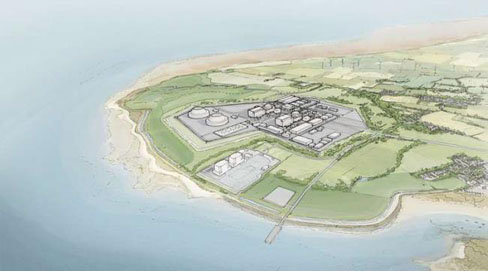
Climate Change the big issue for nuclear power on the East coast, https://www.banng.info/news/press-releases/climate-change-and-nuclear-power/ 11 September 2021 According to Andrew Blowers, Emeritus Professor of Social Sciences at the Open University, Climate Change has become the overriding issue facing the future of the proposed Sizewell C and Bradwell B nuclear power projects on the East Anglian coast. ‘Far from being a solution to the problem of Climate Change, new nuclear power stations like Sizewell C and Bradwell B on the fragile and vulnerable east coast, are likely to become victims of the inevitable, imminent and irreversible consequences of global warming’, he said.
Speaking at a Specific Hearing at the Sizewell C Examination to discuss Policy and Need, Professor Blowers stated that Climate Change was the ‘transformative issue’ of Policy and should be at the very heart of the discussion about building coastal infrastructures like nuclear power stations.
He was disappointed that the Examination Agenda was narrowly framed and the process favoured a legalistic approach. This encouraged a fragmented discussion and a tendency to focus on specific details while losing sight of the bigger picture.
The Examination process must raise its sights from the interminable and obfuscating legalistic debates controlled by developers and give attention to the real and present danger that Climate Change poses for the security and viability of projects in such unsuitable locations. ‘
‘Put simply, there is little justification for these huge structures in terms of need. But, regardless of need, given the threat to the integrity of the sites and the risks to present and future generations and environments, the proposals should be scrapped forthwith’.
The recent Report of the Intergovernmental Panel on Climate Change (IPCC) has spelled out in uncompromising, incontrovertible and unequivocal terms that a rise in global temperatures of 1.50C above pre-industrial levels is already inevitable. It is highly likely that 20C, the level which scientists say may just be manageable, will be reached by the end of the century, and possibly before, if present trends are not arrested. Sea level rise will be around a metre and, as ice melts and oceans heat up, it will continue thereafter. The IPCC states that a sea level rise of 2 metres by 2100 and 5 metres by 2150 ‘cannot be ruled out due to deep uncertainty in ice sheet processes’.
As sea levels rise, the frequency and severity of coastal flooding and erosion will increase and extreme events that occurred once in a century in the recent past are projected, in some scenarios, to occur annually in future. Of course, there is great uncertainty the further forward we look. But, what is certain, is that the impacts of climate change on sea level rise, storm surges and coastal processes could render these east coast sites unviable. This would pose a threat to the security of the highly radioactive wastes remaining stored on site until the latter half of the next century.
At the Hearing, Sizewell C’s developer, EDF relied on governmental polices enshrined in National Policy Statements (NPSs), now ten years old, to claim that the nuclear energy from Sizewell C was necessary. In its more recent pronouncements, the Government is far more equivocal in its support for nuclear energy from such large-scale power stations.
Regardless of whether nuclear is needed at all, Sizewell and Bradwell are manifestly not ‘potentially suitable’ sites as originally indicated in the NPS all those years ago. At both sites the developers claim that the hard defences proposed will be sufficient to protect the nuclear islands against the ravages of climate change.
But, beyond the end of the century, sea level will continue to rise and the impacts become more severe and scenarios for the worst case but plausible change are increasingly uncertain. It becomes impossible to make specific projections and modelling of more extreme coastal conditions is problematic. ‘What possible use will be projections into an unknowable future?’, asks Professor Blowers.
‘It is all too little, too late. I believe we must take the issue of Climate Change seriously and refuse permission to develop these coastal nuclear power stations. It seems inconceivable that the defensive structures can survive intact into the unknown but worsening conditions of continuing sea level rise and extreme events that are inevitable in the future. There can be no possible justification for inflicting this legacy on our coastal communities now and in the future.’
Expert response to the pro nuclear report by the Joint Research Centre

Any major expansion of nuclear energy would delay the decommissioning of fossil-fired power plants, as the latter would have to remain in operation during this period and therefore make it hard to achieve the climate change mitigation objective. It is even possible to argue that nuclear energy hinders the use of other alternatives with low CO2 emissions because of its high capital intensity. Otherwise this capital could be used to expand alternative energy sources like sun, wind and water
While nuclear power generation in the electricity generation phase has been associated with relatively low greenhouse gas emissions from a historical perspective, the lions’ share of greenhouse gas emissions in the nuclear fuel cycle is caused by the front-end and back-end processing stages. Based on estimates, the CO2 emissions can be broken down into the construction of nuclear power plants (18%), uranium mining and enrichment (38%), operations (17%), processing and storing nuclear fuel (15%) and decommissioning activities at the power plant (18%) (BMK, 2020, p.6)
Generating huge quantities of dangerous waste is being continued for decades without any effective disposal solution being available. The JRC itself says that the primary and best waste management strategy is not to generate any radioactive waste in the first place. However, this assessment is not consistently applied within the report.
The draft of the delegated legal act is based on the recommendations of the so-called Technical Expert Group (TEG). …..The TEG did not recommend that nuclear energy should be included in the EU taxonomy register at that time and recommended an in-depth study of the DNSH criteria (TEG, 2020b).
It is clear that the JRC barely touched on some environment-related aspects of using nuclear energy or did not consider them in its assessment at all.
.… Questions must also be raised about the ageing process and the brittleness of materials and therefore the long-term behaviour of nuclear power plants beyond the original design period.
This very positive presentation of future prospects for nuclear energy, which is shown in the JRC Report, must be viewed critically………..this presentation by the JRC is suspect from a professional point of view and possibly indicates a lack of adequate independence .
Expert response to the report by the Joint Research Centre entitled “Technical assessment of nuclear energy with respect to the ‛Do No Significant Harm’ criteria in Regulation (EU) 2020/852, the ‛Taxonomy Regulation’” Particularly considering the suitability of criteria for including nuclear energy in EU taxonomy The Federal Office for the Safety of Nuclear Waste Management (BASE) with support from the Federal Office for Radiation Protection (BfS) June 2021
Summary
The Federal Office for the Safety of Nuclear Waste Management (BASE) with support from the Federal Office for Radiation Protection (BfS), acting on behalf of the Federal Ministry for the Environment, Nature Conservation and Nuclear Safety (BMU), has examined the report by the Joint Research Centre (JRC) of the European Union (EU) entitled “Technical assessment of nuclear energy with respect to the ‘Do No Significant Harm’ criteria of Regulation (EU) 2020/852 (‘Taxonomy Regulation’)” to see whether the JRC has used expertise that is complete and comprehensible when determining whether the use of nuclear fission to generate energy can be included in the taxonomy register.
The Taxonomy Regulation defines criteria that determine whether an economic activity (and therefore investments in this activity) can be viewed as ecologically sustainable. The JRC, the EU’s research centre, concludes in its report dated March 2021 that the conditions for including nuclear energy in EU taxonomy are met in terms of the “Do No Significant Harm” criteria (DNSH). Prior to this, the Technical Expert Group (TEG) had not yet recommended the inclusion of nuclear energy in EU taxonomy and advised the EU Commission to review the DNSH criteria more closely.
This expert response finds that the JRC has drawn conclusions that are hard to deduce at numerous points. Subject areas that are very relevant to the environment have also only been presented very briefly or have been ignored. For example, the effects of severe accidents on the environment are not included when assessing whether to include nuclear energy in the taxonomy register – yet they have occurred several times over the last few decades. This raises the question of whether the JRC has selected too narrow a framework of observation. The aspects mentioned and others listed in this expert response suggest that this is true.
This expert response also points out that the JRC mentions topics, but then fails to consider them further or in more detail, although they must be included in any assessment of the sustainability of using nuclear energy. The need to consider them is partly based on the fact that certain effects on the other environmental objectives in the Taxonomy Regulation must be expected if the matter is viewed more closely or at least cannot be excluded. In other cases, this need results from the fact that the Taxonomy Regulation refers to the UN approach in its 2030 Agenda in its understanding of sustainability – and the latter, for example, contains the goals of “considering future generations” and “participative decision-making”. Any sustainability, particularly for future generations, can only be guaranteed if attempts are made at an early stage to achieve acceptance in the population, enable future generations to handle the use of nuclear energy and its legacy or waste appropriately and ensure that information and knowledge are maintained in the long term. Generally speaking, it should be noted that the problem of disposing of radioactive waste has already been postponed by previous generations to today’s and it will ‘remain’ a problem for many future generations. The principle of “no undue burdens for future generations” (pp. 250ff) has therefore already been (irrevocably) infringed, while the DNSH-hurdle “significant[ly] harm” has also been infringed.
Continue readingThe nuclear lobby gears up to take ”green” nuclear energy spin to the European Commission and on to COP26

As German election nears, EU plays for time on nuclear’s green recognition. Euractiv, 10 Sept 21, The inclusion of nuclear power in the EU’s green finance taxonomy is “the most likely” outcome in view of the scientific reports submitted to the European Commission in the past months, EU experts believe. But Brussels is not entirely decided yet and is seen playing for time before the German election this month.
Is nuclear electricity a green source of energy or does it pose a “significant harm” to the environment?This seemingly simple debate, which has divided EU politicians for the last two years, is about to reach its climax with a decision expected in the coming months……………
The Commission’s in-house scientific body, the Joint Research Centre, released a much-awaited report on nuclear power on 2 April. Its conclusions were clear: nuclear power is a safe, low-carbon energy source comparable to wind and hydropower, and as such, it qualifies for a green investment label under the EU’s green finance taxonomy.
These conclusions were subsequently backed by two other EU bodies, the Euratom Article 31 expert group and the Scientific Committee on Health, Environmental and Emerging Risks (SCHEER)…………
Diplomats and industry lobbyists consulted by EURACTIV concurred: the most likely outcome is that the European Commission will table a proposal in the coming months, possibly as late as November or December, after the formation of the new German government.
From what we understand, the [proposal] itself will likely come out around October–December this year,” said Jessica Johnson, communications director at Foratom, the trade association representing the nuclear industry in Brussels.
An EU diplomat, for his part, spoke of “September-November”.
German political hurdles
The recognition of nuclear power as a ‘green’ source of energy is not a foregone conclusion though, and the decision could still go either way because of continued opposition to nuclear in Germany and four other EU member states.
In July, Germany’s environment minister Svenja Schulze sent a letter to the Commission – also signed by her counterparts in Austria, Denmark, Luxembourg, and Spain – asking for nuclear to be kept out of the EU’s green finance taxonomy.
The topic is politically sensitive in Germany, which is about to complete its nuclear phase-out next year. Any move by the European Commission to label the energy source as ‘green’ is likely to pollute the political debate ahead of the election on 26 September………….
German political hurdles
The recognition of nuclear power as a ‘green’ source of energy is not a foregone conclusion though, and the decision could still go either way because of continued opposition to nuclear in Germany and four other EU member states.
In July, Germany’s environment minister Svenja Schulze sent a letter to the Commission – also signed by her counterparts in Austria, Denmark, Luxembourg, and Spain – asking for nuclear to be kept out of the EU’s green finance taxonomy.
The topic is politically sensitive in Germany, which is about to complete its nuclear phase-out next year. Any move by the European Commission to label the energy source as ‘green’ is likely to pollute the political debate ahead of the election on 26 September.
“Assuming that the Commission already knows it is going to propose including nuclear in the taxonomy, it would indeed be in its own interest to wait for the outcome of the German elections,” said Thomas Pellerin-Carlin, a researcher and director at the Jacques Delors Institute’s energy centre.
From the Commission’s point of view, the German election may not be the biggest source of worry, though.
In the pro-nuclear camp, positions are possibly even more entrenched, with France leading a coalition of seven pro-nuclear countries, which also includes Czechia, Hungary, Poland, Slovakia, and Slovenia.
France will fight for nuclear to be considered as a decarbonised energy source in Europe,” said the country’s economy minister Bruno Le Maire.
“I don’t want there to be any doubts about this. We will lead this fight with the greatest determination,” he said in April……..
French elections looming large
Seen from Brussels, the political context in France may actually appear more daunting than the German one.
With the presidential election coming up next April, a negative decision on nuclear risks triggering a political backlash in France, just as the country prepares to take the rotating EU Council Presidency in January.
“It would fuel French political attacks on ‘Brussels’” from a wide range of parties, Pellerin-Carlin said. In turn, this would undermine Emmanuel Macron’s re-election campaign because the French president has always positioned himself as a convinced pro-European.
“From a political point of view, the debate on nuclear power and the taxonomy risks raising questions about Macron’s European record and Europe’s place in France,” he said……………
the anti-nuclear camp has not given up just yet. And the most prominent critic is the German environment ministry, which appointed its own expert group to review the EU’s JRC study.
In their conclusions, published on 14 July, the German experts slammed the JRC report for ignoring entire subject areas like the possibility of a nuclear accident.
“For example, the effects of severe accidents on the environment are not included when assessing whether to include nuclear energy in the taxonomy register – yet they have occurred several times over the last few decades,” the report noted. “This raises the question of whether the JRC has selected too narrow a framework of observation,” it added.
The German experts also remarked that the JRC mentions topics like radioactive waste disposal, but then fails to consider them in more detail.
“The JRC itself says that the primary and best waste management strategy is not to generate any radioactive waste in the first place. However, this assessment is not consistently applied within the report,” the German experts wrote.
According to them, “the JRC Report is therefore incomplete and fails to comprehensively assess the sustainability of using nuclear energy.”
A pro-nuclear Commission
So what will the Commission now do?
According to Pellerin-Carlin, the various scientific reports have clearly paved the way for the Commission to label nuclear as ‘green’.
“The current dynamics lead me to think that the Commission will make a proposal in this direction,” he told EURACTIV. “According to expert reports that have been issued, there is not enough evidence that waste is a problem that causes ‘significant’ harm to the environment,” he said.
Besides, the European Commission itself is seen as broadly pro-nuclear. “Within the Commission, President Ursula von der Leyen is not known for taking anti-nuclear positions, unlike many German politicians,” Pellerin-Carlin pointed out.
“In fact, looking at the College of Commissioners, I don’t see anyone who is fiercely anti-nuclear,” he added, saying a majority of Commissioners “have accepted nuclear power as a transitional energy source, and in any case as a necessary evil” in the energy transition, while coal is being phased out.
“And then within the Commission, there is Thierry Breton, who is a key figure on this subject, and who somewhat exceeds his prerogatives as Internal Market Commissioner by campaigning publicly in favour of nuclear power.”
Throwing gas into the mix
The outcome of the Commission’s thinking may be slightly different though, and could also incorporate natural gas into the mix.
In its April communication on the taxonomy, the EU executive said it “will adopt a complementary delegated act” that will cover nuclear energy subject to the completion of the various EU scientific assessments. “This complementary Delegated Act will also cover natural gas and related technologies as transitional activity,” the Commission added………..
French elections looming large
Seen from Brussels, the political context in France may actually appear more daunting than the German one.
With the presidential election coming up next April, a negative decision on nuclear risks triggering a political backlash in France, just as the country prepares to take the rotating EU Council Presidency in January. https://www.euractiv.com/section/energy/news/as-german-election-nears-eu-plays-for-time-on-nuclears-green-recognition/
”Fossil Free Media” aims to redress the balance of well-funded press that opposes action on climate change.

Jamie Henn, a co-founder of the climate group 350.org, had for a long time noticed a gap in climate advocacy that many had overlooked: while the fossil fuel industry pours money into ad campaigns, much of the climate movement simply doesn’t have the resources to do that work.
Inspired to change that, Henn launched Fossil Free Media to give public relations and communications support to grassroots groups taking on the fossil fuel industry and campaigning for climate justice. Fossil Free Media is also
trying to change the wider PR and advertising industry through its Clean Creatives campaign, pressuring agencies to break their ties with the fossil fuel industry.
Guardian 11th Sept 2021
https://www.theguardian.com/environment/2021/sep/11/greenwash-fossil-fuels-ad-agencies
Forget plans to lower emissions by 2050 – this is deadly procrastination

This might seem to have nothing to do with nuclear powet. But I think that it does. The politicians, the pundits, the journalists – well – most will be dead by 2050, or at least out of the limelight.. In the meantime, the technofix spruikers can confidently spruik their favourite fix – clean carbon, ccarbon capture and storage, geoengineering, – with the nuclear lobby enthusiastically joining in the procrastination
Forget plans to lower emissions by 2050 – this is deadly procrastination https://www.theguardian.com/commentisfree/2021/sep/10/net-zero-2050-deadly-procrastination-fossil-fuels, Peter Kalmus
Fixating on ‘net zero’ means betting the future of life on Earth that someone will invent some kind of whiz-bang tech to draw down CO2
The world has by and large adopted “net zero by 2050” as its de facto climate goal, but two fatal flaws hide in plain sight within those 16 characters. One is “net zero.” The other is “by 2050”.
These two flaws provide cover for big oil and politicians who wish to preserve the status quo. Together they comprise a deadly prescription for inaction and catastrophically high levels of irreversible climate and ecological breakdown.
First, consider “by 2050”. This deadline feels comfortably far away, encouraging further climate procrastination. Who feels urgency over a deadline in 2050? This is convenient for the world’s elected leaders, who typically have term limits of between three and five years, less so for anyone who needs a livable planet.
The world has by and large adopted “net zero by 2050” as its de facto climate goal, but two fatal flaws hide in plain sight within those 16 characters. One is “net zero.” The other is “by 2050”.
These two flaws provide cover for big oil and politicians who wish to preserve the status quo. Together they comprise a deadly prescription for inaction and catastrophically high levels of irreversible climate and ecological breakdown.
First, consider “by 2050”. This deadline feels comfortably far away, encouraging further climate procrastination. Who feels urgency over a deadline in 2050? This is convenient for the world’s elected leaders, who typically have term limits of between three and five years, less so for anyone who needs a livable planet.
Pathways for achieving net zero by 2050 – meaning that in 2050 any carbon emissions would be balanced by CO2 withdrawn through natural means, like forests, and through hypothetical carbon-trapping technology – are designed to give roughly even odds for keeping global heating below 1.5C. But it’s now apparent that even the current 1.1C of global heating is not a “safe” level. Climate catastrophes are arriving with a frequency and ferocity that have shocked climate scientists. The fact that climate models failed to predict the intensity of the summer’s heatwaves and flooding suggests that severe impacts will come sooner than previously thought. Madagascar is on the brink of the first climate famine, and developments such as multi-regional crop losses and climate warfare even before reaching 1.5C should no longer be ruled out.
Meanwhile, “net zero” is a phrase that represents magical thinking rooted in our society’s technology fetish. Just presuppose enough hypothetical carbon capture and you can pencil out a plan for meeting any climate goal, even while allowing the fossil fuel industry to keep growing. While there may be useful negative-emissions strategies such as reforestation and conservation agriculture, their carbon capture potential is small compared with cumulative fossil fuel carbon emissions, and their effects may not be permanent. Policymakers are betting the future of life on Earth that someone will invent some kind of whiz-bang tech to draw down CO2 at a massive scale.
The world’s largest direct air capture facility opened this month in Iceland; if it works, it will capture one ten-millionth of humanity’s current emissions, and due to its expense it is not yet scalable. It is the deepest of moral failures to casually saddle today’s young people with a critical task that may prove unfeasible by orders of magnitude – and expecting them to somehow accomplish this amid worsening heatwaves, fires, storms and floods that will pummel financial, insurance, infrastructure, water, food, health and political systems.
It should tell us all we need to know about “net zero by 2050” that it is supported by fossil fuel executives, and that climate uber-villain Rupert Murdoch has embraced it through his News Corp Australia mouthpiece.
So where does this leave us? Stabilizing the rapidly escalating destruction of the Earth will require directly scaling back and ultimately ending fossil fuels. To lower the odds of civilizational collapse, society must shift into emergency mode.
It will be easy to tell when society has begun this shift: leaders will begin to take actions that actually inflict pain on big oil, such as ending fossil fuel subsidies and placing a moratorium on all new oil and gas infrastructure.
Then rapid emissions descent could begin. I believe the global zero-emissions goal should be set no later than 2035; high-emitting nations have a moral obligation to go faster, and to provide transition assistance to low-emitting nations. Crucially, any zero goal must be paired with a commitment to annual reductions leading steadily to this goal year by year, and binding plans across all levels of government to achieve those annual targets. If this sounds extreme, bear in mind that climate breakdown has still only barely begun and that the damage will be irreversible.
Negative emissions strategies must also be left out of climate planning – in other words, forget the “net” in “net zero”. Otherwise they will continue to provide the distraction and delay sought by the fossil fuel industry. It would be beyond foolish to gamble our planet on technologies that may never exist at scale.
Due to the decades of inaction dishonestly engineered by fossil fuel executives, the speed and scale now required is staggering. There is no longer any incremental way out. It’s time to grow up and let go of the fantasy that we can get out of this without big changes that affect our lives. Policy steps that seem radical today – for example, proposals to nationalize the fossil fuel industry and ration oil and gas supplies – will seem less radical with each new climate disaster. Climate emergency mode will require personal sacrifice, especially from the high-emitting rich. But civilizational collapse would be unimaginably worse.
As a climate scientist, I am terrified by what I see coming. I want world leaders to stop hiding behind magical thinking and feel the same terror. Then they would finally end fossil fuels.
This story is published as part of Covering Climate Now, a global collaboration of news outlets strengthening coverage of the climate story.
Jane Goodall still has hope for humanity. Here’s why

How a tree, a dog and a chimpanzee taught Jane Goodall to hold on to hope
ABC Radio National / By Karen Tong and Meredith Lake for Soul Search 11 Sept 21,
Throughout her life, acclaimed ethologist Jane Goodall has witnessed an array of environmental destruction, from deforestation to the loss of biodiversity to the catastrophic effects of climate change.
But despite this, Dr Goodall still has hope. Lots of it.
“I saw places that we had utterly destroyed, covered with concrete, but give nature a chance and she’ll reclaim it,” she tells RN’s Soul Search.
“I saw animals on the very brink of extinction, [but] because people care, they’ve been given another chance.”
This outlook has not come easily, and Dr Goodall credits it to a collection of “teachers” in life who have given her lessons of “humanity and hope.”
Five of these most important “teachers” include a reading tree, her first dog and – of course – her beloved chimps…………………
Hope for the future
Dr Goodall is still pushing boundaries as a conservation leader and activist – and she’s still cultivating an extraordinary capacity for curiosity, wonder and hope.
“I can’t wave a magic wand, but I can spend all my effort in trying to get everybody to realise that if we get together, if each one of us does what we can to make a difference every day, we start moving away from the doom and gloom,” she says…… https://www.abc.net.au/news/2021-09-11/jane-goodall-on-humanity-and-hope/100375246
We need global action on climate, just like global action on pandemic – Jane Goodall
Jane Goodall says global disregard for nature brought on coronavirus pandemic, ABC South West Vic / By Kirsten Diprose and Matt Neal, 11 Apr 2020 Renowned conservationist and activist Dr Jane Goodall is hoping the coronavirus pandemic will be a wake-up call, warning the crisis is a result of human disregard for nature and animals.
Key points:
- Dr Jane Goodall, marking 60 years of field research and discovering that chimpanzees make and use tools, says animal habitat loss and intensive farming are part of the viruses jumping species
- She says as forests disappear, animals come in closer contact with each other and humans
- Dr Goodall equates the human disregard for nature as also the root cause of climate change
Dr Goodall said we should have known a pandemic-like coronavirus was coming because other viruses, such as SARS and HIV, also jumped the species barrier from animals.
Both SARS and COVID-19 are types of coronavirus and have been traced to live animal markets, or wet markets, in China.
But Dr Goodall said the loss of animal habitats and intensive farming are part of the problem, making it easier for viruses to spread from one animal to another and then to humans.
“We have to learn to think differently about how we interact with the natural world,” she said.
And one of the problems is that as more and more forests have disappeared, so animals themselves have come in closer contact with each other.
“Most of these viruses that jumped to us have come through an intermediary. So there’s a reservoir host like a bat and in [the case of COVID-19] it’s thought to have jumped into a pangolin and then into us.”…………
Dr Goodall is marking 60 years since she first entered the jungles of Tanzania at the age of 26, to study chimpanzees.
It was her unorthodox approach of immersing herself in their habitat that led to the discovery in 1960 that chimpanzees make and use tools.
The 86-year-old is also concerned the global chimpanzee population could become infected with COVID-19.
“The genetic makeup between humans and chimps differ by only just over one per cent,” she said…………..
‘Treating climate change like a pandemic’
Dr Goodall said it is the same disregard shown by humans towards nature that is also the root cause of climate change.
“The way we have treated the planet with our reckless burning of fossil fuel and coal mines — you know all about that in Australia, and how it is heating up the planet,” Dr Goodall said…..
She said the global community should have been treating climate change long ago as if it was a pandemic “because it’s actually far more devastating in terms of loss of life and people being driven from countries simply because the habitat is so inhospitable”.
”So why haven’t we been? Why haven’t we been treating climate change as the disaster it is?” Dr Goodall said.
“You only have to look around at some of the political leaders in different countries to understand why. Because people don’t want to think about making the changes necessary because it would impact their success in business.”
But Dr Goodall said there is reason to hope with the way leaders and communities are working together to fight coronavirus — evidence of what humanity is capable of.
Maybe it has taken something like this COVID-19 to wake us up and realise you can’t eat money,” she said.
“If we go on destroying nature in this way, go on disrespecting the other beings whom we share this planet, it’s a downward trajectory.
“So hopefully this [coronavirus response], which is affecting the whole world, will give us the jolt we seem to need to start behaving and thinking in a different way”…… https://www.abc.net.au/news/2020-04-11/jane-goodall-says-disregard-for-nature-has-brought-coronavirus/12142246
We must listen to young people on the climate crisis as-they will inherit the earth if theres anything left of it
Here in Scotland 50 young activists from across the country have joined
forces to create an official COP26 Youth Climate Programme. The initiative
has been designed to equip other young Scots with the knowledge, skills and
confidence to engage with proceedings at the conference. With Scottish
Government support, it will see youngsters from all backgrounds and regions
come together to take part in tailored training schemes.
Scotsman 10th Sept 2021
Planned UK-Australia trade deal – a dangerous precedent for climate change policy
Green groups and opposition MPs have responded angrily to news the UK
government has agreed to drop binding climate targets from the planned
UK-Australia trade deal, accusing Ministers of “a massive betrayal of our
country and our planet”.
Greenpeace’s John Sauven offered a withering
assessment of the government’s decision, warning that it set a dangerous
precedent for future trade deals with other carbon intensive nations. “It
will be a race to the bottom, impacting on clean tech sectors and farmers’
livelihoods. There should be a moratorium on trade deals with countries
like Australia until they improve on their weak climate targets and end
deforestation. At the moment the public and parliament are being duped by
the Prime Minister into thinking this deal is great for Britain when in
reality nothing could be further from the truth.”
Business Green 9th Sept 2021
COP26 – the need to scrutinise hidden climate agendas

there may be a need to recognize the short comings of some of the technical fixes being promoted, for example, by some ‘net zero’ enthusiasts. The NGOs can perhaps help here. For example, Oxfam has produced a useful report, ‘Tightening the Net’, which claims that using land-based techniques alone to remove CO2 from the air and help the world reach net zero by 2050 would require at least 1.6 billion hectares of new forests. That is equivalent to 5 times the size of India, or more than all the farmland on the planet.
The charity’s report, says governments and companies are hiding behind a smokescreen of ‘unreliable, unproven & unrealistic carbon removal’ schemes, so as to ‘continue dirty business-as-usual activities’.
COP26 Agendas https://renewextraweekly.blogspot.com/2021/09/with-intergovernmental-panel-on-climate.html?showComment=1630897750625#c4129514770472857573 September 04, 2021 With the Intergovernmental Panel on Climate Change (IPCC) having produced a new very grim report on climate issues, all eyes are now focused on COP 26, the 26th meeting of the Parties to the UN Framework Convention of Climate Change to be held in Glasgow in November. COP 26 has the obvious formal agenda of continuing with the negotiation process over climate policy, developing on the outline COP21 Paris agreement in terms of national and global emission targets and aid funding. There is a lot to do, with many key countries still dragging their feet and the main focus will be trying to improve on that.
However, there are also underlying policy agendas reflecting different views as to how best to cut carbon, and they may shape what goes on and what is seen as important. Most are backed by specific groups or interests. Most familiar, there are the vested fossil fuel interests- global/local oil, coal & gas companies. Some in the past backed climate change denial, but most are now in defensive mode, seeking to limit damage to their profits/portfolios. Carbon Capture & Storage (CCS) is their fall back option as part of a ‘net zero’ carbon offset concession, with 2050 targets presumably being seen as far enough off to be survivable.
At the other end of the spectrum there are the various green NGO’s, all keen on maximum carbon cuts as soon as possible. Most back renewables as the main plank, along with energy saving and a commitment to reduced energy demand- and even perhaps reduced economic growth. Most greens oppose fossil CCS, but some do back biomass CCS as a negative carbon option. Very few however like nuclear, which, as ever, is trying to get in the act despite its generally poor showing compared with renewables. But you’ll find nuclear lobbyist hard at it, always, for good or ill, keeping the nuclear debate alive – even if nuclear PR displays were apparently blocked from access to the Green Zone at COP26!
Hydrogen has meantime become a new area offering angles for all sides. The fossil lobby looks to allegedly low-carbon blue hydrogen (from fossil gas SMR with CCS), an option that seems increasing challenged. The greens look to zero carbon green hydrogen via electrolysis (using power from renewables), and costs do seem to be falling, while the nuclear lobby (both fission and later fusion) hopes it can also get in on the hydrogen act. That seems a long shot. Especially since there is also a strong showing from the electricity lobby, which wants to see heat pumps used, not hydrogen gas – and certainly not fossil gas!
Some underlying issues
Lobby groups certainly do keep it all alive. Although the fossil and nuclear industry lobby groups are familiar enough, there is less of an obvious renewables industry lobby, apart from some trade associations. The International Renewable Energy Agency (IRENA) doesn’t get involved much direct campaigning. So it’s often left to political pressure groups and NGOs, and their interests transcend energy policy and spread across the whole of field of eco-sustainability.
The renewables v nuclear/ CCS issue has already been noted, and the role of hydrogen. However, there are also issues relating to scale and distribution. Most greens would prefer energy to be generated and used locally at the smaller scale. That can be aided by PV solar, but, even with storage, there may still be a need for top-ups and balancing from outside. That means grids, and some actually see grids as a key thing, with low-loss supergrids allowing for power trading long-distance. ……………
Transport is also obviously a key area. The standard green argument is that flying is very bad, but actually, it is only making a small contribution to CO2 at present- about 2% globally. Cars are vastly worse (they use 45% of global energy) and many more people drive than fly. But, longer-term, flying demand will build up vastly, unless blocked. ………….
What can we expect from COP26?
It will be interesting to see how the various technical fixes & social fixes issues are dealt with in Glasgow. It’s only a week, and that may mostly be taken up with haggling on targets and dodging invoices for aid! But some of the wider issues and social fix options may get an airing. The world is changing, and though issues like meat eating are still on the fringe, wider issue are emerging, with Scotland often being a pioneer. More immediately, Scotland is now getting almost all its power from from renewables, so that technical fix may be an inspiration to many people. . Though perhaps a bit peevishly, Greta Thunberg was not that impressed with Scotland’s progress. However, there may be a need to recognize the short comings of some of the technical fixes being promoted, for example, by some ‘net zero’ enthusiasts. The NGOs can perhaps help here. For example, Oxfam has produced a useful report, ‘Tightening the Net’, which claims that using land-based techniques alone to remove CO2 from the air and help the world reach net zero by 2050 would require at least 1.6 billion hectares of new forests. That is equivalent to 5 times the size of India, or more than all the farmland on the planet. The charity’s report, says governments and companies are hiding behind a smokescreen of ‘unreliable, unproven & unrealistic carbon removal’ schemes, so as to ‘continue dirty business-as-usual activities’.
Well, CCS and the like may not be the main reason, but it certainly is worrying that growth in renewable capacity had slowed in the UK. The latest DUKES statistics indicate a year-by-year fall in new capacity added since 2015, with just a 1GW expansion last year, half of that being for offshore wind. The slow down is arguably mainly due the demise of the Feed in Tariff and the block to CfD access for onshore wind and large PV. That may be reversed in the next CfD round, due to be opened up for bids in December. Let’s hope so, otherwise we could have the odd spectacle of the UK promoting renewables hard at COP26 while its own efforts have been diminishing.
How much energy do we need to achieve a decent life for all?

the amount of energy needed for decent living worldwide is less than half of the total final energy demand projected under most future pathways that keep temperature rise below 1.5° C. This indicates that achieving DLS for all does not have to interfere with climate goals. While this ratio changes in different climate mitigation scenarios and by region, the energy needs for DLS always remain well below the projected energy demands on the level of larger global regions.
How much energy do we need to achieve a decent life for all?, https://www.sciencedaily.com/releases/2021/09/210902125025.htm
September 2, 2021 Source: International Institute for Applied Systems Analysis Summary:
For many, an increase in living standards would require an increase in energy provision. At the same time, meeting current climate goals under the Paris Agreement would benefit from lower energy use. Researchers have assessed how much energy is needed to provide the global poor with a decent life and have found that this can be reconciled with efforts to meet climate targets.
For many, an increase in living standards would require an increase in energy provision. At the same time, meeting current climate goals under the Paris Agreement would benefit from lower energy use. IIASA researchers have assessed how much energy is needed to provide the global poor with a decent life and have found that this can be reconciled with efforts to meet climate targets.
In the fight to eradicate poverty around the world and achieve decent living standards (DLS), having sufficient energy is a key requirement. Despite international commitments such as the UN Sustainable Development Goals, in many areas progress on achieving DLS worldwide has been slow. There are also fears that improving energy access could lead to higher carbon dioxide emissions, which would interfere with goals to alleviate climate change.
In a new study published in the journal Environmental Research Letters, IIASA researchers used a multidimensional approach to poverty to conduct a comprehensive global study on DLS. The researchers identified gaps in DLS by region and estimated how much energy is needed to fill them. They also assessed whether providing everyone with a decent life is compatible with climate goals.
Studies on poverty often use an income-based definition for defining poverty thresholds ($1.90/day or $5.50/day), which obscures that there are other factors contributing to human wellbeing more directly. In contrast, DLS represent a set of material prerequisites to provide the services needed for wellbeing, such as having adequate shelter, nutrition, clean water, sanitation, cooking stoves and refrigeration, and being able to connect physically and socially via transportation and communication technologies. Crucially, this allows for calculation of the resources needed to provide these basic services.
The largest gaps in DLS were found in sub-Saharan Africa, where more than 60% of the population are lacking in at least half of the DLS indicators. The researchers also identified high DLS deprivation in indicators such as sanitation and water access, access to clean cooking, and thermal comfort in South and Pacific Asia, and more moderate gaps in other regions. One of the most striking findings of the study was that the number of people deprived of basic needs according to DLS generally far exceeds the number of people in extreme poverty, meaning that current poverty thresholds are often inconsistent with a decent life.
When looking at which components of DLS require the most investment in energy, the researchers identified shelter and transport as having the largest share.
“The majority of the global population does not currently have decent levels of motorized transport. An important policy lesson for national governments is the large impact of investing in public transit to reduce the use of passenger vehicles, which generally have much higher energy use per person,” says Jarmo Kikstra, lead author of the study and a researcher in the IIASA Energy, Climate, and Environment Program.
The upfront energy required globally to build new houses, roads, and other materials to enable DLS provision for all from 2015 to 2040 is about 12 exajoules per year. This is only a fraction of current total final energy use, which exceeds 400 exajoules per year. The increase in annual energy for operating this increase in services, including maintenance costs, is more substantial, eventually increasing by about 68 exajoules. For some countries, reaching this goal would require robust changes in development, which will be challenging, especially in the Global South.
“For most countries, especially many poor countries in Africa, unprecedented growth in energy use as well as more equitably distributed growth are essential to achieving DLS before mid-century,” Kikstra adds. “Therefore, the biggest challenge for policymakers will be to achieve an equitable distribution of energy access worldwide, which is currently still out of reach.”
According to the study, the amount of energy needed for decent living worldwide is less than half of the total final energy demand projected under most future pathways that keep temperature rise below 1.5° C. This indicates that achieving DLS for all does not have to interfere with climate goals. While this ratio changes in different climate mitigation scenarios and by region, the energy needs for DLS always remain well below the projected energy demands on the level of larger global regions.
“To achieve decent living conditions worldwide, it seems that we do not have to limit energy access to basic services as there is a surplus of total energy. What is perhaps unexpected is that even under very ambitious poverty eradication and climate mitigation scenarios, there is quite a lot of energy still available for affluence,” says study author Alessio Mastrucci.
“Our results support the view that on a global scale, energy for eradicating poverty does not pose a threat for mitigating climate change. However, to provide everyone with a decent life, energy redistribution across the world and unprecedented final energy growth in many poor countries is required,” concludes study author, Jihoon Min.
Murdoch’s news media hasn’t seen the light on climate – they’re just updating their tactics —

Is News Corp really seeing the light on climate? More likely it’s pivoting to a modern style of greenwashing and delay, just like Morrison. .
What might reasonably seem like a surprising change of heart in News Corp’s stance on climate is actually a long-term tactical shift that has been occurring for at least a few years. Whatever policies they failed to destroy through their earlier campaigns, they will try and reframe through racist, nationalistic, technocratic and pro-business frames.
Whatever policies they can delay or destroy, they’ll simply keep running scare campaigns about, insisting that ‘the balance isn’t right’, and that the threat of climate action is greater than climate change, as they always have (in Australia, News Corp’s partnerships with Google and Facebook mean these campaigns to destabilise climate action are growing more powerful and more harmful every day). When the next federal election comes around, the “COSTS OF NET ZERO” scare campaigns will ramp up in Australia as they are in the UK, and News Corp will be at the forefront, pleading that acting too fast will cause catastrophe. Absolutely mark my damn words: this is what will happen.
Net zero by 2050 isn’t enough. We’ll know that the denialism has truly ended when organisations like News Corp treat the IPCC’s latest report like it’s real.
Delay is the main game
There are many substantial recent examples of this. A good one was the severe blackouts that spread across Texas in February this year, which were immediately blamed on wind power failures, alongside easily debunked claims that snows and ice were blocking solar panels and freezing up wind turbines in Texas and around the world.
This isn’t climate change denial: it’s “mitigation denial“. That is, a move away from denying the problem exists and towards decrying its solutions as utterly unacceptable. An important part of this performance is pretending to have a moment of having seen the light, but then continuing to commit the same acts of delay as before.
News Corp hasn’t seen the light on climate – they’re just updating their tactics, https://reneweconomy.com.au/news-corp-hasnt-seen-the-light-on-climate-theyre-just-updating-their-tactics/, 5 Sept 21, Have you heard the good news? One of the key institutions holding back climate action in Australia – Rupert Murdoch’s News Corporation – is suddenly on Team Climate Action! Today, the Sydney Morning Herald revealed that the company’s Australian outlets are set to launch a campaign urging “the world’s leading economies” to embrace a target of net zero emissions by 2050; to be fronted by columnist Joe Hildebrand. The details aren’t out yet, but I contend that we can comfortably predict what it will look like.
It will be a centrist, pro-business approach to climate action. It will make a show of dismissing the “hysterics” of climate activists, while urging governments, including Australia’s, to set distant, meaningless and non-binding climate targets. It won’t allow any room for emissions reductions in line with the 1.5C goals or the Paris agreement; no short-term meaningful targets or actions such as those highlighted in the IEA’s recent ‘net zero’ report. It won’t argue for a coal phase-out by 2030, or the end of all new coal, gas and oil mines in Australia, or a ban on combustion engine sales by 2030-2035; all vital actions if Australia is to align with any net zero target.
It’ll champion controversial technologies like CCS and fossil hydrogen. It’ll highlight personal responsibility: tree planting, recycling and electric vehicle purchases. It will not propose or argue in favour of any new policies; at least none that might reduce the burning of fossil fuels.
How can we know all this before we’ve seen the actual campaign? It’s easy – let me explain.
Done with denial
Here’s a remarkable statistic for you. In the month of August this year, global media coverage of climate saw its highest volume since the December 2009 Copenhagen climate meetings. That’s partly down to the release of the IPCC’s AR6 Working Group one report into climate change, six years in the making.
That report reiterated something extremely important: every single tonne of carbon dioxide does damage. Actions must be immediate and aggressive to align with the most ambitious pathways. Delay is deadly.
No media coverage records for Australia: coverage of climate change has dropped almost entirely off the radar relative to the high volumes of late 2019 and early 2020 (partly driven by the Black Summer bushfires).
During the Black summer bushfires of 2019-20, I did a few interviews about Australia with baffled and perplexed international reporters. “What is going on over there? Why did the people elect such a climate laggard?”. A key part of my response was to pin blame on Australia’s media industry. Mostly on News Corp, which dominates the country’s uniquely concentrated media landscape, and which is notorious for its heavily politicised climate views. In fact, a recent study quantified this in historical terms, analysing media coverage within Canada, New Zealand, the United Kingdom, the United States and Australia for its climate science accuracy.
By a comfortable margin, News Corp’s Daily Telegraph and the Courier Mail scored the second and fourth worst among every media outlet analysed between 2005 and 2019 (The Australian wasn’t included in the analysis). Australia has, in general, seen the least accurate climate science coverage from 2013 onwards, despite a general rising trend in scientific accuracy over the past decade. For a decade and a half, News Corp lied about climate science with the blatant aim of protecting the revenue streams of the fossil fuel industry, and protecting its political allies.
This is important as a historical study, but today, it’s increasingly irrelevant. As the study points out, the accuracy of climate science has essentially plateaued in media coverage, with outright denial consigned to the dustbin.
The authors highlights that “the terrain of climate debates has shifted in recent years away from strict denial of the scientific consensus on human causes of climate change toward ‘discourses of delay’ that focus on undermining support for specific policies meant to address climate change”. The fundamental goal is the same – staving off action – but the way it manifests is very different.
Delay is the main game
There are many substantial recent examples of this. A good one was the severe blackouts that spread across Texas in February this year, which were immediately blamed on wind power failures, alongside easily debunked claims that snows and ice were blocking solar panels and freezing up wind turbines in Texas and around the world.
This isn’t climate change denial: it’s “mitigation denial“. That is, a move away from denying the problem exists and towards decrying its solutions as utterly unacceptable. An important part of this performance is pretending to have a moment of having seen the light, but then continuing to commit the same acts of delay as before.
Murdoch’s The Sun, in the UK, did precisely this. In October 2020, The Sun launched a ‘Green Team‘ campaign that focused on ‘individual responsibility’ in the lead-up to COP26, to be held in Glasgow at the end of this year. It wasn’t long until they were celebrating their own victory in freezing fossil fuel taxes.
how it started how it’s going pic.twitter.com/p1ZVOnOKmX— Zach Boren (@zdboren) March 3, 2021
The UK’s Daily Express, another hyper-conservative outlet that ‘saw the light’, continues to publish articles attacking climate activism and, more significantly, framing climate action in an explicitly “eco nationalist” way, as UK writer Sam Knights highlights in this article in Novara media. He says,
“Make no mistake: these newspapers are not your friends. They are not your allies. Their politics are not in any way ecological. They are deeply racist, reactionary, right-wing publications. Their sudden interest in climate change is not to be celebrated – it is a terrifying indication of things to come:”
Last week, @GreenpeaceUK, @WWF, @nationaltrust, and @friends_earth signed up to the “green crusade” of the Daily Express. Just ten days later, the rightwing newspaper has already run two articles attacking Greta Thunberg… Surely these charities will now withdraw their support? pic.twitter.com/Xz5NcjLu8N
— Sam Knights (@samjknights) February 18, 2021
It’s notable that these examples seem to manifest in the UK, and less so in similar anglophone countries like Canada or the US or New Zealand. Those are led by centre-left parties and politicians, but the UK’s conservative embrace of climate action is surely a model that Australia’s PM Scott Morrison pines to replicate. Sure, the UK certainly is miles ahead of Australia in terms of climate action – but there remains a very significant gap between Boris Johnson’s climate policies and where the country actually needs to be to align with the carbon budget that its independent climate advisor body has laid out.
A technocratic, rich white country with a government more concerned with optics than doing what needs to be done to protect people from being hurt by fossil fuels. Morrison’s obviously inspired by the UK, but Australia’s conservative media outlets are increasingly inspired, too.
Net zero by sometime after I retire, please
This is all coming to a head at COP26. George Brandis, Australia’s attorney general, who once declared that “coal is very good for humanity indeed”, is now High Commissioner for Australia to the UK, and has significantly ramped up the broader greenwashing exercise that the government has been enacting over the latter half of last year and most of this one. As I wrote in RenewEconomy, that means creative accounting, dodgy charts and deceptive framing, all designed to paper over Australia’s significant failure to reign in emissions.
Morrison will almost certainly set a net zero by 2050 target before COP26, but it’ll be packaged with a collection of loop holes that allow for rising emissions in the short term. It is dawning on the government just as it is dawning on News Corp: the best way to protect the fossil fuel industry today is not to deny the science, but to pretend to accept it. This is not the end of climate denial. It’s evolution from a common ancestor.
That this effort will be lead by Joe Hildebrand is telling enough. His previous work on climate change does exactly what a centre-right campaign like this would be best at – decrying both sides as ‘hysterical’ while failing to propose anything meaningful or substantial.
This @Joe_Hildebrand piece is a near-perfect example of what I mean when I say that this is more about reassurance and excuses than it is about persuasion.
This is about figuring how to be internally okay with their own antagonism towards climate action.https://t.co/TLiiIVY2ih pic.twitter.com/k1HIoxUFIR
— Ketan Joshi (@KetanJ0) October 6, 2019
We can also see hints of what a conservative climate message looks like in a previous editorial from the more progressive News Corp outlet, NT News, which – of course – continues to host syndicated climate denial from the Sky News Australia channel. Ditto for News dot com.
This is News Corp’s northern territory outlet.
Note the ‘affordable’ – a reference to the conservative meme that decarbonisation is bad because it’s too expensive.
Even in accepting the need for action, they need to throw in messaging from previous fossil fuel advocacy. https://t.co/HifYmyX2R3
— Ketan Joshi (@KetanJ0) January 15, 2020
What might reasonably seem like a surprising change of heart in News Corp’s stance on climate is actually a long-term tactical shift that has been occurring for at least a few years. Whatever policies they failed to destroy through their earlier campaigns, they will try and reframe through racist, nationalistic, technocratic and pro-business frames.
Whatever policies they can delay or destroy, they’ll simply keep running scare campaigns about, insisting that ‘the balance isn’t right’, and that the threat of climate action is greater than the threat of climate change, as they always have (in Australia, News Corp’s partnerships with Google and Facebook mean these campaigns to destabilise climate action are growing more powerful and more harmful every day). When the next federal election comes around, the “COSTS OF NET ZERO” scare campaigns will ramp up in Australia as they are in the UK, and News Corp will be at the forefront, pleading that acting too fast will cause catastrophe. Absolutely mark my damn words: this is what will happen.
Net zero by 2050 isn’t enough. We’ll know that the denialism has truly ended when organisations like News Corp treat the IPCC’s latest report like it’s real. That is, when they acknowledge that every additional unit of greenhouse gases causes harm to life on Earth, and that actions to stop their release must be as fast as possible. That climate change is an emergency that requires rapid action to wind down the fossil fuel industry in a just and equitable way, and that its replacement must be grown to full size with just as much passion and urgency.
This campaign won’t look anything like that. We know what it will look like – and it won’t be anything surprising at all.
Chinon nuclear site again leaks coolants that turn into powerful greenhouse gases.
The Chinon nuclear site (Center – Val de Loire) declared in August 2021 to have exceeded the annual authorized limit for coolant leaks. 100 kilos in 1 year is the quantity of refrigerants that each EDF nuclear power plant has
the right to allow to evaporate in nature. Because at normal pressure, these liquids turn into powerful greenhouse gases.
This is equivalent to several thousand kilos of CO2 released into the atmosphere each year by EDF nuclear facilities, which have very high cooling needs. The manufacturer does not brag about it, but this limit is regularly exceeded.
Sortir du nucleaire 31st Aug 2021
UK government scared that Scotland’s Nicola Sturgeon will use COP25 to further SCotland’s independence
No 10 has been plotting how to cut Nicola Sturgeon out of Cop26 to prevent
the first minister stealing the limelight, The Independent can reveal.
Advisers at No 10 and the Cabinet Office have been trying to work out how
to prevent this autumn’s landmark Glasgow summit from becoming an
“advert” for Scottish independence.
Independent 4th Sept 2021
https://www.independent.co.uk/news/uk/politics/cop26-scotland-independence-indyref2-b1902613.html
Hurricane Ida Forces Two Nuclear Plants in Louisiana to Shut Down or Reduce Power
Hurricane Ida Forces Two Nuclear Plants in Louisiana to Shut Down or Reduce Power https://obrag.org/2021/09/hurricane-ida-forces-two-nuclear-plants-in-louisiana-to-shut-down-or-reduce-power/
by MICHAEL STEINBERG on SEPTEMBER 3, 2021 · Nuclear Shutdown News August 2021
By Michael Steinberg / Black Rain Press
Nuclear Shutdown News chronicles the decline and fall of the nuclear industry, and highlights the efforts of those working to create a nuclear free world.
On August 29, 2021, 16 years to the day when Hurricane Katrina devastated New Orleans and environs, Hurricane Ida made landfall twice as a Category 4 storm. Its 150 mph winds raced through the Crescent City, and up cancer alley, by Baton Rouge, an area replete with petrochemical facilities whose surrounding African American populations have high rates of serious health care problems in the best of times.
Almost all of the Gulf coast’s offshore refineries were forced to shut down and a million or more lost electrical power, including all of New Orleans.
Complicating this catastrophe was the loss of two nuclear plants, both upriver from New Orleans and owned by Entergy Corporation. According to an 8-30 report by S &P Global, Entergy shut down its Waterford nuke plant on 8-29 “after off-site electrical power was lost because of Hurricane Ida.”
According to the Nuclear Regulatory Commission, the plant was disconnected from the electrical grid that day “per procedures as storm winds elevated.”
The following day, the River Bend nuclear plant, 25 miles north of New Orleans, “reduced power to 35% of capacity.” The unit reduced power at the request of the Midcontinent Independent System Operator, Entergy’s Mike Bowling said.
“The action was to preserve the integrity of the grid in the wake of Hurrican Ida” Bowling added.
At this point, when the lights will come on is anybody’s guess.
1 This Month



26 September – International Day for the Total Elimination of Nuclear Weapons


PLEASE OPPOSE HR 8255 AND S.3639 – bills would accelerate satellite deployment, with no environmental review or safeguards – https://ncstd5li.quorum.us/campaign/169331/
To see nuclear-related stories in greater depth and intensity – go to https://nuclearinformation.wordpress.com
-
Archives
- September 2026 (245)
- August 2026 (330)
- July 2026 (355)
- June 2026 (287)
- May 2026 (306)
- April 2026 (356)
- March 2026 (251)
- February 2026 (267)
- January 2026 (308)
- December 2025 (358)
- November 2025 (359)
- October 2025 (375)
-
Categories
- 1
- 1 NUCLEAR ISSUES
- business and costs
- climate change
- culture and arts
- ENERGY
- environment
- health
- history
- indigenous issues
- Legal
- marketing of nuclear
- media
- opposition to nuclear
- PERSONAL STORIES
- politics
- politics international
- Religion and ethics
- safety
- secrets,lies and civil liberties
- spinbuster
- technology
- Uranium
- wastes
- weapons and war
- Women
- 2 WORLD
- ACTION
- AFRICA
- Atrocities
- AUSTRALIA
- Christina's notes
- Christina's themes
- culture and arts
- Events
- Fuk 2022
- Fuk 2023
- Fukushima 2017
- Fukushima 2018
- fukushima 2019
- Fukushima 2020
- Fukushima 2021
- general
- global warming
- Humour (God we need it)
- Nuclear
- RARE EARTHS
- Reference
- resources – print
- Resources -audiovicual
- Weekly Newsletter
- World
- World Nuclear
- YouTube
-
RSS
Entries RSS
Comments RSS
 nuclear-news