The next ”Great Tide” will devastate nuclear reactors and their radioactive wasies on the Suffolk and Essex coasts
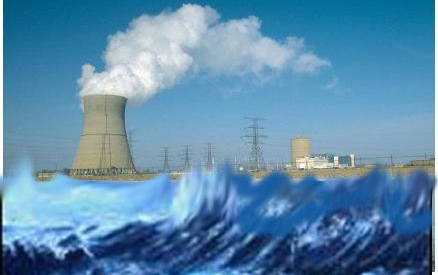 The next ‘Great Tide’, Exposed to rising tides and storm surges, Britain’s nuclear plants stand in harm’s way, Beyond Nuclear International, By Andrew Blowers, 4 Dec 20,
‘It was now that wind and sea in concert leaped forward to their triumph.’
Hilda Grieve: The Great Tide: The Story of the 1953 Flood Disaster in Essex. County Council of Essex, 1959
The Great Tide of 31 January/1 February 1953 swept down the east coast of England, carrying death and destruction in its wake. Communities were unaware and unprepared as disaster struck in the middle of the night, drowning over 300 in England, in poor and vulnerable communities such as Jaywick and Canvey Island on the exposed and low-lying Essex Coast.
Although nothing quite so devastating has occurred in the 67 years since, the 1953 floods remain a portent of what the effects of climate change may bring in the years to come.
Since that largely unremembered disaster, flood defences, communications and emergency response systems have been put in place all along the east coast of England, although it will only be a matter of time before the sea reclaims some low-lying areas.
Among the most prominent infrastructure on the East Anglian coast are the nuclear power stations at Sizewell in Suffolk and Bradwell in Essex, constructed and operated in the decades following the Great Tide.
Sizewell A (capacity 0.25 gigawatts), one of the early Magnox stations, operated for over 40 years, from 1966 to 2006. Sizewell B (capacity 1.25 gigawatts), the only operating pressurised water reactor in the UK, was commissioned in 1995 and is currently expected to continue operating until 2055.
Further down the coast, Bradwell (0.25 gigawatts) was one of the first (Magnox) nuclear stations in the UK and operated for 40 years from 1962 to 2002, becoming, in 2018, the first to be decommissioned and enter into ‘care and maintenance’.
These and other nuclear stations around our coast were conceived and constructed long before climate change became a political issue. And yet the Magnox stations with their radioactive graphite cores and intermediate-level waste stores will remain on site until at least the end of the century.
Meanwhile, Sizewell B, with its highly radioactive spent fuel store, will extend well into the next. Inevitably, then, the legacy of nuclear power will be exposed on coasts highly vulnerable to the increasing sea levels and the storm surges, coastal erosion and flooding that accelerating global warming portends.
Managing this legacy will be difficult enough. Yet it is proposed to compound the problem by building two gargantuan new power stations on these sites, Sizewell C (capacity 3.3 gigawatts) and Bradwell B (2.3 gigawatts) to provide the low-carbon, ‘firm’ (i.e. consistent-supply) component of the energy mix seen as necessary to ‘keep the lights on’ and help save the planet from global warming.
But these stations will be operating until late in the century, and their wastes, including spent fuel, will have to be managed on site for decades after shutdown. It is impossible to foresee how any form of managed adaptation can be credibly sustained during the next century when conditions at these sites are unknowable.
New nuclear power is presented as an integral part of the solution to climate change. But the ‘nuclear renaissance’ is faltering on several fronts. It is unable to secure the investment, unable to achieve timely deployment, unable to compete with much cheaper renewables, and unable to allay concerns about security risks, accidents, health impacts, environmental damage, and the long-term management of its dangerous wastes.
It is these issues that will be played out in the real-world context of climate change. There is an exquisite paradox here. While nuclear power is hubristically presented as the ‘solution’ to climate change, the changing climate becomes its nemesis on the low-lying shores of eastern England. ………. https://wordpress.com/read/feeds/72759838/posts/3061243158

UK doesn’t have policies in place ready for COP26 Paris climate summit
climate summit since Paris in 2015, and quite possibly one of the most
important international gatherings in history. It’s the moment when
countries need to make good on the commitment they signed up to in Paris to
limit the average global temperature rise to 1.5 degrees Celsius, and agree
to reduce their greenhouse gas emissions at the scale and speed that’s
required. On Friday we learned what the UK is proposing – cutting carbon
emissions by 68 per cent by 2030 – but, at present, we do not have the
policies in place to achieve it.
https://inews.co.uk/opinion/climate-change-targets-welcome-policies-radical-enough-meet-them-782737
UK’s Business, Energy and Industrial Strategy (BEIS) Department rejects the claim that nuclear power is ”zero carbon”

Business, Energy and Industrial Strategy (BEIS) Department accept that nuclear is not a ‘zero carbon’ source of electricity– implications for EdF’s advertisement claims. TASC 30th November 2020
On the 15th October, Together Against Sizewell C (TASC) wrote to BEIS pointing out that the nuclear power developer behind Hinkley Point C and the notional Sizewell C plants was justifying its TV ad claim that it is the ‘biggest producer of carbon free electricity’ by referencing a BEIS website in which the claim of ’zero carbon’ was made for renewables and nuclear.
In a response to TASC received on the 25th November, Director of Nuclear at BEIS, Stephen Speed who also co-chairs the BEIS/NGO nuclear forum acknowledged the error, stated, ‘….we agree with your argument that the environmental impact table of the Fuel Mix Disclosure report could cause confusion. I have asked for the report to be amended with a line that explains that the table relates only to generator emissions in the operational phase and does not include emissions related to the fuel supply chain or maintenance
activities.’
 Despite the fact that TASC would still contest the assumption that even generator carbon emissions are zero, the concession
from BEIS is a good interim result. Commenting on the agreement to alter the information on the website, Pete Wilkinson, Chairman of TASC, said today, ‘This acknowledgement from BEIS is welcome and important. At a time when the future of nuclear power in the UK is in the balance, removing official support for the zero carbon claim changes the game, and fundamentally exposes nuclear power’s climate change credentials as insignificant.
The word ‘zero’ can no longer be used when referencing nuclear power and carbon. ‘Moreover, it forces EdF to desist in making
the assertion which they had hitherto justified by pointing to a BEIS website which upheld their misplaced claim. ‘It may also, finally, force our local MP, Dr Therese Coffey, to drop the phrase as well. Incredibly for a Secretary of State, she has used the zero carbon claim in her response to the EdF planning application which the inspectorate will be examining next year and has refused to meet members of TASC on the grounds that our anti-nuclear views are ‘well known’. Such an attitude is rude, facile and possibly in breach of the Parliamentary Code.’
Danger to San Onofre nuclear waste, from ocean’s king tides
 Annual High Tide Spurs Concerns About Future Safety of San Onofre Nuclear Waste Stock Near South OC, Voice of OC, By BRANDON PHO November 23, 2020, Annual High Tide Spurs Concerns About Future Safety of San Onofre Nuclear Waste Stock Near South OC, Voice of OC, By BRANDON PHO November 23, 2020, They’re called king tides:Ocean waves that grow especially tall a few times during the year, rumbling against the California coast and offering a glimpse into future sea level rise and a reshaping shoreline, according to state coastal regulators.
Those tides rolled up to San Onofre last weekend, where a sea wall stands to protect what nearby communities fear is a man-made disaster in waiting: the decommissioned but still radioactive San Onofre Nuclear Generating Station (SONGS). The following week, local officials and activists convened a set of dueling community forums that well capture the ongoing dispute over what exact risk the nuclear waste sitting at SONGS poses to all life within the area joining Orange and San Diego counties. The debate centers on the integrity of SONGS’ nuclear waste storage system, which has been criticized as prone to failure and an ecological and human health hazard. One Nov. 19 forum hosted by nuclear watchdogs saw some of their fears echoed back to them by Dr. Ian Fairlie, a radiation biologist in London who once headed the Secretariat of the UK Government’s CERRIE committee on internal radiation risks……. Members of the public laid out those concerns at an Aug. 20 panel meeting, and the comments can be read here. ……. environmentalists are looking at sea level rise’s impacts on coastlines well into 2100. Edison had previously argued studies into that time frame aren’t necessary……… There’s deep disagreement about what to do with the leftover nuclear waste, all 1,800 metric tons of which are in dry storage and embedded in concrete. The spent fuel contains radioactive isotopes like Cesium-137, the amount of which critics say is comparable to levels released during the Chernobyl disaster of 1986.……… The contention between watchdogs and Edison is the type of dry storage the company chose. Critics say the company has cheaped out through more cost-efficient, but less safe, thin-walled HOLTEC canisters, feared to be more prone to cracking and corrosion from conditions like the plant’s salty seaside locale. Instead, watchdogs have called for the use of thicker casks they say would better stave off the risk of failure and exposure. Fairlie at the Nov. 19 forum, hosted by the Samuel Lawrence Foundation and local nuclear safety groups, said the current canisters in use by Edison are “not very good – they are cheap … 5/8ths of an inch thick, prone to cracking.” They’re “designed to be temporary and they’re not really robust from external attack in my view,” he said, adding “it would be much, much, much better” for the spent fuel to be stored in a thicker cask — “Unlikely to be subject to cracks.” The only problem? “They’re very expensive.” ……… https://voiceofoc.org/2020/11/annual-high-tide-spurs-concerns-about-future-safety-of-san-onofre-nuclear-waste-stock-near-south-oc/ |
|
Nuclear power hinders fight against climate change

Nuclear Power Hinders Fight Against Climate Change https://goodmenproject.com/featured-content/nuclear-power-hinders-fight-against-climate-change/ Countries investing in renewables are achieving carbon reductions far faster than those which opt to back nuclear power. November 21, 2020 by Climate News Network By Paul Brown
Countries wishing to reduce carbon emissions should invest in renewables, abandoning any plans for nuclear power stations because they can no longer be considered a low-carbon option.
That is the conclusion of a study by the University of Sussex Business School, published in the journal Nature Energy, which analysed World Bank and International Energy Agency data from 125 countries over a 25-year period.
The study provides evidence that it is difficult to integrate renewables and nuclear together in a low-carbon strategy, because they require two different types of grid. Because of this, the authors say, it is better to avoid building nuclear power stations altogether.
A country which favours large-scale nuclear stations inevitably freezes out the most effective carbon-reducing technologies − small-scale renewables such as solar, wind and hydro power, they conclude.
Perhaps their most surprising finding is that countries around the world with large-scale nuclear programmes do not tend to show significantly lower carbon emissions over time. In poorer countries nuclear investment is associated with relatively higher emissions.
“This raises serious doubts about the wisdom of prioritising investment in nuclear over renewable energy”
The study found that in some large countries, going renewable was up to seven times more effective in lowering carbon emissions than nuclear.
The findings are a severe blow to the nuclear industry, which has been touting itself as the answer to climate change and calling itself a low-carbon energy. The scientists conclude that if countries want to lower emissions substantially, rapidly and as cost-effectively as possible, they should invest in solar and wind power and avoid nuclear.
Benjamin Sovacool, professor of energy policy at the University of Sussex and the study’s lead author, said: “The evidence clearly points to nuclear being the least effective of the two broad carbon emissions abatement strategies, and coupled with its tendency not to co-exist well with its renewable alternative, this raises serious doubts about the wisdom of prioritising investment in nuclear over renewable energy.
“Countries planning large-scale investments in new nuclear power are risking suppression of greater climate benefits from alternative renewable energy investments.”
The report says that as well as long lead times for nuclear, the necessity for the technology to have elaborate oversight of potentially catastrophic safety risks, security against attack, and long-term waste management strategies tends to take up resources and divert attention away from other simpler and much quicker options like renewables.
Consistent results
The nuclear industry has always claimed that countries need both nuclear and renewables in order to provide reliable power for a grid that does not have input from coal- or gas-fuelled power stations.
This study highlights several other papers which show that a reliable electricity supply is possible with 100% renewables, and that keeping nuclear in the mix hinders the development of renewable.
Patrick Schmidt, a co-author from the International School of Management in Munich, said: “It is astonishing how clear and consistent the results are across different time frames and country sets. In certain large country samples the relationship between renewable electricity and CO2 emissions is up to seven times stronger than the corresponding relationship for nuclear.”
As well as being a blow to the nuclear industry, the paper’s publication comes at a critical time for governments still intending to invest in nuclear power.
For a long time it has been clear that most advanced democratic countries which are not nuclear weapons states and have no wish to be have been investing in renewables and abandoning nuclear power, because it is too expensive and unpopular with the public. In Europe they include Germany, Italy and Spain, with South Korea in the Far East.
Nuclear weapons needs
Nuclear weapons states like the UK and the US, which have both admitted the link between their military and civilian nuclear industries, continue to encourage the private sector to build nuclear stations and are prepared to provide public subsidy or guaranteed prices to induce them to do so.
With the evidence presented by this paper it will not be possible for these governments to claim that building new nuclear power stations is the right policy to halt climate change.
Both Russia and China continue to be enthusiastic about nuclear power, the cost being less important than the influence gained by exporting the technology to developing countries. Providing cheap loans and nuclear power stations gives their governments a long-term foothold in these countries, and involves controlling the supply of nuclear fuel in order to keep the lights on.
Andy Stirling, professor of science and technology policy at Sussex and also a co-author, said: “This paper exposes the irrationality of arguing for nuclear investment based on a ‘do everything’ argument.
Our findings show not only that nuclear investments around the world tend on balance to be less effective than renewable investments at carbon emissions mitigation, but that tensions between these two strategies can further erode the effectiveness of averting climate disruption.” − Climate News Network
The creeping carbon costs of digital communication
|
Everyone has done it – sending a quick email to say ‘thanks’ or ‘no problem’ to a work colleague. But the millions of unnecessary messages sent every day are pumping thousands of tonnes of carbon into the atmosphere, researchers say. This is all down to the power they consume, and contributes more than 23,000 tonnes of carbon a year to the UK’s footprint. While emails are an integral form of communication, if we all cut back on just one ‘thank you’ email per day could save over 16,000 tonnes of carbon a year, according to a study. This is the equivalent of 81,152 flights from London to Madrid or taking 3,334 diesel cars off the road. The research, carried out by OVO Energy at the end of last year, found 49 per cent of Brits confessed to sending unnecessary emails every day. …. Sending any email creates a carbon footprint from a combination of the electricity used to power the devices on which it is written and read, the networks that transmit the data and the data centres that store it. Data centre account for less than 0.1 per cent of the world’s carbon footprint, experts say, but this figure is expected to grow with increasing use of video calls, games and streaming……. https://www.msn.com/en-us/news/technology/sending-just-one-email-less-every-day-could-save-1000-tonnes-of-co2/ar-BB1baWzz?li=BBnbfcL |
|

Large and small nuclear reactors should not be included in UK’s ‘clean, green’ 10 point plan

NFLA 18th Nov 2020, The UK & Ireland Nuclear Free Local Authorities (NFLA) has read with
interest, but concluded with real disappointment, the UK Prime Minister’s
10 Point Plan for a Green Industrial Revolution.
We see it as a missed opportunity when radical, appropriately funded action to tackle the climate
emergency is sorely needed. The 10-point plan is supposed to reset UK
Government policy as it prepares for the global climate change conference
taking place in Glasgow next year.
It is expected an Energy White Paper and
National Infrastructure Strategy will follow later this month.
Some of the 10 points the Government is taking forward include some welcome areas of
support – for example a major increase of offshore wind, supporting the
development of electric vehicles in conjunction with support for public
transport, cycling and walking strategies, laudable aims on energy
efficiency (despite completely inadequate resource for it), protecting and
restoring the natural environment and looking at ways to increase green
finance across the country.
However, the amount of new money committed to
such work is totally inadequate to claim this to be part of a new green
industrial revolution. NFLA is particularly disappointed with the
Government’s commitment to new nuclear, which, given the carbon footprint
in the construction period of building such reactors as Sizewell C, will
have next to no positive low carbon impact in the time required to be
getting to zero carbon.
Is nuclear power truly ‘green’ and ‘clean’ when it still creates large amounts of radioactive waste for which there is
still is no long-term management solution for?
The amount of public money required to deliver both small modular reactors, a nuclear fusion
experimental reactor and new large nuclear reactors at sites like Sizewell
and Bradwell is massive. Hinkley Point C alone is coming in at around
£22.5 billion.
Small modular reactors could require similar figures given
there is no agreed or approved design for them, or an established supply
chain that can deliver them in a cost-effective way. An experimental
nuclear fusion reactor requires billions more. In all three cases the
delivery of such projects is years away and completely diverts attention
for more effective alternatives.
Biden – Harris win is a win for the climate
 Joe Biden and Kamala Harris cinch win, Climate Group responds, Mirage News 8 Nov 20, The Climate Group congratulates Joe Biden and Kamala Harris on their historic victory, as announced by the New York Times, Associated Press, and BBC.President-elect Biden’s climate and clean energy plan is the most ambitious we’ve seen from a major US presidential nominee. Under his administration and leadership, we are optimistic about the future of US climate action and the opportunity for renewed global collaboration to address the
  climate crisis.
Amy Davidsen, Executive Director at the Climate Group, said: “Concern for the climate played a major role in the 2020 presidential debates. President-elect Biden’s win shows that Americans expect their president to follow climate science and take the bold and necessary actions to get the US back on track as a leader….. https://www.miragenews.com/joe-biden-and-kamala-harris-cinch-win-climate-group-responds/
U.S. Senate election results – a disappointment for climate action, but with a couple of bright spots
 Also this week, the United States exits the Paris climate agreement, NYT, By Henry Fountain and Lisa Friedman, Nov. 4, 2020, The United States presidential race is still up in the air, and the battle for control of the Senate appears far from over. But one thing is clear the day after Election Day 2020: The “green wave” that environmentalists had hoped for failed to materialize.
There were bright spots for the environment. In the Senate, two Democrats, John Hickenlooper in Colorado and Mark Kelly in Arizona, have defeated incumbent Republicans who have received poor marks from environmental and conservation groups for their voting records.
Mr. Kelly was endorsed by Climate Hawks Vote, a progressive group that promotes candidates who promise to take action on climate change. Mr. Hickenlooper was not. While he declared during the campaign that action on climate change was urgently needed, his past ties to the oil and gas industry in Colorado made some groups wary. ……..
Mr. Hickenlooper could turn out to be the greenest of green lawmakers, but if Democrats don’t win control of the Senate it might make little difference. While the House looks certain to remain in Democratic hands, in the Senate the party needs more victories: Two, if Joseph R. Biden Jr. wins the presidency, which would allow Kamala Harris to break tie votes; or three, if President Trump is re-elected. Even two more Democratic victories seemed less likely on Wednesday than they did before the vote count began.
Climate and the environment were front and center in several state and local elections, and the outcomes appear certain in a few of those……… https://www.nytimes.com/2020/11/04/climate/climate-us-election.html
Australian govt will feel the heat when a Biden administration rejoins the Paris climate agreement
 Biden says the US will rejoin the Paris climate agreement in 77 days. Then Australia will really feel the heat, The Conversation Christian Downie, Australian Research Council DECRA Fellow, Australian National University, November 6, 2020 When the US formally left
 the Paris climate agreement, Joe Biden tweeted that “in exactly 77 days, a Biden Administration will rejoin it”.
The US announced its intention to withdraw from the agreement back in 2017. But the agreement’s complex rules meant formal notification could only be sent to the United Nations last year, followed by a 12-month notice period — hence the long wait.
While diplomacy via Twitter looks here to stay, global climate politics is about to be upended — and the impacts will be felt at home in Australia if Biden delivers on his plans.
Biden’s position on climate change
Can he do it under a divided Congress?
While the votes are still being counted — as they should (can any Australian believe we actually need to say this?) — it seems likely the Democrats will control the presidency and the House, but not the Senate.
This means Biden will be able to re-join the Paris agreement, which does not require Senate ratification. But any attempt to legislate a carbon price will be blocked in the Senate, as it was when then-President Barack Obama introduced the Waxman-Markey bill in 2010.
What’s needed are ambitious targets and mandates for the power sector, transport sector and manufacturing sector, backed up with billions in government investment.
Fortunately, this is precisely what Biden is promising to do. And he can do it without the Senate by using the executive powers of the US government to implement a raft of new regulatory measures.
Take the transport sector as an example. His plan aims to set “ambitious fuel economy standards” for cars, set a goal that all American-built buses be zero emissions by 2030, and use public money to build half a million electric vehicle charging stations. Most of these actions can be put in place through regulations that don’t require congressional approval.
And with Trump out of the White House, California will be free to achieve its target that all new cars be zero emissions by 2035, which the Trump administration had impeded.
If that sounds far-fetched, given Australia is the only OECD country that still doesn’t have fuel efficiency standards for cars, keep in mind China promised to do the same thing as California last week.
What does this mean for Australia?
For the last four years, the Trump administration has been a boon for successive Australian governments as they have torn up climate policies and failed to implement new ones.
Rather than witnessing our principal ally rebuke us on home soil, as Obama did at the University of Queensland in 2014, Prime Minister Scott Morrison has instead benefited from a cosy relationship with a US president who regularly dismisses decades of climate science, as he does medical science. And people are dying as a result.
For Australia, the ambitious climate policies of a Biden administration means in every international negotiation our diplomats turn up to, climate change will not only be top of the agenda, but we will likely face constant criticism.
Indeed, fireside chats in the White House will come with new expectations that Australia significantly increases its ambitions under the Paris agreement. Committing to a net zero emissions target will be just the first.
The real kicker, however, will be Biden’s trade agenda, which supports carbon tariffs on imports that produce considerable carbon pollution. The US is still Australia’s third-largest trading partner after China and Japan — who, by the way, have just announced net zero emissions targets themselves……
With Biden now in the White House, it’s not just global climate politics that will be turned on its head. Australia’s failure to implement a serious domestic climate and energy policy could have profound costs.
Costs, mind you, that are easily avoidable if Australia acts on climate change, and does so now. https://theconversation.com/biden-says-the-us-will-rejoin-the-paris-climate-agreement-in-77-days-then-australia-will-really-feel-the-heat-149533
Japan: the next generation of LDP leaders embrace both carbon neutrality and the elimination of nuclear energy.
Nuclear Power and Japan’s 2050 Climate Pledge
Japan’s latest carbon-neutrality pledge puts the spotlight on the challenges facing the country’s nuclear power industry. The Diplomat , By Tom Corben,, November 05, 2020 In his inaugural address to the Diet last month, Japan’s Prime Minister Suga Yoshihide officially announced that his government would revise the country’s carbon-neutrality commitments, aiming for zero emissions by 2050. Suga expressed his intent to “put maximum effort into achieving a green society…..
Of course, the nuclear lobby’s entrenched interests at the highest levels of the government and within the LDP itself will likely continue to frustrate efforts to comprehensively revise Japan’s nuclear energy policies. Indeed, there is every chance that the revised Basic Energy Plan due next year will maintain, if not expand, the share of Japan’s energy mix allocated to nuclear power. Still, without significant changes to the regulatory environment, a more favorable business environment, or a major shift in public opinion or political support, at present it is difficult to see Japan’s nuclear power industry making a major contribution to Japan’s carbon-neutrality goals in the coming decades.
Putin orders Russian government to try to meet Paris climate goals
Putin orders Russian government to try to meet Paris climate goals
President Vladimir Putin has signed a decree ordering the Russian government to try to meet the 2015 Paris Agreement to fight climate change, but stressed that any action must be balanced with the need to ensure strong economic development.
A new nuclear power plant at Sizewell is the wrong choice for a zero carbon Britain
|
A new nuclear power plant at Sizewell is the wrong choice for a zero carbon Britain, The climate column: The proposed Sizewell C will not produce electricity until about 2040, which it means it cannot reduce the UK’s carbon emissions with the speed necessary to avoid catastrophic tipping points The Independent , Donnachadh McCarthy@DonnachadhMc 6 Nov 20,
Just weeks ago, the Climate Assembly set up by parliament rejected nuclear power as an answer to creating a zero-carbon economy. This was due to cost, safety and difficulties with waste storage and decommissioning. Yet Boris Johnson is reported to be about to commit Britain to buying another hugely expensive nuclear power station. As this new plant would not be producing electricity until about 2040, it means it cannot reduce the UK’s carbon emissions with the speed necessary to avoid catastrophic tipping points, whereas cheaper renewables can be up and running within a couple of years of being commissioned. Consider the following analogy. Four years ago, you needed to replace your gas boiler and a company came along and offered to sell you the world’s most expensive experimental boiler ever. It’s been trying to build the first four of them for over 20 years but had not yet got any actually working. The first one it tried to build, in Finland, is already 13 years behind schedule and has more than tripled in price. The second one it tried to build, in France, is 10 years behind schedule, now costs six times the original quote and has encountered monumental safety issues. They then tell you the boiler was filled with lethal toxins, which if the boiler’s seals broke, could explode and kill everybody in your house. All your neighbours would have to be permanently evacuated immediately without being allowed to collect their lethally contaminated belongings and the area around your boiler would become an exclusion zone for generations. The sales-person added that the boiler will cost up to twice as much to run as your current boiler. They demanded you sign a 35-year inflation-proofed deal that makes it difficult to switch to a cheaper renewable energy supplier or use energy efficiency measures to reduce your need for the boiler. Every single bank refused to lend you the money to install your new boiler, as they believed it was a financially insane project to lend money to. There was another problem. The experimental boiler continuously produces highly-toxic explosive waste that the supplier, after 70 years of trying, still has no idea what to do with. You would have to store it in your cellar, until somebody miraculously comes up with a way to store it safely for millennia. The salesperson neglected to add that you had to pay for the costs of removing the boiler at the end of its life but that the process takes hundreds of years to complete. I tell you this imaginary tale to try and explain the utter insanity of what the UK government did when it signed the contract with EDF Energy to build a new Hinkley Point nuclear power plant in 2016. Hinkley is already a year behind schedule and nearly £3bn over budget.
And now imagine this. Despite all of the above and knowing that renewable energy alternatives have already fallen to less than half of the cost of this experimental boiler and that new renewable electricity storage technologies have been likewise collapsing in price, the same contractor comes back to you to persuade you to buy another of these hugely expensive boilers for your second home. Unlike almost every single government in the world, Boris Johnson’s government is reported to be planning on announcing in the next few weeks that the UK will agree to build a second new EDF nuclear power plant at Sizewell in Suffolk. Why would any supposedly sane country sign such crazy energy contracts? ……… https://www.independent.co.uk/voices/nuclear-power-plant-sizewell-boris-johnson-b1622086.html |
|
Biden as president would pursue climate ‘cheaters’, such as Morrison’s Australia
|
Within his first 100 days, Biden has committed to convene a climate world summit to directly engage the leaders of the major carbon-emitting nations of the world to persuade them to join the United States in making more ambitious national pledges, above and beyond the commitments they have already made. From the US, we could see a new, more ambitious emission reduction target than its underwhelming 26-28% by 2025 (if that sounds familiar, it’s because Australia has the exact same underwhelming target range but for 2030, and without the desire to improve it). Importantly, Biden will pursue countries seen as “cheating” on climate action, using “America’s economic leverage and power of example”. Given the Morrison government’s insistence on using leftover carbon credits to avoid any credible emission reductions over the next decade – dubbed by the former UN climate chief Christiana Figueres as “cheating” and by numerous Australian law professors as legally baseless – Australia may be a target of that pursuit. Australia and the US might also be at odds over financial support for climate action in developing countries. Biden’s campaign promises include meeting the US climate finance pledge, of which $2bn to the Green Climate Fund is still outstanding. Prime minister Scott Morrison pulled Australia out of the Green Climate Fund in 2018 during an interview with Alan Jones and has resisted calls since from our neighbours in the Pacific to rejoin. While presidential office is key, if Democrats take a majority of Senate seats their capabilities on climate would grow fast. The president, Senate and key states could see the US move quickly – even this year. And much like the climate leadership shown by states and territories in Australia that are all signed up to net-zero by 2050 targets, a number of US state governments have already banded together to take climate action under Trump. According to the America’s Pledge report, sub-national action makes it possible for the US to cut emissions by 37% by 2030. And despite Trump’s best efforts to revive the coal industry, more coal capacity (37GW) has been retired under his presidency than during Obama’s second term (33GW). The US consumed more energy from renewables than coal in 2019, for the first time in over a century, setting the stage for Biden’s promise of a carbon pollution-free power sector by 2035. This 12 December the Paris agreement turns five. The United Kingdom, which will host the next UN climate conference, will mark the occasion with an ambition summit. And while Scott Morrison has resisted calls from the UK to do more on climate, it may be harder to resist similar calls from the US. Morrison claims, “Our policies won’t be set in the United Kingdom, they won’t be set in Brussels, they won’t be set in any part of the world other than here.” I wouldn’t be so sure. When former president Obama pressured the Abbott government to do more on climate change in 2014, it had an impact. Let’s see what happens when Washington calls again. https://www.theguardian.com/commentisfree/2020/nov/04/biden-as-president-would-pursue-climate-cheaters-and-australia-could-be-among-them |
|
United States under Donald Trump formally exits Paris Agreement on climate change
|
United States under Donald Trump formally exits Paris Agreement on climate change https://www.abc.net.au/news/2020-11-05/us-formally-exits-paris-climate-change-agreement-trump/12849940
The Trump administration told the United Nations it intends to pull out of the agreement in 2017. Some 189 countries remain committed to the 2015 Paris Agreement. Moving forward the agreement aims to keep the global increase in average temperatures worldwide “well below” two degrees Celsius, ideally no more than 1.5 Celsius, compared to pre-industrial levels. A further six countries have signed, but not ratified the pact. Scientists said any rise beyond two degrees Celsius could have a devastating impact on large parts of the world, raising sea levels, stoking tropical storms and worsening droughts and floods. The only binding requirement is that nations have to accurately report on their efforts. The United States is the world’s second-largest emitter of heat-trapping gases such as carbon dioxide, with only China producing more. In recent weeks, China, Japan and South Korea have joined the European Union and several other countries in setting national deadlines to stop pumping more greenhouse gases into the atmosphere. While the Trump Administration has shunned Federal Government measures to cut emissions, some states, cities and businesses in the US have pressed ahead with their own efforts. Democratic presidential candidate Joe Biden has said he favours signing the US back up to the Paris Accord. With the United States outside the pact, it will be harder for the rest of the world to reach the agreed goals. |
|
1 This Month
19 February – VIRTUAL EVENT-Decision Time: AI and Our Nuclear Arsenal
12:45 p.m. Central / 1:45 p.m. Eastern
To see nuclear-related stories in greater depth and intensity – go to https://nuclearinformation.wordpress.com

-
Archives
- February 2026 (181)
- January 2026 (308)
- December 2025 (358)
- November 2025 (359)
- October 2025 (376)
- September 2025 (258)
- August 2025 (319)
- July 2025 (230)
- June 2025 (348)
- May 2025 (261)
- April 2025 (305)
- March 2025 (319)
-
Categories
- 1
- 1 NUCLEAR ISSUES
- business and costs
- climate change
- culture and arts
- ENERGY
- environment
- health
- history
- indigenous issues
- Legal
- marketing of nuclear
- media
- opposition to nuclear
- PERSONAL STORIES
- politics
- politics international
- Religion and ethics
- safety
- secrets,lies and civil liberties
- spinbuster
- technology
- Uranium
- wastes
- weapons and war
- Women
- 2 WORLD
- ACTION
- AFRICA
- Atrocities
- AUSTRALIA
- Christina's notes
- Christina's themes
- culture and arts
- Events
- Fuk 2022
- Fuk 2023
- Fukushima 2017
- Fukushima 2018
- fukushima 2019
- Fukushima 2020
- Fukushima 2021
- general
- global warming
- Humour (God we need it)
- Nuclear
- RARE EARTHS
- Reference
- resources – print
- Resources -audiovicual
- Weekly Newsletter
- World
- World Nuclear
- YouTube
-
RSS
Entries RSS
Comments RSS
 nuclear-news