Germany, Denmark, Luxembourg, Austria and Portugal warn against including nuclear in the proposed EU taxonomy
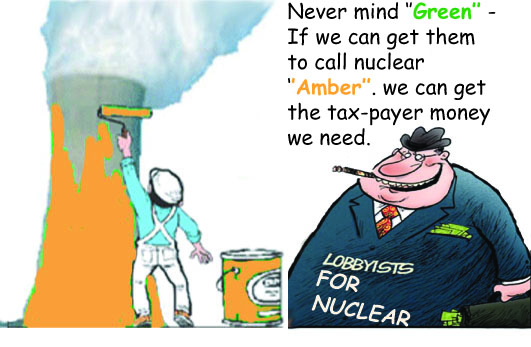
The environment ministers of five EU member states including Germany warned against including nuclear power in the proposed EU taxonomy at the sidelines of the UN Cop 26 climate conference in Glasgow today. In a jointstatement issued by the environment ministers of Germany, Denmark, Luxembourg, Austria and Portugal, the signatories warn that including nuclear in the taxonomy would permanently damage the latter’s “integrity, credibility and therefore its usefulness”. The EU taxonomy is to establish criteria for environmentally sustainable economic practices, steering funding towards these activities. German caretaker environment minister Svenja Schulze said that “nuclear power is too risky, too expensive”, and in any case would come too late to make a notable contribution to mitigating climate warming. Argus Media 11th Nov 2021 https://www.argusmedia.com/en/news/2272872-ministries-reject-nuclear-inclusion-in-eu-taxonomy |
Nuclear War and Climate Change: The Urgency for Action — The Center for Climate & Security

Christine Parthemore speaks on nuclear war and climate change at a COP26 side event hosted by the International Forum for Understanding, Nov 1, 2021. Source: International Forum for Understanding By Christine Parthemore I had the honor of delivering a keynote speech at a COP26 side event hosted by the International Forum for Understanding on November…
Nuclear War and Climate Change: The Urgency for Action — The Center for Climate & Security
EXPLORING THE SECURITY RISKS OF CLIMATE CHANGE Nuclear War and Climate Change: The Urgency for Action By Christine Parthemore
–There is urgency in this Conference’s proceedings. The urgency is greater because the world’s leaders, to date, have not yet taken the climate crisis seriously enough. Not even close. Yet this echoes a shared challenge: across the most catastrophic risks facing humanity, whether climate change, biological risks, or the risk of nuclear war, we have historically underestimated these threats.
Nuclear weapons – shared history of underestimating effects
What happens when our policies and plans do not fully account for the damage they may cause to the world?
Just as we are witnessing the answers to this question unfolding regarding the climate crisis, there is a similar and in many ways shared history of underestimatingthe catastrophic effects that could come from nuclear weapons.
During World War II, in the surge by the United States to ready nuclear weapons for potential use in the war, most estimates of damage focused on immediate blast effects of the use of these weapons — not secondary or enduring damage that may come after. And our knowledge of those effects was not robust.
Those who created nuclear weapons largely seemed to believe that everyone within the area hit by these weapons would die from the nuclear blast itself — that everything would be obliterated quickly. That, it would be learned, was not necessarily the case.
The first evidence came from the U.S. atomic bombings of Hiroshima and Nagasaki. The full human toll will never truly be known — estimates are between 110,000 and 210,000 people killed.
Yet those who lost their lives directly from the attacks were just one aspect. The degree to which the use of atomic bombs in conflict caused serious, lasting, devastating injuries was underestimated. For those who were not immediately lost, thousands suffered ghastly burns, loss of skin, and shrapnel embedded in their bodies that caused excruciating pain for as long as they lived. This is in addition to extreme suffering beyond injuries and sickness, in years and in some cases lifetimes of economic hardship, social stigma, and psychological damage.
Under-estimating the damage of nuclear weapons contributed to the United States and Soviet Union producing astronomical numbers of them — tens of thousands — in part driven by the belief that they needed tens of thousands of nuclear warheads in order to effectively deter one another from war—or to effectively wipe out the other nation.
Along with these growing nuclear arsenals came increasing nuclear tests. Soviet and U.S. citizens – and those of other nations – were subject to radiation effects from the detonation sites.
Some of the early U.S. nuclear tests were carried out in the Marshall Islands. Others, in the desert of the U.S. southwest.
Almost one quarter of all nuclear tests in history were conducted at one test site in what is now Kazakhstan from 1949 to 1989. The citizens of nearby villages that were exposed now tell the story of the radiation damage caused, including significant genetic effects that crossed generations.
On these terrible legacies of nuclear weapons tests was built significant knowledge of their effects. Before the international community united to ban them, mostly ending the practice, this included more than 2,000 nuclear tests.
Though results were classified in their earliest decades, extensive data from these tests revealed that the use of nuclear weapons could cause major disruptions to temperature patterns, sunlight, and precipitation. Into the 1970s and 80s, it became clearer that such nuclear weapons effects could cause more geographically dispersed and longer-enduring harm than previously realized.
With such data, the world was able to create mathematical and computer models of ever-increasing sophistication.
mportantly, the results of modeling potential effects of nuclear war started becoming public in the last decades of the 20th Century. Citizens of the world began to learn more about how the use of nuclear weapons could cause dramatic changes in weather patterns, and how this could drive severe changes in the availability of food and water, and how it would affect peoples’ health and their ability to care for their families. One such initiative labeled the potential damages of nuclear war as a “nuclear winter” that would befall the planet in some scenarios. ………..
Arms race today / Inflection Point
Unfortunately, this momentum has not been sustained. In the earliest decades of this Century, we have begun moving back in the wrong direction.
During this time, the risk of nuclear war has begun rising again. Most nuclear-armed nations are trying to expand the types of nuclear capabilities they possess, adding even more scenarios for how these weapons might be used in conflict.
Unfortunately, several nations — including my own — are reigniting interest in types of nuclear weapons that are envisioned to be more usable in conflict. These include increasing focus on the horrifically mis-labeled, so-called low-yield nuclear weapon options.
Even more dangerous than the mere presence of such weapons is the mindset that, in the heat of a conflict, it may be feasible to use one nuclear weapon without it being reciprocated. This is a fallacy, and we should not accept it as an assumption steering policy.
While this wasn’t the case early in the Cold War, this time, under-estimating the effects of using such nuclear weapons is not an excuse. We have to assume that the use of even one nuclear weapon would be followed by another, and potentially lead to a broader nuclear exchange and the catastrophic damage that would follow. Today, we know in great detail what that could look like…………..
Convergence
If the intersection of nuclear weapons use and climate change is rooted in work to understand how our atmosphere and our world may be altered by both, today we have an even more daunting task. We have to consider how these threats may actually manifest together.
Some effects of climate change are reigniting attention to past nuclear weapons damages. The Marshall Islands are a central case: at one atoll where the United States conducted nuclear weapon tests, a concrete dome that was designed to encase debris contaminated by these tests is now being inundated by rising seas. We don’t have to model this damage — it has been measured, and we have drone footage recording this occurring………………..
We know that in addition to the immediate death and destruction, such a nuclear conflict also risks significant damage to agricultural production through contamination or disruptions in weather patterns. Now combine this with a scenario in which such conflict occurs when extreme weather exacerbated by climate change has already spent years devastating the world’s food supplies.
How many more millions of people could starve? How many millions of people will try to move in order to save themselves and their families, and how many communities could descend into instability or internal conflict if pressure is not relieved any other way?
This is the reality of the world that we live in today — in which several catastrophic risks to humanity are occurring simultaneously, and they are not isolated from one another in time or space. ………….
I urge the leaders of our nations to commit to serious progress in addressing the climate crisis in the days ahead. We must then also act with urgency, expanding those efforts to rally similar momentum to reduce the risks of nuclear war as well. https://climateandsecurity.org/2021/11/nuclear-war-and-climate-change-the-urgency-for-action/#more-29718
Experts alarmed at the weakening of climate targets at COP26

World leaders will have to return to the negotiating table next year with
improved plans to cut greenhouse gases because the proposed targets agreed
at the Cop26 summit are too weak to prevent disastrous levels of global
heating, the three architects of the Paris agreement have warned.
Christiana Figueres, the former UN climate chief who oversaw the 2015 Paris
summit, and Laurence Tubiana, the French diplomat who crafted the
agreement, have told the Guardian the deadline is essential if the world is
to avoid exceeding its 1.5C temperature limit.
Laurent Fabius, the former French foreign minister who also oversaw Paris, added: “In the present
circumstances [targets] must be enhanced next year.” The last-ditch
intervention by such senior figures, with the Glasgow talks reaching their
final hours, reveals the heightened alarm among many experts over the chasm
between carbon targets and the deep cuts necessary to limit temperature
rises to 1.5C above pre-industrial levels. Current national plans – known
as nationally determined contributions (NDCs) – would lead to 2.4C of
heating, according to an influential analysis this week by Climate Action
Tracker.
Guardian 11th Nov 2021
New draft of climate deal of COP26 weakens plans to get rid of fossil fuels
A NEW draft of the deal that could be agreed at the Glasgow COP26 climate
talks appears to have watered down its push to curb fossil fuels. The first
draft of the “cover decision” for the overarching agreement at the
summit called for countries “to accelerate the phasing-out of coal and
subsidies for fossil fuels”.
The National 12th Nov 2021
Germany reaffirms its opposition to nuclear power being designated as ”sustainable”
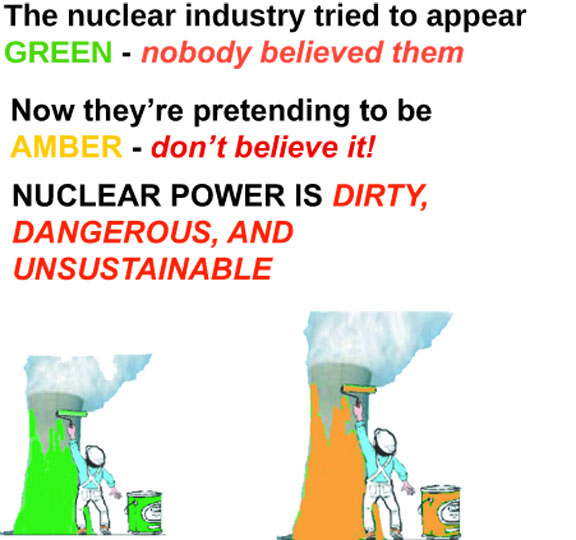
Germany will work towards an exclusion of nuclear power from the EU taxonomy for sustainable investments, the country’s environment minister Svenja Schulze has affirmed. “We don’t want nuclear energy, we don’t think it’s sustainable and we don’t want the EU to support it,“ the acting minister from the Social Democrats (SPD) told newspapers of the Funke Mediengruppe in an article carried by the Frankfurter Allgemeine Zeitung.
Schulze added that the German government is not alone on this position, countering an initiative of several other EU member states under the leadership of France to give nuclear power a greater role in the EU’s plans for decarbonisation and the greening of the financial system.
Building nuclear plants would be much too expensive and time-consuming for effective climate action, with plants commissioned now only being ready for operation by 2045 due to lengthy searches for a location, licensing hurdles and expectable protests against it, she argued. Conservative (CSU) Bavarian state premier Markus Söder backed Schulze’s rejection to make the
technology a tool for climate action, arguing that Germany’s nuclear phase-out “is based on broad societal acceptance.”
Clean Energy Wire 8th Nov 2021
Europe’s dilemma over whether or not to include nuclear power in its sustainabble finance taxonomy
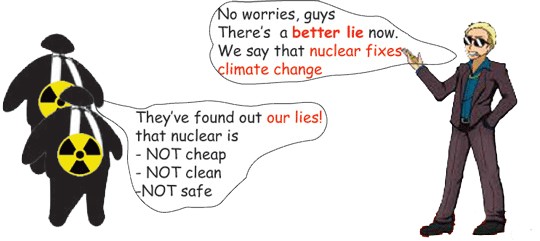
Greenwashing or viable solution? Europe has a big decision to make on nuclear power, CNBC, NOV 9 2021Silvia Amaro @SILVIA_AMARO
It is a long-standing dilemma that the European Commission, the executive arm of the EU, must resolve in the coming weeks.
Ultimately, its decision will have repercussions on its efforts to be a global leader in the area of climate change.
LONDON — The European Union must decide whether nuclear is a clean source of energy, but the decision is tough with countries divided about the right labelling.
Some EU members, notably France, which have big investments in nuclear and are wary of using gas from Russia see the energy resource as a viable option. Other nations, including Germany, believe it is time to move away from it and are worried about nuclear waste.
It is a long-standing dilemma that the European Commission, the executive arm of the EU, must resolve in the coming weeks. The commission is due to publish its sustainable finance taxonomy — rules that will help clarify to investors what the bloc sees as green investments — as an attempt to boost financing in these areas.
Ultimately, its decision will have repercussions on its efforts to be a global leader in the area of climate change……………….
Opponents to inclusion of nuclear power into the EU green taxonomy, led by Germany, argue that the technology is not suitable to achieve sustainability targets, including establishing a transition to a circular economy,” Henning Gloystein, director for energy, climate and resources at consultancy group Eurasia, told CNBC via email.
“The core problem for critics is that there is no solution for long-term storage of nuclear waste. All current solutions are temporary,” he added.
The inclusion of nuclear in the EU’s green taxonomy has also been criticized by activists.
The World Wide Fund for Nature has said that classifying nuclear as somewhat sustainable “would allow the greenwashing of billions of euros of financing for these activities, despite the high emissions from fossil gas and the radioactive waste produced by nuclear power.”
Green image at risk
More broadly, whatever the commission decides will also send a signal to other nations.
The European Commission praises itself for having the most concrete plan on how to cut greenhouse gas emissions — a plan that is still yet to be approved by lawmakers.
The institution has also lobbied other parts of the world, including China, to put forward concrete steps on how they intend to achieve carbon neutrality……….. https://www.cnbc.com/2021/11/09/cop26-europe-has-a-big-decision-to-make-on-nuclear-power.html
China and Saudi Arabia blocking progress towards a deal at COP26
China and Saudi Arabia are blocking progress towards a deal at Cop26 by
refusing to accept that they must be fully transparent about their
greenhouse gas emissions. Senior negotiators at the climate change
conference in Glasgow said that both countries had objected to proposed
reporting requirements aimed at resolving concerns that some nations
conceal the extent of their emissions.
The dispute is delaying progress on
other ingredients of a deal, including rules on establishing a global
market for carbon offsetting. China is understood to object because its
climate target is based on a reduction in emissions per unit of GDP,
meaning that full transparency would reveal data it wants to keep secret
about its economic growth.
Saudi Arabia’s emissions are strongly
influenced by its biggest company, the oil giant Saudi Aramco, and it is
thought to be concerned about revealing information about its performance.
China and Saudi Arabia are also objecting to proposed wording in the final
text that emphasises the need to limit warming to 1.5C, meaning the coal
and oil on which they depend would have to be phased out more quickly.
Times 9th Nov 2021
https://www.thetimes.co.uk/article/chinese-and-saudis-thwart-moves-towards-climate-deal-5pr86frjv
Carbon capture and storage – not all that it’s cracked up to be.
Carbon capture has been heralded by some as an important technological solution to the climate crisis. The Ferret, 8 Nov 21
As COP26 continues in Glasgow, the potential impact of carbon capture and storage in reducing emissions is in the spotlight.
Ferret Fact Service looked at how it works, and whether carbon capture is actually a viable solution…………
According to the Center for Climate and Energy Solutions, there are currently 26 large-scale carbon capture projects in use globally, with 34 more in different stages of development.
What are the drawbacks of carbon capture?
Some environmental campaigners have raised questions about the technology.
One issue is the slow progress in getting carbon capture facilities ready. While it has been trumpeted as one of the major tech solutions for the climate crisis, the amount of CO2 currently captured by CCS is small.
Currently operating CCS facilities have the capacity to capture about 40 million tonnes of CO2 each year. The latest global figure for fossil fuel CO2 emissions (2020) was 34 billion tonnes.
Many countries’ climate change plans rely heavily on carbon capture, but some analysts have questioned whether this is a realistic and effective use of environmental budgets that could be spent on renewable energy sources, for example.
The cost of carbon capture development and getting CCS facilities to commercial levels has been criticised.
Another issue is that most of the carbon capture projects won’t be in operation until the next decade. Scientists say significant carbon reductions are required this decade if the world is to reduce global temperature increase.
Currently, much of the carbon captured is being used in enhanced oil recovery (EOR). This is where oil companies use CO2 to obtain oil from previously unreachable reservoirs. Critics argue that this actually exacerbates overall climate change, as it allows more oil to be accessed which is then burned, adding to emissions, despite reducing carbon released during extraction.
There are also fears that carbon capture will be used as a way for countries with heavy fossil fuel production to continue to extract and sell them, which would hamper global attempts to reduce emissions.
Fears have been raised of the potential danger of CO2 leaking from the underground areas it is stored, either gradually or suddenly……… https://theferret.scot/ffs-explains-carbon-capture-storage/
Greta Thunberg and youth activists filing legal petition to UN, urging for a declaration of “system-wide climate emergency”
Greta Thunberg and youth climate activists from around the world are
filing a legal petition to the UN secretary-general urging him to declare a
“system-wide climate emergency”. As Cop26 enters its final days,
climate campaigners were due to file a legal document on Wednesday calling
on António Guterres to use emergency powers to match the level of response
adopted for the coronavirus pandemic by pronouncing the climate crisis a
global level 3 emergency – the UN’s highest category.
Guardian 10th Nov 2021
“Cover decision” – a draft outcome of COP26 climate talks – planet still headed for 2.4C of warming above pre-industrial levels
Prime Minister Boris Johnson is returning to the COP26 climate summit in
Glasgow – urging nations to “pull out all the stops” to limit warming. The
first draft of an agreement setting out how countries will cut emissions to
avoid temperature rises of above 1.5C is due to be published later.
The agreement – known as a “cover decision” – is the negotiated outcome of the
COP26 talks. Mr Johnson said negotiators would be working to “turn promises
into action”. Despite the promises made at the summit so far, the planet is
still heading for 2.4C of warming above pre-industrial levels, according to
a report by Climate Action Tracker. A global average temperature rise of
just 2C could mean a billion people are affected by fatal heat and
humidity, the Met Office has warned.
BBC 10th Nov 2021
Investor backlash predicted, if European Union were to include Nuclear and Gas as ”Green” in its EU Taxonomy

Net-Zero Alliance Plans to Reject Gas, Nuclear as Green Assets, https://www.bloomberg.com/news/articles/2021-11-08/net-zero-alliance-plans-to-reject-gas-nuclear-as-green-assetsBy John Ainger and Alastair Marsh9 November 2021
- UN-convened asset owners weigh in on taxonomy debate
- The group favors separate legislation for energy transition
The European Union will likely face investor backlash if it includes natural gas and nuclear energy in its green rulebook, known as the EU taxonomy.
The United Nations-convened Net-Zero Asset Owner Alliance, which is part of the wider finance industry’s $130 trillion climate agreement announced last week, wrote in a document that hasn’t been finalized that it would oppose such a decision. Instead, fossil fuels should go into an extension or separate piece of legislation for transition technologies, the group said.
“The Alliance supports a taxonomy that is credible, usable, as well as science- and evidence-based,” according to the document seen by Bloomberg News. The inclusion of gas “would be inconsistent with the high ambition level of the EU taxonomy framework overall.” For nuclear, “it will be of utmost importance to apply strict criteria when assessing” the principle of do-no-significant-harm, “with respect to the other environmental objectives to identify a potential taxonomy alignment,” it said.
The development marks a blow to those EU members who’d hoped the bloc would take a softer stance on gas and nuclear. It also sets the tone for other investors keen to put their net-zero pledges to work, less than a week after international financial institutions representing 40% of total global assets pledged to work toward carbon neutrality by the middle of the century.
The European Commission is under pressure from member states such as France, which want to include nuclear and gas as key planks of their green transition strategies. The debate has intensified in recent months as energy prices soar amid a lack of supply. A decision on the so-called complementary delegated act is expected in the coming weeks.
Environmental groups have criticized the potential inclusion of gas, arguing it would undermine the EU’s ambition of setting the “gold standard” for green investing. It also would result in the bloc failing to meet its goal of cutting emissions by 55% by 2030 from 1990 levels and becoming carbon neutral by mid-century, they said. For nuclear, meanwhile, there are concerns over the environmental impacts of radioactive waste.
The Net-Zero alliance, whose members include Allianz SE and the California Public Employees’ Retirement System, urged the EU Commission, member states and their expert bodies to make sure any decision arrived at is “science and evidence-based,” according to the document.
:
France and other pro nuclear countries push for nuclear to be included as ”sustainable” in EU taxonomy.

Mairead McGuinness urged to reclassify nuclear power as possible ‘green’ solution for EU https://www.independent.ie/news/environment/mairead-mcguinness-urged-to-reclassify-nuclear-power-as-possible-green-solution-for-eu-41028296.html
Irish Commissioner under pressure amid global warming and energy crisis, John Downing .
November 08 2021 Ireland’s EU Commissioner Mairead McGuinness is under pressure to reclassify nuclear power as “green energy”, giving it a central role in the battle against global warming and easing Europe’s energy crisis.
Commissioner McGuinness hopes to decide in the coming weeks on a controversial move which could also give natural gas a transition role in scaling down carbon emissions burning the planet.
Decision time comes amid a major EU energy crisis, with spiralling prices in every member state, and an increasing demand for real action on the pledged 55pc reduction in carbon emissions by 2030 with zero carbon by 2050.
If Ms McGuinness gets the move through the policy-guiding Commission, the issue will then pass to member governments and the European Parliament where battle-lines are already drawn.
On one side, pro-nuclear countries like France will promote the change as a “pragmatic solution” – but others will speak of “greenwashing” and creating more problems to solve immediate issues.
Ms McGuinness told the Irish Independent that member states must ultimately decide their own energy mix whatever the outcome.
There is an important debate ongoing about the role of nuclear energy and natural gas in the transformation of the EU energy sector and their potential inclusion in the EU taxonomy – a classification system for sustainable investments,” Ms McGuinness said yesterday.
“To be part of the EU sustainable investment taxonomy, an energy source must make a significant contribution to the fight against climate change. Nuclear energy is low carbon,” she added.
But she also warned that other aspects of nuclear power were still being studied, looking at “the requirement to do no significant harm” to the environment.
“Right now our work is focusing on scientific reports on this aspect of nuclear power,” Ms McGuinness said.
EU Commission President Ursula von der Leyen gave a strong hint on the direction of travel when speaking to reporters after a leaders’ summit in Brussels on October 22.
“The energy mix of the future needs more renewable and clean energy. Alongside this, we also need a stable source, nuclear energy, and during the transition, also natural gas.
“That is why – as called for by many leaders – the Commission is going to come forward with a taxonomy proposal in the near future,” said Ms von der Leyen.
A pivotal issue in all of this will be the attitude taken by the new German government which is expected to be in place by December 6, the feast of St Nicholas and an important national day.
Back in June 2011, the now outgoing German chancellor, Angela Merkel, committed to ending all nuclear power in the state by December 2022.
She will be replaced by Social Democrat leader Olaf Scholz, heading a three-party coalition of the Green Party and the Liberal FBD.
The Green Party is, by definition, committed to ending nuclear power generation in Germany but the current energy crisis, aggravated by undue dependence on Russian natural gas, complicates this matter as coalition negotiations continue.
France gets 70pc of its electricity from nuclear power stations.
Ireland is committed to creating a ‘Celtic Interconnector’, taking power from France via an undersea powerline due for completion by 2026.
France and other pro nuclear countries push for nuclear to be included as ”sustainable” in EU taxonomy.
Unfair restrictions on observers at COP26 climate talks
The legitimacy of the Cop26 climate summit has been called into question
by civil society participants who say restrictions on access to
negotiations are unprecedented and unjust.
As the Glasgow summit enters its
second week, observers representing hundreds of environmental, academic,
climate justice, indigenous and women’s rights organisations warn that
excluding them from negotiating areas and speaking to negotiators could
have dire consequences for millions of people.
Observers act as informal watchdogs of the summit – the eyes and ears of the public during
negotiations to ensure proceedings are transparent and reflect the concerns
of communities and groups most likely to be affected by decisions. But
their ability to observe, interact and intervene in negotiations on carbon
markets, loss and damage and climate financing has been obstructed during
the first week, the Guardian has been told.
Guardian 8th Nov 2021
The biggest delegation of all at COP26 is that of fossil fuel lobbyists

There are more delegates at COP26 associated with the fossil fuel industry
than from any single country, analysis shared with the BBC shows.
Campaigners led by Global Witness assessed the participant list published
by the UN at the start of this meeting. They found that 503 people with
links to fossil fuel interests had been accredited for the climate summit.
These delegates are said to lobby for oil and gas industries, and
campaigners say they should be banned. “The fossil fuel industry has spent
decades denying and delaying real action on the climate crisis, which is
why this is such a huge problem,” says Murray Worthy from Global Witness.
“Their influence is one of the biggest reasons why 25 years of UN climate
talks have not led to real cuts in global emissions.”
BBC 8th Nov 2021
https://www.bbc.co.uk/news/science-environment-59199484
Drill or Drop 8th Nov 2021
At People’s Summit for Climate Justice, campaigners accuse COP26 of failing the climate
| COP26: Campaigners accuse UN talks of failing climate as they hold counter summit for most marginalised. The UN Framework Convention on Climate Change (UNFCCC) was found guilty of “violating its charter” because it had “forged an intimate partnership with the corporations”. At the start of the People’s Summit for Climate Justice, the UNFCCC was also found guilty of failing to: address global social and economic injustices. recognise, promote and protect the rights of nature; The Sudanese diplomat, Lumumba Di Aping, said: “The UNFCCC has allowed itself to be converted at best into a catering company for the G7, at worst into a carbon noose for the global south.” Global Justice Now, one of the summit’s organisers, said: “There’s one technology that the UNFCCC has an unwavering faith in – it is the market. It promotes the ponzi scheme of capitalism. The UNFCCC no longer represents us, we need to represent ourselves.” Drill or Drop 7th Nov 2021 https://drillordrop.com/2021/11/07/cop26-campaigners-accuse-un-talks-of-failing-climate-as-they-hold-counter-summit-for-most-marginalised/ |
1 This Month



26 September – International Day for the Total Elimination of Nuclear Weapons


PLEASE OPPOSE HR 8255 AND S.3639 – bills would accelerate satellite deployment, with no environmental review or safeguards – https://ncstd5li.quorum.us/campaign/169331/
To see nuclear-related stories in greater depth and intensity – go to https://nuclearinformation.wordpress.com
-
Archives
- September 2026 (233)
- August 2026 (330)
- July 2026 (355)
- June 2026 (287)
- May 2026 (306)
- April 2026 (356)
- March 2026 (251)
- February 2026 (267)
- January 2026 (308)
- December 2025 (358)
- November 2025 (359)
- October 2025 (375)
-
Categories
- 1
- 1 NUCLEAR ISSUES
- business and costs
- climate change
- culture and arts
- ENERGY
- environment
- health
- history
- indigenous issues
- Legal
- marketing of nuclear
- media
- opposition to nuclear
- PERSONAL STORIES
- politics
- politics international
- Religion and ethics
- safety
- secrets,lies and civil liberties
- spinbuster
- technology
- Uranium
- wastes
- weapons and war
- Women
- 2 WORLD
- ACTION
- AFRICA
- Atrocities
- AUSTRALIA
- Christina's notes
- Christina's themes
- culture and arts
- Events
- Fuk 2022
- Fuk 2023
- Fukushima 2017
- Fukushima 2018
- fukushima 2019
- Fukushima 2020
- Fukushima 2021
- general
- global warming
- Humour (God we need it)
- Nuclear
- RARE EARTHS
- Reference
- resources – print
- Resources -audiovicual
- Weekly Newsletter
- World
- World Nuclear
- YouTube
-
RSS
Entries RSS
Comments RSS
 nuclear-news