European Union’s rift over nuclear power
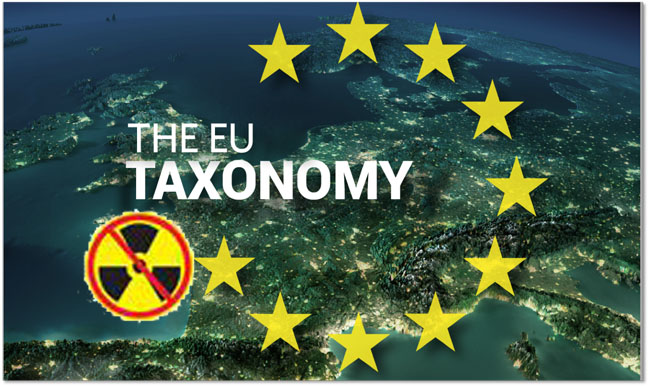
EU faces nuclear rift in decision on energy funds, future, Ravalli Republic, By SAMUEL PETREQUIN and RAF CASERT – Associated Press By SAMUEL PETREQUIN and RAF CASERT -17 Dec 21,
BRUSSELS (AP) — The leaders of the European Union’s two most important nations faced reporters together during a joint news conference early Friday, a show of unity at the end of the EU’s final summit of the year.
Then two words – “nuclear energy” – intervened.
Heading into the Christmas week, atomic power is a topic on which France and Germany broadly differ, and one that has become a big thorn in the side of the EU as the 27-nation bloc decides whether to include nuclear-generated energy among the economic activities that qualify for sustainable investment.
German Chancellor Olaf Scholz, who took office last week, and French President Emmanuel Macron agreed on most of the issues tackled during Thursday’s summit, including Ukraine-Russia tensions and an immigration dispute with Belarus.
On the the sustainable investment rules, however, the two leaders have yet to reach a compromise. The rift over nuclear energy was enough to scuttle any agreement on energy prices during the summit.
A big rise in energy prices has reignited the debate about whether the EU should promote nuclear power projects as a way of becoming greener and more energy independent.
France has asked for nuclear power to be included in the so-called “taxonomy” by the end of the year, leading the charge with several other EU countries that operate nuclear power plants.
The group initially faced strong opposition from Germany and other members that wanted nuclear power to be ineligible for green financing, but Scholz adopted a peacebuilding tone in the summit’s final hours early Friday.
“We are talking about countries with different business models. It’s important that each EU country can pursue its own approach without Europe becoming disunited,” Scholz said. “At the end of the day, we will have to come together despite the different priorities we may have set.”
Germany’s remaining nuclear power plants are due to go offline next year. France derives about 70% of its electricity from nuclear energy……………..
making future nuclear power projects eligible for billions in euros available as part of the European Green Deal while avoiding “greenwashing” remains a controversial issue.
…….. “The lack of agreement shows how lively this is, not only in our country, but throughout Europe,” Belgian Prime Minister Alexander De Croo, who faces a domestic crisis over how to phase out nuclear plants and still maintain energy security to his citizens.
De Croo suggested that amid the energy price crunch, nuclear energy and gas could be temporarily eligible for funds……..
The ball is now with the EU’s chief, European Commission President Ursula von der Leyen. She is expected to present before the end of the year the list of activities eligible for the green investment funds and must decide whether nuclear energy and natural gas make the cut.
Von der Leyen has been under pressure from environmental groups and Green European lawmakers to resist the inclusion of both.
“Fossil gas and nuclear power have no place in the EU taxonomy” for sustainable activities, said Sven Giegold, a Green lawmaker in the European Parliament……. https://ravallirepublic.com/lifestyles/technology/eu-faces-nuclear-rift-in-decision-on-energy-funds-future/article_9d325652-1272-5667-8c6b-1654e065aa61.html
Nuclear Energy Cannot Meaningfully Contribute to a Climate-Neutral Energy System

Nuclear Energy Cannot Meaningfully Contribute to a Climate-Neutral Energy System https://www.counterpunch.org/2021/12/16/nuclear-energy-cannot-meaningfully-contribute-to-a-climate-neutral-energy-system/, BY SCIENTISTS FOR THE FUTURE 16 Dec 21, In light of the accelerating climate crisis, nuclear energy and its place in the future energy mix is being debated once again. Currently its share of global electricity generation is about 10 percent. Some countries, international organizations, private businesses and scientists accord nuclear energy some kind of role in the pursuit of climate neutrality and in ending the era of fossil fuels. The IPCC, too, includes nuclear energy in its scenarios.
On the other hand, the experience with commercial nuclear energy generation acquired over the past seven decades points to the significant technical, economic, and social risks involved. This paper reviews arguments in the areas of “technology and risks,” “economic viability,” ’timely availability,” and “compatibility with social-ecological transformation processes.”

Technology and risks:
Catastrophes involving the release of radioactive material are always a real possibility, as illustrated by the major accidents in Three Mile Island, Chernobyl, and Fukushima. Also, since 1945, countless accidents have occurred wherever nuclear energy has been deployed. No significantly higher reliability is to be expected from the SMRs (“small modular reactors”) that are currently at the planning stage. Even modern mathematical techniques, such as probabilistic security analyses (PSAs), do not adequately reflect important factors, such as deficient security arrangements or rare natural disasters and thereby systematically underestimate the risks.
Moreover, there is the ever-present proliferation risk of weapon-grade, highly enriched uranium, and plutonium. Most spent fuel rods are stored in scarcely protected surface containers or other interim solutions, often outside proper containment structures. The safe storage of highly radioactive material, owing to a half-life of individual isotopes of over a million years, must be guaranteed for eons. Even if the risks involved for future generations cannot be authoritatively determined today, heavy burdens are undoubtedly externalized to the future.

Nuclear energy and economic efficiency: The commercial use of nuclear energy was, in the 1950s, the by-product of military programmes. Not then, and not since, has nuclear energy been a competitive energy source. Even the continued use of existing plants is not economical, while investments into third generation reactors are projected to require subsidies to the tune of billions of $ or €. The experience with the development of SMR concepts suggests that these are prone to lead to even higher electricity costs.
Lastly, there are the considerable, currently largely unknown costs involved in dismantling nuclear power plants and in the safe storage of radioactive waste. Detailed analyses confirm that meeting ambitious climate goals (i. e. global heating of between 1.5° and below 2° Celsius) is well possible with renewables which, if system costs are considered, are also considerably cheaper than nuclear energy. Given, too, that nuclear power plants are not commercially insurable, the risks inherent in their operation must be borne by society at large. The currently hyped SMRs and the so-called Generation IV concepts (not light-water cooled) are technologically immature and far from commercially viable.
Timely availability: Given the stagnating or – with the exception of China – slowing pace of nuclear power plant construction, and considering furthermore the limited innovation potential as well as the timeframe of two decades for planning and construction, nuclear power is not a viable tool to mitigate global heating. Since 1976, the number of nuclear power plants construction starts is declining. Currently, only 52 nuclear power plants are being built. Very few countries are pursuing respective plans. Traditional nuclear producers, such as Westinghouse (USA) and Framatome (France) are in dire straits financially and are not able to launch a significant number of new construction projects in the coming decade. It can be doubted whether Russia or China have the capacity to meet a hypothetically surging demand for nuclear energy but, in any event, relying on them would be neither safe nor geopolitically desirable.
Nuclear energy in the social-ecological transformation: The ultimate challenge of the great transformation, i. e. kicking off the socio-ecological reforms that will lead to a broadly supported, viable, climate-neutral energy system, lies in overcoming the drag (“lock-in”) of the old system that is dominated by fossil fuel interests. Yet, make no mistake, nuclear energy is of no use to support this process. In fact, it blocks it. The massive R&D investment required for a dead-end technology crowds out the development of sustainable technologies, such as those in the areas of renewables, energy storage and efficiency.
Nuclear energy producers, given the competitive environment they operate in, are incentivized to prevent – or minimize – investments in renewables. For obvious technical as well as economic reasons, nuclear hydrogen – the often-proclaimed deus ex machina – cannot enhance the viability of nuclear power plants. Japan is an exhibit A of transformation resistance. In Germany the end of the atomic era proceeds, and the last six nuclear power stations will be switched off in 2021 and 2022, but further steps are still needed, most importantly the search for a safe storage facility for radioactive waste.
By way of conclusion: The present analysis reviews a whole range of arguments based on the most recent and authoritative scientific literature. It confirms the assessment of the paper Climate-friendly energy supply for Germany – 16 points of orientation, published on 22 April 2021 by Scientists for Future (doi.org/10.5281/zenodo.4409334) that nuclear energy cannot, in the short time remaining before the climate tips, meaningfully contribute to a climate-neutral energy system. Nuclear energy is too dangerous, too expensive, and too sluggishly deployable to play a significant role in mitigating the climate crisis. In addition, nuclear energy is an obstacle to achieving the social-ecological transformation, without which ambitious climate goals are elusive.
This article is the English language summary of the findings of the German report by Scientists for Future (S4F) International.
Accepting nuclear and gas as ”green” (or even ”amber”) would jeopardise the credibility of the entire European Green Deal

Granting nuclear and fossil gas the label of sustainability would undermine the EU’s climate targets, divert much-needed green investments in Central and Eastern Europe and jeopardise the credibility of the entire European Green Deal
Gas and nuclear: a lose-lose scenario for Eastern Europe, https://www.forbes.com/sites/jamesconca/2021/12/17/nuscale-nuclear-developer-goes-public-with-a-spac-but-nrc-is-still-a-drag/?sh=6afeedc82c0d EU Observer, By PATRICK TEN BRINKBRUSSELS, 16. DEC, 21 After a year-long fight over the classification of fossil gas and nuclear energy under the EU taxonomy, the Delegate Act defining whether they’re considered as a sustainable investment will finally be released next week by the European Commission.
Yet a last major battle is taking place this Thursday (16 December) in Brussels. The 27 EU leaders will have a final word at the last European Council of the year on whether fossil gas and nuclear should be part of the EU list of environmentally-sustainable economic activities.
The battle lines are drawn: on one side France supporting nuclear with Poland, the Czech Republic and other Eastern partners who, for the most part, are for the inclusion of fossil gas in the EU green labelling; on the other side Italy, Spain, Denmark, Austria and Luxembourg, who are clearly opposed to considering any of them as a sustainable investment.
Paradoxically, central and eastern European governments have been very vocal in advocating for the inclusion of fossil gas on the EU green investment list, while they have most at stake in terms of climate, energy prices and energy sovereignty……………………………..
Nuclear gamble ‘does harm’
The potential contribution of nuclear power to reducing greenhouse gas emissions is as clear as its non-sustainable nature due to severe safety risks, environmental pollution, huge time investment and the unsolved waste problem.
Several inherent risks of nuclear energy, from the disaster potential, to waste management over hundreds of thousands of years, or uranium mining, were not properly addressed in the broadly-criticised report of the Joint Research Centre commissioned by the European Commission to back a decision on the EU taxonomy. It seems obvious that the current nuclear technology cannot ensure the “do no significant harm” EU principle.
Economically, investing in new nuclear plants does not pay off. Newly added capacities are not realistic due to high investment, competition of renewables and time costs.
For example, the Catalan government estimated that with the same budget of 19 billion euros used for the construction of the new nuclear reactor Flamanville 3 in France, they could invest in photovoltaic solar energy that would generate around 5 times more electricity and be operational in a quarter of the time.
Granting nuclear and fossil gas the label of sustainability would undermine the EU’s climate targets, divert much-needed green investments in Central and Eastern Europe and jeopardise the credibility of the entire European Green Deal……… https://euobserver.com/opinion/153831
Warmer winters are happening across the globe
As climate scientist Kai Kornhuber walks around New York City this winter,
an eerie feeling creeps into his body. It’s warm enough for a T-shirt in
December, and the birds are chirping loudly.
The temperatures tell birds
and trees that it’s time for action, but the systems are out of sync for
December, says Kornhuber, a postdoctoral researcher at Columbia
University’s Earth Institute. “It’s not right, there’s a disconnect
between how it should be and how it is.” Kornhuber said.
Warmer winters
are happening across the globe, and leading to some big impacts: 2021
brought the planet’s 16th-warmest February since records began. While the
popular imagination might associate the climate crisis with scorching
summers and their attendant droughts, wildfires, hurricanes and heat waves,
milder winters can also be drivers of catastrophic weather events and
profound changes. They range from shifts in agricultural use, triggering
changing weather patterns to boosting the likelihood of violent events,
like the swarm of tornadoes that wreaked havoc in the American midwest and
south over last weekend.
Guardian 17th Dec 2021
https://www.theguardian.com/environment/2021/dec/17/warmer-winters-climate-crisis-scientists
European states divided, as decision looms on December 22nd about including nuclear as ”green”
The EU is set to make a final decision on December 22 on whether to
include nuclear power and natural gas in its green taxonomy. The issue is
dividing EU members, with France and number of nuclear CEE states, such as
the Czech Republic, Hungary, Bulgaria and Romania, in favour of including
atomic energy and natural gas, while Germany is leading a group that also
includes Italy, Spain, Denmark, Austria and Luxembourg that is against
including gas and nuclear in the green taxonomy.
Pro-gas and pro-nuclear
countries regard gas as a transition fuel that can help reduce emissions in
countries such as Poland and the Czech Republic that are now aiming to
reduce coal’s role in power generation. The nuclear lobby, meanwhile, is
strong, with energy ministers from Bulgaria, Croatia, Czechia, Finland,
France, Hungary, Poland, Romania, Slovakia and Slovenia speaking out in
October to support nuclear’s inclusion in the taxonomy.
BNE Intellinews 17th Dec 2021
Climate change has crashed Earth’s ”air – conditioners” – the North and South poles.

Though the continent stays frozen for much of the year, rising temperatures in the Pacific have changed how air circulates around the South Pole, which in turn affects ocean currents. Warm, deep ocean water is welling up towards coastlines, lapping at the ice sheet’s weak frozen underbelly, weakening it from below.
“This is triggering the beginnings of a massive collapse,” Scampos wrote in an email from Antarctica’s McMurdo Station, where he is preparing for a field trip to Thwaites Glacier’s failing ice shelf………………………………….

Climate change has crashed Earth’s ‘air-conditioners’, risking rest of planet, The Age , By Sarah Kaplan, 16 Dec 21, The ice shelf was cracking up. Surveys showed warm ocean water eroding its underbelly. Satellite imagery revealed long, parallel fissures in the frozen expanse, like scratches from some clawed monster. One fracture grew so big, so fast, scientists took to calling it “the dagger”.
“It was hugely surprising to see things changing that fast,” said Erin Pettit. The Oregon State University glaciologist had chosen this spot for her Antarctic field research precisely because of its stability. While other parts of the infamous Thwaites Glacier crumbled, this wedge of floating ice acted as a brace, slowing the melt. It was supposed to be boring, durable, safe.
Now climate change has turned the ice shelf into a threat – to Pettit’s field work and to the world.
Planet-warming pollution from burning fossil fuels and other human activities has already raised global temperatures more than 1.1 degrees Celsius. But the effects are particularly profound at the poles, where rising temperatures have seriously undermined regions once locked in ice.
In research presented this week at the world’s biggest earth science conference, Pettit showed that the Thwaites ice shelf could collapse within the next three to five years, unleashing a river of ice that could dramatically raise sea levels.
Up north, aerial surveys document how warmer conditions have allowed beavers to invade the Arctic tundra, flooding the landscape with their dams. Large commercial ships are increasingly infiltrating formerly frozen areas, disturbing wildlife and generating disastrous amounts of rubbish. In many Alaska Native communities, climate impacts compounded the hardships of the coronavirus pandemic, leading to food shortages among people who have lived off this land for thousands of years.
“The very character of these places is changing,” said Twila Moon, a glaciologist at the National Snow and Ice Data Centre and co-editor of the Arctic Report Card, an annual assessment of the state of the top of the world. “We are seeing conditions unlike those ever seen before.”
The rapid transformation of the Arctic and Antarctic creates ripple effects all over the planet. Sea levels will rise, weather patterns will shift and ecosystems will be altered. Unless humanity acts swiftly to curb emissions, scientists say, the same forces that have destabilised the poles will wreak havoc on the rest of the globe.
“The Arctic is a way to look into the future,” said Matthew Druckenmiller, a scientist at the National Snow and Ice Data Centre and another co-editor of the Arctic Report Card. “Small changes in temperature can have huge effects in a region that is dominated by ice.”
This year’s edition of the report card, which was presented at the American Geophysical Union annual meeting on Tuesday, describes a landscape that is transforming so fast scientists struggle to keep up. Temperatures in the Arctic are rising twice as fast as the global average. The October to December 2020 period was the warmest on record, scientists say.
Separately on Tuesday, the World Meteorological Organisation confirmed a new temperature record for the Arctic: 38 degrees in the Siberian town of Verkhoyansk on June 20, 2020.
These warm conditions are catastrophic for the sea ice that usually spans across the North Pole. This past northern summer saw the second-lowest extent of thick, old sea ice since tracking began in 1985. Large mammals like polar bears go hungry without this crucial platform from which to hunt. Marine life ranging from tiny plankton to giant whales are at risk.
“It’s an ecosystem collapse situation,” said Kaare Sikuaq Erickson, Inupiaq, whose business Ikaagun Engagement facilitates cooperation between scientists and Alaska Native communities.
The consequences of this loss will be felt far beyond the Arctic. Sea ice has traditionally acted as Earth’s “air conditioner”; it reflects as much as two-thirds of the light that hits it, sending huge amounts of solar radiation back into space.
By contrast, dark expanses of water absorb heat, and it is difficult for these areas to refreeze. Less sea ice means more open ocean, more heat absorption and more climate change.
“We have a narrow window of time to avoid very costly, deadly and irreversible climate impacts,” National Oceanic and Atmospheric Administration head Rick Spinrad said.
Record highs have also sounded the death knell for ice on land. Three historic melting episodes struck Greenland in July and August, causing the island’s massive ice sheet to lose about 34 trillion kilograms. On August 14, for the first time in recorded history, rain fell at the ice sheet summit…….
Though the Greenland ice sheet is more than a mile thick at its centre, rain can darken the surface, causing the ice to absorb more of the sun’s heat, Moon said. It changes the way snow behaves and slicks the top of the ice.
The consequences for people living in the Arctic can be dire. …………..
In Antarctica, University of Colorado-Boulder glaciologist Ted Scampos said “climate change is more about wind changes and ocean changes than warming – although that is happening in many parts of it as well.”
Though the continent stays frozen for much of the year, rising temperatures in the Pacific have changed how air circulates around the South Pole, which in turn affects ocean currents. Warm, deep ocean water is welling up towards coastlines, lapping at the ice sheet’s weak frozen underbelly, weakening it from below.
“This is triggering the beginnings of a massive collapse,” Scampos wrote in an email from Antarctica’s McMurdo Station, where he is preparing for a field trip to Thwaites Glacier’s failing ice shelf………………………………….
For many Arctic residents, climate change is a threat multiplier – worsening the dangers of whatever other crises come their way. Another essay in the report card documents the threats to Alaska Natives’ food security caused by the coronavirus pandemic. Quarantine restrictions prevented people from travelling to their traditional harvesting grounds. Economic upheaval and supply chain issues left many supermarkets with empty shelves.
But the essay, which was co-written by Inupiaq, Hadia, Ahtna and Supiaq researchers, along with experts from other Native communities, also highlights how Indigenous cultural practices helped communities stave off hunger. Existing food sharing networks redoubled their efforts. Harvesting traditions were adapted with public health in mind………………….
Though no place on Earth is changing as fast as the Arctic, rising temperatures have already brought similar chaos to more temperate climes as well. Unpredictable weather, unstable landscapes and collapsing ecosystems are becoming facts of life in communities around the globe.
None of this represents a “new normal,” Moon cautioned. It’s merely a pit stop on a path to an even stranger and more dangerous future.
Global greenhouse gas emissions are on track to keep rising. Governments and businesses have not taken the steps needed to avert catastrophic warming beyond 1.5 degrees above pre-industrial levels. There is every reason to believe that instability at the poles – and around the planet – will get worse.
But achieving the best case climate scenarios could cut the volume of ice lost from Greenland by 75 per cent, research suggests. International cooperation could prevent garbage from getting into the oceans and alleviate the effects of marine noise. Better surveillance and early warning systems can keep people safe when melting triggers landslides and floods.
“There’s such a big range and difference in what the future of the Arctic and the future anywhere on our globe can look like,” Moon said. “It all depends on human actions.”
The Washington Post https://www.theage.com.au/world/north-america/climate-change-has-crashed-earth-s-air-conditioners-risking-rest-of-planet-20211215-p59hny.html
An Antarctic glacier the size of Britain could ”shatter like a car windscreen” in the next 5 to 10 years
An Antarctic glacier the size of Britain could “shatter like a car windscreen” in the next five to 10 years, causing a significant rise in global sea levels, scientists have warned. The Thwaites glacier in the western Antarctic is the widest on earth at 80 miles across.
A huge part of it is now in danger of breaking off and releasing hundreds of billions of tonnes of ice into the ocean. Data from a comprehensive study by the International Thwaites Glacier Collaboration (ITGC) shows that this colossal glacier is particularly vulnerable to climate change, and the effects of its collapse would be devastating.
Thwaites – also known as the ‘Doomsday glacier’ – has already lost an estimated 900 billion metric
tons of ice since 2000. Its annual ice loss has doubled in the past 30 years, and it now loses approximately 45 billion metric tons more ice than it receives in snowfall per year, according to The International Thwaites Glacier Collaboration (ITGC).
If the glacier were to break up entirely and release all its water into the ocean, sea levels worldwide would rise by more than 2 feet (65 centimetres), said ITGC lead coordinator Dr Ted Scambos. “And it could lead to even more sea-level rise, up to 10 feet (3m), if it draws the surrounding glaciers with it,” Dr Scambos said in a statement.
Telegraph 14th Dec 2021
Protesters denounce French push to label nuclear as sustainable energy
Protesters denounce French push to label nuclear as sustainable energyReuters PARIS, Dec 14 (Reuters) – Demonstrators unfurled a banner declaring “Gas & nuclear are not green” outside France’s foreign ministry on Tuesday in protest at a government drive to label nuclear energy and fossil gas as sectors for climate-friendly investment……………
Protesters denounce French push to label nuclear as sustainable energy, Reuters PARIS, Dec 14 (Reuters) – Demonstrators unfurled a banner declaring “Gas & nuclear are not green” outside France’s foreign ministry on Tuesday in protest at a government drive to label nuclear energy and fossil gas as sectors for climate-friendly investment……………
The European Union is preparing a rulebook on climate friendly investments, which from next year will define which activities can be labelled as green in sectors including transport and buildings.
The EU’s aim is to restrict the green investment label to climate-friendly activities, steer cash into low-carbon projects and stop companies or investors making unsubstantiated environmental claims.
The French government hopes that having the sustainable energy label could boost France’s struggling nuclear energy industry, which was bailed out by the state in 2017 following construction delays and cost overruns.
“By taking the lead of the toxic alliance between fossil gas and nuclear (energy) at a European level, Emmanuel Macron clearly sides with the polluters’ camp. Nuclear is not a green energy: it produces radioactive waste that piles up across the country”, said Nicolas Nace, a member of environmentalist group Greenpeace.
Finance Minister Bruno Le Maire said last month that one of the priorities of France’s six-month EU presidency, starting on Jan. 1, would be to include nuclear power in Europe’s sustainable finance taxonomy.
Some EU countries, including Germany, do not agree with this policy.
France generates about three quarters of its electricity in nuclear reactors operated by state-owned utility EDF. https://www.reuters.com/markets/commodities/protesters-denounce-french-push-label-nuclear-sustainable-energy-2021-12-14/
Nuclear can’t deliver on climate —

Nuclear power can’t save us before climate tipping point
Nuclear can’t deliver on climate — Beyond Nuclear International
Nuclear energy cannot meaningfully contribute to a climate-neutral energy system say German scientists https://wordpress.com/read/feeds/72759838/posts/3712941667 By Ben Wealer et al., Scientists for Future 13 Dec 21,
In light of the accelerating climate crisis, nuclear energy and its place in the future energy mix is being debated once again. Currently its share of global electricity generation is about 10 percent. Some countries, international organizations, private businesses and scientists accord nuclear energy some kind of role in the pursuit of climate neutrality and in ending the era of fossil fuels. The IPCC, too, includes nuclear energy in its scenarios.
On the other hand, the experience with commercial nuclear energy generation acquired over the past seven decades points to the significant technical, economic, and social risks involved. This paper reviews arguments in the areas of “technology and risks,” “economic viability,” ’timely availability,” and “compatibility with social-ecological transformation processes.”
Technology and risks: Catastrophes involving the release of radioactive material are always a real possibility, as illustrated by the major accidents in Three Mile Island, Chernobyl, and Fukushima. Also, since 1945, countless accidents have occurred wherever nuclear energy has been deployed. No significantly higher reliability is to be expected from the SMRs (“small modular reactors”) that are currently at the planning stage. Even modern mathematical techniques, such as probabilistic security analyses (PSAs), do not adequately reflect important factors, such as deficient security arrangements or rare natural disasters and thereby systematically underestimate the risks.
Moreover, there is the ever-present proliferation risk of weapon-grade, highly enriched uranium, and plutonium. Most spent fuel rods are stored in scarcely protected surface containers or other interim solutions, often outside proper containment structures. The safe storage of highly radioactive material, owing to a half-life of individual isotopes of over a million years, must be guaranteed for eons. Even if the risks involved for future generations cannot be authoritatively determined today, heavy burdens are undoubtedly externalized to the future.
Nuclear energy and economic efficiency: The commercial use of nuclear energy was, in the 1950s, the by-product of military programmes. Not then, and not since, has nuclear energy been a competitive energy source. Even the continued use of existing plants is not economical, while investments into third generation reactors are projected to require subsidies to the tune of billions of $ or €. The experience with the development of SMR concepts suggests that these are prone to lead to even higher electricity costs.
Lastly, there are the considerable, currently largely unknown costs involved in dismantling nuclear power plants and in the safe storage of radioactive waste. Detailed analyses confirm that meeting ambitious climate goals (i. e. global heating of between 1.5° and below 2° Celsius) is well possible with renewables which, if system costs are considered, are also considerably cheaper than nuclear energy. Given, too, that nuclear power plants are not commercially insurable, the risks inherent in their operation must be borne by society at large. The currently hyped SMRs and the so-called Generation IV concepts (not light-water cooled) are technologically immature and far from commercially viable.
Timely availability: Given the stagnating or – with the exception of China – slowing pace of nuclear power plant construction, and considering furthermore the limited innovation potential as well as the timeframe of two decades for planning and construction, nuclear power is not a viable tool to mitigate global heating. Since 1976, the number of nuclear power plants construction starts is declining. Currently, only 52 nuclear power plants are being built. Very few countries are pursuing respective plans. Traditional nuclear producers, such as Westinghouse (USA) and Framatome (France) are in dire straits financially and are not able to launch a significant number of new construction projects in the coming decade. It can be doubted whether Russia or China have the capacity to meet a hypothetically surging demand for nuclear energy but, in any event, relying on them would be neither safe nor geopolitically desirable.

Nuclear energy in the social-ecological transformation: The ultimate challenge of the great transformation, i. e. kicking off the socio-ecological reforms that will lead to a broadly supported, viable, climate-neutral energy system, lies in overcoming the drag (“lock-in”) of the old system that is dominated by fossil fuel interests. Yet, make no mistake, nuclear energy is of no use to support this process. In fact, it blocks it. The massive R&D investment required for a dead-end technology crowds out the development of sustainable technologies, such as those in the areas of renewables, energy storage and efficiency.
Nuclear energy producers, given the competitive environment they operate in, are incentivized to prevent – or minimize – investments in renewables. For obvious technical as well as economic reasons, nuclear hydrogen – the often-proclaimed deus ex machina – cannot enhance the viability of nuclear power plants. Japan is an exhibit A of transformation resistance. In Germany the end of the atomic era proceeds, and the last six nuclear power stations will be switched off in 2021 and 2022, but further steps are still needed, most importantly the search for a safe storage facility for radioactive waste.
By way of conclusion: The present analysis reviews a whole range of arguments based on the most recent and authoritative scientific literature. It confirms the assessment of the paper Climate-friendly energy supply for Germany – 16 points of orientation, published on 22 April 2021 by Scientists for Future (doi.org/10.5281/zenodo.4409334) that nuclear energy cannot, in the short time remaining before the climate tips, meaningfully contribute to a climate-neutral energy system. Nuclear energy is too dangerous, too expensive, and too sluggishly deployable to play a significant role in mitigating the climate crisis. In addition, nuclear energy is an obstacle to achieving the social-ecological transformation, without which ambitious climate goals are elusive.
This article is the English language summary of the findings of the German report by Scientists for Future (S4F) International. S4F supports the global climate movement by providing facts and materials based on reliable and accepted scientific data to activists, politicians, decision makers, educators and the general public.
Editorial: No, California shouldn’t extend the life of its last nuclear plant. There are better ways to fight climate change

We can and should curb the dangers of fossil fuel combustion and nuclear fission at the same time, not use the threat of one to prop up the other.
Editorial: No, California shouldn’t extend the life of its last nuclear plant. There are better ways to fight climate change https://www.latimes.com/opinion/story/2021-12-12/diablo-canyon-nuclear-closure BY THE TIMES EDITORIAL BOARD, DEC. 12, 2021
California is approaching an energy crossroads. In three years, its last nuclear plant will begin to power down and the state will lose its largest single source of emissions-free electricity.
A 2018 law requires state regulators to “avoid any increase in greenhouse gases” as a result of closing the Diablo Canyon nuclear power plant on the Central Coast. But if they don’t move more quickly to replace its electricity with renewable energy from wind, solar and geothermal, the void will almost certainly be filled by burning more natural gas, which increased last year to account for nearly half of California’s in-state electricity generation.
California can’t allow the retirement of Diablo Canyon’s nuclear reactors to prolong its reliance on gas plants or increase planet-warming and health-damaging emissions. But the state’s preparations for shutdown of an around-the-clock power source that supplies more than 8% of California’s in-state electricity generation have not inspired confidence; there have been no assurances that an uptick in carbon emissions will be avoided.
That uncertainty has created an opening for a new push to extend Diablo Canyon’s life. A recently launched campaign, whose supporters include former U.S. Energy secretaries Steven Chu and Ernest Moniz, and fashion model and nuclear influencer Isabelle Boemeke, wants California to abruptly reverse course and keep Diablo Canyon operating for another 10 or even 20 years.
Proponents say this would reduce climate pollution, bolster grid reliability and buy time during a crucial period in the state’s transition toward solar, wind and other renewable energy sources, citing a recent report by Stanford University and MIT scientists that lends support to the idea. The Biden administration has chimed in receptively, with Energy Secretary Jennifer M. Granholm suggesting in a recent interview that California might reconsider closing the facility to avoid losing an always-on source of clean electricity.
But the idea is misguided, and at this point remains largely divorced from reality. The plant’s closure should instead serve as an impetus for California do more to accelerate the shift to renewable energy and set a realistic course to meet the state’s target of getting 100% of its electricity from carbon-free sources by 2045
Those floating the idea of keeping Diablo Canyon open seem to ignore many practical considerations, including how to address seismic risks, the ecological harm of using seawater for cooling, and what to do with spent nuclear fuel. The cooling system and earthquake safety upgrades that would be required for the facility to keep operating after 2025 are so extensive they would likely exceed $1 billion, according to the Public Utilities Commission.
The plant’s operator, Pacific Gas and Electric Co., agreed in 2016 not to pursue license renewal, in part because closing the plant and replacing it with other zero-carbon energy sources and storage would cost less than keeping it open. The utility has shown no interest in reconsidering, nor has the Public Utilities Commission received any proposals to revisit its 2018 decision to allow the plant to shut down.
Still, the pro-nuclear camp is right in pointing out that the urgency of fighting global warming has only increased in the five years since the decision to close Diablo Canyon. Wildfires and other climate impacts are worsening at an alarming clip. Last year, California experienced its first rolling blackouts in nearly two decades thanks to climate-fueled heat waves that forced the state to burn more planet-warming gas to keep the power on. And the recent global climate summit in Glasgow, Scotland, showed that world leaders aren’t yet acting with the urgency needed to avert catastrophic warming.
But there are good reasons to eschew nuclear power as a solution. The world is still dealing with repercussions from the Chernobyl and Fukushima nuclear disasters, which rendered huge zones uninhabitable and spread radioactive isotopes across the globe; and closer to home, the cleanup of the 1959 partial nuclear meltdown at the Santa Susana Field Laboratory near Simi Valley. Because the United States has no designated repository for high-level radioactive waste, spent nuclear fuel is stored on site at power plants across the country, posing ongoing risks. We can and should curb the dangers of fossil fuel combustion and nuclear fission at the same time, not use the threat of one to prop up the other.
Six compelling arguments why nuclear energy is spectacularly unfit to power a just transition
Six compelling arguments why nuclear energy is spectacularly unfit to power a just transition https://www.dailymaverick.co.za/opinionista/2021-12-12-six-compelling-arguments-why-nuclear-energy-is-spectacularly-unfit-to-power-a-just-transition/ By Makoma Lekalakala Makoma Lekalakala is the director of Earthlife Africa and a board member of Natural Justice. She was the joint recipient, with Liz McDaid, of the 2018 Goldman Environmental Prize for Africa and the SAB Environmentalist of the year 2018.

All evidence shows that renewables create more jobs than nuclear. Depending on the technology and the job measurement, up to six times more. Moreover, not only do renewables create more jobs, they also create a wider variety of jobs, across more flexible locations.
A just transition is the only way out of the multiple crises we face — the climate emergency, the collapse of life systems the world over, and growing political and social discontent. Over the past year, we have seen some argue that not only is nuclear the best way to “green” our economies, but we have also seen nuclear being framed as a technology that will be good for “workers”.
However, the publication by Dr Neil Overy and the Heinrich Böll Foundation, Neither Climate Nor Jobs: Nuclear Myths About the Just Transition, offers a comprehensive account of why nuclear will be detrimental to our collective capacity to transform our energy systems in a way that leaves no one behind — #LeaveNoOneBehind.
Here are six reasons why nuclear energy is spectacularly unfit to power a just transition, in a way that leaves no one behind:
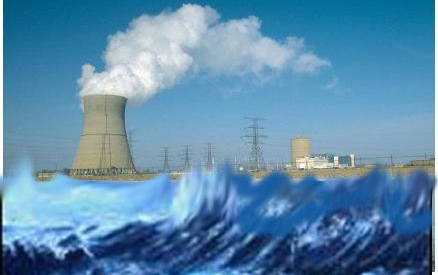
1 Just transitions require stable electricity supplies in the face of extreme weather. It is widely claimed that nuclear power is reliable but, over the past five years, French nuclear power plants have had to shut down for up to 7,000 hours due to climate events. In fact, nuclear energy’s reliance on water for cooling makes it particularly vulnerable to the impacts of climate change. The causes for these have ranged from floods to droughts and dramatic temperature increases. Earlier this year, we saw that in the Texas snowstorm, nuclear plants had to be shut down because water in pump stations froze.

It is also argued that a green energy system would require nuclear for “baseload”, but technology has moved far beyond this. It is outdated thinking such as this that keeps us from doing what must be done to keep temperatures below 1.5°C, even though it has been shown that smart grids can draw from a mix of renewable energy sources to provide a constant energy supply.
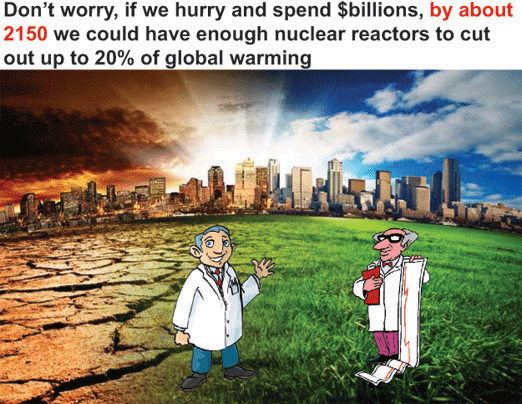
2 Even in the unlikely case that nuclear power stations are in locations that are not affected by temperature changes, storms, sea level rise or water scarcity, the lengthy time lag between planning to operation of new plants (a decade in the best cases, which are the exception rather than the rule) means that new nuclear will be of little help in mitigating emissions in the crucial decade leading up to 2030. In comparison, utility-scale solar and wind plants are completed on average in around half the time — two to three years from planning to operation.
There will be no just transition if we fail to decarbonise in this decade, in the lead-up to 2030. The IPCC is clear that unless we cut emissions by half until 2030, we will miss the 1.5°C target. We all know that those most vulnerable to the climate emergency are those who are already marginalised and who we cannot afford to leave behind.

3 Even as a technology that could potentially reduce GHG emissions after 2030 compared to fossil fuels, nuclear costs are prohibitively expensive and make for anti-poor policies. Even before accounting for the nuclear waste management expenses, a new nuclear power plant costs about four times more than renewable utilities.
Such fantastic expenses mean that:
- Efforts to address and eliminate energy poverty will fail. In fact, energy poverty will most likely be exacerbated;
- Precious resources will be diverted from public services like health and education — services relied on, again, by those who we cannot leave behind;
- It will not be possible to make the investments required for a Just Transition — investments in skills development, industrial programmes, small business support programmes and a stronger social safety net — precisely when these will be needed most; and
- We have also seen how the exorbitant costs of nuclear crowd out investments in renewables.
4 All evidence shows that renewables create more jobs than nuclear. Depending on the technology and the job measurement, up to six times more. Moreover, not only do renewables create more jobs, they also create a wider variety of jobs, across more flexible locations. This means that job profiles are accessible to a wider array of people and can be located where they are needed most. And then, despite its enormous expense, the economic stimulus that nuclear creates is less than that created by renewables.
5 Even if we ignore all the above — cost, time, jobs, economic impact, supply reliability risks — nuclear energy still provides inferior environmental outcomes. The median carbon footprint of nuclear power is at least two to four times more than that of renewables — and that is still an underestimate. It also creates an intergenerational toxic waste crisis.
6 History shows us that the social and economic consequences of a serious accident occurring at a nuclear power station are devastating to both workers and society at large. Such outcomes can hardly be justified by the few jobs nuclear creates.
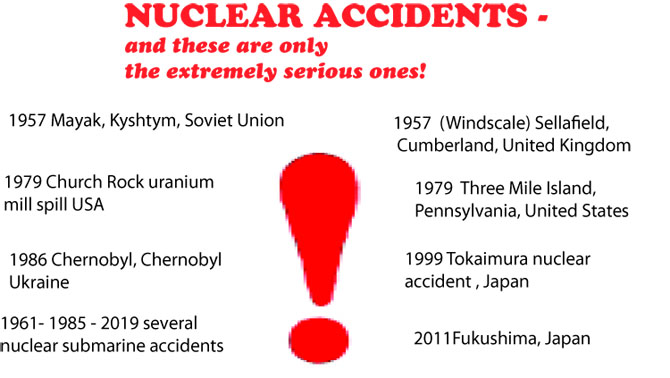
These last two points suggest that nuclear is spectacularly unfit to power a just transition. And not only will the jobs it creates go to a few highly skilled elites, nuclear energy’s economic stimuli will affect lesser industries and its costs will likely result in austerity policies.
Nuclear power is not, has never been, and will never become a viable means to generate electricity, especially within the context of the worsening climate emergency. It is obvious, via any metric, that renewable energy is a far better option if we are to meaningfully address carbon emissions to avert a climate catastrophe.
Renewables will do so while safeguarding decent livelihoods and rolling back inequality. DM
This article is based on Makoma Lekalakala’s speech at the COP26 launch of Dr Neil Overy’s report, Neither Climate Nor Jobs: Nuclear Myths About the Just Transition.
President of the European Commission to have the final say on whether Europe considers nuclear power to be ”clean” and ”green”?

Gas and nuclear: Fate of EU green taxonomy ‘now in the hands of von der Leyen’ By Frédéric Simon and Kira Taylor | EURACTIV.com, 10 Dec 2021
European Commission President Ursula von der Leyen has taken charge of a soon-to-be-published list of sustainable investments amid controversy around the possible classification of fossil gas and nuclear energy as “green” or “transitional” activities under certain conditions, according to several sources familiar with the process.
The European Union is moving closer to integrating nuclear power and natural gas into the bloc’s sustainable finance taxonomy – a set of rules designed to provide investors with a common definition of what is green and what is not in order to channel more capital into sustainable businesses.
The list of activities that Europe considers “green” or “transitional” investments will be laid down in a so-called ‘delegated act’ adopted by the European Commission setting out detailed implementing rules under the EU’s sustainable finance taxonomy regulation, adopted in December 2019.
But after several failed attempts and mounting controversy over the role of gas and nuclear power in the energy transition, President von der Leyen has now taken matters into her own hands, several sources told EURACTIV………
On Wednesday evening, the EU passed the first part of its taxonomy rulebook, setting out environmental criteria for investments including renewable energy, shipping and car manufacturing that will apply as of January 2022.
But no decision has been taken yet on the most politically sensitive part of the taxonomy, dealing with gas and nuclear investments…………. Contacted by EURACTIV, the European Commission did not confirm whether von der Leyen had taken charge. Most likely, the proposal will be presented to the College of Commissioners by Mairead McGuinness, the EU financial services commissioner, and Valdis Dombrovskis, the vice-president in charge of the economy, a spokesperson said.
Given internal procedures, a final proposal should be ready by Friday before it is submitted to the college for approval next week, according to an EU source.
Europe divided
European countries are deeply divided on the subject. While France is leading a group of twelve countries supporting the inclusion of nuclear energy in the taxonomy, five other EU countries expressed their opposition to the move, with Austria even warning it was ready to challenge the decision before the EU court of justice.
Central and eastern European countries are also pushing to include fossil gas as a “transitional” activity in the taxonomy, arguing that gas is needed as a stepping stone for them to exit coal, the most polluting of all fossil fuels.
But the United Nations Principles for Responsible Investment (PRI), a network of international investors, has advised the EU against allowing these energy sources a sustainable label.
The inclusion of gas-fired power “would seriously compromise” the taxonomy’s role as an independent and scientific tool in line with Europe’s climate goals, PRI warned in a briefing note.
And while a report from the European Commission’s Joint Research Centre (JRC) looked favourably at the inclusion of nuclear, it did “not sufficiently [address] risks related to the storage of nuclear waste, severe incidents and nuclear proliferation,” UNEP said.
The UN-supported initiative recommends that Europe explores alternatives, either by developing a proposal for sectors involved with the energy transition or extending the taxonomy “to recognise intermediate economic activities and transition pathways such as gas-fired power that operates below the ‘significant harm’ threshold of 270g CO2/kWh”………
Technology neutral
In the end, it looks increasingly likely that both gas and nuclear will be included in the list of sustainable investments as transitional fuels………….
For nuclear, however, the choice to call it transitional is still subject to controversy, with supporters arguing it should labelled “sustainable” because of its low-carbon [?]nature………..
Nuclear split in three categories
According to the EU’s energy commissioner Kadri Simson, the proposal “will be ready in the coming weeks…and it will clarify whether or not nuclear energy generation, waste disposal or fuel supply can be classified as sustainable activities for investors.”
Simson’s comments suggest that the upcoming delegated act could split nuclear activities into three categories: fuel supply, energy generation and waste.
…. the management of radioactive waste and the possibility of a nuclear incident remains a cause of concern for the United Nation’s PRI, which says these were not sufficiently explored in the JRC report.
“The materialisation of the risks above could seriously harm most – if not all – of the five environmental objectives other than climate mitigation that are part of the EU Taxonomy Regulation,” the PRI said in its briefing note.
…….. There is still no confirmed date for the publication of the taxonomy’s delegated act, but the European Commission says it will be published before the end of the year. Some expect it to be published alongside the gas package on 14 December while others are talking about it coming out on 22 December. https://www.euractiv.com/section/energy/news/gas-and-nuclear-fate-of-eu-green-taxonomy-now-in-the-hands-of-von-der-leyen/
European Union passes sustainable taxonomy law, but postpones decision about nuclear power.

“The commission must deliver a science-based taxonomy regulation that excludes fossil gas, nuclear, and factory farming. Otherwise, the credibility of the taxonomy is ruined.”
EU green taxonomy becomes law, gas and nuclear postponed, Institutional investors have signalled they want a taxonomy that is based on science – not political compromise. euobserver, By WESTER VAN GAAL 11 Dec 21,
BRUSSELS, The first two chapters of the sustainable taxonomy, the EU’s ambitious labelling system for green investment, were passed on Thursday (9 December).
Until midnight on Wednesday, EU member states had time to reject this first set of rules – the so-called ‘first delegated act’.
But despite opposition from a group of countries, the proposal passed and will come into force on 1 January 2022. It will describe the sustainable criteria for renewable energy, car manufacturing, shipping, forestry and bioenergy and more, and include a “technology-neutral” benchmark at 100 grams of CO2 per kilowatt-hour for any investments in energy production.
The criteria for the list has mainly been compiled by the Sustainable Finance Platform, a group of 57 NGOs, scientific and financial experts, making the first part of taxonomy “science-based”…..
The European Commission will now likely unveil the second delegated act on 22 December.
This will describe how nuclear and gas will be labelled under the taxonomy. But the process has become highly-politicised over the last months.
Second act
In a meeting of member states on 29 November the project nearly faltered.
An EU diplomat, speaking anonymously, explained to EUobserver that a French-led group of 13 member states tried to block the first list “out of principle” – because the commission had not agreed to include nuclear and gas in the green taxonomy.
France and Finland pushed for nuclear to be “fully part of the taxonomy.” Ten other mainly eastern European countries want gas included. Sweden joined the group because the new rules endanger its forestry sector.
The group tried to gain a supermajority of 15 to force the commission’s hand but fell short. Germany and Italy abstained, but did not respond to requests for explanation made by EUobserver.
The commission will now decide how to label nuclear and gas before the end of the year, and it is not yet clear how the issue will pan out…………..
Whatever the commission will decide, only a supermajority in the council – 15 member states – or a parliamentary majority can block the second delegated act. Both are unlikely.
What next?
Institutional investors have already signalled they want a taxonomy based on science, not political compromise.
This will “harm the objective-scientific, transparent character of the taxonomy and increases the risk of ‘greenwashing’. Europe promised the world climate leadership, it is time to show it,” a group of banks wrote this week.
Sebastien Godinot, a senior economist at WWF and member of the EU’s Sustainable Finance Platform, said the commission must not give in to blackmail and bullying.
“The commission must deliver a science-based taxonomy regulation that excludes fossil gas, nuclear, and factory farming. Otherwise, the credibility of the taxonomy is ruined.”
But the commission may have no choice but to compromise between the gas and nuclear-supporting member states on one side, and countries opposing these on the other – while also being mindful that investors and experts from its Sustainable Finance Platform will reject a system containing contradictory political concessions. https://euobserver.com/climate/153776
Bradwell nuclear project would become vulnerable to sea level rise
BANNG refutes recent statement by BRB that Bradwell B would be Essex’s
biggest contribution to reduced carbon emissions. Low lying land at
Bradwell would become vulnerable to sea level rise. And Bradwell B would be
unlikely to start operating before the middle of next decade – far too
late to make an appreciable contribution to a net zero 2050. In fact it
would have a negative impact on renewable energy and flexibility.
Maylands Mayl 10th Dec 2021
European Union passes sustainable taxonomy law, but postpones decision about nuclear power.
“The commission must deliver a science-based taxonomy regulation that excludes fossil gas, nuclear, and factory farming. Otherwise, the credibility of the taxonomy is ruined.”
EU green taxonomy becomes law, gas and nuclear postponed, Institutional investors have signalled they want a taxonomy that is based on science – not political compromise. euobserver, By WESTER VAN GAAL 11 Dec 21,
BRUSSELS, The first two chapters of the sustainable taxonomy, the EU’s ambitious labelling system for green investment, were passed on Thursday (9 December).
Until midnight on Wednesday, EU member states had time to reject this first set of rules – the so-called ‘first delegated act’.
But despite opposition from a group of countries, the proposal passed and will come into force on 1 January 2022. It will describe the sustainable criteria for renewable energy, car manufacturing, shipping, forestry and bioenergy and more, and include a “technology-neutral” benchmark at 100 grams of CO2 per kilowatt-hour for any investments in energy production.
The criteria for the list has mainly been compiled by the Sustainable Finance Platform, a group of 57 NGOs, scientific and financial experts, making the first part of taxonomy “science-based”…..
The European Commission will now likely unveil the second delegated act on 22 December.
This will describe how nuclear and gas will be labelled under the taxonomy. But the process has become highly-politicised over the last months.
Second act
In a meeting of member states on 29 November the project nearly faltered.
An EU diplomat, speaking anonymously, explained to EUobserver that a French-led group of 13 member states tried to block the first list “out of principle” – because the commission had not agreed to include nuclear and gas in the green taxonomy.
France and Finland pushed for nuclear to be “fully part of the taxonomy.” Ten other mainly eastern European countries want gas included. Sweden joined the group because the new rules endanger its forestry sector.
The group tried to gain a supermajority of 15 to force the commission’s hand but fell short. Germany and Italy abstained, but did not respond to requests for explanation made by EUobserver.
The commission will now decide how to label nuclear and gas before the end of the year, and it is not yet clear how the issue will pan out…………..
Whatever the commission will decide, only a supermajority in the council – 15 member states – or a parliamentary majority can block the second delegated act. Both are unlikely.
What next?
Institutional investors have already signalled they want a taxonomy based on science, not political compromise.
This will “harm the objective-scientific, transparent character of the taxonomy and increases the risk of ‘greenwashing’. Europe promised the world climate leadership, it is time to show it,” a group of banks wrote this week.
Sebastien Godinot, a senior economist at WWF and member of the EU’s Sustainable Finance Platform, said the commission must not give in to blackmail and bullying.
“The commission must deliver a science-based taxonomy regulation that excludes fossil gas, nuclear, and factory farming. Otherwise, the credibility of the taxonomy is ruined.”
But the commission may have no choice but to compromise between the gas and nuclear-supporting member states on one side, and countries opposing these on the other – while also being mindful that investors and experts from its Sustainable Finance Platform will reject a system containing contradictory political concessions. https://euobserver.com/climate/153776
1 This Month



26 September – International Day for the Total Elimination of Nuclear Weapons


PLEASE OPPOSE HR 8255 AND S.3639 – bills would accelerate satellite deployment, with no environmental review or safeguards – https://ncstd5li.quorum.us/campaign/169331/
To see nuclear-related stories in greater depth and intensity – go to https://nuclearinformation.wordpress.com
-
Archives
- September 2026 (233)
- August 2026 (330)
- July 2026 (355)
- June 2026 (287)
- May 2026 (306)
- April 2026 (356)
- March 2026 (251)
- February 2026 (267)
- January 2026 (308)
- December 2025 (358)
- November 2025 (359)
- October 2025 (375)
-
Categories
- 1
- 1 NUCLEAR ISSUES
- business and costs
- climate change
- culture and arts
- ENERGY
- environment
- health
- history
- indigenous issues
- Legal
- marketing of nuclear
- media
- opposition to nuclear
- PERSONAL STORIES
- politics
- politics international
- Religion and ethics
- safety
- secrets,lies and civil liberties
- spinbuster
- technology
- Uranium
- wastes
- weapons and war
- Women
- 2 WORLD
- ACTION
- AFRICA
- Atrocities
- AUSTRALIA
- Christina's notes
- Christina's themes
- culture and arts
- Events
- Fuk 2022
- Fuk 2023
- Fukushima 2017
- Fukushima 2018
- fukushima 2019
- Fukushima 2020
- Fukushima 2021
- general
- global warming
- Humour (God we need it)
- Nuclear
- RARE EARTHS
- Reference
- resources – print
- Resources -audiovicual
- Weekly Newsletter
- World
- World Nuclear
- YouTube
-
RSS
Entries RSS
Comments RSS
 nuclear-news