UN Secretary-General’s video message to the 58th Session of the Intergovernmental Panel on Climate Change
This will be the first comprehensive IPCC report in nine years – and the first since the Paris
Agreement on Climate Change.
It could not come at a more pivotal time. Our
world is at a crossroads – and our planet is in the crosshairs. We are
nearing the point of no return; of overshooting the internationally agreed
limit of 1.5 degrees Celsius of global warming. We are at the tip of a
tipping point.
But it is not too late – as you have shown. Your report last
year clearly demonstrated it is possible to limit global warming to 1.5
degrees with rapid and deep emissions reductions across all sectors of the
global economy.
And your recent reports have also underscored the need to
act now. In less than nine months, leaders will gather at COP28 for the
first global stocktake to bring the world in line with the goals of the
Paris Agreement. They need solid, frank, detailed scientific guidance to
make the right decisions for people and planet.
They must understand the
enormous consequences of delay and the enormous dividends from making the
tough but essential choices. To accelerate the phasing out of fossil fuels
and close the emissions gap. To race to a carbon-free, renewables future.
And to secure climate justice, helping communities adapt and build
resilience to the worsening impacts.
UN Secretary General 13th March 2023
How the nuclear lobby scuttled the EU’s anti-greenwashing tool
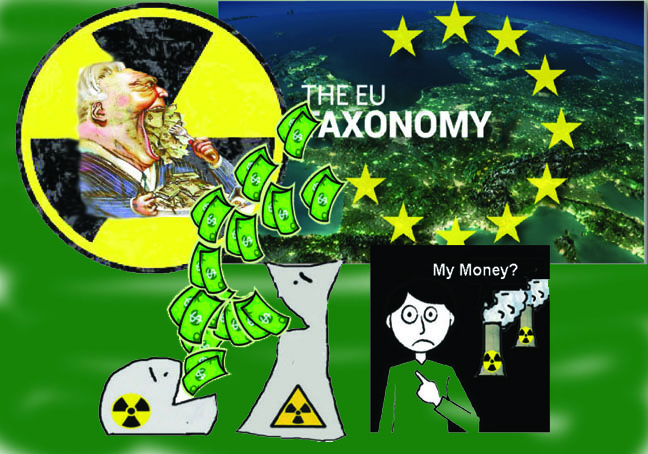
Succumbing to member states’ pressure and giving nuclear energy a “sustainable” label in a key regulation could derail the EU’s climate progress.
Aljazeera, Christiana Mauro, Senior advisor at the Biosphere Institute , Kacper Szulecki, Research professor in climate governance, 8 Mar 23,
One year ago, hopes were high for what was considered to be the most important environmental legislation in Europe. The European Union’s taxonomy regulation was meant to become the global “gold standard” for science-based policy that directs investment towards climate-friendly goals.
Their argument is that the “sustainable” label given to nuclear energy and natural gas breaches the EU’s climate commitments, violates EU environmental law and is incompatible with the “do no significant harm” criteria of the taxonomy regulation itself. The EC refused to revoke the act leading the complainants to launch a lawsuit at the European Court of Justice.
As we await the court’s decision, it is important to recall how this legislation was undermined by the nuclear lobby and what the consequences will be if it is not struck down
………………………………………………………………the EU taxonomy regulation ….. was supposed to be a list of scientifically-based technical criteria to set apart economic activities that are genuinely sustainable from those that are harming the environment.
It defined environmentally sustainable activities as contributing substantially to specific environmental objectives that will speed up the decarbonisation of the economy, comply with safeguards and “do no significant harm” to the environment.
Nuclear energy and natural gas initially failed to meet the taxonomy criteria. Of course, that went against big interests in the energy sector and predictably a lobbying blitz was launched to reverse this decision.

A report by Reclaim Finance, an NGO which scrutinises the impacts of financial actors on climate, revealed a lobbying campaign worth millions of euros was initiated to amend the regulation in favour of the natural gas and nuclear industries.
Lobbyists met frequently with EU representatives during critical phases of the deliberations over the taxonomy. Russia, which would have been a major financial and geopolitical beneficiary of the financial incentives that would ensue from the inclusion of gas and nuclear, was an extremely active “stakeholder” during the entire legislative process.
But there were also EU countries which sought to put pressure on the European Commission to change the regulation’s provisions. At the forefront of that effort were Poland, France, the Czech Republic, Hungary, Romania, Slovakia and Slovenia, whose leaders wrote a joint letter arguing for the inclusion of nuclear power in the regulation.
The document used various common claims and arguments in support of nuclear sustainability. We were part of a team of fact-checkers from four EU countries who determined that 20 statements in the letter were false or misleading.
Among them were assertions that nuclear power is “environmentally friendly”, “essential to the transition towards clean energy sources”, a “promising source of hydrogen” and “affordable”.
A full analysis of the letter can be found here.
Why nuclear energy is not green
Why nuclear energy is not green is perhaps less obvious to the general public than natural gas. This likely is due to efforts by governments – such as the seven mentioned above – and organisations to mislead it.
False narratives of “clean” nuclear are also peddled by intergovernmental organisations such as the International Atomic Energy Agency (IAEA), the OECD, and the UN Economic Commission for Europe (UNECE).

A common claim – which is also made in the letter to the EC – is that nuclear energy has a low carbon emission status. But if nuclear power can be said to produce lower carbon emissions, it is only true at the point of generation. When the entire life cycle of nuclear power plants is taken into consideration this contention crumbles.
Nuclear energy’s “upstream” activities that are necessary for operation, such as mining uranium, as well as transporting fuel, building and then decommissioning a power plant, and managing the radioactive waste that is a by-product of the process – are all linked to CO₂ emissions. Thus, the carbon footprint of nuclear energy generation is considerable, and according to some estimates, considerably higher than that of renewables.

Nuclear technology also needs significant amounts of cooling water and creates waste that is so toxic to the environment that no permanent storage solution has been developed for 70-odd years. It also represents a risk of seriously and permanently harming large swaths of territories in the case of an accident – which is now growing amid the current militarisation of civil nuclear facilities in Ukraine.
Posing an unmanageable danger to the environment, nuclear power falls short, even as a so-called “transitional activity”, defined in the regulation as an economic activity for which low-carbon alternatives are not available. This is because its financing today would derail the implementation of renewables by diverting investment away from them.
As Amory Lovins, a Stanford University professor and energy expert, says: “a low- or no-carbon energy source that costs more or takes longer to deploy will make climate change worse than one that is cheaper or faster, because the latter could have saved more carbon per euro and per year.”
Energy demand in Europe can easily be met by non-nuclear power sources, and considering the unreliability of nuclear power, with its ageing and deteriorating reactors, and vulnerability to extreme weather events, it is unlikely to have any energy contribution to make at all in the transition to renewables.
Even the most favourable calculations of the cost of nuclear energy show no advantage over renewable, which is seeing costs of deployment plummeting.
Government schemes keep consumer nuclear electricity prices artificially low. In fact, nuclear energy can only be made “competitive” with “hugely significant” government financing, as the EU Energy Commissioner inadvertently admitted in a recent speech. Hence, the seven governments’ letter also pleaded for “active support” for nuclear energy.
The profusion of nuclear delusions
There is a long history of attempts to link nuclear technology to overoptimistic technocratic environmental achievements that never materialise.
Media-hyped nuclear fiction abounds. For example, a recent fusion experiment in the US was touted as a major milestone in the search for an abundant source of clean energy. Predictably, it had a rather anticlimactic ending for anyone paying attention.
The energy generated in the experiment was significantly less than the amount needed to power the lasers involved in it. And the laboratory where the celebrated breakthrough took place was established to develop thermonuclear weapons, not civil nuclear energy projects, which explains its multibillion-dollar budget.
Such nuclear myths are usually debunked by independent experts whose critical voices are often buried beneath irresponsibly promoted fantasies. The morass of disinformation is meant in part to mask the industry’s own failures, but also the military interests of nuclear governments, by pushing unsupported theories to legitimise public funding. It is meant to confuse, demoralise and disable any organised effort to change things.
And the media, instead of challenging this intentional misleading of the public, has played a part in it. European media, for example, reported on the letter of the seven EU countries lobbying for nuclear to be included in the EU taxonomy regulation without checking the veracity of its claims.
Thus, a misinformed public and passive media have allowed political actors to influence regulations that are supposed to be politically neutral. Well-intentioned, vital, and comprehensive legislation, years in the making, has been subverted.
In its current form, this delegated act is likely to derail key 2030 and 2050 climate goals, and damage the Green Deal by influencing negatively green taxonomies being developed around the world. It will encourage greenwashing practices, redirect capital flows towards polluting sectors, and upset progress made on implementing the objectives of the Paris Agreement. https://www.aljazeera.com/opinions/2023/3/8/how-the-eus-most-promising-anti-greenwashing-tool-was-scuttled
Temperature rise can be stopped. It is a dangerous myth to say that it’s too late to act.

Wildfires raging across Australia. Floodwater submerging an entire third of
Pakistan. Crop-killing droughts striking all corners of the world. For
anyone casting even a passing glance at the news the only conclusion, it
may often seem, is that we’re all doomed.
But beware — that conclusion,
many scientists say, is a fallacy. In fact, the belief that it is too late
for humanity to save itself from climate destruction is a new form of
misinformation that some researchers describe as more dangerous even than
outright denial of global warming. It is a widespread belief, particularly
among the young.
A December 2021 report in the Lancet found that more than
half of 10,000 people aged 16 to 25 surveyed globally agreed that
“humanity is doomed”. Yet Kristina Dahl, a principal climate scientist
at the Union of Concerned Scientists (UCS), says it is a “myth” that we
can do nothing to stop the worst effects of climate change.
“Recent
modelling shows that within about a decade of reaching net-zero current
emissions, we would stop temperature rise,” she says. “It’s things
[like] temperature that are especially responsive to changes in emissions.
There is still a lot that is within our power and there are even parts of
the climate system that respond really quickly to the changes that we make.
So that sense that it’s too late … is really false.”
Times 22nd Feb 2023
War is a climate killer — Beyond Nuclear International

Conflicts worsen military sector’s already enormous CO2 footprint
War is a climate killer — Beyond Nuclear International
The military already has the largest carbon footprint. Going to war makes it far worse
By Angelika Claussen
War brings death and destruction – not least to the environment and climate. Russia’s invasion of Ukraine offers a depressing reminder of that fact, and further increases the military sector’s already enormous global CO₂ footprint. In addition, the eastern Ukrainian cities where fighting is taking place are home to fossil fuel infrastructure such as chemical factories, oil refineries, and coal mines, the bombing of which produces a cocktail of toxic substances that has devastating environmental impacts. Efforts to arm the two sides, moreover, are consuming materials and resources that could otherwise go towards tackling the climate crisis.
Based on the global CO₂ budget, humanity has less than eight years to ensure it still hits its 1.5-degree warming target. To do so, we need to urgently implement reforms in all areas, to bring about “systemic change,” as the IPCC report from early April puts it. The military sector barely gets a mention in this almost 3,000-page document, however, with the word “military” coming up just six times. You might thus conclude that the sector is of little relevance to the climate emergency.
The reality is rather different. Using military hardware results in huge quantities of emissions. In the war in Ukraine, 36 Russian attacks on fossil fuel infrastructure were recorded in the first five weeks alone, leading to prolonged fires that released soot particulates, methane and CO₂ into the atmosphere, while oil infrastructure has been ablaze on the Russian side too. The oil fields that were set on fire in 1991 during the second Gulf War contributed two per cent of global emissions for that year.
While greenhouse gas emissions are one of the most significant impacts of war, the quantity emitted depends on the duration of the conflict and on what tanks, trucks, and planes are used. Another is the contamination of ecosystems that sequester CO₂. Staff from Ukraine’s environment inspectorate are currently collecting water and soil samples in the areas around shelled industrial facilities.
Military emissions
The ramifications for the climate can be catastrophic in scale. According to a study by the organisation Oil Change International, the Iraq War was responsible for 141 million tonnes of CO₂ equivalent emissions between its outbreak in 2003 and the report’s publication in 2008. By way of comparison: some 21 EU member states emitted less CO₂ equivalent in 2019, with only six states topping that figure…………………………………………………..
As the war in Ukraine goes on, the biggest challenge of the 21st century – the climate crisis – has slipped down the agenda. We mustn’t forget, though, that efforts to tackle that crisis can only succeed if all countries – including Russia – work together. The immediate demand is for a ceasefire, followed by measures to build trust, such as international disarmament treaties. Moreover, Russia will need outside help if it is to transition to a climate-friendly energy industry. What’s required is a fundamental socio-ecological transformation, with policy-making dictated by the needs of all. That may seem inconceivable at present, but what’s the alternative? Unchecked global warming would be catastrophic for the planet’s entire population. https://wordpress.com/post/nuclear-news.net/221967
‘Extreme situation’: Antarctic sea ice hits record low

Damian Carrington 16 Feb 23
https://www.theguardian.com/world/2023/feb/15/antarctic-sea-ice-hits-record-low-climate-crisis
The area of sea ice around Antarctica has hit a record low, with scientists reporting “never having seen such an extreme situation before”. The ice extent is expected to shrink even further before this year’s summer melting season ends.
The impact of the climate crisis in melting sea ice in the Arctic is clear in the records that stretch back to 1979. Antarctic sea ice varies much more from year to year, which has made it harder to see an effect from global heating.
However, “remarkable” losses of Antarctic sea ice in the last six years indicate that the record levels of heat now in the ocean and related changes in weather patterns may mean that the climate crisis is finally manifesting in the observations.
Scientists were already very concerned about Antarctic ice. Climate models suggested as far back as 2014 that the giant West Antarctic Ice Sheet (WAIS), which sits on the continent, was doomed to collapse due to the levels of global heating already seen then.
The increasing loss of sea ice exposes ice sheets and their glaciers to waves that accelerate their disintegration and melting, researchers warned. A recent study estimated that the WAIS would be tipped into gradual collapse – and four metres of sea level rise – with a global temperature rise as low as 1C, a point already passed.
“I have never seen such an extreme, ice-free situation here before,” said Prof Karsten Gohl, from the Helmholtz Centre for Polar and Marine Research in the Alfred Wegener Institute, Germany, and who first visited the region in 1994.
Gohl, on board the research vessel Polarstern in Antarctica, said: “The continental shelf, an area the size of Germany, is now completely ice-free. It is troubling to consider how quickly this change has taken place.”
Prof Christian Haas, also at the Helmholtz Centre, said: “The rapid decline in sea ice over the past six years is quite remarkable, since the ice cover hardly changed at all in the 35 years before.”
Scientists at the National Snow and Ice Data Center in the US have also said a new record low has been set. They said Antarctic sea ice extent fell to 1.91m square kilometres on 13 February, below the previous record set on 25 February 2022.
Sea ice melts away in the Antarctic summer before starting to grow again as autumn arrives. “In past years, the annual minimum has occurred between 18 February and 3 March, so further decline is expected,” the NSIDC researchers said. “Much of the Antarctic coast is ice free. Earlier studies have linked low sea ice cover with wave-induced stresses on the floating ice shelves that hem the continent, leading to break up of weaker areas.”
The German scientists said the “intense melting” could be due to unusually high air temperatures to the west and east of the Antarctic peninsula, which were about 1.5C above the long-term average. Furthermore, there have been strong westerly winds, which increase sea ice retreat. The result is “intensified melting of ice shelves, an essential aspect of future global sea-level rise”, the researchers said.
Historical records also show dramatic changes in Antarctica, they said. The Belgian research vessel Belgica was trapped in massive pack ice for more than a year in the Antarctic summer 125 years ago, in exactly the same region where the Polarstern vessel is now sailing in completely ice-free waters.
Prof Carlos Moffat, at the University of Delaware, US, and recently returned from a research cruise in the Southern Ocean, told Inside Climate News: “The extraordinary change we’ve seen this year is dramatic. Even as somebody who’s been looking at these changing systems for a few decades, I was taken aback by what I saw.”
Antarctic sea ice level now lowest on record.
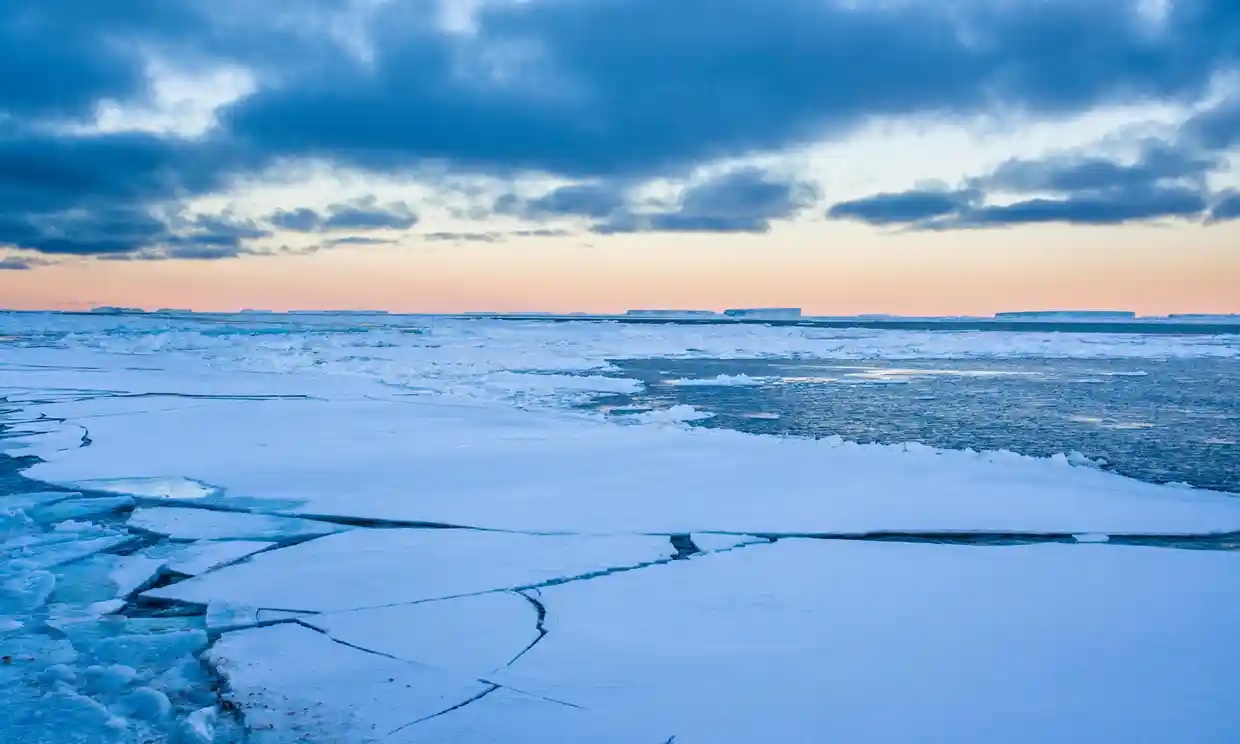
There is now less sea-ice surrounding the Antarctic continent than at any
time since we began using satellites to measure it in the late 1970s. It is
the southern hemisphere summer, when you’d expect less sea-ice, but this
year is exceptional, according to the National Snow and Ice Data Center.
Winds and warmer air and water reduced coverage to just 1.91 million square
km (737,000 sq miles) on 13 February. What is more, the melt still has some
way to go this summer.
BBC 17th Feb 2023
Rising seas threaten ‘mass exodus on a biblical scale’, UN chief warns

An increase in the pace at which sea levels are rising threatens “a mass
exodus of entire populations on a biblical scale”, the UN secretary
general has warned. The climate crisis is causing sea levels to rise faster
than for 3,000 years, bringing a “torrent of trouble” to almost a
billion people, from London to Los Angeles and Bangkok to Buenos Aires,
António Guterres said on Tuesday.
Some nations could cease to exist,
drowned under the waves, he said. Significant sea level rise is already
inevitable with current levels of global heating, but the consequences of
failing to tackle the problem are “unthinkable”. Guterres said:
“Low-lying communities and entire countries could disappear for ever. We
would witness a mass exodus of entire populations on a biblical scale. And
we would see ever fiercer competition for fresh water, land and other
resources.
Guardian 14th Feb 2023
“No regrets” as UK government portrays nuclear power as “clean” and “green”
Nuclear power to get ‘green’ status as Britain races EU to hit net
zero. Move is part of a bid to unlock billions of pounds of funding for
more power stations. Nuclear power projects such as Sizewell C in Suffolk
will be granted so-called “green” status under plans by Jeremy Hunt to
unlock billions of pounds in funding for the industry. The Chancellor is
expected to announce the change within weeks as part of a broader shake-up
of the UK’s financial rules on green energy.
It would see nuclear power
projects classed as “green” or “sustainable” investments, clearing
the way for more institutional investors and environment-focused funds to
back them. There are also hopes that the Treasury could fund new power
plants with money raised through the Government’s green gilts and green
savings bonds. Generating nuclear power does not produce carbon dioxide, [ if you ignore the total nuclear fuel chain] so the sector is seen as a key plank of Britain’s plans to reach net zero
emissions by 2050.
A recent review by former energy minister and Tory MP
Chris Skidmore said that supporting the construction of more nuclear
reactors was a “no regrets” option. However, the sector has faced
difficulties portraying itself as environmentally friendly in the past
because of concerns about nuclear waste, water usage, and the remote but
catastrophic risk of nuclear accidents. Top fund managers such as Legal &
General and Aviva have previously expressed caution about the green
credentials of nuclear, with Aviva chairman George Culmer last year saying
there was an “ongoing debate”.
Telegraph 14th Feb 2023
Earth Changes Summary – January 2023: Extreme Weather, Planetary Upheaval, Meteor Fireballs.
Sott.net
2023-02-14
The start of 2023 has been marked by heavy snow, unseasonably cold temperatures, and wetter-than-expected weather for the season.
Extreme weather hit California pretty hard this month: A bomb cyclone, severe flooding, mudslides, power outages, walls of snow in Soda Spring, and a magnitude 4.2 earthquake with an epicenter in offshore Malibu……………………………….
Heavy snow also disrupted normal life in Italy, Austria, Slovenia, Croatia, and Mallorca. Mallorca was covered by its largest snowfall in more than five years.
China’s northernmost city, Mohe, was hit by an all-time record of -53°C, the lowest ever recorded. The local officials worked overtime to ensure heating and water services. This comes days after temperatures plunged to -50°C in Russia’s Yakutsk.
Central Asia also suffered a harsh January. In Kyrgyzstan, Tajikistan, Uzbekistan, and Turkmenistan recorded unusual levels of snow, that collapsed power poles and trees, blocked main roads, and burst water pipes. Thetemperatures in Kazakhstan reached a chilling -30°C.
The Middle East was also caught off guard by colder-than-usual temperatures and snow. Tens of thousands of Iranians were left without gas amid snow and freezing conditions, and Afghanistan temperatures plummeted as low as -33°C,combined with widespread snowfall, freezing gusts, and regular power outages. At least 166 people died due to the cold wave.
Ex-Tropical Cyclone Ellie continued to batter northern Australia this month. Heavy rain turned roads into rivers, thousands of cattle got lost or died, and boats were the only form of transportation in some counties. Western Australia was also hit hard by heavy rain and floods. 38 homes and 37 businesses were destroyed, with an additional 121 homes damaged. In some cases, the damage is so severe that will require long-term rebuilding efforts. The floods have also caused significant damage to infrastructure and transportation routes.
New Zealand’s largest city declared a state of emergency after torrential rains caused widespread flooding and evacuations. Heavy floods washed away houses, blocked roads, and knocked out power. The city received 75% of its usual summer rainfall in just 15 hours.
Latvia experienced its worst flooding since 1981, forcing residents of central areas to evacuate their homes. Meanwhile, large chunks of ice that drifted from Belkarus caused the water level to rise, while also putting pressure on a new dam.
Other noteworthy events this month:
- Sumatra, Indonesia: Heavy flooding leaves 3 dead and 15,000 homes damaged
- Johor and Pahang, Malaysia: More than 4,000 were displaced by flooding caused by 17 inches of rain in 24 hours
- North Sulawesi, Indonesia: Nearly 18 inches of rain in 48 hours left 3-meter floods in some areas.
- Zambia – Non-stop rains caused catastrophic flooding in southern and central provinces.
And things start to get rocky! A 5.9 Mag earthquake struck northwestern Iran, killing at least seven people and injuring 440.
All this and more in our SOTT Earth Changes Summary for January 2023:… https://www.sott.net/article/477313-SOTT-Earth-Changes-Summary-January-2023-Extreme-Weather-Planetary-Upheaval-Meteor-Fireballs
Twice as Much Land in Developing Nations Will be Swamped by Rising Seas than Previously Projected, New Research Shows
Twice as Much Land in Developing Nations Will be Swamped by Rising Seas
than Previously Projected, New Research Shows. Rising seas will swamp
farmlands, pollute water supplies and displace millions of people much
sooner than expected, scientists said last week, as they released new
research that accurately calculates the vulnerability of coastal areas,
especially in developing countries that have not had access to expensive
coastal mapping technologies.
Sea level rise keeps speeding up, and “many
coastal areas are lower than scientists thought they were,” said Ronald
Vernimmer, lead author of the new study published last week in Earth’s
Future, a journal of the American Geophysical Union.
Inside Climate News 7th Feb 2023
When the Great Tide returns
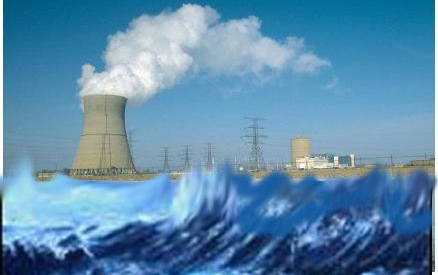
Seventy years ago, on the night of 31 January/1 February, the ‘Great
Tide’ surged down the Essex Coast from Harwich all the way round to London,
bringing floods, death and destruction to communities and environments
along the sea, rivers and creeks that compose the 350 mile coastline.
Passing almost silently and unexpectedly in an age where phones were rare,
radios silent and police relied on foot and bicycle, the Great Tide exacted
its toll on poor communities like Jaywick and Canvey; our biggest peacetime
catastrophe, barely remembered beyond the older generation today.
Such a fate awaits any new nuclear development at Bradwell, harbouring dangerous
wastes into the far future on a battered, exposed and diminishing
coastline. It must not happen. As far as possible we must try to avoid the
calamity that overwhelmed our Essex shores on that fateful and perilous
night seventy years ago.
BANNG 7th Feb 2023
France in new row with Germany and Spain. France wants to call nuclear-derived hydrogen “clean”
By Michel Rose, Belén Carreño and Kate Abnett
- Summary
- France wants EU to recognise nuclear-derived hydrogen as clean
- Paris says Germany and Spain had committed to support it
- Berlin and Madrid say no such promises were made
- Spat is delaying EU renewables legislation, threatens pipeline
PARIS/MADRID/BRUSSELS, Feb 8 (Reuters) – A new row has erupted between France, Germany and Spain over nuclear energy, with Paris furious about a lack of support from Berlin and Madrid for its efforts to have nuclear-derived hydrogen labelled as ‘green’ in EU legislation, sources said………. (Subscribers only)
Reporting by Michel Rose in Paris, Belen Carreno, Aislinn Laing in Madrid, Kate Abnett in Brussels, Andreas Rinke in Berlin and Sergio Goncalves in Lisbon; Editing by Kirsten Donovan https://www.reuters.com/business/sustainable-business/france-new-row-with-germany-spain-over-nuclear-derived-hydrogen-2023-02-08/
Former Australian PM Tony Abbott joins board of UK climate sceptic thinktank

Christina’s note: The mad monk rides again. Madder than ever. As he’s an enthusiastic promoter of the nuclear industry, it is puzzling that Abbott is still a climate denialist.
Nowdays, the nuclear industry pushes their lie that nuclear beats global heating. So a good nuclear zealot should believe in climate change.
Abbott says ‘we need more genuine science and less groupthink’ in announcing position at Global Warming Policy Foundation
Guardian. Graham Readfearn 7 Feb 23
The former Australian prime minister Tony Abbott has joined the board of a UK-based thinktank that has been highly critical of climate science and action on global heating.
Since its launch in 2009, the Global Warming Policy Foundation has become known for its consistent attacks on climate science, the risks of global heating and – more recently – policies to reach net zero greenhouse gas emissions.
The group, founded by the former Thatcher government treasurer Sir Nigel Lawson, is facing a complaint from three UK MPs and a not-for-profit campaign group accusing the GWPF of inappropriately claiming status as an educational charity while carrying out lobbying and skewed research.
Abbott said he was pleased to join the foundation “because it’s consistently injected a note of realism into the climate debate”………………
Dr Jerome Booth, the foundation’s chairman, said Abbott brings “a global perspective and policy insight at the very highest level” and he would help the group “to foster a culture of debate, respect and scrutiny in policy areas that are currently dominated by intolerance, high emotions, moral reasoning and confusion”.
Abbott is currently an adviser to the UK government’s Board of Trade. His name was raised last month as a possible replacement for the late senator Jim Molan in the upper house.
During his prime ministership between 2013 and 2015, Abbott drove to dismantle much of the country’s public policy architecture on climate change, successfully repealing a legislated price on carbon, defunding the independent Climate Commission but failing to dismantle the Climate Change Authority and the Australian Renewable Energy Agency.
In 2017, he flew to London to deliver the GWPF’s annual lecture, where he suggested natural factors could be to blame for global warming, that CO2 was a trace gas and hinted at a global conspiracy to tamper with temperature data to make global heating seem worse.
The foundation is seen as influential among some conservatives. Conservative MP Steve Baker resigned as a GWPF trustee when he became minister for Northern Ireland.
A group of Conservative MPs and peers – several with links to the foundation – have formed the Net Zero Scrutiny Group, which has used the GWPF’s work as part of its advocacy.
The GWPF’s non-charitable arm – the Global Warming Policy Forum – runs a project called Net Zero Watch, which claims to scrutinise climate and decarbonisation policies.
The foundation has several Australian links. As the Guardian reported, one of its earliest funders was Australian billionaire hedge fund manager Sir Michael Hintze, who last year was handed a seat in the House of Lords at the recommendation of the former UK prime minister Boris Johnson.
Four Australian climate sceptics sit on the GWPF academic advisory board, including mining industry figure Prof Ian Plimer and controversial marine scientist Dr Peter Ridd of the Institute of Public Affairs, an Australian thinktank known to promote climate science denial.
The late Cardinal George Pell also delivered a GWPF annual lecture in 2011.
Presenting a report last year, the GWPF’s director, Dr Benny Peiser, said: “It’s extraordinary that anyone should think there is a climate crisis.”
Last year three MPs – one each from Labor, the Greens and the Liberal Democrats – joined with a not-for-profit campaign group to complain to the UK’s Charity Commission.
The group questioned if the GWPF was breaking charity rules by commissioning unbalanced research and carrying out political advocacy from charitable funds……………….. https://www.theguardian.com/australia-news/2023/feb/07/former-australian-pm-tony-abbott-joins-board-climate-sceptic-thinktank-global-warming-policy-foundation
‘Save the only planet we have’: Tony Abbott joins climate-sceptic think tank
The former Australian PM says he has joined the Global Warming Policy Foundation, a UK think tank founded by a ‘climate denier-in-chief’.
Former prime minister Tony Abbott, who once compared taking action on climate change with killing goats “to appease volcano gods”, has joined the board of a UK climate-sceptic think tank founded by a politician dubbed “the climate denier-in-chief”.
Abbott said he was pleased to join the Global Warming Policy Foundation (GWPF), which “consistently injected a note of realism into the climate debate”, despite the charity spearheading the backlash against the UK government’s net-zero goal.
“All of us want to save the only planet we have, but this should not be by means which impoverish poorer people in richer countries and hold poorer countries back,” Abbott said of his appointment.
“Right now, in countries like Australia, the impact of climate policy is to make electricity less affordable and less reliable rather than perceptibly to cool the planet.
“We need more genuine science and less groupthink in this debate. That’s where the GWPF has been a commendably consistent if lonely voice.”
The GWPF was founded in 2009 by Thatcher-era chancellor Nigel Lawson, who reportedly resigned from the House of Lords last month. Described by UK Green Party co-leader Adrian Ramsay as the “climate denier-in-chief”, Lawson claimed that “global warming is not a problem” in a 2021 article written for The Spectator during the COP26 in Glasgow.
The foundation’s director, Benny Peiser, also made headlines for spurious statements, including that he found it “extraordinary that anyone should think there is a climate crisis” and that climate “alarmism” was driven by “scientists’ computer modelling rather than observational evidence”.
Despite Lawson’s apparent departure from politics, his foundation continues to cause a headache for UK Prime Minister Rishi Sunak. There has been outrage after a UK register of interests disclosure revealed Conservative MP Steve Baker accepted a £10,000 (A$17,464) donation from the chair of GWPF’s Net Zero Watch.
The campaign arm has urged the UK government to recommit to fossil fuels, commission a fleet of coal-fired power plants, and wind down wind and solar completely, while its alleged breaches of charity law were the subject of a complaint from three British MPs in October.
This isn’t Abbott’s first brush with the foundation. In 2017 he delivered an eyebrow-raising annual lecture that suggested climate change was “probably doing good; or at least, more good than harm”.
Abbott also claimed that photos from his electorate showed the sea level hadn’t risen. (The Bureau of Meteorology found last year that the rates of sea level rise to the north and south-east of Australia have been “significantly higher” than the global average for the past 30 years.)
“Contrary to the breathless assertions that climate change is behind every weather event, in Australia the floods are not bigger, the bushfires are not worse, the droughts are not deeper or longer, and the cyclones are not more severe than they were in the 1800s,” Abbott said at the time.
In an echo of Lawson’s claim that rising temperatures are “no bad thing: many more people die each year from cold-related illnesses than from heat-related ones”, Abbott suggested in 2017 that sweltering heatwaves are good, actually.
“There’s the evidence that higher concentrations of carbon dioxide (which is a plant food after all) are actually greening the planet and helping to lift agricultural yields,” he said. “In most countries, far more people die in cold snaps than in heatwaves, so a gradual lift in global temperatures, especially if it’s accompanied by more prosperity and more capacity to adapt to change, might even be beneficial.”
Heat is the biggest natural killer in Australia (and in the US) and has been for the past 200 years, with fatalities outstripping all other natural killers including bushfires, cyclones and floods. Research has found there were 36,000 deaths associated with heat in Australia between 2006 and 2017.
Ann Darling: Nuclear power is no answer to anything our ailing planet needs
VT Digger 6 Feb 23
This commentary is by Ann Darling of Easthampton, Massachusetts, a climate activist and retired social worker. She lived for 35 years in the Brattleboro area, but after getting her son through high school, she left to be farther away from the Vermont Yankee nuclear power plant. She is a member of the Citizens Awareness Network.
In a recent commentary, Tom Evslin outlines what he sees as hopeful approaches to addressing our energy needs and addressing climate change.
While I agree there are many things in development that appear promising, I don’t agree that nuclear power should be part of “the answer.”
The climate chaos we are already experiencing is just the beginning. We have already wasted a lot of time. The litmus test of what makes a good energy source to address climate change has at least four criteria.
In addition to using less energy, we need to focus on energy sources that are:
1) quickly built and brought to scale.
2) low-carbon, with minimal environmental impact, including non-carbon pollutants.
3) relatively inexpensive so we can make the biggest impact within our limited resources .
4) safe.
In addition, these need to be deployed in an environmentally just way, but that’s another commentary.
No matter the energy source, we always should consider its entire fuel chain or life-span cycle, from extraction to power generation to waste, not just its impact at the point of power generation. This is an incredibly important mind shift we all need to make.
There is no energy source that does not create problems somewhere in its fuel-chain life span. The issue is, how much and what kind? Can the earth heal from these harmful impacts, and how can people help that happen?
Solar, wind, geothermal, storage, etc., paired with efficiency and conservation come close to meeting these four tests. Yes, there are problems, like the pollution caused by lithium mining and how to safely recycle the components of solar panels. So the question with them is how we can use our intelligence and resources to mitigate these harms and make them affordable and easy to access.
On the other hand, nuclear fission and nuclear fusion do not come close to meeting these tests. Fission is what runs our current nuclear reactor fleet and the still-on-the-design-table small modular reactors. Harnessing nuclear fusion, which powers our sun, has been in the spotlight lately because of a recent advance in development, but it is still decades away from being useful as a power source, if it ever will be.
Nuclear fission reactors are far from carbon-free, contrary to what nuclear industry marketing would have us believe. Once we consider the process of getting the uranium out of the ground, milling and refining it, using it, and then dealing with the waste, nuclear is a net carbon emitter. Plus, the mining, milling and refining expose communities to highly toxic materials that cause cancer and other diseases. There is always risk of nuclear catastrophe (as in Fukushima).
Places where lower-level radioactive waste from reactors goes are leaking sacrifice-zones that despoil entire regions (think Hanford, Washington; Oak Ridge, Tennessee; or Barnwell, South Carolina).
And last but not least, there is no safe place for the deadly high-level waste (“spent” fuel) to go. Plus, reactors take a really long time to build, and small modular reactors are completely untested. Nuclear is the most expensive way to generate electricity there is, and it can exist only with huge subsidies and tax credits from the government. That’s your tax dollars underwriting private industry. (And then there’s the link to nuclear weapons; the civilian nuclear power industry creates the materials that make nuclear weapons.)
Fusion? I’m sorry, but no. According to Dr. Ian Fairlie, a UK expert on radioactivity in the environment, “Fusion reactors would … be subject to most of the major problems associated with fission reactors, including large-scale cooling demands, high construction and operational costs and lengthy construction times — stretching to decades. The structure, damaged by neutron bombardment, would need to be replaced regularly, resulting in large amounts of radioactive wastes for which there is no current solution.”
We simply do not have the time to fiddle around with something that will take decades and that is quite likely not to work and/or will create huge and dangerous problems for life on earth.
Let’s be practical in the face of climate-induced threats to life on earth. We have limited resources. Every dollar that goes into perpetuating nuclear power in any form is in essence being stolen from bringing less expensive, safer, less carbon-intensive, and more quickly built energy sources to bear on the climate emergency we have created.
Nuclear power never was and is not now an answer to anything our ailing planet needs.
1 This Month
19 February – VIRTUAL EVENT-Decision Time: AI and Our Nuclear Arsenal
12:45 p.m. Central / 1:45 p.m. Eastern
To see nuclear-related stories in greater depth and intensity – go to https://nuclearinformation.wordpress.com
-
Archives
- February 2026 (141)
- January 2026 (308)
- December 2025 (358)
- November 2025 (359)
- October 2025 (376)
- September 2025 (258)
- August 2025 (319)
- July 2025 (230)
- June 2025 (348)
- May 2025 (261)
- April 2025 (305)
- March 2025 (319)
-
Categories
- 1
- 1 NUCLEAR ISSUES
- business and costs
- climate change
- culture and arts
- ENERGY
- environment
- health
- history
- indigenous issues
- Legal
- marketing of nuclear
- media
- opposition to nuclear
- PERSONAL STORIES
- politics
- politics international
- Religion and ethics
- safety
- secrets,lies and civil liberties
- spinbuster
- technology
- Uranium
- wastes
- weapons and war
- Women
- 2 WORLD
- ACTION
- AFRICA
- Atrocities
- AUSTRALIA
- Christina's notes
- Christina's themes
- culture and arts
- Events
- Fuk 2022
- Fuk 2023
- Fukushima 2017
- Fukushima 2018
- fukushima 2019
- Fukushima 2020
- Fukushima 2021
- general
- global warming
- Humour (God we need it)
- Nuclear
- RARE EARTHS
- Reference
- resources – print
- Resources -audiovicual
- Weekly Newsletter
- World
- World Nuclear
- YouTube
-
RSS
Entries RSS
Comments RSS
 nuclear-news