“……………………………………………..According to scenarios from the World Nuclear Association and the OECD Nuclear Energy Agency, doubling the capacity of nuclear power worldwide in 2050 would only decrease greenhouse gas (GHG) emissions by around 4%, yet would require 37 new large nuclear reactors to the grid every year from now until 2050. In other words, nuclear energy delivers too little energy to matter.
Nuclear power plants are too dangerous and leave communities vulnerable. Power plants require some of the most complex set of resources to be ready at all times—this is not guaranteed with the growing climate crisis and resulting extreme weather events that will affect operations. Additionally, nuclear energy is too expensive to be sustainable. It costs on average more than double the cost of other energy alternatives like solar and wind—and those costs continue to increase. The large amounts of waste that is produced by the nuclear fuel cycle is highly radioactive, and will remain so for several thousand years—and yet no government has ever been able to find a way to safely manage it.
Heatwaves across the world are worsening air quality and pollution, scientists have said. The World Meteorological Organization (WMO) has said extreme temperatures are not the only hazard from heatwaves but that they also cause pollution-related health problems. In their annual air quality and climate bulletin, the meteorologists have highlighted a “vicious cycle” of climate breakdown and air pollution.
They have shown that heatwaves sparked wildfires in the north-western US and heatwaves accompanied by desert dust intrusions across Europe, which both caused dangerous air quality in 2022. The hot temperatures in Europe, which in 2022 were record-breaking, led to higher levels of particulate matter in the air, the bulletin says. During the second half of August 2022, there was also an unusually high intrusion of desert dust over the Mediterranean and Europe.
Heat. Wildfires. Torrential rain. Typhoons and hurricanes. Much of the northern hemisphere has been battered by extreme weather this summer. Not all these events can be immediately linked to climate change. It can take a while for scientists to untangle what exactly is going on – plus, the planet’s natural weather and climate systems are powerful and also affect the weather.
But in the past few weeks, significant meteorological records have been broken in quick succession, to the concern of climate change experts. As the summer draws to a close, let’s look back at what on earth happened – and how it is connected to climate change.
China’s summer this year has seen both extreme heat and devastating floods. And the flooding this time around has struck areas where such weather has been unheard of, with scientists – blaming climate change – warning that the worst is yet to come.
“I’ve never seen a flood here in my whole life,” says 38-year-old Zhang Junhua, standing next to a vast patch of rice, now completely useless. “We just didn’t expect it.” His family and friends are safe, he says, because they were given plenty of warning to get to higher ground, but everyone in his village now has some tough months ahead. What’s more, the devastation in north-east China’s Heilongjiang Province has had a major impact on food supplies for the whole country.
Govt orders new nuclear power plants to carefully consider water intake safety
By Global Times Aug 28, 2023
The National Nuclear Safety Administration (NNSA) has urged China’s newly-built and projected nuclear power plants to fully consider water intake issues, in a bid to ensure the safe operation of nuclear power facilities.
During a recent meeting, the administration emphasized that relevant departments should improve water intake procedures due to changes in climate and sea environment over the years, to further ensure the smooth operation of nuclear power plants. This was stated by NNSA’s official social media account on Monday…………………………………………. https://www.globaltimes.cn/page/202308/1297149.shtml
The story that still dominates now – even as temperatures (and fires) roar out of control in the Atlantic, in Canada, in Hawaii, in Rhodes – is one that government, citizens, and even scientists have created together: a story where there’s always “just enough time” to fix things.
We’ve been on a “last warning” to avert climate disaster for 20 years – but in reality, time is up. Anonymous polls show that climate scientists overwhelmingly now privately expect warming to exceed 1.5C, our scientifically and politically agreed “safe” limit.
The question now is not whether – but how much – chaos will be left to future generations. We should not be so naive as to think that climate isn’t an urgent problem for us, here – that we in the UK might somehow be exempt by way of geography.
Certainly the global South will experience worse impacts: but, just as “developed” societies like Britain and the USA proved surprisingly fragile in the face of Covid-19, so it may prove with climate. Societies like ours that heavily depend on long supply chains can expect to feel heavily the coming disruptions in world food production, for example.
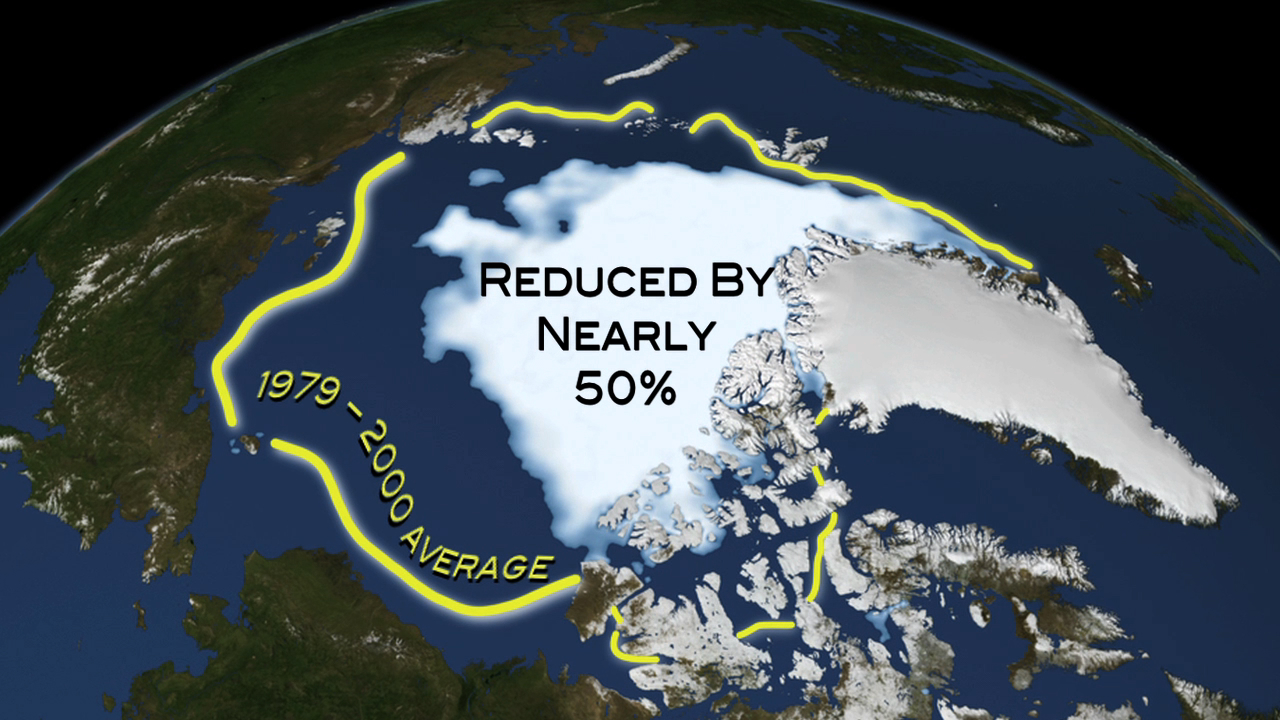
Nor can there be any assumption that Scotland, by virtue of being further north, is safer than the rest of Britain. Populations in cooler latitudes might get off more lightly; but equally they may not. Huge levels of ice-melt in the Arctic are causing unprecedented amounts of cold fresh water to pour into the north Atlantic, threatening the Gulf Stream, and the lesser-known, but even more important ‘Atlantic Meridian Overturning Circulation’.
It is quite possible that the effects will be felt soon – well within a generation – making Britain’s climate colder (and drier). If this occurs – and if I were a betting man, I’d bet on it – then it will be very bad indeed for agriculture. And especially bad for Scotland.
The time has passed for protecting the public from reality. Indeed, millions already know that things are worse than governments admit: from 40C heatwaves to droughts and flooded high streets, every year the weather brings the vicious reality of climate breakdown home in a new way. In workplaces, communities and wherever people have power they are taking climate action into their own hands – from towns working towards net zero, to figures in law, business and finance, lobbying for ambitious climate policy. It is vital to acknowledge and encourage this process. Scotland as a nation has already grasped this need and must urgently spread the word among its cities, towns and villages. We must all now recognise ourselves as the climate majority: the citizen energy that will demand unprecedented action to protect our world.
As a crowning irony, the Nuclear Alliance is led by France, whose own national law … excludes atomic energy from being classified as a green investment.
In March 2021, seven nuclear member states sent a letter to the European Commission demanding the inclusion of nuclear energy in the taxonomy. When a team of independent journalists took the letter’s statements apart it found that of the 25 factual claims in the letter, 20 were either fictitious or misleading
The European Commission, under the presidency of Ursula von der Leyen, has officially declared climate policy as its number one priority.
But the end of August, in the European General Court in Luxembourg, marks the conclusion of the first phase of one of three lawsuits against the European Commission targeting a key piece of European Green Deal legislation.
These lawsuits were brought not by opponents of climate mitigation policy, but by those, including Austria and a number of environmental groups, who wish to rescue the legislation from what they see as its being fatally compromised.
The pleading in the cases is aimed at revoking the Complementary Climate Delegated Act (CCDA), in force since this January.
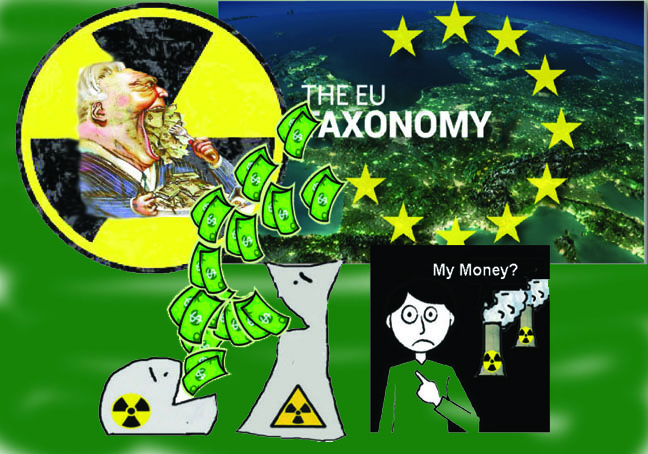
This supplements the Taxonomy Regulation, a list of economic activities considered sustainable and thus eligible for green investment, to include, astonishingly, natural gas and nuclear power.
What has led to this situation, in which the EU executive, ostensibly dedicated to achieving its “Fit by 55” plan to substantially reduce greenhouse emissions by 2030, finds itself challenged on its showpiece Green Legislation by one of its own member states?
The answer readily supplied by critics is that it is an appropriate response to one of the most conspicuous triumphs of greenwashing foisted on the public.
The inclusion of gas and nuclear, they say, violates the entire purpose of the Taxonomy Regulation.
The media dropped the ball
This hijacking of the EU’s key instrument of green policy has been openly accomplished through a campaign of misinformation conducted by the nuclear lobby.
In March 2021, seven nuclear member states sent a letter to the European Commission demanding the inclusion of nuclear energy in the taxonomy.
The intervention got some attention from news media at the time, but it was not of a critical kind.
When a team of independent journalists took the letter’s statements apart it found that of the 25 factual claims in the letter, 20 were either fictitious or misleading
Workaday mainstream journalists with tight deadlines to meet certainly haven’t always been keen to delve into all the nooks and crannies of a complicated story or take the responsibility to come down trenchantly on one side of an issue.
But something more insidious has emerged in recent decades: a paralysis in the face of debate, a willingness to report the scientific controversy and to present both sides in a “fair and balanced” way which gives equal time to the consensus of experts and the hype of hucksters.
Like retired journalist Jay Rosen said, “You don’t get a lot of complaints if you just write down what everyone says and leave it at that.”
But this serves the purposes of disinformation, which is not to convince, but to confuse and demoralise. Ultimately, it disables any organised effort to change things.
The Nuclear Seven’s claims are, in fact, dubious
When a team of independent journalists took the letter’s statements apart it found that of the 25 factual claims in the letter, 20 were either fictitious or misleading, including the usual dubious assertions about nuclear’s “valuable contribution” to climate neutrality.
However, the conclusions of the crowd-sourced investigation did not find a publisher among the European outlets and went largely unnoticed.
The letter by the Nuclear Seven — France, Poland, Hungary, Czechia, Romania, Slovakia and Slovenia — was bolstered ten days later by the release of a draft report by the European Commission’s Joint Research Centre (JRC).
The extent of the influence of the Nuclear Seven and the JRC report on the ultimate decision to formally label nuclear as sustainable is unclear, but likely decisive.
It had been assigned to determine whether nuclear power met the criteria for inclusion in the taxonomy, specifically, the Do No Significant Harm principle. This, in spite of the trifling fact that the JRC was established under the Euratom Treaty and is still tasked with conducting nuclear research under the aegis, and with the funding, of Euratom.
The report concluded that there was no “science-based evidence” that nuclear could do more harm to the environment than other activities in the taxonomy.
o no one’s surprise; but to considerable criticism from experts, including one of Germany’s nuclear regulatory authorities, and from the European Commission’s own Scientific Committee on Health, Environment and Emerging Risks, both of whom pointed out that the report’s conclusions were not supported by the report’s own findings.
Others noted that the JRC mandate neglected many critical taxonomy elements. In spite of these severe strictures, when the final JRC report was published a few months later it contained no revisions.
Nuclear lobby’s swagger
The extent of the influence of the Nuclear Seven and the JRC report on the ultimate decision to formally label nuclear as sustainable is unclear, but likely decisive.
And buoyed up by this, the EU’s successful nuclear lobby has been conducting itself with noticeable swagger.
From the seven signatories of the 2021 letter, the Nuclear Alliance, as it is now known, has expanded to 14 EU countries with the addition, in February, of Bulgaria, Croatia, Finland and the Netherlands, followed by Belgium, Estonia and Sweden, with Italy as an observer.
As a crowning irony, the Nuclear Alliance is led by France, whose own national law … excludes atomic energy from being classified as a green investment.
Now representing a majority in the EU, the Alliance has been emboldened to demand, at their fourth meeting in Spain on 11 July, that nuclear energy should be treated equally with renewables when it comes to EU funding and the promotion of joint projects.
Under their banner of “tech neutrality” — an echo from the 2021 letter — the Alliance has already successfully lobbied for the acceptance of nuclear-produced “pink hydrogen” as “green hydrogen” and managed to wring important concessions in the revision of the Renewable Energy Directive, which would almost double the share renewable in the EU’s overall energy consumption by 2030.
These concessions allow for a greater role of nuclear power in meeting these targets.
Everything goes as sustainability loses its essence
As a crowning irony, the Nuclear Alliance is led by France, whose own national law — a 2015 decree on the “Energy and Ecological Transition for Climate” label — excludes atomic energy from being classified as a green investment.
In “Diversion from urgent climate action”, WISE’s nuclear expert Jan Haverkamp makes the case that vigorous nuclear industry lobbying in Brussels has had a “direct influence on the speed with which urgent climate action is taken”, slowing down the adoption of renewable energy sources, which is a boon for the fossil fuel industry.
Sustainability having lost its meaning, everything is allowed. And so, living in the Upside Down, we are witness to the triumph of the nuclear lobby.
Sustainability having lost its meaning, everything is allowed.
And so, living in the Upside Down, we are witness to the triumph of the nuclear lobby.
In the post-CCDA landscape, the nuclear zombies have acquired a new green sheen as they shamble and shuffle pointlessly, consuming all the oxygen in the climate policy conversation until they ultimately expire in obscene cost overruns and non-delivery of their boastfully promised but illusory results.
PARIS, Aug 23 (Reuters) – A heatwave curbing the availability of cooling water has prompted a production warning from operator EDF for the Saint Alban nuclear power plant on the Rhone river in eastern France for Aug. 26-27.
plant-specific climate simulations do not exist for lower river levels, increased wildfires, or extreme weather events like tornadoes and heavy wind and rain.
Then there’s the issue of what to do with radioactive spent fuel.
Europe’s atomic reactors are getting old. Can they bridge the gap to an emissions-free future?
Shaken by the loss of Russian natural gas since the invasion of Ukraine, European countries are questioning whether they can extend the lives of their ageing nuclear reactors to maintain the supply of affordable, carbon-free electricity — but national regulators, companies and governments disagree on how long the atomic plants can be safely kept running………………………………………………
Taken together, the UK and EU have 109 nuclear reactors running, most of which were built in the 1970s and 1980s and were commissioned to last about 30 years.
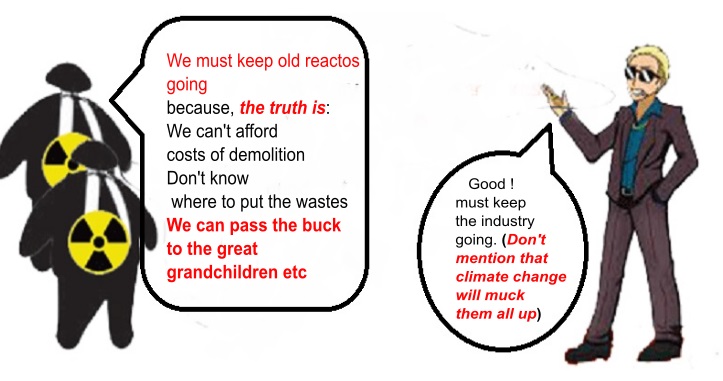
That means 95 of those reactors — nearly 90% of the fleet — have passed or are nearing the end of their original lifespan, igniting debates over how long they can safely continue to be granted operating extensions.
Extension talk: Bridging the gap or a new lease of life?
Regulations differ across borders, but life extension discussions are usually a once-a-decade affair involving physical inspections, cost/benefit estimates for replacing major worn-out parts, legislative amendments, and approval from the national nuclear safety authority.
In some countries — especially for those that planned to exit atomic power entirely after the 2011 Fukushima nuclear disaster in Japan — discussion is focused on the short term: eking out a few years to get through any shortages before new wind, solar and gas installations can be built to take over.
Anti-nuclear Germany had planned to switch off its last three plants by the end of 2022, only to grant the sites an emergency extension to April 2023 to make it through winter without Russian gas — which previously made up 40% of EU gas supply……………………………………….
So far, Finland, Sweden, Bulgaria, the Czech Republic, Slovenia, the Netherlands and Hungary have all taken steps to allow reactors to run for at least 60 years, subject to regular safety checks.
France, with the largest fleet, is carrying out a major 40-year inspection and refurbishment programme for its 32 oldest reactors.
ASN, the national safety authority, has said France’s pressurised water reactor (PWR) design in principle can be safely operated for 50 years — meaning the ageing plants can run through 2030 — but the regulator will not take a stance on extending to 60 years until the end of 2026……………………………………..
Some companies are pushing the limits further.
In February, Finland’s Fortum obtained permission to operate two reactors until 2050, when they will reach 70 years of age.
In Sweden, where licences are unlimited in time subject to regular safety checks, Vattenfall is considering 80 years of operation for its five reactors……………… More than scientific one-upmanship is at play.
…………………. The cost of pulling the plug
Politicians are also under pressure to keep energy prices low, especially as movements characterising climate action as costly and elitist gain ground.
That means ensuring steady, abundant supply — any swift, unexpected loss of a major source means market spikes and painful household bills.
Energy prices in Europe jumped exponentially in 2022 after many French reactors went offline. The impact was compounded by Russia’s invasion of Ukraine.
…………………………………..The biggest challenge is maintaining the reactor vessel, where uranium atoms are split to release neutrons inside the core. Those flying neutrons also hit the vessel’s steel walls, altering the lattice structure of the metal, making it hard and brittle.
Vattenfall and EDF try to slow down that embrittlement process by layering in special rods of hafnium metal or all……………………………….
Reactor vessels are generally seen as non-replaceable — though it has never been tried.
The same goes for the airtight containment building, which houses the reactor and all associated radiation-emitting parts, to keep it from being released into the atmosphere.
………………………… The French government, which this year nationalised EDF, has estimated it needs to hire and train at least 100,000 workers by 2033 if it hopes to run its fleet long term and build at least six new reactors.
That includes automation engineers, boilermakers, draughtsmen, electricians, maintenance technicians, blacksmiths, pipe fitters and welders.
Europe’s new pro-nuclear alliance would require some 450,000 skilled workers if it hopes to build an additional 50 GW of new nuclear by 2050, according to industry lobby Nucleareurope.
2050 and beyond: Hotter, drier, more radioactive trash
Industry cheerleaders point to Dubai’s new Barakah nuclear plant as proof reactors can be successfully designed to withstand desert heat and warmer water temperatures.
But few plants have room to be retrofitted with new safety systems, such as a dyke wall to protect against rising water levels, regulators warn.
“It’s a real headache to find [physical] space on a site that’s currently operating — we have reached certain limits in the feasible modifications of existing reactors,” said Karine Herviou, deputy director-general of France’s Institute for Radioprotection and Nuclear Safety, at the industry event on lifetime extensions.
The French fleet’s temperature margin to withstand heatwaves is constantly questioned, she added, while plant-specific climate simulations do not exist for lower river levels, increased wildfires, or extreme weather events like tornadoes and heavy wind and rain.
As a result, Herviou said in France: “There’s a general agreement that what we’ll do at the 50-year, 60-year mark will essentially be replacements for modernisation but very certainly not adding in any new safety systems … and checking for conformity and respect of already-applicable requirements, without further hiking the safety requirements.”
That rings alarm bells for third-party watchdogs like Mycle Schneider, who compiles the annual World Nuclear Industry Status Report and said ageing reactors need tighter scrutiny.
“You have a car, 30-to-40 years old, and your generator breaks down. You open the hood, the mechanic takes out the generator and then says, ‘Ooh, everything underneath is rotten’ — a 40-year-old nuclear plant is not all that different, you basically find on the go all kinds of things you didn’t expect to find,” Schneider said.
EDF wants the government to relax biodiversity rules which forbid plants from dumping used cooling water into nearby rivers on days they are deemed already too warm, limiting power production — which risks becoming more frequent.
Then there’s the issue of what to do with radioactive spent fuel.
Used uranium pellets, which are solid, are stored in special refrigerated swimming pools designed to cool the radioactive heat down for five-to-10 years. French company Orano then separates out the material into non-recyclable leftovers that are vitrified into glass (4% of the material), plutonium (1%) to create a new nuclear fuel called Mox, on which some 40% of France’s reactors can run; and reprocessed uranium (95%) which for now can only be re-enriched and “recycled” at one plant in Russia.
Non-recyclable waste can be safely stored in dry casks, but its ultimate destination is deep underground, where it will fully degrade over hundreds of thousands of years.
Electricite de France SA will probably have to reduce nuclear output over the coming weekend as a heat wave affecting a large part of the country warms rivers used for cooling some of its reactors.
Russia, the US, and China want to develop the Arctic. Here’s how Russia’s multifunctional nuclear vessel would expand shipping routes to Europe and Asia.
ussia is home to the only nuclear icebreaker fleet in the world, built to meet maritime transportation requirements through modern nuclear technology. The country’s aim of establishing an Arctic shipping route would open up its north coast to new projects, at a cost beyond money.
“The Russian shipbuilding industry has been growing for the past few years,” says Alexey Rakhmanov, president of Russia’s United Shipbuilding Corporation.
“This has especially happened in specific market segments, such as research vessels and nuclear-powered icebreakers, and niches such as the ice-resistant, self-propelled research platform North Pole.”
According to the Russian Government’s Northern Sea Route (NSR) Development Plan, the country aims to transport at least 150 million tonnes of crude oil, liquefied natural gas, coal, and other cargoes via its northern sea route per year, starting in 2030.
The Centre for Strategic and International Studies claims that Russian President Vladimir Putin personally identifies with Russia’s Arctic ambitions, seeking to use the Arctic narrative of man conquering nature as a distinguishing feature of contemporary Russian nationalism.
According to London-based think-tank The Polar Connection, increased mining and energy extraction, particularly on the Yamal Peninsula, relates to the NSR expansion.
The Arctic route, which offers a far quicker journey between northern Europe and East Asia than the conventional Suez Canal route, has also been proposed by Russia as an alternative global shipping route. However, this route’s distinctive challenges and risks have held back its otherwise rapid development.
Nuclear icebreaker fleets in the Arctic
In January 2022, multinational engineering and constructions company China Communications and Construction and Russian Titanium Resources agreed to co-operate on a mining project to develop a vertically-integrated mining and metallurgical complex for the processing of titanium ores and quartz sands from the Pizhemsky deposit in the Komi Republic, north-west Russia.
This project to create a national mining cluster would involve the construction of the Sosnogorsk-Indiga railway and the deep sea port of Indiga, in the Arctic region of Russia. This development will need reliable waterways, which only an icebreaker can provide.
Russia had plans, under the name Project 10510, to build a fleet of Lider-class nuclear-powered icebreakers and ships as part of its aim to improve Arctic shipping – though this strategy has since been downsized to a single vessel, called Rossiya, due to begin operations in 2027.
Authorities docked the nuclear-powered vessel Sevmorput in the Arctic region last year; a 34,600 deadweight tonnage (dwt) vessel carrying up to 1,324 TEU (twenty-foot equivalent unit). The ship will serve on the NSR, while Russia has built a new nuclear-powered icebreaker, Ural, (7,154 dwt) alongside it.
Shipbuilder Rosatomflot is a subsidiary of Russian state nuclear company Rosatom and JSC Baltiysjiy Zavod, part of the United Shipbuilding Corporation. Recently, the company signed a contract for the construction of a unique, multifunctional nuclear service vessel that would operate from 2029. The vessel is designed to perform a full range of work on recharging nuclear plants of existing Russian nuclear icebreakers.
“A multifunctional nuclear-technical support vessel will ensure the proper functioning of a modern icebreaking group. Financing of its construction is assumed according to the scheme: 50% from the budget of the Russian Federation, 50% from the investment program of the State Corporation Rosatom,” Russian Deputy Minister of Industry and Trade Victor Yevtukhov said in a press release.
Building an “Arctic economy” in remote parts of Russia
The Russian Government is trying to build a new Arctic economy. According to the government statement, the NSR is a “key element” in developing transport connectivity in Russia’s “most hard-to-access” territories. The leading Arctic companies, such as Vostok Oil, Novatek, and Gazprom Neft, intend to increase the volume of shipping in Arctic waters to over 190 million tonnes over the next few years. ………………………………
Arctic to look like “ice cubes melting in a glass of water”
…………………………. the main purpose of the icebreakers is simply to break ice. Broken ice melts more easily, becoming water that absorbs more sunlight. This causes an increase in local temperatures, thus leading to more ice melting.
The Arctic is warming much faster than the rest of the world as the high sunlight reflectivity, or albedo, of Arctic ice is lost. Compared to ice, seawater absorbs more sunlight, meaning that water then warms up and evaporates more readily, itself becoming a greenhouse gas.
Small ships can have big effects in the Arctic. Non-profit US think tank the Center for the Advancement of the Steady State Economy reported that an icebreaker ship passing through the ice for around 620 miles, which leaves an ice-free wake of 33 feet, would open an area of water of 3.9 square miles over the entire cruise.
Even though the Arctic Sea covers around 2,500 miles, all icebreaking harms the environment. Continuous use of icebreaker ships in the Arctic would lead to looking more like “ice cubes melting in a glass of water,” the report says.
Russian development through thawing sea ice
………………………………………………….. The Financial Times reported that according to data from NASA, the Arctic Circle’s ice sheet has shrunk by 13% over the past ten years due to the region’s unusually high temperatures, allowing for greater shipping access.
…………………………………….. As a result of global warming, seasonal sea ice in the Arctic is melting, and opportunities for human activity are expanding. These changes not only allow for growth in tourism, fishing, and military activities, but also enable oil and gas exploration, mining, and development in new regions.
Increased activity in the Arctic will impact marine life, which had previously been largely undisturbed. While Arctic ecosystems remain relatively poorly understood, Arctic industrialisation has already increased geopolitical tensions, which will undoubtedly worsen as the ice melts.
Andrew Blowers contemplates this question in the BANNG column for Regional Life, August, 2023
The frenzied relaunch of Great British Nuclear (GBN) as the vehicle to produce 24GW of nuclear power (i.e. a quarter of Britain’s electricity) was long on rhetoric and short on commitment. The prospect of low carbon nuclear power sometime in the future – albeit costly, slow, accident-prone and with a legacy of dangerous wastes – seemed a soothing distraction from the present reality of heatwaves, wildfires, warming oceans and rapidly melting ice.
But, nuclear power cannot escape the reality of an insecure and unsafe future with global warming and sea-level rise. In the immediate future, individual nuclear stations will be affected by floods, storms, heatwaves and droughts. Increasing temperatures will affect cooling systems reducing power output as thermal efficiency decreases. In the longer-term, nuclear power may face an existential crisis especially where stations, like Bradwell, are sited on coasts prone to flooding, erosion and storm surges as sea-level rises.
One day this summer my grandson and I built a fortified sandcastle on West Mersea beach. With a willing suspension of disbelief, it can be imagined as a nuclear power station, let’s call it Bradwell B. My grandson is standing on the ‘nuclear island’ which is ringed by a high wall to protect it from the sea.
But, as time goes by, the sea rises (by as much as 3 or 4 metres in the next century) and surges threaten the doomed station, until the walls are breached, the island invaded and power station and highly radioactive wastes are cast into the waters. The station, like our sandcastle, will eventually be no more.
Despite the long-term risks from climate change, developers seem still to be eyeing up the prospects for building at Bradwell. By a process called ‘adaptive management’ they envisage increasing the height of the walls, to the point where the nuclear island becomes, literally, an island. If such an idea sounds crazy, that’s because it is.
In 1953 The Great Tide surged down the East Coast, flooding the Essex coastlands, leaving death and destruction in its wake.
Back then, the floods receded and the land was reclaimed. Under climate change there will be no turning back and the land and all that is upon it will be gone for ever.
Sooner or later, GBN will signify “Good-Bye” Nuclear.
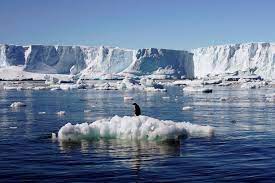
UK homes could be at risk of flooding if Antarctica becomes ‘global radiator’ and ice melts. Scientists have warned that the Antarctic could start to absorb solar heat rather than reflect it if ice loss continues at the current rate, further accelerating global warming. Antarctica is at risk of becoming a “global radiator”, with the current rate of ice loss at the upper bounds of previous forecasts, scientists have warned. The southern continent currently acts to cool the global climate by reflecting large amounts of solar radiation with its pure white surface. The melting of ice, and loss of that surface, means it could begin to absorb heat instead. Melting ice also means that 16 million more people, including in the UK, could be exposed to flooding every year. The warning came alongside the publication of a major synthesis paper pulling together Antarctic scientific research from the last several years to paint a continent-wide picture.
It is “virtually certain” that future extreme events in Antarctica will be worse than the extraordinary changes already observed, according to a new scientific warning that stresses the case for immediate and drastic action to limit global heating.
A new review draws together evidence on the vulnerability of Antarctic systems, highlighting recent extremes such as record low sea ice levels, the collapse of ice shelves, and surface temperatures up to 38.5C above average over East Antarctica in 2022 – the world’s largest ever recorded heatwave.
Antarctica is “suffering” because of burning fossil fuels which is causing extreme events that were unthinkable 30 years ago, scientists have said. Sea ice around the frozen continent is currently at its lowest level since satellites began observing it in 1979, beating the previous minimum record set last year.
A winter heatwave in March 2022 saw temperatures soar nearly 40C above the norm in East Antarctica, from around -50C to -10C, and had it happened in summer it would have began melting the surface of the ice sheets which scientists said they have never seen before.





 nuclear-news