The Heartland Institute spouting lies about climate change
The global warming conference where skeptics think they’re winning the debate.
The annual International Climate Change Conference, which this year runs Thursday and Friday, just steps from Capitol Hill, is like an alternate universe…
During the event, one can hear from a handful of leading climate skeptics on how the sun is really responsible for driving climate variability, how extreme precipitation events are just an artifact of poor data measurements and how federal scientists are manipulating data to manufacture spurious warming trends.
Most importantly, one can hear from senior Republican lawmakers about how they plan to stop the Obama administration’s climate regulations and scientific research agenda.
The conference is put together by the Heartland Institute, a free-market think tank based in Chicago, which in the past has received significant funding from the oil industry.
http://mashable.com/2015/06/11/global-warming-conference-skeptics/ & http://www.dailyclimate.org/t/7117601345683326174
Rabbis against climate change.
 Three months ago, authoritative sources at the Vatican started saying that in June, Pope Francis would be issuing one of Catholicism’s most important statements — an Encyclical — on the climate crisis, and that in September, during his trip to the United States, he would speak to the United Nations General Assembly and to the U.S. Congress on the crucial need for action to prevent climate disaster. Seven rabbis responded to this news by deciding that Jews should address the climate crisis in the nearest way analogous to an Encyclical: with a broad-based Rabbinic Letter.
http://forward.com/opinion/national/309548/rabbis-against-climate-change/ & http://www.environmentalhealthnews.org/t/-6200967183475774732
Coal fired energy ‘s decline in Germany, and Europe generally
we still occasionally see rubbish published around the place that there are all these coal fired power plants about to begin operation in Germany. The Carbon Tracker report points out that since 2008 there were more than 100 new coal plants announced that have not been built. Once you take into account closures, not just openings, since 2000 there has been a new reduction of 19 gigawatts of coal capacity.
The reality that blogosphere and the conservative press don’t seem to have caught up with is that with wholesale power prices stuck at low levels, construction of a new coal fired power station is a licence to haemorrhage money.
The circumstances surrounding this European utility decline look eerily familiar to the situation here in Australia. Electricity demand has stagnated, while solar PV in particular has taken off.
Could this be AGL and EnergyAustralia’s horrible fate?, Climate Spectator TRISTAN EDIS 5 JUN, “……………….A report released by the Carbon Tracker Initiative has collated a huge array of data which provides a striking summary of how Europe’s conventional power utilities have been thrown into financial turmoil since 2008 due to being squeezed at one end by improved energy productivity and at the other end by growing use of renewable energy.
As the chart below [in original article] illustrates the stock market value of the EU’s largest 5 power generators has plunged by over 100 billion euros (or 37% of their value) between 2008 to 2013. The other big utility in the chart below that has beaten the trend has been Enel which moved into renewables….
 This hasn’t been simply a function of a broader economic downturn in Europe. By contrast with the plunge in these utilities’ stock value Germany’s stock market increased 18% over the same period with a major divergence emerging in performance…..
at the same time as electricity demand was stagnating, renewable energy was being pushed into the system driven by governments’ responding to public concern about climate change and a future industrial opportunity. The chart below [in original article] illustrates that while power demand has stagnated, renewables gained 10% market share from nuclear and fossil fuel generators……… Continue reading
Extreme heat will finish “Business As Usual” in USA, and probably Australia ,too
 Anthony M Horton: Extreme heat – ‘Business as usual’ life to end in less than 30 years in the U.S.
A new study projects that the United States will have a four to six-fold increase in extreme heat exposure by 2070 — and even earlier in the South. Unfortunately, no similar study has been conducted in Australia…
As a scientist, I am concerned that research into a range of climate related issues are seemingly not on the agenda in Australia and stellar pillars such as the world renowned Commonwealth Scientific and Industrial Research Organisation (CSIRO) and the Bureau of Meteorology (BoM) are suffering increasingly deep staff cuts at a time when they are needed the most.
It also appears that the long held “without fear or favour” bastion of these pillars has also seemingly ended. If this is really the case, it is a truly sad day for Australia-especially given the many world leading breakthroughs achieved by the former and the proud record of the latter. …
I fear for the future of Australia if this trend becomes entrenched as, by the time the Government realises they have made a tactical error, there won’t be enough trained people left to pick up the slack, as they will have retired, retrained or will be employed elsewhere in the world. https://independentaustralia.net/environment/environment-display/business-as-usual-life-in-the-us-will-end-in-less-than-30-years,7750
Germany’s coal power production in decline, along with nuclear exit
 Zero German coal plants as a reaction to Fukushima, Energy Transition, [excellent diagrams] 27 May 2015 by Craig Morris Reading headlines like “Germany’s nuclear cutback is darkening European skies” makes Craig Morris despair over the state of journalism……
..there has been no surge in coal power during the nuclear phase-out. In fact, total coal power production (both lignite and hard coal) fell by six percent last year alone. ……….
We are left with no coal plants in the pipeline as a reaction to Fukushima accident and Germany’s nuclear phase-out. Nor has there been a boom in new coal plants and coal electricity generation in Germany since the Fukushima accident. All of this information is publicly available,……Craig Morris (@PPchef) is the lead author of German Energy Transition. He directs Petite Planète and writes every workday for Renewables International. http://energytransition.de/2015/05/zero-german-coal-plants-reaction-to-fukushima/
A life-saving global agreement – the Montreal Protocol
 Ozone treaty ‘prevented skin cancer deaths’ http://www.abc.net.au/science/articles/2015/05/27/4242804.htm Anna Salleh
The ozone hole over the Antarctic would have been 40 per cent bigger in 2013 if the Montreal Protocol hadn’t curbed the production of CFCs, according to a new study.
In this scenario, Australia and New Zealand would have experienced greater UV radiation, which in turn would have increased the rate of skin cancer, say the authors of a new paper today in Nature Communications.
The paper also shows that, by 2011, ozone depletion would have become a northern hemisphere problem too.
“There would have been an Antarctic-like ozone hole in the Arctic over populated regions,” says co-author Dr Richard McKenzie, an atmospheric physicist at the National Institute of Water and Atmospheric Research in New Zealand.
In the mid-1980s scientists discovered a hole in the ozone layer above Antarctica, and in 1987 the world agreed to the Montreal Protocol, which limited the production of chlorofluorocarbons (CFCs).
Despite this, the concentration of CFCs continued to rise until 1993, and even today the ozone hole reappears each spring, and this contributes to an increase in cancer-causing UV radiation in Australia and New Zealand.
But without the Montreal Protocol it could have been so much worse, say the researchers.
The team, led by Professor Martyn Chipperfield of the University of Leeds, used a ‘chemical transport model’ to calculate what would have happened over the past two decades if CFCs had not been controlled.
Importantly, the model is the most accurate to date because it uses real data on winds, which blow ozone into the ultra cold parts of the South Pole, where ozone depletion occurs at the highest rate.
‘World avoided’ scenario
According to the new model, a 40 per cent increase in the size of the Antarctic ozone hole by 2013 would have contributed to an 8 to 12 per cent increase in ultraviolet levels over Australia and New Zealand.
The model is also the first to show that, without the Montreal Protocol, a very large Arctic ozone hole would have occurred in the exceptionally cold 2010/11 northern winter, and smaller Arctic ozone holes would have become a regular occurrence.
By 2013, continued decline in ozone levels over the northern hemisphere mid-latitudes would have led to a 14 per cent increase in ultraviolet levels in the United Kingdom.
Earlier research suggests that globally, these higher UV levels would have led to a 16 to 30 per cent increase in non-melanoma skin cancers, says McKenzie.
He says the change in melanoma rates are harder to estimate, but the current model supports previous estimates that by 2030, there would have been two million more skin cancer cases (14 per cent more skin-cancer cases) per year around the world, due to higher the UV.
And, by 2065 the amount of ozone would have been about a third of current levels and the peak UV index would have been about three times higher.
“It would have been drastically bad,” says McKenzie. “So instead of it being safe for fair-skinned people to go out in the sun for maybe 15 minutes, they could only go out for five minutes, which means it wouldn’t really be safe to cross the street.”
“This ‘world avoided’ scenario is really good news. It’s clear evidence that the Montreal Protocol has already worked,” says McKenzie.
“It’s done a good job. If only climate change policy could be half as successful.”
But, regardless of future changes in ozone, people in New Zealand and Australia will need to continue to protect themselves from UV radiation, says McKenzie.
UV levels in the Southern Hemisphere are naturally much higher than those in the Northern Hemisphere because of ozone circulation patterns, cleaner air and the fact that the Earth is much closer to the Sun during the southern summer.
“The heath message doesn’t change. We need to be vigilant,” warns McKenzie.
Investment funds likely to abandon fossil fuels, following Norwegian fund’s lead
Norway fund could trigger wave of large fossil fuel divestments, say experts,Guardian, Damian Carrington, 29 May 15 Other investors are likely to follow Norwegian fund’s move out of coal-based investments, due to its size as the world’s largest sovereign wealth fund Norway’s decision to dump all coal-focused investments from its $900bnsovereign wealth fund could unleash a wave of divestment from other large funds, according to investment experts. The fund, the largest in the world, is one of the top 10 investors in the global coal industry.
The move, agreed late on Wednesday, is one of the most significant victories to date for a fast-growing and UN-backed fossil-fuel divestment campaign. It will affect $9bn-$10bn (£5.8-£6.5bn) of coal-related investments, according to the Norwegian government.
“Investments in coal companies can have both a climate risk and a future financial risk,” said Svein Flaatten of the governing Conservative party, which made a cross-party agreement to implement the selling of coal investments.
A series of analyses have shown that the world’s existing reserves of fossil fuels are several times greater than can be burned while keeping the temperature below the 2C safety limit agreed by the world’s governments. Furthermore, authorities such as the World Bank and Bank of England have warned that fossil fuel reserves will be left worthless if the action needed to cut carbon emissions kicks in…….
Organisations that have cut or curbed coal investments recently include insurance giant Axa, the Church of England and Oxford University. The Guardian, which is running a campaign asking the world’s biggest health charities to divest, is owned by the Guardian Media Group, which announced it would divest its £800m fund from all fossil fuels in April. http://www.theguardian.com/environment/2015/may/28/norway-fund-could-trigger-wave-of-large-fossil-fuel-divestments-say-experts#comment-52997566
Big energy firms get privileged access to top EU climate officals
Big energy has ‘privileged access’ to top EU climate officals, claim campaigners, Guardian, Arthur Neslen 28 May 15 A row has broken out over records showing almost all top two climate and energy officials’ lobby meetings were with fossil fuel and heavy industry companies A row has broken out over claims that the vast majority of lobbyists met by the EU’s top two energy and climate officials have been from the fossil fuel sector, big energy firms and heavy industry, since they took office six months ago.
Calendar records show that 94% of the EU climate commissioner Miguel Arias Cañete’s meetings have been with business lobbyists, mostly representing the heavy industry and fossil fuels sectors. For the vice president for energy union, Maroš Šefčovič, the figure was 70%.
Sources close to Cañete say that in practice, he held five group meetings with NGOs – rather than the two listed in the calendar – and gave five group updates to civil society groups at last December’s UN climate summit in Peru, bringing the true figure closer to 83%. They say he has championed climate action in informal dialogues, and improved upon the access record of his predecessor.
But Pascoe Sabido, a campaigner for Corporate Europe Observatory, complained of undue corporate influence.
“These lists of meetings show unrivalled privileged access for the most polluting industries, while public interest groups have barely featured,” he told the Guardian. “How the EU acts over the next few years both internationally and regionally will be key in deciding whether we avoid catastrophic climate change. But on this evidence, Cañete and co are too close to the fossil fuel industry to stop us careering head-first into a climate disaster.”
Cañete has had a mountain to climb in gaining the trust of European environmental groups, after the Guardian revealed that he held hundreds of thousands of pounds worth of shares in two oil companies, shortly before his appointment………
ome environmentalists fear that lop-sided inputs may affect the commission’s output when it comes to crunch policy decisions.
“Access is currency in the lobby game and there is no denying fossil fuel companies have deeper pockets and more influence,” said Brook Riley, a spokesman for Friends of the Earth Europe. “This dangerous imbalance could prevent us from making the urgently needed transition to a safe, clean and fair energy system.” http://www.theguardian.com/environment/2015/may/28/big-energy-has-privileged-access-to-top-eu-climate-officals-claim-campaigners
Tipping point for some Antarctic glaciers reached in 2009
Some Antarctic glaciers reached a tipping point in 2009 SARA PHILLIPS ABC Environmen t22 MAY 2015
Antarctic glaciers on the Bellinghausen Sea coast suddenly started melting in 2009.Credit: Alba Martin Espanol (Science)
Antarctic glaciers emptying into the Bellinghausen Sea all suddenly started melting around 2009. Scientists warn the sea level rise could be dramatic.
THE FIRST SIGNS Antarctic glaciers have reached some kind of melting ‘tipping point’ have been noticed by scientists from Europe.
The group of eight scientists, led by Dr Bert Wouters from the University of Bristol used sophisticated satellite measurements of the Antarctic glaciers that empty into the Bellinghausen Sea, on the Southern Antarctic Peninsula which reaches up almost to South America.
Glaciers are in effect, frozen rivers of snowpack, moving incrementally towards the ocean. These glaciers have existed in their current form for at least 5,000 years.
The scientists found that the height of the glaciers had dropped — some by as much as four metres. By analysing years of data, they could rule out the snow becoming more compact or a reduction in snowfall as the cause. This left only one possibility: that the glaciers were sliding faster towards the sea.
“The most likely explanation is that the glaciers have accelerated because the temperature of the ocean water has increased in the area, which we know from measurements. These warm waters will melt the floating ice shelves and the glaciers where they enter the sea from below and cause them to lose more ice,” said Dr Wouters, Marie Curie Research Fellow at the University of Bristol.
As the sea ice holding back the glaciers melts away, the glaciers slide faster into the sea. Last week researchers warned that elsewhere in Antarctica, the Larsen C ice shelf could collapse this century and what remains of the Larsen B ice shelf would be all gone by 2020, the majority of it having collapsed in 2002.
A tipping point
Curiously, the glaciers studied were relatively stable until 2009. After then, Dr Wouters said the glaciers appeared to have reached a “tipping point” with the glaciers studied simultaneously starting to slip into the sea…….http://www.abc.net.au/environment/articles/2015/05/22/4239285.htm
Rich fossil fuel fans funded Bjorn Lomborg’s Crentrev for Inaction on Climate Change
The Millions Behind Bjorn Lomborg’s Copenhagen Consensus Center US Think TankDeSmogBlog By Graham Readfearn • Tuesday, June 24, 2014 “………..The only income for the CCC in its first year in the US came in the form of a $120,000 grant from the New York-based Randolph Foundation. The foundation, seeded by money from the Richardson family’s sale of the Vick Chemical Company in 1985, gave CCCanother $50,000 in 2012.
The main trustee at Randolph is Heather Higgins, the president and CEO of Independent Women’s Voice and the chairman of its sister organisation Independent Women’s Forum. Higgins is the daughter of R. Randolph Richardson, a member of the family that sold Vick Chemical Company to Procter & Gamble for $1.2 billion.
Staff writers of both organisations regularly express scepticism about the science of human-caused climate change and cite Lomborg’s views approvingly.
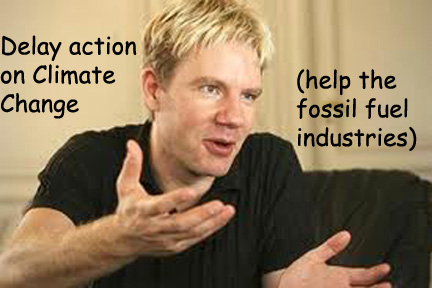
A recent article from IWF senior fellow Vicki Alger claimed “a majority of scientists believe that global warming is largely nature-made” — ignoring several studies that show the vast majority of research from scientists studying climate change believe exactly the opposite.
IWF funders include the Claude R. Lambe Foundation, controlled by Charles Koch, and Donors Trust, a fund for conservative philanthropists that has pushed millions into organisations promoting climate science denial and fighting laws to cut greenhouse gas emissions.
Higgins is also board member at the Philanthropy Roundtable, another route for conservative philanthropy which shares two members of personnel with Donors Trust or its partner organisation Donors Capital Fund. Also on the board of trustees at Randolph is Polly Freiss, the daughter-in-law of conservative Christian businessman Foster Freiss.
Foster Freiss put more than $2 million into Republican Senator Rick Santorum’s 2012 run for his party’s nomination for the presidency. Freiss also bankrolled conservative news outlet The Daily Caller, which regularly publishes articles supporting the views of climate science denialists.
On his personal web page, Freiss promotes climate science denial sources including Climate Depot and The Heartland Institute. Friess’s website has also promoted Lomborg’s views.Foster Freiss and his daughter Polly attended the Koch brother’s secretive 2010 strategy meeting in Aspen, along with Heather Higgins and a host of other conservative activists.
The tax records of the Kansas-based Ewing Marion Kauffman Foundation indicate it has given the CCC two $150,000 grants — one in 2011 and another in 2012……..
DeSmog’s analysis of the tax records of not-for-profit groups and foundations donating to CCC accounts for only $520,000 of the total $4.3 million income of the CCC since it was launched in the US. The center’s new website makes no mention of its funding.
When so little is known about the funding for CCC, it is hard for anyone to know if Lomborg’s hope to find “unassailable” donors has come true……http://www.desmogblog.com/2014/06/25/millions-behind-bjorn-lomborg-copenhagen-consensus-center
Lack of clarity on finances of Bjorn Lomborg’s Climate Action Delaying Centre
It is unclear that Lomborg himself is a legitimate charity anywhere, but most of the money seems under his control. One might also wonder where income taxes are paid.
Perhaps with his new $4 million Australia Consensus Center (covered here, here, here) Bjorn Lomborg may pick a better site than a US shipping storefront, since he’ll receive much more taxpayer money, directly, courtesy of the Australian government. That does seem simpler
Bjorn Lomborg’s Copenhagen Consensus Center – Real Charity Or “Foreign Conduit”? DeSmogBlog By John Mashey • Sunday, April 26, 2015 Bjørn Lomborg is founder and president of the Copenhagen Consensus CenterUSA (CCC)), a tax-exempt 501(c)(3) “public charity” whose US physical presence is shown in the image: 262 Middlesex St, Lowell MA. Lomborg and the Copenhagen Consensus Center are known to DeSmog readers for efforts to downplay the importance of addressing climate change, a subset of climate science denialism that has infected the public debate across the English-speaking world.
Despite the name, it has not been based in Copenhagen since 2011. Deputy Director Roland Mathiasson remains there, but Lomborg moved to Prague in 2012. Workers seem mostly in Hungary, with a few in the US. The Board is Lomborg, Mathiasson, Scott Calahan (Ft Lauderdale) and Loretta Michaels (Washington, DC). Although some money is used for fundraising and PR in the US, much goes abroad to Mathiasson and Lomborg, who is said to travel 200 days a year.
The “real location” of CCC is unclear, and the Internal Revenue Service often cares about this with charities.
Copenhagen Consensus Center is a textbook example of what the IRS calls a “foreign conduit” and it frowns strongly on such things. It may also frown on governance and money flows like this, perhaps “inurement”:
From attached Form 990 summary, more than 60% went directly to Lomborg, travel and $853K promotion of his movie. According to Wikipedia it grossed $63K and the movie poster shows a picture of Lomborg, a light bulb and heading:
“A LIGHT BULB WON’T SOLVE GLOBAL WARMING
THIS GUY’S BRIGHT IDEAS MIGHT“
Even in a simple US charity, poor governance and obvious conflicts of interest are troublesome, but the foreign element invokes stringent extra rules. Legitimate US charities can send money to foreign charities, but from personal experience, even clearly reasonable cases like foreign universities require careful handling. It is unclear that Lomborg himself is a legitimate charity anywhere, but most of the money seems under his control. One might also wonder where income taxes are paid.
A foreign group’s creation of a US “shell” charity to gather US funds and funnel them abroad is the most obvious of “foreign conduits” in IRS parlance, #1 on its list of no-no’s. IRS revocation of 501(c)(3) status not only eliminates tax breaks for ordinary donors, but eliminates entirely crucial major gifts from private foundations like the Randolph Foundation, Ewing Marion Kauffman Foundation and the Paul E. Singer Foundation.
CCC seems to break many rules. Foreign citizen Lomborg is simultaneously CCC founder, president, and highest-paid employee. Most people are a little more subtle when trying to create conduits, as in this example, where the IRS determined someone was not eligible for 501(c)(3) status, despite various stratagems to obscure the relationships.
Perhaps with his new $4 million Australia Consensus Center (covered here, here, here) Bjorn Lomborg may pick a better site than a US shipping storefront, since he’ll receive much more taxpayer money, directly, courtesy of the Australian government. That does seem simpler…….http://www.desmogblog.com/2015/04/26/copenhagen-consensus-center-real-charity-foreign-conduit
‘Stable’ Antarctic ice sheet no longer stable
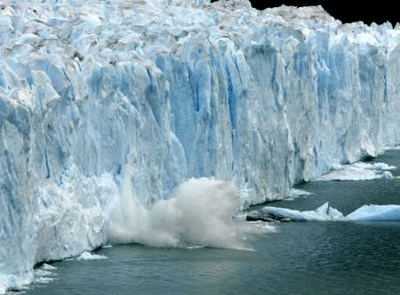 ‘Stable’ Antarctic ice sheet may have started collapsing, scientists say, Guardian, Karl Mathiesen, 22 May 15 Southern Antarctic Peninsula ice sheet losing ice 8,500 times the mass of the Great Pyramid of Giza every year, satellite data shows A vast slab of Antarctic ice that was previously stable may have started to collapse, according to new analysis of satellite data.
Research published in the journal Science on Thursday found the Southern Antarctic Peninsula (SAP) ice sheet is losing ice into the ocean at a rate of 56 gigatons each year – about 8,500 times the mass of the Great Pyramid of Giza. This adds around 0.16mm per year to the global sea level.
The sheet’s thickness has remained stable since satellite observations began in 1992. But Professor Jonathan Bamber of Bristol university, who co-authored the study, said that around 2009 it very suddenly began to thin by an average of 42cm each year. Some areas had fallen by up to 4m.
“It hasn’t been going up, it hasn’t been going down – until 2009. Then it just seemed to pass some kind of critical threshold and went over a cliff and it’s been losing mass at a pretty much constant, rather large, rate,” said Bamber……http://www.theguardian.com/environment/2015/may/21/stable-antarctic-ice-sheet-may-have-started-collapsing-scientists-say
Good news about the ozone layer hole
New NASA satellite data confirms what other research has shown, namely that the hole in the ozone layer appears to be getting smaller. Steve Williams, Care2, May 18, 2015 07:14 AM
The Ozone hole is shrinking http://www.enn.com/pollution/article/48570 The ozone is crucial for us here on Earth because it shields us from some of the Sun’s most damaging radiation. In the 1980s it was confirmed that a host of chemicals like CFCs that we had been using in manufacturing and, in particular in aerosols, had been breaking down that ozone layer, creating several holes including a worryingly large hole over the Arctic. In the long term our CFC use threatened to destroy this vital shield completely if we did not act.
Fortunately, and in a move that might seem rather rare today, politicians did listen to scientists and in 1989 the Montreal Protocol was brought into force as an international agreement to dramatically cut down on CFCs and begin phasing them out entirely. The Montreal Protocol wasn’t and isn’t a perfect solution, as we’ve detailed previously here, but it was at least a step in the right direction. Unfortunately, we haven’t been able to gauge the impact of our ozone saving efforts–that is, until now.
A new report based on data gained via NASA’s AURA satellite shows a long term trend that, barring unforeseen hiccups, should see the hole over the Arctic shrink to less than 8 million square miles within the next thirty years. At the moment the hole is about 12 million square smiles, so that represents a rapid rate of repair. What’s more, the rate of repair suggests that the hole could be entirely gone by the end of the 21st century.
Dubious reliability of Canada’s Paris Climate Pledge
Paris 2015: Canada aims to cut emissions by 30 per cent by 2030, SMH May 16, 2015 Josh Wingrove Canada pledged to cut greenhouse-gas emissions by about a third by 2030 in a move quickly dismissed by environmentalists and energy analysts as lacking detail and unrealistic without major policy changes.
Environment Minister Leona Aglukkaq announced the new target Friday in Winnipeg, ahead of a UN climate summit in December. In effect, Canada pledged to reduce its emissions to an estimated 515 metric megatons by 2030, partly by introducing new regulations on its oil and gas sector. The country isn’t on pace to meet its previous goal, and predicts emissions will grow — not shrink — over the next five years.
Emissions were 726 megatons in 2013, the most recent year for which data is available, and government figures show emissions are set to grow leading up to 2020. Canada now plans to cut emissions by 29 per cent between 2013 and 2030, based on Bloomberg calculations using public data.
To meet the new target, Canada “intends to develop” regulations to cut methane emissions from the oil and gas sector, in tandem with US regulations, Aglukkaq said. Canada will also introduce regulations on emissions from natural gas electrical plants, her department said in a news release without specifying what the rules would include.
The government offered no projections of what reduction in emissions the new measures would produce, or how soon the new initiatives would be introduced.
Australia is yet to reveal its post-2020 emissions plans with the Abbott government expect to reveal its goals next month.
Copenhagen pledge
Under the 2009 Copenhagen Accord, Canada pledged to cut emissions by 17 per cent from 2005 levels by 2020, or to 611 megatons, but is on pace to fall well short of its goal. Environment Canada figures show Canada’s emissions are projected to increase between 2015 and 2020, when they are projected to reach 727 megatons.
That means Canada’s Copenhagen pledge was to reduce emissions by 125 megatons between 2005 and 2020, whereas Canada is only on pace to cut them by nine megatons……
The US has pledged to cut emissions by at least 26 per cent from 2005 levels by 2025 — a lower target with a more aggressive timeframe. Mexico has pledged to cut emissions by 25 per cent by 2030, though its per-capita emissions are already 74 per cent lower than Canada’s, according to World Bank emissions data. http://www.smh.com.au/environment/climate-change/paris-2015-canada-aims-to-cut-emissions-by-30-per-cent-by-2030-20150515-gh311n.html
Moving your investments way from banks that invest in fossil fuels

But can you be sure that your new banks don’t invest in uranium and nuclear power?
How to divest your bank account of fossil fuels, Guardian Patrick Collinson, 16 May 15
The big five UK banks are among the world’s biggest lenders to the coal, oil and gas industries. If you don’t want to help them support climate change, there are viable alternatives
Is your current account with one of the big five banks: Lloyds, Barclays, HSBC, RBS/NatWest or Santander? If so, you are helping to support the more than £66bn they have lent to companies around the world engaged in oil and gas extraction. But individuals- who are concerned about climate change can move their money to banks and financial institutions that offer fossil-free alternatives.
The scale of support provided by mainstream banks across the world for the coal, oil and gas industry is breathtaking – and it is British banks that are among the biggest lenders. An analysis of Europe’s 20 largest banks in 2014 found that Barclays had the highest volume of “high carbon” loans, as a proportion of its total lending, of any of the banks, while Lloyds had the highest amount invested in high-carbon equities.
“The five biggest banks in the UK are also the five biggest investors in climate change,” says campaign group MoveYourMoney.org.uk.
It also analysed how much the major banks are financing controversial fracking operations. HSBC provides services to Cuadrilla; Barclays handles banking for IGas Energy, the company with the most oil and gas exploration licences in the UK; while Lloyds loaned £10m to Alkane Energy.
But what can individuals concerned about climate change do? Are there fossil fuel-free alternatives? The good news is that switching is now easier than ever – and high-quality accounts are easily accessible.
MoveYourMoney has prepared an action plan. …….http://www.theguardian.com/environment/2015/may/16/how-to-divest-your-bank-account-of-fossil-fuels#comment-52338430
1 This Month





PLEASE OPPOSE HR 8255 AND S.3639 – bills would accelerate satellite deployment, with no environmental review or safeguards – https://ncstd5li.quorum.us/campaign/169331/
To see nuclear-related stories in greater depth and intensity – go to https://nuclearinformation.wordpress.com
-
Archives
- October 2026 (19)
- September 2026 (339)
- August 2026 (330)
- July 2026 (355)
- June 2026 (287)
- May 2026 (306)
- April 2026 (356)
- March 2026 (251)
- February 2026 (267)
- January 2026 (308)
- December 2025 (358)
- November 2025 (359)
-
Categories
- 1
- 1 NUCLEAR ISSUES
- business and costs
- climate change
- culture and arts
- ENERGY
- environment
- health
- history
- indigenous issues
- Legal
- marketing of nuclear
- media
- opposition to nuclear
- PERSONAL STORIES
- politics
- politics international
- Religion and ethics
- safety
- secrets,lies and civil liberties
- spinbuster
- technology
- Uranium
- wastes
- weapons and war
- Women
- 2 WORLD
- ACTION
- AFRICA
- Atrocities
- AUSTRALIA
- Christina's notes
- Christina's themes
- culture and arts
- Events
- Fuk 2022
- Fuk 2023
- Fukushima 2017
- Fukushima 2018
- fukushima 2019
- Fukushima 2020
- Fukushima 2021
- general
- global warming
- Humour (God we need it)
- Nuclear
- RARE EARTHS
- Reference
- resources – print
- Resources -audiovicual
- Weekly Newsletter
- World
- World Nuclear
- YouTube
-
RSS
Entries RSS
Comments RSS

