A 1912 news article ominously forecasted the catastrophic effects of fossil fuels on climate change http://qz.com/817354/scientists-have-been-forecasting-that-burning-fossil-fuels-will-cause-climate-change-as-early-as-1882/ Akshat Rathi 24 Oct 16, A short news clip from a New Zealand paper published in 1912 has gone viral as an example of an early news story to make the connection between burning fossil fuels and climate change.
It wasn’t, however, the first article to suggest that our love for coal was wreaking destruction on our environment that would lead to climate change. The theory—now
widely accepted as scientific reality—was mentioned in the news media as early as 1883, and was discussed in scientific circles much earlier than that.
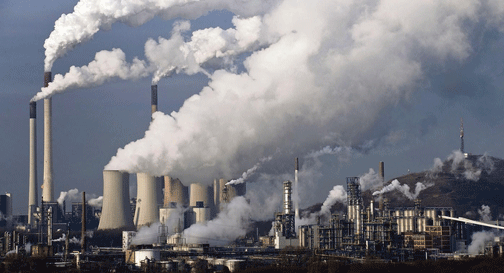
The French physicist Joseph Fourier had made the observation in 1824 that the composition of the atmosphere is likely to affect the climate. But Svante Arrhenius’s 1896 study titled, “On the influence of carbonic acid in the air upon the temperature on the ground” was the first to quantify how carbon dioxide (or anhydrous carbonic acid, by another name) affects global temperature. Though the study does not explicitly say that the burning of fossil fuels would cause global warming, there were scientists before him who had made such a forecast.
The earliest such mention that Quartz could find was in the journal Nature in December of 1882. The author HA Phillips writes:
According to Prof Tyndall’s research, hydrogen, marsh gas, and ethylene have the property to a very high degree of absorbing and radiating heat, and so much that a very small proportion, of say one thousandth part, had very great effect. From this we may conclude that the increasing pollution of the atmosphere will have a marked influence on the climate of the world.
Phillips was relying on the work of John Tyndall, who in the 1860s had shown how various gases in the atmosphere absorb heat from the sun in the form of infrared radiation. Now we know that Phillips was wrong about a few scientific details: He ignored carbon dioxide from burning coal and focused more on the by-products of mining. Still, he was drawing the right conclusion about what our demand for fossil fuels might do to the climate.
Newspapers around the world took those words published in a prestigious scientific journal quite seriously. ……..
Nichols found many examples between 1883 and 1912, where newspapers, including the Philadelphia Inquirer, Kansas City Star, and York Daily, wrote articles about what rising carbon dioxide levels would do the climate.
All through the 19th century, the increasing use of coal was hard to miss. Towns and cities across the world were becoming noticeably polluted because of factories, and later steam trains. In this light, it’s not surprising that a tiny New Zealand newspaper carried an article in 1912 about how the ever-increasing use of fossil fuels might change Earth’s climate. http://qz.com/817354/scientists-have-been-forecasting-that-burning-fossil-fuels-will-cause-climate-change-as-early-as-1882/
December 26, 2016
Posted by Christina Macpherson |
climate change, history, Reference |
Leave a comment
 What’s Next for Climate Action?Prominent scientists say researchers and policy makers need to focus more on adapting to warming and on controversial geoengineering techniques to limit it By Annie Sneed on December 16, 2016 , Scientific American, SAN FRANCISCO—Despite President-elect Donald Trump’s distaste for the Paris climate agreement, countries around the world are already working to ensure that the global temperature rise stays below 2 degrees Celsius. This week at the American Geophysical Union (AGU) conference here, several prominent scientists discussed the critical steps researchers and decision makers need to take now. They said reducing carbon emissions is important, of course, but countries worldwide must also put more energy into adapting to changing weather that even moderate warming will bring, as well as consider the potential of controversial geoengineering techniques to keep warming in check.
One of the primary goals of the Paris accord is mitigation—cutting or preventing greenhouse gas emissions. To help countries meet their emissions pledges, the international community needs to analyze how it can achieve “deep decarbonization,” according to Margaret Leinen, director of the Scripps Institution of Oceanography and president of the AGU. This means determining what emissions-reducing technologies and strategies will work best for a given country. As Leinen explained at a conference panel session, “We need to be able to evaluate these technologies quantitatively in order to understand which ones work, which ones are scalable and for what countries and energy economies they work for.”
Another major detail that still needs to be sorted out: how to track nations’ emissions, to make sure they’re sticking to their reduction targets. “We need to start asking, ‘Okay, how will you prove that you actually did what you pledged to do?’” Leinen told Scientific American after the panel. To do that, countries will have to have some kind of monitoring system, and the international community has yet to agree on the guidelines for how that system will work.
It is up to scientists and engineers to design effective monitoring systems, or strengthen existing ones. ………..
Scientists should thoroughly assess geoengineering techniques and understand what their impact on the Earth’s systems might be, including any unintended consequences. They also need to consider logistical challenges—how to actually make geoengineering techniques work, in case the world decides to use them. Then there are political and governance issues, such as how countries should respond if, say, a nation starts injecting sulfate aerosols into the atmosphere on its own to cool the planet. Despite people’s general unease with geoengineering because of its potential for major unintended consequences, it is another tool countries may eventually need to use to combat climate change. “At this point, we need to keep all options open,” Busalacchi said. “We need to have a solid and robust understanding of what geoengineering can and can’t do, in case mitigation and adaptation fall short.” https://www.scientificamerican.com/article/what-rsquo-s-next-for-climate-action/
December 26, 2016
Posted by Christina Macpherson |
2 WORLD, climate change, Reference |
Leave a comment
 A dark time is coming to American climate science
Trump questionnaire recalls dark history of ideology-driven science, Skeptical Science 21 December 2016 by By Paul N. Edwards, Professor of Information and History, University of Michigan,
President-elect Trump has called global warming “bullshit” and a “Chinese hoax.” He has promised to withdraw from the 2015 Paris climate treaty and to “bring back coal,” the world’s dirtiest, most carbon-intensive fuel. The incoming administration has paraded a roster of climate change deniers for top jobs. On Dec. 13, Trump named former Texas Governor Rick Perry, another climate change denier, to lead the Department of Energy (DoE), an agency Perry said he would eliminate altogether during his 2011 presidential campaign.
Just days earlier, the Trump transition team presented the DoE with a 74-point questionnaire that has raised alarm among employees because the questions appear to target people whose work is related to climate change.
For me, as a historian of science and technology, the questionnaire – bluntly characterized by one DoE official as a “hit list” – is starkly reminiscent of the worst excesses of ideology-driven science, seen everywhere from the U.S. Red Scare of the 1950s to the Soviet and Nazi regimes of the 1930s.
The questionnaire asks for a list of “all DoE employees or contractors” who attended the annual Conferences of Parties to the United Nations Framework Convention on Climate Change – a binding treaty commitment of the U.S., signed by George H. W. Bush in 1992. Another question seeks the names of all employees involved in meetings of the Interagency Working Group on the Social Cost of Carbon, responsible for technical guidance quantifying the economic benefits of avoided climate change.
It also targets the scientific staff of DoE’s national laboratories. Continue reading →
December 24, 2016
Posted by Christina Macpherson |
civil liberties, climate change, USA |
Leave a comment
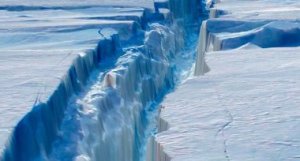 Yes, the Arctic’s freakishly warm winter is due to humans’ climate influence, The Conversation, Andrew King, December 22, 2016 For the Arctic, like the globe as a whole, 2016 has been exceptionally warm. For much of the year, Arctic temperatures have been much higher than normal, and sea ice concentrations have been at record low levels.
The Arctic’s seasonal cycle means that the lowest sea ice concentrations occur in September each year. But while September 2012 had less ice than September 2016, this year the ice coverage has not increased as expected as we moved into the northern winter. As a result, since late October, Arctic sea ice extent has been at record low levels for the time of year.
These record low sea ice levels have been associated with exceptionally high temperatures for the Arctic region. November and December (so far) have seen record warm temperatures. At the same time Siberia, and very recently North America, have experienced conditions that are slightly cooler than normal………
Arctic attribution
Our World Weather Attribution group, led by Climate Central and including researchers at the University of Melbourne, the University of Oxford and the Dutch Meteorological Service (KNMI), used three different methods to assess the role of the human climate influence on record Arctic warmth over November and December.
We used forecast temperatures and heat persistence models to predict what will happen for the rest of December. But even with 10 days still to go, it is clear that November-December 2016 will certainly be record-breakingly warm for the Arctic.
Next, I investigated whether human-caused climate change has altered the likelihood of extremely warm Arctic temperatures, using state-of-the-art climate models. By comparing climate model simulations that include human influences, such as increased greenhouse gas concentrations, with ones without these human effects, we can estimate the role of climate change in this event.
This technique is similar to that used in previous analyses of Australian record heat and the sea temperatures associated with the Great Barrier Reef coral bleaching event.
To put it simply, the record November-December temperatures in the Arctic do not happen in the simulations that leave out human-driven climate factors. In fact, even with human effects included, the models suggest that this Arctic hot spell is a 1-in-200-year event. So this is a freak event even by the standards of today’s world, which humans have warmed by roughly 1℃ on average since pre-industrial times.
But in the future, as we continue to emit greenhouse gases and further warm the planet, events like this won’t be freaks any more. If we do not reduce our greenhouse gas emissions, we estimate that by the late 2040s this event will occur on average once every two years.
All of our analysis points the finger at human-induced climate change for this event. Without it, Arctic warmth like this is extremely unlikely to occur. And while it’s still an extreme event in today’s climate, in the future it won’t be that unusual, unless we drastically curtail our greenhouse gas emissions.
As we have already seen, the consequences of more frequent extreme warmth in the future could be devastating for the animals and other species that call the Arctic home.
Geert Jan van Oldenborgh, Marc Macias-Fauria, Peter Uhe, Sjoukje Philip, Sarah Kew, David Karoly, Friederike Otto, Myles Allen and Heidi Cullen all contributed to the research on which this article is based.
You can find more details on all the analysis techniques here. Each of the methods used has been peer-reviewed, although as with the Great Barrier Reef bleaching study, we will submit a research manuscript for peer review and publication in 2017. https://theconversation.com/yes-the-arctics-freakishly-warm-winter-is-due-to-humans-climate-influence-70648
December 24, 2016
Posted by Christina Macpherson |
ARCTIC, climate change |
Leave a comment
 Women are breaking the climate taboo and questioning whether to have kids in such a world, Fusion, By Renee Lewis, 20 Dec 16, Climate change has caused a reproductive justice crisis, activists say, as its projected impacts lead some to question how they could have a baby with such an uncertain future.
Nearly 200 nations came together to sign a climate treaty in Paris last year, but even their collective efforts to reduce emissions will not be enough to keep the planet at a safe level of temperature rise.
President-elect Donald Trump has vowed to expand fossil fueldevelopment, meanwhile, scientists say the world may have entered its sixth mass extinction event.
All of these things point to a precarious future for our species—a business-as-usual scenario will mean some six feet of sea level rise and some regions of the world becoming
uninhabitable or
disappearing under rising seas by the end of the century.
With little time to spare, many are trying to take matters into their own hands and consider their options. A group of 21 youth recently sued the federal government for its role in creating the climate crisis and for leaving them to inherit a polluted planet—calling it generational injustice.
Others worry more about future generations.
“Decision makers have repeatedly put big business and fossil fuels over a future for our children,” said Meghan Kallman, co-founder of Conceivable Future. The women-led network hopes to bring awareness to the threat climate change poses to reproductive justice, and to end U.S. subsidies for the fossil fuel industry.
Kallman and co-founder Josephine Ferorelli brought up a taboo question—how this affects a person’s decision on whether or not to have kids.
“How does this affect people of childbearing age?” Kallman asked.
The response they’ve received has been overwhelming, with many people commenting on articles written about the group: ‘That’s my reason!’
Women as well as men are consciously deciding not to have children, knowing that their kids could inherit a future that is unlivable.
“People are still shocked when they ask why I don’t have children, and I tell them ‘for environmental reasons,’” Shannon O., 38 years old,said in a testimonial for Conceivable Future. Having a child, especially in America where consumption levels are so high, adds another carbon footprint. For example, an American woman who makes lifestyle changes such as recycling and driving a fuel-efficient car saves almost 500 tons of CO2 emissions in her lifetime. But choosing to not have a child would dwarf that, preventing almost 10,000 tons of CO2 from being emitted into the atmosphere………
The testimonies are part of Conceivable Future’s strategy to build a conversation—and a movement—around this question. Ferorelli said they hope the movement will become powerful enough to enact change at the local level—especially with Trump’s statements on expanding the fossil fuel industry.
“Now more than ever, we need to organize at the grassroots level, because the possibility of federal action is pretty severely limited,” Ferorelli said.
The group encourages anyone who’s interested in talking about these issues to host a house party. There, they can discuss these often taboo topics openly in a comfortable environment.
Across the country, people have hosted house parties and sent in nearly 70 testimonies…….. http://fusion.net/story/376997/climate-change-causes-people-to-reconsider-having-kids/
December 24, 2016
Posted by Christina Macpherson |
climate change, USA, women |
Leave a comment
Arctic ice melt ‘already affecting weather patterns where you live right now’ Soaring Arctic temperatures ‘strongly linked’ to recent extreme weather events, say scientists at cutting edge of climate change research, Guardian, Damian Carrington, 20 Dec 16 The dramatic melting of Arctic ice is already driving extreme weather that affects hundreds of millions of people across North America, Europe and Asia, leading climate scientists have told the Guardian.
Severe “snowmageddon” winters are now strongly linked to soaring polar temperatures, say researchers, with deadly summer heatwaves and torrential floods also probably linked. The scientists now fear the Arctic meltdown has kickstarted abrupt changes in the planet’s swirling atmosphere, bringing extreme weather in heavily populated areas to the boil.
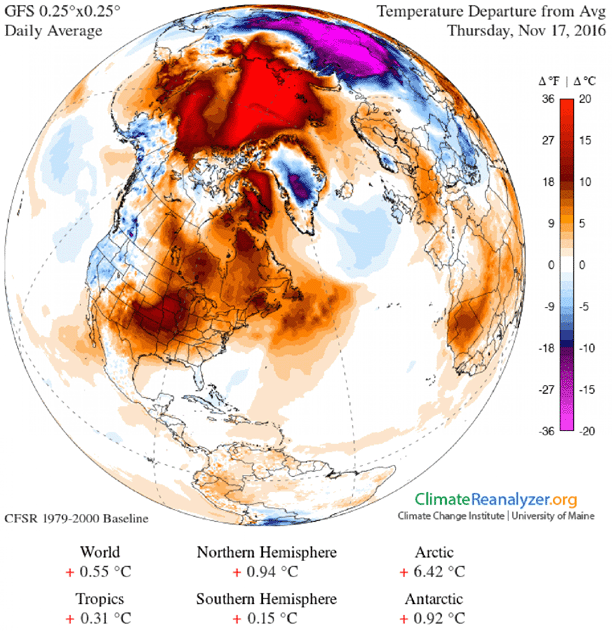
The northern ice cap has been shrinking since the 1970s, with global warming driving the loss of about three-quarters of its volume so far. But the recent heat in the Arctic has shocked scientists, with temperatures 33C above average in parts of the Russian Arctic and 20C higher in some other places.
In November, ice levels hit a record low, and we are now in “uncharted territory”, said Prof Jennifer Francis, an Arctic climate expert at Rutgers University in the US, who first became interested in the region when she sailed through it on a round-the-world trip in the 1980s.
“These rapid changes in the Arctic are affecting weather patterns where you live right now,” she said. “In the past you have had natural variations like El Niño, but they have never happened before in combination with this very warm Arctic, so it is a whole new ball game.
“It is inconceivable that this ridiculously warm Arctic would not have an impact on weather patterns in the middle latitudes further south, where so many people live. “It’s safe to say [the hot Arctic] is going to have a big impact, but it’s hard to say exactly how big right now. But we are going to have a lot of very interesting weather – we’re not going to get around that one……… https://www.theguardian.com/environment/2016/dec/19/arctic-ice-melt-already-affecting-weather-patterns-where-you-live-right-now
December 21, 2016
Posted by Christina Macpherson |
ARCTIC, climate change |
Leave a comment

 I’m a scientist who has gotten death threats. I fear what may happen under Trump. Michael E. Mann, The Washington Post, December 18, 2016 Michael E. Mann is a professor of atmospheric science and director of the Earth System Science Center at Penn State University.
My Penn State colleagues looked with horror at the police tape across my office door.
I had been opening mail at my desk that afternoon in August 2010 when a dusting of white powder fell from the folds of a letter. I dropped the letter, held my breath and slipped out the door as swiftly as I could, shutting it behind me. First I went to the bathroom to scrub my hands. Then I called the police.
It turned out to be only cornstarch. And it was just one in a long series of threats I’ve received since the late 1990s, when my research illustrated the unprecedented nature of global warming, producing an upward-trending temperature curve whose shape has been likened to a hockey stick.
I’ve faced hostile investigations by politicians, demands for me to be fired from my job, threats against my life and even threats against my family. Those threats have diminished in recent years, as man-made climate change has become recognized as the overwhelming scientific consensus and as climate science has received the support of the federal government. But with the coming Trump administration, my colleagues and I are bracing for a renewed onslaught of intimidation, from inside and outside government. It would be bad for our work and bad for our planet.
Donald Trump, of course, famously dismissed global warming as a Chinese hoax and “a big scam for a lot of people to make a lot of money.” This month he framed his position on climate change as “nobody really knows – it’s not something that’s so hard and fast.” He has vowed to cancel U.S. participation in the Paris climate agreement and threatened to block the Clean Power Plan, a measure to reduce carbon emissions in the power sector.
The strong anti-science bent of his advisers is similarly ominous. Among the members of his Environmental Protection Agency transition team are some of the most notorious climate change deniers. One adviser has threatened to cut NASA’s entire climate research program, disparaging it, with no apparent sense of irony, as “heavily politicized.”………
We are afraid that four (possibly eight) years of denial and delay might commit the planet to not just feet, but yards, of sea level rise, massive coastal flooding (made worse by more frequent Katrina and Sandy-like storms), historic deluges, and summer after summer of devastating heat and drought across the country.
We also fear an era of McCarthyist attacks on our work and our integrity. It’s easy to envision, because we’ve seen it all before. We know we could be hauled into Congress to face hostile questioning from climate change deniers. We know we could be publicly vilified by politicians. We know we could be at the receiving end of federal subpoenas demanding our personal emails. We know we could see our research grants audited or revoked.
I faced all of those things a decade ago, the last time Republicans had full control of our government………
I’ve also come under pressure at the state level. In Pennsylvania, an organization funded by conservative Richard Mellon Scaife persuaded Republican state senators to threaten to hold my university’s funding hostage until “appropriate action” was taken against me. In Virginia, then-Attorney General Ken Cuccinelli, a tea party Republican, accused me of fraud and sued the University of Virginia for all my personal emails from when I was teaching there. When Cuccinelli was unsuccessful, a Koch brothers-funded front group attempted to sue for the same emails. That effort, too, was ultimately blocked by the Virginia Supreme Court, which ruled that unpublished research should be protected in the interest of academic freedom.
In all, I’ve been through roughly a dozen investigations prompted by climate change deniers. Each time, I’ve been exonerated: Investigators find my methods are sound, my data is replicable and my lab is run responsibly. But by then, much time has been lost, expense has been incurred, and abuse and vilification has been endured on my part.
And then there have been the threats of violence. I’ve received email warnings that “the public will come after you,” suggesting that I’ll find myself “six feet under” and hoping to read that I had “committed suicide.”
Such threats could spike again under a president and Congress hostile to climate science. As we’ve seen recently, a segment of Americans is receptive to fake news, and some are eager to act on it. Wild conspiracy theories have propelled a woman to make death threats against the parent of a child killed at Sandy Hook Elementary and motivated a man to discharge an assault rifle in a family pizza restaurant in Washington.
I fear the chill that could descend. I worry especially that younger scientists might be deterred from going into climate research (or any topic where scientific findings can prove inconvenient to powerful vested interests). As someone who has weathered many attacks, I would urge these scientists to have courage.
The fate of the planet hangs in the balance.
Michael E. Mann is a professor of atmospheric science and director of the Earth System Science Center at Penn State University. He co-authored, with Washington Post cartoonist Tom Toles, “The Madhouse Effect: How Climate Change Denial Is Threatening Our Planet, Destroying Our Politics, and Driving Us Crazy.” http://www.sfgate.com/opinion/article/I-m-a-scientist-who-has-gotten-death-threats-I-10804229.php
December 19, 2016
Posted by Christina Macpherson |
climate change, PERSONAL STORIES, USA |
Leave a comment
 Scientists backing up climate data over fears it could be erased under Donald Trump, ABC News 14 Dec 16 Scientists in the United States are making copies of federal climate and environmental data over fears it could be erased under Donald Trump’s administration.
The mass action — being coordinated by the University of Pennsylvania’s Program in the Environmental Humanities (PPEH Lab) — has been dubbed a “data rescue” and has brought together academics from across the country and in neighbouring Canada.
It aims to safeguard data “vulnerable under an administration which denies the fact of ongoing climate change” by storing it on an independent server. Researchers are also collating a spreadsheet of the research they deem to be at risk once the President-elect takes office on January 20.
The movement was spurred by a tweet from meteorologist and journalist Eric Holthaus, who became worried after Mr Trump announced he would be appointing Exxon-Mobil Corp chairman and CEO Rex Tillerson as his secretary of state…….
news that Oklahoma attorney-general Scott Pruitt will lead the Environmental Protection Agency (EPA) has further inflamed tensions.
In a statement, Mr Pruitt was described as “a national leader against the EPA’s job-killing war on coal”.
In a piece for The Washington Post, Holthaus yesterday wrote that archiving climate data was “an extraordinary step to have to take, but we live in an extraordinary moment”.
“There is no remaining doubt that Trump is serious about overtly declaring war on science,” he said.”This isn’t a presidential transition. It’s an Inquisition. It’s a 21st-century book burning.” http://www.abc.net.au/news/2016-12-14/scientists-backing-up-climate-data-over-trump-fears/8119234
December 17, 2016
Posted by Christina Macpherson |
climate change, politics, USA |
Leave a comment
Fossil Fuel Divestments Now Represent $5.2 Trillion, Climate Central December 12th, 2016 Investing heavy weights are moving their assets and funds out of fossil fuels at a record pace.
A network of local governments, pension funds, faith organizations, philanthropies and wealthy individuals representing $5.2 trillion in assets have committed to — and in some cases already started — divesting from fossil fuel companies, according to a report released on Monday. That’s a huge sum of money for a movement that started just four years ago on U.S. college campuses and its growth is likely to continue as the world strives to reach its climate goals.
“It’s pretty clear that the growth trajectory is enormous,” said Ellen Dorsey, the executive director of the Wallace Global Fund. In the past 15 months alone, the assets represented by the fossil fuel divestment movement have doubled. As of December 2016, there are 688 institutions and 58,400 individuals across 76 countries who are on board with divesting from fossil fuels, according to the report. The analysis was completed by Arabella Advisors, a philanthropy services firm.
Those divesting include Norway’s sovereign wealth fund, Germany-based financial services giant Allianz, and Amalgamated Bank, which in September became the first U.S bank to divest. Private businesses represent $4.6 trillion in assets being divested, nearly 90 percent of the overall total……
December 16, 2016
Posted by Christina Macpherson |
2 WORLD, business and costs, climate change |
Leave a comment
 As North Pole Melts in November, Wildfires Rage Across US Well Into Winter, 12 December 2016 By Dahr Jamail, Truthout | Report “……..During a time when winter usually sets in and the Arctic sea ice freezes up, ice has been melting instead of freezing. Temperatures in late November were akin to what they normally are at the end of August.
It was Gaia sending yet another unmistakable message, and it was profound enough that Bob Henson with the WeatherUnderground said, “There are weather and climate records, and then there are truly exceptional events that leave all others in the dust. Such has been the case across Earth’s high latitudes during this last quarter of 2016.”
For perspective, add 36 degrees to whatever your weather is right now, wherever you are. How normal is that? Think about how plants and animals in your area would or wouldn’t adapt to that. What would happen to your food and water supply?
To give you another idea of how dramatically things have already changed in the Arctic as the region is in the midst of an ecological disintegration, Captain Cook’s records of the region from 1778 reveal a literally different world. His expedition was stopped from sailing north of the Bering Strait by “ice which was as compact as a Wall and seemed to be ten or twelve feet high at least,” according to the captain’s journal.
In continued attempts to sail further north, Cook’s ships followed this ice edge all the way to Siberia, but to no avail.
Meanwhile, back in the 21st century, longtime climate scientists are emphasizing that we’re currently seeing an unprecedented situation. Two days after it was revealed that temperatures at the North Pole were 36 degrees above normal, Walt Meier, a research scientist with the Cryospheric Sciences Laboratory at NASA’s Goddard Space Flight Center, who has tracked sea ice data going back to 1979, announced, “It looks like, since the beginning of October, that for the first time we are seeing both the Arctic and Antarctic sea ice running at record low levels.”
According to a recent report by the World Meteorological Organization, Earth is now on track to hit 1.2 degrees Celsius hotter than preindustrial temperatures before the end of this year.
According to the recently released annual “Emissions Gap Report” from the UN’s Environmental Program (UNEP), current Paris Climate Agreement emissions cuts will still result in 3.5C of planetary warming by 2100. “Current commitments will reduce emissions by no more than a third of the levels required by 2030 to avert disaster,” two UNEP leaders warned in the report’s introduction.
Recently published research in a prestigious scientific journal shows that ACD is likely already progressing so rapidly that scientists are warning it could well already be “game over.” Because the research shows that Earth’s climate could be far more sensitive to greenhouse gases than previously believed, they are warning of a temperature rise that is on the “apocalyptic side of bad:” more than 7C within one lifetime from now.
Less importantly, but still shocking and useful to consider (especially since plenty of people seem to believe economics are more important than a habitable planet): Another recent report estimates that the world economy …… http://www.truth-out.org/news/item/38689-as-north-pole-melts-in-november-wildfires-rage-across-us-well-into-winter
December 14, 2016
Posted by Christina Macpherson |
2 WORLD, climate change |
Leave a comment
Trump says ‘nobody really knows’ if climate change is real, WP, By Juliet Eilperin December 11 President-elect Donald Trump said Sunday that “nobody really knows” whether climate change is real and that he is “studying” whether the United States should withdraw from the global warming agreement struck in Paris a year ago.
There is a broad scientific consensus that human activity — including the burning of fossil fuels for transportation, heating and industrial manufacturing — is driving recent climate change. In its most recent report, the Intergovernmental Panel on Climate Change concluded that it is “extremely likely” that, since the 1950s, humans and their greenhouse gas emissions have been the “dominant cause” of the planet’s warming trend. The top 10 hottest years on record have all been since 1998, and 2016 is expected to be the hottest year since formal record-keeping began in 1880.
But it’s not the first time that Trump has disregarded that established scientific view.
During the presidential campaign, Trump referred to climate change as a “hoax” perpetrated by the Chinese, a comment he later described as a joke. But during a town hall in New Hampshire, he also mocked the idea of global warming. …..https://www.washingtonpost.com/news/energy-environment/wp/2016/12/11/trump-says-nobody-really-knows-if-climate-change-is-real/?utm_term=.979247e98b71
December 14, 2016
Posted by Christina Macpherson |
climate change, politics, USA |
Leave a comment
Rapid rise in methane emissions in 10 years surprises scientists Methane warms planet 20 times as much as similar CO2 volumes but lack of monitoring means scientists can’t be sure of sources, Guardian, Fiona Harvey, 13 Dec 16, Emissions of the powerful greenhouse gas methane have surged in the past decade, threatening to thwart global attempts to combat climate change.
Scientists have been surprised by the surge, which began just over 10 years ago in 2007 and then was boosted even further in 2014 and 2015. Concentrations of methane in the atmosphere over those two years alone rose by more than 20 parts per billion, bringing the total to 1,830ppb.
This is a cause for alarm among global warming scientists because emissions of the gas warm the planet by more than 20 times as much as similar volumes of carbon dioxide.
In the meantime, emissions of carbon dioxide – the main component of manmade greenhouse gases in the atmosphere – have been levelling off. The new research, published in the peer-review journal Environmental Research Letters, suggests that the world’s attempts to control greenhouse gases have failed to take account of the startling rises in methane.
The authors of the 2016 Global Methane Budget report found that in the early years of this century, concentrations of methane rose by only about 0.5ppb each year, compared with 10ppb in 2014 and 2015.
The scientists speculate that agriculture may be the main source of the additional methane that has been recorded. However, they cannot be sure of all the sources, owing to a lack of monitoring.
At least a third of methane comes from the exploitation of fossil fuels, including fracking and oil drilling and some coal mining, where methane is viewed as a waste gas and is frequently allowed to escape or, in some cases, flared off, which is less harmful.
Unlike carbon dioxide emissions, however, which have been tracked in various ways since the 1950s, emissions of methane are poorly understood and could represent a threat that scientists have still not accounted for.
For instance, the melting of the Arctic tundra releases methane as the vegetation underneath is gradually and sometimes suddenly exposed. This has been regarded by scientists as a potential “tipping point” whereby warming of the Arctic leads to greater releases of methane, therefore greater warming, in a runaway and uncontrollable cycle……. https://www.theguardian.com/environment/2016/dec/12/rapid-rise-methane-emissions-10-years-surprises-scientists
December 14, 2016
Posted by Christina Macpherson |
2 WORLD, climate change |
Leave a comment
Polar bear and wild reindeer decline worsening as climate change continues to melt Arctic ice: study, ABC News, 13 Dec 15 Rising global temperatures melting sea ice in the Arctic are predicted to worsen the decline in polar bear numbers over the next 40 years, a new US-led study has found.
Scientists said the 26,000-strong polar bear population is expected to diminish by a third, some 8,600 animals, over the next 35-40 years as their chief habitat disappears.
The new findings by university and government researchers were presented as part of a panel discussion about climate impacts on wildlife during a meeting of the American Geophysical Union in San Francisco on Monday (local time).
The polar bear research was drawn from new satellite data documenting a loss of Arctic sea ice from 1979 to 2015 and forming the basis of projections in further declines of both ice and bears over the coming decades…..
Wild reindeer numbers also falling thanks to climate change
A warmer climate is also thought to be a primary culprit in the rapid decline of wild reindeer and their close cousins, caribou.
University of Northern Iowa Arctic Centre head Andrey Petrov said his study of wild reindeer in Taimyr, northern Russia showed the herd’s population has fallen from 1 million in 2000 to the latest estimates of about 600,000 animals……http://www.abc.net.au/news/2016-12-13/polar-bear-decline-to-worsen-thanks-to-climate-change/8116722
December 14, 2016
Posted by Christina Macpherson |
ARCTIC, climate change |
Leave a comment
 Moms Outraged at Trump’s Pick to Head EPA http://www.ecowatch.com/trump-pruitt-epa-2135639749.html Moms Clean Air Force By Dominique Browning 11 Dec 16
The nomination of Oklahoma Attorney General Scott Pruitt to head the U.S. Environmental Protection Agency (EPA) is unprecedented. Whether you are a Republican or a Democrat, it is a travesty—because Pruitt has vigorously used his office to derail and obstruct clean air safeguards that are broadly supported by Americans in red and blue states alike. This nomination is a danger to our children and families.
Moms are outraged about this most cynical choice. We do not want an Environmental Destruction Agency.
Pruitt has used his office to attack vital safeguards for our children’s health.
Pruitt, Oklahoma’s top legal officer, has been against every single clean air protection we have gained. He has sued to stop vital safeguards that protect us from mercury, arsenic, acid gases and other emissions. These protections are supported by the American Academy of Pediatrics, the American Lung Association and the American Public Health Association.
Pruitt has used his office to attack protections against soot and smog pollution, and to attack EPA’s science documenting oil and gas air pollution levels.
Pruitt is against standards for reducing soot and smog that crosses state lines and pollutes neighbors’ air. Pruitt is against standards that improve air quality in our national parks. In 2014, Pruitt led an “unprecedented, secretive alliance” with large energy companies to attack clean air rules. This included using a letter written by an energy company as his own to challenge EPA’s science-based analysis of the oil and gas pollution levels in our communities.
Pruitt lies about science.
Pruitt has also professed profound ignorance—willful ignorance—about global warming. He is against any and all plans to cut the carbon and methane pollution that is dangerously altering our atmosphere. He perpetuates lies in an all-out assault on science.
He says the science on climate change is not settled. This is a lie. He claims that human activity has not changed the atmosphere. This is a lie. He claims we can do nothing about a natural phenomenon that has always occurred. This is a lie.
Pruitt accepts money from corporate polluters—to protect them.
He has sued to protect corporate polluters—and his campaigns have been funded by polluters. He has received hundreds of thousands of dollars from fossil fuel companies—to protect their ability to pollute.
Pruitt destroys solutions, rather than solves problems.
He has led lawsuits to undo clean air protections. But he has never, not once, advanced a single solution to any of the problems that the Clean Air Act must, by law, address. Pruitt does not offer solutions to mercury coming from coal-fired power plants, mercury that damages fetal and infant brains.
Pruitt does not offer solutions to soot and smog pollution. Pruitt does not offer solutions to the wasted methane that escapes from fracking operations. Pruitt does not offer plans to cut the emissions that are dangerously throwing our climate off balance.
Pruitt is not a leader for the new economy.
He is operating with an outdated understanding of science, economics, markets and job growth. He will not help position America globally as an innovative energy leader.
The Clean Air Act was signed into law by a Republican president and it was strengthened twenty years later by a Republican president. It is a vital demonstration that some things must transcend partisan politics: the protection of clean air and clean water chief among them.
President-elect Donald Trump was not given a mandate by the American people to stop protecting us from air pollution.
Pruitt’s entire career has demonstrated that his priority is obstructing clean air safeguards for our children.
Tell your elected officials: Scott Pruitt is a dangerous EPA nominee.
December 12, 2016
Posted by Christina Macpherson |
climate change, politics, USA |
Leave a comment

Kashmir, climate change, and nuclear war, Bulletin of the Atomic Scientists, Zia Mian , 7 Dec 16 “……..The climate-water conflict. Along with the risks of war triggered by an escalation along the Line of Control in Kashmir or by attacks on Indian cities by Islamist militants backed by Pakistan, a new source of conflict between Pakistan and India has emerged, also centered on Kashmir. It is a struggle over access to and control over the water in the rivers that start as snow and glacial meltwater in the Himalayas and pass through Kashmir on their way to Pakistan as the Indus River Basin, ending in the Arabian Sea.
The Indus River and its tributaries are central to Pakistan’s water supply, food supply, and electricity production, and India relies on some of the same water. Under the 1960 Indus Waters Treaty, Pakistan has control over the Indus, Jhelum, and Chenab Rivers, and India manages the Sutlej, Beas, and Ravi rivers until they cross into Pakistan and all merge into the Indus River. The treaty was established in part because of conflicts over water between the two countries following independence in 1947, including an Indian decision in 1948 to block some of the water flowing into Pakistan during the first India-Pakistan war over Kashmir.
As water demand in both countries has grown to meet the needs of rapidly growing populations and increased agriculture and industrial use, large hydroelectric dams have been constructed, and renewed disputes are testing the Indus Waters Treaty. A 2011 United States Senate Foreign Relations Committee report assessed that “water may prove to be a source of instability in South Asia [as] new demands for the use of the river flows from irrigation and hydroelectric power are fueling tensions between India and Pakistan. A breakdown in the [Indus Water] treaty’s utility in resolving water conflicts could have serious ramifications for regional stability.” The report concluded grimly that “the United States cannot expect this region to continue to avoid ‘water wars’ in perpetuity.”………
Pakistan’s government, nationalist and militant organizations, and right-wing media frequently now present India’s construction of dams in Kashmir as a pressing national security threat and one that may call for extreme responses. An editorial in one leading urdu-language Pakistani newspaper in 2011 declared “Pakistan should convey to India that a war is possible on the issue of water and this time war will be a nuclear one.” ………http://thebulletin.org/kashmir-climate-change-and-nuclear-war10261
December 9, 2016
Posted by Christina Macpherson |
climate change, India, Pakistan, politics international, weapons and war |
Leave a comment