Another Climate Change Push Comes From Exxon Shareholders, Inside Climate News,
Investors have introduced seven more resolutions, asking the company to address climate change and its risks, moving beyond Rex Tillerson’s resistant stance. David Hasemyer, 12 Jan 17
Once again this year, dissident ExxonMobil stockholders have filed several resolutions with the company asking it to be more forthright in addressing the climate crisis.
Submitted months before Exxon’s annual meeting in May, by a twist of fate it also helps set the stage for Wednesday, when Rex Tillerson, Exxon’s former chief executive and Donald Trump’s pick to become secretary of state, appears at a Senate confirmation hearing.
At the hearing, Tillerson’s critics are likely to connect the dots between his stance on climate change as the head of the oil giant and how he would approach the problem as the nation’s top diplomat, in light of the global climate treaty that Trump has opposed.
And that may mean Tillerson finds himself facing questions about the treaty’s goals that shareholders have pressed him about before.
Most of the seven shareholder resolutions filed under Exxon’s deadline in recent days resemble those the company vehemently opposed in recent years under Tillerson’s leadership.
They ask Exxon to add a board member with environmental expertise; disclose funding of lobbyists and organizations dedicated to influencing climate policy; and to explain in detail how the company might align its business with a low-carbon economy.
Exxon is expected to oppose those resolutions, as it has consistently for more than two decades…….. https://insideclimatenews.org/news/11012017/exxon-shareholders-climate-change-rex-tillerson
January 13, 2017
Posted by Christina Macpherson |
climate change, USA |
Leave a comment
By TATSUYUKI KOBORI/ Staff Writer January 11, 2017 Coral bleaching has killed 70.1 percent of the nation’s largest coral reef as of the end of 2016, up from 56.7 percent just a few months earlier, the Environment Ministry said.
Warmer seawater temperatures last summer are believed to have caused coral bleaching to spread to 90 percent of the Sekiseishoko coral reef in Okinawa Prefecture…….http://www.asahi.com/ajw/articles/AJ201701110028.html
January 13, 2017
Posted by Christina Macpherson |
climate change, Japan, oceans |
Leave a comment
 The White House Wants Scientists To Explore Geoengineering, Gizmodo, Maddie Stone Jan 12, 2017, Geoengineering, or hacking the climate system to cool it off, is the latest science fictional idea to make its way into a White House strategic roadmap, following a report last week on how we should be preparing for the apocalypse asteroid. Seeing as the apocalypse asteroid won’t have a chance to annihilate us if the climate spirals out of control first, it would appear the White House is trying to cover all bases.
The fact that geoengineering, a controversial subject the White House avoided mentioning for years, is now getting serious treatment in a policy roadmap is also the latest indication that Obama does not think we are acting to reduce our emissions quickly enough, and that aggressive technological interventions may be required.
The roadmap, which was submitted to Congress this week by the US Global Change Research Program, the governing body of the 13 federal agencies conducting research on global environmental change, lays out future directions of study on familiar topics, such as the rapidly-warming Arctic and humanity’s impact on the global water cycle. It also urges research into two of the most widely discussed planet-hacking concepts: Solar engineering, or injecting particles into the stratosphere to make it more reflective, and carbon capture, or sucking CO2 right out of the sky.
While the report does not suggest scientists conduct a climate experiment any time soon — solar engineering and direct carbon capture from the air are both highly speculative ideas — it recommends we start laying some groundwork, by improving models and observational capabilities that can predict the consequences of geoengineering. “Such research would also define the smallest scale of intervention experiments that would yield meaningful scientific understanding,” the report reads…….
Michael Mann, a climate scientist at Penn State University and an outspoken critic of geonengineering, had a somewhat darker view on the new White House recommendations. “I do believe it is dangerous to consider engaging in massive planetary interventions with a system we understand imperfectly,” he told Gizmodo. “The law of unintended consequences reigns supreme.”
“The one possible exception is direct air capture, a relatively benign form of geoengineering,” Mann continued. “With respect to other schemes, like stratospheric sulphate aerosol injection, the only legitimate reason to study them right now, in my view, is to get a better sense of just what dangers might result from implementing such schemes.”…… more http://www.gizmodo.com.au/2017/01/the-white-house-wants-scientists-to-explore-geoengineering/
January 13, 2017
Posted by Christina Macpherson |
climate change, USA |
Leave a comment
New analysis: global sea ice suffered major losses in 2016 http://blogs.discovermagazine.com/imageo/2017/01/07/sea-ice-extent-in-2016-at-both-poles-tracked-well-below-average/#.WHMiWtJ97Gj By Tom Yulsman | January 7, 2017 The extent of sea ice globally took major hits during 2016, according to an analysis released yesterday by the National Snow and Ice Data Center.
At both poles, “a wave of new record lows were set for both daily and monthly extent,” according to the analysis.

In recent years, Arctic sea ice has been hit particularly hard.
“It has been so crazy up there, not just this autumn and winter, but it’s a repeat of last autumn and winter too,” says Mark Serreze, director of the NSIDC.
In years past, abnormal warmth and record low sea ice extent tended to occur most frequently during the warmer months of the year. But for the past two years, things have gotten really weird in the colder months.
In 2015, Serreze says, “you had this amazing heat wave, and you got to the melting point at the North Pole on New Years Eve. And we’ve had a repeat this autumn and winter — an absurd heat wave, and sea ice at record lows.”
Lately, the Southern Hemisphere has been getting into the act. “Now, Antarctic sea ice is very, very low,” Serreze says.
From the NSIDC analysis:
Record low monthly extents were set in the Arctic in January, February, April, May, June, October, and November; and in the Antarctic in November and December.
Put the Arctic and the Antarctic together, and you get his time series of daily global sea ice extent, meaning the Arctic plus Antarctic:
As the graph [on original] shows, the global extent of sea ice tracked well below the long-term average for all of 2016. The greatest deviation from average occurred in mid-November, when sea ice globally was 1.50 million square miles below average.
For comparison, that’s an area about 40 percent as large as the entire United States.
The low extent of sea ice globally “is a result of largely separate processes in the two hemispheres,” according to the NSIDC analysis.
For the Arctic, how much might humankind’s emissions of greenhouse gases be contributing to the long-term decline of sea ice? The graph above [on original] , based on data from a study published in the journal Science, “links Arctic sea ice loss to cumulative CO2emissions in the atmosphere through a simple linear relationship,” according to an analysis released by the NSIDC last December. Based on observations from the satellite and pre-satellite era since 1953, as well as climate models, the study found a linear relationship of 3 square meters of sea ice lost per metric ton of CO2 added to the atmosphere.
That’s over the long run. But over a shorter period of time, what can be said? Specifically, how much of the extreme warmth and retraction of sea ice that has been observed in autumn and winter of both 2015 and 2016 can be attributed to humankind’s emissions of greenhouse gases?
“We’re working on it,” Serreze says. “Maybe these are just extreme random events. But I have been looking at the Arctic since 1982, and I have never seen anything like this.”
January 9, 2017
Posted by Christina Macpherson |
ANTARCTICA, ARCTIC, climate change, oceans |
1 Comment
 2016 ‘hottest on record’ in new sign of global warming, Copernicus organisation says http://www.abc.net.au/news/2017-01-06/world-heat-shatters-records-in-2016/8165426 Last year was the hottest year on record by a wide margin, with temperatures creeping close to a ceiling set by almost 200 nations for limiting global warming, the European Union’s Copernicus Climate Change Service has said.
Key points
- EU body report shows global average temperature in 2016 was 1.3C higher than pre-industrial average
- Arctic, Africa and Asia warmer than usual in 2016
- Some areas of South America and Antarctica cooler than usual
The data are the first of the New Year to confirm many projections that 2016 will exceed 2015 as the warmest since reliable records began in the 19th century, the Copernicus organisation said in a report.
The Arctic was the region showing the sharpest rise in temperatures, while many other areas of the globe, including parts of Africa and Asia, also suffered unusual heat, it said.
A few parts of South America and Antarctica were cooler than normal.
Global surface temperatures in 2016 averaged 14.8 degrees Celsius or 1.3C higher than estimated before the Industrial Revolution ushered in wide use of fossil fuels, the EU body said.
In 2015, almost 200 nations agreed at a summit in Paris to limit global warming to “well below” 2C above pre-industrial times while pursuing efforts to hold the rise to 1.5C as part of a sweeping shift away from fossil fuels towards clean energy.
Temperatures last year broke a 2015 record by almost 0.2C, the Copernicus organisation said, boosted by a build-up of greenhouse gases in the atmosphere and by a natural El Nino weather event in the Pacific Ocean, which releases heat to the atmosphere.
In February 2016 alone, temperatures were 1.5C above pre-industrial times, the study said. Rising heat is blamed for stoking bushfires, heat waves, droughts, floods and more powerful downpours that disrupt water and food supplies.
The UN’s World Meteorological Organisation (WMO), the main authority on global temperatures, compiles data mainly from two US and one British dataset that will be published in coming weeks.
It also uses input from Copernicus.
Dick Dee, deputy head of the Copernicus Climate Change Service, said these data were available quickly because they draw on temperature stations and satellite measurements used to make weather forecasts. “They’re pretty much in perfect agreement” with the WMO data in areas where measurements overlap, he said. The other datasets used by the WMO are collected from sources that can take more time to compile, including ships, buoys and balloons.
US President-elect Donald Trump has sometimes called man-made climate change a hoax and threatened to “cancel” the Paris agreement. But he has also said he has an open mind and sees “some connectivity” between human activity and and global warming.
January 7, 2017
Posted by Christina Macpherson |
ARCTIC, climate change |
Leave a comment
Climate change threatens ability of insurers to manage risk
Extreme weather is driving up uninsured losses and insurers must use investments to fund global warming resilience, says study, Guardian, Damian Carrington, 7 Dec 16, The ability of the global insurance industry to manage society’s risks is being threatened by climate change, according to a new report.
The report finds that more frequent extreme weather events are driving up uninsured losses and making some assets uninsurable.
The analysis, by a coalition of the world’s biggest insurers, concluded that the “protection gap” – the difference between the costs of natural disasters and the amount insured – has quadrupled to $100bn (£79bn) a year since the 1980s.
Mark Carney, the governor of the Bank of England, warns in the new report that: “Over time, the adverse effects of climate change could threaten economic resilience and financial stability [and] insurers are currently at the forefront.”
The ClimateWise coalition of 29 insurers, including Allianz, Aon, Aviva, Lloyd’s, Prudential, Swiss Re and Zurich, conclude that the industry must use more of its $30tn of investments to help fund increased resilience of society to floods, storms and heatwaves.
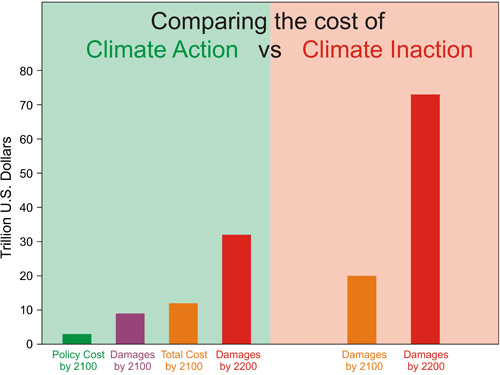
The Bank of England warned in 2015 that insurance companies could suffer a “huge hit” if their investments in fossil fuel companies were rendered worthless by action on climate change and some insurershave already shed investments in coal.
The ClimateWise report, published on Wednesday, also says the industry must also use its risk management expertise to convince policymakers in both the public and private sector of the urgent need for climate action.
The industry’s traditional response to rising insurance risks – raising premiums or withdrawing cover – would not help deal with the rising risks of global warming, it said……..
The economic impact of these natural catastrophes is growing quickly, according to Swiss Re, with total losses increasing fivefold since the 1980s to about $170bn today. This increase is partly due to an increase in extreme weather but also due to an increase in assets as cities and towns have grown, especially in vulnerable locations such as on coasts……. https://www.theguardian.com/environment/2016/dec/07/climate-change-threatens-ability-insurers-manage-risk?CMP=share_btn_tw
January 7, 2017
Posted by Christina Macpherson |
2 WORLD, business and costs, climate change |
Leave a comment
 How climate change in Central Asia is threatening to spark regional conflict
Lower water supplies, caused by rising temperatures, is increasing risk of political tensions, Chinese researchers warn SCMP, Stephen Chen, 06 January, 2017, Competition for dwindling water supplies from a mountain range in Central Asia could erupt into regional conflict, Chinese researchers have warned.
Global warming and retreating glaciers in the Tianshan range – the “water tower” of the region – have raised the spectre of water shortages that will affect “the relationship between countries in Central Asia,” the researchers warned in a report on the Chinese Academy of Sciences’ website.
Central Asia is a dry, landlocked hinterland and Tianshan is the tallest and biggest mountain range in the region. About 2,500km long and up to 350km wide, the range winds through numerous countries including Uzbekistan, Kyrgyzstan, Kazakhstan and the Xinjiang region in China.
Its seasonal snowmelt contributes most of the water for the majority of rivers in Central Asia.
But over the past decade, the range has been losing its “total water storage” at a rate of about 223 million cubic metres per year, according to the research led by Professor Chen Yaning from the academy’s Xinjiang Institute of Ecology and Geography in Urumqi.
The culprit, the researchers say, is rising temperatures.
Since 1960, annual average temperatures in the area have been rising at 0.3 degrees Celsius per decade, resulting in warm winters and less snow.
In a paper last year detailing some of their findings, Chen and colleagues warned that the situation “may pose great danger for the water tower and influence the water supply for the oasis and desert regions”.
“This may lead, within just a few decades, to some rivers running out of water in the dry season,” they said…….http://www.scmp.com/news/china/diplomacy-defence/article/2059862/water-conflicts-central-asia-pose-threat-chinas
January 7, 2017
Posted by Christina Macpherson |
ASIA, climate change |
Leave a comment
 Government of Canada releases carbon pricing plan http://www.districtenergy.org/blog/2017/01/02/government-of-canada-releases-carbon-pricing-plan/?utm_source=rss&utm_medium=rss&utm_campaign=government-of-canada-releases-carbon-pricing-plan by IDEA Industry News
ReNew Canada reports that The Government of Canada has proposed its pan-Canadian approach to pricing carbon pollution. Under the new plan, all Canadian jurisdictions will have carbon pricing in place by 2018. In order to accomplish this, Canada will set a benchmark for pricing carbon emissions—set at a level that will help Canada meet its greenhouse gas emission targets, while providing greater certainty and predictability to Canadian businesses.
Provinces and territories will have flexibility in deciding how they implement carbon pricing: they can put a direct price on carbon pollution or they can adopt a cap-and-trade system.
Pricing carbon pollution will give Canada an edge in building a clean-growth economy; it will make Canadian businesses more competitive; it will bring new and exciting job prospects for middle class Canadians; and it will reduce the pollution that threatens our clean air and oceans.
“Pricing pollution is one of the most efficient ways to reduce greenhouse gas emissions and to stimulate innovation,” said Catherine McKenna, minister of Environment and Climate Change. “Already 80 percent of Canadians live in a province where there is pollution pricing. We want to continue this trend and cover the final 20 per cent.”
Pricing will be based on greenhouse gas emissions and applied to a common and broad set of sources to ensure effectiveness. The price on carbon pollution should start at a minimum of $10 per tonne in 2018 and rise by $10 a year to reach $50 per tonne in 2022. Revenues from carbon pricing will remain with provinces and territories of origin.
Provinces and territories will use the revenues from this system as they see fit, whether it is to give it back to consumers, to support their workers and their families, to help vulnerable groups and communities in the North, or to support businesses that innovate and create good jobs for the future.
The overall approach will be reviewed in 2022 to ensure that it is effective and to confirm future price increases. The review will account for actions by other countries.
January 7, 2017
Posted by Christina Macpherson |
Canada, climate change |
Leave a comment
Fukushima Radiation Looms. No Nuclear Power Plant On Planet Earth! “The Incompatibility of Radiation with Human Life” By Eiichiro Ochiai Global Research, January 05, 2017.…………… Approximately 450 nuclear power reactors are presently on this earth. In the nuclear power production of electricity, only one third of the heat produced in a reactor is converted into electricity, and the remainder two third of heat is released into the surrounding. A typical 1giga watt reactor will release 4.7 x 10¹⁶ joule of heat into the environment per year. This much heat will bring 100 million tons of water at zero degree to boiling. This is with a single nuclear reactor. The nuclear power reactors are excellent environmental heaters. Hundreds of such reactors are operating on this earth. But this fact is ignored in the argument of the nuclear power being environmentally clean. This is not the only reason for the nuclear reactors being unclean.

In addition, this typical reactor of 1 giga (thousand mega) watt of capacity (electricity) produces in a year radioactive material equivalent to about 1000 Hiroshima atomic bombs. In 2015, the total amount of electricity produced by nuclear reactors was 2,441 BkWh (billion kilo watt hours: data [7]), which is 8.79 x 10¹⁸ joule. It was produced by about 280 nuclear reactors of 1 giga watt capacity. So they produced radioactive material approximately equivalent to 280,000 Hiroshima bombs. In addition, they released 1.3 x 10¹⁹ joule of heat into the environment. These are the values for just one year. Nuclear power reactors have been operating the last forty years, though not always this many.
Anyway, an enormous amount of radioactive material has been made on the earth. How much of it has been released into the environment is not easy to estimate. They have come out into the environment through the tests of the nuclear weapons, use of depleted uranium bombs, the routine release of some radioactive material from the nuclear facilities under normal conditions and others, in addition to the accidents at nuclear facilities. The effects of the released radioactive material have been amply observed and reported, and yet are not shared with the majority of humankind. We mention here only a few cases, and refer them to a few major sources. The nuclear weapon explosion tests in the atmosphere affected the people in the eastern side, Utah, of the test site in Nevada (1951-1960, ref [8]). Chernobyl nuclear reactor accident in the present Ukraine (1986) was one of the worst nuclear facility accidents, and people are still suffering [9]. Fukushima nuclear power plant disaster (2011) cause by the huge earthquake along with tsunami is far from settled, and health effects are only now becoming manifest [10]. These incidents represent the notion that the nuclear power is “not clean” at all, rather it is the dirtiest……http://www.globalresearch.ca/fukushima-radiation-looms-no-nuclear-power-plant-on-planet-earth-the-incompatibility-of-radiation-with-human-life/5566712
January 6, 2017
Posted by Christina Macpherson |
2 WORLD, climate change, environment, Reference |
Leave a comment
 New study confirms NOAA finding of faster global warming https://www.skepticalscience.com/new-study-confirms-noaa-karl-hausfather.html 4 January 2017 by John Abraham
A new study has shown that a 2015 NOAA paper finding that the Earth is warming more rapidly than previously thought was correct.
Once again, science is shown to work. The laborious process in which scientists check and recheck their work and subject their ideas to peer review has led to another success. An independent test of global warming data has confirmed a groundbreaking 2015 study that showed warming was faster than prior estimates.
Because of its inconvenient findings, the study’s lead author Thomas Karl was subjected to harassment by Lamar Smith (R-TX), chair of the House Science Committee, in an effort to impugn his credibility. But now Karl and his co-authors have been vindicated.
Let’s take a step back and discuss the science. Measuring the temperature of the Earth is hard. There are many locations to measure and many choices to make. Should we measure the temperature of the ground? Of the ocean waters? How deep in the water? If we measure air temperatures, what height should the measurements be taken? How many locations should we make measurements at? What happens if the instruments change over time or if the location changes? What happens if a city grows near a measurement location and the so-called urban heat-island effect grows? How do we estimate the temperatures in areas where no measurements exist?
These and many other questions make measuring global warming challenge. Different groups of scientists make different decisions so that depending on the institution, they will get a slightly different temperature result.
But this diversity is also a good thing. It turns out that it doesn’t matter whose results you use – NASA, NOAA, The Hadley Centre in the UK, the Japanese Meteorological Agency, or the Berkeley Earth group – they all report a warming world. However, the rates are slightly different. So, one persistent question is, which group is most accurate? Whose methods are best?
The new study looks into just this question. The group focused on perhaps the biggest differences among the groups – how they handle ocean temperatures. Specifically, global temperature values typically use a combination of near-surface air temperatures in land regions and sea surface temperatures in ocean regions. Since oceans cover approximately 70% of our planet, the way ocean temperatures are dealt with can separate the warming rates between these groups.
Ocean temperatures can be measured by ship-based temperature sensors, by special floating measuring instruments, or by satellites. Prior to the advent of satellites and floating sensors, ships were the main temperature sensing platforms. Ship sensors, which measure engine intake water, are known to be slightly warmer than the actual water. So using them introduces a warm bias in the measurements.
Also, as ships have gotten larger, the depth of the engine intakes have increased – meaning the tested water was further from the actual ocean surface. Since the temperature results from buoys differs from ship measurements, the various scientific groups have tended to try to perform corrections between the different sensors. The way the correction is done affects the reported warming rate.
The authors recognized that one of the biggest questions is how to stitch together different temperature results from different sensors. Therefore, the broke the temperature data up into groups according to the measurement device (buoys, satellites, ARGO floats, ships, etc.) and they evaluated warming rates separately for each group. The authors also used advanced statistics to handle areas where no data were recorded.
After applying their tests, the authors found that the results promoted by Karl at NOAA are the best, and other groups, in particular the Hadley Centre in the UK and the Japanese agency, are too cold.
So what does this all mean? A few things. First, this study is a nice reminder that the proper way for science to work is for publications to be scrutinized and checked by others. This process leads the entire scientific community to a deeper understanding of the science.
Second, this validates the scientists who were originally attacked by political non-scientists and in some cases by contrarian scientists. For instance, Judith Curry, a well-known critic of mainstream climate science was quoted as saying:
The new NOAA dataset disagrees with a UK dataset, which is generally regarded as the gold standard for global sea surface temperature datasets … The new dataset also disagrees with ARGO buoys and satellite analyses … Color me unconvinced.
I actually study ocean temperatures so I knew this statement by Judith Curry was complete nonsense. It is nice to see a team actually take the time to prove it. Perhaps she and others will finally admit they were wrong. Click here to read the rest
January 6, 2017
Posted by Christina Macpherson |
2 WORLD, climate change |
Leave a comment
Greenland Ice Melt Could Push Atlantic Circulation to Collapse New research gives a glimpse of the potential long-term consequences of anthropogenic warming, Hakai Magazine, by Rebecca Boyle January 3, 2017
In the North Atlantic, east of North America and south of Greenland, the ocean’s upper layers are much warmer than one might presume given the extreme latitude. This unexpected warmth is a product of the Atlantic Meridional Overturning Circulation (AMOC), a vitally important system of ocean currents that moves warm salty water northward from the tropics and cold fresher water south. The AMOC looms large in the Earth’s climate: it is responsible for redistributing nutrients throughout the Atlantic Ocean and is a major driving force controlling the climate on both sides of the pond.
Ocean currents all experience fluctuations, which can dramatically change the distribution of nutrients, heat, and fish. The best known example is probably the El Niño-Southern Oscillation, in which unusually warm water occasionally disrupts the Pacific Ocean’s Humboldt Current that flows north from Chile toward Peru. El Niño events can shift the jet stream south, cause excessive rainfall and devastating floods, and temporarily collapse fish stocks.
To date, most climate research suggests that the AMOC is relatively stable and carries water throughout the ocean in a reliable, repeating cycle. But anthropogenic climate change seems to have made the current weaken slightly, raising the question of whether more dramatic shifts are in store. As of the most recent Intergovernmental Panel on Climate Change report, a shutdown of the circulation from further warming is considered unlikely. Yet a new study says that the unprecedented melting of Greenland’s massive ice sheets, previously overlooked in most climate modeling, will result in the AMOC weakening, and maybe even collapsing, within the next 300 years……..https://www.hakaimagazine.com/article-short/greenland-ice-melt-could-push-atlantic-circulation-collapse
January 6, 2017
Posted by Christina Macpherson |
2 WORLD, climate change, oceans |
Leave a comment
Scientists say the global ocean circulation may be more vulnerable to shutdown than we thought, WP, By Chelsea Harvey January 4 2017, Intense future climate change could have a far different impact on the world than current models predict, suggests a thought-provoking new study just out in the journal Science Advances. If atmospheric carbon dioxide concentrations were to double in the future, it finds, a major ocean current — one that helps regulate climate and weather patterns all over the world — could collapse. And that could paint a very different picture of the future than what we’ve assumed so far.
The Atlantic meridional overturning circulation, or AMOC, is often described as a large oceanic conveyor belt. It’s a system of water currents that transports warm water northward from the Atlantic toward the Arctic, contributing to the mild climate conditions found in places like Western Europe. In the Northern Atlantic, the northward flowing surface water eventually cools and sinks down toward the bottom of the ocean, and another current brings that cooler water back down south again. The whole process is part of a much larger system of overturning currents that circulates all over the world, from pole to pole.
But some scientists have begun to worry that the AMOC isn’t accurately represented in current climate models. They say that many models portray the current as being more stable than real-life observations suggest it actually is. Recent studies have suggested that the AMOC is weakening, although there’s some scientific debate about how much of this has been caused by human activities and how much by natural variations.
[In Greenland, a once doubtful scientist witnesses climate change’s troubling toll]
Nevertheless, the authors of the new study point out, many climate models assume a fairly stable AMOC — and that could be affecting the predictions they make for how the ocean will change under future climate change. And because overturning circulation patterns have such a significant effect on climate and weather all over the world, this could have big implications for all kinds of other climate-related projections as well.
“This is a very common and well-known issue in climate models,” said the new study’s lead author, Wei Liu, a postdoctoral associate at Yale University, who conducted the work while at the University of California at San Diego. “I wanted to see, if I use a corrected model, how this will affect the future climate change.”
Liu and colleagues from the UC-San Diego and the University of Wisconsin at Madison took a commonly used climate model and corrected for what they considered to be the AMOC stability bias. Then they ran an experiment to see how the correction would affect the model’s projections under future climate change. They instantaneously doubled the atmospheric carbon dioxide concentration from present-day levels in both the corrected and uncorrected models, and then they let both models run for hundreds of simulated years.
The differences were striking. In the uncorrected climate model, the AMOC weakens for a while, but eventually recovers. In the corrected model, however, the AMOC continues to weaken and after 300 years, it collapses altogether.
[Why scientists are so worried about sea-level rise in the second half of this century]
In a commentary also published today in RealClimate, Stefan Rahmstorf, an oceans physics expert at the Potsdam Institute for Climate Impact Research, explained how such a collapse could occur when the AMOC gets too weak.
“Freshwater continually flows into the northern Atlantic through precipitation, rivers and ice-melting,” he wrote. “But supply of salty waters from the south, through the Gulf Stream System, balances this. If however the current slows, there is less salt supply, and the surface ocean gets less salty.”
Because freshwater is less dense than salty water, this process can lead to a kind of stratification, in which the lighter freshwater gets stuck on the surface of the ocean and can’t sink to the bottom when it reaches the cooler north. When this happens, the overturning process that drives the current back down south again can’t occur.
“There is a critical point when this becomes an unstoppable vicious circle,” Rahmstorf wrote. “This is one of the classic tipping points in the climate system.”
The resulting climate consequences, compared to the uncorrected model, are also dramatic. Without the usual transport of warm water into the north, the corrected model predicts a marked cooling over the northern Atlantic, including in the United Kingdom, Iceland and northwestern Europe, as well as in the Arctic, where sea ice begins to expand.
Because the AMOC is part of a larger global conveyor system, which ferries warm and cold currents between the equator and both poles, the model predicts disruptions in other parts of the world as well. Without cold water moving back down south again, the corrected model indicates a stronger warming pattern south of the equator than what’s predicted by the uncorrected model, causing a polarization in precipitation patterns over the Americas — more rain for places like northeastern Brazil and less rain for Central America. The model also predicts a greater reduction in sea ice for the Antarctic.
All this doesn’t necessarily mean that everything we thought we knew about the future climate is wrong……..https://www.washingtonpost.com/news/energy-environment/wp/2017/01/04/scientists-say-the-global-ocean-circulation-may-be-more-vulnerable-to-shutdown-than-we-thought/?utm_term=.59c29620139f
January 6, 2017
Posted by Christina Macpherson |
2 WORLD, climate change, oceans |
Leave a comment
Facts matter, and on climate change, Trump’s picks get them wrong https://www.skepticalscience.com/facts-matter-climate-change-trumps-picks-wrong.html 27 December 2016 by dana1981
When speaking about climate change, President-elect Trump has flip-flopped between acceptance and denial, which suggests that he hasn’t put much thought into one of humanity’s greatest threats. However, what his administration does is far more important than what he thinks. Unfortunately, Trump has nominated individuals to several critical climate leadership positions who reject inconvenient scientific and economic evidence.
Stage 3 denial: climate dangers and model accuracy
Climate denial often pinballs between five different stages, but the cleverer denialist arguments tend to land on Stage 3: denial that climate change is a problem.
It’s ironic that Secretary of State nominee Rex Tillerson – CEO of ExxonMobil – has the most sophisticated position on climate change among Trump’s key nominees. Tillerson accepts that humans are causing global warming, but he denies that it’s a problem. His key argument focuses on sowing doubt about the accuracy of climate models.
This happens to be the core topic in my book Climatology versus Pseudoscience, whose analysis I updated for a presentation at the American Geophysical Union conference two weeks ago. Climate scientists have been making global temperature predictions for over 40 years, and they’ve turned out to be amazingly accurate, as this video of the key slides from my presentation shows:
Tillerson has long cast doubt on the accuracy of climate models, for example saying at a 2013 ExxonMobil annual shareholder meeting:
our ability to project with any degree of certainty the future is continuing to be very limited … our examination about the models are that they’re not competent.
This line of argument led to the question Tillerson posed at the company’s 2015 annual meeting:
What if everything we do, it turns out our models are lousy, and we don’t get the effects we predict?
The answer to that question is that we get the co-benefits associated with reduced burning of fossil fuels: cleaner air, cleaner water, healthier people, green jobs and economic growth, energy independence, and so on. But the point is that Tillerson tries to cast doubt on scientists’ ability to project what will happen in the future, because the projections show that we need to leave most fossil fuel reserves in the ground. For Exxon, that’s bad for business.
Stage 2 denial: we’re causing the problem
Trump’s appointees will sometimes get stuck in Stage 1 denial – that global warming is even happening – but most frequently they land in Stage 2 denial – that humans are responsible.
This is a question that’s about as settled as science gets. The best estimate in the 2014 IPCC report, representing the consensus of the world’s top climate scientists summarizing the body of climate research, was that humans have caused all the global warming over the past 65 years. The report concluded with 95% confidence that humans have caused most of the global warming since 1950. Climate scientists are as confident in human-caused global warming as medical scientists are that smoking causes cancer. There’s a 97% expert consensus on the subject.
Trump’s nominee to head the EPA, Scott Pruitt is in Stage 2 denial. So is his choice to lead the Department of Energy, Rick Perry. His choice to lead the Department of Interior, Ryan Zinke is an interesting case, who strongly supported climate action in 2010, but now denies that humans are responsible. Even Trump himself has said “nobody knows” what’s causing it.
Somebody does: the world’s scientific experts.
Stage 4 denial: we can solve it
Trump’s nominees will sometimes advance to Stage 4 denial, and argue that solutions to the climate problem are too costly. For example, while environmental regulations actually have a positive net effect on employment, Pruitt and Trump argue that these sorts of regulations kill jobs. Tillerson argues that third world countries need fossil fuels to end ‘energy poverty.’ In reality, while access to electricity certainly helps the poor, distributed renewable energy like solar panels and wind turbines are a better fit for most developing nations, especially since poorer countries are the most vulnerable to climate changeimpacts.
Trump’s transition team also believes the cost of carbon pollution is lower than the estimates used by the Obama Administration. However, the most recent research on the subject indicates the actual cost is in fact much higher than government estimates, and a majority of economists agree that the federal estimate is too low.
Tillerson has claimed to support a revenue-neutral carbon tax – a bipartisan solution that in addition to helping curb climate change and its damages, would have a modestly beneficial direct impact on the economy. However, under Tillerson’s leadership, ExxonMobil hasn’t supported policymakers who have proposed this exact legislation, and has instead continued to fund climate denial organizations that work to obstruct it. And in 2013, Tillerson walked back his carbon tax support:
I would not support putting a carbon tax in place today because I think we still have a lot of gains to be made through technology and other less intrusive policies on the economy which are showing results.
Tillerson has argued that climate change is “an engineering problem and it has engineering solutions.” In other words, that we can keep burning fossil fuels, and solve the problem through adaptation efforts. However, research is quite clear that while we’ll need a combination of mitigation and adaptation, relying primarily on adaptation would be exceptionally costly.
It’s not surprising that the CEO of ExxonMobil advocates for a path that would lead to the burning of lots more fossil fuels. However, the Secretary of State has tremendous influence over America’s role in international climate negotiations. ExxonMobil’s priorities are in sharp conflict with America’s and the world’s on this issue.
December 30, 2016
Posted by Christina Macpherson |
climate change, USA |
Leave a comment
 What Would Happen if the Entire West Antarctic Ice Sheet Collapsed? http://www.ecowatch.com/west-antarctic-ice-sheet-2159166639.html Climate News Network By Tim Radford, Dec 24 2016
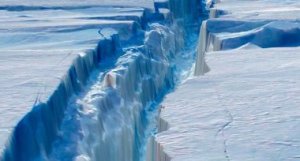
Scientists in the U.S. have identified an ominous trend in the Southern Ocean—the creation of enormous icebergs as rifts develop in the shelf ice many miles inland. And although three vast icebergs have broken from the Pine Island glacier in West Antarctica and drifted north in this century alone, researchers have only just worked out what has been going on.
Their first clue came from a telltale shadow in the south polar ice, caught by a NASA satellite and visible only while the sun was low in the sky, casting a long shadow.
It was the first sign of a fracture 20 miles inland, in 2013. Two years later, the rift became complete and the 580 sq km iceberg drifted free of the shelf.
Significant Collapse
“It’s generally accepted that it’s no longer a question of whether the West Antarctic Ice Sheet will melt—it’s a question of when,” said study leader Ian Howat, a glaciologist in the School of Earth Sciences at Ohio State University in the U.S.
“This kind of rifting behavior provides another mechanism for rapid retreat of these glaciers, adding to the probability that we may see significant collapse of West Antarctica in our lifetimes.”
The scientists report in Geophysical Research Letters journal says that they discovered that although shelf ice could be expected to wear at the ocean edge, something else was happening in West Antarctica.
The Pine Island glacier is grounded on continental bedrock below sea level, which means that warming ocean water could penetrate far inland beneath the shelf, without anyone being conscious of any change.
The first evidence of something unusual was a valley—the one highlighted by shadows visible only at a particular time and captured by NASA imagery—in the ice, where it had thinned. The valley was the first outward sign that ice was melting far below the surface.
The shelf ice plays an important role in slowing the progress of south polar glaciers: remove the shelf ice and the glacier flow accelerates.
Researchers have already identified evidence of glacier retreat in the West Antarctic and warned that bodies of ice massive enough together to raise global sea levels by three meters could—thanks to global warming as a consequence of fossil fuel combustion—be increasingly unstable.
Calving Icebergs
Dr. Howat said:
The really troubling thing is that there are many of these valleys further up-glacier. If they are actually sites of weakness that are prone to rifting, we could potentially see more accelerated ice loss in Antarctica.
Antarctica is home to more than half the world’s fresh water. The Pine Island glacier and its neighbor and twin, the Thwaite glacier, are at the outer edge of an ice stream. In effect, they have “corked” the flow.
But West Antarctica is warming far more swiftly than the rest of the south polar region. And the calving of huge icebergs fuels researchers’ fear that, within 100 years, the entire West Antarctic ice sheet could collapse, with disastrous consequences for many coastal cities worldwide.
December 26, 2016
Posted by Christina Macpherson |
ANTARCTICA, climate change |
Leave a comment
 Alex Smith, Radio Ecoshock, 22 Dec 16 The fossil fuel industry, and their paid climate deniers, have taken control of the government of the United States. Russia, another major world supplier of oil and gas, played it’s part, raiding the servers of the Democratic Party, the Democratic Candidate, and their campaign Chair.
As a result, scientists at the recent meeting of the American Geophysical Union are gathering to protect their data, and likely many of their jobs. Our first guest Joerg Schaefer came from his training in Germany and Switzerland for the brightest minds and best technology to analyze and predict climate change. Now all that is in doubt.
There are several movements in science to make copies of key climate databases and models, to get them out of the country before the climate killers take control.
But even this misses another threat. Climate science depends on long strings of dependable records. Weather comes and goes, but climate is understood decade by decade, through centuries, and even millions of years. The United States, through it’s network of satellites, ocean buoys, and research ships provides a great deal for scientists in many countries. If there is a break in those critical records, even for four years, or heaven forbid, eight – then we’ll know less, and be less prepared. Less prepared for the biggest shift in human affairs in the whole time we have been on this planet.
The great but slow movement to get off fossil fuels will continue. Citizens will continue to install solar panels, the price will continue to drop. While Donald Trump may subsidize the coal industry, and get a mine or two going, nobody wants to go back to coal. It cost more than renewable energy, or gas, even without a price on carbon. America might as well go back to making horse carriages, or the original Apple computers. Trying to rebuild a coal industry is just going to waste money and time.
We don’t have that time. Each and every scientist you’ve heard on Radio Ecoshock this fall has brought out another feed-back, a greater climate sensitivity, more reasons why we have to cut carbon emission drastically, ideally starting 20 years ago. As our guest Kevin Anderson from the Tyndall Center told us, the next four years are critical.
Can we stop Greenland from reverting to the bare rock it knows best? Can we save the remaining Arctic sea ice, to stabilize the weather further south, where most of you live? Can we prevent methane geysers from the sea floor? Can we slow deglaciation in Antarctica until we find a way to remove greenhouse gases from the atmosphere?
All this may be up to the rest of the world, while America enters bizarro world, the place where foxes guard the hen-house. Or the responsibility may go back where it really belongs: into our own homes, lives and lifestyles. If we can’t count on the big father of national governments, the future returns to us. Prepare to organize. Prepare to act, to save ourselves and Nature…… http://www.ecoshock.org/2016/12/greenland-melt-japanese-meltdown-conspiracy.html
December 26, 2016
Posted by Christina Macpherson |
climate change, USA |
Leave a comment