OM, EU Launch First Comparative Report on Environmental Change Migration http://reliefweb.int/report/world/iom-eu-launch-first-comparative-report-environmental-change-migration REPORT\ from International Organization for Migration Published on 16 Jun 2017 —View Original
Belgium – The International Organization for Migration (IOM) Global Migration Data Analysis Centre (GMDAC) and the European Union launched in Brussels today (16 June) the report, “Making Mobility Work for Adaptation to Environmental Changes: Results from the MECLEP Project’s Global Research”.
The ground-breaking research was conducted in six pilot countries: Dominican Republic, Haiti, Kenya, Mauritius, Papua New Guinea and Viet Nam. A major finding of the study is that migration often has a positive impact on adaptation as it allows households affected by environmental and climate change to diversify income, to improve their employment, health and education opportunities and to increase their preparedness for future hazards. Moreover, the study suggests that at least 40 per cent of the migrant households surveyed learnt new skills through migration. On the other hand, displacement due to natural hazards poses more challenges to adaptation, often linked to increasing vulnerability of those displaced.
The report is the final publication of the European Union-funded “Migration, Environment and Climate Change: Evidence for Policy” (MECLEP) project, a three-year research project which aimed at contributing to the global knowledge base on the relationship between migration and environmental and climate change. MECLEP was implemented by IOM in a consortium of six universities.
The final comparative report builds on desk reviews, household surveys and qualitative interviews conducted in the six project countries to assess the extent to which migration, including displacement and planned relocation, can benefit or undermine adaptation to environmental and climate change.
“Data analysis allows for a proactive, coherent and informed approach to policy development,” stated Frank Laczko, Director of IOM’s Data Analysis Centre. “By assessing in which ways migration can represent an adaptation strategy to environmental and climate change, the MECLEP data facilitates the development of informed policy responses,” he stressed.
Many policy implications emerge from this unique comparative study. Among others, the importance of integrating migration into urban planning to reduce challenges for both migrant households and the communities of destination and the need of paying particular attention to gender issues and to the needs of vulnerable groups, such as the elderly and trapped populations that cannot move.
The report is launched jointly with the European Commission Directorate-General for International Cooperation and Development (DG DEVCO) at the IOM Regional Office in Brussels. The conceptual approach that guided the study and the research methodology were also presented during the launch event.
In addition to this final comparative report, the MECLEP project produced other publications focusing on the migration and environment nexus: six national assessments, six country survey reports, 20 policy briefs, a training manual in five languages, a methodology paper and a glossary in three languages. All the publications are available on the Environmental Migration Portal, the knowledge platform developed in the context of the MECLEP project.
For further information, please contact Susanne Melde at IOM GMDAC in Berlin, Tel. +49 171 5474 165, Email: smelde@iom.int
June 19, 2017
Posted by Christina Macpherson |
2 WORLD, climate change |
Leave a comment
 Why wait until 2025 to close Diablo Canyon? The Tribune, BY BEN DAVIS JR. 17 JUNE 17, PG&E has reached an agreement (currently being reviewed by the state Public Utilities Commission) with environmental groups not to seek re-licensing for Diablo Canyon, thus ending energy production in 2025.
Some, including the Mothers for Peace in San Lois Obispo, are still working to close Diablo sooner. The administrative law judge in these PUC proceedings has agreed that considering closing the plant earlier than 2025 is a legitimate issue that can be addressed.
Pro nuclear groups have suggested such an early closure would be a blow to our state’s fight against global warming. However, even assuming nuclear power may be needed globally while transitioning from fossil fuels, Diablo itself has no impact on global warming and, as the most dangerously situated nuclear power plant in the U.S., according to the Nuclear Regulatory Commission and the California Energy Commission (CEC), it is not worth the risk to California……..
Contrast these minimal potential contributions to climate change with the fact that PG&E’s recent NRC required studies (2015) show that nearby faults can subject Diablo to double the ground shaking that occurred at Fukushima, well beyond what Diablo is currently licensed for. The NRC has meetings scheduled this year to consider these new findings.
And there’s more. PUC President Michael Picker in 2015 requested a cost effectiveness study from PG&E detailing “the costs, benefits and safety issues of cycling the Diablo Canyon units to mitigate over-generation problems on the grid.”
According to the energy commission, this means “… if renewable sources and DCPP are running at capacity then there is a risk that the load on the grid may exceed specifications making it necessary to curtail GHG free renewable generation.”
California has an over generation problem in which nuclear power is actually competing with renewables for grid space, making it necessary to curtail renewables when we have too much energy— thus contributing to global warming.
To date, PG&E has not replied to Picker’s information request.
Furthermore, Diablo uses ocean water for cooling, a practice being phased out because it is devastating to ocean life, and Diablo is the largest such plant in the state, larger than all the rest combined.
Thus we have a dangerously situated, minimally insured nuclear power plant killing marine life to contribute a small amount of energy to a state with a large surplus, while competing for grid space with renewables.
The need for accurate, balanced information in considering our energy future is precisely why I support both the Mothers for Peace in calling for an early closure of Diablo Canyon in current PUC proceedings, and the current legal actions of the World Business Academy to require the State Lands Commission to complete an Environmental Impact Report before allowing continued operation of Diablo Canyon.
When the public is presented with balanced environmental/economic information it will be eminently clear that nuclear power is not worth the risks to California.
Anti-nuclear activist Ben Davis Jr. drafted an initiative the led to the eventual closure of Rancho Seco Nuclear Power Plant in Sacramento County. He also tried unsuccessfully to get an anti-nuclear initiative on the November 2016 ballot, which, if passed, would have resulted in the closure of Diablo Canyon Power Plant. http://www.sanluisobispo.com/opinion/readers-opinion/article156805984.html
June 19, 2017
Posted by Christina Macpherson |
climate change, USA |
Leave a comment
Herald 16th June 2017, Sarah Beattie-Smith, Senior Climate and Energy Policy Officer, WWF
Scotland: THIS week the Scottish Government announced that it hit the
annual target for cutting climate changing emissions. The news that
emissions fell by three per cent from 2014 to 2015 was welcomed by us and
many other environmental groups.
It’s yet more evidence that we can meet ambitious targets and it should drive even stronger action to embrace the
benefits of a low-carbon Scotland – from cleaner air to job creation and
from improving health to cutting fuel poverty. The hit target shows that
real progress has been made on waste and on energy, particularly on
renewables, which now meet more than half of Scotland’s electricity demand.
That progress means that, for the first time, the energy sector is no
longer the biggest emitter.
That unwelcome honour now falls to transport –
a sector where emissions have barely changed in 30 years. Indeed, emissions
from transport went up by 0.4 per cent in 2015, largely due to increased
road traffic. Such poor progress on emissions underline the urgent need for
bold, transformative action.
Across the world, other nations are setting high ambitions on switching from polluting fossil-fuelled cars to low or
zero-carbon electric vehicles. In India, a target has been set to end the
sale of new petrol and diesel cars in favour of 100 per cent electric
vehicles by 2030. In Norway, that target is for 2025. In Scotland, our goal
is to phase out just half of fossil-fuelled vehicles by 2030, and only in
urban environments. That equates to only 27 percent of new cars being
electric by 2030.
If Scotland is to retain its reputation as a world leader
on climate change, we need to at least keep up with other nations, if not
exceed their ambition.
http://www.heraldscotland.com/opinion/15351342.Scotland_must_keep_up_the_pressure_on_climate_change/
June 19, 2017
Posted by Christina Macpherson |
climate change, UK |
Leave a comment
World Coal Production Just Had Its Biggest Drop on Record, Bloomberg ,by Rakteem Katakey June 14, 2017,
- Fossil fuel sees ‘decisive break’ from period of demand growth
It’s the end of an era for coal.
Production of the fossil fuel dropped by a record amount in 2016, according to BP Plc’s annual review of global energy trends. China, the world’s biggest energy consumer, burned the least coal in six years and use dropped in the U.S to a level last seen in the 1970s, the company’s data show.
Coal, the most polluting fuel that was once the world’s fastest growing energy source, has been a target of countries and companies alike as the world begins to work toward the goals of the Paris climate agreement. Consumption is falling as the world’s biggest energy companies promote cleaner-burning natural gas, China’s economy evolves to focus more on services than heavy manufacturing and renewable energy like wind and solar becomes cheaper……https://www.bloomberg.com/news/articles/2017-06-13/coal-s-era-starts-to-wane-as-world-shifts-to-cleaner-energy
June 16, 2017
Posted by Christina Macpherson |
2 WORLD, climate change |
Leave a comment
The Larsen C ice shelf collapse hammers home the reality of climate change , Guardian, John Abraham, 12 June 17, Very soon, a large portion of an ice shelf in Antarctica will break off and collapse into the ocean. The name of the ice shelf is Larsen C; it is a major extension from of the West Antarctic ice sheet, and its health has implications for other ice in the region, and sea levels globally.

How do we know a portion is going to collapse? Well, scientists have been watching a major rift (crack) that has grown in the past few years, carving out a section of floating ice nearly the size of Delaware. The speed of the crack has increased dramatically in the past few months, and it is nearly cracked through.
Project Midas provides frequent updates on the Larsen C shelf. You can read a summary there, which reports:
In the largest jump since January, the rift in the Larsen C Ice Shelf has grown an additional 17 km (11 miles) between May 25 and May 31 2017. This has moved the rift tip to within 13 km (8 miles) of breaking all the way through to the ice front, producing one of the largest ever recorded icebergs. The rift tip appears also to have turned significantly towards the ice front, indicating that the time of calving is probably very close.
The rift has now fully breached the zone of soft ‘suture’ ice originating at the Cole Peninsula and there appears to be very little to prevent the iceberg from breaking away completely.
When it calves, the Larsen C Ice Shelf will lose more than 10% of its area to leave the ice front at its most retreated position ever recorded; this event will fundamentally change the landscape of the Antarctic Peninsula. We have previously shown that the new configuration will be less stable than it was prior to the rift, and that Larsen C may eventually follow the example of its neighbor Larsen B, which disintegrated in 2002 following a similar rift-induced calving event……..
Why does all this matter? Well it is important for a number of reasons. First, when an ice shelf melts or collapses, it can unpin other ice that is sitting on land, which allows it to flow more quickly into the ocean. It is this secondary effect – the loss of ice resting on land – that changes the rate of sea level rise. Loss of a major ice shelf can also activate ice that rests on bedrock topography that makes it fundamentally unstable – ice that, once moving, will move faster and faster, until a large region is afloat.
The entire Larsen Ice shelf, which is the fourth largest in Antarctica, covers nearly 50,000 square km (20,000 square miles) according to reporting at ABC science. The ice on the land upstream of the shelf is enough to raise sea level, eventually, by ten centimeters. This is not, by itself, a major threat to the world’s coastlines, but it reveals the path that other, even larger areas are likely to take in the future.
Perhaps a quotation from a seminal work on Antarctic ice sheets best sums up the situation. In a 1978 paper, John Mercer from the Institute of Polar studies concluded:
One of the warning signs that a dangerous warming trend is under way in Antarctica will be the breakup of ice shelves on both coasts of the Antarctic Peninsula, starting with the northernmost and extending gradually southward. These ice shelves should be regularly monitored by LANDSAT imagery.
Why is the ice shelf going to break off and collapse into the ocean? Since large calving events are so rare, and since our measurements in and around ice shelves don’t go back in time far enough, it’s hard to say whether this is a natural progression, variability, or a result of human activity (or more likely a mixture). A major reason may be human-caused warming, which has led to melting from both above and below in nearby areas……. https://www.theguardian.com/environment/climate-consensus-97-per-cent/2017/jun/12/the-larsen-c-ice-shelf-collapse-hammers-home-the-reality-of-climate-change
June 14, 2017
Posted by Christina Macpherson |
ANTARCTICA, climate change |
Leave a comment
 Grist 12th June 2017, Cities and states may be able to officially join the Paris Agreement after
all. Patricia Espinosa, head of the United Nations climate change body that
negotiated the accord, told ministers at a June 11-12 meeting that she
hopes to bring U.S. cities and states into the fold. “This is obviously
important, because cities like New York and states like California that
intend to pursue the same direction — of reducing emissions very
ambitiously — will have a voice and will be able to sign agreements
inside the international convention on climate change,” said Espinosa, as
reported by Politico.
After Trump announced the U.S. would drop out of the
Paris deal, numerous states, cities, and businesses reiterated commitments
to reducing emissions. But the actual legality of cities and states joining
international treaties remains murky under the U.S. Constitution. “It’s
a little bit early to know what exactly is meant by” Espinosa’s
comment, says Vicki Arroyo, executive director of the Georgetown Climate
Center. Arroyo says it could refer to subnational representatives, like
governors, receiving credentials to attend climate talks and participate in
discussions, rather than state or municipal governments literally signing
on. http://grist.org/briefly/cities-and-states-may-be-able-to-officially-join-the-paris-agreement-after-all/
June 14, 2017
Posted by Christina Macpherson |
2 WORLD, climate change |
Leave a comment
FT 13th June 2017 Oliver Joy, Global Covenant of Mayors for Climate and Energy,
Brussels: I read with interest the report on power-generating pavements in London. The US pulling out of the Paris deal is a storm in a teacup in this context. The real answer to the global energy transition and delivering
beyond the pledges made in Paris lies with our cities and mayors.
Cities consume more than two-thirds of the world’s energy and account for more than 70 per cent of emissions globally. Mayors and local leaders are truly at the “coal face” of the climate challenge. But without electrification of sectors such as heating, cooling and transport, the problem will never be solved.
Mitigation and adaptation measures are important, but energy transition is where the climate battle will be won or lost. Electrifying these sectors will not only reduce emissions but also open cities up as new centres of energy demand. In turn, this will mean that more renewables can come online.
Currently, wind and solar plants are being switched off to ensure system stability. But what if that excess power could be sent to our cities instead, so that millions of people can charge their cars with cheap kilowatts rather than petrol? This will mean rolling out more transmission capacity and smart grids so that power generated by wind and solar in remote regions can be delivered to the densely populated urban areas.
It will also mean consumers thinking consciously about their consumption patterns and when to boil their kettles. On June 27, Maros Sefcovic, European Commission vice-president for energy union, Michael Bloomberg and
Christiana Figueres will meet in Brussels with nine local leaders at the first board meeting of the newly formed Global Covenant of Mayors for Climate and Energy.
The initiative is an alliance of more than 7,400 cities and local governments worldwide on climate action. One thing is for
sure, if we don’t open up and electrify our cities, it will be like driving the global energy transition with the handbrake on.
https://www.ft.com/content/88852f90-4d3d-11e7-919a-1e14ce4af89b
June 14, 2017
Posted by Christina Macpherson |
2 WORLD, climate change, ENERGY |
Leave a comment
 U.S. Environment Chief Exits G-7 Climate Talks Before End, Bloomberg, by Jess Shankleman and Chiara Albanese, 11 June 17
U.S. environment chief Scott Pruitt headed home before the conclusion of a Group of Seven ministers’ meeting on climate in Italy to attend a cabinet meeting in Washington. Pruitt, who as Environmental Protection Agency administrator successfully campaigned for the U.S. to quit the landmark Paris climate agreement, left Bologna Sunday, the EPA said in an emailed statement. ….
Pruitt’s exit from the discussions may further impede plans by environment ministers at the two-day meeting. The delegates from Canada, France, Germany, Italy, Japan and the U.K. were intending to issue a statement on a range of green issues including climate change on Monday…. https://www.bloomberg.com/news/articles/2017-06-11/u-s-environment-chief-exits-g7-climate-talks-in-italy-early
June 12, 2017
Posted by Christina Macpherson |
climate change, USA |
Leave a comment
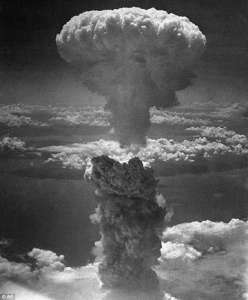 NORTH KOREA CLAIMS U.S. WAR AND NUCLEAR WEAPONS CAUSED CLIMATE CHANGE, NewsWeek, BY TOM O’CONNOR ON 6/10/17 North Korea has accused U.S. military and environmental policies of causing climate change and producing pollution around the world.
In a scathing report cited Friday by North Korea’s official Korean Central News Agency (KCNA), the state-run Institute for International Studies of the DPRK (an acronym for the country’s official title: the People’s Democratic Republic of Korea), asserted that the U.S.’s use of nuclear weapons, involvement in foreign conflicts and style of production had most harmed the environment since the Cold War. The study, attributed to researcher Kim Kum Hui and titled “The U.S. Is Chiefly to Blame for Global Environmental Pollution,” advised the U.S. to change course and safeguard the environment…..
North Korea’s report claimed that since the Cold War, the U.S. has forced other nations to adopt its model of “American-style development” under the guise of economic globalization. It said the U.S. alone accounted for 22.1 percent of the world’s carbon emissions in 2004. The figure appears to relatively coincide with conclusions established the following year by Washington-based think tank the World Research Institute. Research by the same organization says the U.S. contributed 14.4 percent in 2012, second only to China’s 25.36 percent. That same year, North Korea, an underdeveloped nation of around 25 million, was listed at .17 percent.
The report also laid into the military practices of the U.S., with which North Korea fought a war in the 1950s. The piece condemned the U.S.’s dropping of atomic bombs on the Japanese cities of Hiroshima and Nagasaki at the end of World War Two in 1945, as well as the government’s nuclear tests, which numbered 1,054 between 1945 and 1992, according to the Department of Energy…….
Despite North Korea’s traditionally dismissive nature toward international treaties, Pyongyang has at times been a vocal advocate of global cooperation on environmental issues. It signed the 2015 Paris Climate Agreement, which is geared toward reducing global greenhouse gas emissions, and deeply criticized Trump for pledging to withdraw from the non-binding, landmark treaty last week. North Korea has suffered from a number of deadly famines and floods that experts and international agencies have said indicate its vulnerability to climate change. http://www.newsweek.com/north-korea-us-war-nuclear-weapons-climate-change-623825
June 12, 2017
Posted by Christina Macpherson |
climate change, North Korea, USA |
1 Comment
 Guardian 8th June 2017, Yesterday, the mayors of Pittsburgh and Paris co-authored a New York Times editorial rejecting Trump’s efforts to pin the two cities against each other on climate change.
Additionally, 12 states (California, New York,Washington, Connecticut, Delaware, Hawaii, Massachusetts, Minnesota,
Oregon, Rhode Island, Vermont, and Virginia) plus Puerto Rico created the US Climate Alliance, committed to upholding the Paris accord. These states represent 97 million Americans – 30% of the national population.
More than 1,000 U.S. governors, mayors, investors, universities, and companies joined the “We Are Still In” campaign, pledging to meet the goals of the Paris agreement. And California Governor Jerry Brown has effectively
become America’s unofficial climate change ambassador. https://www.theguardian.com/environment/climate-consensus-97-per-cent/2017/jun/08/pittsburgh-and-paris-join-over-200-cities-and-states-rejecting-trump-on-climate
June 10, 2017
Posted by Christina Macpherson |
climate change, USA |
Leave a comment
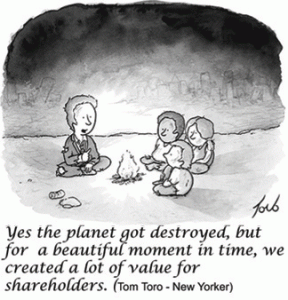 Trump, the Paris Climate Agreement and Scrooge McDuck, https://independentaustralia.net/politics/politics-display/trump-the-paris-climate-agreement-and-scrooge-mcduck,10369 Independent Australia, Jim Pembroke 6 June 2017, To understand Trump’s withdrawal from the Paris Accord we only need to follow the money behind climate change denial, writes Jim Pembroke.THE WORLD’S collective jaw dropped the other day, when U.S President Donald Trump announced he was pulling the plug on the Paris Climate Accord.
Sure, we knew it was coming, but no one thought it would really happen. We figured the whole Russian thing would destroy Trump long before he got a chance to destroy the planet. But quicker than you can say, anthropogenic climate change, the Yanks were gone.
But who is really to blame for this mess? Angry white men, people who didn’t vote, Donald Trump and his troupe of bad impersonators?
For an answer to this we need to dip our toes – once again– into the murky waters of secret donations, clandestine organisations and fictional Disney characters. This is a tale about the unidentified rich who sit high on a stack of cash in their air-conditioned money vaults, while secretly bankrolling climate change denial. The Scrooge McDucks of this world.
An imaginary Disney character is about as close as we’ll get to the identity of these cloak and dagger contributors, because the hundreds of millions of dollars they donate to climate denial organisations are routed via third party payments.
This “dark money” is channelled anonymously through conservative organisations, like Donors Trust and Donors Capital Fund, whose stated mission is a commitment to “liberty”. Now that sounds fine until you realise that this includes the freedom to fund think tanks and activists who spread disinformation and confusion, scorning global warming and climate science.
Despite all the cloak and dagger stuff, the donations of some of these wealthy birds have been well documented. The fossil fuel industry and, in particular, ExxonMobil and the Koch family, have considerable history in the climate denial space. Exxon have been accused of covering up climate change research and American businessman Charles Koch has reportedly funded climate denial activity to the tune of tens of millions of dollars.
But it’s not just the wealthy ducks from the fossil fuel sector feeding the mayhem. Even companies who publically declare their grand support for climate action have made political donations to climate deniers. Google, Microsoft, eBay have all contributed to politicians who oppose climate legislation, while at the same time spruiking their own climate credentials to the public. The subsequent self-serving rationalisation of these Scrooge McDucks is evidence: there’s at least one thing they want more than improving the environment, their huge bank balances.
Likely, there were many factors affecting the decision to pull out of the Paris Accord. But without the confusion sewn by secretly funded denialists, it’s likely that rational, scientific thought would have won the day and the U.S. might still be part of the Paris Accord. However, the Scrooge McDucks of this world could never allow their ideology of money to be threatened by regulations — whether climate change is real or not.
You see, failing crops, water shortages, or savage storm events may wreak havoc on the rest of us, but won’t really affect the billionaires and corporations.
Like Uncle Scrooge, they’ll be swimming high on their mountains of coins, always safe from the rising waters of global warming.
June 7, 2017
Posted by Christina Macpherson |
climate change, secrets,lies and civil liberties, USA |
Leave a comment
Times 3rd June 2017 A coalition of American cities and states, led by the economic powerhouse of California, have vowed to resist President Trump’s decision to withdraw the US from the Paris climate accord. The United States Climate Alliance also includes dozens of US businesses and banks, including Goldman Sachs, which fear being excluded from a green energy revolution that willyield contracts worth billions.
As many as 30 states have already pledged to wean themselves off fossil fuels. The Democratic governors of Washington, New York and California plan to negotiate with the United Nations to be recognised as parties to the 195-nation pact — a highly unusual effort that underscored how Mr Trump’s decision has split the US.
The three states, which together account for about a fifth of US economic output, said they would stick by the commitment Barack Obama made under the Paris deal in 2015 to reduce emissions by at least 26 per cent from 2005 levels.
https://www.thetimes.co.uk/edition/world/thirty-states-defy-trump-and-refuse-to-abandon-paris-accord-mkpvgrrfz
June 5, 2017
Posted by Christina Macpherson |
climate change, USA |
Leave a comment
 Independent 2nd June 2017, Former New York City mayor Michael Bloomberg has said he will personally make up the $15m in funding that the United Nations will lose after Donald Trump pulled the US out of the Paris climate accord.
The US would have been required to contribute that amount towards efforts to prevent catastrophic
climate change under the historic agreement between 195 countries to reduce greenhouse gas emissions.“Americans are not walking away from the Paris climate agreement,” Mr Bloomberg said on Thursday, according to the Washington Examiner. “Just the opposite – we are forging ahead.
Mayors, governors, and business leaders from both political parties are signing on to a statement of support that we will submit to the UN and together, we will reach the emission reduction goals the United States made in Paris in 2015. The billionaire philanthropist added: “Americans will honour and
fulfil the Paris agreement by leading from the bottom up — and there isn’t anything Washington can do to stop us.” http://www.independent.co.uk/news/business/news/former-new-york-city-mayor-michael-bloomberg-has-said-he-will-personally-make-up-the-15m-in-funding-a7769416.html
June 5, 2017
Posted by Christina Macpherson |
climate change, USA |
Leave a comment
Lawfare 2nd June 2017 The two-dozen experts in attendance at the inaugural meeting of the Working Group on Climate, Nuclear and Security Affairs, hosted by the Center for Climate and Security, sought to examine the intersection of three threats that have long been viewed as separate—climate change, nuclear proliferation, and international conflict. In doing so, they confronted the unpleasant prospect that those threats not only had intensified over time, but also had become increasingly entwined and difficult to keep in check.
Collectively these experts had garnered at least two centuries’ worth of national security experience. They came from defense, homeland security, journalism, think tank, academic, and NGO backgrounds, and all of them had spent years working on nuclear or climate issues, or both. Over the course of two days, it became clear that examining nuclear and climate issues together through the lens of new security issues—such as technological advances, unprecedented migration, continually evolving terrorist threats and an emboldened Russia—reveals the world order faces a deeply
destabilizing toxic brew of risk.
The nuclear threat is not new. What has changed is the nature of the nuclear threat in the face of monumental security stressors and a rapidly increasing global average temperature that threatens to reach 3.5 degrees Centigrade (6.3 degrees Fahrenheit)or more if we continue on our current trajectory in spewing carbon. As the world heats up, emerging security trends—including unprecedented migration, cyber threats, proliferation of non-state actors, and global pandemics—compound the stresses on systems of governance. When countries turn to nuclear energy in an effort to reduce consumption of fossil fuels, concerns about nuclear weapons proliferation and nuclear disasters such as Chernobyl increase. https://www.lawfareblog.com/nuclear-energy-climate-change-and-security-threats
June 5, 2017
Posted by Christina Macpherson |
2 WORLD, climate change, safety |
Leave a comment
Scientists warn US coral reefs are on course to disappear within decades
New Noaa research shows that strict conservation measures in Hawaii have not spared corals from a warming ocean in one of its most prized bays, Guardian, Oliver Milman, 30 May 17, Some of America’s most protected corals have been blighted by bleaching, with scientists warning that US reefs are on course to largely disappear within just a few decades because of global warming.
New research has shown that strict conservation measures in Hawaii have not spared corals from a warming ocean in one of its most prized bays, with the National Oceanic and Atmospheric Administration
predicting yet more bleaching is likely off Hawaii and Florida this summer.
“I’m concerned because we could very well see bleaching return to Florida, parts of the Caribbean and Hawaii,” said Mark Eakin, a coral reef specialist at Noaa.
“It won’t be as severe as 2015, but we’ve now moved into a general pattern where warmer than normal temperatures are the new normal. US reefs have taken a severe beating. We are looking at the loss or at least severe degradation of most reefs in the the coming decades.”
A global coral bleaching event has shifted between the northern and southern hemispheres since 2014, affecting around 70% of the world’s reefs. The “terminal” condition of Australia’s sprawling Great Barrier Reef, which suffered bleaching along two-thirds of its 1,400-mile length in 2016 and 2017, has provoked the greatest alarm.
But scientists have pointed out that America’s main reefs, found off Hawaii, Florida, Guam and Puerto Rico, are facing a largely unheralded disaster.
“The idea we will sustain reefs in the US 100 years from now is pure imagination. At the current rate it will be just 20 or 30 years, it’s just a question of time,” said Kim Cobb, an oceanographer at Georgia Tech. “The overall health of reefs will be severely compromised by the mid-point of the century and we are already seeing the first steps in that process.”
Bleaching occurs when prolonged high temperatures in the ocean cause coral to expel the symbiotic algae that provides it with food and colour. The coral turns a ghostly white, and can die if tolerable conditions don’t return. The world’s oceans have absorbed more than 90% of the extra heat generated by the release of greenhouse gases from human activity.
Cobb said regular annual bleaching events, which recent research has forecast happening by the 2040s, will “undercut the resilience of these ecosystems”. Corals not killed off by bleaching are left weakened by the process and are less likely to survive if repeatedly subjected to above-average temperatures.
“As scientists we are breathlessly trying to catch up,” said Cobb. “Things started to run away from us around 10 years ago but we were perhaps a little naive in not realizing that.”
In 2014 and 2015, Hawaii’s coral reefs suffered up to 90% bleaching, with some areas losing half of their coral cover. New research now shows that even one of the most protected parts of the Hawaiian coast was ravaged by coral bleaching………
Severe bleaching has swept across the Pacific Ocean, Indian Ocean and the Caribbean, with some areas altered beyond recognition. More than 80% of shallow water reefs off Christmas Island, an Australian territory in the Indian Ocean, have died, while images released from a survey last year showed 90% bleaching of reefs around Okinawa, Japan……..
Coral reefs are found in less than 1% of the world’s oceans but support a riot of colour and life, with around a quarter of all marine species relying upon the nooks and crannies of reefs for food or shelter. Reefs also act as a crucial coastal buffer from storms and provide food and livelihoods for millions of people. A study published this month foundthe global reef tourism industry is worth around $36bn.
“In the US our reefs are worth a huge amount but I don’t know if people realize that, more attention would not hurt,” said Dona, co-author of the Hawaii reef study.
“There are places in the world that have lost a tremendous amount of coral and we have the same prognosis if we continue to burn fossil fuels in the way we are doing. We need to cut our carbon emissions because the corals just can’t handle it.”https://www.theguardian.com/environment/2017/may/30/us-coral-reefs-global-warming-climate-change
June 5, 2017
Posted by Christina Macpherson |
climate change, USA |
Leave a comment