Melting Greenland ice now source of 25% of sea level rise, researchers say, Japan Times, AFP-JIJI, JUN 27, 2017 PARIS– Ocean levels rose 50 percent faster in 2014 than in 1993, with meltwater from the Greenland ice sheet now supplying 25 percent of total sea level increase compared with just 5 percent 20 years earlier, researchers reported Monday.
The findings add to growing concern among scientists that the global watermark is climbing more rapidly than forecast only a few years ago, with potentially devastating consequences.
Hundreds of millions of people around the world live in low-lying deltas that are vulnerable, especially when rising seas are combined with land sinking due to depleted water tables, or a lack of ground-forming silt held back by dams.
Major coastal cities are also threatened, while some small island states are already laying plans for the day their drowning nations will no longer be livable.
“This result is important because the Intergovernmental Panel on Climate Change (IPCC)” — the U.N. science advisory body — “makes a very conservative projection of total sea level rise by the end of the century,” at 60 to 90 cm (24 to 35 inches), said Peter Wadhams, a professor of ocean physics at the University of Oxford who did not take part in the research.
That estimate, he added, assumes that the rate at which ocean levels rise will remain constant.
“Yet there is convincing evidence — including accelerating losses of mass from Greenland and Antarctica — that the rate is actually increasing, and increasing exponentially.”….
Rising seas could result in 2 billion refugees by 2100, Lindsey Hadlock via Cornell UniversityJune 26, 2017
http://www.enn.com/climate/article/51644In the year 2100, 2 billion people – about one-fifth of the world’s population – could become climate change refugees due to rising ocean levels. Those who once lived on coastlines will face displacement and resettlement bottlenecks as they seek habitable places inland, according to Cornell University research.
“We’re going to have more people on less land and sooner that we think,” said lead author Charles Geisler, professor emeritus of development sociology at Cornell. “The future rise in global mean sea level probably won’t be gradual. Yet few policy makers are taking stock of the significant barriers to entry that coastal climate refugees, like other refugees, will encounter when they migrate to higher ground.”
Earth’s escalating population is expected to top 9 billion people by 2050 and climb to 11 billion people by 2100, according to a United Nations report. Feeding that population will require more arable land even as swelling oceans consume fertile coastal zones and river deltas, driving people to seek new places to dwell.
By 2060, about 1.4 billion people could be climate change refugees, according to the paper. Geisler extrapolated that number to 2 billion by 2100.
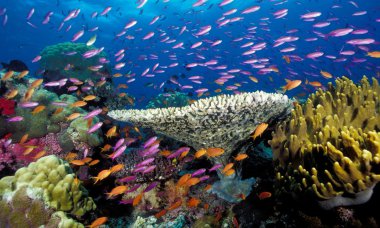
THE Great Barrier Reef will be dead by the end of this century without a reduction in greenhouse gas emissions, a world-first study warns.
The threat to Australia’s natural wonder is detailed in the first global assessment of climate change impacts on coral, released yesterday by the United Nations Educational, Scientific and Cultural Organisation (UNESCO).
It comes just a month before the World Heritage Committee meets in Poland to consider the condition of the Great Barrier Reef and the effectiveness of a management plan introduced by the Queensland and federal governments to protect it.
“Soaring ocean temperatures in the past three years have subjected 21 of 29 World Heritage reefs to severe and/or repeated heat stress, and caused some of the worst bleaching ever observed at iconic sites like the Great Barrier Reef,’’ it says.
“The analysis predicts that all 29 coral-containing World Heritage sites would cease to exist as functioning coral reef ecosystems by the end of this century under a business-as-usual emissions scenario.”
The report calls on all countries with World Heritage coral reefs to act to reduce net greenhouse emissions to zero in order to save them.
On current trends, the assessment predicts, global warming will increase by 4.3C by 2100.
Under that scenario, the Great Barrier Reef would suffer severe coral bleaching twice a decade by 2035 – “a frequency that will rapidly kill most corals present and prevent successful reproduction necessary for recovery of corals.’’
The diversity of life on reefs has led to them being been dubbed the “rainforests of the sea”. Covering less than 0.1 per cent of the ocean floor, they host more than a quarter of all marine fish species.
Australian Marine Conservation Society spokeswoman Imogen Zethoven said the Great Barrier Reef and other World Heritage reefs were in grave danger from climate change, mainly driven by the burning of coal.
“Yet the Australian government appears hell-bent on making the problem worse by pushing ahead with Adani’s monstrous coal mine (planned for central Queensland), talking up a coal-fired power station next to the Great barrier Reef and failing to do its fair share of global pollution reduction,” she said.
“The Australian government is not only placing our Great Barrier Reef and the 70,000 jobs that depend on it at grave risk, it is endangering the future of World Heritage coral reefs around the world,” Ms Zethoven said.
“The majority of Australians believe the state of our reef is a national emergency, but the Australian government doesn’t care.”
Al Gore: The Green Revolution Is ‘Unstoppable’,Despite a tough political climate, the environmental activist is still optimistic. National Geographic Magazine By Brian Clark Howard, 25 June 17, With his 2006 documentary, An Inconvenient Truth, former U.S. vice president Al Gore drew public attention to the threat of climate change. This July, An Inconvenient Sequel opens in theaters. Gore, 69, says the stakes are higher now but the solutions are clearer.
What do you think the public misunderstands about climate change?
I think the overwhelming majority of the public understands very well that climate change is an extremely important challenge, that human beings are responsible for it, and that we need to act quickly and decisively to solve it. The most persuasive arguments have come from Mother Nature. Climate-related extreme weather events are now so numerous and severe that it’s hard to dismiss what’s happening. But even those who don’t want to use the words “global warming” or “climate crisis” are finding other ways to say, “Yes, we’ve got to move on solar, wind, batteries, electric cars, and so on.” We have so much at risk…….
What is your goal with the new film, An Inconvenient Sequel?
My main goal is to add to the momentum. One hundred percent of the profits I would otherwise get from the movie, and book we’re doing, will go into training more climate activists. That was true with the first movie as well…….
What scares you most about the future?
While we are winning, we are not yet winning fast enough. The continued accumulation of manmade global warming pollution in the atmosphere adds to the damage that we will pass on to the future. Some of the changes are not recoverable. We can’t just turn a switch and reverse the melting of big ice sheets.
What gives you hope for the future?
There are so many people working around the world on this that I am extremely optimistic. It would certainly be helpful to have policies and laws that speed up our response. But market forces are working in our favor. Solar, wind, and other technologies are getting cheaper and better. More cities and companies are pledging to go 100 percent renewable. I believe the sustainability revolution is unstoppable. http://www.nationalgeographic.com/magazine/2017/07/3-questions-al-gore-climate-change/
As solar energy becomes cheaper than coal, India’s growth will depend on renewables.
Coal India—a government-back coal company–is reportedly closing 37 of its “unviable” mines in the next year to cut back on losses.
India is primed for an energy revolution. The country’s ongoing economic growth has been powered by fossil fuels in the past, making it one of the top five largest energy consumers in the world. But it has also invested heavily in renewables, and the cost of solar power is now cheaper than ever. In some instances, villages in India have avoided coal-powered electricity altogether, and “leapfrogged” straight to solar power.
Partly because of this shift, Coal India, which produced 554.13 million tonnes of coal in the 2016-2017 fiscal year (for comparison, the largest company in the US produced about 175 million in 2015) saw demand dip in recent months. This is not the first sign that coal is no longer the most economic option for emerging economies like India and China. Earlier this year, the heavily industrial state of Gujarat cancelled its proposed coal power plants. And a few weeks ago The Hindu reported that Coal India had identified another 65 mines in losses.
ndia’s energy situation is changing so fast that even expert predictions about its switch to renewables are wildly off: A study from last year claimed India would be building more than 300 coal plants in the next 10 years, but experts said the data was already outdated by the time the report was published, and that India would be moving toward renewables instead.
We are collectively moving away from fossil fuels“For the first time, solar is cheaper than coal in India and the implications this has for transforming global energy markets are profound,” said Tim Buckley, Director of the Institute for Energy Economics and Financial Analysis (IEEFA) in a statement. The decline of Coal India, which produces 80 percent of the country’s domestic coal output, is more evidence that we are collectively moving away from fossil fuels as cleaner, renewable technologies become more widely available. This reality is important to grasp in every country where coal used to be king. Even as Donald Trump promises coal jobs, let’s remember that those jobs don’t are unlikely to come back.
“One of the most popular mines today employs [a couple hundred people] who are doing the work that used to be done by thousands,” Jerome Scott, a left-leaning activist with the League of Revolutionaries for a New America, said at the Left Forum earlier this month in Manhattan. “That’s the fundamental contradiction within capitalism—it’s being disrupted because they’re able to hire fewer and fewer workers.”
And for countries like India, where companies like Coal India employ more than 300,000 people, training people to work in more viable energy markets will be increasingly important to provide sustainable livelihoods. Luckily, it looks like the solar industry will have some job openings.
From heatwaves to hurricanes, floods to famine: seven climate change hotspots
Global warming will not affect everyone equally. Here we look at seven key regions to see how each is tackling the consequences of climate change, Guardian, John Vidal, 23 June 17, It could have been the edge of the Sahara or even Death Valley, but it was the remains of a large orchard in the hills above the city of Murcia in southern Spain last year. The soil had broken down into fine white, lifeless sand, and a landscape of rock and dying orange and lemon trees stretched into the distance.
A long drought, the second in a few years, had devastated the harvest after city authorities had restricted water supplies and farmers were protesting in the street. It was a foretaste of what may happen if temperatures in the Mediterranean basin continue to rise and desertification grows.
All round the world, farmers, city authorities and scientists have observed changing patterns of rainfall, temperature rises and floods. Fifteen of the 16 hottest years have been recorded since 2000. Carbon dioxide and other greenhouse gas emissions steadily climb. Oceans are warming and glaciers, ice caps and sea ice are melting faster than expected. Meanwhile, heat and rainfall records tumble.
The evidence for the onset of climate change is compelling. But who and where is it hitting the hardest? How fast will it come to Africa, or the US? What will be its impact on tropical cities, forests or farming? On the poor, or the old? When it comes to details, much is uncertain.
Mapping the world’s climate hotspots and identifying where the impacts will be the greatest is increasingly important for governments, advocacy groups and others who need to prioritise resources, set goals and adapt to a warming world.
But lack of data and different priorities make it hard. Should scientists pinpoint the places most likely to see faster than average warming or wetter winters, or should they combine expected physical changes with countries’ vulnerability? Some hot-spot models use population data. Others seek to portray the impacts of a warming world on water resources or megacities. Global bodies want to know how climate might exacerbate natural hazards like floods and droughts. Economists want to know its impacts on resources. Charities want to know how it will affect women or the poorest.
What follows is a subjective appraisal of the seven most important climate hotspots, based on analysis of numerous scientific models and personal experience of observing climate change in a variety of places. Delta regions, semi-arid countries, and glacier- and snowpack-dependent river basins are all in the frontline. But so, too, are tropical coastal regions and some of the world’s greatest forests and cities.
Murcia, Spain……… Dhaka, Bangladesh…… Mphampha, Malawi…..Longyearbyen, Norway….. Manaus, Brazil….. New York, US…. Manila, Philippines…..
The bottom line
Whether it’s faster than average warming, more vulnerable than average populations, or more severe than average drought, floods and storms, it’s clear that some places are being hit harder than others by Earth’s altered climate, and so face extra urgency when it comes to adapting to a new reality.
But the bottom line is that climate hotspots intersect, and nowhere will we escape the changes taking place. What happens in the Amazon affects West Africa; the North American growing season may depend on the melting of Arctic ice; flooding in Asian cities affected by warming on the high Tibetan plateau. And urban areas ultimately depend on the countryside.
The US said climate change had “a range of implications for the effective enjoyment of human rights”, in a departure from recent diplomacy and Trump’s rhetoric By Sébastien Duyck
The UN Human Rights Council has adopted a resolution that calls for the protection of human rights from the impacts of climate change, with the support of the US.
Two weeks of discussions began with much uncertainty regarding the role that the US would play after the decision by the US president Donald Trump to withdraw from the Paris climate agreement.
After intensive but constructive negotiations over the wording, Bangladesh, the Philippines and Vietnam proposed a resolution for adoption by all members of the Council on Thursday.
Addressing the Council as governments were about to consider the adoption of the text, US representative Jason Mack cleared any doubts about the US position on this resolution.
“As we said previously on this topic, the effects of climate change have a range of implications for the effective enjoyment of human rights. On this basis we join consensus,” said Mack.2
The recognition by the US of the importance of continuing work on this issue contrasted with Trump’s speech three weeks ago, which framed the Paris Agreement as an injustice against the US economy.
The US has stood aside in recent international discussions of climate change. Trump’s refusal to offer support to the Paris agreement lead to a split at the recent G7 summit in Italy.
However Mack did raise concerns about references to the Paris deal in the Council resolution. In one of the few contentious parts of the negotiations, the US said the Human Rights Council should not interfere with the formal UN climate negotiations, a risk the US saw as encouraged in the eventual resolution.
Nor would the US brook any language that compelled countries to take steps inside the Paris accord or out.
“Any calls for climate action in this resolution can only affirm actions that countries choose to take,” said Mack.
On the other hand, German ambassador Antje Leendertse, speaking on behalf of the EU, stressed the importance of including considering human rights principles within the climate talks.
Introducing the text, Duong Chi Dung, permanent representative of Vietnam to the UN in Geneva, said the issue required “a comprehensive approach to the issue of climate change bearing in mind intertwined connection with human rights, including social and economic rights”.
The resolution focused on two specific issues. Firstly, that children are among the groups most vulnerable to the adverse impacts of climate change.1 It insisted on the recognition of existing obligations under international law for governments and businesses to protect the rights and best interests of children when taking climate action.
At an event parallel to the negotiations, Marilena Viviani, director of UNICEF’s Geneva office, said “500 million children live in flood-prone areas, 160 million are exposed to severe drought, and 115 million are at high risk of tropical cyclones”.
Governments also addressed the specific challenges related to the protection of the rights of climate-induced migrants.
“With the ever increasing adverse impacts of climate change, these groups of vulnerable people are being even more vulnerable and marginalised” said Bangladeshi representative Robiul Islam. The council mandated the UN to examine challenges and opportunities for human rights protection in the context of climate-related migration.
The recognition by governments of the interlinkages between climate change and human rights required many years of debates and negotiations under the auspices of the UN bodies working on each of these issues.
“The global consensus on this resolution – including on issues that often lead to heated political discussions in other UN fora – indicates that the importance of addressing these linkages is now better recognised by governments” said Yves Lador, representative of EarthJustice to the UN in Geneva who followed these conversations since their inception.
Sébastien Duyck is a senior attorney at the Centre for International Environmental Law.
From heatwaves to hurricanes, floods to famine: seven climate change hotspots Global warming will not affect everyone equally. Here we look at seven key regions to see how each is tackling the consequences of climate change,Guardian, John Vidal, 23 June 17
“………Murcia, Spain
For Wolfgang Cramer, scientific director of the Mediterranean Institute for Biodiversity and Ecology in Aix-en-Provence, France, climate change impacts are already visible not only in the vicinity of Murcia, but across much of the Mediterranean basin. If pledges to cut emissions are not met, catastrophe looms.
He and his colleague Joel Guiot, a paleoclimatologist, last year studied pollen locked in layers of sediment over the past 10,000 years and compared them with projections about climate and vegetation from the Intergovernmental Panel on Climate Change.
If warming is allowed to rise to 2C, the scientists concluded, much of southern Spain and the Mediterranean basin could become desert. Their paper, published in Science, was shocking because it showed that even a small temperature increase could be enough to create ecological havoc in a very heavily populated region with relatively wealthy countries.
They warned that North African countries would see increased temperatures and drought that would drive the southern deserts further north; that deserts would expand in the Middle East, pushing temperate forests higher into the mountains; and that ecosystems not seen in the Mediterranean basin in more than 10,000 years could develop.
“We are more certain of the drying trend in the region than almost anywhere else on the planet. Temperatures have risen 1C globally but 1.4C in the Mediterranean region. The trend is for it to become ever warmer,” says Cramer.
Increasing temperature, he says, drives droughts. “More carbon dioxide in the atmosphere means rising temperatures, less precipitation and then more drying that leads to desertification.”
Meanwhile, water stress, heat waves and an extended drought linked to climate change in the eastern Mediterranean has been widely implicated in the long Syrian war and an underlying driver of conflict in Middle East and North African countries.
The World Resources Institute concurred in 2015 that the Mediterranean basin was a climate hotspot when it placed 14 of the world’s 33 most water-stressed countries in 2040 in the Middle East and North Africa region. “Drought and water shortages in Syria likely contributed to the unrest that stoked the country’s 2011 civil war. Dwindling water resources and chronic mismanagement forced 1.5 million people, primarily farmers and herders, to lose their livelihoods and leave their land, move to urban areas, and magnify Syria’s general destabilisation,” it said.
The fast-growing, heavily populated region is climatically vulnerable, it concluded. The food supplies and the social balance of places like Palestine, Israel, Algeria, Lebanon and Jordan are all highly sensitive to even a small change in water supplies. As climate change intensifies, communities face grave threats from both droughts and floods.
The combined impact of many more people, higher temperatures and changing weather patterns on the region’s already scarce freshwater resources poses further potential for conflict. But optimists hope it could force compromise between competing states and water users. Rural areas already have no option but to switch to more efficient irrigation systems and drought tolerant crops, and urban areas are learning to conserve water…..
From heatwaves to hurricanes, floods to famine: seven climate change hotspots Global warming will not affect everyone equally. Here we look at seven key regions to see how each is tackling the consequences of climate change,Guardian, John Vidal, 23 June 17
“….Dhaka, Bangladesh
I met Honufa soon after she arrived in Dhaka 10 years ago. Erosion and saltwater intrusion on her family’s land on one of the low-lying islands in the mouth of the Ganges River had forced the young Bangladeshi woman to leave her village for the capital. She had taken a boat and then an overnight bus and ended up in a slum called Beribadh.
Honufa is a climate refugee, one of thousands who have struggled to grow their crops. Millions are likely to follow her if current trends continue.
“In the next 20 years we would expect five to 10 million people to have to move from the coastal areas,” says Saleemul Huq, director of the Bangladesh-based International Centre for Climate Change and Development. “The whole country is a climate hotspot, but the most vulnerable area is the coast. Dhaka is the place where people head to,” he says.
Huq, who has advised the Bangladesh government at successive UN climate summits, says there is strong evidence that climate change is now impacting Dhaka. “Temperatures have already gone up by 1C. We can see that the weather patterns have changed. Ask anyone in the street, and they will say the frequency of floods has changed. Bangladesh has a long history of floods, but what used to be a one-in-20-year event now happens one year in five. It is what we would expect with climate change models.”
Huq and other Bangladeshi climate scientists expect to see more extremes. “Changing rain patterns suggest we will not get more rain over the coming years but it will be distributed differently, with less in the dry season and more during the monsoons. Paradoxically, this will lead to more floods and droughts, and heavier monsoons,” he says.
“We are beginning to see sea levels rising and increased salinity in coastal areas. It is a slow onset, which will get worse. It is a climate change phenomenon and not something we had before.”
Huq leads research into how Bangladesh can adapt to climate change. “We’ve done a lot of research looking at the most vulnerable hotspots. We are learning by doing,” he says. “Government has now invested in a major climate change action plan. To counter coastal salinity there is a big program of rainwater harvesting and coastal protection. Scientists are developing saline-tolerant rice. People and government are proactive.
From heatwaves to hurricanes, floods to famine: seven climate change hotspots Global warming will not affect everyone equally. Here we look at seven key regions to see how each is tackling the consequences of climate change,Guardian, John Vidal, 23 June 17
Mphampha, Malawi
Late last year, the temperature in southern Malawi in southern Africa rose to more than 46C. A long regional drought crossing Zimbabwe, Zambia, Madagascar and Tanzania had scorched and killed the staple maize crop and millions of people who had not seen rain for more than a year depended on food aid. Long-term climate data in southern Africa is sparse, but studies backed by oral evidence from villagers confirm the region is a climate hotspot where droughts are becoming more frequent, rains less regular, food supplies less certain, and the dry spells and floods are lasting longer.
With more than 90% of Malawi and the region depending on rain-fed agriculture, it does not need scientists to tell people that the climate is changing. I sat down with villagers near Nsanje in the south of Malawi.
“I know what it is to go hungry,” says Elvas Munthali, a Malawian aid worker. “My family depended on farming. The climate is changing. Now we plant maize at the end of December or even January; we used to do that in November.”
Patrick Kamzitu, a health worker in Nambuma, says: “It is much warmer now. The rains come and we plant but then there is a dry spell. The dry spells and the rains are heavier but shorter.”
One of best studies comes from the Chiwawa district near Nsanje, close to the Mozambique border. Detailed research by the University of Malawi, backed by 50 years of rainfall and temperature data, established that rains, floods, strong winds, high temperatures and droughts were all becoming more common.
The story is more or less repeated across southern Africa and backed by governments and scientific modeling. USAid, the African Development Bank, the World Bank and IPCC assessments suggest average annual temperatures rose nearly 1C between 1960 and 2006.
Looking ahead, scientists expect average annual temperatures across southern Africa to soar, possibly as much as 3C by the 2060s, to 5C by the 2090s – a temperature that would render most human life nearly impossible. But estimates vary greatly. Rainfall, says USAid, could decrease in some places by 13% and increase in others by 32%.
All African countries know that they must adapt their farming, restore their forests, improve their water supplies and grow their economies quickly to have any chance of surviving climate change. But the adaptation money pledged to these, the world’s poorest countries, by the rich at successive UN climate summits has barely started to trickle through.
Changes could be catastrophic. In North Africa, Egypt could lose 15% of its wheat crop if temperatures increase 2C – 36% if they rise 4C. Morocco expects crop yields to remain stable up to about 2030, but then to drop quickly afterward.
Conversely, a study of 11 west African countries from the International Food Policy Research Institute expects some farmers to be able to grow more food as temperatures rise and rainfall increases. Climate change may mean Nigeria, Ghana and Togo can grow and export more sorghum, raised for grain.
From heatwaves to hurricanes, floods to famine: seven climate change hotspots
Global warming will not affect everyone equally. Here we look at seven key regions to see how each is tackling the consequences of climate change, Guardian, John Vidal, 23 June 17 “….
Longyearbyen, Norway
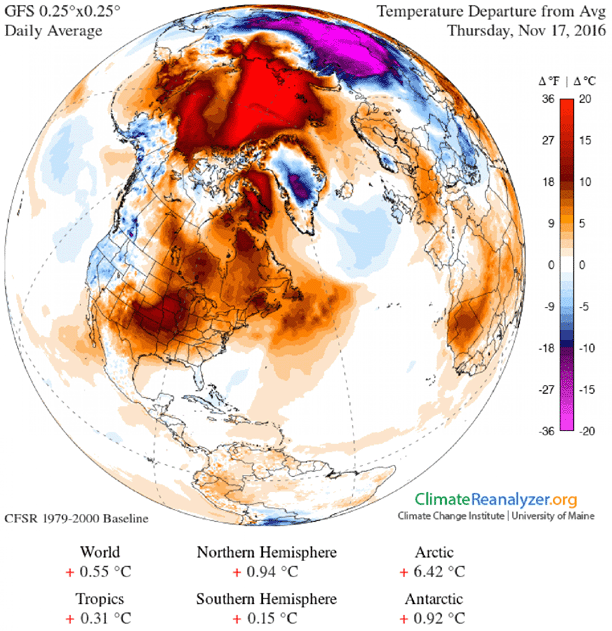
The temperature in Longyearbyen on the Svalbard archipelago about 650 miles from the North Pole, averaged about –4C in April. If that sounds cold, consider that it was nearly 8C warmer than the 30-year average for the time of year, and that April was no outlier. The average temperature for the whole of 2016 in Longyearbyen was near freezing. Usually it is –10C.
Thawing Arctic is turning oceans into graveyards
“No region on the planet is experiencing more dramatic climate change than the Arctic,” says Kim Holmén, international director of the Norwegian Polar Institute, who has lived on and off in Svalbard for 30 years. Although he is unsure precisely why temperatures are rising so fast there, he says, “make no mistake, there has never been a run of temperatures like this ever recorded.”
Holmén works at the Zeppelin research station at Ny-Ålesund, where 11 countries study climate change, air quality and ice. “Water temperatures on Svalbard have increased 10C or more in my time here,” he says. The fjord, which used to be covered with ice one-metre thick in winter, no longer freezes over. “We see temperatures changing, snow melting earlier, new species of fish. We are seeing big unexpected changes.”
Longyearbyen, home to some 2,100 people, is on borrowed time, Holmén says. “There have been two avalanches there in the last year, both defined as 1,000-year events. These are the types of events we expect to see increasing. A whole part of Longyearbyen may have to be abandoned.
The remote Norwegian archipelago of Svalbard brings a relatively warm stream of water from the south into the fjords and inlets which moderates the climate enough that coastal areas witness an explosion of green in the summer. In contrast, a cool ocean current keeps the eastern coasts cold and snowy even during the summer.“The changes taking place now will influence [many other places]. The global climate is clearly influenced by the Arctic. There will be ramifications everywhere. We already see more precipitation in northern Scandinavia and low pressure weather systems taking a more northerly route.”
Holmén is backed by Julienne Stroeve, professor of polar observation at University College London. I first met her in 2012 on a Greenpeace ship which steamed north from Longyearbyen to within 300 miles of the pole across a sea that would normally be iced over. She spoke from Cambridge Bay in the Canadian high Arctic.
“2017 is already setting records,” she says. “There was a record low [ice cover] for March this year, so that makes six months in a row with record [or near record] low ice conditions. There are many ways the Arctic is changing. You see it in melt season starting earlier than it used to and taking longer to freeze up, in the melting of the Greenland ice sheet and the Arctic glaciers, the warming of permafrost temperatures, in increased coastal erosion, the northward migration of the tree line and species, and in how local communities can no longer keep their food in the ground because the thaw increased.”
Could a £400bn plan to refreeze the Arctic before the ice melts really work?
Both Stroeve and Holmén are by nature cautious scientists, not given to dramatic statements. But both say they are astonished, even scared, by the speed at which the Arctic changes are happening.
“Given our current emission rates of 35 to 40 gigatons [of carbon dioxide] per year we should see ice-free conditions in September in about 20 years,” says Stroeve.
Longyearbyen residents are getting used to more extreme weather and coming to terms with what it means for them. The town has created a new risk assessment map and an avalanche warning system. Some parts of the town may be deemed unsafe and will have to be moved. Others may be protected by snow fences or walls.
From heatwaves to hurricanes, floods to famine: seven climate change hotspots Global warming will not affect everyone equally. Here we look at seven key regions to see how each is tackling the consequences of climate change,Guardian, John Vidal, 23 June 17
“…. Manaus, Brazil
When Carlos Nobre, one of Brazil’s leading climatologists, lived in Manaus in the 1970s, the population was a few hundred thousand and the highest temperature ever recorded in the city had been 33.5C. The city was surrounded by cool, dense forest and the greatest river on Earth. Heat waves were rare and floods regular but manageable.
Today Manaus has more than 2 million people, and it and the wider Amazon region are changing fast. In 2015, Nobre says, the temperature in Manaus soared to 38.8C. “The Amazon is tropical and very hot, but when I lived there the hot spells were rare,” he says. “Now we see many more of them.” Not only that, he says, but dry seasons are longer by a week than they were a decade ago and weather is more erratic.
Nobre notes that tree loss is exacerbating the effects of climate change. “In many parts of continental South America one sees about 1C warming in the Amazon, which can [be] mostly attributed to global warming. In areas like Rondônia, where there has been widespread deforestation, we see an additional 1C warming due to replacement of forest – which is a high-evaporating vegetation – to pasture, which is less evaporating.”
Hot spells in such a humid climate are a real hazard to health. Yet adaptation to climate change in a teeming, poor city like Manaus is non-existent for the many people who must struggle just to survive. For the middle classes, air conditioning is now essential. The most city authorities can do is plant trees to cool the streets and protect the river banks from flooding.
The great uncertainty is how far the drying of the Amazon could affect the rest of the world. “If you change the rainfall in the Amazon, you could transport the impacts very far away,” Nobre says. “According to my calculations, there will be a lot of impacts in southeastern Brazil and also over equatorial Africa and the US. But we cannot pinpoint what will happen.”
Perhaps most ominous is the fact that a positive feedback loop appears to be in play. As the Amazon dries, Nobre says, tropical forest will gradually shift to savanna, releasing carbon dioxide into the atmosphere and further adding to global warming.
“When we see a dry season of over four months, or deforestation of more than 40%, then there is no way back. Trees will slowly decay, and in 50 years we would see a degraded savanna. It would take 100–200 years to see a fully fledged savanna.”
From heatwaves to hurricanes, floods to famine: seven climate change hotspots Global warming will not affect everyone equally. Here we look at seven key regions to see how each is tackling the consequences of climate change,Guardian, John Vidal, 23 June 17
an emotional powerful speech on climate change
……Manila, Philippines
When Typhoon Haiyan struck the city of Tacloban in November 2013, Yeb Sano was the Philippines’ climate commissioner. He was distraught when I met him. He believed that his brother who lived there had been killed along with many thousands of others.
One hour later Sano broke down as he addressed the world’s diplomats. It was the third super typhoon to hit the Philippines in three years, and five of the 10 strongest typhoons had come in the previous eight years. “Climate change is real and now,” he told them in tears.
The Philippines is regularly ranked in lists of the top few countries most affected by climate change. “We are already experiencing climate change impacts, including sea-level rise, hotter temperatures, extreme weather events and changes in precipitation,” says Sano, who has now left government to direct Greenpeace SE Asia.
“These in turn, result in human rights impacts, such as loss of homes and livelihoods, water contamination, food scarcity, displacement of whole communities, disease outbreaks, and even the loss of life.”
Scientists widely agree that the country, along with nearby Indonesia, Vietnam and Cambodia, is a hotspot. Analysis of 70 years’ of government data, published in the International Journal of Climatology last year, shows a small decrease in the number of smaller typhoons that hit the Philippines each year, but more intense ones. It is not conclusive evidence, but previous studies have suggested the increase may be due to rising sea-surface temperatures since the 1970s.
There is no doubt temperatures are rising on land. In Manila and the surrounding metropolitan area, which has a population of more than 12m, the tropical storms are more intense, the floods are more frequent, the nights are hotter and there are fewer cool days, says the state meteorological office, Pagasa.
“There has been a significant increase [in the last 30 years] in the number of hot days and warm nights and a decreasing trend in the number of cold days and cold nights,” Alicia Ilaga, head of climate change in the government’s agriculture department, told me in 2015. “Both maximum and minimum temperatures are getting warmer. Extreme rainfall events are becoming more frequent. In most parts … the intensity of rainfall is increasing.”
It’s not just Manila feeling the heat. In its latest 2014 report, the Intergovernmental Panel on Climate Change says it expects life in major Asian and African coastal cities like Manila, Guangzhou, Lagos, Ho Chi Minh City, Kolkata and Shanghai to worsen as temperatures rise.
“Urban climate change–related risks are increasing (including rising sea levels and storm surges, heat stress, extreme precipitation, inland and coastal flooding, landslides, drought, increased aridity, water scarcity, and air pollution) with widespread negative impacts on people (and their health, livelihoods, and assets) and on local and national economies and ecosystems,” it says. “These risks are amplified for those who live in informal settlements and in hazardous areas and either lack essential infrastructure and services or where there is inadequate provision for adaptation.”
Food supplies are also threatened. I visited the International Rice Research Institute (IRRI) outside Manila. This research centre, funded by the world’s richest nations to develop better strains of the crop that feeds nearly half the world, has seen temperatures soar.
A few years ago, IRRI’s deputy director general, Bruce Tolentino, called climate change the greatest global challenge in 50 years. “The challenge now is to rapidly adapt farming to climate change with modern varieties and feed a fast-growing global population, half of which depends on rice as a staple food. One billion people go hungry every day. In the 1990s, rice yields were growing 2% a year; now they are just 1%. Temperatures here have risen 2–4C. Climate change will reduce productivity. Rainfall is unpredictable and rice is grown in areas like deltas that are prone to sea level rises. We have to gear up for more challenging agro-ecological conditions, we need to be able to use swampy areas and develop varieties that can be grown in salty or flooded areas.”
RRI has been working to develop rice varieties that can withstand extreme climatic conditions such as droughts, floods, heat and cold, and soil problems such as high salt and iron content. New drought-tolerant varieties that can produce up to 1.2 metric tons more per hectare [0.54 tons per acre] than varieties that perform poorly under drought conditions have been introduced to India, Nepal and elsewhere.
“Every city and every sector of society in the region is at risk,” says Sano. “The IPCC tells us it will probably get 4C warmer. That means everything will be compromised, from food and energy to settlements. We are not ready. The challenge is too huge. We are very vulnerable.”…..
From heatwaves to hurricanes, floods to famine: seven climate change hotspots Global warming will not affect everyone equally. Here we look at seven key regions to see how each is tackling the consequences of climate change,Guardian, John Vidal, 23 June 17 “….
New York, US
New York state may seem an unlikely climate hotspot, but research confirms its status in the top league of potential change. Drawing on the US national climate assessment and research by leading federal agencies and academics, it calculates that temperatures statewide have risen about 1.3C since 1970, spring begins a week sooner than it did just a few decades ago, there is less winter snow and more intense downpours. Meanwhile, sea levels are rising at nearly twice the global rate and birds and fish populations are all moving north.
Even more dramatically, the latest scientific projections suggest trouble ahead. By the 2050s, says the New York Department of Environmental Conservation, sea levels could rise nearly 76cm (30 inches), storm surges and flooding will be more common in coastal areas, and West Nile virus and many other diseases could be prevalent.
But, says Carl Pope, climate advisor to the former New York mayor Michael Bloomberg, if climate change is to be addressed, it must be led by big cities like New York, which release nearly 70% of the global emissions but also have the capacity to create solutions.
“Cities will always trump countries when it comes to climate change,” he says. “Cities are where emissions are. They are mostly consumers of fossil fuels, so they would like to use them as little as possible; they have a natural instinct to save on fossil fuels. Also, they are not very ideological. Improving quality of life is seen as a good.”
Mayors, Pope says, are now well ahead of most governments, leading attempts to reduce air pollution which contributes heavily to climate change, and eager to introduce electric cars and renewable energy. “There is a great public will to improve the quality of life in cities,” he says.
Rick Perry doesn’t seem to “get it”does he? The nuke lobby these days loves climate change – and promote it (falsely) as a reason for their industry
Rick Perry Is in Charge of Nuclear Safety—Too Bad He Doesn’t Understand Science, Trump’s energy secretary embraces climate denial.Mother Jones, JAMES WEST, JUN. 19, 2017, Energy Secretary Rick Perry told CNBC Monday morning that he doesn’t believe carbon dioxide is primarily responsible for global warming, contradicting the overwhelming scientific consensus on the causes of climate change……Perry’s climate denial is well established. “I don’t believe that we have the settled science by any sense of the imagination to stop that kind of economic opportunity…Calling CO2 a pollutant is doing a disservice the country, and I believe a disservice to the world,” he said in 2014.
Perry’s comments on Monday follow similar statements made by Environmental Protection Agency Administrator Scott Pruitt…….
Pruitt and Perry are contradicting the scientific consensus on global warming, including the work produced by US government agencies. Up until recently, the EPA’s own website stated that “carbon dioxide is the primary greenhouse gas that is contributing to recent climate change,” but the agency has since taken down that section of the website, pending a “review.”