NOAA
Effects of heat – and climate change – on air travel
 The effects on aviation may be widespread. Many airports are built near sea level, putting them at risk of more frequent flooding as oceans rise. The frequency and intensity of air turbulence may increase in some regions due to strengthening high-altitude winds. Stronger winds would force airlines and pilots to modify flight lengths and routings, potentially increasing fuel consumption.
How hot weather – and climate change – affect airline flights, The Conversation, Ph.D. Student in Earth & Environmental Sciences, Columbia University, Associate Research Scientist, Center for Climate Systems Research, Columbia University, August 3, 2017 Hot weather has forced dozens of commercial flights to be canceled at airports in the Southwest this summer. This flight-disrupting heat is a warning sign. Climate change is projected to have far-reaching repercussions – including sea level rise inundating cities and shifting weather patterns causing long-term declines in agricultural yields. And there is evidence that it is beginning to affect the takeoff performance of commercial aircraft, with potential effects on airline costs.
National and global transportation systems and the economic activity they support have been optimized for the climate in which it all developed: Machines are designed to operate in common temperature ranges, logistical plans depend on historical weather patterns and coastal land development is based on known flood zones. In the aviation sector, airports and aircraft are designed for the weather conditions experienced historically. Because the climate is changing, even fundamental infrastructure elements like airports and key economic sectors like air transportation may need to be redesigned and reengineered.
As scientists focused on the impacts of climate change and extreme weather on human society and natural ecosystems around the world, our research has quantified how extreme heat associated with our warming climate may affect flights around the world. We’ve found that major airports from New York to Dubai to Bangkok will see more frequent takeoff weight restrictions in the coming decades due to increasingly common hot temperatures.
Climate changes flights
There is robust evidence that extreme events such as heat waves and coastal flooding are happening with greater frequency and intensity than just a few decades ago. And if we fail to reduce greenhouse gas emissions significantly in the next few decades, the frequency and intensity of these extremes is projected to increase dramatically.
The effects on aviation may be widespread. Many airports are built near sea level, putting them at risk of more frequent flooding as oceans rise. The frequency and intensity of air turbulence may increase in some regions due to strengthening high-altitude winds. Stronger winds would force airlines and pilots to modify flight lengths and routings, potentially increasing fuel consumption.
The July heat-related Phoenix flight cancellations happened at least in part because airlines’ operational manuals didn’t include information for temperatures above 118 degrees Fahrenheit – because that kind of heat is historically uncommon. It’s another example of how procedures may need to be updated to adapt to a warmer climate.
Flying in the heat
High air temperatures affect the physics of how aircraft fly, meaning aircraft takeoff performance can be impaired on hot days. ……. https://theconversation.com/how-hot-weather-and-climate-change-affect-airline-flights-80795
Wildfires continue in Canada: more than 1 million acres burned so far
 Wildfires in western Canada on near-record pace, More than 1 million acres burned so far https://summitcountyvoice.com/2017/08/02/wildfires-in-western-canada-on-near-record-pace/ Staff Report Canada is on track for a near-record wildfire season this year. So far, there have been more than 500 fires just in British Columbia, burning across more than 1 million acres. Firefighting costs have already reached more than $172 million, and weeks of warm and dry weather will keep the fire danger high.
Most of the fires have been in three main areas, according to NASA, which has been tracking the burned areas via satellites. Most affected are the Frasier Plateau north of Vancouver, the Thomas Plateau, east of Whistler, and the region east of Kamloops.
All current fires of note can be viewed on this interactive map. According to NASA, this is the third-worst fire season on record for B.C.
Current weather forecasts project that winds will carry smoke from the fires toward the coast, perhaps persisting for a week. New research led by scientists with Georgia Tech recently showed that wildfire smoke is probably much more dangerous to human health than previously realized.
Naturally burning timber and brush from wildfires release dangerous particles into the air at a rate three times as high as levels known by the EPA. The study also found wildfires spew methanol, benzene, ozone and other noxious chemicals.
NASA’s Terra satellite collected this natural-color image with the Moderate Resolution Imaging Spectroradiometer, MODIS, instrument on July 31, 2017. Actively burning areas, detected by MODIS’s thermal bands, are outlined in red. NASA image courtesy Jeff Schmaltz LANCE/EOSDIS MODIS Rapid Response Team, GSFC. Caption by Lynn Jenner with information from the BC Wildfire Service, and the Georgia Tech study.
Global ocean circulation appears to be slowing due to global warming
 https://www.forbes.com/sites/trevornace/2017/08/03/global-ocean-circulation-appears-to-be-collapsing-due-to-a-warming-planet/amp/Global ocean circulation appears to be slowing
Scientists have long known about the anomalous “warming hole” in the North Atlantic Ocean, an area immune to warming of Earth’s oceans. This cool zone in the North Atlantic Ocean appears to be associated with a slowdown in the Atlantic Meridional Overturning Circulation (AMOC), one of the key drivers in global ocean circulation.
A recent study published in Nature outlines research by a team of Yale University and University of Southhampton scientists. The team found evidence that Arctic ice loss is potentially negatively impacting the planet’s largest ocean circulation system. While scientists do have some analogs as to how this may impact the world, we will be largely in uncharted territory.
AMOC is one of the largest current systems in the Atlantic Ocean and the world. Generally speaking, it transports warm and salty water northward from the tropics to South and East of Greenland. This warm water cools to ambient water temperature then sinks as it is saltier and thus denser than the relatively more fresh surrounding water. The dense mass of water sinks to the base of the North Atlantic Ocean and is pushed south along the abyss of the Atlantic Ocean.
This process whereby water is transported into the Northern Atlantic Ocean acts to distribute ocean water globally. What’s more important, and the basis for concern of many scientists is this mechanism is one of the most efficient ways Earth transports heat from the tropics to the northern latitudes. The warm water transported from the tropics to the North Atlantic releases heat to the atmosphere, playing a key role in warming of western Europe. You likely have heard of one of the more popular components of the AMOC, the Gulf Stream which brings warm tropical water to the western coasts of Europe.
Evidence is growing that the comparatively cold zone within the Northern Atlantic could be due to a slowdown of this global ocean water circulation. Hence, a slowdown in the planet’s ability to transfer heat from the tropics to the northern latitudes. The cold zone could be due to melting of ice in the Arctic and Greenland. This would cause a cold fresh water cap over the North Atlantic, inhibiting sinking of salty tropical waters. This would in effect slow down the global circulation and hinder the transport of warm tropical waters north.
Measured trend in temperature variations from 1900 to 2012.
Melting of the Arctic sea ice has rapidly increased in the recent decades. Satellite image records indicate that September Arctic sea ice is 30% less today than it was in 1979. This trend of increased sea ice melting during summer months does not appear to be slowing. Hence, indications are that we will see a continued weakening of the global ocean circulation system.
This scenario of a collapse in AMOC and global ocean circulation is the premise for the movie “The Day After Tomorrow.” As a disclaimer, the plot line in which much of New England and Western Europe gets plunged into an ice age is significantly over exaggerated and unrealistic on human time scales.
While geologists have studied events in the past similar to what appears to be happening today, scientists are largely unsure of what lies ahead.
Trevor Naceis a geologist, Forbes contributor, founder of Science Trends, and adventurer.Follow his journey@trevornace
The role of climate change in decline of one of Asia’s most critical water resources
Science daily, August 3, 2017, Kansas State University
- Summary:
- Climate variability — rather than the presence of a major dam — is most likely the primary cause for a water supply decline in East Asia’s largest floodplain lake system, according to an expert
Climate variability — rather than the presence of a major dam — is most likely the primary cause for a water supply decline in East Asia’s largest floodplain lake system, according to a Kansas State University researcher.
The fluvial lake system across China’s Yangtze River Plain, which serves nearly half a billion people and is a World Wildlife Fund ecoregion, lost about 10 percent of its water area from 2000-2011, according to Jida Wang, assistant professor of geography. Wang and colleagues published their findings for the lake system’s decline in the American Geophysical Union’s journal Water Resources Research.
“Many people’s first intuition is that the culprit must be the Three Gorges Dam because it impounds so much water in the Yangtze River, but our fingerprinting study undeniably shows that the dam is not the decline’s primary cause,” Wang said. “Climate variability is the predominant driver of this decadal dynamic.”
Wang collaborated with Yongwei Sheng, of the University of California, Los Angeles, and Yoshihide Wada, of Austria’s International Institute for Applied Systems Analysis. They found that roughly 80 percent of the observed lake decline is the result of simultaneous climate variability closely related to the El Niño-Southern Oscillation, which has caused droughts and flooding in the region…….
Wang and his colleagues also quantified the negative impacts of human water consumption from agricultural, industrial and domestic sectors across the downstream Yangtze River Basin. These impacts are surprisingly comparable to the Three Gorges Dam’s impact, Wang said. The dam and human water consumption together comprise 10-20 percent — or less — of the decline’s factors, while up to another 10 percent of the decline may be caused by a variety of other factors, possibly including other dams, sand mining, soil conservation and urbanization, he said.
“It also is important to recognize that anthropogenic impacts have strengthened in the past couple of decades,” Wang said. “Although the Three Gorges Dam already reached its maximal storage capacity in 2010, its induced Yangtze River erosion will continue. This also may come along with increasing human water consumption and trans-basin diversions. We hope our study not only provides an overdue explanation of the past decadal lake decline but also offers scientific guidance for future conservation of this critical fresh water resource.”
For their study, Wang and his colleagues used thousands of satellite images from NASA, an advanced hydrological model from the Netherlands, statistical data from the United Nations, and measurements and censuses from several Chinese organizations.
This research was funded by the U.S. Geological Survey’s Landsat Science Team and a Kansas State University faculty start-up fund. https://www.sciencedaily.com/releases/2017/08/170803103146.htm
Unstoppable climate change may now be upon the planet
Climate change will almost certainly heat the world so much it can never recover, major study finds There’s only a 10 per cent chance we’ll avoid widespread drought, extreme weather and dangerous increases in sea level, The Independent, Andrew Griffin @_andrew_griffin 1 Aug 17, The world will almost certainly reach a tipping point and bring about unstoppable, destructive climate change, according to a new study.
There is a 90 per cent chance that the world’s temperature will rise 2C, to 4.9C above pre-industrial levels by the end of the century, despite measures to reduce greenhouse gas emissions.
It’s at that point that scientists think the world will fall into disastrous effects like widespread drought, extreme weather and dangerous increases in sea level. Experts have suggested that 2C of warming is the “tipping point” at which that change becomes unstoppable.
The world will almost certainly fail to keep warming to the 1.5C target that was set as part of the Paris climate agreement, according to the same research. There’s a 99 per cent chance that climate change will break through that limit.
Dr Dargan Frierson, from the University of Washington, said: “Countries argued for the 1.5C target because of the severe impacts on their livelihoods that would result from exceeding that threshold. Indeed, damages from heat extremes, drought, extreme weather and sea level rise will be much more severe if 2C or higher temperature rise is allowed.
Our results show that an abrupt change of course is needed to achieve these goals.”The scientists looked at 50 years of data on world population and economic activity to come up with their forecast. One factor taken into account was “carbon intensity”, the amount of carbon emitted for each dollar of economic activity.
The approach is different from that taken by the Intergovernmental Panel on Climate Change (IPCC), whose most recent report included future warming rates based on four carbon emission scenarios……
The findings are published in the journal Nature Climate Change.A separate study in the same journal found that even if all fossil fuel emissions were halted this year, global temperatures were very likely to be 1.3C higher than pre-industrial levels by the end of the century.There was a 13% chance that the Earth was already committed to 1.5C warming by 2100, said the authors led by Dr Thorsten Mauritsen, from the Max Planck Institute for Meteorology in Germany. http://www.independent.co.uk/environment/climate-change-global-warming-tipping-point-degree-temperature-study-a7869641.html
Many thousands of suicides in India – linked to climate change
 Climate change linked to suicides of 59,000 farmers in India, finds report, Researchers find extra 67 people take their own lives for every one degree Celsius of warming,The Independent, 1 Aug 17 Tom Batchelor @_tombatchelor Scorching temperatures, drought, storms and famine triggered by climate change have led to thousands of extra suicides in India, a report has found.
During the south Asian nation’s growing season, every one degree Celsius of warming above 20°C sees an average of 67 more people take their own lives, according to the study.
Experts said the findings, published in the Proceedings of the National Academy of Sciences (PNAS), are particularly alarming as India’s average temperatures are expected to rise another 3°C by 2050, meaning hundreds of extra deaths.India’s farmers are already regularly hit by extreme weather events, including strong storms and heat waves, and some still rely on natural rainfall to water their crops.
Scientists have shown that those weather patterns are already increasing as the planet warms.
Tamma Carleton, who conducted the research, said nearly 60,000 suicides over the past 30 years may be linked to climate change.
Looking at suicide data from India’s National Crime Records Bureau between 1967 and 2013, along with data on agricultural crop yields and on temperature change, she estimated that “warming temperature trends over the last three decades have already been responsible for over 59,000 suicides throughout India”.
“We may not be able to stop the world from warming, but that doesn’t mean we can’t do something to address suicide,” said Vikram Patel, an Indian psychiatrist and mental health expert with Harvard Medical School in Boston, who was not involved in the study.
There are many factors that can contribute to suicide, including poor crop yields, financial problems, access to easy methods of self-harm, or a lack of community support.In India, many farmers will drink toxic pesticides as a way out of backbreaking debt.
For the past month, hundreds of farmers – some carrying human skulls they say are from farmers who committed suicide in the drought-stricken southern state of Tamil Nadu – have been staging what they say will be a 100-day protest in New Delhi to “prevent the suicide of farmers who feed the nation”.
Parts of western and north-eastern India have been hit by floods that have washed away villages and crops.
Heavy rains have caused rivers in states such as Gujarat, Assam and Rajasthan to burst their banks, killing 130 people……..http://www.independent.co.uk/news/world/asia/climate-change-india-suicide-59000-global-warming-report-farmer-deaths-a7870496.html
Thed Climate Reality Project: Al Gore’s passion to save the world
 Al Gore: ‘The rich have subverted all reason’, Guardian, Carole Cadwalladr, 30 July 17
With the sequel to his blockbuster documentary An Inconvenient Truth about to be released, Al Gore tells Carole Cadwalladr how his role at the forefront of the fight against climate change consumes his life, Guardian, In the ballroom of a conference centre in Denver, Colorado, 972 people from 42 countries have come together to talk about climate change. It is March 2017, six weeks since Trump’s inauguration; eight weeks before Trump will announce to the world that he is withdrawing America from the Paris Climate Agreement.
These are the early dark days of the new America and yet, in the conference centre, the crowd is upbeat. They’ve all paid out of their own pockets to travel to Denver. They have taken time off work. And they are here, in the presence of their master, Al Gore. Because Al Gore is to climate change… well, what Donald Trump is to climate change denial……
It’s the reason why we are all here – his foundation, the Climate Reality Project, an initiative that grew out of the film, provides intensive training in talking about climate change, combating climate change denial – and the tone might be described as “activist upbeat”. This is a crisis that is solvable, we’re told. Trump is just another hitch, another hurdle to overcome. And it will be overcome. Only occasionally does a sliver of despair leak around the edges. You have to stay positive, a man called David Ellenberger tells the audience. Though sometimes, he admits: “There’s not enough Prozac to get through the day.”….
The war on the mainstream media may capture the headlines currently, but the war on climate change science has been in play for years. And it’s this that is one of the most fascinating aspects of Gore’s new film, An Inconvenient Sequel: Truth to Power. Because if the US had a subtitle at the moment, it might be that, too, and the struggle to overcome fake facts and false narratives funded by corporate interests and politically motivated billionaires is one that Gore has been at the frontline of for more than a decade.
The film runs through a host of facts – that 14 of the 15 hottest years on record have occurred since 2001 is just one. And the accompanying footage is biblical, terrifying: tornadoes, floods, “rain bombs”, exploding glaciers. We see roads falling into rivers and fish swimming through the streets of Miami.
The nightly news, Gore says, has become “a nature hike through the Book of Revelations”. But what his work has shown and continues to show is that evidence is not enough. The film opens with clips from Fox News ridiculing global warming. In recent weeks, the New York Times has started describing the Trump administration as waging a “war on science”, a full-on assault against evidence-based science that runs in parallel with his attacks on evidence-based reporting. And Gore is in something of a unique position to understand this. What becomes clear over the course of several conversations is how entwined he believes it all is – climate change denial, the interests of big capital, “dark money”, billionaire political funders, the ascendancy of Trump and what he calls (he’s written a book on it) “the assault against reason”. They are all pieces of the same puzzle; a puzzle that Gore has been tracking for years, because it turns out that climate change denial was the canary in the coal mine.
“In order to fix the climate crisis, we need to first fix the government crisis,” he says. “Big money has so much influence now.” And he says a phrase that is as dramatic as it is multilayered: “Our democracy has been hacked.”
“I mean that those with access to large amounts of money and raw power,” says Gore, “have been able to subvert all reason and fact in collective decision making. The Koch brothers are the largest funders of climate change denial. And ExxonMobil claims it has stopped, but it really hasn’t. It has given a quarter of a billion dollars in donations to climate denial groups. It’s clear they are trying to cripple our ability to respond to this existential threat.”
One of Trump’s first acts after his inauguration was to remove all mentions of climate change from federal websites. More overlooked is that one of Theresa May’s first actions on becoming prime minister – within 24 hours of taking office – was to close the Department for Energy and Climate Change; subsequently donations from oil and gas companies to the Conservative party continued to roll in. And what is increasingly apparent is that the same think tanks that operate in the States are also at work in Britain, and climate change denial operates as a bridgehead: uniting the right and providing an entry route for other tenets of Alt-Right belief. And, it’s this network of power that Gore has had to try to understand, in order to find a way to combat it……
what becomes clear if you Google “climate change” is how effective the right has been in owning the subject. YouTube’s results are dominated by nothing but climate change denial videos. This isn’t news for Gore. ….. https://www.theguardian.com/us-news/2017/jul/30/al-gore-interview-our-crumbling-planet-the-rich-have-subverted-all-reason-al-gore
“Biological Annihilation” – global warming’s effect on plant and animal species
Dahr Jamail | Scientists Warn of “Biological Annihilation” as Warming Reaches Levels Unseen for 115,000 Years, July 31, 2017By Dahr Jamail, Truthout | Report Camp 41, Brazilian Amazon –– Less than 30 years ago, the Earth’s tropical rainforests held the carbon equivalent of half of the entire atmosphere. But as atmospheric CO2 has escalated along with the deforestation of so much of the tropics, that is no longer the case. Nevertheless, carbon stored in tropical rainforests is still significant. According to NASA, “In the early 2000s, forests in the 75 tropical countries studied contained 247 billion tons of carbon. For perspective, about 10 billion tons of carbon is released annually to the atmosphere from combined fossil fuel burning and land use changes.” This is one of the countless reasons why losing them would be catastrophic to life on Earth.
I’m writing this dispatch just having emerged from the heart of the Amazon, the most biodiverse place on the planet. I was fortunate enough to spend some time with Tom Lovejoy, known as the “Godfather of Biodiversity,” at the famous Camp 41, which is filled with researchers and scientists. Throughout our conversations, Lovejoy emphasized the staggering amount of biological diversity in the Amazon, which has thousands upon thousands of species of trees, fish, birds, plants and astronomical numbers of insect species.
“We’ve only scratched the surface, and are discovering new species of birds all the time,” said Lovejoy, who was the first person to use the term “biological diversity” in 1980 and made the first projection of global extinction rates in the “Global 2000 Report to the President” that same year……..
Lovejoy warns that as anthropogenic climate disruption (ACD) progresses and temperature limits continue to be exceeded, we are losing parts of the biosphere that we don’t even know exist……..
Having long since warned that the Sixth Mass Extinction event is already well underway, in a study recently published in the journal, Proceedings of the National Academy of Sciences, researchers said that billions of populations of animals have already disappeared from Earth, amid what they called a “biological annihilation,” and admitted that their findings revealed a situation that was worse than they’d previously thought. The study showed that more than 30 percent of all vertebrates are experiencing declining populations, and the prime drivers of the annihilation are human overpopulation and overconsumption, especially by the rich, as well as habitat destruction, pollution and of course, ACD…..
recently published research generated at Cornell University revealed that by 2100, a staggering 2 billion people, or one-fifth of the total global human population, could become ACD refugees due to rising seas alone.
“We’re going to have more people on less land and sooner than we think,” lead author Charles Geisler, professor emeritus of development sociology at Cornell, said. “The future rise in global mean sea level probably won’t be gradual. Yet, few policy makers are taking stock of the significant barriers to entry that coastal climate refugees, like other refugees, will encounter when they migrate to higher ground.”…..
Water: As usual, there is ample evidence of ACD’s impacts across the watery realms…..
Air: Hot temperature records and extreme heat waves continue to be the norm, and they are intensifying…..http://www.truth-out.org/news/item/41425-biological-annihilation-trillion-ton-icebergs-warming-levels-unseen-for-115-000-years
“Ghost forests” increasing now, due to climate change and rising seas
Climate change before your eyes: Seas rise and trees die https://www.guelphtoday.com/world-news/climate-change-before-your-eyes-seas-rise-and-trees-die-686109PORT REPUBLIC, N.J. — They’re called “ghost forests” — dead trees along vast swaths of coastline invaded by rising seas, something scientists call one of the most visible markers of climate change. Canadian Press 1 August 17 PORT REPUBLIC, N.J. — They’re called “ghost forests” — dead trees along vast swaths of coastline invaded by rising seas, something scientists call one of the most visible markers of climate change.

The process has happened naturally for thousands of years, but it has accelerated in recent decades as polar ice melts and raises sea levels, scientists say, pushing salt water farther inland and killing trees in what used to be thriving freshwater plains.
Efforts are underway worldwide to determine exactly how quickly the creation of ghost forests is increasing. But scientists agree the startling sight of dead trees in once-healthy areas is an easy-to-grasp example of the consequences of climate change.
“I think ghost forests are the most obvious indicator of climate change anywhere on the Eastern coast of the U.S.,” said Matthew Kirwan, a professor at Virginia Institute of Marine Science who is studying ghost forests in his state and Maryland. “It was dry, usable land 50 years ago; now it’s marshes with dead stumps and dead trees.”
It is happening around the world, but researchers say new ghost forests are particularly apparent in North America, with hundreds of thousands of acres of salt-killed trees stretching from Canada down the East Coast, around Florida and over to Texas.
The intruding salt water changes coastal ecosystems, creating marshes where forests used to be. This has numerous effects on the environment, though many scientists caution against viewing them in terms of “good” or “bad.” What benefits one species or ecosystem might harm another one, they say.
For instance, migratory birds that rely on coastal forests have less habitat. And the death of the trees makes soil microbes release nitrogen, which adds to nitrogen already occurring from other sources, including agricultural runoff, to contribute to algae blooms and reduced oxygen that can sicken or kill fish.
But the conversion of forest into marshland produces “extremely productive” wetlands that feed and shelter fish and shellfish.
The Atlantic croaker fish, for instance, was rare 15 years ago in southern New Jersey waters but now is abundant, said Ken Able, a Rutgers University professor.
“There is a lot of change going on,” said Greg Noe, a research ecologist with the U.S. Geological Survey. “It’s dramatic and it’s changing faster than it has before in human history.”
Quantifying the rate of increase in ghost forests is a major focus of Able’s research. Some scientists say the increase began around the time of the Industrial Revolution, while others say the speedup began more recently than that.
In the past 100 years, Kirwan said, 100,000 acres of forest in the Chesapeake Bay has converted to marshland. Photographs show the rate of coastal forest loss is four times greater now than it was during the 1930s, he said.
Seas off the East Coast have risen by 1.3 feet over the last 100 years, said Ben Horton, a Rutgers University professor and expert on sea level rise. That is a faster pace than for the past 2,000 years combined, he said.
Some of the most dramatic anecdotal evidence of the acceleration in ghost forest creation is along the Savannah River between Georgia and South Carolina, Noe said.
When his team first got there 10 years ago, “it looked like the trees were under a little stress, but they were all alive,” he said. “But five years later, the vast majority of them were dead. That happened right in front of our eyes, much faster than we expected.”
Marcelo Ardon, a biology professor at North Carolina State University, studied one site called the Palmetto Pear Tree Preserve on Albemarle Sound in North Carolina from 2006 to 2009. When he returned in 2016, he said, “what used to look like a healthy cypress swamp, now the trees are dead and the water level is a lot higher. The place has completely changed. I’ve checked overhead satellite photos and you can see the trees dying.”
In southern New Jersey, the most affected species is the Atlantic white cedar, which was a mainstay of the shipbuilding industry because of its resistance to rot. Farther south, cypress, loblolly pines and Eastern red cedar are dying.
Large storms can drive salt water further inland and kill trees; 2012’s Superstorm Sandy is believed to have led to the deaths of some trees in southern New Jersey, Able said.
The difference, Kirwan said, is that in the past, flooded areas would dry out before salt water killed most of the trees.
“That same storm 100 years ago would also have killed trees,” he said. “But 100 years ago that same land wouldn’t have been so wet that new trees couldn’t get established and replace the dead ones. That’s a big part of where sea level rise comes in.”
Follow Wayne Parry at http://twitter.com/WayneParryAC
Climate denial in charge in USA government

 Dahr Jamail | Scientists Warn of “Biological Annihilation” as Warming Reaches Levels Unseen for 115,000 Years, July 31, 2017 By Dahr Jamail, Truthout | Report“…..Denial and Reality
There’s never a dull moment in the denial world these days.
In Florida, that state’s extremist ACD-denying Gov. Rick Scott signed legislation making it easier for Florida residents to challenge science that is taught in public schools, so if an ACD-denying parent doesn’t like a science textbook that teaches the basic physics of how greenhouse gases work, the book could end up being banned.
Trump-appointed EPA Administrator Scott Pruitt, an ACD denier and pink slipped 38 members of the EPA’s Board of Scientific advisors, which is merely a drop in the bucket compared to dozens of other major environmental roll-backs the Trump administration has pulled off thus far, including forcing NOAA [National Oceanic and Atmospheric Administration] to erase human activity references to greenhouse gases in its Annual Greenhouse Gas Index.
Thankfully, reality continues to thrive in other parts of the world: …..http://www.truth-out.org/news/item/41425-biological-annihilation-trillion-ton-icebergs-warming-levels-unseen-for-115-000-years
Hundreds of thousands of deaths will be due to climate change induced air pollution
This paper highlights that climate change will increase human mortality through changes in air pollution. These health impacts add to others that climate change will also cause, including from heat stress, severe storms and the spread of infectious diseases. By impacting air quality, climate change will likely offset the benefits of other measures to improve air quality.
Climate change set to increase air pollution deaths by hundreds of thousands by 2100The Conversation, Guang Zeng,Atmospheric Scientist, National Institute of Water and Atmospheric Research, Associate Professor, Department of Environmental Sciences and Engineering , University of North Carolina – Chapel Hill August 1, 2017 Climate change is set to increase the amount of ground-level ozone and fine particle pollution we breathe, which leads to lung disease, heart conditions, and stroke. Less rain and more heat means this pollution will stay in the air for longer, creating more health problems.
Our research, published in Nature Climate Change, found that if climate change continues unabated, it will cause about 60,000 extra deaths globally each year by 2030, and 260,000 deaths annually by 2100, as a result of the impact of these changes on pollution.
This is the most comprehensive study to date on the effects of climate change on global air quality and health. Researchers from the United States, the United Kingdom, France, Japan and New Zealand between them used nine different global chemistry-climate models.
Most models showed an increase in likely deaths – the clearest signal yet of the harm climate change will do to air quality and human health, adding to the millions of people who die from air pollution every year.
Stagnant air
Climate change fundamentally alters the air currents that move pollution across continents and between the lower and higher layers of the atmosphere. This means that where air becomes more stagnant in a future climate, pollution stays near the ground in higher concentrations.
Ground-level ozone is created when chemical pollution (such as emissions from cars or manufacturing plants) reacts in the presence of sunlight. As climate change makes an area warmer and drier, it will produce more ozone.
Fine particles are a mixture of small solids and liquid droplets suspended in air. Examples include black carbon, organic carbon, soot, smoke and dust. These fine particles, which are known to cause lung diseases, are emitted from industry, transport and residential sources. Less rain means that fine particles stay in the air for longer.
While fine particles and ozone both occur naturally, human activity has increased them substantially………
Our models show that premature deaths increase in all regions due to climate change, except in Africa, and are greatest in India and East Asia.
Using multiple models makes the results more robust than using a single model. There is some spread of results amongst the nine models used here, with a few models estimating that climate change may decrease air pollution-related deaths. This highlights that results from any study using a single model should be interpreted with caution.
Australia and New Zealand are both relatively unpolluted compared with countries in the Northern Hemisphere. Therefore, both ozone and fine particle pollution currently cause relatively few deaths in both countries. However, we found that under climate change the risk will likely increase.
This paper highlights that climate change will increase human mortality through changes in air pollution. These health impacts add to others that climate change will also cause, including from heat stress, severe storms and the spread of infectious diseases. By impacting air quality, climate change will likely offset the benefits of other measures to improve air quality. https://theconversation.com/climate-change-set-to-increase-air-pollution-deaths-by-hundreds-of-thousands-by-2100-81830
An inconvenient Al Gore: new climate change film
Climate change: Al Gore gets inconvenient again Michael E. Mann, Nature, 27 July 2017
Michael Mann views the US statesman’s second film probing climate change.
An Inconvenient Sequel: Truth to Power
As US vice-president under Bill Clinton, Gore became the figurehead of the movement to combat human-driven global warming. He also became the preferred punchbag for climate-change cynics in search of a straw man. Gore is such a towering, seemingly unassailable figure in this arena that critics have gone after him with all guns blazing. As Tom Toles and I noted in our book The Madhouse Effect (Columbia Univ. Press, 2016; see Nature 538, 34–35; 2016): “They have criticized his weight, his energy bills, and incidents in his personal life — indeed, pretty much anything else they can scrape up.”
There’s one problem with taking on Gore. He punches back, and above his weight. After all, he’s up against arguably the most entrenched, wealthy and powerful industry the world has ever known: fossil fuels. And this pugilist is still very much in the fight. Witness his new film An Inconvenient Sequel: Truth to Power — the follow-up to his 2006 An Inconvenient Truth.
For those fearing a preachy PowerPoint lecture on climate science, be assured: An Inconvenient Sequel isn’t that. Rather, it largely takes the scientific evidence as a given, not least because Gore has already done a whole film on that. This instalment is an attempt to show us how striking climate impacts have become in the decade since his first movie.
Early in An Inconvenient Sequel, there’s a scene on the Greenland ice sheet, where glaciologists Eric Rignot and Konrad Steffen point to the dramatic retreat of ice in recent years. We witness rivers of surface melt water gushing away from the ice sheet to the open water of the North Atlantic Ocean. Gore poses the question: “Where is all of that water going?” He then answers it. We’re transported to Miami Beach, Florida, where we witness the flooding of streets that now comes simply with seasonal high tides. If melting Greenland ice seems distant and abstract, the perennial flooding of Miami and other coastal cities, and low-lying, highly populated countries from Bangladesh to Belgium is anything but.
The drought that has afflicted Syria for more than a decade is the most pronounced and prolonged for at least 900 years (as far back as we have reliable palaeodata). Climate change has undoubtedly had a role. Gore shows us how the impact of the drought on rural farmers led to increased conflict, a civil war, mass exodus, global conflict over immigration and, as a consequence, the emergence of Islamist terrorist group ISIS. If drought in Syria seems distant or even mundane, the threat of terrorism and global political instability is immediate and visceral. Gore has a genius for joining the dots in the global mapping of climate impacts.
In An Inconvenient Truth, Gore showed a version of the famous ‘hockey-stick’ curve that my co-authors and I published in the late 1990s ( et al. Geophys. Res. Lett. 26, 759–762; 1999), revealing a dramatic spike in temperature over the past century. There is a ‘hockey stick’ in the new film, but it charts instead the remarkable global growth in renewable energy over the past decade. Climate change is accelerating; so too is our ability to tackle it. There are reasons for cautious optimism……
Finally, the film casts an inconvenient light on humanity. It is astonishing that we’re still mired in a political debate about whether climate change even exists when, with each passing year of insufficient action, the challenge of averting a catastrophe becomes ever greater. Knowing that Al Gore is still optimistic is a shot in the arm at a time of uncertainty. http://www.nature.com/nature/journal/v547/n7664/full/547400a.html?foxtrotcallback=true
Investors turning away from fossil fuels
Climate News Network 30th July 2017, Shares in major oil and gas companies are expected to plunge in value in
the next three to five years because of climate change-related financial
risks, meaning more investors will spurn fossil fuels.
the next three to five years because of climate change-related financial
risks, meaning more investors will spurn fossil fuels.
This is the verdict of British asset managers who control billions of pounds of investments in
stock markets.
stock markets.
It could have serious consequences for many thousands of
people whose pension funds have invested in these companies, as well as
many institutions and charities which rely on dividends for their income,
according to a report by the Climate Change Collaboration (CCC), a group of
four UK charitable trusts.
http://climatenewsnetwork.net/more-investors-will-spurn-fossil-fuels/
people whose pension funds have invested in these companies, as well as
many institutions and charities which rely on dividends for their income,
according to a report by the Climate Change Collaboration (CCC), a group of
four UK charitable trusts.
http://climatenewsnetwork.net/more-investors-will-spurn-fossil-fuels/
Poll shows Scotland’s people increasingly want action on climate change
Scotsman 31st July 2017, A growing number of people in Scotland want to see stronger action on
climate change, according to a poll. Results from a survey by WWF Scotland
show an increase in the percentage of those calling for more investment,
renewable energy sources and a reduction in emissions.
The data comes as a new Climate Change Bill is out for public consultation, and around 1,000
Scots were surveyed in May and June for the WWF study. More than
three-quarters, 76 per cent, of respondents said the Scottish Government
should reduce climate change emissions by “investing more in improving the
energy efficiency of homes across Scotland”, up from 67 per cent in 2016.
Atotal of 68 per cent said they want the Government to invest in projects
that reduce emissions, up from 59 per cent in 2016. There were 72 per cent
who believe more should be d one to help people heat their homes from
renewable sources. Only 59 per cent thought so in the previous year.
http://www.scotsman.com/news/environment/poll-finds-more-scots-want-stronger-action-on-climate-change-1-4517962
Expert opinion is that climate change will increase wildfire incidence and severity
Climate change will feed wildfires – experts http://www.newvision.co.ug/new_vision/news/1458660/climate-change-feed-wildfires-experts By AFP28th July 2017 Long periods of heat cause vegetation to become dry and inflammable, easily set alight by lightning, spontaneous combustion, or fires lit by humans. More than 10,000 people had to flee raging fires in southern France this week, and several villages were evacuated in Portugal just weeks after another blaze killed more than 60 people there.In South Africa in June, nine people died and some 10,000 people were evacuated from their homes as fires raged through the drought-stricken Western Cape region, while this month some 40,000 people have had to flee wildfires in western Canada, where officials declared a state of emergency.In California, some 8,000 people were evacuated last week ahead of fires that razed vast swathes of forest.
What causes wildfires? Long periods of heat cause vegetation to become dry and inflammable, easily set alight by lightning, spontaneous combustion, or fires lit by humans. The more the mercury climbs, the higher the risk for more, and more intense, wildfires.
Scientists say the average global temperature has risen by one degree Celsius (1.8 degrees Fahrenheit) since the Industrial Revolution, when mankind started emitting heat-trapping greenhouse gases from burning fossil fuels into the atmosphere.
Most of the world’s nations agreed in Paris in 2015 to limit overall warming to 2 C. But experts say this will not be enough, and severe heatwaves and drought will grow worse regardless.
And it is not just heat to blame for fires. A recent study showed that extreme thunderstorms formed due to higher temperatures, and were the main driver for massive fires in Alaska and Canada in recent years. More storms mean more lighting to ignite fires.
Are there more fires today? According to Thomas Curt, a researcher at France’s Irstea climate and agriculture research institute, big fires of over 100 hectares, and “megafires” over 1,000 hectares, have been “a growing problem worldwide and notably in Mediterranean Europe”.And NASA research shows that fires have increased in Canada and the American west, as well as in regions of China, India, Brazil and southern Africa.
Why? According to NASA, “a warming and drying climate,” was to blame. “Climate change has increased fire risk in many regions,” according to the space agency.
The UN’s World Meteorological Organization (WMO) said last month that parts of Europe, the Middle East, North Africa and the southwestern United States experienced extremely high May and June temperatures.
Globally, surface temperatures over land and sea were the second highest on record for January to May.
Italy, Portugal and most of France had winter rainfall 20-30 percent under the seasonal norm, according to French climatologist Michele Blanchard. Almost three-quarters of Portugal, where 75,000 hectares of forest have burnt since January, has been battling a severe drought since June. According to the WMO, more than a third of Portuguese weather stations measured temperatures over 40 degrees Celsius over a weekend in June when the fires began.
In France, several towns in the south broke June temperature records.
Large parts of South Africa, meanwhile, experienced an historic drought and crippling water shortages.
Scientists are loath to ascribe any particular drought, heatwave, or other weather event to climate change — a phenomenon that can only be measured over decades, but note that these events took place within a What about the future?
Climate change will unlock “more heatwaves… with more evaporation and more intense drought,” said Blanchard.
A 2016 study of the European Commission showed that the fire-prone surface area of southern Europe could double in the 21st century.
A study published in Nature Climate Change in June said three-quarters of the global population will be exposed to potentially deadly heatwaves by 2100 unless greenhouse gas emissions are curbed. Even with aggressive cuts, it said, nearly half of the population will be exposed.
According to the authors of another study published by the same journal in May, fire is the most significant risk to forests, which cover about a third of global land surface. And it was clear that “risks caused by fires… will increase in the context of climate change,” they said — citing devastating forest blazes in Canada and Russia in recent years.
What to do?
Apart from long-term efforts to rein in global warming, some forest will have to be cut back, undergrowth cleared, and residential areas moved further from scrubland and forest borders, to reduce the risk to life and property.
“The focus… should shift from combating forest fires as they arise to preventing them from existing, through responsible long-term forest management,” says green group WWF.
1 This Month

Protect Sazan Island from the Trump family! https://secure.avaaz.org/campaign/en/protect_sazan_island_from_the_trump_family_loc/?bqFCVab&v=174511&cl=22707147157&_checksum=5e9dde668860e8231c33699735e16a1fbf22ab2cb01da50c999fe8732b9775ef&utm_source=email&utm_medium=blast_email&utm_campaign=174511
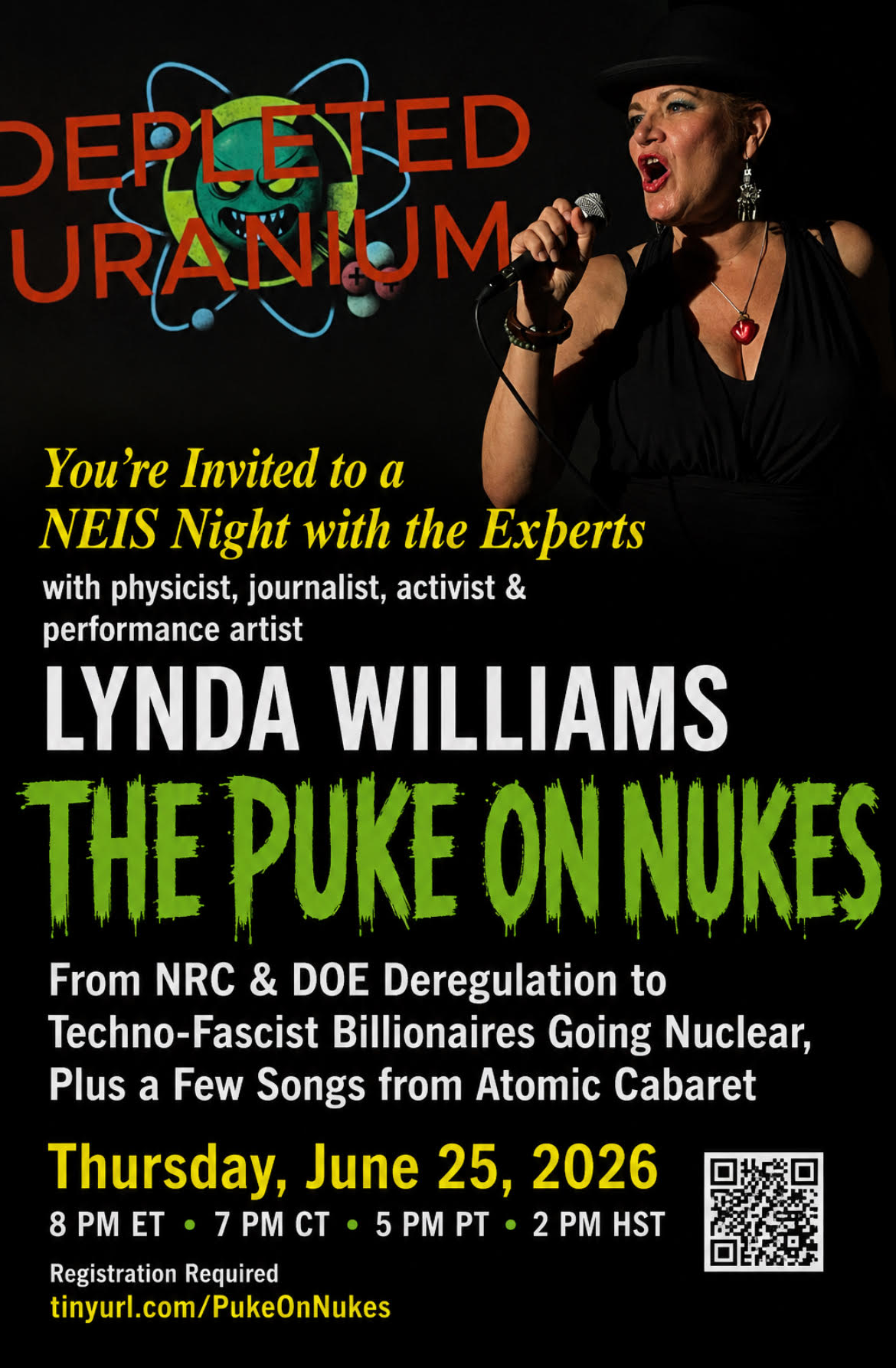
25 June- THE PUKE ON NUKES
Thursday, June 25, 2026
7pm Central Time (8pm ET, 6pm MT, 5pm PT) UTC – 5
From NRC & DOE Deregulation to Techno-Fascist Billionaires Going Nuclear, Plus a Few Songs from Atomic Cabaret REGISTER
26 June – Radiation Trainwreck at the NRC / Join the Protect Better Campaign – https://us02web.zoom.us/meeting/register/4ZlZ5_qLSHGiLSCg8FF6Bg#/registration


Cuba Is Not a Failed State – It Is a Besieged State
PETITION: “Global Appeal to Endorse Palestinian Right of Return of Refugees”
To see nuclear-related stories in greater depth and intensity – go to https://nuclearinformation.wordpress.com
-
Archives
- June 2026 (142)
- May 2026 (306)
- April 2026 (356)
- March 2026 (251)
- February 2026 (268)
- January 2026 (308)
- December 2025 (358)
- November 2025 (359)
- October 2025 (376)
- September 2025 (257)
- August 2025 (319)
- July 2025 (230)
-
Categories
- 1
- 1 NUCLEAR ISSUES
- business and costs
- climate change
- culture and arts
- ENERGY
- environment
- health
- history
- indigenous issues
- Legal
- marketing of nuclear
- media
- opposition to nuclear
- PERSONAL STORIES
- politics
- politics international
- Religion and ethics
- safety
- secrets,lies and civil liberties
- spinbuster
- technology
- Uranium
- wastes
- weapons and war
- Women
- 2 WORLD
- ACTION
- AFRICA
- Atrocities
- AUSTRALIA
- Christina's notes
- Christina's themes
- culture and arts
- Events
- Fuk 2022
- Fuk 2023
- Fukushima 2017
- Fukushima 2018
- fukushima 2019
- Fukushima 2020
- Fukushima 2021
- general
- global warming
- Humour (God we need it)
- Nuclear
- RARE EARTHS
- Reference
- resources – print
- Resources -audiovicual
- Weekly Newsletter
- World
- World Nuclear
- YouTube
-
RSS
Entries RSS
Comments RSS
 nuclear-news