The Welsh Government’s Lesley Griffiths said she hoped the declaration would trigger “a wave of action”.
Climate change threatens Wales’ health, economy, infrastructure and natural environment, she said……

 Irish Times 6th May 2019 In the quagmire of Brexit there is little to commend the UK government’s approach. This is in stark contrast with its clarity and leadership on climate change. It is the first national parliament to declare an “environmental and climate emergency”.
It has not only committed to “net-zero” greenhouse gas emissions by 2050, the climate change committee in Westminster has set out how this can be achieved. Net zero means, in effect, eliminating its carbon footprint in a dramatically transformed economy built on sustainability with a near absence of fossil fuels.
Ireland has some way to go before it could commit to such a course, but a Government report due in the coming weeks must show a similar level of intent, and include a roadmap to reduce the shocking levels of Irish emissions. Declaring an emergency may seem like tokenism but it injects urgency into consideration of the best course to take. Wicklow County
Council was the first Irish local authority to declare a “biodiversity and climate change emergency”.
The Government should endorse a similar vote in our national parliament and introduce binding legislation on revised targets.
Irish Times 6th May 2019 In the quagmire of Brexit there is little to commend the UK government’s approach. This is in stark contrast with its clarity and leadership on climate change. It is the first national parliament to declare an “environmental and climate emergency”.
It has not only committed to “net-zero” greenhouse gas emissions by 2050, the climate change committee in Westminster has set out how this can be achieved. Net zero means, in effect, eliminating its carbon footprint in a dramatically transformed economy built on sustainability with a near absence of fossil fuels.
Ireland has some way to go before it could commit to such a course, but a Government report due in the coming weeks must show a similar level of intent, and include a roadmap to reduce the shocking levels of Irish emissions. Declaring an emergency may seem like tokenism but it injects urgency into consideration of the best course to take. Wicklow County
Council was the first Irish local authority to declare a “biodiversity and climate change emergency”.
The Government should endorse a similar vote in our national parliament and introduce binding legislation on
revised targets.
|
Mike Pompeo Praises Climate Change in the Arctic as ‘New Opportunities for Trade’, Observer
|
|
 Climate change link to global droughts goes back a century, study finds, SMH, by Peter Hannam, May 2, 2019 Humans have contributed to increased global risks of drought for more than a century, scientists say, in findings that also point to “severe” consequences ahead with climate change.
The research by US-based scientists and published in Nature journal on Thursday comes as the latest Bureau of Meteorology data showed the first four months of 2019 were the hottest on record for Australia as drought tightened its grip on the country’s south-east.
The scientists, led by Kate Marvel at NASA’s Goddard Institute for Space Studies, used so-called drought atlases derived from tree-ring data combined with satellite observations and climate models to identify how soil moisture has changed.
They found drought increased during the first half of the 20th century, eased in the quarter century to 1975 and worsened again. The pause in the trend coincided with increased aerosol pollution.
Models project and observations show a re-emerging greenhouse gas signal towards the end of the 20th century, and this signal is likely to grow stronger in the next several decades,” the paper concluded. “The human consequences of this, particularly drying over large parts of North America and Eurasia, are likely to be severe.”
Paul Durack, a research scientist and an author of the paper, said the study was the first to show global-scale droughts to be impacted by human activities.
“This is potentially bad news for Australia, and similar climate regions such as California,” he said in a statement. “These regions have experienced devastating recent droughts, and if the model projected changes continue, such droughts will become more commonplace into the future.”
Andrew King, climate extremes research fellow at the ARC Centre of Excellence for Climate System Science, said while heat extremes caused by climate change have been clear, “droughts are very complicated”, with natural variability masking the trends, Dr King said.
BBC, 29 April 2019 A “climate emergency” has been declared in Wales following protests demanding politicians take action on climate change.
|
Business Green 1st May 2019 , The government is today expected to resist fresh calls for it to declare a’climate emergency’, after Michael Gove indicated that more agreement was
across government before Defra could back a formal ‘climate emergency’. Gove yesterday met with representatives from the Extinction
Rebellion group who later described themselves as “disappointed” at the lack of firm commitments from the Environment Secretary on how he plans to accelerate the UK’s decarbonisation efforts. The group expressed frustration at the government’s continued failure to declare a ‘climate emergency’ and insisted that their campaign of peaceful civil disobedience would continue. Later today the High Court is expected to rule on whether a
legal challenge against the government’s approval for Heathrow expansion can proceed, while tomorrow the CCC will present its long awaited recommendations on whether the UK should adopt a net zero emission target. The Committee is widely expected to call for a new 2050 target, fuelling speculation the government could look to amend the Climate Change Act before the summer in order to get the new goal onto the statute book as quickly as possible. |
|

|
The Last Time There Was This Much CO2, Trees Grew at the South Pole, Dahr Jamail, Truthout, 29 April 19, “……….Denial and RealityWhile this certainly comes as no surprise, yet another report came out highlighting how oil and gas giants are spending millions of dollars in their ongoing effort to lobby their paid politicians to block policies aimed at addressing climate disruption. The giant fossil fuel companies are spending an average of $200 million annually to weaken and/or oppose legislation aimed at addressing climate disruption. BP led the way in spending with $53 million, followed by Shell ($49 million), ExxonMobil ($41 million), Chevron and Total ($29 million each). Meanwhile, as per usual, President Donald Trump has signed executive orders to speed up oil and gas pipeline projects, making it harder for states to block construction projects due to environmental concerns. Yet, as the White House is actively denying climate disruption and working as hard as it can to promote fossil fuel use, the U.S. military is planning and preparing for dealing with the vast impacts of ongoing climate disruption. “People are acting on climate not for political reasons, but [because] it really affects their mission,” Jon Powers, an Iraq War veteran who served as the federal chief sustainability officer who is now president and chief executive of the investment firm CleanCapital, told The Washington Post. “With the military, it’s now ingrained in the culture and mission there, which I think is the biggest change over the last 10 years.” Meanwhile, a federal climate disruption study panel and advisory group that was disbanded by the Trump administration due to it not having enough members “from industry,” recently released a report warning that the muddled political response to very clear climate science is putting Americans at risk. “We were concerned that the federal government is missing an opportunity to get better information into the hands of those who prepare for what we have already unleashed,” Richard Moss, a visiting scientist at Columbia University, who previously chaired the federal panel and is a member of the group who released the report, told The Guardian. “We’re only just starting to see the effects of climate change, it’s only going to get much worse. But we haven’t yet rearranged our daily affairs to adapt to science we have.” With each passing month, the impacts of runaway climate disruption continue to intensify. And as they do, so must our awareness of what is happening across the planet, and our resolve to take action to address it – especially since most governments around the world are failing to meet these challenges.https://truthout.org/articles/the-last-time-there-was-this-much-co2-trees-grew-at-the-south-pole/
|
|
 The Last Time There Was This Much CO2, Trees Grew at the South Pole, Dahr Jamail, Truthout , 29 April 19, “……… Water
As usual, there continue to be ample examples of the impacts of climate disruption in the watery realms of the planet.
In oceans, most of the sea turtles now being born are female; a crisis in sea turtle sex that is borne from climate disruption. This is due to the dramatically warmer sand temperatures where the eggs are buried. At a current ratio of 116/1 female/male, clearly this trend cannot continue indefinitely if sea turtles are to survive.
An alarming study showed recently that the number of new corals on the Great Barrier Reef has crashed by 89 percent after the mass bleaching events of 2016 and 2017. With coral bleaching events happening nearly annually now across many of the world’s reefs, such as the Great Barrier, we must remember that it takes an average of a decade for them to recover from a bleaching event. This is why some scientists in Australia believe the Great Barrier Reef to be in its “terminal stage.”
The UN recently sounded the alarm that urgent action is needed if Arab states are to avoid a water emergency. Water scarcity and desertification are afflicting the Middle East and North Africa more than any other region on Earth, hence the need for countries there to improve water management. However, the per capita share of fresh water availability there is already just 10 percent of the global average, with agriculture consuming 85 percent of it.
Another recent study has linked shrinking Arctic sea ice to less rain in Central America, adding to the water woes in that region as well.
In Alaska, warming continues apace. The Nenana Ice Classic, a competition where people guess when a tripod atop the frozen Nenana River breaks through the ice each spring, has resulted in a record this year of the earliest river ice breakup. It broke the previous record by nearly one full week.
Meanwhile, the pace of warming and the ensuing change across the Bering Sea is startling scientists there. Phenomena like floods during the winter and record low sea ice are generating great concern among scientists as well as Indigenous populations living there. “The projections were saying we would’ve hit situations similar to what we saw last year, but not for another 40 or 50 years,” Seth Danielson, a physical oceanographer at the University of Alaska Fairbanks, told The Associated Press of the diminishing sea ice.
In fact, people in the northernmost community of the Canadian Yukon, the village of Old Crow, are declaring a climate disruption State of Emergency. The chief of the Vuntut Gwitchin First Nation in the Yukon, Chief Dana Tizya-Tramm, has stated that his community’s traditional way of life is at stake, including thawing permafrost and rivers and lakes that no longer freeze deeply enough to walk across in the winter, making hunting and fishing difficult and dangerous. He said that declaring the climate emergency is his community’s responsibility to the rest of the planet.
Other signs of the dramatic warming across the Arctic abound. On Denali, North America’s highest mountain (20,310 feet), more than 66 tons of frozen feces left by climbers on the mountain are expected to begin thawing out of the glaciers there as early as this coming summer.
Another study found that tall ice cliffs around Greenland and the Antarctic are beginning to “slump,” behaving like soil and rock in sediment do before they break apart from the land and slide down a slope. Scientists believe the slumping ice cliffs may well be an ominous sign that could lead to more acceleration in global sea level rise, as far more ice is now poised to melt into the seas than previously believed.
In New Zealand, following the third hottest summer on record there, glaciers have been described by scientists as “sad and dirty,” with many of them having disappeared forever. Snow on a glacier protects the ice underneath it from melting, so this is another way scientists measure how rapidly a glacier can melt — if the snow is gone and the blue ice underneath it is directly exposed to the sun, it’s highly prone to melting. “Last year, the vast majority of glaciers had snowlines that were off the top of the mountain, and this year, we had some where we could see snowlines on, but they were very high,” NIWA Environmental Science Institute climate scientist Drew Lorrey told the New Zealand Herald. “On the first day of our survey, we observed 28 of them, and only about six of them had what I would call a snowline.”
Lastly in this section, another study warned that if emissions continue to increase at their current rate, ice will have all but vanished from European Alpine valleys by 2100. The study showed that half of the ice in the Alps’ 4,000 glaciers will be gone by 2050 with only the warming that is already baked into the system from past emissions. The study warned that even if we ceased all emissions at this moment, two-thirds of the ice will still have melted by 2100……… https://truthout.org/articles/the-last-time-there-was-this-much-co2-trees-grew-at-the-south-pole/
Uranium waste in NM puts lie to ‘carbon free’, Albuquerque Journal, BY DUANE CHILI YAZZIE / SHIPROCK CHAPTER PRESIDENT, NAVAJO NATION, April 26th, 2019 “……..We must understand that abuse of seemingly inanimate matter has consequence. The extraction of uranium and the exploitation of it causes compounded waste and resultant compounded consequence. We have created mountains of radioactive waste; because we have limited knowledge and capacity to conclusively, effectually and permanently deal with this waste, we bury it. Out of sight, out of mind does not ease our minds because we know it is there. My community of Shiprock has one of the largest uranium waste disposal cells in the country sitting in the middle of our community. People who naively exalt science and technology may simultaneously inebriate themselves from the consequence of the devastating reality.The natural law of cause and effect predicates all. With my Navajo people, we have suffered the deaths of hundreds of our uranium miners, millers, transporters and affected family members due to health complications caused by exposure to uranium. In 1979 a United Nuclear Corp. holding pond burst, releasing 94 million gallons of radioactive waste that cascaded through Gallup and on downstream. Women and children who waded in the contaminated Rio Puerco, burning their feet, were told that the radioactive water was a figment of their imagination. … Our lives continue to be at stake. The radioactive levels remain, and we, the contaminated people, continue to develop uranium-related health issues. We die a slow death. The world of science and technology has damaged us and the natural world.
The Public Service Company of New Mexico, which has made an incredible indelible scar of industrial consequence on New Mexico and the Earth, now wants to add more nuclear to its portfolio. By doing so, PNM will only amplify this consequence. Some say that nuclear-generated electricity should be allowed because it is “carbon-free.” From a life-cycle perspective, it is not carbon-free. The semantics are irrelevant; what matters is the eventual and permanent negative impact and consequence to the land, the people and our planet Earth.
(In honor of) this Earth Day, it is imperative we acknowledge the damage done to the integrity of the life of Earth. The seemingly insurmountable effect from the cause of the extractive industry demands our attention. We have a climate crisis that is ebbing the life of our planet. The delicate balance of the equilibrium of the Earth and its life systems have been dangerously upset. We cannot further aggravate this great dilemma with more uranium exploitation and continue to destroy the sanctity of our Earth Mother and all life upon and within her.https://www.abqjournal.com/1307342/uranium-waste-in-nm-puts-lie-to-carbon-free.html
 The Last Time There Was This Much CO2, Trees Grew at the South Pole, Dahr Jamail, Truthout , 29 April 19, “……… Earth The impact of runaway emissions is already upon us. Several cities in the northern U.S., such as Buffalo, Cincinnati and Duluth, are already preparing to receive migrants from states like Florida, where residents are beset with increasing flooding, brutal heat waves, more severe and frequent hurricanes, sea level rise, and a worse allergy season. City planners in the aforementioned cities are already preparing by trying to figure out how to create jobs and housing for an influx of new residents.
Indications of the climate disruption refugee crisis are even more glaring in some other countries.
Large numbers of Guatemalan farmers already have to leave their landdue to drought, flooding, and increasingly severe extreme weather events.
In low-lying Bangladesh, hundreds of thousands of people are already in the process of being displaced from coastal homes, and are moving into poverty-stricken areas of cities that are already unprepared to receive the influx of people. Given that 80 percent of the population of the country already lives in a flood plain, the crisis can only escalate with time as sea level rise continues to accelerate.
Meanwhile, diseases spread by mosquitoes are also set to worsen in our increasingly warm world. A recently published study on the issue shows that over the next three decades, half a billion more people could be at risk of mosquito-delivered diseases.
Other migrations are occurring as well. In Canada’s Yukon, Indigenous elders told the CBC that caribou and moose are moving further north than ever before in order to escape the impacts of climate disruption like warmer summers, lakes and rivers that don’t freeze, and adjusting their migrations to find more food. This has deep impacts on the survival and culture of the area’s Indigenous residents.
In economic news, a researcher for the Federal Reserve Bank recently penned a letter urging central banks to note the financial risks, and possibly an impending financial crisis, brought about by climate disruption. “Without substantial and sustained global mitigation and regional adaptation efforts,” read the letter, “climate change is expected to cause growing losses to American infrastructure and property and impede the rate of economic growth over this century.”
Another report showed that climate disruption is already negatively impacting fruit breeders, and consumers will soon feel the pain of higher prices. “We are seeing industries that may not survive if we don’t find a solution, and we are only just seeing the consequences of climate change,” Thomas Gradziel, of the University of California at Davis, told The Washington Post.
Underscoring all of this, the Global Seed Vault in Svalbard, Norway, known as the “Doomsday Vault,” has already been altered by climate disruption impacts. The primary impacts thus far have been floodingaround the vault, given how warm temperatures have become across the Arctic. The Doomsday Vault holds nearly one million seeds from around the globe, and functions as a backup in case climate disruption, war, famine, or disease wipes out certain crops. In other words, it’s a backup plan to backup plans. A recent report showed that climate change’s impacts on the seed vault could get worse as snow season shortens, heavier and more frequent rainfalls escalate, and avalanches and mudslides near the vault become more common.
Lastly in this section, researchers recently warned that the Arctic has now entered an “unprecedented state” that is literally threatening the stability of the entire global climate system. Their paper, “Key Indicators of Arctic Climate Change: 1971–2017,” with both American and European climate scientists contributing, warned starkly that changes in the Arctic will continue to have massive and negative impacts around the globe.
“Because the Arctic atmosphere is warming faster than the rest of the world, weather patterns across Europe, North America, and Asia are becoming more persistent, leading to extreme weather conditions,” Jason Box, the lead author of the paper said. ……….. https://truthout.org/articles/the-last-time-there-was-this-much-co2-trees-grew-at-the-south-pole/
Times 29th April 2019 , Political leaders in Britain are not strong enough to tackle the climate
change crisis, according to one of the country’s leading authorities on the
subject. Lord Stern of Brentford, author of the Stern Review on the cost of
tackling global warming, said that politicians were holding the country
back from making progress on the issue.
“Has the political leadership been
strong enough? No, I don’t think so,” he said. He added that protests by
campaigners such as Greta Thunberg, the 16-year-old climate activist from
Sweden, and Extinction Rebellion, a group that caused disruption in the
capital last week, would help to build awareness and spur politicians into
action.
“Leadership is absolutely fundamental, but that doesn’t come out of
nowhere, it comes as these pressures build,” he said. Lord Stern, a former
chief economist at the Treasury and the World Bank, is among Britain’s most
respected thinkers on the environmental crisis. In 2006 he published The
Stern Review: The Economics of Climate Change, which described global
warming as the “greatest and widest-ranging market failure ever seen”.
He told The Times that policymakers needed to act to avert a catastrophic rise
in global temperatures. If they waited an additional ten to fifteen years
before taking radical steps to reduce carbon emissions, it would be too
late, he said.
https://www.thetimes.co.uk/article/c233cb30-69e1-11e9-95be-9353feb218cd
Dahr Jamail, Truthout , 29 April 19, It is palpable now. Even the most ardent deniers of human-caused climate disruption can feel the convulsions wracking the planet…..
The signs of our overheated planet abound, and another collection of recent reports and studies shows things are only continuing to accelerate as human-caused climate disruption progresses.
A recently published study showed that Earth’s glaciers are now melting five times more rapidly than they were in the 1960s.“The glaciers shrinking fastest are in central Europe, the Caucasus region, western Canada, the U.S. Lower 48 states, New Zealand and near the tropics,” lead author Michael Zemp, director of the World Glacier Monitoring Service at the University of Zurich told Time Magazine. Glaciers in those places are losing an average of more than 1 percent of their mass each year, according to the study. “In these regions, at the current glacier loss rate, the glaciers will not survive the century,” added Zemp.
Meanwhile, the World Meteorological Organization announced that extreme weather events impacted 62 million people across the world last year. In 2018, 35 million people were struck by flooding, and Hurricanes Florence and Michael were just two of 14 “billion-dollar disasters” in 2018 in the U.S. More than 1,600 deaths were linked to heat waves and wildfires in Europe, Japan and the U.S. The report also noted the last four years were the warmest on record.As an example of this last statistic, another report revealed that Canada is warming at twice the global rate. “We are already seeing the effects of widespread warming in Canada,” Elizabeth Bush, a climate science adviser at Environment Canada, told The Guardian. “It’s clear, the science supports the fact that adapting to climate change is an imperative.”
Another recent report showed that the last time there was this much CO2 in the atmosphere (412 ppm), in the Pliocene Epoch 5.3 to 2.6 million years ago, sea levels were 20 meters higher than they are right now, trees were growing at the South Pole, and average global temperatures were 3 to 4 degrees Centigrade (3°-4° C) warmer, and even 10°C warmer in some areas. NASA echoed the report’s findings.
And if business as usual continues, emissions will only accelerate. The International Energy Agency announced that global carbon emissions set a record in 2018, rising 1.7 percent to a record 33.1 billion tons……….. https://truthout.org/articles/the-last-time-there-was-this-much-co2-trees-grew-at-the-south-pole/
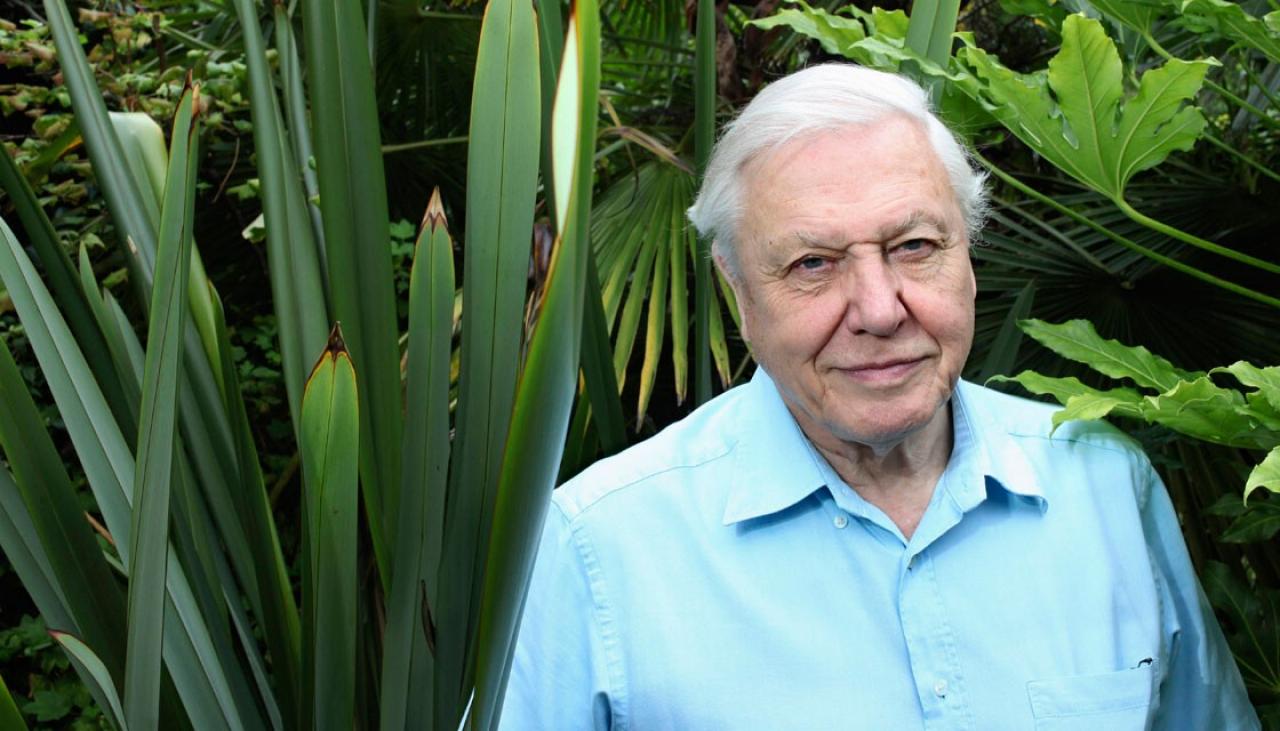
“[Young people] understand the simple discoveries of science about our dependence upon the natural world,” he said. “My generation is no great example for understanding – we have done terrible things.”
The protests by young people were enormously encouraging, Attenborough said. “That is the one big reason I have for feeling we are making progress. If we were not making progress with young people, we are done.”
The outrage of the students striking from school over climate change inaction is “certainly justified”, according to Sir David Attenborough, who said older generations had done terrible damage to the planet.
In an interview with the former UN climate chief Christiana Figueres, the broadcaster and naturalist dismissed critics of the widely praised global movement of school strikes as cynics.
“[Young people] understand the simple discoveries of science about our dependence upon the natural world,” he said. “My generation is no great example for understanding – we have done terrible things.”
The protests by young people were enormously encouraging, Attenborough said. “That is the one big reason I have for feeling we are making progress. If we were not making progress with young people, we are done.”……
The outrage of the students striking from school over climate change inaction is “certainly justified”, according to Sir David Attenborough, who said older generations had done terrible damage to the planet.
In an interview with the former UN climate chief Christiana Figueres, the broadcaster and naturalist dismissed critics of the widely praised global movement of school strikes as cynics.
“[Young people] understand the simple discoveries of science about our dependence upon the natural world,” he said. “My generation is no great example for understanding – we have done terrible things.”
The protests by young people were enormously encouraging, Attenborough said. “That is the one big reason I have for feeling we are making progress. If we were not making progress with young people, we are done.”……https://www.theguardian.com/environment/2019/apr/26/david-attenborough-backs-school-climate-strikes-outrage-greta-thunberg
 Extinction Rebellion activists stage die-in protests across globe https://www.theguardian.com/environment/2019/apr/27/extinction-rebellion-activists-stage-die-in-protests-across-globe Mattha Busby @matthabusby, 28 Apr 2019
At the Kelvingrove art gallery and museum in Glasgow, about 300 activists lay down beneath Dippy, the famous copy of a diplodocus skeleton which is currently touring the UK, for 20 minutes on the sound of a violin.
Many held handwritten signs with the question “Are we next?”, while children held pictures they had drawn of their favourite at-risk animals as part of the event organised by Wee Rebellion, a climate-change protest group for young people in Glasgow associated with Extinction Rebellion.
Twelve-year-old Lida said: “We want to raise awareness about climate change. If we keep carrying on the way we are humans may become extinct, like Dippy.” Aoibhìn, 7, said: “Lots of animals are dying out because of climate change.”
The group said industrial agriculture, overfishing and deforestation could lead to food shortages in the UK and serious flooding in parts of Glasgow.
In Lund, a number of people took to the cobbled streets of the southern Swedish city in the rain, urging people to take greater notice of what they called a looming climate catastrophe.
Meanwhile, in Oslo, about 30 people occupied the floor of a shopping centre. Extinction Rebellion Norway tweeted: “Full stoppage at Oslo City while we campaigned against the clothing industry’s wild environmental degradation. It is the world’s second largest polluter after the oil industry.”
The actions were part of worldwide celebration at 12.05pm called by Extinction Rebellion Berlin following the protests that began in London in November 2018, which have since spawned a mass movement.
A spokesperson for the group said in a statement: “Our ecosystem is threatened by collapse, which will not only lead to mass extinction of countless species, the loss of soil fertility and more extreme weather but will also bring with it the social crises of famine, war and migration.


Monday, June 22, 2026 2:30 p.m. – 3:15 p.m. CT
YouTube. Register here

Protect Sazan Island from the Trump family! https://secure.avaaz.org/campaign/en/protect_sazan_island_from_the_trump_family_loc/?bqFCVab&v=174511&cl=22707147157&_checksum=5e9dde668860e8231c33699735e16a1fbf22ab2cb01da50c999fe8732b9775ef&utm_source=email&utm_medium=blast_email&utm_campaign=174511
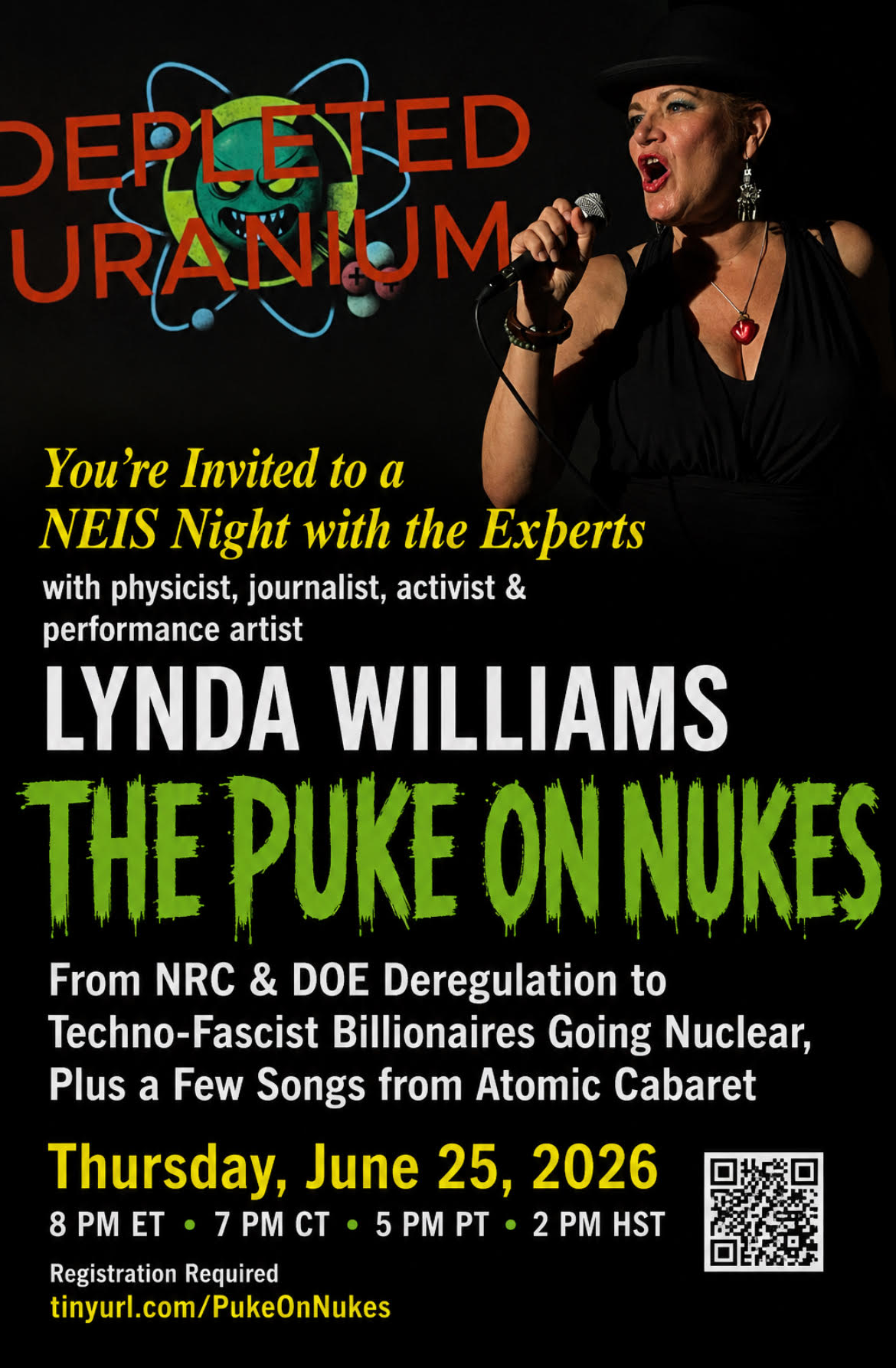
25 June- THE PUKE ON NUKES
Thursday, June 25, 2026
7pm Central Time (8pm ET, 6pm MT, 5pm PT) UTC – 5
From NRC & DOE Deregulation to Techno-Fascist Billionaires Going Nuclear, Plus a Few Songs from Atomic Cabaret REGISTER
26 June – Radiation Trainwreck at the NRC / Join the Protect Better Campaign – https://us02web.zoom.us/meeting/register/4ZlZ5_qLSHGiLSCg8FF6Bg#/registration


Cuba Is Not a Failed State – It Is a Besieged State
PETITION: “Global Appeal to Endorse Palestinian Right of Return of Refugees”
To see nuclear-related stories in greater depth and intensity – go to https://nuclearinformation.wordpress.com

 nuclear-news