Bechtel and Westinghouse will be big on talk but short on delivery for UK’s nuclear projects – Nuclear Free Local Authorities
The Conservative Welsh Secretary Simon Hart MP has recently visited the
Vogtle nuclear project in Georgia, USA, but the Nuclear Free Local
Authorities believe that Bechtel and Westinghouse will be big on talk but
short on delivery if they are selected as Britain’s commercial partners
to build a new power plant at Wylfa.
If there are two certainties with anynuclear power project, they are that it will be delivered way beyond budgetand that it will be delivered very late. At present, the sole new nuclear
project under construction at Hinkley Point C in Somerset is costing £23
billion and is ten years behind schedule; and operator, French-state owned
EDF Energy, has announced that it will again be revising the final budget
upwards and the end-date backwards, over the summer.
The Vogtle project,
being built by engineering firm Bechtel with two AP-1000 Westinghouse
light-water reactors, has so far cost US $30 billion, ironically around the
same price tag as Hinkley Point C, with this monstrous boondoggle being
bankrolled from the deep pockets of its eventual operator Georgia Power and
backed by US $12 billion in loans from the US Department of Energy. The
other AP-1000 project at VC Summer in South Carolina was abruptly
terminated in July 2017 after limping along for nine years and at a cost of
US $9 billion. This decision contributed to Westinghouse declaring Chapter
11 bankruptcy and subsequently several former Westinghouse officials,
including a Senior Vice-President, have been charged with a range of
serious offences relating to the company’s fraudulent actions.
NFLA 19th April 2022
U.S. Is Set to Launch a $6 Billion Effort to Save Nuclear Plants

Ari Natter, Bloomberg News 18 Apr 22, — The Energy Department is expected to provide details as soon as Monday on a $6 billion program aimed at keeping uneconomical nuclear plants in service, providing a lifeline to an industry that’s seen a raft of early reactor retirements driven by competition from cheaper power sources.
The program, funded through the $550 billion infrastructure bill signed into law last year, will let owners and operators of commercial nuclear reactors apply for credits for plants that are likely to shut down for economic reasons if the closures would lead to higher emissions. The agency is set to issue a guidance document this week detailing the application process.
……………….The program, known officially as the Civil Nuclear Credit Program, could provide a boost to operators including Public Service Enterprise Group Inc., Constellation Energy Corp. and Energy Harbor Corp. U.S. reactors have struggled to survive in the face of competition from cheap natural gas and renewable power. A dozen have already retired early for economic reasons,………
The Energy Department, which will administer the program, plans this week to issue guidance about how to apply for the program and will open a process for certification. The agency expects to issue preliminary credit award decisions following an application period of about 30 days, and “the first award cycle will prioritize and be limited to reactors that are approaching near term closure.” https://www.bnnbloomberg.ca/u-s-is-set-to-launch-a-6-billion-effort-to-save-nuclear-plants-1.1753474
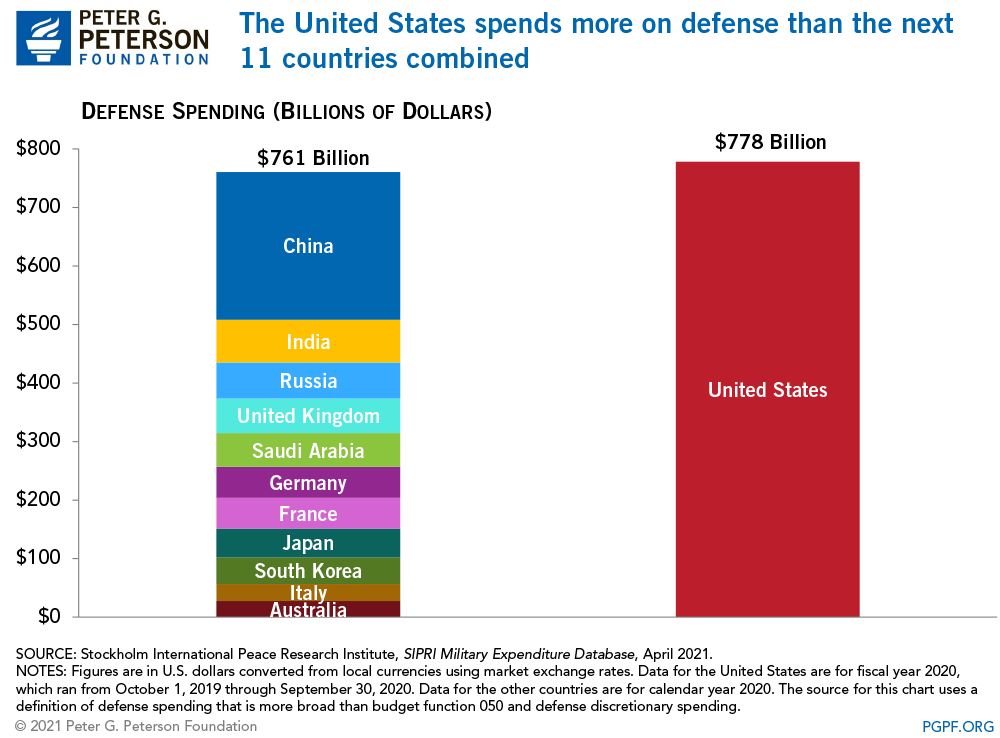
The average American tax-payer gave $900 to military contractors last year.
Most serious of all, there’s the problem of U.S. weapons feeding conflicts in ways the Pentagon didn’t foresee, but probably should have.
Compared to the $900 for Pentagon contractors, the average taxpayer contributed only about $27 to the Centers for Disease Control and Prevention, $171 to K-12 education, and barely $5 to renewable energy.
Average US Taxpayer Gave $900 to Military Contractors Last Year, https://truthout.org/articles/average-us-taxpayer-gave-900-to-military-contractors-last-year/?eType=EmailBlastContent&eId=1f951de0-ce82-4df9-b85e-0a76f6faf974
Lindsay Koshgarian, OtherWordsPUBLISHEDApril 17, 2022
ost of us want our tax dollars to be wisely used — especially around tax time.
You’ve probably heard a lot about corporations not paying taxes. Last year, individuals like you contributed six times more in income tax than corporations did.
But have you heard about how many of your tax dollars then end up in corporate pockets? It’s a lot — especially for corporations that contract with the Pentagon. They collect nearly half of all military spending.
The average taxpayer contributed about $2,000 to the military last year, according to a breakdown my colleagues and I prepared for the Institute for Policy Studies. More than $900 of that went to corporate military contractors.
In 2020, the largest Pentagon contractor, Lockheed Martin, took in $75 billion from taxpayers — and paid its CEO more than $23 million.
Unfortunately, this spending isn’t buying us a more secure world.
Last year, Congress added $25 billion the Pentagon didn’t ask for to its already gargantuan budget. Lawmakers even refused to let military leaders retire weapons systems they couldn’t use anymore. The extra money favored top military contractors that gave campaign money to a group of lawmakers, who refused to comment on it.
Then there’s simple price-gouging.
There’s the infamous case of TransDigm, a Pentagon contractor that charged the government $4,361 for a metal pin that should’ve cost $46 — and then refused to share cost data. Congress recently asked TransDigm to repay some of its misbegotten profits, but the Pentagon hasn’t cut off its business.
Somewhere between price-gouging and incompetence lies the F-35 jet fighter, an embarrassment the late Senator John McCain, a Pentagon booster, called “a scandal and a tragedy.”
Among the most expensive weapons systems ever, the F-35 has numerous failings. It’s spontaneously caught fire at least three times — hardly the outcome you’d expect for the top Pentagon contractor’s flagship program. The Pentagon has reduced its request for new F-35s this year by about a third, but Congress may reject that too.
Most serious of all, there’s the problem of U.S. weapons feeding conflicts in ways the Pentagon didn’t foresee, but probably should have.
When U.S. ground troops left Afghanistan, they left behind a huge array of military equipment, from armored vehicles to aircraft, that could now be in Taliban hands. The U.S. also left weapons in Iraq that fell into the hands of ISIS, including guns and an anti-tank missile.
Even weapons we sold to so-called allies like Saudi Arabia have ended up going to people affiliated with groups like al Qaeda.
Military weapons also end up on city streets at home. Over the years, civilian law agencies have received guns, armored vehicles, and even grenade launchers from the military, turning local police into near-military organizations.
Records also show that the Pentagon has lost hundreds of weapons which may have been stolen, including grenade launchers and rocket launchers. Some of these weapons have been used in crimes.
Taxpayers shouldn’t be spending $900 apiece for these outcomes. My team at the Institute for Policy Studies and others have demonstrated ways to cut up to $350 billion per year from the Pentagon budget, including what we spend on weapons contractors, without compromising our safety.
Even better, we could then put some of that money elsewhere.
Compared to the $900 for Pentagon contractors, the average taxpayer contributed only about $27 to the Centers for Disease Control and Prevention, $171 to K-12 education, and barely $5 to renewable energy.
How much more could we get if we invested even a fraction of what we spend on military contractors for these dire needs?
Compared to the $900 for Pentagon contractors, the average taxpayer contributed only about $27 to the Centers for Disease Control and Prevention, $171 to K-12 education, and barely $5 to renewable energy.
How much more could we get if we invested even a fraction of what we spend on military contractors for these dire needs?
Most Americans support shifting Pentagon funds to pay for domestic needs. Instead of making Americans fork over another $900 to corporate military contractors this year, Congress should put our dollars to better use.
Scientist fired after raising questions about safety at nuclear waste plant
 |
4 Investigates: Scientist fired after raising questions about safety at nuclear waste plant https://www.kob.com/albuquerque-news/4-investigates-scientist-fired-after-raising-questions-about-safety-at-nuclear-waste-plant/6445723/
Brittany Costello, April 14, 2022 CARLSBAD, N.M— There are some things we just leave up to the experts – that includes the science and research that goes into the Waste Isolation Pilot Plant in Carlsbad, New Mexico, the only-of-its-kind facility that stores transuranic radioactive waste from around the country.
What if we told you there are questions about the science of its long-term safety? KOB 4 spoke with a former scientist who said he lost his job after raising the red flag.
There’s an expectation, a reputation that follows the name Sandia National Labs. Its advanced scientific work is something many of us take for granted. Not Dr. Charles Oakes, who is a geochemist who used to work for Sandia National Labs in Carlsbad at the Waste Isolation Pilot Plant, also known as WIPP.
Part of his job was to make sure WIPP, and all of the transuranic radioactive waste stored inside, is safe for years to come.
This is a case where they weren’t, not only were they not doing their job, they were claiming they were doing their job but falsifying all the evidence that went into the claims that they were doing the job,” Dr. Charles Oakes said.
From the outside, there’s not much to see at WIPP. That’s because all the waste is stored more than 2,000 feet below ground.
“WIPP is the only facility of its kind in the world, deep geologic repository for nuclear waste,” said Don Hancock, Director of the Nuclear Waste Program a Southwest Research and Information Center.
Hancock has served as a WIPP watchdog even before the first disposal at the Department of Energy site in 1999.
“Essentially what’s in WIPP are elements that are contaminated from the manufacturing of components in nuclear weapons, particularly the plutonium core, the heart of it,” said Hancock. “That includes machinery that includes gloves, and booties, that includes sludges.”
It might sound complex, but the key to safe storage of radioactive material is simple: accurate, reliable science and research. Regulators at the Environmental Protection Agency demand it.
Sandia National Labs is contracted to do it, at a cost of $18-million a year.
It’s so important that, in order for WIIPP to continue accepting waste, every five years, it has to recertify that its projections show the facility will be safe after it’s filled up and closed down.
Safe from that point and 10,000 years beyond it.
“The most common feared way that the radiation will get to the surface is through the flow of water,” said Dr. Oakes. “There are some aquifers in the rock of the repository. One of the fears is that a well will be drilled through the repository or near to this repository and water may flow through the repository and intersect with a well bore.”
Dr. Oakes said his job was to look at how much of that radioactive material would make it to the surface.
“If you do have radioactive material dissolved in the water, will it react with rocks, minerals along the way, and be removed from the water, in which you removed the threat, or will it carry on its merry way dissolved and get to the surface where it can potentially hurt people and the environment,” he said.
During his time at Sandia National Labs, Dr. Oakes said he discovered inaccuracies that called into question WIPP’s long-term safety, what he believed to data errors.
Oakes said he brought it up to his bosses, the Department of Energy and even the EPA.
After he spoke up, Oakes said Sandia labeled him a problem employee and showed him the door.
Oakes is being represented by attorney Timothy White – and Nick Davis of Davis Law. Their goal is to address much more than what they believe to be retaliatory discharge.
“We’re trying to achieve a certain safety standard here and the information that is being used to allegedly show that we’ve achieved that standard, that we should be recertified to manage the WIPP project, is built on bad science leading to fraud,” said White.
KOB 4 wanted to hear from Sandia National Labs. A spokesperson told us they cannot comment on these accusations because of the pending lawsuit.
There are a number of defendants named in the suit: Honeywell International, National Technology and engineering Solutions of Sandia, LLC, Carol Adkins, and Paul Shoemaker.
Attorneys representing the defendants have responded in court. Documents allege Oakes was fired after multiple “inappropriate interactions with colleagues” but they did not go into detail.
Attorneys are also asking a federal judge to dismiss the case.
As far as all of that expansive data is concerned, officials at the Department of Energy, with the WIPP project, said there are quality assurance procedures in place including several independent reviews.
They said a recertification decision is expected later in April or early May.
Rolls Royce shares dive as JP Morgan warns that small nuclear reactors will not be profitable

The new markets business of Rolls-Royce, focusing on electrical power for
small aircraft and taxpayer-backed small modular nuclear reactors, could be
lossmaking into the 2030s, a broker has warned, pushing the engineering
group’s share price lower.
Rolls-Royce announced changes to its reporting
structure at its full-year results in February, including the creation of
its new markets unit, which is pursuing opportunities from the transition
to net zero.
In an equity research note to clients yesterday, JP Morgan
Cazenove said the venture “offers good long-term sales potential but
there is no guarantee of good profits”. Rolls-Royce secured £490 million
of funding last year, including about £50 million provided by the company
and £210 million from the government, to help to support investment in the
design of the small modular reactors (SMRs). JP Morgan said demand could
“grow strongly as countries seek to cut emissions and increase ‘energy
security’.
But SMRs need to compete with other energy sources and we see
a high risk of the first SMRs being well over budget.”
Times 13th April 2022
Rolls-Royce dives as JP Morgan casts doubt on its plans for mini nuclear
power stations and electric planes.
This is Money 12th April 2022
Oregon regulators have doubts about Natrium nuclear schedule for Kemmerer

Oregon regulators question nuclear schedule for Kemmerer
Public utility officials in Oregon say they support PacifiCorp’s plan to add the Natrium plant to its power fleet, but declined to formally recognize it as a viable project this early.
by Dustin BleizefferApril 13, 2022 TerraPower’s Natrium nuclear power plant in Kemmerer might help Oregon accomplish its climate action plan by helping to replace coal power, but state regulators, concerned by the project’s unprecedented timeline, aren’t yet willing to bet on it. TerraPower’s Natrium nuclear power plant in Kemmerer might help Oregon accomplish its climate action plan by helping to replace coal power, but state regulators, concerned by the project’s unprecedented timeline, aren’t yet willing to bet on it.
The Oregon Public Utility Commission in March declined to formally acknowledge PacifiCorp’s plans for Natrium to be a part of its future electrical generation portfolio.
“This project is just so early that we don’t really feel like we can give it that kind of weight,” Oregon PUC Commissioner Mark Thompson said. “That’s not because PacifiCorp has done something wrong. I just think it’s just not knowable. It’s so early on.”
The commission approved the balance of PacifiCorp’s “integrated resource plan” for how it will meet future power needs for its Oregon customers. Commissioners said they remain open to including Natrium in future filings from PacifiCorp.
Why it matters
Natrium skeptics have noted that crucial federal funding for the project is tied to meeting aggressive deadlines. The commission’s decision appears to be the first instance of a regulatory body acting on similar concerns.
PacifiCorp, which operates as Rocky Mountain Power in Wyoming, is a regulated utility providing electrical power to customers in six western states, including Oregon. State public utility authorities must approve plans for new electrical generation facilities before a utility is allowed to tap ratepayers to cover the cost………….
“PacifiCorp and TerraPower understand that PacifiCorp will only move forward if the Natrium demonstration project brings value to our customers,” PacifiCorp spokeswoman Tiffany Erickson said. https://wyofile.com/oregon-regulators-question-nuclear-schedule-for-kemmerer/
France working out how to save debt-laden nuclear company EDF

France is considering restructuring plans for debt-laden power firm EDF
(EDF.PA) that include full nationalisation followed by the sale of its
renewables business to focus on nuclear energy, BFM Business reported,
citing unidentified sources.
The website said the government was working
with investment bank Goldman Sachs on several restructuring scenarios. The
sale of the renewables business could fetch 15 billion euros ($16 billion),
it cited unidentified bankers as saying, adding that could help finance the
building of six next-generation EPR nuclear reactors.
Reuters 13th April 2022
UK government got its energy strategy so wrong

‘Major misjudgment’: how the Tories got their energy strategy so wrong. Analysis: betting big on nuclear, hydrogen, oil and gas while passing over energy saving measures, Johnson’s plan is a huge missed
opportunity.
Government industrial strategies are often derided as attempts to pick winners. The UK’s Conservative government has taken a different approach with its new energy strategy. In terms of dealing with the energybill and climate crises, it’s picking losers.
Nuclear power is the only major energy technology that has increased in cost in the last decade and
routinely suffers from massive time and budget overruns. Even Kwarteng acknowledges that France’s large nuclear fleet “cost a fortune”. The gamble Johnson is making, with taxpayers’ money, is that nuclear power is a more reliable wager to secure clean future power than renewables and fast-developing energy storage technologies. It’s a long shot.
Renewables and storage will develop much faster and get much cheaper due to the rapid learning that comes with small-scale technologies, unlike colossal projects
like nuclear.
Guardian 6th April 2022
U.S. nuclear electricity generation continues to decline as more reactors retire

U.S. nuclear electricity generation continues to decline as more reactors retire, U.S.Energy Information Asministration Principal contributor: Mark Morey, 8 Apr 22, In 2021, for the second consecutive year, U.S. nuclear electricity generation declined. Output from U.S. nuclear power plants totaled 778 million megawatthours in 2021, or 1.5% less than the previous year. Nuclear’s share of U.S. electricity generation across all sectors in 2021 was similar to its average share in the previous decade: 19%.
Six nuclear generating units with a total capacity of 4,736 megawatts (MW) have retired since the end of 2017. Three more reactors with a combined 3,009 MW of capacity are scheduled to retire in the coming years: Michigan’s Palisades is scheduled to retire later this year, and California’s Diablo Canyon is slated to retire one generating unit in 2024 and one in 2025. We compile announced retirement dates and new plants’ intended online dates in our Preliminary Monthly Electric Generator Inventory.
……………………………………. Financial pressures from competitive wholesale power markets remain the primary cause of nuclear power plant retirements. Four units at two sites in Illinois had announced their intention to retire but then reversed that decision after the Illinois state legislature provided financial incentives to support the nuclear units’ continued operation
The Bipartisan Infrastructure Law, which was enacted in November 2021, includes the allocation of $6 billion to prevent the premature retirement of existing nuclear power plants. The funding will be made available to nuclear power plants that might otherwise retire and that are certified by the Nuclear Regulatory Commission as safe to continue operations.,……….. https://www.eia.gov/todayinenergy/detail.php?id=51978
U.S. government high on the narcotic of ”Defense” spending – the war corporations love it !

Exacerbating the dilemma are the close ties between the Washington establishment and the defense industry, which lobbies lawmakers and funds their campaigns.

Another problem is the so-called revolving door, wherein many defense officials tasked with overseeing procurement go on to work for companies in the private sector. In January, the Project On Government Oversight watchdog reported that over the past three years Lockheed Martin hired 44 former Pentagon officials, Raytheon and Northrop Grumman 24 each, Boeing at least 23, and General Dynamics eight.
A staggering $286 billion in US defense spending went to these five well-connected suppliers in 2019 and 2020, according to the report.
Biden’s Ukraine Arms-Buying Spree Boosts US Defense Industry Giants https://www.urdupoint.com/en/world/bidens-ukraine-arms-buying-spree-boosts-us-d-1493247.html, Muhammad Irfan April 06, 2022 WASHINGTON (UrduPoint News / Sputnik US defense contractors are raking in additional billions of Dollars as a direct result of President Joe Biden’s policy toward Ukraine, and stand to gain even more based on administration plans to bolster NATO while setting new military spending records.
After Russia launched its operation in Ukraine on February 24, the Pentagon‘s top five suppliers saw their stock prices rise – with three jumping by double digits in the first week, as investors on Wall Street anticipated a surge in weapons orders.
However, the spike began well before Russian forces entered Ukraine and in line with Washington‘s growing support for Kiev. For example, in the second week of January the US delivered about $200 million in security assistance to Ukraine just as lawmakers were set to introduce legislation for $200 million more.
In January, Raytheon chief Greg Hayes told investors on an earnings call that he fully expected to see the company benefit from the tensions in Eastern Europe with new international sales opportunities, a sentiment other contractors echoed, which has now become a reality. Since the beginning of the year, Lockheed Martin’s stock price rose by over 25 percent while Raytheon, Northrop Grumman, and General Dynamics each saw a spike of over 15%.
“War is excellent for business,” Australian global peace activist Helen Caldicott told Sputnik.
Javelin manufacturer Raytheon and Stinger supplier Lockheed Martin are especially ecstatic over the situation in Ukraine, added Caldicott, the founder of the Nobel Peace Prize-winning Physicians for Social Responsibility.
Former Pentagon analyst Chuck Spinney was surprised by neither the conflict itself, which he called a “predictable consequence” of NATO expansion, nor the US defense establishment’s reaction to it.
“It now has champagne corks popping in the Pentagon, in the defense industry, and in their wholly owned subsidiaries in Congress, think tanks, the intelligence apparatus, and the press,” Spinney told Sputnik.
US President Joe Biden has repeatedly boasted about the largess of security aid his administration has bestowed Ukraine, which now stands at $2.3 billion – 70 percent of which has been doled out within the past five weeks alone.
The weapons the Biden administration committed or delivered to Ukraine by mid-March included 1,400 Stinger anti-aircraft weapons,10,000 Javelin and AT4 shoulder-fired anti-tank systems, and 60 million rounds of ammunition, to name just a few of the big ticket items listed on a White House fact sheet. Thousands of other weapons in the packages include grenade launchers, rifles, pistols, machine guns, and shotguns – in addition to 100 tactical drones, 25,000 sets of body armor, and 25,000 helmets.
US allies are also giving defense contractors reason to celebrate. According to the White House, at least 30 countries have provided security assistance to Ukraine since the operation began.
Yet, even before current tensions, Ukraine for years had been a leading recipient of US military aid. Since 2014, the US has provided Kiev with a total of more than $4 billion in security assistance, including the aid authorized under Biden, according to a State Department fact sheet.
Meanwhile, the US troop presence in Europe has jumped from 60,000 to 100,000 following the start of the Ukraine conflict. And the US and its NATO allies have announced intentions to send even more to boost the alliance‘s “eastern flank.”
Spinney said understanding the internal political-economic causes of the US addiction to the narcotic of defense spending is at the heart of the problem.
Citing American strategic thinker John Boyd, Spinney said the strategy is simple: “Don’t interrupt the money flow, add to it.”
Sure enough, on March 28, the Biden administration submitted to Congress a budget request for 2023 that included $773 billion in spending for the Pentagon, a 4% increase from the previous year. Another $40 billion in defense-related spending through other agencies brings the total to $813 billion, which would represent a record level national security budget if approved.
Biden has asked Congress for nearly $7 billion to strengthen NATO and other European partners in order to counter Moscow, according to the White House. In addition, $682 million was requested for Ukraine security assistance, an increase of $219 million, which Biden said was meant to forcefully respond to Russia‘s “aggression” against Ukraine.
Nor is the next wave of weapons spending likely to stop there. Senior military commanders have already staked out the ground for further prodigal spending. On March 29, US European Command chief Todd Wolters in testimony to Congress said he suspected the Pentagon was “going to still need more.”
Only six days earlier, Republican lawmakers called for higher defense spending, saying that Russia‘s operation in Ukraine “has already left us and our NATO allies less secure.”
VICIOUS CYCLE, TWISTED INCENTIVES
The recent spending sprees, the experts said, are consistent with confrontational US policies – from the Cold War to the war on terrorism. Exacerbating the dilemma is the close ties between the Washington establishment and the defense industry, which lobbies lawmakers and funds their campaigns.
Another problem is the so-called revolving door, wherein many defense officials tasked with overseeing procurement go on to work for companies in the private sector. In January, the Project On Government Oversight watchdog reported that over the past three years Lockheed Martin hired 44 former Pentagon officials, Raytheon and Northrop Grumman 24 each, Boeing at least 23, and General Dynamics eight.
A staggering $286 billion in US defense spending went to these five well-connected suppliers in 2019 and 2020, according to the report.
Spinney, who once appeared on Time Magazine’s cover for highlighting reckless defense spending during the Reagan administration, said the “first” Cold War’s 40-year climate of fear was something then-Soviet Premier Mikhail Gorbachev tried to end. But successive US administrations were busy planting the seed money for a new generation of cold-war inspired weapons.
The former Pentagon analyst said President George W. Bush‘s Global War on Terror was the bridging operation that “greased the transition” to Cold War II by keeping defense budgets at Cold War levels.
The 9-11 terrorist attacks helped fuel a climate of fear, he added, that is now needed to sustain Cold War II for the remainder of the 21st Century
Caldicott said the consequences of those decisions have unleashed wars and suffering around the world anew over the past two decades.
“Since 2001, the US has spent $6.4 trillion on killing and destruction in 85 countries, murdering 801,000 people,” Caldicott said while noting that the stocks of the top five defense contractors outperformed the overall market by a whopping 58 percent.
To make matters worse, the peace activist added, all members of Congress received huge amounts of money from these “killing corporations.”
Argentina wants China to fully fund $8.3 bln nuclear plant
Argentina wants China to fully fund $8.3 bln nuclear plant amid cash shortfall. By Eliana Raszewski, 6 Apr 22, LIMA, Argentina, (Reuters) – Argentina is pushing China to fully finance a new $8.3 billion nuclear power plant in the country, as the government grapples with high debt levels and looks to bring down its fiscal deficit as part of a recent deal with the International Monetary Fund.
The South American nation signed an agreement with the China National Nuclear Corporation (CNNC) for construction of a nuclear power plant in February. CNNC at the time said it would finance 85% of the cost, with Argentina shouldering the rest.
The country, however, now faces a tighter fiscal outlook. It needs to hit a fiscal balance by 2025 from a 3% deficit last year under terms of a recent $44 billion IMF program, including cutting billions of dollars in energy subsidies.
“We’re aiming for 100% in terms of financing from China to guarantee no delays given the problems we have with funding,” said Jorge Sidelnik, executive director of Argentina’s state operator Nucleoelectrica Argentina, the local partner……………………. https://www.reuters.com/business/energy/argentina-wants-china-fully-fund-83-bln-nuclear-plant-amid-cash-shortfall-2022-04-05/
Does EDF really need even more subsidies for Sizewell C nuclear project?
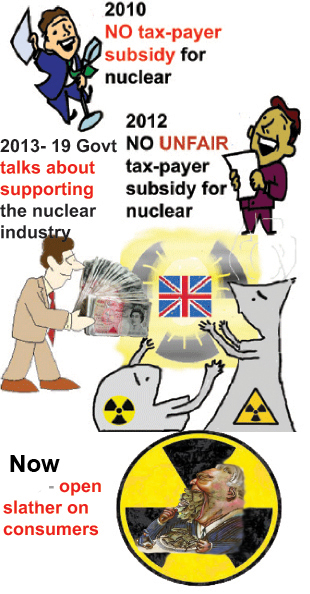
By doing so, our beloved leaders are ensuring
that Sizewell C will now have subsidised development, subsidised
construction, subsidised power production and subsidised waste management,
for a project still being run by Europe’s most subsidised company,
Electricité de France. Free markets? Don’t you believe it.
Does EDF really need even more subsidies for Sizewell C?even more subsidies for Sizewell C? Under new
legislation, our normally parsimonious government has just earmarked a
further £1.7 billion towards meeting their (uncosted) promise to ensure
that another new nuclear fission power plant may possibly begin being built
before the next election.
By doing so, our beloved leaders are ensuring
that Sizewell C will now have subsidised development, subsidised
construction, subsidised power production and subsidised waste management,
for a project still being run by Europe’s most subsidised company,
Electricité de France. Free markets? Don’t you believe it.
Electrical Review 6th April 2022 https://electricalreview.co.uk/2022/04/06/does-edf-really-need-even-more-subsidies-for-sizewell-c/
| |||
UK government’s energy strategy relying on massive nuclear expansion will fail credibility test
The government is expected finally to publish its much-delayed energy
strategy review on Thursday. The review is urgently needed both to address
the soaring energy prices that are inflicting financial hardship on many
households but also to end Britain’s reliance on Russian oil and gas so
as to avoid funding Vladimir Putin’s war machine. The clear test of the
credibility of whatever the government announces must be whether and how
quickly it reduces Britain’s dependence on expensive hydrocarbons for the
bulk of its energy.
The chances of meeting that test look slim, given the
rifts within the government and Conservative Party that have so far held up
the review for more than a month. Bizarrely, Tory MPs have fought furiously
in favour of restarting fracking, which would do nothing to reduce
Britain’s reliance on hydrocarbons, while fiercely resisting any reversal
of the de-facto ban on new onshore wind farms, which would be by far the
quickest and cheapest way to bring new energy on stream.
Both would of course be difficult to deliver since they are beholden to local planning
decisions. But whereas polls indicate that the public is overwhelmingly
opposed to fracking, they reveal strong public support for onshore wind.
Indeed, a YouGov poll last year found that nearly 70 per cent of the public
would support onshore wind farms near where they live. Polls indicate that
support rises higher if it means cheaper energy for residents. A large
expansion of onshore wind ought to be a key feature of a credible strategy,
yet comments yesterday by Grant Shapps, the transport secretary, suggest
that opposition in cabinet rules this out.
On the other hand, an energy
strategy that rests upon a massively expanded role for nuclear risks
failing the credibility test. That’s not because there isn’t a role for
nuclear as a source of baseload electricity for when solar and wind
supplies are low. There is a strong case for expanding Britain’s nuclear
fleet of 11 reactors, all but one of which are due to be deactivated by
2030, with only one new one, Hinkley Point C, under construction.
The
problem is the same one that has dogged all recent efforts to expand the
nuclear fleet: vast costs of construction. The energy review needs to
contain realistic plans with deliverable timelines. Boris Johnson’s hopes
of delivering six or seven new nuclear power stations by 2050 look
implausible given that Britain has succeeded in starting construction of
one in the past 16 years and even that is nearly a decade behind schedule
and far over budget.
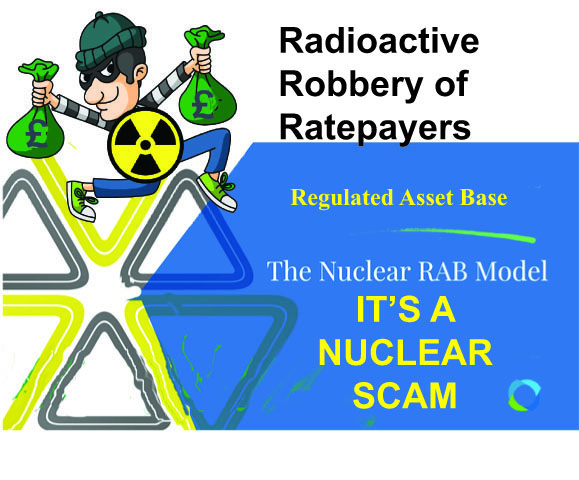
What’s more, under the government’s preferred funding model, construction costs would be passed on to consumers long before any electricity is delivered, further pushing up energy bills.
The review must therefore include plans to expand other sources of baseload,
including battery storage and carbon capture for gas-fired power stations.
Finally a credible strategy must include plans to reduce energy demand as
well as expand supply. The government needs to turbo-charge the drive to
improve home insulation, the switch to heat-pumps and the optimisation of
the energy network. A smart grid that allows differential pricing and
households to sell electricity from home solar panels and electric car
batteries could dramatically reduce energy supply requirements. Such plans
may lack the glamour of Mr Johnson’s fantasy of a floating wind farm in
the Irish Sea. But they would show that the government is serious.
Times 4th April 2022
https://www.thetimes.co.uk/article/the-times-view-on-britains-energy-strategy-power-play-p8g9hp0qp
France pays the steep cost of inflexible and ageing nuclear as electricity prices soar

French baseload and peak prices soar due to a combination of massive outages of French nuclear power plants, cold weather and inefficient heating
France pays the steep cost of inflexible and ageing nuclear as electricity prices soar — RenewEconomy 3 Apr 22,
The common refrain among critics of wind and solar is to blame their “variability” or “intermittency” for soaring electricity prices as Europe wrestles with gas shortages worsened by the war in Ukraine. But France, the nuclear “pin-up” country for the anti-renewables brigade, is not faring so well either.
Over the weekend, the key “day ahead” prices of electricity in France surged to unprecedented levels. On Friday, the futures price for “baseload” for wholesale French electricity price hit the eye-watering level of €714 a megawatt hour ($A1050/MWh).
It didn’t get much better by Sunday, when the day-ahead price for Monday settled at €515/MWh ($A758/MWh), which is the predicted average price over a 24-hour period. The price for peak electricity between 8am and 9am was €2,987/MWh ($A4,400/MWh).
The prices for both baseload and peak prices in the rest of the European market were significantly cheaper, and in Germany it was dramatically so.
The main reasons? Both supply and demand. Less than half (30GW) of France’s 64GW of nuclear capacity was available, thanks to planned and unplanned outages, and extended repairs due to corrosion issues in their ageing plants.
The forecast is for cold weather, and many French homes are fired with inefficient, energy hungry electric resistance heating, largely as a result that the French believed they had no reason to be energy efficient because of the their massive investment in nuclear.
“Massive outages of French nuclear power plants, in combination with cold weather and electric (often resistance) heating, are causing a critical situation for electricity supply there tomorrow,” energy analyst Kewes van der Leun tweeted over the weekend.
The French authority called on consumers to reduce their power consumption.
The situation in Europe is similar to the growing “north-side” divide in electricity prices in Australia, identified by the Australian Energy Market Operator, which has noted that since early 2021 average prices in the most heavily coal dependent states of Queensland and NSW are considering higher than elsewhere.
Partly that is due to a lack of transmission (France has similar problems), but also to the inflexibility of baseload, and the desperation of baseload owners to bid up prices when they can to recoup their costs.
Sure, states with high amounts of renewables do experience price spikes, but they tend to be short lived and the average price is significantly lower than so-called “cheap” coal.
The situation in France is not likely to get better any time soon. President Emmanuel Macron has pledge to invest significantly more in nuclear and his far-right opponent, Marine Le Pen (who is given an outside chance of unseating him) has pledge to stop all new wind and solar development.
But new nuclear won’t help. At the very best, a new reactor could be online by 2035, although France’s recent experience with massive cost over-runs and delays would put a major question mark over that being achieved.
French baseload and peak prices soar due to a combination of massive outages of French nuclear power plants, cold weather and inefficient heating
France pays the steep cost of inflexible and ageing nuclear as electricity prices soar — RenewEconomy
The common refrain among critics of wind and solar is to blame their “variability” or “intermittency” for soaring electricity prices as Europe wrestles with gas shortages worsened by the war in Ukraine. But France, the nuclear “pin-up” country for the anti-renewables brigade, is not faring so well either.
Over the weekend, the key “day ahead” prices of electricity in France surged to unprecedented levels. On Friday, the futures price for “baseload” for wholesale French electricity price hit the eye-watering level of €714 a megawatt hour ($A1050/MWh).
It didn’t get much better by Sunday, when the day-ahead price for Monday settled at €515/MWh ($A758/MWh), which is the predicted average price over a 24-hour period. The price for peak electricity between 8am and 9am was €2,987/MWh ($A4,400/MWh).
The prices for both baseload and peak prices in the rest of the European market were significantly cheaper, and in Germany it was dramatically so.
The main reasons? Both supply and demand. Less than half (30GW) of France’s 64GW of nuclear capacity was available, thanks to planned and unplanned outages, and extended repairs due to corrosion issues in their ageing plants.
The forecast is for cold weather, and many French homes are fired with inefficient, energy hungry electric resistance heating, largely as a result that the French believed they had no reason to be energy efficient because of the their massive investment in nuclear.
“Massive outages of French nuclear power plants, in combination with cold weather and electric (often resistance) heating, are causing a critical situation for electricity supply there tomorrow,” energy analyst Kewes van der Leun tweeted over the weekend.
The French authority called on consumers to reduce their power consumption.
The situation in Europe is similar to the growing “north-side” divide in electricity prices in Australia, identified by the Australian Energy Market Operator, which has noted that since early 2021 average prices in the most heavily coal dependent states of Queensland and NSW are considering higher than elsewhere.
Partly that is due to a lack of transmission (France has similar problems), but also to the inflexibility of baseload, and the desperation of baseload owners to bid up prices when they can to recoup their costs.
Sure, states with high amounts of renewables do experience price spikes, but they tend to be short lived and the average price is significantly lower than so-called “cheap” coal.
The situation in France is not likely to get better any time soon. President Emmanuel Macron has pledge to invest significantly more in nuclear and his far-right opponent, Marine Le Pen (who is given an outside chance of unseating him) has pledge to stop all new wind and solar development.
But new nuclear won’t help. At the very best, a new reactor could be online by 2035, although France’s recent experience with massive cost over-runs and delays would put a major question mark over that being achieved.
Macron rubbing hands with glee as UK energy crisis means EDF poised for ‘£30bn payday’

Macron rubbing hands with glee as UK energy crisis means EDF poised ‘£30bn payday’. EMMANUEL MACRON could win big from the UK energy crisis, with EDF being tipped to secure contracts worth nearly £30 billion.
Dr Paul Dorfman, an associate fellow at the University of Sussex said: “The UK has a very strong relationship with EDF, they own and run the substance of UK reactors and are helping to build Hinckley point and the rest of it.
“However, EDF are in debt. Moodys, the financial organisation has recently downgraded EDF’s credit rating. A quarter of all of France’s reactors are currently offline due to safety and security problems, that’s
largely because they have an ageing nuclear fleet, like us.
“In order to kind of try to prolong their lifespan, the French government has big upgrade of their nuclear. “The cost estimates are around £70-80 billion just to upgrade, just to keep them tottering on.”
EDF is currently constructing the Hinckley Point C nuclear power station and is also adding new reactors to Sizewell C in Suffolk and Bradwell B in Essex. Dr Dorfman has warned that these new reactors constructed by EDF are the same type of EPR reactors that were built in France, which the French court of Auditors estimated cost an extra €19billion (almost £16 billion). He continued: “EDF is clear about the need for Government investment in order to proceed with Sizewell C.”
Express 1st April 2022
1 This Month



26 September – International Day for the Total Elimination of Nuclear Weapons


PLEASE OPPOSE HR 8255 AND S.3639 – bills would accelerate satellite deployment, with no environmental review or safeguards – https://ncstd5li.quorum.us/campaign/169331/
To see nuclear-related stories in greater depth and intensity – go to https://nuclearinformation.wordpress.com
-
Archives
- September 2026 (245)
- August 2026 (330)
- July 2026 (355)
- June 2026 (287)
- May 2026 (306)
- April 2026 (356)
- March 2026 (251)
- February 2026 (267)
- January 2026 (308)
- December 2025 (358)
- November 2025 (359)
- October 2025 (375)
-
Categories
- 1
- 1 NUCLEAR ISSUES
- business and costs
- climate change
- culture and arts
- ENERGY
- environment
- health
- history
- indigenous issues
- Legal
- marketing of nuclear
- media
- opposition to nuclear
- PERSONAL STORIES
- politics
- politics international
- Religion and ethics
- safety
- secrets,lies and civil liberties
- spinbuster
- technology
- Uranium
- wastes
- weapons and war
- Women
- 2 WORLD
- ACTION
- AFRICA
- Atrocities
- AUSTRALIA
- Christina's notes
- Christina's themes
- culture and arts
- Events
- Fuk 2022
- Fuk 2023
- Fukushima 2017
- Fukushima 2018
- fukushima 2019
- Fukushima 2020
- Fukushima 2021
- general
- global warming
- Humour (God we need it)
- Nuclear
- RARE EARTHS
- Reference
- resources – print
- Resources -audiovicual
- Weekly Newsletter
- World
- World Nuclear
- YouTube
-
RSS
Entries RSS
Comments RSS
 nuclear-news