Westinghouse deal for Poland ushering in a new nuclear wave. Can it deliver on time and on budget?

Westinghouse spokeswoman Cathy Mann said last week that it was “too soon to say how financing will play out until we get further into developing the agreements and contracts.”
“The U.S. EXIM bank will offer robust financing,” she said, and because of its involvement, “U.S. content will be maximized.”
It was the first year that the International Atomic Energy Agency, which monitors nuclear power plants all over the world and ensures nonproliferation, had its own pavilion at the global climate event, Director General Rafael Mariano Grossi boasted on Wednesday in Egypt. He spent the day hosting panels and answering questions about how this nuclear wave differs from the ones that came before it.
ANYA LITVAK Pittsburgh Post-Gazette alitvak@post-gazette.com 14 Nov 22
Sebastian Barkowski, Poland’s special envoy for international climate and energy cooperation, arrived at the global climate summit in Egypt as a member of a new club: the nuclear club.
Earlier this month, his government picked Cranberry-based Westinghouse Electric Co. to supply the first three nuclear reactors to Poland, with another three units to be awarded in the future.
The deal, which is estimated to be worth about $20 billion, was in the works for a few years and represents Westinghouse’s first sale of its AP1000 plant abroad since it launched the reactor design in a deal with China in 2007.
Until the last moment, it was a geopolitical nail biter, with high-ranking U.S. officials such as Energy Secretary Jennifer Granholm and Vice President Kamala Harris intervening on Westinghouse’s behalf, and the U.S. nuclear firm filing a lawsuit against Korea Electric Power Corp. which had also submitted a bid for the Polish project.
Poland is surrounded by countries with nuclear power fleets but the large European nation never got its only attempt at nuclear off the ground.
Burning coal supplies 75% of its electricity needs, Mr. Barkowski said during a panel at COP27 on Wednesday, and driving that number down to meet climate goals was the main motivation behind Poland’s plan to build between 6 and 9 gigawatts of nuclear power. In 2020, the Polish government signed an intergovernmental agreement with the U.S. and Westinghouse to pursue this plan.
It was the first year that the International Atomic Energy Agency, which monitors nuclear power plants all over the world and ensures nonproliferation, had its own pavilion at the global climate event, Director General Rafael Mariano Grossi boasted on Wednesday in Egypt. He spent the day hosting panels and answering questions about how this nuclear wave differs from the ones that came before it.
In a conversation with Mr. Grossi, Fatih Birol, the executive director of the International Energy Agency, revised his year-ago prediction that “nuclear may well make a comeback” to a more definitive “nuclear is making a comeback.”
When asked what could derail that, Mr. Grossi talked of his fear that a Ukrainian nuclear powerplant in the warzone might suffer an attack that causes a nuclear accident — “the background music of my visit to Zaporizhzhia was bombs and mortars” — and that the fallout from that would ruin nuclear’s momentum the same way that Chernobyl and Fukushima had done.
Mr. Birol, meanwhile, zeroed in on the more mundane issue that has taken the wind out of nuclear’s sails before.
“The nuclear industry, to be honest with you, doesn’t have a very good reputation in terms of delivering on time and on budget,” he said.
With all the new reactor orders piling up, “It is important that the nuclear industry have more discipline,” he said.
That was something that Westinghouse’s future owner, the Canadian nuclear fuel company Cameco Corp. which signed a deal last month to acquire a 49% stake in Westinghouse, thinks about as well.
The Chinese and the Russians are good at building new nuclear plants, Cameco’s CEO Tim Gitzel said during a World Nuclear News podcast last week.
“We in the west now need to show that we’re back in the game and that we can take our share of the market,” he said.
Poland’s project with Westinghouse is a big deal, he said.
“I think there are more to come. And so we need to show the world that we can deliver our projects on time, on budget.”
In the U.S., Westinghouse’s attempt to restart large nuclear construction with a pair of reactors in South Carolina and another two in Georgia ended in bankruptcy in 2017. The South Carolina project was cancelled after billions had already been spent. In Georgia, nuclear fuel was finally loaded into the first reactor last month and the unit is slated to start producing power this year — 15 years after construction began. …………………………………………….
Westinghouse was bringing the lawsuit now, the company wrote in the complaint, because it had gotten word that KEPCO was about to sign a memorandum of intent with a group in Poland and that it had been invited to bid on projects in Czech Republic and Saudi Arabia.
Providing the technical information requested in those bids would trigger Westinghouse’s responsibility under U.S. nuclear export regulations, the company argued, and KEPCO has been non-committal about cooperating in the process.
So Westinghouse is asking the court to “enjoin defendants from delivery of technical information regarding Korean reactor designs outside the Republic of Korea,” specifically in Poland, Saudi Arabia and Czech Republic.
KEPCO had not filed a reply as of Wednesday.
Show me the money
A 15-year construction project is extremely difficult to finance, Dario Liguti, director of Sustainable Energy at the United Nations Economic Commission for Europe, said during a COP27 panel on nuclear financing.
That’s partly why “the nuclear plants that have been built, have been built with public money,” he said.
Countries like China, Russia, or France, where nuclear companies are at least partially owned by the government, offer the backing of the government when financing new builds.
In the U.S., that role, albeit much diminished, is filled by the U.S. Export-Import Bank, which provides financing for entities to buy American products and services.
The U.S. government has a variety of reasons to help such projects along.
A recent analysis of nuclear financing by researchers at Columbia University’s Center on Global Energy Policy includes this list: “supporting American jobs, assisting other countries’ decarbonization efforts and confronting the broader problem of climate change, reducing other countries’ fossil fuel dependencies for geopolitical reasons, limiting Chinese and Russian influence in general, and the national security value in the United States having some role in international nuclear reactor commerce.”
Export-Import Bank, which helped to finance dozens of nuclear export deals, mostly in the 1970s, hasn’t done any in decades.
Westinghouse asked for up to $5 billion in export assistance from ExIm when it sold the first four AP1000 units to China, the analysis said, and while the bank approved the request, the project did not end up using the offer.
In Polish newspapers, government officials suggested that the Westinghouse offer included $17 billion in financing, including through ExIm.
Elias Gedeon, Westinghouse senior vice president of commercial operations, said during an interview at an economic forum in September that the proposed financing also includes money from Westinghouse and Bechtel, the engineering and construction firm that took over the AP1000 project in Georgia in 2017.
“This is something that we have not done before,” Mr. Gedeon said, “but we have committed to put equity in this project in Poland.”
Westinghouse spokeswoman Cathy Mann said last week that it was “too soon to say how financing will play out until we get further into developing the agreements and contracts.”
“The U.S. EXIM bank will offer robust financing,” she said, and because of its involvement, “U.S. content will be maximized.”
Westinghouse is also continuing to sign agreements with companies in Poland and in other European countries to establish a European supply chain that could handle not just the Polish nuclear project but the others that might follow. Last year, it opened a shared global services center in Krakow which now employs 165 people and more will be hired, she said. In southwestern Pennsylvania, Westinghouse had about 3,100 employees at the end of last year.
Asked if Westinghouse can stick to the timeline envisioned in the Polish plan, Ms. Mann said that Westinghouse has learned from its experience delivering the first AP1000 plants in China and in Georgia.
On social media networking site LinkedIn last month, Westinghouse’s CEO Patrick Fragman thanked the governments of Poland and the U.S. for shepherding this agreement and promised full speed ahead.
“We are ready, able and willing to move very fast now.” https://www.post-gazette.com/business/powersource/2022/11/14/new-nuclear-faces-old-skepticism-can-it-deliver-on-time-and-on-budget/stories/202211130052
USA, Japan, South Korea and a whole heap of companies join in the gamble of NuScam’s small nuclear reactors for Ukraine

The duration of the Ukrainian SMR project is a highly-ambitious two to three years.
the European Union has yet to approve the deployment of the technology. NuScale itself admits that its own SMR plant in Idaho is unlikely to become operational until 2029.
Ukraine joins Europe’s list of SMR hopefuls, Emerging Europe Yulia Valova 15 Nov 22,
Ukraine is the latest country in emerging Europe to sign up for an SMR project, one which aims to support the country’s energy security and signals a new direction in its energy development policy – decarbonisation.
Ukraine, in partnership with the United States, as well as Japan and South Korea, will participate in a public-private consortium to research and develop small modular reactors (SMRs).
A pilot project was announced this week by US Presidential Special Envoy on Climate Issues John Kerry and Ukrainian Energy Minister Herman Galushchenko at the UN Climate Change Conference, COP27, in Egypt.
The pilot project involves the construction of an SMR in Ukraine which, according to the US State Department, will involve the production of environmentally-friendly hydrogen and ammonia and advanced electrolysis technologies.
According to the State Department’s press service, the project builds on existing cooperation in developing nuclear energy capabilities initiated under the US Basic Infrastructure for Responsible Use of SMR Technology programme.
SMRs are a key part of the US Energy Department’s goal to develop safe [?], clean[?], and affordable[?] nuclear power options. Both Romania and Poland have previously signed agreements to explore the construction of SMRs with US technology.
The duration of the Ukrainian SMR project is a highly-ambitious two to three years. The list of participants includes both leading nuclear companies and research institutes.
In particular, NuScale (which is involved in the Romanian and Polish projects), FuelCell Energy, Clark Seed and Argonne National Laboratory will participate on the American side, with NAEC Energoatom and the State Science and Technology Centre for Nuclear and Radiation Safety representing Ukraine.
Doosan Enerbility, IHI Corporation, JGC Corporation, Samsung C&T and Starfire Energy will also participate in the project…………………….
According to the UN’s International Atomic Energy Agency (IAEA) there are around 50 SMR designs and concepts globally. Most of them are in various developmental stages and some are claimed as being near-term deployable……………..
However, while NuScale’s SMR was in August given final certification by the US Nuclear Regulatory Commission, the European Union has yet to approve the deployment of the technology. NuScale itself admits that its own SMR plant in Idaho is unlikely to become operational until 2029.
USA, France, continue to buy nuclear supplies from Russia – no sanctions on that industry!
Stop funding Russia’s nuclear weapons, The Hill, BY HENRY SOKOLSKI, – 11/13/22
As Washington and the commentariat wring their hands about Russian President Vladimir Putin’s nuclear sword rattling, the United States and the European Union (EU) continue to shovel hundreds of millions of dollars to Rosatom — a Russian nuclear firm that maintains Moscow’s nuclear weapons complex and just filched a $60-billion Ukrainian nuclear plant.
Why would Washington and Brussels back such a nuclear villain? Do we really want to support Russian organizations that are critical to Putin building the nuclear bombs he is now threatening us with? No one will say yes, but the nuclear industry in Europe and the United States insist we can’t afford not to.
Besides being in charge of all of Russia’s nuclear weapons production and development, Rosatom supplies nuclear fuel to nuclear plants in the Czech Republic, Slovakia, Bulgaria and Hungary. Any European Union (EU) decision to cut off fuel to these plants would immediately harm these states economically. So, when Poland, Ireland, Estonia, Latvia, Lithuania and Germany recently recommended that the EU ban Russian nuclear imports to avoid funding Russia’s military efforts, the Hungarians and French howled and Brussels blinked.
What’s Paris’s brief? Russia buys two-thirds of France’s electrical steam generators. Also, French nuclear fuel fabricator Framatome just struck a major nuclear fuel development cooperation agreement with Rosatom……………………………
The EU, of course, must act by consensus. But what of the United States? There are no Russian-designed reactors in America. Nor is the United States without alternative uranium suppliers in Canada, Australia and Kazakhstan or practical, near-term uranium enrichment options. Yet, Washington pretty much followed the EU’s play book.
Russia provides roughly 15 percent of America’s raw uranium and 28 percent of its enriched uranium. Combined with Russian nuclear sales to the EU, these uranium imports from Russia fatten Rosatom’s coffers by as much as $1 billion a year — easily more than Rosatom spends to maintain Russia’s nuclear weapons complex.
You’d think that this last point would be politically fatal to further imports. Think again. Only days after Russia seized the Zaporizhzhia nuclear plant, the Nuclear Energy Institute and Duke power lobbied President Biden to keep Russian uranium imports coming. Failing to do so, they claimed, would risk increasing the cost of “zero-carbon” nuclear-supplied electricity. Worse, they insisted, it would jeopardize the future of advanced small modular reactors, most of which favor using special enriched uranium.
Soon after they made this plea, the White House concurred: Biden announced a U.S. embargo on all forms of Russian energy – oil, natural gas, and coal – but not on uranium……………………………. https://thehill.com/opinion/national-security/3732521-stop-funding-russias-nuclear-weapons/
How Bill Gates’ TerraPower rips off the American taxpayers
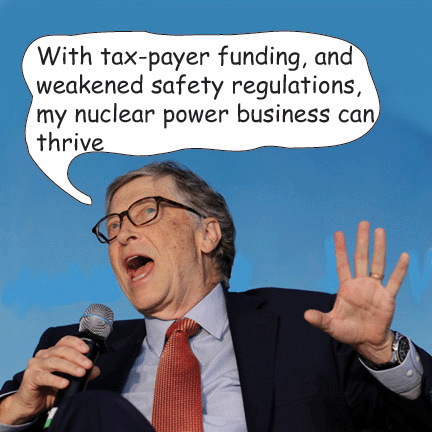
government support adds up to nearly as much as private investments and almost certainly more than Gates has personally invested. In other words, taxpayers have already paid tens of millions of dollars, and could pay far more in the future, for this technology
Beyond Nuclear By M.V. Ramana and Cassandra Jeffery 14 Nov 22…………………………………………………………………………. Bill Gates and TerraPower
TerraPower was founded in 2006 and Gates continues to serve as Chairman of the Board. The company has funded the development of three different nuclear reactor designs through a mix of venture capitalist investments from fellow billionaires, engineering and manufacturing corporations in the energy and defense sector, and government.
The company has research and development partnerships with several major institutions, including the Los Alamos National Laboratory and Y-12 National Security Complex, both of which design and test nuclear weapons.
TerraPower is well-funded. In 2010, the company received $35 million in seed money from venture capital firms to develop the first of its nuclear power plant designs, the “traveling wave” reactor. It has also received an undisclosed amount of funding from Breakthrough Energy Ventures, an investment firm co-founded and co-chaired by Gates.
According to a 2015 TerraPower promotional video, Gates pledged to invest $2 billion into emerging energy technologies, including nuclear technologies produced by TerraPower. And a few years back, Gates promised to invest $1 billion from his personal coffers and raise another $1 billion in private capital to fund TerraPower directly.
Despite these announcements, the exact financial figure Gates has personally invested into TerraPower is not known. In 2019, he declined interview requests by the Washington Post about his investment in the company. TerraPower’s financial records are not publicly available.
But investments by Gates and his friends are not the only source of funding for TerraPower. In 2016, TerraPower received a $40 million grant from the Department of Energy (DOE), followed by another $80 million in 2020, and $8.5 million in 2022.
In 2021, under the Bipartisan Infrastructure Act, the U.S. Department of Energy’s Office of Clean Energy Demonstrations has set aside $2.5 billion for nuclear projects and some of this funding will subsidize the TerraPower nuclear project slated for development in Wyoming.
As far as we can tell from publicly available data, government support adds up to nearly as much as private investments and almost certainly more than Gates has personally invested. In other words, taxpayers have already paid tens of millions of dollars, and could pay far more in the future, for this technology.

The U.S. taxpayer isn’t the only source of public funding that Bill Gates has tried to leverage. The 1.4 billion people of China came close to ponying up their tax dollars (or renminbis). After a series of visits by Gates to the Middle Kingdom, TerraPower reached an agreement with state-owned China National Nuclear Corporation in 2017 to build an experimental nuclear reactor south of Beijing.
That project would have likely gone forward but was stopped by America’s waning diplomatic and trade relationship with China…………………………….more https://beyondnuclearinternational.org/2022/11/13/bill-gates-and-techno-fix-delusions/
Russia maintains its grip on global nuclear energy landscape
Increasing use of atomic power would not necessarily free economies from Moscow’s
influence. Faced with a global energy crisis and a race to slash emissions,
advanced economies are starting to reconsider nuclear power after a period
of declining investment. The incentive is all the greater among European
countries, which are urgently seeking to move away from Russian fossil
fuels to starve the Kremlin of funds for its assault on Ukraine.
But an atomic shift does not necessarily free a country from energy dependence on
Russia, given the scale of the country’s presence in the nuclear sector.
There were 437 operational reactors around the world as of 2021 excluding
those suspended, according to the International Atomic Energy Agency. About
10 per cent or 42 reactors outside of Russia were using Soviet-designed
VVER technology, with others using designs from countries including the US,
Canada, Germany and France.
Ukraine has by far the largest number of VVER
fleets outside Russia, with all 15 of its operating reactors using the
technology, with the Czech Republic next on six. Similarly, of the 52
reactors currently being built around the world excluding Russia, 21 use
VVER. China, India and Turkey have the largest number with 4 each, with
countries like Bangladesh, Egypt and Iran also taking in Russian
technology.
The prevalence of Russian-designed reactors currently being
built is in part a matter of timing, according to Jonathan Cobb, analyst at
the World Nuclear Association, who said “the Russian reactor programme
itself was very active” over the past decade when many of the contracts
for these projects were signed.
Russia was also the seventh-largest
producer of uranium in 2021. State-owned Rosatom accounts for about 40 per
cent of the world’s uranium enrichment capacity, making it a crucial
supplier as most nuclear power stations use enriched fuel.
FT 13th Nov 2022
https://www.ft.com/content/ffe76530-8fcb-45c3-aade-dc307af9c82f
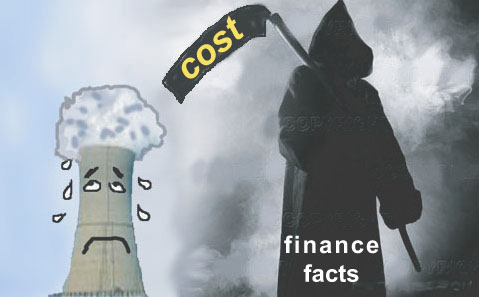
EU Needs $460 Billion Investment Just To Maintain Nuclear Power Capacity, let alone build new
Oil Price.com By Tsvetana Paraskova – Nov 11, 2022,
The European Union will need up to $462 billion (450 billion euros) in investment just to keep the current level of its nuclear power generation capacity, the EU Commissioner for Energy, Kadri Simson, said at a nuclear energy forum this week……..
This year, a year when surging energy prices have highlighted the importance of energy security, the EU is particularly focused on its nuclear power availability.
According to the EU modeling, nuclear power generation will account for around 15%-16% of the EU’s power output in 2030 and 2050, Simson said.
The EU needs a stable generation capacity, at the level of just over 100 GW, in the coming decades. Yet, a lot of investment will be needed to keep that generation capacity in the future.
“Our analysis shows that without immediate investment, around 90% of existing reactors would be shut down around the time when we need them most – in 2030,” Simson noted.
The EU will need between $360 billion (350 billion euros) and $462 billion (450 billion euros) of investment just to maintain the current generation capacity, and another up to $51.3 billion (50 billion euros) in the long-term operation of existing reactors, according to the EU commissioner……… EU Needs $460 Billion Investment To Maintain Nuclear Power Capacity | OilPrice.com
—
‘Subpoenas’ Served on US Weapons Manufacturers

These four corporations are representative of the modern-day piracy that is the U.S. war industry, a corporate capture of U.S. foreign policy, the Congress, the Departments of Defense and State, and the U.S. economic system.
https://www.commondreams.org/views/2022/11/11/subpoenas-served-us-weapons-manufacturers BRAD WOLF, November 11, 2022
What is it like to be so ashamed of the company for whom you work that you cannot bring yourself to admit you work there? Ashamed of the products they manufacture, the innocent people those products kill, the hundreds of billions of dollars of public taxpayer money squandered in a gluttonous pursuit of profits?
This is life as seen on November 10th, 2022, at Raytheon Technologies in Arlington, VA. Members and supporters of the Merchants of Death War Crimes Tribunal, a public tribunal, served “subpoenas” on four United States weapons manufacturers charging them with War Crimes, Crimes Against Humanity, Theft, and Bribery.
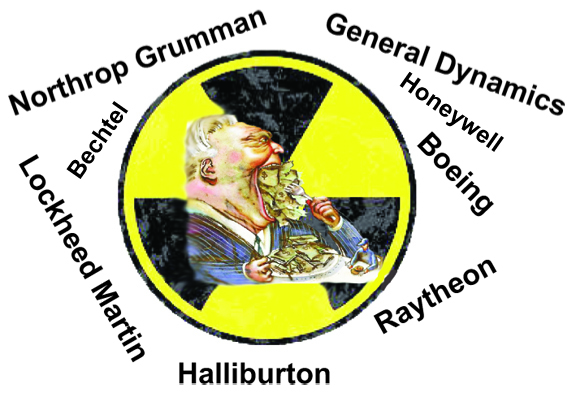
The other three corporations served that same day were Lockheed Martin, Boeing, and General Atomics. These four corporations are representative of the modern-day piracy that is the U.S. war industry, a corporate capture of U.S. foreign policy, the Congress, the Departments of Defense and State, and the U.S. economic system.
Raytheon Technologies occupies a towering office building in Arlington, a stone’s throw from the Pentagon and Arlington National Cemetery, two sites commemorating death and the utter failure of war. Though the Raytheon building has its corporate logo plastered in blood-red letters at the top, once inside no sign exists evidencing this corporate war profiteer. No name, no logo, no receptionist. A sad attempt to hide their dealings in the black art of war.
When asked, security guards refused to acknowledge Raytheon was in the building. Of the dozens of employees who passed, none would admit they worked at Raytheon, averting their eyes as they hurried away. When police arrived to escort the Tribunal members and supporters off premises, the police would not acknowledge Raytheon was headquartered there. Just like the employees, they had their orders. Keep quiet, admit nothing.
It was silent as a tomb except for the voices of the Tribunal members speaking the truth about the trail of suffering and death Raytheon and its corporate brethren have left across Iraq, Afghanistan, Pakistan, Syria, Somalia, and the Palestinian Occupied Territory. Meanwhile, these Merchants of Death have left the United States financially, morally, and spiritually bankrupt.
Raytheon Technologies has a market capitalization of $96 billion. According to Macrotrends, Raytheon Technologies revenue for the quarter ending September 30, 2022 was $16.951B, a 4.55% increase year-over-year. For 2021 it was $64.388B, a 13.79% increase from 2020, for 2020 was $56.587B, a 24.78% increase from 2019, and for 2019 was $45.349B, a 30.68% increase from 2018. In four years, they have garnered almost a 70% increase in revenue. Marketing death is good for profits if you can live with yourself. Apparently, given their silence, many Raytheon employees struggle with this very issue.
Raytheon builds some of the most destabilizing, destructive, and expensive weapons on earth. The Hypersonic Missile which travels in excess of five times the speed of sound — Mach 5 — covering vast distances in minutes. It is “hard to stop and flies nimbly to avoid detection and dodge defensive countermeasures.” All these are attributes which make the missile so destabilizing to a foreign leader who has only minutes to determine whether they are being attacked with a nuclear weapon.
Raytheon makes the Peregrine Air-to-Air Missile which they claim “increases firepower, penetrates bad weather, and goes the distance.” Add to that their plans to use “high power microwaves” in war and we see the epitome of a Merchant of Death.
Boeing, General Atomics, and Lockheed Martin are the same. They too revel in blood money as they build for war and drain the U.S. economy. In fact, some $8 trillion in U.S. taxpayer money has been given to U.S. defense contractors over the last twenty years.
The U.S. War Industry plays a key role in fomenting war with their congressional lobbying, not just pushing for weapons contracts but influencing military strategy, thereby exacerbating and prolonging the anguish of civilians bearing the brunt of these wars of choice. On the issue of war in particular, Congress must be answerable to its citizens, not a handful of corporations.

With their silence on November 10, these weapons manufacturers revealed their shame. Their corporate mission statement is “War Begets Profit.” For the Merchants of Death War Crimes Tribunal, the mission statement is “Come War Profiteers, Give Account.” Stand before a Tribunal and be judged.
And so, what is it like to give your talents to a corporation which hides its very existence, to give all your efforts and education and experience in the creation of weapons which kill indiscriminately? Their loss of words, their averting eyes, the damning silence offered in their corporate crypt, is the devastating answer.
Another US nuclear marketing deal done ay COP27 – $3billion for Romania reactors project
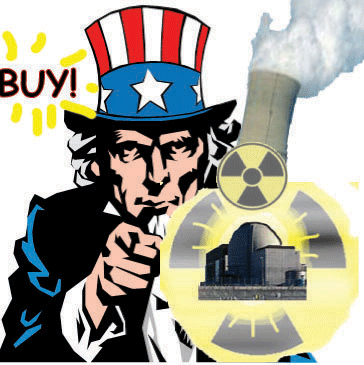
The US Export–Import Bank said it intends to provide USD 3 billion for a project for two additional reactors in Romania’s Cernavodă nuclear power plant.
Romanian Prime Minister Nicolae Ciucă announced at the United Nations Climate Change Conference COP27 that a third of the required funds for units 3 and 4 in the Cernavodă nuclear power plant would be provided by the United States Export–Import Bank. The preparatory phase will be completed by the end of March, he said.
The US Exim Bank issued letters of intent for USD 50 million for the second phase and USD 3 billion for the construction of the two reactors, the prime minister revealed at the event in Egypt. The plan is to implement the second phase in the third quarter of 2025 and build the units in 2030, Ciucă said…….
The Cernavodă nuclear power plant operates under state-owned Nuclearelectrica. A contract was signed for the preparatory stage last November with Candu Energy, a subsidiary of SNC-Lavalin from Canada, through Romania’s project firm EnergoNuclear.
In addition, Nuclearelectrica intends to deploy US-based NuScale’s small modular reactor (SMR) technology for a 462 nuclear power plant on the site of a former coal plant.
German Parliament advised not to extend nuclear power beyond springtime 2023
Yesterday Claudia Kemfert, Professor of Energy Economics and Energy Policy
at the German Institute for Economic Research delivered an expert statement
to the German Parliament on why it is neither necessary, nor economical,
nor advisable, to extend German nuclear power beyond next spring. The focus
has to be squarely on renewables.
Radiation Free Lakeland 10th Nov 2022
Welsh Affairs Committee to hear from proponents of nuclear power, on funding plans for Sizewell C project
On 16th Nov, the Welsh Affairs Committee will quiz experts on whether
funding models are adequate to meet the UK Government’s targets to
generate 24GW of nuclear power by 2050. MPs will hear from Aviva Investors,
Sizewell C and the Nuclear Industry Association on the financing of new
nuclear projects covering the Regulated Asset Base model of funding, green
taxonomy and private investment.
They will also be discussing the
importance of the UK Government’s commitment to the nuclear sector and
public funding. The evidence session comes amid reports that the UK
Government is hoping to finalise a deal shortly on the funding of the
Sizewell C nuclear power plant.
Welsh Affairs Select Committee 10th Nov 2022
U.S. uses COP27 to market nuclear power to Romania, offering over $3 billion funding
Romania Secures $3 Bn US Funding For Nuclear Power
https://www.barrons.com/news/romania-secures-3-bn-us-funding-for-nuclear-power-01668020107 By AFP – Agence France Presse, November 9, 2022,
Romania announced Wednesday that the United States will provide funding worth more than $3 billion for the construction of two new nuclear reactors in the eastern European country, which is expected to commence early next year.
The funding will be granted by the Washington-based Export-Import Bank (EXIM), an export credit agency, enabling Romania to cover “about a third of the amount necessary for the construction of two reactors” at the Cernavoda plant, Romanian Prime Minister Nicolae Ciuca said.
The rest of the needed funding will come from other financing, Ciuca added, without giving further details.
Cernavoda is Romania’s only nuclear power plant, which has been operational since the 1990s. Two reactors with a total a capacity of 1,400 MW, it covers approximately one fifth of the country’s electricity needs.
Ciuca hailed the deal signed during the UN climate summit COP27 in Egypt as “an important step” towards the country’s “energy independence” amid global energy uncertainty aggravated by the war in Ukraine.
The construction of two additional nuclear reactors at Cernavoda is slated to start “in March/April 2023” and is expected to be completed in 2030, he added.
EXIM finances exports of US goods and services, but it was not immediately clear which US firm or firms would construct the reactors.
Six European companies — GDF Suez, Iberdrola, CEZ, RWE, Enel and ArcelorMittal — had initially committed to the project in 2008, before pulling out one after another due to uncertainties surrounding the future of the plant.
Bucharest also broke a financing agreement with the China General Nuclear Power Corporation (CGN) group in 2020, against a backdrop of growing mistrust of Chinese investments in Europe.
France electricity prices surge past €1,000/MWh as more nuclear reactors close for winter
Wholesale electricity prices in France for the middle of winter surged
above €1,000/MWh ($A1,540/MWh) after the operator of the world’s biggest
nuclear fleet revealed more problems, and more outages at its reactors.
The surge in prices for January delivery came after the utility EdF reduced its
forecast output for the fourth time this year, on this occasion due to
extended outages at four reactors and maintenance delays at others caused
by the waves of strikes that have affected the nation this autumn. It also
dramatically reversed weeks of falling spot and futures prices as gas
stocks improved and the weather remained wild.
But as analysts noted in the height of summer, nuclear problems pose just as big a threat to the EU grid
as the gas problems.
Renew Economy 8th Nov 2022
U.S. company Westinghouse wants to build a fleet of nuclear reactors in Europe, starting with Poland.
The Council of Ministers has formally approved the decision that the first
nuclear power plant in Poland will use three Westinghouse AP1000 reactors –
with the US company calling it an “historic day” as it looks to build a
fleet of the reactors in central Europe.
World Nuclear News 3rd Nov 2022
French nuclear corporation EDF – facing huge debts, but cosily enmeshed with UK government
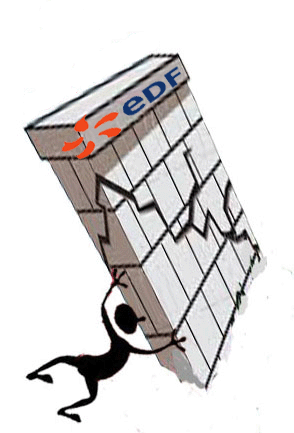
But what about the future? EDF is predicted to stack up 100 billion Euros (£87.8 billion) in debt this year and the French government already pumped €3 billion (£2.6 billion) into the company in Spring.
But as you’ll see below, no matter how bad things are there’s always room to give the CEO a pay rise.
In 2020, CEO Lévy was listed as the 9th highest-paid CEO in the utility sector worldwide taking home a salary of €450,000 (£389,500) and €3,660 (£3,150) in benefits.
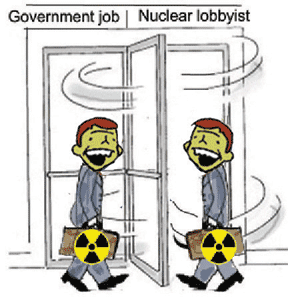
EDF has been getting cosier and cosier with the government.
And the cosiness isn’t set to end anytime soon, EDF stands in good stead under Liz Truss. The new PM nominated former EDF lobbyist Michael Stott as Downing Street’s new business liaison. Stott, who is also an ex-Tory press officer, is expected to lead the government’s new-build nuclear programme.
EDF: WHEN THE STATE GOES FULL CAPITALIST. https://newint.org/features/2022/10/31/edf-when-state-goes-full-capitalist 31 October 2022
What happens when a state energy company goes multinational? In the second installment of its Heat the Rich series on Britain’s big six energy giants, Corporate Watch puts the spotlight on EDF Energy.
EDF is the fifth biggest energy supplier in the UK currently controlling over 10% of the market. The French multinational is best known for “leading the UK’s nuclear renaissance” operating all eight of the UK’s nuclear power stations.
It’s owned by Electricity of France S.A. (Électricité de France, EDF). A multinational energy producer and supplier primarily (and soon to be solely) owned by the French government. It is one of the world’s top five utility companies.
Created in 1946 by the French government, EDF was set up with the intention of rebuilding France’s power grid following World War Two. Now, 70 years on, EDF has branched out a lot further than France, cashing in on energy users from the USA to India. The group is now made up of 144 subsidiaries.
Despite its name, EDF isn’t just in the energy business. EDF is also involved in the data software, vehicle traceability, investment, and real estate sectors, to name just a few.
EDF uses strategic partnership deals to build its brand, for example, the company is a ‘premium partner’ (and official energy supplier) for the Olympic and Paralympic Games in Paris in 2024.
HOW MANY UK ENERGY CUSTOMERS DOES EDF HAVE?
Electricity (excluding pre-payment): 3 million
Gas (excluding pre-payment): 2.1 million
WHO OWNS IT?
EDF Energy (UK) Ltd is ultimately owned by EDF SA, a French company which is majority owned (84%) by the French government and listed on Euronext, the French stock exchange.
In July 2022, the French government announced it would buy out the outstanding 16% of EDF’s shares, reversing the partial privatization of the company in 2005. But it hit a brick wall when investors threatened to sue the government for losses. The French state started finalising their buyout of 100% shares in EDF in September. But at what price? The other shareholders are demanding a fortune, with the government set to pay a total of 9.7 billion euros (£8.7 billion) of French taxpayers’ money. It’s worth noting that the shareholders set to cash in from this nationalization are investment giants Blackrock and Vanguard Group.
IS EDF SUFFERING AS A RESULT OF THE COST OF LIVING CRISIS?
On the face of it, it does seem like EDF profits have nose-dived in recent years. According to EDF Energy (UK) Ltd’s 2021 accounts, EDF operated a €4.8 billion (£4.2 billion) loss compared to €268 million (£239 million) in 2020. No dividends were paid by EDF Energy (UK) Ltd. in 2021 nor in 2020. However, another UK subsidiary, EDF Energy Holdings Ltd did pay dividends of £1 million in 2021, and £60 million in 2020.
Despite these losses, at the end of 2021 EDF Energy (UK) Ltd still had net assets of €17.9 billion (£16 billion).
Regardless of the UK subsidiary’s accounts, the EDF Group achieved all its financial targets in 2021. Group sales for the year amounted to £8,720m, an increase of 8%. The Group reaped profits of €360 million (£324 million) in 2021, a total reverse in performance from 2020 when the Group made a loss of €2.6 billion (£2.3 billion).
But what about the future? EDF is predicted to stack up 100 billion Euros (£87.8 billion) in debt this year and the French government already pumped €3 billion (£2.6 billion) into the company in Spring. But as you’ll see below, no matter how bad things are there’s always room to give the CEO a pay rise.
WHO RUNS EDF?
Jean-Bernard Lévy, the current CEO of the Group, is due to leave six months early after a fallout at the top between Lévy and French president, Emmanuel Macron, over nuclear energy. Lévy is – however – unlikely to be out of a job after EDF. He was formerly CEO of weapons company Thales, and media company Vivendi, and even did a stint as a technical adviser to a government ministry. In 2020, Lévy was listed as the 9th highest-paid CEO in the utility sector worldwide taking home a salary of €450,000 (£389,500) and €3,660 (£3,150) in benefits.
Moreover, Lévy’s probable successor, Luc Remont, cherrypicked by Macron (whose appointment is just waiting for parliamentary approval), will start on on a lucrative footing after the French Government announced that it would like to increase the new EDF CEO’s salary to attract more candidates. The company CEO’s salary is currently capped at €450,000 (£389,500). Whilst no figure has been publicly stated, the EDF Group is known to pay high salaries. In 2013 it was revealed that former UK CEO, Vincent de Rivaz, received a pay package of £1 million annually in remuneration.
Simone Rossi has been at EDF since 2004, Rossi switched roles from Head of the International Division to UK CEO in 2017. But Rossi’s influence goes far beyond the British Isles. As a member of the Executive Committee, Rossi is at the very top of the EDF Group. At first it appears Rossi accepted a big pay cut, with a 2017 payment package capped at just over £100,000. A modest salary in comparison to his predecessor, de Rivaz, who was on £1 million a year. But it is highly probable that Rossi’s remuneration is now identical to de Rivaz at £1 million, as the highest-paid director in EDF Energy Holdings Ltd.
EDF
It’s not just customers at the receiving end of EDF’s profit-led strategy. Kashmir Singh, a Prospect trade union organizer, has been fighting against workplace racism and discrimination for half a century. Singh was presented with a 50-year long-service award in 2021 by Simone Rossi. But Singh’s union released a statement explaining how, during his career, he had been subject to two grievance and disciplinary proceedings for daring to raise EDF’s failure to hire and promote staff from Asian or Black Ethnic (ABLE) backgrounds.
SUBSIDIARIES IN TAX HAVENS
EDF Energy (UK) Ltd owns EDF Energy Holdings Ltd, the top holding company for EDF’s UK subsidiaries. Whilst EDF Energy (UK)’s accounts from 2021 detail tax payments of €905m (£780m) of corporation tax in 2021, some of its subsidiaries are registered in notorious tax havens including a holdings company registered in Hong Kong and an insurance company in Guernsey.
Over the last two decades, EDF has funded the Conservative party to the tune of £38,499.
Most recently, last October EDF Energy Renewables Ltd donated £4,999 to the Conservative Tees Valley Mayor, Ben Houchen. And like clockwork, by March 2022, EDF announced its plan to construct a new hydrogen production centre near the former Redcar steelworks in Teeside. The centre is called Tees Green Hydrogen.
EDF also made two £6,000 in donations to the Labour Party in October 2003 and September 2005. The timing of these donations coincided with Labour PM Tony Blair’s announcement in November 2005 that the government was looking into new nuclear for the UK’s future energy supplies. This set the ball rolling for EDF’s £18 billion government contract for the construction of Hinkley Point C power station.
Over the last decade, EDF has been getting cosier and cosier with the government. The company has had at least five independent opportunities to promote its agenda in meetings with UK prime ministers, once with David Cameron and four times with Boris Johnson. Company representatives even had an intimate one-to-one with Johnson in January 2022 to chat about the UK’s nuclear energy supply, which EDF holds the monopoly over.
Since 2012, company representatives have also attended at least 151 meetings with government ministers, including 24 solo meetings with the former Secretary of State for Business, Energy and Industrial Strategy, Kwasi Kwarteng, who is now the Chancellor of the Exchequer, the person in charge of UK economic policy.
And the cosiness isn’t set to end anytime soon, EDF stands in good stead under Liz Truss. The new PM nominated former EDF lobbyist Michael Stott as Downing Street’s new business liaison. Stott, who is also an ex-Tory press officer, is expected to lead the government’s new-build nuclear programme.
Failure of the “nuclear renaissance” leaves Britain with super-costly closures of reactors, and electricity shortage
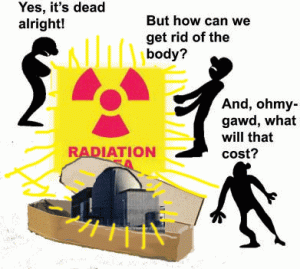
UK facing electricity supply woes after nuclear power stations shut, MPs told
Larger and smaller reactors carry risks, island nation failed to keep pace with nuclear fleet closure
Lindsay Clark, 1 Nov 2022 , Electricity shortages appear inevitable for the UK due to the decommissioning of the nation’s aging estate of nuclear power stations, according to evidence submitted by industry to politicians.
…….. Writing to the Commons Science and Technology Committee, Manchester University’s Dalton Nuclear Policy Group said: “Sadly, it is now much too late to avoid a negative impact on the UK’s electricity supply due to the closure of our nuclear fleet. All eleven of Britain’s Magnox plants have been shut down for many years – the last being the Wylfa plant on Anglesey which ceased operation on New Year’s Eve 2015.
It added: “The fleet of Advanced Gas-cooled Reactors (AGRs) operated by [French energy firm] EDF is also now seeing closures.”
In February, the UK government was warned taxpayers would have to make up a multibillion-pound shortfall to decommission nuclear power stations unless a history of overspending is reversed. EDF Energy runs seven AGR stations in the UK, part of eight second-generation reactors set to be decommissioned which provide 16 percent of the nation’s electricity. The AGR stations are scheduled to stop producing electricity by 2028.
Last year the government injected £5.1 billion ($5.8 billion) into the Nuclear Liabilities Fund – now valued at £14.8 billion ($17 billion) – which it set up in 1996 to meet the costs of decommissioning AGR and Pressurized Water Reactor stations. But EDF’s latest cost estimate to decommission the stations in March last year was £23.5bn ($27 billion). Public spending watchdog the National Audit Office has warned more money will be needed unless the government and EDF avoid overspending.
But as well as overspending, decommissioning also presents a problem for electricity supply.
“It is unlikely that there will be any significant extension to these projected dates, although there may be scope for some slight delays in closure. Once the AGRs are all closed, the UK will only have one reactor from the current nuclear fleet still operational – the pressurised water reactor at Sizewell B,” Dalton Nuclear Policy Group said.
……. “it is due to the failure since 2008 – with the exception of the long-delayed Hinkley Point C – of all proposals for a nuclear renaissance in the UK to move from plans to reality,” the group said.
In May, EDF admitted to another year’s delay and £3 billion ($3.5 billion) extra cost in Hinkely Point C – the UK’s first nuclear power station to be built in 20 years. The revised operating date for the site in Somerset is now June 2027 and total costs are estimated to be in the range of £25 billion to £26 billion ($29 billion).
EDF said it would have no cost impact on British consumers or taxpayers. The power station had been due online by 2017 at a cost of around £20 billion ($22 billion)………………….. The Science and Technology Committee is set to hear oral evidence for its inquiry on Delivering Nuclear Power during hearings this week.
The Register 1st Nov 2022
https://www.theregister.com/2022/11/01/electricity_shortages_uk/
1 This Month



26 September – International Day for the Total Elimination of Nuclear Weapons


PLEASE OPPOSE HR 8255 AND S.3639 – bills would accelerate satellite deployment, with no environmental review or safeguards – https://ncstd5li.quorum.us/campaign/169331/
To see nuclear-related stories in greater depth and intensity – go to https://nuclearinformation.wordpress.com
-
Archives
- September 2026 (233)
- August 2026 (330)
- July 2026 (355)
- June 2026 (287)
- May 2026 (306)
- April 2026 (356)
- March 2026 (251)
- February 2026 (267)
- January 2026 (308)
- December 2025 (358)
- November 2025 (359)
- October 2025 (375)
-
Categories
- 1
- 1 NUCLEAR ISSUES
- business and costs
- climate change
- culture and arts
- ENERGY
- environment
- health
- history
- indigenous issues
- Legal
- marketing of nuclear
- media
- opposition to nuclear
- PERSONAL STORIES
- politics
- politics international
- Religion and ethics
- safety
- secrets,lies and civil liberties
- spinbuster
- technology
- Uranium
- wastes
- weapons and war
- Women
- 2 WORLD
- ACTION
- AFRICA
- Atrocities
- AUSTRALIA
- Christina's notes
- Christina's themes
- culture and arts
- Events
- Fuk 2022
- Fuk 2023
- Fukushima 2017
- Fukushima 2018
- fukushima 2019
- Fukushima 2020
- Fukushima 2021
- general
- global warming
- Humour (God we need it)
- Nuclear
- RARE EARTHS
- Reference
- resources – print
- Resources -audiovicual
- Weekly Newsletter
- World
- World Nuclear
- YouTube
-
RSS
Entries RSS
Comments RSS
 nuclear-news