Nuclear safety staffing in the United States: a crisis with no easy fix
Bulletin, By David Gillum, Itty Abraham, Kathleen M. Vogel | July 14, 2023
According to the International Atomic Energy Agency (IAEA), the UN’s nuclear watchdog, nearly 13 million people are exposed to ionizing radiation in occupational settings every year worldwide. There are horror stories within the nuclear safety community of what can happen with lax institutional oversight of nuclear and radiological materials—from stockpiles of improperly managed radiological waste to missing or inaccurate inventories to lost or destroyed records.
Remedies for such infractions can cost millions of dollars and damage the reputation of institutions. That is why it is essential to have qualified, trustworthy staff and an engaged leadership team overseeing radiation safety within the many academic, governmental, and corporate entities that handle radiological materials.
In the United States, however, three challenges stand in the way of maintaining adequate levels of nuclear safety staffing: an insufficient supply of qualified experts, the loss of established experts, and the loss of tacit knowledge held by experts who retire. No single solution can fix all three challenges. But the loss of experienced personnel and the knowledge they possess should be of highest concern in the medium term.
What a radiation safety officer does. One of the most important responsibilities of a radiation safety officer is to ensure that worker and community radiation doses are kept “as low as reasonably achievable.”
………………………………………………………………….No matter what the future growth of nuclear power is, radiation safety officers will be needed to handle the radioactive waste generated by current and retired reactors. Yet, the pool of radiation protection personnel is already insufficient, increasing competition between private industry and public sectors seeking these highly skilled professionals. ………………………………………………………. https://thebulletin.org/2023/07/nuclear-safety-staffing-in-the-united-states-a-crisis-with-no-easy-fix/—
France to decide on nuclear financing by end of 2024
The French government will decide at the end of 2024 on the regulatory and
financing model for its nuclear revival programme, economy minister Bruno
Le Maire said late on Wednesday.
Montel 13th July 2023
https://www.montelnews.com/news/1510337/france-to-decide-on-nuclear-financing-by-end-of-2024
Greenpeace: Asset managers are ‘ignoring’ climate impact of bitcoin
Cristian Angeloni, 13 July 2023•
Greenpeace has called on the world’s biggest asset managers to tackle the
impact their investments in Bitcoin have on the climate. A report published
by the environmental campaign group on Tuesday claims financial services
companies are adding to increased pollution and wider usage of fossil fuels
by investing in and offering new products and services linked to the
carbon-intensive crypto-currency.
Business Green 13th July 2023
https://www.businessgreen.com/news/4120131/greenpeace-asset-managers-ignoring-climate-impact-bitcoin
Michigan ratepayers will foot the bill for Resuscitation of Palisades Nuclear Reactor
What changed? Holtec saw an opportunity to feed from the public trough by getting billions of dollars of corporate welfare, from both the state and federal government, to raise Palisades from the dead.
CounterPunch, BY JEFF ALSON, 12 July 23
The 52-year old Palisades nuclear power plant near South Haven, Michigan, on the shore of Lake Michigan near both Chicago and Grand Rapids, is one of the oldest and most degraded reactors in the country. In 2006, Palisades’ original owner, Consumers Energy, cited a wide range of major safety concerns when it sold the plant to Entergy, including that Palisades had one of the most embrittled reactor vessels in the country, needed a new reactor vessel head and steam generator, and had suffered from control rod drive mechanism seal leaks since it first opened.
As natural gas, and then wind and solar, became cheaper and cheaper, Palisades’ electricity became increasingly uncompetitive. Michigan ratepayers subsidized its electricity for years, sometimes paying as much as 57% above market rates. Trying to minimize additional costs, Entergy refused to invest in the most important safety repairs.
In 2018, Entergy announced it would sell the old and dangerous plant to Holtec, a decommissioning company, and the U.S. Nuclear Regulatory Commission (NRC) approved. The plant was formally closed on May 20, 2022, nuclear fuel was removed on June 13, and the plant was sold to Holtec on June 28, 2022.
The NRC then terminated Palisades’ operating license.
For four years, from 2018 through 2022, every major stakeholder—Entergy, the NRC, the Michigan Public Service Commission, energy and environmental NGOs, groups representing electricity consumers, and, notably, Michigan Governor Gretchen Whitmer—agreed that Palisades should be shut down.
The Governor’s own MI Healthy Climate Plan, released in April 2022, appropriately ignored Palisades’ imminent closure, since there are far cheaper and safer alternatives to reduce greenhouse gas emissions.
What changed? Holtec saw an opportunity to feed from the public trough by getting billions of dollars of corporate welfare, from both the state and federal government, to raise Palisades from the dead.
Holtec has requested a $300 million subsidy from Michigan taxpayers and in late June got a $150 million blank check from the Michigan legislature added to the current state budget without any public debate whatsoever. More ominous, Holtec also wants Michigan ratepayers to, once again, be forced to buy electricity at above-market prices that could significantly raise Michigan’s electricity rates, already the highest in the Midwest.
…………………………………. .Holtec will likely apply for multiple federal subsidies as well. To reopen Palisades, Holtec has already applied to the Department of Energy (DOE) for a billion dollar nuclear loan guarantee under the 2022 Inflation Reduction Act, and may apply for an additional $1.2 billion from the 2021 Infrastructure bill. Separately, Holtec has applied to DOE for $7.4 billion in loan guarantees under the 2005 Energy Policy Act for one or more future small modular nuclear reactors.
Michigan taxpayers and ratepayers have had too many nuclear white elephants:…………………………………………..
Of course, Michigan is not unique in this regard, as no U.S. nuclear power plants have been built on schedule or on budget in the last 50 years. In the wake of these and scores of other nuclear economic debacles across the country after Three Mile Island, Forbes business magazine concluded, “The failure of the U.S. nuclear power program ranks as the largest managerial disaster in U.S. business history….only the blind, or the biased, can now think that money has been well spent.”
…… A closed U.S. nuclear power plant has never been re-opened and would take, at best, many years. Investing in wind, solar, and battery storage provides much faster, cheaper, and more sustainable greenhouse gas emissions reductions. Of course, nuclear plants also entail unnecessary risks such as high-level nuclear waste, routine radiation releases, the potential for catastrophic accidents, and terrorist attacks…… https://www.counterpunch.org/2023/07/13/michigan-ratepayers-will-foot-the-bill-for-resuscitation-of-palisades-nuclear-reactor/
We must focus our state and federal resources on the most economical and sustainable climate energy solutions, and not squander more taxpayer and ratepayer funds on more misguided investment in nuclear power.
Small nuclear reactor industry in big trouble?

From STOP SMALL MODULAR REACTORS IN CANADA 12 July 23
2 Mycle Schneider, who produces the World Nuclear Industry Status Report (WNISR) says that the recent announcements by the Ontario government about new nuclear reactors at Darlington and Bruce amount to “a mixture of tech fantasy and collective denial of the state of the industry.”
He gave evidence to the Belgian Parliament on SMRs on 20 June 2023, following a first hearing on 30 May 2023. Six of ten presentations were given by technology providers, one by a former administrator of the French Alternative Energies and Atomic Energy Commission (CEA), one by an International Energy Agency representative, and one by a Dutch ex-government “expert” — a very open, balanced panel – sound familiar?
All ten presentations – including Mycle’s – are available in one volume here. Most are in English. He says they provide “useful documentation on current SMR strategies. NuScale and Rolls Royce were invited but did not show up. Maybe NuScale did not feel like coming… When it became public that the NuScale CFO has sold most of his shares, their value on the stock market plunged even further.
The videos of the hearings, including Q&A are here and here.
UK discusses sale of Wylfa nuclear site
1The government has confirmed ongoing discussions about the potential sale
of the Wylfa nuclear site in response to a report by the Welsh Affairs
Committee. The Wylfa nuclear site, located in Anglesey, North Wales, has
long been a subject of interest for nuclear energy development. Previous
plans for a new nuclear power station at Wylfa were scrapped in 2019 due to
financial and commercial challenges. Since then, the government has been
actively seeking alternative arrangements for the site.
Energy Live News 10th July 2023
Holtec hogs the money, but Michigan ratepayers will foot the bill for reactor resuscitation.

by beyondnuclearinternational By Jeff Alson
The 52-year old Palisades nuclear power plant near South Haven, Michigan, on the shore of Lake Michigan near both Chicago and Grand Rapids, is one of the oldest and most degraded reactors in the country. In 2006, Palisades’ original owner, Consumers Energy, cited a wide range of major safety concerns when it sold the plant to Entergy, including that Palisades had one of the most embrittled reactor vessels in the country, needed a new reactor vessel head and steam generator, and had suffered from control rod drive mechanism seal leaks since it first opened.
As natural gas, and then wind and solar, became cheaper and cheaper, Palisades’ electricity became increasingly uncompetitive. Michigan ratepayers subsidized its electricity for years, sometimes paying as much as 57% above market rates. Trying to minimize additional costs, Entergy refused to invest in the most important safety repairs.
In 2018, Entergy announced it would sell the old and dangerous plant to Holtec, a decommissioning company, and the U.S. Nuclear Regulatory Commission (NRC) approved. The plant was formally closed on May 20, 2022, nuclear fuel was removed on June 13, and the plant was sold to Holtec on June 28, 2022.
The NRC then terminated Palisades’ operating license.
For four years, from 2018 through 2022, every major stakeholder—Entergy, the NRC, the Michigan Public Service Commission, energy and environmental NGOs, groups representing electricity consumers, and, notably, Michigan Governor Gretchen Whitmer—agreed that Palisades should be shut down.
The Governor’s own MI Healthy Climate Plan, released in April 2022, appropriately ignored Palisades’ imminent closure, since there are far cheaper and safer alternatives to reduce greenhouse gas emissions.
What changed? Holtec saw an opportunity to feed from the public trough by getting billions of dollars of corporate welfare, from both the state and federal government, to raise Palisades from the dead.
Holtec has requested a $300 million subsidy from Michigan taxpayers and in late June got a $150 million blank check from the Michigan legislature added to the current state budget without any public debate whatsoever. More ominous, Holtec also wants Michigan ratepayers to, once again, be forced to buy electricity at above-market prices that could significantly raise Michigan’s electricity rates, already the highest in the Midwest.
For example, when operating properly, the 700 megawatt Palisades plant can generate about 6 billion kilowatt-hours of electricity per year. If this electricity were just one cent per kilowatt-hour more expensive than market prices, ratepayers would have to pay an extra $60 million per year. If it were five cents more expensive, the total subsidy would increase to $300 million per year. If Palisades operated for another 5 or 10 years, the total ratepayer subsidy could reach into the billions of dollars.
Holtec will likely apply for multiple federal subsidies as well. To reopen Palisades, Holtec has already applied to the Department of Energy (DOE) for a billion dollar nuclear loan guarantee under the 2022 Inflation Reduction Act, and may apply for an additional $1.2 billion from the 2021 Infrastructure bill. Separately, Holtec has applied to DOE for $7.4 billion in loan guarantees under the 2005 Energy Policy Act for one or more future small modular nuclear reactors.
Michigan taxpayers and ratepayers have had too many nuclear white elephants: ……………………………………………………………….
Jeff Alson is an Alliance to Halt Fermi 3 board member and an environmental engineer who worked on auto pollution issues for 40 years at the U.S. Environmental Protection Agency. https://beyondnuclearinternational.org/2023/07/09/holtec-hogs-the-money/
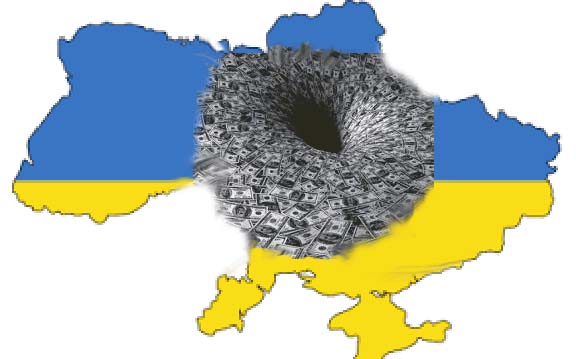
Ukraine in talks with Bulgaria to buy Russian nuclear reactors with EU funds
By Krassen Nikolov | EURACTIV.bg, Jul 7, 2023
Ukraine has started serious discussions to purchase Bulgaria’s two Russian-made nuclear reactors with EU money so it can better deal with future power shortages, Bulgarian Prime Minister Nikolay Denkov said after Ukrainian President Volodymyr Zelenskyy paid his first visit to Bulgaria Thursday.
The two reactors purchased from Russia over five years ago were meant to be used for the Belene nuclear power plant project, which has now been abandoned due to Russia no longer participating in the assembly of the reactors and Bulgaria not being able to foot the bill alone……………………..
To make the purchase easier for Ukraine, the EU Commission announced on Thursday that the potential deal could be financed with money the EU is already sending to Kyiv.
“Ukraine can use EU funds to buy nuclear reactors from Bulgaria, as this would help strengthen the Ukrainian economy”, a spokesperson for the Commission announced. This year, the EU is providing Ukraine with financial assistance worth €1.5 billion per month…… https://www.euractiv.com/section/politics/news/ukraine-in-talks-with-bulgaria-to-buy-russian-nuclear-reactors-with-eu-funds/
World’s 30 major banks are NOT investing in so-called “green” “sustainable” nuclear energy
None of the world’s 30 major banks have explicitly included nuclear energy
in their criteria for issuing green or sustainability-linked bonds,
researchers said on Thursday, despite an EU decision last year to label it
as sustainable.
The European Union decided last year to include nuclear
power plants in its list of investments that can be labelled and marketed
as green. The move aimed to guide investors towards climate-friendly
technologies, but split EU countries who disagree on atomic energy’s green
credentials.
So far, banks have not followed the EU’s lead in their own
green bond rules, according to an analysis by Columbia University’s Center
on Global Energy Policy. The study looked at the 30 banks deemed
systemically important by the Financial Stability Board. Of those banks, 17
had explicitly excluded nuclear energy from their green financing
frameworks, while 12 had frameworks that were silent on nuclear, and one
had no such framework, the researchers said.
Reuters 6th July 2023
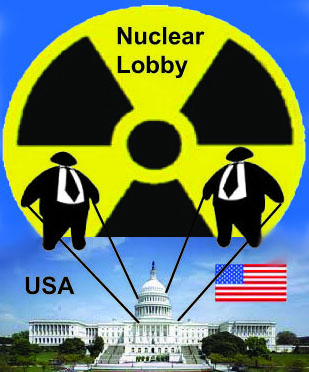
US govt provides yet another round of money grants to companies, including Westinghouse, to promote nuclear power development
Westinghouse, 6 other companies get DOE vouchers to help accelerate advanced nuclear technologies, https://www.utilitydive.com/news/westinghouse-general-atomics-advanced-nuclear-doe-energy-vouchers/684957/
Voucher recipients “do not receive direct financial awards. Vouchers provide funding to DOE laboratories to help businesses overcome critical technological and commercialization challenges,” DOE said.
The Department of Energy announced last week that it has awarded vouchers to seven companies “to accelerate the innovation and application of advanced nuclear technologies.”
According to DOE, voucher recipients “do not receive direct financial awards. Vouchers provide funding to DOE laboratories to help businesses overcome critical technological and commercialization challenges.” All voucher recipients have to cover at least 20% of any costs, DOE said.
Companies receiving the awards include the following:
Alpha Tech Research Corp. will collaborate with Argonne National Laboratory “to advance the development of a promising yttrium hydride-based moderator for its molten salt microreactor concept. The data will be used to inform the design and size of the reactor.”General Atomics will work with Oak Ridge National Laboratory “to examine the material behavior of irradiated silicon carbide composite samples. The data will help inform material behavior models required to license the use of silicon carbide-based structures in nuclear reactors.”
Ultra Energy will work with Oak Ridge National Laboratory “to organize and design high-temperature reactor testing to support the testing and further development of its new prototype detector that could help enhance the safe operation of commercial reactors once commercialized. Test results will demonstrate suitability of the prototype and allow for further development for commercial deployment.”- Westinghouse Electric Co. will work with PNNL and Idaho National Laboratory “to perform post-irradiation experiments on its chromium-coated accident-tolerant fuel cladding. The project will focus on corrosion and hydrogen behavior in the cladding from two different coating processes.”
- The vouchers were provided under DOE’s Gateway for Accelerated Innovation in Nuclear initiative. Last week’s vouchers were the third round awarded in fiscal year 2023.
Senate passes $886 billion National Defense Authorization Act (NDAA): No audits necessary

Walt Zlotow, West Suburban Peace Coalition, Glen Ellyn IL 1 Aug 23
President Joe wants no audit of the billions in weapons of mass Ukrainian death provided in the 2024 National Defense Authorization Act (NDAA).
His compliant Senate majority gave him every buck of the 886 billion bucks he requested to wage US exceptionalism round the world. Besides ravaging the life of millions in dozens of countries worldwide from bombs and sanctions, US foreign policy risks nuclear war with Russia and China over Ukraine and Taiwan respectively.
Republican Sen. Rand Paul’s amendment requiring audits and investigations of Ukraine aid was swamped 78 -20, with all Democrats voting to keep auditors away from the weapons giveaways. They are terrified an honest investigation would reveal how billions in weapons wind up with bad actors, get destroyed as soon as they’re introduced into the killing fields, and simply raise the Ukrainian death toll that can only be eliminated by negotiations.

America’s grotesque military budget should be reported in full on every front page, instead of disappearing from public consumption like invisible ink. On cable/network news, it’s the shame of America that dare not speak its name.
Every day countless Ukrainians die for US exceptionalism, and every day nuclear confrontation creeps closer.
By excluding Russia from markets in Europe, USA ‘s nuclear industry plans to sell its small and large nuclear reactors to Poland,Romania, Slovakia, Estonia, the Czech Republic and Ukraine

in April, the U.S. announced financing of up to $4bn to deploy U.S. small modular reactors (SMRs) in Poland.
the Export–Import Bank of the United States and the Development Finance Corporation) should take on more financial risk
Domestic market stagnation requires US nuclear companies to explore the growing export market.
1 Can the U.S. export its Nuclear plants to Europe, starting with Poland?
June 23, 2023 by Matt Bowen and Sagatom Saha
The exclusion of Russia from Europe’s energy future opens a door for the U.S. to export its nuclear plants, explain Matt Bowen and Sagatom Saha at the Center on Global Energy Policy. That’s why, in April, the U.S. announced financing of up to $4bn to deploy U.S. small modular reactors (SMRs) in Poland. A successful deployment there could lead to the same in Romania, Slovakia, Estonia, the Czech Republic and Ukraine,..
, the U.S. needs to create the “one stop shop” that Russia has always offered. Financing is a priority, and the authors point at what’s missing right now. In particular, the overseas investment arms (like the Export–Import Bank of the United States and the Development Finance Corporation) should take on more financial risk than they’ve needed to in the past. Coordination, too, between the knowledge bases and expert staff in the various arms will avoid duplication of effort and accelerate project assessments. And it would help if the U.S. deployed more nuclear at home: only two new reactors have connected to the U.S. power grid this century.

United States civil nuclear diplomacy is back on the move. In April, the Export–Import Bank of the United States (EXIM) and the Development Finance Corporation (DFC) announced financing of up to $3 billion and $1 billion, respectively, to deploy US small modular reactors (SMRs) in Poland.[1] SMRs — smaller, more uniform designs intended to be factory-manufactured to lower nuclear energy costs — have benefited from congressional support and interagency interest in the Biden administration. This follows the Trump administration’s reversal of a legacy prohibition on DFC funding of US nuclear energy exports.
The US is exploring the growing export market
Domestic market stagnation (only two new reactors have connected to the US power grid this century) requires US nuclear companies to explore the growing export market.
Russia has dominated the nuclear energy marketplace, but its invasion of Ukraine has damaged its diplomatic standing and widened the opportunity for US companies. However, the window will not remain open indefinitely, and progress will hinge upon US agencies arranging financing packages that turn diplomatic handshakes into cement in the ground in Poland and elsewhere.
The Polish opportunity
With EXIM Bank and DFC having just signed letters of intent to support the deployment of the GE-Hitachi BWRX-300 SMR with Orlen Synthos Green Energy as the most recent example,[3] Poland has been the epicentre of the revival of US commercial nuclear diplomacy.
The 2020 US-Poland Intergovernmental Agreement (IGA) on nuclear energy cooperation[4] was a political commitment, and in 2021 the US Trade and Development Agency funded a front-end engineering (FEED) study for potential deployment of a AP1000 nuclear power plant.[5] These developments likely facilitated Poland’s selection of the Westinghouse AP1000 for large reactor builds in 2022.[6]
Separately, Poland-headquartered mining company KGHM announced a plan in 2023 to deploy modular reactors designed by the US company NuScale Power, and in April submitted an application to the Polish Ministry of Climate and Environment to build NuScale SMRs in Poland.[7]
Successfully deploying both large-scale reactors and SMRs in Poland could accelerate progress throughout a region (Romania, Slovakia, Estonia, Czech Republic, and Ukraine)………Poland’s neighbours have, in some cases, handshake agreements to adopt US nuclear technologies. For example, at the 2021 United Nations Climate Change Conference in Glasgow, US special presidential envoy for climate John Kerry and Romanian president Klaus Iohannis jointly announced Romania’s intention to build NuScale SMRs. A May 2023 announcement at the G7 Leaders’ Summit included support for the Romanian SMR project of up to $275 million from the United States, Japan, Republic of Korea, and United Arab Emirates, as well as Letters of Interest issued by EXIM and DFC for potential support of up to $3 billion and $1 billion for project deployment – similar to the potential package for Poland.[8] US diplomatic efforts also contributed to the Czech Republic at least excluding Russian and Chinese companies from a tender to build a new reactor that will entail roughly $6.6 billion of investment into the country.[9]
Financing the deal
For all of the announcements, there are no done deals just yet. Part of Russia’s competitive edge in the past has stemmed from the ability of Rosatom, its state-owned enterprise, to offer a “one-stop shop” including favourable financing terms that private sector companies cannot match alone.[10] The United States will ultimately have to grapple with this challenge if it expects to be competitive in international markets.
…needs a “one stop shop” like the Russians have
To date, the US playbook in Poland has consisted of an IGA demonstrating US political commitment and an intent to finance; funding for FEED work from USTDA; and now, letters of intent from EXIM Bank and DFC. The process has been improvised and tactical, but it could be replicated elsewhere as part of a long-term, sustainable approach. The missing piece at the end — US government financing agencies’ ability to quickly finalise deals — could make the difference, especially as the United States competes with Russia and China for reactor supply deals.
The US may be able to improve the efficiency and terms of its reactor export financing offers to other countries through measures such as:
Considering improvements in staffing and interagency coordination at the DFC.………………..
- Exploring DFC equity scoring. Potential customer countries are eager for DFC equity investment in nuclear deals, but according to federal budget rules, the DFC must score its equity investments entirely as a loss with no expectation of returns — essentially as a grant.[11] This may be discouraging the DFC from exercising its ability to make equity investments, especially in capital-intensive nuclear projects.
- Evaluating EXIM Bank’s processes. EXIM Bank is subject to a statutory 2 percent default rate cap, which requires the bank to virtually freeze lending if exceeded.[12] Senior EXIM Bank officials have identified the cap as an impediment to pursuing slightly riskier projects — specifically to compete with China…………………
- Enlisting the DOE Loan Programs Office (LPO). The DOE LPO, with new funding and leadership under the Biden administration, has become an influential player in government energy financing.[14]……………………. https://energypost.eu/can-the-u-s-export-its-nuclear-plants-to-europe-starting-with-poland/
Chinese Boycott Over Fukushima Nuclear Plant Water Release Sinks Japanese Cosmetics
A consumer boycott in China over a planned release of water from the Fukushima Dai-Ichi nuclear plant is threatening to hurt Japanese cosmetics makers.
The viral campaign began earlier this month when largely unproven allegations that water discharges from the plant are hazardous to ……………………………..(subscribers only) https://www.bloomberg.com/news/articles/2023-06-23/china-boycott-over-fukushima-nuclear-plant-water-release-sinks-japan-cosmetics#xj4y7vzkg
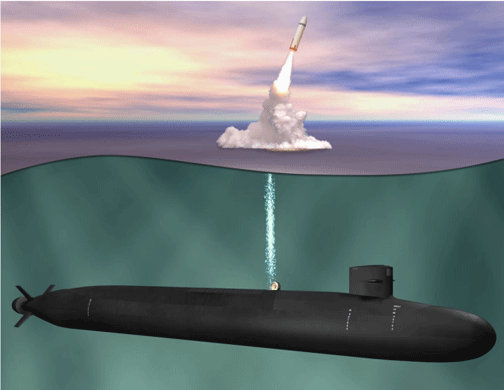
A $31 Billion Missile Program! US Looks To Reintroduce Nuclear Sea-Launched Cruise Missile Costing Equal To 10 Virginia-Class Subs
By Parth Satam, June 23, 2023, https://eurasiantimes.com/a-31-billion-missile-program-us-looks-to-reintroduce-nuclear-sea-launched-cruise-missile-costing-equal-to-10-virginia-class-subs/
A section of US Congressmen are voting for reintroducing a costly and redundant nuclear program. Republican lawmakers in the House are adopting a measure to institutionalize the Sea-Launched Cruise Missile-Nuclear (SLC)The SLCM was denied funding in last year’s Fiscal Year 2023 budget and concluded to have no battlefield use in the 2022 Nuclear Posture Review (NPR).
The Cold War-era concept envisages a cruise missile with a low-yield tactical nuclear warhead that can be fired from submarines, warships, or naval aircraft on a trajectory that makes it hard to track by radar.
According to a report in Defense News, the House Armed Services Committee “voted along party lines to amend the fiscal 2024 National Defense Authorization Act (NDAA) with a provision that would create a program of record (PoR) for SLCM-N.”
A PoR is a listed ‘line item record’ in current and future defense acquisition plans that make them eligible for continued funding over the years.
Obscene Cost for a Useless Weapon
If the full HASC advances the Fiscal Year 2024 (FY24) and passes the full floor vote in July, it would receive nearly $196 million as research and development funds.
However, political leaders and military experts advise against the astronomical costs and a futile capability, which they say can be invested elsewhere and be performed by other weapons systems.
Representative Courtney, a Democratic Congressman from Connecticut, who chairs the sea power subcommittee, cited May testimony from Chief of Naval Operations Admiral Michael Gilday stating that the warheads needed to make an SLCM-N program would cost at least $31 billion.
“The Navy can do a lot of other things with $31 billion. You can build 15 DDG destroyers with $31 billion, 10 Virginia-class submarines with $31 billion. You put nuclear warheads on these vessels, then you are changing the mission,” Courtney said.
Another Democratic Congressman, Representative Adam Smith of Washington, the top Democrat on the Armed Services Committee, argued that the US already has ballistic submarines in its fleet as well as lower-yield nuclear options from the air.
“It’s walking us down a path of spending enormous money on a capability that we don’t really need that will undermine our ability to build capabilities that we do (need) going forward,” said Smith.
Why Doesn’t the US Need the SLCM-N
Citing the need for flexibility and regional presence, the Trump administration’s 2018 Nuclear Posture Review (NPR) called for re-establishing a sea-launched cruise missile-nuclear capability.
President Biden’s FY 2022 budget continued funding SLCM-N, aiming to deploy it by the late 2020s. However, with the 2022 NPR identifying SLCM-N as “no longer necessary,” Biden’s 2023 budget request did not include SLCM-N funding.
The missile basically saddles important weapons platforms like submarines and warships with a mission set that can be undertaken by US Air Force (USAF) strategic bombers. It takes away the flexibility of employing diverse firepower options with a varied range of platforms.
“Should a geographic combatant commander intend to seek permission to use a nuclear weapon for tactical purposes, selecting bombers would offer more flexibility between mission sets and avoid committing to a weapons load-out decision as far in advance as would be necessary if SLCM-N were chosen” retired US Navy officer, Captain John Moulton writes in a paper.
In other words, an SLCM-N armed naval submarine or warship meets a very “narrow” mission set of destroying hardened enemy ground targets while sacrificing equally important tactical and strategic roles like hunting enemy submarines, destroying surface warships, mine laying or providing Intelligence-Surveillance-Reconnaissance (ISR).
Other currently nuclear weapons capable platforms like the B-2 Spirit, B-52 Stratofortress, B-1B Lancer, and the upcoming B-21 Raider envisaged for the same mission could also reach the warzone quickly.
The cost of revealing its position while firing an SLCM-N would also far outweigh the gains from hitting enemy ground targets with low-yield nuclear missiles, Moulton further explains. Moulton is a Senior Fellow at the Council on Strategic Risks’ Janne E. Nolan Center on Strategic Weapons.
The conditions that would justify using a tactical nuclear-tipped cruise missile would be very rare and would prevent a submarine or a naval vessel from performing optimally in a fluid battlefield situation.
In the Western Pacific, becoming part of a “joint force” in a mutually supporting pushback against a People’s Liberation Army Navy (PLAN) fleet inside China’s dangerous Anti-Access/Area-Denial (A2/AD) zone is a new evolving orientation guiding the US Navy’s submarine arm, explained in a previous EurAsian Times analysis.
Lastly, the risks of unintended nuclear escalation are exponentially higher when an SLCM-N is fired since the country sustaining the attack – China or North Korea – might legitimately retaliate with a nuclear strike, triggering a devastating atomic exchange.
Experts have long pointed out how such exchanges cannot be “controlled” given the tensions and the miscalculation involved.
A US asset firing an SLCM-N also counts as a nuclear first strike, which shifts the diplomatic narrative in the Russian, Chinese, or North Korean favor. None of these countries have ever indicated they plan to use nuclear weapons as a warfighting tool. While China has a clear No-First Use (NFU) policy, Moscow and Pyongyang have maintained they will use nukes only when the physical security of their country faces an existential threat. The author can be reached at satamp@gmail.com
United Arab Emirates keen to become an exporter of nuclear reactors and nuclear technology

ABU DHABI, 23rd June, 2023 (WAM) — H.H. Sheikh Hamdan bin Zayed Al Nahyan, Ruler’s Representative in Al Dhafra Region, visited Barakah Nuclear Energy Plant to view the latest developments of Unit 4, the final unit at the plant approaching commercial operation, and praised Emirati competencies that contributed to developing nuclear energy sector technologies to export globally.
Sheikh Hamdan was received by Mohamed Ibrahim Al Hammadi, Managing Director, and Chief Executive Officer of the Emirates Nuclear Energy Corporation (ENEC); and Ali Al Hammadi, Chief Executive Officer of ENEC’s subsidiary Nawah Energy Company (Nawah); as well as a delegation from ENEC’s senior management.
At the beginning of his visit, Sheikh Hamdan inaugurated the state-of-the-art Nuclear Reactor Operators Training Centre, which will enhance nuclear reactor operators’ expertise, and was briefed on the “Orchid” digital reactor room, which provides advanced maintenance training for engineers without entering the reactor area.
Sheikh Hamdan bin Zayed then toured the simulation training centre, which is one of the largest and most modern simulation training centres in the world. He also heard from Emirati engineers on the Plant’s developments and achievements, the latest of which was the operational readiness preparations for Unit 4, the fourth and final unit at the Barakah Nuclear Energy Plant in Abu Dhabi…………………..
https://www.wam.ae/en/details/1395303172381
1 This Month



26 September – International Day for the Total Elimination of Nuclear Weapons


PLEASE OPPOSE HR 8255 AND S.3639 – bills would accelerate satellite deployment, with no environmental review or safeguards – https://ncstd5li.quorum.us/campaign/169331/
To see nuclear-related stories in greater depth and intensity – go to https://nuclearinformation.wordpress.com
-
Archives
- September 2026 (219)
- August 2026 (330)
- July 2026 (355)
- June 2026 (287)
- May 2026 (306)
- April 2026 (356)
- March 2026 (251)
- February 2026 (267)
- January 2026 (308)
- December 2025 (358)
- November 2025 (359)
- October 2025 (375)
-
Categories
- 1
- 1 NUCLEAR ISSUES
- business and costs
- climate change
- culture and arts
- ENERGY
- environment
- health
- history
- indigenous issues
- Legal
- marketing of nuclear
- media
- opposition to nuclear
- PERSONAL STORIES
- politics
- politics international
- Religion and ethics
- safety
- secrets,lies and civil liberties
- spinbuster
- technology
- Uranium
- wastes
- weapons and war
- Women
- 2 WORLD
- ACTION
- AFRICA
- Atrocities
- AUSTRALIA
- Christina's notes
- Christina's themes
- culture and arts
- Events
- Fuk 2022
- Fuk 2023
- Fukushima 2017
- Fukushima 2018
- fukushima 2019
- Fukushima 2020
- Fukushima 2021
- general
- global warming
- Humour (God we need it)
- Nuclear
- RARE EARTHS
- Reference
- resources – print
- Resources -audiovicual
- Weekly Newsletter
- World
- World Nuclear
- YouTube
-
RSS
Entries RSS
Comments RSS
 nuclear-news