Newbuild: How Much of Vogtle Nuclear Plant’s Capital Costs Can Southern Recover?

Energy Intelligence Group , Apr 28, 2023, Stephanie Cooke, Washington
As the first of two AP1000 newbuilds ramps up to commercial operation at Georgia Power’s Vogtle plant in the US state of Georgia, an “epic battle” is brewing over how much the operator can recover in capital cost overruns from ratepayers. Preparation for a possible standoff between the Southern Co. subsidiary and staff of the state Public Service Commission (PSC) is already under way against a toxic political backdrop.
Voter rights litigation challenging ossified Republican dominance on the commission is delaying a PSC election previously slated for November. Now the question is to what extent a delayed PSC election, and pressure from the two Democratic contenders, might influence the outcome of “prudency” hearings that will determine how much ratepayers will be on the hook for capital expenditures at the Vogtle-3 and -4 newbuilds.
Much is at stake for Georgia Power and its ratepayers. The latter have been charged for the financing portion — but not the actual capital costs — of Georgia Power’s construction bills since 2011, well before the first concrete was poured for Vogtle-3 on Mar. 2, 2013. By the end of the year, ratepayers will have on average paid approximately $913 per person for the project, according to PSC testimony earlier this year.
Once Unit 3 is in commercial operation, the utility is authorized to include $2.1 billion of capital costs in the rate base. And when fuel loading begins at Unit 4 the PSC will begin hearings to determine the “prudency” of billions more in capital expenditures as a basis for passing on the cost to ratepayers.
Earlier this year PSC staff said Georgia Power may ultimately seek to recover as much as $9.7 billion of its capital costs, translating into a potential rate hike of 15%, or $17.20 extra per month for each customer based on an average monthly bill of $131. This figure is 120% higher than the $4.4 billion in capital costs expected at certification, and both figures are only a fraction of total capital costs, as Georgia Power is only a 45.7% owner of the Vogtle newbuilds. Georgia Power provided no response to Energy Intelligence questions as to what Vogtle capital cost recovery it will seek.
For Southern, the key is getting both reactors into commercial operation, after which all capital expenditures become fair game for inclusion in the rate base…………………
…………. any additional technical glitches — Unit 3 was forced to shut down for a week earlier this month because of an electrical malfunction — could delay recovery of capital costs. And at some point Georgia Power might face a very different PSC. If one or both Democratic candidates succeed in ousting current PSC commissioners, they would likely not shift the majority vote in disputed rate cases, but they would be better positioned to draw media attention to any Georgia Power capital cost recovery requests.
“There’s never been any single financial decision this large in the state of Georgia,” said Patty Durand, a candidate running to unseat Commissioner Tim Echols, whose term technically expired in December. In Georgia, it’s “going to be the epic financial battle of the century.”
Even getting on the ballot has been a challenge for Durand and for Shelia Edwards, who is challenging Commissioner Fitz Johnson, and now both candidates must wait until a federal court case over the PSC electoral process is decided……………………………………………….
…………………………………… Sources close to the PSC suggest that the total Vogtle project cost, including financing costs and on a 100% basis, may ultimately surpass $35 billion. https://www.energyintel.com/00000187-b4f4-d9b3-afdf-f6f7d5780000—
Preparing for War: The Global Military Budget

2022 proved to be a boon for militarists the world over
May 1, 2023: Dr Binoy Kampmark https://theaimn.com/preparing-for-war-the-global-military-budget/—
US$2.24 trillion is a mighty amount. It’s also a sickening figure when considering the object of this exercise. The flickering tease of war, the promise of bloodshed and an increasingly large butcher’s bill, are inevitable suggestions from such a figure. The scenes are also clear: well-paid suits dazed by theories of the next war; policy wonks jabbering over mock war games. A huge amount of money is being pushed into the venture, and the sceptics are being held at bay.
Much of this news comes from the Stockholm International Peace Research Institute’s latest findings that countries are spending 2.2% of the world’s gross domestic product on armaments. Of that amount, the United States, China and Russia accounted for 56% of the total. Global military spending, the SIPRI report also notes, grew by 19% over 2013-2022, rising every year since 2015.
The amount is slightly more than the previous year, when SIPRI announced that total military expenditure had risen by 0.7% in real terms in 2021 “to reach $2113 billion.” The largest contributors to the binge on that occasion were the United States, China, India, the United Kingdom and Russia. In sum, the five countries accounted for 62% of expenditure.
This reads differently from the more optimistic International Monetary Institute’s assessment from 2021: “Worldwide military spending, when estimated on the basis of unweighted country averages, has declined by nearly half, from 3.6 percent GDP during the Cold War period (1970-90) to 1.9 percent of GDP in the years following the global financial crisis.” When it comes to variations on the figures in this field, best stick with SIPRA.
2022 proved to be a boon for militarists the world over, though there were particular regions that saw more growth than others. In Europe, levels of spending had reached levels unseen since the Cold War, up from 13% from the previous twelve months. The reason commonly given: Russia’s invasion of Ukraine. In East Asia, the justification is the increasingly hostile US-Chinese rivalry, though those in Washington’s corner are ever pointing the finger to the Yellow Horde’s ambitions in Beijing.
The picture in Europe is an ugly one, with concerns being expressed in certain strategic circles that not enough is being done to move away from dependency on the US imperium. The European Council on Foreign Relations (ECFR) has even posited that Europe is the victim of US “vassalisation”, notably in light of the Ukraine War. Visions of strategic autonomy are more distant than ever.
Such sentiments, however, do little to discourage the militarists: whether Europe chooses to throw in its lot with Washington or not, the arms dealers and manufacturers will do a merry jig. To prove that point, the ECFR advocates the deployment of “western European forces to the east in greater numbers, offering to replace US forces in some cases.” The only difference here is the burden shared, rather than the amount spent.
In terms of individual countries, Finland’s military expenditure rose by 36% in 2022 to reach $4.8 billion, the largest in the country’s year-on-year increase since 1962. Polish military expenditure grew by 11%, reaching $16.6 billion over the course in 2022. The passage of the Homeland Defence Act, designed to reorganise the military and raise defence spending, promises to eventually push the levels to 4% of GDP. Warsaw has made no secret of the fact that it wishes to have the continent’s largest army, a daft and distinctly draining exercise.
The figures are also significant given the increasingly proxy nature of the Ukraine War’s balance sheet. Ukraine, for its part, rose from its position at 36 on the league of arms spenders to 11 in 2022, with a figure of $44 billion. But SIPRI has a modest confession to make: it is unable to furnish us “an accurate assessment of the total amount of financial military aid to Ukraine.” This is largely because the donor countries have, for the most part, not released disaggregated data. A rough estimate of $30 billion is provided, which “includes financial contributions, training and operational costs, replacement costs of the military equipment stocks donated to Ukraine and payments to procure additional military equipment for the Ukrainian armed forces.”
Some of this must be factored into the increased budgets of the UK (top European spender at 3.1%), with Germany and France coming in at 2.5% and 2.4% respectively. Of the three, the UK has given the most military aid to Ukraine, and is second only behind the United States, which allocated $19.9 billion.
As for the US itself, the Biden administration has already mooted the idea that it will increase the number of troops deployed to Europe by 20,000 personnel to 100,000. The measure is part of the European Deterrence Initiative (EDI), an effort to, according to the US Department of Defense, “enhance the US deterrence posture, increase the readiness and responsiveness of US forces in Europe, support the collective defense and security of NATO allies, and bolster the security and capacity of US allies and partners.”
While China, with a bill of $292 billion, is leant upon as an excuse for increased military expenditure by other powers, the United States remains the undisputed premier spender, making up a staggering 39% of the global total at $877 billion. Hardly the sort of figure to be sported by a peacemaker.
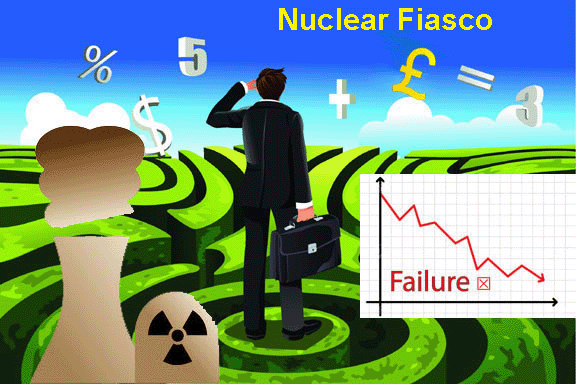
UK courts Bahrain and the United Arab Emirates for investments to salvage the nuclear dream
Gulf states poised to bail Britain out of energy crisis
Bahrain and the UAE courted by energy secretary Grant Shapps for fresh nuclear investment
By Rachel Millard, 30 April 2023
Gulf states are poised to help bankroll Britain’s efforts to build new
nuclear power stations to keep the lights on, the energy security secretary
has indicated. Grant Shapps visited the region in January and said he
remains “in constant contact” with investors in the region who are
“very interested” in the nuclear sector. Countries such as the UAE and
Bahrain have built up vast sovereign wealth funds which are now pushing
into clean energy amid global efforts to cut fossil fuel use.
Jeremy Hunt, the chancellor, met with the UAE’s Mubadala, a sovereign investment firm,
in February, and has abandoned plans to toughen tax rules for sovereign
wealth funds. Mr Shapps said: “I was in the Gulf states [this year] and
I’m in constant contact with our friends and colleagues over there. “They
have already been investing massive amounts in renewable energy – and
they’re very interested in nuclear power as well. The scale of their
ambitions are pretty big – watch this space.”
Ministers are trying to drum up investment for EDF’s planned £20bn power plant in Suffolk as well as other nuclear projects as part of a push on the carbon-free [?] power
source. Legal & General, Britain’s biggest money manager with £1.3 trillion
of assets, has said it is focused on supporting other “viable, and
cost-effective” {?] clean [?] energy solutions.
French state energy giant EDF
owns Britain’s nuclear fleet but will need outside investors to build its
planned Sizewell C project in Suffolk. The Government and EDF have pushed
China’s CGN out of the project amid concern about China’s involvement in
critical national infrastructure.
Telegraph 30th April 2023
Swedish reactor shutdowns nearly double Finland’s electricity price overnight
Swedish reactor shutdowns nearly double Finland’s electricity price
overnight. A short circuit encountered during maintenance near Stockholm
forced the closure of two nuclear reactors in Forsmark, Sweden.
YLE 27th April 2023
Nuclear vs Solar: The Race For Renewable Dominance
oil Price, By Alex Kimani – Nov 11, 2020
“………………………………………………………….. now some nuclear experts and activists are suggesting a middle-ground: The Green Nuclear Deal.
Far more Republicans (65%) than Democrats (42%) are pro-nuclear as per Gallup Polls.
………………………………………………….. The United States Department of Energy (DOE), Nuclear Engineering & Science Center at Texas A&M, and the Idaho National Laboratory (INL) have partnered with Chicago-based Clean Core Thorium Energy (CCTE) to develop a new thorium-based nuclear fuel they have dubbed ANEEL. ANEEL, which is short for “Advanced Nuclear Energy for Enriched Life”, is a proprietary combination of thorium and “High Assay Low Enriched Uranium” (HALEU) that hopes to solve some of the knottiest problems nuclear power faces, including high costs and toxic wastes.
That said, we pointed out that the main sticking point to the promotion of thorium as a cleaner nuclear fuel is that it remains unproven on a commercial scale. Thorium MSRs (Molten Salt Reactors) have been in development since the 1960s by the United States, China, Russia, and France, yet nothing much ever came of them. Further, only about 50 of the world’s 440 reactors can currently be configured to run on thorium.
We have also highlighted how scientists have finally broken ground by kicking off the five-year assembly phase of the massive International Thermonuclear Experimental Reactor (ITER), the world’s largest fusion reactor, in Saint-Paul-les-Durance, France. Funded by six nations, including the U.S., Russia, China, India, Japan, and South Korea, ITER will be the world’s largest tokamak fusion device with an estimated cost of ~$24 billion and capable of generating about 500 MW of thermal fusion energy as early as 2025. Unfortunately, practical nuclear fusion remains a long-shot and could be decades away from becoming a commercial reality.
We simply don’t have the luxury of time.
Further, nuclear power in the U.S. faces an uncertain future. Of the country’s 97 currently active commercial nuclear reactors, 11 are scheduled for retirement by 2025. Only the Watts Bar plant in Tennessee has been commissioned over the past two decades, though two new reactors at the Vogtle plant in Georgia could be pressed into action as early as 2021.
The biggest obstacle for nuclear power, however, is that it remains a tough sell with well-publicized nuclear disasters such as Chernobyl, Fukushima, and Three Mile Island still looming large in the American public’s psyche. A Morning Consult survey has revealed that just 29% of Americans view nuclear energy favorably with 49% viewing it negatively thus making it the most unpopular energy source.
Solar rising
Whereas the nuclear sector comeback has its work cut out for it, solar power has clearly been on the ascendancy thanks in large part to falling costs………………………………….
Strongly Bullish
Despite challenges, the solar sector remains strongly bullish.
Indeed, S&P Platts says that the shift to renewable energy is likely to continue full steam ahead regardless of fed policies noting that the energy transition has “clearly been moving forward on a regional basis,” despite lacking clear endorsement at the federal level under Trump.
It remains to be seen whether nuclear energy can command the same level of support. https://oilprice.com/Alternative-Energy/Nuclear-Power/Nuclear-vs-Solar-The-Race-For-Renewable-Dominance.html
Amid maintenance delays and strikes in nuclear industry, France restarts one reactor
France’s EDF has restarted the 1.5-GW Civaux-2 reactor while delaying both
planned maintenance and returns elsewhere amid ongoing worker strikes,
transparency data showed April 24.
EDF further delayed planned return dates
for Gravelines 1 and Blayais 1, where strikes have been ongoing for over
five weeks. The start of maintenance at Cruas 4 was also delayed further,
with annual refueling pushed back another fortnight to May 6. Initial
planning set an April 20 return date for the reactor, now scheduled to
remain offline until June 16.
Civaux-2 has been awaiting a restart, having
been delayed by strikes after a failed attempt in early March. The reactor
has been offline since late 2021 for stress corrosion repairs that were
completed in February.
SP Global 24th April 2023
Nuclear liability issues not yet resolved for Jaitapur project: French company EDF
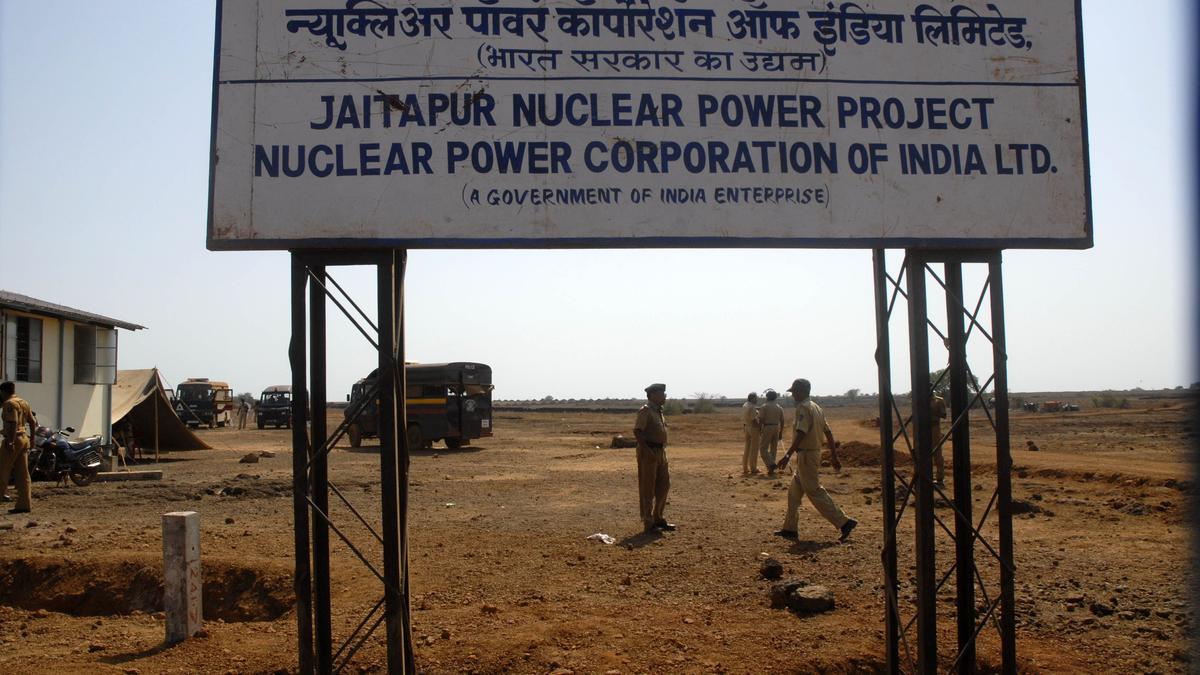
Delays despite assurances by Minister Jitendra Singh that all technical, commercial, legal issues would be sorted by “early 2023”
The Hindu, SUHASINI HAIDAR April 24, 2023
Two years after the French energy company Electricite de France (EDF) submitted its techno-commercial offer for the construction of six nuclear power reactors in Maharashtra’s Jaitapur, talks between Indian and French officials over several issues, including liability, have not resulted in any breakthrough yet.
According to sources in Delhi and Paris, the talks over the high cost of power per unit has also become a major issue in the conclusion of the agreement for the 9,900 MW project, which is the world’s biggest nuclear power generation site under consideration at present.
“The topic [of liability] has been discussed between the French and Indian governments and my understanding is that it is progressing towards convergence. It is a key topic for France and the EDF, and so this topic would have to be solved before any contract can be signed,” an EDF official said in response to a question from The Hindu, as part of a presentation to a larger group of international journalists invited to Paris.
The statement is significant, as in October 2022, the Minister of Space and Atomic Energy, and Minister of State in the Prime Minister’s Office (MoS PMO), Jitendra Singh, promised an early resolution to all the issues, within months………………..
PM to visit Paris in July……………………
The EDF official, who requested not to be identified, but spoke on behalf of the company, said that the issue, arising from India’s Civil Liability for Nuclear Damage Act that India passed in 2010, remains an item on the “agenda for both countries”. India’s CLND Act, which was brought in addition to the International Convention on Supplementary Compensation (CSC), is considered excessive by foreign companies, which could be liable to pay hundreds of millions of dollars in the event of a nuclear accident. As a result, despite signing civil nuclear deals with a number of countries, including the U.S, France and Japan, the only foreign presence in India is that of Russia in Kudankulam, projects that predate the Law.
A recent report in Al Jazeera also points to the fact that despite planning an insurance pool of ₹1,500 crores ($200 million) in 2015, the government’s ‘India Nuclear Insurance Pool” (INIP) has only been able to collect about half, ₹700 crore-₹800 crore, thus far. Concerns over safety after the 2011 Fukushima nuclear disaster, prompted Germany to switch off its last nuclear power reactor this month.
Another factor will be the time taken by the Jaitapur project, for which the original MoU was signed in 2009 with EDF’s predecessor Areva. In 2016, EDF and NPCIL signed a revised MoU, and in 2018, the heads of both signed an agreement on the “industrial way forward” in the presence of Mr. Modi and Mr. Macron. However, officials said nuclear projects do take time, pointing to EDF’s latest construction of an EPR in Finland, Olkiluoto 3. Its work began in 2005 and was completed after a delay of about 14 years, finally starting regular production on April 16 this year. https://www.thehindu.com/news/national/nuclear-liability-issues-not-yet-resolved-for-jaitapur-project-french-company-edf/article66774668.ece
France’s struggle to deliver a second nuclear era
An ambitious reactornconstruction programme aimed at reducing carbon emissions is running into the realities of skilled worker shortages.
For 10 years, Gaetan Geoffray
worked as a plasterer and painter, before learning metalwork at a company
that made cranes. Arnaud Dupuy was a policeman. A third colleague at their
factory in the depths of rural Burgundy used to be a baker.
The factory is owned by Framatome, a subsidiary of state-controlled power utility EDF, and the trio are hoping to qualify for one of the most sought-after jobs in
France, as nuclear-grade welders. If all goes well, they’ll one day be
allowed to work on the most intricate features of the steel parts assembled
in the plant, where the all-important 24-metre-long casings protecting the
core of atomic reactors are made.
For now, that goal is at least three to
four years off, so exacting are the demands in a field in which imperfect
finishes can delay a project by months and cost millions, if not billions,
of dollars. For France, the next intake of hires and welding apprentices
can’t come a day too soon.
After years of political dithering over whether
or not to cut its reliance on nuclear power, a hesitation echoed globally
after the 2011 Fukushima nuclear accident in Japan, the country has gone
all-in with Europe’s most ambitious atomic construction project in decades.
In order to stand a chance of turning this vision into reality, the
government estimates it needs to find another 100,000 nuclear specialists
of all guises, from engineers and project supervisors to boilermakers and
electricians, over the coming six years.
Looming large, beyond hurdles with
design approvals and financing for the €52bn programme, is an even more
basic question — whether France, Europe’s main atomic nation, still has
the industrial capacity and people to make the projects happen on a scale
it has not contemplated since the 1970s.
FT 23rd April 2023
https://www.ft.com/content/d23b14ae-2c4e-458c-af8a-22692119f786
Oh Goody – America is going to sell heaps of Holtec’s Small Nuclear Reactors to Ukraine!

“This cooperation agreement will lead to economic development, creation of jobs, establishment of modern manufacturing facilities, training facilities, R&D, and thus help Ukraine emerge as the regional hub for Holtec’s nuclear reactor technology…….”
Mass deployment of Holtec SMRs in Ukraine is part of accord’s aims
WNN 24 April 2023, Up to 20 Holtec SMR-160 plants will be built in Ukraine under a cooperation agreement signed between Holtec International and Ukrainian national nuclear operator Energoatom. The agreement calls for the first plant to begin supplying power by March 2029.
The agreement was signed on 21 April by Energoatom President Petro Kotin in Kiev and Holtec CEO Kris Singh in Camden, New Jersey, USA. The ceremony was also attended by Ukraine’s Minister of Energy Herman Galushchenko and the vice president of Holtec International operations in Ukraine Riaz Avan……………………………………………..
“This cooperation agreement will lead to economic development, creation of jobs, establishment of modern manufacturing facilities, training facilities, R&D, and thus help Ukraine emerge as the regional hub for Holtec’s nuclear reactor technology…….”
………………………………………………………… In June 2019, Holtec, Energoatom and Ukraine’s State Scientific and Technology Centre formally entered into a partnership to advance the SMR-160 for deployment in Ukraine. The partners ratified the creation of a consortium partnership that bound the three companies into a cooperative undertaking to progress the deployment of the SMR-160 small modular reactor in the country. The consortium is a US company registered in Delaware with each of the three parties owning allotted shares. Its technology operation centre will be based in Kiev, Ukraine. https://www.world-nuclear-news.org/Articles/Accord-sees-mass-deployment-of-Holtec-SMRs-in-Ukra
Pension funds shun Sizewell C in major blow to Britain’s nuclear ambitions

Asset managers ‘extremely sceptical’ about nuclear push despite project’s ‘sustainable’ status
By Matt Oliver and Szu Ping Chan, 22 April 2023 •
The Government’s push to find investors for the £20bn Sizewell C nuclear
power station has suffered a significant blow as Britain’s biggest fund
managers have snubbed the scheme.
Jeremy Hunt, the Chancellor, sought to
make the project more attractive to green-focused asset managers in his
Spring Budget by proposing to give it “sustainable” status under UK
financing rules. Ministers have also reformed the funding model for nuclear
plants to hand investors more up-front rewards.
But senior sources in the
asset management industry and two of the country’s biggest fund managers
have dismissed the changes as irrelevant and insisted it would not persuade
them to back Sizewell C.
Nuclear power is seen as vital to Britain’s energy
security in the wake of the Ukraine war, with ministers calling for it togenerate 25pc of the country’s electricity needs by 2050. But despite
introducing new funding models and classifying it as “green” to attract
investors, the Government has struggled to persuade sceptical pension funds
and asset managers to get behind Sizewell C.
Legal & General – Britain’s
biggest money manager with £1.3 trillion of assets – said Mr Hunt’s
announcement will have no bearing on its opposition to large nuclear energy
schemes, as it is focused on supporting alternatives such as wind and
solar. A spokesman for Legal & General Capital told The Telegraph: “Our
stance hasn’t changed: we are focused on investing in and supporting other
innovative, viable, and cost-effective clean energy solutions that are
already delivering results.” Barclays has been brought in to run the financing process but this has not yet begun, prompting concerns it could
be held up by a potential general election next year.
Telegraph 22nd April 2023
https://www.telegraph.co.uk/business/2023/04/22/uk-nuclear-ambitions-pension-funds-shun-sizewell-c/
Rolls Royce shares OK for civil aviation, but investment in small nuclear reactors is risky

Will going nuclear send Rolls-Royce shares into meltdown?
Dr James Fox takes a closer look at Rolls-Royce shares. What’s next for the British engineering giant after the recent rally came to an end in March?
The Motley Fool, Dr. James Fox 23 Apr 23
Rolls-Royce (LSE:RR) shares have been red-hot in recent months, going from strength to strength. But the FTSE 100 stock has plateaued since March.
So what could drive the share price forward in the coming years? Could it be Rolls-Royce’s entry into the nuclear space?
Rolls-Royce (LSE:RR) shares have been red-hot in recent months, going from strength to strength. But the FTSE 100 stock has plateaued since March.
So what could drive the share price forward in the coming years? Could it be Rolls-Royce’s entry into the nuclear space?
For some, the jury is out on the future profitability of the modular nuclear reactor programme — the plan was given government approval and funding last year.
………. In theory, Rolls would ‘mass produce’ these small reactors, with a capacity of 470MW, and sell them for around £2bn.
………..there are challenges. First among them are reports that the UK government is preparing to invite international bids for next-generation nuclear power projects, thus removing its backing for Rolls-Royce’s product in development.
With billions of forecast development costs, it would be disastrous if the government started to favour other companies — the share price would really suffer.
What matters more?
The nuclear programme is interesting but, in reality, other sectors are more important — for now at least. In the near term, I’m hoping to see more signs of the recovery in civil aviation. This is Rolls’ biggest sector and a post-pandemic recovery will propel the company forward.
…………………..Despite the risks in the SMR space, I’m not fearing a share price meltdown. https://www.fool.co.uk/2023/04/23/will-going-nuclear-send-rolls-royce-shares-into-meltdown/
—
UK seeks a nuclear energy renaissance – but experts question whether it’s value for money
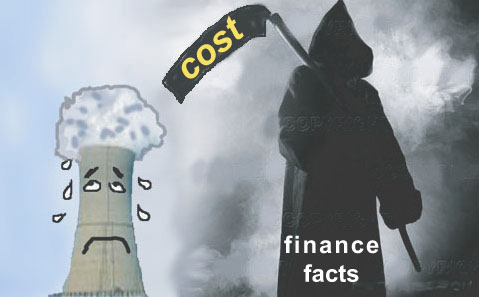
The most powerful argument against nuclear could be economic as most plants take at least ten years to commission, design and build
inews, By Leo Cendrowicz, Brussels Correspondent, 21 Apr 23,
BRUSSELS – As Europe scrambles for new energy sources, Britain has joined the countries seeking a nuclear renaissance.

Chancellor Jeremy Hunt announced last month the creation of Great British Nuclear, a body to oversee the roll-out of a fleet of nuclear power stations.
However, there are concerns about the environmental impact of nuclear, with campaign groups saying that the risks of nuclear reactions and the difficulties in disposing of nuclear waste mean it cannot be considered green.
And the most powerful argument against nuclear could be economic. Most plants take at least ten years to commission, design and build. Delays are frequent: Europe’s largest nuclear reactor, the Olkiluoto 3 plant in Finland, came online last week a full 14 years after its scheduled date, beset by technological problems that led to lawsuits – while its final price tag ballooned to around €11bn (£9.74bn), almost three times the initial estimate.
The steep upfront building costs for nuclear power plants, along with the long construction times, have raised questions about whether nuclear energy represents value for money.
Now that renewable costs are going down – especially in solar, wind and batteries – renewable is likely to be cheaper in the longer term, making nuclear commissions look less worthwhile.
The fact that Europe has built few nuclear plants since the boom wave of the 60s also means there is little expertise available across the value chain. The EU Internal Market Commissioner Thierry Breton has said a “colossal” investment in nuclear energy will be needed over the next 30 years to meet the EU’s emissions-reduction targets and electricity demand.
“The big question on nuclear is the economics of building new nuclear plants,” says Ben McWilliams, an energy research analyst at Bruegel – a Brussels-based think tank. “When you compare it to something like solar or wind, which are also modular technologies, so you can have much larger economies of scale – you have to ask if it is sensible to start building new nuclear plants that will come online in 15 or 20 years when they’re going to compete in a grid that should be largely renewable dominated?”
……………………………… France, Europe’s champion, has not been the best advertisement recently: last November, almost half of the country’s reactors were offline, thanks to maintenance issues in its ageing nuclear fleet.
The UK’s strategy is to focus on small modular reactors (SMRs) to ensure faster build times. These mini reactors would generate between 50 and 500 megawatts of power, compared with the 3.2-gigawatt Hinkley Point C in Somerset, the UK’s only large nuclear plant under construction, which is plagued by delays and cost overruns.
………………………….. . In February, 11 EU energy ministers signed a declaration committing to “cooperate more closely” across the entire nuclear supply chain and promote “common industrial projects” in new generation capacity as well as new technologies like small reactors.
While energy policy is mostly set at national level within the European Union, the long-term push is for green, renewable energy. The European Commission has attempted to nudge governments to wean themselves off fossil fuels, adopting a controversial measure that labels nuclear investments as sustainable “transitional” sources, if they replace dirtier fuels. Last Tuesday, Greenpeace and other campaign groups announced plans to take the Commission to the EU Court of Justice of the EU. https://inews.co.uk/news/world/uk-nuclear-energy-renaissance-expert-money-2289161
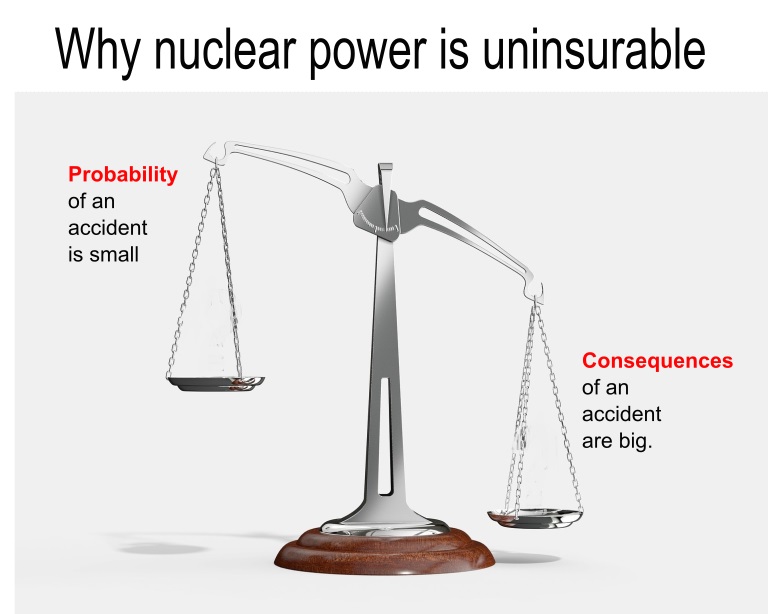
Globally, taxpayers are on the hook for nuclear accidents. Nuclear is uninsurable and unacceptable.
Simon Daigle – 21 Apr 23,
Simon J Daigle, B.Sc., M.Sc., M.Sc.(A) Concerned Canadian Citizen. Occupational / Industrial Hygienist, Epidemiologist. Climatologist / Air quality expert (Topospheric Ozone).
Any NPP plant globally has no guarantees from insurers, or governments, or have adequate accident liabilities to cover for just one NPP accident and any country host NPP taxpayers are always on the hook for damages
When will governments globally understand that taxpayers should not be collateral damage (tokens) financially for potential human suffering and/or irreversible biosphere damage as « willing » participants for the nuclear industry ? The answer should be none. Yet we see a different reality and narrative. It’s all Shameful.
In India, a US company paid a fraction of the true cost of one chemical disaster: Bhopal (less than 500 million US dollars) for one chemical accident. And worse, they were never found guilty in a court of law in the US. Imagine when nuclear accident happens in India ? Who will be responsible? We know today that the true cost are billions (USD) because of Chernobyl and Fukushima tragedies for examples.
Now, in 2023, and for past decades, any nuclear accident in India, or elsewhere, citizens and taxpayers, had and will continue to absorb the true public burden in the global insurance pool for all nuclear energy countries that are contributing in for covering any NPP risks or accident liabilities.
Current insurance policy are clearly inadequate to repair and compensate for any human suffering, death, disease, and biosphere irreversible damages for any potential NPP accident, nuclear waste and compensation.
Unacceptable.
French Winter Power Twice as Pricey as Germany’s on Nuclear Woes

Bloomberg By Todd Gillespie, April 19, 2023
France’s weakened nuclear power output means the cost of its electricity for next winter is more than twice as expensive as Germany’s, as concerns over the health of the country’s reactors persist.
The “massive” gap of nearly €250 ($273) per megawatt-hour between French and German prices is because traders are pricing in more risk as they await updates on Electricite de France SA’s struggles with its aging atomic fleet, according to analysts at Engie SA’s EnergyScan. “No participants want to risk being short next winter,” they wrote.
French power for the first quarter of 2024 is trading at €416 per megawatt-hour, more than double Germany’s rate of €169. Normally a power exporter, France’s atomic generation has been gradually returning to service but still remains below historical averages.
The price discrepancy is a sign of France’s lingering energy woes even as its European neighbors benefit from a prolonged drop in prices. EDF’s nuclear reactors have faced recurring corrosion issues as the government takes greater hold over the state-backed utility………………… https://www.bloomberg.com/news/articles/2023-04-19/french-winter-power-twice-as-pricey-as-germany-s-on-nuclear-woes?leadSource=uverify%20wall—
Does India have enough insurance coverage for a nuclear disaster?
India has barely half the insurance amount required by law for its current nuclear plants, and has many more plants in the works.
Aljazeera, By Urvashi Sarkar 21 Apr 2023
India has barely half the insurance amount it needs in the event of a nuclear disaster, raising concerns among experts about the lack of oversight on the nuclear sector.
The India Nuclear Insurance Pool (INIP) has collected around 7 billion to 8 billion rupees ($84.5m to $96.6m) of the 15 billion rupees ($182.9m) required under the Civil Liability for Nuclear Damage Act, 2010 (CLND), indicating a critical shortfall in funds that will be needed to compensate victims and pay for cleanup in case of a nuclear disaster………………………………………………………..
“The fact that the nuclear insurance pool has not even met what is required by law is concerning — it shows that the Parliament is not overseeing how the nuclear sector is operating,” said MV Ramana, professor at the School of Public Policy and Global Affairs, University of British Columbia and author of The Power of Promise: Examining Nuclear Energy in India. “My greater concern is the approach of NPCIL and other parties involved, which seem to think of liability requirements as a box to check off, rather than something they need to prudently plan for.”
“They seem to be victims of the same ‘safety myth’ that was at the root of the inadequate preparations for nuclear accidents revealed in the aftermath of the multiple reactor accidents at the Fukushima Daiichi nuclear plant in Japan [in March 2011],” Ramana said…………………………………….
India currently has 22 reactors, all of which are operated by the NPCIL. The INIP provides insurance to all of them. Apart from this, it has 10 reactors that are at various stages of construction (one of which has been connected to the grid) and New Delhi has sanctioned another 10 — all of which are expected to start functioning by 2031. But how these plants will be insured is unknown………………………………………………………… more https://www.aljazeera.com/economy/2023/4/21/does-india-have-enough-insurance-coverage-for-a-nuclear-disaster
1 This Month
Chernobyl: The Lost Tapes – A good documentary on Chernobyl on SBS available On Demand for the next 3 weeks– https://www.sbs.com.au/ondemand/tv-program/chernobyl-the-lost-tapes/2352741955560

of the week–London Campaign for Nuclear Disarmament

Tell the Ukrainian Government to Drop Prosecution of Peace Activist Yurii Sheliazhenko
To see nuclear-related stories in greater depth and intensity – go to https://nuclearinformation.wordpress.com
-
Archives
- April 2026 (139)
- March 2026 (251)
- February 2026 (268)
- January 2026 (308)
- December 2025 (358)
- November 2025 (359)
- October 2025 (376)
- September 2025 (257)
- August 2025 (319)
- July 2025 (230)
- June 2025 (348)
- May 2025 (261)
-
Categories
- 1
- 1 NUCLEAR ISSUES
- business and costs
- climate change
- culture and arts
- ENERGY
- environment
- health
- history
- indigenous issues
- Legal
- marketing of nuclear
- media
- opposition to nuclear
- PERSONAL STORIES
- politics
- politics international
- Religion and ethics
- safety
- secrets,lies and civil liberties
- spinbuster
- technology
- Uranium
- wastes
- weapons and war
- Women
- 2 WORLD
- ACTION
- AFRICA
- Atrocities
- AUSTRALIA
- Christina's notes
- Christina's themes
- culture and arts
- Events
- Fuk 2022
- Fuk 2023
- Fukushima 2017
- Fukushima 2018
- fukushima 2019
- Fukushima 2020
- Fukushima 2021
- general
- global warming
- Humour (God we need it)
- Nuclear
- RARE EARTHS
- Reference
- resources – print
- Resources -audiovicual
- Weekly Newsletter
- World
- World Nuclear
- YouTube
-
RSS
Entries RSS
Comments RSS
 nuclear-news