EU to use Russian assets to buy arms for Ukraine – Scholz
The German chancellor has clarified that profits obtained from Moscow’s funds held in the EU will be used to arm Kiev
German Chancellor Olaf Scholz has said that interest accrued from Russian assets frozen in the EU will be used to purchase weapons for Ukraine.
Soon after Russia launched its military operation against Ukraine in February 2022, Western countries froze approximately $300 billion of funds belonging to the Russian Central Bank. Of that sum, the Brussels-based clearinghouse Euroclear holds around €191 billion ($205 billion), which has accrued nearly €4.4 billion in interest over the past year.
Speaking at a joint press conference with French President Emmanuel Macron and Polish Prime Minister Donald Tusk in Berlin on Friday, Chancellor Scholz said: “We will use windfall profits from Russian assets frozen in Europe to financially support the purchase of weapons for Ukraine.
The German leader also announced plans to establish a “new capability coalition for long-range rocket artillery,” with procurement to take place “on the overall world market.”
The German chancellor did not provide specifics, and it remains unclear whether he was referring to an entirely new initiative, or to a “long-range” scheme announced by President Macron in February.
European Commission President Ursula von der Leyen last month suggested using the interest from frozen Russian assets to buy weapons for Ukraine. However, Politico, citing an anonymous EU official, reported on Thursday that Malta, Luxembourg and Hungary had “expressed reservations” about the plan earlier this week.
Moscow has repeatedly warned that any actions taken against its assets would amount to “theft.” It has stressed that seizing the funds or any similar move would violate international law and undermine Western currencies, the global financial system, and the world economy.
Visa & Mastercard: The Real Threat To The Digital ID Control System
March 11, 2024 By Corey Lynn and The Sharp Edge
The question isn’t whether Visa and Mastercard are at the forefront of the Digital ID control system, the question is whether Visa, Mastercard and central banks will be able to pull it off without the implementation of central bank digital currencies (CBDCs). A “Digital ID” may sound convenient and harmless, but the intention behind it is far reaching – compiling and connecting data and biometrics while removing every form of privacy in order to control how one spends their money, achieves access to services, and ultimately takes control over all assets. This will have an impact on all areas of life, including education, healthcare, food, agriculture, transportation, real estate, and technology, which of course will all be controlled through the Digital ID connected to banks, and a person’s social credit score. This isn’t an imaginary scheme. These intentions are well documented by the Bank for International Settlements (BIS), central banks, the World Bank, financial institutions, credit card companies, and government.
In simple terms, the Bank For International Settlements’ (BIS) blueprint proposes that all private property in the real world, such as money, houses, cars, etc., would be “tokenized” into digital assets within an “everything in one place” global unified ledger. Of course, smart contracts on a “programmable” platform with rules on how each asset can and cannot be used are the key ingredient.
By using fear of cyber attacks on any single institution, big Gov and financial institutions want everyone to believe that consolidating all data and assets of a person’s life into tokens under a Digital ID will somehow protect them from attacks by having everything in one location.
Though many are under the impression that the battle is against the ushering in of CBDCs, it would seem that all of the appropriate financial rails and interoperability are already in place, or darn close to it, to expand on the mountain of identity verification processes already dialed in, to initiate the all-in-one Digital Identity and lock those dominoes into place.
This digital world they intend to manifest is being fashioned to look like a convenient and necessary way everyone must live, and as they build these “rails” of prison cells, consumers are sinking further into debt and relying more and more on credit cards. The Federal Reserve Bank of New York issued a report noting that credit card balances in Q4 of 2023 increased by $50 billion to a record high of $1.13 trillion, while also reporting a rise in delinquencies. The report states that credit card delinquencies increased over 50% in 2023. Total household debt also rose by $212 billion reaching $17.5 trillion in the fourth quarter of 2023, according to the report.
Visa and Mastercard are at the forefront of this takeover and if they succeed, the monitoring, tracking, and control will be immeasurable and there will be no going back. Consumers need to think twice before using credit cards and use cash as often as possible, while state legislators need to get on board with implementing creative legislation with independent systems that not only provide protection for the citizens of their state, but build strong financial freedom with the ability to operate utilizing cash, precious metals, and unique structures as pointed out in this article.
“I get why China would be interested. Why would the American people be for that?” – Neel Kashkari, President of the Minneapolis Federal Reserve, ‘The Threat of Financial Transaction Control,’ the Solari Report, February 24, 2024.
HSBC leads Sizewell C investment push as time ticks on final investment decision

Britain’s largest bank by market capitalisation is trying to rally an effort to push a final investment decision over the line for the delayed Sizewell C nuclear super project.
According to a Bloomberg report today, HSBC is discussing the possibility with investment funds to provide a debt facility that would be guaranteed by the UK’s export finance agency.
The report said that people familiar with the matter said the move would help the project, Sizewell C, which in January received government approval to begin the process of building the site, due to take nine years to complete.
But delays have come thick and fast due to inflationary cost rises and the logistical challenges involved with building a massive nuclear power station, so much so that the project is now scoped for a bill with the potential to reach £40bn.
The UK government is working in tandem with Barclays to find equity investors for the project in the hope of reaching a final investment decision this year, with gas giant Centrica having declared an interest.
Sizewell C was proposed by a consortium of EDF Energy and China General Nuclear Power Group, which own 80 per cent and 20 per cent of the project respectively.
The site, along with the also-delayed multi-billion pound Hinkley Point C and another planned major reactor that was unveiled in the nuclear strategy back in January, will form the backbone of the UK’s nuclear energy drive.
Complimenting the large projects, which are estimated to be able to provide power for around six million people each, are small module reactor programmes to be taken up by private investors.
In recent months, the UK government has reportedly been wooing the United Arab Emirates to step in to help fund Sizewell C in place of China.
However the National Security & Investment Act 2021 and the National Security Act 2023 could prove barriers to any foreign state gaining influence through investment in critical infrastructure.
In Chancellor Jeremy Hunt’s Spring Budget last week, he announced a £160m deal with Japanese technology giant Hitachi to buy back two sites on which the latter had committed to build power stations.
UK Steps Up Sizewell Nuclear Push With State-Backed Loans
Mar 14, 2024, William Mathis and Priscila Azevedo Rocha, Bloomberg News, https://www.bnnbloomberg.ca/uk-steps-up-sizewell-nuclear-push-with-state-backed-loans-1.2046821
HSBC Holdings Plc is in talks with investment funds about loans to help to finance the construction of the UK’s Sizewell C nuclear plant, as the government steps up efforts to get a key energy project off the drawing board this year.
The bank is in discussions with funds to provide the debt that would be guaranteed by the country’s export finance agency, according to people familiar with the matter. That would help Sizewell offset risks of financing a long-term project, while securing cheaper capital, the people said, asking not to be identified as the negotiations are private.
HSBC, Sizewell and UK Export Finance all declined to comment. A spokesperson for the Department for Energy Security and Net Zero said the development of the project’s commercial structure is subject to sensitive discussions
Securing state-guaranteed funding would be an important milestone for a project that could cost more than £40 billion ($51 billion). The UK government has vowed to get as much as 25% of the country’s power from nuclear plants in coming years as part of a push to reach net-zero carbon emissions by 2050. Declining output from Britain’s fleet of aging reactors means new plants will be needed by the end of the decade.
So far, the only one under construction is Electricite de France SA’s Hinkley Point C. That plant has been repeatedly delayed, while the projected budget has ballooned to as high as £47.9 billion.
The UK government is working with Barclays Plc to drum up equity investors for the Sizewell project, with bids due later this year. Centrica Plc is seen as a potential anchor investor, with Chief Executive Officer Chris O’Shea saying the company has been in talks with the government.
HSBC is working for Sizewell C Ltd., the operating company set up by EDF to build the copy of Hinkley. The second project should cost less than its forerunner, according to EDF.
The UK has gradually increased its own exposure to Sizewell C, boosting investment in the project to more than £2 billion earlier this year to become the majority shareholder. The government is taking on more construction risk than it did for Hinkley, as it trials a different approach to financing to try to get new projects over the line.
The huge costs involved make it tricky. In 2019, the government offered to take a third of the equity in a £20 billion project in Wales, and provide all the debt during construction plus guaranteed power prices. That wasn’t enough to convince the developer Hitachi Ltd. to proceed.
With assistance from Jessica Shankleman and Francois de Beaupuy.
Dounreay workers vote on strike action after pay talks stall
https://www.gmbscotland.org.uk/newsroom/gmb-scotland-ballot-at-dounreay.html 13 Mar 24
Workers at Dounreay nuclear site are being balloted on industrial action after long-running pay talks stalled.
Members of GMB Scotland and other unions are voting on industrial action including working to rule, overtime bans and strikes after a pay offer was overwhelmingly rejected.
Discussions with management at the Caithness site have been continuing for 18 months and Keir Greenaway, GMB senior organiser in public services, said workers cannot be expected to wait any longer for a fair offer.
He said: “This delay would be unacceptable at any time but when our members have been enduring an unprecedented cost of living crisis, it is beyond the pale.
“Managers insist they are bound by civil service rules but have chosen not to seek exemption from those rules for their own reasons.
“We have heard a lot of words but seen no action by management and words do not pay our members’ bills.
“They deserve to see a fair pay offer urgently and will take whatever action is necessary to secure one. Enough is enough.”
Dounreay joined Magnox Ltd last year and then became part of Nuclear Restoration Services, which is responsible for the clean-up of the Caithness site and 11 others across the UK.
A ballot on industrial action by GMB Scotland, Unite and Prospect members is now open and will continue for three weeks.
NuScale nuclear power is among Top 5 Industrials Stocks That May Fall Off A Cliff In Q1
As of March 15, 2024, five stocks in the industrials sector could be flashing a real warning to investors who value momentum as a key criteria in their trading decisions.
The RSI is a momentum indicator, which compares a stock’s strength on days when prices go up to its strength on days when prices go down. When compared to a stock’s price action, it can give traders a better sense of how a stock may perform in the short term. An asset is typically considered overbought when the RSI is above 70, according to Benzinga Pro.
Here’s the latest list of major overbought players in this sector………………………………………………………
NuScale Power Corporation (NYSE:SMR)
- On March 14, NuScale Power posted downbeat quarterly sales. “Over the course of 2023, we made significant progress towards commercializing our SMR technology, including continued activities to ensure readiness for manufacturing of our first NuScale Power Modules, building traction amongst data centers and further developing industrial applications for SMRs, such as process heat, hydrogen, and ammonia production,” said John Hopkins, President and Chief Executive Officer of NuScale Power. The company’s stock gained around 55% over the past five days and has a 52-week high of $9.27.
- RSI Value: 84.89
- SMR Price Action: Shares of NuScale Power gained 2.3% to close at $7.24 on Thursday…………………………………………………………………………..
General Electric Company (NYSE:GE)
- On March 7, General Electric said that GE Aerospace reaffirmed its guidance, presenting a longer-term financial outlook, including achieving operating profit worth $10 billion in 2028. The company’s stock jumped around 12% over the past month and has a 52-week high is $175.81.
- RSI Value: 72.30
- GE Price Action: Shares of General Electric fell 2% to close at $166.75 on Wednesday.
.
Anglesey nuclear power plant plan resurrected almost four years after being shelved due to costs
This Is Money, By JOHN ABIONA , 7 March 2024
Plans for a nuclear power plant in North Wales look set to be revived almost four years after the project was shelved.
Jeremy Hunt said the Government has bought the Wylfa site on Anglesey and a second at Oldbury-on-Severn in south Gloucestershire from Hitachi for £160million.
The Japanese firm walked away from building the plant at Wylfa in September 2020 having suspended the project the year before due to rising costs.
But yesterday the Chancellor, who referred to the island by its Welsh-language and constituency name, said: ‘Ynys Mon has a vital role in developing our nuclear ambitions.’
Ministers are also pressing ahead with plans for small modular reactors (SMRs) with six companies including Rolls-Royce bidding to win the contract.
These will complement Somerset’s Hinkley Point C and Suffolk’s Sizewell C nuclear power stations…………………………………………….more https://www.thisismoney.co.uk/money/markets/article-13165945/Anglesey-nuclear-power-plant-plan-resurrected-four-years-shelved.html
Fukushima fishers strive to recover catches amid water concerns
Amid voices of support from across the country for seafood products sourced from Fukushima Prefecture, the local fishing community is pushing ahead with efforts to revitalize the industry despite apprehension about the ongoing decommissioning of the crippled Fukushima No. 1 nuclear power plant.
While Fukushima Prefecture has yet to experience significant reputational repercussions, the fishing industry remains concerned about the decommissioning work, which is expected to take several decades, coupled with the discharge of the treated radioactive water from the crippled plant that began about half a year ago…………………………….
With government subsidies and other initiatives, the prefecture’s seven fishery cooperatives aim to increase the catch to surpass 50% of pre-disaster levels………………………………………………… https://www.japantimes.co.jp/news/2024/03/06/japan/society/fukushima-fishermen-fight-recover-catch/
Nuclear: the bill for EDF’s future EPR2 reactors is already skyrocketing

EDF has significantly increased the cost of its program to build six new
EPR2 nuclear reactors, the newspaper Les Echos reported on Monday, citing
new estimates from the company. According to Les Echos, EDF now
estimates the cost of its program to build six new EPR2 nuclear reactors at
67.4 billion euros, compared to 51.7 billion euros in an estimate made
public at the start of 2022, an amount expected to be subject to regular
updates. That’s a jump of 30%.
La Tribune 4th March 2024
Le Figaro 4th March 2024
https://www.lefigaro.fr/flash-eco/le-cout-du-nouveau-nucleaire-francais-s-envole-20240304
Market has ‘made its decision’ about nuclear energy being too expensive
Labor MP Andrew Charlton says the market has “made its decision” about nuclear energy being too expensive.
Mr Charlton joined Sky News Australia to discuss the latest developments in nuclear energy across the world.
“We saw recently the small nuclear reactor in Idaho was cancelled because of rising costs – that was a market decision to say no to nuclear,” he said.
“Let’s remember, this small nuclear reactor in Idaho is the one that the Liberal Opposition called the future of clean energy – it’s now being cancelled, it’s being scrapped.
“The truth is that the market has made its decision about nuclear energy; it knows that nuclear energy is by far the most costly type of new energy that we could add into the grid, and that’s why it’s not part of the government’s plan.”
Most Ukraine aid ‘goes right back’ to US – Nuland
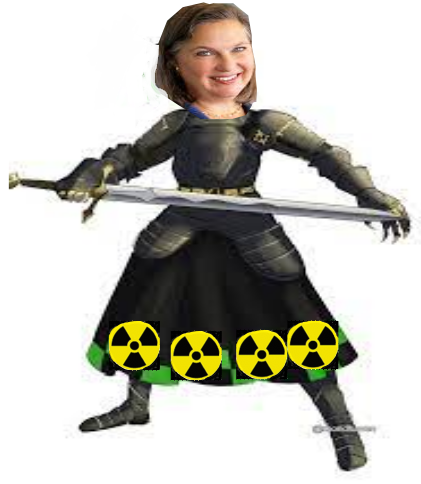
https://www.rt.com/news/593111-nuland-us-aid-ukraine/–– 25 Feb 24
The money that Washington allocates for Kiev supports jobs in America, the high-ranking State Department official has said.
Washington spends most of the money allocated as aid for Ukraine on weapons production at home, Acting US Deputy Secretary of State Victoria Nuland said in an interview with CNN this week.
Commenting on the pending aid package which Congress failed to approve before going on winter recess, Nuland said she has “strong confidence” that it will pass, as it addresses America’s own interests.
“We have to remember that the bulk of this money is going right back into the US economy, to make weapons, including good-paying jobs in some forty states across the US,” she stated, adding that support for Ukraine in America “is still strong.”
Lawmakers in the House of Representatives blocked a bill requested by US President Joe Biden for an aid package for Kiev worth $60 billion, most of which is earmarked for weapons, earlier this month. They are expected to restart discussions on the package after they reconvene on February 28.
US Secretary of State Antony Blinken also recently said that roughly 90% of the financial assistance for Ukraine is spent on domestic production of weapons and equipment. At a press conference on December 20, he said additional tranches would “benefit American business, local communities, and strengthen the US defense industrial base.”
According to Germany’s Kiel Institute, which tracks international support for Kiev, Washington allocated nearly €68 billion ($73.7 billion) in aid for Ukraine between January 24, 2022 and January 15, 2024, including roughly €43 billion ($46.6 billion) in military aid.
However, Kiev has been increasingly demanding more aid from its Western backers. Several days ago, Ukrainian President Vladimir Zelensky warned visiting American legislators that Kiev would “lose the war” against Russia without Washington’s assistance, according to US Senate Majority Leader Chuck Schumer.
Russia has criticized the US and other Western states for their military support for Kiev, arguing that it is only dragging out the conflict.
According to a recent survey from the Harris Poll and the Quincy Institute, a growing number of Americans do not support US military aid to Kiev unless it is tied to peace talks. Only 22% of respondents said Washington should continue ‘unconditionally’ providing Ukraine with financial assistance, while 48% said new funding must be conditioned on progress toward a diplomatic solution. Around 30% said the US should halt all aid.
Nuclear industry cries poor , as top nuclear propagandist Rafael Grossi begs banks for more money!


UN nuclear watchdog head urges development banks to fund new projects.
Rafael Grossi says World Bank and Asian Development Bank ‘out of touch’
with modern attitudes to atomic energy.
The head of the UN’s nuclear
watchdog has called on global development banks and their government
shareholders to fund new projects, warning that a failure to do so could
delay the energy transition.
Rafael Grossi, director-general of the
International Atomic Energy Agency, told the Financial Times that a lack of
funding for [?] emissions-free nuclear energy by multilateral lenders such as
the World Bank and Asian Development Bank was “out of step” with the
wishes of most of their shareholders. He said there had been a
“sea-change” in attitudes to nuclear power due to the climate crisis
and the Russia-Ukraine war, which propelled energy security to the top of
policymakers’ priority lists.
FT 4th March 2024
https://www.ft.com/content/7cb8dda3-1739-47f0-b0a7-3d726f068808 u
Inside Europe’s only nuclear unicorn — and its €1bn fundraising hopes

Sifted, Kai Nicol-Schwarz 1 Mar 24
UK-based Newcleo could make the first close as soon as April — but the startup wants to raise €billions more by the end of the decade
UK-based unicorn Newcleo is on a mission to raise €1bn in equity this year.
The nuclear energy startup is developing small modular reactors (SMRs) fuelled with radioactive waste, and the first close could come as soon as April, founder and CEO Stefano Buono tells Sifted.
If it lands the round, the raise will be the second largest in the nuclear sector globally — and the largest, by some way, in Europe.
It’s piqued the interest of European governments increasingly keen to shore up their energy sovereignty in the face of climate change and Russia’s war in Ukraine — and of investors (including the French government), who’ve written cheques to the tune of €400m since the startup launched in 2021.
But if Newcleo is to achieve its lofty ambitions, it’ll need billions more by the end of the decade.
The startup plans to complete a research facility in Italy by 2026, as well as a fuel processing plant and a demonstrator reactor in France by 2030. And that’s before it launches its first revenue-making commercial reactor — possibly in the UK, says Buono — sometime after 2033 and then — eventually — deploys a fleet of its reactors across Europe.
To get there, it will need to find big cheque investors with the patience of saints and convince governments to cough up their nuclear waste…………………………………………………………………………………….
Can Europe’s nuclear sector raise the billions it needs?
While funding in Europe has shot up over the past few years, bringing the region’s fourth-generation reactors to market will require tens of billions more.
Newcleo alone will need to invest €3bn in France by 2030 to build its fuel processing plant and a 30MW demonstrator reactor. And that’s all before it builds a commercial reactor — “possibly” in the UK, says Buono — which it hopes to have completed by 2033.
While several companies have raised megarounds in the US — since 2021, deals like Commonwealth Fusion Systems’ $1.8bn, TerraPower’s $750m and Helion Energy’s $500m have rolled in — the sector has hit funding troubles in the past year.
Startup reactor plans have fallen through and huge deals have collapsed as rising interest rates, inflation and the nuclear industry’s poor record of delivering projects on time have dented investor confidence, the FT reported in December…………………………..
Newcleo hopes to raise from family offices, high net-worth individuals and institutional investors. Existing backers include US VC Exor Ventures, the investment vehicle of the Agnelli family office — founder of Italy’s largest carmaker Fiat, Italian investor Azimut Group and Italian tech transfer fund LIFTT.
And for future fundraises, Newcleo could look to tap public funds in the form of tax credits too, says Buono…………………………
And then there’s the small matter of convincing investors to part with €1bn during a downturn. https://sifted.eu/articles/newcleo-1bn-fundraise
Victoria Nuland accidentally reveals the true aim of the West in Ukraine

“And by the way, we have to remember that the bulk of this money is going right back into the US to make those weapons,” Nuland said, pleading in favor of the latest Ukraine aid package “
Ukrainians are a convenient pretext to keep the tax cash flowing in the direction of the US military industrial complex
SOTT, Rachel Marsden, Tue, 27 Feb 2024
US State Department fixture and Under Secretary of State for Political Affairs, Victoria Nuland, aka “Regime Change Karen,” apparently woke up one day recently, took the safety off her nuclear-grade mouth, and inadvertently blew up the West’s Ukraine narrative.
Until now, Americans have been told that all the US taxpayer cash being earmarked for Ukrainian aid is to help actual Ukrainians. Anyone notice that the $75 billion American contribution isn’t getting the job done on the battlefield? Victory in military conflict isn’t supposed to look like defeat. Winning also isn’t defined as, “Well, on a long enough time axis, like infinity, our chance of defeat will eventually approach zero.” And the $178 billion in total from all allies combined doesn’t seem to be doing the trick, either. Short of starting a global war with weapons capable of extending the conflict beyond a regional one, it’s not like they’ve been holding back. The West is breaking the bank. All for some vague, future Ukrainian “victory” that they don’t seem to want to clearly define. We keep hearing that the support will last “as long as it takes.” For what exactly? By not clearly defining it, they can keep moving the goal posts.
But now here comes Regime Change Karen, dropping some truth bombs on CNN about Ukrainian aid. She started off with the usual talking point of doing “what we have always done, which is defend democracy and freedom around the world.” Conveniently, in places where they have controlling interests and want to keep them – or knock them out of a global competitor’s roster and into their own. “And by the way, we have to remember that the bulk of this money is going right back into the US to make those weapons,” Nuland said, pleading in favor of the latest Ukraine aid package that’s been getting the side eye from Republicans in Congress.
So there you have it, folks. Ukrainians are a convenient pretext to keep the tax cash flowing in the direction of the US military industrial complex. This gives a whole new perspective on “as long as it takes.” It’s just the usual endless war and profits repackaged as benevolence. But we’ve seen this before. It explains why war in Afghanistan was little more than a gateway to Iraq. And why the Global War on Terrorism never seems to end, and only ever mutates. Arguably the best one they’ve come up with so far is the need for military-grade panopticon-style surveillance, so the state can shadow-box permanently with ghosts while bamboozling the general public with murky cyber concepts that it can’t understand or conceptualize. When one conflict or threat dials down, another ramps up, boosted by fearmongering rhetoric couched in white-knighting. There’s never any endgame or exit ramp to any of these conflicts. And there clearly isn’t one for Ukraine, either.
Still, there’s a sense that the realities on the ground in Ukraine, which favor Russia, now likely mean that the conflict is closer to its end than to its beginning. Acknowledgements abound in the Western press. And that means there isn’t much time left for Europe to get aboard the tax cash laundering bandwagon and stuff its own military industrial complexes’ coffers like Washington has been doing from the get-go.
Which would explain why a bunch of countries now seem to be rushing to give Ukraine years-long bilateral security “guarantees,” requiring more weapons for everyone. France, Germany, Canada, and Italy have all made the pledge. Plus Denmark, which also flat-out said that it would send all its artillery to Ukraine………………………………………………
Thanks to Nuland’s nuking of any plausible deniability on Ukrainian “aid” not going to Washington, it’s now clear that Ukrainians continue to die so poor weapons makers don’t end up shaking tin cans on street corners.………………………………………………………………………….. more https://www.sott.net/article/489314-Nuland-accidentally-reveals-the-true-aim-of-the-West-in-Ukraine
The Cost of Nuclear War in Space

Putting a weapon into orbit is not just a military threat. It’s also a risk to the billions of dollars pouring into the space economy.
https://www.nytimes.com/2024/02/24/business/dealbook/the-cost-of-nuclear-war-in-space.html By Ephrat Livni and Vivienne Walt
Just before the Russian-Ukrainian war reached its two-year milestone today, U.S. intelligence agencies warned that Russia might aim a nuclear weapon at an unusual target: not any place on Earth, but satellites orbiting in space.
Putting a weapon into orbit is not just a military threat. It’s also a risk to the space economy — and the one on the ground. There is a little-known but fast-growing industry that insures satellites, but it doesn’t provide insurance against nuclear arms.
What’s at stake: hundreds of billions (and probably trillions) of dollars when including the services that rely on satellites, according to David Wade, an underwriter at the Atrium Space Insurance Consortium, which insures satellites for Lloyd’s.
Of more than 8,000 satellites in orbit, thousands belong to private companies, according to Orbiting Now, a site that compiles real-time satellite tracking data from NASA and other sources. The Russian weapon is said to be designed to target satellites in low Earth orbit, where most commercial satellites operate.
SpaceX’s Starlink dominates the space-based internet services industry, and Amazon also has big aspirations in space. But the sharp drop in launch costs in recent years — driven largely by SpaceX — has made entry possible for many smaller players, leading to a satellite-business frenzy that prompted the Federal Communications Commission to open a Space Bureau last year.
Wade estimated the total value of all insured satellites in orbit at $25 billion. That doesn’t include the revenue they generate. The Satellite Industry Association estimated revenues for nongovernmental satellite services at $113 billion in 2022.
Investment in the space economy is increasing quickly. Space activity could total $620 billion this year, according to the most recently available estimate. That’s up from $545 billion in 2022, according to an estimate from the Space Foundation, a nonprofit that promotes space education and enterprise.
Aspirations for the space economy include mining for rare minerals and water, tourism, communications, and data transfer infrastructure. On Thursday, a lunar lander from Intuitive Machines, traveling on a SpaceX rocket, became the first private craft to land on the moon, which some are hopeful leads to mining for water that could be used to make fuel for more distant industrial missions.
A space weapon would cast a pall across other businesses, too. Industries from agriculture to tech depend on satellites, and sectors like shipping, transport, banking and supply chain management rely on GPS, which uses satellites. The threat would also have “a depressive effect” on space company valuations broadly, said Donald Moore, C.E.O. of the Space Finance Corporation and a space policy lecturer at the University of Michigan Law School.
The new threat could also put a dent in the U.S. government’s plans to rely on private players just as the Department of Defense is expected to release details of a new strategy to integrate commercial satellites in national security, noted Brian Weeden, the chief program officer for the Secure World Foundation, a nonprofit that works on space policy.
Some are skeptical of the risk. The precise effects would depend on unknowns about the weapon, company contingency planning and other factors. “We could still communicate,” said Henry Hertzfeld, a space policy professor at George Washington University and former chief economist at NASA. “We still have some landlines,” he added, speaking from his office phone. And he doubts that Russia will introduce this menace, as it would also endanger its space activities. Notably, it would also violate an international space treaty.
But the risk is not covered by insurance. “Exclusions for acts of war, antisatellite devices and nuclear reaction, nuclear radiation or radioactive contamination (except for radiation naturally occurring in the space environment) are typically listed in a space insurance policy,” Wade said in an email.
The U.S. space model depends heavily on commercialization, noted Russell Sawyer, a space insurance broker at Lockton in London. The government has pushed risk out onto private companies, he said, and this trend could shift if this nuclear threat really is serious: “The government would be needed.” — Ephrat Livni
1 This Month



26 September – International Day for the Total Elimination of Nuclear Weapons


PLEASE OPPOSE HR 8255 AND S.3639 – bills would accelerate satellite deployment, with no environmental review or safeguards – https://ncstd5li.quorum.us/campaign/169331/
To see nuclear-related stories in greater depth and intensity – go to https://nuclearinformation.wordpress.com
-
Archives
- September 2026 (206)
- August 2026 (330)
- July 2026 (355)
- June 2026 (287)
- May 2026 (306)
- April 2026 (356)
- March 2026 (251)
- February 2026 (267)
- January 2026 (308)
- December 2025 (358)
- November 2025 (359)
- October 2025 (375)
-
Categories
- 1
- 1 NUCLEAR ISSUES
- business and costs
- climate change
- culture and arts
- ENERGY
- environment
- health
- history
- indigenous issues
- Legal
- marketing of nuclear
- media
- opposition to nuclear
- PERSONAL STORIES
- politics
- politics international
- Religion and ethics
- safety
- secrets,lies and civil liberties
- spinbuster
- technology
- Uranium
- wastes
- weapons and war
- Women
- 2 WORLD
- ACTION
- AFRICA
- Atrocities
- AUSTRALIA
- Christina's notes
- Christina's themes
- culture and arts
- Events
- Fuk 2022
- Fuk 2023
- Fukushima 2017
- Fukushima 2018
- fukushima 2019
- Fukushima 2020
- Fukushima 2021
- general
- global warming
- Humour (God we need it)
- Nuclear
- RARE EARTHS
- Reference
- resources – print
- Resources -audiovicual
- Weekly Newsletter
- World
- World Nuclear
- YouTube
-
RSS
Entries RSS
Comments RSS
 nuclear-news