EDF told not to expect UK to step in to fund Hinkley Point C flagship nuclear project

Cost overruns a ‘commercial issue’ for Hinkley Point C’s French
developer after CGN halts payments, says British official.
The UK government has signalled it will not step in to help France’s EDF fund
Hinkley Point C after its Chinese partner CGN halted payments to cover
mounting cost overruns on Britain’s flagship nuclear power project. The
reluctance of the British government to intervene comes as the price tag
for the power plant under construction in south-west England is likely to
exceed the revised £32.7bn estimate EDF put on it earlier this year,
according to people close to discussions.
CGN, EDF’s partner in Hinkley Point C, had agreed to finance 33.5 per cent of the original £18bn cost of the plant in 2016, with the French group responsible for the remainder. But
after paying its contracted share, CGN has not made payments linked to the
overruns in recent weeks, three people familiar with the matter said.
The French group warned earlier this year that the Chinese group could refuse
to pick up the extra costs. One UK government official said there were no
plans to step in to fill the gap left by CGN, suggesting EDF could pull in
other investors. “It is a commercial contract which we obviously don’t
play a part in financing,” the official said, adding: “It would first
be a matter for the shareholders.”
One industry source said pulling other
investors into the project at this stage would be “complicated”. The
French economy ministry said it was in contact with London over the issue.
“We’re working with the British government to ensure the rollout of the
UK nuclear programme, including on the financing front,” an official in
Paris said.
FT 14th Dec 2023
https://www.ft.com/content/2bccd67f-a3c6-48d1-baa5-8ef9d54cdf67
Wins, losses and participation trophies for US nuclear power in 2023
From the long-awaited commissioning of Vogtle 3 to the NuScale pilot’s collapse, here are the biggest wins and losses for nuclear from this year.
By Eric Wesoff, 12 December 2023, https://www.canarymedia.com/articles/nuclear/wins-losses-and-participation-trophies-for-us-nuclear-power-in-2023
With this bumpy year for nuclear coming to a close and the world’s energy stakeholders having just gathered for the most nuclear-focused COP meeting ever, it’s a good time to assess the state of atomic power in the U.S.
Government pledges and consumer support for nuclear power in the U.S. have surged in recent years. Armed with this newfound policy support and financing, the relatively stagnant U.S. nuclear industry now has to start executing on its ambitious plans if the fuel is to play a meaningful role in decarbonizing the energy system.
So how did the U.S. nuclear sector fare in 2023? Here’s a list of its major wins and its losses.
A win on the world stage: Dubai hosts the first “nuclear COP”

More than 20 countries including the U.S., France, Japan and the U.K. pledged to triple global generation from nuclear energy by 2050 during this year’s COP28 global climate meeting in Dubai. Hitting that goal would require the world to install an average of 40 gigawatts of nuclear every year through 2050; presently, that annual installation figure is closer to 4 gigawatts.
Nuclear has received scant attention at previous COP meetings due to its financial challenges and the thorny issue of managing spent fuel, so the pledge is a marked departure from the policy status quo. All of this was enough to make this the year of the “nuclear COP.”
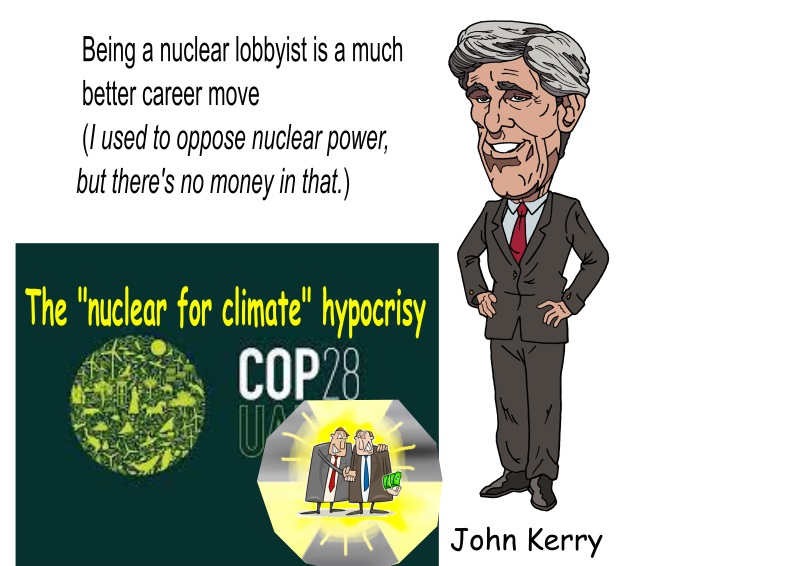
And although it’s a global pledge, President Biden’s climate envoy John Kerry helped spearhead the declaration, indicating the increasing embrace of nuclear power at the highest echelons of U.S. climate policy. Kerry said that the science has proven “you can’t get to net-zero 2050 without some nuclear.”
Participation trophy for Georgia Power: Vogtle 3 connects to the grid
It’s a bit of a stretch calling Vogtle 3’s long-awaited connection to the grid a “win” after a $16 billion cost overrun and a six-year overshoot of the target launch date, but the Department of Energy was looking forward to a new commercial reactor coming online this year, and the department ultimately did get its wish.
As of July 31, Georgia Power’s 1,100-megawatt Plant Vogtle Unit 3 nuclear reactor is supplying power to the grid — making it the first reactor to enter service since Tennessee’s Watts Bar Unit 2 began operating in 2016. Vogtle 4, a second 1,100-megawatt reactor, is nearing the finish line as well, with operations expected to start in early 2024, according to Georgia Power.
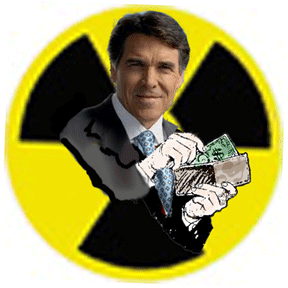
Thanks to then-Secretary Rick Perry, in 2019 the Department of Energy’s Loan Programs Office provided up to $12 billion in loan guarantees to help complete the Vogtle expansion amid a spate of spending freezes and lawsuits. The project generated more than 9,000 jobs during peak construction and will provide an additional 800 permanent jobs at the facility once fully operational.
Dan Yurman, publisher of Neutron Bytes, a blog on nuclear power, offered Canary Media this explanation for Vogtle’s major cost and schedule overruns: “The utility and the vendor kicked off a massive infrastructure project with major unaddressed risks in terms of supply chain, labor force skills, regulatory compliance and a 30-year gap in know-how to build large nuclear power plants. It is no surprise that the first-of-a-kind AP1000s came in at twice the cost and double the estimated time to complete them.”
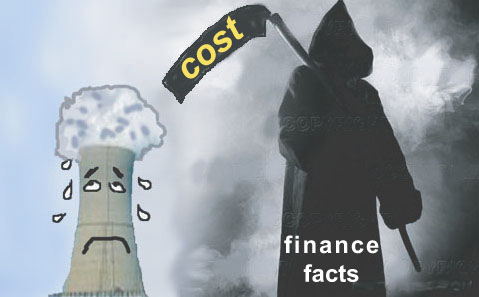
The nuclear industry can call this a win — if it can learn from Vogtle and begin to remedy the missteps called out by Yurman.
A financial win: Nuclear funding and government support
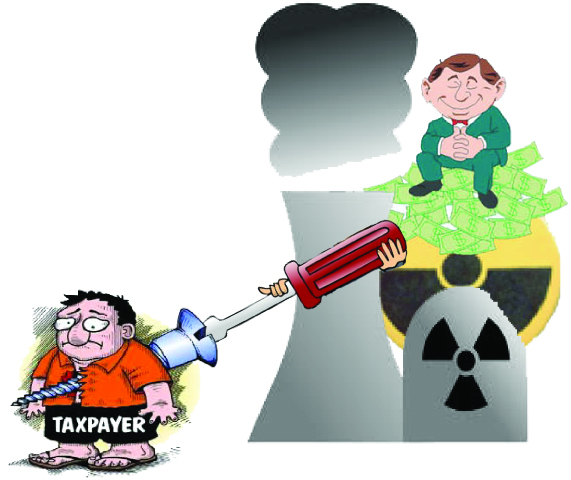
The U.S. government is putting its money where its mouth is when it comes to supporting nuclear power: The (barely) Bipartisan Infrastructure Law added $3.2 billion for development of modular and advanced nuclear reactors, and the U.S. Department of Energy’s Loan Programs Office has devoted $11 billion in loan-making authority for advanced reactors and supply chains. What’s more, the epochal Inflation Reduction Act devotes $700 million to the HALEU Availability Program to support the development of a non-Russian supply of high-assay low-enriched uranium.
Additionally, the IRA offers a preposterously generous $15 per megawatt-hour production tax credit meant to keep today’s existing nuclear fleet competitive with gas and renewables, as well as a similarly generous investment tax credit to incentivize new plant construction.
Losing the global nuclear crown: China is sprinting ahead of the U.S. on nuclear
America has the world’s biggest nuclear power fleet at 93 reactors, but it’s on its way to losing that distinction.
China has built 37 new reactors over the last decade for a total of 55, according to the International Atomic Energy Agency. America has added a grand total of two reactors during that same period. China also aims to double its nuclear energy capacity by 2035, and it is well on its way; it has 22 nuclear plants currently under construction with more than 70 in the planning stages.
Outside of Vogtle 4, it’s unclear when — or if — another nuclear reactor will be connected to the U.S. grid.
And despite small modular reactors being held up as a cure-all to the U.S. nuclear industry’s significant challenges, the only country in the world that has actually built an SMR is China. It demonstrated a pair of smallish high-temperature, gas-cooled reactor units using a “pebble-bed” design and a more concentrated fuel format last year.
Notably, China is not a participant in the COP28 nuclear pledge — an ironic development as it’s the only country with any real chance of meeting the goal of tripling its capacity by 2050.
Huge win, disappointing loss for SMRs: NuScale’s ups and downs
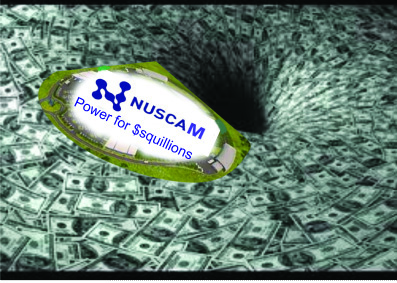
The nuclear gods are fickle creatures. Small modular reactor pioneer NuScale Power made history in January 2023 when it scaled the highest regulatory peak in the U.S.: The Nuclear Regulatory Commission certified the design of its 50-megawatt module, the first small modular reactor and only the seventh reactor design ever approved for use in the U.S.
This was a long-fought victory for NuScale and advocates of SMRs: Utilities and developers can now reference NuScale’s SMR design when applying for a license to construct and operate a reactor. NuScale and the DOE spent more than 10 years and hundreds of millions of dollars to reach this regulatory milestone.
Armed with this historic design certification, NuScale landed a promising inaugural customer in the Utah Associated Municipal Power Systems and began working on a deployment near the Department of Energy’s national laboratory in Idaho. Project plans had called for one 77-megawatt unit to begin operation in 2029.
The Idaho project was once widely predicted to be not only the first small module reactor completed in the U.S., but the next nuclear reactor to be built in the country, period. However, it was not to be so.
The project was ultimately scrapped in November because it couldn’t secure enough subscriptions from utilities in the Western U.S. to make the project work financially.
The innovative SMR aspirant still has a pipeline of tentative agreements to deploy reactors across North America, Europe and the Middle East.
Win for domestic HALEU fuel: Bringing uranium enrichment capabilities back to the U.S.

Call this one a win because, for the first time in 70 years, America is home to a U.S.-owned enrichment facility producing the concentrated fuel needed by the many advanced reactors now in development.
Centrus, a company with roots in the Manhattan Project, began demonstration-scale enrichment operations at its facility in Piketon, Ohio in October. It marks the potential rebirth of a once-strong American enrichment industry. America was once the only source of uranium enrichment outside of the Soviet bloc, but over the last 30 years, it has surrendered that role to Russia and other countries.
The HALEU produced in Centrus’ centrifuges will be used to test new fuels and reactor designs, as well as to fuel the cores of the two demonstration reactors funded through the Bipartisan Infrastructure Law and supported by DOE’s Advanced Reactor Demonstration Program.
The U.S. currently depends on Tenex, part of Russian state-owned nuclear supplier Rosatom, to supply the low-enriched uranium fuel that’s used in our civilian fleet. And Russia (which is not blockaded on nuclear fuel exports) supplies all of America’s high-assay low-enriched uranium, the more concentrated material required by the new generation of advanced reactors.
It is a precarious situation for U.S. national and energy security.
The DOE is looking to jump-start the domestic market by directing IRA funding toward enrichment and fuel-processing facilities like Centrus’ plant in Ohio, as well as by acting as the initial customer, creating an inventory and providing a reliable customer and price.
It’s a win for the U.S., but it comes after years of stepping on rakes.
A win for preserving the existing nuclear fleet: Diablo Canyon lives on

Pacific Gas & Electric, one of the three large investor-owned utilities in California, decided to decommission both of the reactors at California’s Diablo Canyon Nuclear Power Plant in 2017.
But public outcry, political pressure and worries about grid failures seem to have helped get the plant’s operations extended an additional five years with the help of a state loan and up to $1.1 billion through the federal Civil Nuclear Credit Program designed to support economically ailing plants. It’s a win for California nuclear advocates and the emissions of the state’s grid.
PG&E has now filed an application with the Nuclear Regulatory Commission for a 20-year operating extension for the two 1,150-megawatt reactors at Diablo Canyon, which will trigger a review process expected to take a minimum of two years.
The U.S. nuclear fleet is the largest in the world, but it’s also one of the oldest: The average age of an American nuclear reactor is 42 years, compared to a world average of 31 years.
The majority of nuclear plant operators in the country have expressed interest in extending their operating licenses to allow operation up to 80 years, according to a poll of member utilities of Nuclear Energy Institute, a trade organization.
But even with such extensions, these older plants would all need to be replaced by around 2060, and nuclear power’s long lead times mean that decisions will have to be made about replacing their generation capacity in the late 2030s.
Neither a win nor a loss: Action in advanced reactors and microreactors
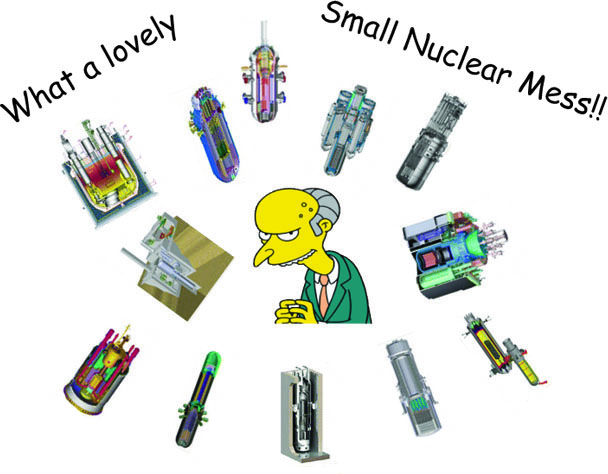
Encouraged by government funding, shifting societal sentiment and a cornucopia of new reactor designs, 2023 witnessed a raft of startups and established vendors making deals in the U.S. and abroad to build next-generation nuclear reactors.
Microreactors like Oklo’s 15-megawatt fast breeder reactor, Aalo Atomics’ 20-megawatt thermal design based on the Marvel reactor at Idaho National Labs, and Westinghouse’s 5MWe eVinci design are intended to provide electrical power and heat in remote or behind-the-meter industrial applications. Ultra Safe Nuclear has plans to construct a microreactor facility in Gadsden, Alabama. The Department of Defense’s Strategic Capabilities Office’s Project Pele program is looking to build and demonstrate a 1–5 MWe mobile, high-temperature, gas-cooled microreactor capable of powering U.S. military bases.
But none of these designs are approved by the Nuclear Regulatory Commission.
For its part, the DOE is betting big on TerraPower and X-energy, with the agency’s Advanced Reactor Demonstration Program providing initial funding of $80 million to each, along with future cost-sharing funds. These two demonstration projects are poised to use HALEU from Centrus’ newly commissioned 16-centrifuge cascade.
TerraPower, founded by Microsoft co-founder Bill Gates, is developing a 345-megawatt sodium-cooled fast reactor coupled with a molten salt energy storage system. The company has raised $750 million to build its operating demonstration reactor in Wyoming.
X-energy is developing its high-temperature gas-cooled advanced small modular reactor and plans the initial deployment at a Dow Chemical facility in Texas.
These reactor designs also are not approved by the NRC.
Despite the proliferation of tentative agreements, memorandums of understanding and handshake deals, all of these planned reactors — with the possible exception of NuScale’s — fall into the famous “paper reactor” category — meaning they are simple, light, small, cheap and quick to build. Importantly, they are also never actually going to be built.
Grand plan to triple nuclear energy with small nuclear reactors, but where’s the funding?

1 US nuclear start-ups battle funding challenge in race to curb emissions.
Reactors pioneered by Oklo, X-energy and NuScale suffer financing setbacks
as well as regulatory headwinds.
US plans to build up its nuclear industry
face big funding and regulatory challenges which could delay a new
generation of smaller, more efficient reactors touted by advocates as
critical to fighting climate change.
Industry experts told the Financial
Times a declaration signed last week by Washington and 21 other nations at
the COP 28 climate summit to triple the amount of installed nuclear energy
by 2050 was a step forward, given the sector’s ability to provide
(?)emissions-free power.
But a sharp fall in market support for start-ups
developing so-called small modular reactors and other advanced nuclear
facilities threaten US ambitions, they said. Last month NuScale Power Corp
cancelled plans to build the first SMR in the US, despite receiving $1.4bn in government cost-sharing pledges.
Not enough power utilities expressed an
interest in purchasing electricity from the facility in Idaho when NuScale
increased power prices by more than 50 per cent over two years to $89 per
megawatt hour. The setback followed the collapse of a $1.8bn deal agreed
between X-energy and special purpose acquisition company Ares Acquisition,
which was intended to enable the developer of nuclear technologies to go
public.
Now the industry is focused on whether Oklo, a start-up chaired by
OpenAI chief executive Sam Altman, can successfully go public via a
blank-cheque company announced in July with AltC Acquisition Corp. The
merger was proposed at a valuation of $850mn and would provide Oklo with
$500mn to develop and commercialise its reactor design.
FT 12th Dec 2023
https://www.ft.com/content/c0700a01-c1e8-4e5e-8300-ac264bd25293
The Uncertain Costs of New Nuclear Reactors: What Study Estimates Reveal about the Potential for Nuclear in a Decarbonizing World
Reports by Matt Bowen, Emeka Ochu & James Glynn • December 07, 2023 https://www.energypolicy.columbia.edu/the-uncertain-costs-of-new-nuclear-reactors-what-study-estimates-reveal-about-the-potential-for-nuclear-in-a-decarbonizing-world/
Executive Summary
Models that run decarbonization scenarios to meet mid-century goals for mitigating climate change almost always include a significant role for nuclear energy. The source’s projected level of deployment, however, remains uncertain, largely due to a wide range of estimated costs for new builds. Other factors that make it hard to gauge nuclear’s portion of the future energy mix include whether policies advancing low-carbon technologies will be enacted, the degree of public support for transmission siting and available low-carbon energy sources, whether new reactor technologies and fuels will change the investment equation, and how quickly “competitor” sources such as carbon capture and sequestration, renewables, and storage reduce costs.
This report, part of ongoing research into nuclear energy at the Center on Global Energy Policy at Columbia University SIPA, examines the economics of new nuclear facilities for electricity generation—whether building them out makes sense financially as part of efforts to reduce greenhouse gas emissions as power demand grows across the globe. Insights into costs can be gleaned by reviewing the history of construction delays and cost overruns in the United States, international experiences that have fared better and worse, and studies that model a transitioning energy system. Studies reviewed in this report estimate new US reactor costs generally ranging from $3,000/kilowatt (kW) to $6,200/kW based on a variety of reactor designs and cost reduction curves assumed for subsequent years. Internationally, new reactor costs vary significantly by country, depending in part upon factors such as the cost of labor and whether projects involve multiple reactor builds (with attendant efficiencies in manufacturing and construction).
Additional findings from this report include the following:
- The limited number of new reactor builds in the United States in recent decades and the large number of new designs under development (some of which have never been built anywhere in the world) leave few data points from which to draw definitive conclusions on future nuclear costs.
- In countries such as China and India, construction expertise and supply chain efficiencies from ongoing nuclear power project buildouts and energy technology learning as well as lower labor costs, among other factors, have created more competitive economics for nuclear than are currently found in the United States.
- Additional findings from this report include the following:
- The limited number of new reactor builds in the United States in recent decades and the large number of new designs under development (some of which have never been built anywhere in the world) leave few data points from which to draw definitive conclusions on future nuclear costs.
- In countries such as China and India, construction expertise and supply chain efficiencies from ongoing nuclear power project buildouts and energy technology learning as well as lower labor costs, among other factors, have created more competitive economics for nuclear than are currently found in the United States.
- Modeling of nuclear energy costs in the US suggests that if the price tag ends up being much higher than the upper limits used in the studies cited, such as above $6,200/kW, new nuclear will play a marginal role, if any, in the US energy transition.
- Within the cost range quoted above, nuclear’s ability to play a substantial role in the United States (e.g., 50 gigawatts of deployment) could depend on factors including whether stronger decarbonization policies are enacted; whether other viable firm, low-carbon options emerge as competitive alternatives; whether difficulties with siting new transmission lines continue; and/or whether renewable energy expansion faces constraints.
- The new 30 percent tax credit in the Inflation Reduction Act available to both renewable and nuclear energy will substantially lower the cost of new nuclear reactors for US utilities.
- Internationally, scenarios by the Intergovernmental Panel on Climate Change project that lower reactor costs in some emerging countries, in combination with strict climate mitigation policies, could result in very large new nuclear capacity expansion there.
- In modeling cases with high variable low-carbon power sources, the need for firm sources and storage options may be underestimated in the absence of greater temporal and technical granularity. This practice may omit costs associated with flexibility, market reserve, and storage that could be ameliorated by dispatchable nuclear capacity.
Nuclear’s share of world power output at multi-decade low – report.

PARIS, Dec 6 (Reuters) https://www.reuters.com/business/energy/nuclears-share-world-power-output-multi-decade-low-report-2023-12-06/– Global electricity production from nuclear energy dropped by 4% last year from 2021, with the technology’s share of gross electricity generation falling to its lowest since the 1980s, an industry report showed on Wednesday.
Nuclear energy generated 2,546 terawatt-hours (TWh) of electricity worldwide last year, accounting for 9.2% of total gross electricity generation, the annual World Nuclear Industry Status Report (WNISR) showed.
Proponents of nuclear say as a low-carbon power source it could be vital in helping countries meet climate targets, but several plants around the world are coming to the end of their life expectancies and many new ones have faced delays.
The most nuclear power in the world is generated in the United States, followed by China.
Nuclear energy has regained some popularity recently as countries search for low-carbon power sources, but long lead times, high costs and climate impacts put the prospect of nuclear as a solution at “virtually zero”, the WNISR said.
As of mid-2023, a total of 407 reactors were operating in 32 countries, four less than a year earlier and 31 below a 2002 peak of 438, the report said.
The slow progress of construction has lifted the average age of a reactor to 31.4 years by the end of 2022, up from 31 years in mid-2022, the report said.
Some 58 reactors representing 58.6 gigawatts (GW) of additional capacity were under construction by mid-2023, five more than in 2022, with four in five reactors being built in Asia or Eastern Europe and over half facing years-long delays, the report said.
Nuclear is also continuing to fall behind renewables in terms of cost, as reactors are seen as more expensive and taking longer to build.
The adjusted cost of nuclear energy – which compares the total lifetime cost of building and running a plant to lifetime output – is nearly four times that of onshore wind, the report said.
Reporting by Forrest Crellin Editing by Mark Potter
U.S. government continues to pour $billions into the failing Small Nuclear Reactors business, in the hopes of exporting SMRs

The US Department of State and US Export-Import Bank (EXIM) have announced
a suite of financial tools to support the deployment of advanced nuclear
energy systems to help reach net-zero goals. They also announced plans to
mobilise more than USD4.2 billion of investment in enrichment and
conversion capacity through the five-nation Sapporo 5 collaboration.
World Nuclear News 7th Dec 2023
https://www.world-nuclear-news.org/Articles/US-takes-steps-to-jump-start-overseas-SMR-deployme
Cancelled NuScale contract weighs heavy on new nuclear
Reuters Events, By Paul Day Dec 7, 2023
The failure of a high profile small modular reactor (SMR) contract in the United States has prompted concerns that Gen IV nuclear may be further off than expected.
NuScale, the first new nuclear company to receive a design certificate from the Nuclear Regulatory Commission (NRC) for its 77 MW Power Module SMR, said in November it was terminating its Carbon Free Power Project (CFPP) with the Utah Associated Municipal Power Systems (UAMPS).
UAMPS serves 50 community-owned power utilities in the Western United States and the CFPP, for which the Department of Energy approved $1.35 billion over 10 years subject to appropriations, was abandoned after the project failed to attract enough subscriptions.
NuScale shares tumbled 37% to less than $2 on the day of the news, Nov. 8, though that had largely been recovered by the end of the month. The early December share price of $3.1, however, is a long way from highs of nearly $15 in August 2022 just three months after going public.
The CFPP had aimed to build NuScale SMR units at a site near Idaho Falls to be operable by 2029 though concerns arose that some at UAMPS members may be unwilling to pay for power from the project after NuScale raised the target price to $89/MWh from a previous estimate of $58 MW/h in January.
The cancellation came shortly after another advanced reactor developer, X-Energy and special purpose acquisition company Ares Acquisition Corporation, called off a $1.8-billion deal to go public citing “challenging market conditions (and) peer company trading performance.”
The work with UAMPS had helped advance NuSCale’s technology to the stage of commercial deployment, President and CEO John Hopkins said.
However, the failure of the much-anticipated proof case for advanced nuclear alongside the X-Energy market retreat left many questioning whether next generation nuclear could live up to its promises.
“Almost all these kinds of MoUs and contracts, as we saw with the NuScale contract, are just not worth the paper they’re written on. There are so many off ramps and outs for both sides and no one’s willing to expose themselves to the downside risk of projects that go way over budget cost and take too long,” says Founder and Executive Director of The Breakthrough Institute Ted Nordhaus.
Nordhaus co-wrote a piece for The Breakthrough Institute, ‘Advanced Nuclear Energy is in Trouble’, a scathing criticism of policy efforts to commercialize advanced nuclear which, it says, to date have been entirely insufficient.
The nuclear industry was keen to ‘whistle past the graveyard’ of recent developments and efforts to commercialize the new generation of reactors ‘are simply not on track’, the Breakthrough piece said.
Mounting challenges
There are five areas that pose mounting challenges for the industry, according to Breakthrough; high interest rates and commodity prices, constrained supply chains, a regulatory regime that penalizes innovation, project costs versus system costs, and fuel production.
High interest rate and commodity costs in the last couple of years have hit the industry especially hard due to long project lead times. Nuclear supply chains struggle to rebuild as tight regulation forces many materials to be tracked from certified mine to certified manufacturer………………………………………………………………..
new nuclear has not been attracting the cash it needs. That’s partly due to developers’ lack of focus on development activities, according to Fiona Reilly, CEO of energy consultancy FiRe Energy……………….
The NuScale failure with UAMPS and X-Energy’s cancelled offering are just further bad signs for the market, especially when, at the same time these projects are announcing problems, the international nuclear community is in Dubai during COP28 saying they need to triple capacity by 2050……..
“You can’t set targets like these when we’re not even building the first reactors in many countries.” https://www.reutersevents.com/nuclear/cancelled-nuscale-contract-weighs-heavy-new-nuclear?utm_campaign=NEI%2007DEC23%20NEI%20Database%20A&utm_medium=email&u
Sweden to slug tax-payers for the costs of small nuclear reactors, and big ones.
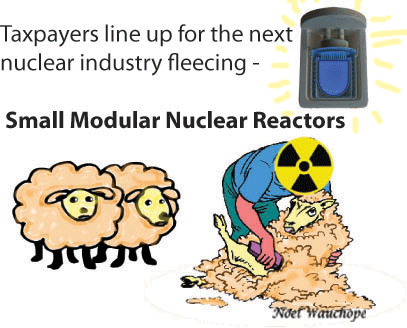
Sweden plans new nuclear reactors by 2035, will share costs
By Simon Johnson, November 16, 2023
STOCKHOLM, Nov 16 (Reuters) – Sweden’s government said it aimed to build the equivalent of two new conventional nuclear reactors by 2035 on Thursday to meet surging demand for clean power from industry and transport and was prepared to take on some of the costs.
By 2045 the government wants to have the equivalent of 10 new reactors, some of which are likely to be small modular reactors (SMRs), smaller than conventional reactors.
Energy Minister Ebba Busch said the government was planning a “massive build out” of new nuclear power by 2045.
“It’s decisive for the green transition, for Swedish jobs and at heart for the welfare of our citizens,” she told reporters.
……………..critics have pointed to the huge costs and the private sector’s reluctance to invest without guarantees or other incentives – like Britain’s deal with French nuclear developer EDF for its new Hinkley Point C plant which gave price guarantees.
Sweden’s government has already offered 400 billion crowns ($37.71 billion) of loan guarantees to support new nuclear power, which it says is needed to power developments like fossil-fuel free steel production, but said it was now willing to shoulder more of the burden.
“Guarantees are very important, but that won’t be enough,” Finance Minister Elisabeth Svantesson said. “For this type of infrastructure it is going to require the state to take part and share the risk.” https://www.reuters.com/business/energy/sweden-plans-new-nuclear-reactors-by-2035-can-take-costs-2023-11-16/—
Swiss nuclear power plants are running out of staff
After warning Switzerland over two years ago, the International Atomic Energy Agency (IAEA) recommends the authorities develop a roadmap to deal with the impending problem of labour shortage in Swiss nuclear power plants.
This content was published on December 3, 2023 – 14:17December 3, 2023
Switzerland’s existing nuclear power plants are on the verge of having their lifetimes extended from 50 to 80 years. But now a problem is threatening to thwart these plans.
The search for skilled labour is becoming increasingly challenging, as reported by the NZZ am Sonntag newspaper on Sunday. There are currently over 40 vacancies at the Beznau, Gösgen and Leibstadt nuclear power plants.
A team of experts from the IAEA warned Switzerland back in October 2021. In a report, the agency concluded that the search for personnel was one of the biggest challenges for Swiss nuclear plants and for the supervisory authority itself…………………https://www.swissinfo.ch/eng/business/swiss-nuclear-power-plants-are-running-out-of-staff/49027136
The nuclear power renaissance has some way to run
EDF is vowing to build one reactor a year but challenges range from funding to a lack of skilled workers.
SARAH WHITE
https://www.ft.com/content/aaa33c5c-70e8-4f05-a45a-a45c7d2aba72 1 Dec 23
When France first hosted a nuclear power trade fair about a decade ago, in the wake of the Fukushima disaster, it was a low-key affair. Two years ago, organisers’ main worry was to avoid anti-nuclear protesters marring proceedings.
This week, the buzz at the vast salon on the outskirts of Paris was unequivocal. Miss America 2023, a nuclear engineering student, was on hand to help the event court the limelight, and champagne flowed on the stands displaying radioprotective gloves and designs for cutting-edge small reactors. The message was clear: nuclear power is back, and France, Europe’s atomic power champion with its 56 reactors, intends to be at the heart of this revival.
“We’re coming out of a period of taboos [over nuclear],” said Sylvie Bermann, a former French ambassador to China and Russia who heads the Paris show.
The industry and its low-emission technology would also have its moment for the first time at the COP28 climate summit in the United Arab Emirates, with a dedicated event, she added.
After years in the doldrums, mindsets over nuclear have shifted, spurred by climate worries and an energy crisis last year when Russia launched its full-scale invasion of Ukraine and cut gas supplies to Europe. Even Japan, home to the Fukushima meltdown of 2011, has restarted idled reactors, while a host of other nations are considering new plants, giving suppliers reasons to feel more optimistic.
What is less obvious will be the move from aspirations to reality, in a sector where building reactors is costly and slow, especially after decades without projects drained the industry of skilled workers.
Part of the promotional push by France and other pro-nuclear nations is aimed at solving some big obstacles. Chief among them, according to the head of the UN’s nuclear watchdog Rafael Grossi, is the financing, including from multilateral bodies.
Paris, which is riding high on recent EU wins to gain some subsidies for its existing plants, originally opposed by staunchly anti-nuclear Germany, has campaigned for instance for the European Investment Bank to help fund the construction of new reactors. “Nuclear has been constructed very fast when the money’s there,” said the International Atomic Energy Agency’s Grossi, citing the United Arab Emirates, which had gone from “zero to champions” in roughly eight years with a $20bn-plus project for four Korean-built reactors. They are almost all now online.
There’s also a lot to prove on the industrial front. France’s state-controlled nuclear power operator EDF aims to build roughly one 1.6 Gigawatt reactor a year once it gets going with its new orders for at least six new ones in France by the mid-2030s, according to chief executive Luc Rémont.
Considering its prototype in northern France known as Flamanville 3 has been 16 years in the making, it is an extremely ambitious goal. Rémont argues that parallel projects (the state-owned group is bidding for projects in India and the Czech Republic) would help EDF become better and faster.
There are other challenges. Many nations have long been dependent on Russian nuclear fuel, including the US reactor fleet, and finding sufficient alternative supplies could take years.
Meanwhile, the IAEA forecasts that over the next 20 years the industry’s share in the global energy mix — roughly 10 per cent of the world’s electricity generation today — will remain flat, if not decrease slightly, unless there are even more ambitious construction plans.
Developers argue, however, that the hardest battle is getting political buy-in to give them the visibility they need. Judging by the upbeat messaging coming out of Paris this week, that part of the complex nuclear equation at least is some way towards being solved.
Operators extend Finnish, Swedish nuclear reactor outages
OSLO, Nov 30 (Reuters) – The ongoing outages at Finland’s OL3 and Sweden’s Ringhals 4 nuclear reactors were extended on Thursday, operators TVO and Vattenfall said in market messages on power bourse Nord Pool, pushing up electricity prices at a time of high demand.
OL3 is now expected to restart at 1800 GMT on Thursday. The reactor, Europe’s largest with a capacity of 1,600 megawatt (MW), suffered an unexpected “rapid shutdown” during testing on Wednesday, operator TVO has said.
OL3 had originally been expected to be offline for eight hours, but the restart was since delayed several times.
In Sweden, Vattenfall extended an outage at Ringhals 4 with a capacity of 1,130 MW by two full days to 2259 GMT on Saturday.
The reactor had tripped on Wednesday morning due to a valve failure, with troubleshooting ongoing, according to the market message on Nord Pool.
The Nordic region has been hit by unusually cold weather in late November, pushing up demand for heating and boosting power prices.
Reporting by Terje Solsvik; editing by Nora Buli
UK’s first small nuclear reactor deal ‘poised’ for signing but not with Rolls-Royce
Proactive Investors, 01 Dec 2023 Oliver Haill
Small modular nuclear reactors (SMRs) could be built in the north-east of England but not by Rolls-Royce Holdings PLC (LSE:RR.), Britain’s leading candidate to develop the technology.
In the same week that shockwaves were felt around the industry as an expected first SMR project in the US was cancelled due to a lack of interest from local utilities, US-based Westinghouse Electric was today reported to be close to agreeing a deal to build four SMRs near Hartlepool……………………………….
Rolls-Royce is seen as one of the frontrunners to develop the first UK SMR projects, with its £1.8 billion-per-site design using tech similar to that in nuclear submarines to power up to a million homes.
It was shortlisted in the government-run SMR competition in October, along with Westinghouse’s UK arm, EDF, GE-Hitachi, Holtec Britain, and NuScale Power, the operator with the cancelled US project earlier this week.
But of those names, only Rolls was thought to be currently undergoing assessment from the Office for Nuclear Regulation (ONR) and Environment Agency for the first order, which it insisted put it almost two years ahead of its competitors in bringing an SMR on-stream and receiving funding from the UK government to build the reactors, though others have also applied for regulatory approval.
Rolls chief executive Tufan Erginbilgic has previously said the winner of the UK’s ongoing government-run SMR competition will need “tangible commitments in terms of projects – multiple projects”.
Earlier this week at its much-trumpeted investor event, Rolls said is planning to work with a “broad set of partners” to develop SMRs.
The government is close to publishing its long-awaited nuclear roadmap, which will set out plans to build a new generation of small and large nuclear reactors around Britain.
Westinghouse was bought last year by secretive Canadian infrastructure investor Brookfield. https://www.proactiveinvestors.co.uk/companies/news/1034906/uk-s-first-small-nuclear-reactor-deal-poised-for-signing-but-not-with-rolls-royce-1034906.html
EDF to “build 1 reactor a year in 2030s” – CEO
EDF to “build 1 reactor a year in 2030s” – CEO. French utility EDF
plans to build at least one nuclear reactor per year in the next decade in
Europe, its CEO told the World Nuclear Exhibition in Paris late on Tuesday.
“We’re counting on an accelerated rate of construction capacity for large
reactors, from what we have today, which is one or two per decade… and
gradually moving up to one or even 1.5 per year” for the next decade, Luc
Remont said on the sidelines of the conference. “We have already built
four reactors per year” in the 1970s-80s.
Montel 29th Nov 2023
https://www.montelnews.com/news/1532125/edf-to-build-1-reactor-a-year-in-2030s–ceo
UK government hopes that United Arab Emirates will invest in Sizewell C nuclear power plan.
UAE approached to invest in Sizewell C nuclear power plan
UK lines up Middle East investor for stake in £20bn-£44bn project despite growing row over other Emirati investment plans.
Alex Lawson, https://www.theguardian.com/business/2023/nov/27/uae-approached-to-invest-sizewell-c-nuclear-power-plant
A United Arab Emirates investor has been approached to take a stake in the Sizewell C nuclear power plant project in Suffolk, it has emerged.
Ministers are searching for new investors in the project, which could cost between £20bn and £44bn, after removing the Chinese state-owned CGN last year due to security concerns over UK infrastructure amid poor Anglo-Sino relations.
The Times reported on Monday that the UK government had lined up Mubadala, the Abu Dhabi fund run by Sheikh Mansour bin Zayed Al Nahyan, the owner of Manchester City football club, to back the energy project, with a decision due early next year.
However, a source close to Mubadala denied the fund was interested in Sizewell but said other UAE entities were interested. A separate source said that Emirates Nuclear Energy Corporation, which is owned by Abu Dhabi sovereign wealth fund ADQ, could be a good fit for the project.
The UAE interest comes against the backdrop of Westminster tensions over a separate Emirati deal. Last week, RedBird IMI – a joint-venture between America’s Redbird Capital and International Media Investments, an Abu Dhabi investor also backed by Mansour – announced a deal to take control of the Telegraph group. The government has indicated it will launch a public interest investigation into the newspaper deal.
The Sizewell C plant aims to generate enough energy to power 6m homes. It is backed by France’s EDF and the UK government, which has spent nearly £100m buying CGN out of the project. CGN had held a 20% stake.
Rishi Sunak hosted Mubadala’s Khaldoon Al Mubarak at a meeting of global business leaders at Hampton Court, south-west London, on Monday as he attempts to attract foreign investment to the UK.
Although a formal search for outside investment launched in September, Sizewell C has been touted to potential investors – including sovereign wealth funds, infrastructure and pension funds – for years. The government earmarked a further £341m to develop the project in August.
Bankers at Barclays have been tasked with procuring investment for the project, which has faced significant opposition in Suffolk.
The interest from the UAE – host of Cop28, which begins this week – in Sizewell C has been mooted for more than a year. Last week, campaigners parked a sign reading “Sizewell C is a toxic investment” outside the UAE embassy in London.
Alison Downes, of the Stop Sizewell C campaign, said: “There may be a dearth of UK interest in Sizewell C, but there is no energy security in handing chunks of the UK’s critical national assets to countries that don’t share our values. If the UAE is not good enough for the Telegraph, it’s definitely not good enough for Sizewell C.”
Investors in Saudi Arabia and Australia have also previously reportedly been approached to back Sizewell C. However, a source close to the project denied there was active interest from Saudi investors.
The project is set up as a 50-50 joint-venture between the government and EDF, which is behind the sister Hinkley Point C development in Somerset. That project is significantly over budget and years late.
Ministers overruled the independent Planning Inspectorate to grant Sizewell C planning consent. Backers are seeking a development consent order that will precede a final investment decision by its backers.
The plant is not expected to generate power until at least the mid-2030s, after most of Britain’s nuclear power stations have been retired.
Sunak’s government hopes to kickstart a renaissance in the nuclear power industry, and launched a new delivery body, Great British Energy, in the summer.
Separately, the boss of Rolls-Royce, Tufan Erginbilgic, is expected to urge the government to back its plans to build small nuclear power plants at an investor day on Tuesday.
Sizewell C and Mubadala have been approached for comment.
French nuclear tax is leap into the dark – analysts
SOPHIE TETREL, Paris, MURIEL BOSELLI, Paris, France, 28 Nov 2023
(Montel) France’s plan to replace the Arenh regulation with a nuclear tax is a “leap into the unknown” and does not guarantee that EDF will sell atomic output at EUR 70/MWh, analysts told Montel.
“We are switching to a full market system. It is a bit of a leap into the unknown and no longer a regulated system in which you know beforehand how much you are paying,” said Nicolas Goldberg, energy consultant at Colombus.
EDF and the government reached an agreement a fortnight ago that they would allow EDF to sell its atomic power at an average of EUR………………..…(subscribers only) more https://www.montelnews.com/news/1531984/french-nuclear-tax-is-leap-into-the-dark–analysts
1 This Month

of the week – Shut Down Drone Warfare!


Tell the Ukrainian Government to Drop Prosecution of Peace Activist Yurii Sheliazhenko

Petition to revoke the licensing of the Near Surface Nuclear Disposal Facility (NSDF) at Chalk River. https://www.ourcommons.ca/petitions/en/Petition/Details?Petition=e-7247
To see nuclear-related stories in greater depth and intensity – go to https://nuclearinformation.wordpress.com
-
Archives
- April 2026 (114)
- March 2026 (251)
- February 2026 (268)
- January 2026 (308)
- December 2025 (358)
- November 2025 (359)
- October 2025 (376)
- September 2025 (257)
- August 2025 (319)
- July 2025 (230)
- June 2025 (348)
- May 2025 (261)
-
Categories
- 1
- 1 NUCLEAR ISSUES
- business and costs
- climate change
- culture and arts
- ENERGY
- environment
- health
- history
- indigenous issues
- Legal
- marketing of nuclear
- media
- opposition to nuclear
- PERSONAL STORIES
- politics
- politics international
- Religion and ethics
- safety
- secrets,lies and civil liberties
- spinbuster
- technology
- Uranium
- wastes
- weapons and war
- Women
- 2 WORLD
- ACTION
- AFRICA
- Atrocities
- AUSTRALIA
- Christina's notes
- Christina's themes
- culture and arts
- Events
- Fuk 2022
- Fuk 2023
- Fukushima 2017
- Fukushima 2018
- fukushima 2019
- Fukushima 2020
- Fukushima 2021
- general
- global warming
- Humour (God we need it)
- Nuclear
- RARE EARTHS
- Reference
- resources – print
- Resources -audiovicual
- Weekly Newsletter
- World
- World Nuclear
- YouTube
-
RSS
Entries RSS
Comments RSS
 nuclear-news