DOE Releases More Funding to Reopen Palisades Nuclear Plant
Energy Secretary Chris Wright on April 22 announced the release of a third
loan disbursement to Holtec for the reopening of the Palisades Nuclear
Plant in southwest Michigan. Today’s action releases $46,709,358 of the
up to $1.52-billion loan guarantee to Holtec for the Palisades project.
The 800-MW Palisades plant, located in Covert Township, was closed in 2022.
Holtec bought the power station from Entergy that year, with intent to
decommission the facility, before deciding instead to restart the plant.
Palisades at present would be the first U.S. nuclear power plant to restart
after being closed.
The plant still needs licensing approvals from the U.S.
Nuclear Regulatory Commission (NRC).
Opponents of restarting the nuclear power plant have said they will appeal a recent decision by a three-judge panel of the NRC’s Atomic Safety and Licensing Board, which refused to grant a hearing on the merits for seven safety-related contentions brought by a coalition that includes Beyond Nuclear, a nonprofit group. Beyond Nuclear and other groups have argued the plant should not be restarted.
Powermag 22nd April 2025,
https://www.powermag.com/doe-releases-more-funding-to-reopen-palisades-nuclear-plant/
Sam Altman steps down as chair of nuclear power supplier Oklo to avoid conflict of interest.

The modular reactor company he funded and led is in
talks to deliver energy to OpenAI. OpenAI chief executive Sam Altman is
stepping down as chair of Oklo to avoid a conflict of interest ahead of
talks between his company and the nuclear start-up on an energy supply
agreement, as the race to power artificial intelligence intensifies.
Altman, who was an early-stage investor in Oklo, will step down immediately
and be replaced by Jacob DeWitte, the group’s CEO and co-founder. The
move comes as the AI industry strives to procure high-wattage, low-carbon
energy supplies. Although it may be years before tech companies can benefit
from nuclear power, the launch of DeepSeek, the less energy-intensive
Chinese large language model competitor, has underscored the urgency for
western companies such as OpenAI to compete.
Oklo has yet to enter into any firm partnerships or receive approval for any of its designs from the Nuclear Regulatory Commission in the US.
FT 22nd April 2025,
https://www.ft.com/content/a511bae0-d19f-4ebd-9520-69d3f89d8556
Navy’s nuclear submarine hiring crisis as sailors forced to spend record 204 days underwater

By MARY O’CONNOR, 20 April 2025
Naval experts have sounded the alarm over a recruitment crisis plaguing
Britain’s submarine fleet. The Royal Navy is struggling to hire and hold on
to sailors manning the Trident nuclear deterrent, resulting in shortages of
engineers and other critical roles. Sailors are quitting amid a raft of
challenges, including maintaining ageing boats. There are increasingly long
patrols underwater, with sailors cut off from contact with loved ones for
months.
Daily Mail 19th April 2025,
https://www.dailymail.co.uk/news/article-14628517/sailors-forced-spend-record-days-underwater.html
Framatome and Sizewell C sign contract for EPR reactor instrumentation.
Framatome and Sizewell C have signed a contract for the supply,
qualification, and pre-assembly of conventional instrumentation for the EPR
reactors under construction at Sizewell, strengthening their collaboration
on this large-scale project.
Energy News 18th April 2025,
https://energynews.pro/en/framatome-and-sizewell-c-sign-contract-for-epr-reactor-instrumentation/
India Aims to Lure Foreign Nuclear Power Providers With Eased Liability Laws
Oil Price, By Tsvetana Paraskova – Apr 18, 2025,
India plans to remove an unlimited liability clause in its nuclear energy laws in a bid to attract foreign firms, especially U.S. companies, to its nuclear energy sector.
The Indian Department of Atomic Energy has prepared a bill that would remove a clause in the Civil Nuclear Liability Damage Act of 2010 that exposes suppliers to unlimited liability if accidents occur, government sources told Reuters.
India plans a major expansion to its nuclear energy capacity in the coming decades as a pillar of reliable zero-carbon electricity to meet surging power demand.
By capping the liability for suppliers of nuclear reactors, India seeks to attract foreign companies to an industry expected to become key to the country’s energy transition……………………………………..
ndia’s largest power utility, NTPC, plans to invest over the next two decades $62 billion in building 30 GW of nuclear generation capacity, sources with direct knowledge of the matter told Reuters earlier this year.
NTPC is also reportedly looking to hire consultants for feasibility studies for small modular reactors that could potentially replace some of the utility’s old coal-fired power plants…………….. https://oilprice.com/Latest-Energy-News/World-News/India-Aims-to-Lure-Foreign-Nuclear-Power-Providers-With-Eased-Liability-Laws.html
Third tender submitted in UK SMR selection process

Holtec has announced that it has submitted its final tender response to
Great British Nuclear as part of the UK’s ongoing small modular reactor
technology selection competition.
GE Hitachi and Rolls-Royce SMR earlier
confirmed they had submitted final tenders. There were initially six
companies shortlisted by Great British Nuclear (GBN), the arms-length body
set up to oversee the UK’s plans for new nuclear, with the four shortlisted
companies – Westinghouse being the other – entering negotiations last
September.
In February, the four SMR vendors were issued with an Invitation
to Submit Final Tenders. The aim is for GBN to select up to three of the
technologies, with the intention of supporting the deployment of multiple
units of a company’s SMRs at a site. GBN currently owns land for potential
new nuclear at Wylfa in Anglesey in North Wales, and at Oldbury in
Gloucestershire in southwest England, but other sites could also be chosen.
In an interview early last year for the World Nuclear News podcast, GBN
Chairman Simon Bowen said the intention was to place contracts with one,
two or three technology providers – this would be for co-funding the
technology all the way through to completion of the design, regulatory,
environmental and site-specific permissions process, and the potential to
place a contract for the supply of equipment. Each selected technology
would have an allocated site with the potential to host multiple SMRs.
World Nuclear News 16th April 2025
https://www.world-nuclear-news.org/articles/third-tender-submitted-in-uk-smr-selection-process
‘Risk of insolvency’ at parent company of N.B. nuclear developer
Moltex Canada CEO says money problems in U.K. ‘slowed us down’ on small modular reactor development
Jacques Poitras · CBC News ·Apr 17, 2025
Saint John-based Moltex Energy Canada Inc. is hoping potential new owners for its overseas parent company will breathe new life into its development of small modular nuclear reactor technology in the province.
But the company acknowledges that cash flow problems at its U.K.-based parent company have slowed down those efforts.
There is “a risk of insolvency” at the parent company, Moltex Canada CEO Rory O’Sullivan acknowledged in an interview.
An administrator is now looking for buyers for the U.K. company’s assets, which include Moltex Energy Canada.
“As a technology development company we need to almost continuously be fundraising to keep progressing technical milestones,” O’Sullivan told CBC News. “And, because we need parent company authorization to raise new capital, we have not got that authorization.
“That has slowed us down. And so that’s why we’re looking forward to new owners as soon as possible.”
The U.K. administrator overseeing the sale, Azets Holdings Ltd., said in a statement that the holding company had been unable to get majority shareholder consent for new investments or a sale of assets.
That led directors to decide on March 17 to put the company under Azets administration…………………………………………………………………………………………………………………..
“They are looking for investors now. … We also have to have a Plan B in the event ARC isn’t ready.”
That could include buying small reactors from companies not operating in New Brunswick.
Ontario Power Generation was recently granted a licence by the Canadian Nuclear Safety Commission to build its first SMR, a competing model by GE-Hitachi, at its Darlington power station.
ARC spokesperson Sandra Donnelly said in a statement Wednesday that the company aims to complete design work by 2027 so it can apply to the commission for a licence to build its first reactor. https://www.cbc.ca/news/canada/new-brunswick/moltex-canada-parent-potential-sale-1.7512014
CND Cymru has highlighted the continued lack of investment in communities and people, while billions is to be spent subsidising the nuclear industry.
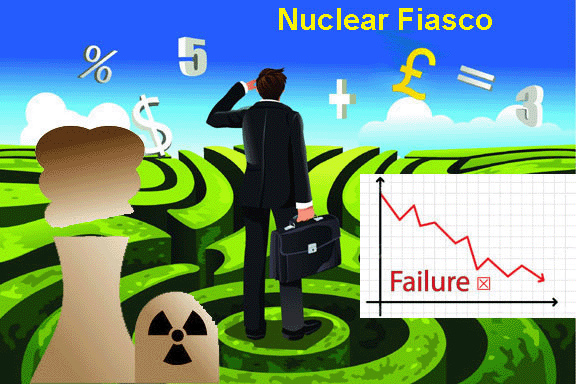
Following reports that the Westminster government is doubling down on
Nuclear Power, including a potential further investment in Sizewell C and a
raft of new Small Modular Reactors (SMRs), CND Cymru has highlighted the
continued lack of investment in communities and people, while billions is
to be spent subsidising the nuclear industry.
Keir Starmer seems poised to announce renewed public subsidy in Hinkley Point C, not set to open till 2031, and support for a further reactor at Sizewell C, costing billions in
taxpayer money. Coupled with a renewed focus on pushing through SMR
proposals, also likely subsidised by the taxpayer, Starmer may be set to
hand over £10 billion to the nuclear industry at a time when austerity is
looming over everyone.
Citing the potential for growth, Starmer is banking
on moderate gains by corporations in order to save a stagnating economy
that would benefit more from investment in community and green projects.
A CND Cymru spokesperson said “The willingness of the government to fund
the nuclear industry to the tune of billions while preaching austerity to
everyone else is absolutely farcical. We have seen the winter fuel payment
means tested, an attack on disability and other welfare systems, and a
refocus away from people towards profit. This government is functionally
taking money from the pockets of working class people and handing it to
corporations in the nuclear and warfare industry in order to chase a
mythical idea of growth – all while suppressing the true wealth creators in
this country.
A different, greener, fairer, future is possible which
doesn’t leave future generations with nuclear waste – and the government
has time to refocus and adjust their plans in order to build that future.
We must not accept the subsidy of the nuclear industry – all meant to prop
up a failing industry in order to preserve our nuclear attack capabilities
– while working people are facing impossible choices or sometimes not even
having the luxury of choice – starving and freezing – while the CEOs and
shareholders rake in the cash. Something has to change – and it is in the
government’s power to change it if they wish; because austerity, the death
of thousands, and the attack on millions, is a political choice, not
economic necessity.”
CND Cymru 14th April 2025
CND Cymru condemns billions for nuclear industry
Morning Star 15th April 2025
https://morningstaronline.co.uk/article/cnd-cymru-condemns-billions-nuclear-industry
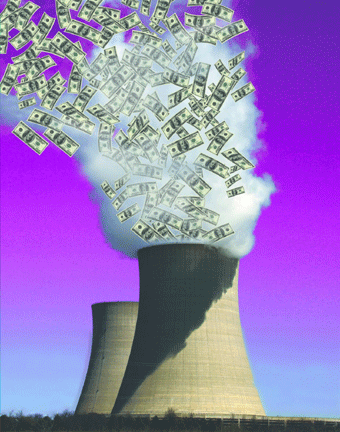
CAMPAIGNERS have condemned the billions being poured into nuclear energy while the Westminster government “preaches austerity” for everybody else.
CND Cymru attacked Sir Keir Starmer today, claiming he was poised to announce more public subsidy for the Hinkley Point C nuclear power plant in Somerset, not due to open until 2031.
A CND Cymru spokesperson said: “The willingness of the government to fund the nuclear industry to the tune of billions while preaching austerity to everyone else is absolutely farcical.
The anti-nuclear campaigners said Hinkley Point is likely to cost over £40 billion, £14bn over the initial estimate, with CND pointing out the project was managed by French company EDF.
“We must not accept the subsidy of a failing industry in order to preserve our nuclear attack capabilities while working people are facing impossible choices,” the CND spokesperson said.
“A different, greener, fairer, future is possible which doesn’t leave future generations with nuclear waste.”
A nuclear play in New Brunswick is facing a fragile outlook.

14 Apr 25
- What’s happening: The British owner of New Brunswick’s small modular reactor startup has entered insolvency, throwing its assets on the auction block.
- Why it matters now: The Canadian subsidiary says it’s forging ahead, but with delays, money troubles and fading momentum, Ottawa’s nuclear play is wobbling.
- The broader view: It’s a gut check for Canada’s SMR strategy – and a reminder of how fragile government-backed innovation can be when the scaffolding cracks.
Moltex Canada pushes on with nuclear project as U.K. parent struggles
Matthew McClearn, Globe and Mail, Toronto, 14 Apr 25
The British owner of New Brunswick small modular nuclear reactor developer Moltex Energy Canada Inc. is up for sale as part of a U.K. insolvency proceeding.
Moltex Energy Ltd., a private company based in Stratford-upon-Avon, announced last month the appointment of two insolvency practitioners from accounting firm Azets Holdings Ltd. to manageitsaffairs. Azets hired appraisers Hilco Valuation Services to solicit offers for its assets, which are due May 7.
It’s the latest complication fortaxpayer-sponsored efforts to construct small modular reactors, or SMRs, in New Brunswick.
Moltex’s wholly owned Canadian subsidiary is one of two vendors partnered with New Brunswick Power to build reactors at Point Lepreau Nuclear Generating Station. Moltex Canada’s is known as the Stable Salt Reactor-Wasteburner (SSR-W), and it’s also developing a plant to reprocess spent nuclear fuel. The second company, ARC Clean Technology, is working on another reactor called the ARC-100.
Both were originally promised by 2030. But developing a novel nuclear reactor is a painstaking, resource-intensive process that can require hundreds of employees, billions of dollars and decades of effort. New Brunswick and the federal government backed startups with only one or two dozen employees, and they’ve struggled to raise funds privately.
Moltex’s British holding company was founded in 2014 by Ian Scott, who previously worked in the biological-sciences field including as a senior scientist at Unilever PLC. (A co-founder, John Durham, stepped down as a director in October.) According to its latest financial report, published in January, it employed two people during the year ended March 31, 2024, and lost £630,000 (about $1.1-million). For several years its reports raised uncertainty about its ability to continue as a going concern.
Britain’s administration process is similar to proceedings under Canada’s Companies’ Creditors Arrangement Act; according to the British government, it’s intended to provide “breathing space” while a rescue package or sale of assets is executed.
According to Moltex Energy Ltd.’s financial statements, its shareholders had provided its equity throughout its history; it carried no long-term debt. The company reported in 2023 that its future depended on raising external capital; it had enough cash flow to survive through December, 2025, albeit “there would need to be cuts.”
Rory O’Sullivan, chief executive officer of Moltex Energy Canada, was also a director of the parent company for much of the past several years. He said the British company’s shareholders would not approve the Canadian subsidiary’s fundraising efforts, effectively stalling them.
“The key here is we needed to get someone else in control of Moltex Energy Ltd. so that we could have a competitive sale process,” Mr. O’Sullivan said…………………………..
New Brunswick’s government attracted Moltex and ARC to establish offices in the province in 2018. The two companies have each estimated that it would cost around $500-million to develop their respective technologies…………………………
As for ARC, its CEO and other employees suddenly departed last summer; ARC has published no announcements on its website since then. The ARC-100 is undergoing a prelicensing review by the Canadian Nuclear Safety Commission. Spokesperson Sandra Donnelly said the company will complete its design by 2027 to support an application for a construction licence.
NB Power’s CEO, Lori Clark, presented SMRs as playing a crucial role in her utility’s plans to achieve “net zero” emissions. More recently, however, she acknowledged that neither project is likely to follow its original schedule, and the utility is now considering other reactors for construction at Point Lepreau.
Spokesperson Dominique Couture wrote in a statement that NB Power has been working on an environmental impact assessment for the ARC-100 during the past year. And it assisted Moltex’s development efforts for reprocessing spent fuel.
All this is far less than what the federal government envisioned in the SMR Roadmap, a 2018 document developed with extensive input from the nuclear industry. It promised demonstration projects across the country; successive federal budgets allocated hundreds of millions of dollars to support them.
Canadian Nuclear Laboratories was to have an SMR called the Micro Modular Reactor up and running at its Chalk River facility by 2026. But its partner in that project, Ultra Safe Nuclear Corp., initiated a court-supervised sale process under Chapter 11 of the U.S. Bankruptcy Code in October. Another partner, Ontario Power Generation, pulled out last year.
Of the demonstration projects contemplated in the SMR Roadmap, only one appears to be on track: OPG’s proposal to build a “grid-scale” SMR at its Darlington Station. This month it received a construction licence from the CNSC to build its first reactor, a BWRX-300 designed by U.S. vendor GE-Hitachi Nuclear Energy. If completed on schedule by 2028, it would be the first SMR in any G7 country. https://www.theglobeandmail.com/business/article-moltex-canada-pushes-on-with-nuclear-project-as-uk-parent-struggles/#comments
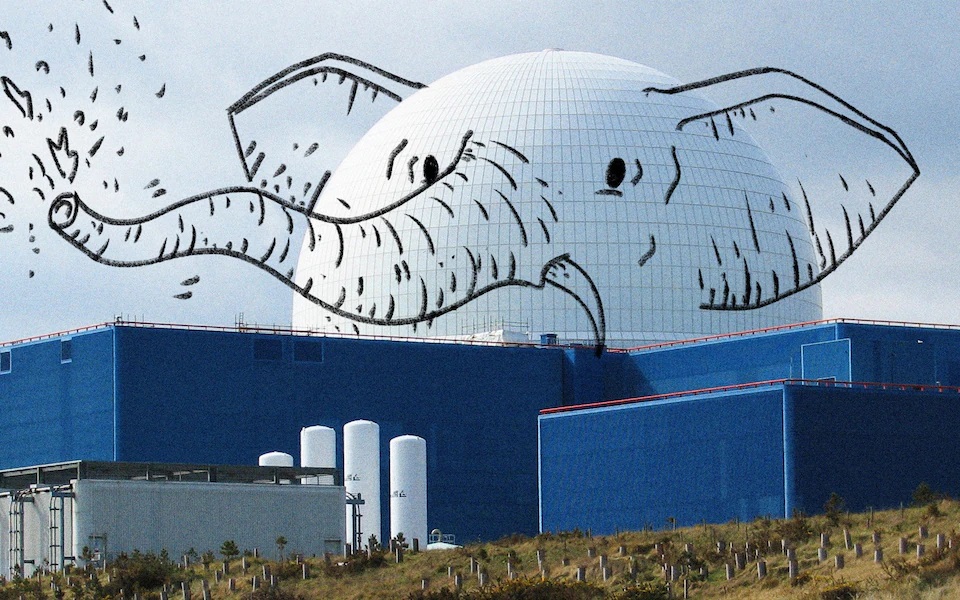
Up to date costs of Sizewell C nuclear are over £40 billion, not the £20 billion quoted.
Letter: Dr Sarah Darby, Environmental Change Institute, University of Oxford.
Nuclear power’s bill: You cite the estimated cost of Sizewell C
nuclear power station as £20 billion (“Starmer powers ahead with plan
for new nuclear plant”, news, Apr 10). But this was the original estimate
and is a long way from the more recent figure of £40 billion, which itself
is well below any final sum once the costs of capital, decommissioning and
disposal are factored in.
The prime minister and the power company EDF
appear determined to see nimbyism as the main obstacle to nuclear power.
Yet the laws of physics and the experience of engineers tell us that
nuclear plants remain a complex, risky, time-consuming and expensive method
of producing steam to run turbines. It is not too late to steer the funding
in more productive directions. As industrialists and policymakers
increasingly recognise, renewables, efficiency and storage offer attractive
options for meeting our energy needs.
Times 12th April 2025 https://www.thetimes.com/comment/letters-to-editor/article/times-letters-tariffs-backdown-america-donald-trump-lrmsg87k6
TEPCO’s rehabilitation plan delays expose limits to nuke power reliance.
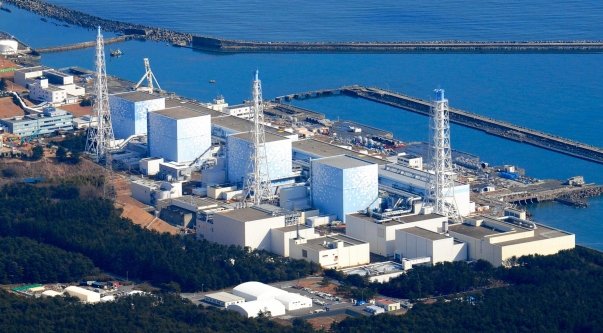
It was unreasonable in the first place for the power company to draw up a rehabilitation scenario relying on atomic power despite having caused a serious nuclear plant accident.
April 9, 2025 (Mainichi Japan), https://mainichi.jp/english/articles/20250409/p2a/00m/0op/029000c
Tokyo Electric Power Company (TEPCO) Holdings Inc. has postponed the revision of its business rehabilitation plan, which it had scheduled to carry out by the end of fiscal 2024. The company attributed the postponement to a lack of prospects for restarting the Kashiwazaki-Kariwa nuclear power plant in Niigata Prefecture, which it had seen a trump card in improving its earnings.
Will the utility be able to fulfill its responsibility in the recovery from the Fukushima disaster and the stable power supply amid such a state of affairs?
TEPCO has borrowed money from the national government to deal with the aftermath of the Fukushima nuclear meltdowns. This includes funds needed for compensation payments to affected residents and the decommissioning of the Fukushima Daiichi Nuclear Power Station. It has also taken out bank loans to fund its electric power business. The rehabilitation plan was supposed to form the premise for this financial aid.
The plan was first formulated in 2012, the year after the onset of the Fukushima disaster, and has since been updated almost every three years. The cost for handling the nuclear catastrophe was initially estimated at 6 trillion yen (approx. $41.27 billion), but that figure swelled to 21.5 trillion yen (148 billion) under the current plan outlined in 2021. The cost further rose to 23.4 trillion yen (approx. $161 billion) when taking into account compensation for fishery operators due to the release of treated water from the stricken Fukushima nuclear plant, among other expenses.
The cap on borrowing from the national government was subsequently raised to 15.4 trillion yen (approx. $106 billion). Based on these developments, calls grew to update TEPCO’s rehabilitation plan.
While TEPCO is scheduled to repay 500 billion yen (approx. $3.45 billion) annually to the national government, the actual repayment amount has hovered around 400 billion yen (around $2.76 billion) on average in recent years due to the firm’s poor performance.
The primary factor behind TEPCO’s sluggish earnings is that the Kashiwazaki-Kariwa nuclear plant has yet to be restarted. TEPCO had initially expected to resume the plant’s operations in fiscal 2019, eyeing a balance improvement of 100 billion yen (approx. $688 million) per reactor brought back online. But following a series of scandals including inadequate antiterror measures at the plant, the prospect of gaining local consent for its restart has waned.
TEPCO’s injection of more than 1 trillion yen (approx. $6.88 billion) into safety measures has also taken a heavy toll on its management, weighing down its cash flow. There are concerns that the utility may not even be able to afford capital investment essential for a stable power supply.
It was unreasonable in the first place for the power company to draw up a rehabilitation scenario relying on atomic power despite having caused a serious nuclear plant accident. In the amendments to be made to the rehabilitation plan by the end of fiscal 2025, the utility should completely overhaul its strategy.
TEPCO must accelerate its business realignment to improve its earning capacity. Its thermal power generation sector was integrated into Chubu Electric Power Co. in 2019, yet TEPCO needs to expand collaboration with other firms in renewable energy and other sectors with high growth potential. It urgently needs to streamline operations to stave off deterioration of its finances.
The company is urged to carry out a rehabilitation plan that is not reliant on nuclear power generation.
Walt Zlotow: Trump, Hegseth off by nearly 1 trillion on national security budget
Walt Zlotow, West Suburban Peace Coalition, Glen Ellyn IL 11 Apr 25 https://theaimn.net/trump-hegseth-off-by-nearly-1-trillion-on-national-security-budget/
Defense Secretary Pete Hegseth is applauding Trump’s boast to push through America’s first trillion dollar defense budget.
“Thank you Mr. President! COMING SOON: the first TRILLION dollar [Defense Department] budget.” Hegseth was echoing boss Trump who chortled “Nobody’s seen anything like it. We have to build out military, and we’re very cost-conscious, but the military is something we have to build, and we have to be strong,”
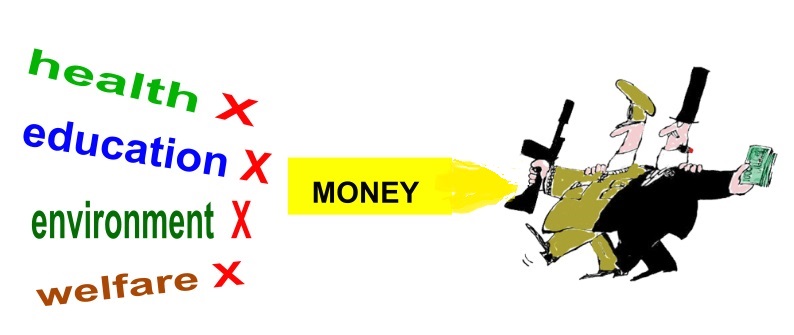
Trump’s defense policy and these quotes epitomize America’s decline as a peaceful, caring nation. Spending that trillion on militarism and warfare worldwide while Trump’s oligarchs are slashing a trillion from the social safety net is putting America into a death spiral from which it may never recover.
But they should really be high-fiving a national security budget that will be approaching $2 trillion based on Trump’s defense agenda.
That’s because the current defense budget under the National Defense Authorization Act of $900 billion just funds the Pentagon. When factoring in the Department of Veterans Affairs, special operations, Homeland Security and the national security share of US debt interest, the total for Fiscal ‘25 national security approaches $1.8 trillion. Regarding special ops, Trump’s failed month long Yemen bombing to stop their resistance to US enabled Israeli genocide in Gaza has already passed a billion bucks.
Current wars US supports in Ukraine, Gaza, Yemen, Somalia, Syria, Iraq and possible upcoming wars in Iran and China, don’t come cheap. Add in cost of over 750 bases in 80 countries hosting over 150,000 military personnel puts the approaching $2 trillion dollar cost in perspective.
Spending all that treasure on national offense (nope, not defense), becomes problematical when Trump is pushing thru trillion dollar tax cuts for his oligarch buddies.
What to do? Of Course, send in oligarch clown Musk to cut a trillion or more from everything that makes life livable for Joe Sixpack.
It is no surprise Trump plans to ravage the social safety net to spend $2 trillion on worldwide military adventurism while giving $4.5 trillion in tax cuts over 10 years mainly to those who don’t need them.
But do Trump and Hegseth have to brag about it?
New EDF boss at mercy of ‘to-do list’ that ousted his predecessor
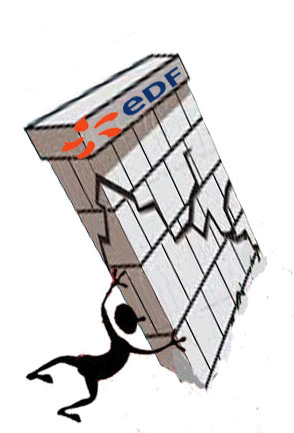
The new boss of French state-owned energy group EDF faces the same nearly
impossible tasks that led to the ousting of his predecessor: satisfying the
government’s often contradictory demands for cheap power to help industry
and the construction of costly new nuclear reactors.
Bernard Fontana, nominated as chief executive on March 21, is a seasoned industrialist who
has run EDF’s engineering arm Framatome for nearly nine years. He will
seek to avoid the fate of the previous chief executive Luc Rémont, removed
last month after just over two years because of repeated clashes with the
state.
On Fontana’s to-do list will be repairing relations with the
government, the company’s only shareholder, striking energy supply deals
with some of EDF’s biggest industrial clients, while also advancing plans
to build six nuclear reactors in just over a decade — a key initiative of
French President Emmanuel Macron, which was announced three years ago.
Fontana’s main challenge is to balance competing pressures of delivering
low rates for power, demanded by government and industry, while generating
profits that will help support vast investments required to launch new
nuclear reactors.
The company ran over budget and behind time on the
completion of Flamanville, a new nuclear reactor in northern France, and
faces budget and timing issues with the UK’s Hinkley Point. It has also
faced criticism that it is yet to outline timelines and costings for the
project to build the six new nuclear reactors, which were originally due by
the end of 2024.
Last month, the government pushed back the launch date
from 2035 to 2038, although observers have long considered the 2035 target
unachievable. In short, Fontana’s success will depend on whether he can
walk the tightrope of running EDF profitably while delivering the vast
capital outlay needed to reboot France’s nuclear sector. This will
require a major shift from Rémont’s uncompromising approach. “If
Fontana has taken the job, he’s understood the lesson [from Rémont’s
sacking]. If he hasn’t, he’s an idiot,” said another adviser.
FT 6th April 2025 https://www.ft.com/content/b9f39568-6029-4016-9c5f-0242dd8b9174
1 This Month



Shut down the radiation-damaged Heysham nuclear reactors now
To see nuclear-related stories in greater depth and intensity – go to https://nuclearinformation.wordpress.com

Say No to NASA’s Reckless Nuclear Reactor on the Moon
Say No to NASA’s Reckless Nuclear Reactor on the Moon
-
Archives
- October 2026 (256)
- September 2026 (339)
- August 2026 (330)
- July 2026 (355)
- June 2026 (287)
- May 2026 (306)
- April 2026 (356)
- March 2026 (251)
- February 2026 (267)
- January 2026 (308)
- December 2025 (358)
- November 2025 (359)
-
Categories
- 1
- 1 NUCLEAR ISSUES
- business and costs
- climate change
- culture and arts
- ENERGY
- environment
- health
- history
- indigenous issues
- Legal
- marketing of nuclear
- media
- opposition to nuclear
- PERSONAL STORIES
- politics
- politics international
- Religion and ethics
- safety
- secrets,lies and civil liberties
- spinbuster
- technology
- Uranium
- wastes
- weapons and war
- Women
- 2 WORLD
- ACTION
- AFRICA
- Atrocities
- AUSTRALIA
- Christina's notes
- Christina's themes
- culture and arts
- Events
- Fuk 2022
- Fuk 2023
- Fukushima 2017
- Fukushima 2018
- fukushima 2019
- Fukushima 2020
- Fukushima 2021
- general
- global warming
- Humour (God we need it)
- Nuclear
- RARE EARTHS
- Reference
- resources – print
- Resources -audiovicual
- Weekly Newsletter
- World
- World Nuclear
- YouTube
-
RSS
Entries RSS
Comments RSS

