From the NPT to the UN Summit of the Future: Cut nuclear weapons budgets and investments

Aug 22, 2024, m https://nuclearweaponsmoney.org/news/from-the-npt-to-the-un-summit-of-the-future-cut-nuclear-weapons-budgets-and-investments/
Legislators and civil society organizations are using the opportunities of key international events in the latter part of 2024 to elevate calls for cuts in nuclear weapon budgets, an end to investments in the nuclear arms race, and a shift of these resources to better address planetary emergencies including an climate change, threats to biodiversity and an increase in the number and intensity of armed conflicts.
Actions utilizing these opportunities include parliamentary and civil society appeals to the two-week long meeting of States Parties to the nuclear Non-Proliferation Treaty at the United Nations in Geneva (2024 NPT Prep Com) from July 22-August 2, and the UN Summit of the Future from September 22-23.
On July 23, Baroness Miller of Chilthorne Domer presented a parliamentary appeal ‘Turn Back the Doomsday Clock’ to a plenary session of the NPT Prep Com with nine concrete proposals directed to both the NPT Prep Com and the UN Summit of the Future. One of the proposals calls on governments “cut nuclear weapons budgets and public investments in the nuclear weapons industry, and to re-purpose these resources to instead support public health, peace, climate stabilization and sustainable development.”
More than 80 parliamentarians from 35 legislatures endorsed the appeal, including members of foreign affairs and defence committees; parliamentary delegates to the Inter-Parliamentary Union, NATO Parliamentary Assembly and OSCE Parliamentary Assembly; former Ministers of Foreign Affairs, Defence and Disarmament; and others.
A similar appeal from faith-based organizations and leaders, entitled Pursuing Peace, Security and Nuclear Disarmament through our Common Humanity, was also presented at the NPT plenary session on July 23 by Ayleen Roy, a member of the Transnational working group on faith and values based perspectives. The appeal, which was endorsed by more than 80 faith-based organizations and an additional 180 faith and values based leaders and individuals, highlights principles common to all the world’s major religious and faith-based traditions that are relevant to peace, security and nuclear weapons.
On July 23, Baroness Miller of Chilthorne Domer presented a parliamentary appeal ‘Turn Back the Doomsday Clock’ to a plenary session of the NPT Prep Com with nine concrete proposals directed to both the NPT Prep Com and the UN Summit of the Future. One of the proposals calls on governments “cut nuclear weapons budgets and public investments in the nuclear weapons industry, and to re-purpose these resources to instead support public health, peace, climate stabilization and sustainable development.”
More than 80 parliamentarians from 35 legislatures endorsed the appeal, including members of foreign affairs and defence committees; parliamentary delegates to the Inter-Parliamentary Union, NATO Parliamentary Assembly and OSCE Parliamentary Assembly; former Ministers of Foreign Affairs, Defence and Disarmament; and others.
A similar appeal from faith-based organizations and leaders, entitled Pursuing Peace, Security and Nuclear Disarmament through our Common Humanity, was also presented at the NPT plenary session on July 23 by Ayleen Roy, a member of the Transnational working group on faith and values based perspectives. The appeal, which was endorsed by more than 80 faith-based organizations and an additional 180 faith and values based leaders and individuals, highlights principles common to all the world’s major religious and faith-based traditions that are relevant to peace, security and nuclear weapons.
Citing the faith-based principle of social responsibility, the appeal notes that “The €90 billion equivalent spent each year on nuclear weapons development, production and deployment is draining resources (human and financial) that are required to eliminate world poverty and achieve the SDGs” and encourages “States to acknowledge their social responsibility by ending investments in nuclear weapons and re-purposing these investments to address basic human needs.”
And in preparation for the UN Summit of the Future, civil society organizations from around the world, cooperating through the facilitation of the Coalition for the UN We Need, have released a Peoples Pact for the Future with a number of recommendations to the Summit of the Future, one of which calls for a commitment to be made at the Summit “to channel domestic and other funds currently utilized for weapons—including nuclear and other weapons of mass destruction—to peaceful use such as environmental protection, sustainable development, peacemaking, rehabilitation, restorative justice, reparations, and building a culture of peace.”
Member organizations of Move the Nuclear Weapons Money were amongst the leaders of these initiatives.
Parliamentarians are also taking actions in their own legislatures to cut nuclear weapons budgets, but these are mostly actions that have not yet received sufficient support to be adopted.
On June 24, for example, US Senator Ed Markey who serves as Co-President of Parliamentarians for Nuclear Non-proliferation and Disarmament (PNND) and as Co-chair of the bicameral Nuclear Weapons and Arms Control Working Group (NWAC), organized a joint letter from NWAC members to the Secretary of Defense, challenging the US Sentinel Inter-Continental Ballistic Missile (ICBM) replacement program on both financial and policy grounds. The legislators wrote to “remind the DoD that the American people have not granted them a blank check to pursue wasteful, unnecessary programs. As a varied group, our positions on the overall nuclear posture may vary, but we all share a common commitment to preventing government waste, avoiding dangerous nuclear escalation, and promoting peace.”
There are growing calls amongst security experts and civil society organizations for a retirement of all ICBMs in order to cut the bloated nuclear weapons budget and reduce the risks of nuclear war. See, for example, Slash the Pentagon Budget in Half & Abolish ICBMs: Dan Ellsberg on How to Avoid Nuclear Armageddon.
Senator Markey has given voice in the US Congress to these calls in a number of ways including in the Smarter Approach to Nuclear Expenditure (SANE) Act and the Invest in Cures Before Missiles (ICBM) Act that he has introduced, and in direct challenges to nuclear weapons budget items during the Defence Budget Authorization process. See Senator Markey: Shift funds from the military to climate action. And end the nuclear threat!
However, Markey and the Nuclear Weapons and Arms Control Working Group are opposed by a powerful nuclear arms industry lobby and the many legislators whom they support in congress, including members of the the bi-partisan Missile Defence Caucus. See Meet the Senate nuke caucus, busting the budget and making the world less safe. The efforts of Senator Markey and his colleagues are unlikely to succeed in deep cuts to the US nuclear weapons budget unless there is a stronger groundswell of Americans pushing their elected representatives to support their legislative initiatives.
Over in the UK, the possibilities for cutting the nuclear weapons budget do not appear to have improved with the election of a Labour government. Prime Minister Keir Starmer has affirmed that his government is committed to a triple lock for nuclear deterrence, which includes maintaining Britain’s continuous at-sea deterrent (CASD) “24 hours a day, 365 days a year”; building four new nuclear submarines; and delivering “all the needed upgrades” for existing and new submarines in the future. However, there could be dissention to this from some Labour MPs and from the increased number of Liberal Democrats in the House of Commons. (See Reality check: is Keir Starmer’s triple lock on nuclear weapons anything new?)
A new French fairy tale: “Cheap” nuclear electricity in France is not what it appears.

The French public are paying for their nuclear addiction — and will pay even more when the plants need decommissioning.

By Axel Mayer, 11 Sept 23, https://beyondnuclearinternational.org/2023/09/11/a-new-french-fairy-tale/—
“Bread and games”(Panem et circenses) were the enforcement strategies in the Roman Empire to maintain power. “Cheap petrol, cheap electricity and football” are popular campaign strategies under a democracy, says Axel Mayer, Vice-President of the Trinational Nuclear Protection Association (TRAS).
In France, the nuclear industry is in decline and the nuclear company EDF is heavily in debt. At the same time, President Macron is once again promising cheap nuclear power and wants to have new small nuclear power plants built. A small part of the French nuclear industry’s financial problems is to be solved with EU money.
In this context, the fairy tale of cheap French nuclear power is happily spread in France and also in Germany and the use of nuclear energy is praised as the miracle weapon in the losing war against nature and the environment. However, the price of electricity in France is only apparently cheap.
According to a report of the supreme audit court in France, the research and development, as well as the construction of the French nuclear power plants, cost a total of 188 billion euros. Since in France the “civilian” and the military use of nuclear power cannot be separated, the sum is probably much higher. Retrofitting France’s outdated reactors will cost over 55 billion euros. Liberation magazine reports retrofitting costs of nearly 100 billion euros by 2030.
People of France are paying for expensive nuclear power with their taxes
According to a report by the French Ministry of Economy, the semi-state-owned EDF had debts of about 41 billion euros at the end of 2019, an amount that is expected to be nearly 57 billion euros by 2028. To avoid domestic political problems, EDF is not allowed to raise the price of electricity for political reasons. EDF liabilities are driving up France’s national debt massively. The people of France (and especially their grandchildren) are paying for the seemingly cheap, but in reality expensive nuclear power with their taxes.
This cost does not include the dismantling of the nuclear power plants or any costs of a severe accident. A serious nuclear accident would have devastating consequences in France. A government study estimates the cost at 430 billion euros.
Demolition costs of over 100 billion euros
In France, EDF operates 56 outdated reactors that are now becoming old and decrepit almost simultaneously, but the company has built up almost no reserves for decommissioning. In Germany, the government is very optimistic about a 47 billion euros cost for decommissioning and final storage. The decommissioning of the large number of French nuclear power plants could cost well over 100 billion euros as costs rise, if no savings are made on safety. There is a distinct possibility that the nuclear industry could bankrupt the French state even without a nuclear accident that could happen at any time.
A “European Pressurized Water Reactor” (EPR) has been under construction on France’s Atlantic coast in Flamanville since 2007. The flagship project was originally scheduled for completion in 2012 at a fixed price of 3.2 billion euros. Since then, the start of operation has been postponed again and again, and the Court of Auditors now puts the cost at over 19 billion euros. Whether the EPR can go online in 2024 is questionable. The model reactor will never work economically.
In countries with a functioning market, no new nuclear power plants are building
Swiss nuclear lobbyist and Axpo CEO Christoph Brand puts the kibosh on dreams of cheap nuclear power from new, small nuclear plants. “The production costs for the electricity supplied by new nuclear power plants are currently about twice as high as those of larger wind and solar plants,” Brand said. “No matter how one assesses the risks of nuclear power, it is simply not economical to rely on new nuclear plants,” he said in the pro-nuclear NZZ on Oct. 21, 2021.
In countries with a functioning market, no new nuclear power plants are being built. When in doubt, it always helps to look at EDF’s share price, which has fallen massively over the long term, to assess the market chances of the nuclear renaissance announced by President Macron.
“Bread and games” with artificially low nuclear electricity prices can work in election campaigns. Low-cost, risk-free electricity is generated today with photovoltaics and wind energy. (AM/hcn)
Nuclear unicorn Newcleo to move holding company from UK to France to tap EU funds
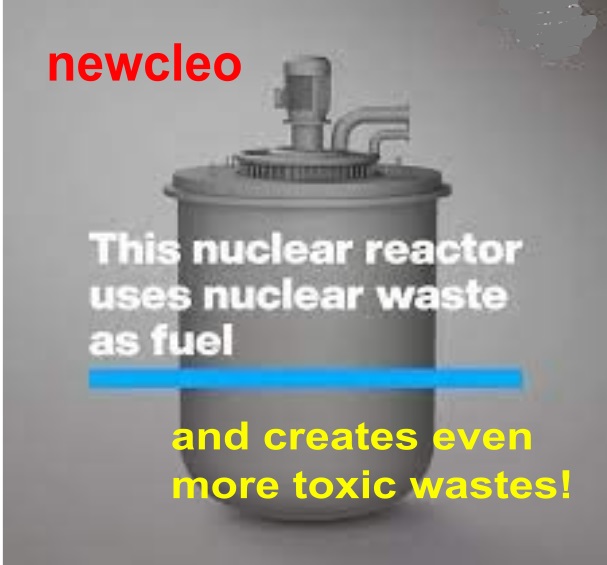
The move comes as the startup targets a €1bn equity round
Sifted Kai Nicol-Schwarz, 21 Aug 24
Nuclear power startup Newcleo is moving its holding company from the UK to France, as the company looks to tap EU funding pools in its bid to raise a €1bn equity round.
Newcleo said in its annual accounts, released yesterday, that it had announced to shareholders and employees in January that it was making the move to increase the potential of attracting “significant funding from EU financial institutions”.
“While we are moving the location of our holding company, our plans for the UK are unchanged and we remain committed to investing and building next-generation SMRs to generate electricity for the UK grid and industry,” a Newcleo spokesperson told Sifted. Sifted understands that the move would not involve employees relocating.
…………………………………………………………. founder and CEO Stefano Buono told Sifted in May that the company would need to raise billions more if it’s to realise its ambitions of building a revenue-making commercial reactor by the early 2030s.
Newcleo is hoping French and EU institutional funding can help it get there. “The rationale for the restructure is partly to improve the potential to attract funding from French and other EU financial institutions in the future,” the company said in its accounts.
French government-funded investment bank Bpifrance has “strict” requirements on holding companies being based in the country, explains Tommy Stadlen, cofounder and partner at Giant Ventures.
………………………………..Newcleo’s average monthly cash burn is €13m for the first half of 2024 and it made a loss of €57.5m in 2023 — up from €18.1m in 2022 — according to its accounts. The company had €221m of cash in the bank on 30 June 2024.
https://sifted.eu/articles/nuclear-newcleo-raise-startup-france
Final investment decision on new nuclear plant Sizewell C is delayed
The crucial final investment decision (Fid) for the new nuclear power
plant Sizewell C is unlikely to be agreed until 2025, according to recent
reports. Financial sector publication Bloomberg reported that anonymous
sources close to the project said negotiations between potential private
investors were moving more slowly than had been expected.
The Fid had already been delayed by the general election, but new energy secretary Ed
Miliband indicated his support for Sizewell in an early speech to
parliament before the 2024 summer recess. Bloomberg reported negotiations
with Centrica, Emirates Nuclear Energy Corporation, Amber Infrastructure
Group and Schroders Greencoat are ongoing.
Earlier in July, Centrica chiefnexecutive officer Chris O’Shea said: “An investment decision this year would be dependent upon how the government and the Sizewell company want to
move. “We are able to move as quickly as the other parties, but I think
we should be realistic that the government have been in office less than
three weeks and they need to figure out what they want to do.”
New Civil Engineer 20th Aug 2024
How US Big Tech monopolies colonized the world: Welcome to neo-feudalism
US Big Tech corporations are like the feudal landlords of medieval Europe. These Silicon Valley monopolies own the digital land that the global economy is built on, and are charging higher and higher rents to use their privatized infrastructure.
GeoPoliticalEconomy, By Ben Norton, 19 Aug 24
US Big Tech corporations have essentially colonized the world. In almost every country on Earth, the digital infrastructure upon which the modern economy was built is owned and controlled by a small handful of monopolies, based largely in Silicon Valley.
This system is looking more and more like neo-feudalism. Just as the feudal lords of medieval Europe owned all of the land and turned almost everyone else into serfs, who broke their backs producing food for their masters, the US Big Tech monopolies of the 21st century act as corporate feudal lords, controlling all of the digital land upon which the digital economy is based.
Every other company – not just small businesses, but even relatively large ones – must pay rent to these corporate feudal lords.
Amazon takes more than 50% of the revenue of the sellers on its platform, according to a study by the e-commerce intelligence firm Marketplace Pulse.
Amazon’s cut of vendor revenue steadily rose from roughly 35% in 2016 to just over half as of 2022.
In fact, Amazon basically sets prices in markets by using its infamous “buy box”. The platform removes the button if a user sells a product at a price higher than those offered on competing websites. The result: 82-90% of sales on Amazon end up using the buy box.
Neoclassical economists endlessly condemned the inefficiencies of the central planning of the Soviet Union, but apparently have little to say about the de facto price setting being done by neo-feudal corporate monopolies like Amazon.
A monopolist in the 20th century would have loved to control a country’s supply of, say, refrigerators. But the Big Tech monopolists of the 21st century go a step further and control all of the digital infrastructure needed to buy those fridges — from the internet itself to the software, cloud hosting, apps, payment systems, and even the delivery service.
These corporate neo-feudal lords don’t just dominate a single market or a few related ones; they control the marketplace. They can create and destroy entire markets.
Their monopolistic control extends well beyond just one country, to almost the entire world.
If a competitor does manage to create a product, US Big Tech monopolies can make it disappear.
Imagine you are an entrepreneur. You develop a product, make a website, and offer to sell it online. But then you search for it on Google, and it does not show up. Instead, Google promotes another, similar product in the search results.
This is not a hypothetical; this already happens.
Amazon does exactly the same: It promotes Amazon Prime products at the top of its search results. And when a product sells well, Amazon sometimes copies it, makes its own version, and threatens to put the original vendor out of business.
As Reuters reported in 2021, “A trove of internal Amazon documents reveals how the e-commerce giant ran a systematic campaign of creating knockoff goods and manipulating search results to boost its own product lines”. This happened in India, but vendors in other countries have accused Amazon of doing the same.
Toy salesman Molson Hart produced a fascinating documentary that illustrates Amazon’s dystopian monopoly power.
Amazon is more powerful than any 19th-century robber baron could have imagined. It charges exorbitant fees to vendors that sell goods on its platform (goods that Amazon had nothing to do with creating), and can copy their product and make its own version if it looks profitable.
This problem goes much deeper than Amazon. Apple, the largest company on Earth by market capitalization (with a $3.41 trillion market cap as of August 1, 2024), uses many of the same tactics as Amazon.
While Amazon extracts more than 50% of the revenue of the sellers who use its platform, it can at least try to justify this by arguing that these exorbitant fees include the costs of advertising and “fulfillment” (ie, storage, processing, delivery, etc.).
Apple, on the other hand, charges a staggering 30% fee on all purchases done in apps that are downloaded using the iOS store.
In other words, if a user of an iPhone, iPad, or Mac download an app for a third party through the App Store, Apple requires 30% rent for the business done by those other companies. This is despite the fact that Apple has nothing to do with that business. The other firms manage the commerce and maintain their apps; Apple is the neo-feudal lord demanding its tribute.
In an absolutely scandalous announcement in August, the crowd-funding website Patreon revealed in August that the neo-feudal corporate landlords at Apple are taking a 30% cut of all new memberships registered using the iOS app.
Apple is not providing any service, other than allowing people to download an app that it itself does not manage. All Apple does is host the app, nothing more. It is a digital landlord. But because it has a monopoly, Apple can take 30% of the revenue that creators on Patreon receive for all of our hard work…………………………………………………………………………………………..
It all started with Big Tech corporations first offering supposedly “free” services (which were paid for by selling users’ information). Those “free” platforms soon became monopolies, and were so deeply embedded into the economy that they became digital utilities, albeit privatized ones.
A 20th-century economy needed utilities like an electrical grid, water plants, sewage system, highways, etc. These natural monopolies should be publicly owned, provided by the state as public goods, in order to prevent rent-seeking by corporate landlords. (Of course, neoliberals have long sought to privatize these public utilities as well, and have had success in some countries — with inevitably disastrous results, like sky-high bills and sewage being dumped into the UK’s privatized water system.)
A 21st-century economy needs all of those basic utilities plus new digital infrastructure. But here’s the thing: all of the necessary digital infrastructure that our economies are built on is privatized! You have internet providers, Microsoft Windows, iOS, Apple Store, Play Store, Google, Amazon, YouTube, Facebook, Instagram, WhatsApp, Apple Pay, Google Pay, etc.
Then there is the cloud infrastructure that apps and websites use, which is dominated by a few mostly US companies. Amazon Web Services (AWS) had 31% of global market share as of the first quarter of 2024, followed by 25% for Microsoft Azure, and 11% for Google Cloud……………………………………………………………………………………………………………….
If you want to make a small business, you will almost certainly go bankrupt very quickly if you don’t use Amazon to sell your product; Apple’s App Store or Google Play Store to download your app; Facebook, Instagram, and YouTube to market your good or service; or WhatsApp to make an order (especially in many Global South countries, where WhatsApp is more common than in the US). None of this is to even mention private ISPs for an internet connection, or private telecommunications companies that charge high data fees.
If your company makes an app that is not available in the Apple App Store or Google Play Store, you might as well not exist. Good luck getting the vast majority of your customer base to download it…………………………………………………………………………………………..
These Big Tech monopolists are really digital landlords. They own the land upon which the rest of the digital economy is built. They are the 21st-century version of the feudal lords of Medieval Europe, who owned the land upon which serfs toiled.
Now these neo-feudal corporate landlords are charging more and more fees to use their “free” infrastructure.
This digital infrastructure should be nationalized and treated as a public good, like other basic utilities (which should also be nationalized if they have been privatized, which was increasingly the case in the neoliberal era).
This is global monopoly capitalism…………………………………………………………………………………….
Economist Yanis Varoufakis has referred to this system as “technofeudalism”, in his 2024 book with this title. Although I sometimes disagree with Varoufakis, especially in terms of his criticism of China, I do largely share his analysis of technofeudalism.
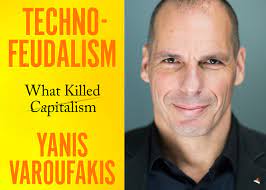
Varoufakis is also absolutely right that one of the factors driving Washington’s new cold war on Beijing is the desire by US Big Tech monopolies to destroy their only competitors, which happen to be Chinese. ………………………….
This observation by Varoufakis hits the nail on the head. Where I think he is wrong is in his claim that China, like the US, is becoming techno-feudal.
There is a fundamental distinction between the two: In the US, capital controls the state; in China, the state controls capital.
In China’s unique system, which it refers to as a socialist market economy and “Socialism with Chinese Characteristics”, roughly a third of GDP comes from massive state-owned enterprises (SOEs), which are concentrated in the most strategic sectors of the economy, such as banking, construction, infrastructure, transportation, and telecommunications.
While it is true that many technology companies in China are private on paper, the reality is much more complicated. The Chinese government has a powerful “golden share” (officially known as a “special management share”) in large firms, such as Alibaba and Tencent, which gives it veto power over important decisions.
Although these large technology companies may not be full state-owned, China’s socialist government ensures that they act in the interest of the country and the people, not simply wealthy shareholders.
The US system is exactly the opposite. Large corporations control the government, and create policy on behalf of wealthy shareholders.
The problem is not just that US corporate monopolies control markets; they create those markets themselves, through their control over digital infrastructure.
As Varoufakis has observed in his discussion of “cloud capital”, Amazon does not just dominate the market; it creates markets — and prevents any potential competitors from creating alternative markets………………………………………………
In the 21st century, the infrastructure of society itself has been privatized.
The solution is clear: the digital infrastructure upon which the modern economy is built must be nationalized and turned into public utilities, like water, electricity, and highways.
That said, the US government nationalizing Silicon Valley Big Tech companies does not solve the problem of the lack of digital sovereignty in other countries.
If Amazon, Apple, Google, and Meta are nationalized, this would still mean the United States has enormous power over nations whose economies rely on this US-controlled digital infrastructure (which, again, is almost all nations everywhere, with the noble exception of China)……………………………………………………………………………………………………………………….
This is a serious problem that should be debated worldwide. There are likely some potential creative solutions………….. https://geopoliticaleconomy.com/2024/08/19/us-big-tech-monopolies-neo-feudalism/
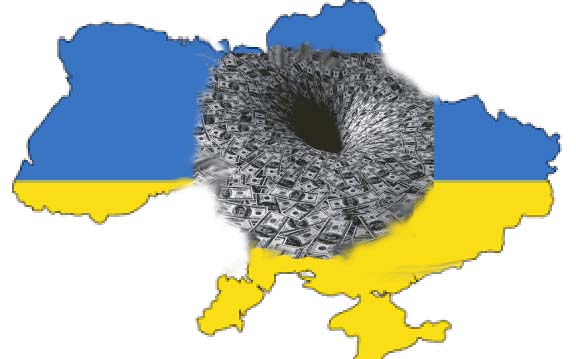
German ministers told there’s no more money for Ukraine – media
https://www.rt.com/news/602719-germany-no-money-ukraine-aid/ 17 Aug 24
Berlin could halve its military assistance to Kiev in 2025, the newspaper claims
German Finance Minister Christian Lindner has issued a request to the country’s defense ministry calling for a limit to military assistance to Ukraine, Frankfurter Allgemeine Zeitung (FAZ) reported on Saturday. According to Lindner, the country’s current budget plan is not capable of allocating funds to Kiev.
The request was made in a letter addressed to German Defense Minister Boris Pistorius and Foreign Minister Annalena Baerbock, and specified that only military aid that has already been approved can be delivered to Kiev. Additional applications from the defense ministry will no longer be accepted, even if issued at the behest of Chancellor Olaf Scholz.
FAZ noted that the block on newly approvals is already in effect and that Berlin would halve its military aid to Ukraine next year. In 2027, the assistance is expected to decline to less than one tenth of its current volume.
Up to €8 billion in aid to Ukraine has been scheduled for 2024, and the planned maximum of €4 billion for 2025 already exceeds available funds, the media outlet noted, adding that only €3 billion is planned for 2026, and €500 million each for 2027 and 2028.
“End of the event. The pot is empty,” an unnamed source in the federal government told FAZ, stressing that Berlin has “reached a point where Germany can no longer make any promises to Ukraine.”
The newspaper noted that the urge comes amid Lindner’s push for harsh austerity measures; these have already been imposed on all German ministries except defense. The finance minister has been resisting intense pressure from Scholz and Economy Minister Robert Habeck to suspend the country’s constitutional limit on debt to allow for the cost of providing military aid to Kiev amid the Ukrainian conflict.
Germany is the second biggest backer of Ukraine after the US. Berlin has provided and committed military aid of at least €28 billion ($30.3 billion) to Kiev in current and future pledges. This includes advanced military equipment such as Leopard 2 tanks, Marder infantry fighting vehicles, and US-made Patriot air-defense systems.
Lindner reportedly doesn’t expect the country’s assistance to Ukraine to drop, as the minister hopes to cover the expenses not with federal budget funds, but through the use of Russian central bank assets that were frozen by Kiev’s Western allies shortly after the conflict escalated.
Nearly $300 billion belonging to Russia’s central bank has been immobilized by the EU and G7 nations as part of Ukraine-related sanctions. In May, Brussels approved a plan to use the interest earned on the frozen assets to support Ukraine’s recovery and defense. Under the agreement, 90% of the proceeds are expected to go into an EU-run fund for Ukrainian military aid, with the other 10% allocated to supporting Kiev in other ways.
Sizewell C funding decision may not be made this year
19 July 2024, Ben Parker & Alice Cunningham, https://www.bbc.com/news/articles/c2x0k87z400o
An investment decision into Sizewell C in Suffolk may not be made this year by the new Labour government.
The previous Conservative-led government said it would secure funding this year for the power plant and £2.5bn has already been spent on the project.
Alison Downes of Stop Sizewell C said she hoped ministers were taking the time to “reconsider their support”.
A spokesperson for Sizewell said the project was progressing while the Department for Energy Security and Net Zero said the government was committed to the project but did not comment on when a decision on the funding would be made when asked by the BBC.
………………………………….The official cost of Sizewell C has been put at £20bn and the project will be partly funded by French energy company EDF.
Ms Downes said she felt by the time Sizewell C was built, it would be too late to tackle the climate emergency.
“Given that Sizewell C cannot in any way help the new government achieve its target of a net zero grid by 2030, we very much hope Ministers are taking the time to seriously reconsider their support,” she said.
“Not only would it be too late to help our climate emergency, this project would increase household bills throughout construction and beyond, and suck billions of pounds of taxpayers’ money away from other urgent priorities.
“Doubling down on the £2.5 billion already spent would be just throwing good money after bad.”
Building permission for the project has already been granted and if funding is secured, construction could take about 12 years.
6 Billionaire Fortunes Bankrolling Project 2025

More than $120 million from a few ultra-wealthy families has powered the Heritage Foundation and other groups that created the plan to remake American government.
DeSmog, ByJoe Fassler, Aug 14, 2024
Since 2020, donor networks linked to just six family fortunes have funneled more than $120 million into Project 2025 advisory groups, a DeSmog analysis has found.
More than 100 nonprofits led by the Heritage Foundation, a right-wing think tank that has engaged in climate change denial and obstruction for decades, have signed on as advisors to the Project 2025’s 900-page “Mandate for Leadership” document — a plan to rapidly “reform,” or radically alter, the U.S. government by shuttering bureaus and offices, overturning regulations, and replacing thousands of public sector employees with hand-picked political allies.
In its official Project 2025 materials, Heritage Foundation leadership repeatedly draws attention to the size and diversity of its advisory board, suggesting that its numerous “coalition partners” are part of a broad, “movement-wide effort” representing a variety of independent viewpoints.
“Project 2025 is unparalleled in the history of the conservative movement—both in its size and scope but also for organizing [so many] different groups under a single banner,” the organization wrote in an October 2023 press release.
But an analysis of financial disclosure forms shows the same small group of donors supporting Project 2025’s advisors again and again — hardly a sign of ideological diversity. Of the 110 nonprofits formally supporting Project 2025, almost 50 received major donations from the same six sources of wealth since 2020.
Many of the organizations the six families funded also have close ties to Donald Trump and his running mate, Ohio Senator JD Vance, DeSmog found. Trump has repeatedly denied involvement in or knowledge of Project 2025, though that position conflicts with a growing number of news reports — a disavowal made more awkward by the fact that Vance wrote the forward to Dawn’s Early Light, a forthcoming book by Heritage Foundation president Kevin D. Roberts that describes his Project 2025 vision. DeSmog’s review of Project 2025’s financial backers found additional links to Trump, Vance, and key figures in their orbit that had not been previously known.
These six donor networks, linked to the family fortunes of a handful of wealthy industrialists, have spent years working to loosen environmental regulations and promote climate change denial. Though Heritage describes Project 2025 as a mainstream effort to “return government to the people,” its funding sources suggest something far less populist: a vehicle for the obsessions of ultra-rich donors on the far-right fringe, pushing an agenda to reshape American democracy and overturn regulations needed to maintain a livable climate.
Representatives from the six donor networks did not respond to DeSmog’s outreach on this story. The Heritage Foundation did not reply to a request for comment.
The Coors Family
At least $2.7 million to Project 2025 groups since 2020 …………………………………………………………..
Charles G. Koch
At least $9.6 million to Project 2025 groups since 2020 ……………………………………………
Richard and Elizabeth Uihlein
At least $13 million to Project 2025 groups since 2020
The Uihleins are co-founders of Uline, a company that sells shipping and packing supplies — including its ubiquitous brand of cardboard boxes — and other bulk business goods. ……………………………………………………………..
The Scaife Family
At least $21.5 million to Project 2025 groups since 2020
Richard Mellon Scaife died in 2014, but his contribution to conservative causes is still felt today. ……………………………………………………………..
Barre Seid
At least $22.4 million to Project 2025 groups since 2020
The enigmatic industrialist Barre Seid primarily built his fortune through his company Tripp Lite, an electronics manufacturer specializing in surge protectors…………………………………………………………….
The Bradley Family
At least $52.9 million to Project 2025 groups since 2020
The Lynde and Harry Bradley Foundation was originally established in 1942 by brothers Lynde and Harry Bradley, founders of the Allen-Bradley company, which made its fortune manufacturing a wide range of electronic products. Their descendants have continued to financially support the foundation for years to come, including with a reported $200 million gift in 2015.
But it was Michael W. Grebe, who served as CEO of the foundation between 2002 and 2016, who cemented its reputation as a conservative powerhouse, steering donations to a network of activist organizations like The Heritage Foundation, the Mackinac Center for Public Policy, and the Heartland Institute (all Project 2025 coalition partners). The current chairman is James Arthur “Art” Pope, CEO of the North Carolina grocery chain Variety Wholesalers, a longtime Koch ally. …………………………………………more https://www.desmog.com/2024/08/14/project-2025-billionaire-donor-heritage-foundation-donald-trump-jd-vance-charles-koch-peter-coors/
Ukraine’s plan to buy Russian-made nuclear reactors sparks uproar

Lawmakers argue buying aging atomic energy equipment from Bulgaria won’t help keep the lights on and could fuel corruption.
Politico, August 15, 2024 , By Gabriel Gavin
Ukraine’s government is fighting off growing opposition to a multimillion-dollar scheme to buy mothballed nuclear reactors, facing accusations that officials are opening the door to corruption just as they push to clean up the country’s energy sector.
The government wants to bring two new units online at the Khmelnytskyi Nuclear Power Station in Western Ukraine, arguing they will help shore up the country’s energy grid that Russian bombs have decimated. The quickest and fastest way to do so, they argue, is to buy Russian-made reactors currently sitting in storage in Bulgaria at an estimated cost of $600 million.
But the deal needs lawmakers’ sign-off, and several parliamentarians — including at least one from President Volodymyr Zelenskyy’s own party — are alleging the deal could blow a massive hole in the country’s tattered budget for outdated technology that won’t necessarily help Ukrainians stave off looming blackouts.
………………………………………The row has created another point of contention as Ukraine tries to crack down on corruption in its energy sector. Earlier this week, Galushenko’s deputy minister, Oleksandr Kheil, was arrested over allegations he pushed for a bribe of half a million dollars in exchange for transferring coal mining equipment belonging to a state enterprise.
Zhupanyn and his colleagues claim the Russian nuclear reactor purchase will become another venue for such dodgy dealing.
“In the last 10 years, there have been many criminal cases against people using tenders to extract cash from Ukraine’s state nuclear power company,” he said in an interview. “If you allow them to spend billions of hryvnia on this, you can expect a pipeline of criminal cases in the next 10 years.”
Galuschenko denied accusations the government was withholding information…………………………………….
“There are a lot of MPs from basically all factions that are not supporting it,” Yaroslav Zheleznyak, an economist and MP from Ukraine’s liberal Holos party, told POLITICO following the meeting on Tuesday. “We are concerned about corruption in this procurement process and we have not received any explanations.”………………………………………………………………………..
Ukrainian energy and environment NGO Ekodiya has also raised concerns about the proposals for Khmelnytskyi, arguing that the project would rely on “obsolete Russian-made equipment” and that “the use of outdated technology can lead to serious safety and efficiency problems.”
Instead, the group argues, the better investment would be in smaller electricity-generating facilities, including renewables, distributed across a wider area. Volodymyr Kudrytskyi, the chief executive of state power firm Ukrenergo, told POLITICO earlier this year that building a broad green energy network would make the grid less susceptible to Russian attacks……………………………………….. https://www.politico.eu/article/ukraine-buy-russia-made-nuclear-reactor-uproar-war-corruption/
The Nuclear Regulatory Commission’s Antiques Roadshow

As new U.S. nuclear construction grinds to a halt, one company aims to restart a Michigan reactor that violated fifty codes—in just one year.
The Progressive Magazine, by Roger Rapoport , August 6, 2024
This summer marks the first time since 1954 that not a single large light water nuclear reactor will be under construction in the United States. As dozens of reactors have closed coast to coast—and countries like Germany and Japan have trimmed or shut down their nuclear fleets—the exorbitant price of building this power source has forced industry giants like Westinghouse Electric Company into bankruptcy.
Business is so bad that the industry’s last-ditch attempt to rebrand itself by launching so-called small modular reactors (SMRs) has run aground. The first American attempt to open one in Idaho was abandoned in November 2023 due to soaring costs. As it turns out, these SMRs are neither small nor modular. Another in Wyoming that might come online in six years will produce energy that costs three times the cost of readily available wind power.
The last two nuclear power plants to open in the United States, at the Vogtle plant in Georgia, have come in at $21 billion over the original $14 billion cost estimate—seven years late. Georgia Power customers are being hit with a 10 percent rate increase to cover these astounding Vogtle cost overruns.
Even worse, in New York, Illinois, New Jersey, and Connecticut, a group of obsolete older reactors are on life support, thanks to more than $14 billion in bailouts. In 2021, Republican Ohio Governor Mike DeWine signed a bill repealing a $1.1 billion bailout for two reactors cratered by a $60 million bribery scandal. One defendant, the former speaker of the state’s House of Representatives, was sentenced to twenty years in federal prison for his role in this scandal. At the same time all this was going on, Ohio’s legislature blocked a $4.2 billion investment in wind power.
Stanford University professor and climate expert Mark Z. Jacobson, whose research is central to the Green New Deal, pointed out on my podcast that electricity from Vogtle comes in at $16 per watt vs. $1 per watt for wind and $0.8 for solar. Wind, water, and solar power sources can be up and running in one to five years, he said, compared to a ten- to twenty-two-year wait for new nuclear power sources in the United States and Europe.
Despite all these obstacles, industry cheerleaders fall back on the lie that nuclear power is central to reversing climate change.
“The clean nuclear power argument from the Nuclear Regulatory Commission and the Department of Energy is nonsense,” Jacobson told me. “Mined uranium does not show up in perfect form. It must be refined, which takes a lot of energy and causes pollution. Nuclear reactors are belching huge amounts of water vapor and heat, contributing to local and global warming. Evaporated water from the giant steam generators is a greenhouse gas.
“New nuclear power plants cost 2.3 to 7.4 times those of onshore wind or utility solar [photovoltaic panels] per [kilowatt-hour] of electricity, take five to seventeen years longer between planning and operation, and produce nine to thirty-seven times the emissions per [kilowatt-hour] as wind.”
In Michigan, where I live, wind, water, and solar investments can pay for themselves, cutting annual energy cost rates by more than 60 percent, eliminating potential blackouts, and creating 242,000 jobs in the process.
In view of these undeniable facts, the always-optimistic nuclear power industry has come up with a new strategy, attempting, for the first time, to resuscitate the closed Palisades nuclear reactor on Lake Michigan, sold for decommissioning just two years ago. For decades, Consumers Energy operated this nuclear power plant that did not meet more than fifty standard Nuclear Regulatory Commission (NRC) codes.
After buying the plant for scrap and decommissioning it in 2022, Holtec, a company that has never built or operated a nuclear reactor, is now trying to reopen Palisades. Thanks to an estimated $8.3 billion in state and federal subsidies, Holtec optimistically plans to put the plant back into service by the end of 2025. This timeline seems even more unrealistic considering that operating Canadian reactors take a to refurbish.
If this controversial company successfully reopens Palisades, other abandoned reactors could potentially be brought back to life. Should Holtec fail, the industry may lose out to vastly less expensive carbon-free energy, including wind, solar, and water. One thing we have learned in this business is that the industry is only as strong as its weakest player,” said Blind in an interview on my podcast. A former vice president for nuclear at Consolidated Edison, he served as Palisades design engineering manager for six years after the Entergy takeover in 2007. “If this first-time nuclear power plant operator fails at Palisades, it will reflect poorly on the entire nuclear industry and will result in the waste of many millions in taxpayer and rate payer dollars.”
Considering this possibility, it’s hard to understand why state and federal legislators want to prop up a nuclear industry plagued by the vast unresolved nuclear waste problem. After all, carbon-free renewables coupled with enhanced battery storage eliminate the risk of another Three Mile Island, Fermi 1, Chernobyl, or Fukushima disaster. Equally troubling, said Jacobson, is the fact that 1.5 percent of nuclear reactors have experienced meltdown………………………………
“I know this plant,” said Blind, “and I can assure you that a combination of aging equipment and the lack of spare parts from suppliers that are out of business will create endless challenges. Failure to comply with standard Nuclear Regulatory Commission code has led to many failures, a culture of accepting problems, and spills of radioactive tritium into Lake Michigan.”
“Past accidents with nuclear fuel rods have left behind so much radiation inside the reactor containment vessel that it will be very difficult and extremely expensive to make long overdue mandatory repairs,” Blind added. “There are also ethical questions surrounding the need to subject workers to all this harmful radiation. I seriously question whether this plant will ever be able to safely reopen.” https://progressive.org/magazine/the-nuclear-regulatory-commissions-antiques-roadshow-rapoport-20240806/?fbclid=IwY2xjawEraPxleHRuA2FlbQIxMAABHWLSDQTizLHXHGoX_UASX3rKairLXOXRJQWiSfvCZf99bZwCXQapfZiQNQ_aem_raWHaFTGWtBkrU7RIO3ONQ
Sweden Considers Borrowing $28.5 Billion to Finance Nuclear

By Lars Paulsson and Niclas Rolander, August 12, 2024
(Bloomberg) — Sweden could borrow 300 billion Swedish kronor ($28.5 billion) to help finance a new fleet of nuclear reactors in the coming decades.
A government study released Monday in Stockholm highlighted several features of its preferred model in order provide certainty for investors. Funding instruments include government borrowing to support construction, and 40 years of guaranteed revenues through a so-called contract-for-difference or CfD. ……….
Financing is one of the biggest hurdles for nuclear energy, with reactors costing multiple billions of dollars and taking years to build — often compounding the price. The model presented on Monday is focused on financing a program of as much as 6,000 megawatts, or four large-scale reactors, and has taken inspiration from the Czech Republic’s plans for financing new units at the Dukovany complex. ……..
The proposals will be sent for consultation to various institutions, companies and government agencies before they may be adopted by the government.
One feature is the CfD model, used for both Electricite de France SA’s Hinkley Point C in the UK and Dukovany. Under this mechanism, developers and the government agree a fixed price for electricity for a certain period of time, providing certainty of future revenue. If market prices fall too low, the generator receives a top-up from the state. On the flip side, the plant operator must pay back the difference if the market rate is higher.
In contrast with the financing scheme for Hinkley Point, which has a total cost estimate of about £47.9 billion ($61.2 billion) in today’s prices, the suggested model for Sweden also involves public borrowing to finance construction. According to the proposal, the government would borrow as much as 75% of investment costs, which Dillen expects could increase public debt by some 300 billion Swedish kronor ($28.5 billion).
Swedish state-owned Vattenfall AB and Finland’s Fortum are among the utilities studying new reactors……
In a comment on its website, Vattenfall said it agreed with a lot of the points made by Dillen, but that it was unclear how the state will ensure that the first wave of new reactors actually will be built.
Sweden has had a love-hate relationship with atomic energy since the first commercial reactor began operations in 1972. Mounting grassroots opposition in subsequent years culminated in a 1980 referendum calling for the dismantling of all reactors — an effort that ultimately failed. The winning center-right coalition in the 2022 election made a nuclear renaissance a pillar of its election campaign. ………. https://www.bnnbloomberg.ca/investing/2024/08/12/sweden-leans-toward-czech-style-funding-for-new-nuclear-reactors/
The deceitfulness of the nuclear weapons industry -as it plays the jobs jobs jobs card

World-Ending Maneuvers? Inside the Nuclear-Weapons Lobby Today, TomDispatch, By Hekmat Aboukhater and William D. Hartung August 7, 2024
“……………………………………………………………………………Playing the Jobs Card
The argument of last resort for the Sentinel and similar questionable weapons programs is that they create well-paying jobs in key states and districts. Northrop Grumman has played the jobs card effectively with respect to the Sentinel, claiming it will create 10,000 jobs in its development phase alone, including about 2,250 in the state of Utah, where the hub for the program is located.
As a start, however, those 10,000 jobs will help a miniscule fraction of the 167-million-member American workforce. Moreover, Northrop Grumman claims facilities tied to the program will be set up in 32 states. If 2,250 of those jobs end up in Utah, that leaves 7,750 more jobs spread across 31 states — an average of about 250 jobs per state, essentially a rounding error compared to total employment in most localities.
Nor has Northrop Grumman provided any documentation for the number of jobs the Sentinel program will allegedly create. Journalist Taylor Barnes of ReThink Media was rebuffed in her efforts to get a copy of the agreement between Northrop Grumman and the state of Utah that reportedly indicates how many Sentinel-related jobs the company needs to create to get the full subsidy offered to put its primary facility in Utah.
A statement by a Utah official justifying that lack of transparency suggested Northrop Grumman was operating in “a competitive defense industry” and that revealing details of the agreement might somehow harm the company. But any modest financial harm Northrop Grumman might suffer, were those details revealed, pales in comparison with the immense risks and costs of the Sentinel program itself.
There are two major flaws in the jobs argument with respect to the future production of nuclear weapons. First, military spending should be based on security considerations, not pork-barrel politics. Second, as Heidi Peltier of the Costs of War Project has effectively demonstrated, virtually any other expenditure of funds currently devoted to Pentagon programs would create between 9% and 250% more jobs than weapons spending does. If Congress were instead to put such funds into addressing climate change, dealing with future disease epidemics, poverty, or homelessness — all serious threats to public safety — the American economy would gain hundreds of thousands of jobs. Choosing to fund those ICBMs instead is, in fact, a job killer, not a job creator……………………………… https://tomdispatch.com/world-ending-maneuvers/
Over two hundred jobs may be lost if Haverigg jail is displaced by nuclear dump
Whilst Nuclear Waste Services are keen to promote the number of jobs that might be created by the establishment of a Geological Disposal Facility in West Cumbria, there is less clarity when it comes to identifying the number of jobs that might be lost.
The GDF will be the final resting place for the UK’s current and future high-level nuclear waste. Investigations are underway to identify potential sites in either Mid or South Copeland in West Cumbria, and in Theddlethorpe in Lincolnshire. A GDF would require a surface receiving station of around 1 sq KM, to which regular nuclear waste shipments would be made prior to the waste being moved underground and then pushed out along deep tunnels beneath the seabed.
In Theddlethorpe, a specific site, a former gas terminal, has been identified as the potential hub for a receiving station, but this has so far not been the case in Copeland. One major constraint in the South Copeland Search Area is that it mostly comprises the Lake District National Park and the proposed Southern Boundary Extension which are rightly ‘excluded from consideration’. Consequently, any GDF development would have to be confined to small areas around Drigg, Haverigg and Millom, and for many months there has been speculation that one potential site by the coast might be the location of HMP Haverigg.
Mindful that a GDF would most likely mean the closure of the jail, NFLA Secretary Richard Outram sent several Freedom of Information requests to the Ministry of Justice exploring the impact of the closure of the prison in these circumstances. The NFLAs are particularly keen to identify how many local jobs could be lost, as well as ascertaining the impact on local contractors and suppliers engaged in business with HMP Haverigg. There is also the less quantifiable contribution made by prisoners carrying out work within the local community and the positive impact of the training and support provided by prison staff and support agencies in reducing recidivism and turning around the lives of inmates to enable them to reenter society.
On jobs, Ministry of Justice officials were unable to supply all of the information requested, but advised that they employ a total of 206 full-time (80%) and part-time (20%) staff, both operational (prison officers) and non-operational (ancillary roles). Of these over half, 110, reside in the local LL18 postal district. However this excludes the number of staff engaged at this prison who are employed by other agencies, such as the local and regional NHS, and it was surprising to learn that ‘there is no legal requirement for MoJ to collate data relating to contractors and suppliers that work at HMP Haverigg’ so it is impossible to make a determination as to the dependence of the local supply chain on business with the prison.
6th August 2024
Over two hundred jobs may be lost if Haverigg jail is displaced by nuclear dump
Whilst Nuclear Waste Services are keen to promote the number of jobs that might be created by the establishment of a Geological Disposal Facility in West Cumbria, there is less clarity when it comes to identifying the number of jobs that might be lost.
The GDF will be the final resting place for the UK’s current and future high-level nuclear waste. Investigations are underway to identify potential sites in either Mid or South Copeland in West Cumbria, and in Theddlethorpe in Lincolnshire. A GDF would require a surface receiving station of around 1 sq KM, to which regular nuclear waste shipments would be made prior to the waste being moved underground and then pushed out along deep tunnels beneath the seabed.
In Theddlethorpe, a specific site, a former gas terminal, has been identified as the potential hub for a receiving station, but this has so far not been the case in Copeland. One major constraint in the South Copeland Search Area is that it mostly comprises the Lake District National Park and the proposed Southern Boundary Extension which are rightly ‘excluded from consideration’. Consequently, any GDF development would have to be confined to small areas around Drigg, Haverigg and Millom, and for many months there has been speculation that one potential site by the coast might be the location of HMP Haverigg.
Mindful that a GDF would most likely mean the closure of the jail, NFLA Secretary Richard Outram sent several Freedom of Information requests to the Ministry of Justice exploring the impact of the closure of the prison in these circumstances. The NFLAs are particularly keen to identify how many local jobs could be lost, as well as ascertaining the impact on local contractors and suppliers engaged in business with HMP Haverigg. There is also the less quantifiable contribution made by prisoners carrying out work within the local community and the positive impact of the training and support provided by prison staff and support agencies in reducing recidivism and turning around the lives of inmates to enable them to reenter society.
On jobs, Ministry of Justice officials were unable to supply all of the information requested, but advised that they employ a total of 206 full-time (80%) and part-time (20%) staff, both operational (prison officers) and non-operational (ancillary roles). Of these over half, 110, reside in the local LL18 postal district. However this excludes the number of staff engaged at this prison who are employed by other agencies, such as the local and regional NHS, and it was surprising to learn that ‘there is no legal requirement for MoJ to collate data relating to contractors and suppliers that work at HMP Haverigg’ so it is impossible to make a determination as to the dependence of the local supply chain on business with the prison.
On rates of recidivism, Ministry officials did not supply any specifics for the prison but instead referenced the latest national available statistics[i]. However, in a report which followed an unscheduled prison visit by inspectors in May 2021, it was recognised by HM Chief Inspector Charlie Taylor that Haverigg, in providing specialist accommodation and rehabilitation to older male sex offenders, ‘is fast becoming a very capable establishment and is progressing to a point where it soon may well be one of the better open prisons in the estate.’ It was notable that ‘All eligible prisoners had some form of purposeful activity…The employment hub was a particularly helpful service for prisoners’ and that ‘Prisoners benefited from a high standard of technical training. They developed significant new skills, knowledge and behaviours through vocational training.’[ii]
UK Government advice on the prison record that: ‘All prisoners work or train full time at Haverigg. Training and learning opportunities are focused on skills gaps in the job market and designed to improve prisoners’ chances of getting work on release. Professions include timber manufacturing, building, plastering, plumbing, industrial cleaning and agriculture. Prisoners can also train and work towards qualifications in the leisure industry through the gym’.[iii]
On community activities, Ministry officials advised that prisoners are engaged in litter picking and landscaping which has ‘received positive feedback from various community members for their impact on the local area’. The prison also holds a weekly market in Millom to promote the products made by HMP Haverigg, which has ‘significantly contributed to fostering strong relationships between the prison and the community’. Additionally, prisoners also support the local churches by maintaining church yards.
Lemon socialism? – Rolls Royce might like to gracefully get out of Small Nuclear Reactors (SMRs)?

Lemon socialism is a pejorative term for a form of government intervention in which government subsidies go to weak or failing firms (lemons; see Lemon law), with the effective result that the government (and thus the taxpayer) absorbs part or all of the recipient’s losses.[1][2] The term derives from the conception that in socialism the government may nationalize a company in its entirety, while in lemon socialism the company is allowed to keep its profits but its losses are shifted to the taxpayer. – Wikipedia.
Many sources I had found online over the past half year said Rolls Royce (RR) SMR would be going down soon – because they’d be out of cash before the end of 2024.
This last ditch effort at fundraising appears to be futile.
Because private money (as opposed to public money) looks at the balance sheet….assets vs. liabilities.
A free open competitive energy marketplace will definitely kill SMRs. Even the UK gov’t won’t buy their SMR – so, RR is losing their “Lemon Socialism” card. (Ralph Nader uses that term to describe nuclear power) Oh well, Rolls Royce has many other engineering ventures … which they are very successful at.
This SMR thing could distract from, and draw funds from, those.
A DUBIOUS PROSPECT? Rolls-Royce looks to sell stake in small nuclear reactor business.

I will be following this U.K. story. Similar to here in Canada, the SMR proponents in Europe (in the U.K. the frontrunner is Rolls-Royce) are struggling to find private capital to develop their designs. The big nuclear industry extravaganza in Brussels in March (organized by the IAEA nuclear-boosters) was a flop, with investment bankers telling the SMR companies they lack a business case and need to look for government (taxpayer) dollars.
In Canada, the only SMR design to receive significant government funding is the BWRX-300 project at Darlington, which received $970 million in a “low-interest loan” from the Canada Investment Bank (CIB) shortly after the CIB had its operating scope changed which then allowed it to give money to nuclear companies. Politics. Scam. Anyway, the two designs planned for here in New Brunswick (ARC-100 and Moltex SSR + WATSS) last year said they will each need $500 million to develop their designs, and after six years of looking for it, they have come up with only a fraction of that. To be continued…
By: Guy Taylor, CITY AM, https://www.cityam.com/rolls-royce-looks-to-sell-stake-in-small-nuclear-reactor-business/ 5 Aug 24
Rolls-Royce is preparing to sell off a stake in its mini-nuclear power business as it looks to raise fresh funding.
Chief executive Tufan Erginbilgic said the firm was in discussion with possible investors, with cash set to run out by early next year, The Sunday Telegraph reported.
One source familiar with discussions told the paper that the FTSE 100 giant was looking to raise hundreds of millions pounds.
Some £280m has already been pumped into the operation by its current backers, which include the Qatar Investment Authority and BNF Resources. A further £210m government grant was also announced by the former Conservative government in November 2021.
The company is being advised by bankers at BNP Paribas and is understood to have received approaches from “across the board,” including infrastructure investors, clean energy funds, hedge funds and other nuclear power companies, the report said.
It comes as Rolls-Royce closes in on winning a government tender, led by Great British Nuclear (GBN), to develop so-called Small Modular Reactors, which are essentially scaled-down versions of nuclear power plants. GBN will pick two designs from a host of competitors including Rolls, GE Hitachi, Holtec Britain, Nuscale and Westinghouse.
Asked about the funding situation, Erginbilgic told The Sunday Telegraph he was “very comfortable”.
“I won’t go into specific deals. But obviously our SMR is an attractive proposition and it’s got a great future and some investors potentially recognise that,” he said.
A spokesman for Rolls-Royce SMR added: “Our first mover advantage, combined with the significant growth in demand for small modular reactors, puts Rolls-Royce SMR in a leading position to capitalise on this global decarbonisation opportunity.
“Naturally, this is attracting investor interest and we continue to consider a range of options to support our future growth.”
1 This Month

of the week – Shut Down Drone Warfare!


Tell the Ukrainian Government to Drop Prosecution of Peace Activist Yurii Sheliazhenko

Petition to revoke the licensing of the Near Surface Nuclear Disposal Facility (NSDF) at Chalk River. https://www.ourcommons.ca/petitions/en/Petition/Details?Petition=e-7247
To see nuclear-related stories in greater depth and intensity – go to https://nuclearinformation.wordpress.com
-
Archives
- April 2026 (79)
- March 2026 (251)
- February 2026 (268)
- January 2026 (308)
- December 2025 (358)
- November 2025 (359)
- October 2025 (376)
- September 2025 (257)
- August 2025 (319)
- July 2025 (230)
- June 2025 (348)
- May 2025 (261)
-
Categories
- 1
- 1 NUCLEAR ISSUES
- business and costs
- climate change
- culture and arts
- ENERGY
- environment
- health
- history
- indigenous issues
- Legal
- marketing of nuclear
- media
- opposition to nuclear
- PERSONAL STORIES
- politics
- politics international
- Religion and ethics
- safety
- secrets,lies and civil liberties
- spinbuster
- technology
- Uranium
- wastes
- weapons and war
- Women
- 2 WORLD
- ACTION
- AFRICA
- Atrocities
- AUSTRALIA
- Christina's notes
- Christina's themes
- culture and arts
- Events
- Fuk 2022
- Fuk 2023
- Fukushima 2017
- Fukushima 2018
- fukushima 2019
- Fukushima 2020
- Fukushima 2021
- general
- global warming
- Humour (God we need it)
- Nuclear
- RARE EARTHS
- Reference
- resources – print
- Resources -audiovicual
- Weekly Newsletter
- World
- World Nuclear
- YouTube
-
RSS
Entries RSS
Comments RSS
 nuclear-news