Nuclear ‘renaissance’ looking sicker than ever
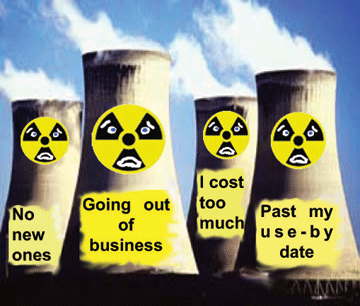 Unraveling the Nuclear Renaissance http://green.blogs.nytimes.com/2012/08/31/unraveling-the-nuclear-renaissance/?smid=tw-shareBy MATTHEW L. WALD Power plants are a bit like insect eggs. At the start, there are huge numbers, but few of them make it to adulthood.
The last few days may have seen the demise of two reactor projects that had looked promising a few years ago, when the economy was strong and people worried about the high price of natural gas and the possibility of a price on carbon emissions. But natural gas is at historic lows, carbon charges seem unlikely, and lately neither reactor project has looked likely.
On Wednesday, Exelon Corporation, the nation’s largest nuclear operator,threw in the towel on a planned twin-reactor project in Victoria County in Texas.
Texas is short of generating capacity, but it has vast amounts of natural gas and a highly competitive electric market, both of which make it hard to build a reactor.Exelon had not said exactly when it would build, but it took advantage of a provision in a reformed nuclear licensing system to seek early approval of a 11,500-acre site southeast of the city of Victoria. The licensing system now allows companies to get “early site permits” and “bank” the sites, and later match the preapproved site with a preapproved reactor design, potentially shortening the time between deciding to build a reactor and getting it into operation. Exelon was one of the first to try it out.
The company faced opposition from people who said there was not enough water in the area and that the ground was subject to subsidence that could wreck a cooling pond. The Nuclear Regulatory Commission might well have approved the site over these objections, but the company said the economics were not favorable.
On Thursday, a panel of administrative law judges ruled that Electricite de France could not proceed with a plant in Maryland, Calvert Cliffs 3.
That plant was originally a joint venture between Constellation Energy, which owned the adjacent Calvert Cliffs 1 & 2, and the French. But two years ago that consortium, called Unistar, fell apart when it could not obtain a loan guarantee from the Department of Energy on terms that Constellation found acceptable. (Constellation was later bought by Exelon.) Under an American law from the cold war era, reactors must be controlled by American entities. One purpose of the law was to keep American secrets in American hands, which may be inappropriate now since Electricite de France has more recent experience building power reactors than American companies do, and was seeking to build one of a French design.
The judges gave Electricite de France 60 days to show evidence that it was bringing in an American partner. After that, if it wanted to proceed it would have to redo some steps in the application process. But, like Texas, the economics in Maryland are similarly awful.
Two projects, each with two reactors, are under way, one in Georgia and one in South Carolina, but no additional groundbreakings seem very likely soon.
Uranium mining from the oceans doesn’t make financial sense
“…….. Ocean-mined uranium feasible, but not economical The Street By Resource Investing News 08/29/12 – If uranium buyers can’t find enough U308 on land, perhaps they can turn to the sea; or so say scientists from the University of Alabama and the American Chemical Society. “The ocean actually contains more uranium, although very dilute, than you can find in any land source in total,” said chemist Robin Rogers in a recent news conference, “which means we have a wonderful resource; it’s just always been very expensive to get it out.”
On and off over the past half century, scientists have been researching ways to extract uranium from seawater, but the process has always proved so costly and laborious that no one in the industry took it seriously. The US Department of Energy recently funded a project to develop a more cost-efficient process, and as a result researchers were able to decrease the cost estimate for ocean-mined uranium by over 46 percent to $300 per pound. Unfortunately, that’s five times costlier than traditional mining and a far cry from economical.
Who is going to pay up for Vogtle nuclear plant’s ballooning costs?
Georgia Power reports costs, challenges of Vogtle expansion Augusta Chronicle, By Rob Pavey , Aug 31, 2012 Plant Vogtle’s primary owner acknowledged Friday that many factors could increase the nuclear expansion’s $14 billion price tag but did not ask Georgia’s Public Service Commission to amend the project’s certified cost. Plant Vogtle’s primary owner acknowledged Friday that many factors could increase the nuclear expansion’s $14 billion price tag but did not ask Georgia’s Public Service Commission to amend the project’s certified cost….. Other future cost increases, the report said, could be driven by changes to the reactor design approved by the Nuclear Regulatory Commission, taxes, additional backfill work at the site, and governmental mandates such as increased cyber security and physical security.
The owners also remain in a dispute with the contractor consortium, Stone & Webster and Westinghouse, over who is responsible for additional costs that could add as much as $425 million to Georgia Power’s share of the project. Georgia Power, which owns 45.7 percent of Plant Vogtle, has not accepted responsibility for those costs. … http://chronicle.augusta.com/news/business/local-business/2012-08-31/georgia-power-reports-costs-challenges-vogtle-expansion
Secrecy and poor radiation monitoring in Japan’s, (and France’s) nuclear industry
Faced with an ongoing radioactivity which is contaminating Japan’s food and water supply, what should be done? The Nuclear Mafia’s ethos is silken sewn into the socio-political Kabuki theater of a post modern Japanese society, which seems helpless to save itself. Maybe Ambassador Matsumura, with his international political connections of good will, and the Skilled Veterans for Fukushima would be good people to turn to for advice.
The Nuclear Mafia Derails Democracy in Japan Dissident Voice, by Richard Wilcox / August 31st, 2012 “….The Nuclear Workforce French sociologist, Paul Jobin, “began research on Japanese and Taiwanese nuclear plant workers in 2002, mainly at Fukushima Daiichi,” and he did follow up interviews after the Fukushima disaster in 2011.
Jobin notes that:
* Subcontracting labor at nuclear plants in Japan began shortly after their creation, in the mid-1970s. “In France, this trend would develop after 1988, reaching a rate of 80% by 1992.”
* “According to NISA’s data, in 2009, Japan’s nuclear industry recruited more than 80,000 contract workers against 10,000 regular employees.”
* Part time employment is carried out in order to limit labor costs “whether in France or Japan, the nuclear industry nurtures a heavy culture of secrecy concerning the number of irradiated workers.” Continue reading
Scandalous nuclear worker conditions in nuclear Japan
The Nuclear Mafia Derails Democracy in Japan Dissident Voice, by Richard Wilcox / August 31st, 2012 “…..Nuclear Situation Prime Minister Noda recently rejected protester’s requests to shut down the nuclear reactors. As the Metropolitan Coalition Against Nukes told Noda in a face to face meeting, “[w]e the people do not believe you” regarding his empty promises to phase out nukes in the future. The Nuclear Mafia are restarting reactors even though they are unnecessary for electricity production. An overwhelming majority of people want to abolish nuclear power. Having contaminated the world with quadrillions of becquerels of radiation (petabecquerels), Tepco is under a pseudo nationalization process that funnels tax money into their pockets yet maintains their autonomy.
Worker Shortage A common practice among workers in nuclear plants is to hide their real exposure rate of radiation. Because there are legal limits of radiation exposure, workers will take off their dosimeters, or cover them with lead. In normal times in Japan workers could also migrate from one plant to the other without indicating previous work experience, and work “under the table.” How long it takes to get sick and or die from such a practice is anyone’s guess. Continue reading
How much is San Onofre nuclear plant going to cost, and who pays?
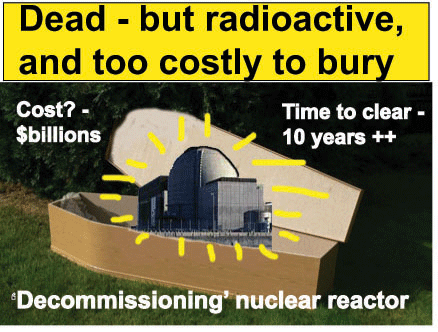 What it will cost to store waste safely on our coast for who knows how long? There are numerous cost equations that go along with safety and it’s time for the state to start putting all those cards on the table.”
the decommissioning fund does not cover one significant aspect of decommissioning a plant — dealing with spent nuclear fuel.
California’s Public Utilities Commission will hold hearings this fall into whether rate payers should go on paying for the plant, even when it isn’t generating any power.
Cost Benefit Analysis Underway At San Onofre KPBS, August 30, 2012 By Alison St John The future of Units 2 and 3 at San Onofre is in limbo as the operator, Southern California Edison, and regulators investigate what to do. The plant has been off line since a small radiation leak in January flagged problems in the newly installed steam generators. Cost Benefit Analysis Underway At San Onofre Aired 8/30/12
Debate about what to do with San Onofre has been focused on safety issues. But looking ahead, state regulators are focusing on a cost benefit analysis. Continue reading
Another big loss for Australian uranium miner Paladin

 Uranium group Paladin’s loss widens, Business Report August 30 2012 Australian-listed Paladin Energy‚ a uranium producer with projects in Australia and two operating mines in Africa‚ delivered a net loss for the year to June 30 of US$172.8m‚ an increase of 110% from the previous year’s US$82.3m loss. This translates into a loss per share of US21.1 cents form a loss of US11.1 cents the previous year. No dividend was declared.
Uranium mining collapsing in Australia, as uranium market fails
He [BHP CEO Marius Kloppers] said demand for uranium had collapsed after the Fukushima nuclear incident last year
The Olympic Dam and Yeelirrie shocks from BHP came hot on the heels of the decision by Canada’s Cameco to go slow on a development of its Kintyre uranium project in WA’s Great Sandy Desert
Barnett tells miner to sell asset to other developers BY: ANDREW BURRELL The Australian August 27, 2012 BHP Billiton has abandoned its controversial Yeelirrie uranium project in Western Australia, with chief executive Marius Kloppers saying the deposit is too small for the mining giant’s portfolio at a time of collapsing global demand. Continue reading
Unfair market advantages for oil and coal industries, against wind and solar
Why Conservative Attacks On Wind And Solar Energy? — Seeing the Forest, by Dave Johnson. 26 Aug 12, There has been a recent flurry of propaganda attacks on wind and solar energy by oil-and-coal-backed conservatives. A vitally important tax credit to help build a renewable energy industry in this country expires at the end of this year without Congressional action, and the old oil and coal industries — along with certain other countries —
want to make sure it does expire.
Background
The fossil-fuel industry is fully developed after many decades of government help. Going up against a fully-developed industry like oil and coal is enormously expensive, and the industry is trying to block from triggering private investment to help get us out from under its grip. It has nothing to do with government interfering in markets, or “picking winners and losers,” this is about us helping offset the enormous competitive advantage oil and coal have due to
government investment and assistance in oil and coal in prior decades.
We do this because We, the People see the benefits and prosperity that will come to us from developing these alternative energy industries. Oil and coal are, to put it mildly, entrenched in our economy, and, to put it mildly, make out very, very well because of that. Continue reading
Reasons why nuclear power no longer makes economic sense
GE (NYSE:GE) Slams Economics of Nuclear Is GE Turning Cold on Nuclear? Green Chip Stocks, By Abhishek Shah , August 20th, 2012 As the whole world is fixated on the debate about on using and not using nuclear power for energy generation, the anti-nuclear protesters have got a new powerful argument about nuclear energy being not economically feasible.

General Electric which is among the world’s top 3 suppliers of nuclear energy equipment along with Toshiba and Areva, has said that it no longer makes economic sense to build nuclear reactors. Continue reading
Michigan’s initiative for renewable energy jobs and economy
Counterpoint: More renewable energy will create jobs, rein in energy costs M Live Micigan, By Todd Fettig , August 23, 2012, Opponents of increasing Michigan’s renewable energy standard should rethink their obstruction to more Michigan-made energy, more jobs, more clean air and water, and more opportunities for Michigan manufacturers and businesses to compete in the clean energy economy.

They should also rethink using paid and unpaid mouthpieces like former state Sen. Ken Sikkema and Grand Rapids Area Chamber of Commerce CEO Rick Baker to spread misinformation and distortions about what the bipartisan Michigan Energy, Michigan Jobs proposal will actually do.
Mark Fisk Just as flat-screen TVs that cost $6,000 in 2002 cost less than $450
today, renewable energy is also getting cheaper with innovation and new technology. Michiganders should know one fact up front: The Michigan Public Service Commission clearly states that renewable energy now costs $58 per megawatt/hour LESS than the cost of building a new coal plant. Continue reading
In Africa – uranium mining down: solar energy up
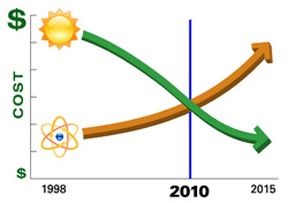 Areva suspends Trekkopje uranium mine project, Paul Langley’s Nuclear history Blog, 24 Aug 12 Areva has decided to suspend the Trekkopje uranium mine project. …. Rumours already started in October Areva planned to abandon the Trekkopje uranium mine project as part of a massive restructuring program that is to be set up in reaction to a drop in demand caused by the German nuclear phase-out and the Fukushima disaster….
Solar Project Aims to Becomes Largest in West Africa By Steve Leone, Associate Editor, RenewableEnergyWorld.com October 25, 2011 DALLAS, Texas — An American-based investment group has secured a power purchase agreement with the Namibian government to build a 500-megawatt photovoltaic power plant near the capital of Windhoek.
If built, the plant would represent the largest solar installation in West Africa, and could eventually include wind generation and grow up to 1 gigawatt. The group, led by Washington-based project developer SSI Energy Solutions (SSIES), is the parent company of Africa Energy Corp., which was set up for the Namibia project. Partners in the project include former SunEdison CEO Jigar Shah, Tom Amis and Nik Patesh of clean-energy law firm Cooley LLP, Eric Henderson of the Beacon Group and Adam Stern and Gary Kleiman of The Gemstone Group……. The project is far bigger than any solar project currently online in the southern hemisphere. South Africa, which borders Namibia, has garned the most interest in the region for large-scale developments…. http://nuclearhistory.wordpress.com/2012/08/23/areva-suspends-trekkopje-uranium-mine-project/
Just exactly who should pay for San Onofre’s repairs and restart?
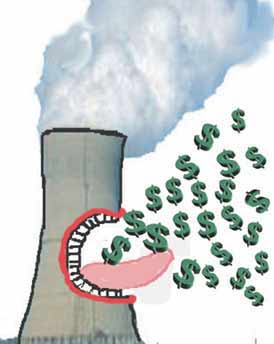 If San Onofre nuclear plant is restarted, who pays? The San Onofre nuclear plant must first be deemed safe to restart. But with costs already mounting, it’s unclear who would foot the bill. By Abby Sewell, Los Angeles Times August 22, 2012
Nearly seven months after the San Onofre nuclear power plant was closed because of a leak, officials are grappling with whether it makes financial sense to bring the plant fully back online, and if so, who should pay for the necessary repairs. Continue reading
Vogtle costs approved despite warnings of overruns and delays
Vogtle costs approved despite warnings of overruns and delays By Kristi E. Swartz The Atlanta Journal-Constitution, 23 Aug 12, Reports of cost overruns and scheduling delays loom over Georgia Power’s Plant Vogtle expansion project…… An independent utility watchdog has warned of scheduling delays at Vogtle, however. The delays have made the project’s capital and financing costs go up, he said.
In addition, Georgia Power is disputing its responsibility for a $425
million cost overrun stemming from delays in getting key license
approvals from federal regulators. The project’s main vendors,
Westinghouse and The Shaw Group, say Georgia Power is responsible for
that amount. Separately the vendors have sued the utility and the
project’s co-owners for additional expenses that came from backfilling
two excavation sites at Vogtle.
The continuing dispute over who will pay for those escalating costs
may force the reactors to start producing power later than their
scheduled 2016 and 2017 dates, the utility’s parent, Southern Co.,
said in a recent document.
Georgia Power and a group of municipal and cooperative electricity
utilities are adding two reactors at Vogtle. The reactors are the
first in the United States to win permits in 30 years. ..
http://www.ajc.com/business/vogtle-costs-approved-despite-1503361.html
India’s nuclear power projects grinding to a halt
 NTPC puts nuclear power projects on hold, Hindu Business Line, RAHULWADKEMUMBAI,Mumbai, AUG. 22: NTPC has put its plans to set up nuclear power projects, jointly with Nuclear Power Corporation of India, on the backburner. The company has also begun to relocate employees assigned for the projects due to uncertainty in the nuclear power arena.
Nuclear Power Corporation of India (NPCIL) is facing severe delays in setting up plants and NTPC is actually considering exiting the joint venture, said a senior NTPC official, requesting anonymity due to the sensitive nature of the issue.
Another NTPC official, who also did not wish to be named, said around 40 engineers from NPCIL’s Mumbai office, who were being trained to build nuclear plants, have been pulled out and relocated to NTPC’s other thermal power plants. In all, 74 engineers were stationed across the country.
The official said the rest would be withdrawn in phases. Engineers, who were relocated out of Mumbai, were being trained in plant designing, while those stationed at other plant sites were involved in the commissioning of the under-construction plants. Nuclear projects country-wide have been facing massive opposition. While considerations revolve around the safety of the people living near the plant, NPCIL has also been facing a delay in acquisition of land, all of which have
adversely impacted the project.
In the last two years, the engineers had voiced their concerns about their career and lack of professional growth in the joint venture with the senior-most personnel of NTPC. Prolonged disruption of work at the Kudankulam nuclear plant in Tamil Nadu, following protests from anti-nuclear campaigners, had also affected the morale of the engineers. Taking all these factors into consideration they are being withdrawn, the official added….. http://www.thehindubusinessline.com/companies/article3808172.ece?homepage=true&ref=wl_home
1 This Month





PLEASE OPPOSE HR 8255 AND S.3639 – bills would accelerate satellite deployment, with no environmental review or safeguards – https://ncstd5li.quorum.us/campaign/169331/
To see nuclear-related stories in greater depth and intensity – go to https://nuclearinformation.wordpress.com
-
Archives
- October 2026 (19)
- September 2026 (339)
- August 2026 (330)
- July 2026 (355)
- June 2026 (287)
- May 2026 (306)
- April 2026 (356)
- March 2026 (251)
- February 2026 (267)
- January 2026 (308)
- December 2025 (358)
- November 2025 (359)
-
Categories
- 1
- 1 NUCLEAR ISSUES
- business and costs
- climate change
- culture and arts
- ENERGY
- environment
- health
- history
- indigenous issues
- Legal
- marketing of nuclear
- media
- opposition to nuclear
- PERSONAL STORIES
- politics
- politics international
- Religion and ethics
- safety
- secrets,lies and civil liberties
- spinbuster
- technology
- Uranium
- wastes
- weapons and war
- Women
- 2 WORLD
- ACTION
- AFRICA
- Atrocities
- AUSTRALIA
- Christina's notes
- Christina's themes
- culture and arts
- Events
- Fuk 2022
- Fuk 2023
- Fukushima 2017
- Fukushima 2018
- fukushima 2019
- Fukushima 2020
- Fukushima 2021
- general
- global warming
- Humour (God we need it)
- Nuclear
- RARE EARTHS
- Reference
- resources – print
- Resources -audiovicual
- Weekly Newsletter
- World
- World Nuclear
- YouTube
-
RSS
Entries RSS
Comments RSS

