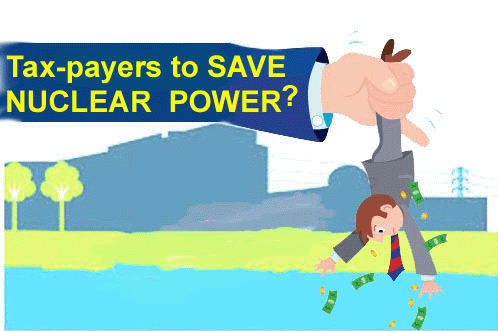
BRUSSELS, July 17 (Reuters) – The European Commission wants to open up part of its proposed 2 trillion euro EU budget for 2028-2034 to nuclear energy, a move likely to divide the bloc’s member states, which Germany immediately rejected.
In an annex to its mammoth budget proposal published on Wednesday, the Commission listed nuclear power as an activity countries can fund through their national share of the budget – specifically, “new or additional fission energy capacity installed in GW”.
Around 865 billion euros of EU funding will be available under these national spending plans.
The move would be a sea change for the EU, whose current budget does not fund conventional nuclear power plants – reflecting a long-running conflict between pro-nuclear EU members like France and Sweden and traditionally anti-nuclear countries like Germany and Austria.
“Germany rejects any subsidization of nuclear power from the EU budget,” its environment minister Carsten Schneider said on Thursday, adding that Berlin respected the choice of other countries to build reactors.
“However, respect for national sovereignty in energy matters also means not claiming EU funds for this expensive path, a quarter of which comes from German taxpayers’ money,” Schneider said.
France’s energy ministry did not immediately respond to a request for comment. Swedish energy minister Ebba Busch declined to comment.
The Commission’s budget proposal marks the start of years of intense negotiations among EU nations, which must all approve the final budget.
EU countries have long been at loggerheads over whether to promote atomic power to reduce CO2 emissions, a dispute which has delayed policymaking on climate change and energy in the bloc.
That dynamic had appeared on the cusp of a shift earlier this year, when German Chancellor Friedrich Merz signalled Berlin would no longer object to treating nuclear power on a par with renewable energy in EU policies.
Countries including Denmark and Italy had also signalled a shift in their past opposition to nuclear power.
However, some EU diplomats said that this softening of positions had not extended into support for EU funding.
“There is no chance EU money goes to new nuclear,” one EU country diplomat said.
The EU’s current budget explicitly bans member states from building nuclear power plants using their share of hundreds of billions of euros in regional development funds – although the budget offers some limited funds for nuclear research and decommissioning of old reactors.
Reporting by Kate Abnett; additional reporting by Simon Johnson, Holger Hansen, America Hernandez, Riham Alkousaa; Editing by Hugh Lawson
First Light scrambles for funding despite Labour promise to invest £2.5bn in nuclear research. A British nuclear fusion pioneer has warned it risks running out of cash within six months as it races to raise millions of pounds in funding to secure its future. First Light Fusion, which is based in Oxford, is in talks with investors to raise £20m after burning through tens of millions of pounds to develop its novel fusion technology. The start-up, founded in 2011, had sought to develop what it called “projectile fusion”, developing a giant gas-powered gun that would fire a 5p-sized projectile at extreme speeds into a fuel source, sparking a fusion reaction. However, the company abandoned plans to build a prototype reactor earlier this year as it struggled to raise funds.
New official estimate reflects surging construction inflation and contingency costs. Sizewell C nuclear plant will cost £38bn to build, the UK government is set to admit for the first time next week as it reveals the terms of an expected deal for private investors to fund a small portion of the bill,
The new official estimate is a big increase from a £20bn figure given by French energy giant EDF and the UK government for the project in 2020, reflecting surging construction inflation and new contingency costs.
A trio of private companies are set to invest around £9bn of equity in Sizewell, but the majority of the construction will be funded by loans underpinned by a levy on consumer bills, according to people familiar with the matter.
The UK government is expected to remain the largest investor in the project with a 47.5 per cent stake, the Financial Times previously reported. The £38bn cost, details of the deal and how the financial risk of the project will be shared is set to be announced before the parliamentary summer recess begins on Wednesday, the people said.
Brookfield’s (BAM.TO), opens new tab reported plan to take a 25% stake, opens new tab in the Sizewell C nuclear project would mark a big vote of confidence in Britain’s atomic energy revival. But while it suggests that private capital could play a role in funding the country’s energy security, taxpayers are likely to take much of the risk.
The Canadian giant is no stranger to infrastructure, but nuclear power comes with high upfront costs, delays and cost overruns. Sizewell C could cost up to 40 billion pounds ($54 billion) to build, the Financial Times says, up from the latest government estimate of 20 billion pounds.
Britain’s track record is far from reassuring. Take Hinkley Point C, which was majority owned by EDF. Construction began in 2017 and was originally expected to be completed in 2025 and cost 18 billion pounds. It is now unlikely to be operational before 2030, with the overall cost revised to up to 35 billion pounds in 2015 prices. EDF had little protection against those delays as the chief backing it got from the government came from energy price commitments, which kick in when the plant is running.
Bringing in private investors may therefore require a new approach. That’s why the government passed legislation in 2022 so that the Sizewell C plant will be financed via a model, opens new tab seen in utilities like water companies or energy networks, dubbed the regulated asset base (RAB). That model fixes an allowed return to investors by passing on costs to consumers. Crucially, it allows a project to generate revenue from the moment construction begins, instead of only when it becomes operational.
The closest precedent is probably London’s Thames Tideway Tunnel, which funded the construction of a new sewer. There, consumer bills are charged enough to cover a blended return to debt and equity investors, or weighted average cost of capital (WACC), of 2.5% over inflation while the project is under construction. Given the risks in nuclear, industry experts reckon a WACC of 4% above inflation is more likely, equivalent to a nominal rate of 6%. And, as with Thames Tideway, nuclear plants will likely require a commitment from the government for it to compensate investors if cost overruns exceed a certain threshold.
That’s means the RAB model could easily end up becoming pretty expensive. The National Audit Office’s modelling suggests that the WACC of a hypothetical nuclear project could rise to 9% if expenses were to come over budget by between 75% and 100%. As Hinkley Point showed, that’s quite plausible.
UK Prime Minister Keir Starmer may not have much choice. The government says , opens new tab it needs new nuclear power stations to help its transition to net zero and ensure energy security threatened by Russia. And Chancellor Rachel Reeves will be loath to fund them all on balance sheet, given the country’s fiscal state. Brookfield’s interest shows that institutional investors may be able to step up. But while the financing looks “private”, the real backstop is public.
Context News
UK energy secretary Ed Miliband said in June that Sizewell C would be the beginning of a “golden age” for nuclear in Britain. He also said the project would be “majority public funded”. The government has committed 14.2 billion pounds
The UK government is closing in on a final deal to secure private investment into the Sizewell C nuclear power project. Its 84% stake in the development is expected to be diluted to around 47.5%, with Canadian investor Brookfield Asset Management, British energy supplier Centrica and French energy giant EDF holding the remainder, the Financial Times reported on July 9 citing people with knowledge of the ongoing negotiations.
Brookfield is likely to take a 25% stake, with Centrica buying 15%, the report said.
France’s state-owned EDF, which is leading the development of the site, said on July 8 it would reduce its holdings to 12.5%.
One of the investors reported to be considering a stake in Sizewell C has decided to withdraw, while the government is no longer planning to classify nuclear energy as “sustainable”.
Schroders Greencoat, which describes itself as “a specialist renewables infrastructure investor”, was previously reported to be one of the companies considering an ownership stake in Sizewell C.
It was widely reported that Schroders Greencoat was one of the companies in the consortium led by Brookfield Asset Management, which was in total considering a 25% stake in the nuclear power plant.
In an email dated 16 July seen by NCE, the investor said it no longer wishes to invest in the project on the Suffolk coast.
Wait for final investment decision continues
Sizewell C must achieve its final investment decision (FID) before main construction can start.
It is now expected that the final investment decision will be taken this summer.
Nuclear dropped from sustainable finance classification plans
The UK Government recently decided to not go ahead with plans to create a UK Green Taxonomy for financial investments, meaning that it won’t have a specific classification of certain areas of activity, like nuclear power, as “sustainable”.
HM Treasury economic secretary to the treasury and city minister Emma Reynolds announced the decision in the UK Green Taxonomy Consultation Response.
“To make sure the UK is well-positioned to capture [growth in the green economy], the government is delivering a world-leading sustainable finance framework,” Reynolds said.
“This includes ensuring that we have the right tools in place and the proportionate regulation that is needed to support the transition, strengthening the UK’s position as the sustainable finance capital of the world so that the UK can lead the clean energy transition at home and abroad.
“That is why, after careful consideration, the government has concluded that a UK Taxonomy would not be the most effective tool to deliver the green transition and should not be part of our sustainable finance framework.
“Whilst our ambitions to continue as a global leader remain unchanged, the consultation responses showed that other policies were of higher priority to accelerate investment into the transition to net zero and limit greenwashing.”
It is understood that the decision to drop plans for the taxonomy may have contributed to Schroders Greencoat’s withdrawal from investing in Sizewell C.
Anti-Sizewell C campaign attributes withdrawal to taxonomy decision
Stop Sizewell C executive director Alison Downes said: “It’s welcome news that Schroders Greencoat won’t be investing in Sizewell C.
Based on our dialogue with Schroders, we attribute this to the government deciding not to adopt a green taxonomy, which thankfully has the outcome that nuclear energy cannot be erroneously labelled ‘green’.
“We wish that other investors would take the same view and exit Sizewell C forthwith.”
No comment from parties to negotiations
The negotiations around the final investment decision are often described as commercially sensitive, and as such the government doesn’t tend to comment.
COMMENT. The ask for $500-million has been out there for about two years. Deadbeats, all of them involved in this sorry excuse for a project. It’s pathetic.
It comes after review by Canadian Nuclear Safety Commission that it hopes to parlay into newfound investment
ARC Clean Technology says its focus is now raising what is likely still the hundreds of millions of dollars it needs to finish the design work of its small modular nuclear reactor.
It’s a figure that’s likely upwards of $500 million, according to two former ARC CEOs.
That’s with the aim to enable NB Power to submit a license to construct application hopefully by 2027, with a target commercial deployment at Point Lepreau in the early 2030s.
It comes after the completion of a review by the Canadian Nuclear Safety Commission that it hopes to parlay into newfound private investment.
Earlier this week, the country’s safety commission said it identified “no fundamental barriers” to licensing the ARC’s proposed sodium-cooled fast neutron reactor, after completing a second design review that had stretched on for over three years.
It’s a result that ARC is calling a “pivotal step” toward commercial deployment.
That’s while adding it gives the company new “global credibility” in a race to market.
Its focus now is raising new money.
“Our current focus is on advancing strategic partnership and investment discussions to set the stage for the next phase of design work to support a license to construct application,” ARC Clean Technology spokesperson Sandra Donnelly told Brunswick News.
Asked specifically how much money is needed, Donnelly declined to say.
“We continue to evaluate the going forward cost estimate through current discussions with strategic partners,” she said.
“We are not sharing specific numbers.”
ARC’s former CEO Bill Labbe had previously said the ARC-100 would cost $500 million to develop and needed an additional $600 million more in power purchase agreements to move the project forward.
That was after the Higgs government gave $20 million to ARC, while the feds awarded the company another $7 million.
Ottawa also provided NB Power with $5 million to help it prepare for SMRs at Point Lepreau.
The Gallant Liberal government also first spent $10 million on ARC and Moltex, the province’s other company pursuing SMR technology, as they set up offices in Saint John now roughly eight years ago.
In an interview with Brunswick News on Thursday, another former ARC president and CEO, Norm Sawyer, who left the company in 2021 and is now a board member at the National Research Council Canada, pegged the figure needed to likely be between US$500 and $700 million.
“A preliminary design is almost essentially complete,” Sawyer said of the Phase 2 review. “Obviously, the next step needs money.
“They would also have to staff up.”
Sawyer said further design work could involve upwards of 100 employees with intensive final engineering to be completed.
That doesn’t include the construction of a facility at Lepreau, Sawyer said.
Brunswick News first reported last spring that ARC had handed out layoff notices to employees, while confirming that, in parallel, its president and CEO since 2021, Labbe, was leaving the company.
Asked if staffing levels will now change, Donnelly said that’s now “being reviewed as part of preparations for the next phase of design work.”
“It’s a positive step for them, it’s just can they leverage it now to get to the next step which is really investment,” Sawyer said. “I think there’s value there for investors.
“It’s also up to how much risk investors are willing to take. I think the investor would want a PPA (power purchase agreement) first.”
A power purchase agreement is a long-term contract where a nuclear power plant sells electricity to a buyer, often a utility, government, or large energy consumer.
NB Power CEO Lori Clark told a committee of MLAs at the provincial legislature earlier this year that ARC is “looking for investors now.”
Clark herself travelled to South Korea last December to promote ARC’s “commercialization possibilities,” in part to drum up new financial support.
A trilateral collaboration agreement was announced last year between South Korea’s utility, ARC, and NB Power with the goal of establishing “teaming agreements for global small modular reactor fleet deployment.”
ARC also said that it welcomed in February “multiple delegations” from South Korea’s utility.
No financial agreement has been revealed as of yet.
Finding the money necessary to finish design work is integral to building timelines.
“Our next objective is to complete the required design work by 2027 to enable NB Power to submit a license to construct application, with a target commercial deployment in early 2030s,” Donnelly said.
“Timelines will continue to be reviewed as design work and partnership discussions progress.”
The company still faces other challenges.
Brunswick News has also reported that ARC is still in search of a new enriched uranium supplier, after it originally planned to buy from Russia. It’s a problem Sawyer has suggested might result in a redesign of the company’s small modular nuclear reactor technology.
Asked if the concern over an enriched uranium source has been resolved, Donnelly said that “the availability of HALEU (high-assay low-enriched uranium) fuel remains an overall market issue.
“We are encouraged that the HALEU supply chain has advanced significantly over the past year with strong government support in multiple countries, and we continue to evaluate multiple options to secure a fuel supply for the first ARC unit,” she added.
The enriched uranium is an integral component of the company’s ARC-100 sodium-cooled fast reactor.
But it’s not as simple as finding that enriched uranium closer to home. While Canada mines uranium, and there are currently five uranium mines and mills operating in Canada, all located in northern Saskatchewan, it does not have uranium enrichment plants.
The U.S. opened its first and only enrichment plant, operated by Centrus Energy in Ohio, amid a federal push to find a solution to the Russia problem. It remains the only facility in the U.S. licensed to enrich uranium, and has a lineup for SMR firms seeking its fuel.
That said, there appeared to be a glimmer of hope on the uranium front late last year as the Trudeau federal government’s fall economic statement promised support to strengthen nuclear fuel supply chains.
“To support demand for allied enriched nuclear fuel and bolster supply chain resiliency, the 2024 fall economic statement announces the government’s intent to backstop up to $500 million in enriched nuclear fuel purchase contracts from the United States or other allied countries, including high-assay low-enriched uranium (HALEU), subject to further consultations with industry stakeholders on program details, and provide $4 million over 10 years, starting in 2024-25, for Natural Resources Canada to administer the program,” reads the fall mini budget.
The current Carney government has yet to table a budget laying out whether that commitment will continue to go ahead.
Hundreds of mechanical engineers stopped work in protest over ‘management practices’ at construction site. A group of mechanical engineers numbering in the low hundreds stopped work on Tuesday without the backing of their trade unions amid deepening woes within the 26,000-strong workforce over the conditions on the site.
It was the second unofficial strike to take place in a week after a walkout last Wednesday in defiance of union reps and the site developer, French utility company EDF, following claims that senior managers on the Hinkley site have bullied engineering staff. A contract worker on the project, which is running years late and billions of pounds over budget, told the Guardian one of the incidents was believed to have involved a senior manager bullying a young woman on the team.
“They’ve had enough, and they’re out the gate,” he said. Trade union Unite confirmed that a number of workers are taking part in a protest over “management practices” which has resulted in the workers being removed from the site. “Unite expects this matter to be resolved soon,” a spokesperson said. The Guardian understands that EDF, which is developing the first new nuclear reactor in a generation at Hinkley Point, has begun an independent investigation into the alleged bullying on site. The row has emerged days after the UK nuclear watchdog confirmed it would prosecute EDF alongside the site’s main contractors Bouygues Travaux Publics and Laing O’Rourke for health and safety offences over the death of a site supervisor at the site after an accident in 2022.
Alberta is already building faster, cheaper alternatives. Between 2019 and 2022, the province added over 1,400 megawatts of wind and solar, with another 2,500 MW in development, according to the Alberta Electric System Operator.”
As someone born in Peace River and raised in the Falher–Donnelly area, I care deeply about the land, water, and communities that would be affected by the proposed nuclear facility in northwestern Alberta. Although I live in Edmonton now, I work as a Municipal Energy Manager for a small rural municipality in the province, and my family still lives across the region — from McLennan to Marie-Reine.
Though I’m relatively new to public service, I bring over 20 years of experience in project management, systems analysis, and strategic planning across various sectors, including energy, agriculture, and technology. I’ve worked with municipalities, nonprofits, and institutions across Alberta on energy efficiency, infrastructure modernization, and rural economic development. I hold an Honours degree in Sustainability Management from MacEwan University, and continue to deepen my training in energy policy and climate adaptation as I prepare to do my Master of Sustainable Energy Development at the University of Calgary. I’ve also published and presented research on how geothermal energy can support rural economies—work that reflects my broader commitment to clean, decentralized solutions that benefit communities like the one I come from.
In contrast, Alberta is already building faster, cheaper alternatives. Between 2019 and 2022, the province added over 1,400 megawatts of wind and solar, with another 2,500 MW in development, according to the Alberta Electric System Operator (AESO). Most renewable projects are completed in under five years, with many rooftop and community systems operational in less than one. In 2022, solar became the world’s fastest-growing source of new electricity capacity.
They’re also far more cost-effective. Lazard’s 2025 Levelized Cost of Energy+ estimates nuclear at $141–$251 per megawatt-hour, compared to just $37–$81 for wind and $38–$66 for solar. Nuclear is up to six times more expensive than renewables, and that doesn’t include long-term waste management, decommissioning, or liability coverage—costs that often fall to the public. Clean energy isn’t just cheaper—it’s better for jobs. A dollar invested in solar or wind creates 2.8 to 5.7 times more employment than the same dollar spent on nuclear, according to peer-reviewed research in energy policy. These are jobs in construction, maintenance, engineering, and operations, many of which can be located in rural and underserved communities.
Even if built, nuclear doesn’t align with the needs of modern energy systems. Grids today depend on flexibility, not constant output “baseload” plants like nuclear reactors that can’t adjust quickly to changing demand. When renewable energy production is high, inflexible nuclear can force the grid to waste clean power. In contrast, renewables combined with battery storage, smart grid controls, and demand-side response offer more adaptable, resilient energy systems. Research in Joule and PNAS shows that 100 per cent renewable grids with storage are not only viable, they’re more stable than those relying on nuclear.
In the time it would take to bring Peace River’s reactors online, Alberta could: • Deploy 10 to 15 GW of solar and wind, • Install 1–2 GW of grid-scale storage, • Retrofit public buildings and homes for energy efficiency, • Launch locally led clean energy partnerships, and • Create tens of thousands of well-paying jobs.
The local risks are just as serious. A nuclear facility would withdraw millions of litres of water per day from the Peace River for cooling, potentially harming aquatic ecosystems and fish spawning habitats. A 2021 study in Environmental Monitoring and Assessment found that thermal pollution and water drawdown from nuclear plants disrupt river ecosystems.
Public submissions and academic research have also raised critical concerns about the cultural and social impact of this project. The proposed site lies within Treaty 8 territory—an area with deep spiritual, cultural, and subsistence significance. According to The Canadian Journal of Native Studies (2022), long-term nuclear waste storage near such lands threatens intergenerational safety and undermines the cultural integrity of surrounding communities. The Land Use Policy journal emphasizes the importance of free, prior, and informed consent under Canada’s obligations to UNDRIP—yet many affected communities report they have not been meaningfully engaged. The Impact Assessment Agency of Canada (IAAC) has already documented frustration with inaccessible technical documents and limited public engagement in its summary of issues.
We don’t need to go down this road. Alberta already has the tools to reduce emissions, create good jobs, and support rural communities—without waiting decades or spending billions on a legacy system that doesn’t serve our needs.
The Peace River nuclear proposal would delay real climate action, raise electricity costs, and place long-term environmental and financial burdens on the very communities it claims to help. We already have faster, cleaner, and smarter options. We should be investing in them now.
Patrick Jean is a holistic sustainability consultant, policy analyst, and municipal energy manager based in Edmonton. He holds an honours degree in sustainability management, has over 20 years of experience in systems analysis and project management, and has published research on rural energy innovation. He was born in Peace River, raised in the Falher–Donnelly area, and maintains strong family and community ties across the region. His comprehensive comments are available on the Government of Canada’s Impact Assessment Agency.
Thousands of construction workers have walked out unofficially at the massive Hinkley Point C nuclear power plant against bullying management. As we go to press, they are still out. It has been estimated that there are 12,000 workers on the site, organised by Unite and the GMB, and it is reported that anything from 2,000 to 4,000 workers are involved in this dispute, reportedly at MEH Alliance – bringing together Altrad Services, Cavendish, Balfour Beatty, NG Bailey and Altrad Babcock.
“This bullying has been going on for far too long.”
Staff at Hinkley Point C walked out on an unofficial strike on Wednesday over alleged bullying. An unconfirmed number of workers in the MEH group of contractors have downed tools at the nuclear power station construction site in Somerset yesterday (July 9). A person involved in the staff walk out told the Local Democracy Reporting Service it was a response to bullying from senior management. They said: “This bullying has been going on for far too long.”
The UN has named dozens of multinationals in a report for profiting from Israel’s genocide in Gaza. . Stephanie Tran reports.
A landmark United Nations report has named dozens of multinational corporations that are aiding and profiting from Israel’s ongoing genocide in Gaza, accusing them of complicity in war crimes and calling for urgent accountability.
Authored by Francesca Albanese, the UN Special Rapporteur on the Occupied Palestinian Territories, the report details the role of weapons manufacturers, tech firms, energy companies and financial institutions in sustaining an “economy of occupation turned genocidal.”
But the list of named companies is just the beginning. Albanese describes the report as “the tip of the iceberg,” noting that more than 1,000 corporate entities were investigated for their involvement in Israel’s war machinery.
Weapons and warfare
At the centre of Israel’s brutal assault on Gaza is a heavily militarised economy supported by Western weapons manufacturers.
U.S. defence giant Lockheed Martin is identified as a central player, providing F-35 and F-16 fighter jets that have enabled Israel to drop an estimated 85,000 tonnes of bombs since October 2023. Their use has left more than 179,000 Palestinians dead or injured and destroyed vast swathes of Gaza’s civilian infrastructure.
According to the report, the F-35 program represents Israel’s largest-ever defence procurement project, involving over 1,650 companies.
Israel’s own arms manufacturers are also central to the genocide. Elbit Systems and Israel Aerospace Industries, two of the country’s top weapons companies, are responsible for much of the surveillance, drone and targeting systems deployed in Gaza.
The report notes that Israel’s repeated military campaigns have made it a testing ground for emerging weapons technologies. These systems are later marketed as “battle-proven”
At the centre of Israel’s brutal assault on Gaza is a heavily militarised economy supported by Western weapons manufacturers.
U.S. defence giant Lockheed Martin is identified as a central player, providing F-35 and F-16 fighter jets that have enabled Israel to drop an estimated 85,000 tonnes of bombs since October 2023. Their use has left more than 179,000 Palestinians dead or injured and destroyed vast swathes of Gaza’s civilian infrastructure.
According to the report, the F-35 program represents Israel’s largest-ever defence procurement project, involving over 1,650 companies.
Israel’s own arms manufacturers are also central to the genocide. Elbit Systems and Israel Aerospace Industries, two of the country’s top weapons companies, are responsible for much of the surveillance, drone and targeting systems deployed in Gaza.
The report notes that Israel’s repeated military campaigns have made it a testing ground for emerging weapons technologies. These systems are later marketed as “battle-proven”
Independent journalist and author Antony Loewenstein — whose award-winning book, podcast and film series The Palestine Laboratory exposes how Israel’s occupation has become a global model for repression — told MWM:
“This landmark report goes to the heart of why Israel’s illegal occupation of Palestine has lasted so long; the longest in modern times. Far too many corporations and individuals are making money from oppression. I’m honoured that the report frequently cites my work, The Palestine Laboratory, a book, podcast and film series that details how Israel’s occupation is a key model and inspiration for many around the world.”
“Cutting off Israel’s financial lifeline is the only way that this abomination will end.”
Surveillance and Silicon Valley
The UN report devotes substantial attention to the role of Silicon Valley in enabling Israel’s high-tech war.
Palantir Technologies, the U.S. surveillance firm founded by Peter Thiel, expanded its support for the Israeli military after October 2023. The company has provided “automatic predictive policing technology, core defence infrastructure for rapid and scaled-up construction and deployment of military software, and its Artificial Intelligence Platform, which allows real-time battlefield data integration for automated decision-making.”
In January 2024, Palantir’s board met in Tel Aviv “in solidarity”. In April 2024, CEO Alex Karp dismissed concerns about civilian casualties by stating that Palantir had killed “mostly terrorists.”
Microsoft operates its largest research centre outside the U.S. in Israel, and has been “integrating its systems and civilian tech across the Israeli military since 2003”. In October 2023, Microsoft’s Azure platform supported the Israeli military’s overloaded cloud systems. According to an Israeli colonel quoted in the report, “cloud tech is a weapon in every sense of the word.”
Amazon and Google, through their $1.2 billion Project Nimbus contract, provide Israel with core cloud infrastructure for the military and government agencies.
IBM, which has operated in Israel since 1972, has operated the central database of the Population and Immigration Authority, “enabling collection, storage and governmental use of biometric data on Palestinians, and supporting the discriminatory permit regime of Israel.”
Hewlett-Packard (HP) “has long enabled the apartheid systems of Israel,” supplying technology to the military, prison system, and police.
NSO Group, infamous for its Pegasus spyware, is cited as a textbook case of “spyware diplomacy.” Founded by former Israeli intelligence officers, the company has licensed its tools to repressive governments worldwide and used them to surveil Palestinian activists, journalists, and human rights defenders.
Financing Occupation
The financial industry underpins much of the infrastructure of occupation and genocide. Israeli treasury bonds, underwritten by global banks such as Barclays and BNP Paribas, have provided critical financing to the Israeli government. Asset managers like Blackrock, Vanguard and Allianz’s PIMCO were among more than 400 investors from 36 countries to purchase these bonds.
Blackrock and Vanguard are also among the largest shareholders in Lockheed Martin, Palantir, Microsoft, Amazon, and Chevron. Their funds distribute these investments across global markets via ETFs and mutual funds, spreading complicity to millions of unwitting investors.
Energy and resources
Glencore and Drummond Company dominate coal exports to Israel, primarily from Colombia and South Africa. Even after Colombia announced a suspension of coal exports to Israel in 2024, shipments continued through subsidiaries.
Chevron, which supplies over 70% of Israel’s energy, paid $453 million in royalties and taxes to the Israeli government in 2023. The company profits from the Leviathan and Tamar gas fields and owns a stake in the East Mediterranean Gas pipeline, which passes through occupied Palestinian maritime territory.
BP, the British energy giant, expanded its presence in 2025 with new exploration licences in maritime zones off the Gaza coast, areas Israel occupies in violation of international law.
Machinery
Heavy machinery has long played a role in Israel’s occupation through the demolition of Palestinian homes and the construction of illegal settlements.
Caterpillar Inc. has supplied the Israeli military with bulldozers used to demolish Palestinian homes and infrastructure. Since October 2023, Caterpillar equipment has been used to “carry out mass demolitions – including of homes, mosques and life-sustaining infrastructure – raid hospitals and burying alive wounded Palestinians”. In 2025, the company signed another multi-million-dollar contract with Israel.
Heavy machinery producers Volvo and HD Hyundai have also been linked to the destruction of Palestinian property. After October 2023, Israel increased the use of this equipment, levelling entire districts in Gaza, including Rafah and Jabalia. The Israeli military reportedly obscured the logos of the machinery during these operations.
Volvo is also tied to the settlement economy through its joint ownership of Merkavim, a bus manufacturer serving Israeli colonies.
Shipping, Tourism and Logistics
Multinational logistics firms are another key part of the war economy. A.P. Moller–Maersk, the Danish shipping conglomerate, is responsible for transporting weapons parts, military equipment, and raw materials to Israel. Since October 2023, the company has facilitated the continued flow of US-supplied arms.
Tourism platforms like Airbnb and Booking.com are profiting from the settlement project. Booking.com listings in the West Bank have increased from 26 in 2018 to 70 in 2023; Airbnb listings have grown from 139 in 2016 to 350 in 2025. These platforms promote illegal settlements while restricting Palestinian access to land and resources.
Calls for sanctions
Albanese’s report is a damning indictment, not only of Israel’s genocide in Gaza but of the global political and economic architecture that enables it. The evidence it presents leaves no ambiguity, multinational corporations are not peripheral actors but central to the machinery of occupation, apartheid and now genocide.
Albanese urged states to impose a full arms embargo on Israel, halt all trade and investment ties with companies implicated in violations of international law, and freeze the assets of individuals and entities facilitating human rights abuses.
She called on the International Criminal Court and national courts to investigate and prosecute corporate executives for their role in war crimes and for laundering the proceeds of genocide.
China has reopened its market to seafood from Japan after a nearly two-year ban over the discharge of slightly radioactive wastewater from the tsunami-destroyed Fukushima nuclear power plant. A notice from the customs agency said the ban had been lifted Sunday and that imports from most of Japan would be resumed. The ban, imposed in August 2023, was a major blow to Japan’s fisheries industry. China was the biggest overseas market for Japanese seafood, accounting for more than one-fifth of its exports.
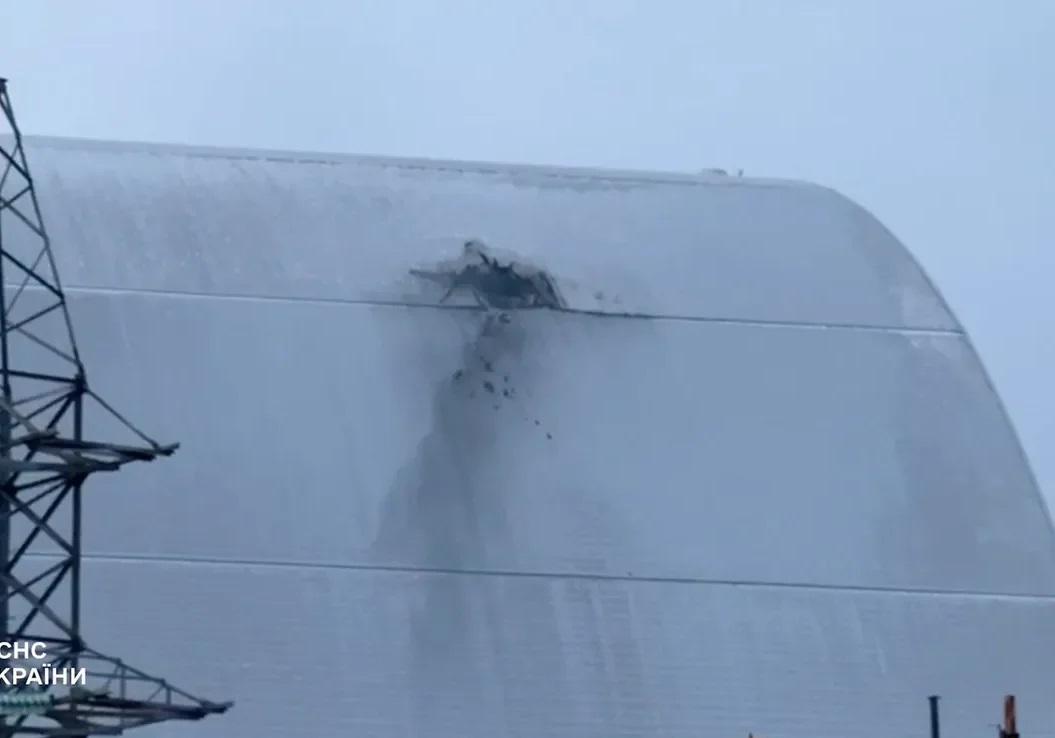
The EU will contribute up to €25 million, while the United Kingdom will contribute up to €6.7 million, with both pledges being made at today’s ICCA Assembly meeting in London. The money will be used to fund emergency repairs to the NSC following the Russian drone attack in February 2025.
That strike has severely affected the NSC’s two primary functions: (i) containing radiological hazards and (ii) supporting long-term decommissioning. Key systems designed to ensure the NSC’s 100-year lifespan have been rendered non-operational, with a significant risk of further deterioration in the absence of swift emergency repairs. While it is difficult to provide an accurate estimate of the cost of repairs to the NSC at the moment, the scale of the damage and the complex radiological environment suggest that the total cost of the emergency works could exceed €100 million.
Balthasar Lindauer, EBRD Nuclear Safety Department Director, said, “These new pledges to the ICCA are a manifestation of the international community’s unwavering support for Chornobyl and its togetherness in the face of the major radiological threat that the damaged NSC poses. We are grateful to the EU and the United Kingdom for their contributions to the ICCA.”
The ICCA was established by the EBRD in November 2020 at the request of the Ukrainian government. It was set up as a multilateral fund to support the development of a comprehensive plan for Chornobyl. The EBRD manages the ICCA, which currently holds some €25 million in donor funds. Following the occupation of the Chornobyl Exclusion Zone (CEZ) at the start of Russia’s war on Ukraine, the scope of the ICCA was broadened to support the restoration of safety and security within the CEZ, as well as wider nuclear safety measures across Ukraine.
The international community has contributed around €2 billion to EBRD-managed programmes in Chornobyl since 1995. In addition, the Bank has made more than €800 million of its net income available for Chornobyl-related projects.
All sides are keen to reach an investment decision in July after years of delay and months of negotiations. Centrica is set to take a 15 per cent stake in the UK’s Sizewell C nuclear project after years of delay and months of drawn out negotiations. All sides are keen to reach a final investment decision on the project before parliament’s recess on July 21, according to people familiar with the discussions.
The final cost of Sizewell — set to be only the second new nuclear plant built in a generation in Britain — could be close to £40bn, the Financial Times reported in January based on assumptions from industry experts. Sizewell’s management has rejected that figure although no new estimate has been given.
The planned investment by Centrica means that the FTSE 100 energy company behind British Gas would have the same size stake in Sizewell C as French state-owned energy group EDF, which has progressively reduced its position in the Suffolk project to 15 per cent.
Centrica already holds a 20 per cent stake in the parent company of the entity that operates EDF’s existing nuclear assets in the UK. The investment in Sizewell could still come in time for French President Emmanuel Macron’s visit to London for an Anglo-French summit on July 8. However, timetables have slipped, according to the people familiar with the situation, putting that goal in doubt.
.The power plant is due to stop generating by the end of March 2030. However, that will not be the end of the story, with decommissioning work expected to get under way there afterwards. A spokesperson for EDF, which manages the plant, said: “Decommissioning happens in stages. “Removing all the spent fuel from the reactors will take about four years and will be carried out by EDF.
“The site will then transfer to Nuclear Restoration Services (NRS) to carry out deconstruction. “It will take around 15 years to remove all the buildings from site, with the exception of the reactor building.
“It will be left in situ, in a state called ‘Safestore’, for around 70 years, until final site clearance.” The decommissioning staffing structure is yet to be agreed at the power station, which currently employs about 550 full-time EDF employees, plus more than 180 full-time contract partners.
Staff consultation is yet to begin, but the spokesperson added: “Every site is different but, as a rough guide, at Hunterston B, the number of EDF staff being transferred to NRS is about 250, which is around half the generation headcount. “This has been a managed reduction which has been taking place over a number of years and has largely been accommodated through redeployment, retirement and voluntary redundancy.
“During defueling, we will go through formal consultation with staff to see who wants to stay at site and who would like to leave. “Decommissioning offers lots of new opportunities, but we have found at other sites that not everyone who works at a site during generation wants to stay and be part of deconstruction. “Those who do want to stay and secure a role in the decommissioning structure will transfer over to NRS.