Trident workers to strike in row over nuclear job cuts.
Union says staff have been ‘pushed to the brink’ and warns walkout could cost millions of pounds
The workers who build and maintain Britain’s Trident nuclear arsenal are
to go on strike in a row over hundreds of job cuts at the Ministry of
Defence’s atomic weapons factories. Members of the Prospect union voted
81pc in favour of strike action at the Atomic Weapons Establishment (AWE),
which is responsible for manufacturing warheads intended for use on the
UK’s nuclear submarines.
The ballot covered sites including the AWE’s
plants in Aldermaston and Burghfield. Strikes are expected to take place on
March 12 and March 26. Union leaders accused the agency of a “litany of
errors” in a dispute over a restructuring that is expected to see as many
as 800 jobs cut.
Telegraph 6th March 2026,
https://www.telegraph.co.uk/business/2026/03/06/trident-workers-to-strike-in-row-over-nuclear-job-cuts/
U.S. and Japan Ponder Nuclear Energy Project in Massive $550 Billion Deal

By Michael Kern – Oil Price 4th March 2026, https://oilprice.com/Latest-Energy-News/World-News/US-and-Japan-Ponder-Nuclear-Energy-Project-in-Massive-550-Billion-Deal.html
The United States and Japan have been considering the inclusion of a nuclear power project involving Westinghouse in the $550-billion package of investment that Japan has pledged in the U.S. under the bilateral trade deal, sources familiar with the plans told Reuters on Wednesday.
Last year, as part of the U.S.-Japan trade agreement, Japan pledged to buy $8 billion worth of American products per year. The Government of Japan has also agreed to invest $550 billion in the United States, the White House said.
At the time, U.S. Secretary of Commerce, Howard Lutnick, hailed the deal as “historic” and said that the U.S. would use the $500-billion Japanese investment “to build our energy infrastructure, chip manufacturing, critical minerals mining, and shipbuilding to name a few.”
The plan for a nuclear power project, as well as a copper refining facility, is being discussed and could be talked into details later this month when Japan’s Prime Minister Sanae Takaichi is due to meet with U.S. President Donald Trump at the White House on March 19, according to Reuters’ anonymous sources.
Westinghouse, which could be involved in the nuclear power project, was named as a company that has expressed interest to launch projects in the energy sector, according to a joint fact sheet for the Japan-U.S. Investment.
How will free-spending Ford pay for Ontario’s $400-billion nuclear plans?

One of the central unanswered questions about the Doug Ford government’s nuclear expansion plans for Ontario has been: How they will be paid for?
Estimates of the capital costs of the government’s plans, based on past projects and recent experiences in the United States and Europe, exceed $400-billion.
Mark Winfield, The Globe and Mail, Feb. 24, 2026, Mark Winfield is a professor of environmental and urban change at York University and co-editor of Sustainable Energy Transitions in Canada (UBC Press 2023). https://www.theglobeandmail.com/business/commentary/article-how-will-free-spending-ford-pay-for-ontarios-400-billion-nuclear-plans/#comments
One of the central unanswered questions about the Doug Ford government’s nuclear expansion plans for Ontario has been: How they will be paid for? The program includes new nuclear power plants at Darlington, Bruce and Wesleyville, and the refurbishments of existing reactors at the Bruce, Pickering and Darlington sites. Estimates of the capital costs of the government’s plans, based on past projects and recent experiences in the United States and Europe, exceed $400-billion.
The government’s plans envision an electricity system that is 75-per-cent nuclear in terms of output, up from approximately 50 per cent today. If the costs of these plans are to be paid for through the rates charged for the electricity produced, electricity bills will rise dramatically.
Estimates of the costs of electricity from new nuclear plants in Ontario range from the mid-20 cents a kilowatt-hour to more than 40 cents a kwh – double or even triple current consumer electricity costs. Such increases would undermine energy affordability, Ontario’s economic competitiveness and any plans for decarbonization through electrification.
Another alternative could be to hide the capital costs as debt, while keeping hydro rates low. That was the strategy followed by previous governments with the province’s original nuclear construction program between 1966 and 1993. In the end, the accumulation of debt flowing from that approach reached $38-billion (about $72-billion in current dollars), leaving the provincial utility, Ontario Hydro, economically inviable and effectively bankrupt.
A series of revelations over the past few months have made it clear that the province seems to have another, potentially equally problematic, plan in mind. It has become apparent that the 29-per-cent increase in electricity rates last Nov. 1 was directly related to the financing arrangements for the $25-billion Ontario Power Generation’s Darlington new-build reactor project, and the $26-billion refurbishment of the Pickering B nuclear station.
The impact on residential hydro bills of the November increase was mitigated through a near doubling of the province’s electricity rebate program, at a cost of approximately $2-billion a year, paid out of general revenues. In effect, that meant the province had begun paying for the capital costs of the Darlington and Pickering projects out of general provincial revenues. Moreover, recent changes to Ontario Energy Board rules have created an unprecedented situation in which ratepayers and taxpayers are now being asked to pay for nuclear projects that may never be completed or function.
The November increase in the rebate program brought the total costs of the province’s electricity rate subsidy programs to approximately $8.5-billion a year. These expenditures now amount to the equivalent of nearly two-thirds of the province’s deficit, exceed total expenditures in the justice sector, and are approximately double the annual capital investments in schools and health care.
The Pickering B and Darlington new-build projects are only the beginnings of the province’s nuclear expansion plans. Additional projects proposed for Wesleyville and the Bruce nuclear site could involve capital expenditures in excess of $300-billion.
If financed in the same way, the portion of the provincial budget consumed by electricity subsidies could reach $20-billion a year – nearly 10 per cent of the province’s total budget. That would force either dramatic increases in the provincial deficit to more than $30-billion a year, substantial tax increases or major reductions in spending in other – already in the view of many analysts – chronically underfunded areas such as health care, education, municipal and social services, and non-electricity public infrastructure.
There is, however, another, and better, option. None of the province’s plans have been subject to any external review in terms of their economic, technological or environmental rationality. Moreover, the province’s plans seem premised on assumptions of absolute technological, economic, social, environmental and political certainty reaching decades into the future. These are things about which, in a ruptured and destabilized world, there can only be absolute certainty of uncertainty. The situation adds to the risks of the province locking into a deeply inflexible energy pathway centred on large, high-cost and high-risk generating assets.
Ontario has been the subject of more efforts to develop and model alternative pathways for its electricity system, and the broader decarbonization of its energy system, than any other province in Canada. But there is no process to assess whether the directions set by the provincial government represent the best options for the province in economic and environmental terms relative to the alternative pathways that have been identified.
That situation needs to change rapidly. The province needs to engage in a serious, objective and independent assessment of its energy options for meeting future energy needs, while controlling costs, decarbonizing the province’s electricity system and advancing sustainability.
Sizewell C power to cost almost double today’s prices
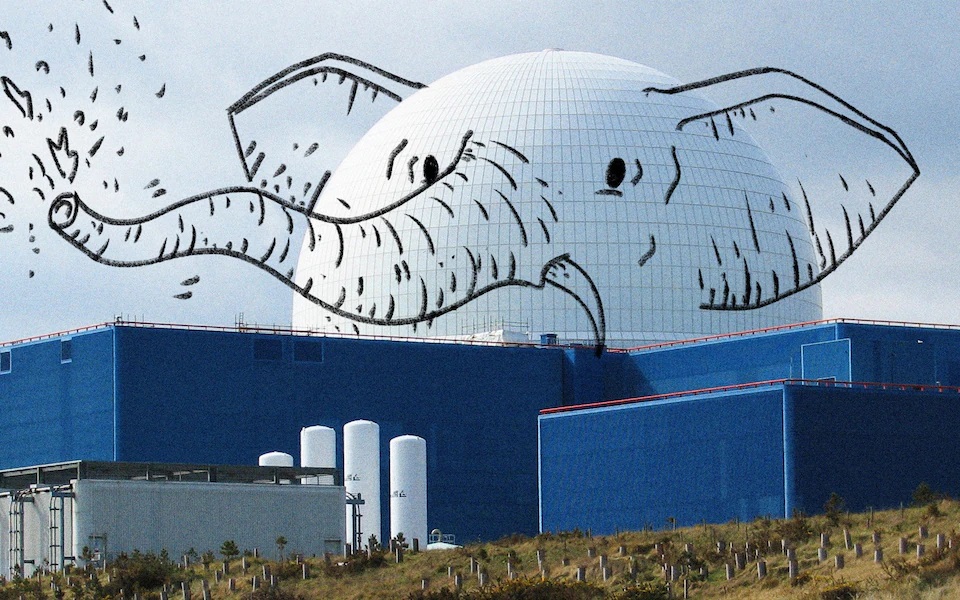
Nuclear plant is an ‘appalling waste of electricity consumers’ and taxpayers’ money’, experts claim
Electricity generated by the Sizewell C nuclear power station will
cost roughly double the normal price of power, according to a new
Government report.
Estimates suggest that the power Sizewell C produces
will cost £120 per megawatt hour (MWh) in today’s prices, compared with the
current wholesale price of about £60 to £70. The extra costs will be added
to energy bills.
The disclosure was made in a review of the business case
for Sizewell C published by the Department for Energy Security and Net
Zero. It is understood to be the first time Sizewell C’s power output has
been costed. It refers to the so-called “strike price”, which is likely
to be awarded to the nuclear power station under the contracts for
difference system. This is where generators get a guaranteed minimum price
for electricity, whatever the market value.
The cost is then covered by a
levy on consumer bills, meaning it effectively acts as an energy subsidy.
Nuclear supporters, including Ed Miliband, the Energy Secretary, have
argued that nuclear power is worth the extra money because it acts as a
secure energy source for decades – potentially a century in the case of
Sizewell C.
However, critics have raised concerns that prices for nuclear
will continue to rise, arguing that early estimates for constructing power
stations are always significant underestimates. They have pointed to
Sizewell C’s predecessor, Hinkley Point C, where original costs of £18bn
have soared to £50bn – a figure announced last week – with start-up delayed
from 2026 to 2031.
The Government report for Sizewell C said estimates
assumed no escalation in costs, which would be a first for UK nuclear
construction projects. The report also warned that consumers were likely to
be charged more than the £120 per MWh rate because the strike price was
calculated net of all the tax, business rates and other payments to the
Government.
Prof Stephen Thomas, the editor-in-chief of Energy Policy, an
academic journal, said: “Sizewell is an appalling waste of electricity
consumers’ and taxpayers’ money. If you want to justify a premium price for
nuclear, you have to estimate the costs of achieving the same factors –
energy security and reliability.
“Of course, nuclear power plants aren’t
always reliable and the most insecure power source is the one that isn’t
built yet. Without the assumptions behind these cost guesses [of £120 per
MWh], they are worthless and far from transparent.” Alison Downes, of
Stop Sizewell C, a local campaign group, said: “Hinkley’s cost has soared
to £50bn with completion dates slipping and five years still to go.
Sizewell C’s costs will rise higher still when it inevitably overruns its
£40bn construction budget.”
Telegraph 25th Feb 2026, https://www.telegraph.co.uk/business/2026/02/25/sizewell-c-power-to-cost-almost-double-todays-prices/
EDF pledges new £15bn UK investment as falling energy prices hit profits
The energy firm reported a 12 per cent decrease in nuclear output
Anna Wise, Independent UK, Monday 23 February 2026
French energy giant EDF saw its UK profits decline last year, attributed to a combination of falling energy prices and a significant outage at one of its nuclear power stations.
Despite this setback, the company has announced plans for a substantial £15 billion investment in the country over the next three years.
The energy firm reported a 12 per cent decrease in nuclear output from its five operational power stations during the period.
While its Sizewell B facility in Suffolk and Torness in Scotland performed strongly, the overall output was significantly impacted by an extended outage at the Hartlepool power station.
The Teesside-based station, which began generating power 43 years ago and supplies electricity to approximately two million homes, experienced a prolonged shutdown.
Despite these operational challenges, Hartlepool recently secured a one-year extension to its operational lifespan, now expected to generate electricity until March 2028.
This extended downtime, primarily due to issues affecting one of its two reactor systems, was identified as the main driver for EDF‘s overall decline in nuclear generation last year.
Furthermore, a decline in earnings was also down to the prices it charges for nuclear power being lower than in 2024.
It is understood that average prices were down by approximately 20 per cent.
Energy prices in the UK have been gradually coming down after spiking in the aftermath of Russia’s invasion of Ukraine in 2022.
EDF said that in its UK business, earnings before
interest, tax, depreciation and amortisation (EBITDA) were £1.9 billion for 2025, down about a third from £2.9 billion in 2024……………………………………………………….. https://www.independent.co.uk/news/business/edf-hinkley-point-energy-prices-profits-b2925974.html
The priciest electricity in the world
.

by beyondnuclearinternational, https://beyondnuclearinternational.org/2026/02/23/the-priciest-electricity-in-the-world/
New York governor Kathy Hochul is betting on nuclear power but her numbers simply don’t add up, writes the The Nuclear Skeptic
New York Governor Kathy Hochul’s desire to build 5GW of new nuclear power in order to keep New York’s electric bills affordable and meet future energy demand has one pesky problem: the numbers simply don’t add up. That’s the overarching conclusion of a new report authored by the University of Pennsylvania’s Dr. Joseph Romm, which was presented in New York last week.
Echoing the Trump administration’s desire to revive the nuclear energy industry from its global downturn over the past few decades, Governor Hochul and President Trump appear to be in lock-step in their shared desire to build new nuclear reactors, despite the economic reality that cheaper and faster power alternatives exist and are already being utilized across the globe to meet growing electricity needs.
There are a myriad of possible reasons why both politicians believe new nuclear generation is a viable option moving forward, but it’s clear neither are paying attention to what just happened in Georgia – when two incumbent Republican Public Service Commission (PSC) members were removed from office by voters following massive increases in consumer electric bills. To be fair, neither Hochul nor Trump will be around to face the music if their plans are realized and New York starts the decades-long process to build 5GW worth of the world’s most expensive source of energy.
Keeping the lights on and affordable should be a top priority for any politician in the current economic landscape but there is a clear disconnect between major decisions about our future energy grid being made today and the future ramifications of those decisions both economically and electorally.
New sources of affordable and clean electricity are needed to power data centers, vehicle electrification and other sources of new demand, but it’s unclear how much electricity is truly needed and how fast. According to AI proponents, New York and the U.S. at large are going to need massive amounts of new electric power and fast. For example, New York’s Master Energy Plan anticipates nearly 40GW of new power needed by 2040, therefore doubling New York’s current energy supply in the next 15 years.
Setting aside the (very real) possibility of the AI data center bubble bursting far before 2040, Hochul and Trump are calling for more nuclear generation to meet energy demand predictions and both have cited nuclear’s “affordability” as reason why. Well, as Romm’s recent report concludes, this is pure fantasy.
Romm notes that Georgia’s two new reactors at Plant Vogtle, which went online in 2024 after nearly two decades of construction and delays, resulted in a 25% percent increase in consumer electric bills. The ~2GW from the twin Vogtle reactors cost more than $36 billion, 2.5+ times more than original estimates! But that sudden spike in electric bills is just the tip of the iceberg.
The recent spike doesn’t account for the billions of taxpayer dollars currently subsidizing the plant, the billions in loans from the Department of Energy used to build it, nor does it account for the high cost of servicing debt and ongoing operations into the future which will inevitably require further subsidization – similar to New York’s $33 billion in state subsidies going towards the existing reactors at Ginna, Nine Mile Point, and FitzPatrick accounting for 5.4GW in capacity.
Simply put, Georgia’s two new reactors are the most expensive electricity on the planet and for a myriad of reasons not related to “affordability,” both Trump and Hochul want to recreate that terrible recipe.
But the most disturbing finding in Romm’s report is what was buried in the middle of the NY Master Energy Plan. The plan inexplicably does not include cost or cost overrun figures, instead references a separate analysis used to inform the state’s approach. Hochul’s team, in Trump-like fashion, has decided to ignore its own experts, relying on financial figures included in a separate report by a NYSERDA ‘contractor’ that begins with the unprecedented disclaimer:
“NYSERDA, the State of New York, and the contractor make no warranties or representations, expressed or implied, as to … the usefulness, completeness, or accuracy of any processes, methods, or other information contained, described, disclosed, or referred to in this report. NYSERDA, the State of New York, and the contractor … will assume no liability for any loss, injury, or damage resulting from, or occurring in connection with, the use of information contained, described, disclosed, or referred to in this report.”
To sum it up, the plan to build 5GW of new nuclear generation in New York is based on an economic analysis that might as well be a science fiction novel. The basic assumption of the “contractors’” economic analysis is that the cost to build reactors in New York, notorious for its cheap construction costs, will be cheaper than at Plant Vogtle in Georgia. Did anyone on Hochul’s team ask Plant Vogtle’s construction monitor if this was achievable? Apparently not.
Anyone who claims new nuclear power plants in New York will lower your electric bill is lying. We should ask why? Why is Hochul drinking the nuclear Kool-aid? I don’t believe New York will actually build and operate a new nuclear reactor any time soon, but like the cancelled-after-spending-$9-billion-dollars twin reactors at South Carolina’s VC Summer, or the abandoned-after-spending-$6-billion dollars reactor at Shoreham which Long Islanders are still paying for, there’s a lot of money still on the table. Our money.
Hinkley Point C faces further delays as costs continue to mount
Hinkley Point C, the UK’s first nuclear plant in a generation, is now not expected to start generating electricity until 2030 at the earliest in yet another delay to the project.
French energy giant EDF, which has been overseeing construction on the nuclear plant, blamed the delay on lower-than-expected productivity on its major electromechanical installation programme.
The programme includes installation works such as piping, cabling and system integration for both reactor units – although only Unit 1, the first reactor, is expected to begin generating in 2030.
Unit 2 is generally expected to come online about one year after Unit 1, which suggests it will be the early 2030s based on how the project timeline is currently understood. Workers only lifted the 245-tonne steel dome onto Unit 2 in July 2025, roughly 18 months after Unit 1.
Last month, Hinkley Point C received the second and final nuclear reactor that will be welded into place in the coming years. The power station received its first nuclear reactor in 2023, which has subsequently been installed in Unit 1……………………………………………………………………………………..https://eandt.theiet.org/2026/02/23/hinkley-point-c-faces-further-delays-costs-continue-mount
Cost of Hinkley Point C nuclear plant jumps again to nearly £50bn
The rising cost — and a further delay to the completion date — will be seen as a blow to the UK’s energy security and an indictment of its infrastructure record. The cost of the Hinkley Point C nuclear power station has ballooned to nearly £50 billion and the date when it is expected to be in service has been put back again to 2030.
It does not
augur well either for a second major new nuclear power station, Sizewell C
in Suffolk, which is in the early stages of construction. The news was
revealed in statements in Paris on Friday by EDF, the state-owned French
energy company contracted to build Hinkley Point and Sizewell C.
The company estimated that the cost of Hinkley C was now £35 billion at 2015
prices. Adjusted for inflation, that translates to up to £49 billion. The
original projected cost was £15 billion. The plant is already years late,
as it was originally expected to go into commission in the mid-2020s.
Some argue that the date could yet be pushed back into the 2030s, leaving a
significant gap in UK energy policy after coal-fired power stations were
closed, leaving the country increasingly dependent on giant wind farms in
the North Sea. Consumer energy bills are at historically high levels.
Times 20th Feb 2026, https://www.thetimes.com/business/companies-markets/article/hinkley-point-c-nuclear-power-station-rise-nearly-50bn-gncq0j6rp
EDF has further pushed back the start-up of the UK’s flagship HinkleyPoint C nuclear plant.

EDF has further pushed back the start-up of the UK’s flagship Hinkley
Point C nuclear plant, taking a €1.8bn charge and pushing up the final
bill for a project that has suffered several delays and cost overruns.
The French state energy company said the first of the two reactors at the 3.2
gigawatt project in Somerset would now begin operating in 2030, blaming
delays in “electromechanical work”. That compares with a previous
“best case” target of 2029, itself a two-year delay from an earlier
timetable.
When the project was given the go-ahead in 2016, it was due to
come online in 2025. EDF said the plant was now expected to cost £35bn in
2015 prices — or almost £49bn at today’s prices — compared with a
previous range of £31bn-£34bn. The project was costed in 2016 at £18bn
in then-current prices. EDF warned that a further delay to 2031 would add
another £1bn.
FT 20th Feb 2026, https://www.ft.com/content/3a1ccd4b-1faf-40e9-a53a-f7961cf16d62
A $33 billion nuclear bailout is coming to your electric bill.

the “advanced” nuclear power plants being promoted today are decades-old designs that didn’t work then and are now being wheeled out as new-and-improved nuclear power plants.
By Karl Grossman, Feb 20, 2026, https://riverheadlocal.com/2026/02/20/a-33-billion-nuclear-bailout-is-coming-to-your-electric-bill/
$33 billion.
That’s the amount of money the New York State Public Service Commission—its members appointed by the state’s governor—has just approved for you as an electric ratepayer, and every other ratepayer in the state including all businesses and non-profit institutions, to pay from 2029 to 2049 to bail out four nuclear power plants upstate.
The $33 billion would be included as a charge in the bills electric utilities send to all the state’s ratepayers.
In 2017, the PSC approved a $7.6 billion 12-year bail-out of the plants, which their owners had wanted to shut down because they said they were not economical.
They include the oldest nuclear power plant of the 94 now operating in the United States, the Nine Mile Point 1 nuclear power plant in upstate Oswego, which began operating in 1969, and the second-oldest nuclear plant running in the nation, the R.E. Ginna plant, near Rochester.
Nuclear power plants, when they were first introduced in the U.S. in the 1950s, were licensed for 40 years. After 40 years, it was determined that internal parts, especially metals, would become so embrittled by radioactivity that the plants would not be safe to operate.
Now, our money, to the tune of $33 billion, would be used in the coming two decades to keep Nine Mile Point 1, having run in 2026 for 57 years, and Ginna, running for 56 years, going far longer.
If there is an accident at any of these plants, upstate is not that far from Suffolk County, as the radioactivity would blow in the wind. A check on Google says they are in the range of 200 air miles, and a little more depending on what part of Suffolk.
Consider taking a drive in a 57-year-old automobile upstate, or anywhere. How confident would you be in its mechanical ability?
But Hochul is totally enamored of nuclear power. She seemingly believes that the Chernobyl, Three Mile Island and Fukushima disasters never happened. She has been calling for New York State to become the “center” of a nuclear revival in the U.S.
As she said in her “State of the State” address last month, in 2025 “I took the bold step of greenlighting the first nuclear power project in a generation….We set a goal of building one gigawatt of nuclear power,” the equivalent of one large nuclear power plant. She went on that for 2026, it’s “go big” on nuclear power. “So I’ve decided to raise the bar to five gigawatts. That’s more nuclear energy than has been built anywhere in the United States in the last 30 years.”
She is pushing particularly so-called “advanced” nuclear power plants—even though, as a comprehensive analysis by the Union of Concerned Scientists, and other studies, have found they are not “advanced.”
“If nuclear power is to play an expanded role in helping address climate change, newly built reactors must be demonstrably safer and more secure than current generation reactors. Unfortunately, most ‘advanced’ nuclear reactors are anything but,” concluded its report.
“Not So Advanced: Hype vs. Reality for Nuclear Technology,” was the headline of a piece from the Natural Resources Defense Council.
But, as Hochul declared recently, “This is not your grandmothers’ and your grandfathers’ nuclear. This is advanced. This is state-of-the-art. This is safe.”
In fact, the “advanced” nuclear power plants being promoted today are decades-old designs that didn’t work then and are now being wheeled out as new-and-improved nuclear power plants.
Meanwhile, Hochul also keeps insisting that nuclear power is “zero-emission” and thus an antidote to climate change. But the nuclear-fuel-cycle—mining, milling and enrichment of nuclear fuel—is heavily carbon-intensive, and nuclear power plants also emit carbon, a radioactive form of carbon, Carbon-14.
She is fond of old nuclear plants, too, like the four upstate plants the $33 billion bail-out would keep running. “They’re all up on Lake Ontario and one is actually the oldest operating nuclear facility in the United States going strong and safe since 1969,” Hochul claims
Of the bail-out and Hochul’s push for nuclear power, Laura Shindell, the New York State director of the organization Food & Water Watch, says: “It’s outrageous that New Yorkers will once again be forced to bail out this toxic, money-burning industry with billions and billions more in the coming years. Despite decades of evidence that nuclear power is both inherently dangerous and cost-foolish, Governor Hochul insists on throwing good money after bad, with everyday families footing the bill. We’re fed up with the governor’s repeated failure to deliver on promises of clean, affordable energy for this state. She claims she cares about affordability, and then approves this rate increase.”
Says Avni Pravni-Buck, deputy director of Alliance for a Green Economy: “Governor Hochul and her Public Service Commission have locked New Yorkers into an expensive and inefficient scheme to enrich Constellation Energy, while taking New York further away from our renewable energy and climate goals. Every dollar spent on Constellation’s reactors is a dollar that could have gone to building renewable energy and storage, which is cheaper, cleaner, and better for our electricity grid. We’re dismayed to hear that electric ratepayers will now be footing a $33 billion bailout for the upstate nuclear reactors, without any forward-looking plan to transition to renewable resources…”
Tim Judson, executive director of the Nuclear Information and Resource Service, says: “New York’s nuclear bailout program has always been a classic ‘bridge-to-nowhere’—forcing households and businesses to fork over pots of gold, only to leave us with an ever-growing pile of radioactive waste. Since 2017, we have been charged over $4 billion to prop up old, uneconomical nuclear power plants—12 times more than we have spent on incentives for renewable energy. The bailout program was supposed to be expensive but temporary, a $7 billion ‘bridge to renewable energy.’ Here we are years down the road, and the PSC has decided not only to make the bailout basically permanent, but to dramatically increase the cost to $33 billion over an extra 20 years. New York needs to pull the plug on it.”
A true green energy path is before us. This is not it.
Scotiabank subsidiary fully divests from Israeli arms firm
The decision follows two years of nationwide protests, cultural boycotts, and investor pressure
News Desk, FEB 17, 2026, https://thecradle.co/articles/scotiabank-subsidiary-fully-divests-from-israeli-arms-firm
Scotiabank’s subsidiary firm, 1832 Asset Management, has sold its remaining shares in Israeli arms manufacturer Elbit Systems Ltd., according to regulatory filings reported on 16 February.
The latest disclosure to the US Securities and Exchange Commission no longer lists Elbit among 1832’s holdings, ending an investment that once made the Canadian bank the company’s largest foreign shareholder.
In a press release on Monday, No Arms in the Arts, a Canada-based arts coalition opposing institutional ties to the arms trade and Israel’s actions in Palestine, and Just Peace Advocates, a Canadian human rights organization, said the sale followed “more than two years of sustained organizing that made the bank’s investment a liability.”
“Scotiabank’s divestment from Elbit Systems signals that investment in companies complicit in Israeli war crimes has become too risky to sustain,” Karen Rodman of Just Peace Advocates said.
“Yet 2025 data showed the ‘Big Five’ Canadian banks holding over $182 billion in companies operating in the occupied Palestinian territory – a clear contradiction of Canada’s stated opposition to illegal settlements that demands immediate government action to align policy with practice,” Rodman added.
Jody Chan of No Arms in the Arts said, “This news comes after years of sustained pressure across the country, with thousands protesting at Scotiabank branches, hundreds of artists refusing to let their work whitewash the bank’s complicity, and many more closing their accounts.”
Chan added, “Against our government’s attempts to use the façade of a ceasefire to normalize Israel’s siege on Gaza, this demonstrates our collective power to define what we find morally unacceptable and force real change.”
The investment drew sustained protests across Canada, including demonstrations at Scotiabank branches and the disruption of the bank-sponsored Giller Prize broadcast in November 2023.
In November 2025, filings showed approximately 165,000 shares worth around $84 million.
By August 2024, 1832 had cut its stake to roughly 700,000 shares, valued at about $315 million at the time. At the end of 2021, the asset manager held more than 2.2 million shares in the company.
As of mid-February 2026, the position stands at zero.
During the period of divestment, Elbit’s share price rose sharply, climbing from below $175 in 2021 to above $400 last year, before spiking past $700 in January 2026.
Scotiabank had previously said it did “not directly hold the shares” and that it could not interfere in the independent investment decisions of its subsidiary’s portfolio managers.
Elbit Systems is Israel’s largest weapons manufacturer and supplies military equipment used in the Israeli genocide of Palestinians in Gaza.
The company reported record profits during that period, openly marketing weapons used in Gaza as “battle-tested” to demand higher premiums in international contracts,
Nuclear power: EDF assesses the cost of reactor modulation for the first time (but its calculation is incomplete)
The overcapacity in electricity production in France for the past two years has forced EDF to modulate the output of its nuclear, hydroelectric, and thermal power plants twice as much. A partial estimate (based solely on the nuclear fleet) puts the annual additional cost at 50 million euros.
L’Usine Nouvelle 17th Feb 2026
EDF’s nuclear power plants are designed for this very purpose. When electricity production significantly exceeds consumption, the 57 reactors are capable of reducing their output by 80% in half an hour, then increasing it again. This is called modulation. This feature is used by the grid operator for frequency balancing, but also by EDF to optimize its production based on market prices, or to conserve fuel. The problem is that this modulation, when too frequent, impacts the equipment in the secondary circuit and its maintenance.
However, for the past two years, the system… (Subscribers only) https://www.usinenouvelle.com/energie/nucleaire-edf-evalue-pour-la-premiere-fois-le-cout-de-la-modulation-des-reacteurs-mais-son-calcul-est-incomplet.7K7BKP26AJBU3IDU2U6UMN2WAA.html
British taxpayers bankroll French nuclear giant while Hinkley Point C quietly receives 500-tonne reactor heart.
The contrast couldn’t be starker: French taxpayers owning British energy infrastructure, while British taxpayers guarantee the profits.
For a typical family using 3,000 kWh annually, the Hinkley surcharge could add £15-25 yearly to bills once the plant is operational. That might sound modest, but it’s on top of already record-high energy costs and other energy levies.
Olivia Hunt February 15, 2026, https://secom.es/hinkley-point-c-receives-500-tonne-reactor-heart-british-taxpayers-bankroll/
Sarah Mitchell stared at her energy bill in disbelief. £340 for the month. Again. The single mother from Bristol had already switched off the heating in two bedrooms and started cooking with just one burner. Yet somewhere across the Channel, a massive steel cylinder was being loaded onto a ship, destined for her county of Somerset. That 500-tonne nuclear reactor vessel would eventually power her home—and she was helping to pay for it, twice over.
It’s a story playing out across Britain right now. While families ration their heating and businesses close early to save on electricity, a French-built nuclear giant is making its way to British shores. The destination is Hinkley Point C, the controversial power station that’s become a symbol of everything complicated about Britain’s energy choices.
The scene in Cherbourg was deliberately low-key. No cameras, no politicians cutting ribbons. Just dockworkers watching as France’s most sophisticated nuclear technology rolled toward a waiting vessel, bound for a country that’s paying through the nose for foreign expertise.
Hinkley Point C represents the biggest bet Britain has made on its energy future in decades. When the deal was struck in 2016, it looked like smart planning. Today, with energy prices through the roof and household budgets stretched thin, it feels more like an expensive gamble with other people’s money.
The reactor pressure vessel now crossing the English Channel is the beating heart of what will become Britain’s newest nuclear power station. Built by Framatome, France’s state-owned nuclear champion, this steel colossus will sit at the center of two European Pressurised Reactors (EPR) designed to generate enough electricity for six million homes.
“This vessel represents the pinnacle of nuclear engineering,” explains Dr. James Crawford, a nuclear physicist at Imperial College London. “But the question isn’t whether it’s impressive technology—it’s whether British taxpayers should be funding French state enterprises while struggling with their own energy costs.”
The numbers behind Hinkley Point C make for uncomfortable reading. The project has ballooned from an initial estimate of £18 billion to potentially over £35 billion. Meanwhile, British households are locked into paying a guaranteed “strike price” of £92.50 per megawatt-hour for the electricity it produces, inflation-adjusted over 35 years.Follow the Money: Who Pays and Who Profits
The financial structure of Hinkley Point C reads like a masterclass in how to transfer risk from private companies to ordinary citizens. Here’s how the money flows:
| Who Builds | Who Owns | Who Pays | Who Guarantees |
| EDF (French state-owned) | EDF (66.5%) + CGN (Chinese, 33.5%) | British bill payers | British government |
| Framatome (French) | Foreign shareholders | British taxpayers | British taxpayers |
The strike price mechanism means British energy users will pay a premium for Hinkley’s electricity regardless of market conditions. If wholesale prices fall, we top up the difference. If they rise above £92.50 per MWh, EDF keeps the extra profit up to a point—but taxpayers still carry the underlying risk.
Key financial commitments include:
- £92.50 per MWh guaranteed electricity price (2012 prices, now worth over £110 with inflation)
- 35-year contract duration with built-in price increases
- Government loan guarantees reducing EDF’s borrowing costs
- Planning and regulatory costs covered by British authorities
- Decommissioning fund contributions from British sources
“It’s the most expensive electricity deal in Europe,” notes energy economist Professor Michael Roberts from Oxford University. “We’re essentially giving EDF a 35-year annuity underwritten by British households, while they retain ownership of a strategic asset.”
Real Homes, Real Bills, Real Consequences
While the nuclear reactor makes its journey from France, the human cost of Britain’s energy choices plays out in living rooms across the country. The Hinkley Point C contract means every household will contribute to EDF’s guaranteed profits through their electricity bills for the next three and a half decades.
For a typical family using 3,000 kWh annually, the Hinkley surcharge could add £15-25 yearly to bills once the plant is operational. That might sound modest, but it’s on top of already record-high energy costs and other renewable energy levies.
The timing feels particularly brutal. As the French-built reactor vessel crosses the Channel, British families are making impossible choices between heating and eating. Food banks report unprecedented demand, partly driven by people choosing groceries over gas bills.
“My constituents are furious,” says MP Caroline Davies, whose constituency includes several towns near Hinkley Point C. “They see foreign companies profiting from guaranteed contracts while they’re choosing between turning on the heating or buying school uniforms for their kids.”
The broader economic impact extends beyond household bills:
- Small businesses closing early to avoid peak-rate electricity charges
- Manufacturers relocating to countries with cheaper, more predictable energy costs
- Public services cutting back on heating and lighting in schools and hospitals
- Pensioners rationing heating despite rising winter fuel allowances
Meanwhile, EDF’s shareholders—ultimately the French state—benefit from one of the most generous infrastructure deals in recent British history. The contrast couldn’t be starker: French taxpayers owning British energy infrastructure, while British taxpayers guarantee the profits.
The situation raises fundamental questions about energy sovereignty and democratic accountability. When foreign state-owned companies control critical infrastructure that British citizens are compelled to fund, traditional notions of national ownership become meaningless,
Energy analysts warn this model could extend to other major projects. If Hinkley Point C proves profitable for foreign investors at British expense, similar deals for future nuclear plants, offshore wind farms, and other infrastructure become more likely.
As that 500-tonne reactor vessel approaches British waters, it carries more than just sophisticated nuclear technology. It represents a profound shift in how Britain powers itself—and who controls the switch.
Investigation: France’s future nuclear reactors could cost three times more than expected.
February 10, 2026 –Antoine de Ravignan
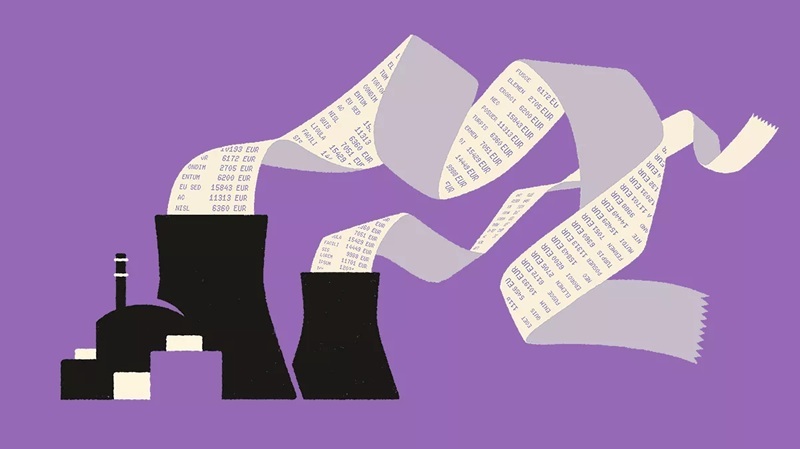
While the new multi-year energy program favors nuclear power, our investigation reveals that the final bill for the EPR2 reactor program could reach nearly 250 billion euros.
“EDF presents its provisional estimate for the EPR2 program at 72.8 billion euros,” read a press release from the group on December 18 .
The final cost estimate for the construction of the first series of six French
-made nuclear reactors at the Penly (Seine-Maritime), Gravelines (Nord), and Bugey (Ain) sites, of the EPR2 type (approximately 1,650 megawatts of power), is expected this spring. EDF and its shareholder, the French State, hope for a final investment decision by the end of the year.
But four years after Emmanuel Macron
announced this program , its cost remains completely unclear. And far from dispelling this uncertainty, EDF’s communication strategy is creating a triple smokescreen. Is this meant to conceal the true final bill?…………………………….. [subscribers only] https://www.alternatives-economiques.fr/nucleaire-enquete-sur-le-vrai-cout-des-futurs-epr/00117632
Dounreay workers among 200 allowed to leave Nuclear Restoration Services’ UK in early exit scheme
By Iain Grant, John O’Groat Journal 10th Feb 2026
About 30 workers at Dounreay are believed to have been offered early leaving terms in a scheme designed to trim the size of Nuclear Restoration Services’ UK-wide workforce.
Many others at the Caithness site who applied for the mutually agreed voluntary exit (MAVE) initiative were unsuccessful.
The scheme, which has raised the hackles of unions, offers one month of salary per year of service, capped at 21 months of pay or £95,000.
No numbers for Dounreay have been made available but about 500 applied at NRS’s 14 sites throughout the country. Of those, about 200 have been made offers.
It is part of a wider Treasury drive to cut the public sector payroll following its growth during the pandemic.
About 1200 are employed by NRS at Dounreay though that will increase by more than 300 when plans to put NRS in charge of the neighbouring MoD plant at Vulcan come to pass.
Dounreay provide £128k over 3 years for STEM activities for Caithness and Sutherland primary pupils
Read More
The MAVE scheme is opposed by Prospect, which along with GMB and Unite, is running a What a Waste campaign, to highlight the loss of scarce, skilled specialists in the nuclear sector.
They claim the job cuts will cost the government more in the long term as it will put a spoke in the programme to decommission redundant nuclear sites and mean it has to fork out to rebuild the workforce in the future……………………..
In addition to Dounreay, NRS runs nuclear sites at Berkley, Bradwell, Chapelcross, Dungeness, Harwell, Hinkley Point, Hunterston, Oldbury, Sizewell, Trawsfynydd, Winfrith and Wyfla and the Maentwrog hydro-electric plant. https://www.johnogroat-journal.co.uk/news/dounreay-workers-among-200-allowed-to-leave-nrs-in-early-exi-426869/
1 This Month

of the week – Shut Down Drone Warfare!


Tell the Ukrainian Government to Drop Prosecution of Peace Activist Yurii Sheliazhenko

Petition to revoke the licensing of the Near Surface Nuclear Disposal Facility (NSDF) at Chalk River. https://www.ourcommons.ca/petitions/en/Petition/Details?Petition=e-7247
To see nuclear-related stories in greater depth and intensity – go to https://nuclearinformation.wordpress.com
-
Archives
- April 2026 (57)
- March 2026 (251)
- February 2026 (268)
- January 2026 (308)
- December 2025 (358)
- November 2025 (359)
- October 2025 (376)
- September 2025 (257)
- August 2025 (319)
- July 2025 (230)
- June 2025 (348)
- May 2025 (261)
-
Categories
- 1
- 1 NUCLEAR ISSUES
- business and costs
- climate change
- culture and arts
- ENERGY
- environment
- health
- history
- indigenous issues
- Legal
- marketing of nuclear
- media
- opposition to nuclear
- PERSONAL STORIES
- politics
- politics international
- Religion and ethics
- safety
- secrets,lies and civil liberties
- spinbuster
- technology
- Uranium
- wastes
- weapons and war
- Women
- 2 WORLD
- ACTION
- AFRICA
- Atrocities
- AUSTRALIA
- Christina's notes
- Christina's themes
- culture and arts
- Events
- Fuk 2022
- Fuk 2023
- Fukushima 2017
- Fukushima 2018
- fukushima 2019
- Fukushima 2020
- Fukushima 2021
- general
- global warming
- Humour (God we need it)
- Nuclear
- RARE EARTHS
- Reference
- resources – print
- Resources -audiovicual
- Weekly Newsletter
- World
- World Nuclear
- YouTube
-
RSS
Entries RSS
Comments RSS
 nuclear-news