Angela Bischoff, Outreach Director, 23 Jan 18, Since 2005, demand for electricity in Ontario has been steadily falling. In 2017, it fell a further 3.6% meaning that demand has dropped by 16% since 2005. That is the equivalent of taking 2.5 million homes off the grid – like unplugging all the houses and apartments in the City of Toronto twice over.
Ontario is not alone in seeing a sustained drop in demand. This is a trend that has taken hold in many countries and provinces thanks to new technologies such as super-efficient LED lighting and smart controls, cost-effective energy efficiency programs, and economic changes. In fact, reducing the need to generate electricity in the first place has become Ontario’s lowest cost way of addressing our energy needs – the province paid on average just 2.2 cents to save a kilowatt-hour of electricity in 2016.
But oddly, the Wynne government shows no signs of recognizing the growing mismatch between its plans to spend billions of dollars on re-building aging nuclear reactors and the ever-decreasing need for the power they would produce. In fact, in order to justify continuing to operate the 47-year-old Pickering Nuclear Station – the highest cost nuclear plant in North America – the province is currently curtailing 26% of the potential annual output of our cleaner and safer wind and solar power plants.
Does it make sense to pay 7 times more to re-build aging nuclear reactors than to enhance energy efficiency? Should we rebuild nuclear reactors that have to run 24/7 when demand is falling and supply patterns are being rapidly changed by the introduction of increasingly low-cost renewable sources? These are questions the government seems determined to ignore.
Instead of simply ignoring the numbers, a far better way to act on these trends is to strike a deal with Quebec to import low-cost, flexible water power; continue to expand our cost-effective conservation programs; and embrace new renewable energy opportunities right here at home.
January 24, 2018
Posted by Christina Macpherson |
business and costs, politics, USA |
Leave a comment
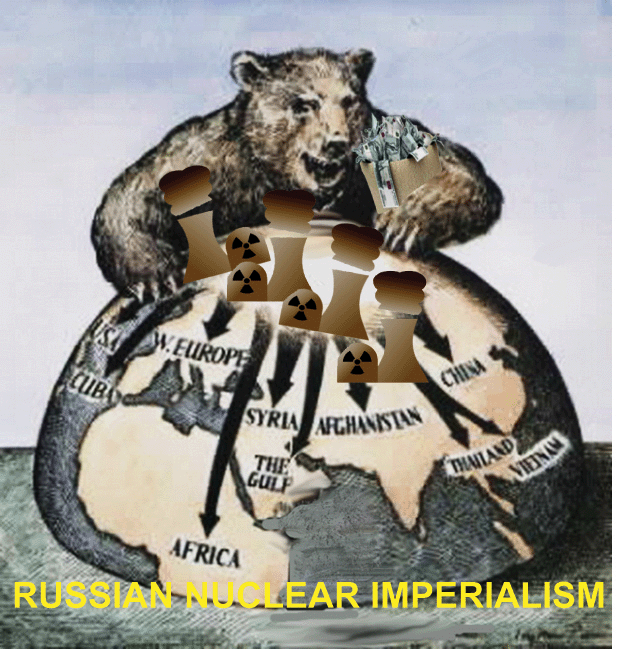
 Zambia establishes an Interim Secretariat on Nuclear Science and Technology, Lusaka Times, January 23, 2018, Government has established an Interim Secretariat on Nuclear Science and Technology (ISNST) constituted by senior officers from various Government Ministries and Institutions. The Units under the ISNST include Nuclear Applications, Public Awareness and Consultation, Economics Assessment, Legal and Regulatory, and Programme Development.
The ISNST will spearhead implementation of Zambian’s nuclear energy programme as well as the development of the Centre for Nuclear Science and Technology (CNST). The officers have since commenced work, which among others, will involve public awareness and consultations……..Government is hopeful that the nuclear energy programme will transform the country into an industrial hub in the region. A group of students have already been sent to Russia to study in various areas of nuclear science, who upon completing their studies would work in the CNST.
Government has since signed various agreements with the Russian Federation that have culminated into the implementation of the nuclear energy programme………
The ISNST has embarked on a robust public sensitisation programme beginning with Members of the Cabinet and Members of Parliament. https://www.lusakatimes.com/2018/01/23/zambia-establishes-interim-secretariat-nuclear-science-technology/
January 24, 2018
Posted by Christina Macpherson |
AFRICA, marketing, Russia |
Leave a comment
 Abandoning Hinkley Point C now could save consumers almost £1.5bn per year for 35 years from 2027 http://www.no2nuclearpower.org.uk/news/ 19 Jan 18 Stop Hinkley Campaign submits response to the Helm ‘cost of energy’ review.
The Stop Hinkley Campaign has submitted a joint response, with the Nuclear Free Local Authorities (NFLA), to the UK Government’s call for evidence on Professor Dieter Helm’s review of the UK energy market and the financial costs of energy to consumers and businesses. (1)
The joint submission argues the best way for the Government to keep electricity costs to consumers as low as possible over the coming decades, while reducing carbon emissions, and providing secure electricity supplies, is to cancel Hinkley Point C, scrap the new nuclear programme, launch a much more comprehensive energy efficiency programme and expand renewable energy ambitions.
The response also notes:
• Cancelling Hinkley Point C now might incur a cancellation cost of around £2bn, but consumers could save around £50bn over its lifetime. (2)
• Offshore wind is already approaching half the cost of nuclear power and Bloomberg New Energy Finance (BNEF) predicts costs will drop a further 71% by 2040.
• Removing the current block on onshore wind could save consumers around £1bn.
• Solar power is expected to be the cheapest source of energy (not just electricity) anywhere in the world by 2030 or 2040.
• Cost-effective investments in domestic energy efficiency between now and 2035 could save around 140 terawatt hours (TWh) of energy and save an average of £270 per household per year at current energy prices. The investments would deliver net benefits worth £7.5bn to the UK.
• Renewables could soon be producing enough electricity to power the grid from April to October. If the Government continues with the nuclear programme then Ministers will have to explain to consumers why they are having to pay for expensive nuclear electricity when cheap renewables are being turned off.
• The UK has the technology to match green power supply and demand at affordable cost without fossil fuels – by deploying the ‘smart grid’, using ‘green gas’ made from surplus power, and raising energy efficiency.
• Baseload is not helpful in balancing a variable energy supply – it simply leads to further overproduction of energy at times when renewables can meet demand on their own.
Just before the Christmas holidays the two organisations also submitted a joint response to the UK Government’s Clean Growth Strategy. (3)
Instead of funding R&D on new nuclear technology and Small Modular Reactors to the tune of around £460m, this called for more funding for low carbon heat and energy efficiency. In particular the Government should be investigating power-to-gas (P2G) technology which can produce renewable hydrogen, using surplus renewable electricity, which could then be fed into the gas grid for storage or used for producing renewable heat.
Stop Hinkley Spokesperson Roy Pumfrey said:
“The cost of renewables is declining rapidly, and it is becoming increasingly clear that there are lots of ways of dealing with intermittency issues. It now looks as though Hinkley Point C won’t be online before 2027. Several financial institutions have predicted that large centralised power stations are likely to be obsolete within 10 to 20 years, because they are too big and inflexible, and are “not relevant” for future electricity. (4) So Hinkley Point C and the rest of the UK’s ill-conceived new nuclear programme will be too late, too expensive and too problematic. Wind and solar are cheaper more flexible and much quicker to build. It is time to cancel Hinkley Point C now before consumers are saddled with a needless bill for £50bn not to mention the nuclear waste which we still don’t know what to do with.”
Notes
(1) The Stop Hinkley and NFLA joint submission on the Government’s call for evidence on the Helm Review is available here.
(2) See Time to Cancel Hinkley Point C by Emeritus Professor Steve Thomas available here.
(3) The Stop Hinkley and NFLA joint submission on the Government’s Clean Growth Strategy is available here.
(4) See Stop Hinkley Press Release 28th August 2014
January 20, 2018
Posted by Christina Macpherson |
business and costs, politics, UK |
Leave a comment
 FT 16th Jan 2018, The British and Japanese governments have agreed to explore options for
joint-financing of a nuclear power station in Wales, a softening of the
UK’s previous refusal to commit public funds to construction of new
reactors.
Letters have been exchanged between London and Tokyo in which the
governments expressed support for the Wylfa nuclear project on Anglesey and
agreed to consider contributing to its financing, according to several
people involved in the process.
Wylfa is being developed by Horizon, a subsidiary of Hitachi, the Japanese conglomerate whose reactor technology
will be used by the plant. Partial public financing for Wylfa would
represent a new approach to nuclear construction in the UK by drawing on
the government’s access to cheap debt to reduce capital costs.
But it would also expose taxpayers to some of the associated heavy expense and
high risk. Ministers have been rethinking policy after heavy criticism of
the £20bn Hinkley Point C plant under construction in Somerset. The full
cost of that project is being met by its French and Chinese investors and
recovered through a levy on consumer bills.
Japan’s Asahi Shimbun newspaper reported last week that the UK and Japanese governments were
willing to work with financial institutions to extend as much as $20bn in
loans to finance Wylfa, and also to acquire a stake in Horizon. Several
people involved in the project said no such details had yet been agreed but
the exchange of letters between the two governments late last month had
“increased confidence on all sides”.
https://www.ft.com/content/dd916c18-facd-11e7-9b32-d7d59aace167
January 19, 2018
Posted by Christina Macpherson |
business and costs, Japan, politics, UK |
Leave a comment
 Uganda pushes for nuclear energyBy Vision Reporter, New Vision, 18th January 2018
 People are not aware that you can use nuclear very peacefully for the well-being of humanity,Museveni said. KAMPALA –
President Yoweri Museveni has said that unless solar becomes a cheaper alternative source of clean energy, Africa and Uganda in particular will have to use nuclear energy to improve the welbeing of its people…….The main issue is energy resource. Nuclear is clean energy, better than fossil fuels…….Museveni was meeting the Director General of the International Atomic Energy Agency (IAEA) Yukiya Amano at State House Entebbe on Wednesday. ……
The DG Yukiya Amano said as IAEA, they are doing a lot in making nuclear energy for peaceful use and is already supporting Uganda in implementing projects that use nuclear for peaceful purposes for the wellbeing of the people………
He said it is no longer the energy for only developed countries. Despite it requiring a lot of preparations, it is important that the transfer of technology from IAEA to other countries to increase on the welfare of the people…….The important issues are; public acceptance, money and technology. IAEA is very happy to work with you and help you at every level,” he said………
https://www.newvision.co.ug/new_vision/news/1469249/uganda-pushes-nuclear-power
January 19, 2018
Posted by Christina Macpherson |
AFRICA, marketing |
Leave a comment
 FT 17th Jan 2018, EDF is aiming to attract pension funds and other institutional investors to
help finance another UK nuclear plant at Sizewell to follow its £20bn
project at Hinkley Point.
The French state-controlled utility said it was working on “innovative financing models” for its Sizewell C project in
Suffolk and was in early-stage talks about potential UK government backing for the project.
EDF’s plans for Sizewell are longstanding but remarks on
Wednesday by Simone Rossi, the company’s new UK chief executive,
represented its firmest commitment to the project so far. Mr Rossi insisted
he had “absolute support” from EDF’s leadership in Paris to push
ahead with Sizewell, despite stress on the company’s finances from its
existing nuclear construction projects at Hinkley in Somerset and
Flamanville in France.
He said EDF aimed to cut the construction cost of
Sizewell by 20 per cent compared with Hinkley through efficiency gains.
Horizon, another UK nuclear developer owned by Hitachi of Japan, is also
aiming to attract institutional investment in its proposed Wylfa nuclear
plant in Wales. Horizon believes pension funds will be interested once its
plant is finished and it wants help from the UK and Japanese government to
finance construction in the meantime. Mr Rossi said public finance for
Sizewell was “not a prerequisite” but EDF would work with the UK
government to develop alternative financing structures.
Investment is also expected from Chinese state-owned CGN, which owns a third of Hinkley, and
is planning its own UK nuclear plant in partnership with EDF at Bradwell in
Essex. Sizewell, Bradwell and Wylfa are competing for finance and political
support, along with the Moorside project in Cumbria which is in the process
of being sold by Toshiba of Japan to Kepco of South Korea.
https://www.ft.com/content/9555cd14-fbad-11e7-9b32-d7d59aace167
January 19, 2018
Posted by Christina Macpherson |
business and costs, politics, UK |
Leave a comment
 https://www.japantimes.co.jp/news/2018/01/18/business/corporate-business/troubled-toshiba-plans-eliminate-negative-net-worth-selling-westinghouse-claims-u-s-hedge-fund/#.WmFS_aiWbIU
KYODO Toshiba Corp. said Thursday it is set to eliminate its negative net worth and improve its finances by some ¥410 billion ($3.68 billion) after agreeing to sell its claims in its now-bankrupt U.S. nuclear unit to a U.S. hedge fund.
The company has agreed to sell claims related to Westinghouse Electric Co. to the Baupost Group LLC for $2.16 billion, with the transaction set to be completed by the end of the month. Westinghouse-related shares will be sold by the end of March to Canada’s Brookfield Business Partners LP, which will acquire the U.S. nuclear unit.
The value of Westinghouse itself is $1 after it filed for Chapter 11 bankruptcy protection in March.
Following the sale of Westinghouse-related claims and shares, Toshiba will likely secure net assets of ¥270 billion.
Toshiba had projected its negative net worth would stand at some ¥750 billion at the end of March, but raised ¥600 billion through a third-party allocation of new shares last month, effectively removing the risk of delisting. But it still needed cash to improve its financial standing.
The Japanese conglomerate is also looking to complete the sale of chip unit Toshiba Memory Corp. by the end of March to further improve its dire financial standing. The sale, announced in September to a consortium led by U.S. fund Bain Capital, has been reported to be worth roughly ¥2.4 trillion.
Toshiba Memory is currently going through antitrust screenings in multiple countries.
January 19, 2018
Posted by Christina Macpherson |
business and costs, Japan |
Leave a comment
S&P Sees ‘Clear Danger’ of Default by South Africa’s Eskom, Bloomberg, By Loni Prinsloo, January 18, 2018,
- Yields on Eskom’s dollar bonds climb after Reuss’s comments
- Finance Minister Gigaba says Eskom is his ‘biggest worry’
- There is a “clear danger” that South Africa’s state-owned power utility, Eskom Holdings SOC Ltd., could default on its debt, S&P Global Ratings said.
- “We are very concerned about liquidity issues,” Konrad Reuss, the managing director of S&P for sub-Saharan Africa, said at an event in Johannesburg Thursday.
- Eskom is the biggest recipient of state guarantees at a time when domestic power demand is the lowest in more than 10 years and as South Africa’s finances buckle under lower tax revenue and rising debt. The company needs 20 billion rand ($1.6 billion) of funding by the end of its fiscal year on March 31, the Mail & Guardian newspaper reported last week, citing the utility…….. https://www.bloomberg.com/news/articles/2018-01-18/s-p-sees-clear-danger-of-default-by-south-africa-s-eskom
January 19, 2018
Posted by Christina Macpherson |
business and costs, South Africa |
Leave a comment
the global deregulation of American firearms which could, in turn, according to critics, put such weaponry ever more easily in the hands of both criminal gangs and extremist groups
As Donald Trump might put it, major weapons contractors like Boeing, Raytheon, and Lockheed Martin cashed in “bigly” in his first year in office.
This year will undoubtedly be a banner year for arms companies. The only question is: Might it also mark the beginning of a future movement to roll back unconstrained weapons expenditures?
Tomgram: William D. Hartung, 2018 Looks Like an Arms Bonanza OpEd News.com, By Tom Engelhardt 11 Jan 18 This article originally appeared at TomDispatch.com.
 Here’s a cheery note for you: the last mass killing of 2017 took place moments before midnight on New Year’s Eve. A 16-year-old New Jersey boy picked up a semi-automatic rifle, “lawfully acquired” by a member of his family, and killed his father, mother, sister, and a family friend. In doing so, he helped ensure that 2017 would be the deadliest year for mass killings in our modern history. (There is now, on average, slightly more than one mass killing a day in this country.) Nonetheless, guns of all sorts, including military-style assault rifles and even bump stocks like the 12 Stephen Paddock evidently used to turn his semi-automatics into functional automatics and slaughter 58 people from a hotel window in Las Vegas, are still readily available. Nowhere on Earth, not even in ravaged Yemen (which takes second place in gun ownership), is more weaponry available to more types of people. As the years go by here, such weapons are more easily and openly carried with only the most minimal of background checks (or less than that). Think about this: Americans, 4.4% of the people on this planet, own 42% of the guns and commit 31% of the mass killings.
Oh, and I did promise you that there was something cheery in all this, didn’t I? So here it is: the Trump administration, knowing a good thing when it sees it, is now hard at work ensuring that American weapons makers will make it a remarkably similar world. Its officials are intent, it seems, on recreating the planet in an American image. Keep in mind that U.S. arms makers like Lockheed, Raytheon, and General Dynamics already monopolize the global arms market in a way that should (but in this country regularly doesn’t) stagger the imagination. Continue reading →
January 15, 2018
Posted by Christina Macpherson |
business and costs, marketing, USA, weapons and war |
Leave a comment
 Bulletin of Atomic Scientists 12th Jan 2018
, After a lengthy hiatus, negotiations will soon resume between the United
States and Saudi Arabia on an agreement for civil nuclear cooperation.
Concluding a bilateral civil nuclear agreement (often called a “123
agreement,” after the section of the Atomic Energy Act mandating such
agreements for nuclear cooperation with other countries) would enable US
companies to participate in the Saudi Kingdom’s ambitious plans to build a
fleet of nuclear power reactors to meet its growing electricity
requirements.
January 15, 2018
Posted by Christina Macpherson |
marketing, Saudi Arabia, USA |
Leave a comment
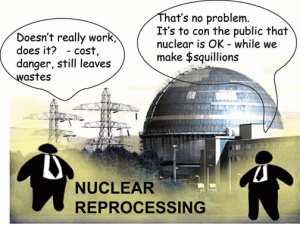 Reuters 11th Jan 2018, So close yet so far: China deal elusive for France’s Areva. A deal long
sought by French company Areva to build a $12-billion nuclear waste
reprocessing plant in China looks increasingly unlikely to go ahead despite
a visit to Beijing by President Emmanuel Macron meant to drum up business.
During Macron’s state visit this week, Areva and China National Nuclear
Corp (CNNC) signed a new “protocol agreement” to build the plant but,
not for the first time, no definitive contract was signed.
Since talks began more than a decade ago – when uranium prices UXXc1 were near record
highs – a series of non-committal French-Chinese memorandums of
understanding have been signed for building a reprocessing plant in China
modeled on state-owned Areva’s plant in La Hague, northern France.
The reprocessing of nuclear fuel waste involves separating plutonium from the
spent uranium and reusing it in “Mixed Oxide” (MOX) fuel at nuclear
power stations.
But the 2011 Fukushima nuclear disaster and competition
from renewable energy are weighing on the nuclear sector, and uranium
prices are down 80 percent from a decade ago, making the expensive and
dangerous recycling process less attractive. Chinese nuclear scientist Li
Ning, dean of Xiamen University’s College of Energy and a member of State
Nuclear Power Technology Corporation’s (SNPTC) expert committee, sees
“a fairly low probability” that China will sign a formal contract for
the project.
https://www.reuters.com/article/us-areva-china-nuclearpower-analysis/so-close-yet-so-far-china-deal-elusive-for-frances-areva-idUSKBN1F01RJ
January 13, 2018
Posted by Christina Macpherson |
China, France, marketing, politics international, reprocessing |
Leave a comment
Asahi Shimbin 11th Jan 2018, Japan and Britain have agreed to provide the lion’s share of financing for
a nuclear power plant project planned by Hitachi Ltd. on the island of
Anglesey off northwest Wales, sources said.
The two governments are set to extend a combined 2.2 trillion yen ($20 billion) in loans with the help of
financial institutions and acquire a stake in Horizon Nuclear Power Ltd., a
British company purchased by Hitachi to operate the plant. The total cost
of the project is estimated at 3 trillion yen.
It is extremely rare forgovernments to shoulder such a huge portion of the overall project cost. By
doing so, they must share the risk if the project suffers a financial loss,
but that tab could eventually be passed on to taxpayers.
http://www.asahi.com/ajw/articles/AJ201801110057.html
January 13, 2018
Posted by Christina Macpherson |
business and costs, Japan, politics, UK |
Leave a comment
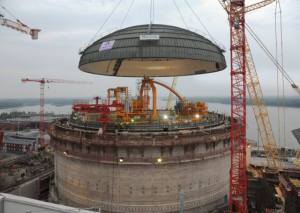 Romandie 9th Jan 2018, [Machine translation] The EPR, the flagship of the French nuclear industry
with many setbacks. Paris – The EPR, to be launched for the first time in China in about six months, is a third-generation nuclear reactor designed to offer improved power and safety, but whose yards have accumulated setbacks in France and elsewhere. Finland.
Launched in 1992, this technology, touted as the flagship of the French nuclear industry, was co-developed by the French company Areva and German Siemens, within their joint venture Areva NP, which Siemens has since withdrawn. EDF has just taken control of this activity as part of the reorganization of the French nuclear industry orchestrated by the State.
The first project was launched in Olkiluoto (Finland) in 2005, on behalf of the TVO electrician, with Areva and Siemens directly prime contractors. But the setbacks and budget slippages have accumulated. TVO lamented an umpteenth delay in the commissioning of the EPR in October, which is now scheduled for May 2019. It was initially scheduled for 2009.
There is a dispute between TVO and Areva and Siemens, with each party blaming the delays on the other.
claiming billions in compensation. The case is under arbitration.
The second EPR, which has been under construction since 2007 in Flamanville (western France) has also accumulated setbacks, mainly due to anomalies discovered on the composition of the steel cover and bottom of the tank. The Nuclear Safety Authority (ASN) requires that the tank cover be replaced before the end of 2024. EDF, prime contractor, has postponed the commissioning of the reactor several times. The electrician plans to start the Flamanville EPR at the end of 2018, for commercial commissioning in
2019, when the initial schedule was for 2012.
Its cost has meanwhile more than tripled to 10.5 billion euros. Two other EPRs are under construction in Taishan (China), with a joint venture owned 51% by the Chinese state power company CGN, 30% by EDF and, since 2012, 19% by the electrical utility of
Guangdong province.
https://www.romandie.com/news/878943.rom
January 12, 2018
Posted by Christina Macpherson |
business and costs, Finland, France |
Leave a comment
 Areva to sign 10 bln euros China nuclear re-processing MoU -sourcehttps://www.reuters.com/article/china-france-areva/areva-to-sign-10-bln-euros-china-nuclear-re-processing-mou-source-idUSP6N1NF02R, Reuters Staff,
PARIS, Jan 9 (Reuters) – French power group Areva is set to sign a memorandum of understanding (MoU) for a Chinese nuclear re-processing deal worth about 10 billion euros ($11.9 billion), a source with knowledge of the matter said.
The deal with the China National Nuclear Corp (CNNC) was expected to be signed on Tuesday, during a state visit to China by French President Emmanuel Macron.
$1 = 0.8375 euros Reporting by Benjamin Mallet; Writing by Sudip Kar-Gupta; Editing by Leigh Thomas and Jean-Michel Belot
January 11, 2018
Posted by Christina Macpherson |
China, France, marketing |
Leave a comment
 China, France sign deal to enhance cooperation on nuclear energy Xinhua | 2018-01-10 07:17 GUANGZHOU
 — A Chinese nuclear power operator signed an agreement Tuesday with a French energy organization to deepen cooperation on nuclear power technology.
The deal, between China General Nuclear Power Corporation (CGN) and the French Alternative Energy and Atomic Energy Commission (CEA), focuses on areas such as nuclear reactor technology, advanced fuels and materials, and nuclear fuel cycles.
Under the agreement, CGN and CEA will deepen cooperation in the upstream and downstream nuclear power industry chain, including reactor life management and the concept design of the fourth-generation nuclear energy technology.
He Yu, chairman of CGN, said the new agreement will enhance bilateral exchanges in nuclear power technology and open new space for Sino-French nuclear power cooperation.
Founded in 1994, CGN is the largest nuclear power operator in China, with 39,000 employees worldwide. It focuses on the development of clean energies such as nuclear power, nuclear fuel, wind power and solar power.
The CEA is a key organization in research, development and innovation in France. Its main areas include defense and security, nuclear and renewable energy, and physical and life sciences.
http://www.chinadaily.com.cn/a/201801/10/WS5a554d97a3102e5b17371b35.html
January 9, 2018
Posted by arclight2011part2 |
China, France, marketing |
Leave a comment