nuclear-news

The News That Matters about the Nuclear Industry Fukushima Chernobyl Mayak Three Mile Island Atomic Testing Radiation Isotope

UK Government investment continues squeeze on EDF’s share of Sizewell C

 By Tom Pashby

EDF’s stake in Sizewell C has decreased by a further 1.6% following investment by the UK government using its Devex (development expenditure) subsidy scheme.  Two days ago NCE reported EDF’s share had dropped to
16.2%. This has now dropped a further 1.6%

 New Civil Engineer 27th March 2025, https://www.newcivilengineer.com/latest/uk-government-investment-continues-squeeze-on-edfs-share-of-sizewell-c-27-03-2025/

March 29, 2025 Posted by | business and costs | Leave a comment

EDF reduces stake in Sizewell C as boss sacked

the sacking raises “further fundamental questions about the wisdom of proceeding with the Sizewell C ‘Replica’ project of Hinkley Point C in which EDF is set to be deeply involved”

Clearly Sizewell C could not reach a Final Investment Decision without taxpayers shouldering the bulk of the project’s massive cost – a hugely controversial choice given that the Chancellor is currently scrabbling around to save as much money as possible.

25 Mar, 2025 By To s-sacked-25-03-2025/ https://www.newcivilengineer.com/latest/edf-reduces-stake-in-sizewell-c-as-boss-sacked-25-03-2025/

EDF’s ownership of Sizewell C has decreased to 16.2% and the UK government’s stake increased to 83.8%. Meanwhile, the French company’s chief executive has been axed and its financial stability has been called into question.

The UK’s flagship gigawatt-scale new nuclear projects under construction – Hinkley Point C in Somerset and Sizewell C in Suffolk – are both subject to intense scrutiny as costs rise and timelines slip.

Hinkley Point C is late and over budget, and Sizewell C is awaiting its delayed final investment decision (FID) which is scheduled to be made at the Spending Review on 11 June. The FID will reveal the final determination of who will fund the project and how. The government has already invested several billion pounds in developing it.

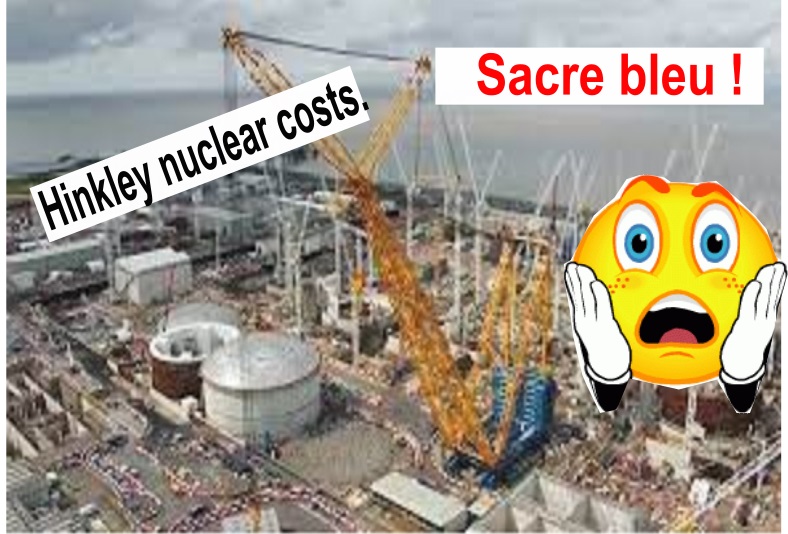
Hinkley Point C’s costs rose from around £25bn in 2015 to up to £34bn in 2024, and Sizewell C is projected to cost £40bn – double what it was estimated by EDF and the UK Government to cost in 2020. However, the Treasury disputes this latter figure.

EDF Sizewell C ownership stake reduced

On 24 February 2024, NCE reported that EDF was appearing to scale back its proposed ownership ambitions of Sizewell C.

EDF’s 2024 Annual results document laid out its contribution to the power plant, which is “subject to some conditions, including […] a share in ownership of the project of 10 to 19.99%, including a cap on financial exposure in value.” It also requires “a return on capital expected by EDF as an investor in line with market return for this type of assets, risk allocation profile and its investment policy.”

It is understood that the reason for selecting 19.99% rather than 20% is because a company buying 20% would have to set up a subsidiary entity to take the ownership.

Credit ratings agency Fitch Ratings announced in a ‘Rating Action Commentary’ on 21 March 2025 that the Sizewell C’s owners – the UK Government and EDF – had changed their ownership stakes.

EDF previously confirmed in its 2024 half year results that Sizewell C is owned 76.1% by the UK Government and 23.9% by EDF.

Fitch’s announcement said: “As of end-2024, the project was owned 83.8% by the UK  government and 16.2% by EDF, down from 49.4% at end-2023.”

This marks a fresh drop in EDF’s ownership by 7.7 percentage points.

The decrease comes after French public spending watchdog Cour des comptes said EDF should scale back involvement in UK nuclear projects.

Macron sacks EDF chief and funds EDF reactors

In France, where the government has political control of the entirely state-owned EDF (Électricité de France), Macron fired the company’s chief executive Luc Rémont.

The UK’s Daily Telegraph linked Rémont’s ousting to EDF’s planned electricity price hikes for French industrial customers, of which Macron had promised to “take back control”.

Adding further pressure to EDF’s leadership, French building materials company Saint-Gobain chairman and chief executive officer Benoit Bazin, speaking to French business news channel BFM Business, accused EDF of “giving the middle finger to French industry”.

It has also been reported that the French state has agreed to issue a single subsidised loan “covering at least half the construction costs of six nuclear reactors”, according to the president’s office. It is understood that the six reactors are at the pairs at Penly, Gravelines and Bugey in France.

Former energy secretary reacts to ‘extremely concerning’ developments‘.

Backbench Conservative peer Lord Howell of Guildford reacted to the news. Howell was energy secretary in Margaret Thatcher’s government which supported the construction of nuclear power plants.

He described the reduced stake in Sizewell C as “one more development in growing concern about EDF’s capacity or ability to continue with Hinkley Point C project or take a large (20%+) position in the Sizewell C proposed project.”

Reflecting on the sacking of the EDF boss, he said this is “An extremely worrying development.”

He went on to say the sacking raises “further fundamental questions about the wisdom of proceeding with the Sizewell C ‘Replica’ project of Hinkley Point C in which EDF is set to be deeply involved”

Anti-Sizewell C groups say ‘alarm bells should be ringing’

Stop Sizewell C executive director Alison Downes said: “EDF has not contributed a single penny financially to Sizewell C for well over a year now, and is under growing pressure in France, not only having lost its boss but to scale back its international commitments across the board.

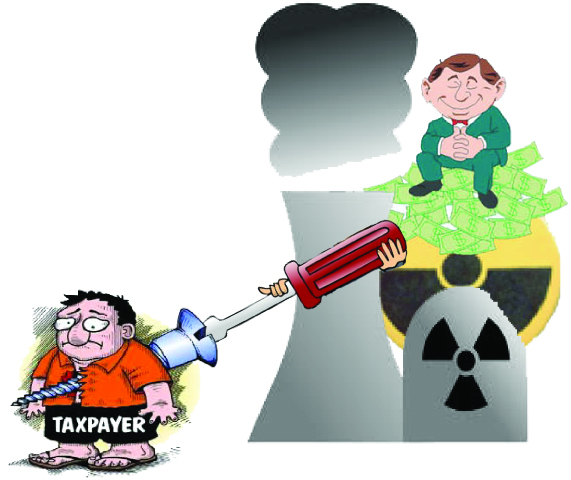
“Clearly Sizewell C could not reach a Final Investment Decision without taxpayers shouldering the bulk of the project’s massive cost – a hugely controversial choice given that the Chancellor is currently scrabbling around to save as much money as possible.

“Rachel Reeves should cancel Sizewell C now and redirect those funds to the Warm Homes Plan, which would lower energy bills and create jobs in every constituency.”

Chancellor Rachel Reeves has proposed austerity measures for the welfare state, which she says are needed to fund infrastructure developments, ahead of the Spring Statement and Spending Review.

Cuts to welfare, particularly covering disability and unemployment support, are proving to be unpopular with dozens of MPs on the left of the Labour party.

A Together Against Sizewell C (TASC) spokesperson said: “Alarm bells should be ringing as the UK government stake in Sizewell C increases to 84% with only the UK taxpayer currently funding Sizewell C’s development costs.

“This begs the question, ‘Why are EDF refusing to put any further money into Sizewell C?’ EDF have decided to build no more of this reactor design in France, indicating they have no confidence in the EPR design destined for Sizewell.”

The spokesperson went on to say: “EDF are broke, as evidenced by their desperate search for cash to finish Hinkley Point C’s construction.

“This is hardly a secure basis for the UK government to continue in partnership with EDF and certainly not a good advert to encourage potential investors.”

Referencing EDF’s plans for a final stake to be as low as 10%, TASC said: “This evidences that even the developer considers the Sizewell C development to be inherently

EDF and the Department for Energy Security and Net Zero did not respond to requests for comment.

March 28, 2025 Posted by | business and costs, France, UK | Leave a comment

Finland’s Fortum says building new nuclear power is too expensive, for now

New nuclear power production capacity is not commercially viable to
build for now, based on the current Nordic power market outlook of low
prices. The company on Monday concluded a two-year study into the
feasibility of new nuclear power but said it would focus on renewable
energy and nuclear lifetime extensions to cover growing electricity demand
in the Nordics for now.

“New nuclear could provide new supply to the
Nordics earliest in the second half of the 2030s, if market and regulatory
conditions are right,” Fortum CEO Markus Rauramo told reporters. He said
Fortum would continue to explore new nuclear generation and pumped
hydropower as long-term options in Sweden and Finland. Fortum said building
new nuclear reactors would require a solid risk sharing framework similar
to the one being prepared by the Swedish government.

 Reuters 24th March 2025,
https://www.reuters.com/business/energy/finlands-fortum-explores-long-term-options-new-nuclear-power-2025-03-24/

March 28, 2025 Posted by | business and costs, Finland | Leave a comment

It’s time to stop Sizewell C to generate ‘Warm Homes’ jobs instead

 March 24 2025, Funding th Future – Tax Research UK.

Campaigners have called on Rachel Reeves and Ed Miliband to stop Sizewell C, and redirect its funding to generate ‘Warm Homes’ jobs in every constituency by the next election.

Their report’s summary says:

There is a clear political advantage from halting Sizewell C and redirecting the billions saved into making millions of homes more energy efficient, thus reducing fuel poverty. This approach will benefit every city, town, village and hamlet in Britain.

It will generate long-term, secure jobs, particularly for young people. It will be quick to implement, so by the next election new jobs and cheaper, warmer, healthier homes will have appeared in every constituency. By contrast, continuing to build Sizewell C and, post 2030, the development of new small modular nuclear reactors, will affect a limited number of constituencies.

Should Sizewell C go ahead, it is expected to cost around £40bn between now and when it opens, potentially around 2040: an average of £2.7bn per year for the next 15 years. Deducting money already spent, if Sizewell is cancelled now, the public money saved by 2030 is £7.1bn, assuming (as seems likely) no private investors are found to share the costs.

We propose that this £7.1bn should be added to the £6.6bn to be spent over the current Parliament on home energy efficiency, as promised in Labour’s 2024 manifesto. This shift of funds would massively increase the chances of achieving the Government’s aim to ‘Make Britain a clean energy superpower to cut bills, create jobs and deliver security with cheaper, zero-carbon electricity by 2030, accelerating to net zero‘. https://www.taxresearch.org.uk/Blog/2025/03/24/its-time-to-stop-sizewell-c-to-generate-warm-homes-jobs-instead/

March 28, 2025 Posted by | business and costs, UK | Leave a comment

France delays EPR2 reactors to 2038

 The 4th meeting of France’s Nuclear Policy Council (CPN – Conseil de
politique nucléaire), chaired by President Emmanuel Macron, decided to
delay the commissioning of EPR2 reactors to 2038 – a postponement of
three years. The CPN, which has been held regularly since 2022, defines the
main orientations of national nuclear policy.

The EPR2 programme, announced
in February 2022, envisages the construction of six upgraded EPR reactors
with an option for eight more. The first three pairs of EPR2 reactors are
planned for the Penly, Gravelines and Bugey NPP sites. Construction is
expected to start in 2027. The cost was originally estimated at €51.7bn
($56.4bn), but this was revised upwards to €67.4bn in 2023, according to
the Court of Auditors. Taking inflation into account, a total budget of
nearly €80bn is now being considered.

 Nuclear Engineering International 21st March 2025, https://www.neimagazine.com/news/france-delays-epr2-reactors-to-2038/

March 27, 2025 Posted by | business and costs, France | 1 Comment

Macron ousts EDF boss accused of giving French industry ‘the middle finger’

Luc Rémont will be replaced in a reshuffle with factory energy prices set to soar

Alex Singleton, Business Reporter, https://www.telegraph.co.uk/business/2025/03/21/macron-ousts-boss-state-run-edf-french-energy-prices-surge/

Emmanuel Macron has ousted the boss of the state-run EDF after French industrialists revolted over its high electricity prices.

Luc Rémont is to be replaced in a surprise reshuffling of the company’s top ranks, Mr Macron’s office said on Friday. Mr Rémont has run the the state-owned energy giant since November 2022.

The shake-up follows an outcry over the high energy prices EDF is poised to charge factories. Benoît Bazin, the boss of building materials giant Saint-Gobain, had accused EDF of “giving the middle finger to French industry” by increasing prices.

Rules that force EDF to sell energy to major industrialists at below-market prices are set to expire at the end of the year and the generator had announced plans to raise its prices.

Industry group Uniden, which represents dozens of France’s biggest manufacturers including Renault and steelmaker ArcelorMittal, claimed EDF was “deliberately turning its back” on French businesses at a time when manufacturers were “exposed to unprecedented non-European competition that threatens the very survival of many sites”.

The row is embarrassing for Mr Macron, who had pledged to “take back control of electricity prices” and who sees cheap electricity as a way of securing the French economy. Two years ago, he fully nationalised EDF by buying the 16pc of the company the government did not already own.

The shake-up comes days after the Macron administration said it had agreed state financing for six new nuclear reactors to be built by EDF over the coming decades.

Anger over high industrial energy prices is rising in the UK too. UK factories pay 50pc more for electricity than rivals in France and Germany, and four times as much as American plants. High prices have been blamed on net zero and slow-moving plans to expand nuclear power.

Warnings from industrialists that net zero energy policies are damaging the economy have fallen on deaf ears. Ed Miliband, the Energy Secretary, said this week the UK Government was “absolutely up for the fight” over net zero.

EDF is one of the largest players in the UK nuclear power market, after buying three formerly nationalised regional electricity boards and the nuclear operator British Energy.

It is currently building the UK’s first new nuclear power station for over 20 years, Hinkley Point C, and plans to embark on the construction of another, Sizewell C. But in January, the future of this new project was thrown into doubt after the French state auditor warned it against embarking on risky new foreign projects.

EDF declined to comment. The French government has been approached for comment.

March 25, 2025 Posted by | business and costs, France, politics | Leave a comment

French government ousts head of nuclear power group EDF.

 Luc Rémont’s exit comes after months of tension over plans for new reactors and clash over pricing strategies.

France has ousted the chief executive of the
state-owned nuclear power group EDF after months of tensions over strategy
and the risk of cost overruns in the construction of six new reactors.

Luc Rémont, who had been at EDF since November 2022, would be replaced by
Bernard Fontana, the current head of Framatome, a subsidiary of EDF that
builds reactors and components, the Élysée Palace said on Friday.

EDF runs the country’s fleet of 57 nuclear plants that generate roughly 70
per cent of France’s electricity, and commercialises nuclear projects
abroad. Rémont succeeded in the initial challenge of restoring the output
of the fleet of reactors after a period plagued by technical problems, and
was in the early stages of a plan to build new more powerful, yet costly
ones, known as the EPR2.

But his term was marred by continued spats with
the state, which nationalised EDF through buying out the minority
shareholders in 2023. The Elysée decided not to renew Rémont’s
three-year term that was set to expire in June.

A major point of contention
was over Rémont’s plans to revamp how EDF sells electricity to big
industrial companies with energy-intensive activities. In the past, the
company was legally required to sell fixed amounts of electricity to them
at a price approved both by the French government and the European
Commission.

With those rules expiring next year, Rémont had been set to
combine market pricing with the signing of long-term contracts with
customers in energy-intensive industries. But the offers attracted few
companies since the terms and prices were less attractive. In parallel to
long-term contracts, EDF said this month that it would launch a new
auction-like process for other industries, including foreign buyers, in a
move that angered energy-intensive groups in France.

 FT 21st March 2025, https://www.ft.com/content/c822f4e4-c15a-4038-aad4-a7151629277d

March 24, 2025 Posted by | business and costs, France | Leave a comment

Macron Ousts EDF CEO as Tension Rises on French Power Costs

The French government said Electricite de France SA Chief Executive Officer Luc Remont is stepping down as the state-owned utility faces increasing complaints from large industrial clients over the cost of electricity.

Author of the article:, Bloomberg News, Francois de Beaupuy, https://financialpost.com/pmn/business-pmn/macron-ousts-edf-ceo-as-tension-rises-on-french-power-costs 21 Mar 25

(Bloomberg) — The French government said Electricite de France SA Chief Executive Officer Luc Remont is stepping down as the state-owned utility faces increasing complaints from large industrial clients over the cost of electricity.

President Emmanuel Macron is considering appointing Bernard Fontana, the 64-year-old senior executive vice president in charge of the company’s Industry and Services unit, as the new chairman and CEO, the president’s office said in a statement Friday. Remont, 55, has held the positions since November 2022.Article content

“The choice that the government has long supported is electricity that is abundant, clean and not too expensive, and it’s based on this choice that Bernard Fontana’s nomination has been made,” French Prime Minister Francois Bayrou said on a trip to Bourges, central France. “He’s an industrialist, which means he’s used to running teams and speeding up projects.”  

Tensions between the government, EDF and major customers have been mounting over the utility’s electricity offerings. Representatives of power-hungry users, such as chemical makers, have said EDF’s new offers aren’t attractive enough, threatening their competitiveness, while rivals in the US and Asia enjoy cheaper energy. Their concerns have been exacerbated recently by sluggish economic growth, uncertainties over gas prices due to the Ukraine war, and mounting trade tensions between Europe, the US and China.

A French regulation that forces the nuclear behemoth to sell more than a quarter of its atomic output at a steep discount to current wholesale prices expires at year’s end. Meantime, the debt-laden utility said it needs to increase expenditure on nuclear projects and the power grid to help the country’s energy transition. 

On Thursday, Benoit Bazin, the CEO of French glass and building materials producer Cie. de Saint-Gobain, said on BFM Business television that his company has delayed investment in France because it cannot predict energy costs from next year. Meantime, it has invested in Norway and Canada to electrify plants, and will soon do the same in Spain.

Bazin said he was “extremely shocked” by Remont’s recent decision to auction long-term power supply contracts to rival producers and suppliers, broadening offers that initially were reserved for its large electricity clients. 

“EDF is a national company that has a public service mission on the competitiveness of the French industry,” the Saint-Gobain CEO said. “France won’t keep its industry, nor re-industrialization and decarbonization if we keep walking on our head.”

Shutting Sites

Earlier this week, Marc Schuller, chief operating officer of French chemical maker Arkema SA, said during a parliamentary hearing that talks with EDF over new power contracts were “advancing very slowly.

“If nothing is done, we’ll have to consider shutting down sites and stopping some activities because we wouldn’t be competitive anymore,” Schuller said.   

Fontana has held a variety of management positions during his career at steelmakers ArcelorMittal SA and Aperam SA, including CEO of Swiss cement maker Holcim Ltd. Within EDF, he’s been in charge in recent years of Framatome, the unit that makes large equipment for nuclear plants.

Beyond easing tensions with large customers, the future boss of EDF will have to complete complex talks with the French and UK governments over the financing and construction of new reactors, which are key planks of these countries’ net-zero ambitions. 

—With assistance from Shelby Knowles.

March 24, 2025 Posted by | business and costs, France | Leave a comment

Idle Lepreau nuclear plant threatens to post worst operational year in 4 decades

Refurbishing only half the nuclear plant was a mistake, utility president admits


Robert Jones · CBC News : Mar 21, 2025

An end-of-the-fiscal-year breakdown at Point Lepreau is worsening what may turn out to be the poorest operational year on record for the 42-year-old plant.

The nuclear generating station was shutdown on Monday after a malfunctioning cooling fan was deemed to need immediate repair. That fix is expected to take almost until the end of the month  

“Work is underway to repair an issue with the cooling fan and motor assembly,” D’Arcy Walsh, an N.B. Power spokesperson, said in an email. “We expect the station to return to service by the end of next week.”

A scheduled maintenance shutdown last spring, followed by the discovery of a major issue last summer in Lepreau’s generator, previously had the plant offline from early last April to mid-December. The latest problem is dragging the year’s low productivity further 

Not including the years Lepreau was offline between 2008 and 2013 for a $2.5-billion refurbishment, the plant’s least productive year was in 1995, when it underwent work on sagging pressure tubes in its reactor and operated for just over 100 days.   

Downtime at Lepreau is expensive for N.B. Power and has been cited as the primary cause for its current financial problems.

In February, N.B. Power president Lori Clark told MLAs the fortunes of the utility are largely dependent on how well, or poorly, the nuclear plant performs…………………….

Since it returned from refurbishment in late 2012, Lepreau has suffered a number of problems and has been taken offline for maintenance and repairs for more than 1,100 days in total.

More than one third of that downtime has occurred just in the last three years.

It has been estimated by the utility to cost between $1 million and $4 million per day when Lepreau is idle, depending on the time of year and the cost of generating or buying replacement power……………………………https://www.cbc.ca/news/canada/new-brunswick/idle-lepreau-nuclear-plant-threatening-worst-operational-year-nb-1.7490177

March 22, 2025 Posted by | business and costs, Canada | Leave a comment

Hinkley Point C nuclear will cost at least £75 billion – highly unlikely that Sizewell C will be any cheaper.

KEEPING REEVES SWEET: AXE SIZEWELL C!

Jonathon Porritt, 19 Mar 25

“…………………………… , Ed Miliband’s still a total sucker for the propaganda of both the fossil fuel industry (with the latest research from Fossil Free Parliament reminding us that DESNZ Ministers notched up an unbelievable 104 ministerial meetings with various fossil fuel companies between July and September last year) as well as the nuclear industry.

I’ll return to Ed’s mystifying obsession with the fossil fuel industry’s mega-scam of Carbon Capture and Storage in my next blog. For now, let’s just stick to his nuclear nonsense.

Knowing that he will have to give something big and bold back to the Treasury if he’s going to be able to protect things that really matter in his overall portfolio, the blindingly obvious thing to give up is Sizewell C. He knows the Treasury already despises the nuclear industry, deep down, after literally decades of its over-claiming and under-performing. So give them some red meat. A lot of red meat.

The UK Government has already spent around £3.7 billion on preparing the groundworks for Sizewell C. I saw the consequences of that for myself when I was in the area a couple of weeks ago, and I was genuinely shocked. The devastation is unbelievable – including more than 21,000 trees cut down. And that’s BEFORE a Final Investment Decision (FID) has actually been secured. Prospective investors (even in the Middle East) seem to be a lot less keen on Sizewell C than Ministers keep telling us.

Worse yet, Labour has promised another £2.7 billion in the next financial year – to go on doing exactly the same, again, before an FID is secured. Axing Sizewell C at this point, however painful that might be politically, would be a huge, short-term win for the Treasury.

In fact, this would be a much, much bigger prize for UK taxpayers in the longer term. Sizewell C has been described by EDF as a “Hinkley Point look-alike, with a lot of lessons learned”. There’s mighty little evidence that the UK nuclear industry has ever learned a single lesson from its unparalleled record of failure, but let’s just live with that for the time being.

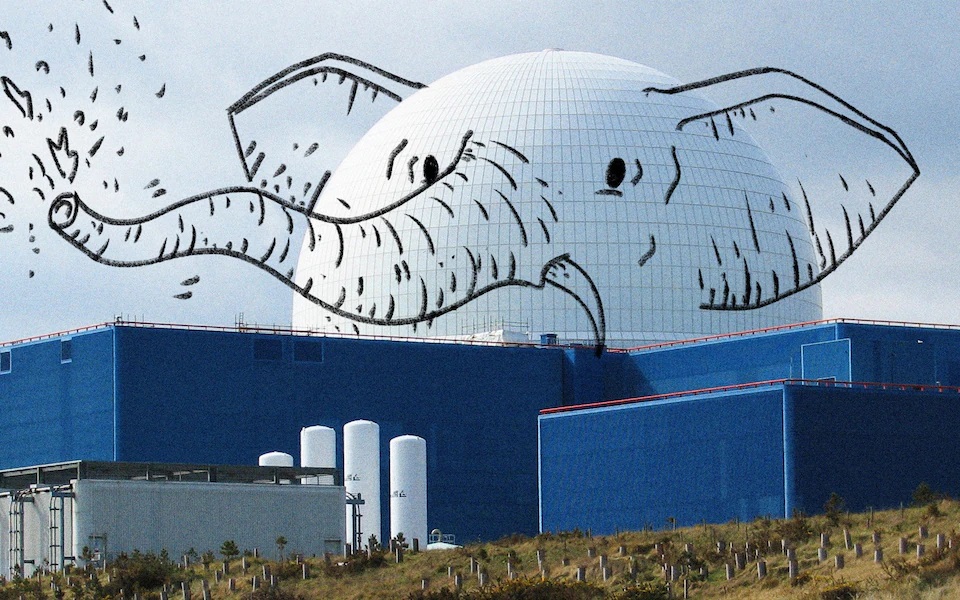
The latest estimate for the “overnight cost” of Hinkley Point C in Somerset is £46 billion. Please don’t be fooled by that ever-so-opaque terminology: “overnight” simply means the cost of construction. It’s the figure the industry loves to trot out to the UK’s limitlessly gullible media (including the BBC and The Guardian), without acknowledging that it doesn’t include the cost of the capital EDF has had to raise to build this monstrous white elephant in the first place. EDF has indicated in the past that cost of capital can add as much as 60% to the overnight cost.

Yes, that’s right: Hinkley Point C will cost at least £75 billion.

It’s highly unlikely that Sizewell C, on the Suffolk coast, will be any cheaper – indeed, it’s already clear that the engineering challenge at Sizewell C is much greater than at Hinkley Point C.

And who will pay for Sizewell C? Well, it’s either YOU as a taxpayer (depending on the size of the stake that the UK government will eventually have to take in Sizewell C in order to secure that ever-elusive Final Investment Decision), or YOU as an energy consumer, through the chosen mechanism of a Regulated Asset Base. From the moment construction at Sizewell C starts, consumers’ bills will start rising.

Axing Sizewell C will obviously be a huge hit to the nuclear industry. Which means it’s probably too much to kill off the industry’s accompanying fantasies about Small Modular Reactors at the same time. At the moment, subsidising SMRs is relatively small beer for the taxpayer, and it’s got as much to do with keeping Rolls Royce on board as it has with any serious attempt to crack the huge technological challenges associated with these new reactors.

Once free of Sizewell C, DESNZ could then double down on all those parts of its portfolio which will deliver real economic value before the next election: solar and wind, storage (batteries plus a lot more), reconfigured grids, and low-carbon manufacturing………………………………..
https://jonathonporritt.com/poor-old-ed-miliband/

March 22, 2025 Posted by | business and costs, UK | Leave a comment

Subsidies attract companies, but not workers, to Fukushima zones

By SUSUMU OKAMOTO/ Staff Writer, Asahi Shimbun March 18, 2025 

Billions of yen in government subsidies have attracted businesses and fueled a surge in industrial park development across areas affected by the Fukushima nuclear disaster.

But one big problem remains: Most workers are not returning to these municipalities that were depleted through evacuation orders.

………………………………………………………………………………….Industrial parks developed by local governments are almost entirely funded by the central government.
So far, 21 parks have opened in the region since the disaster, with nine more planned.

The total cost has exceeded 100 billion yen.

While the construction boom has given the impression of an economic revival, actual progress has fallen short of government and local expectations.

WORKERS NOT RETURNING

………………………………….Interviews with local governments and companies show that 89 businesses and organizations employ around 2,500 people in newly developed industrial parks.

Around 1,050 work in six towns and villages with high radiation levels and restricted access―Tomioka, Okuma, Futaba, Namie, Katsurao and Iitate.

But only about 15 percent of them live within those municipalities. Most of the workers commute from Iwaki and other nearby cities.

DEBATE OVER CONTINUING SUBSIDIES

In November, municipalities affected by the nuclear disaster strongly opposed a government review that suggested a possible end to the industry ministry’s subsidy program around 10 years after the lifting of all evacuation orders.

Experts on the review panel argued that the economic impact of the subsidies remains unclear.

But Kawauchi Mayor Yuko Endo, whose entire village was evacuated, warned, “The town won’t survive if the subsidies are cut off.”

Over the eight years through fiscal 2023, the ministry’s program has distributed 95.9 billion yen to 135 companies and organizations.

“Without jobs, people won’t return to nuclear disaster-affected areas,” a ministry official said. “Without people, neither commercial nor medical facilities can come back.”

The government has allocated an additional 11 billion yen for the program in fiscal 2025.

LONG ROAD TO SUSTAINABLE GROWTH

“Young people in Fukushima Prefecture were already leaving for cities before the disaster,” said Toshiyuki Kanai, a professor at the University of Tokyo’s of Faculty of Law. “Creating jobs alone won’t bring people back.”

However, he added: “The government has little choice but to continue support, given its responsibility for the displacement caused by the nuclear disaster. The scale of the damage is irreparable.”…………………  https://www.asahi.com/ajw/articles/15656086?fbclid=IwY2xjawJG4llleHRuA2FlbQIxMQABHflEUQCKoAUe6O8fzoy952K_909rjqNLcrSehKzuCAKI-j0j72skaYMOlQ_aem_Qo9irxiJmty4KnXYMVu3aA

March 21, 2025 Posted by | employment, Fukushima continuing | Leave a comment

Sizewell C Nuclear boss challenged on her definition of failure

Nuclear plant boss Julia Pyke (“‘It’s a tough
gig, developing big infrastructure projects in the UK’”, Work &
Careers, March 17) says “I know [some campaigners] want to believe that
it’s all a terrible failure, but truly, it isn’t.”

As one of those campaigners she is trying unsuccessfully to “win over”, I would point
out that all six “EPR” reactors — the type proposed for Sizewell C on
the Suffolk coast — have been significantly late and over budget.

Taishan 1 in China (five years late, double its budget) was offline for almost two
years early in its operational life. Olkiluoto 3 in Finland and Flamanville
3 in France have suffered teething troubles after being 14 and 12 years
late and costing three and four times their budgets, respectively.

Hinkley Point C’s budget has already doubled and the project is four to six years
late, with another four to six years still to go. Given her role, is it not
important to understand how Pyke defines “failure”?

Alison Downes:  FT 18th March 2025
https://www.ft.com/content/0625dfba-9867-446d-9a42-a952c04a2e1b

March 20, 2025 Posted by | business and costs, UK | Leave a comment

Nuclear power’s global stagnation

There were no ‘small modular reactor’ (SMR) startups in 2024. Indeed there has never been a single SMR startup.

If you count so-called SMRs that are not built using factory ‘modular’ construction techniques, then there has still been just one each in China and Russia.

Dr Jim Green ,  10th March 2025 ,
https://theecologist.org/2025/mar/10/nuclear-powers-global-stagnation

The proponents of nuclear power rely on an excessive optimism which, once again, sits in stark contrast to the reality of the decades-long stagnation the industry worldwide. That contrast is the subject of our new report for the EnergyScience Coalition.

The latest nuclear proposals are built on three speculations, each of which is a castle built on sand. 

First, we have the projected AI-related energy demand. This ignores emerging evidence that such projections are overblown. For example, the new leading AI entrant DeepSeek requires just 10 percent of the energy of competitors. This is a repeat of the claims of the nuclear power proponents of the 1970’s whose projected demand that never eventuated.

Second, then we see speculative techno-optimism that new technologies such as small modular reactors will resolve industry project management issues. These small reactors are unproven.

Third, finally we note the prospective wish fulfilment, where dozens of nuclear ‘newcomer’ countries are offered as saviours. This is despite the hero countries in a large majority of cases not having reactor approvals and funding in place.

So what is the actual state of nuclear power in 2025? Worldwide nuclear power capacity was 371 gigawatts (GW) at the end of last year. That figure is near-identical to capacity of 368 GW two decades earlier in 2005.

A review by the World Nuclear Industry Status Report notes that seven new reactors were connected to grids last year while four reactors were permanently closed. The net increase in operating nuclear capacity was 4.3 gigawatts (GW).

The industry faces a daunting challenge just to maintain its pattern of stagnation, let alone achieve any growth. As of Wednesday, 1 January 2025, the mean age of the nuclear power reactor fleet was 32.1 years. In 1990, the mean age was just 11.3 years. 

The International Atomic Energy Agency projects the closure of 325 GW of nuclear capacity from 2018 to 2050 due simply to the ageing of the reactor fleet ‒ that’s 88 percent of current worldwide capacity. 

There were no ‘small modular reactor’ (SMR) startups in 2024. Indeed there has never been a single SMR startup. If you count so-called SMRs that are not built using factory ‘modular’ construction techniques, then there has still been just one each in China and Russia. 

The SMR sector continues to go nowhere, with further setbacks in 2024. The Nuward project in France has been suspended. This followed previous decisions to abandon four other SMR projects and the bankruptcy of US company Ultra Safe Nuclear. 

In striking contrast to nuclear power’s marginal gain of 4.3 GW in 2024, the International Energy Agency’s October 2024 ‘Renewables 2024’ report estimates 666 GW of global renewable capacity additions in 2024. 

Based on the Agency’s estimate, renewables capacity growth was 155 times greater than that of nuclear power. In China, the ratio was 100:1 last year.

The International Energy Agency expects renewables to jump sharply from 30 percent of global electricity generation in 2023 to 46 percent in 2030.

Conversely, nuclear power’s share of global electricity generation has fallen steadily since the 1990s. As of 2025, nuclear power accounted for 9.15 percent of global electricity production, barely half of its peak of 17.5 percent in 1996.

Renewable investments were 21 times greater than nuclear investments. A Bloomberg analysis finds that renewable energy investments reached $US728 billion in 2024, up eight percent on the previous year. This compares with nuclear investment that remains flat at US$34.2 billion. 

Renewable costs have fallen sharply, in contrast to massive cost overruns with nuclear projects. Lazard investment firm data shows that utility-scale solar and onshore wind became cheaper than nuclear power from 2010‒2015. 

From 2009‒2024, the cost of utility-scale solar fell 83 percent; the cost of onshore wind fell 63 percent; while nuclear costs increased 49 percent.

Claims that between 40 and 50 countries are actively considering or planning to introduce nuclear power, in addition to the 32 countries currently operating reactors, do not withstand scrutiny.

At the start of this year reactors were under construction in just 13 countries, two less than a year earlier. Seven percent of the world’s countries are building reactors – 93 percent are not.

Of the 13 countries building reactors, only three are potential nuclear newcomer countries building their first plant: Egypt, Bangladesh and Turkiye. In those three countries, the nuclear projects are led by Russian nuclear agencies with significant up-front funding from the Russian state.

The World Nuclear Association observes that apart from those three countries, no countries meet its criteria of having ‘planned’ reactors: those with “approvals, funding or commitment in place, mostly expected to be in operation within the next 15 years”.

The number of potential newcomer countries with approvals and funding in place, or construction underway, is just three and those projects are funded heavily by the Russian state.

There is no evidence of a forthcoming wave of nuclear newcomer countries. 

At most there will be a trickle, as has been the historical pattern. There has in fact been just seven newcomer countries over the past 40 years, and just three in the current century.

The number of countries operating power reactors in 1996–1997 reached 32. Since then, newcomer countries have been matched by countries completing nuclear phase-outs and thus the number is stuck at 32. And less than one-third of those countries are building reactors.

It is doubtful whether the number of nuclear newcomer countries will match the number of countries completing phase-outs in 20 to 30 years’ time.

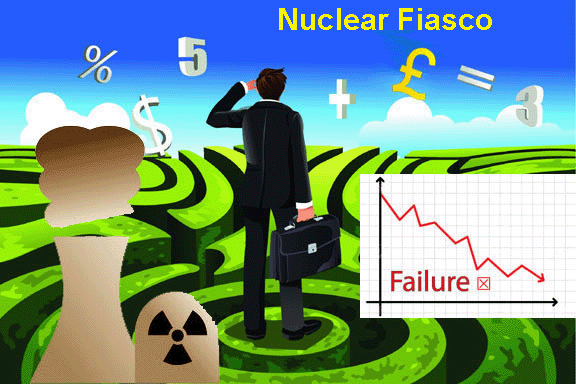
Nuclear power just can’t compete economically. The industry’s greatest problem at the moment is a recognition of this by investors, resulting in a capital strike. 

Even with generous government and taxpayer subsidies, it has become difficult or impossible to fund new reactors ‒ especially outside the sphere of China and Russia’s projects at home and abroad.

Who would bet tens of billions of dollars on nuclear power projects when the recent history in countries with vast expertise and experience has been disastrous?

In France, the latest cost estimate for the only recent reactor construction project, the 1.6 GW Flamanville EPR, increased seven-fold from €3.3 billion to €23.7 billion for just one reactor. Construction took 17 years. No reactors are currently under construction in France.

And this problem sits alongside the risk of Fukushima-scale disasters, the risk of weapons proliferation, the risk of attacks on nuclear plants and the risks from the intractable nuclear waste legacy. 

Some of these risks have already come to pass, as with the reality of attacks on nuclear plants in Ukraine.

Bankruptcy

In the US, one project in South Carolina, comprising two Westinghouse AP1000 reactors, was abandoned in 2017 after at least US$9 billion was spent. 

Westinghouse declared bankruptcy immediately after the cancellation of the South Carolina project, and its debts almost forced its parent company Toshiba into bankruptcy. All that remains is the nukegate scandal: an avalanche of legal action, including criminal cases.

The only other reactor construction project in the US ‒ the twin-reactor Vogtle project in the state of Georgia ‒ reached completion at a cost 12 times higher than early estimates. The final cost of the Vogtle project was at least US$17 billion per reactor. Completion was about seven years behind schedule.

No power reactors are currently under construction in the US. Thirteen reactors have been permanently shut down over the past 15 years.

Subsidies

The situation is just as bleak in the UK where there have been 24 permanent reactor shut-downs since the last reactor startup 30 years ago, in 1995.

The 3.2 GW twin-reactor Hinkley Point project in Somerset was meant to be complete in 2017 but construction didn’t even begin until 2018. The estimated completion date has been pushed back to as late as 2031. The latest cost estimate ‒ £23 billion per reactor ‒ is 11.5 times higher than early estimates. 

The UK National Audit Office estimates that taxpayer subsidies for the Hinkley Point project could amount to A$60.8 billion and the UK Parliament’s Public Accounts Committee said that “consumers are left footing the bill and the poorest consumers will be hit hardest.”

The estimated cost of the planned 3.2 GW twin-reactor Sizewell C project in the UK has jumped to nearly £40 billion – or £20 billion per reactor – which is twice the cost estimate in 2020.

Securing funding to allow construction to begin at Sizewell is proving to be difficult and protracted despite a new ‘Regulated Asset Base’ funding model which foists the enormous risk of enormous cost overruns onto taxpayers and electricity bill payers. Securing funding to complete the Hinkley Point project is also proving difficult.

Lessons

France, the US and the UK have vast nuclear expertise and experience. They all enjoy synergies between civil and military nuclear programs ‒ President Macron said in a 2020 speech that without nuclear power in France there would be no nuclear weapons, and vice versa.

All of the above-mentioned construction projects were or are on existing nuclear sites. All projects were or are long delayed and tens of billions of dollars over-budget.

Claims that potential nuclear newcomer countries, without any of those advantages, could build reactors quickly and cheaply are simply not credible.

This Author

Dr Jim Green, national nuclear campaigner with Friends of the Earth Australia and a member of the Nuclear Consulting Group.

A report expanding on these issues is posted at the EnergyScience Coalition websiteThe report is co-authored by Darrin Durant, associate professor in science and technology studies at the University of Melbourne, Jim Falk, professorial fellow in the school of geography, earth and atmospheric sciences at the University of Melbourne and emeritus professor at the University of Wollongong and Dr Jim Green.

March 12, 2025 Posted by | business and costs, spinbuster | Leave a comment

 US makes fresh push for World Bank to back nuclear power

 New administration wants Washington-based multilateral lender to help the west
compete with China and Russia.

The World Bank is facing renewed calls from
its biggest shareholder to drop a decades-old ban on funding nuclear power
to help the west compete with China and Russia in atomic diplomacy. French
Hill, chair of the House Financial Services Committee, has signalled that
the new US administration will continue to support the push to fund nuclear
projects just months ahead of a crucial decision on the contentious ban.

 FT 9th March 2025
https://www.ft.com/content/e5e497a3-0c61-46a2-9a50-91757e7f1a61

March 12, 2025 Posted by | business and costs, USA | Leave a comment

Coalition’s nuclear plan most expensive option for Australia, former US climate official says

Dr Jonathan Pershing, a former US special envoy for climate change and climate negotiator under Democratic presidents, says few countries building nuclear power plants

Adam Morton Climate and environment editor, Tue 11 Mar 2025 ,  https://www.theguardian.com/australia-news/2025/mar/11/coalitions-nuclear-plan-most-expensive-option-for-australia-former-us-climate-official-says

A longtime senior US climate official has weighed in on Australia’s energy debate, saying “very, very few people” internationally are building new nuclear power plants and, in most cases, the combination of solar and batteries delivers “higher reliability than gas”.

Dr Jonathan Pershing, a former US special envoy for climate change and climate negotiator under Democratic presidents, was in Sydney on Monday to speak at the city’s climate action week. Asked whether nuclear power as proposed by the Coalition was a viable option for Australia, he said “almost all the numbers that I have seen suggest that that’s a more expensive option than other choices”.

“What’s really interesting is the global community’s progress on nuclear with, frankly, a bigger head start than Australia’s had, because the ban here has been in place for a long time,” he told Guardian Australia.

“Very, very few people are building new nuclear.”

Pershing, who is program director at the William and Flora Hewlett Foundation, said even if Australia was able to overcome two immediate hurdles to nuclear energy – the legislated ban and an historical lack of public support for the technology – it then faced asking taxpayers to pay “holding costs” for 10 to 20 years when it could be building the same amount of generating capacity sooner.

“The cheapest one still globally, and I think here as well, is probably a combination of solar plus batteries – and that’s firm capacity, by the way,” he said. “If we look at the way that’s been analysed, the combination of the two [solar and batteries] gets you higher reliability than you get from gas.

He cited the example of the 40-year-old Diablo Canyon nuclear plant, in California. He said it was not likely to be replaced with a new nuclear generator once it reached the end of its life because of the cost. “They’ll do some life extensions, but they don’t think it is even plausible to imagine building new capacity there,” he said. “It’s just too expensive.”

The Coalition has claimed that its proposal to slow the rollout of renewable energy, extend the life of ageing coal plants, rely more on gas-fired power and later build publicly funded nuclear plants at seven sites, mostly after 2040, would be cheaper and more reliable than Labor’s promise of sourcing 82% of Australia’s electricity from renewable energy by 2030.

Peter Dutton has said the Coalition’s claim is supported by a report by consultants at Frontier Economics. But several other independent energy experts have argued the Coalition’s plan would, in relative terms, be likely to be more expensive for consumers over the next decade, at least, and less reliable and lead to substantially higher greenhouse gas emissions.

Pershing said a another problem for Australia would be training personnel for a nuclear power industry. Technical experts would have to be brought from overseas, which isn’t the case for other types of energy generation, he said.

That expertise could come from Canada, China, France or Russia, adding that in the case of Russia, “I’m not so convinced that that’s where you’d want to go”.

Pershing said the Trump administration’s anti-climate action stance would have an effect “but, I think, less than people might imagine”. He said the change in the US was an opportunity for Australia, “depending on how it chooses to engage”.

“The thing that’s most salient is that the rest of the world has decided that the least-cost solution to provide for more energy, particularly for electricity, is through some combination of renewables technologies plus batteries,” he said, citing International Energy Agency data showing it was the cheapest and faster solution “for about 80% of the world”.

“In much of the world, demand [for energy] is rising and you’re going to have to supply that demand from something. That means transition minerals, and that means technology, and that means investment. Those are places that the Australian economy is well positioned to deliver.”

Based on Trump’s language and early actions, the US was likely to slow the construction of wind and solar power and electric vehicles while increasing its demand for critical minerals, he said. But the US was “not the primary place where things are happening”.

“The place where things are happening is across Asia, broadly, with enormous continued demand from China, demand from India, demand from Indonesia and then actually others around the world who are building on that capacity,” he said.

Regarding fossil fuel exports, Pershing said the question for Australia was how it replaced the economic value of the coal and gas it sells with other exports, and what commitments it has made that were consistent with keeping global heating to less than 2C.

Australia could, for example, build a new mutually beneficial trade relationship with Japan where Australia produced and sold zero carbon steel and other metals. Pershing said Australia would also have to deal with the future of communities, such as in the Hunter Valley and its nearby port of Newcastle, that rely heavily on coal mining and coal exports.

“I think these are difficult questions, and they’re legitimate ones for the whole society to take up,” he said. “[A change] is coming. It’s not that it won’t come, but if we don’t manage it, it’ll have enormously negative consequences for communities, and I think that’s on the collective government, civil society and thought leadership to resolve and to address”.

March 11, 2025 Posted by | AUSTRALIA, business and costs | Leave a comment