The cost of America’s nuclear revival

On an industrial site on the shores of Lake Michigan, hundreds of workers
are racing to do something that has never been achieved before: restart a
US nuclear power plant scheduled to be decommissioned.
The revival is being
driven by power demand from artificial intelligence data centres and
reshoring of manufacturing, which is straining energy grids and pushing up
electricity prices. Big Tech is attracted to nuclear because it provides
[?] clean power that does not suffer from the intermittency that is a feature
of solar and wind energy.
Concerned that a power crunch could delay the
roll out of data centres, Microsoft and Google have signed long-term power
deals to support the reopening of shuttered nuclear plants in Iowa and
Pennsylvania.
President Donald Trump has also embraced atomic energy,
pledging to slash regulation and invest tens of billions of dollars to
reopen and build new fleets of reactors to provide the power needed to
“win” the global AI race. In May he set a goal of quadrupling US atomic
energy capacity by 2050, a massive undertaking that would involve building
hundreds of new plants.
And in October Washington inked an $80bn
partnership with private equity group Brookfield and reactor designer
Westinghouse, which aims to kick-start construction of eight large-scale
nuclear plants.
Last year private investors funnelled a record $3bn into
start-ups building smaller modular reactors, technologies that provide a
third or less of the power of large-scale nuclear plants. In 2024, Amazon
bought a stake in X-energy, a reactor developer with power supply
agreements to support the construction of 144 small modular reactors (SMRs)
in the US and UK.
But in an industry subject to high financing, regulatory
and reputational risks, not everyone is convinced the resurgence will be
sustained. Only a handful of mothballed nuclear plants in the US are
capable of being restarted, critics warn, and building large-scale reactors
from scratch is a highly complex undertaking prone to delays and cost
overruns in western nations.
None of the more than 50 SMRs under
development in the US has proved they are commercially viable yet nor
obtained an operating licence from the US Nuclear Regulatory Commission.
“The industry is boasting about how things are different now and they are
going to build fleets of new reactors, large and small,” says Edwin
Lyman, a physicist at the Union of Concerned Scientists and critic of
nuclear energy. “But the fundamentals haven’t changed: nuclear is more
expensive than other forms of energy and still poses a risk of accidents
and proliferation. You can’t wish these problems away, so I think
Trump’s so-called nuclear renaissance is built on a house of cards.”
FT 7th Jan 2026,
https://www.ft.com/content/9f6c4db1-559f-48e1-8c21-ac0bc1a1237c
Following U.S. coup in Venezuela, the CIA’s former station chief is advertising support for corporate exploitation of the country’s oil
The CIA’s former Venezuela chief of station, Enrique de la Torre, advertised that his lobbying firm, Tower Strategy, is supporting clients “rebuilding the country’s energy sector.”
Jack Poulson, Jan 04, 2026, https://jackpoulson.substack.com/p/following-us-coup-in-venezuela-the?utm_source=post-email-title&publication_id=1269175&post_id=183365776&utm_campaign=email-post-title&isFreemail=true&r=8cf96&triedRedirect=true&utm_medium=email
“We’re going to have our very large United States oil companies, the biggest anywhere in the world, go in and spend billions of dollars and fix the oil infrastructure — the badly broken oil infrastructure — and start making money for the country,” U.S. President Donald Trump declared on Saturday morning. The remarks followed a raid by the U.S. military’s elite commando team, Delta Force, which kidnapped Venezuelan president Nicolás Maduro and his wife, Cilia, using what Trump described as cover of darkness implied to have been provided by a U.S. cyberattack.
“It was dark, the lights of Caracas were largely turned off, due to a certain expertise we have,” Trump stated, before adding that, “It was dark, and it was deadly.” A series of photos from the “deadly” raid was quickly published by the wire service Reuters.
A special operations source was summarized by the investigative journalism outlet The High Side as stating that a “local source network … helped install jammers and other technical equipment on the ground, including beacons for airstrikes.” “The operational preparation of the battlespace was conducted by Task Force Orange, which throughout its history has been known by a host of cover names, including the U.S. Army Office of Military Support, Titan Zeus and the Intelligence Support Activity,” reported The High Side.
“We’re ready to stage a much larger second attack,” continued the U.S. president, before adding that, “we have a much bigger wave that we probably won’t have to do.”
A recent CIA chief of station in Venezuela, Enrique de la Torre, quickly took to the professional networking site LinkedIn to claim that his newly formed lobbying firm with former U.S. Ambassador to Venezuela James B. Story, Tower Strategy, was “already working with clients focused on democratic recovery, restored U.S. engagement, and the serious work of rebuilding the country’s energy sector.”
Tower Strategy has so-far publicly disclosed representing four companies: the controversial treasure-hunting company Odyssey Marine Exploration, the Singapore-based and Tether-affiliated cryptocurrency company Bitdeer, the solar supply chain company T1 Energy, and the international solar power export company UGT Renewables / Sun Africa.
De la Torre spent roughly the first ten months of 2025 working for the lobbying and foreign influence firm Continental Strategy, which is run by Carlos Trujillo, a former U.S. Ambassador to the Organization of American States with close ties to U.S. secretary of state Marco Rubio. The former CIA station chief’s partner at Tower Strategy, Ambassador Story, further launched the consulting firm Global Frontier Advisors alongside former Pentagon artificial intelligence chief Michael S. Groen in late July, with partner David Kol noted in the press release to be the CEO of Zodiac Gold Inc.
Former CIA director Michael R. Pompeo similarly told the media platform Fox & Friends on Monday that the U.S. Government’s seizures of Venezuela-linked oil tankers was the “right course of action” and that, in the event of the overthrow of the Maduro government, “American companies can come in and sell their products — Schlumberger, Halliburton, Chevron — all of our big energy companies can go down to Venezuela and build out an economic capitalist model.”
Trump further declared in his Saturday press conference that, “We’re going to run the country [Venezuela] until such time as we can do a safe, proper and judicious transition,” further stating that the members of his administration standing behind him in the press conference would be designated to lead the country in the short term. Venezuelan president Delcy Rodriguez, who was today sworn in as the new leader of the country following the U.S. kidnapping of President Maduro, was claimed by Trump to have effectively agreed to concede to U.S. demands in a recent conversation with U.S. secretary of state Marco Rubio.
Trump described his government as having “superseded” the longstanding U.S. policy of dominating the politics of the Western Hemisphere, known as the Monroe Doctrine, by “a lot.” “They now call it the Donroe Doctrine,” Trump stated, in reference to the now-popular phrase.
The U.S. Government’s claim to legal legitimacy of the kidnapping and broader coup have centered upon allegations that Maduro and his administration have been engaged in large-scale cocaine trafficking meant to destabilize the United States. A U.S. Drug Enforcement Administration (DEA) jacket was partially visible in the background of a photograph published by Trump on his social media platform Truth Social on Saturday, showing a blindfolded Maduro aboard the U.S. warship Iwo Jima.
Several U.S. State Department-backed media and lobbying organizations helped amplify the impact of unilateral U.S. sanctions over the past several years, effectively providing a form of international legal top cover for the Trump administration’s coup this morning. The most notable were perhaps Transparency International through its Venezuelan branch, the National Endowment for Democracy-backed media platform Connectas, and the CIA-affiliated think-tank Center for Advanced Defense Studies (C4ADS).
Brazilian president Luiz Inacio Lula da Silva condemned the unilateral U.S. kidnapping of Venezuela’s leader as having crossed “an unacceptable line,” while UN Secretary-General Antonio Guterres described the U.S. raid as setting “a dangerous precedent.”
Jan 04, 2026
Microsoft wants to resurrect Three Mile Island. It will never happen.
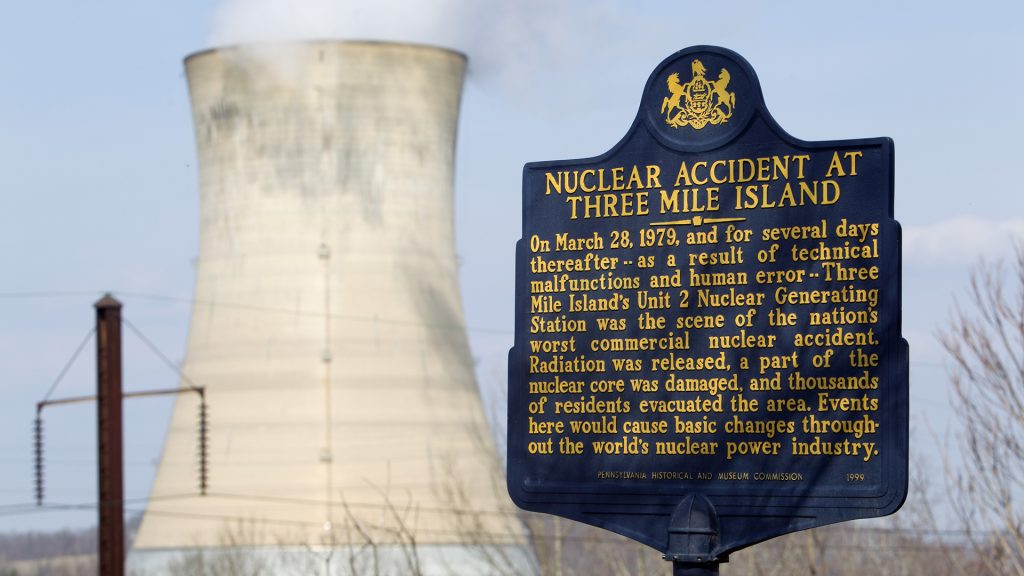
regulatory barriers are just the start. Nuclear reactors can’t be simply switched back on like a light bulb. They’re more like a car left undriven in a garage for too long with old oil, putrid gasoline, rat-chewed wires and a rusty frame — except that nuclear plants are infinitely more complicated than any car.
The Hill. by Neil Chatterjee, opinion contributor – 01/02/26
Microsoft and Constellation Energy have spent the last year trying to resurrect the Three Mile Island Nuclear power plant in Pennsylvania. The plant shut down in 2019 under economic pressure, after a separate part of the facility was decommissioned following a partial meltdown in 1979.
The effort is laudable, especially in light of Microsoft’s rapidly rising demand for [?] clean energy to fuel its artificial intelligence data centers. Unfortunately, it will never work. A fully shut-down nuclear plant has never been restarted in America for good reason: There are too many regulatory, material and logistical hurdles to overcome.
So far, Constellation Energy has painted a rosy picture. It originally stated the plant would be back online by 2028. Then, in early 2025, it revised its estimated opening date to 2027 following various inspections and the restoration of the plant’s water systems.
But traditional nuclear projects have a long history of going over budget and past schedule. A big factor is that the U.S. regulatory environment is not friendly to traditional nuclear power.
As the former head of the Federal Energy Regulatory Commission in the first Trump administration, I have seen firsthand how red tape can choke even the best-intentioned projects under goodwill regulators. Reactors that were permanently shut down must go through an extensive regulatory review process and request special exemptions for both their operations and use of radioactive fuel.
Constellation Energy and Microsoft have some solace in that the Department of Energy offered their project public support. But the Department of Energy isn’t the only player in town.
To ensure safety, Three Mile Island will also have to pass rigorous rounds of inspections, receive environmental approval and get the green light from the likes of the Environmental Protection Agency, the U.S. Nuclear Regulatory Commission, FERC and other state and local offices.
Even under a pro-business, pro-energy, regulation-slashing Trump administration, this is quite a gauntlet — especially because pro-nuclear government officials may nevertheless be hemmed in by existing laws and review processes outside of their control.
If regulatory barriers were the only holdup, perhaps there would be reasons to be more bullish on Three Mile Island. After all, President Trump has offered full support to nuclear energy and is committed to winning the energy-intensive AI race against China, red tape or not.
But regulatory barriers are just the start. Nuclear reactors can’t be simply switched back on like a light bulb. They’re more like a car left undriven in a garage for too long with old oil, putrid gasoline, rat-chewed wires and a rusty frame — except that nuclear plants are infinitely more complicated than any car.
At Three Mile Island, the reactor vessel could be brittle and fatigued. The core rods may need to be refurbished, the steam generators might have corroded, the turbines may break after not being rotated for years. And we know the cooling tower was partially removed as a fire hazard.
Replacing and restoring this equipment and more will not come cheaply. Constellation Energy originally projected it would take $1.6 billion to bring the facility back onto the grid, but that was before it fully cracked open the hood.
Then there are the basic economic realities of traditional reactors. Three Mile Island, Indian Point, Crystal River and others were shut down not because they were unsafe or failed to produce energy, but because maintenance was costly and they couldn’t keep up with the low price of other energy sources like natural gas.
As energy demand rises, those costs may become more comparable. But restarting Three Mile Island is still an expensive bet that will take years or decades of the right economic conditions to pay off.
And all of this does not even count the difficulties with accessing or creating a supply chain for nuclear fuel and long-unused components, integrating with the local electricity grid, hiring and training a highly competent workforce and overcoming the (unjustified) cultural stigma against a power plant that shares a name with the only major nuclear meltdown in American history…………………………… https://thehill.com/opinion/energy-environment/5667831-microsoft-constellation-nuclear-challenges/
How Corporations View (and Own) the U.S. Military
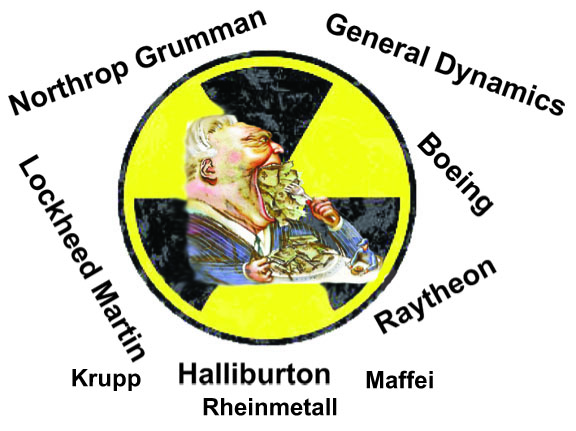
The most famous example in recent years is the 2023 NDAA, which contained several provisions regarding Taiwan. One provision allowed Taiwan to receive foreign military financing (FMF) from the U.S. government. FMF usually goes to independent countries, not breakaway provinces. FMF consists of loans and/or grants from the U.S. government for a country to purchase goods and services from the U.S. war industry.
And, just like that, the 2023 NDAA increased U.S. belligerence toward Beijing and made war more likely, profiting corporations all the while.
Corporate Capture Is Not Just Lobbying
Christian. Dec 27, 2025, https://thebusinessofwar.substack.com/p/how-corporations-view-and-own-the?utm_source=post-email-title&publication_id=1769284&post_id=179499875&utm_campaign=email-post-title&isFreemail=true&r=ln98x&triedRedirect=true&utm_medium=email
A for-profit corporation is a business organization designed to maximize short-term profit. The job of corporate executives is to maximize that profit, while the board of directors makes sure they do so.
The number one way that a corporation maximizes profit is by underpaying its workers.1 Workers create the profit, but don’t receive it. The executives funnel that profit to investors and themselves.
It goes without saying that the workers are not in charge. They are not allowed to make the business decisions in a given corporation. The executives make those decisions. There is no democracy in the workplace.
This is the situation in any industry, including the war industry.
What You Know about Corporate Capture
Big business works hard to influence the U.S. government. Corporate capture happens when it succeeds. Massive corporations work together to influence the government’s institutions and decision-making so that policy and regulation (or lack thereof) increase corporate profit instead of public well-being.
You likely know about think tanks, lobbying, and legal bribery.
- A think tank issues information favorable to those who fund it. Corporations and the super-rich fund think tanks, which create and inflate threats and justify the broad deployment of U.S. troops and sky-high military and intel budgets.
- Corporations and the super-rich hire lobbyists to swarm U.S. Congress and the Pentagon. Lobbyists even draft legislation, which they hand over to politicians.
- Corporations and the super-rich fund the two political parties and individual candidates. Once in office, elected officials pass laws favorable to these big business interests.
Think tanks, lobbying, and legal bribery are a powerful combination, but corporate capture is much more than that. War corporations (known as “military contractors” or “defense companies”) control the mind and the body in several ways.
Control the Mind
- Corporations regularly open (and close) offices and factories. Corporate executives promise a number jobs at a given location, particularly when seeking state and local tax breaks (though the fine print makes sure they never have to come through with all of those jobs or keep workers employed for the long run). Playing the “jobs” card is a way for big business and its politicians to pretend to care about workers.
- Legally designated as 501(c) nonprofits, trade groups (e.g., NDIA, AIA, AUSA) excel at networking active-duty military officers and industry officials, further blurring the line between government and corporate. Corporate viewpoints reign supreme at networking events, such as seminars, breakfasts, and arms fairs. (Additionally, 501(c)4 nonprofits are skilled at using dark money to influence politics.)
- Corporations help to craft policy and strategy on the inside. Corporations have had a hand in strategic initiatives and planning for Navy leadership, strategic plans and policy support for the Air Force, acquisition policy and program development for the Marine Corps, assessments and policy recommendations for the Deputy Assistant Secretary for Logistics, and more!
- The Pentagon gives corporations free labor from military officers. The corporations are allowed to propagandize these officers with recommendations about military policy, which the officers take with them when they return to their military unit.
- Greedy tycoons, including prominent war profiteers, sit on different boards that advise the Pentagon. The Defense Policy Board is one such grouping.
Control the Body
- The U.S. military doesn’t move, bomb, or communicate without corporations. In fact, it doesn’t do anything without corporate goods and services — from the largest aircraft carrier (itself a platform for innumerable goods and services) to the smallest microchip. Comprising the militant body, corporations gobble up more than half of the military budget. There still are uniformed troops (soldiers, sailors, airmen, Marines, and guardians), but they are merely users of corporate products… in the eyes of top executives.
- Corporate personnel are everywhere. These “contractors” even outnumber the troops in many military locations.
- The U.S. military isn’t allowed to repair most of its own equipment. Corporations must do it. This is just like corporations preventing farmers from repairing their tractors or you from putting a new battery into your old laptop.
- In the same vein, corporations do their best to hog the data pertaining to big-ticket weapons. The most famous example is the Lockheed Martin F-35 jet, the most expensive weapon of all time. The corporation owns the software code and the technical data for the jet. The U.S. military therefore is unable to operate, maintain, or upgrade the jet on its own.
- If you don’t own it, it’s not yours. Many corporations require the U.S. military to license their software, not purchase it outright. Licenses cover everything from accounting software and data integration software to products that monitor communications network and Oracle databases for a massive counterintelligence bureaucracy. Licensing is more profitable than a one-time sale.
- Capitalists move from industry to government and back again. When in government, they implement profit-over-people policies and they acquire knowledge to profit better whenever they leave government. (Top military officers also flock to war corporations in retirement, often becoming executives.)
Corporations don’t just run the show. Corporations are the show.
The Resulting Behavior
This corporate capture — mind and body — guarantees that government policy will help to maximize corporate profit.
The annual military policy bill known as the National Defense Authorization Act (NDAA) is crafted in the environment described above. Corporate lobbyists and U.S. Congress pack the NDAA with section after section designed to increase corporate profit.
Year after year, the NDAA requires the Pentagon to:
1. Train and arm foreign militaries or paramilitary groups. This increases arms sales and can give the Pentagon some influence over those being trained/armed.
A few examples of many include: training Iraqi forces and Kurdish Peshmerga (2024 NDAA); expanding the training of Eastern European “national security forces” (2025 NDAA); and reinforcing Lebanese military training and equipping (2026 NDAA).
2. Maintain or expand the U.S. military’s presence around the world.
The hundreds of U.S. military bases worldwide increase corporate sales — remember, corporations comprise most U.S. military activity2 — and allow the Pentagon to further bully governments/groups that chart an independent foreign policy or resist corporate domination of their land and resources.
No region is off-limits.
For example, the Pacific Deterrence Initiative, established through the 2021 NDAA and enhanced in all subsequent ones, is the main way the Pentagon militarizes the Pacific. It focuses on building up military infrastructure in the Pacific, purchasing and placing weaponry there, expanding military training and exercises there, and fostering and co-opting regional leaders.
3. Spend money on goods and services made by U.S. war corporations.3 For example, section 1640 of the 2024 NDAA required the Pentagon to establish a nuclear sea-launched cruise missile program. (Sections 1513 of the 2025 NDAA and 1633 of the 2026 NDAA refined the program’s goals.) Guess which corporations the military will pay to develop this weapon!
4. Assess what the official enemies are doing in a given region.
- Assess, for example, what Moscow and Beijing are up to in Latin America and the Caribbean (2024 NDAA, section 7342).
- Devise a strategy for “exposing, and, as appropriate, countering” China’s “malign activities” (2025 NDAA, section 1254).
- Evaluate [alleged] fentanyl trafficking by the Chinese government (2026 NDAA, section 8313) and plan to “respond” to China’s “global” military bases (section 8367).
These are just a few examples.
The assessments are then used to create fear and hype up such “threats.” Look out! [Country you’re taught to fear] is doing X, Y, and Z in [region U.S.-based capitalists want to dominate]! Bigger budgets follow. More money for war corporations.
5. Spend tax dollars on researching more technology for war and espionage. For example, the past three NDAAs have mandated research in artificial intelligence, microelectronics, nuclear weaponry, and much more. Industry does the research. And charges a pretty penny for it. (Meanwhile, corporations don’t use much of their own profit for R&D. Profit goes to execs and investors.)
The most famous example in recent years is the 2023 NDAA, which contained several provisions regarding Taiwan. One provision allowed Taiwan to receive foreign military financing (FMF) from the U.S. government. FMF usually goes to independent countries, not breakaway provinces. FMF consists of loans and/or grants from the U.S. government for a country to purchase goods and services from the U.S. war industry.
And, just like that, the 2023 NDAA increased U.S. belligerence toward Beijing and made war more likely, profiting corporations all the while.
Every subsequent NDAA increased the likelihood of all-out war with China. The 2026 NDAA, for example, further weaponized Taiwan by $1 billion, accelerated U.S.-Taiwan drone and counter-drone programs, encouraged the Pentagon to invite Taiwan to the massive annual military exercise known as RIMPAC, and more.
Full-court Press
Corporate capture is thorough.
It is lobbying; funding political parties and campaigns; establishing and funding think tanks; lying about jobs; using trade groups to imbricate military and industry; crafting policy and strategy on the inside; using boards to advise the Pentagon; flooding the military with corporate goods, services, and personnel; hogging data and requiring licensing; occupying the top Pentagon positions; and propagandizing military officers directly.
The troops are users of corporate goods and services.
Military bases are avenues of corporate profit.
That is how big business sees the U.S. military. And it has achieved its vision.
Christian Sorensen is a researcher focused on the U.S.-based corporations profiting from war. A U.S. Air Force veteran, Sorensen is associate director of the Eisenhower Media Network (EMN), a group of military and intel veterans who disagree with U.S. foreign policy and believe a better world is possible.
Chris Hedges: Profiting From Genocide
SOTT, Chris Hedges, MintPressNews, Wed, 02 Jul 2025
Chris Hedges breaks down a damning new UN report by Francesca Albanese exposing how tech giants, arms manufacturers, banks, and universities are profiting from Israel’s genocide of Palestinians.
War is a business. So is genocide. The latest report submitted by Francesca Albanese, Special Rapporteur on the Occupied Palestinian Territories, lists 48 corporations and institutions, including Palantir Technologies Inc., Lockheed Martin, Alphabet Inc., Amazon, International Business Machine Corporation (IBM), Caterpillar Inc., Microsoft Corporation and Massachusetts Institue of Technology (MIT), along with banks and financial firms such as Blackrock, insurers, real estate firms and charities, which in violation of international law are making billions from the occupation and the genocide of Palestinians.
The report, which includes a database of over 1,000 corporate entities that collaborate with Israel, demands these firms and institutions sever ties with Israel or be held accountable for complicity in war crimes.
“It describes Israel’s ‘forever-occupation’ as the ideal testing ground for arms manufacturers and Big Tech – providing significant supply and demand, little oversight, and zero accountability – while investors and private and public institutions profit freely.”
The post-Holocaust industrialists’ trials and the South African Truth and Reconciliation Commission laid the legal framework for recognizing the criminal responsibility of institutions and businesses that participate in international crimes. This new report makes clear that decisions made by the International Court of Justice place an obligation on entities “to not engage and/or to withdraw totally and unconditionally from any associated dealings, and to ensure that any engagement with Palestinians enables their self-determination.”
Albanese told me:
The report lambasts corporations for “providing Israel with the weapons and machinery required to destroy homes, schools, hospitals, places of leisure and worship, livelihoods and productive assets, such as olive groves and orchards.”
The Palestinian territory, the report notes, is a “captive market” because of Israeli-imposed restrictions on trade and investment, tree planting, fishing and water for colonies. Corporations have profiteered from this “captive market” by “exploiting Palestinian labour and resources, degrading and diverting natural resources, building and powering colonies and selling and marketing derived goods and services in Israel, the occupied Palestinian territory and globally.”
“Israel gains from this exploitation, while it costs the Palestinian economy at least 35 per cent of its GDP. Banks, asset management firms, pension funds and insurers have “channeled finance into the illegal occupation,” the report charges. In addition:
“Universities — centres of intellectual growth and power — have sustained the political ideology underpinning the colonization of Palestinian land, developed weaponry and overlooked or even endorsed systemic violence, while global research collaborations have obscured Palestinian erasure behind a veil of academic neutrality.
“Surveillance and incarceration technologies have evolved into tools for indiscriminate targeting of the Palestinian population. Heavy machinery previously used for house demolitions, infrastructure destruction and resource seizure in the West Bank have been repurposed to obliterate the urban landscape of Gaza, preventing displaced populations from returning and reconstituting as a community.
“The military assault on the Palestinians has also provided testing grounds for cutting-edge military capabilities: air defense platforms, drones, targeting tools powered by artificial intelligence and even the F-35 programme led by the United States of America. These technologies are then marketed as ‘battle proven’.”
Since 2020, Israel has been the eighth largest arms exporter in the world. Its two biggest weapons companies are Elbit Systems Ltd and the state-owned Israel Aerospace Industries Ltd (IAI). It has a series of international partnerships with foreign weapons firms, including “for the F-35 fighter jet, led by United States-based Lockheed Martin.”
“Components and parts constructed globally contribute to the Israeli F-35 fleet, which Israel customizes and maintains in partnership with Lockheed Martin and domestic companies.”
The report reads:
“Since October 2023, F-35s and F-16s jets have been integral to equipping Israel with the unprecedented aerial power to drop an estimated 85,000 tons of bombs, much of it unguided, to kill and injure more than 179,411 Palestinians and obliterate Gaza.
“Drones, hexacopters and quadcopters have also been omnipresent killing machines in the skies of Gaza. Drones largely developed and supplied by Elbit Systems and Israel Aerospace Industries have long flown alongside fighter jets, surveilling Palestinians and delivering target intelligence. In the past two decades, with support from these companies and collaborations with institutions such as the Massachusetts Institute of Technology, drones used by Israel acquired automated weapons systems and the ability to fly in swarm formation.”
Japan’s FANUC companies sell automation products and provide robotic machinery for weapons production lines, including for IAI, Elbit Systems and Lockheed Martin. Shipping companies such as the Danish A.P. Moller — Maersk A/Stransport components, parts, weapons and raw materials, sustaining a steady flow of United States-supplied military equipment post-October 2023.”
There was a “65 per cent surge in Israeli military spending from 2023 to 2024 – amounting to $46.5 billion, one of the highest per capita worldwide.” This “generated a sharp surge in their annual profits, while foreign arms companies, especially producers of munitions and ordnance, also profit.”
At the same time, tech companies have profited from the genocide:
“While providing dual-use infrastructure to integrate mass data collection and surveillance, while profiting from the unique testing ground for military technology offered by the occupied Palestinian territory, they enhance carceral and surveillance services, from closed-circuit television (CCTV) networks, biometric surveillance, advanced tech checkpoint networks, ‘smart walls’ and drone surveillance, to cloud computing, artificial intelligence and data analytics supporting on-the-ground military personnel.”
“Israeli tech firms often grow out of military infrastructure and strategy,” the report reads, “as the NSO Group, founded by ex-Unit 8200 members, did. Its Pegasus spyware, designed for covert smartphone surveillance, has been used against Palestinian activists and licensed globally to target leaders, journalists and human rights defenders. Exported under the Defense Export Control Law, NSO group surveillance technology enables ‘spyware diplomacy’ while reinforcing State impunity.”
IBM, whose technology facilitated Nazi Germany’s generation and tabulation of punched cards for nationalcensus data, military logistics, ghetto statistics, train traffic management and concentration camp capacity, is once again a partner in this current genocide.
It has operated in Israel since 1972. It provides training for Israeli military and intelligence agencies, especially Unit 8200, which is responsible for clandestine operations, the collection of signal intelligence and code decryption, along with counterintelligence, cyberwarfare, military intelligence and surveillance.
“Since 2019,IBM Israelhas operated and upgraded the central database of the Population and Immigration Authority, enabling collection, storage and governmental use of biometric data on Palestinians, and supporting the discriminatory permit regime of Israel,” the report notes.
Microsoft, active in Israel since1989, is “embedded in the prison service, police, universities and schools — including in colonies. Microsoft has been integrating its systems and civilian tech across the Israeli military since 2003, while acquiring Israeli cybersecurity and surveillance start-ups.”
“As Israeli apartheid, military and population-control systems generate increasing volumes of data, its reliance on cloud storage and computing has grown,” the report reads. “In 2021, Israel awarded Alphabet Inc. (Google) and Amazon.com, Inc. a $1.2 billion contract (Project Nimbus) — largely funded through Ministry of Defense expenditure — to provide core tech infrastructure.”
Microsoft, Alphabet Inc., and Amazon“grant Israel virtually government-wide access to their cloud and artificial intelligence technologies, enhancing data processing, decision-making and surveillance and analysis capacities.”
The Israeli military, the report points out, “has developed artificial intelligence systems such as ‘Lavender,’ ‘Gospel’ and ‘Where’s Daddy?’ to process data and generate lists of targets, reshaping modern warfare and illustrating the dual-use nature of artificial intelligence.”
There are “reasonable grounds,” the report reads, to believe that Palantir Technology Inc., which has a long relationship with Israel, “has provided automatic predictive policing technology, core defence infrastructure for rapid and scaled-up construction and deployment of military software, and its Artificial Intelligence Platform, which allows real-time battlefield data integration for automated decision-making.”
Palantir’s CEO in April 2025 responded to accusations that Palantir kills Palestinians in Gaza by saying, “mostly terrorists, that’s true.”
The report reads:
“Civilian technologies have long served as dual-use tools of settler-colonial occupation. Israeli military operations rely heavily on equipment from leading global manufacturers to ‘unground’ Palestinians from their land, demolishing homes, public buildings, farmland, roads and other vital infrastructure. Since October 2023, this machinery has been integral to damaging and destroying 70 per cent of structures and 81 per cent of cropland in Gaza.”
Caterpillar Inc. has for decades provided the Israeli military with equipment used to demolish Palestinian homes, mosques, hospitals as well as “burying alive wounded Palestinians,” and killed activists, such as Rachel Corrie………………………………………………………………………………………………………………………………………………………………………………………………………………………………………………
Genocide requires a vast network and billions of dollars to sustain it. Israel could not carry out its mass slaughter of the Palestinians without this ecosystem.
These entities, which profit from industrial violence against the Palestinians and mass displacement, are as guilty of genocide as the Israeli military units decimating the people in Gaza.
They too are war criminals, They too must be held accountable.
Comment: Israel is a major network operation…locking in every necessity with redundancy and delivery…no stone unturned, no challenge without guarantees and framework. It is jaw-dropping…really. https://www.sott.net/article/503682-Chris-Hedges-Profiting-from-genocide
Turkey Makes Another $9 Billion Bet on Russian Nuclear Power
By Julianne Geiger – Oil Price, Dec 26, 2025,
Turkey just took another very large, very deliberate step deeper into Russia’s energy orbit — and this time it comes with a $9 billion price tag.
Ankara says that Russia has provided $9 billion in new financing for the Akkuyu nuclear power plant, Turkey’s first-ever nuclear facility, which is being built by Russia’s state-owned Rosatom on the Mediterranean coast. According to Energy Minister Alparslan Bayraktar, the bulk of that money will be deployed in 2026 and 2027, with as much as $4–5 billion flowing next year alone. The plant is now expected to come online in 2026, after multiple delays.
While this may look like a straightforward infrastructure update, it’s more about how deeply intertwined Turkish and Russian energy interests remain, despite years of flowery talk about diversification and reduced dependence on Moscow.
Akkuyu has always been different from Turkey’s other energy ambitions. It is a build-own-operate project. This means that Rosatom shoulders the financial risk, owns the plant, and will operate it for decades. That structure is precisely why Akkuyu survived when Turkey’s second nuclear project at Sinop collapsed under runaway costs and political complexity. Only Russia stayed……………………………………. https://oilprice.com/Latest-Energy-News/World-News/Turkey-Makes-Another-9-Billion-Bet-on-Russian-Nuclear-Power.html
Trump Floundering Efforts to Shore Up US Hegemony
Michael Hudson The Unz Review, December 20, 2025
The National Security Strategy’s Drive to Shed the Costs of Imposing Its U.S. Unipolar Empire
The one area in which the National Security Strategy makes a claim to be realistic is to recognize that the United States cannot directly be seen to impose its control by force. This task is to be delegated more to client oligarchies and their governments, by assigning responsibility (and most important, the military costs) on a regionwide basis along lines similar to how the European Union’s foreign and domestic political policies have been made subordinate to NATO Cold War policy controlled by the United States.
Replacing at least the anti-Russian rhetoric of Biden’s and the EU’s support for the war against Russia, the NSS proposes dividing the world into spheres of influence for the major regional powers: the United States (monopolizing control of all of Latin America and the Caribbean for itself), Russia (with its Central Asian and other former Soviet republics, including what formerly was eastern Ukraine), and China over mainland Asian neighbors. A Pacific NATO-like arrangement to be shepherded (and financed) by Japan, with India as the wild card. The EU under NATO are dismissed as a waning power with little influence.
This plan is not really a division of spheres of regional influence at all, in the sense that World War II’s 1945 Yalta conference was. It does carve out a uniquely U.S. control over Latin America and the Caribbean. European and Asian countries are to keep away from investing in the major resources of these countries.[1] This is Trump’s travesty of the Monroe Doctrine. That doctrine called for a reciprocity with foreign countries: Europe would stay out of political control of Latin American countries, and the United States would not interfere in European affairs. But U.S. officials had no problem with the newly independent Latin American countries going deeply into debt to British and other foreign creditors who imposed debt dependency, much as France did with Haiti as the price of its buying its political freedom to abolish domestic slavery. The effect was for many of these countries obtained political freedom from colonialism only to fall into debt dependency. But the Monroe Doctrine was only concerned with direct political and military control.
The major U.S. violation of the original Monroe Doctrine has been to maneuvere to control Eurasian affairs. It has meddled in European elections, most notably in Italy and Greece after World War II by mounting right-wing challenges to their rising Communist parties. And it has ringed Eurasia with U.S. military bases and mounted regime change coups. The effect is that U.S. diplomats have been trying for eighty years to turn the entire world into a unipolar U.S. region of influence.
But the military and related costs of this effort have been largely responsible for the U.S. balance-of-payments deficit since the Korean War, and also the U.S. domestic budget deficit (at least until the neoliberal tax cuts on the revenue side of the budget). These costs are to be shifted onto foreign countries.
The costs of maintaining the U.S. diplomatic empire must be assigned on a region-wide basis under the leadership of particularly loyal U.S. proxies, much as is the case with NATO countries Europe under British, French and German dominance.
In Asia, U.S. diplomacy relies on the Quad (Japan, Australia, India and the United States) along with friendly governments in South Korea and the Philippines to prevent their economies and those of China and other countries in the region from obtaining oil and gas from Russia, Iran and Venezuela to install military basis ringing China. Much as U.S. neocons are trying to convince NATO allies that these adversaries pose an imminent military threat, Asian countries are being mobilized to support a separatist political movement in Taiwan.
………………………………………………………………………………………………………………………………………………………………………………………………………………………………… Trump’s drive to attract foreign financing to the U.S. debt market via cryptocurrency
In seeking to counter other countries’ moves away from the dollar, the most recent U.S. tactic is to try to surreptitiously get other countries to hold dollars by persuading them to invest in stablecoins – cryptocurrency that is invested in U.S. Treasury securities, not bonds of China or other countries…………………………………….
And a major aim of cryptocurrencies is, of course, to facilitate tax evasion and criminal activities through libertarian “privacy” (that is, secrecy from public authorities) and criminal management of such currencies themselves. The Trump Administration’s support for cryptocurrencies actually is a new version of the U.S. drive to promote offshore banking centers in the 1960s…………………………………………………………………………………………. https://www.unz.com/mhudson/trump-floundering-efforts-to-shore-up-us-hegemony/
Politico: Despite the war, France will build nuclear fuel in Germany with the help of a Russian company
Can the ambitious plan to phase out Russian nuclear fuel succeed with Russian expertise? Paris believes it can and is pressing Berlin for approval
Protothema, Newsroom, December 22, 2025
Takeawaysby Protothema AI
- A Franco-Russian joint venture plans to produce nuclear fuel components in Lingen, Germany, operated by Framatome
- The project faces scrutiny from German authorities due to security concerns and potential espionage risks
- Framatome is lobbying German officials for approval, arguing it is a European solution despite Russian components
- German regional authorities remain skeptical, citing past energy vulnerabilities with Russia
- A final decision on the Lingen plant’s approval is expected in the coming weeks.
A triangular relationship that is close to becoming a reality, despite the war in Ukraine and the sanctions imposed on Russia, will help France produce nuclear fuel for its reactors.
The Franco-Russian joint venture will manufacture nuclear fuel rods and other components in Lingen, Germany.

The plant will be operated by Framatome, a subsidiary of the French state-owned energy company EDF, using Russian components supplied by TVEL, part of the Kremlin-controlled nuclear giant Rosatom. TVEL will not be directly involved in the operation of the plant but will provide the Russian-made components necessary for producing the nuclear fuel.
The plant will not supply electricity directly; it will focus solely on producing nuclear fuel.
Framatome is putting intense pressure on the German authorities to approve the project, mobilizing the French government at the highest levels. The company argues that what is good for Framatome is good for Europe.
However, as Politico points out, the project comes at a time when the EU is attempting to ban all energy imports from Russia in response to Russia’s invasion of Ukraine. At the same time, the plan raises concerns among state and federal authorities about potential espionage and other security risks.
The French-Russian joint venture has not yet received approval from Berlin. A final decision is expected in the coming weeks, but no timetable has been set……………………………………………………
France–Russia Nuclear Cooperation
The cooperation between Framatome and Rosatom began in 2021, when the two parties signed a long-term partnership and established a joint venture in which Framatome owns 75% and TVEL 25%……………….. https://en.protothema.gr/2025/12/22/politico-despite-the-war-france-will-build-nuclear-fuel-in-germany-with-the-help-of-a-russian-company/
EU launches inquiry into Czech funding plan for new nuclear
WNN, Tuesday, 23 December 2025
The European Commission “has doubts” that the proposed Czech funding plan for its proposed new nuclear units “is fully in line with EU State aid rules”.
In April last year the European Commission (EC), which is the executive arm of the European Union (EU), approved the funding plan for a single new nuclear reactor at the Dukovany nuclear power plant site in the Czech Republic.
In July last year Korea Hydro & Nuclear Power (KHNP) was selected for the project, and in October this year the Czech Republic officially notified the EC it had expanded its plans to two new nuclear units, each with a capacity of 976 MWe
What is the funding plan?
The EC says: “Czechia plans to support the construction of the new nuclear units through three measures: a low-interest repayable State loan of an initial amount currently estimated between EUR23 billion (USD27.1 billion) and EUR30 billion, which will cover the full construction costs; a two-way contract for difference with a proposed duration of 40 years to ensure stable revenues for the nuclear power plant; and a mechanism to protect EDU II in case of policy changes and adverse impacts, to address the risk arising from the longevity of exposure to policy changes.”
EDU II is Elektrárna Dukovany II, a company set up to develop and operate the new nuclear units, which is owned by the Czech state (80%) and the Czech Republic’s nuclear power plant operator ČEZ (20%).
The contract for difference effectively means that if electricity prices are below the agreed level, the nuclear project will receive a subsidy to make it up to the agreed price, and if electricity prices are above the agreed price, the nuclear project would pay money back to the government…………………………………………………..
The EC has doubts about whether it is fully in line with EU State aid rules and wants to ensure that “no more aid than necessary is ultimately granted. In particular, the Commission has doubts on whether the proposed package achieves an appropriate balance between reducing risks to enable the investment and maintaining incentives for efficient behaviour, while avoiding excessive risk transfer to the State”.
It also wants to look at the impact of the State aid measures on competition in the market “in particular, the Commission has concerns that several essential design elements of the CfD remain insufficiently specified, preventing the Commission from fully assessing whether the mechanism maintains efficient operational and maintenance incentives”.
…………………………………….. Asked about the status of any investigation into foreign state aid, a European Commission spokesperson told World Nuclear News on Tuesday: “The Commission’s assessment of a complaint by EDF under the Foreign Subsidies Regulation regarding the award of a tender to KNHP is ongoing. We do not comment on ongoing investigations.” https://www.world-nuclear-news.org/articles/eu-launches-inquiry-into-czech-new-nuclear-funding-plan
Sweden’s Vattenfall Seeks State Funding for New Nuclear Reactors

By Michael Kern – Dec 23, 2025, https://oilprice.com/Latest-Energy-News/World-News/Swedens-Vattenfall-Seeks-State-Funding-for-New-Nuclear-Reactors.html
Sweden’s power giant Vattenfall announced on Tuesday it is applying for state aid for an investment in small modular reactors (SMRs) as part of a plan by industrial giants to bet on new nuclear power in the country.
Last month Sweden’s biggest industrial firms signed an agreement with Vattenfall to become shareholders in the power giant’s new company, Videberg Kraft AB, which plans to build SMRs in the country.
One of Europe’s top electric utilities, Vattenfall, created Videberg Kraft AB in April this year as a separate entity to be able to apply for government support.
Now the company and the industry organization, Industrikraft, plan joint investment and collaboration enabling the development of new nuclear power in Sweden.
Industrikraft, whose members include Volvo Group, Saab, Alfa Laval, and Hitachi Energy, will become a shareholder in Videberg Kraft with a 20-percent stake.
The government has previously announced that the state also intends to become a shareholder in the new company.
The Swedish government moved to phase out nuclear power completely in 1980, but that decision was reversed by Parliament in 2010. Five years later, four aging reactors were shut down. Six of 12 reactors remain in operation in Sweden today.
The country is now betting on SMRs to expand its nuclear fleet as Stockholm seeks to further reduce emissions with low-carbon 24/7 energy.
Sweden has tweaked its renewable energy policy, which had called for 100% renewable electricity by 2040, changing the terminology to “100% fossil-free” electricity, paving the way for the construction of more nuclear power plants.
Now Videberg Kraft’s CEO Desirée Comstedt has submitted an application for financing and risk-sharing to the Swedish Government.
When an agreement between the state and Videberg Kraft has been reached, the government may initiate a formal state aid process with the European Commission, Vattenfall said.
Videberg Kraft is planning a project with either five BWRX-300 reactors from GE Vernova Hitachi or three reactors from Rolls-Royce SMR, which will provide a total nuclear power output of about 1,500 MW. There is currently an intensive evaluation process of the two remaining suppliers, and a decision on the final supplier is planned for 2026.
Studsvik Calls Extraordinary Meeting to Add UK Nuclear Executive Julia Pyke to Board
Tipranks – Tue Dec 23, 2025
Studsvik AB ( (SE:SVIK) ) has issued an announcement.
Studsvik AB has called an extraordinary general meeting for January 23, 2026, in Stockholm, inviting shareholders to resolve on changes to the board of directors, including registration, proxy and attendance procedures in line with Swedish corporate governance rules. The nomination committee proposes expanding the board to seven members and appointing UK nuclear executive Julia Pyke, noted for her leadership of the Sizewell C and involvement in Hinkley Point C projects, with her remuneration aligned pro rata to the levels set at the 2025 annual general meeting, underscoring Studsvik’s strategic ambition to strengthen its board with international nuclear infrastructure expertise……… https://www.theglobeandmail.com/investing/markets/markets-news/Tipranks/36764331/studsvik-calls-extraordinary-meeting-to-add-uk-nuclear-executive-julia-pyke-to-board/
“Make Iran like Gaza”: Chilling insider view from Israel weapons expo
by Michael West and Stephanie Tran | Dec 23, 2025 , https://michaelwest.com.au/make-iran-like-gaza-chilling-insider-view-from-israel-weapons-expo/
How to make ‘Iran like Gaza’ and describing the genocide in Palestine as a weapons testing laboratory. Michael West and Stephanie Tran with the inside story of a weapons expo.
Inside a conference hall at Tel Aviv University, executives, generals and venture capitalists took turns boasting about “combat-proven” Israeli weapons and surveillance systems.
At Defense Tech Week 2025, senior figures from Israel’s defence establishment openly described how the genocide in Gaza has accelerated weapons development, unlocked new export markets and reshaped Israel’s global identity as a defence powerhouse.
Less than 70 kilometres from where the conference was held, Gaza has been reduced to rubble. More than two years of genocide, indiscriminate bombardment and mass displacement have left at least 70,000 Palestinians dead and 90% of the Strip destroyed.
Gaza weapons lab
Defense Tech Week advertises itself as a forum connecting startups, investors, defence primes and policymakers. According to its organisers, the event showcases “practical lessons from Israel’s cutting-edge solutions that are addressing global security challenges”.
MWM has obtained the footage with Drop Site News in the US.
The speakers resembled a roll call of Israel’s military-industrial complex with senior Israeli military leadership, officials from the Ministry of Defense, and executives from Israel’s largest arms manufacturers, including Israel Aerospace Industries, Elbit Systems and Rafael Advanced Defense Systems.
Speaker after speaker framed the war as a lucrative opportunity for weapons development and sales.
“These are not lab projects or PowerPoint concepts,” said Amir Baram, Director General of Israel’s Ministry of Defense.
“They are combat-proven systems.”
Gili Drob-Heistein, Executive Director at the Blavatnik ICRC and Yuval Ne’eman Workshop for Science, Technology and Security, described defence technology as Israel’s “next big economic engine”.
Israel is known for being the startup nation,” she said. “We all believe that defence tech has the potential to become the next big economic engine for Israel.”
She credited what she called Israel’s “technological leadership” and “out of the box thinking” for results “we’ve seen recently on the battlefield.”
For Boaz Levy, President and CEO of Israel Aerospace Industries, the war has presented an opportunity to showcase the company’s wares with IAI’s weapons being deployed in Gaza, Iran and Yemen.
“The war that we faced in the last two years enabled most of our products to become valid for the rest of the world,” he said.
“Starting with Gaza and moving on to Iran and to Yemen, I would say that many, many products of IAI were there.”
Real-time combat data
Elbit Systems CTO Yehoshua (Shuki) Yehuda spoke about deploying autonomous systems and mass data collection in real-time combat. He showed a video demonstrating how an AI-powered system developed by Elbit is used to select and track targets “less than a pixel.”
“All of it is done by collecting the data,” he said, describing the ability to track “small targets in a very tough background… less than a pixel.”
He explained that these systems were developed in collaboration with the IDF and refined through continuous data collection during military operations.
Profiting from genocide
The speakers were candid about the scale of the financial opportunity presented by genocide.
According to Amir Baram, more than 300 startups are now working with Israel’s military research directorate, MAFAT, with 130 joining during the current war alone. In 2024, he said, the ministry invested 1.2 billion shekels in defence startups.
Baram oriented Israel’s surge within the global boom in defence spending.
“Global defence spending reached $2.7 trillion in 2024,” he said, pointing to the increase in expenditure from NATO countries and US defence spending exceeding $1 trillion.
“By partnering with Israel, you gain access to our advanced technologies as well as the valuable insights and experience that make our system truly effective. The world has chosen to partner with Israel because trust in defence must be built on credibility, performance, and shared strategic purposes.”
In 2024 alone, Baram said, Israel signed 21 government-to-government defence agreements worth billions, positioning Tel Aviv as the world’s third largest defence tech hub.
At Israel Aerospace Industries, Levy said 80% of the company’s activity is export-oriented.
“IAI as of now has $27 billion of new orders,” he said, with annual sales of around $7 billion.
Elbit Systems reported $8 billion in annual revenue and a $25 billion backlog, with more than 20,000 employees worldwide.
‘Make Iran like Gaza’
The speakers were explicit about how techniques developed and used in Gaza could be deployed in future conflicts.
Dr Daniel Gold, head of Israel’s Directorate of Defense Research and Development, described scenarios in which Israel would replicate Gaza style control in Iran.
“Once we have operational freedom in the air,” he said, “we inject inside… our UAV fleet controlling Tehran and controlling Iran – which means we make Iran like Gaza.”
Gold highlighted the practicality of “dual use” technology which have both civilian and military applications.
“A swarm of drones that control the traffic in Tel Aviv can be the same swarm of drones that control in Gaza,” he said.
During his presentation, video footage was shown of a semi-autonomous drone targeting an individual inside an apartment building, imagery that bears striking resemblance to documented Israeli strikes that have killed civilians in residential homes, including the attack that killed Dr Marwan al-Sultan and his family.
“It is very simple to operate,” Gold explained. “Semi-autonomous.”
Mounting pressure
In her report on the “Economy of Genocide”, UN Special Rapporteur for Palestine, Francesca Albanese stated that “for Israeli companies such as Elbit Systems and Israel Aerospace Industries, the ongoing genocide has been a profitable venture.”
the report found.
Two years into Israel’s livestreamed genocide in Gaza, execs appear to be acutely aware of the mounting international pressure.
Shlomo Toaff, an executive at RAFAEL Advanced Defense Systems, lamented that “Israel is experiencing a boycott.”
“I think Israel is experiencing a boycott,” he said, citing the company’s exclusion from the Paris Air Show last year. “This is something that we have to take into account when we’re talking about what we’re doing here in the industry.”
Instead of buying Venezuelan heavy crude…Trump just steals it
Walt Zlotow West Suburban Peace Coalition Glen Ellyn IL ,22 Dec 25
The US desperately needs Venezuelan heavy crude oil to run its Gulf Coast refineries. But 20 years of failed US sanctions to overthrow last 2 Venezuelan socialist presidents has caused Venezuela to pivot away from US petro dollars to sell their crude to China and Russia, and pay for it in Yuan and Rubles.
The rest of the world is looking at tiny (GDP, defense, population) Venezuela and realizing its cool to push back against America’s weaponized financial system that’s been holding them hostage to petro dollars for half a century. If Venezuela can do it so can many others, weakening America’s grip on them while undermining the US economy. And they are.
The dollar has fallen from 90% of energy transactions to 60% since 2000 and will likely be under 50% by 2035. As petrodollar usage goes bye bye, US debt will sour, interest rates balloon, presaging tough times ahead for the world’s second largest economy.
Maybe that’s why Trump has pivoted away from just sanctions to mass murder of small unarmed boats off Venezuela, seizing two oil tankers and threatening invasion. But Venezuela’s new economic pals China and Russia are rushing in to prop up Maduro’s regime which has essentially told Trump to pound sand. Maduro has the upper hand against the American colossus which can obliterate Venezuela but not without US cannon fodder arriving back at Arlington. That appears to be a criminal war too far even for mass murderer Trump.
Time for the US to drop all sanctions, withdraw the multibillion-dollar armada threatening Venezuela, and make nice with Maduro. Sure beats the economic suicide Trump and his deranged neoconservative advisors have chosen to foist upon the American people.
It was blindingly obvious that Europe wasn’t going to agree to the reparations loan.
It really is time to ditch the dreamers and get back to diplomacy
Ian Proud, Dec 22, 2025, https://thepeacemonger.substack.com/p/it-was-blindingly-obvious-that-europe?utm_source=post-email-title&publication_id=3221990&post_id=182242521&utm_campaign=email-post-title&isFreemail=true&r=1ise1&triedRedirect=true&utm_medium=email
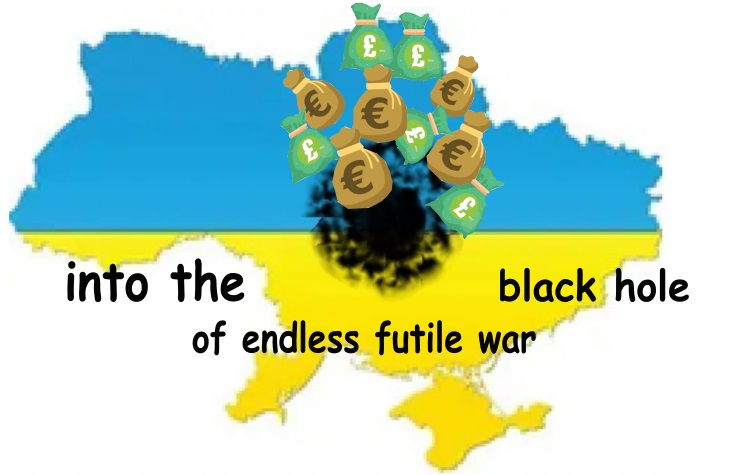
Brussels was the centre of the pro-war universe on 18 December as the European Commission tried to bludgeon the resistance out of Belgian Prime Minister, Bart de Wever. He had stood firm against the plan to use immobilised Russian assets to underwrite the war in Ukraine and never looked likely to budge. He didn’t budge and the European Commission gamble failed in spectacular fashion. This has left European taxpayers on the hook for a Euro 90 billion loan to Ukraine that, in all likelihood, may never be repaid.
De Wever didn’t dig his sturdy defensive positions out of any particular sympathy with Russia. He did so on the basis of a rational analysis of the significant legal and financial risks his country would face should it agree to an illegal expropriation of assets frozen in Belgium.
Any realist observer of events could see that the EU proposal was illegal, tantamount to theft and would never succeed. It was obvious that De Wever wasn’t going to shift his position, despite the procession of Europe’s finest who beat a path to his door in a bid to convince him to adopt a plan that he had already rejected.
The final denouement had been predictable since the idea of giving Ukraine Russia’s frozen assets with no questions asked was first raised in 2024.
The idea didn’t lose its lustre even after the refusal to ask questions of Ukraine’s leaderships has led to billions in foreign aid being pilfered by those in charge. Right up to the wire, the pro-war lobby was screaming from every vantage point for De Wever to stiffen his sinews and do the right thing.
This idea is really rooted in the need to protect the economic security of the European Union the Commission assured everyone. While at the same time calling it a reparations loan, when it was obvious to impartial observers that the money would simply be tipped into a massive gold rimmed hole of Ukrainian state finances.
That hole, by the way, will remain gaping for as long as the war continues, and for some years after it ends. And the loan the Commission has been forced to take out will only cover two years of budgetary shortfalls in Ukraine, with no one asking who would pay from 2028. Unless the war ends, European taxpayers will have to pay to keep Ukraine on life support.
And they’ll have to pay more than the Commission is letting on as the loan agreed last night will only cover two thirds of Ukraine’s financing needs, and when it runs out the Ukrainians will be back to ask for more.
Continue readingEDF faces the financial equation: Bernard Fontana is considering massive asset sales to generate 20 billion euros

December 16, BY Emma Ray
Barely installed at the helm of EDF, Bernard Fontana is embarking on a
major strategic shift. Faced with unprecedented investment needs and an
already substantial debt, the new CEO is preparing a sweeping adaptation
plan aimed at generating nearly €20 billion in financial flexibility over
three years.
This strategy comes as EDF’s financial situation continues to
be a cause for concern. At the end of 2024, net debt reached €54,3
billion, a level deemed worrying by the French Court of Auditors.
Entrevue 16th Dec 2025, https://entrevue.fr/en/societe/edf-face-a-lequation-financiere-bernard-fontana-envisage-des-cessions-massives-pour-degager-20-milliards-deuros/
1 This Month


Shut down the radiation-damaged Heysham nuclear reactors now
To see nuclear-related stories in greater depth and intensity – go to https://nuclearinformation.wordpress.com

Say No to NASA’s Reckless Nuclear Reactor on the Moon
Say No to NASA’s Reckless Nuclear Reactor on the Moon
-
Archives
- October 2026 (247)
- September 2026 (339)
- August 2026 (330)
- July 2026 (355)
- June 2026 (287)
- May 2026 (306)
- April 2026 (356)
- March 2026 (251)
- February 2026 (267)
- January 2026 (308)
- December 2025 (358)
- November 2025 (359)
-
Categories
- 1
- 1 NUCLEAR ISSUES
- business and costs
- climate change
- culture and arts
- ENERGY
- environment
- health
- history
- indigenous issues
- Legal
- marketing of nuclear
- media
- opposition to nuclear
- PERSONAL STORIES
- politics
- politics international
- Religion and ethics
- safety
- secrets,lies and civil liberties
- spinbuster
- technology
- Uranium
- wastes
- weapons and war
- Women
- 2 WORLD
- ACTION
- AFRICA
- Atrocities
- AUSTRALIA
- Christina's notes
- Christina's themes
- culture and arts
- Events
- Fuk 2022
- Fuk 2023
- Fukushima 2017
- Fukushima 2018
- fukushima 2019
- Fukushima 2020
- Fukushima 2021
- general
- global warming
- Humour (God we need it)
- Nuclear
- RARE EARTHS
- Reference
- resources – print
- Resources -audiovicual
- Weekly Newsletter
- World
- World Nuclear
- YouTube
-
RSS
Entries RSS
Comments RSS

