From Net Zero to Nuclear: the skills gap that could stall UK growth
The UK has no shortage of ambition when it comes to infrastructure. From
Net Zero commitments and energy security to rail modernisation, water
resilience and nuclear new build, the pipeline of nationally significant
projects is substantial. Yet beneath the headlines lies a constraint that
threatens to undermine delivery across all of them: a critical shortage of
skilled labour. While capital allocation, planning reform and supply chains
dominate much of the public debate, workforce capability is increasingly
the factor that determines whether projects progress as planned — or
drift into delay and cost escalation.
City AM 29th Jan 2026,
https://www.cityam.com/from-net-zero-to-nuclear-the-skills-gap-that-could-stall-uk-growth/
DAVOS: THE RULE OF THE RICH

Jonathon Porritt, 24 Jan2026, https://jonathonporritt.com/davos-rule-of-the-rich/
I’ve always hated the very idea of the annual World Economic Forum in Davos. I’ve never been myself, but that hasn’t stopped me ridiculing former NGO colleagues only too happy to go on squandering their supporters’ money rubbing shoulders with the business world’s ‘great and good’– or, more accurately, the worst of the world’s grasping, greedy, earth-trashing, plutocratic scumbags. And the politicians aren’t that much better either – and I’m not just talking about the increasingly deranged Donald Trump. Which made this year’s Parade of the Plutocrats a real corker.
Organisers and attendees pride themselves on Davos being the place to address the ‘biggest threats’ that the world faces. And, to be fair, its annual Global Risks Report regularly features the climate crisis, ecosystem collapse, and even worsening inequality and social polarisation. But it never mentions the source of all these interlocking crises, namely neoliberal capitalism itself. The Davos elite is far too self-serving ever to go there.
Every year, Oxfam piggybacks on this obscene jamboree by publishing its own annual wealth survey. This year’s report – (“Resisting the Rule of the Rich: Protecting Freedom from Billionaire Power”) provides some mind-boggling insights, including the fact that the twelve richest individuals now hold more wealth than the poorest half of humanity — 4 billion people! Billionaires control more than half of the world’s media companies, and nine of the ten biggest social media platforms are in their hands.
So how does it make you feel to hear that there were more than 3,000 billionaires in 2025, with a combined wealth of $18.3 trillion, representing an increase of 16% over 2024 figures? That increase is 3 times faster than the average 5% annual increase. Since 2020, billionaire wealth has increased by a staggering 81%.
It’s almost beyond comprehension. We’ve seen these statistics moving in the same direction for so long that we’ve become inured to the annual repetition- “for whomsoever hath, more shall be given.” And we’ve simultaneously normalized the inevitability that these statistics will continue in the same direction, accepting that today’s politicians (in both autocratic and democratic countries) appear to have neither the will nor the capacity to do anything to reverse that trend.
Elastic bands immediately come to mind: at some point, however many times one twists that band, it somehow stays intact- until it doesn’t. Overstretched, as it were.
Is that process now underway?
Over the last year or so, we’ve seen uprisings in many different countries, including Nepal, Madagascar, the Philippines, Bangladesh, Kenya, Sri Lanka, Morocco, Peru, Mexico — more often than not led by young people. Rage at the growing influence of the billionaire class is very much part of this ‘Gen Z’ phenomenon — Oxfam’s report highlights the way in which the super-rich have emerged from the shadows in terms of their increasingly brazen interventions in politics. Just think Elon Musk here, with a chainsaw in one hand whilst giving a Nazi salute with the other.
The USA is the epicentre of this deeply disturbing trend. Stubbornly persistent adherence to the myth of the American Dream accounts for an almost inconceivable number of twists in that rubber band. But we’re not immune here in the UK either. Oxfam’s report reveals that the richest 56 people in the UK (all billionaires) now hold more wealth than nearly 40% of the population — 27,000,000 citizens. One in five UK citizens now lives in poverty, and yet the super-rich still pay lower taxes than anyone else – including such illustrious plutocrats as Sir James Dyson, Sir Anthony Bamford, and the utterly loathsome Sir Jim Ratcliffe.
Intuitively, it’s so obvious what the consequences of this look like- even if our political elites (in Labour as much as in the Tories) spurn such insights. A recent report from the Fairness Foundation (“Inequality Knocks”) revealed that more than 60% of UK citizens believe the rich have far too much influence in UK politics, and that poverty and inequality are eroding the living conditions of people up and down the country. Fairness is fundamental to a functional society and democracy: “Growing inequality presents a genuine risk to the UK’s resilience, acting as both cause and amplifier of multiple societal challenges.” As a result, people are losing faith in our democracy, leading to “the very real possibility of societal breakdown.”
Over the top? Possibly. But polling insights are consistently stark: around 20% of UK voters under the age of 45 believe that our country would be “better off with a strong leader who doesn’t have to bother about elections,” compared with only 8% of those over 45.
It’s the failure of the centre-left to confront these issues when in power (in the UK, Germany, France, Spain, Holland, and even in Scandinavian countries) that has paved the way for the rise of often xenophobic nationalist movements. As the economist Thomas Piketty puts it, “We seem to have given up on some ambitious continuation of the egalitarian agenda of making the most powerful economic actors accountable to democratic control, making them contribute to the public goods we need to fund.”
Whenever this model of capitalism fails (as it did in 2008, through a combination of economic austerity and populist scapegoating), citizens rightly become frustrated. But it’s the right wing that benefits from this frustration, with their devastatingly effective social media strategies emphasising people’s loss of control and dignity. As well as the basic lack of fairness — caused, as we all know, primarily by the right wing’s own policy prescriptions. Western politicians must address this challenge — before authoritarianism turns into fascism, the kind of fascism “that arrives in fancy dress”, as the poet Michel Rosen puts it. This challenge must be addressed by western politicians — before it’s too late. Before democracy weakens further.
Moreover, that demands one thing above all else: wealth taxes, both globally and in every Western country. The Global Solidarity Levies Task Force (led by France, Kenya, Barbados, the World Bank, the European Commission, and the African Union) is advocating for a targeted tax of 2% for today’s 3,000 billionaires, which would bring in somewhere between $200 billion and $250 billion a year. By some calculations, this would affect no more than 100 extended families around the world- even if, as the Task Force wryly observes, implementation would be “very challenging.”
Here in the UK, the Patriotic Millionaires and New Economics Foundation have also suggested a 2% annual wealth tax on assets of more than £10 million, taxing income from wealth at the same level as income from work, effectively creating an “extreme wealth line” to match the UK’s “extreme poverty line.” Around 20,000 taxpayers in the UK would be affected, generating revenues of between £20 billion and £24 billion a year.
That’s what fair taxation looks like in a country like the UK, filling gaps in our public finances, restoring trust in basic fairness, increasing investment in sustainable infrastructure, and so on. And in the process, reinforcing the first line of defence around the integrity of our democratic processes and institutions keeping authoritarianism at bay.
As you might imagine, I’m absolutely delighted that the case for wealth taxes here in the UK is now being made so articulately by Zack Polanski, leader of today’s resurgent Green Party. It’s already far too late for Labour to distance itself from the Rule of the Rich – Rachel Reeves looked completely at ease mingling with the rest of the Davos elite — raising the very real prospect of the Green Party becoming the principal opposition to today’s neoliberal nexus made-up of the Tories, Reform and Labour at the next General Election. With the Lib Dems taking their customary seat on that ideological fence!
Just think of that!
World’s Largest Nuclear Station or Lower Electricity Bills?
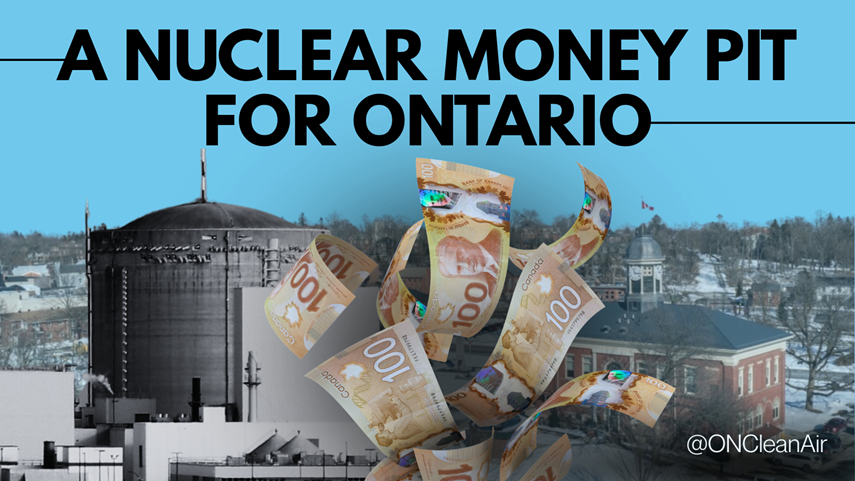
Nuclear Power: The Most Expensive and Slowest Option
Nuclear reactors are the highest cost option to meet Ontario’s electricity needs – up to 10 times higher than energy efficiency, and 2 to 8 times higher than new wind and solar energy.
They are also far too slow. According to OPG, these new nuclear reactors would not come online until 2040 – 2048. That means more than 20 years of construction, cost overruns, and continued reliance on polluting gas.
By contrast, new wind and solar projects can be built in 6 months – 2 years, reducing emissions and lowering bills quickly.
A Risky Dependence on Foreign Fuel
To make matters worse, OPG is considering purchasing American-designed reactors from GE-Hitachi or Westinghouse. These reactors would require Ontario to import enriched uranium from the United States to fuel them. Does that seem like a good idea given the current political craziness unfolding south of the border?
The Better Alternative
OPG’s proposal fails to examine crucial alternatives.
Could Ontario meet its electricity needs more cheaply, more quickly, and more safely by investing in energy efficiency, wind power, solar energy, and energy storage (such as batteries and compressed air storage)?
This is a question that the Impact Assessment Agency of Canada (IAAC) must examine during its mandatory review. That will only happen if the public demands it.
What you can do
 Submit Public Comments – Deadline: Midnight, Wed. Feb. 11
The IAAC is accepting public comments on OPG’s application.
Submit your comments through the IAAC portal or email them to: wesleyville@iaac-aeic.gc.ca
Ask the IAAC to direct OPG to evaluate whether energy efficiency, renewables, and energy storage are lower-cost, faster, safer, and more secure ways to meet Ontario’s electricity needs than building a massive new nuclear station at Port Hope
Europe Economic Panic
Lorenzo Maria Pacini, January 18, 2026, https://strategic-culture.su/news/2026/01/18/europe-economic-panic/
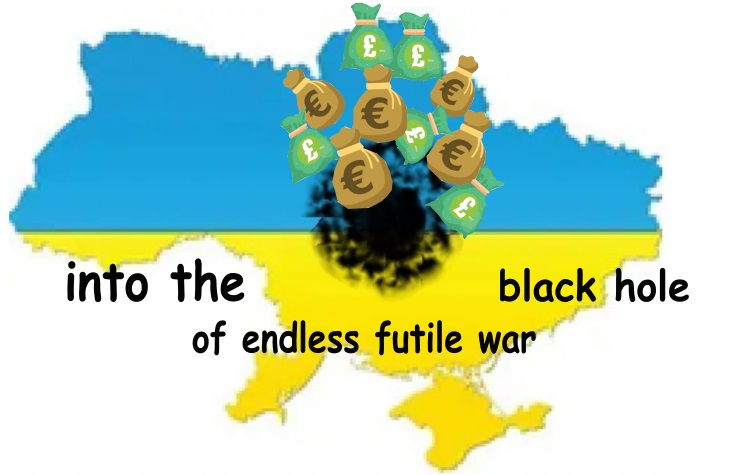
Europeans are tired. They want peace, stability, and the quiet dignity of prosperity.
When a prime minister advises his staff to rest because the coming year will be much more difficult, it is neither black humor nor fatigue. It is a moment of sincerity, the kind that only emerges when internal projections no longer support the public narrative.
Giorgia Meloni was not addressing the electorate. She was addressing the machinery of the state itself, the administrative core charged with implementing decisions whose effects can no longer be hidden. Her observation was not about a normal increase in workload. She was talking about constraints, about limits being reached, about a Europe that has moved from crisis response to a phase of controlled contraction, fully aware that 2026 is the year when deferred costs will eventually converge.
What has leaked out is what European ruling circles have already understood: the Western strategy in Ukraine has run up against material limits. Not with Russian messages, not with disinformation, not with populist dissent, but with steel, ammunition, energy, manpower, and time. Once these realities assert themselves, political legitimacy begins to erode.
The EU cannot sustain this war economically. Europe can strike poses of readiness. It cannot manufacture war.
After years of high-intensity conflict, both the US and Europe are rediscovering a long-forgotten truth: wars of this nature cannot be sustained with speeches, sanctions, or the abandonment of diplomacy. They require bullets, missiles, trained personnel, maintenance cycles, and industrial production that consistently exceeds battlefield losses. None of this exists, not in sufficient quantities, and it is not feasible in the timeframe preached in Brussels.
Russia is producing artillery ammunition in quantities that Western officials now openly admit exceed NATO’s total production. Its industrial base has shifted to near-continuous wartime production, with centralized procurement, streamlined logistics, and state-led manufacturing, without even total mobilization. Estimates place Russian production at several million artillery shells per year, already delivered, not just projected.
Europe, meanwhile, spent 2025 congratulating itself on targets it is structurally incapable of achieving. The EU’s stated commitment of two million shells per year depends on facilities, contracts, and labor that will not be available by the decisive period of the war, if ever. Even if achieved, the figure would still be less than Russian production. The US, despite emergency expansion, expects about one million shells per year once full ramp-up is complete, and only if that happens. Even on paper, combined Western production struggles to match what Russia is already producing in practice. The imbalance is clear.
This is not just a deficit, but a misalignment of timing. Russia is producing now. Europe is planning for the future. And time is the only factor immune to sanctions.
Washington, in fact, cannot indefinitely compensate for Europe’s eroded capacity because it faces its own industrial difficulties. Patriot interceptor production remains in the order of a few hundred per year, while demand simultaneously concerns Ukraine, Israel, Taiwan, and the replenishment of US stocks: an imbalance that, as Pentagon officials admit, cannot be resolved quickly. Shipbuilding tells a similar story: submarines and surface ships are years behind schedule due to labor shortages, aging infrastructure, and skyrocketing costs, pushing significant expansion toward 2030. The assumption that America can indefinitely support Europe is no longer in line with reality. This is a systemic Western problem.
Unfounded war rhetoric
European leaders talk about a “state of war” as if it were a rhetorical position, but in reality, it is an industrial condition that Europe does not meet.
New artillery lines take years to reach stable production. Air defense interceptors are produced in long, batch-based cycles, not in sudden spikes. Even basic components such as explosives remain a critical issue, with plants that closed decades ago only now reopening and some not expected to reach full capacity until the late 2020s. This timeline is in itself an admission.
Europe’s weakness is not intellectual, but institutional: huge sums have been authorized, but procurement inertia, fragmented contracts, and a depleted supplier base have meant that deliveries are years behind schedule. France, often described as Europe’s most capable arms manufacturer, is capable of building advanced systems, but only in limited quantities, counted in dozens, while a war of attrition requires thousands. EU ammunition initiatives have expanded capacity on paper, while the front has exhausted ammunition in a matter of weeks.
These are not ideological shortcomings, but administrative and industrial failures, which are exacerbated in stressful situations. It is yet another example of the failure of European Community policy, so much so that the structural contrast is stark. Western industry has been optimized for shareholder returns and peacetime efficiency, while Russian industry has been reoriented to withstand pressure. NATO announces aid packages. Russia counts deliveries. You can already guess what the outcome of this situation will be, right?
This industrial reality explains why the debate on asset freezing was so important and why it failed. Europe did not pursue the seizure of Russian sovereign assets out of legal ingenuity or moral determination, but because it needed time: time to avoid admitting that the war was unsustainable in Western industrial terms, time to replace production with financial maneuvers.
When the effort to confiscate some €210 billion in Russian assets failed on December 20, blocked by legal risks, market repercussions, and opposition led by Belgium, with Italy, Malta, Slovakia, and Hungary opposing total confiscation, the Brussels technocracy settled for a reduced alternative: a €90 billion loan to Ukraine for 2026-27, with interest payments of around €3 billion per year. This further mortgages Europe’s future. This is not a strategy, but emergency triage. A collapsing political hospital. Pure panic.
Narrative, crisis, disaster
The deeper reality is that Ukraine is no longer primarily a military dilemma, it is a question of solvency. Washington recognizes this, because it cannot absorb the reputational discomfort, but they cannot take on unlimited responsibility forever. A way out is being explored, discreetly, inconsistently, and shrouded in rhetorical cover.
Europe cannot admit the same necessity, because it has ultimately adopted ‘Putin’s version’, i.e. it has framed the war as existential, civilising, moral – but do you remember when European politicians enjoyed calling Putin crazy for talking about a clash of civilisations?
Compromise has become appeasement, negotiation surrender. In doing so, Europe has eliminated its own escape routes. Well done, ladies and gentlemen!
On the narrative front, greetings to all. The aggressive enforcement of the EU’s Digital Services Act has less to do with security than with containment: building an information perimeter around a consensus that cannot survive open scrutiny. Translated: censorship as a solution. The truth of the matter must not be made known, and those who try to do so must be suppressed in an exemplary manner. This also explains why regulatory pressure now extends beyond European borders, generating transatlantic friction over freedom of expression and jurisdiction. Confident systems welcome debate. Fragile ones suppress it. In this case, censorship is not ideology, but a form of insurance.
The information crisis, rest assured, will very soon become… a social crisis ready to detonate into domestic conflict.
And the crisis is also one of resources and energy. We are witnessing the securitization of decline, whereby obligations are postponed while the productive base needed to sustain them continues to shrink. It’s a cat chasing its tail. Here too, you know how it will end, don’t you?
Europe has not only sanctioned Russia. It has sanctioned itself. European industry will continue to pay energy prices well above those of its competitors in the United States or Russia throughout 2026. Take a trip around Europe, read the headlines in local newspapers, look at people’s faces: the fabric of small and medium-sized enterprises, the true beating heart of entire EU countries, is quietly disappearing. And this is logically reflected in large companies too. This is why Europe cannot increase its production of ammunition and why rearmament remains an aspiration rather than a concrete operation.
Energy, we said. Low-cost energy was not a convenience, it was essential. If it is eliminated through self-inflicted damage, the entire structure is emptied. Even the most ambitious plans preached for years, such as the IMEC corridor, are still a mirage. There is a stampede towards Turkey, Azerbaijan, and Georgia to try to scrape together a few kilowatts. A ridiculous attempt to save what is now tragically unsalvageable.
China, observing all this, represents the other half of Europe’s strategic nightmare. It controls the world’s deepest manufacturing base without having entered into a position of war. Russia does not need China’s full capacity, only its strategic depth in reserve. Europe has neither.
A frightening 2026
2026 therefore looks set to be a terrible year, I’m sorry to say. The European elites find themselves losing control on three fronts at once. On finance, because the budget will be bitter and the money for the insane support to Kiev will no longer be the same. On narrative, because the question citizens will ask themselves will be ‘what was the point of all this?’. On the cohesion of the Alliance, both NATO and the EU, because Washington’s disengagement will force a review of the balance of power on the European continent to the point of no return and, perhaps, a break between the two sides divided by the ocean.
Panic, again. Not a sudden defeat, but the slow erosion of legitimacy as reality creeps in through gas that costs as much as gold, closed plants, empty stockpiles, obsolete rifles, and a future that is turning away.
This is not just a difficult situation for Europe, but a matter of civilization. A system incapable of producing, supplying, speaking honestly, or retreating without collapsing in credibility has reached its limit. When leaders begin to prepare their institutions for worse years, they are not anticipating inconveniences, but recognizing structural failure.
Empires proclaim victory loudly. Declining systems quietly lower expectations or, in this case, momentarily say the quiet part out loud. But the truth is that nothing is the same as before, and it is obvious.
For most Europeans, the reckoning will not come as an abstract debate about strategy or supply chains, but as a simple realization: this was never a war they consented to. It did not defend their homes, their prosperity, or their future. And so, again, how do you think it will end?
An ideological war has been fought in the name of imperial ambition and financed through declining living standards, industrial decline, and the prospects of their children. In the name of big pro-European capital, of the privileged few with robes, stars, and crowns.
For months, even years, it was said that “there was no alternative” and that this was the only course of action. And now?
Europeans are tired. They want peace, stability, and the quiet dignity of prosperity: affordable energy, a functioning industry, and a future unencumbered by conflicts they NEVER chose and, above all, they do not want the decline of millennia-old civilizations.
And when this awareness has taken hold, when the fear has faded and the spell has been broken, the question Europeans will ask themselves will not be technical or ideological. It will be existential. And all existential questions lead to radical choices, even terrible ones.
May this dramatic fear keep the mad leaders of this Europe awake at night.
Ontario utility wants to double the asking price of nuclear, while US wants reactors on the moon

Giles Parkinson. Jan 14, 2026, https://reneweconomy.com.au/ontario-utility-wants-to-double-the-asking-price-of-nuclear-while-us-wants-reactors-on-the-moon/
The main power utility in the Canadian province of Ontario has put in a request to nearly double the price of payments its receives for nuclear power, in order to cover the cost of maintenance, upgrades and new projects.
Ontario Power Generation has asked the local regulator – the Ontario Energy Board – to increase the payments for nuclear power to $C207 a megawatt hour ($A222/MWh) from January, 2027, nearly double what it received ($C111.61/MWh) in 2025.
Nuclear accounts for more than half of the generation in Ontario, which is often held up by nuclear advocates as a shining light for Australia to follow, but it faces massive expenses in coming years as it refurbishes its ageing nuclear fleet, and embarks on a program to build four small modular reactors.
The first of these SMRS are expected to be delivered in the early 2030s, and the total cost is currently put at more than $C21 billion. But more money, nearly $C27 billion, is to be spent on refurbishing four existing reactors at Pickering, and yet more on other nuclear upkeep costs.
The huge investment in nuclear is raising concerns among environmental groups and also major energy users, which include steel makers and car companies such as Ford and Toyota.
The Association of Major Power Consumers in Ontario, says its members are facing “skyrocketing” electricity prices, including a 165 per cent rise in the next three years.
AMPCO president Brad Duguid blames the rising cost of nuclear, and also the heavy price of gas generation which is being used to fill the gap caused by the refurbishment of the old nuclear plants, some of which are scheduled to be offline for three years.
“Over the next seven to 10 years, we’re seeing significant increases in the market energy rates to make up that difference,” he told the Globe and Mail.
“We’re talking about increases in the range of 165 per cent for the market rate over the next three years alone. That’s untenable. That’s an absolute threat to the competitiveness of our industrial sector and the hundreds of thousands of jobs it supports.”
Retail customers are also suffering. Residential power prices jumped 29 per cent in October, although they were partially offset by an increase in government rebates.
The cost of those rebates – which are used by the government in Ontario, as they are in nuclear dependent France, to hide the true cost of nuclear – have jumped to $C8.5 billion a year. Other costs are incorporated in general government debt, critics note.
“This application really confirms that these projects are among the most expensive ways to meet our need for electricity,” said the Ontario Clean Air Alliance, which supports renewables and opposes the nuclear expansion.
“We could expand solar, wind and storage at a fraction of the cost and avoid seeing our power bills go through the roof.
“The Premier’s buddies in the nuclear and gas industries may like his plan for an old school electricity system built around eye-wateringly expensive mega projects. But the people of Ontario are now in for some serious sticker shock.
“This is really the tip of a very big iceberg coming straight at your household budget.”
Meanwhile, the Trump administration across the border has doubled down on its plan, first flagged in August last year, to build a series of nuclear power plants on the moon – by 2030 – and to get them ready for Mars, whenever they get there.
The US Department of Energy and NASA announced on Tuesday that they intended to deploy nuclear reactors on the Moon and in orbit, including the development of a lunar surface reactor by 2030.
Russia has also announced plans to deploy nuclear power on the moon, although it is aiming for 2035.
Newly appointed NASA Administrator Jared Isaacman said the US is committed to returning to the Moon, and making “the next giant leap to Mars” and beyond.
“Achieving this future requires harnessing nuclear power. This agreement enables closer collaboration between NASA and the Department of Energy to deliver the capabilities necessary to usher in the Golden Age of space exploration and discovery,” he said in a statement.
How New Venezuela President Will Save Us from Trump’s Crazy
The Radical Pragmatist versus Rubio’s Vulture
by Greg Palast. for Raw Story, Substack and Thom Hartmann, January 14, 2026
Trump aims to drop oil to $50 a barrel; Chavez offered that years ago.
The US press is confused. Nothing new there. They are confused about the Acting President of Venezuela, Delcy Rodriguez.
The New York Times says Rodriguez “Went From Revolutionary to Trump’s Orbit”
Oh no, she didn’t.
Rodriguez still attacks Trump as an outlaw kidnapper and imperialist invader. But, at the same time, she says she’s seeking the restoration of diplomatic relations with the US and offers tens of millions of barrels of oil to Trump.
I’ve known Rodriguez for years. Is she a militant Leftist or a moderate pragmatist?
The answer is, “Yes.” I’d call Rodriguez a “radical pragmatist.”
Trump is wise to keep Rodriguez in the Presidential office. Did I just associate “Trump” and “wise”? Yes, but it seems Trump’s wisdom may be accidental. He is reported to be furious at the leader of the Venezuelan opposition, Maria Corina Machado, for accepting the Nobel Peace Prize instead of leaving it to Trump. And the result is that he has vetoed installing her in power.
Notably, oil and finance interests want the “Leftist” Rodriguez to stay — even the CIA wants her to stay. But Sec. of State Marco Rubio and an outlaw US billionaire want her out. Who wins? I’ll handicap the race below.
Trump wants Venezuelan oil — that we already had
Rodriguez and Trump desire the same thing: to send Venezuelan oil to the US. But Donald, we already had Venezuelan oil…until YOU embargoed imports of their crude.
Venezuela’s socialist President Hugo Chavez enjoyed taunting George W. Bush. I remember when Chavez spoke at the UN General Assembly right after Bush left the podium. Chavez began, “There is a distinct smell of sulphur here.” Bush went after Chavez. It was a bit less subtle than Chavez’ comment. Bush backed the kidnapping of Chavez in 2002. Unlike Trump, Bush’s scheme face-planted and Chavez was returned by his kidnappers, more popular than ever.
But despite the barbs and kidnapping, Bush, with Chavez’ encouragement, kept Venezuelan oil flowing to the US, more than a million barrels a day.
Trump is crowing that, “we’re going to be taking oil” from Venezuela. Mr. President, we were taking Venezuela’s oil until you stopped the flow with an embargo.
Now, it will be nearly impossible, and cost a prohibitive amount, to crank up Venezuela’s production to get back up to the flow quantities we had before Trump’s embargo. Because, when the extraction of super-heavy oil of Venezuela stopped, it congealed into tar and then into asphalt. Refineries and pipes are choked and destroyed, a destruction Trump engineered through blocking Venezuela from paying for equipment to maintain the lines. Now, Trump is trying to bully US oil companies to invest as much as $100 billion to restore the oil infrastructure that Trump himself destroyed.
Trump wants praise for (expensively) rebuilding what he demolished. He’s like an arsonist who wants praise for calling the fire department.
Chavez’ $50/barrel offer
US voters have decided that price inflation is a real bummer. So, Trump has decided, correctly, that unleashing Venezuela’s oil is the way to go. Trump states bluntly that he wants to open Venezuela’s oil spigots to bring down the price of crude to $50 a barrel. Today, crude sells for just under $60/bbl.
But Venezuela already offered to cap the price of its oil at $50/bbl years ago. In one of my interviews with Chavez for BBC Television, he said he would agree to cap oil at $50 if the US would guarantee that oil would not slip below $30/bbl. Venezuela, unlike Saudi Arabia, could not afford another crash to $10 a barrel, as happened in 1998, which bankrupted South American OPEC members. So, Chavez enthusiastically endorsed this idea of a “band” — you give us a bottom and we’ll give you a top — which was first suggested, notably, by industry consultant Henry Kissinger.
Chavez told me he got along well with Kissinger and George Bush Sr., a fellow oil man. And, as Chavez noted, he was “a good chess player,” a pro at realpolitik, a skill he passed to his protégé Rodriguez.
In other words, Trump killed a hundred people in his coup (and thousands may yet die) to get something by force that he could have gotten by contract.
OPEC: “no brainer” or “no brains”?
The first strike against right-wing fave Machado is her avowed desire to sell off Venezuela’s state oil company, Petroleos de Venezuela, S.A. (PdVSA, pronounced, Pay-day-VAY-sah). What Machado, a neophyte to petroleum economics, does not understand is that full privatization is a direct threat to the oil majors and OPEC.
I’ve seen this movie before. Leading up to the invasion of Iraq, neo-cons within the Bush Administration wanted to privatize Iraq’s state oil companies, selling the fields to American and European majors who would then, the neo-con plan went, compete to maximize output, crash the price of crude and bring OPEC to its knees. Ari Cohen of the Heritage Foundation told me this scheme was a “no-brainer.”
But then I spoke with Philip Carrol, past President of Royal Dutch Shell USA who said, “Anyone who thinks pulling out of OPEC is a ‘no brainer’ has no brains.” Oil companies are not in the business of getting oil; they are in the business of making money. A crash in the price of crude could indeed end OPEC’s price-setting power and no US oil company wants to see their revenues collapse.
There’s also a legal issue. There is no way for Venezuela to stay in OPEC if its state oil company is sold to US interests because US law makes it a crime to participate in a price-fixing cartel. But our government has carved out a convenient exception for state-owned oil companies allowing Exxon and Chevron and their buds to surf on the high prices set by the OPEC monopoly.
Rodriguez is not only Acting President, she remains the Minister of Petroleum and Hydrocarbons. She has a detailed knowledge of the hard realities of oil production. But, she’s a patriot, too. She will not allow the theft or seizure of Venezuela’s oil, but she sure as hell wants to sell us oil again. Chevron, which has worked closely with
Rodriguez, couldn’t be happier. Oil companies don’t want to own oil fields. That’s not how the industry operates. They don’t want the real estate; they want profit. They work with OPEC nations through PSA’s, Profit Sharing Agreements. The issue is always the split of the revenues, not ownership; with the state’s share paid as a “royalty” for US tax purposes.
The last thing the oil companies need is Machado, a free-market fanatic, creating a civil war over ownership of fields that the majors want to drill, not own.
And there’s a practical problem. At $50/bbl, no one is going to drill in the Orinoco Basin, where most of the oil is, because it’s just not profitable to try and pull up the sulphurous gunk there. As petroleum engineer Beck would say, “It’s a loser, baby.” That’s why Trump was so frustrated with the oil big wigs who just met with him at the White House. He’s telling them to dump tens of billions into a money pit, rebuilding what Trump destroyed…………………………………………………………………………………………………………………….https://www.gregpalast.com/how-new-venezuela-president-will-save-us-from-trumps-crazy/
TerraPower and Meta partner on Natrium nuclear plants
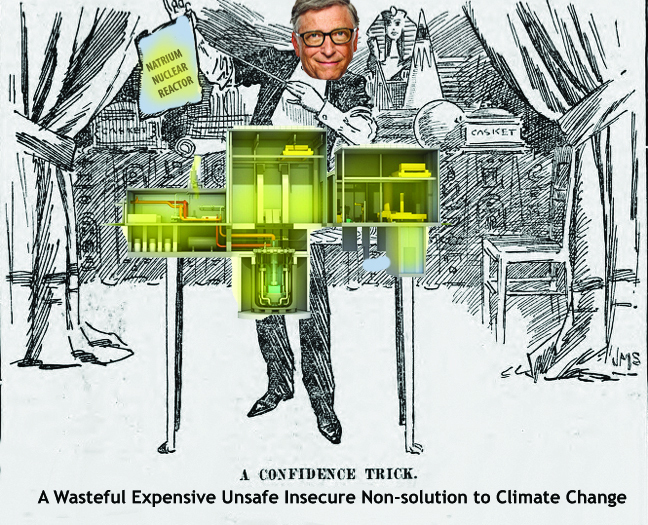
The agreement launches early work on two initial units and secures Meta rights to energy from six more, marking the tech giant’s largest investment in advanced nuclear energy to date.
erraPower and Meta have agreed to develop up to eight Natrium nuclear reactor and energy storage system plants in the United States, a move that could supply Meta with up to 2.8 gigawatts of carbon-free baseload energy. With the Natrium system’s built-in energy storage, total output could be increased to as much as 4 gigawatts.
The agreement supports early development of two initial Natrium units and gives Meta rights to energy from up to six additional units. Each reactor provides 345 MW of baseload power and can ramp up to 500 MW for more than five hours. A dual-unit site could deliver up to 690 MW of firm power and as much as 1 GW of dispatchable electricity.
The companies said delivery of the first units could begin as early as 2032. They also plan to identify a site for the initial dual-reactor project in the coming months.
Donald Trump calls for emergency energy auction to make tech giants pay for AI power
Donald Trump and a number of state governors are pushing the US’s
largest electrical grid operator to hold an emergency auction to make tech
giants foot the bill for AI power infrastructure.
The administration along
with governors of states including Pennsylvania, Ohio and Virginia have
urged PJM — which serves more than 67mn people in the US north-east and
Midwest — to hold a power auction in which big data centre operators bid
for 15-year contracts to build new power plants. Such contracts could
support the construction of about $15bn worth of new power plants, with
tech companies paying for them regardless of whether they use the resulting
electricity, a White House official confirmed.
FT 16th Jan 2026
https://www.ft.com/content/9b3d179e-129c-4aa1-a5c0-1cc1703b0234
Ontario Power Generation seeks rate increase for electricity from nuclear plants
Matthew McClearn, 13 Jan, 26 https://www.theglobeandmail.com/business/article-ontario-power-generation-rate-increase-application-electricity-nuclear
The Pickering Nuclear Generation Station in January, 2020. In November the Ontario government approved the $26.8-billion refurbishment of four aging reactors at the station.
Ontario Power Generation is seeking a near-doubling of payments it receives for electricity produced by its nuclear power plants, a request that could lead to surging power bills.
In a rate application submitted to the Ontario Energy Board in December, OPG requested payments of nearly $207 dollars per megawatt hour produced by its nuclear power stations beginning Jan. 1, 2027, roughly double what it received as recently as last year. It seeks similar amounts for each year through 2031.
OPG spokesperson Neal Kelly said the sought rates would cause a typical residential customer’s payments to rise by roughly 2.4 per cent annually in each of the next five years.
Ontario has generated roughly half of its power in recent years from its Darlington, Pickering and Bruce nuclear stations. (The latter is operated by private power producer Bruce Power and is not part of OPG’s application.) Energy Minister Stephen Lecce is pursuing an aggressive expansion of the reactor fleet to meet an expected surge in demand for electricity between now and mid-century, which includes plans to build large new multi-reactor stations.
Chelsea McGee, a spokesperson for Mr. Lecce, referred an interview request from The Globe and Mail to the OEB and OPG.
The requested payment increases require the board’s approval. OEB spokesperson Tom Miller said it would be inappropriate to comment on OPG’s application because it is before a panel of commissioners. Mr. Miller said it will be adjudicated later this year.
Made in Canada: Inside an urban Toronto facility making uranium fuel for CANDU reactors
OPG is entering a period of intense capital spending. Last year, it began constructing the first of four new small modular reactors at its Darlington station, with an estimated cost of $20.9-billion. OPG said that project accounts for about one-quarter of the sought payment increases.
Far more consequential, at 60 per cent of the payment increase, is the $26.8-billion refurbishment of four aging reactors at Pickering station. The government approved that overhaul in November; it’s expected to wrap up in the mid-2030s.
OPG is also spending to refurbish many of its hydroelectric stations.
“Every investment in the application has been carefully evaluated, planned prudently and designed to provide long-term value to Ontarians,” Mr. Kelly wrote in a statement.
Mark Winfield, a professor at York University’s environmental faculty, said that because OPG’s projects have been approved by the government, the OEB has little room to disallow the payment increases sought by the utility.
“They can’t really say no to OPG,” he said.
“The system runs by political fiat, and all the agencies are basically mandated to fulfill the minister’s will.”
Ontario to spend $1.5-billion on underwater electricity cable from nuclear plant to Toronto
Ontario’s residential electricity rates previously increased 29 per cent on Nov. 1. The OEB attributed those hikes to “higher-than-expected generation costs” as well as increased spending on conservation programs, but it provided few additional details. Those rate hikes were largely offset by a 23.5-per-cent increase in the Ontario Electricity Rebate, a taxpayer-funded instrument the government uses to provide relief on residential power bills.
The Globe twice requested interviews with OEB officials in December to explore the role rising nuclear costs played in the Nov. 1 rate increases. Mr. Miller denied those requests but agreed to answer questions by e-mail. The Globe sent questions to the OEB on Jan. 5, but had not received responses by late Monday.
A report by Power Advisory LLC, a consultancy that performed work for the OEB related to the Nov. 1 rate increases, attributed them partly to “higher-than-expected nuclear generation.” That report noted payments for OPG’s nuclear generation rose to $123.76 per megawatt hour in 2026, as compared with $111.61 per megawatt hour last year.
The current trajectory for power rates has attracted concern from the Association of Major Power Consumers in Ontario, which represents industrial power users including automakers Ford Motor Co. and Toyota Motor Corp., and steel producers Stelco and ArcelorMittal Dofasco.
AMPCO president Brad Duguid said the province has no choice but to overhaul and expand its nuclear fleet – a decision he argued will preserve the provincial grid’s reliability. But he’s concerned that industrial power rates are already “skyrocketing” for AMPCO’s members – increases he mainly attributed to rising natural gas generation as reactors are taken offline for refurbishment.
“Over the next seven to 10 years, we’re seeing significant increases in the market energy rates to make up that difference,” he said.
“We’re talking about increases in the range of 165 per cent for the market rate over the next three years alone. That’s untenable. That’s an absolute threat to the competitiveness of our industrial sector and the hundreds of thousands of jobs it supports.”
Ottawa, Ontario pledge combined $3-billion for new nuclear reactors
Jack Gibbons, chair of the Ontario Clean Air Alliance, attributed the hikes directly to the government’s nuclear expansion and predicted the situation will only worsen.
“It’s just absurd to be investing in high-cost nuclear,” he said.
“It’s going to push up rates, make life less affordable for hard-working families and make Ontario’s businesses less competitive.”
York University’s Mr. Winfield said the government has four options to address the upward pressure on electricity rates. First, it can allow them to rise, but that would undermine affordability and could stall electrification of Ontario’s economy.
The government could also further increase subsidies such as the Ontario Energy Rebate. But at a total annual cost “of $8.5-billion per year, this has to be already at or near the limits of fiscal feasibility,” Mr. Winfield wrote in an e-mail.
Another option is to reconsider the province’s electricity plans to focus on lower-cost options. Finally, the government could conceal the additional costs as debt, a choice previous governments pursued.
Electricity rates are also rising sharply in many other jurisdictions across North America, including ones with little or no nuclear generation. According to the U.S. Energy Information Administration, average residential rates across the United States increased 5 per cent for the year ended Oct. 31, reaching nearly 18 US cents per kilowatt hour.
Top 15 US Billionaires Gained Nearly $1 Trillion in Wealth in Trump’s First Year.
The US has 935 billionaires, roughly a dozen of whom have jobs within the Trump administration.
By Sharon Zhang , Truthout, January 7, 2026, https://truthout.org/articles/top-15-us-billionaires-gained-nearly-1-trillion-in-wealth-in-trumps-first-year/
new analysis finds that the richest 15 billionaires in the U.S. saw their wealth skyrocket by nearly $1 trillion in the first year of President Donald Trump’s second term, which also contained one of the single largest cuts to welfare benefits in U.S. history.
The Institute for Policy Studies (IPS) report, citing data from Forbes, has found that U.S. billionaires’ assets surged by a whopping 21 percent in 2025.
The 935 billionaires in the U.S. now control $8.1 trillion in wealth, the analysis found — nearly double the amount of wealth held by the bottom 50 percent of Americans, which comprises over 170 million people. Roughly a dozen of these billionaires work in the Trump administration.
The very richest billionaires saw the biggest gains. The top 15 richest people in the U.S. gained 33 percent in wealth last year, with their wealth skyrocketing from $2.4 trillion to $3.2 trillion — a gain of roughly $800 billion, IPS found.
A significant portion of this gain was driven by the wealth accumulation of one person: Elon Musk, the richest man on earth. In 2025, Musk’s wealth rose from $421 billion to $726 billion, a gain of $305 billion.
With this amount of money, Musk could singlehandedly pay for Republicans’ newly enacted cuts to Medicare for the next decade, estimated to cost $536 billion. He could fund health benefits for tens of millions of Americans and still be left with nearly $200 billion to spare.
IPS points out that Musk’s net worth has increased by 2,800 percent since 2020, when he was valued at just under $25 billion.
Other billionaires and billionaire families saw gains of tens of billions of dollars last year, including Google cofounder Larry Page, Oracle cofounder Larry Ellison, and the Walton family.
“The affordability crisis is hitting ordinary Americans particularly hard as we head into the new year, but not everyone is feeling the pain: billionaires are raking in staggering profits off the backs of ordinary workers,” said Chuck Collins, who directs IPS’s Program on Inequality and the Common Good.
Regular Americans are indeed struggling. At the end of 2025, polls were already finding that an affordability crisis was spreading across the U.S., with roughly 30 percent of Americans saying they skipped medical care in the past year due to cost, according to surveys by Politico and GQR for The Century Foundation.
This is slated to become far worse as Republicans’ cuts to Medicaid and Affordable Care Act (ACA) subsidies kick in this year. Last week, on New Year’s Day, Affordable Care Act subsidies for tens of millions of Americans expired overnight, causing premiums to double on average as a result of cuts to the Republican budget bill. Meanwhile, the Congressional Budget Office has estimated that 16 million people will lose their health care benefits altogether due to the Medicaid and ACA cuts.
These cuts were enacted to pay for a massive tax cut for billionaires and the rest of the top richest Americans. The CBO estimated that the richest Americans would see a gain of $12,000 each year as a result of the bill, while the poorest 10 percent would see their wealth decrease by $1,600 yearly on average.
“It’s not just that U.S. billionaires are entering 2026 with record-breaking increases in extreme wealth: it’s that they are also paying far less in taxes compared to the huge amount of wealth they amass. Average taxpayers like you and I pay income tax at triple the rate of the wealthiest Americans,” said Omar Ocampo, inequality researcher for IPS, in a statement. “Not only are a small number of Americans holding more wealth than the rest of America, but they’re also not paying their fair share in taxes.”
New owners of Canadian Nuclear Laboratories have extensive nuclear weapons connections.
| By hendricksonjones on January 10, 2026, https://concernedcitizens.net/2026/01/10/new-owners-of-canadian-nuclear-laboratories-have-extensive-nuclear-weapons-connections/ |
Nuclear weapons are an existential threat to life on Earth and need to be abolished.
Concerned Citizens and other civil society groups are concerned about the nuclear weapons connections of US-based multinational corporations contracted to operate Canadian Nuclear Laboratories. Some new facilities being built or proposed at Chalk River Laboratories are aimed at handling tritium and plutonium, both of which are key ingredients in nuclear warheads.
The current owner/operator of Canadian Nuclear Laboratories, “Nuclear Laboratory Partners of Canada,” assumed ownership in December 2025 under a 6-year, multibillion dollar contract with the Government of Canada. It consists of three US-based corporations: BWXT, Amentum, and Battelle. A fourth corporation, Kinectrics, was recently acquired by BWXT.
Here is what Perplexity Pro told us about nuclear weapons connections of BWXT, Amentum and Batelle.
BWXT
BWXT has significant connections to U.S. nuclear weapons programs through its work with government agencies and defense contracts.bwxt+1
Key Contracts
BWXT manages high-consequence nuclear operations for the U.S. Department of Energy (DOE) and National Nuclear Security Administration (NNSA), which oversees the U.S. nuclear weapons stockpile. In 2025, it secured a $1.5 billion contract from NNSA to build a uranium enrichment facility for defense applications, including tritium production—a key component in nuclear weapons.reuters+2
Naval and Defense Roles
The company manufactures nuclear reactor components for U.S. Navy submarines and aircraft carriers, including Virginia-class and Columbia-class vessels, under multi-billion-dollar contracts like a $2.6 billion award in 2025. BWXT holds licenses for depleted uranium fabrication for defense and has handled highly enriched uranium from down-blended nuclear weapon cores.reddit+3
Historical Context
BWXT was previously involved in tritium production for the U.S. nuclear arsenal. Subsidiaries like Nuclear Fuel Services support these government programs.dontbankonthebomb+1
Amentum
Amentum has substantial nuclear weapons connections through U.S. and UK defense contracts for weapons facilities, plutonium processing, tritium operations, and national security sites.amentum+2
U.S. Weapons Complex
Amentum manages the Pantex Plant (nuclear weapons assembly/disassembly) and Y-12 National Security Complex (uranium components for weapons) under a $28 billion NNSA contract via NPOne JV. It supports Los Alamos plutonium facilities, Savannah River pit production, and naval nuclear propulsion for ballistic missile submarines.amentum+3
Plutonium and Remediation
The company decommissions plutonium-contaminated facilities at U.S. sites like Hanford’s Plutonium Finishing Plant and UK’s Low Level Waste Repository, plus Portsmouth uranium enrichment for weapons.amentum+2
UK AWE (Atomic Weapons Establishment)Involvement
Amentum serves as Delivery Partner for AWE’s Enriched Uranium Components Programme at Aldermaston, handling enriched uranium for UK nuclear warheads, decommissioning gloveboxes, and program management.amentum+2
Battelle
Battelle Memorial Institute has deep historical and ongoing connections to nuclear weapons programs, including direct contributions to the Manhattan Project and management of key NNSA national laboratories involved in weapons research.battelle+2
Manhattan Project Role
During World War II, 400 Battelle researchers fabricated plutonium from uranium for atomic bomb cores. This work positioned Battelle as a leader in nuclear research, including extruding uranium fuel for early reactors at Oak Ridge.wikipedia+2
National Labs Management
Battelle manages or co-manages eight DOE national labs central to nuclear security, such as Los Alamos National Laboratory (plutonium pits for weapons via Triad National Security, LLC), Pacific Northwest National Laboratory, and Savannah River National Laboratory (nuclear materials management). These labs support stockpile stewardship, pit production, and nuclear deterrence under NNSA.battelle+4
Additional Ties
Battelle developed nuclear fuel rods for naval reactors like the USS Nautilus and provided Environment, Health and Safety support at Pantex Plant, the primary site for weapons assembly/disassembly. It oversees chemical weapons demilitarization and biodefense tied to nuclear security missions.battelle+3
References:
Billionaire’s Mouthpiece Searches for Reasons to Avoid Taxing Billionaires
Jim Naureckas, 8 Jan 26, https://fair.org/home/billionaires-mouthpiece-searches-for-reasons-to-avoid-taxing-billionaires/
The Washington Post, which exists mainly to serve the interests of its mega-billionaire owner Jeff Bezos, unsurprisingly thinks taxing the wealth of billionaires is a bad idea (FAIR.org, 12/11/19). Its recent editorial (1/1/26) warning California not to institute a tax on extreme wealth—headlined “California Will Miss Billionaires When They’re Gone”—illustrates that when you’re telling the boss exactly what he wants to hear, you don’t have to think very hard.
California is considering a referendum on whether to impose a one-time wealth tax on the state’s billionaires. The paper’s hot take: “Many progressives think of taxation the way teenage boys think about cologne: If some is good, more must be great.”
The paper offers PayPal’s Peter Thiel and Google‘s Larry Page, both of whom have threatened to leave California, as poster children for why you shouldn’t subject billionaires to a wealth tax—both highly dubious examples.
Thiel is well-known for his use of an absurd tax loophole (ProPublica, 6/24/21): He put 1.7 million shares of PayPal stock—which he valued at 0.1 cents apiece, so $1,700—into a Roth IRA, and by 2021 that had grown through reinvestment into a $5 billion nest egg. (In 2026, it’s likely the bulk of his $25 billion fortune.) A Roth IRA means that if he waits until 2027, when he turns 59, he won’t have to pay any taxes at all on that. This is precisely why people want a wealth tax, because the tax code makes it easy for oligarchs like Thiel to pay little or nothing in income tax.
Page is also known for tax shenanigans, parking much of his wealth in a “charity” that distributes almost none of its wealth to disclosed recipients (Vox, 12/18/19). When ProPublica (4/13/22) analyzed tax filings from the super-rich, Page had one of the lowest effective federal income tax rates among prominent billionaires.
‘Blew a hole in the budget’
To illustrate the fiscal danger California would be putting itself in with a wealth tax, the Post cited the example of New Jersey billionaire David Tepper, who “blew a hole in the state budget by moving to Florida.” That’s according to an article from Philadelphia public TV station WHYY (4/11/16), which said in 2016 that “while the amount Tepper paid in taxes last year is unknown to the public…a resident that rich [$11.4 billion] could pay tens or even hundreds of millions of dollars in income taxes if they paid New Jersey’s highest rate, 8.97%.”
The only way Tepper would have paid “hundreds of millions” in Jersey state income tax would be if he were declaring several billion in income a year. But Tepper reportedly made $750 million in 2016, which would be $67 million at the top tax rate—which he wouldn’t pay anyway, since he’s a hedge fund manager and benefits from a special tax loophole designed just for them.
In any case, Tepper moved back to New Jersey in 2020 (Politico, 9/24/20)—so it’s not clear what kind of object lesson he should serve for California. Was his 2016 move representative of a broader problem of the flight of the wealthy from New Jersey? It’s hard to see how, as the state has the highest concentration of millionaires in the country (Kiplinger, 5/27/20)—up from third-highest in 2014 (New Jersey Policy Perspective, 4/13/16).
Imaginary exodus
This is a perennial problem with the oligarchy’s don’t-touch-our-money arguments: They want to claim that they’ll run away from high taxes, but they like living in high-tax states. The LA Times‘ Michael Hiltzik (10/24/19) pointed this out years ago, responding to a similar editorial in the Wall Street Journal (“California’s Tax-the-Rich Boomerang,” 10/21/19).
The Journal leaned heavily on a study by two economists at the right-wing Hoover Institution, Joshua Rauh and Ryan Shyu, who the paper said found that “the likelihood of a wealthy resident moving out of California increased by about 40%”
following an income tax hike on the ultra-wealthy. Hiltzik noted that the actual percentage of rich people moving out was quite small—increasing from 1.5% to 2.125%—and, more importantly, that Rauh and Shyu only looked at outgoing multi-millionaires, ignoring the fact that more affluent people were moving to the state than moving away.
More than six years later, the Post is still citing Rauh and Shyu, still talking about that same 2013 California tax hike and the imaginary exodus of plutocrats it caused. I don’t know why they should be any more convincing than they were a decade ago—but then, the editorialists only have to convince one reader that they’re doing their best to protect his fortune.
Meta Is Making a Big Bet on Nuclear With Oklo1

Alexander C. Kaufman, Jan 9, 2026
Meta will finance Oklo’s purchase of uranium for its reactors. It’s a massive vote of confidence for both the startup and nuclear power, but challenges remain.
There are two ways for tech companies to invest in nuclear power right now. One is to buy power from traditional reactors that are already built, either by purchasing electricity from the plants directly or financing the reconstruction of decommissioned units. The other is to invest in one of the dozens of reactor startups promising to commercialize designs and technologies never before used in the American market to generate electricity.
Microsoft took the former approach with a 2024 deal to buy electricity from a revived Three Mile Island nuclear plant and gambled on Helion, one of the many startups promising to construct America’s first fusion energy station. Amazon chose the other approach, buying a stake in X-energy, the next-generation nuclear company for which the tech behemoth is financing construction of a debut power plant in Washington.
Google split the difference with deals to help bring Iowa’s lone decommissioned nuclear plant online again and back construction of the first plant from next-generation startup Kairos Power, the only reactor company in its class to sign a power purchase agreement with a utility so far.
Meta, on the other hand, has taken a cautious approach to nuclear power. The Facebook owner had previously only agreed to buy power from an existing atomic power station in Illinois for its data centers.
Now, Meta is making an unconventional bet on the widely hyped next-gen nuclear startup Oklo.
On Friday morning, the company announced a deal to pay Oklo cash up front to finance the purchase of fuel for the startup’s reactors.
The agreement will allow Oklo to advance its plans for a 1.2-gigawatt campus in Pike County, Ohio, a rural municipality east of Cincinnati within the grid system from which Meta’s data centers in the region draw power. The terms of the deal were not disclosed. But Oklo CEO Jake DeWitte tells WIRED in an exclusive interview that it represents “one of the biggest deals around the nuclear space as a whole.”
“This is one of the biggest commitments from a hyperscaler into the nuclear side that we’ve seen,” he said. “It’s a huge validator.”
It’s part of a broader new nuclear investment from Meta that also includes deals with the Texas-based nuclear utility Vistra and the Bill Gates–owned next-generation nuclear startup TerraPower, which the centrist advocacy group Third Way calls “the largest such investment in nuclear energy in US history.”……………….
The price of nuclear fuel is on the rise as a federal ban on certain uranium imports from Russia takes effect and investors speculate about the possibility of a renaissance of reactor construction across the US. For next-generation designers such as Oklo, whose reactors depend on unconventional types of fuel, the problem has been particularly acute. Oklo managed to acquire old government stockpiles of high-assay low-enriched uranium, the material known as HALEU (pronounced HAY-loo) that’s enriched roughly four times as much as traditional reactor fuel. The company is also angling for a chunk of some plutonium leftover from mid-century atomic bomb construction, which Oklo’s reactors can burn as a fuel……………………..
It’s not unusual for utilities to negotiate long-term contracts for fuel for reactors. But this is the first known incident where a hyperscaler is purchasing the fuel that will generate the electrons it plans to buy, says Koroush Shirvan, a researcher at the Massachusetts Institute of Technology.
“The Oklo model that they have advertised is that they build, own, and operate,” says Shirvan. “But I’m trying to think of any other customers who provide fuel other than the U.S. government. I can’t think of any.”
Oklo emerged in the past year as the poster child for a possible revolution in the US on how nuclear plants are built. Until recently, the US hadn’t started and completed any new reactors in a generation. By the time the only new machines came online at a Southern Company power plant in northern Georgia in 2023 and 2024—a pair of 1,100-megawatt Westinghouse AP1000s, the leading design for a traditional reactor in the US—the project was billions of dollars over budget and more than half a decade late……
To fix this problem, a growing faction in the nuclear industry proposed shrinking the size of reactors, so that building a 1,000-megawatt plant would require constructing multiple reactors of the same size, ultimately bringing down the cost. Many of those companies, including NuScale Power and GE Vernova-Hitachi Nuclear Energy, focused on building shrunken-down versions of the water-cooled reactors that make up all of America’s fleet of 94 units. But Oklo and rivals such as X-energy, Google-backed Kairos Power, and Aalo Atomics instead looked for a totally clean slate, seeking to commercialize experimental reactor models that use coolants such as sodium, molten salt, or high-temperature gas rather than water…………..
The company has been a darling of retail investors since going public via a SPAC merger with a blank-check firm in May 2024, soaring to a market capitalization worth tens of billions of dollars last year as traders looked to bet on the future of data centers powered by atomic energy. But Oklo has yet to generate any real revenues, the company’s Securities and Exchange Commission filings show, and it hasn’t resubmitted its application to the Nuclear Regulatory Commission. In October, an anonymous former NRC official who oversaw the last attempt at gaining approval in 2022 told Bloomberg Business that the company “is probably the worst applicant the NRC has ever had.” Oklo has, in turn, leveled fierce criticisms against the NRC for standing in the way of new technologies and said it plans to resubmit its application soon. https://www.wired.com/story/meta-is-making-a-big-bet-on-nuclear-with-oklo/
Oil Companies Are Key Partners in Trump’s Imperial Plans for Latin America

Stocks in ExxonMobil, Halliburton, and ConocoPhillips surged the day after Trump’s illegal attack on Venezuela.
By Derek Seidman , Truthout January 8, 2026
or months, U.S. President Donald Trump proclaimed that his pressure campaign against the government of Venezuelan President Nicolás Maduro, backed by dozens of illegal killings through drone strikes, was about fighting drugs and cartels. But at his press conference after the U.S. abduction of Maduro, Trump couldn’t stop talking about oil.
“We’re gonna take back the oil,” Trump brazenly said. “Very large United States oil companies” will “go in” and “spend billions of dollars,” he promised. “We’re gonna be taking out a tremendous amount of wealth out of the ground.”
All told, Trump uttered the word “oil” at least 20 times during the press conference. Oil company stocks — ExxonMobil, Halliburton, ConocoPhillips, Valero, Phillips 66 — surged the following day, with Chevron, the only major U.S. oil corporation with a current foothold in Venezuela, seeing its share value jump more than 5 percent.
Further demonstrating the administration’s drug accusations to be mere propaganda, the Justice Department recently dropped its longstanding claim that Maduro was the head of “Cartel de los Soles,” implicitly conceding that it is indeed not a drug cartel but a slang term referring to political officials who have become corrupted by drug money.
The Trump administration’s barefaced imperial grab for Venezuela’s oil is fraught with challenges, and it’s far too early to predict what will happen. But its abduction of Maduro and effort to gain control over Venezuela’s oil industry aligns with the administration’s openly stated vision of reasserting undisputed political and economic hegemony across the Americas and the Caribbean, including control over natural resources and trade routes, through gunboat diplomacy backed by military threats. In doing so, Trump is looking to corporate allies like Chevron, which could stand to benefit handsomely from his administration’s action — though this is far from guaranteed……………………………………………………………………………………………………………………………………………………https://truthout.org/articles/oil-companies-are-key-partners-in-trumps-imperial-plans-for-latin-america/?utm_source=Truthout&utm_campaign=26a84c82c8-EMAIL_CAMPAIGN_2026_01_08_10_43&utm_medium=email&utm_term=0_bbb541a1db-26a84c82c8-650192793
Oil in Venezuela: Strangulation, Not a Steal
8 January 2026 David Tyler, https://theaimn.net/oil-in-venezuela-strangulation-not-a-steal/
It’s not drill baby drill, after all. Picture a vast, rusting skeletal oil rig off Venezuela’s coast, derricks frozen mid-stroke like the limbs of some colossal fossil. If you’ve heeded Stenographers R Us, the mainstream international media franchise embedded with the rich the powerful and the fabulously ruthless, you’d think Washington’s frenzy over this country boils down to a simple heist. But you’d be wrong.
Put to one side Bull Dust Trump’s buccaneering fantasy, a daring smash and grab raid for the world’s largest proven oil reserves, a tanker-load of cut-price fuel so cheap that every man can run at least one Ram V8 or Ford F-Series truck. And one for the little woman. Above all, it’s the heist that pays for itself. You steal Venezuela’s oil. Take over their country. All free of charge; funded by the plundered oil.
Trump’s lying. Of course. Like his career as a deal-maker, turning Caracas into a McDonald’s hamburger franchise is a fantasy founded on a fiction based on a lie, pure and simple. Behind the headlines, see the levers of power post-Maduro’s Manhattan manacles, muffs and blindfold, the full, Gitmo rig, and a sharper, more sinister pattern swims into view. Not just touring the trophy in a van with the back door open. This isn’t about nicking the black gold. It’s all about the chokehold, a slow but sure squeeze to block off the oil, denying the flow not just to Venezuela, but to anyone who dares defy The Hulk.
The Chokehold Takes Shape
Cast your mind back to the early 2010s. US sanctions began to creep from diplomatic tiffs to industrial strength sabotage. PDVSA, Venezuela’s state oil mammoth, didn’t just falter; it was engineered into failure. Spare parts were embargoed, rigs starved of foreign cash, refineries left to rust in the tropical brine and the sulphur that makes the nation’s heavy, treacle-thick crude, notoriously hard to refine.
Output didn’t dip, it plummeted from three million barrels a day to under 800,000. The Intercept, and Democracy Now! map the blueprint: not haphazard penalties, but a calculated corrosion of the coronary arteries of the economy. And here’s the exquisite irony in the crude itself; that heavy, sour Venezuelan black isn’t some elixir of cheap bounty.
It demands bespoke refineries, the kind that gobble margins unless global prices pitch high, say at the $60-70 per barrel sweet spot for US shale outfits. By idling millions of barrels, Washington doesn’t just punish Caracas; it rigs scarcity, propping up prices for its own patch and Saudi bedfellows.
Why would the planet’s oil glutton sabotage a gusher? Follow the boardroom gaze across the trading floors: scarcity keeps the market taut, volumes crimped, returns plump for the anointed players. The Grayzone and The Real News call it engineered sabotage, with Chevron and Exxon not clamouring for a bargain-bin blowout, but biding time for PDVSA’s orderly dismemberment and disembowelling. It will be privatised, of course, to some asset-stripper, on terms dictated from Foggy Bottom.
The Empire’s Ledger: Workers Foot the Bill
Yet no imperial romp runs on fairy dust, and the tab for this buccaneering lands not in some mythical oil jackpot, but squarely on the brows of ordinary Americans. Imagine the bills: 80 billion dollars a year vanishing into overseas bases, the concrete teeth enforcing sanctions and glowering at rivals across 25 countries since 2001.
Tack on another 62 billion in fossil fuel subsidies; bargain priced pollution, tax loopholes ladled to a coterie of oil titans, as with our gas industry, and the mathematics unmasks itself. The truck driver filling up at dawn, the nurse tallying grocery receipts inflated by freight costs: they’re clobbered doubly, once by the pump’s regressive bite from jacked global crude, again by tax dollars greasing the imperial gears. No plunder’s bounty offsets it; this is a quiet expropriation from wage packets to corner suites.
Now widen the lens to Latin America, where the rogue elephant lumbers, trunk swinging. Step forward Marco Rubio, son of Cuban exiles, his irony bypass a marvel of surgical precision. There he is on ABC’s 7:30 Report, cool as a Miami breeze, labelling Havana a “huge problem” mired in “a lot of trouble” for cradling Maduro; ripe, he implied, for Uncle Sam’s rapture. Rubio has the gall to scorn Cuba’s “senile incompetents” while a demented Donald Trump cheers intervention and why stop with Venezuela?
Trump paints Colombia’s Petro a narco-overlord and Mexico’s Sheinbaum a cartel consort.
Cuba’s original sin harks to 1959, when Fidel Castro’s revolution swept away the neon bordello Washington had bankrolled. Havana wasn’t just a city then; it was an offshore playground for Mafia dons and sugar barons, gangsters and generals carousing amid the roulette wheels while peasants toiled in the cane fields. Paradise Lost. Be not afraid. Trump has the team to turn back the clock.
Socialism didn’t just nationalise assets; Cuba reclaimed dignity, dodging the fate of a permanent Americano brothel. The reprisal? The Bay of Pigs bloodbath, a six-decade embargo tighter than a drum, whispers of invasion perennially on the wind. Rubio’s ire isn’t bungled governance; it’s the gall of autonomy. Now Venezuela’s shell is broken, Havana may well be next; Latin America is no mere backyard, but a type of professional wrestling tournament where Trump shows off US muscle.
China’s Jolt: Crude Hijacked, Chains Rattled
Beijing, too, savours the aftershock. Picture the tankers rerouted: China guzzles 60-90% of Venezuela’s exports, some 470,000 barrels daily. That’s 4-7% of its total crude thirst, a sliver that balloons to strategic heft in a 30-35% import pool menaced by US writ (Iran in the crosshairs too).
Trump’s hijack doesn’t just nick barrels; it disrupts The Panda’s supply lines, spiking costs and forcing frantic diversification. Beijing’s Foreign Ministry thunders condemnation, pledging legal armour for billions in PDVSA loans, but the calculus shifts: no Taiwan gambit while Washington clutches the taps.
Trump: Puppet or Pyromaniac for Neocon Zealots?
Spare us the fairy tale about “transactions”.
Trump isn’t negotiating. He is issuing demands. He is the public face for a crowd that thinks power makes the rules. Stephen Miller says the quiet part out loud: America has “rights” to Greenland, and the military is “always an option”. That is not diplomacy. It is threat.
Greenland is the test case.
If the United States says it can take what it wants from an ally’s territory, then NATO is no longer a defensive pact. It becomes a protection racket. Denmark’s Prime Minister is right to spell out the obvious: if an ally is the aggressor, Article 5 becomes meaningless. The alliance stops. The guarantee dies. The post-war settlement cracks.
Europe can see it. Britain, France, Germany can mouth support for Denmark’s sovereignty, but the damage is already done. You cannot demand unity on Ukraine while leaning on a founding member with a bully’s grin. You cannot preach rules and practise coercion.
This is the return of gunboats.
The language changes first. “Rights” becomes a blank cheque. “Security” becomes a pretext. “Options” becomes a threat. Then the map changes. Resources become the prize: minerals, oil, shipping lanes, bases, ice. Sovereignty becomes conditional. Obedience buys “stability”. Independence buys punishment.
Greenlanders don’t want American rule. Danes are no longer sure America is a safe partner. That is what this behaviour produces: distrust, hedging, rearmament, fragmentation. Not order. Not peace. Not alliance.
And it’s the same playbook in Venezuela.
Venezuela’s mistake was not incompetence alone. It was disobedience. It traded with Russia and China. It tried to keep control of its crude and its policy. For that, it was put in a vise. Sanctions dressed up as morality. Pressure dressed up as rescue. A national oil company turned into a target.
The aim is simple: break the state, break the industry, and decide the terms of recovery. Not to “liberate” Venezuelans, but to control the output, the contracts, and the alignments. To make sure rivals don’t benefit. To make sure the price, and the leverage, stays where Washington wants it.
Call it what it is.
Greenland is not a quirky real estate stunt. Venezuela is not a humanitarian project. They are chapters in the same doctrine: America takes, others comply, and law follows power like a dog behind a ute.
If you keep pretending it’s “dealmaking”, you help the fraud along.
Name the grip. Or live inside it.
This article was originally published on URBAN WRONSKI WRITES
1 This Month



Shut down the radiation-damaged Heysham nuclear reactors now
To see nuclear-related stories in greater depth and intensity – go to https://nuclearinformation.wordpress.com

Say No to NASA’s Reckless Nuclear Reactor on the Moon
Say No to NASA’s Reckless Nuclear Reactor on the Moon
-
Archives
- October 2026 (247)
- September 2026 (339)
- August 2026 (330)
- July 2026 (355)
- June 2026 (287)
- May 2026 (306)
- April 2026 (356)
- March 2026 (251)
- February 2026 (267)
- January 2026 (308)
- December 2025 (358)
- November 2025 (359)
-
Categories
- 1
- 1 NUCLEAR ISSUES
- business and costs
- climate change
- culture and arts
- ENERGY
- environment
- health
- history
- indigenous issues
- Legal
- marketing of nuclear
- media
- opposition to nuclear
- PERSONAL STORIES
- politics
- politics international
- Religion and ethics
- safety
- secrets,lies and civil liberties
- spinbuster
- technology
- Uranium
- wastes
- weapons and war
- Women
- 2 WORLD
- ACTION
- AFRICA
- Atrocities
- AUSTRALIA
- Christina's notes
- Christina's themes
- culture and arts
- Events
- Fuk 2022
- Fuk 2023
- Fukushima 2017
- Fukushima 2018
- fukushima 2019
- Fukushima 2020
- Fukushima 2021
- general
- global warming
- Humour (God we need it)
- Nuclear
- RARE EARTHS
- Reference
- resources – print
- Resources -audiovicual
- Weekly Newsletter
- World
- World Nuclear
- YouTube
-
RSS
Entries RSS
Comments RSS

