“This bullying has been going on for far too long.”
Staff at Hinkley Point C walked out on an unofficial strike on Wednesday over alleged bullying. An unconfirmed number of workers in the MEH group of contractors have downed tools at the nuclear power station construction site in Somerset yesterday (July 9). A person involved in the staff walk out told the Local Democracy Reporting Service it was a response to bullying from senior management. They said: “This bullying has been going on for far too long.”
The UN has named dozens of multinationals in a report for profiting from Israel’s genocide in Gaza. . Stephanie Tran reports.
A landmark United Nations report has named dozens of multinational corporations that are aiding and profiting from Israel’s ongoing genocide in Gaza, accusing them of complicity in war crimes and calling for urgent accountability.
Authored by Francesca Albanese, the UN Special Rapporteur on the Occupied Palestinian Territories, the report details the role of weapons manufacturers, tech firms, energy companies and financial institutions in sustaining an “economy of occupation turned genocidal.”
But the list of named companies is just the beginning. Albanese describes the report as “the tip of the iceberg,” noting that more than 1,000 corporate entities were investigated for their involvement in Israel’s war machinery.
Weapons and warfare
At the centre of Israel’s brutal assault on Gaza is a heavily militarised economy supported by Western weapons manufacturers.
U.S. defence giant Lockheed Martin is identified as a central player, providing F-35 and F-16 fighter jets that have enabled Israel to drop an estimated 85,000 tonnes of bombs since October 2023. Their use has left more than 179,000 Palestinians dead or injured and destroyed vast swathes of Gaza’s civilian infrastructure.
According to the report, the F-35 program represents Israel’s largest-ever defence procurement project, involving over 1,650 companies.
Israel’s own arms manufacturers are also central to the genocide. Elbit Systems and Israel Aerospace Industries, two of the country’s top weapons companies, are responsible for much of the surveillance, drone and targeting systems deployed in Gaza.
The report notes that Israel’s repeated military campaigns have made it a testing ground for emerging weapons technologies. These systems are later marketed as “battle-proven”
At the centre of Israel’s brutal assault on Gaza is a heavily militarised economy supported by Western weapons manufacturers.
U.S. defence giant Lockheed Martin is identified as a central player, providing F-35 and F-16 fighter jets that have enabled Israel to drop an estimated 85,000 tonnes of bombs since October 2023. Their use has left more than 179,000 Palestinians dead or injured and destroyed vast swathes of Gaza’s civilian infrastructure.
According to the report, the F-35 program represents Israel’s largest-ever defence procurement project, involving over 1,650 companies.
Israel’s own arms manufacturers are also central to the genocide. Elbit Systems and Israel Aerospace Industries, two of the country’s top weapons companies, are responsible for much of the surveillance, drone and targeting systems deployed in Gaza.
The report notes that Israel’s repeated military campaigns have made it a testing ground for emerging weapons technologies. These systems are later marketed as “battle-proven”
Independent journalist and author Antony Loewenstein — whose award-winning book, podcast and film series The Palestine Laboratory exposes how Israel’s occupation has become a global model for repression — told MWM:
“This landmark report goes to the heart of why Israel’s illegal occupation of Palestine has lasted so long; the longest in modern times. Far too many corporations and individuals are making money from oppression. I’m honoured that the report frequently cites my work, The Palestine Laboratory, a book, podcast and film series that details how Israel’s occupation is a key model and inspiration for many around the world.”
“Cutting off Israel’s financial lifeline is the only way that this abomination will end.”
Surveillance and Silicon Valley
The UN report devotes substantial attention to the role of Silicon Valley in enabling Israel’s high-tech war.
Palantir Technologies, the U.S. surveillance firm founded by Peter Thiel, expanded its support for the Israeli military after October 2023. The company has provided “automatic predictive policing technology, core defence infrastructure for rapid and scaled-up construction and deployment of military software, and its Artificial Intelligence Platform, which allows real-time battlefield data integration for automated decision-making.”
In January 2024, Palantir’s board met in Tel Aviv “in solidarity”. In April 2024, CEO Alex Karp dismissed concerns about civilian casualties by stating that Palantir had killed “mostly terrorists.”
Microsoft operates its largest research centre outside the U.S. in Israel, and has been “integrating its systems and civilian tech across the Israeli military since 2003”. In October 2023, Microsoft’s Azure platform supported the Israeli military’s overloaded cloud systems. According to an Israeli colonel quoted in the report, “cloud tech is a weapon in every sense of the word.”
Amazon and Google, through their $1.2 billion Project Nimbus contract, provide Israel with core cloud infrastructure for the military and government agencies.
IBM, which has operated in Israel since 1972, has operated the central database of the Population and Immigration Authority, “enabling collection, storage and governmental use of biometric data on Palestinians, and supporting the discriminatory permit regime of Israel.”
Hewlett-Packard (HP) “has long enabled the apartheid systems of Israel,” supplying technology to the military, prison system, and police.
NSO Group, infamous for its Pegasus spyware, is cited as a textbook case of “spyware diplomacy.” Founded by former Israeli intelligence officers, the company has licensed its tools to repressive governments worldwide and used them to surveil Palestinian activists, journalists, and human rights defenders.
Financing Occupation
The financial industry underpins much of the infrastructure of occupation and genocide. Israeli treasury bonds, underwritten by global banks such as Barclays and BNP Paribas, have provided critical financing to the Israeli government. Asset managers like Blackrock, Vanguard and Allianz’s PIMCO were among more than 400 investors from 36 countries to purchase these bonds.
Blackrock and Vanguard are also among the largest shareholders in Lockheed Martin, Palantir, Microsoft, Amazon, and Chevron. Their funds distribute these investments across global markets via ETFs and mutual funds, spreading complicity to millions of unwitting investors.
Energy and resources
Glencore and Drummond Company dominate coal exports to Israel, primarily from Colombia and South Africa. Even after Colombia announced a suspension of coal exports to Israel in 2024, shipments continued through subsidiaries.
Chevron, which supplies over 70% of Israel’s energy, paid $453 million in royalties and taxes to the Israeli government in 2023. The company profits from the Leviathan and Tamar gas fields and owns a stake in the East Mediterranean Gas pipeline, which passes through occupied Palestinian maritime territory.
BP, the British energy giant, expanded its presence in 2025 with new exploration licences in maritime zones off the Gaza coast, areas Israel occupies in violation of international law.
Machinery
Heavy machinery has long played a role in Israel’s occupation through the demolition of Palestinian homes and the construction of illegal settlements.
Caterpillar Inc. has supplied the Israeli military with bulldozers used to demolish Palestinian homes and infrastructure. Since October 2023, Caterpillar equipment has been used to “carry out mass demolitions – including of homes, mosques and life-sustaining infrastructure – raid hospitals and burying alive wounded Palestinians”. In 2025, the company signed another multi-million-dollar contract with Israel.
Heavy machinery producers Volvo and HD Hyundai have also been linked to the destruction of Palestinian property. After October 2023, Israel increased the use of this equipment, levelling entire districts in Gaza, including Rafah and Jabalia. The Israeli military reportedly obscured the logos of the machinery during these operations.
Volvo is also tied to the settlement economy through its joint ownership of Merkavim, a bus manufacturer serving Israeli colonies.
Shipping, Tourism and Logistics
Multinational logistics firms are another key part of the war economy. A.P. Moller–Maersk, the Danish shipping conglomerate, is responsible for transporting weapons parts, military equipment, and raw materials to Israel. Since October 2023, the company has facilitated the continued flow of US-supplied arms.
Tourism platforms like Airbnb and Booking.com are profiting from the settlement project. Booking.com listings in the West Bank have increased from 26 in 2018 to 70 in 2023; Airbnb listings have grown from 139 in 2016 to 350 in 2025. These platforms promote illegal settlements while restricting Palestinian access to land and resources.
Calls for sanctions
Albanese’s report is a damning indictment, not only of Israel’s genocide in Gaza but of the global political and economic architecture that enables it. The evidence it presents leaves no ambiguity, multinational corporations are not peripheral actors but central to the machinery of occupation, apartheid and now genocide.
Albanese urged states to impose a full arms embargo on Israel, halt all trade and investment ties with companies implicated in violations of international law, and freeze the assets of individuals and entities facilitating human rights abuses.
She called on the International Criminal Court and national courts to investigate and prosecute corporate executives for their role in war crimes and for laundering the proceeds of genocide.
China has reopened its market to seafood from Japan after a nearly two-year ban over the discharge of slightly radioactive wastewater from the tsunami-destroyed Fukushima nuclear power plant. A notice from the customs agency said the ban had been lifted Sunday and that imports from most of Japan would be resumed. The ban, imposed in August 2023, was a major blow to Japan’s fisheries industry. China was the biggest overseas market for Japanese seafood, accounting for more than one-fifth of its exports.
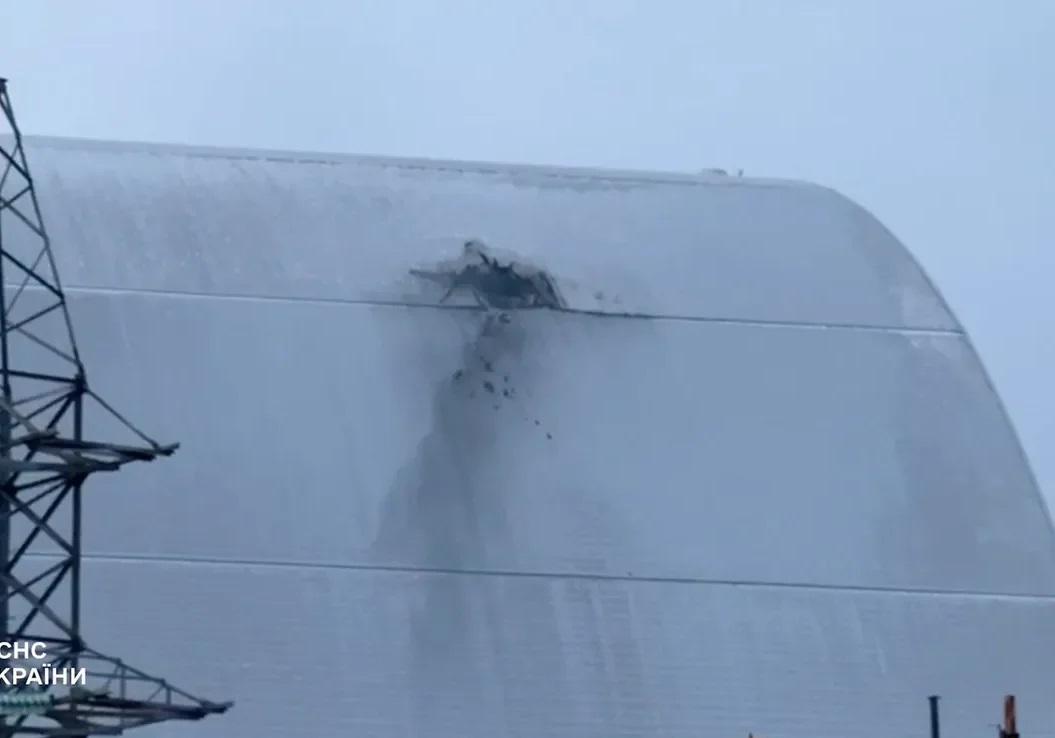
The EU will contribute up to €25 million, while the United Kingdom will contribute up to €6.7 million, with both pledges being made at today’s ICCA Assembly meeting in London. The money will be used to fund emergency repairs to the NSC following the Russian drone attack in February 2025.
That strike has severely affected the NSC’s two primary functions: (i) containing radiological hazards and (ii) supporting long-term decommissioning. Key systems designed to ensure the NSC’s 100-year lifespan have been rendered non-operational, with a significant risk of further deterioration in the absence of swift emergency repairs. While it is difficult to provide an accurate estimate of the cost of repairs to the NSC at the moment, the scale of the damage and the complex radiological environment suggest that the total cost of the emergency works could exceed €100 million.
Balthasar Lindauer, EBRD Nuclear Safety Department Director, said, “These new pledges to the ICCA are a manifestation of the international community’s unwavering support for Chornobyl and its togetherness in the face of the major radiological threat that the damaged NSC poses. We are grateful to the EU and the United Kingdom for their contributions to the ICCA.”
The ICCA was established by the EBRD in November 2020 at the request of the Ukrainian government. It was set up as a multilateral fund to support the development of a comprehensive plan for Chornobyl. The EBRD manages the ICCA, which currently holds some €25 million in donor funds. Following the occupation of the Chornobyl Exclusion Zone (CEZ) at the start of Russia’s war on Ukraine, the scope of the ICCA was broadened to support the restoration of safety and security within the CEZ, as well as wider nuclear safety measures across Ukraine.
The international community has contributed around €2 billion to EBRD-managed programmes in Chornobyl since 1995. In addition, the Bank has made more than €800 million of its net income available for Chornobyl-related projects.
All sides are keen to reach an investment decision in July after years of delay and months of negotiations. Centrica is set to take a 15 per cent stake in the UK’s Sizewell C nuclear project after years of delay and months of drawn out negotiations. All sides are keen to reach a final investment decision on the project before parliament’s recess on July 21, according to people familiar with the discussions.
The final cost of Sizewell — set to be only the second new nuclear plant built in a generation in Britain — could be close to £40bn, the Financial Times reported in January based on assumptions from industry experts. Sizewell’s management has rejected that figure although no new estimate has been given.
The planned investment by Centrica means that the FTSE 100 energy company behind British Gas would have the same size stake in Sizewell C as French state-owned energy group EDF, which has progressively reduced its position in the Suffolk project to 15 per cent.
Centrica already holds a 20 per cent stake in the parent company of the entity that operates EDF’s existing nuclear assets in the UK. The investment in Sizewell could still come in time for French President Emmanuel Macron’s visit to London for an Anglo-French summit on July 8. However, timetables have slipped, according to the people familiar with the situation, putting that goal in doubt.
.The power plant is due to stop generating by the end of March 2030. However, that will not be the end of the story, with decommissioning work expected to get under way there afterwards. A spokesperson for EDF, which manages the plant, said: “Decommissioning happens in stages. “Removing all the spent fuel from the reactors will take about four years and will be carried out by EDF.
“The site will then transfer to Nuclear Restoration Services (NRS) to carry out deconstruction. “It will take around 15 years to remove all the buildings from site, with the exception of the reactor building.
“It will be left in situ, in a state called ‘Safestore’, for around 70 years, until final site clearance.” The decommissioning staffing structure is yet to be agreed at the power station, which currently employs about 550 full-time EDF employees, plus more than 180 full-time contract partners.
Staff consultation is yet to begin, but the spokesperson added: “Every site is different but, as a rough guide, at Hunterston B, the number of EDF staff being transferred to NRS is about 250, which is around half the generation headcount. “This has been a managed reduction which has been taking place over a number of years and has largely been accommodated through redeployment, retirement and voluntary redundancy.
“During defueling, we will go through formal consultation with staff to see who wants to stay at site and who would like to leave. “Decommissioning offers lots of new opportunities, but we have found at other sites that not everyone who works at a site during generation wants to stay and be part of deconstruction. “Those who do want to stay and secure a role in the decommissioning structure will transfer over to NRS.
Policy Exchange launches its new Nuclear Enterprise Commission today, which will study how the Government should combine and amplify its civil and military nuclear programmes.
The Commission will be chaired by former Cabinet Secretary Rt Hon Simon Case CVO – a leading authority on the nuclear deterrent – and will include other internationally renowned nuclear experts.
As many nuclear states seek to update their capabilities, the Commission will examine the UK’s force posture in a multipolar world, the future of the NATO Nuclear Planning Group, the US nuclear shield and tactical nuclear weapons.
The overlapping civil and military benefits of expanded nuclear capacity must be encouraged, and Policy Exchange’s Commission will address how the Government can break-out of over-regulation to get building.
The Commission will bring together internationally renowned experts on civil and military nuclear, with representation from the UK, America, Europe, and Asia. The programme will run for six months, holding public and private events and publishing Research Notes on the key themes pertaining to the nuclear enterprise.
To mark the launch of the commission, Policy Exchange today publishes two studies on the history of the UK’s civil and military nuclear programmes.
a “complicated economic equation … unless someone has found a magic wand”
Insiders say Fontana’s stance signals he is aligned with the French government unlike his predecessor. EDF’s new boss is conducting a portfolio review that could lead to the French energy group selling some assets, as he seeks to meet government demands to focus on building new nuclear reactors in France.
Bernard Fontana has told insiders that he wanted to assess which assets were not profitable or did not fit with the state-owned group’s strategic priorities, according to several people with knowledge of the situation. Fontana, who took over as chief executive of the state-owned group last month, told the people that sales could come after the review, although he has not yet concluded which parts of the business should be sold off.
The state “has said that we have to make the new nuclear programme in France a success, and exploit the current nuclear centres. For the rest, if there aren’t the means, we’ll have to arbitrate”, said one of the people.
Its other assets and subsidiaries include the construction engineering division Framatome — of which Fontana was previously CEO
— renewable installations in France and across the world, Italian utility business Edison and services company Dalkia.
Several people familiar with EDF said Dalkia and Edison are among the business units that could be sold. Renewable assets, with the exception of EDF’s hydraulic power projects, could also be under consideration, the people said.
Still, the company’s aims could be complicated if it tries to sell assets during a difficult economic environment, potentially forcing it to offload some assets at deep discounts, especially in the US where it has a number of offshore wind and solar projects.
Asset sales would also do little to meet the enormous costs of delivering the new EPR2 programme, people familiar with the business said. The government and EDF recently agreed a funding mechanism for the project, but the total cost is yet to be determined.
Building the EPR2s and meeting EDF’s other priorities such as guaranteeing low energy prices to consumers and industrial groups, and completing Hinkley Point make for a “complicated economic equation … unless someone has found a magic wand”, said one of the people.
Israel’s war with Iran is costing the country an estimated $200 million per day, according to early assessments reported by The Wall Street Journal—a staggering figure that is quickly becoming a major constraint on the duration of the conflict, Anadolu reports.
The most expensive burden is the interception of Iranian missiles, which alone can run into tens or even hundreds of millions daily, the WSJ reported on Thursday.
Systems like David’s Sling and Arrow 3—each interception costing between $700,000 and $4 million—have been activated repeatedly in response to over 400 missiles launched by Iran in recent days.
Offensive operations are also increasing costs. Deploying Israeli F-35s over 1,000 miles to hit targets in Iran costs approximately $10,000 per hour per jet, in addition to the price of precision bombs like JDAMs and MK84s.
Altogether, the Aaron Institute for Economic Policy estimates that a month-long war could cost Israel $12 billion.
“This war is far more expensive than Gaza or Hezbollah,” said economist Zvi Eckstein. “The ammunition—defensive and offensive—is the big expense.”
The economic pressure is leading to calls for a shorter war, though Prime Minister Benjamin Netanyahu has not indicated any intention to halt operations before achieving strategic objectives such as crippling Iran’s nuclear and missile programs.
While Israeli markets remain stable—some even rising—damage on the ground is mounting.
Engineers estimate that reconstruction costs from missile strikes will exceed $400 million, as hundreds of buildings have been damaged, and more than 5,000 civilians have been evacuated.
Israel’s largest oil refinery was temporarily shut down after being hit, and work in several critical infrastructure sectors has been suspended.
Former Bank of Israel Governor Karnit Flug told the WSJ that the duration of the conflict is key to economic sustainability: “If it is a week, it is one thing. If it is two weeks or a month, it is a very different story.”
The European Union estimates it will require $277 billion in investments for conventional nuclear power expansion by 2050.
Some EU countries are considering Small Modular Reactors and other advanced nuclear technologies as alternatives or supplements to traditional large-scale nuclear plants.
The EU is also pursuing nuclear fusion research as a potential long-term solution for energy independence and decarbonization.
The European Union countries planning to expand their nuclear power capacities will need as much as $277 billion (241 billion euros) in investments by 2050, according to Brussels’ estimates.
That’s only the investment needed for the conventional large-scale nuclear reactors currently in the plans of nearly half of the EU member states. The sum doesn’t include investment in Small Modular Reactors (SMRs), Advanced Modular Reactors (AMRs), or microreactors, or investment in nuclear fusion efforts.
Some EU countries are open to returning to nuclear power generation, but only via SMRs and other advanced nuclear energy technology—not conventional large-scale nuclear power plants. These will require additional billions of U.S. dollars in investment.
Delivering the EU’s current plans to boost nuclear energy capacity will require $277 billion (241 billion euros), both for lifetime extensions of existing reactors and the construction of new large-scale reactors, the European Commission said in its latest assessment of nuclear investment needs by 2050.
While the EU’s biggest economy, Germany phased out nuclear power in 2023, some other EU countries see nuclear energy as an important part of their decarbonization, industrial competitiveness, and security of supply strategies.
…………………………………………………… the required investment in SMRs will be in addition to the $277 billion the EU estimates is necessary for large-scale conventional reactors.
So, the price tag of Europe’s nuclear power ambitions will be much higher. While SMRs hold promise, they are unlikely to be deployed commercially before the 2030s, and large-scale conventional reactors are notoriously facing delays and cost overruns.
s part of last week’s spending review, the government announced a further investment of £14.2bn for the Sizewell C nuclear power station. This puts the state’s total commitment into the project at £17.8bn.
Despite the scale of these numbers, the government’s pledges for Sizewell C seem to only cover a minority of the plant’s construction costs. That’s because, per leaks to the FT, Sizewell C’s construction budget is likely to balloon to over £40bn.
Government spokespeople have defended these costs by pointing out that Sizewell C is set to be significantly cheaper than the Hinkley Point C plant — conservatively, using CPI inflation, the latter’s construction costs are set to run up to £46.8bn in 2025 prices. The lessons from Hinkley Point C, which is a virtually identical facility that also uses the European Pressurised Reactor (EPR) architecture, are apparently being realised into cost savings.
However, this does conceal the big point: the EPR plants are both grossly expensive, relative to Britain’s historic plants. Sizewell B, the last new nuclear plant built in Britain, came online in 1995 and cost £2,030mn in 1987 prices — £5.85bn in 2025, using CPI inflation.
Even accounting for the fact that Sizewell B’s nameplate capacity is 1,250MW compared to the 3,260 MW of the two EPRs, the capital costs per MW are far more expensive. The construction costs of the cheaper EPR, Sizewell C, are set to stand at £12.3mn per MW. By comparison, Sizewell B’s construction costs amount to £4.7mn per MW. So even adjusting for inflation and plant size — which should nominally reduce the cost per MW via economies of scale — the EPR reactors are nearly three times more expensive than their predecessors.
So why has nuclear become so much more expensive?
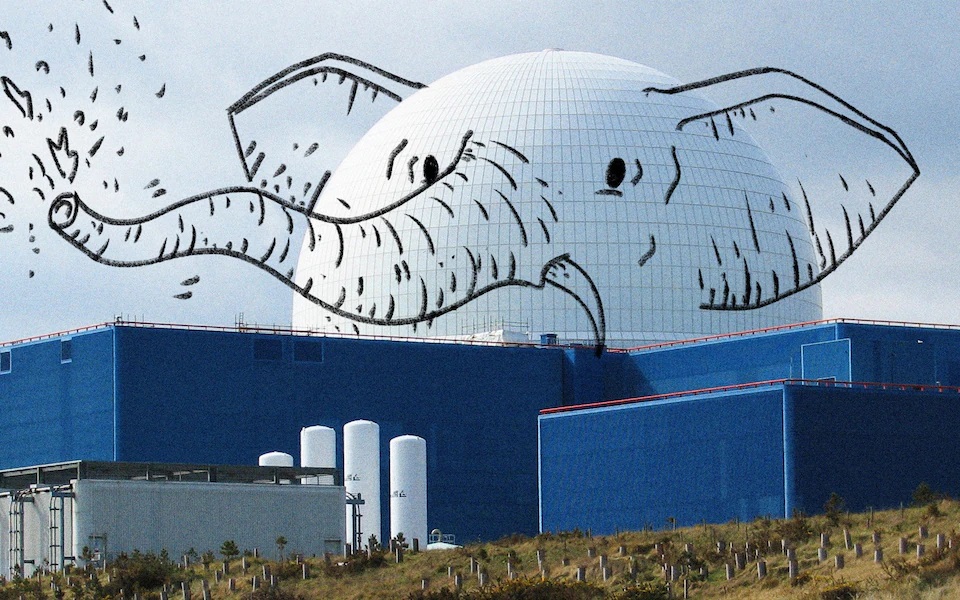
One elephant in the room is the EPR architecture. The system was designed with the ethos of risk minimisation at all costs, employing countless redundancies. Whereas many contemporary pressurised water reactors minimise risk through passive safety systems, EPRs build in countless new pumps and active countermeasures to avert a disaster. The result is an orders of magnitude increase in plant complexity, and thus cost.
However, while there’s much to be said about the faults of EPR, it probably takes a backseat to a more pressing structural problem: the way that Britain funds nuclear projects……………………………………………………….
These heightened costs are felt by consumers — Hinkley Point C’s energy via exceptionally high energy prices through a pre-agreed Contract for Difference (CfD) price, and Sizewell C’s via increased energy bills during construction via a Regulated Asset Base (RAB) price hike. While in the long-run RAB is a better model than CfD for cost-minimisation, both still push up energy prices by forcing consumers to cover the far more expensive private debts of investors………….. https://thecritic.co.uk/sizing-up-sizewell-c/
Funding for electricity group EDF, the UK’s largest ever private credit deal, eases pressure on the troubled project. US private capital group Apollo will provide £4.5bn in debt financing to support the UK’s Hinkley Point C nuclear power station, easing mounting financial pressure on the delayed and over-budget project. The investment-grade package will be provided as unsecured debt at an interest rate just below 7 per cent, according to people familiar with the matter. EDF, which is building two new nuclear reactors at the site in Somerset, said it will be able to borrow £1.5bn each year over three years as part of the package. The debt has a maximum maturity of 12 years. The debt package addresses a significant gap in the finances of the project, which has struggled with a shortfall since China General Nuclear Power Group (CGN), which was supposed to provide a third of the cost of the project, stopped providing further financing in 2023.
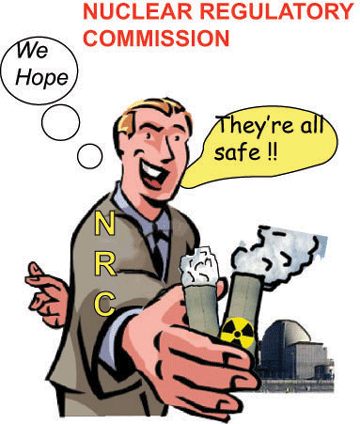
President Trump has fired one of the five members of the independent commission that oversees the nation’s nuclear reactors. Nuclear Regulatory Commissioner Christopher T. Hanson was terminated on Friday, according to a brief email seen by NPR from Trent Morse, the White House Deputy Director of Presidential Personnel. The e-mail said only that Hanson’s “position as Commissioner of the U.S. Nuclear Regulatory Commission is terminated effective immediately.”
“All organizations are more effective when leaders are rowing in the same direction,” White House Deputy Press Secretary Anna Kelly told NPR via e-mail. “President Trump reserves the right to remove employees within his own Executive Branch who exert his executive authority.” In a statement shared with NPR, Hanson said that he was fired “without cause,” and that he had devoted his term to “preserving the independence, integrity and bipartisan nature of the world’s gold standard nuclear safety institution. … I continue to have full trust and confidence in their commitment to serve the American people by protecting public health safety and the environment.”
Hanson was appointed to the NRC by President Joseph Biden in 2020 and then reappointed in 2024. His current term was set to expire in 2029, according to a bio on the NRC’s website that has since been removed. Some observers of the nuclear industry were sharply critical of the decision. “I think that this coupled with the other attacks by the administration on the independence of the Nuclear Regulatory Commission could have serious implications for nuclear safety,” says Edwin Lyman, director of nuclear power safety at the Union of Concerned Scientists, an environmental watchdog group. “It’s critical that the NRC make its judgements about protecting health and safety without regard for the financial health of the nuclear industry.”
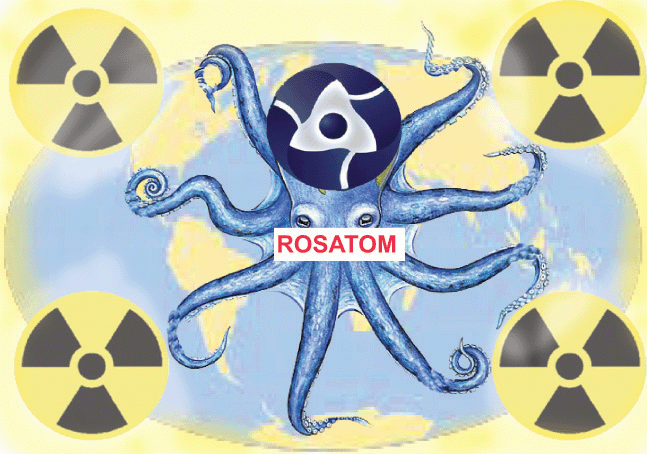
Nuclear state entity is on the ground in Ukraine and smoothing the way for new atomic tests, writes Charles Digges
If Russia’s state nuclear corporation Rosatom is to be believed, 2024 was a banner year.
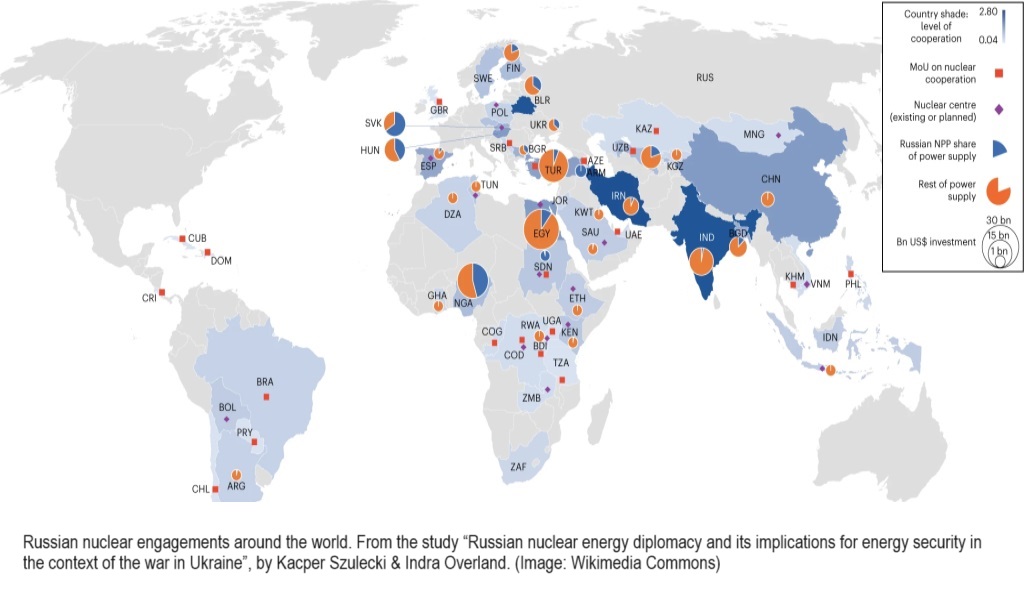
It is expanding its footprint in new markets in Africa, Asia and the Middle East, as well as in Central Asian post-Soviet states. It is running an expansive development program along the Northern Sea Route, the 6,000-kilometer Arctic shipping corridor uniting Europe and Asia, and is responsible for everything from nuclear icebreaker construction to port infrastructure along its reach. It is powering the mining of rare earth minerals essential for renewable energy and electronics in operations from the Kola Peninsula to Siberia. It is acquiring domestic energy firms and making forays into transport, housing and utilities. And, of course, it is building nuclear power plants in foreign markets — including in some NATO members — at a pace unmatched by any other country or corporation.
But the slick commercial rhetoric belies the fact that Rosatom is a company that is literally at war.
As one of the Kremlin’s prize state industries, Rosatom has reoriented its practices to align with Moscow’s war economy as the invasion of Ukraine drags on. For this, it receives lavish state support and is overseen by members of President Vladimir Putin’s inner circle. Yet, unlike other energy producers in Russia’s oil and gas sectors, Rosatom has thus far managed to sidestep any serious sanctions from the West, attesting to the dependence it has fostered on the international nuclear market.
Recently, Western markets have begun to challenge Rosatom’s dominance as they attempt to shift their dependence away from Russian-produced nuclear fuels and other technologies. But our new report suggests that Rosatom is preparing for such shortfalls by changing customers and expanding its operations into industries beyond the nuclear — including further enmeshing itself in Moscow’s war as an active military participant. These are the corporate achievements that are less likely to appear in the company’s glossy public relations materials.
Rosatom at war
For instance, the putatively civilian corporation is helping Russian arms makers sidestep bans on Western-produced components for weapons used on the Ukrainian front. It has also developed technology for the Oreshnik line of ballistic missiles, producing a warhead tip so durable that the company brags it can withstand temperatures as hot as the surface of the Sun.
The corporation also seems to be smoothing the way for various weapons tests, including nuclear tests, on Novaya Zemlya, an Arctic archipelago used by the Soviets as an atomic bomb testing range. Most recently, it has been the site of trials for the Burevestnik nuclear-powered cruise missile developed by Rosatom technicians.
Russia’s recent withdrawal from its ratification of the Comprehensive Nuclear Test Ban Treaty and its abandonment of other arms agreements with the West coincides with a hive of activity on this frozen strip of land, suggesting Russia may be moving back toward testing nuclear weapons. Rosatom, the steward of Russia’s nuclear arsenal, will surely be at the center of it.
Rosatom likewise continues to tighten its grip on the Zaporizhzhia nuclear power plant in Ukraine — Europe’s largest atomic energy station — which the Russian military seized in the opening days of its invasion in 2022. It is widely assumed from the Kremlin’s official statements that Rosatom intends to absorb the plant, making it the 12th nuclear power plant in its purview — and marking one of the most breathtaking seizures of war booty in modern warfare.
What the corporation is ignoring
Alongside these endeavors stands the fact, which Rosatom is loath to mention in its brochures, that Rosatom’s domestic fleet of 36 reactors is aging. Most need to be replaced by 2065, but the funds for this are severely lacking. The company’s current plans to extend runtimes at several aged Chernobyl-style reactors suggest that this is a problem the corporation will not be able to solve anytime soon.
Rosatom has also snuffed out its past efforts to clean up Russia’s Soviet nuclear legacy, retooling many of the constituent enterprises that were responsible for that to handling non-nuclear hazardous waste. These moves turn away from more than two decades of effort with the international community and mark the corporation’s increasing efforts to shut itself off both from the West and from scrutiny at home.
The war in Ukraine and accompanying stifling of civil society organizations — including my employer, Bellona — that once held Rosatom to account has fueled that opacity.
In fact, such organizations once formed Rosatom’s Public Council, which kept the corporation in conversation with environmentalists and the public it purported to serve. While the Public Council still exists, it is staffed by Putin’s cronies, including one from his intramural hockey team.
Nor is there anything left of the robust network of strident Russian-grown, anti-nuclear NGOs that for years fought to keep Rosatom’s activities in the public eye. Their disappearance has left Rosatom to its own secretive devices, the organizations themselves hounded out of existence by the Kremlin’s war bureaucracy.
Rosatom helps Moscow divide the world
All of this taken together — both what the corporation will and will not tell us — paints a picture of Rosatom as primarily a formidable political tool. This allows it to couple a broad mandate at home with a campaign of influence abroad. By offering its reactor customers enormous state-backed loans to build nuclear plants that Rosatom will service, fuel and, in many cases, even staff for decades to come, the corporation is vital to creating regimes that are friendly to — and dependent on — Moscow around the world.
While the war in Ukraine has perhaps cost Rosatom some of its former markets in the West, the company has, as our report shows, survived these geopolitical shifts and remained a powerful vector of Russian influence. As a result, the company will continue to help cleave away many of the world’s nations to Moscow’s geopolitical cause.
Charles Digges is an environmental journalist and researcher who edits the website of the Norway-based NGO Bellona.
The government has revealed that it doesn’t know how much public money was spent on any of the country’s 19 historic nuclear power plants ahead of their respective final investment decisions (FIDs).
The FID is the agreement between public and private parties on how a major project will be funded, paving the way for the main construction to commence.
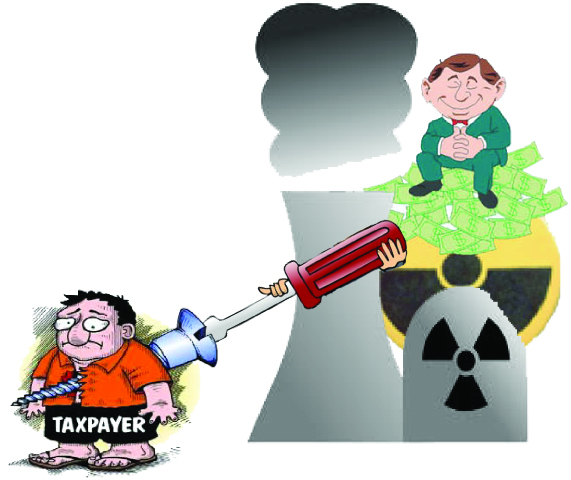
Pre-FID financing has risen up the agenda because of the £18bn of public money spent on Sizewell C despite its FID not having been confirmed. This means that the project is not yet guaranteed to go ahead and presents huge risks for taxpayers if the scheme falls through.
The government has revealed that it doesn’t know how much public money was spent on any of the country’s 19 historic nuclear power plants ahead of their respective final investment decisions (FIDs).
The FID is the agreement between public and private parties on how a major project will be funded, paving the way for the main construction to commence.
Pre-FID financing has risen up the agenda because of the £18bn of public money spent on Sizewell C despite its FID not having been confirmed. This means that the project is not yet guaranteed to go ahead and presents huge risks for taxpayers if the scheme falls through.
The rhetoric from the government about Sizewell C is centred on its confidence about the future of the project, but potential private sector investors including Centrica have aired concerns about the viability of the power station.
NCE submitted a request using the Freedom of Information Act (FOI) to the Department for Energy Security and Net Zero (DESNZ) for information on how much public money was committed to the UK’s 19 historic nuclear energy projects ahead of their respective FIDs or equivalent project milestones.
The 19 projects were Calder Hall, Chapelcross, Berkeley, Hunterston A, Hinkley Point A, Bradwell, Trawsfynydd, Dungeness A, Sizewell A, Oldbury, Wylfa, Dungeness B, Hunterston B, Hinkley Point B, Hartlepool, Heysham 1, Heysham 2, Torness and Sizewell B.
All are either operating or in the decommissioning phase of their lifecycles.
In response to the FOI request, DESNZ said: “The department does not hold the historic information requested relating to the UK’s current operational fleet, and projects which have been or are being decommissioned.”
DESNZ added that “the government did not make any funds available” to Hinkley Point C ahead of its FID.
“For Sizewell C, details of the subsidy schemes made by the government and the funds made available can be found on the subsidy transparency database,” it added.
“The DEVEX Scheme has been made for £5.5bn for the SZC company. Under this scheme to date £3.9bn has been awarded to the company – which would be available for them to draw down. Other future awards may be made up to the maximum amount of the scheme.”
Campaigners and politicians have spent years trying to get the UK Government to reveal the estimated total costs of Sizewell C, including by calling for the National Audit Office and Office for Value for Money to review the project.
The total final cost estimate has not been officially revealed, with the government citing concerns about commercial sensitivity. The Financial Times reported in January 2025 that costs are expected to reach £40bn, though the government has said it does not recognise this figure.
In a letter dated 10 June 2025, the Office for Value for Money confirmed to the National Audit Office that it would not be looking at the project.
Office for Value for Money independent chair David Goldstone said: “In line with our principle not to duplicate the work of others we did not review HS2, Sizewell C and Dreadnought, as they are already subject to extensive review processes.”
Stop Sizewell C executive director Alison Downes told NCE: “The government continues to stonewall questions about Sizewell C’s cost, and how £6.4bn of taxpayers’ money ahead of a final investment decision is being used, an amount that is double what was spent by EDF at Hinkley Point C to get to the same point.
“Given the further £11.5bn allocated to Sizewell C over the next few years, and the fact that consumers could soon begin to pay a Sizewell tax on their bills, it is woeful that the independent chair of the Office of Value for Money decided not to scrutinise this monster of a project.”
DESNZ was approached for comment but did not provide one.
The government has revealed that it doesn’t know how much public money was spent on any of the country’s 19 historic nuclear power plants ahead of their respective final investment decisions (FIDs).
The FID is the agreement between public and private parties on how a major project will be funded, paving the way for the main construction to commence.
Pre-FID financing has risen up the agenda because of the £18bn of public money spent on Sizewell C despite its FID not having been confirmed. This means that the project is not yet guaranteed to go ahead and presents huge risks for taxpayers if the scheme falls through.
The rhetoric from the government about Sizewell C is centred on its confidence about the future of the project, but potential private sector investors including Centrica have aired concerns about the viability of the power station.
NCE submitted a request using the Freedom of Information Act (FOI) to the Department for Energy Security and Net Zero (DESNZ) for information on how much public money was committed to the UK’s 19 historic nuclear energy projects ahead of their respective FIDs or equivalent project milestones.
The 19 projects were Calder Hall, Chapelcross, Berkeley, Hunterston A, Hinkley Point A, Bradwell, Trawsfynydd, Dungeness A, Sizewell A, Oldbury, Wylfa, Dungeness B, Hunterston B, Hinkley Point B, Hartlepool, Heysham 1, Heysham 2, Torness and Sizewell B.
All are either operating or in the decommissioning phase of their lifecycles.
Related questions you can explore with Ask NCE, our new AI search engine.
If you would like to ask your own question you just need to login, register or subscribe.
In response to the FOI request, DESNZ said: “The department does not hold the historic information requested relating to the UK’s current operational fleet, and projects which have been or are being decommissioned.”
DESNZ added that “the government did not make any funds available” to Hinkley Point C ahead of its FID.
“For Sizewell C, details of the subsidy schemes made by the government and the funds made available can be found on the subsidy transparency database,” it added.
“The DEVEX Scheme has been made for £5.5bn for the SZC company. Under this scheme to date £3.9bn has been awarded to the company – which would be available for them to draw down. Other future awards may be made up to the maximum amount of the scheme.”
Campaigners and politicians have spent years trying to get the UK Government to reveal the estimated total costs of Sizewell C, including by calling for the National Audit Office and Office for Value for Money to review the project.
The total final cost estimate has not been officially revealed, with the government citing concerns about commercial sensitivity. The Financial Times reported in January 2025 that costs are expected to reach £40bn, though the government has said it does not recognise this figure.
In a letter dated 10 June 2025, the Office for Value for Money confirmed to the National Audit Office that it would not be looking at the project.
Office for Value for Money independent chair David Goldstone said: “In line with our principle not to duplicate the work of others we did not review HS2, Sizewell C and Dreadnought, as they are already subject to extensive review processes.”
Stop Sizewell C executive director Alison Downes told NCE: “The government continues to stonewall questions about Sizewell C’s cost, and how £6.4bn of taxpayers’ money ahead of a final investment decision is being used, an amount that is double what was spent by EDF at Hinkley Point C to get to the same point.
“Given the further £11.5bn allocated to Sizewell C over the next few years, and the fact that consumers could soon begin to pay a Sizewell tax on their bills, it is woeful that the independent chair of the Office of Value for Money decided not to scrutinise this monster of a project.”
DESNZ was approached for comment but did not provide one.
The auditor said “a final investment decision on [Sizewell C] should not be approved until a significant reduction in EDF’s financial exposure to the Hinkley Point project has been achieved.
“[Cour des comptes] also recommends ensuring that any new international nuclear project generates quantified gains and does not delay the timetable for the EPR 2 programme in France.”










 nuclear-news