Electricite de France (EDF) ‘s new nuclear reactors not financially viable

French auditor calls for financing guarantee for future EPR projects, WNN, 15 July 2020, EDF must ensure the financing and profitability of its proposed EPR2 reactor before starting construction of any plants based on the design in France, the country’s state audit office has said. The EPR2 is a simplified version of the EPR design, construction of which has been hit by delays and cost increases in France and Finland……..
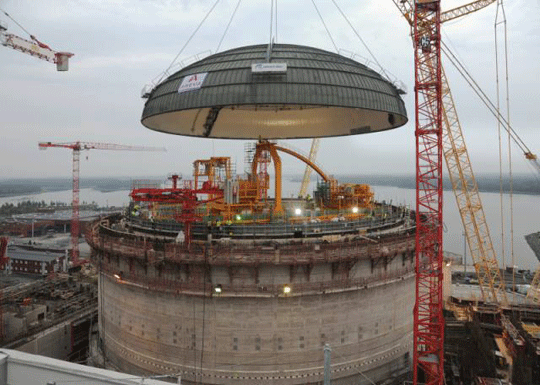 Construction of the Olkiluoto 3 EPR began in 2005, with completion of the reactor originally scheduled for 2009. However, with various delays and setbacks, fuel loading is now planned for later this year. The loading of fuel into the Flamanville EPR in France, construction of which began in December 2007, is now scheduled for the end of 2022. Two EPR units are also under construction at the Hinkley Point C project in Somerset, UK.
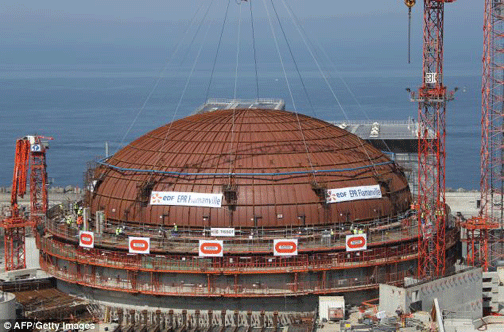 launch of the construction sites of the first two EPRs, in Finland and in Flamanville. This insufficient preparation led to underestimating the difficulties and the construction costs, and to overestimating the capacity of the French nuclear sector to face it, at the cost of financial risks for the companies of the sector.”
The audit office added, “The construction of new EPRs in France cannot in any event be envisaged without clear prior answers on the methods of financing and the role of nuclear power production in the electricity mix of tomorrow.”
The report says EDF is no longer in a position to finance the construction of new reactors on its own. The utility, it says, is studying means of financing that either makes the consumer – as in the case of the UK’s contract-for-difference for construction of Hinkley Point C – or the taxpayer bear the costs of construction.
“The financial challenges are major, with the cost of construction of three pairs of EPR2 reactors being estimated at EUR46 billion (2018 value),” the Cour des Comptes notes. “Taking into account their duration of construction, production and dismantling, the decision to build or not to build future EPRs will have consequences until the 22nd Century. …. https://world-nuclear-news.org/Articles/French-auditor-calls-for-financing-guarantee-for-f
Problems and dangers face the dismantlement of damaged Three Mile Island nuclear reactor
“The smell was a combination of rotting eggs, diesel fuel and a smoldering fire pit,” he said.
The plant’s Unit 2 reactor had partially melted down about 4 a.m. March 28, 1979, and as Mohr remembers it, locals panicked, fearing for their safety. Some fled, others hid inside.
“I can remember this like it was yesterday,” said Mohr, who has been a longtime township supervisor. “There was definitely an air of uncertainty. People were confused.”
Four decades later, confusion and concern have returned near the now-inactive power plant as officials at Utah-based EnergySolutions plan to dismantle the historic reactor.
It’s a plan that has state environmental officials and local nuclear watchdogs ringing proverbial alarm bells, pointing to concerns that money set aside for the decommissioning could run out before the work is finished.
That’s in addition to fears about the potential for indefinite radioactive contamination on the island, which sits just upstream from Lancaster County on the Susquehanna River.
Old concerns resurface
To Arthur Morris, Lancaster city’s mayor from 1980 to 1990, some of those worries are familiar. They existed in the years after the 1979 accident, when Morris sat on a state advisory board that focused on radioactive decontamination of Unit 2.
Back then — and now — the Susquehanna River served as the primary source for several downstream Lancaster County drinking water systems, including in Lancaster city.
As mayor, Morris said one of his priorities on the panel was to make sure radiation wasn’t carried downstream and piped through Lancaster residents’ faucets — a priority that led to regular testing near the plant that persists today.
Last week, Morris said he isn’t surprised that some of those old concerns have resurfaced with Unit 2 coming back under scrutiny.
“Those things don’t go away until the island is cleaned up,” Morris said.
‘Worst-case scenario’
However, it’s a cleanup plan that has nuclear watchdog Eric Epstein speaking out on signs of pending danger.
“It’s the worst-case scenario,” said Epstein, a leader of the Harrisburg-based group Three Mile Island Alert.
Last fall, Unit 2’s owners at Ohio-based FirstEnergy Corp. announced that they planned to transfer all related licenses and assets to TMI-2 Solutions LLC, an EnergySolutions subsidiary.
The transfer would mean that EnergySolutions also would take over the responsibility of eventually dismantling the Unit 2 reactor.
And that eventuality had already been planned for by the time the proposed transfer was announced in October. Then, EnergySolutions revealed plans to contract decommissioning work out to New Jersey-based construction company Jingoli, which has had past success with nuclear projects in the United States and Canada.
Despite a track record, state Department of Environmental Protection officials warned that planning for and beginning decommissioning work too early could put the island and surrounding areas at risk.
After all, DEP Secretary Patrick McDonnell noted, Unit 2 is the site of the worst commercial nuclear accident in United States history — an accident that released radioactive gases and grossly contaminated the reactor and its surrounding buildings.
“Because of this, we understand there are very high radiation areas within TMI Unit 2 that present a grave risk to personnel that enter,” a letter signed by McDonnell reads.
That high radiation has prevented all but minor exploration of the Unit 2 area, meaning the radiological conditions inside large portions of the plant remain a mystery, according to the letter.
“I firmly believe TMI Unit 2 is the most radiologically contaminated facility in our nation outside of the Department of Energy’s weapons complex,” it reads.
Postponing the cleanup for “several decades” could allow for a decrease in radioactive potency, possibly lessening the chance of further environmental contamination, McDonnell wrote.
All of that is in addition to raising questions about how radioactive waste will be disposed, transported and stored. That includes concerns about whether any of that waste will be stored on the island — a site that Epstein believes could remain indefinitely radioactive.
Both McDonnell’s writings and Epstein’s concerns were submitted this spring to officials at the U.S. Nuclear Regulatory Commission, which must approve the FirstEnergy-to-EnergySolutions transfer request.
Commission officials have been reviewing the request since November, and similar reviews have been completed in a year or less, according to spokeswoman Diane Screnci.
Financial concerns
But it’s not only environmental issues that will be weighed as part of that review, with Epstein and state officials also raising serious financial concerns.
Specifically, they’ve drawn attention to a largely ratepayer-funded $901 million trust set aside to cover the cost of decommissioning, which has been estimated at upward of $1.2 billion.
Further complicating the issue, according to McDonnell’s letter, is the fact that trust fund dollars are tied to the stock market, which has seen large fluctuations due to the ongoing COVID-19 pandemic.
“Given the obvious uncertainties and complexities associated with cleaning up the remains … the demonstration of adequate funding to complete the decommissioning of TMI-2 and restoration of the site, is a significant concern of the department and the citizens of Pennsylvania,” McDonnell wrote.
Beyond sharing McDonnell’s letters, DEP officials said they could not further discuss the proposed decommissioning, citing litigation. Nondisclosure agreements stipulated by EnergySolutions also prevent DEP and Epstein from sharing some details.
EnergySolutions spokespeople did not respond to multiple requests for comment, though they indicated they are aware of concerns about their work.
Jennifer Young, a FirstEnergy spokeswoman, said company officials have faith the job will be completed on budget despite the existing disparity between the trust fund and estimated cost.
Cost estimates show there are sufficient funds given the project schedule for decommissioning,” she said. “Keep in mind that those funds will continue to accumulate value throughout the decommissioning process, which takes place over many years. Not all the money will be required or spent at one time.”
Epstein said it’s important to point out that the Unit 2 trust is full of ratepayer money, which will be under the full control of EnergySolutions’s TMI-2 Solutions LLC, a private company, with little public scrutiny.
Right company for the job
Despite those concerns, Young said FirstEnergy officials believe EnergySolutions is the right company to dismantle Unit 2. In fact, EnergySolutions decommissioning proposal was selected over offers from two other companies, she said. The unsolicited EnergySolutions proposal was made in 2018, Young said.
By Nuclear Regulatory Commission decree, the plant must be decommissioned within 60 years of halting operation, and Three Mile Island’s functioning Unit 1 was taken offline by its owner, Exelon, in 2019.
“We were faced with a decision to decommission the unit now or wait to start in the 2030s,” Young said.
“Waiting would not guarantee there would be companies available to start the dismantlement in time to comply with the 60-year requirement due to the large number of nuclear plant licenses that will expire in the 2030s,” he said.
Still, Epstein said he’d like a Nuclear Regulatory Commission decision on the transfer to remain delayed until his and DEP’s concerns can be worked through.
Like a big gravestone
Back in Conoy Township, Mohr said his full faith is in the commission to make the right decision — an opinion steeped in the immediate aftermath of the 1979 partial meltdown.
It was a commission official, Harold Denton, who shared the first details with locals, offering assurances that everything would be alright, he said.
“When he was done speaking, it was like the world calmed down,” Mohr said of the commission official. “He put it into a perspective that even we understood.”
For decades since, the plant has meant local jobs and local money, but since the 2019 shutdown, much of that has fallen by the wayside, he said. And it’s mostly for that reason that Mohr said he’s indifferent to the island’s fate.
“It’s almost to the point now that it was never there. If we drive north, we see it,” he said. “It reminds me of the biggest gravestone that I ever saw.”
France’s state auditor questions the wisdom of EDF’s Hinkley Point nuclear project in UK

Telegraph 11th July 2020, Doubts cast on EDF’s ability to build power stations on time and budget.
French auditor questions wisdom of state-owned utility’s involvement in building the new Hinkley Point C power station in Somerset.
France’s state auditor has questioned the ability of the company building Britain’s next nuclear power plant to construct new reactors within “acceptable” costs and timeframes. State-owned EDF has already said that its Flamanville nuclear plant in Normandy will now cost €12.4bn due to the expense of fixing 66 faulty welds. On top of that, the project will cost another €6.7bn, according to France’s Court of Accounts in a new report.
EDF has also said the plant’s start date will be delayed until the end of 2022. Flamanville was originally due to cost €3.3bn and start operations in 2012.
Presenting the damning 148-page report this week, Court of Accounts chief Pierre Moscovici said: “There is still uncertainty on the ability of the French nuclear industry, despite its current strong efforts, to build new nuclear reactors within a time frame and costs that remain acceptable.”
The criticism follows a £3bn surge in costs at the Hinkley Point C reactor EDF is building in Somerset. The bill for the project will now be £22.5bn – £2.9bn more than previously forecast – with overruns paid for by EDF. The energy giant has faced lags at its other projects, including Finland’s Olkiluoto 3 nuclear reactor, which is running more than
a decade behind schedule.
In its report, the state auditor questioned the wisdom of involvement in Hinkley Point C, saying its construction was
“weighing heavily” on the financial situation of EDF, whose net debt hit €41bn at the end of last year.
Senators urge US Development Finance Corp not to fund ‘risky’ overseas nuclear projects
US senators urge agency not to allow funding of ‘risky’ nuclear projects, S and P Global Platts, Author Joniel Cha , Editor Keiron Greenhalgh 12 July 20
HIGHLIGHTS
DFC proposes to reverse prior policy
Lawmakers say nuclear not cost competitive
- Washington — Senators Edward Markey, Democrat-Massachusetts, and Bernie Sanders, Independent-Vermont, in a July 10 letter jointly urged US Development Finance Corp., not to “waste American tax dollars on risky international nuclear projects.”
DFC proposed June 10 to revise its policy so that the federal agency could provide financing for nuclear power projects, beginning a 30-day public comment period ending July 10.
The agency was created in 2019 through the consolidation of Overseas Private Investment Corp. and the US Agency for International Development’s Development Credit Authority.
OPIC and USAID both had bans in place prohibiting them from supporting nuclear reactor projects.
The senators said international nuclear power projects “are not a cost-competitive form of zero-carbon energy, remain unproven, will divert funds from higher-priority low-income countries, and are not supported by other development banks.” ……..
- The senators said: “DFC should not be dedicating its limited financing to unproven technologies that present both safety and security risks. Pushing experimental research and development is not part of the DFC’s mandate.”
DFC has a total investment limit of $60 billion……..
The senators requested a response from DFC by July 31.
The American Nuclear Society and advocacy group Clear Path, along with 40 other organizations and individuals, submitted comment letters to DFC July 2 and 9, respectively, supporting the removal of the ban.
DFC did not respond to requests for comment July 9.https://www.spglobal.com/platts/en/market-insights/latest-news/electric-power/071020-us-senators-urge-agency-not-to-allow-funding-of-risky-nuclear-projects
Court reveals that EDF deceived UK about the true financial risks of Hinkley Point nuclear project
EDF boss suppressed report calling Hinkley Point ‘risky’Adam Sage, The Times, 10 July 20, thetimes.co.uk/article/edf-boss-suppressed-report-calling-hinkley-point-risky-gd5vcdhrx
The Times reports that the chief executive of the French company building the UK’s new nuclear reactors won boardroom approval for the project after suppressing an internal review labelling it as risk-laden. In a “highly critical report on the European Pressurised Reactors”, France’s Court of Audit said that the Hinkley Point project in Somerset, led by EDF, represented a “high financial risk” for the French state electricity group, the Times adds.
The court uncovered that the risks had been pointed out in a 2015 review that warned there “were not efficient enough to guarantee that risks would be controlled”. The Times continues: “The court said that Jean-Bernard Lévy, EDF’s executive chairman, had ‘refused to transmit the full report’ to directors or the government, even though the state has an 83.7% stake. They received only a synopsis.” The project received approval from the EDF board in 2016. The court also said that EDF must establish the financing and profitability of nuclear reactors before launching projects, reports Reuters, “dealing a blow to the state-owned utility’s ambitions to build new units”. And Reuters also reports that nuclear power generation at its reactors in France plunged 25.1% in June (compared to 2019) due to the effects of the coronavirus pandemic.
Meanwhile, writing in the Daily Telegraph, Sir Iain Duncan-Smith – MP and former leader of the Conservative Party – argues that the UK should “unwind its dependence on China” for “cheap goods and nuclear power”. He says: “The UK has enormous home grown tidal power potential, yet both tidal and hydrogen seem to have been brushed aside in favour of our growing dependence on large Chinese-run nuclear projects.” He concludes: “From Huawei to hydrogen and Hong Kong, we need to recognise the strategic threat China poses and, together with our allies, decide what we will do to reduce it, otherwise we risk repeating the failed lessons of the past.” And also in the Daily Telegraph, chief city commentator Ben Marlow says that the government should be stimulating manufacturing demand to contain the damage caused by Covid-19 to Rolls Royce – “Britain’s most illustrious engineering company”. He says: “It should start with nuclear where enlisting the expertise of Rolls-Royce in building so-called mini-nukes would help to solve its current geo-political nightmare with China. It would make it easier to ditch China General Nuclear Power Group from the plans to build giant new plants at Sizewell on the Suffolk coast and Bradwell in Essex, or scrap the proposals altogether.” These decisions would “also offer a greener and cheaper alternative to a technology that looks decidedly out of date already, and it would create jobs at a company in desperate need of a leg up – three birds with one stone”.
Britain’s nuclear future in trouble, aging reactors, and not enough money without China’s help
Britain’s Nuclear Future Uncertain as Relations With China Fray, https://business.financialpost.com/pmn/business-pmn/britains-nuclear-future-uncertain-as-relations-with-china-fray Rachel Morison and William Mathis, Bloomberg) 8 July 20, — Britain’s fraying relationship with China has the potential to undo a decade of mixed efforts to keep nuclear power flowing as an aging generation of plants drop out of service.
Once the heart of the U.K.’s energy plans, nuclear has been sidelined by spiraling costs and cheaper renewables. It also finds itself at the center of a diplomatic row spanning trade and human rights that threatens to undermine how the sector is financed.
Relations between China and the U.K. have been strained as the row over Huawei Technologies Co. intensified. When sweeping new national security laws were introduced in Hong Kong Prime Minister Boris Johnson offered its citizens the right to live and work in Britain.
China warned the U.K. Monday it’ll face “consequences” if it chooses to be a “hostile partner” after it emerged the government is planning to phase out the company’s equipment in the U.K.’s 5G telecommunications networks.
For nuclear, the sticking point has become the once-feted relationship with China General Nuclear Power Corp. that’s supposed to deliver the next generation of large nuclear plants. That link has come into sharp focus as the U.K. scrambles to find a funding model for projects that aren’t getting any cheaper.
Without CGN, its money and its technology, the U.K. will be left with a huge funding gap that other investors don’t seem willing to fill. It’ll also leave the country’s nuclear plans in disarray.
Equity funding for nuclear power stations is very difficult for private actors,” said Rob Gross, director of the U.K. Energy Research Centre. The risks are significant, timescales long and individual projects are very large. That’s why governments have always played a role in nuclear power, he said.
CGN’s involvement in Britain’s nuclear industry started in 2016 when a deal was signed with Electricite de France SA to cooperate on a trio of reactors totaling 8.7 gigawatts starting with Hinkley Point C in southwest England.
Nuclear remains important for the British government but it’s becoming increasingly pushed to the margins of energy policy as cheaper wind and solar have taken center stage.
Nuclear power has traditionally been seen as a low-carbon way of supplementing renewables — and as such a key part of the future energy mix envisioned in a net zero world.
Losing nuclear power probably wouldn’t pose a threat to the U.K.’s ability to generate enough power. The gap could be filled by gas, batteries or small modular reactors that can provide back-up to renewable energy and keep the lights on.
The sector is also important to the country as a way of building a large, skilled workforce and creating a supply chain using British companies.
False Starts
In 2017, ministers envisioned building 18 gigawatts of new projects but one by one each project folded, unable to negotiate the financing, leaving just EDF and CGN.
The government’s offer in 2018 to Hitachi to take a third of the equity at the Wylfa nuclear project wasn’t enough to keep the company interested.
How best to finance the technology, which costs billions, has become the latest hump in the road for policymakers. The Hinkley Point reactors – expected to start producing power by 2025 – have been hit by delays and cost overruns.
“The precise funding model for nuclear is up to the government to decide,” an EDF spokesman said.
That project will now cost as much as 22.5 billion pounds ($28.1 billion), taking into account inflation, and the guaranteed price of power is significantly higher than the latest round of offshore wind projects. Sizewell-C, still in the planning process, is slated to cost 20 billion pounds.
EDF is struggling and can’t afford to finance Sizewell on its own. The utility has cut costs and jobs, and pared investments setting out a plan to divest at least 10 billion euros of assets from 2015 to 2020 to help fund its share of Hinkley Point.
* CGN’s investment is in the planning and development stage only for Sizewell whereas it is involved in the construction of Hinkley.
The industry favors paying for the massive projects through a Regulated Asset Base model, a proven success on other infrastructure projects. The previous Conservative government was thought to back the financing option but the idea looks to be losing traction.
“If the Chinese pull out, then Sizewell will still go ahead but EDF will be unable to take on another major project,” Elchin Mammadov, a Bloomberg Intelligence analyst, said “So, Bradwell will be dead or put on hold for another decade.”
The debate has gone quiet following a consultation on the RAB model which closed in October.
RAB likely wouldn’t transfer enough risk from the project’s backers — EDF and CGN. The government would have to offer some kinds of guarantee on the project in order to get private investors to finance it.
One option would be for the government to take either a majority or minority stake in Sizewell C..
I wouldn’t be surprised if what is adopted is either a model with many of the characteristics of RAB, or potentially consideration of a more direct stake. This is about reducing the cost of capital.” said Tom Greatrex, chief executive officer of the Nuclear Industry Association.
But despite the long delays, there’s no indication that the government’s made up its mind how it will proceed.
“We are currently considering responses to inform the best approach to the financing of future nuclear projects,” a spokesperson for the Department for Business, Energy & Industrial Strategy said.
As much as 80% of electricity will be produced from low carbon sources by 2030, according to scenarios modeled by the U.K.’s Committee on Climate Change.
“With all but one of the nuclear fleet set to retire by 2030, and uncertainty over the scale of the new build program, it is likely that more electricity from renewable sources will be needed,” said Jonathan Marshall, head of analysis at the Energy and Climate Intelligence Unit.
Can Hunterston nuclear power station restart? Are UK tax-payers to pay billions for new nuclear?
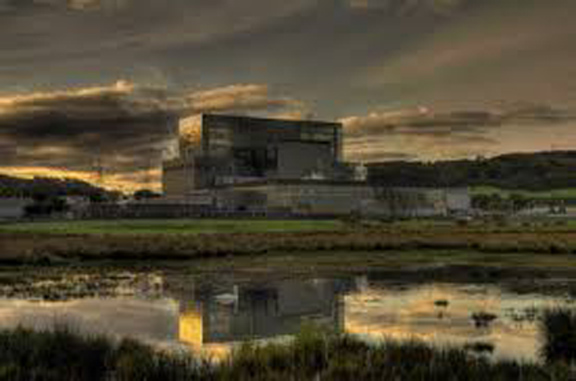
Times 5th July 2020, A high-stakes game of chance is being played at Hunterston B nuclear power
station on the west coast of Scotland. Engineers from the French giant EDF and safety experts from the Office for Nuclear Regulation are trying to work out if and when the plant’s two reactors can be restarted.
Forty-four years of hard use have not been kind to the plant’s graphite core — a vast chunk of carbon riddled with cracks that weighs the same as 110 double-decker buses. While the regulator and EDF insist that, with careful supervision, a cracked graphite core is nothing to worry about, it
is a symptom of its advancing years.
Hunterston, like the rest of EDF’s nuclear power stations around the UK, is on borrowed time. Seven nuclear stations capable of supplying about a sixth of the UK’s power needs will shut during the next decade. Unless ministers leap into action, the country that opened the first industrial-scale nuclear power station in 1956 at Calder Hall, Cumbria, will be left with just one replacement plant, Hinkley Point C on the Somerset coast, which is under construction.
The government faces difficult decisions: what next in its race to eliminate carbon emissions by 2050? A boom in renewable power has offered the beguiling prospect that wind and solar, combined with storage such as big batteries and hydrogen, could fill the void. A report from the National Infrastructure Commission has suggested that commercially unproven technologies, such as hydrogen generation, could negate the need for more nuclear power and be “substantially cheaper”.
With half an eye on this utopian future, successive governments have tried to persuade European
power giants such as Germany’s RWE and Eon, and Japan’s Toshiba and Hitachi, to pump cash into new reactors. However, one by one, those companies have dropped out, leaving just a handful of options remaining.
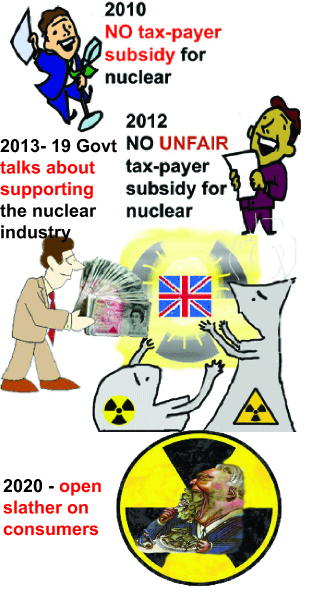
EDF and China General Nuclear (CGN) — both backed by their governments — are building the £22bn Hinkley plant. Without a state support package, EDF will struggle to build the planned Sizewell C in Suffolk. That would leave CGN as the only developer capable of going it alone without UK taxpayer support. ……
The prime minister’s adviser Dominic Cummings is thought to be a fan of small nuclear power stations, and Boris Johnson hinted about a role for nuclear last week………. Taxpayers are about
to find out whether billions of pounds will be pumped into nuclear power……
https://www.thetimes.co.uk/edition/business/atomic-quandary-for-ministers-after-years-of-dallying-over-nuclear-power-dzsc2s25l
No economic benefit in nuclear power for India
 NMIMS-FPJ webinar: Nuclear energy not for countries looking at economic development, https://www.freepressjournal.in/fpj-initiatives/nmims-fpj-webinar-nuclear-energy-not-for-countries-looking-at-economic-developmentBy FPJ Web Desk 1 July 20, If India is looking at development by increasing power consumption, it is essential that it opts for cheaper forms of energy, stated nuclear expert M V Ramana, at a webinar ‘The future of nuclear energy’. He stressed that in such a case nuclear is not the right choice. Ramana is Director of the Liu Institute for Global Issues at the School of Public Policy and Global Affairs, University of British Columbia.
Speaking at the third session of a series ‘The future of energy’ organised by NMIMS-FPJ in association with Tata Power, Ramana said, “If you were looking at (economic) development by providing power to hundreds of villages that do not have power, then nuclear energy is a very bad choice. For development, you need cheap energy but you have (nuclear energy which is) an expensive form of energy.”
He revealed today it costs somewhere between USD 10-15 billion to build a nuclear power plant. However, the power produced by this plant is at the cost of USD 100 per MW hour. This is three times higher the cost of solar and wind energy, he added. “Solar and wind energy today are selling at USD 30-35 per megawatt hour (MWh).” After including storage costs and other costs, solar and wind energy continues to be cheaper and will cost over USD 50 per MWh.
He went on to add while nuclear plants are complicated, the fast breeder reactor is a lot more complex. Countries like the United States, Germany, the United Kingdom, others had fast breeder reactors programmes, which they gave up. “For historical and sociological reasons, India has said it is a very important part of our programme and pours in a lot of resources into that. Even if you are supporting nuclear energy, this is not the technology that you should be focussing on,” he advised. https://www.freepressjournal.in/fpj-initiatives/nmims-fpj-webinar-nuclear-energy-not-for-countries-looking-at-economic-development
Russia’s nuclear imperialism in Africa

Russia’s nuclear play for power in Africa, DW 2 July 20,
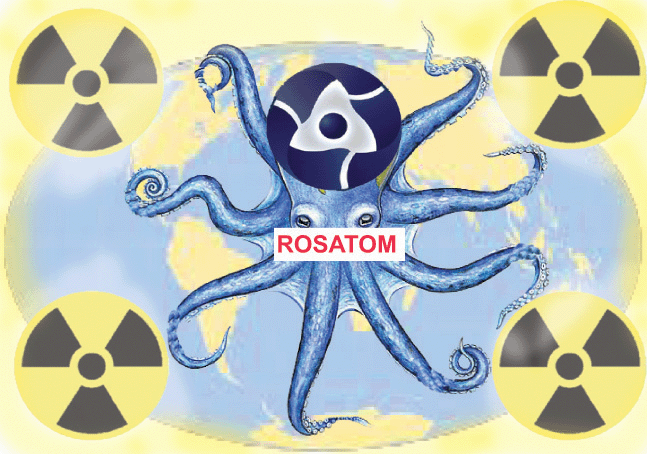
Russia is pushing nuclear technology to African nations to both turn a profit and expand its political might on the continent. Rwanda’s parliament has just approved a plan for Russia’s state-owned Rosatom nuclear conglomerate to build it a nuclear research center and reactor in the capital, Kigali.
The Center of Nuclear Science and Technologies, planned for completion by 2024, will include nuclear research labs as well as a small research reactor with up to 10 MW capacity.
Ethiopia, Nigeria and Zambia have signed similar deals with Rosatom, while countries such as Ghana, Uganda, Sudan and DRC have less expansive cooperation agreements.
Rosatom has been aggressively wooing African nations since the mid-2000s and the nuclear deals are seen as part of Russia’s push turn a profit and also gain influence in Africa.
Western sanctions first imposed on Russia in 2014 over its annexation of the Crimea in the Ukraine have forced Russia to seek alternative sources of incomes and also new friends.
Nuclear technology instead of trade
“For Putin to remain relevant in Russia, he really has to ensure that Russia has a big influence,” said Ovigwe Eguegu, a geopolitics analyst with the international affairs platform, Afripolitika. “That’s why he is looking at African markets so he has more parties to partner with when it comes to international issues.”
African nations constitute the largest voting bloc in the United Nations.
While the Soviet Union had a close relationship to various African states during the Cold War, Russia’s trade balance with Africa is one tenth of that of China, meaning it needs to look for other means to get a foothold on the continent.
“Russia is using the tools that they have to expand their influence and right now, Russia has lots of experience in the nuclear energy area,” Eguegu said in a phone interview from Abuja.
Rosatom nuclear leader
Rosatom is the world’s biggest nuclear company by foreign orders. While it has projects in developed countries such as Finland and Hungary, it’s mainly involved in developing regions.
The Rosatom packages are popular because the corporation’s sheer size means it can offer all-in-one deals, from training local workers to developing nuclear science curricula, supplying uranium for the plant’s life time and dealing with nuclear waste — with the added plus of Russian state loans for the projects.
The cost and financing of Rwanda’s nuclear research center is still undisclosed. But Russia is extending a $25 billion (€22.23 billion) loan to Egypt to cover 85% of the cost of the El Dabaa nuclear power plant, which Rosatom is constructing.
Rosatom has come to dominate nuclear exports to developing countries because of their generous financing and worker training,” according to the 2018 Center for Global Development policy paper, Atoms for Africa.
Additionally, Russia is itself a major player in the nuclear market, responsible for some 8% of uranium production worldwide as well as 20% of uranium conversion and 43% of uranium enrichment (conversion and enrichment are stages of processing uranium so it can be used by commercial nuclear power reactors)………….
many experts, including Gatari, believe that nuclear technology doesn’t yet make sense for African countries. They lack the highly skilled local workforce required to run the technological intricacies of such reactors. Plus, nuclear facilities are vastly expensive and take years to build.
Gatari warns of countries becoming locked into costly projects that end up being “white elephants”.
“Such a project can only be driven by strong and educated local human resources,” the nuclear researcher said. “That knowledge isn’t possible by rushing young students through training for a short time.
And the cost of maintaining that kind of installation can cripple the budget of a country for a long, long time.”
Doing the smooth sell
Currently, South Africa is the only country in sub-Saharan Africa with a functioning nuclear power plant, while Nigeria and Ghana have research reactors, which are primarily used for studying and training and to test materials, such as minerals.
In Europe, safety concerns around nuclear technologies have already caused countries such as Germany, Italy, Spain and Switzerland to vote to phase out nuclear power.
These concerns are compounded in Africa, given the the political instability of certain regions and the threat of sabotage or terrorist attacks. This hasn’t stopped Rosatom, and Russia, from doing a soft sell of nuclear technologies on the continent.
Rosatom funds scholarships for students from sub-Saharan Africa to study nuclear sciences and engineering in Russia. As of January 2020, around 300 students from more than 15 African countries were studying nuclear specialties there.
It runs an online video competition, Atoms for Africa, where participants stand a chance to win an all expenses paid trip to Russia for a video dedicated to innovative nuclear technologies.
In 2019, it even held an international fishing competition near the Leningrad nuclear power station, Russia’s largest, to demonstrate the safety of nuclear power for water bodies. (The competition was won by an Egypt team).
“There is good money if you can sell a research reactor,” said nuclear scientist Gatari. “Unfortunately, the convincing capacity of [Rosatom’s] marketing is very high, and the understanding of those who are buying is low.” https://www.dw.com/en/russias-nuclear-play-for-power-in-africa/a-54004039
France’s EDF in a financial pickle over huge costs of UK’s Hinkley C nuclear project
Dave Toke’s Blog 27th June 2020, The chickens are coming home to roost for EDF for their questionable decision to go ahead with building Hinkley C -a decision they took despite the lack of certainty over whether they would get enough backing from the British Government.
Originally EDF was publicised as being offered UK Treasury loan guarantees that had been widely touted as a vital basis for building Hinkley C. But now the French Financial Markets Regulator has
sanctioned EDF for not flagging up how conditional such loan guarantees were. These loan guarantees have never materialised.
Essentially, EDF is now continuing to build Hinkley C using money borrowed on its own balance
sheets – borrowings which are much more costly than UK Government backed guarantees and which reduce its own (EDF) profitability.
The Finance Officer of EDF actually resigned at the time EDF decided to go ahead with building Hinkley C. Of course all this is happening at the same time when we are being asked to believe that the next EPR (at Sizewell C) is going to be delivered at low cost to the consumer if the risk of building the plant is transferred from EDF to the British taxpayer and consumer!
This is the so-called RAB mechanism, something that could well just turn out to be an
almost unlimited cash facility for EDF to park their financial black hole in the centre of British finances (as well as those of the French).
https://realfeed-intariffs.blogspot.com/2020/06/edf-sanctioned-by-french-regulators-for.html
Sizewell nuclear plant – untried, costly, environmentally damaging, and no electricity for 10 years or more!

the government is exploring novel ways in which to lay the burden for financing a dangerous and costly nuclear venture on you, the consumer.
‘The Sizewell C plans are an insult to the people of Suffolk’ https://www.eadt.co.uk/news/pete-wilkinson-together-against-sizewell-c-campaign-1-6718925 27 June 2020, Pete Wilkinson, Together Against Sizewell C
Chairman of Together Against Sizewell C, Pete Wilkinson, has described it is a “battle for the soul and integrity of East Suffolk”. Here he explains why he is opposing the nuclear project.
Anyone new to Suffolk, ignorant of EDF’s nuclear plans, would be forgiven for laughing out loud.
An untried reactor, labelled ‘technically complicated to construct’ by its own designers, a cost of £20billion-plus, taking at least 10 years to build, producing waste which is not only lethal to living tissue but which remains so for thousands of years and for which there is no agreed or proven disposal or management route, to be built in the middle of a community of 5,000, which will not produce electricity for at least 10 years by which time its output will be redundant to needs, built on an eroding coast? Yeah, sure: pull the other one.
You really couldn’t make it up.
Yet this is what residents up and down the East Suffolk are facing. They have been led to believe that the destruction of their environment on a massive scale, the compulsory purchases, the roads, the workers’ campuses, the borrow pits, the huge water demand in the driest county is inevitable – and to make the best of it.
When did anyone ask YOU, resident of East Suffolk, if you wanted your tranquil, culturally rich and peaceful rural environment urbanised and anonymised, requiring six new roundabouts on the A12 and up to 1,000 vehicle movements a day along our country roads to ferry the material required for our own white elephantine carbuncle on our heritage coast, light, noise and dust pollution 24 hours a day, seven days a week or a decade of accommodating 4,000 workers? Of course you were not asked. They knew the answer. The new nuclear policy has not been subjected to anything like forensic public or Parliamentary scrutiny.
Democratic deficit runs through all aspects of this programme like the letters in a stick of rock and is presented by its advocates as ‘inevitable’. The National Policy Statement process renders what government calls ‘national infrastructure projects of over-riding importance’ inviolate, untouchable and – yes – inevitable unless the planning authorities have the courage or unless the Secretary of State has the guts to do what they should – throw the EDF plans out as an insult to the people of Suffolk. Sizewell C is important to no-one other than EDF.
But just how ‘over-riding’ is the need for Sizewell C? The French-made film, ‘The Nuclear Trap’ makes it clear that Hinkley C in Somerset and Sizewell C are more critical to the survival of the French nuclear industry than they are to providing electricity to UK consumers.
There has been a huge reduction in electricity demand since 2013 – over 16% – making earlier predictions of an increase of 15% by 2020 an overestimation of more than 30%.
Renewables out-compete nuclear on every front – cost, waste, jobs, CO2 and time for deployment. If ever Sizewell was built, it would be at least a decade, probably more like 15 years given the history of cost and time over-runs of its flagship plant at Flamanville, before it turned one kilowatt hour of electricity.
In 15 years, we will – one can only hope – have grown out of our obsession with nuclear and invested at suitably high levels in realising the huge job potential in micro-technology, decentralisation, efficiency and conservation of energy, and look back on our nuclear infatuation with a shake of the head.
The current National Policy Statement which covers the nuclear component of the energy policy, EN6, is entirely unfit for purpose as it gives policy authority only to those nuclear plants which can be deployed before 2025 – i.e. not, Hinkley, not Sizewell and not Bradwell, none of which will be generating electricity by that date.
Therefore the EN6 policy document is null and void. Its replacement is still undergoing review and will depend heavily on the financing arrangements the government can agree to in order to remove the need for EDF to fork out for it.
Instead, the government is exploring novel ways in which to lay the burden for financing a dangerous and costly nuclear venture on you, the consumer.
So much for ‘no subsidy’ nuclear, but in policy terms, it is legally questionable for Hinkley C to continue to be built, for Sizewell C’s planning application to be submitted or for CGN/EDF to consult on plans to build Bradwell B when there is no policy architecture to justify and legitimise any of this work or progress.
EN6 has fallen as a legitimate policy statement for new nuclear build but that does not seem to have any effect on the way the French and Chinese backers of new nuclear in the UK are required to act nor the complacency and indifference with which the government seems to take these gaping legal inconsistencies.
The waste problem that nuclear generates is probably the most intractable. In the 15 years of the existence of the Nuclear Decommissioning Authority, it has failed to secure a site, a volunteer community or to satisfactorily solve many of the dozens of technical and engineering problems associated with burying 500,000 cubic metres of legacy waste while ensuring that the estimated 78,000,000 units of radioactivity remain underground.
While new build waste such as that from Sizewell C is likely to be less bulky, its high burn up in the reactor means that it will be far hotter than even Sizewell B’s waste and will generate much more radioactivity – up to five times that contained in the legacy waste. How can any government or industry knowingly embark on a development programme which will create such a mountain of waste when a repository for its safe disposal is still more a matter of hope over expectation?
The only legacy Sizewell C will leave for Suffolk is a degraded environment and a radioactive waste mountain which future generations will have to deal with. Please tell your councillor to vote to remove the support for Sizewell C at the full council meeting on July 7, please write to the planning inspector to voice your concerns and please urge your MP to tell the Secretary of State to put EDF’s planning application where it belongs – in the bin.
Sizewell planning documents reveal higher-than-expected £20bn price tag
 Cost of new Sizewell C nuclear plant put at £20bn https://www.ft.com/content/77c209f7-6d18-4609-ac3c-77d1b5b82b34 26 June 20, Higher-than-expected price tag revealed for first time in planning documents. Nathalie Thomas in Edinburgh and Donato Paolo Mancini in London Cost of new Sizewell C nuclear plant put at £20bn https://www.ft.com/content/77c209f7-6d18-4609-ac3c-77d1b5b82b34 26 June 20, Higher-than-expected price tag revealed for first time in planning documents. Nathalie Thomas in Edinburgh and Donato Paolo Mancini in London
A new nuclear plant proposed on England’s east coast will cost £20bn, according to planning documents that reveal the higher-than-expected price of the project for the first time. The developers of the proposed plant at Sizewell in Suffolk — France’s EDF and Chinese state-owned CGN — had previously indicated the power station could be built for 20 per cent less than Hinkley Point C. Britain’s first new nuclear plant in a generation is under construction in Somerset.
This implied a cost of about £18bn for the Suffolk plant, called Sizewell C, after EDF last year said the price tag for Hinkley Point had risen to as much as £22.5bn. The first new-build project has suffered a string of cost overruns.
The revelation of Sizewell’s cost in extensive planning documents published on Thursday will reignite the ferocious debate around whether the UK should build large new nuclear plants.
Some backbench Conservative MPs, opposed to Chinese state involvement in critical national infrastructure, have concerns about the project because of the presence of CGN. The Chinese state-owned company is a junior financing partner on the Sizewell C project but hopes to install its own reactor technology in another proposed nuclear station at Bradwell-on-Sea, Essex.
The Financial Times reported on Wednesday that CGN, or China General Nuclear Power Corporation, was on a US list of 20 companies with links to the Chinese military compiled by the Pentagon. The list is part of an attempt by the White House and Congress to prevent Beijing from obtaining sensitive technologies as well as US funding.
EDF said in the planning documents that the cost estimate for Sizewell C includes design, construction and land costs associated with the proposed site, which is situated next to one of the UK’s operational nuclear plants, known as Sizewell B. It also takes into account “expected inflation and contingencies”, according to the document.
The company had previously claimed the cost savings on Sizewell could be delivered because it would be a “near identical copy” of Hinkley Point C.
EDF said the budget detailed in the planning application includes inflation over the estimated 10 years of construction, whereas the latest estimate for Hinkley Point C — estimated to be in a range of £21.5bn to £22.5bn — was based on 2015 prices.
The 20 per cent cost saving still stood if you subtracted a fifth from the Hinkley budget and then adjusted that sum for inflation, the company added.
EDF and CGN are yet to clarify how the new plant would be funded. The UK government last year launched a consultation on a so-called regulated asset base model (RAB) — used for other forms of infrastructure such as energy networks. This would lower the cost of capital of the scheme because consumers would have a surcharge added to their energy bills before the plant was completed.
Stop Sizewell C, a local campaigning group, said the funding statement was “a work of fiction” and described the £20bn pricetag as “totally eye-watering”.
Greenpeace UK’s chief scientist Doug Parr said the nuclear industry’s claim that it can always make the next power plant cheaper was “just never true.” He pointed out that the costs of renewable power had dropped below half those of nuclear “and just keep dropping”.
The government is yet to report back on the consultation. Privately, some nuclear industry leaders have been making an argument for the taxpayer to take a stake in any new project.
|
|
Nuclear developers push UK government for prompt decision on government finance for new construction
 Nuclear developers press for ‘prompt’ decision on new UK plants , Ft.com, Nathalie Thomas in Edinburgh, JUNE 24 2020
Britain’s nuclear energy industry has said it could cut the price of power from new large power stations by more than half as it presses ministers for a “prompt” decision on government financing to support construction. …….
The NIA argues that supply chain costs would fall further if it can build further scale and experience. But it warns that new projects rely on “prompt decisions” by ministers on an alternative financing mechanism to support nuclear plant construction. Executives at EDF have made clear they will not replicate the model used for Hinkley, which has been beset by cost overruns. A government consultation on alternative funding models, launched last year, is yet to report back.
Under a RAB model, households would pay for a plant’s construction through their energy bills long before any electricity is generated, allowing developers to attract cheaper finance from investors such as pension funds. But it also leaves consumers on the hook for cost overruns.
Marketing man Trump trying to sell U.S. nuclear reactors to Poland
 Duda, Trump announce nuclear energy deal, Presidents Andrzej Duda and Donald Trump announced on Wednesday the signing of a deal on development of nuclear energy in Poland, which Duda said would be signed as soon as possible.US President Donald Trump talked of the purchase of American technology.
At a press conference with Duda at the White House, Trump said they were working on a deal that would facilitate the development and building of a nuclear power plant in Poland, adding that it would work with the use of American technology bought from a large US company……… https://www.thefirstnews.com/article/duda-trump-announce-nuclear-energy-deal-13601
Resequencing of Vogtle nuclear plant expansion activities is credit negative: Moody’s

Resequencing of Vogtle nuclear plant expansion activities is credit negative: Moody’s, Author, Joniel Cha , Editor, Richard Rubin , 26 June, Washington — Georgia Power’s resequencing of construction activities for the Vogtle nuclear plant expansion project is credit negative, Moody’s said June 24.
“The unexpected, late-stage changes to these planned activities is credit negative for Georgia Power because it signals that challenges with the project continue, increasing the likelihood of additional cost overruns and further schedule delays,” Moody’s said in a statement. ….. https://www.spglobal.com/platts/en/market-insights/latest-news/electric-power/062420-resequencing-of-vogtle-nuclear-plant-expansion-activities-is-credit-negative-moodys
1 This Month



26 September – International Day for the Total Elimination of Nuclear Weapons


PLEASE OPPOSE HR 8255 AND S.3639 – bills would accelerate satellite deployment, with no environmental review or safeguards – https://ncstd5li.quorum.us/campaign/169331/
To see nuclear-related stories in greater depth and intensity – go to https://nuclearinformation.wordpress.com
-
Archives
- September 2026 (281)
- August 2026 (330)
- July 2026 (355)
- June 2026 (287)
- May 2026 (306)
- April 2026 (356)
- March 2026 (251)
- February 2026 (267)
- January 2026 (308)
- December 2025 (358)
- November 2025 (359)
- October 2025 (375)
-
Categories
- 1
- 1 NUCLEAR ISSUES
- business and costs
- climate change
- culture and arts
- ENERGY
- environment
- health
- history
- indigenous issues
- Legal
- marketing of nuclear
- media
- opposition to nuclear
- PERSONAL STORIES
- politics
- politics international
- Religion and ethics
- safety
- secrets,lies and civil liberties
- spinbuster
- technology
- Uranium
- wastes
- weapons and war
- Women
- 2 WORLD
- ACTION
- AFRICA
- Atrocities
- AUSTRALIA
- Christina's notes
- Christina's themes
- culture and arts
- Events
- Fuk 2022
- Fuk 2023
- Fukushima 2017
- Fukushima 2018
- fukushima 2019
- Fukushima 2020
- Fukushima 2021
- general
- global warming
- Humour (God we need it)
- Nuclear
- RARE EARTHS
- Reference
- resources – print
- Resources -audiovicual
- Weekly Newsletter
- World
- World Nuclear
- YouTube
-
RSS
Entries RSS
Comments RSS

