South Korea keen to market nuclear technology to United Arab Emirates, and missile technology, too.

South Korea president, in UAE, backs return to nuclear power
MRO, ABU DHABI, United Arab Emirates (AP) 16 Jan 23, – South Korean President Yoon Suk Yeol said on Monday that his nation’s efforts to be carbon neutral by 2050 would rely in part on returning to nuclear power, even though his predecessor had tried to move away from atomic power.
Yoon’s comments at a summit in the United Arab Emirates, made in front of the country’s leader, Sheikh Mohammed bin Zayed Al Nahyan, served to underline Seoul’s commitment to nuclear power as it works to finish the Arabian Peninsula’s first atomic power plant. That could see South Korea in line for lucrative maintenance contracts and future projects in the UAE, which Seoul has grown closer to over recent years.
Yoon’s predecessor, President Moon Jae-in, sought to move South Korea away from nuclear power amid safety and graft scandals and Japan’s 2011 Fukushima nuclear disaster………..
Yoon traveled later Monday to the Barakah nuclear power plant in Abu Dhabi’s far western desert near Saudi Arabia with Sheikh Mohammed before a planned business summit back in the capital.
On his arrival back, Yoon told the summit that, using the Barakah plant as an example, he hoped the Emirates and South Korea could expand this “new model of cooperation” to include nuclear fuel, small reactors and other joint advances to third countries…….
Yoon’s embrace of nuclear power also provides a guarantee of sorts that South Korea remains invested in servicing the Barakah plant. France, also home to nuclear power plants and another Emirati business and military ally, has sought contracts here as well.
Already, Yoon’s four-day trip the UAE has seen a promise from Sheikh Mohammed to invest some $30 billion in the country. Heavyweight business leaders from Hyundai, Samsung and other companies also are taking part in the state visit.
On Sunday, Yoon also visited South Korean special forces stationed in the United Arab Emirates, a murky deployment that grew out of Seoul’s deal over the nuclear power plant. The Akh unit is comprised of some 150 troops………..
Already, the Emiratis have paid $3.5 billion for the Cheongung II, or “Heaven’s Bow,” surface-to-air missile system from South Korea …. https://www.mromagazine.com/2023/01/16/south-korea-president-in-uae-backs-return-to-nuclear-power/
Poland’s energy company agrees to buy France’s NOT YET DESIGNED so-called “small” Nuward nuclear reactor!

Poland’s Respect Energy considers deploying French SMR design
WNN, 16 January 2023
Polish renewable energy trader Respect Energy has signed an agreement with EDF to cooperate on the development of nuclear power projects in Poland based on France’s Nuward small modular reactor (SMR) technology.
“This agreement marks Respect Energy’s and EDF’s firm intention to jointly proceed with the development of SMR projects in Poland and confirms the strong interest towards Nuward technology which has been selected by the energy trader to expand its footprint in the nuclear energy field,” the companies said in a joint statement. “Respect Energy and EDF will now jointly start the evaluation process of specific new greenfield sites and continue to work on detailing the business and financing plans for this endeavour.”
In October 2021, EDF made an offer to the Polish government to build as many as six EPR units. The “non-binding preliminary offer” represented a range of options for Poland. It detailed the engineering, procurement and construction that would be needed for four to six EPR units, at either two or three sites. The EPR units would produce 1650 MWe each if selected – the Polish government announced late last year that it had selected Westinghouse technology for at least the first three of its planned fleet of reactors……………….
The Nuward project was launched in September 2019 by the French Alternative Energies and Atomic Energy Commission (CEA), EDF, Naval Group and TechnicAtome. The Nuward – consisting of a 340 MWe SMR plant with two pressurised water reactors (PWRs) of 170 MWe each – has been jointly developed using France’s experience in PWRs……………..
Nuward is currently in the conceptual design phase, which focuses on choosing the major technical features while delivering real competitive advantages. Belgian engineering firm Tractebel was contracted in May last year to conduct studies for the completion of the conceptual design of “the first SMR in the European Union”.
The next phase of the project, the basic design completion, is expected to start this year and to be completed by 2025. The design should be in the “advanced concept phase” between 2025 and 2030, during which time Nuward is expected to be certified and the supply chain developed.
Construction of a demonstration Nuward SMR is expected to start in 2030. The construction of that unit is anticipated to take three years.
In June, it was announced the Nuward design will be the case study for a European early joint regulatory review led by the French nuclear safety regulator with the participation of the Czech and Finnish nuclear regulators….. https://world-nuclear-news.org/Articles/Poland-s-Respect-Energy-considers-deploying-French
Team Korea to bolster exports of nuclear energy systems
Korea Times, By Lee Kyung-min, 13 Jan 23,
State-run energy companies and private firms in the nuclear energy industry will join hands to advance exports of the stable and affordable power generation systems, the energy ministry said following a meeting attended by officials from the sector, Friday.
The Korea-developed APR1400, a nuclear reactor with a capacity of 1,400 megawatts, is increasingly recognized by its industry peers for its cost, quality and technological advantages.
Communication channels will be strengthened with the Czech Republic, the Philippines, the United Kingdom, and Turkey, to win orders to build nuclear reactors there. Also fortified will be government assistance to foster industries related to nuclear power generation equipment manufacturing, as well as facility safety and maintenance.
Second Vice Minister of Trade, Industry and Energy Park Il-jun presided over the meeting attended by members of Team Korea, a task force established to facilitate the export of the country’s nuclear reactors, at InterContinental Seoul COEX, southern Seoul.
In attendance were Korea Power Corp. (KEPCO) and its power subsidiary Korea Hydro & Nuclear Power (KHNP) as well as KEPCO affiliates…………….. https://www.koreatimes.co.kr/www/tech/2023/01/419_343553.html
A pretentious and dishonest story-telling conference of Small Nuclear Reactor salesmen in Atlanta 2022
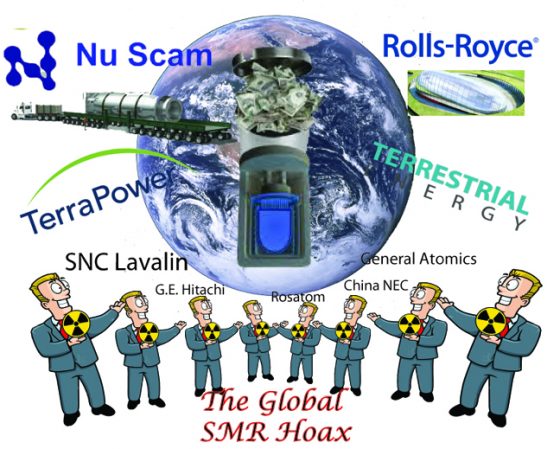
Markku Lehtonen in The Bulletin of the Atomic Scientists covered this conference – “SMR & Advanced Reactor 2022” event in Atlanta – in a lengthy article.
The big players were there, among over 400 vendors, utility representatives, government officials, investors, and policy advocates, in “an atmosphere full of hope for yet another nuclear renaissance.
The writer details the claims and intentions of the SMR salesmen – in this “occasion for “team-building” and raising of spirits within the nuclear community.’, in relation to climate change and future energy needs, and briefly mentioning “security”, which is code for the nuclear weapons aspect.

It struck me that “team building” might be difficult, seeing that the industry representatives were from a whole heap of competing firms, with a whole heap of different small reactor designs, (and not all designs are even small, really)
This Bulletin article presents a measured discussion of the possibilities and the needs of the small nuclear reactors. The writer recognises that this gathering was really predominantly a showcase for the small nuclear wares, – the SMR salesmen “must promise, if not a radiant future, at least significant benefits to society. “
“Otherwise, investors, decision-makers, potential partners, and the public at large will not accept the inevitable costs and risks. Above all, promising is needed to convince governments to provide the support that has always been vital for the survival of the nuclear industry.”
He goes on to describe the discussions and concerns about regulation, needs for a skilled workforce, government support, economic viability. There were some contradictory claims about fast-breeder reactors.
Most interesting was the brief discussion on the political atmosphere, the role of governments, the question of over-regulation .
” A senior industry representative …. lamenting that the nuclear community has “allowed too much democracy to get in“
“The economic viability of the SMR promise will crucially depend on how much further down the road towards deglobalization, authoritarianism in its various guises, and further tweaking of the energy markets the Western societies are willing to go”
The Bulletin article concludes:
“Promises and counter-promises. For the SMR community that gathered in Atlanta, the conference was a moment of great hope and opportunity, not least thanks to the aggravating climate and energy security crises. But the road toward the fulfilment of the boldest SMR promises will be long, as is the list of the essential preconditions. To turn SMR promises into reality, the nuclear community will need no less than to achieve sufficient internal cohesion, attract investors, navigate through licensing processes, build up supply chains and factories for module manufacturing, win community acceptance on greenfield sites, demonstrate a workable solution to waste management, and reach a rate of deployment sufficient to trigger learning and generate economies of replication. Most fundamentally, governments would need to be persuaded to provide the many types of support SMRs require to deliver on their promises.
Promising of the kind seen at the conference is essential for the achievement of these objectives. The presentations and discussions in the corridors indeed ran the full gamut of promise-building, from the conviction of a dawning nuclear renaissance along the lines “this time, it will be different!” through the hope of SMRs as a solution to the net-zero and energy-security challenges, and all the way to specific affirmations hailing the virtues of individual SMR designs. The legitimacy and credibility of these claims were grounded in the convictions largely shared among the participants that renewables alone “just don’t cut it,” that the SMR supply chain is there, and that the nuclear industry has in the past shown its ability to rise to similar challenges.
Two questions appear as critical for the future of SMRs. First, despite the boost from the Ukraine crisis, it is uncertain whether SMR advocates can muster the political will and societal acceptance needed to turn SMRs into a commercial success. The economic viability of the SMR promise will crucially depend on how much further down the road towards deglobalization, authoritarianism in its various guises, and further tweaking of the energy markets the Western societies are willing to go. Although the heyday of neoliberalism is clearly behind us and government intervention is no longer the kind of swearword it was before the early 2000s, nothing guarantees that the nuclear euphoria following the Atoms for Peace program in the 1950s can be replicated. Moreover, the reliance of the SMR business case on complex global supply chains as well as on massive deployment and geographical dispersion of nuclear facilities creates its own geopolitical vulnerabilities and security problems.
Second, the experience from techno-scientific promising in a number of sectors has shown that to be socially robust, promises need constructive confrontation with counter-promises. In this regard, the Atlanta conference constituted somewhat of a missed opportunity. The absence of critical voices reflected a longstanding problem of the nuclear community recognized even by insiders—namely its unwillingness to embrace criticism and engage in constructive debate with sceptics. “Safe spaces” for internal debates within a like-minded community certainly have their place, yet in the current atmosphere of increasing hype, the SMR promise needs constructive controversy and mistrust more than ever.” https://thebulletin.org/2022/12/building-promises-of-small-modular-reactors-one-conference-at-a-time
Macron pushes a “renaissance” while French nuclear flops

A farce that would make Feydeau blush — Beyond Nuclear International
A farce that would make Feydeau blush — Beyond Nuclear International
Emmanuel Macron picks a bad time to promote France’s nuclear nuclear technology in a marketing tour to USA
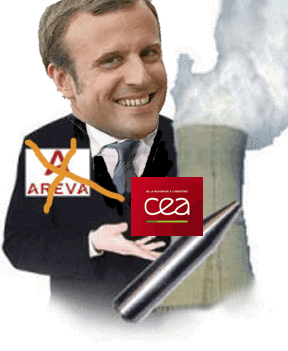
With 40 percent of France’s nuclear power plants offline, there could hardly be a more awkward time to promote the country’s know-how
Macron to promote nuclear energy in U.S., as industry faces crisis in France, By Rick Noack, November 29, 2022, PARIS — As French President Emmanuel Macron makes the rounds in Washington starting Wednesday for the first state visit of the Biden administration, high on his agenda are his plans for a nuclear energy “renaissance.” His entourage includes the major players from France’s nuclear energy industry, who will be looking to the French leader to help boost the development and export of their technology, including smaller and more versatile reactors.
But there could hardly be a more awkward time to promote French nuclear know-how.
While Macron was preparing to head to Washington, France was relying on planes traveling in the opposite direction to prevent its nuclear-reliant power grid from collapsing. U.S. and Canadian contractors have been flown in to help after safety concerns forced the closure of half of the country’s nuclear power plants. Last week, 23 out of 56 were still offline, due to concerns over corrosion cracks and an accumulation of pandemic-related inspection delays.
………….. instead of bolstering its position as an energy exporter, France has had to import electricity from Germany — the country hit hardest by the shift away from Russia. And Britain, which normally depends on France for energy to get through winter, is talking about having to encourage people to keep their ovens and dishwashers off to avoid blackouts.
Other French neighbors, including Belgium, Switzerland and parts of Italy, may be under even more pressure as a result of the French reactor problems, said Clement Bouilloux, country manager for France at energy consultancy EnAppSys.
“Everyone was relying on the French nuclear power plants,” he said.
The situation has tarnished France’s reputation as a nuclear power leader and may have contributed to the country missing out on key contracts. Only weeks ago, France’s state-owned energy company EDF lost the first part of a $40 billion contract for Poland’s first nuclear power plant to U.S. company Westinghouse………………………………………………………..
Macron has acknowledged that the French industry has “fallen behind,” but he has defended its ability to recover, striking deals on nuclear energy cooperation in recent months with countries including India and Britain.
Macron is scheduled to attend a nuclear energy session on Wednesday, alongside four French cabinet members and several executives from the country’s major nuclear energy firms and its public regulator, the Élysée Palace said last week.
A French official added Monday that one area where France anticipates possible mutual interests is the development of small modular reactors (SMRs)…………….. https://www.washingtonpost.com/world/2022/11/29/macron-us-state-visit-nuclear-france/
Kamala Harris, nuclear saleswoman extraordinaire, touting small nuclear reactors to Thailand

US to help Thailand harness nuclear energy, Manila Times. By Agence France-Presse, November 28, 2022
IN SEARCH OF CLEAN FUEL A staff member works at the production line of Dunan Metals Co. Ltd in the Thai-Chinese Rayong industrial zone in Rayong province, Thailand, Nov. 8, 2022. The United States will help Thailand develop nuclear power through a new class of small reactors, part of a program aimed at fighting climate change, Vice President Kamala Harris announced on a visit Saturday, November 26. XINHUA PHOTO
BANGKOK: The United States will help Thailand develop nuclear power through a new class of small reactors, part of a program aimed at fighting climate change, Vice President Kamala Harris announced on a visit Saturday.
The White House said the assistance was part of its Net Zero World Initiative, a project launched at last year’s Glasgow climate summit in which the United States partners with the private sector and philanthropists to promote clean energy.
Thailand does not have nuclear power, with the public mood on the issue souring after the 2011 Fukushima disaster in Japan.
The White House said it would offer technical assistance to the Southeast Asian country to deploy the developing technology of small modular reactors, which are factory-built and portable………………
The White House did not give a timeline but said it would support Thailand, which is highly vulnerable to climate change, in its goal of going carbon neutral by 2065.
Harris is visiting the US ally for an Asia-Pacific Economic Cooperation summit and discussed climate efforts in a meeting with Thai Prime Minister Prayut Chan-O-Cha………… https://www.manilatimes.net/2022/11/28/news/world/us-to-help-thailand-harness-nuclear-energy/1868041
USA Vice-President For the Nuclear Industry Kamala Harris on a marketing jaunt for NuScam’s Small Nuclear Reactors to Southeast Asia

Thailand, Philippines, Indonesia – nuclear reactors such a jolly idea in this earthquake ring of fire ?
US to supply Thailand, Philippines with modular nuclear reactors
BenarNews staff, 2022.11.23, Bangkok.
The United States says it will help Thailand and the Philippines with a new civilian nuclear technology to reduce climate-damaging emissions, but experts warn the final products are years away from being operational and other hurdles exist.
Plans by the U.S. to supply its longtime Southeast Asian allies with so-called small modular reactors (SMRs) were unveiled during Vice President Kamala Harris’ trip to both countries in recent days.
While attending the Asia-Pacific Economic Cooperation meetings in Bangkok last weekend, Harris launched a new clean energy partnership with Thailand.
From there, the vice president went to the Philippines where she announced that Washington and Manila were starting negotiations on the 123 Agreement, which would allow for civilian nuclear cooperation.
The U.S. nuclear technology plans for Thailand and the Philippines are firsts involving Southeast Asian nations.
The SMRs, which can be as small as a bucket and transportable, are to be constructed under “the highest standards of safety, security and nonproliferation,” officials said.
Another country in Southeast Asia that has shown interest in developing such reactors – Indonesia – appears to be looking at designs from several countries. [Never mind about the earthquakes?]
In a press release, the White House said the new partnership with Thailand would “build capacity for the secure and safe deployment of advanced nuclear reactor technologies.”
“This partnership will help Thailand take advantage of the unique benefits of SMRs that provide 24/7 reliable power, complement other clean energy sources, use a small land footprint and incorporate advanced safety features.”
The Thai government has set a goal of Net Zero Emissions by 2065, but no timeline for the SMR partnership. Washington praised the “unique benefits” of reactors which, besides providing reliable power, also fight climate change.
Small modular reactors generally are defined as advanced nuclear reactors with a capacity of less than 300 MW, according to the International Energy Agency.
A reactor could be as small as a five-gallon (18.9-liter) bucket. The traditional design has fuel and control rods, and energy is transported through boiling water, according to NuScale, a U.S. SMR manufacturer, which estimated initial costs at about U.S. $500 million.
The agreement with Manila calls for the U.S. and the Philippines to cooperate on advanced nuclear technologies to ensure energy security as that Southeast Asian country transitions to clean energy.
Once in force, the 123 agreement “will provide the legal basis for U.S. exports of nuclear equipment and material to the Philippines. The United States is committed to working with the Philippines to increase energy security and deploying advanced nuclear reactor technology as quickly as safety and security conditions permit to meet the Philippines’ dire baseload power needs,” the White House said in a statement.
Under President Ferdinand Marcos Jr.’s father, the late dictator Ferdinand E. Marcos, the Philippines began construction of the Bataan Nuclear Power Plant in 1976, in an area about 100 km (62 miles) west of Manila. The plant, constructed above a major fault line, was mothballed amid safety concerns after the 1986 Chernobyl disaster.
Today, the Philippines runs a couple of research reactors for training and education purposes while Thailand has no nuclear power.
……….. Tanagorn said Thais were concerned about safety in light of the 2011 Fukushima nuclear disaster caused by a tsunami in Japan. Other obstacles are the limited number of investors and the lack of domestic laws and regulation of nuclear activities.
John Timmer, science editor of Ars Technica, a web portal focusing on science and technology, said that with nuclear reactors, the principle is always “safety first.”
“The approval process for that reason tends to be long and includes a lot of documentation,” he said.
“The SMRs are designed to be much safer, but they haven’t been built (in the U.S.) in a final form yet, so it’s difficult to say whether the real-world experience will show that to be the case and also how useful they’ll be for addressing climate change,” Timmer told BenarNews.
“I’ve been hearing about SMRs for about a decade,” he said, adding that “until we build and get a sense what operating them is like and what costs are like, I’m going to be a bit skeptical.”
Cost is another obstacle.
“We’ve never built one of these, so this is going to be a learning experience and for the first few years. It’s going to be more expensive and more complicated to complete,” Timmer said.
‘Widespread misconceptions’
Economist John Quiggin, a professor at the University of Queensland in Australia, listed economic viability of nuclear power plants compared to coal, gas or solar and wind facilities as one of the “widespread misconceptions.”
“When pressed, nuclear fans will mostly shift the argument to the ill-defined notion of ‘small modular reactors,’ which don’t actually exist, and may never [exist],” Quiggin said, noting there are operating examples of small reactors, but “those are made on a one-off basis and are expensive because they forgo size economies.”
Once the reactors can be factory-produced “the ‘modular’ idea is to counter this loss with the economic gains of high-volume,” he said.
“There has been a lot of talk lately about a revival of nuclear power, partly in response to the need to replace the energy previously supplied by Russia, and partly as a longer-term response to climate change,” Quiggin said.
While in office U.S. President George W. Bush launched a nuclear power program, which led to talks of a “nuclear renaissance” but yielded only two projects despite no effective opposition “except from consumers objecting to the massive costs.”
Quiggin expects that the number of SMRs constructed will be also “tiny.”
“The work of decarbonizing energy supply will be done almost entirely by the sun and the wind,” he said.
Jason Gutierrez in Manila contributed to this report. https://www.benarnews.org/english/news/philippine/nuclear-reactors-11232022142149.html
USA desperate to sell NuScam’s small nuclear reactors – its latest targeted buyer is Thailand
Kamala Harris – nuclear saleswoman
BANGKOK: The United States will help Thailand develop nuclear power through a new class of small reactors, part of a programme aimed at [?] fighting climate change, Vice President Kamala Harris announced on a visit Saturday (Nov 19).
The White House said the assistance was part of its Net Zero World Initiative, a project launched at last year’s Glasgow climate summit in which the US partners with the private sector and philanthropists to promote [?]clean energy…………
Harris, who is visiting the US ally for an Asia-Pacific Economic Cooperation summit, will discuss the nuclear power initiative in a meeting later Saturday with Thai Prime Minister Prayut Chan-o-cha…………. more https://www.channelnewsasia.com/world/us-help-thailand-develop-small-nuclear-reactors-3085781
Another US nuclear marketing deal done ay COP27 – $3billion for Romania reactors project
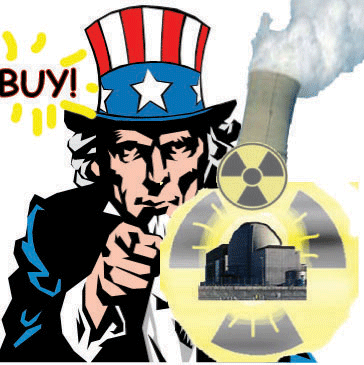
The US Export–Import Bank said it intends to provide USD 3 billion for a project for two additional reactors in Romania’s Cernavodă nuclear power plant.
Romanian Prime Minister Nicolae Ciucă announced at the United Nations Climate Change Conference COP27 that a third of the required funds for units 3 and 4 in the Cernavodă nuclear power plant would be provided by the United States Export–Import Bank. The preparatory phase will be completed by the end of March, he said.
The US Exim Bank issued letters of intent for USD 50 million for the second phase and USD 3 billion for the construction of the two reactors, the prime minister revealed at the event in Egypt. The plan is to implement the second phase in the third quarter of 2025 and build the units in 2030, Ciucă said…….
The Cernavodă nuclear power plant operates under state-owned Nuclearelectrica. A contract was signed for the preparatory stage last November with Candu Energy, a subsidiary of SNC-Lavalin from Canada, through Romania’s project firm EnergoNuclear.
In addition, Nuclearelectrica intends to deploy US-based NuScale’s small modular reactor (SMR) technology for a 462 nuclear power plant on the site of a former coal plant.
U.S. uses COP27 to market nuclear power to Romania, offering over $3 billion funding
Romania Secures $3 Bn US Funding For Nuclear Power
https://www.barrons.com/news/romania-secures-3-bn-us-funding-for-nuclear-power-01668020107 By AFP – Agence France Presse, November 9, 2022,
Romania announced Wednesday that the United States will provide funding worth more than $3 billion for the construction of two new nuclear reactors in the eastern European country, which is expected to commence early next year.
The funding will be granted by the Washington-based Export-Import Bank (EXIM), an export credit agency, enabling Romania to cover “about a third of the amount necessary for the construction of two reactors” at the Cernavoda plant, Romanian Prime Minister Nicolae Ciuca said.
The rest of the needed funding will come from other financing, Ciuca added, without giving further details.
Cernavoda is Romania’s only nuclear power plant, which has been operational since the 1990s. Two reactors with a total a capacity of 1,400 MW, it covers approximately one fifth of the country’s electricity needs.
Ciuca hailed the deal signed during the UN climate summit COP27 in Egypt as “an important step” towards the country’s “energy independence” amid global energy uncertainty aggravated by the war in Ukraine.
The construction of two additional nuclear reactors at Cernavoda is slated to start “in March/April 2023” and is expected to be completed in 2030, he added.
EXIM finances exports of US goods and services, but it was not immediately clear which US firm or firms would construct the reactors.
Six European companies — GDF Suez, Iberdrola, CEZ, RWE, Enel and ArcelorMittal — had initially committed to the project in 2008, before pulling out one after another due to uncertainties surrounding the future of the plant.
Bucharest also broke a financing agreement with the China General Nuclear Power Corporation (CGN) group in 2020, against a backdrop of growing mistrust of Chinese investments in Europe.
U.S. company Westinghouse wants to build a fleet of nuclear reactors in Europe, starting with Poland.
The Council of Ministers has formally approved the decision that the first
nuclear power plant in Poland will use three Westinghouse AP1000 reactors –
with the US company calling it an “historic day” as it looks to build a
fleet of the reactors in central Europe.
World Nuclear News 3rd Nov 2022
Russian state firm signs $9.1bn loan deal to fund nuclear plant in Turkey

Rosatom, which has been wiring money to Ankara to shore up Turkey’s depleted foreign currency reserves, signs deal with Gazprombank, Ragip Soylu, Antalya, Turkey, 16 September 2022
A Russian state-owned company signed a $9.1bn loan deal with Gazprombank in August to fund the construction and development of Turkey’s Akkuyu nuclear power plant, according to the official documents.
In a public announcement on Wednesday, Rosatom Corp published the deal signed on 3 August, which opens a line of credit to finance Akkuyu Nuclear JSC, its subsidiary in Turkey………………………..
Bloomberg reported last month that Rosatom had decided to wire $15bn to Turkey for the construction of the $20bn Akkuyu nuclear power plant, citing officials who said that an initial $5bn had already been received…………………
The Turkish government is in dire need of foreign funding as a result of its rapidly evaporating foreign currency reserves.
Rosatom is expected to rapidly spend up to $2bn on overdue payments to subcontractors. The company told Bloomberg that it would indeed transfer some funds to Turkey, but an amount much lower than that declared by Turkish officials………….more https://www.middleeasteye.net/news/russia-turkey-gazprombank-akkuyu-plant-loan-fund
Ukrainian government wants to sell nuclear energy to Germany
DW, 4 Sept 22, Kyiv offers nuclear energy to Germany. Ukrainian Prime Minister Denys Shmyhal has said a proposal to export electricity to Germany amid the ongoing energy crisis would be “a very good deal for both sides.” DW rounds up the latest…….
“Currently, Ukraine exports its electricity to Moldova, Romania, Slovakia and Poland. But we are quite ready to expand our exports to Germany,” Ukrainian Prime Minister Denys Shmyhal told the dpa news agency on Saturday.
“We have a sufficient amount of electricity in Ukraine, thanks to our nuclear power plants,” he said. The issue will be discussed during Shmyhal’s visit to Berlin over the weekend, where he will be meeting with Chancellor Olaf Scholz.
Electricity consumption in Ukraine has fallen since the start of the Russian invasion, due to the mass exodus of refugees and an economic slump.
Shmyhal said such a deal “would be very good for both sides.”…….
Ukraine operates four nuclear power plants with a total capacity of more than 14 gigawatts.
However, observers fear Russia’s capture of the Zaporizhzhia facility — the largest nuclear power plant in Europe — could lead to a serious accident if the war intensifies…………. https://www.dw.com/en/russia-ukraine-updates-kyiv-offers-nuclear-energy-to-germany/a-63009289
USA now desperately trying to flog off NuScam’s small nuclear reactors to Europe, starting with Romania
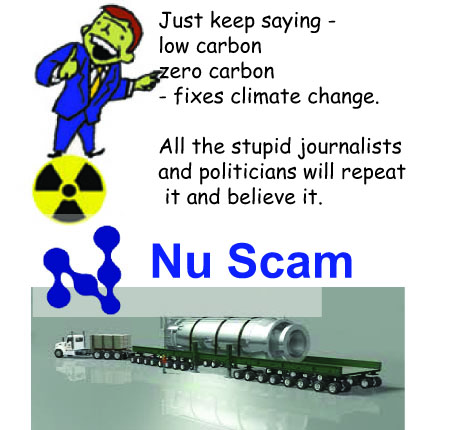
U.S. funds study for NuScale SMR deployment in Romania, https://www.power-eng.com/nuclear/u-s-funds-study-for-nuscale-smr-deployment-in-romania/
By Kevin Clark 6.27.2022 The United States will commit $14 million toward a front-end engineering and design (FEED) study for the basis of deploying NuScale’s small modular reactor (SMR) in Romania.
President Biden made the announcement June 26 at the G7 Leaders’ Summit in Germany. The funding is part of the administration’s Partnership for Global Infrastructure and Investment (PGII), aimed at narrowing infrastructure gaps around the world, including through clean energy deployments.
NuScale and Romania’s state nuclear power corporation S.N. Nuclearelectrica S.A. (Nuclearelectrica) plan to conduct engineering studies, technical reviews, and licensing and permitting activities at a site in Doicesti, Romania, the preferred location for the deployment of the first NuScale VOYGR power plant. The partners signed an MOU in May 2022.
The 8-month effort, expected to cost $28 million in total and including contributions from Nuclearelectrica and NuScale, will provide Romania with key site-specific data – cost, construction, schedule, and licensing details – necessary for the deployment of a NuScale’s 462 MWe VOYGR-6 SMR nuclear power plant.
The aim of the project is to show the ability of advanced nuclear reactors to replace coal generation, while creating thousands of jobs. NuScale President John Hopkins recently spoke with Power Engineering about how the company’s SMR plants are ideal for coal replacement.
NuScale believes Romania has the potential to accommodate the first SMR deployment in Europe and become a catalyst for SMRs in the overall region.
“Nuclear energy, including small modular reactors, represent a critical tool in the fight against climate change, and can also enhance energy security and boost economic prosperity,” said U.S. Special Presidential Envoy for Climate John Kerry.
The PGII initiative is funding projects in four major categories: clean energy, health systems, gender equality and information and communications technology.
1 This Month
23-25 October – on Zoom – World BEYOND War’s annual global conferenc


Shut down the radiation-damaged Heysham nuclear reactors now
To see nuclear-related stories in greater depth and intensity – go to https://nuclearinformation.wordpress.com

Say No to NASA’s Reckless Nuclear Reactor on the Moon
Say No to NASA’s Reckless Nuclear Reactor on the Moon

-
Archives
- October 2026 (247)
- September 2026 (339)
- August 2026 (330)
- July 2026 (355)
- June 2026 (287)
- May 2026 (306)
- April 2026 (356)
- March 2026 (251)
- February 2026 (267)
- January 2026 (308)
- December 2025 (358)
- November 2025 (359)
-
Categories
- 1
- 1 NUCLEAR ISSUES
- business and costs
- climate change
- culture and arts
- ENERGY
- environment
- health
- history
- indigenous issues
- Legal
- marketing of nuclear
- media
- opposition to nuclear
- PERSONAL STORIES
- politics
- politics international
- Religion and ethics
- safety
- secrets,lies and civil liberties
- spinbuster
- technology
- Uranium
- wastes
- weapons and war
- Women
- 2 WORLD
- ACTION
- AFRICA
- Atrocities
- AUSTRALIA
- Christina's notes
- Christina's themes
- culture and arts
- Events
- Fuk 2022
- Fuk 2023
- Fukushima 2017
- Fukushima 2018
- fukushima 2019
- Fukushima 2020
- Fukushima 2021
- general
- global warming
- Humour (God we need it)
- Nuclear
- RARE EARTHS
- Reference
- resources – print
- Resources -audiovicual
- Weekly Newsletter
- World
- World Nuclear
- YouTube
-
RSS
Entries RSS
Comments RSS

