Convention on Supplementary Compensation for Nuclear Damage might or might not work for global nuclear salesmen
India Joins Nuclear Liability Pact, Opening Door to Foreign Reactor Investments http://www.insurancejournal.com/news/international/2016/02/05/397765.htm By Rajesh Kumar Singh and Stephen Stapczynski | February 5, 2016 India’s decision to join a global treaty on nuclear accident liability may help it woo reactor suppliers, including Westinghouse Electric Co. and General Electric Co., that have been reluctant to sell technology to the nation.
The country ratified the Convention on Supplementary Compensation for Nuclear Damage, also known as CSC, the International Atomic Energy Agency said on Thursday. India’s current law allows operators to hold suppliers responsible for accidents, making international equipment makers hesitant to sign deals as the nation seeks to expand nuclear power capacity more than 10-fold by 2032………
India’s decision to join a global treaty on nuclear accident liability may help it woo reactor suppliers, including Westinghouse Electric Co. and General Electric Co., that have been reluctant to sell technology to the nation.
The country ratified the Convention on Supplementary Compensation for Nuclear Damage, also known as CSC, the International Atomic Energy Agency said on Thursday. India’s current law allows operators to hold suppliers responsible for accidents, making international equipment makers hesitant to sign deals as the nation seeks to expand nuclear power capacity more than 10-fold by 2032.
One Step
Ratifying the CSC is the latest effort the government has taken to ease suppliers’ concerns that they would be open to liability claims in case of a nuclear accident. Joining the treaty “marks a conclusive step in the addressing of issues related to civil nuclear liability in India,” the country’s external affairs ministry said in a statement Thursday.
In 2011, India capped suppliers’ liability, saying claims by the nation’s nuclear plant operator can’t exceed the amount of compensation paid by the utility. That was followed last year with the creation of a 15 billion rupees ($222 million) insurance pool to shield the operator, Nuclear Power Corp. of India Ltd., and the suppliers against claims. The government also last year issued a note explaining the law, including the sections that leave suppliers exposed to lawsuits.
No Modification
“The ratification is a very important step for the comfort of foreign vendors,” said Sekhar Basu, secretary at India’s Department of Atomic Energy.
Westinghouse Electric expects to reach a deal with India by the end of this year to provide at least six nuclear reactors, Chief Executive Officer Daniel Roderick said in December. France’s Areva SA signed an accord in 2009 to supply six 1,650-megawatt reactors at Jaitapur, a coastal town in India’s western province of Maharashtra.
“Ratifying the CSC is a step in the right direction towards unlocking the market potential for further nuclear development in India,” Jeff Benjamin, senior vice president of new plants and major projects at Westinghouse, said by e-mail. General Electric and Areva didn’t respond to requests for comment outside normal business hours.
The ratification doesn’t change the country’s existing liability laws, according to R. Rajaraman, emeritus professor of physics at Jawaharlal Nehru University’s School of Physical Sciences.
“This will not lead to a re-think or a modification of our liability act,” Rajaraman said in an e-mail. “That would not be politically feasible.”
Vikas Swarup, spokesman for India’s External Affairs Ministry, didn’t respond to requests seeking comment. Calls to Jagdish Thakkar, a spokesman at the prime minister’s office, weren’t answered.–With assistance from Archana Chaudhary.
France’s President Hollande visits India, hoping to market nuclear reactors
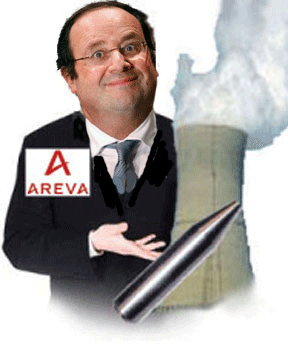 France Signals Rafale, Nuclear Progress as Hollande Visits India, Bloomberg, HeleneFouquet January 24, 2016 France signaled a state-to-state accord with India could be signed on Monday over a deal for 36 Dassault Aviation SA Rafale fighter jets, and that a six-year-old plan to build nuclear reactors in the South Asian nation would see some progress…………
The reactors are planned for Jaitapur, a coastal town in India’s western province of Maharashtra. Areva was seeking further clarity from India on its nuclear liability law before moving ahead with what would be India’s biggest nuclear plant.
The agreement India and the U.S signed recently over insurance-related issues for nuclear plants will help in overcoming certain hurdles, Royal said.
France’s PM off to India to market nuclear reactors
 Defence & civil nuclear cooperation will dominate Francois Hollande’s visit Economic Times, By Dipanjan Roy Chaudhury, ET Bureau | 18 Jan, 2016, NEW DELHI: Defence and civil nuclear cooperation will not be the only things that will dominate the visit of Francois Hollande — the fifth French leader to be chief guest at India’s Republic Day celebrations — with India and Paris working to expand partnership in areas of smart cities, solar energy, counter-terrorism, rail infrastructure and space.
Companies involved in the project include Areva, Engie, Enel, HSBC France and Tata Steel. Areva is also setting up a nuclear power plant in Jaitapur, after France became the first country to conclude a civil nuclear deal with India following a clean waiver by Nuclear Suppliers Group in September 2008.
NuScale revs up its marketing propaganda for Small Modular Nuclear Reactors (SMRs)
 Mini-nuclear plants in UK by 2025, Fluor’s NuScale Says by Alex Morales, Financial Review, 18 Jan 16
UK ambitions to build small modular nuclear plants may be realised as soon as 2025, according to Fluor Corp’s NuScale unit, which is seeking to be a pioneer in the market.
 NuScale plans to submit its 50-megawatt reactor design for approval by US nuclear authorities towards the end of 2016. That would leave it well placed to seek the UK equivalent, called Generic Design Assessment, in 2017, Tom Mundy, executive vice-president for program development at the US company, said in an interview in London.
“Assuming the GDA is submitted and takes four years, we’d be looking at approval in 2021,” Mr Mundy said. “There’s then a 36- month construction time, so it’s plausible to expect that if all things line up, we could have a UK plant built by 2025.”
Britain is trying to secure new baseload power as it closes down all its coal-fired plants by 2025. Conventional nuclear power is proving expensive and time-consuming, while most companies don’t think it’s profitable to build new gas-fired stations. The Treasury in November said it will plow £250 million ($515 million) into research and development over the next five years aimed at building one of the world’s first small modular nuclear reactors in the 2020s………..
The global market for small modular reactors may total as much as £400 billion by 2035, according to a report in late 2014 by the National Nuclear Laboratory, which advises the UK government. It identified reactor designs that may meet UK requirements coming from NuScale, Toshiba.’s Westinghouse unit, China National Nuclear and the mPower venture by Babcock & Wilcox Enterprises. and Bechtel Group.
NuScale won’t manufacture its own reactors and has investigated the UK supply chain, according to Mr Mundy. Once established in Britain, the company could then export its modules to other European countries, he said………
When Chancellor of the Exchequer George Osborne announced the R&D funding for modular reactors, it was stated that a competition for funding will be held “early next year”. The Department of Energy and Climate Change said no fixed timetable has been set. Mr Mundy said he doesn’t doubt the government’s intentions.
“Nuclear power has a long legacy in this country, and our reactors are based on tried-and-tested light-water technology,” Mr Mundy said. “I’m optimistic that with what the chancellor said and the indications from DECC we’re going to continue to move forward.” http://www.afr.com/business/energy/nuclear-energy/mininuclear-plants-in-uk-by-2025-fluors-nuscale-says-20160118-gm89c4#ixzz3xd3bnLxN
US nuclear corporation salivates at thought of selling reactors to India
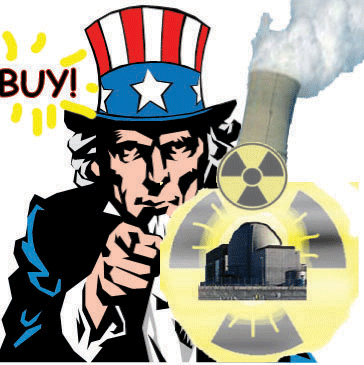 Ahead Of PM Modi’s Trip To US, Hopes For A Major Nuclear Reactor Deal, NDTV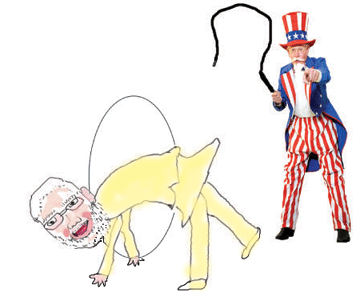
A Westinghouse team is already in India to negotiate the deal, Chief Executive Daniel Roderick told news agency Reuters, but talks are likely to go down to the wire, as the crucial issue of nuclear liability insurance for suppliers remains unresolved. The aim, however, was to make a “commercially significant announcement” during PM Modi’s expected US visit in March and sign a final contract later in the year, Mr Roderick said.
A US diplomat said the United States had invited PM Modi to the March 31-April 1 Nuclear Security Summit and that Washington was thinking of turning the trip into a full-fledged official visit, which would give the Indian leader a similar reception as Chinese President Xi Jinping.
The Westinghouse contract would give a big boost to India’s $150 billion nuclear power programme…….
India has given two sites to US companies – Westinghouse and a nuclear venture between General Electric Co and Hitachi – to build six reactors each. http://www.ndtv.com/india-news/ahead-of-pm-modis-trip-to-us-hopes-for-a-major-nuclear-reactor-deal-1266211
Desperate marketing drive brings giant nuclear corporations together
Great power relations: How the US, China and India will forge new partnerships on nuclear energy in 2016, South China Morning Post, James Wertsch, Shen Dingli and Swaran Singh say this year will see greater collaboration between the world’s three largest polluters – the US, China and India – following their pledges to move away from fossil fuels, 05 January, 2016
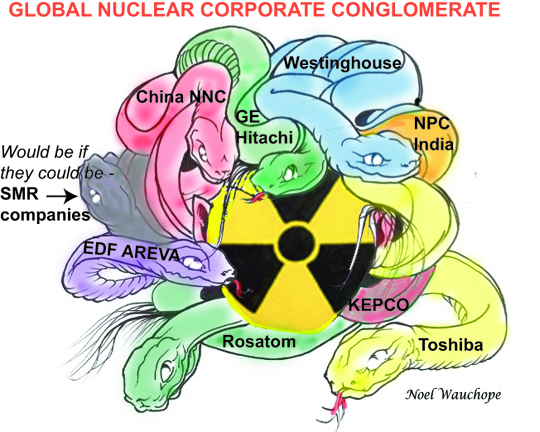
To begin with, complicated and long-winded structural integrity tests have just been declared successful for two of the four Westinghouse AP1000 nuclear power reactors being set up in China’s Zhejiang ( 浙江 ) and Shandong (山東) provinces. These should become operational in September and December respectively. Westinghouse is also in final stages of negotiations for six of the same type of reactor for Gujarat in India.
At a price tag of some US$5 billion to US$6 billion per reactor, such reports are boosting the share price of Westinghouse, which is negotiating to buy parts of the French nuclear reactor manufacturer Areva. It reportedly needs US$7.7 billion to balance its books. Areva’s losses are also allowing China’s Hualong to emerge as the new cost-effective player in the sensitive global nuclear market. That explains why US firms are tying up with China……
….US firms partly owned by Japan’s Toshiba and Hitachi, which explains the changing geopolitics as Prime Minister Shinzo Abe last month signed the long-awaited Indo-Japanese deal clearing the decks for American firms to deliver nuclear technology to India….
The coming together of the US, China and India in building nuclear partnerships has been expedited because Russian, French, Canadian and Kazakh firms have not been deterred by India’s domestic situation or legislation. Given this reality, the US – which originally facilitated India’s entry into global nuclear commerce – was beginning to look like a loser. Russia remains India’s largest supplier of nuclear reactors and the two last month signed another agreement for an additional 12 reactors.
Most interestingly, 2016 will see China entering the Indian market as well; not necessarily as a partner with US firms but as a new competitor. As well as working with India as members of the International Thermonuclear Experimental Reactor, China has a history of supplying heavy water and uranium fuel to New Delhi. The two began negotiating nuclear cooperation during President Xi Jinping’s ( 習近平 ) visit to India in September 2014 and China is keen to help build India’s energy security infrastructure. Beijing has also been exploring markets in Southeast Asia.
China’s Hualong One nuclear reactor has earned enough experience at home and prestige abroad to make it suitable for exploring new global partnerships. Last October, during Xi’s visit to the UK, he announced US$9 billion worth of investment for France’s EDF and China General Nuclear Power Corporation to build three power plants in the UK, which is expected to see Hualong-designed reactors go global.
India, as always, is never far behind. Since 2010, it has been offering to export its pressurised heavy water reactors, which may be ideal for states with smaller power grids. Last month again, during Prime Minister Narendra Modi’s visit to Moscow, Russia and India began negotiations on exploring joint third-country projects.
The recent shale revolution may have reinforced US energy supremacy, but it has also seen oil prices fall relentlessly, making large oil importers like China and India save their dollar reserves and invest in expensive nuclear technology. All this is whipping up US business interests that will redefine the proverbial “American exceptionalism”, especially in the global governance of nuclear commerce. It will also see the US explore more innovative ways in co-opting the interests of a rising China and emerging India, giving them a greater say in global nuclear decision-making.
James Wertsch is vice-chancellor for international relations at Washington University in St Louis, Shen Dingli is associate dean at the Institute of International Studies, Fudan University, Shanghai, and Swaran Singh is professor of disarmament studies at Jawaharlal Nehru University, New Delhi http://www.scmp.com/comment/insight-opinion/article/1898090/great-power-relations-how-us-china-and-india-will-forge-new
China’s state-owned nuclear companies get together in export marketing drive
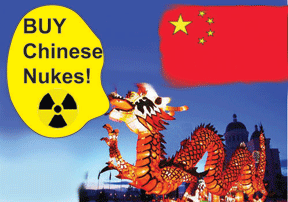 State-owned enterprises eye overseas power projects, Nikkei Asian Review TETSUYA ABE, Nikkei staff writer BEIJING 5 Jan 16, — The global nuclear industry is likely to be another area where China’s growing presence will be keenly felt, as the government and state-owned corporations are working hand in hand to win overseas contracts. This development worries critics who are concerned about nuclear safety issues, as well as Beijing’s seeming lack of commitment to nuclear nonproliferation.United front In their meeting on Dec. 30, Sun Qin, chairman of China National Nuclear Corp., and He Yu, his counterpart at CGN, agreed to join hands to better compete with Western rivals in their pursuit to cultivate overseas nuclear power plant markets.
The two came to the National Development and Reform Commission’s building in Beijing on that day to sign an agreement to set up a joint venture. The new company, to be capitalized at 500 million yuan ($76.5 million), will handle export of Hualong One, a pressurized water reactor model that China claims to have developed on its own.
CNNC and CGN, each of which is a major player that ranks within the top three in the Chinese nuclear industry, are coming together with an eye toward increasing the chance of winning orders in Central Asia and Eastern Europe. Continue reading
China keen to market nuclear expertise, but in the UK scrutiny is increasing
 Nuclear energy: Beijing’s power play, Ft.com Christopher Adams and Lucy Hornby, December 29, 2015 China is intent on exporting its nuclear expertise but in the UK scrutiny is increasing. “………. The French-designed plant, which after five years of construction is about to undergo testing, will serve as the prototype for a huge power station planned by the UK in south-west England. It is set to cost £18bn according to the latest estimates by French energy group EDF, which is leading the project.
Hinkley Point, in Somerset, is home to a working nuclear plant and twin disused Magnox reactors. Now David Cameron, UK prime minister, wants the site to host the first of a new generation of reactors that he envisages will replace Britain’s ageing nuclear fleet by 2030.
Under a commercial pact struck during October’s state visit to London by Chinese president Xi Jinping, CGN will take a one-third stake in Hinkley. Its state-owned rival, China National Nuclear Corporation, may also participate. A decade from now, assuming all goes to plan, Taishan’s distinctive egg-shaped reactor domes, double-hulled walls and monster turbines will dominate the shoreline of the Severn estuary. Hinkley Point C will supply 7 per cent of the UK’s electricity……….
CGN can ill-afford errors at Taishan, one of three unfinished projects using a third-generation technology called the European pressurised reactor. Designed by Areva of France, these reactors are being touted as a revolution in nuclear power. But they have had a troubled start on projects at Flamanville in France and Olkiluoto in Finland.
Taishan, too, has suffered delays, albeit not as bad as those in Europe. As a result, CGN is treading carefully. The Chinese plant’s targeted completion date, originally late 2013, has already been put back once, in part because of safety rules after Fukushima. Now it will probably come online in 2017 — though CGN will not say exactly when. Says Mr Zheng: “We must perform a lot of tests, and since it’s now a first of a kind, we need to do more tests than we planned. Those tests should have been done already in Finland or France, but we must do them now.”
The construction problems highlight the complexity of the EPR projects. There are questions over whether there really is demand for these larger reactors, given their cost and size. Mr Guo, though, is bullish. Standing under an 80-tonne door that will one day seal off the reactor hall, he lists the EPR’s credentials…….
He Zuoxiu, a retired physicist who helped develop China’s nuclear programme in the 1960s, questions whether nuclear power will ever truly be safe, even with safeguards to prevent disasters such as Fukushima. He cites a statistic: the US, Russia and Japan each had more than 50 reactors when they suffered accidents. In other words, the more a country has, the greater the chance of something going wrong……..
UK concerns
There are worries, too, that Britain’s tilt towards China — and chancellor George Osborne’s embrace of its investment — will open the door to security risks. The UK shift has caused consternation in the US, which accuses China’s state-owned industry of benefiting from military-linked corporate espionage.
Patrick Cronin, an Asia expert at the Center for a New American Security, says Britain should take care to balance its economic needs against those of national security, particularly on critical infrastructure such as nuclear plants. “Let’s say that 10 years from now there is a major conflict with China. This would give China, effectively, a veto over UK participation, for example, over the Taiwan issue in the next decade,” says Mr Cronin.
“Just understanding the most vulnerable parts of reactors in Britain is a vulnerability. A Chinese state-owned enterprise may show that information to people who have ill intentions to the UK, especially if there’s a crisis.”
Concerns have also been raised in Whitehall over the prospect of China being able to build digital loopholes into hardware it supplies, allowing Beijing to exploit vulnerabilities at nuclear plants. CNNC’s background as China’s nuclear weapons developer before it built the country’s civilian reactors has added to those fears……… http://www.ft.com/cms/s/0/789e5070-974a-11e5-9228-87e603d47bdc.html#axzz3vvmo6esp
India moves closer into nuclear industry of dubious safety
The strange love for nuclear energy http://www.thehindu.com/opinion/lead/on-the-indiajapan-civil-nuclear-deal/article7996972.ece M.V. RAMANA SUVRAT RAJU
The prospect of a nuclear deal with Japan is worrying because it ignores voices on the ground and takes India a step closer to the construction of untested and expensive reactors
During Japanese Prime Minister Shinzô Abe’s visit to India last week, Japan and India reportedly made progress on a nuclear deal that they have been discussing for more than seven years. The governments did not actually conclude the deal: the Joint Statement released by the Prime Ministers only includes a droll phrase welcoming the “agreement reached… on the Agreement… for Cooperation in the Peaceful Uses of Nuclear Energy” and expresses the hope that “this Agreement will be signed after the technical details are finalised”.
- These “details” include deep concerns about India’s growing weapons arsenal within Japan’s polity that even Mr. Abe’s militaristic government has found difficult to ignore. Nevertheless, even the prospect of an India-Japan nuclear deal is worrying because it takes the country a step closer to the construction of untested and expensive reactors. Moreover, despite the Narendra Modi government’s “Make in India” rhetoric, the agreement will primarily benefit multinational corporations based in Japan. Continue reading
China keenly marketing nuclear technology to South Africa
China confident of winning $80b S. Africa nuclear power bid
By Lyu Chang (China Daily): 2015-12-12 Industry officials are confident of China being the front-runner to win the right to build South Africa’s new generation of nuclear power stations.
“We think we are likely to win the bid, after preparing all the documents for the tender,” ZhengMingguang, head of the Shanghai Nuclear Engineering Research and Design Institute, ahigh-tech arm of the State Nuclear Power Technology Corp.
“The nuclear energy industry also involves other issues, so we can’t set any date yet on thefinal bidding process,” he said.
The country hopes to land the contract using its CAP1400 nuclear technology, which isdesigned by SNERDI and based on the AP1000 reactor technology developed by the UnitedStates-based Westinghouse Electric Co LLC.
South Africa currently operates the continent’s only nuclear power plant, near Cape Town, butthe country is currently facing chronic electricity shortages.
The Pretoria government invited tenders in July for an estimated $80 billion contract to buildfour nuclear reactors-the largest contract in the country’s history-which attractedwidespread interest, including from State Nuclear Power Technology Corp, Russia’s stateatomic agency Rosatom and French nuclear firms…….http://www.chinadaily.com.cn/business/2015-12/12/content_22695369.htm
India’s PM Modi visiting Russia re nuclear purchase deal
Nuclear expansion on agenda of PM visit to Russia, Zee News, , December 9, 2015 – New Delhi: The upcoming visit of Prime Minister Narendra Modi to Russia is expected to see the two countries deciding on expansion of nuclear programme, government told theLok Sabha on Wednesday. Minister of State for PMO Jitendra Singh said the earlier visits of the Prime Minister to various countries were also marked by signing of agreements to procure uranium and give boost the nuclear programme…….
He said during Modi’s visit the US, a deal was finalised for the construction of nuclear reactors in Gujarat and during the visit to France, a deal was finalised with AREVA, world’s leading nuclear power company.
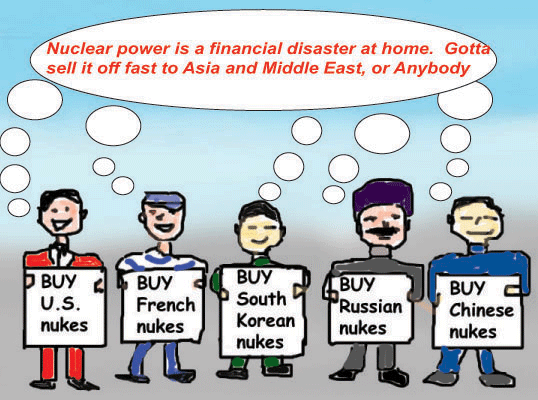
“For the visit of the Prime Minister to Russia, a programme has been finalised for expansion of nuclear programme,” he said about the trip expected later this month……http://zeenews.india.com/news/india/nuclear-expansion-on-agenda-of-pm-visit-to-russia_1832478.html
Russia trying to sell to Egypt nuclear reactors with 80 year operation
 Moscow, Cairo to Discuss Construction of Nuclear Power Plant on January 31, Sputnik News, 8 Dec 15 Egyptian Ambassador to Russia Mohamed Badri said that Russia and Egypt will discuss the construction of a nuclear power plant within the framework of the Russia-Egypt intergovernmental committee on January 31……
On November 19, Moscow and Cairo signed an intergovernmental deal on the construction of a nuclear power plant in Egypt.
According to the Russian state nuclear corporation Rosatom, the plant will take around 10 years to build and will be in operation for around 80 years…….. http://sputniknews.com/business/20151208/1031425665/russia-egypt-nuclear-power.html#ixzz3tldVDvoI
Japan’s PM Abe visiting India to market nuclear reactors
 Ahead of PM Abe’s visit, India-Japan racing to seal nuclear pact http://www.hindustantimes.com/india/ahead-of-pm-abe-s-visit-india-japan-racing-to-seal-nuclear-pact/story-TwhHbjC7kPuNYNSWoU6iUK.html Jayanth Jacob, Hindustan Times, New Delhi Dec 04, 2015
India and Japan are working to seal a nuclear pact during the visit of Prime Minister Shinzo Abe from December 11-13 for the annual summit between the two countries.
“We hope it will be a done deal this time. But considering the complex nature of negotiations that mark the civil nuclear agreements till the last moment, we should be guided by caution till the pact is finally sealed,” said a senior official.
Japanese firms play a crucial role in the US and French nuclear industries. An Indo-Japanese pact is crucial for fully realising the ongoing civilian nuclear cooperation India has with these two countries. Japanese forging major, Japan Steel Works (JSW), is a supplier of the critical reactor equipment of reactor pressure vessel for most firms worldwide.
But the sides have to agree upon the text of the agreement that will satisfy both countries. Nuclear issue is a sensitive one in Japan — the only country to have suffered a nuclear attack. For instance, Japan wants explicit commitment on testing clauses —the deal will be off in event of a nuclear test by India. India says this touches upon the issue of ‘strategic autonomy’, which is outside the purview of civil nuclear pact that the country has been negotiating with Japan.
But sources said Japan has stopped pressuring India into signing the non-proliferation treaty (NPT) that New Delhi finds discriminatory.
Abe will visit Varnasai, the constituency of PM Narendra Modi who is likely to accompany him on the visit.
China marketing nuclear technology etc to Czech Republic
China, Czech pledge closer nuclear power, finance cooperation BEIJING, Nov. 27 (Xinhua) — Chinese Premier Li Keqiang and his Czech counterpart Bohuslav Sobotka pledged to boost cooperation in nuclear power, finance and other sectors during talk on Friday.
“China’s nuclear power technology and equipment are safe and inexpensive, which has made them competitive globally,” Li said, adding that the Chinese side is willing to participate in Czech’s nuclear power business.
Sobotka, who is making his first official visit to China, said he welcomes China’s participation in Czech’s nuclear power business. He added that the two sides can study the feasibility of conducting nuclear power cooperation in markets outside of the two territories.
Earlier this week, Sobotka attended the fourth summit of China and Central and Eastern European (CEE) countries in east China’s Suzhou city, where Li proposed to set up a multilateral financial firm between China and the 16 CEE countries.
On the financial front, Li said on Friday that he hopes China and Czech will innovate and expand the mode of financial cooperation within the framework if the “16+1” financial firm in discussion, which he said will strongly support practical cooperation between the two countries.
China stands ready to talk with Czech on establishing a RMB settlement mechanism in Prague, Li added……..http://news.xinhuanet.com/english/2015-11/27/c_134862920.htm
Russia keen to market nuclear power to impoverished Cambodia
Russia to help Cambodia build capacity for nuclear power, REUTERS, YEKATERINBURG, RUSSIA/PHNOM PENH 26 Nov Russia will help Cambodia work towards building a nuclear power plant under an agreement the two countries signed this week, said Sergei Kirienko, the head of state nuclear firm Rosatom.
Cambodia depends heavily on imported fuel and power. Electricity in the country is among the most expensive in Southeast Asia and a common source of complaint from investors.
“The Cambodian government is mulling, in future, a nuclear power station construction,” Kirienko told reporters on Wednesday when asked about the agreement.
Cambodian energy officials declined to comment on the deal on Thursday.
The agreement was signed during a visit by Russian Prime Minister Dmitry Medvedev to Cambodia this week. His visit was the first to Cambodia by a senior Russian politician since 1986.
Under the terms of the agreement, Russia will provide expertise, research and training to Cambodia…… http://www.reuters.com/article/2015/11/26/us-cambodia-russia-nuclear-idUSKBN0TF0W220151126#siJ8T6T4vdeKAEm8.97
1 This Month

of the week – Shut Down Drone Warfare!


Tell the Ukrainian Government to Drop Prosecution of Peace Activist Yurii Sheliazhenko

Petition to revoke the licensing of the Near Surface Nuclear Disposal Facility (NSDF) at Chalk River. https://www.ourcommons.ca/petitions/en/Petition/Details?Petition=e-7247
To see nuclear-related stories in greater depth and intensity – go to https://nuclearinformation.wordpress.com
-
Archives
- March 2026 (251)
- February 2026 (268)
- January 2026 (308)
- December 2025 (358)
- November 2025 (359)
- October 2025 (376)
- September 2025 (257)
- August 2025 (319)
- July 2025 (230)
- June 2025 (348)
- May 2025 (261)
- April 2025 (305)
-
Categories
- 1
- 1 NUCLEAR ISSUES
- business and costs
- climate change
- culture and arts
- ENERGY
- environment
- health
- history
- indigenous issues
- Legal
- marketing of nuclear
- media
- opposition to nuclear
- PERSONAL STORIES
- politics
- politics international
- Religion and ethics
- safety
- secrets,lies and civil liberties
- spinbuster
- technology
- Uranium
- wastes
- weapons and war
- Women
- 2 WORLD
- ACTION
- AFRICA
- Atrocities
- AUSTRALIA
- Christina's notes
- Christina's themes
- culture and arts
- Events
- Fuk 2022
- Fuk 2023
- Fukushima 2017
- Fukushima 2018
- fukushima 2019
- Fukushima 2020
- Fukushima 2021
- general
- global warming
- Humour (God we need it)
- Nuclear
- RARE EARTHS
- Reference
- resources – print
- Resources -audiovicual
- Weekly Newsletter
- World
- World Nuclear
- YouTube
-
RSS
Entries RSS
Comments RSS
 nuclear-news