Rossing uranium mine first hit by rains, now by union strike
Namibia mine union readies for strike at Rossing Reuters 21 Sept 11, – Namibia’s Mineworkers Union of Namibia (MUN) on Wednesday served Rio Tinto’s Rossing uranium mine with a strike notice after failing to reach a deal in talks over output incentives, with a stoppage expected to start on Friday. Continue reading
Switching support to renewable energy? – Japan’s largest union wavers
Will Japan’s Largest Union Support Renewable Energy? In These Times, 11 Aug 11 By Akito Yoshikane, The Japanese Trade Union Confederation, also known as Rengo, said the country’s nuclear energy policy and the union’s support of it should bequestioned going forward. At an anti-nuclear gathering last Thursday in Hiroshima, the union’s secretary general told reporters, “We have to start discussions concerning nuclear energy from the beginning to decide what we should do in the future.”
That is a change from last August when the union promoted atomic power. …..
Rossing uranium mine workers on strike for fairer pay
“It is the second largest employer after Namdeb. Rössing already made a loss last year, so this is big stuff.”
 Rössing workers defy court order, Namibian 15 July 11, By: DENVER KISTING, YESTERDAY afternoon, Rössing Uranium employees ignored an order by Judge President Petrus Damaseb, who had ruled that their three-day strike was illegal and they must return to work immediately.
This means that by this morning, the accumulated loss for the uranium giant as a result of the strike amounted to approximately N$22,5 million. In court papers filed at the High Court in Windhoek yesterday, the company’s Chief Operating Officer (COO), Mpho Mothoa, said Rössing has lost approximately N$2,5 million per shift. It has three shifts per day. Continue reading
Namibia: government and unions waking up to exploitation by foreign miners
“A lot of mining companies are at it to exploit people together with the minerals. They either employ people on fixed term contracts or outsource certain functions of their business simply to reduce labour costs,” he said.
“This practice results in poverty jobs where employees of these contractors sometimes earn as little as 20% of the basic salary offered by the Eastern Platinum (EPL) holder for the same job.
| Second mining expo to be held amid fears of ‘nationalisation’ |  |
 |
 |
| Namibia Economist, by Nyasha Francis Nyaungwa | ||||||
| 13 MAY 2011 | ||||||
| The 2011 Mining Expo which kicks off next week in the capital is being held at a time when the mining sector faces uncertainty after government recently declared uranium, copper, coal, diamonds and rare earth metals as strategic minerals. Last month, government through cabinet endorsed a decision that the right to own licenses for strategic minerals will only be issued to a state company. The dramatic shift in policy has caught many investors and would-be investors unaware …..“….the mining sector’s contribution to government revenue is not commensurate with its share to the gross domestic product. Such contribution is mainly through royalties levied on the market value of the minerals. This means that Namibia benefits from its natural endowment mainly through rent-seeking. This situation is untenable” the minister said……http://www.economist.com.na/index.php?option=com_content&view=article&id=23739:second-mining-expo-to-be-held-amid-fears-of-nationalisation&catid=588:special-focus&Itemid=70
President of the Mineworkers Union of Namibia (MUN), John Ndeutepo, says that in order to create a conducive labour environment for workers in the mining sector, there is a need for a paradigm shift…. companies try by all means to prevent its employees from being organised. Some even deny them their rights to freedom of association. It is a proven fact that one cannot make people work any longer; you will need to motivate workers in order for them to perform,” Ndeutepo added. He said that the mining labour sector is faced with great challenges that calls for urgent change. One such challenge is the ability of unions to address labour issues involving contract and agency labour cases. |
Some multi national companies do not even bother to monitor adherence especially when it comes to contractors and they even end up corrupting compliance officials,” he said.
Ndeutepo also called for the recognition of unions in the sector. He said that a lot of companies cannot yet get any returns from this relationship as they view the union as an enemy.—http://www.economist.com.na/index.php?option=com_content&view=article&id=23738%3Aunion-calls-for-a-paradigm-shift-within-the-mining-industry&catid=588%3Aspecial-focus&Itemid=70
Japan makes convenient new rules on “acceptable” nuclear radiation
it has the effect of legalizing illness and deaths from nuclear radiation, or at least the state’s responsibility for them…..the state’s concern appears to be less the health of employees and more the cost of caring for nuclear victims.

 Dying for TEPCO? Fukushima’s Nuclear Contract Workers, The Asia Pacific Journal , Paul Jobin 28 April 11“……On March 14th, the Ministry of Health and Labor raised the maximum dose for workers to 250 mSv a year, where previously it was set at 100 mSv over 5 years (either 20 mSv a year for five years or 50 mSv for 2 years, which is in itself a strange interpretation of the recommendations of the International Commission on Radiological Protection’s guideline stipulating a maximum of 20 mSv a year. Continue reading
Fukushima’s contract workers exposed to radiation
What is clear is that the contract laborers are routinely exposed to the highest level of radiation….the whole system is opaque, thus complicating the procedure for workers who need to apply for occupational hazards compensation.
Dying for TEPCO? Fukushima’s Nuclear Contract Workers, The Asia Pacific Journal , Paul Jobin, 28 April 11, Liquidators recruited by ads In the titanic struggle to bring to closure the dangerous situation at Fukushima Nuclear Plant No1, there are many signs that TEPCO is facing great difficulties in finding workers. At present, there are nearly 700 people at the site. As in ordinary times, workers rotate so as to limit the cumulative dose of radiation inherent in maintenance and cleanup work at the nuclear site. But this time, the risks are greater, and the method of recruitment unusual. Continue reading
Grim health outlook for Fukushima nuclear cleanup workers
Children born to liquidator families were seriously affected with birth defects and thyroid diseases, including cancer, and loss of intellect. As for other children, based upon the work of multiple researchers, it is estimated that in the heavily contaminated areas of Belarus, only 20 percent of children are considered healthy,
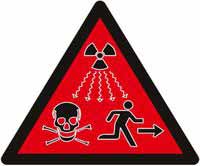 Is the Fukushima nuclear plant breakdown worse than Chernobyl? | San Francisco Bay View, by Janette D. Sherman, M.D., 16 April 11“………Key to understanding effects is the difference between external and internal radiation. While external radiation, as from x-rays, neutron, gamma and cosmic rays, can harm and kill, internal radiation – alpha and beta particles – when absorbed by ingestion and inhalation release damaging energy in direct contact with tissue and cells. Continue reading
Who should really be doing the risky cleanup work at Fukushima?
what if there was a kind of conscription, where the names of directors and shareholders were put into a hat, to be randomly selected for frontline roles helping to cool the reactor? What about staff at the banks that financed the plant? Should they be in the conscription pool as well?
Probability and responsibility at Fukushima, Crikey, April 14, 2011 – , by John Hepburn “……It seems to me that it is these workers who are actually the ones who are really taking the responsibility for Fukushima. They are the ones who will live with the consequences. And I think it is useful to ask, who SHOULD be doing this dangerous work? Continue reading
Dangerous nuclear work done by low paid contract workers
 thousands of untrained, itinerant, temporary labourers who handle the bulk of the dangerous work at nuclear power plants here and in other countries,….
Japan’s two-tiered work force, with an elite class of highly paid employees at top companies and a subclass of labourers who work for less pay, have less job security and receive fewer benefits. Such labour practices have both endangered the health of these workers and undermined safety at Japan’s 55 nuclear reactors
Lured to work with radiation, Hiroko Tabuchi Interviews with past and current workers at Fukushima Daiichi and other plants in Japan paint a bleak picture of what happens on the nuclear circuit. Hiroko Tabuchi The Hindu 11 April 11, “ ….
Untrained labour Continue reading
Japan’s low-skilled, low paid, nuclear workers
The biggest problem is the nuclear one,” said Itsunori Onodera, a lawmaker with the opposition Liberal Democratic Party, whose hometown of Kesennuma was ravaged by the tsunami. “If the area of nuclear contamination spreads, people won’t live there and there’ll be no reconstruction.”
McDonald’s Wage For Nuclear Job Shows Japan Towns Fading, Bloomberg, By John Brinsley and Aki Ito – Apr 11, 2011 A week before becoming ground zero for the world’s biggest nuclear crisis since 1986, the Fukushima Dai-Ichi plant offered $11 an hour for full-time maintenance work in an area of Japan that was lagging even before last month’s earthquake and tsunami struck. The wage, the same as McDonald’s Corp. (MCD) pays for part-time work in Tokyo, shows the scale of the northern Tohoku region’s economic blight and indicates towns may never recover from the disaster….. Continue reading
9,200 green collar jobs in wind energy, UK
Highlighting the growth of renewable energy in the UK – both at onshore and offshore wind energy sites and domestic installations – the number of jobs increased to around 9,200 last year.

Wind power industry employment grows 91%, Energy Saving Trust, by Emily Thomas, 03 February 2011, Employment in the wind power industry has surged 91 per cent in the past three years, according to figures from a study by RenewableUK and the EU Sector Skills Council for the Power Sector.


Highlighting the growth of renewable energy in the UK – both at onshore and offshore wind energy sites and domestic installations – the number of jobs increased to around 9,200 last year. In 2007 there were just 4,800 jobs in the industry.Including tidal power and small-scale wind turbines, there are around 10,800 people employed in the UK’s energy industry.
Maria McCaffery, chief executive of the lobby group, told Bloomberg: “The growth in these technologies as well as small wind systems and marine is set not just to continue but accelerate, further driving employment.”
Reports suggest that as more homeowners sign up to the government’s Green Deal and install wind turbines in their property, this will boost the number of installation and manufacturing jobs to cope with demand.
Posted
Renewable energy jobs increasing in California
Green Job Creation Sets A Cracking Pace In California, Renewable Energy News : by Energy Matters, 24 Jan 2011, Green jobs in CaliforniaJobs in California’s green sector grew more than three times faster than total employment in the state for the period January 2008 – 2009; and many were related to renewable energy. Continue reading
More jobs in wind power for UK
Britain had moved to the world’s leading position in installed offshore wind capacity at 1,341 megawatts (MW), followed by Denmark and the Netherlands…
Renewable energy jobs refuelling the global economic recovery
How Green Jobs Are Fueling The Recovery Responsible Careers, just means, 16 Jan 2011, “……………..The good news for responsible professionals and socio-eco innovators is that green jobs are likely to fuel the recovery both globally and in the US. Continue reading
China ahead of USA in race to provide millions of renewable energy jobs
China is green, US sees red, Khaleej Times, Michael Richardson10 January 2011 China is rapidly becoming a global colossus in renewable energy as it seeks to reduce reliance on polluting fossil fuels and establish itself as the top clean-power manufacturer and exporter. Continue reading
1 This Month


10 March A LIVE WEBINAR THE REAL EFFECTS OF NUCLEAR POWER
What the Industry Isn’t Telling Us
1:00 PM Mountain, 2 pm Central, 3 pm Eastern. Live on the Keepers of the Water Facebook page

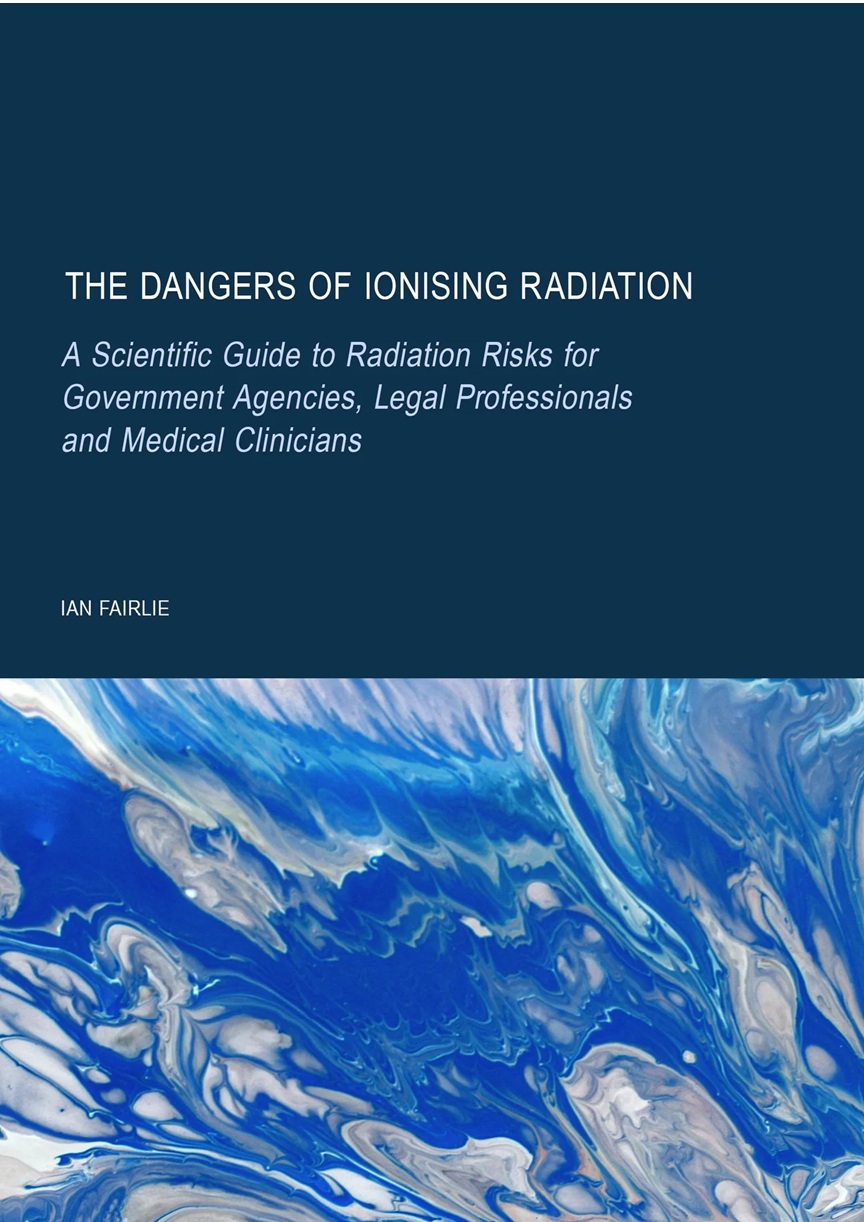
18 March Webinar @ 1 PM EST: An Assessment of SMR Projects: The Case of Canada
register for the zoom:
https://us02web.zoom.us/webinar/register/WN_o8BIIOUvQ2ONJR1nta65DQ#/registration


of the week – STOP SMALL MODULAR REACTORS IN CANADA
To see nuclear-related stories in greater depth and intensity – go to https://nuclearinformation.wordpress.com
-
Archives
- March 2026 (62)
- February 2026 (268)
- January 2026 (308)
- December 2025 (358)
- November 2025 (359)
- October 2025 (376)
- September 2025 (258)
- August 2025 (319)
- July 2025 (230)
- June 2025 (348)
- May 2025 (261)
- April 2025 (305)
-
Categories
- 1
- 1 NUCLEAR ISSUES
- business and costs
- climate change
- culture and arts
- ENERGY
- environment
- health
- history
- indigenous issues
- Legal
- marketing of nuclear
- media
- opposition to nuclear
- PERSONAL STORIES
- politics
- politics international
- Religion and ethics
- safety
- secrets,lies and civil liberties
- spinbuster
- technology
- Uranium
- wastes
- weapons and war
- Women
- 2 WORLD
- ACTION
- AFRICA
- Atrocities
- AUSTRALIA
- Christina's notes
- Christina's themes
- culture and arts
- Events
- Fuk 2022
- Fuk 2023
- Fukushima 2017
- Fukushima 2018
- fukushima 2019
- Fukushima 2020
- Fukushima 2021
- general
- global warming
- Humour (God we need it)
- Nuclear
- RARE EARTHS
- Reference
- resources – print
- Resources -audiovicual
- Weekly Newsletter
- World
- World Nuclear
- YouTube
-
RSS
Entries RSS
Comments RSS
 nuclear-news