Sendai Reactor Back Online
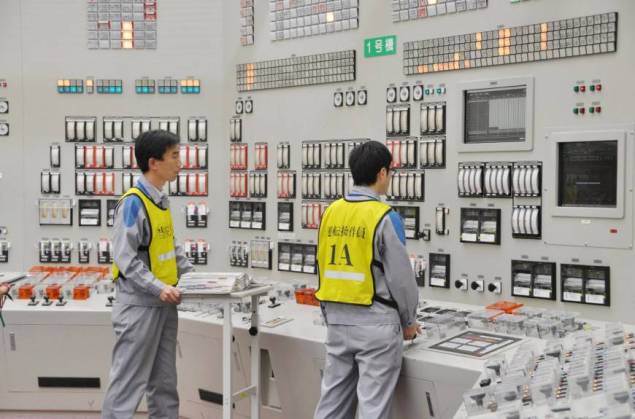
Workers in the control room restart reactor 1 at Kyushu Electric Power Co.’s Sendai nuclear plant in Kagoshima Prefecture Thursday night
Sendai reactor goes back online
Operators have powered on a nuclear reactor at a plant in western Japan on Thursday night after 2 months of inspections.
Officials at Kyushu Electric Power Company say workers have begun pulling control rods out of the Number One reactor at their Sendai plant in Kagoshima Prefecture.
The reactor has been offline since October. Before that, it operated for 14 months as the first reactor in the country to go online under new regulations following the Fukushima Daiichi nuclear disaster.
The utility says it found no abnormalities during its regular and special inspections.
The special checks were added at the request of Kagoshima Governor Satoshi Mitazono, who took office in July. He asked the utility to see if strong earthquakes that occurred at nearby Kumamoto Prefecture in April had affected the plant.
Officials say they expect the reactor to reach criticality on Friday and begin transmitting electricity to the grid on Sunday. They also expect the plant to resume commercial operations in early January.
A group opposing the restart held a rally on Thursday outside the facility. Group leader Yoshitaka Mukohara said a proposed prefectural panel should first give a judgment before the reactor is brought online.
Governor Mitazono had promised to set up an expert panel to look into the reactor’s safety, but it has yet to be launched. Mukohara urged the governor to stick to his position.
https://www3.nhk.or.jp/nhkworld/en/news/20161208_30/
Kyushu Electric fires up Kagoshima reactor after governor gives OK
FUKUOKA – Kyushu Electric Power Co. restarted a nuclear reactor in Kagoshima Prefecture on Thursday after the prefectural governor, who is opposed to nuclear power, effectively permitted the move last week.
Reactor No. 1 at the Sendai nuclear power complex is one of five reactors to have been reactivated under stricter safety regulations adopted in the wake of the 2011 Fukushima reactor meltdowns. Following resumption in August 2015, its operation had been suspended for a regular checkup since Oct. 6.
The utility pulled out control rods from the reactor at around 9:30 p.m. The reactor is expected to achieve criticality by Friday morning and to start power generation from Sunday. Commercial operation is set to resume from Jan. 6.
Kyushu Electric on Tuesday notified Kagoshima Gov. Satoshi Mitazono of the planned restart of the reactor and was not requested to suspend it this time, it said.
Mitazono, who was elected in July on an anti-nuclear platform, asked the utility in August and September to immediately suspend operation of the plant. Reactor No. 1 came to a halt in October for a regular checkup.
The Sendai complex’s reactor No. 2 is scheduled to be suspended for regular checks from Dec. 16 to Feb. 27.
Mitazono had told the prefectural assembly earlier this month that he had no legal power to decide whether to restart the reactor, paving the way for the latest move.
On Thursday, however, Mitazono said that he will take “strong action, regardless of the reactor’s operation,” if an experts’ committee, which he plans to set up to examine safety at the plant, finds any safety problems.
Some 30 local residents and anti-nuclear group members gathered in front of the Sendai plant Thursday morning to protest the reactivation.
Ionizing Radiation from Chernobyl and the Fraction of Viable Pollen
Tim Mousseau – latest Chernobyl paper in International Journal of Plant Sciences:
Oct 05, 2016
Pollen viability is an important component of reproductive success, with inviable pollen causing failure of reproduction. Pollen grains have evolved mechanisms to avoid negative impacts of adverse environmental conditions on viability, including the ability to sustain ionizing radiation and repair DNA. We assessed the viability of 109,000 pollen grains representing 675 pollen samples from 111 species of plants in Chernobyl across radiation gradients that spanned three orders of magnitude. We found a statistically significant but small and negative main effect of radiation on pollen viability rates across species (Pearson’s r = 0.20). Ploidy level and the number of nucleate cells (two vs. three) were the only variables that influenced the strength of the effect of radiation on pollen viability, as reflected by significant interactions between these two variables and background radiation, while there were no significant effects of genome size, pollen aperture type, life cycle duration, or pollination agent on the strength of the effect of radiation on pollen viability.
Introduction
Most organisms are susceptible to environmental perturbations—such as climate change, extreme weather events, pollution, changes in nutrient availability, and changes in ionizing radiation levels—but the effects of such perturbations on individuals, populations, and ecosystems are variable (Candolin and Wong 2012; IPCC 2013; Møller and Mousseau 2013). In order to better understand these effects and to predict how a given species would respond to environmental disturbances, a study of the specific effects at different stages of organisms’ life cycles is required. Since reproduction is a key phase in the life cycle of any organism, reproductive effects are of particular interest. In the case of the effects of ionizing radiation, the negative consequences for reproduction in response to acute irradiation have been studied for decades and are well established (review in Møller and Mousseau 2013). However, the effects of long-term chronic exposure to low dose radiation are poorly understood.
Pollen grains are susceptible to the effects of environmental perturbations, which can have significant negative consequences for plant reproduction through pollen limitation (Delph et al. 1997; Ashman et al. 2004). Potential negative environmental effects include those resulting from elevated levels of ionizing radiation (Koller 1943). Therefore, plants have mechanisms to protect themselves from such effects, such as DNA repair, bi- or trinucleate cells, or redundancies in the genome resulting from duplications.
The area around Chernobyl in Ukraine has proven particularly useful for studying the effects of radioactive contamination on ecological and evolutionary processes at a large spatial scale. The Chernobyl nuclear accident in April 1986 led to the release of between 9.35 × 10³ and 1.25 × 10⁴ petabecquerel of radionuclides into the atmosphere (Møller and Mousseau 2006; Yablokov et al. 2009; Evangeliou et al. 2015). These radioactive contaminants were subsequently deposited in the surrounding areas of Belarus, Russia, and Ukraine but also elsewhere across Europe and even in Asia and North America. The pattern of contamination is highly heterogeneous, with some regions having received much higher levels of radionuclides than others, owing to atmospheric conditions at the time of the accident (fig. 1). To this day, the Chernobyl area provides a patchwork of sites that can differ in radioactive contamination level by up to five orders of magnitude across a comparatively small area. Even decades after the accident, the amount of radioactive material remaining around Chernobyl is enormous (Møller and Mousseau 2006; Yablokov et al. 2009).
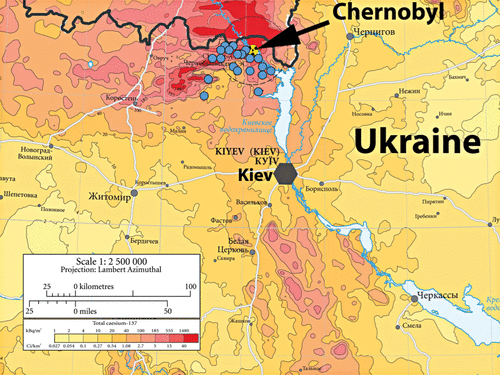
Fig. 1. Map of the distribution of radioactive contamination in the Chernobyl region, with pollen sampling locations marked. Adapted from DeCort et al. (1998).
Because of the unprecedented scale and global impact of the Chernobyl event, it is not surprising that it generated significant interest in both the scientific community and the general public. As a result, studies have been conducted to assess the consequences of Chernobyl for human health and agriculture as well as its biological effects, ranging from the level of DNA to entire ecosystems. Since ionizing radiation has long been well established as a mutagen (Nadson and Philippov 1925; Muller 1950), a large proportion of the research effort has focused on examining changes in mutation rates in areas that have been radioactively contaminated to different degrees as a result of the accident. Although there is considerable heterogeneity in the results of these studies, most have detected significant increases in mutation rates or genetic damage following the Chernobyl disaster, with the rates remaining elevated over the following 2 decades (reviewed in Møller and Mousseau 2006). For example, the mean frequency of mutations in Scots pine (Pinus sylvestris) is positively correlated with the level of background radiation, and it is 10 times higher in contaminated areas compared with control sites (Shevchenko et al. 1996). A study of Scots pine seeds detected elevated mutation rates within the exclusion zone over a period of 8 yr following the accident (Kal’chenko et al. 1995). In wheat (Triticum aestivum), the mutation rate was six times higher in radioactively contaminated areas compared with controls (Kovalchuk et al. 2000). Likewise, the frequency of chromosomal aberrations in two varieties of wheat grown within the Chernobyl exclusion zone 13 yr after the disaster was elevated compared with the spontaneous frequency of chromosomal aberrations in these cultivars (Yakimchuk et al. 2001). The levels of chromosome aberrations in onions (Allium cepa) were also positively correlated with the intensity of radioactive contamination in plants grown 20 yr after the accident (Grodzinsky 2006). Therefore, there is considerable evidence showing increased mutation rates in plants in the most contaminated sites (Møller and Mousseau 2015).
On the basis of the results of these studies, one might expect that a similar relationship between radiation level and the frequency of abnormalities would be seen in pollen. Indeed, Kordium and Sidorenko (1997) reported that the frequency of meiotic anomalies in microspore formation and the frequency of pollen grain viability was reduced in 8%–10% of the 94 plant species studied as a function of the intensity of gamma radiation 6–8 yr after the accident. In violets (Viola matutina), the proportion of viable pollen was negatively correlated with background radioactive contamination (Popova et al. 1991). While it is evident that plants differ in their susceptibility to ionizing radiation, the reasons for this variation are not entirely clear. It is likely that some species develop tolerance and/or resistance to mutagenic effects of radiation to a greater extent than others (Baer et al. 2007). For example, pollen of silver birch (Betula verrucosa), which grows in areas contaminated by the Chernobyl accident, showed elevated DNA repair ability compared with pollen from control areas, consistent with adaptation or epigenetic responses to increased radiation (Boubriak et al. 2008). There are also indications that genome size might affect the response of different species to radiation. Among the plants studied by Kordium and Sidorenko (1997), the rate of pollen viability decreased with increasing radiation to a higher degree in plants with smaller genomes (Barnier 2005), although the actual mechanism remains unknown. One potential explanation is that a larger genome might contain multiple copies of some genes as a result of duplication, rendering mutations in one of these copies less deleterious than if there were only a single copy present, although this explanation may not universally apply (Otto 2003).
In order to assess the effects of radioactive contamination on plant reproduction and to further assess species-specific differences in the effects of ionizing radiation on pollen viability, we analyzed pollen samples from plants growing in the Chernobyl region. We expected that the effects of radiation would differ among species, with some plants showing higher pollen inviability rates than others as a result of elevated radiation levels. A second objective was to test whether observed differences in pollen viability rates could be attributed to differences in phenotype among species, with possible explanatory factors including pollen size, the number of pollen apertures, ploidy, genome size, bi- or trinucleate cells, life span (annual vs. perennial), and pollination agent. We hypothesized that each of these factors could be related to the plants’ ability to resist or to tolerate radiation-induced mutations. Pollen size, genome size, and ploidy are all related to the amount of DNA and the number of copies of genes contained in the pollen grain. Because the pollen aperture—as the site of pollen germination—could be particularly susceptible to radiation-induced damage, we included the number of apertures as a potential explanatory variable. Furthermore, whether a plant is annual or perennial is related to individual longevity and, consequently, to the number of mutations that can accumulate over its lifetime as well as to the number of generations from the time of the Chernobyl accident until the time of sample collection. This may be particularly relevant for plants, given that germ tissue is derived from somatic tissues during each reproductive event as opposed to most animals, in which germ cells terminally differentiate very early during embryonic development (Buss 2006). Pollen viability depends on the ability of pollen to assess the integrity of its DNA and to repair the DNA of the generative nuclei before division (Jackson and Linskens 1980). This process is particularly important for binucleate pollen cells in which this happens during pollen germination, which is in contrast to trinucleate pollen cells, in which the need for DNA repair during pollen germination is less evident. DNA repair efficiency and adaptation of plants to chronic irradiation may also depend on the composition of radiation at the contaminated sites (Boubriak et al. 1992, 2008).
Across all plant species, we found a statistically significant relationship between radiation and the frequency of viable pollen of an intermediate magnitude (Cohen 1988). We also documented significant interactions between species and radiation, radiation and cell number, and radiation and ploidy. However, the significant effect of ploidy disappeared when both ploidy and whether cells were bi- or trinucleate were entered simultaneously in a single model. Most effects were small to intermediate in magnitude, as is commonly the case in studies of living organisms (Møller and Jennions 2002). We emphasize that our study included by far the largest sample size so far reported to detect effects of chronic radiation on pollen viability. However, we also emphasize the limits of our study. Many plant species could not be included simply because we could not locate multiple flowering specimens during our fieldwork. These and other sampling limitations reduced the number of pollen grains and the number of species that could be included.
Species differ in their susceptibility to radiation, as demonstrated for birds at both Chernobyl and Fukushima (Møller and Mousseau 2007; Møller et al. 2013; Galván et al. 2014), and in terms of adaptation to radiation (Galván et al. 2014; Møller and Mousseau 2016; Ruiz-González et al. 2016). The observed interspecific differences in radiation effects reported here for the proportion of viable pollen could be due to adaptation to radiation through tolerance of radiation-induced mutations or through induction of increased DNA repair in organisms living in contaminated areas. Another possibility is that some species are more resistant to radiation because of historical exposure in radiation hotspot areas with high natural levels of radiation (Møller and Mousseau 2013).
We observed a significant relationship between the proportion of viable pollen and the interaction between ploidy and radiation. Such a finding might suggest that resistance to deleterious effects of radiation is based on redundancy in the genome, where species with higher ploidy levels have an advantage if they have multiple copies of a given gene. We failed to detect an effect of selected physical attributes of pollen grains—such as genome size, pollen size, and aperture type—on the susceptibility of pollen to radiation. Furthermore, whether a plant was annual or perennial or whether it was insect or wind pollinated did not affect the proportion of viable pollen. Finally, whether plants produced bi- or trinucleate pollen had a significant effect on pollen viability, and the interaction between radiation and cell number was also significant.
While we confirmed the general finding of Kordium and Sidorenko (1997) that in approximately 10% of species the proportion of viable pollen is negatively correlated with radiation level, we were unable to reproduce their findings with respect to the overall magnitude of this effect. Our observed effect size was much smaller, and the slopes for individual species differed significantly from those reported by Kordium and Sidorenko (1997). Because more than 10 yr have passed between the two studies, we suggest that a change in radiation effects has taken place over time, for example, as a result of adaptation or accumulation of mutations. Another possible explanation for the discrepancy has to do with sample size, since our study included a much larger number of pollen samples and sampling locations than the study by Kordium and Sidorenko (1997). These explanations are not necessarily mutually exclusive.
Whereas other studies have demonstrated significant negative effects of radioactive contamination around Chernobyl on mutation rates and fitness in general, our study of pollen viability shows a very small effect, and some species even show positive relationships between pollen viability and radiation that is suggestive of adaptation to increased levels of radiation. However, on the basis of the current study, it is not possible to determine whether the observed heterogeneity reflects evolved adaptive responses or is the consequence of unmeasured selective effects on characters correlated with pollen viability, which could in part explain an overall positive effect of radiation (for a discussion of evolutionary responses in Chernobyl, see Møller and Mousseau 2016). Experimental approaches would be needed to decipher the mechanisms underlying the heterogeneity in plant responses observed here (Mousseau 2000).
The observed variability in susceptibility to radiation is a common finding in studies of the effects of radiation from Chernobyl (Møller and Mousseau 2007; Galván et al. 2011, 2014; Møller et al. 2013). While our results are consistent with earlier findings that DNA repair mechanisms may play an important role in adaptation to life in radioactively contaminated environments—especially for plants, which are sessile and hence cannot move to less contaminated areas—further research is required to test this explicitly. Finally, because of the observed differences in resistance to radiation among species, it is likely that even small overall effects of radiation—such as the one on the proportion of viable pollen described here—can have significant consequences for species composition and abundance at a given location and, therefore, for ecosystem characteristics and functioning.
In conclusion, we have found a statistically significant overall negative relationship between radiation intensity and the frequency of viable pollen in plants growing in contaminated areas around Chernobyl. The magnitude of this effect across species included in our study was intermediate. We only found a significant relationship between the proportion of viable pollen and ploidy × radiation interaction, bi- or trinucleate cells, and bi- or trinucleate cells × radiation interaction. This suggests that DNA repair mechanisms could play an important role for the ability of plants to resist increased radiation, at least when it comes to pollen formation.
Acknowledgments
We thank Puri López-García for use of a microscope for pollen counts. This work has benefited from the facilities and expertise of the cytometry platform of Imagif (Centre de Recherche de Gif; http://www.imagif.cnrs.fr). We thank Spencer Brown and Mickaël Bourge for their help with the flow cytometry measurements and Srdan Randić for help with pollen counts. Field collections for this study were supported in part by the Centre National de la Recherche Scientifique (France), the North Atlantic Treaty Organization Collaborative Linkage Grant program, the Fulbright program, the University of South Carolina College of Arts and Sciences, and the Samuel Freeman Charitable Trust. Two reviewers provided constructive criticism.
Read full paper at:
http://www.journals.uchicago.edu/doi/full/10.1086/688873
Kyushu Electric Restarts Sendai Nuclear Reactor
Loan ceiling for TEPCO to be raised

Reclaimed Land for Okinawa US Base Filled With Fukushima Radioactive Waste?

Japan to increase loan to Fukushima operator Tepco to $123 billion
Question to ask: why call this a loan when the law, like USA Price Anderson Act, limits nuclear power co from liability and puts the govt on the hook for everything beyond that?
Answer: I’d say most likely simple propaganda. That’s the taxpayers TRILLIONS that’s going to a ‘forever’ nuclear power plant black hole. That money will never be paid back to govt. The only thing I can imagine is that the Govt reneges on the agreement and socializes utilities in Japan. Because either the corporation nor govt can survive unless they do that…. or they can play fictionalized accounting for public.
What do you think?

Japan will increase an interest-free loan to the operator of the wrecked Fukushima nuclear plant, Tokyo Electric Power, by more than a third to 14 trillion yen ($123 billion), a source familiar with the matter said on Thursday.
Spiraling costs from the world’s worst nuclear disaster since Chernobyl in 1986 are threatening the viability of the utility known as Tepco and hampering its ability to clean up its wrecked Fukushima Daiichi nuclear plant.
The increase in the loan from 9 trillion yen is to cover the costs for compensation and decontamination areas around the plant, according to the source, who is not authorized to speak to the media.
Three reactors melted down at the plant after a magnitude 9 earthquake in March 2011, which sparked a tsunami that devastated a large section of Japan’s northeastern coastline.
More than 15,000 people were killed in the natural disaster, which also caused a loss of power and cooling at the Fukushima station.
Explosions in the wake of the reactor meltdowns led to a massive release of radiation that prompted the evacuation of 160,000 people from areas around the plant, many of whom will never be able to return.
The disaster is likely to cost 22.6 trillion yen ($199 billion), more than double an earlier government estimate.
Costs for decommissioning the wrecked reactors will be covered by a separate arrangement from the loan, according to the Nikkei newspaper, which earlier reported the increase in the loan for Tepco.
http://www.reuters.com/article/us-japan-fukushima-support-idUSKBN13X00G?il=0
Fukushima Long Active Fault
A seismologist says about three-fifths of an active fault running more than 50 kilometers off the northeastern prefecture of Fukushima shifted in last month’s powerful earthquake.
The magnitude-7.4 quake on November 22nd registered a 5 minus on the Japanese seismic scale of 0 to 7. A tsunami 1.4 meters high was observed at a port in Miyagi Prefecture.
Professor Shinji Toda of Tohoku University analyzed the active fault that triggered the temblor, using data on seabed terrain and the locations of aftershocks.
He says a stretch of about 30 kilometers in the fault that runs from northeast to southwest shifted in the earthquake.
He believes a shift of the entire fault would have caused a more powerful quake, with a possible magnitude of 7.7.
He warns that the remaining part of the fault is close to the shore and has the potential to trigger a magnitude-7 quake.
Toda’s findings contradict a 2014 analysis of the area by Tokyo Electric Power Company, the operator of the damaged Fukushima Daiichi nuclear power plant.
It stated that 2 fault lines, each about 20 kilometers long, could cause an earthquake with a magnitude of up to 7.1, much less than that of November’s quake.
Toda says it is important to improve that analysis, since the quake was more powerful than the utility’s estimate.
TEPCO says it will review its estimates if necessary.
Fukushima Fish and Shellfish Radiation Levels Drop”Announced”

Volunteer group continues checking fish off Fukushima as radiation levels drop
An olive flounder, estimated at 11 years old, measuring 90 centimeters long and caught in waters near the Fukushima No. 1 Nuclear Power Plant, is seen on a ship about 2 kilometers from the plant, on Nov. 13, 2016.
IWAKI, Fukushima — As radioactive cesium levels in fish caught off the Fukushima Prefecture coast show lower levels that fall within safety limits set by the government, the Mainichi Shimbun recently accompanied a volunteer group that continues to measure these fish on one of its outings.
The group, called “Iwaki Kaiyo Shirabetai Umi Labo” (Iwaki marine investigative squad ocean lab), began its activities three years ago. Rather than relying on the national government, Fukushima nuclear plant operator Tokyo Electric Power Co. or others for data on radioactive pollution in the ocean off Fukushima Prefecture, the group aims to obtain this information itself and share it across the country.
On Nov. 13, a Mainichi Shimbun reporter boarded one of the group’s fishing ships, which set out from Hisanohama Port in Iwaki, Fukushima Prefecture. Two kilometers from the disaster-stricken plant, the group pulled up a large, 90-centimeter, 7.7-kilogram olive flounder. This fish was caught by Eriko Kawanishi, a civil servant who came from Tokyo to participate in the outing and said it was her first time ever to hold a fishing rod. A 90-centimeter fish would be a rare catch even for a veteran fisherman.
The olive flounder was refrigerated and taken back to veterinarian Seiichi Tomihara at the Aquamarine Fukushima aquarium in Iwaki for dissection. Based on the growth rings on its “otoliths,” a structure located near the brain, Tomihara estimated the fish’s age at 11 years. He said there is research estimating the life expectancy of olive flounders at around 12 years, adding, “This looks like one of the oldest (one can find).”
A 1-kilogram slice of the fish put in a detector showed 14.6 becquerels of radioactive cesium — below the 100 becquerels-per-kilogram national safety limit for regular food products. Lately the research group has found no fish, including bottom-dwelling fish like olive flounder, that exceed this limit. In addition, radiation checks done by the prefectural government find hardly any cases of fish that top the safety limit.
Riken Komatsu, 37, joint-representative for the group, says, “This is the first time for us to check such an old olive flounder, and I thought there would be dozens of becquerels detected. The result was lower than I had imagined and I feel relieved.”
Fish that were already adult at the time of the disaster, with a slowed metabolism and a narrow range of habitat, tend to show high radiation levels, Komatsu says. With time having passed since the disaster, the generational replacement of the fish in the area has moved forward. The group says the highest radiation level it has detected so far was 138 becquerels from a 56-centimeter olive flounder in July 2014.
Olive flounder caught off of Iwaki are known as “Joban-mono” and have a good reputation. There is hope among locals that the fish will regain their pre-disaster popularity.
Komatsu says, “The prefectural government and fishing cooperatives are also releasing radiation readings from fish taken off Fukushima Prefecture, but I feel there are few taken from waters near the nuclear plant. Stronger data showing the fish’s safety (like data from fish near the plant) should raise the value of Fukushima olive flounder.”
http://mainichi.jp/english/articles/20161205/p2a/00m/0na/022000c

Surf clams caught in waters off Iwaki, Fukushima Prefecture, in June
Radiation in fish off Fukushima tests below detectable level
FUKUSHIMA–Radiation in all seafood caught off Fukushima Prefecture tested below the detectable level in November for the first time since the 2011 nuclear disaster.
Species including bass, rockfish and stone flounder–sales of which were banned by the central government–were tested between Nov. 11 and Nov. 28, and the prefectural government said they all fell below the detection threshold, meaning radioactive cesium was not detected in any samples.
The main reason is that most fish species have undergone a generation change over the past five years with the contaminated marine life dying out, said officials at the prefectural government’s fisheries experimental station.
In addition, the passage of time helped fish exude radioactive cesium from their bodies.
The prefectural government began the tests in April 2011 following the disaster at the Fukushima No. 1 nuclear plant the previous month.
Forty thousand fish and shellfish samples have been checked from 186 species over the past five and a half years.
The initial tests found that more than 90 percent of the samples were contaminated with radioactive cesium above the central government’s safety limit of 100 becquerels per kilogram.
The percentage of polluted fish and shellfish then declined annually.
The tests since April last year showed that the pollution in all samples was within the safety limit.
The monitoring covers seafood caught in 30 locations, in waters with a depth of 5 meters and at a distance of hundreds of meters from the shore, including the area in a 20-kilometer radius of the crippled plant.
http://www.asahi.com/ajw/articles/AJ201612060039.html
As Costs of Disaster Keep Rising, State Ownership of Tepco Continues

Tokyo says Tepco may stay nationalized to deal with massive cost of nuclear disaster
Faced with massive ongoing costs stemming from the 2011 nuclear crisis in Fukushima, Tokyo Electric Power Co. Holdings Inc. may remain under state control longer than initially planned, the government said Monday.
Under the current plan, the utility would gradually reduce government involvement in its management from April.
However, at a key panel meeting the government proposed a revised option in light of the huge compensation and decommissioning expenses that are involved.
The government leads the business operations of the utility, known as Tepco, acquiring 50.1 percent of its voting rights through the state-backed Nuclear Damage Compensation and Decommissioning Facilitation Corp.
Some ministry bureaucrats have also been dispatched to the utility.
It is understood the state-backed body will assess efforts to reform the company in late March and make a decision on whether to reduce state involvement.
“The direction of Tepco reform is coming into sight,” said Economy, Trade and Industry Minister Hiroshige Seko at the panel meeting. “We have to come up with a more detailed picture of the reform.”
The government is seeking to split the activities of the utility into “business operations,” including retail sales and power generation, and “Fukushima operations” related to decommissioning reactors at the disaster-hit Fukushima No. 1 nuclear plant and paying compensation, which would remain under public control.
As for Tepco’s business operations, the government plans to free them of state control at an early date, hoping to promote industry reorganization involving nuclear and energy distribution businesses.
The plan was revealed at the panel meeting at the trade ministry to study compensation and decommissioning issues facing the utility. The panel will compile proposals by the end of this year.
The government also seeks cooperation from other power companies in reactivating Tepco’s Kashiwazaki-Kariwa nuclear power plant in Niigata Prefecture, which would be the main source of its revenue.
With the involvement of other utilities, the government hopes to ease local distrust of Tepco’s nuclear plant operations. Two reactors at the Kashiwazaki-Kariwa plant are under prolonged safety examinations by nuclear regulators.
State ownership of TEPCO likely to continue as costs keep rising
The government will likely prolong its effective state ownership of Tokyo Electric Power Co. Holdings Inc. because the expected costs for decommissioning its ruined Fukushima No. 1 nuclear plant and paying compensation continue to soar.
The industry ministry mentioned the rising expenses at a meeting on Dec. 5 with scholars and others.
The ministry at the meeting showed a six-item report titled, “Tokyo Electric Power Co. and the state’s role.” One pillar of the report was that the state should urge TEPCO to perform its responsibilities.
However, one of the participants said, “The state should hold a certain ratio of (TEPCO) shares for a long period.”
The government-approved Nuclear Damage Compensation and Decommissioning Facilitation Corp. currently holds 50.1 percent of shares with voting rights of TEPCO.
The government planned to reduce the stake to less than 50 percent if it concluded at the end of this fiscal year that TEPCO could operate independently.
However, that scenario has collapsed.
Some sources now say total costs, including expenses for decommissioning and compensation, will probably exceed 20 trillion yen (about $176 billion).
TEPCO initially said that it would need a total of 11 trillion yen to resolve problems related to the plant that suffered a triple meltdown after being hit by the Great East Japan Earthquake and tsunami in March 2011.
That amount includes 2 trillion yen to decommission the reactors, 5.4 trillion yen to pay compensation to people affected by the disaster and 2.5 trillion yen to decontaminate areas polluted with nuclear substances.
However, an internal report worked out by the industry ministry in August showed that the costs for decommissioning would probably increase by 4 trillion yen and the compensation sum would likely rise by 3 trillion yen, making the total amount 18 trillion yen.
Human Error Stopped Reactor 3 Cooling System
Cooling water briefly stopped at Fukushima plant
Injections of water to cool melted fuel in a reactor at the Fukushima Daiichi nuclear power plant stopped briefly due to human error on Monday.
The plant’s operator, Tokyo Electric Power Company, says an alarm system was activated at around 10 AM when a water pump at the No. 3 reactor shut down.
An internal investigation by the utility found that a worker had mistakenly hit the pump’s switch with his elbow while checking instruments. TEPCO resumed the water injections using a different pump about 1 hour later.
The utility notified local prefectural authorities and nearby areas of the problem just one minute before it resumed the water injections.
TEPCO officials say they detected no changes in the temperature at the bottom of the reactor or in radiation levels at monitoring posts around the plant.
Also on Sunday night, cooling operations temporarily stopped in the spent nuclear fuel pool at the plant’s numbers 1, 2 and 3 reactors when some valves inexplicably opened.
TEPCO says it takes these human errors seriously and will do it best to prevent recurrences.
http://www3.nhk.or.jp/nhkworld/en/news/20161205_27/
Fukushima reactor briefly loses cooling during inspection
One of the melted reactors at tsunami-hit Fukushima nuclear power plant had a temporary loss of cooling when a worker accidentally bumped a switch while passing through a narrow aisle of switch panels during an inspection and turned off the pumping system.
The plant operator, Tokyo Electric Power Co., said cooling for the No. 3 reactor, one of the three reactors that melted following the 2011 earthquake and tsunami, was out for nearly one hour Monday until a backup pump kicked in.
TEPCO said the reactor had enough water left inside and there was no temperature increase or radiation leak from the incident.
TEPCO acknowledged some other key switches are in similarly tight locations.
Anthropocene, Capitalocene, Chthulucene, staying with the trouble in Fukushima
In the space-time of environmental devastation announced by the Anthropocene, nuclear catastrophe is a type of “fuzzy boundaries trouble” that challenges our capacity for understanding. We know from Günther Anders that it operates in the supraliminary sphere, so large that it cannot be seen or imagined, which causes cognitive paralysis. By Ulrich Beck that produces an anthropological shock, the transformation of the consciousness of the subjects in relation to the experience of insecurity and uncertainty in the face of an invisible threat. By Svetlana Alexeivich that is characterized by vagueness and indefinition, which produces a war without enemies. And by Olga Kuchinskaya that generates a politics of invisibility regarding public knowledge of its consequences for life.
As Chernobyl before, the Fukushima disaster has reached the maximum level in the scale of accidents, when several nuclear reactors melted down 200 kilometers from the most populous metropolitan area of the planet. The dangerous radionuclides, once enclosed between concrete and steel walls, began to blend intimately with the biosphere. Before this mutant ecology, the artists have responded from the first moments. Through photography, guerrilla art, dance, video art or fiction narrative, this artistic response to the nuclear crisis has faced a double invisibility: the one of ionizing radiation and the institutional invisibility – the affirmation of the authorities that the problem “is under control”.
Taking as a theoretical framework the interdisciplinary discussion of the Anthropocene and its critical epistemologies, such Jason Moore’s Capitalocene and Donna Haraway’s Chthulucene, we investigate how artists are staying with the trouble in Fukushima. Recalibrating our sensory systems to adjust them to the contradiction and volatility of industrial advances, we explore the ability of art to construct an ontology complementary to hegemonic technoscience, one that allows us a more in-depth understanding of what nature and we humans has become in the Anthropocene.
NRA blasts Tokai nuclear facility ahead of dismantling plan

The Tokai spent nuclear fuel reprocessing plant in Tokai, a village in Ibaraki Prefecture
TOKAI, Ibaraki Prefecture–Drums of nuclear waste are stacked in disarray within a storage pool containing unidentified floating objects. Wires in the pool are feared entangled, and containers are believed corroded, possibly leaking radioactive substances. And highly toxic liquid waste remains untreated in a potentially explosive state.
After years of apparent mismanagement, the Tokai spent nuclear fuel reprocessing plant is a jumbled mess, as the operator, Japan Atomic Energy Agency (JAEA), prepares for the Herculean task of shutting down the facility.
The circumstances at the plant in this village northeast of Tokyo has raised concerns about the JAEA’s ability to dismantle it.
“A situation far from appropriate has been allowed to continue at the plant,” said an official of the Nuclear Regulation Authority, the nation’s nuclear watchdog. “Not only the JAEA, but also the former Science and Technology Agency and the former Nuclear and Industrial Safety Agency, have all looked the other way despite their knowledge of the situation.”
According to a JAEA report submitted to the NRA on Nov. 30, it will take 70 years to complete the dismantling process, with costs estimated at 217 billion yen ($1.92 billion) for the first decade alone.
A recent visit to the plant by Asahi Shimbun reporters revealed drums containing radioactive waste stacked in a disorderly manner in a storage pool.
JAEA officials showed pictures of the pool and explained that it contains about 800 drums piled about 7 meters high. The drums hold demolished clads from spent nuclear fuel assemblies.
The officials said that when an underwater camera was placed near the drums, it stirred up brown objects.
“We have no idea if they are water scale or rust,” one of JAEA officials said.
Workers put the drums in the storage pool between 1977 and 1994 by hanging them with cables above the pool and then cutting the cables to allow them to drop in, according to the officials.
The officials said they believed the cables also fell into the pool and became entangled.
Some experts at the NRA suspect the drums are now corroded and leaking radioactive materials.
Radiation at the pool surface measured 3 millisieverts per hour, three times the safety limit for annual exposure for a person, apart from background radiation.
The pool is not equipped with purification units.
Furthermore, JAEA officials said they do not know what’s in other containers at the facility.
Workers will eventually sort them out by opening their lids, they added.
One of the most challenging tasks facing the JAEA in the dismantling work is dealing with the 400 cubic meters of high-level radioactive liquid waste at the plant.
The liquid waste, which was generated during reprocessing, emits radiation registering 1,500 sieverts per hour, which would kill a person exposed for 20 seconds.
Left intact, this waste could produce heat and hydrogen, possibly leading to hydrogen explosions.
The JAEA has put the liquid waste in six stainless tanks and kept them cool with water. A ventilation system has been used to prevent hydrogen from accumulating inside the storage facility and sparking an explosion.
Ibaraki Prefecture is located immediately south of Fukushima Prefecture.
The Great East Japan Earthquake and tsunami that struck northeastern Japan in 2011 severed all power sources to the Fukushima No. 1 nuclear power plant, leading to hydrogen explosions and the triple meltdown there.
The natural disaster also cut off electricity to the Tokai plant for more than 40 hours. But the plant rode out the contingency with emergency power generators.
The NRA is aware of risks involved in keeping the liquid waste in the current state at the Tokai plant.
In 2013, the NRA allowed the plant to resume operations to solidify the liquid waste with glass as a special case before the watchdog checked whether the plant met tougher nuclear safety regulations set after the Fukushima disaster.
Work on the solidification process resumed this year, but it has been suspended because of a series of glitches. Only one-fourth of the scheduled volume of the liquid waste has been solidified.
The reprocessing plant began full operations in 1981. It had reprocessed 1,140 tons of spent nuclear fuel before the decision was made in 2014 to close down the facility.
http://www.asahi.com/ajw/articles/AJ201612050078.html
Mom of student called ‘germ’ at school links bullying to Fukushima disaster

The mother of a fourth-year elementary school student in Niigata, who has been staying home from school since late November after being called “germ” by his peers and his teacher, spoke to the Mainichi Shimbun, saying that her son was bullied because he came from nuclear disaster-hit Fukushima Prefecture.
The family evacuated from Fukushima after the nuclear disaster. While the Niigata Municipal Board of Education has denied a link between the bullying of the student and his Fukushima roots, according to the mother, the student started being called “germ” around March of this year, which marked five years since the disaster, and this is one reason she argues that there is a connection.
According to the mother, around March 11 of this year when the nuclear disaster issue came up in class, her son proactively talked about his own experiences.
“He must have been happy to be able to give lots of answers,” she says. However, it was around that time that he started being called “germ” by his classmates.
“Some kids who knew he had come from Fukushima started calling him germ, and that led to kids who didn’t know him also calling him that, like a nickname,” she says.
In June, the student talked to his teacher, complaining that he was “being treated like a germ.” At that point the student is thought to have not considered the name as bullying, and when the teacher referred to him as “germ” after summer vacation ended, he didn’t appear to be deeply bothered by it.
In early November, though, it was reported in the news that a junior high school student in Yokohama who had evacuated from Fukushima Prefecture was bullied by being called “germ.” When the student in Niigata heard this, he said, “It’s the same as me,” and the mother says she thinks “he probably began to see himself as being bullied.” On the mother’s advice, the student talked to his teacher about it again on Nov. 17. When he came home, he triumphantly said with a smile that he had talked to the teacher.
After a strong earthquake off the Fukushima Prefecture coast early on the morning of Nov. 22 this year, the boy went off to school looking anxious, he and his mother having not yet been able to get in contact with the father, who works in Fukushima Prefecture. During recess that day, while the student was receiving teacher-parent correspondence from his teacher, the teacher called him “germ” again. The shocked student returned home, and since Nov. 24 has been staying home from school, saying, “I want to go to school, but I can’t because that teacher is there.”
According to the mother, at first school authorities denied the teacher had called the student “germ.” On Nov. 25 the father called the school and said tearfully that “There are kids who commit suicide (when they are bullied).” Although the teacher apologized, the mother says that the teacher treated them coldly, saying it was only this year that they had become the student’s homeroom teacher. The teacher has said they want to apologize to the student, but the student is refusing to see the instructor and the school principal has been visiting the family’s home every day to try and deal with the matter.
The family has been planning to move after the free rent for the government-leased apartment they are living in ends at the end of this fiscal year. The mother says, “My son had been asking that we stay in the same school district, but now that this has happened, we have no choice but to have him change schools,” adding, “We evacuated voluntarily (from Fukushima), and I don’t want to impose on the people of Niigata.”
According to the Niigata Municipal Board of Education, there are 291 children who have evacuated from Fukushima Prefecture to the city of Niigata. It holds that “there is no bullying of students related to their Fukushima roots.”
———-
Timeline of events involving the bullying of the student:
2011:
March — The Great East Japan Earthquake and the Fukushima No. 1 Nuclear Power Plant disaster occur. The student evacuates to the city of Niigata.
2016:
Around March — Student begins to be ostracized by peers and called “germ.”
April — Student enters fourth grade and homeroom teacher changes.
June — Student speaks to teacher about being called “germ.” Teacher disciplines classmates who bullied student.
Early November — News is reported of a junior high school student in Yokohama who evacuated from Fukushima Prefecture and was bullied, including being called “germ.”
Nov. 17 — Student again speaks to teacher about being bullied.
Nov. 22 — During recess, student is called “germ” by teacher in classroom in front of classmates.
Nov. 24 — Student begins to stay home from school (Nov. 23 was a school holiday).
Nov. 29 — School questions students about incident. Multiple students testify that teacher called student “germ,” and teacher also says it is true.
(Based on sources including student’s parents and the Niigata Municipal Board of Education)
http://mainichi.jp/english/articles/20161205/p2a/00m/0na/020000c
Fukushima reactor N° 3 briefly loses cooling during inspection
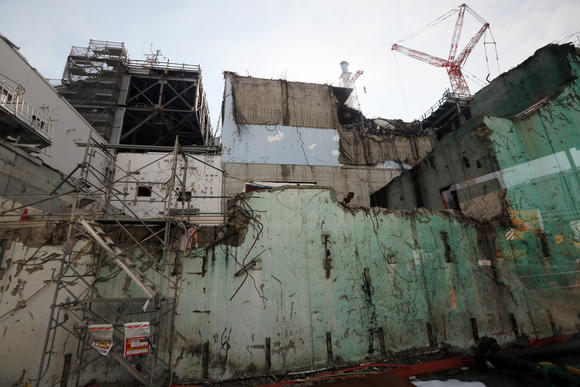
TOKYO — One of the melted reactors at the tsunami-hit Fukushima nuclear power plant had a temporary loss of cooling Monday when a worker accidentally bumped a switch while passing through a narrow isle of switch panels during an inspection and turned off the pumping system.
The plant’s operator, Tokyo Electric Power Co., said cooling for the No. 3 reactor, one of the three that melted following the 2011 earthquake and tsunami, was out for nearly an hour before a backup pump kicked in.
The reactor had enough water left inside and there was no temperature increase or radiation leak from the incident, TEPCO spokesman Yuichi Okamura said at a news conference.
Even though there was no radiation leak or overheating of the core, or any injuries, the incident was a reminder that Fukushima’s decommissioning work is running on a very fragile system.
The plant was largely running on makeshift pipes, wiring and other equipment in the first two to three years following the 2011 disasters, suffering a series of minor blackouts – including those caused by rats chewing cables – cooling stoppages and other problems.
The plant has since largely stabilized, but it remains vulnerable to unanticipated incidents as it continues to struggle with decommissioning work, which is expected to last decades.
Monday’s incident occurred when the worker was passing by a dimly lit isle that was only 85 centimeters (2.8 feet) wide, flanked by tall switch panels on both sides, Okamura said. With radiation levels still high, the worker was wearing a full-face mask and hazmat suit when he lost his balance while carrying equipment. His elbow jammed into the switch, breaking off its safety cover and inadvertently turning the lever to turn off the water injection pump to the No. 3 reactor.
Okamura acknowledged the lack of space at the site and said that the plant will seek ways to eliminate human errors like one on Monday.
Taiwan: Food products from Japanese areas are not on sale
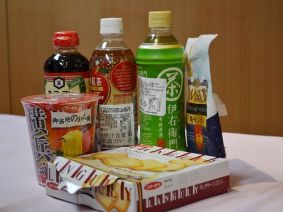
Food products from Japanese areas are not on sale: agency
The Food and Drug Administration yesterday rejected as rumors claims that food products produced in Japanese prefectures surrounding the Fukushima Dai-ichi nuclear power plant can be purchased in Taiwan, urging the public not to buy food products without Chinese-language labels.
The Council of Agriculture and the Ministry of Health and Welfare last month presented a two-stage plan to ease a ban on food imports, which was imposed in March 2011, from five Japanese prefectures near the site of the Fukushima nuclear disaster.
Taichung City Councilor Tuan Wei-yu (段緯宇) last week said that wine and snacks from the five prefectures could be purchased at department stores.
However, the Taichung Department of Health said that alcoholic products from the five prefectures can be imported if they have passed batch-by-batch radiation examinations, while the snacks Tuan used as examples were made in other prefectures.
One rumor that has recently spread across social networks claims that Japanese food products labeled as being made in Tokyo that have a “K” appended to the expiration date on their packaging are actually from Fukushima Prefecture.
The administration issued a statement clarifying that letters appended to expiration dates are in fact codes representing different areas for different food companies.
Consumers can check Japanese companies’ official Web sites to verify where products were made, the agency said, adding that, for example, an “A” appended to the expiration date on the packaging of products by Nissin Foods means they were made in Toride, Ibaraki Prefecture.
The administration urged people to only buy food products with Chinese-language labels, not believe everything they read online — especially information without reliable sources of scientific evidence — and avoid spreading false information.
http://www.taipeitimes.com/News/taiwan/archives/2016/12/04/2003660555
1 This Month





PLEASE OPPOSE HR 8255 AND S.3639 – bills would accelerate satellite deployment, with no environmental review or safeguards – https://ncstd5li.quorum.us/campaign/169331/
To see nuclear-related stories in greater depth and intensity – go to https://nuclearinformation.wordpress.com
-
Archives
- October 2026 (81)
- September 2026 (339)
- August 2026 (330)
- July 2026 (355)
- June 2026 (287)
- May 2026 (306)
- April 2026 (356)
- March 2026 (251)
- February 2026 (267)
- January 2026 (308)
- December 2025 (358)
- November 2025 (359)
-
Categories
- 1
- 1 NUCLEAR ISSUES
- business and costs
- climate change
- culture and arts
- ENERGY
- environment
- health
- history
- indigenous issues
- Legal
- marketing of nuclear
- media
- opposition to nuclear
- PERSONAL STORIES
- politics
- politics international
- Religion and ethics
- safety
- secrets,lies and civil liberties
- spinbuster
- technology
- Uranium
- wastes
- weapons and war
- Women
- 2 WORLD
- ACTION
- AFRICA
- Atrocities
- AUSTRALIA
- Christina's notes
- Christina's themes
- culture and arts
- Events
- Fuk 2022
- Fuk 2023
- Fukushima 2017
- Fukushima 2018
- fukushima 2019
- Fukushima 2020
- Fukushima 2021
- general
- global warming
- Humour (God we need it)
- Nuclear
- RARE EARTHS
- Reference
- resources – print
- Resources -audiovicual
- Weekly Newsletter
- World
- World Nuclear
- YouTube
-
RSS
Entries RSS
Comments RSS

